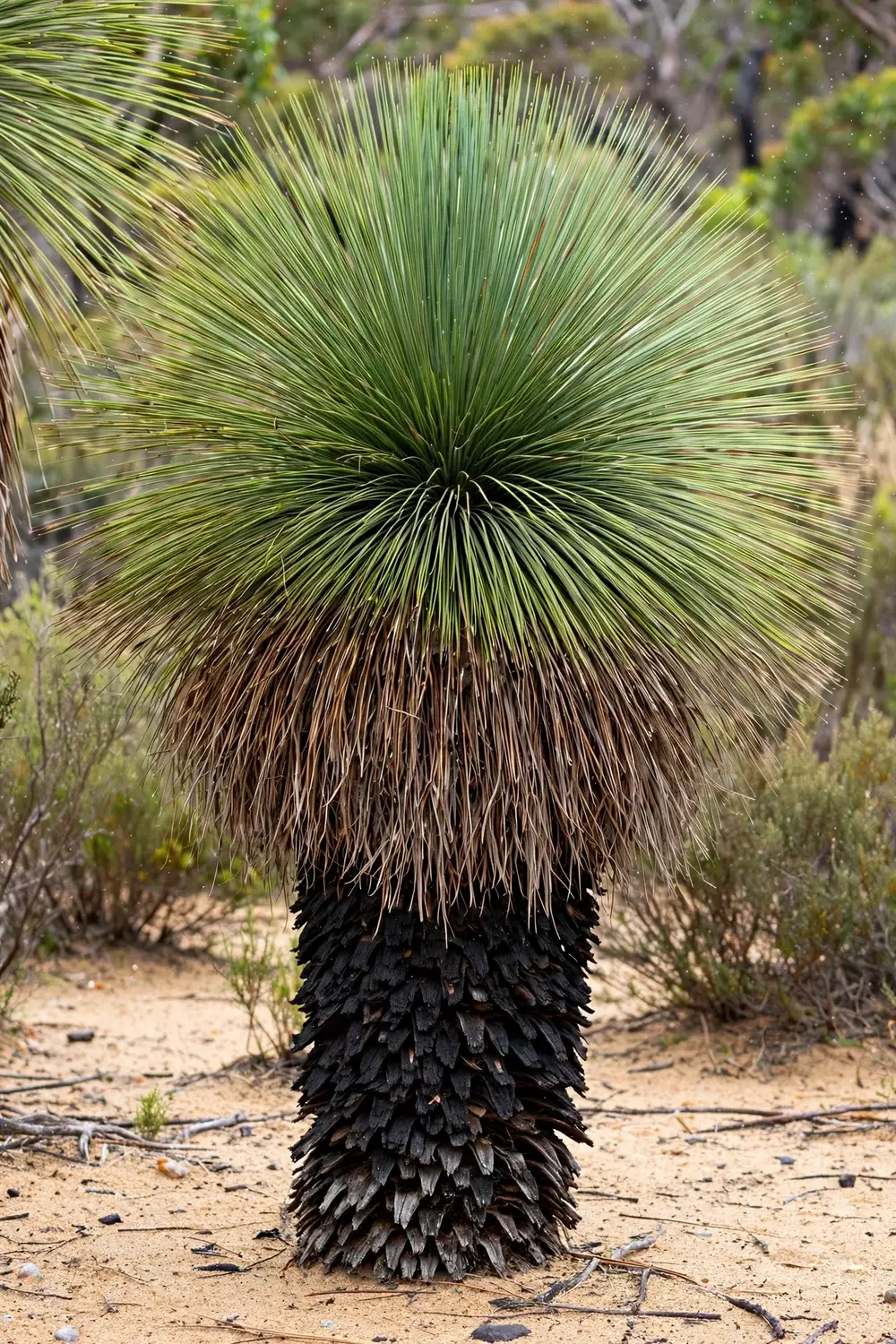

Your grass tree is probably not dying. If you are wondering why is my grass tree dying, start with the crown, not the brown skirt. A grass tree (Xanthorrhoea, one of 28 species endemic to Australia) with a green crown is alive, even if the skirt of brown dead leaves hanging from its trunk looks terrible. The brown skirt is normal. What kills grass trees is crown collapse, not brown leaves. Run the 30-second test in the first section, then work through the five real killers.
I check the crown before I touch the brown skirt, because a green crown means the grass tree is alive no matter how dead the skirt looks.
1. Run the 30-Second Alive-or-Dead Test on Your Grass Tree
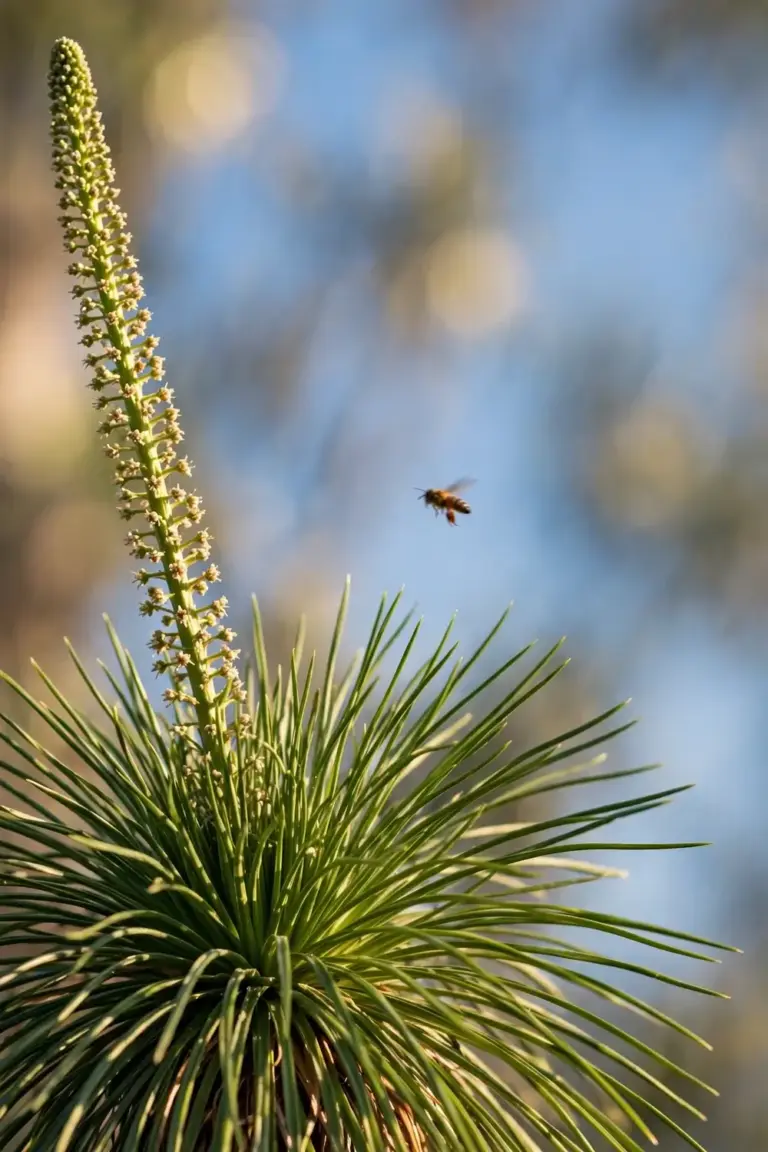
Stand in front of your grass tree and look at the crown, not the skirt. The crown is the burst of long, grass-like leaves at the very top of the trunk. If the crown holds green leaves, even a thin tuft of them, your grass tree is alive. A living crown means the growing tip buried deep inside the leaf bases is still working.
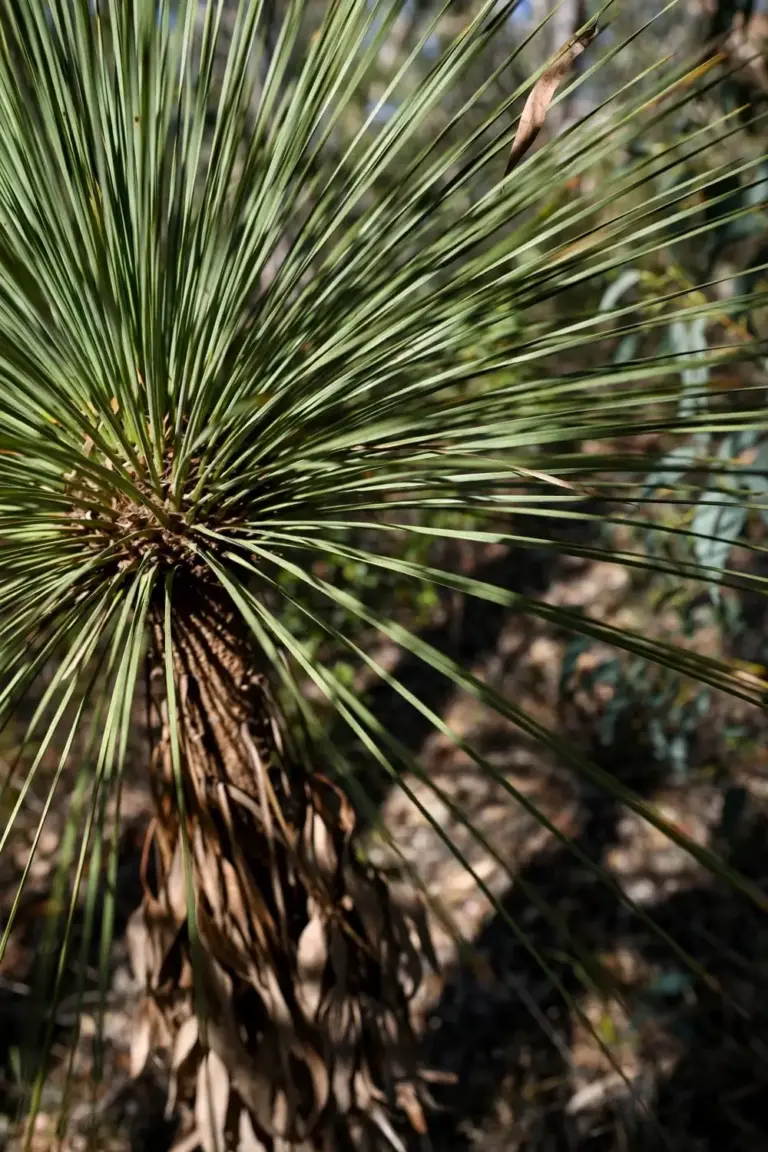
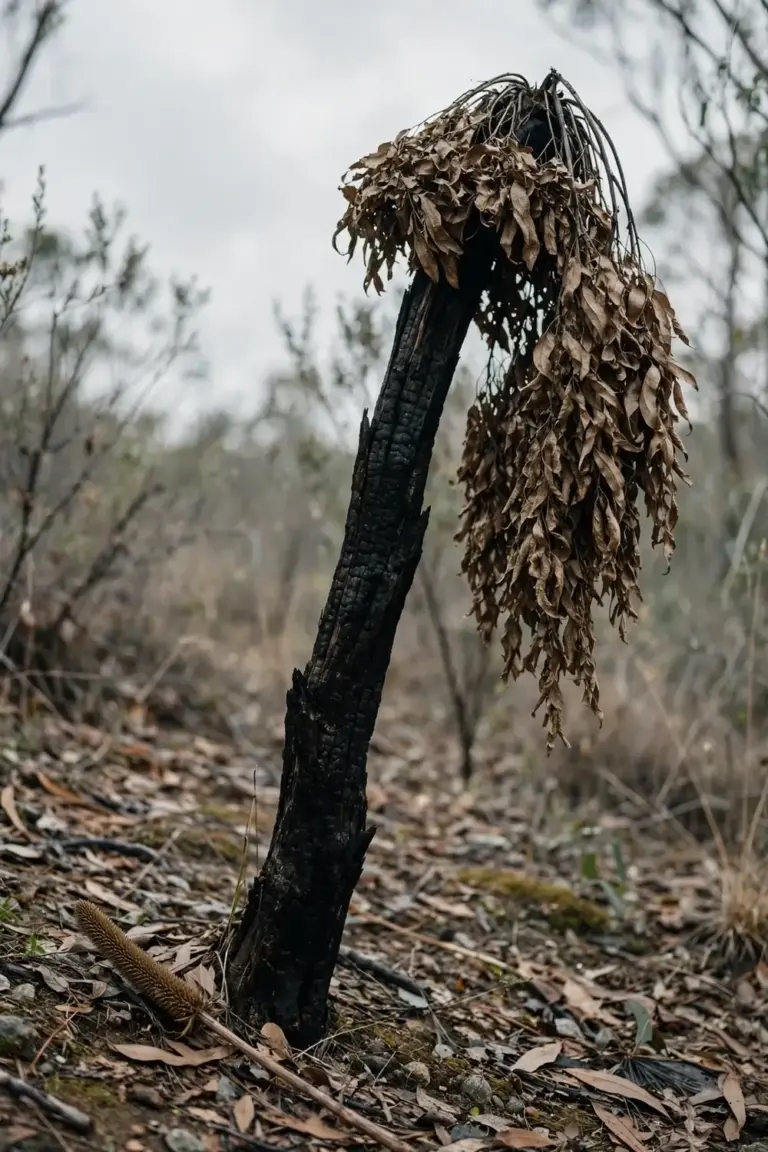
Now check for collapse. A dying grass tree shows its death in the crown first. The crown goes yellow, then brown, then the whole crown slumps or collapses inward. Crown collapse is the sign that matters. The University of Sydney’s eFlora describes Xanthorrhoea as carrying its leaves in a terminal crown, and that crown is the plant’s life indicator. When the crown has fully collapsed and no green remains at the center, the grass tree is dead or past saving.
Do not judge by the skirt. The skirt is the hanging curtain of dead brown leaves around the trunk. Every healthy grass tree grows one. The dead leaves hang down and protect the trunk, and Botany Brisbane’s Xanthorrhoeae reference notes that old leaves usually hang down protecting the trunk. Cutting the skirt off because it looks untidy removes the trunk’s insulation and exposes it to sun damage. Leave the skirt alone.
The test takes 30 seconds. Green crown means alive, and a collapsed brown crown means dead or dying. Brown skirt means nothing at all.
2. Brown Skirt Is Normal: Why Dead Leaves Do Not Mean Death
A grass tree is not a tree in the botanical sense. It does not make wood like a eucalyptus or a wattle. The trunk of a Xanthorrhoea is a column of old leaf bases glued together by the plant’s own yellow resin. The genus name itself means yellow flow, from the Greek xanthos for yellow and rhoia for flow. Every leaf the plant ever grew leaves its base behind, and those bases stack into the trunk you see.
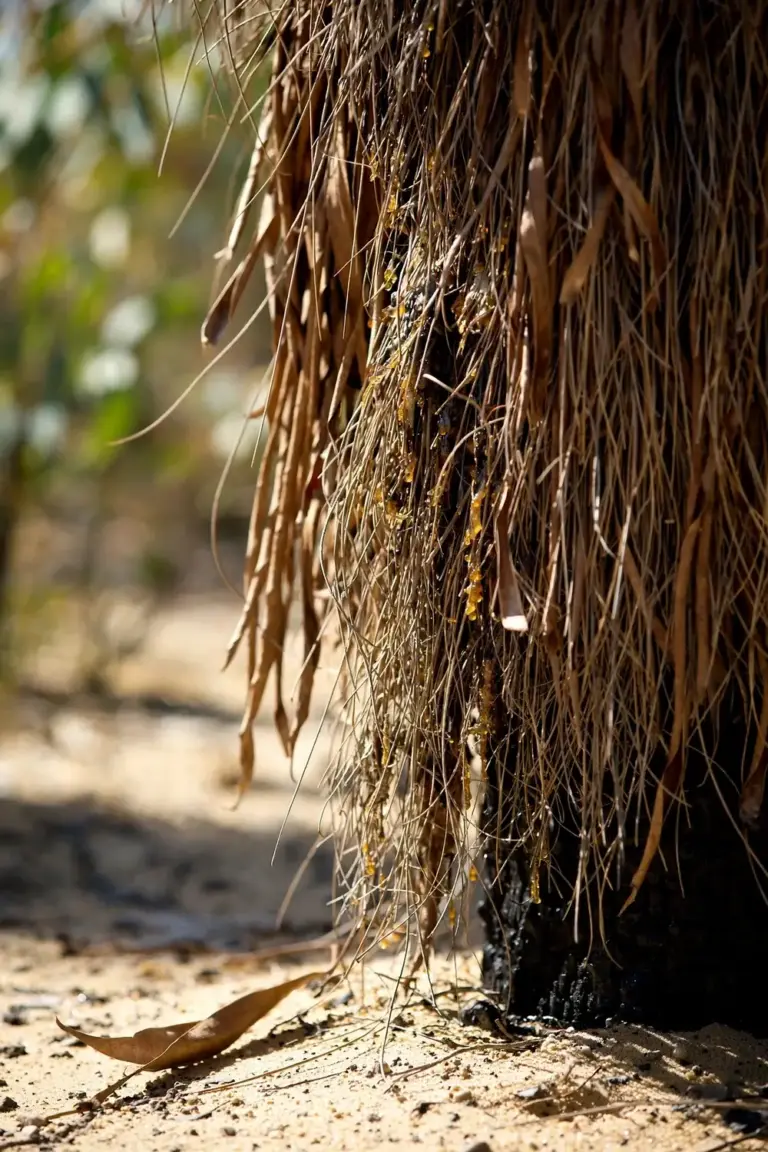
Because the trunk is built from dead leaf bases, a fringe of dead leaves is part of the design. As new leaves push from the crown, old leaves die and hang down. They form the skirt. The skirt insulates the trunk against heat, and in fire-prone country the tightly packed leaf bases shield the growing tip so the plant can resprout after a burn. A grass tree without a skirt is either very young or has been tidied by someone who did not understand the plant.
Gardeners cause real harm by stripping the skirt. Pruning guides that say “cut off the brown parts” were written for soft perennials, not for Xanthorrhoea. When you cut the skirt away, you expose the resin-glued trunk to direct sun and drying wind. The trunk dries, cracks, and becomes an entry point for rot. If the skirt bothers you, trim only the very longest hanging tips and leave the dense thatch against the trunk intact.
The honest rule is simple. Brown leaves hanging from the trunk are normal. Brown leaves in the crown are not. Learn to look up, not down.
3. Killer 1: Phytophthora Root Rot, the Killer With No Cure
Phytophthora cinnamomi is a soil-borne water mould that rots the roots of susceptible plants. Grass trees are among its most vulnerable victims. The City of Busselton’s dieback information states plainly that dieback is an introduced disease with no known cure, and it names grass trees alongside jarrah and banksias as susceptible plants. There is no product that kills Phytophthora in the soil around an infected plant.
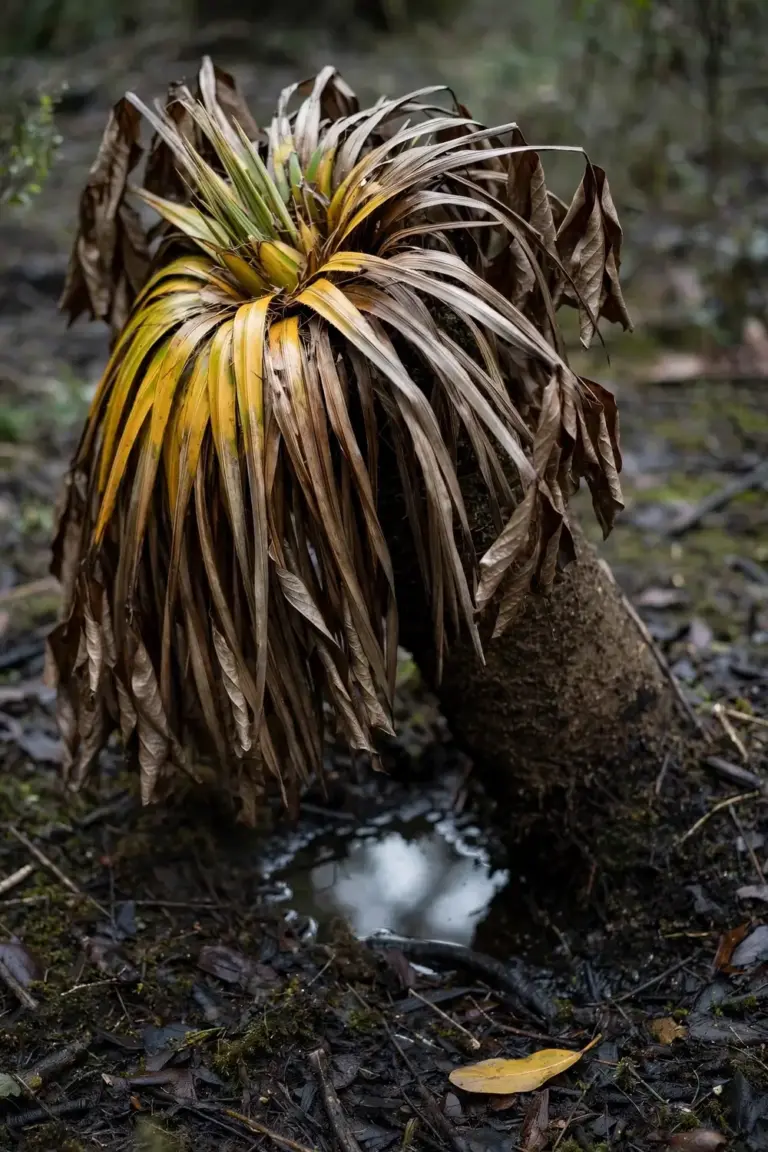
Infection starts underground. The pathogen’s swimming spores colonise the fine roots, and the roots rot. The plant cannot take up water, so the crown shows drought symptoms even when the soil is moist. Leaves yellow from the outside of the crown inward, then brown, then the crown collapses. This matches the field symptoms researchers describe: yellowing leaves, browning, and total crown and trunk collapse. By the time the crown collapses, the root system is usually destroyed.
Phytophthora spreads in wet soil and on dirty tools, boots, and pots. It loves warm, moist conditions. A grass tree in a low spot that stays wet after rain sits in exactly the conditions the pathogen needs. Buying a grass tree in a pot of unknown soil can import the pathogen to a clean garden.
Phosphite is the one defence available to home gardeners. The City of Busselton notes that phosphite can be used to protect plants against Phytophthora dieback, that it works by boosting the plant’s natural defences, and that it does not eradicate the disease. Trunk injection protects for 3 to 5 years while foliar spray protects for 1 to 2 years, according to the same source. Phosphite is sold at most nurseries and rural supply stores. Treat a valuable grass tree before symptoms appear, because phosphite cannot resurrect dead roots.
If your grass tree sits in a wet hollow and the crown is yellowing from the outside in, suspect Phytophthora. Improve drainage first, apply phosphite second, and never move soil from around a suspect plant to other parts of the garden.
4. Killer 2: Waterlogging in Heavy Clay
Grass trees demand sharp drainage. In the wild they grow on sandstone ridges, sandy heaths, and gravelly slopes where water never sits around their roots. Plant one in heavy clay that holds water after rain and the roots suffocate. Suffocated roots rot, and rotting roots invite Phytophthora. Waterlogging is the second killer because it sets up the first.
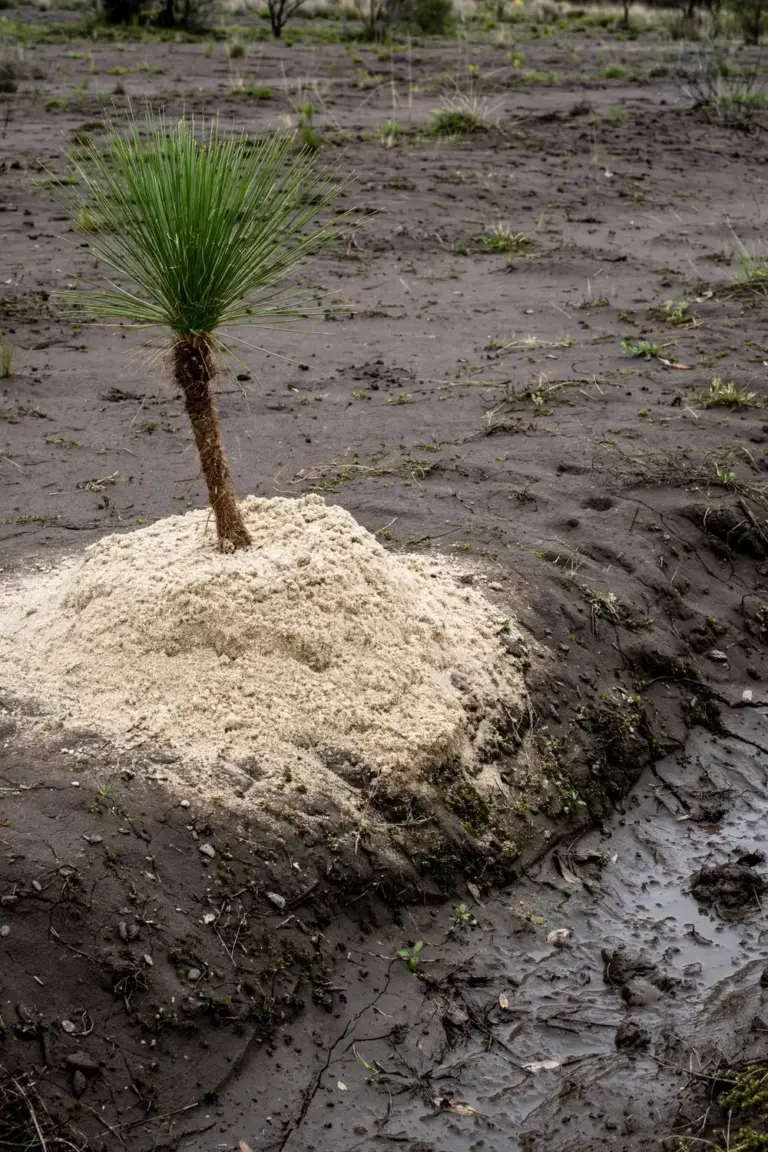
The signs of waterlogging look like drought, which confuses gardeners into watering more. The crown yellows, growth stalls, and the plant looks thirsty, so the instinct is to reach for the hose. That instinct kills the plant faster. Before watering a yellowing grass tree, dig a finger into the soil 10 cm down. If the soil is wet, water is the problem, not the cure.
Fix the site, not the plant. Grass trees need a raised planting position with free-draining soil. Urban Wildlife Gardens, writing from a coastal Queensland garden, advises planting in an area with good drainage and building up a raised bed of free-draining mix if the garden soil is poorly drained. A mound 20 to 30 cm high built from sandy native-plant mix lifts the root zone out of the wettest soil. On flat clay blocks, that mound is the difference between a living grass tree and a dead one.
Pots need the same thinking. A grass tree in a pot without drainage holes, or sitting in a saucer that never empties, drowns just as surely as one in clay. Use a native-plant potting mix, raise the pot on feet so water escapes, and let the mix dry thoroughly between waterings.
If your grass tree yellows after a wet winter on clay soil, stop watering entirely until the soil dries. Then build the mound. Drainage is not a preference for Xanthorrhoea. It is a requirement.
5. Killer 3: Transplant Shock, the Slow Killer
Grass trees hate having their roots disturbed. A grass tree dug from the bush and replanted in a garden can take months to show whether it survived the move. The cruel part is the delay. A transplanted grass tree can look fine for a season, then yellow and collapse long after the gardener has stopped worrying. The plant was dying from the day it was dug. It just took its time.
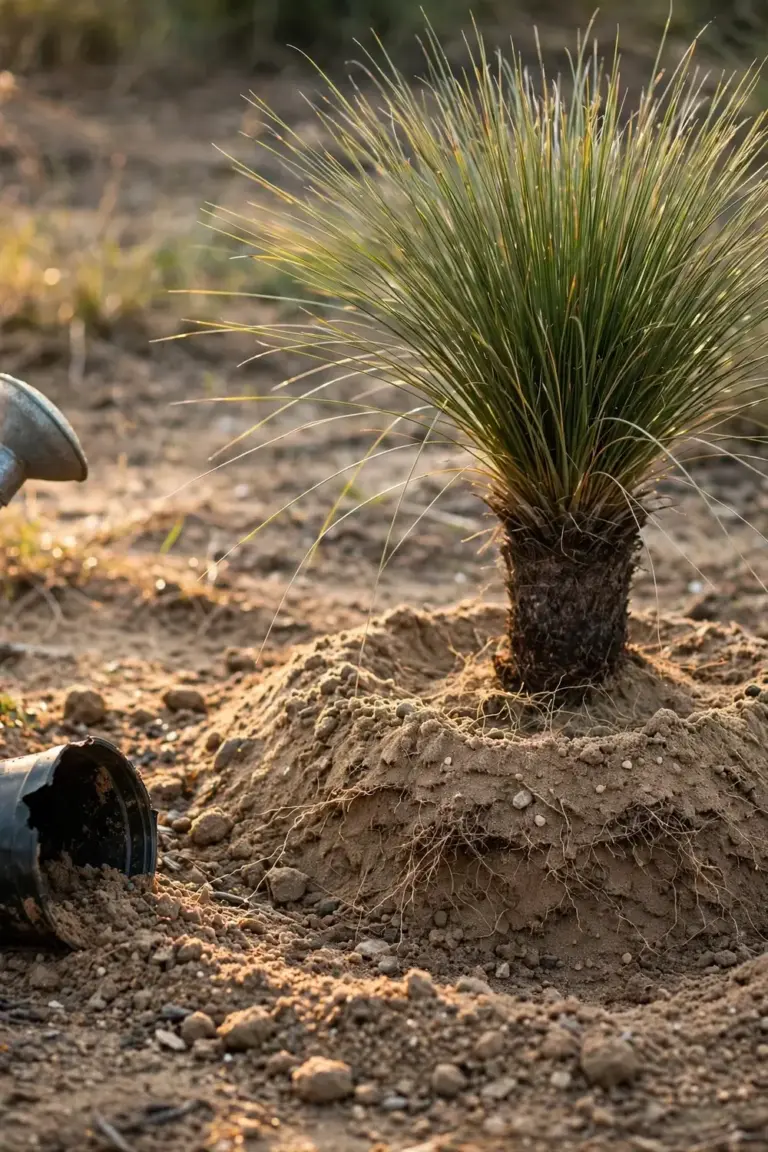
The reason is the root system. Xanthorrhoea depends on a partnership with mycorrhizal fungi in the soil, and digging severs those connections. The plant must rebuild its fungal network in the new site before it can feed properly. Big wild-dug specimens suffer most because they lose the most root. Urban Wildlife Gardens notes that Xanthorrhoeas resent disturbance and will sometimes not survive the harvesting process, and that reputable suppliers keep salvaged plants in the nursery for about 1 year after harvest before selling, to increase the chance of successful transplant to the garden.
Buy nursery-grown tube stock instead of a wild-dug giant when you can. Tube stock establishes faster because its roots are intact and its fungal partners come with it. If you do plant a salvaged specimen, disturb the roots as little as possible. Cut the pot away rather than pulling the plant out. Plant it at the same depth it grew before, on a slight mound for drainage, and keep mulch away from the trunk.
Watering after transplant needs restraint. Water the plant in well, then water weekly until new growth appears, and then back off. Urban Wildlife Gardens waters new plantings every week until new growth shows, then lets rainfall take over with only supplementary water in dry periods. Drowning a new transplant in the name of kindness repeats killer number 2.
Sugar water has a folk reputation as a transplant tonic for grass trees. Dissolving half a cup of brown sugar in 5 litres of water and applying it monthly is said to feed the mycorrhizal fungi. Treat this as garden lore, not science. It will not save a plant whose roots were destroyed in digging.
6. Killer 4: Mulch Piled Against the Trunk
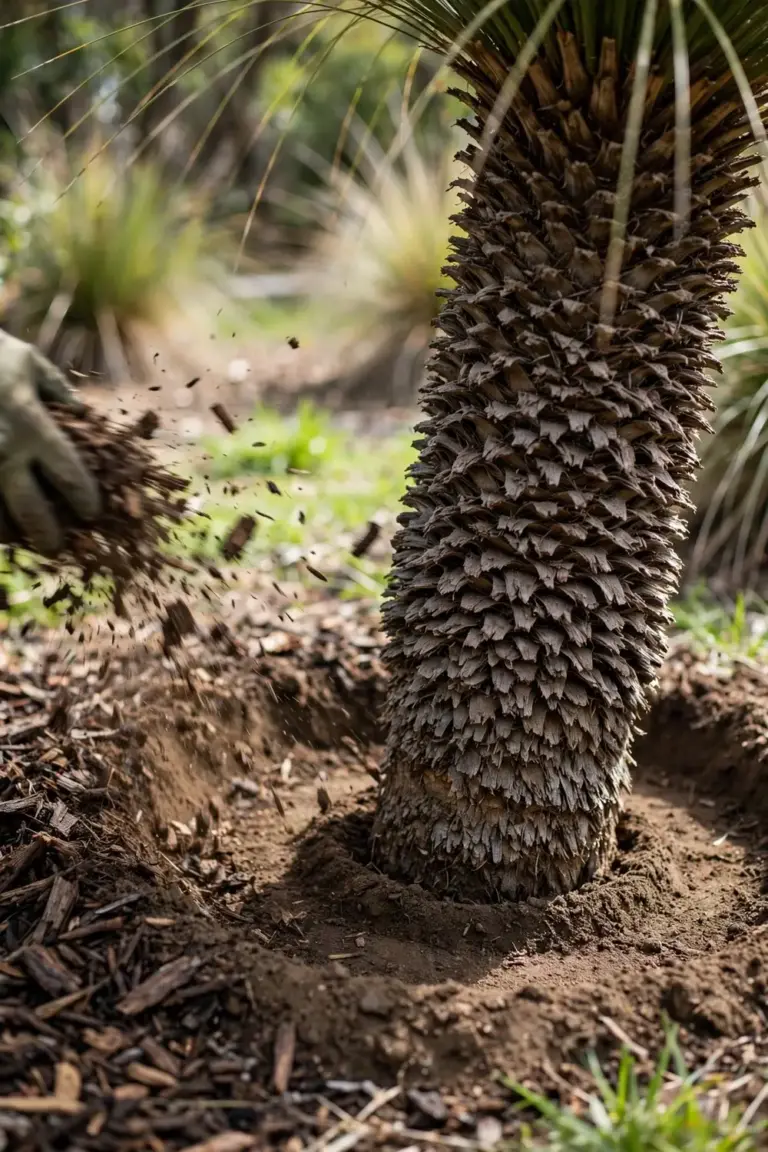
Mulch is good for gardens and bad for grass tree trunks. A thick layer of mulch heaped against the trunk holds moisture against the resin-glued leaf bases. The trunk stays damp, fungi move in, and the base of the plant rots. Crown rot that starts at a mulch volcano is one of the commonest preventable deaths in suburban grass trees.
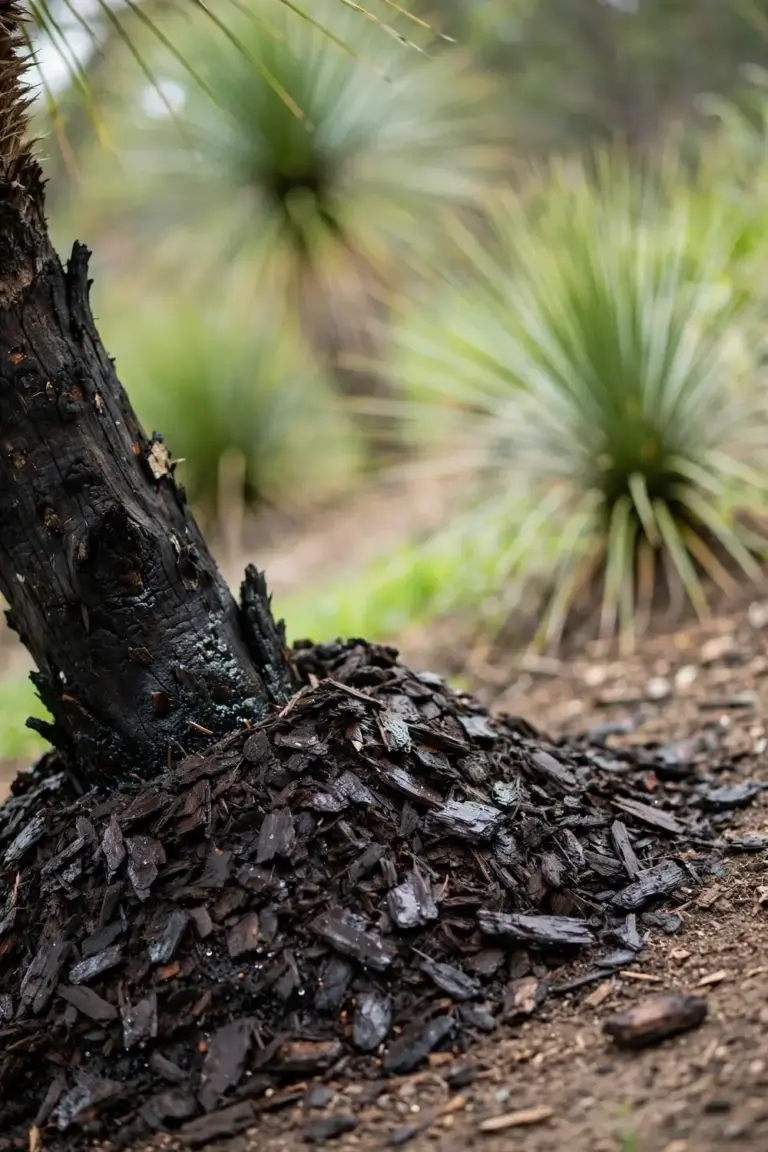
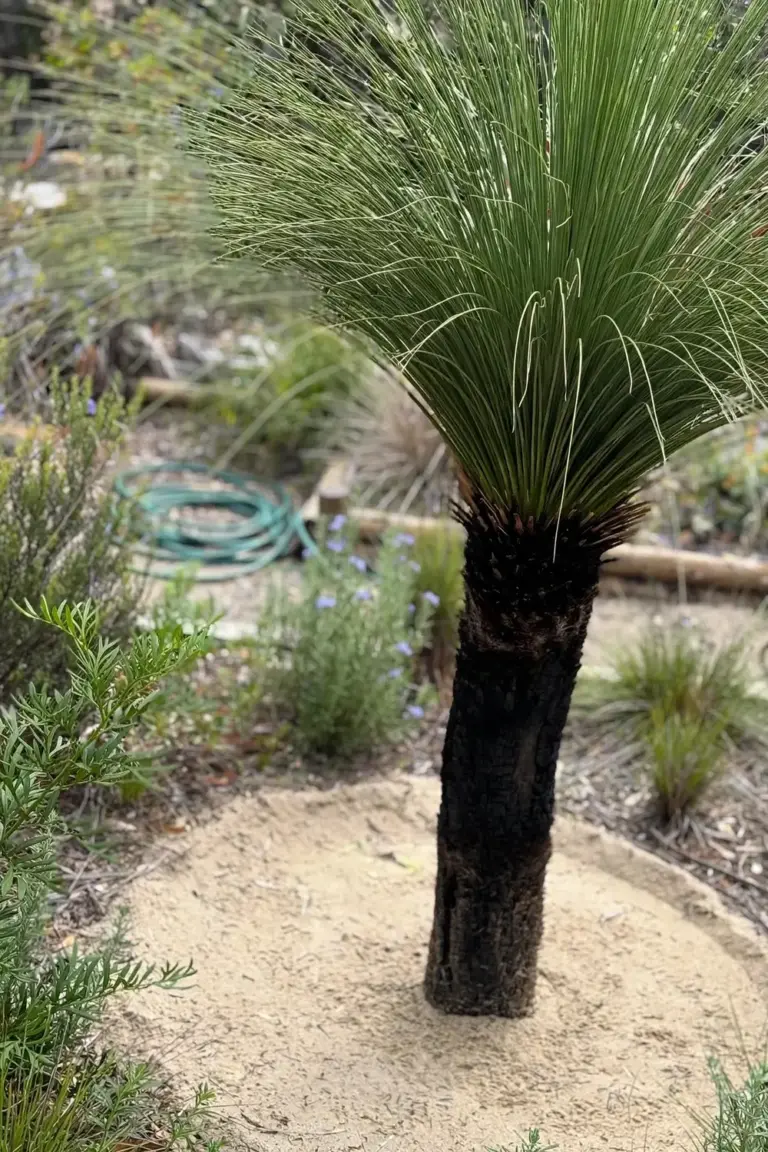
The rule is clearance. Keep mulch at least 10 to 15 cm away from the trunk in every direction, forming a donut with the trunk in the empty center. Urban Wildlife Gardens lists keeping mulch away from the trunks among its core planting practices for Xanthorrhoea. The mulch can be as deep as you like out where the fine roots feed. It just cannot touch the trunk.
This applies to soil and lawn as well. Planting a grass tree too deep buries the crown base the same way mulch does. The crown should sit at or slightly above the surrounding soil level, never below it. Lawn growing right up to the trunk keeps the base damp and invites whipper-snipper damage, which opens wounds for infection. Keep a clear ring around every grass tree.
Check established plants too. Mulch migrates. A bed that was mulched correctly two years ago may have slumped a load of bark chips against the trunk by now. Pull it back every autumn and re-establish the clear ring. Thirty seconds with a rake prevents a rot that takes years to show.
If the trunk base is already soft, dark, or smells sour, the rot has started. Pull the mulch back, let the base dry in air and sun, and do not re-cover it. A grass tree can survive a small basal rot if the crown is still green and the drainage is fixed, but it cannot survive being re-buried.
7. Killer 5: Phosphorus Fertilizer and Saline Bore Water
Grass trees evolved in Australia’s ancient, phosphorus-poor soils. Their roots are tuned to scavenge tiny amounts of phosphorus, and a dose that a rose would shrug off can poison a Xanthorrhoea. Standard garden fertilizers, the high-phosphorus kind sold for flowers and fruit, burn grass tree roots and yellow the crown. The damage looks like every other killer on this list, which is why fertilizer gets its own section.
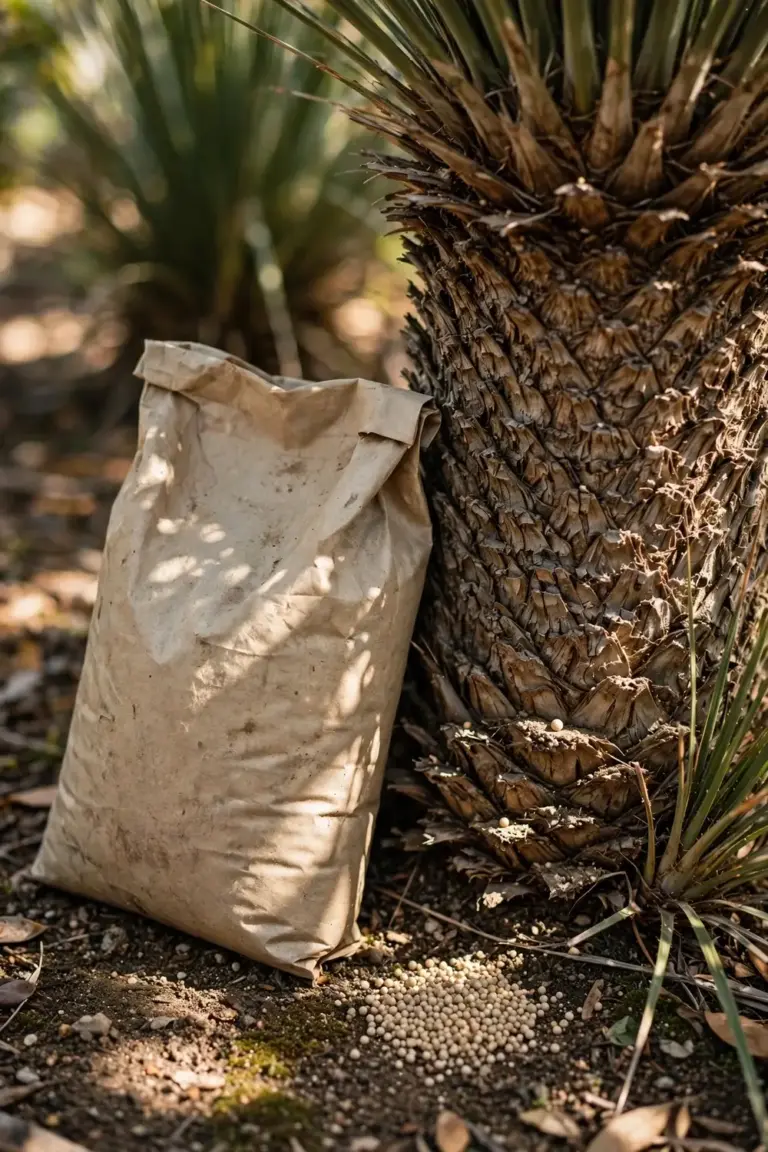
Use only fertilizer formulated for Australian native plants. These blends keep phosphorus low. Urban Wildlife Gardens reports that grass trees respond well to regular application of slow-release native fertilizer, putting on rapid new leaf growth. Slow-release matters because it avoids the sharp spikes of salts that damage fine roots. One light application in spring beats three heavy feeds.
More grass trees are killed by kindness than by neglect. A struggling plant does not need a stronger fertilizer dose. It needs a diagnosis. Feeding a Phytophthora-infected grass tree does nothing for the roots and can push weak growth the plant cannot support. Diagnose first, feed second, and only with native-plant fertilizer.
Saline bore water is the quiet partner of this killer. In parts of Australia, bore water carries enough salt to damage salt-sensitive natives over time. Leaves yellow at the tips, growth stalls, and the plant declines for no visible reason. If your bore water leaves white crusts on pots or tastes salty, do not use it on grass trees. Tank water or town water is safer. This is an Australian-specific risk that overseas care guides never mention.
The fertilizer rule fits in one sentence. If the bag is not labelled for Australian natives, do not use it on a grass tree.
8. Your Rescue Checklist: 7 Actions for This Weekend
You have run the alive-or-dead test and the crown is still green. The plant is alive, which means it can recover. Work through these seven actions in order. Each one removes one of the killers.
| Killer | The Sign | The Fix |
|---|---|---|
| Phytophthora root rot | Crown yellows from outside in, soil stays moist | Improve drainage, apply phosphite while crown is green |
| Waterlogging in clay | Yellowing after wet weather, soggy soil 10 cm down | Build a 20 to 30 cm mound of sandy native mix |
| Transplant shock | Yellowing in the first year after planting | Water weekly until new growth, then back off |
| Mulch against trunk | Soft, dark, or sour-smelling trunk base | Pull mulch back 10 to 15 cm, keep the ring clear |
| Phosphorus and salt | Tip burn, stalled growth, white crusts on soil | Switch to native-plant fertilizer, check bore water |
First, pull mulch and soil back from the trunk and establish a clear ring 10 to 15 cm wide around the base. Let the trunk breathe. This single action removes killer number 4 immediately.
Second, check the drainage. Dig 10 cm down near the root zone after rain. If the soil is soggy, plan a mound. Lift the plant onto a 20 to 30 cm mound of sandy native-plant mix, or redirect surface water away from the root zone. Do this in the cooler months when the plant is least stressed.
Third, stop fertilising with general garden products. If you have fed the plant recently with a standard fertilizer, flush the root zone with clean water once to dilute the salts, then switch to a slow-release native-plant fertilizer applied lightly in spring only.
Fourth, check your water source. If you irrigate with bore water, test it for salinity. White crusts on the soil surface or on pots signal salt. Switch to tank or town water for the grass tree.
Fifth, consider phosphite if Phytophthora is a risk in your area. The City of Busselton confirms phosphite is available at most nurseries and rural supply stores, that trunk injection protects for 3 to 5 years, and that foliar spray protects for 1 to 2 years. Phosphite protects healthy roots. It does not cure dead ones, so apply it while the crown is still green.
Sixth, clean your tools. If you have pruned or dug around a suspect plant, wash soil from spades, pots, and boots before touching healthy plants. Phytophthora travels in mud. The hygiene habit that protects bushland protects backyards too.
Seventh, be patient. Grass trees grow slowly. Urban Wildlife Gardens cites trunk growth of 0.88 cm per year for Xanthorrhoea johnsonii, which means visible recovery takes seasons, not weeks. New green leaves pushing from the crown center are the sign your rescue worked. Give the plant a full growing season before judging the result.
9. The Lomandra Trap: Is It Even a Real Grass Tree?
Before diagnosing a dying grass tree, confirm the plant is actually a Xanthorrhoea. Retailers sell strappy-leafed Lomandra selections under names like Grass Tree 310, and buyers nurse a Lomandra through grass tree advice that does not apply. A Lomandra is a tough ornamental grass-like plant. A Xanthorrhoea is a slow-growing Australian native with a resin-glued trunk. They need different care.
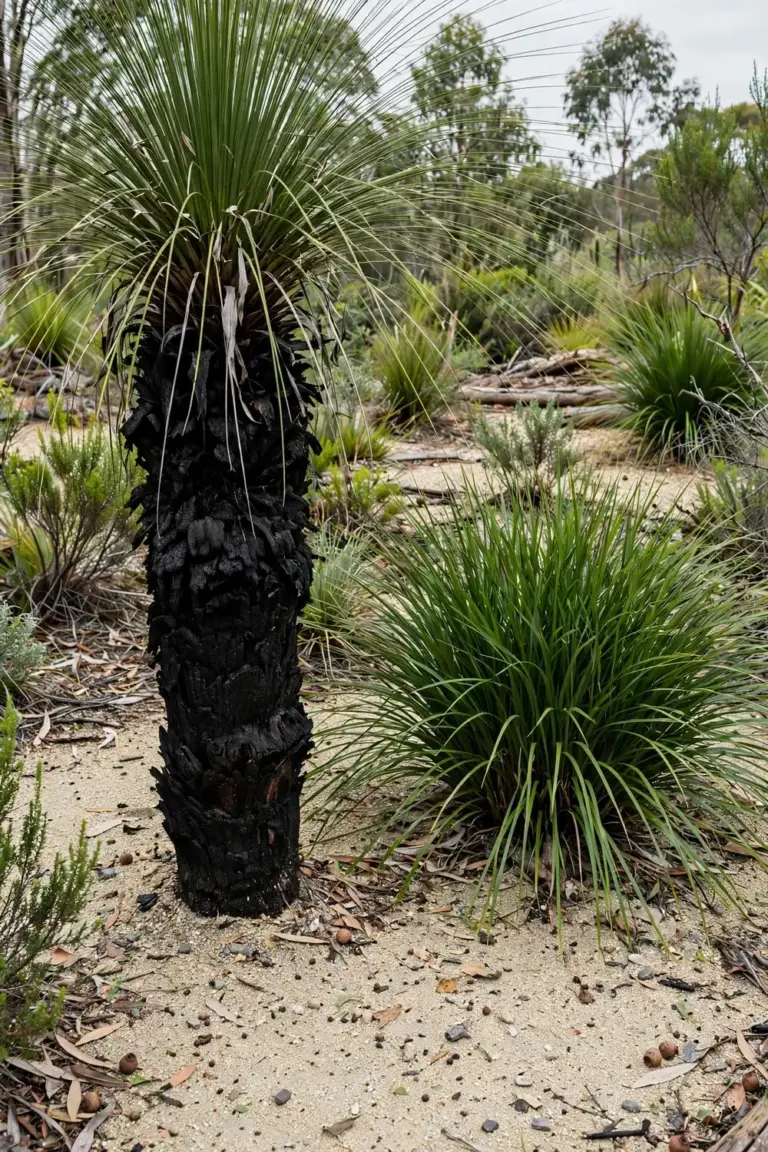
Tell them apart by the trunk and the leaves. A true grass tree develops a trunk of packed old leaf bases, rough and fibrous, often blackened. Lomandra forms a clump of strappy leaves from ground level with no trunk at all. Grass tree leaves are long, narrow, and grass-like, rising from a central crown. If your “grass tree” is a clump with no trunk after several years in the ground, it is probably a Lomandra.
This matters because the killers differ. Lomandra tolerates clay, regular fertilizer, and mulch against its crown far better than Xanthorrhoea does. If you have been treating a Lomandra as a grass tree, most of this article’s warnings do not apply, and your plant is probably fine. Check the label from the nursery or compare your plant against the Xanthorrhoea description on the University of Sydney’s eFlora, which keys the genus at 28 species endemic to Australia.
Buy true grass trees from native-plant nurseries that label the species. A plant sold only as “grass tree” with no botanical name deserves a question before it deserves a planting hole.
10. When It Is Dead: How to Be Sure Your Grass Tree Is Dying
A grass tree is dead when the crown has fully collapsed and no green remains at the center. Pull gently on the central leaves. If they slide out with no resistance and the heart of the crown is brown mush, the growing tip is gone. No grass tree recovers from a dead growing tip. The 30-second test from the first section is the final word. Trust it.
Do not rush to remove a dead grass tree if Phytophthora is suspected. The pathogen lives in the soil and the dead roots. Digging the plant out and dumping the soil on the compost spreads the problem. Bag the root ball and dispose of it through green waste or the rubbish, not the home compost. Do not replant a susceptible species in the same spot. The City of Busselton is blunt: dieback has no known cure, and infected soil stays infected.
A dead trunk has uses. Grass tree trunks are slow to rot and make striking garden features. A standing dead trunk, a stag, provides habitat for insects and lizards. Some gardeners keep the trunk as a sculptural element and plant around it. The resin in the trunk was traditionally used as glue, and the flower spikes made spear shafts, which is why old trunks were valued long before they were garden plants.
If the plant died of transplant shock rather than disease, the site may be fine for a replacement. Wait a season, improve the drainage with a mound, and plant nursery-grown tube stock instead of another wild-dug specimen. Tube stock is cheaper, establishes faster, and carries its mycorrhizal partners with it. The dead giant taught you what the site needs. The tube stock benefits from the lesson.
Grieve the plant, learn the lesson, and plant the next one on a mound with the mulch kept back. That is the whole article in one sentence.
11. Frequently Asked Questions
No. The brown skirt of dead leaves is normal and protects the trunk. Botany Brisbane’s Xanthorrhoeae reference notes that old leaves usually hang down protecting the trunk. Cutting the skirt exposes the resin-glued trunk to sun and drying wind, which cracks it and opens entry points for rot. Trim only the longest stray tips if they annoy you, and leave the dense thatch against the trunk untouched.
Very slowly. Urban Wildlife Gardens cites measured trunk growth of 0.88 cm per year for Xanthorrhoea johnsonii, so a 1 metre trunk represents more than a century of growth. Seed-grown plants may flower at 5 to 6 years of age, but a visible trunk takes decades longer. This slow growth is why mature wild-dug specimens cost so much, and why losing one to a preventable killer hurts.
A grass tree with early symptoms and living roots can be protected with phosphite, but phosphite does not cure dead roots. The City of Busselton states that phosphite boosts the plant’s natural defences so susceptible plants can survive in affected ground, and that it does not eradicate the disease. Trunk injection protects for 3 to 5 years and foliar spray for 1 to 2 years. Prevention through drainage and hygiene beats treatment every time.
Transplant shock is the likely cause. Grass trees resent root disturbance and rebuild their mycorrhizal partnerships slowly after planting. Yellowing in the first year after planting usually reflects that underground struggle, not a disease. Water weekly until new growth appears, keep mulch off the trunk, and give the plant a full season. If the crown collapses rather than just yellowing, the transplant failed.
It depends on the salt level. Bore water in some Australian districts carries enough dissolved salt to damage salt-sensitive natives over seasons. White crusts forming on the soil surface or on pots are the warning sign. If you see crusts, switch the grass tree to tank water or town water. Mains water is safe. When in doubt, use the bore on lawns and save the clean water for natives.
12. The Last Word: Patience Is the Only Fertilizer
A grass tree measures time differently from a gardener. At under a centimetre of trunk growth a year, your plant was old before your house was built, and it will outlive your interest in the garden if you let it. The five killers above all share one trait. They are fast. Phytophthora kills in months. Waterlogging kills in a season. A mulch volcano kills in a year or two. The grass tree cannot hurry, so the gardener must slow down.
Run the crown test before you panic. Leave the brown skirt alone. Keep water moving away from the roots, mulch away from the trunk, and phosphorus out of the fertilizer. Buy tube stock, plant it on a mound, and then wait. New green leaves from the crown center are the plant’s way of saying the rescue worked. Everything else is patience.