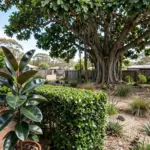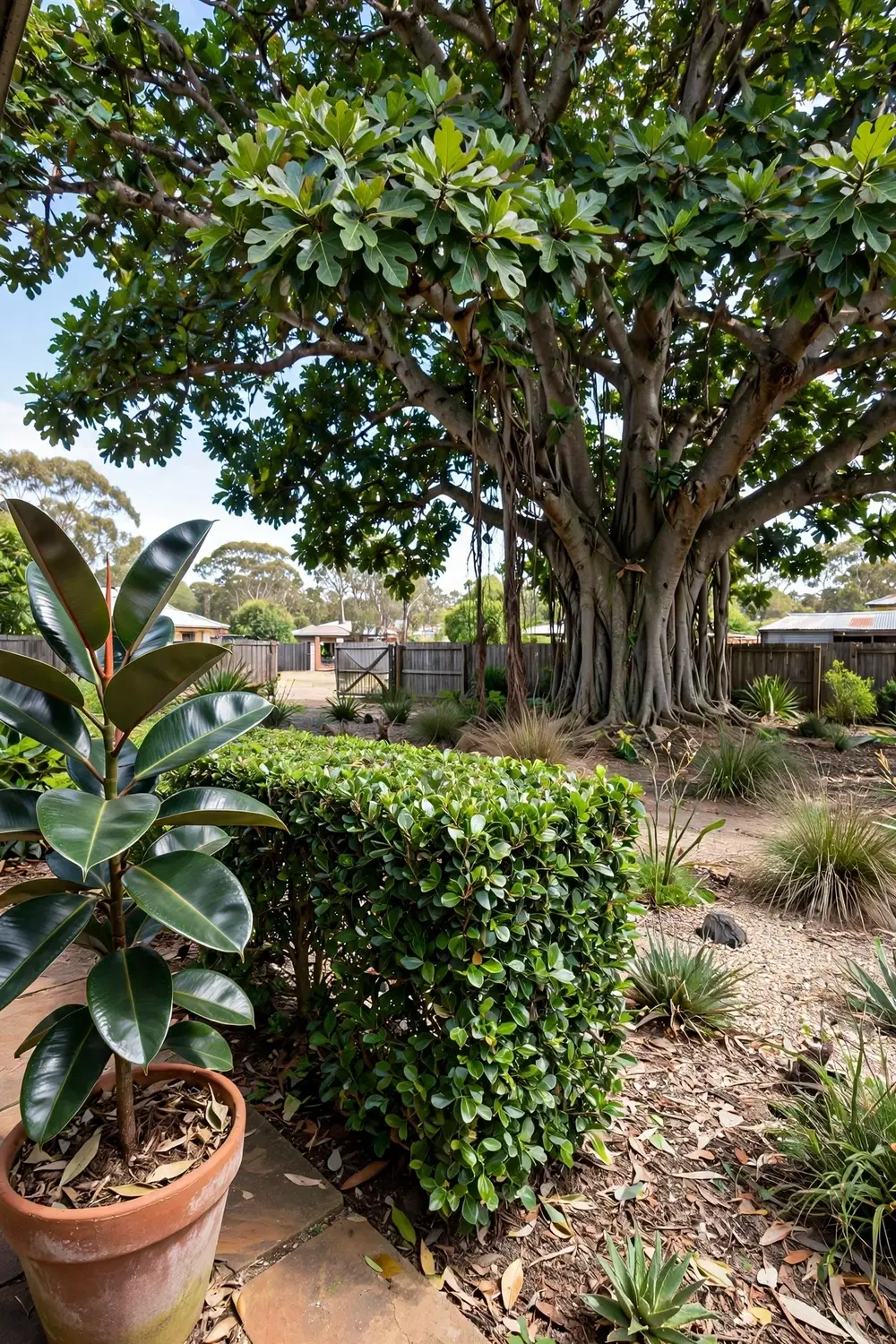

Start with where the tree grows. A ficus in a pot indoors is one of four species, all staying under 3 metres in containers. A ficus clipped into a hedge is almost certainly Hillii. That three-way split names most Australian ficus on the first try. Ficus identification in Australia comes down to matching the plant to its group, then running the leaf and fig tests inside that group.
Ficus is the genus. Identification means telling which species you have. The three groups are indoor ficus, hedge ficus, and native fig. Each group has its own shortlist. Work the shortlist and the name appears.
I check for the long, pointed leaf tip first, because that acuminate tip separates a weeping fig from Hillii faster than any nursery tag. The North Carolina Extension Gardener Plant Toolbox lists it as the top Quick ID Hint for Ficus benjamina: leaf elliptic with a long, acuminate tip.
1. Start With Where It Grows: Pot, Hedge, or Big Tree
The location test eliminates two-thirds of the possibilities in seconds. A ficus growing in a pot indoors belongs to the indoor four. A ficus trained as a hedge or street tree in warm Australia is Hillii, which is Ficus microcarpa var. hillii. A huge spreading tree with buttress roots in a park or large garden is a native fig, most often Moreton Bay fig or Port Jackson fig.
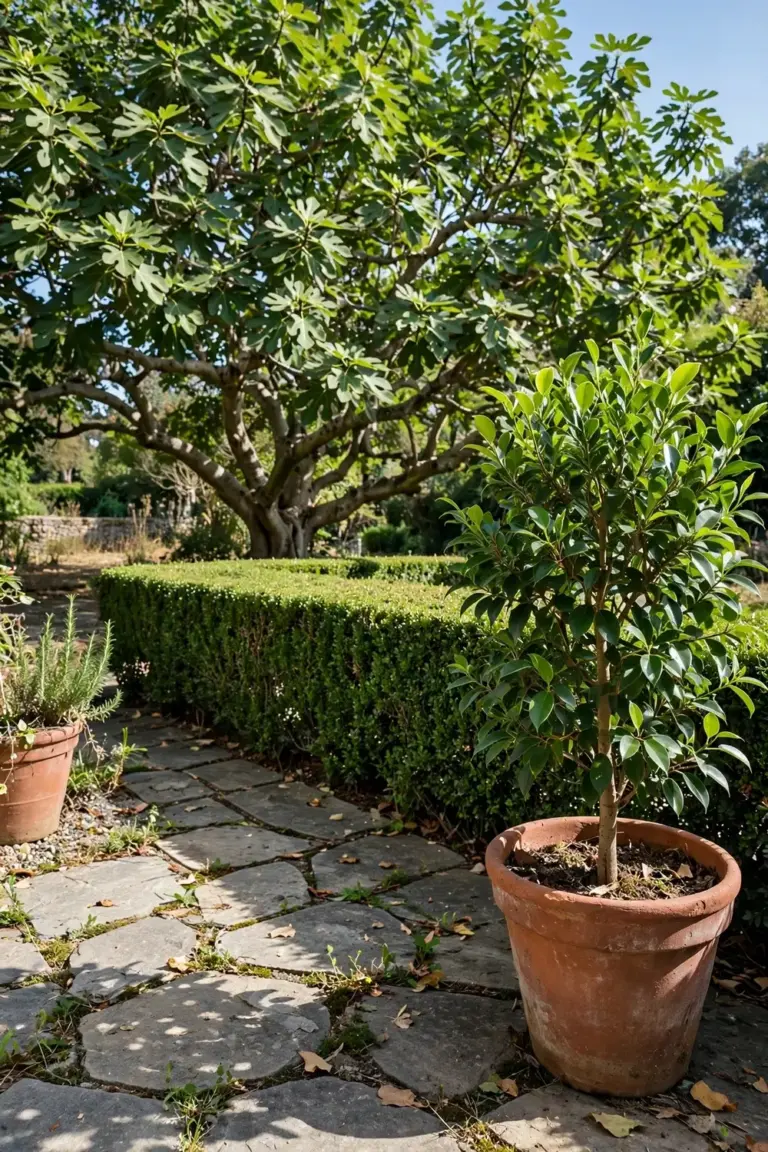
Indoor ficus stay small because pots restrict them. The indoor four are rubber plant (Ficus elastica), fiddle-leaf fig (Ficus lyrata), weeping fig (Ficus benjamina), and climbing fig (Ficus pumila). All four tolerate indoor light. None of them develops the massive trunk of an outdoor fig.
Hedge ficus is a different job. Hillii has been the go-to hedge in warm temperate to subtropical Australia for decades. It has small glossy oval leaves and dense growth. If the plant is a clipped hedge or a street tree with small oval leaves, start with Hillii and prove otherwise.
Native figs are unmistakable by scale. Moreton Bay fig reaches 15 to 35 metres high with a similar spread, according to the Australian Native Plants Society. Port Jackson fig is smaller but still a substantial tree. Both develop buttress roots and a spreading crown. No indoor ficus does this.
The setting also tells you what the plant is not. A ficus in a shopping center atrium is not a native fig, no matter how large the leaves look under artificial light. A ficus in a suburban hedge is not Moreton Bay fig, because no council plants a 35-metre tree as a boundary screen. Read the context before you read the leaves. The location test works because each group occupies a distinct niche in Australian horticulture, and those niches rarely overlap.
2. Read the Leaf: Size, Shape, and Tip
Leaf size sorts the indoor four faster than any other test. Rubber plant leaves are very large, glossy, elliptic, stiff and leathery. The North Carolina Extension notes they run about a foot long. Fiddle-leaf fig leaves are even larger, up to 18 inches long, and shaped like a violin or fiddle, according to the North Carolina Extension Gardener Plant Toolbox. Weeping fig leaves are much smaller, slender and glossy. Climbing fig has tiny heart-shaped leaves on juvenile stems.
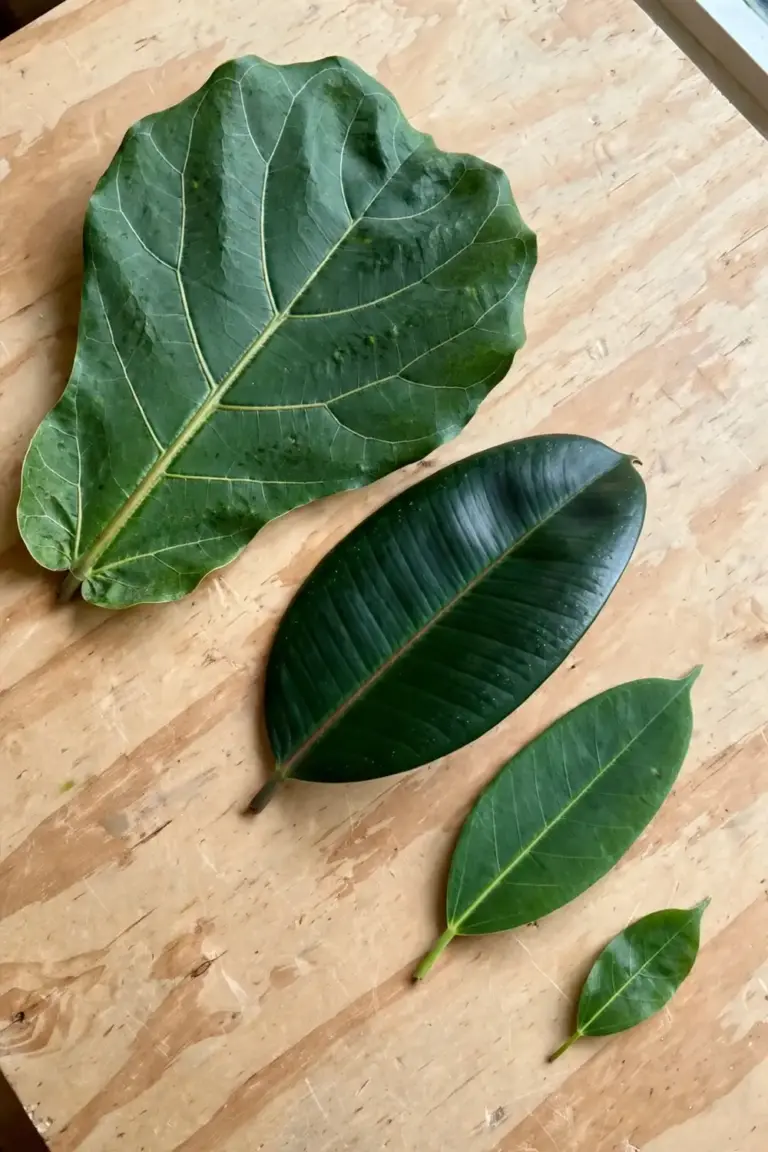
The leaf tip is the decisive detail for the Hillii versus weeping fig confusion, the pair that trips up more Australian gardeners than any other. Weeping fig leaves end in a long, drawn-out point called an acuminate tip, a feature so reliable that the North Carolina Extension lists it first among the Quick ID Hints. Hillii leaves are slightly shorter and narrower with a blunter tip. Hold a leaf up to the light and look at the very end. A sharp drip tip points to weeping fig, while a rounded or blunt tip points to Hillii.
Leaf shape also separates the indoor species. Rubber plant leaves are broad ovals, thick enough to feel stiff. Fiddle-leaf leaves are broad at the top and narrow at the base, the classic fiddle shape with prominent veins. Weeping fig leaves are narrow ellipses, willowy and fine. Climbing fig juvenile leaves are small hearts, completely different from the other three.
Measure when in doubt. A leaf over 20 cm long with a fiddle shape is fiddle-leaf fig. A leaf 10 to 12 cm long, glossy oval, on a hedge plant is Hillii. A leaf under 5 cm on a weeping indoor plant is weeping fig. Numbers beat guesses.
Keep a ruler or a coin for scale in your pocket when you go to look. A 20-cent coin is 28.65 mm across, a useful reference for estimating leaf width in the field. Photograph the leaf next to the coin. The photo preserves the size long after you have left the garden, and it lets you compare against the measurements in this key without relying on memory.
3. Check the Leaf Underside for Rusty Felt
Turn the leaf over. The underside carries one of the best field marks in the genus. Port Jackson fig (Ficus rubiginosa) gets its common name from the rusty-brown felt that coats the undersides of its leaves. The species name rubiginosa means rusty. If the underside feels fuzzy and looks reddish-brown, you have Port Jackson fig.
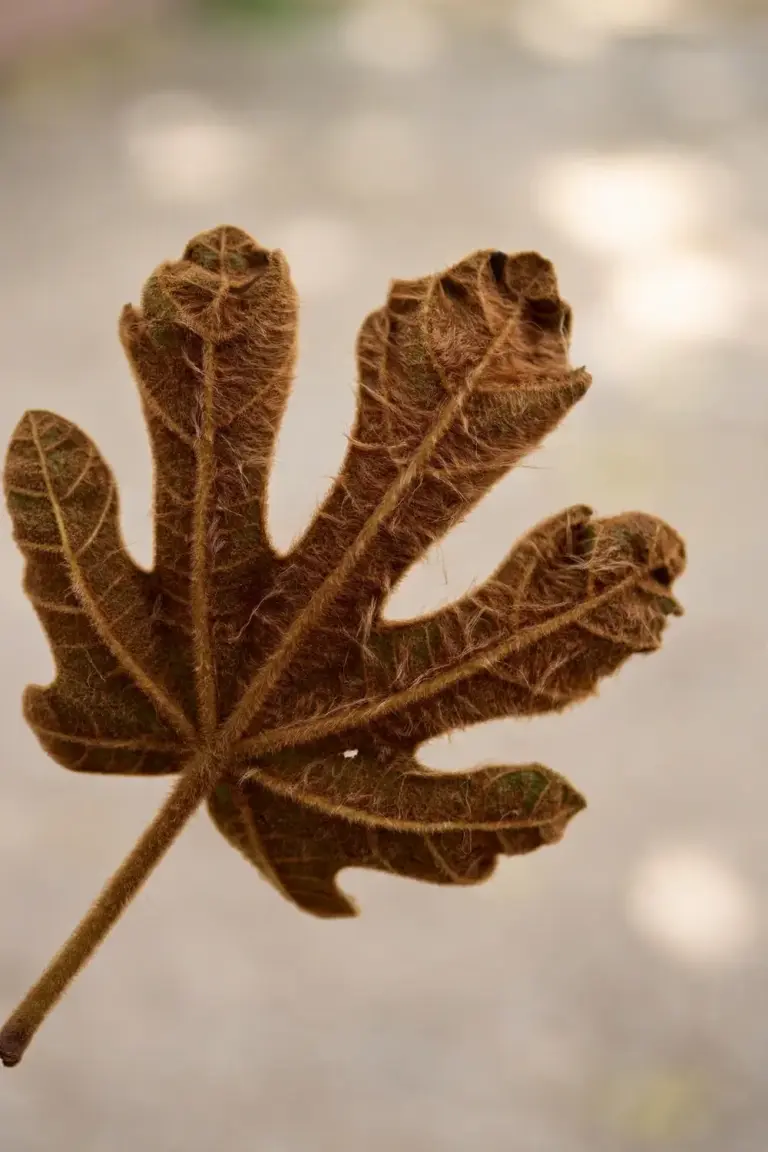
Moreton Bay fig leaves are dark glossy green above and rusty beneath, but the rust color is less pronounced than on Port Jackson fig. The Australian Native Plants Society describes the large leaves as oval-shaped to elliptical, dark glossy green above and rusty beneath. The distinction is degree: Port Jackson fig is distinctly furry-rusty underneath, Moreton Bay fig is smoother with a rusty tinge.
Hillii and weeping fig have smooth, hairless undersides. Botany Brisbane notes that Ficus microcarpa var. hillii has veins that are not prominent on the lower surface. Run a finger across the underside. Smooth and glossy means Hillii or weeping fig. Felty and rust-colored means Port Jackson fig.
This test works on fallen leaves too, which makes it valuable when the tree is too tall to reach. Pick up a dead leaf and check the underside. The rusty felt persists long after the leaf drops, unlike color which fades. It is one of the few ID marks that survives on the ground intact.
4. Meet the Indoor Four: Rubber Plant, Fiddle-Leaf, Weeping Fig, Climbing Fig
The indoor four share one trait: they tolerate life in a pot. Beyond that they diverge sharply.
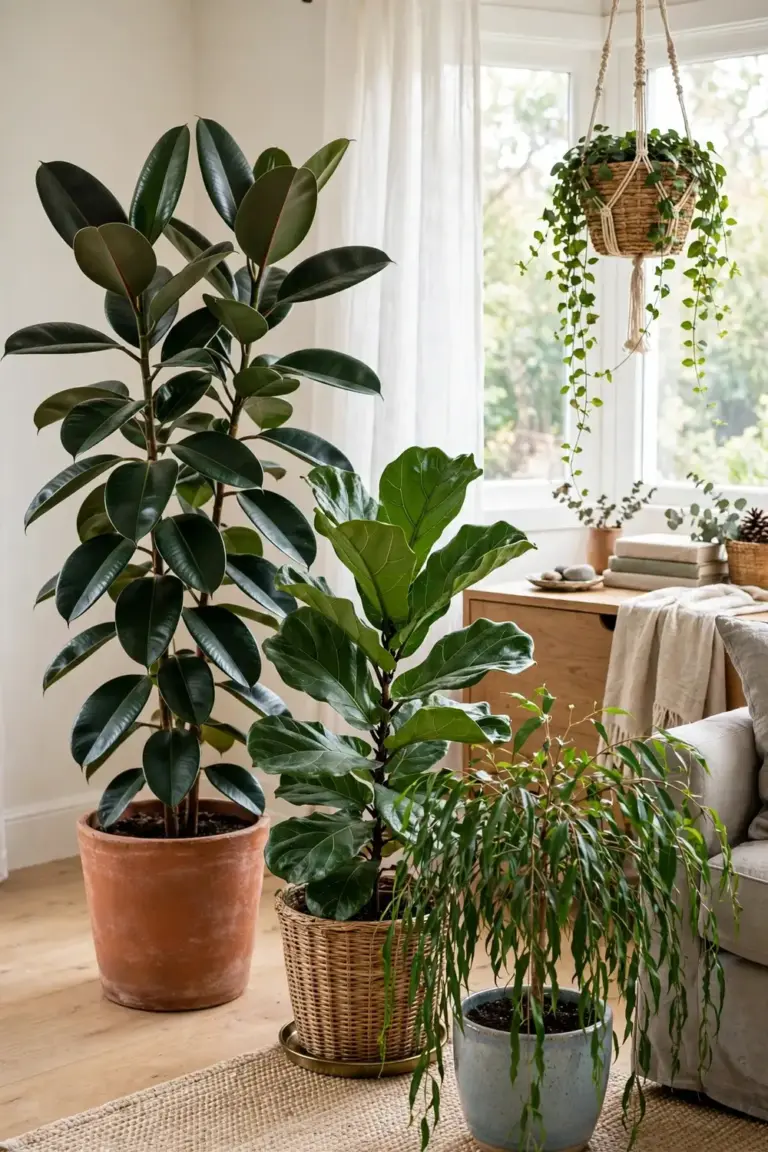
Rubber plant (Ficus elastica) is the heavyweight. Leaves are very large, glossy, elliptic, stiff and leathery, with a pale to reddish midrib raised underneath. The North Carolina Extension describes them as about a foot long. New growth often shows burgundy undersides. The site’s types of rubber plants with pictures shows the variety within the species. The plant grows upright and tree-like. It rarely branches without pruning. The site’s pink rubber plant care covers a popular variegated form. A rubber plant with a single thick stem and huge glossy leaves is unmistakable.
Fiddle-leaf fig (Ficus lyrata) is the drama queen. Leaves reach up to 18 inches long, broad and lyre-shaped with prominent veins, as documented by the North Carolina Extension Gardener Plant Toolbox. The plant grows as a single stem or with few branches. It demands bright indirect light. No other indoor ficus has leaves this large and this distinctively shaped.
Weeping fig (Ficus benjamina) is the fine-textured one. Leaves are small, slender, glossy ellipses with long pointed tips. Branches arch and droop, giving the weeping habit. The tree reaches 40 to 50 feet outdoors with a 25 to 30 foot spread, but stays 2 to 10 feet in a pot, per the North Carolina Extension Gardener Plant Toolbox. It drops leaves when moved. That sensitivity is itself a clue.
Climbing fig (Ficus pumila) is the outlier in the indoor group. It climbs or trails rather than standing upright like the other three. Juvenile leaves are small and heart-shaped, hugging tight to whatever surface the plant climbs. Adult leaves on mature, established stems grow larger and turn leathery. If the plant is covering a wall or spilling from a hanging basket with tiny heart leaves, it is climbing fig.
5. Meet Hillii: Australia’s Hedge Ficus
Hillii is Ficus microcarpa var. hillii. It was first described as a separate species, Ficus hillii, by Frederick Manson Bailey from Queensland specimens, then reassigned by E. J. H. Corner in 1960 as a variety within Ficus microcarpa. The name honours Walter Hill, the colonial botanist. In nurseries it is sold as Hillii or Hill’s fig.
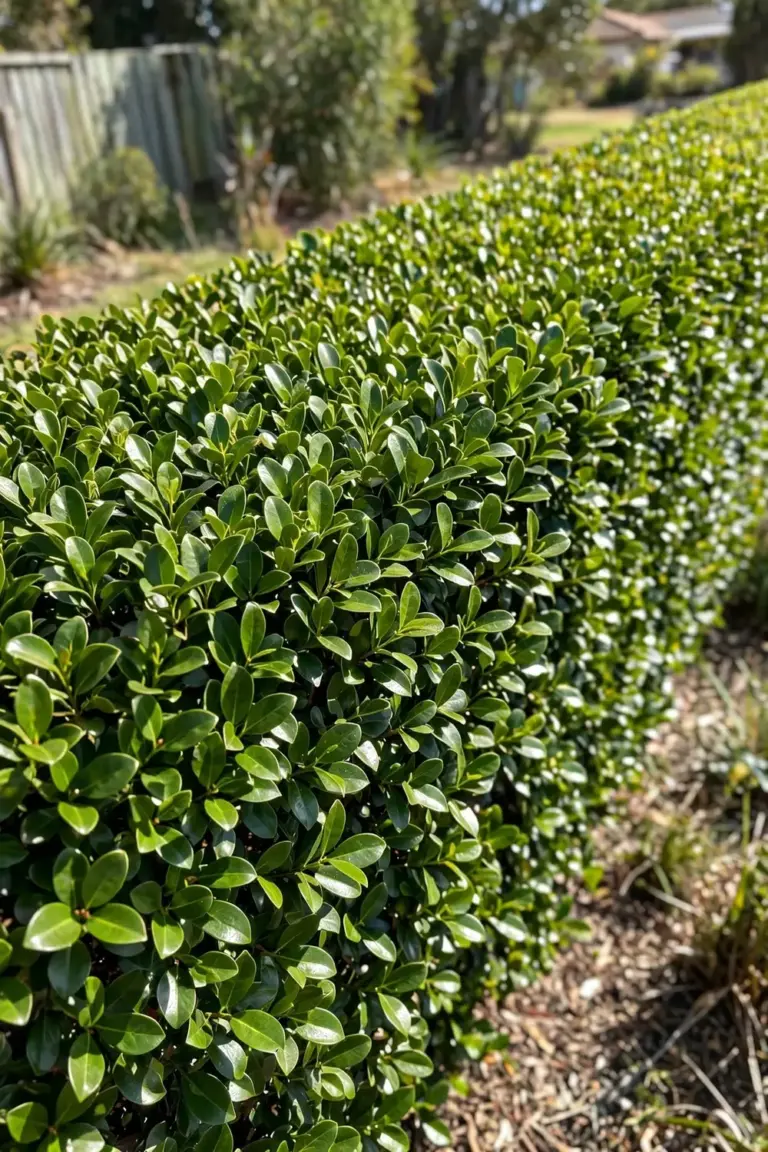
The leaves are the key. Botany Brisbane describes the variety precisely: leaves slightly shorter and narrower than the species type, veins not prominent on the lower surface, the basal lateral pair only slightly elongated, and usually no bristles among the flowers in the syconia. In plain terms: small glossy ovals, smooth underneath, no fuzz.
Hillii grows fast and dense. It tolerates shearing, which is why it dominates hedges and screens in Brisbane, Sydney, and Perth. It also serves as a street tree. The figs are small, about 1 cm across, yellow to red when ripe. They appear in pairs at the leaf axils.
Do not confuse Hillii with the straight species Ficus microcarpa. The species has slightly larger leaves with more prominent veins. In practice, almost every hedge labelled “ficus” in Australia is the Hillii variety. Start there.
The nursery trade complicates this. Hillii is sometimes sold as “Ficus hillii” without the variety designation, and the cultivar ‘Flash’ (a larger-leaved selection) is increasingly common. Both are Ficus microcarpa at the species level. For identification purposes, the variety and its selections share the same key marks: small glossy ovals, blunt tips, smooth undersides. The differences between Hillii and ‘Flash’ are horticultural, not diagnostic.
6. Hillii vs Weeping Fig: The Confusion That Catches Everyone
This is the differential that matters most in Australian gardens. Hillii and weeping fig look similar at a glance, both carrying small glossy leaves and both thriving in similar warm climates. Nurseries sometimes mislabel them, which is why a reliable field test matters. Here is how to separate them.
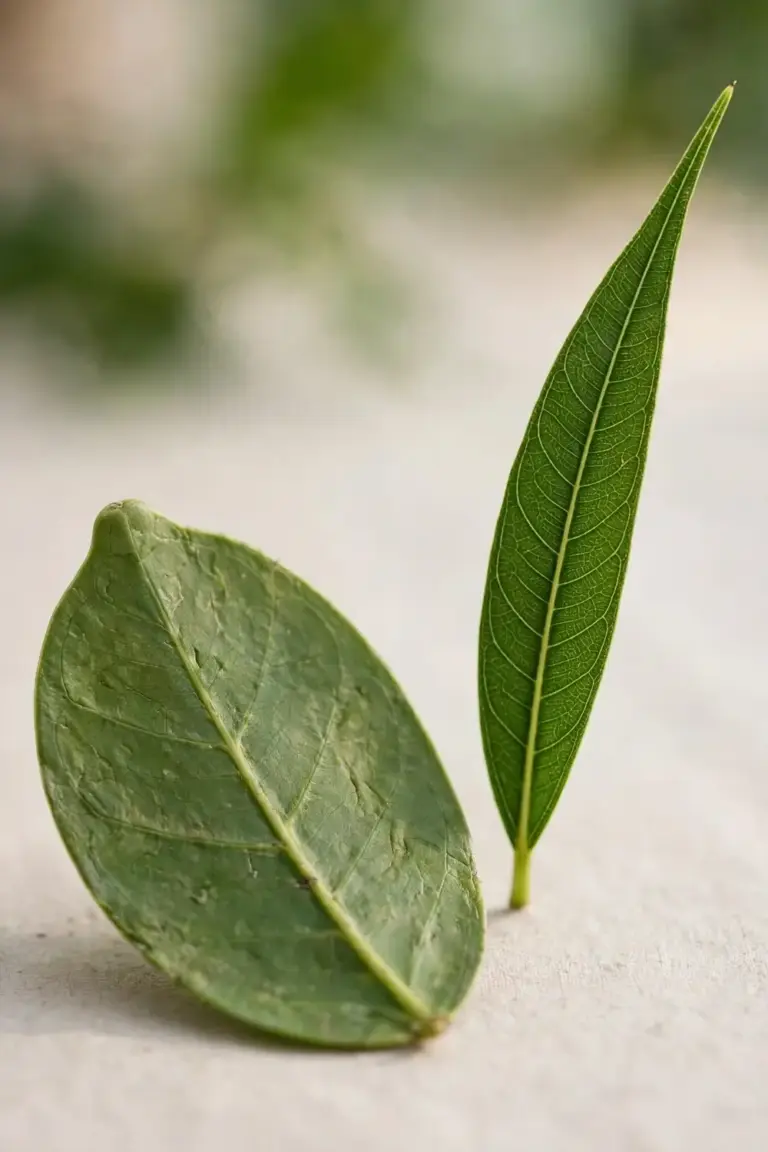
The leaf tip comes first. Weeping fig has a long, drawn-out acuminate tip, like a drip tip on a rainforest leaf. The North Carolina Extension Gardener Plant Toolbox lists this as the primary Quick ID Hint. Hillii has a blunter, more rounded tip. This single mark resolves most cases without further tests.
Next, read the branches. Weeping fig branches arch downward as they grow, giving the weeping habit that names the plant. Hillii branches grow more upright and spreading, building a denser crown. Step back and read the whole plant: drooping means weeping fig, upright and dense means Hillii.
Then check the leaf underside. Hillii veins are not prominent below, per Botany Brisbane. Weeping fig shows its veins more clearly. Run a thumb across the underside and feel for the difference. Smooth and flat suggests Hillii.
Finally, check for aerial roots as a supporting mark. Mature Hillii can produce aerial roots from branches, though less aggressively than some figs. Weeping fig rarely does indoors. Outdoors in humid climates both can, so this never decides alone.
When all else fails, check the figs. Hillii figs are about 1 cm across. Weeping fig produces similar small figs. The difference is subtle, so rely on the leaf tip and branch habit first.
7. Meet the Native Giants: Moreton Bay and Port Jackson Figs
Moreton Bay fig (Ficus macrophylla) is the largest. It reaches 15 to 35 metres high with a massive buttressed trunk, as documented by the Australian Native Plants Society. Leaves are 100 to 250 mm long, oval to elliptical, dark glossy green above and rusty beneath. Figs are 20 to 25 mm in diameter, yellowish turning purple when ripe, on stalks 10 to 20 mm long. It starts life as a strangler, germinating in the canopy of a host tree and sending roots down to envelop it.
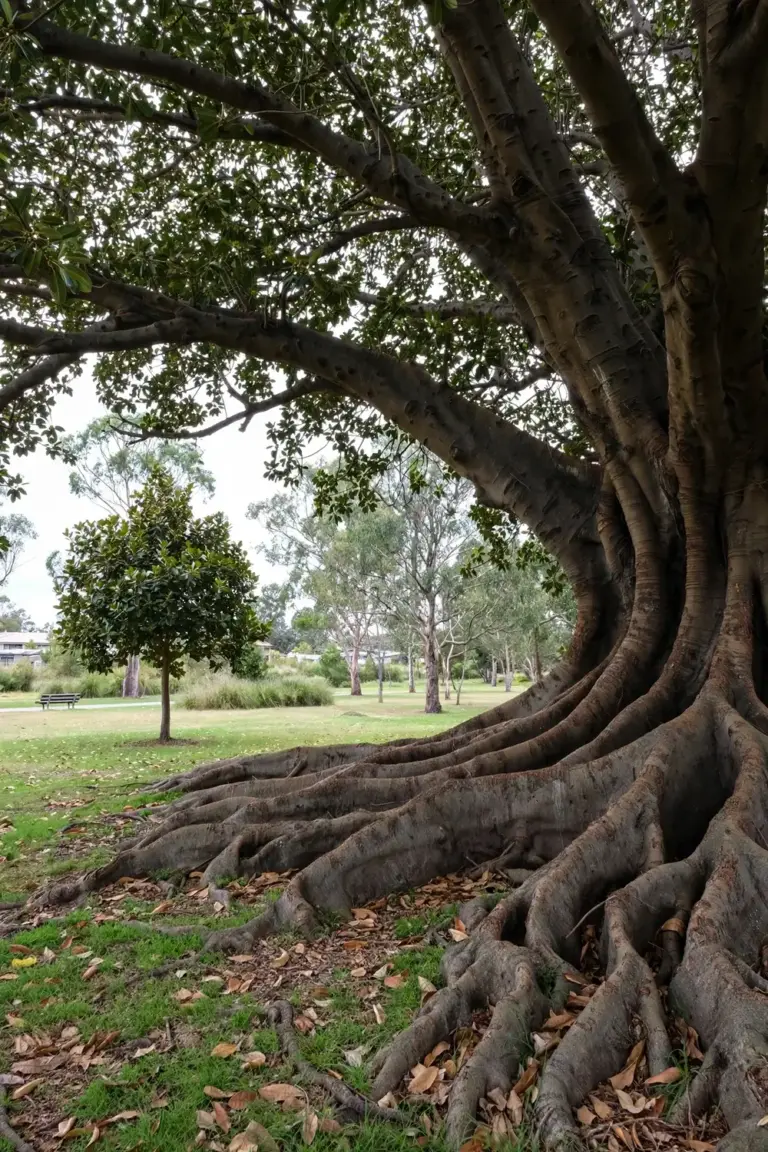
Port Jackson fig (Ficus rubiginosa) is the rusty one. Smaller than Moreton Bay fig but still a substantial tree. The diagnostic mark is the dense rusty-brown felt on young stems and leaf undersides. The species name means rusty. Leaves are smaller than Moreton Bay fig, typically 75 to 150 mm. Figs are smaller too. It is common in Sydney sandstone country and widely planted as a street tree.
Both are Australian natives. Both develop buttress roots with age. Both produce milky sap when cut. The size difference is the first split: a truly massive spreading tree with huge leaves is Moreton Bay fig. A medium tree with distinctly rusty-fuzzy leaf undersides is Port Jackson fig.
Neither belongs in a suburban yard. Moreton Bay fig develops a vigorous root system that damages pavements and foundations. The Australian Native Plants Society warns it is far too large for a normal suburban garden. For smaller spaces, the site’s Australian native plants for containers covers compact choices that stay manageable. Admire the big figs in parks.
8. Tell Small-Leaved Fig From Rock Fig
Two more natives complete the outdoor shortlist. Small-leaved fig (Ficus obliqua) and rock fig (Ficus platypoda) are less commonly encountered but worth knowing.
Small-leaved fig has, as the name says, small leaves for a native fig. They run 50 to 100 mm, noticeably smaller than Moreton Bay or Port Jackson fig leaves. The tree drops its leaves for a brief period each year, which is unusual among Australian figs and a useful field mark in itself. It grows in rainforest margins from New South Wales to Queensland. If the tree is a native fig with distinctly small leaves and a brief leafless period, consider obliqua.
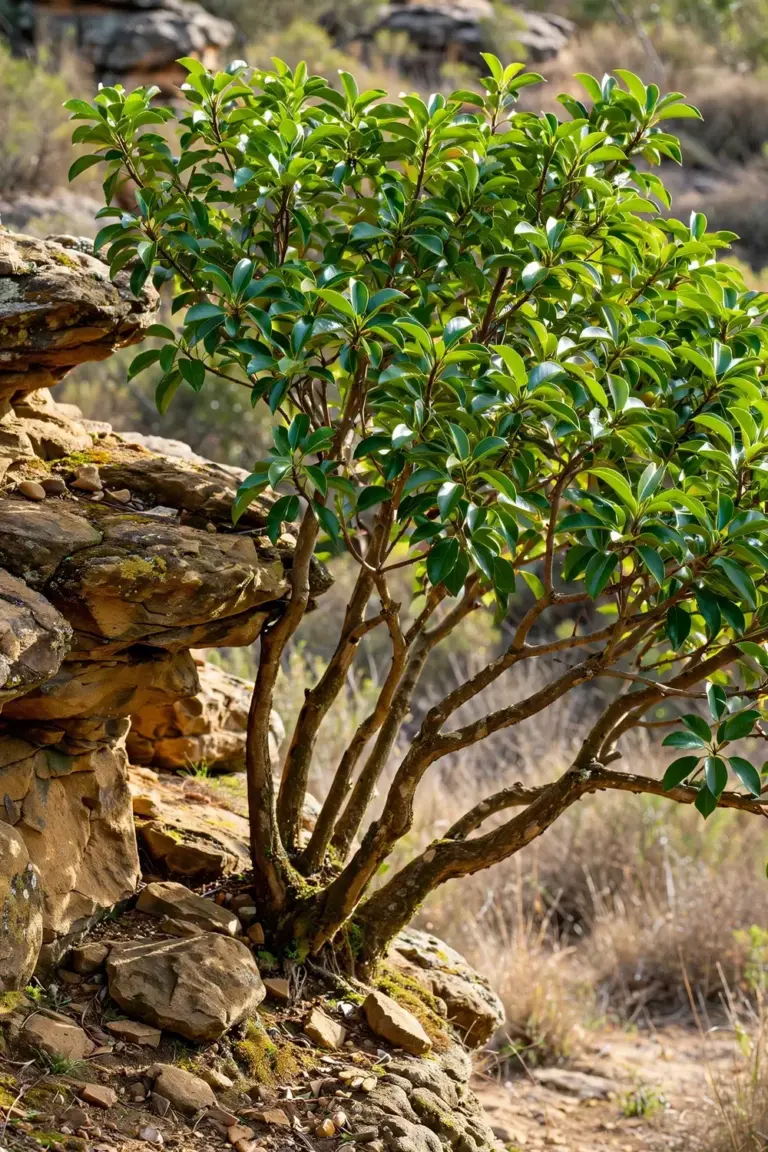
Rock fig grows where the name suggests: on rocks. It is often multi-stemmed, spreading from a rocky base. Leaves are medium-sized, glossy. Figs are small and orange-red when ripe. It tolerates dry, exposed sites that other figs avoid. A fig growing from a rock face or a dry ridge with multiple trunks points to platypoda.
Both are data-poor compared to the big two. Specific leaf measurements for distinguishing them in the field are data not available from institutional sources. Use habitat and growth form as the primary marks, leaf size as supporting.
9. Read the Fig Fruit: Size, Color, and Position
Figs confirm what leaves suggest. Every ficus produces syconia, the technical name for the fig fruit. Size, color, and position all carry information.
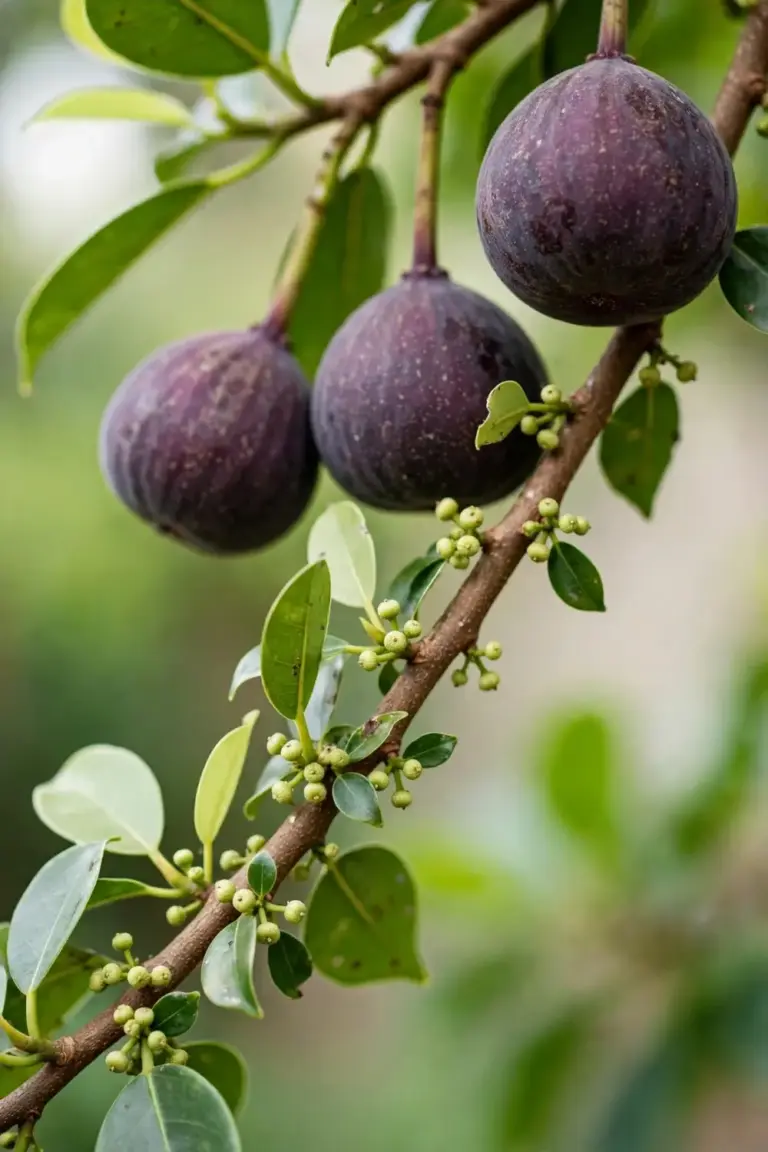
Moreton Bay fig produces the largest figs among the common species: 20 to 25 mm in diameter, on stalks 10 to 20 mm long, turning from yellowish to purple, per the Australian Native Plants Society. The stalk is distinctive. Most other ficus have stalkless or short-stalked figs.
Hillii figs are small, about 1 cm across, in pairs at the leaf axils, turning yellow to deep red. Weeping fig produces similar small figs. The similarity is why the leaf tip matters more than the fruit for this pair.
Port Jackson fig produces small figs with the same rusty felt on young fruit as on the leaves. Small-leaved fig and rock fig produce small figs. Exact ripe colors vary by season, and precise measurements for these two species are data not available from institutional sources.
Indoor ficus rarely fruit. A rubber plant or fiddle-leaf fig in a pot will almost never produce figs. Absence of fruit indoors means nothing. Presence of large stalked purple figs outdoors means Moreton Bay fig.
The syconium is worth understanding because it explains why ficus flowers are invisible. The fig is an inside-out flower cluster: hundreds of tiny flowers line the interior of a fleshy receptacle, with only a small opening (the ostiole) at the tip. Pollination requires a species-specific wasp that enters through this opening. This is why indoor ficus never fruit: the wasp is absent. Outdoors in Australia, the right wasps are present for both exotic and native species, so hedges and street trees fruit freely.
10. Rule Out the Fruiting Fig
If the leaves are large, rough, and deeply lobed like an open hand, you do not have an ornamental or native ficus. You have a fruiting fig, Ficus carica, the common edible fig. The lobed leaf is unique in the genus among commonly grown species. No other ficus in this key has deeply divided leaves.
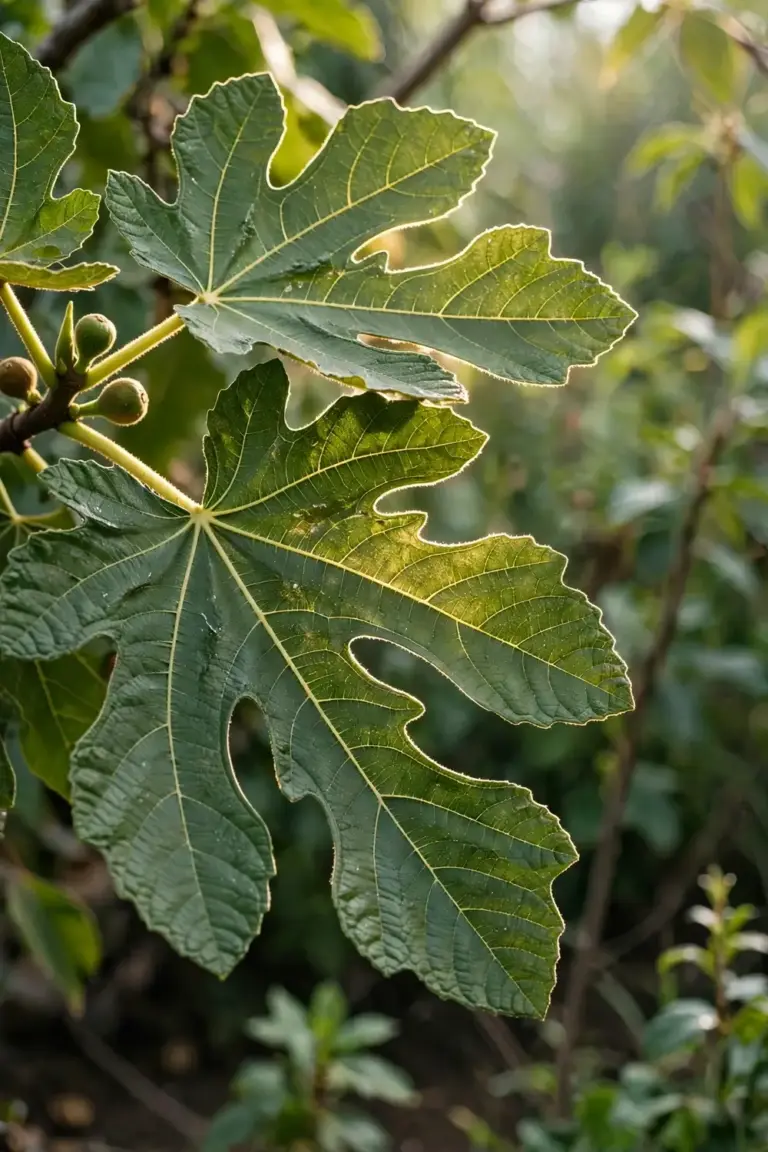
Fruiting figs are deciduous. They drop all leaves in winter. Ornamental and native ficus are evergreen. A bare fig tree in July in Sydney is Ficus carica, not a sick ornamental.
The fruit is the final confirmation. Edible figs are large, soft, and sweet when ripe. Ornamental ficus produce small, hard, inedible syconia. If you are eating the figs, it is Ficus carica.
Fruiting fig cultivars belong to a separate identification key entirely, one built around fruit quality and cultivar traits rather than species marks. This article covers the ornamental, hedge, and native ficus. The lobed leaf test routes fruiting figs out of this key cleanly, so the species key stays focused.
11. The Master Ficus ID Table
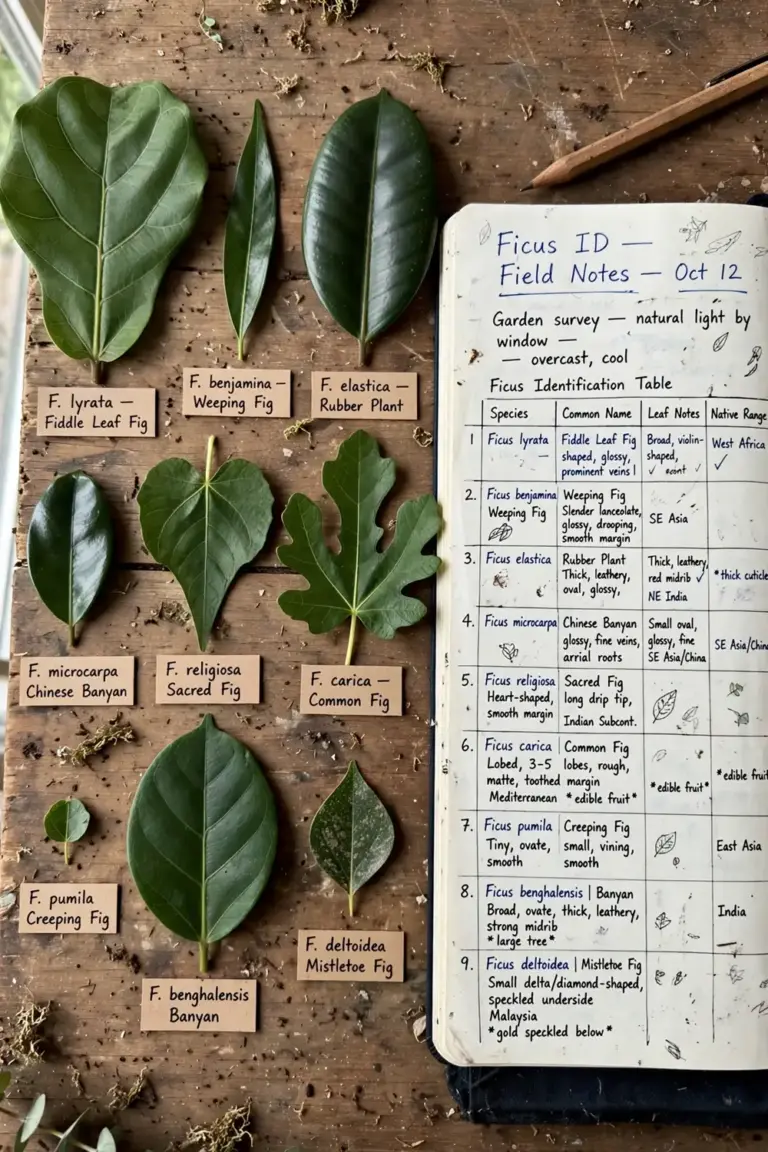
| Species | Common Name | Group | Leaf Size | Key Mark |
|---|---|---|---|---|
| Ficus elastica | Rubber plant | Indoor | Very large, 1 ft (30 cm) | Thick, stiff, glossy ovals; reddish midrib |
| Ficus lyrata | Fiddle-leaf fig | Indoor | Up to 45 cm | Violin-shaped, prominent veins |
| Ficus benjamina | Weeping fig | Indoor | Small, 5 to 10 cm | Long pointed tip; drooping branches |
| Ficus pumila | Climbing fig | Indoor | Tiny, 2 to 5 cm | Heart-shaped juvenile leaves; climbing habit |
| Ficus microcarpa var. hillii | Hillii | Hedge | 10 to 12 cm | Small glossy ovals; blunt tip; dense growth |
| Ficus macrophylla | Moreton Bay fig | Native | 100 to 250 mm | Huge tree; buttress roots; stalked purple figs |
| Ficus rubiginosa | Port Jackson fig | Native | 75 to 150 mm | Rusty felt on leaf undersides |
| Ficus obliqua | Small-leaved fig | Native | 50 to 100 mm | Briefly deciduous; rainforest margins |
| Ficus platypoda | Rock fig | Native | Medium | Multi-stemmed; grows on rocks |
Start with the Group column. Match the plant to indoor, hedge, or native. Then read across to the Key Mark. Confirm with the leaf and fig tests in the sections above.
Frequently Asked Questions
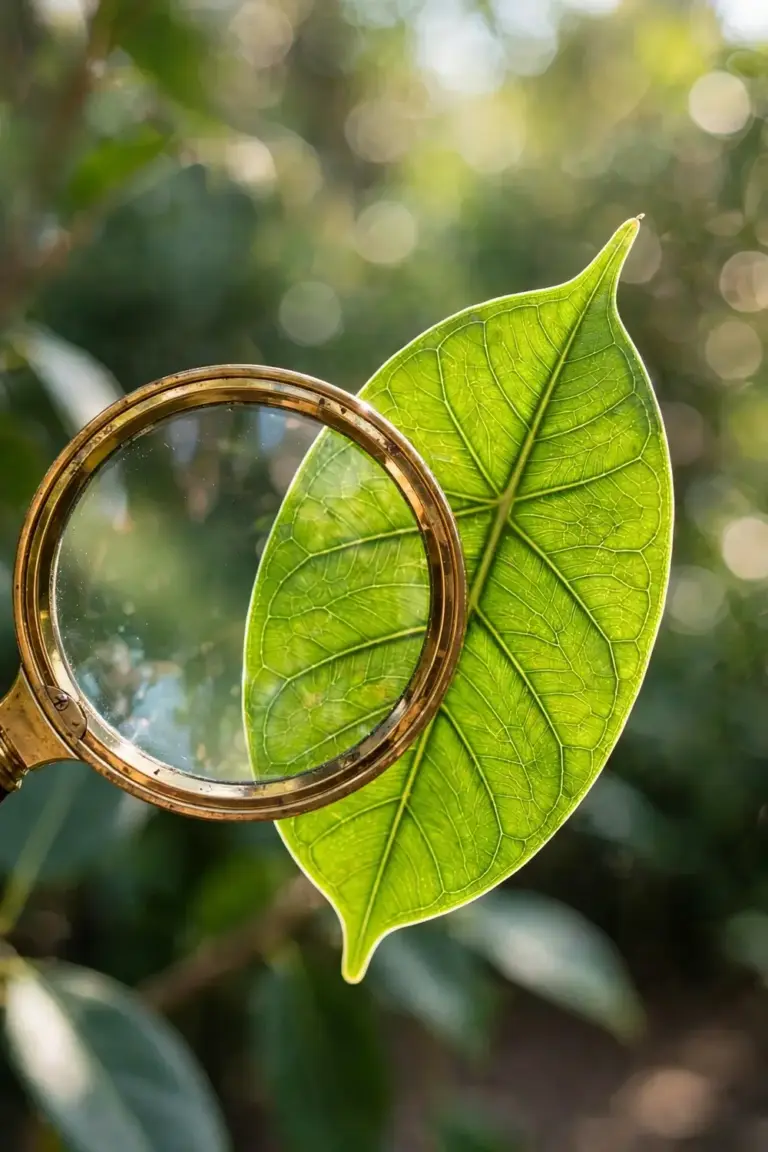
Check the leaf tip. Weeping fig has a long, drawn-out pointed tip. Hillii has a blunter, rounded tip. Then check the branches: weeping fig arches downward, Hillii grows upright and dense. These two marks resolve nearly every case. The leaf underside helps too: Hillii veins are flat and inconspicuous, weeping fig shows its veins. Do not rely on overall size, as both are pruned to similar shapes in hedges.
Look at leaf shape and size. Rubber plant leaves are broad ovals, very thick and stiff, about a foot long, with a smooth outline. Fiddle-leaf fig leaves are shaped like a violin, broad at the top and narrow at the base, up to 18 inches long with prominent veins. If the leaf looks like an oval, it is rubber plant. If it looks like a fiddle, it is fiddle-leaf fig. Both are Ficus, but the shapes never overlap.
Rusty-brown felt on the leaf underside identifies Port Jackson fig, Ficus rubiginosa. The species name means rusty. Young stems carry the same felt. Moreton Bay fig has a rusty tinge underneath but far less pronounced. Hillii, weeping fig, rubber plant, and fiddle-leaf fig all have smooth, hairless undersides. If the fuzz is dense and distinctly reddish-brown, the answer is Port Jackson fig.
Often yes. The leaf tip, size, and underside survive after the leaf drops. A small glossy oval with a sharp drip tip is weeping fig. A small glossy oval with a blunt tip is Hillii. A huge leathery leaf over 20 cm is Moreton Bay fig or fiddle-leaf fig, separated by the fiddle shape. A leaf with rusty felt underneath is Port Jackson fig. Bark and growth form are lost, but the leaf alone usually suffices.
Yes, and they often do in Australian streetscapes. A Hillii hedge can run along the boundary while a Moreton Bay fig towers in the neighboring park. The size difference separates them: the hedge stays at 2 to 3 metres, the native fig reaches for 20 metres and beyond. When both drop figs, check the size. Hillii figs are about 1 cm. Moreton Bay figs are 20 to 25 mm on distinct stalks.
Weeping fig is notorious for dropping leaves after a move. It is sensitive to light changes and responds by shedding old leaves and growing new ones suited to the new spot. This sensitivity is itself an identification clue: Hillii tolerates moves and pruning with far less drama. If the plant defoliates after every relocation, it leans toward weeping fig. Keep conditions stable and wait for new growth before judging the plant’s health.
Write the Name Down Before You Prune
Identification decides the pruning. Hillii takes hard shearing and rebounds. Weeping fig resents heavy cuts and sulks. Native figs need an arborist, not secateurs. Write the species name on the tag and keep it with the plant. The next time you reach for the shears, the name tells you how hard to cut. A correctly named ficus is a correctly treated ficus.
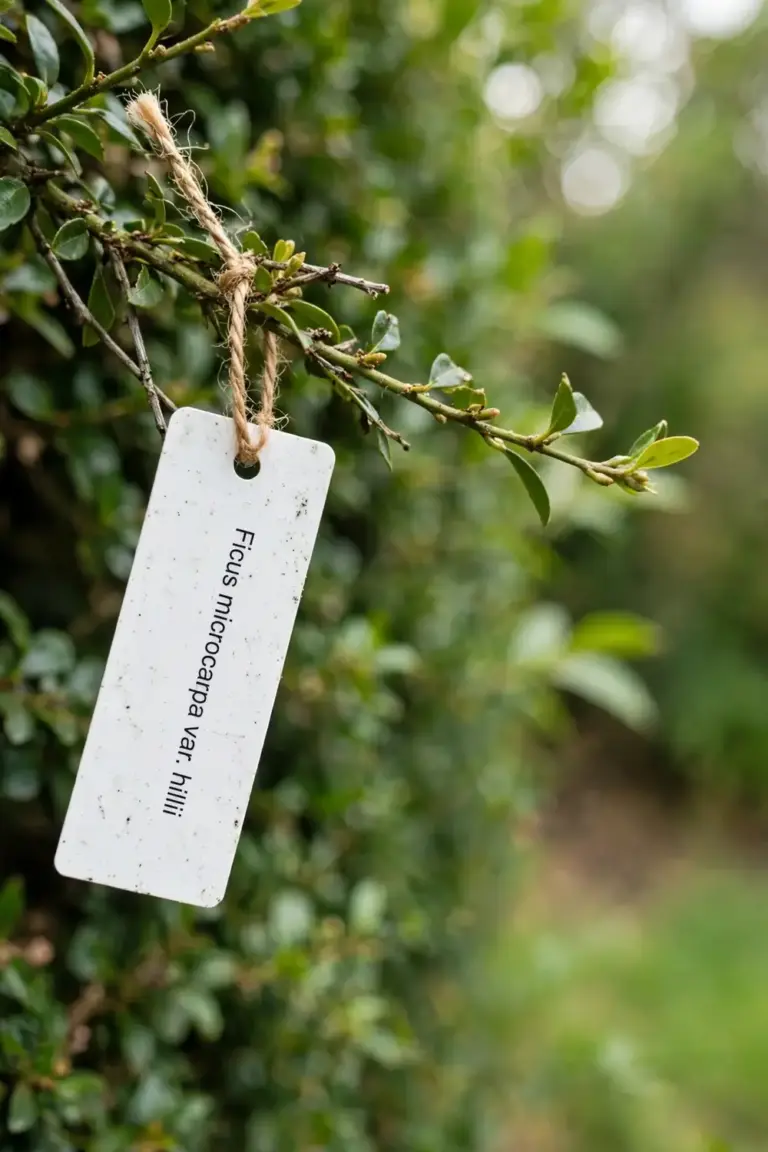
The tag also protects the next gardener who inherits your work. Gardens change hands. A plant labelled “Hillii” tells the new owner exactly what they have and where to look for reliable advice. A plant labelled “ficus” tells them nothing. Take thirty seconds with a permanent marker and a plastic tag. Future you will be grateful for the certainty.