
Sow sweet corn in September in temperate Australia and you will harvest in December, about 11 to 14 weeks later. That is the whole timing question in one line: when to harvest corn in Australia depends on when you sowed it and how long your variety takes to mature. This guide gives you the month-by-month table by climate zone, the two field tests that confirm ripeness, and the factors that shift your date.
Corn here means sweet corn, Zea mays, the vegetable you pick at the milk stage and eat fresh. Harvest means picking ripe ears from the plant, not cutting the whole stalk. Timing guide means exactly what it says: when to sow and when to pick, by climate zone, with the field signs that confirm the calendar. Grain maize and popcorn follow different harvest rules, and this guide fences them off in their own section so you do not apply sweet corn timing to a dry grain crop. Every harvest month below is derived from published sow windows plus published days to maturity. The milk test, not the calendar, makes the final call.
1. Map When to Harvest Corn in Australia by Climate Zone
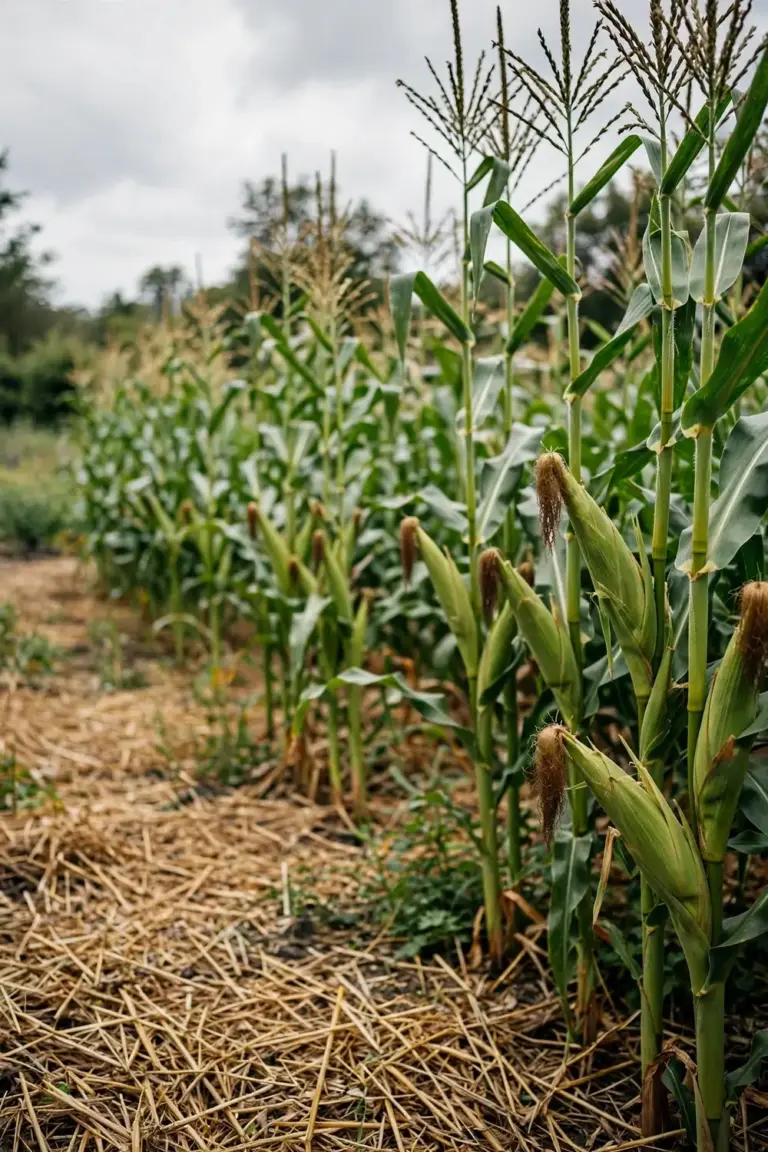
Your harvest month equals your sow month plus 11 to 14 weeks. The Little Veggie Patch Co publishes sow windows for four Australian climate zones, and Gardenate lists 11 to 14 weeks from sowing to harvest for temperate sweet corn. Add the two together and you get the table below.
| Climate Zone | Sow | Harvest |
|---|---|---|
| Temperate | September to January | December to April |
| Subtropical | August to February | November to May |
| Tropical | Anytime | About 3 months after sowing, year-round |
| Cool / Mountainous | October to January | January to April |
The sow windows come from the Little Veggie Patch Co corn page, which lists Cool/Mountainous October to January, Temperate September to January, Subtropical August to February, and Tropical anytime. Gardenate gives 11 to 14 weeks to harvest for temperate sweet corn, and about 3 months for sub-tropical and tropical zones. Bunnings puts the figure at 120 days from seed, or 90 to 110 days from seedlings, in their corn growing guide.
NSW DPI narrows the maturity range to 75 to 105 days depending on cultivar, locality, and sowing time, in their sweet corn growing guide. The table above uses the 11 to 14 week figure because it sits inside every published range. An early September sowing in a temperate zone can be ready in late November. A late January sowing runs into May. Treat the table as your planning window and the field tests below as your harvest trigger.
Use the table in two directions. Planning forward, pick your sowing month and read across to find your harvest window. Planning backward, pick the month you want fresh cobs and subtract 11 to 14 weeks to find your sowing date. If you want Christmas corn in a temperate zone, sow in September. If you want Easter corn, sow in December or January. The arithmetic is simple because the maturity window is narrow.
The table shows months, not days. Within any harvest month, the exact picking day depends on your variety, your soil temperature at sowing, and the weather during silking. Two neighbours who sow the same weekend can harvest a week apart if one bed warms faster. That is normal. The table gets you to the right month. The silks and the thumbnail test get you to the right day.
Cool zones deserve a special note. Tasmania and the southern highlands sit at the cold edge of the table, and a late spring can compress the whole season into a narrow window. If your sowings run late, choose the earliest-maturing variety on the seed rack and consider starting seedlings under cover to buy back three weeks. A cloche or cold frame over the bed for the first fortnight after transplanting adds the warmth that the calendar cannot. The table still applies, but the margin for error shrinks. Skip the calendar month. Watch the milk test closely.
Microclimates shift the table by a week or more in either direction. A north-facing brick wall radiates heat and can push a bed a full zone warmer. A frost pocket at the bottom of a slope runs colder than the district average. Learn your own patch. After one season of writing down sowing dates and harvest dates, you will have a personal table that beats any published one, because it is calibrated to your soil and your aspect.
If you are new to sowing warm-season vegetables, the seed starting steps walk through timing seed trays against frost dates. Sweet corn resents transplanting, so most growers sow direct, but the calendar logic is the same.
2. Read the Silks: Brown and Dry Means Ready
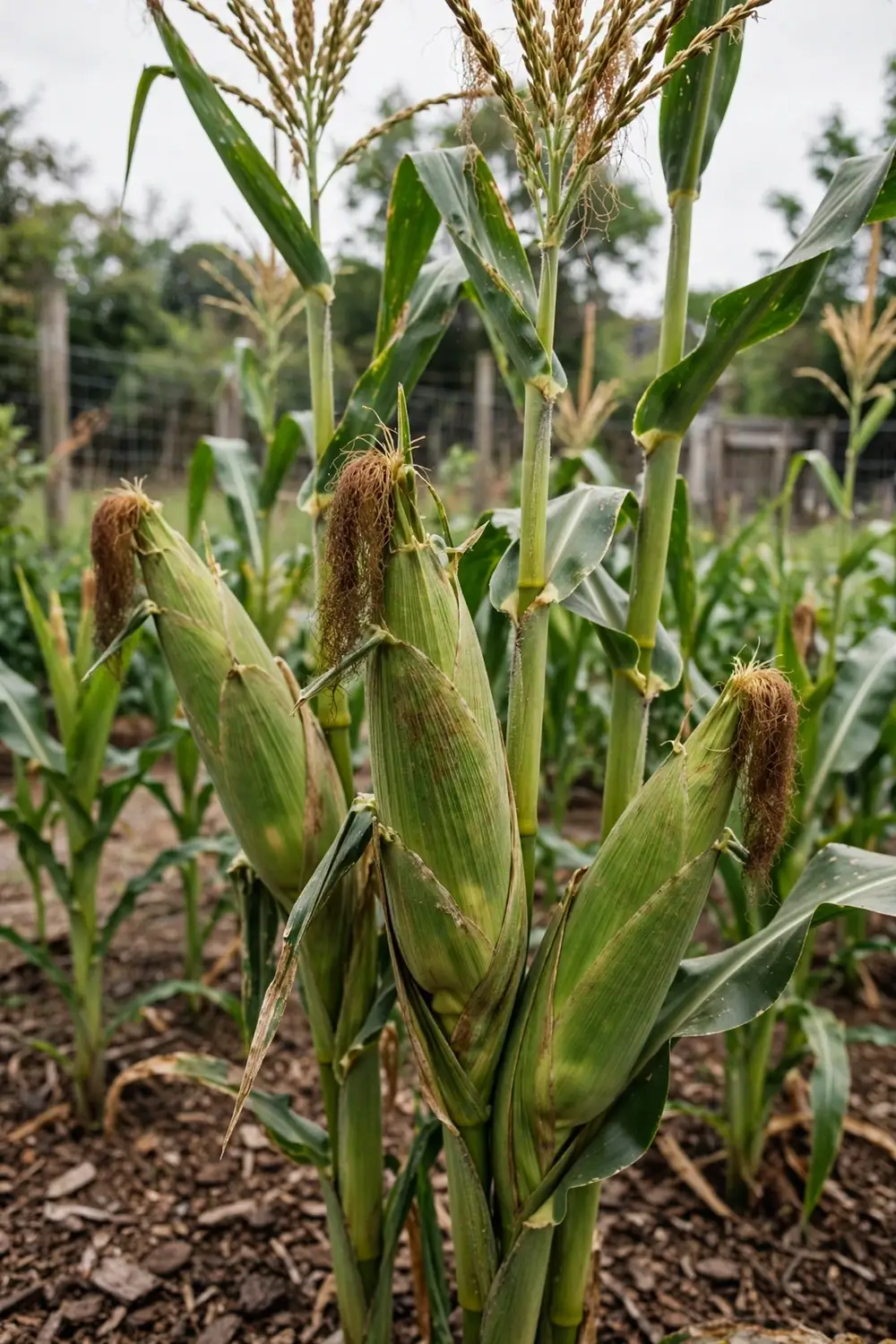
Brown, dry silks are the first sign your cob is ready. Each silk is a thread that caught pollen for one kernel, and when the silks dry and darken, pollination finished weeks ago and the kernels have filled. Seedmart Australia advises that the silks should be brown and dry, the cob should feel full, and a pressed kernel should release milky liquid, in their corn seed guide.
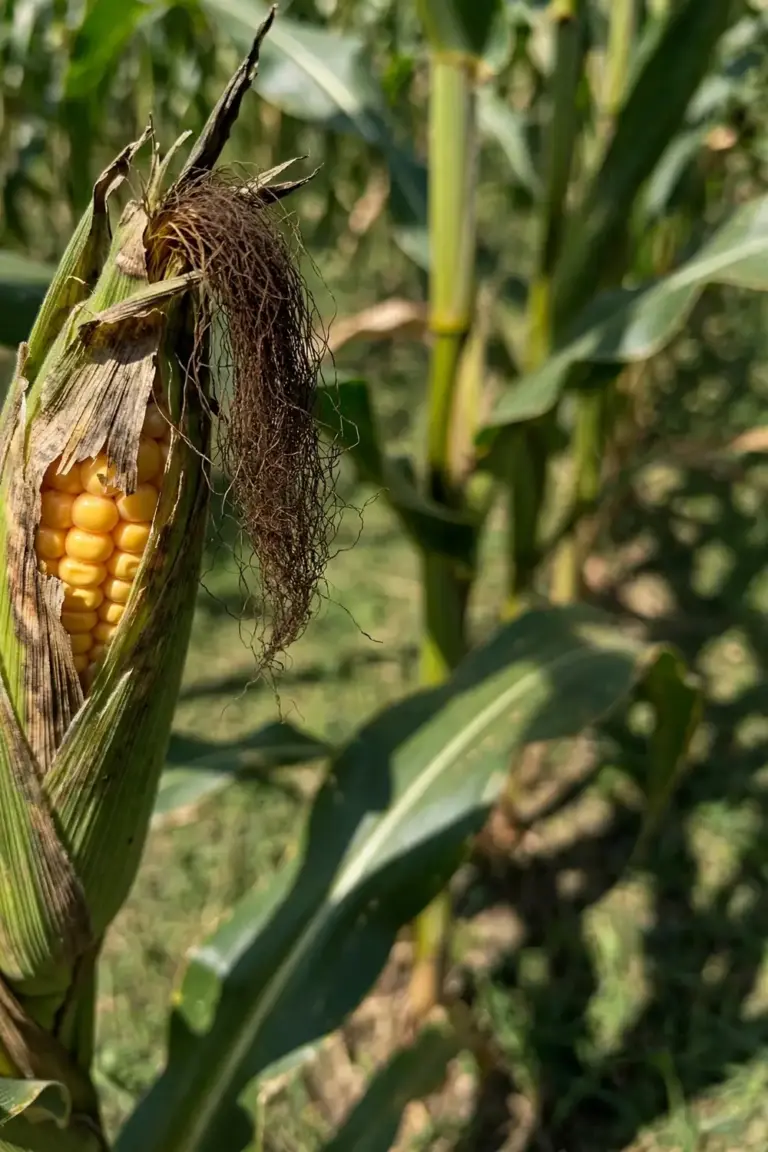
Pick at the milk stage, usually around two to three weeks after the silks first appear. That two-to-three-week figure comes from the same Seedmart guide. Check the uppermost cob first. It matures before the lower ones on the same plant. Feel through the husk for a firm, full ear that resists gentle squeezing. A thin, tapered tip means the kernels have not filled yet.
Do not wait for the whole plant to look finished. The stalk stays green while the cob ripens, and a green plant with brown silks is exactly what a ready crop looks like. Beginners often wait too long because the plant still looks alive. Trust the silks, not the stalk. A cob left too long moves past the milk stage into the dough stage, where kernels turn starchy and the sweetness drops. The silks tell you when to start checking. The thumbnail test tells you when to pick.
Walk your block every two or three days once silks start browning. Different plants silk on different days, so your harvest spreads naturally across a week or more. Mark the earliest plants with a twist tie if you want to track which ones to check first. The uppermost cob on the earliest plant is your indicator. When it passes the milk test, the rest of the block is close behind.
3. Press a Kernel: Run the Thumbnail Milk Test
Press your thumbnail into a kernel and watch what comes out. Milky liquid means the cob is at peak ripeness. Pick it now. This five-second check beats every calendar calculation, because it reads the actual kernel instead of estimating from the sowing date.
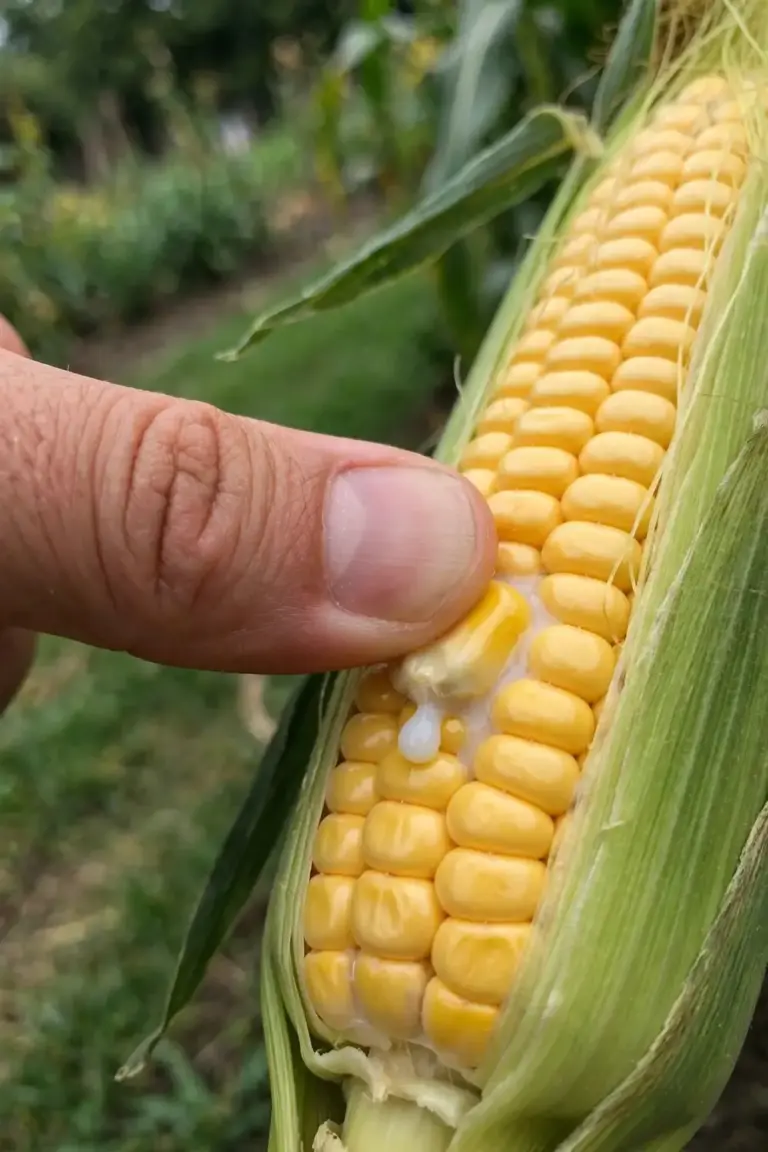
Seedmart Australia describes the test plainly: a pressed kernel should release milky liquid. Clear, watery liquid means the cob is too early. Leave it another few days and test again. A thick, doughy paste means the cob is overripe. Pick it anyway and use it the same day, because it will not improve on the stalk. I check the milk stage with my thumbnail before I pick a whole row, because one milky kernel tells me more than the calendar does.
Peel back a small section of husk to reach the kernels, then fold the husk back after testing. Exposed kernels dry out and attract pests within hours. Test one cob per block, not every cob. Cobs on the same plant ripen within days of each other, so one test represents the batch. If the first cob is milky, harvest the block over the next few days, starting with the fullest-feeling ears.
The test works because kernel development follows a predictable sequence. After pollination, kernels fill with a clear fluid. That fluid turns milky as sugars and starches accumulate. Then it thickens into dough as the kernel matures past eating quality. You are catching the middle of that sequence. Too early and you get water. Too late and you get paste. Milky is the peak.
4. Twist and Pull: Harvest Each Cob at Its Peak
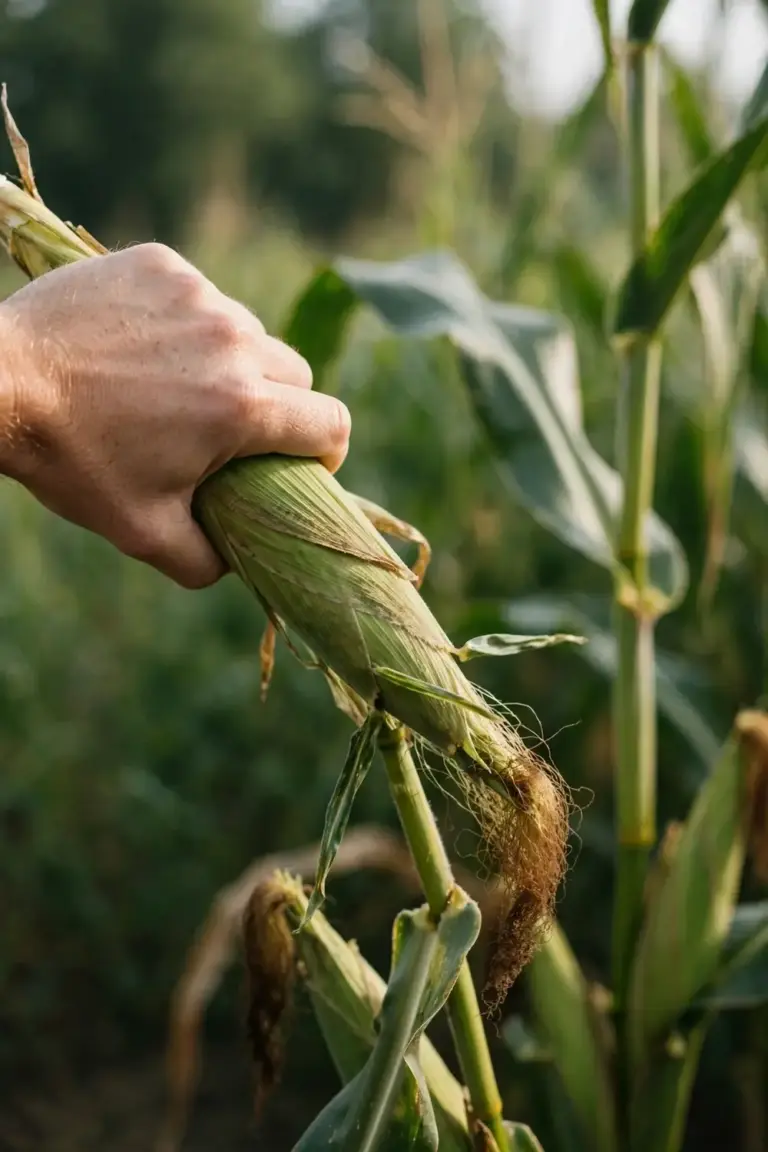
Grip the cob, twist it downward, and pull it from the stalk in one motion. The cob snaps off cleanly at the shank when it is ripe. The Little Veggie Patch Co describes the same motion: twist by hand and pull down once the silks have browned off. If the cob resists, it is not ready. A ripe cob separates with a crisp snap.
Harvest in the cool of the day if you can. Heat speeds the sugar-to-starch conversion that starts the moment you pick, so a morning harvest gives you a head start on sweetness. Carry a bucket or basket to the block. Do not pile cobs in the sun while you finish picking. Get them into shade immediately, then into the fridge within the hour.
Pick every ripe cob, even the ones you do not need today. A plant holding mature cobs slows new ear development and pours energy into seeds you will not eat at their best. If your household cannot eat the glut, blanch and freeze the surplus the same day you pick it. Bring a large pot of water to a rolling boil. Blanch whole cobs for four to seven minutes depending on size. Plunge them into iced water to stop the cooking. Drain, pack, and freeze. Frozen sweet corn keeps its texture for months. A cob sitting in the fridge for a week tastes starchy and dull.
Check the block every two days during the harvest window. The peak lasts about a week per sowing. Hot weather compresses that week. Cobs move from milky to doughy faster when temperatures stay high, and a block you check on Monday and Friday can go from perfect to overripe between visits in a heatwave. Daily checks during hot spells are worth the effort, because the difference between a milky kernel and a doughy one is only two or three days at high temperatures. Set a phone reminder if you need one. The corn will not wait for your schedule.
Miss the window and the kernels go doughy. Pick them anyway. Overripe cobs are starchy but not wasted. Use them in soups and stews where the texture matters less, or cut the kernels for fritters and corn cakes. The sweetness is gone, but the corn is still food. Do not leave overripe cobs on the plant out of disappointment. They signal the plant to stop producing, and a clean break lets the stalk put energy into any later ears still developing.
5. Account for What Shifts Your Harvest Date
Four things move your harvest earlier or later: variety maturity, soil temperature at sowing, seedlings versus direct seed, and weather during silking. Know them and you can read your own calendar instead of guessing.
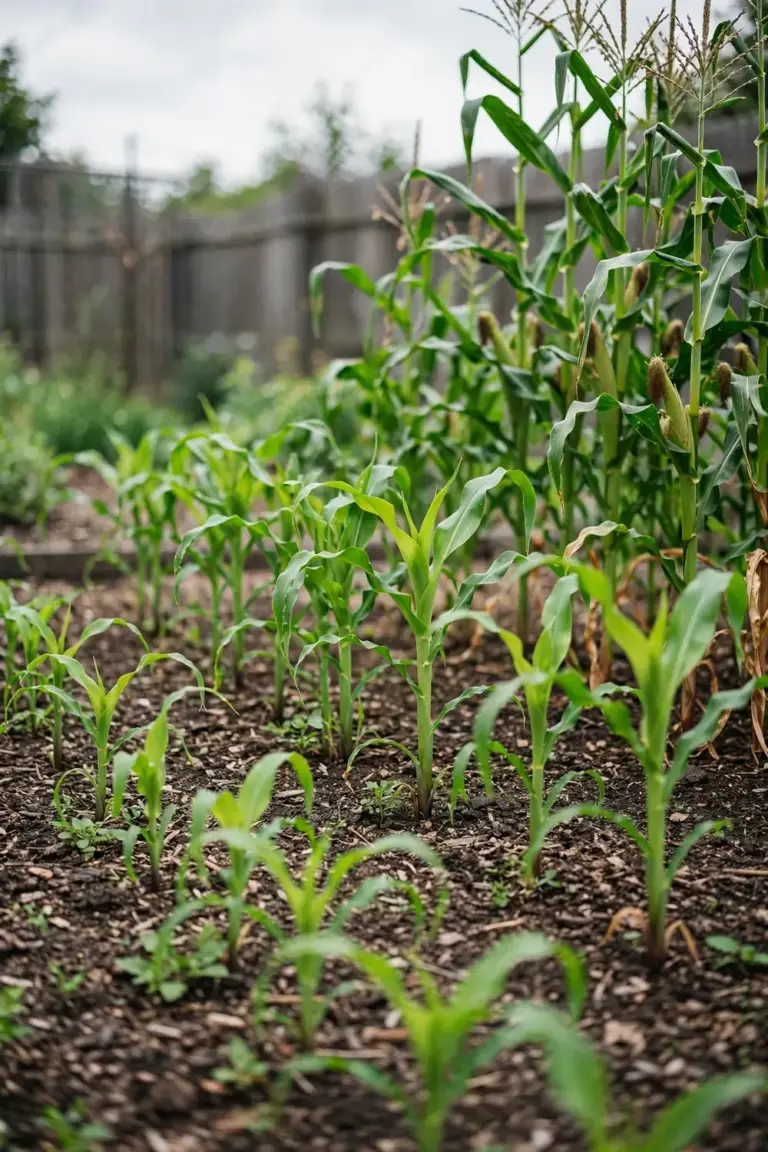
Variety maturity spans a wide range. Seedmart lists 70 to 110 days from sowing to harvest across varieties. NSW DPI gives 75 to 105 days depending on cultivar, locality, and sowing time. Bunnings quotes 120 days from seed. Early varieties mature sooner, and your seed packet carries the exact figure for what you planted. That packet figure beats every generic table. When you buy seed, note the days to maturity on the packet and write it on your garden plan. Next season you will know exactly which variety gave you Christmas corn and which one ran late.
Soil temperature at sowing sets the start line. NSW DPI states the soil should be at least 12 degrees at 9 am, and ideally between 15 and 35 degrees, with a minimum of 14 to 16 degrees for supersweet types. Gardenate lists 16 to 35 degrees as the germination range. Seed sown into cold soil sits and rots instead of growing, which pushes your harvest back by weeks. A healthy soil warms faster in spring, so a well-prepared bed can buy you an earlier sowing. Dark mulch and a north-facing aspect also nudge soil temperature up. Measure with a soil thermometer at 9 am if you want precision. The air temperature lies. The soil temperature tells the truth.
Seedlings shorten the wait. Bunnings notes that corn grown from seedlings can be ready in 90 to 110 days instead of 120. That three-week head start matters in cool zones with short seasons, where a late spring can compress the whole calendar. Direct sowing still works everywhere, and most home growers sow direct because corn dislikes root disturbance. If you do start seedlings, use biodegradable pots and transplant before they become root-bound. Check the packet for the seedling days-to-maturity figure, which differs from the direct-sow figure.
Weather during silking decides kernel fill. NSW DPI warns that hot, dry, windy conditions above 35 degrees at flowering disrupt pollination and seed set, leaving cobs with blank patches. Each silk feeds one kernel, so stressed silking means a patchy cob no matter how good your timing was. Water consistently through tasselling and silking if rain fails. A deep watering every few days beats a daily sprinkle, because it pushes moisture down to the root zone where the plant needs it during the critical pollination window.
6. Sow Successive Blocks for a Continuous Harvest
One sowing gives you one glut lasting about a week. Sow successive small blocks through the season and you stretch fresh cobs across two months. This is succession sowing, and it is the standard method for avoiding a single overwhelming harvest that you cannot eat in time.
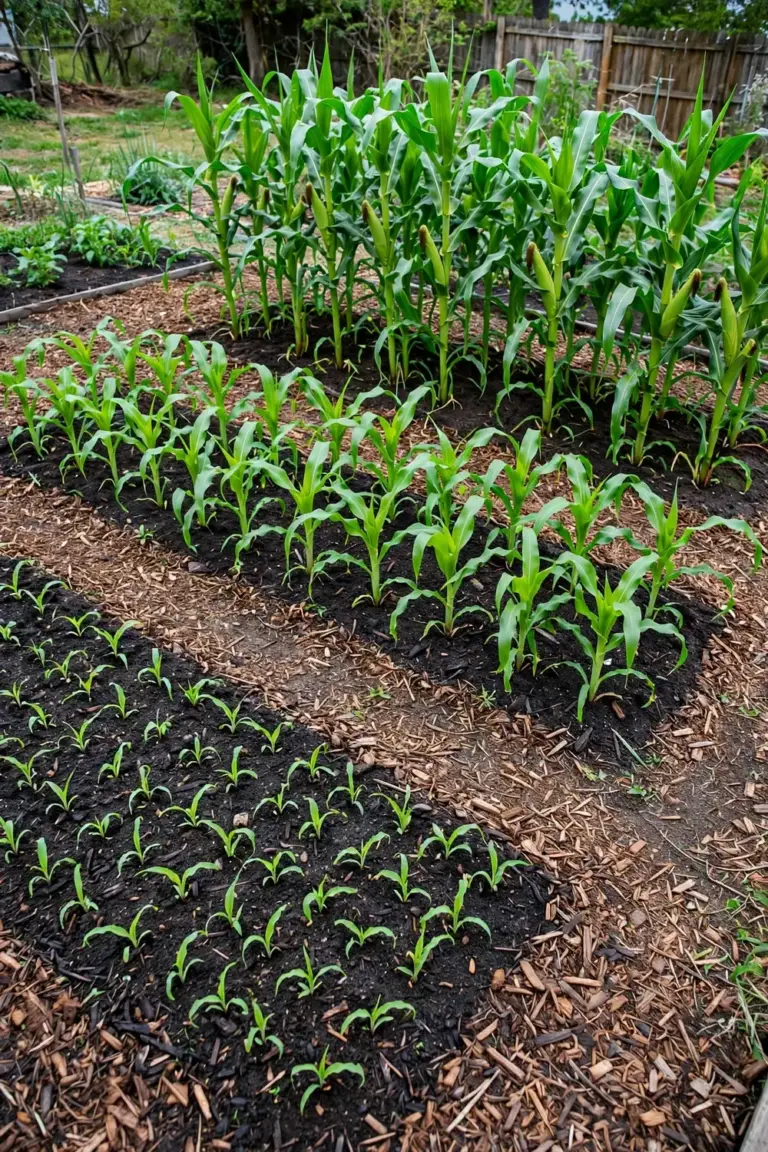
Sow your next block when the previous sowing is knee-high, with three or four true leaves. That visual cue spaces your plantings naturally through the season without you watching the calendar. In warm weather the gap works out to roughly a fortnight, and in cooler spring weather it stretches longer because growth is slower. The plant tells you when it is time, so you do not need to count days.
Keep sowing until your last safe date. Find it by counting backward from your average first frost or cold snap, then subtract the days to maturity printed on your seed packet and another week for the harvest window itself. The date you land on is your final sowing. Every fortnight before it is fair game. In tropical zones with no frost, heat and rain set the limit instead of cold, so plan your last sowing around the wet season rather than a frost date.
Sow in blocks, not single rows. Corn is wind-pollinated, and a block lets pollen drift between neighbouring plants instead of blowing away down a lone row. Each block in your succession should be a compact square or rectangle of at least a dozen plants. Small blocks also make the rhythm manageable: one block sown, one block growing, one block ready, one block finished. A dozen plants per block gives a household several meals per harvest wave without waste.
Four to five blocks across the season give you four to five harvest waves, each about a week long, with slight overlaps. That is fresh corn for most of summer from a modest bed. The method scales. A larger household sows bigger blocks. A smaller one sows fewer blocks. The principle stays the same: never put all your corn in one sowing.
7. Eat It Today: Cook Sweet Corn Within Hours of Picking
Sweet corn starts losing sweetness the moment you pick it. Sugars convert to starch rapidly after harvest, which is why commercial growers hydro-cool cobs immediately after picking. The home version of hydro-cooling is simpler: get the cob into the fridge within the hour, and cook it the same day.
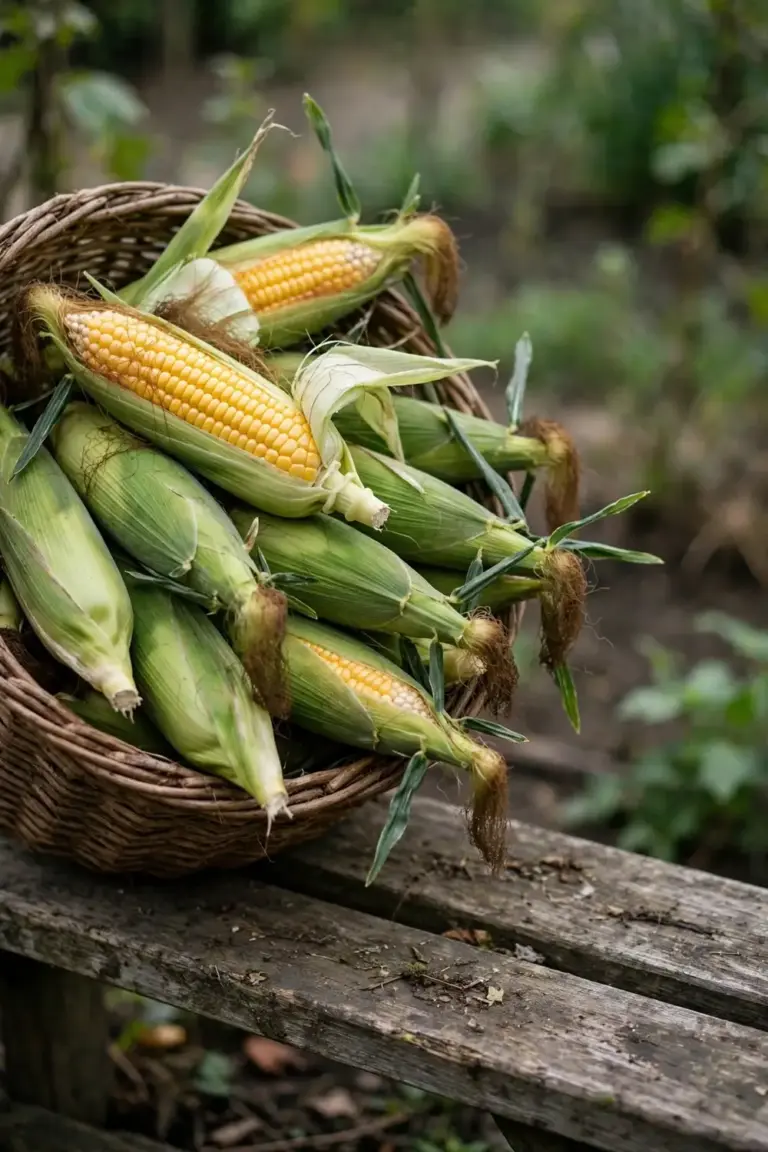
Supersweet types hold their sweetness considerably longer than standard types. Traditional sweet corn carries the sugary gene, while supersweet corn carries the shrunken-2 gene and keeps its eating quality longer after picking, according to Seedmart Australia. Foodtree Australia notes that supersweet cultivars dominate fresh-market sales today because they hold sweetness longer on the shelf. If you grow a standard sugary variety, the eat-it-today rule is strict. If you grow a supersweet sh2 variety, you have a longer grace period, but same-day eating still wins on flavour.
Chill what you cannot cook immediately. Do not leave picked cobs on the bench while you finish other garden jobs. The warmth of a summer kitchen accelerates the starch conversion you are trying to outrun. Husk the cobs, wrap them damp, and refrigerate. They will hold for a day or two, but every hour counts.
For storage beyond a day, blanch and freeze the same day you pick. Bring a large pot of water to a rolling boil. Blanch for a few minutes, cool in iced water, drain, and pack for the freezer. Frozen sweet corn holds its quality for months and tastes far better than a week-old fridge cob. Cut kernels off the cob before freezing if you are short on freezer space. They pack flat and thaw faster.
8. Know That Grain Maize and Popcorn Follow Different Rules
This guide covers sweet corn picked at the milk stage. Grain maize and popcorn are the same species, Zea mays, but they are harvested dry, and their timing rules do not transfer. Applying sweet corn timing to a grain crop gives you an inedible harvest.
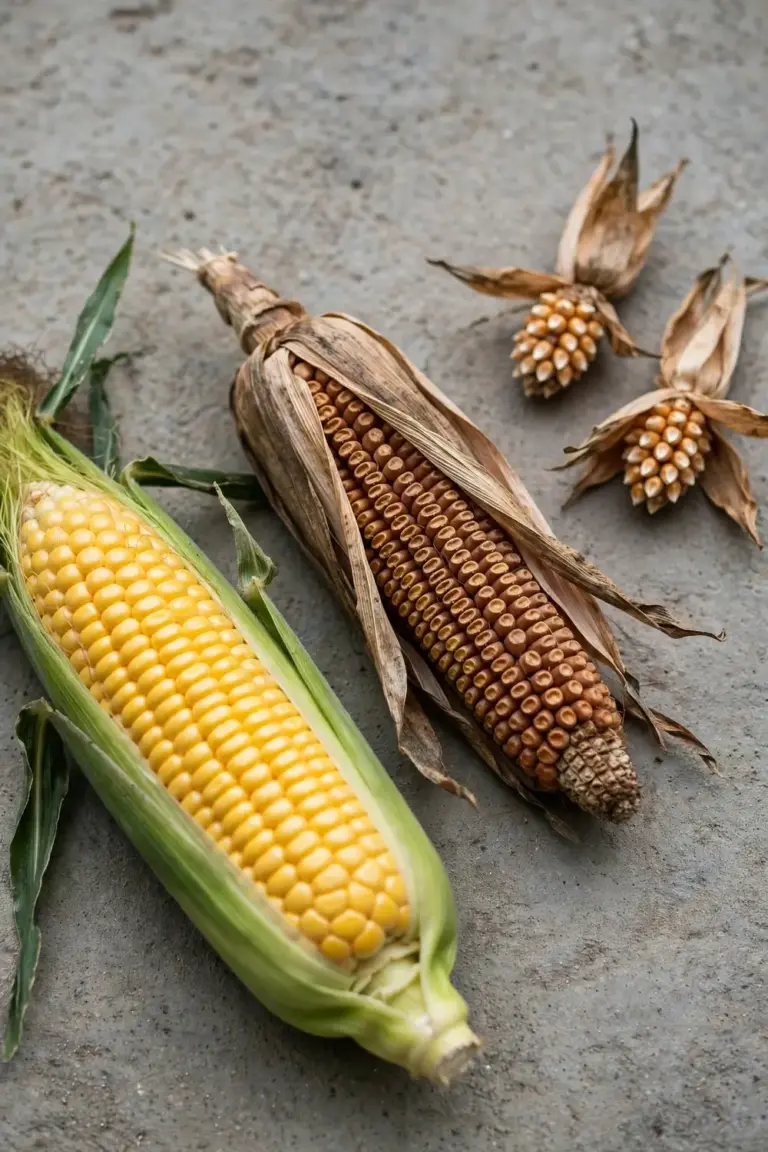
Grain maize, also called field or dent corn, is harvested when the kernels are fully mature and dry on the plant. The kernels dent inward as they dry, which gives dent corn its name. Harvest happens weeks after the milk stage, when the plant has browned off and the grain is hard enough to store. If you pick grain maize at sweet corn timing, you get watery, immature kernels with no storage life and no milling quality. The two crops share a species but not a harvest.
Popcorn needs a precise moisture window that has nothing to do with the milk test. Oregon State Extension explains that popcorn is harvested dry and then dried further to a specific moisture range for storage and popping. Too wet and the kernels will not pop. Too dry and they pop poorly, leaving hard unpopped kernels in the bowl. Home growers hand-harvest popcorn ears, dry them thoroughly, and test-pop a small batch before shelling the rest. Pick popcorn at sweet corn timing and you get a soggy cob that never pops.
Do not grow popcorn or grain maize next to sweet corn if you care about eating quality. Cross-pollination between types produces starchy, tough kernels on your sweet corn ears, because the pollen parent influences kernel texture directly. Separate the types by distance or by flowering time, so their silking periods do not overlap. For eating fresh cobs on the season schedule above, plant sweet corn only and keep the grain types out of the home garden. One patch of sweet corn, timed by the table and judged by the milk test, gives you a full season of harvests.
Frequently Asked Questions
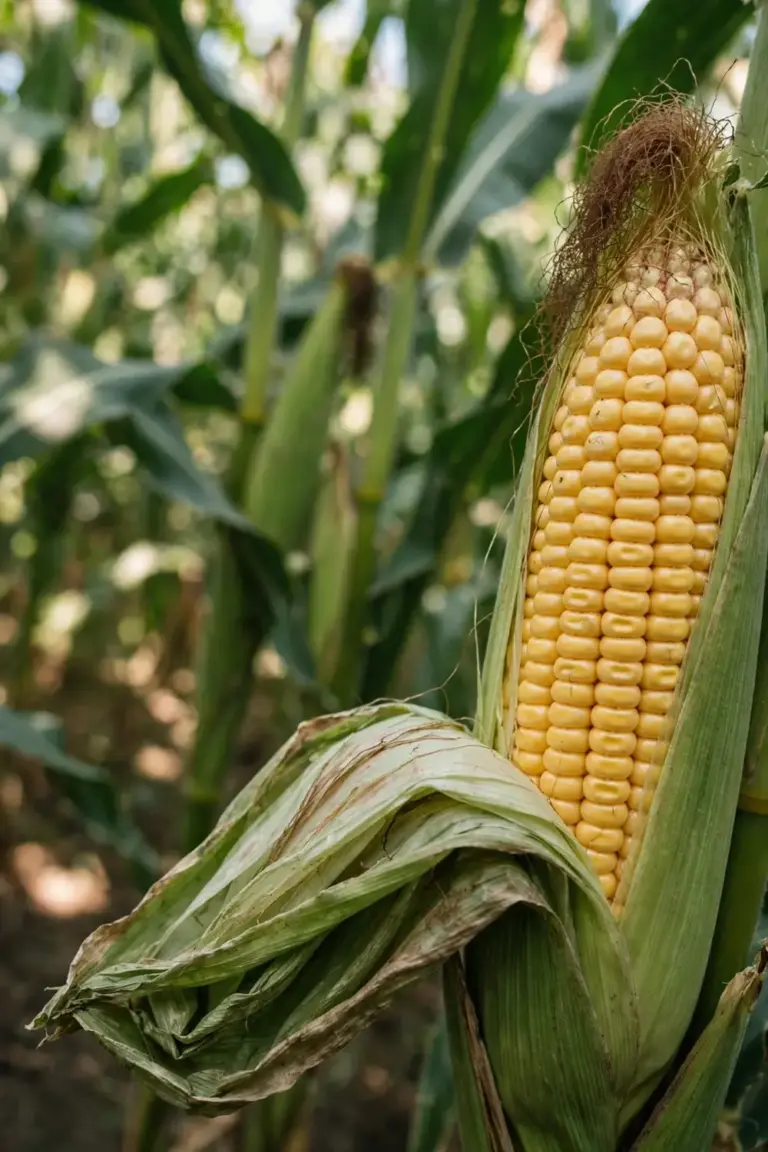
Most varieties take 70 to 110 days from sowing, according to Seedmart Australia. NSW DPI narrows it to 75 to 105 days depending on cultivar and locality. Bunnings quotes 120 days from seed, or 90 to 110 days from seedlings. Check your seed packet for the exact figure, then add it to your sowing date to estimate your harvest week.
In the tropics, yes, because sowing is possible year-round and harvest follows about three months later. In subtropical zones, late sowings in February harvest in May, which runs into early winter in some areas. In temperate and cool zones, winter harvest is not realistic from a normal sowing calendar. The crop needs warm soil to germinate and a long frost-free season to mature.
Pick the uppermost cob on each plant first. It matures before the lower ones. Feel for a full, firm ear through the husk. Check that the silks are brown and dry, then run the thumbnail milk test on one kernel. If it releases milky liquid, harvest that cob and check its neighbours over the next few days.
Patchy kernels usually mean poor pollination during silking. Each silk feeds one kernel, so hot, dry, windy weather above 35 degrees during flowering disrupts pollen transfer, according to NSW DPI. Planting in blocks rather than single rows improves pollination because pollen drifts between neighbouring plants instead of blowing away down a lone row.
Yes. Traditional sweet corn carries the sugary gene and converts sugar to starch quickly after picking. Supersweet corn carries the shrunken-2 gene, which slows that conversion, so it holds eating quality longer after harvest. Foodtree Australia notes that supersweet cultivars dominate fresh-market sales for this reason. Even supersweet tastes best on the day it is picked, so the eat-it-today rule still applies.
No. The side shoots, called tillers, do not harm your harvest and may even contribute energy to the plant. Removing them wounds the stalk and achieves nothing for cob quality. Focus your effort on watering during silking and checking the milk test. The plant knows how to grow corn. Your job is timing the pick.
Mark Your Sowing Date and Trust the Milk Test
Write down your sowing date and add 11 to 14 weeks. That is your harvest window. When the silks brown, start the thumbnail test. When the kernel runs milky, pick the cob and eat it the same day. The calendar plans the season. The kernel decides the day.
For the full method behind the timing, from soil preparation to block planting, the sweet corn growing guide covers the growing steps this timing guide leaves out.