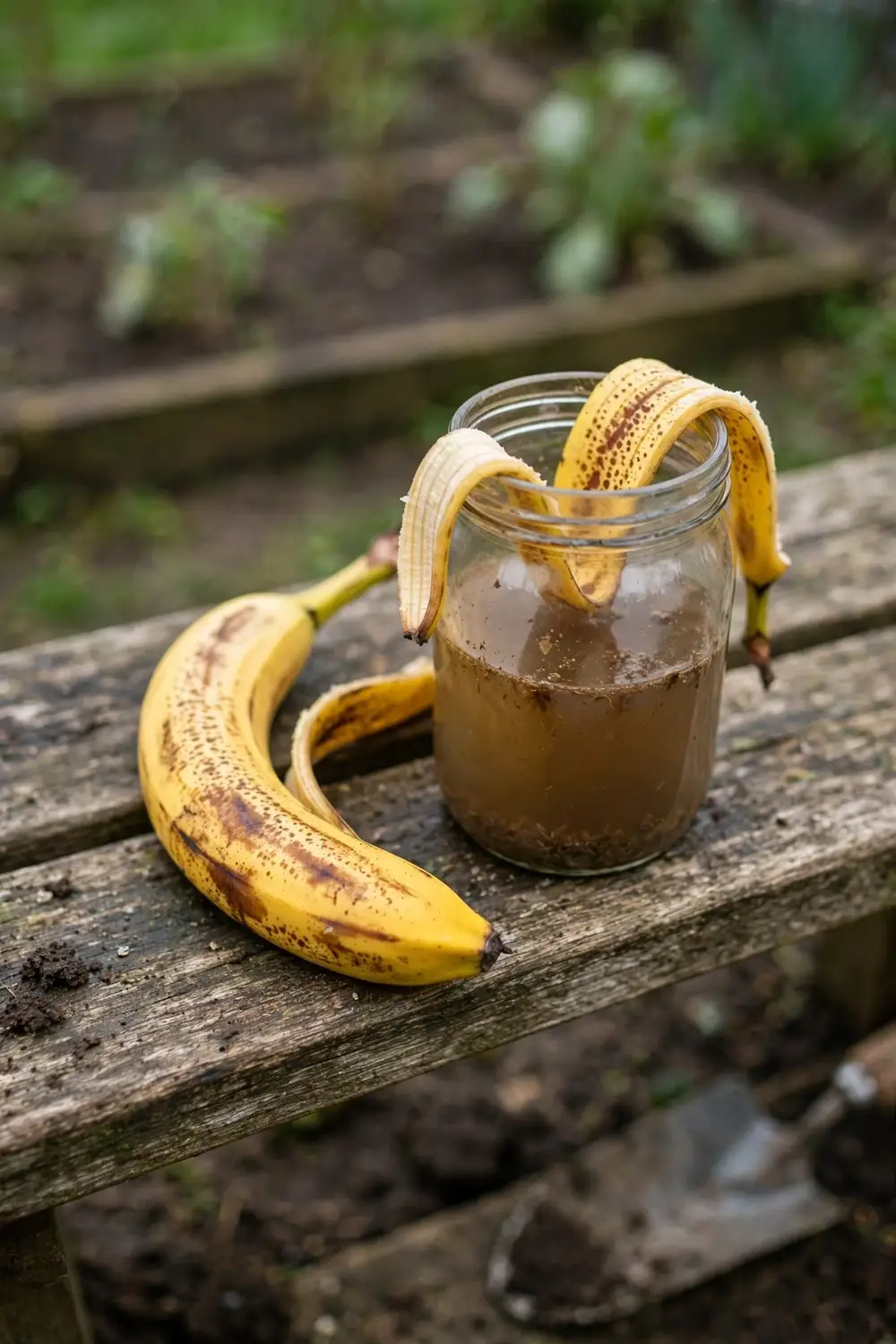

Soak 1 banana peel in a jar of water for 2 days and you get brown water, not fertilizer. That is the short answer to how to use banana peels for stronger plant stems in Australia: the peel tea trend promises stem strength it cannot deliver, while the honest route runs through the compost pile. This page tests 4 peel claims one by one, then gives the 2 routes that actually work: composting and drying.
A banana peel is Musa peel, the skin of a banana. Myth-vs-reality means testing each peel claim against evidence instead of repeating it. Stronger stems is a claim to test, not a fact to assume. The rest of this page tests four peel claims one by one, then gives the two routes that actually work: composting and drying.
Peels do contain nutrients. That much is true, and it is why the trend survives. But a nutrient present in a peel is not automatically a nutrient the plant can use. That gap is where the whole trend falls apart. The soil health in your beds decides how fast any organic matter turns into plant food.
1. Test the First Claim: Banana Peels Strengthen Stems
Banana peels do not strengthen stems on their own. No peel applied alone builds a stronger stem, because stem strength comes from the whole feeding picture: enough nitrogen for growth, enough potassium for cell strength, enough light for sturdy tissue, and water that arrives steadily. A peel supplies a little of one piece.
| Claim | Verdict | Why |
|---|---|---|
| Peels strengthen stems | Fails alone | Stems need full nutrition, light, and water, not one scrap |
| Peel tea feeds plants fast | Fails | Soaking extracts a tiny fraction of the minerals |
| Burying peels feeds the plant | Fails as a feed | Raw peels break down slowly and draw pests |
| Peels replace fertilizer | Fails | Peels are weaker than commercial plant food and lack nitrogen |
Potassium does matter for stems. The mineral helps cells hold water pressure, and firm cells make firmer tissue. But potassium is one input among several, and a peel delivers it in a form the plant cannot use until microbes break the peel down. A claim that skips that step is selling the peel, not the science.
Read the table as a scorecard. Every version of the trend fails on the same ground: the nutrient is present but locked, the delivery is unmeasured, or the feed is incomplete. None of the four claims survives contact with how plants actually take up nutrients. That pattern is the story of this article. The peel is not useless. The claims made for it are.
2. Count What One Peel Actually Contains
A fresh banana peel is mostly water. Fresh peels run over 80% water, so the solid matter carrying any nutrient is a small share of what you hold, according to Better Homes and Gardens.
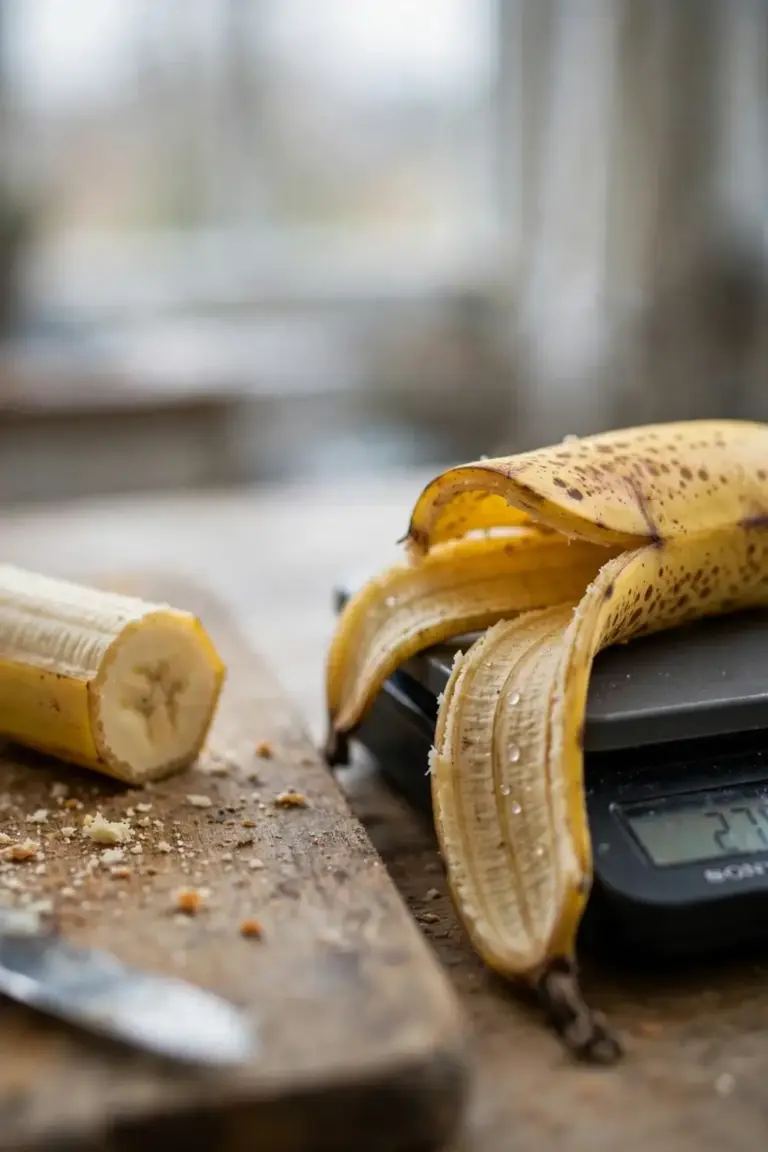
What remains after the water is mostly potassium with a little of everything else. Peels carry a decent amount of potassium, the mineral tied to flower and fruit formation, and minuscule nitrogen, the mineral tied to leaves, according to New Scientist. That split shapes everything that follows. A peel is a potassium-leaning scrap, not a balanced feed. Hold that split in mind. Every claim ahead stands or falls on it.
Nitrogen matters here because stems are built from growth. A plant short on nitrogen grows slowly and thinly, and no amount of potassium fixes that on its own. The peel trend talks about potassium as if it were the whole story. It is one chapter.
The peel also carries small amounts of other minerals, including calcium and magnesium, but the amounts are small and the same availability problem applies: locked in tissue until decomposition frees them. A peel is a scrap with a little of several things, not a dose of any one thing. Treating it as a dose is the error that runs through every version of this trend.
3. Test the Second Claim: Peel Tea Feeds Plants Fast
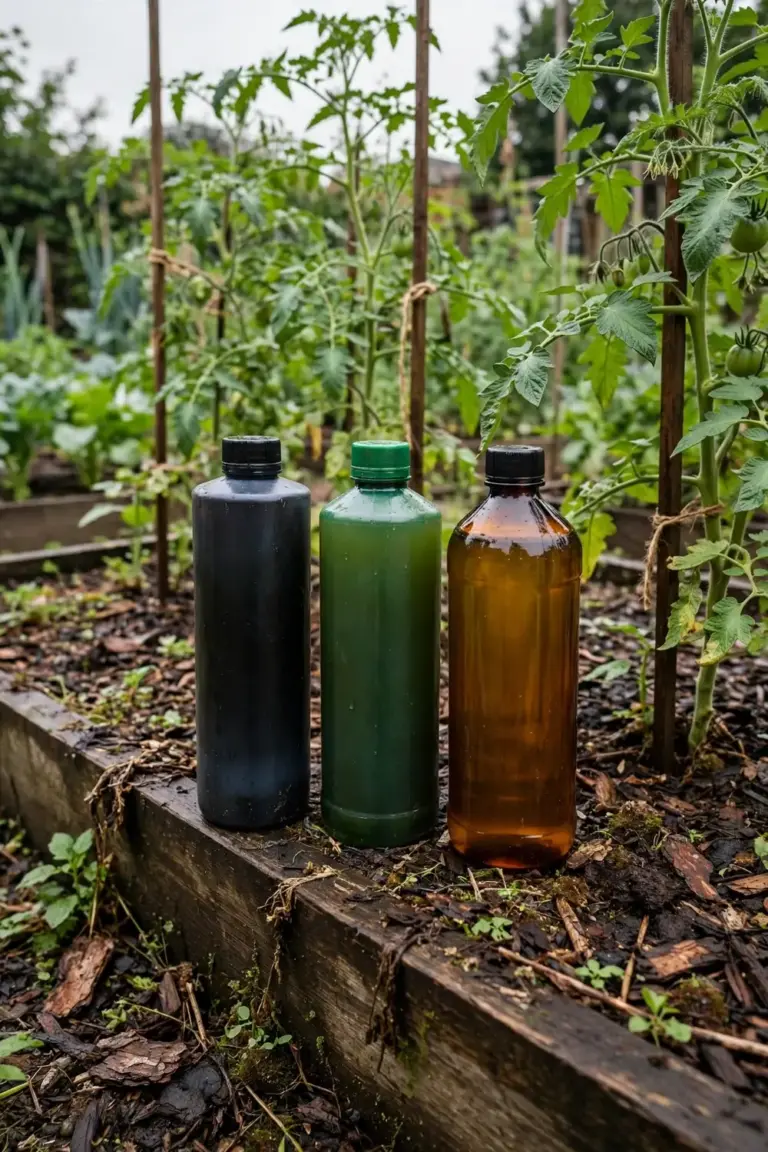
Peel tea fails the speed test. Soaking peels in water for a few days extracts only a tiny fraction of the minerals locked in the peel tissue, according to New Scientist. The potassium stays in the peel until decomposition frees it. The jar turns brown because pigments and sugars leach out, not because the water has become fertilizer.
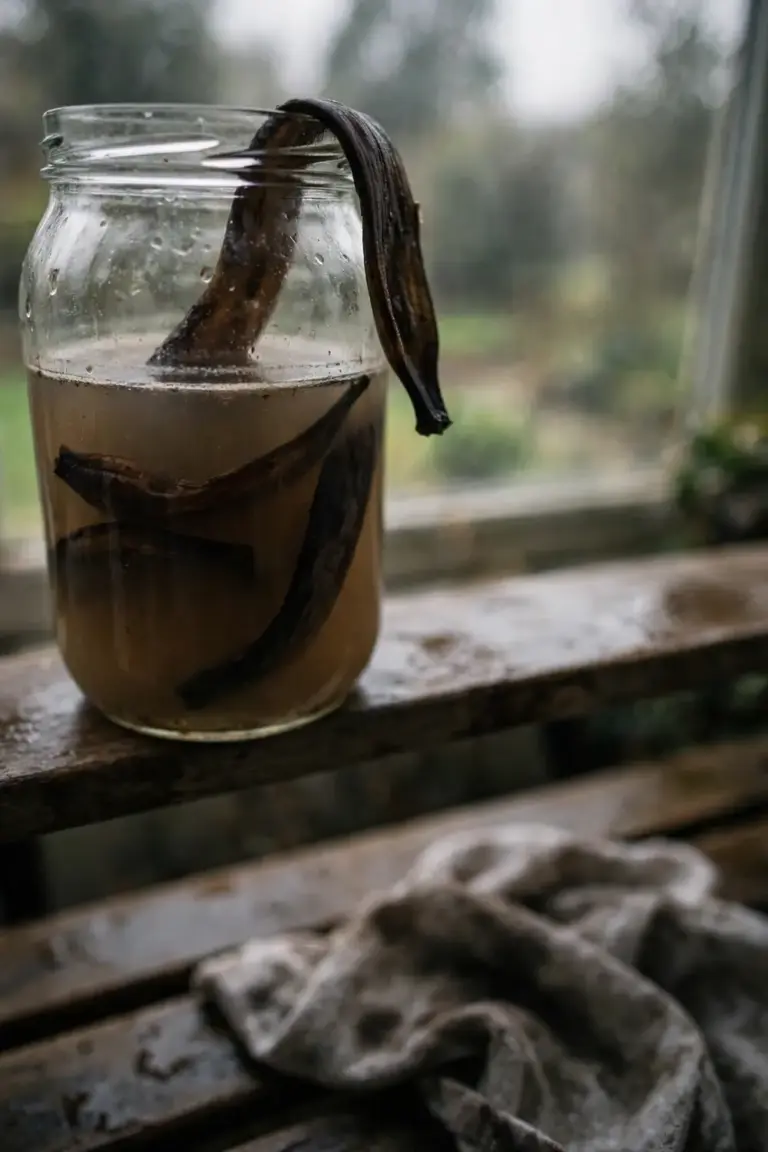
The University of Maryland Extension has stated it is unaware of research showing that soaking banana peels produces fertilizer-strength water, and it recommends composting food scraps as the more effective way to recycle their nutrients. That is the institutional verdict on peel tea: no evidence, and a better route exists.
Soaking also fails the measurement test. The potassium in the jar depends on the peel size, the water volume, the temperature, and the soak time, and none of those are controlled in a kitchen jar. You cannot calculate a dose from it. A fertilizer with no known concentration is a guess, not a feed.
The jar also fails the cleanliness test. A container of sugary water sitting at room temperature grows microbes fast, and the liquid turns sour within days. That sour jar then goes onto a plant that never asked for it. The method creates a waste problem at the exact moment it claims to solve one. Strain it, sniff it, and the smell tells you what the color hides: fermentation, not fertilizer.
4. Test the Third Claim: Burying Peels Feeds the Plant
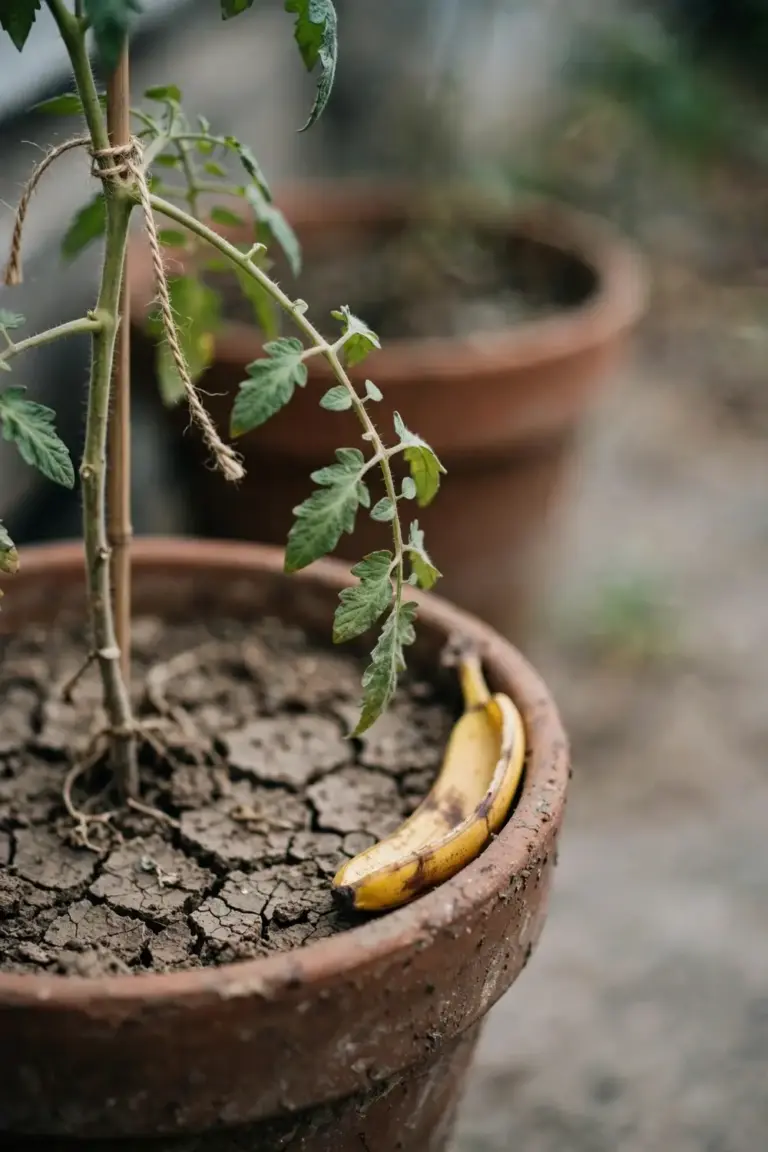
Burying raw peels fails the timing test. Peels buried in soil break down slowly and may not supply nutrients when the plant needs them, according to Better Homes and Gardens. A plant hungry now gets nothing from a peel that finishes rotting weeks later.
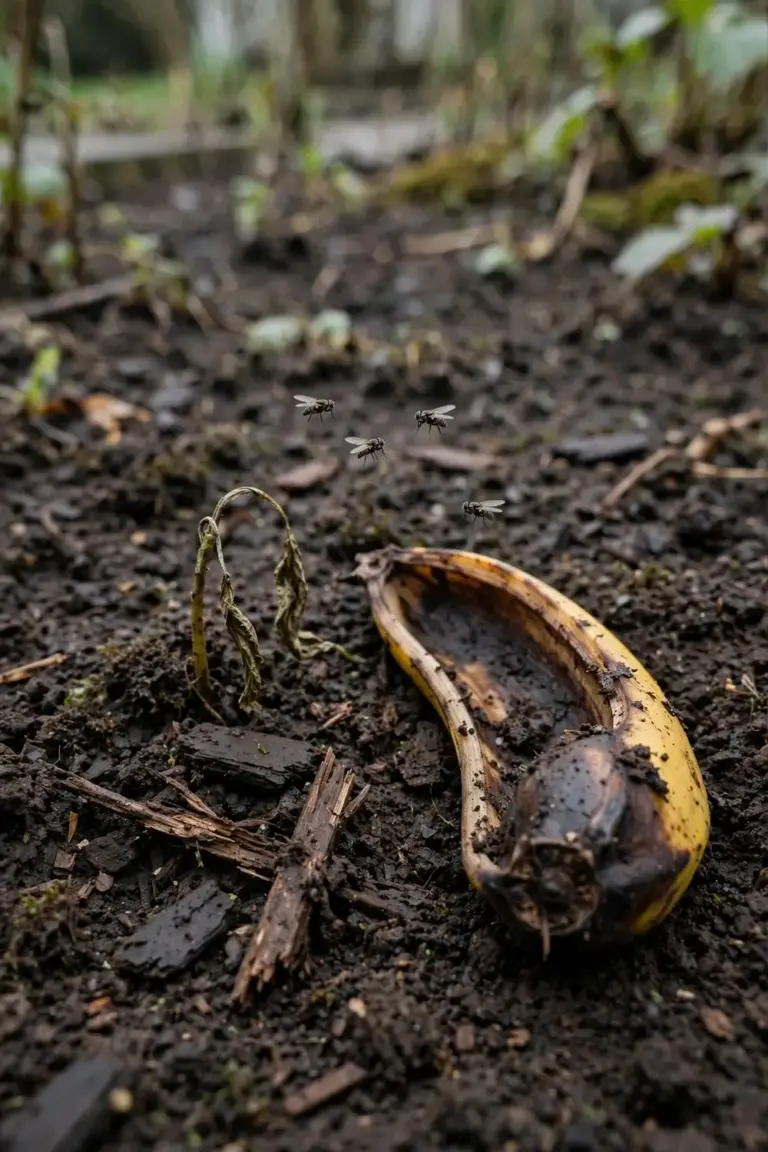
Raw peels also draw the wrong crowd. Rotting banana peels can attract fruit flies, fungus gnats, and even cockroaches, according to Better Homes and Gardens. That is the cost of burying kitchen scraps beside a plant: the peel feeds pests before it feeds roots.
Pots make it worse. A pot holds a small volume of mix, and a rotting peel inside it stays wet and active for a long time in that confined space. Sterilised potting mix often lacks the microbial life needed to unlock the minerals in the peel into a form the plant can use, according to New Scientist. The peel sits, the pests arrive, and the plant waits.
Trench composting is the one burial method with a real case. Digging peels into an empty bed between plantings, under a thick cover of soil and browns, gives microbes time to work without a living plant waiting on the result. The bed rests, the peel breaks down, and the next crop inherits finished organic matter. That is composting with a shovel, not feeding. The moment a living plant stands over the buried peel and the gardener calls it fertilizer, the method stops being honest.
5. Ask What Potassium Really Does to Stems
Potassium strengthens stems by keeping cells firm and helping the plant move water and sugars where growth happens. When potassium runs short, stems grow weaker and crops lodge, or fall over, under their own weight. That mechanism is real, and it is why potassium belongs in any honest stem-strength conversation.
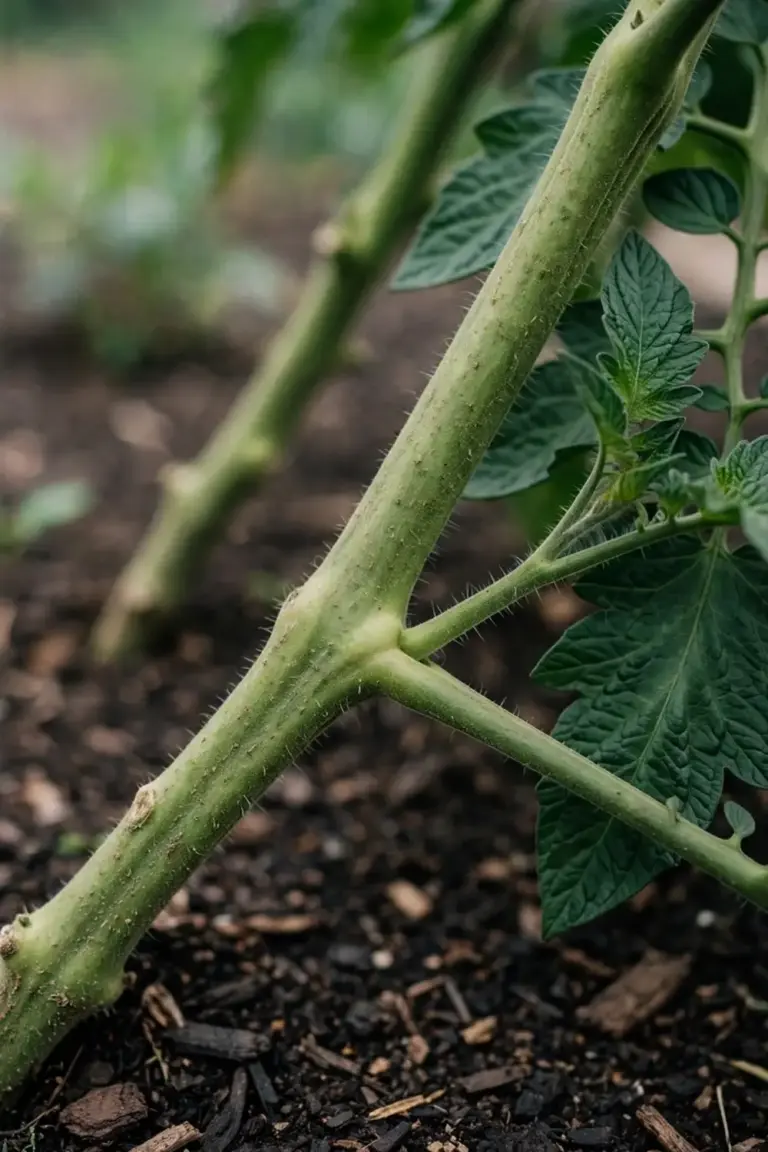
A peer-reviewed maize study measured the effect directly: returning straw to the field combined with potassium fertilizer improved stem puncture strength by 8.89 to 14.82 percent, according to the study in Scientific Reports. Puncture strength is a direct measure of how much force a stem resists before it fails. The study tested potassium fertilizer at field rates, not banana peels.
That distinction carries the whole article. Potassium strengthens stems. Banana peels contain potassium. Those two facts do not combine into a third fact that banana peels strengthen stems, because the dose, the form, and the timing all work against the peel. A plant with weak stems usually needs a soil test and a balanced feed, not a jar of brown water.
Stems also answer to light. A seedling on a dim windowsill stretches toward the window and grows long, pale, and weak, a condition gardeners call etiolation. No potassium dose, from a peel or a bag, stiffens a stem that grew in the dark. Light comes first. Feed comes second. The peel trend skips both and sells the jar.
6. Test the Fourth Claim: Peels Replace Fertilizer
Peels do not replace fertilizer. Peels are weaker in all essential nutrients than standard commercial plant food, according to New Scientist. A plant fed only on peels runs short on nitrogen first, then on everything else the peel never had.
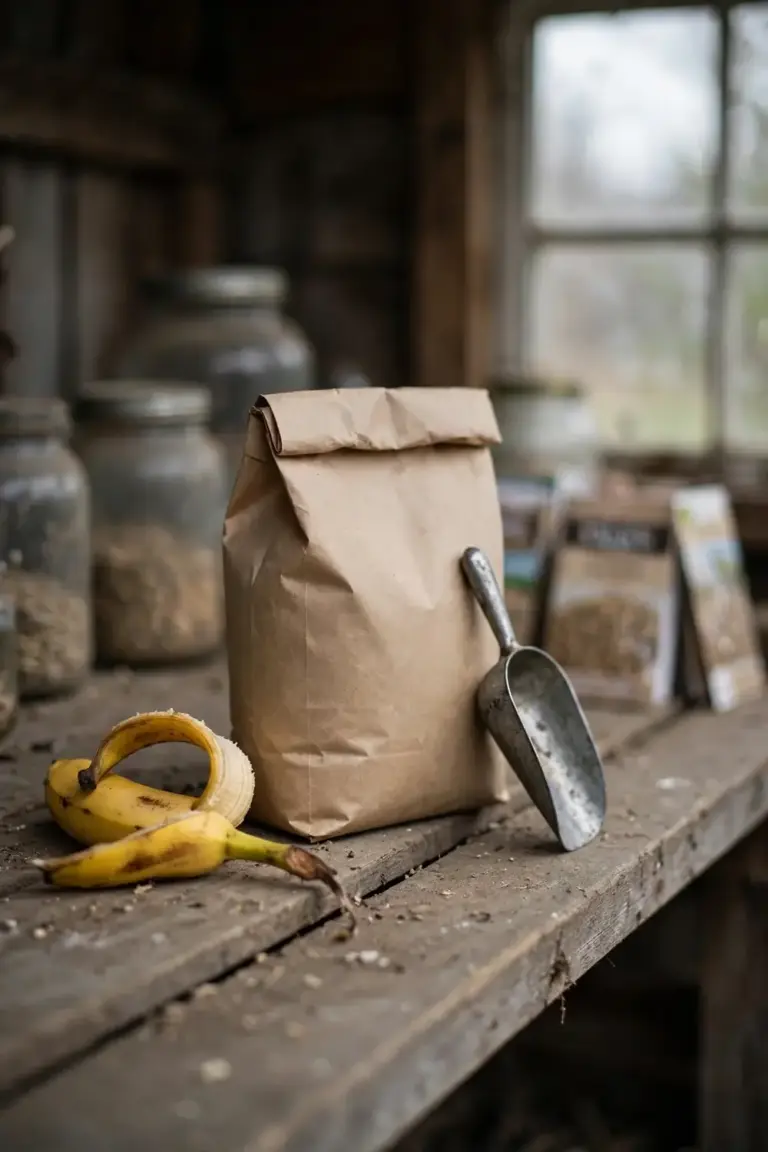
The research record backs the honest version, not the viral version. A 2025 review in the journal Agriculture gathered 126 studies of banana-peel-based fertilizers and found that peel treatments often outperformed untreated soil. Outperforming untreated soil is a low bar. The review does not show peels beating a balanced fertilizer, and headlines that claim otherwise read more into the paper than the paper says.
Think of peels as a small potassium contribution to a system that already feeds the plant properly. Composted peels add organic matter and a little potassium to soil that already gets a balanced feed. That is a real, modest contribution. It is not a replacement, and dressing it up as one leaves plants hungry.
The review also shows why the trend’s evidence looks stronger than it is. Most of the 126 studies tested peel-based products against untreated soil, and untreated soil is a low bar. A treatment that beats doing nothing has cleared the easiest test in gardening. The question that matters is whether peels beat a balanced feed, and that test has not been run in the way home gardeners use peels. Until it is, the honest claim stays small: peels contribute, they do not replace.
7. Compost the Peels Instead of Soaking Them
Composting is the honest route for banana peels. The pile does what the jar cannot: microbes break the peel tissue down over weeks, and the finished compost carries the peel’s nutrients in a form plants can use. Better Homes and Gardens gives the same advice: compost peels along with other fruit and food scraps, where they break down without attracting pests to your plants.
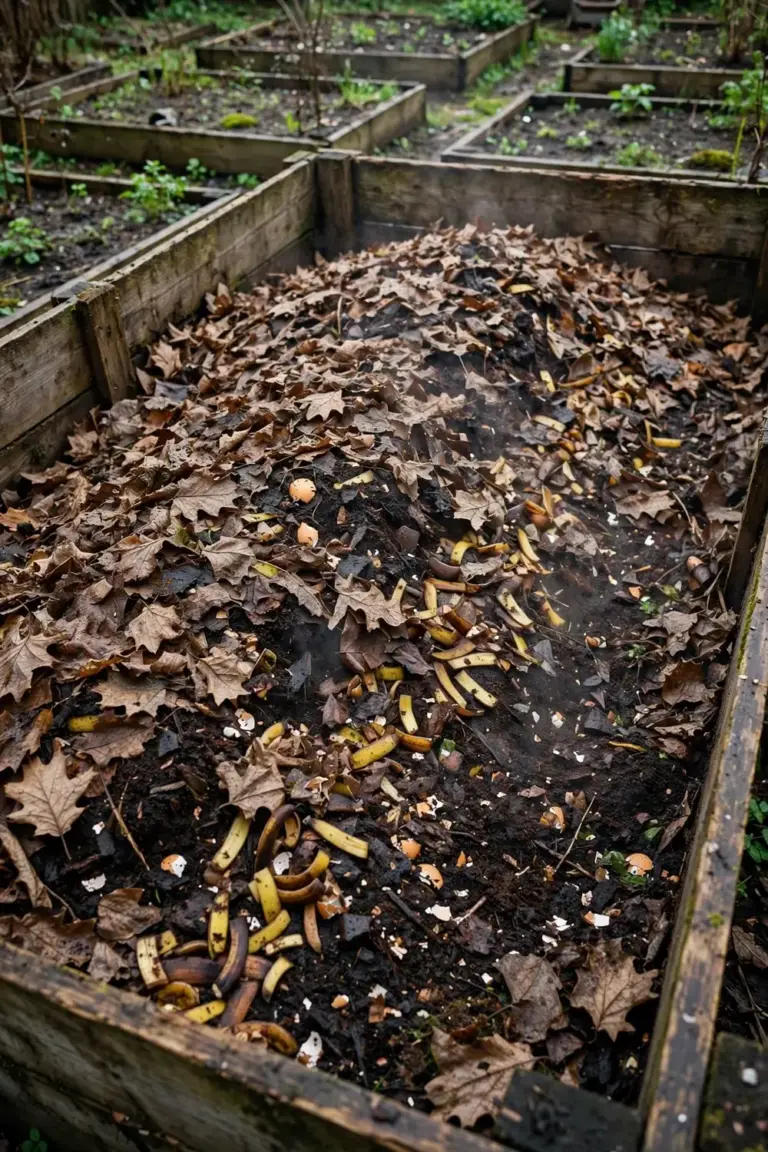
Cover every addition. When adding browns and greens to a pile, add at least two to three times the volume of browns, such as dry leaves, to the volume of greens, such as food scraps, and always cover food scraps with 10.2 to 20.3 cm of dry leaves or other browns, according to the US EPA home composting guide. That cover layer is what keeps the pile from smelling and keeps flies and rodents away from the scraps.
Chop the peels first. Small pieces give microbes more surface to work on, and the peel disappears faster. Toss the chopped peels into the pile, cover them with browns, and let the pile work. The fall garden bed prep routine is the natural moment to fold finished compost into beds.
Finished compost takes time. The US EPA notes that material at the bottom of a pile is ready when it turns dark and rich in color, a process that usually runs from 2 months to 2 years depending on the pile. That range sounds wide, and it is. A hot, turned, well-balanced pile finishes in months. A cold, neglected pile takes seasons. Either way, the peel’s nutrients arrive in the finished compost, measured by the pile, not by the jar.
8. Dry and Grind Peels for a Slow Top-Dress
Drying is the second honest route. Spread peel strips on a tray in full sun or a low oven until they turn dark and crisp, then crumble or grind them into flakes. The dried flakes store in a jar without smell and without pests, and they break down slowly once worked into soil or mulch.
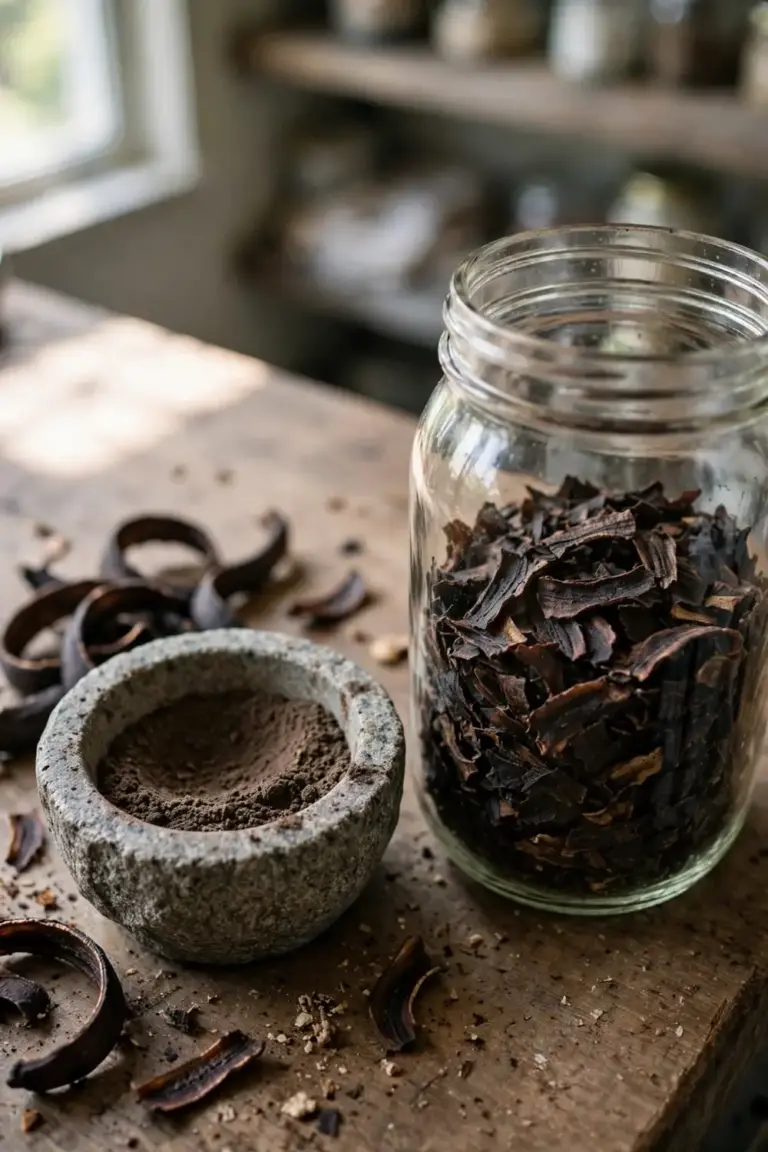
Dried peel is a slow top-dress, not a quick fix. Scatter the flakes over the soil surface and cover them with mulch so they stay in contact with moist soil and out of sight of flies. Soil life does the rest over weeks. The dose stays modest because the material is a supplement, and the balanced feed still does the heavy work.
Drying beats soaking on every practical point. The jar method gives you unmeasured brown water and a rotting peel to dispose of. The drying method gives you a storable, smell-free scrap that feeds soil life on a schedule the soil sets. Same peel, different outcome, because the method respects how decomposition actually works.
Grind the crisp strips in a mortar or an old blender and the flakes become a powder that mixes easily into the top few centimeters of soil. A powder has more surface area than a strip, so soil life reaches it faster. Store the powder dry in a sealed jar and it keeps until you need it. Wet powder clumps and molds, so the jar stays sealed and the scoops stay dry.
9. Feed the Whole Plant, Not One Peel
Weak stems usually point at the whole feeding picture, not at a missing peel. Start with a soil test. A test tells you whether potassium is actually short, because adding potassium to soil that already holds enough changes nothing. A test also catches the shortages peels never fix: nitrogen, phosphorus, and pH that locks nutrients away from roots.
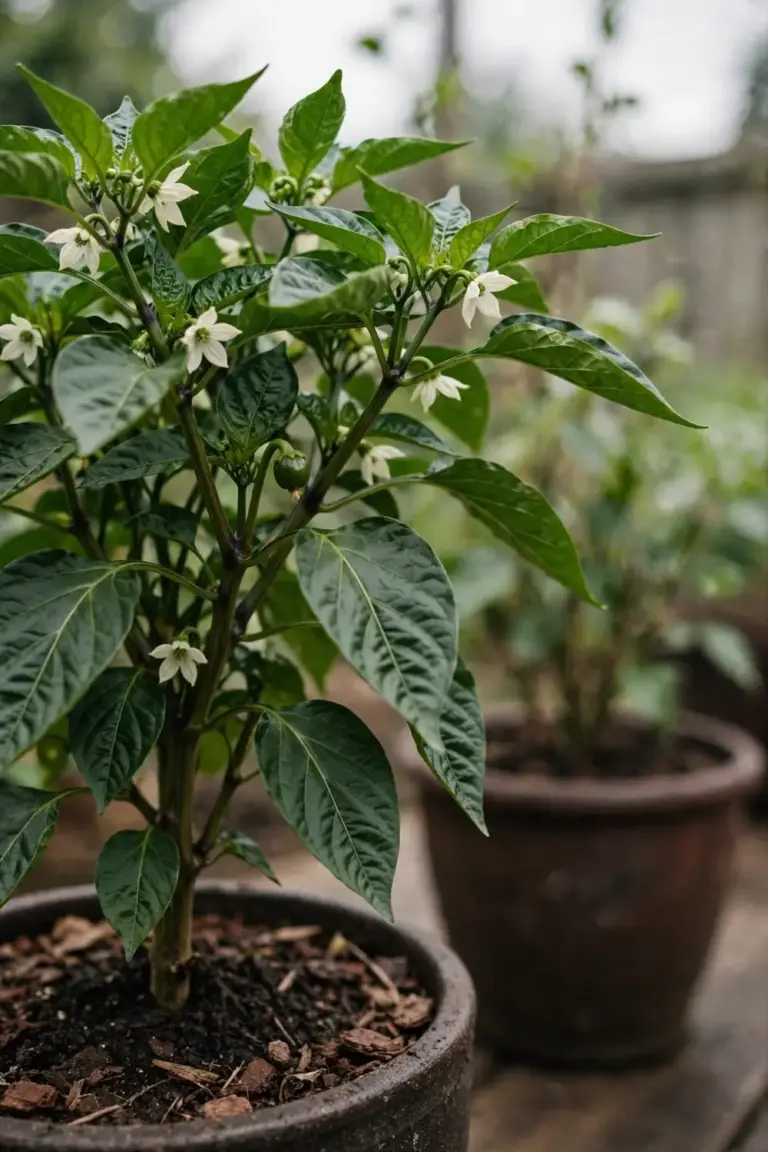
Feed balanced. A complete fertilizer carries nitrogen, phosphorus, and potassium in known amounts, and the label states the dose. That is the difference between feeding and guessing. Peels composted into the soil add organic matter and a little potassium on top of that base. The pair works. The peel alone does not.
Light and water matter as much as feed. A plant stretching for light grows long, thin stems no fertilizer can stiffen. A plant watered in floods and droughts grows soft tissue that flops. Fix the light first, water steadily, feed balanced, and compost the peels. Stems follow the system, not the scrap.
Watch the leaves while you wait. Pale older leaves with scorched edges point at potassium shortage. Pale young leaves point at nitrogen or iron trouble. Yellow all over with soft growth points at overwatering or low light. The leaf tells you which input the plant actually wants, and it never once says banana water.
10. Keep the One Exception: Staghorn Ferns
Staghorn ferns are the one plant where whole peels get a genuine hearing. Growers tuck peels among the fronds, where the shield fronds trap them and slow decay feeds the plant. One Australian gardening guide says to feed a staghorn up to four banana peels a month, depending on growth, to supply potassium plus smaller amounts of phosphate and minerals.
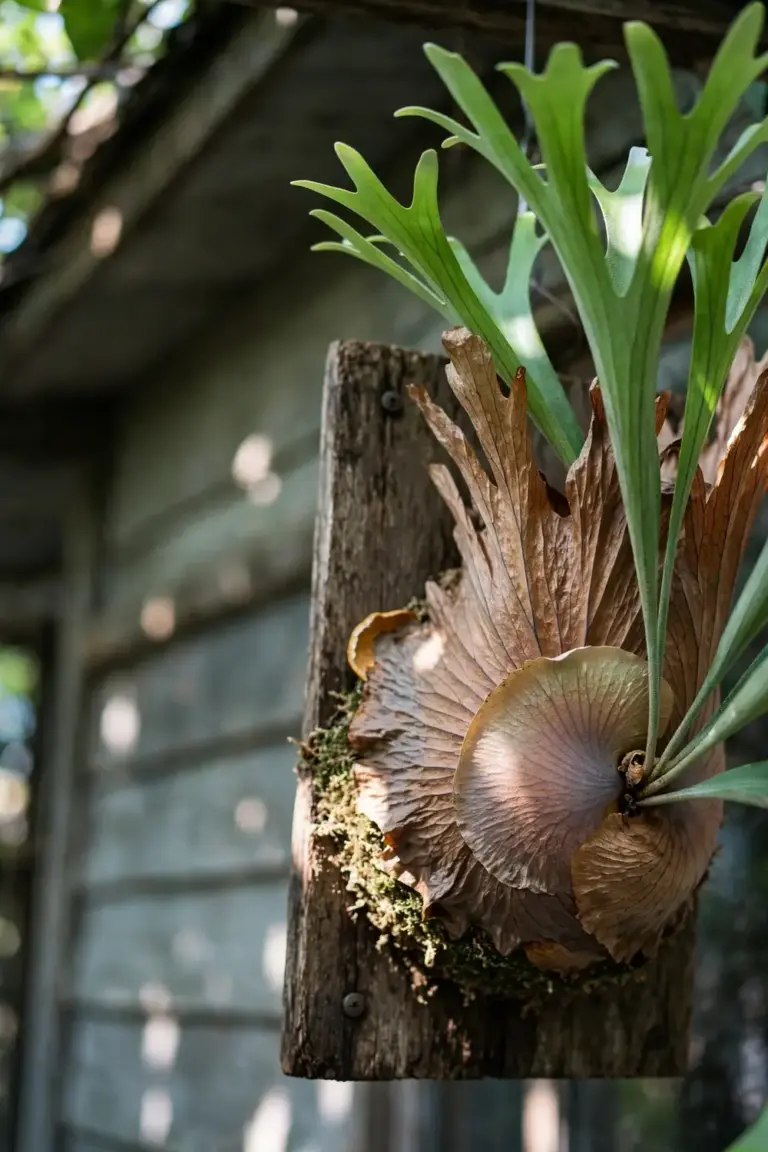
The exception is narrower than it looks. Another gardening guide warns that a peel rotting behind the moss backing creates a warm, moist pocket that invites mold and rot in the shield fronds, and draws cockroaches and fruit flies. The same guide recommends a balanced liquid fertilizer at half strength, once a month in the growing season, instead.
Treat the staghorn peel as a folk method with a real downside, not as proof the trend works. If you try it, use one small piece, check behind the shield fronds weekly, and remove anything turning to wet pulp. If the fern matters to you, the balanced feed is the safer choice. The exception proves the rule: even here, decomposition and dose decide the outcome.
The staghorn case also shows why the trend survives. The fern’s shield fronds hold the peel in place for months, giving microbes time to work, and the plant’s slow feeding pace matches the peel’s slow release. Most garden plants do not offer that setup. A peel on open soil dries, blows away, or feeds flies. The staghorn works because the plant itself acts as the compost bin.
11. Skip These Three Peel Mistakes
Skip leaving peels on the soil surface. An exposed peel stays wet, smells as it breaks down, and signals to animals that food is available. The EPA guidance to cover food scraps with browns exists because exposed scraps cause exactly these problems. Bury every peel under browns or mulch, or do not add it at all.
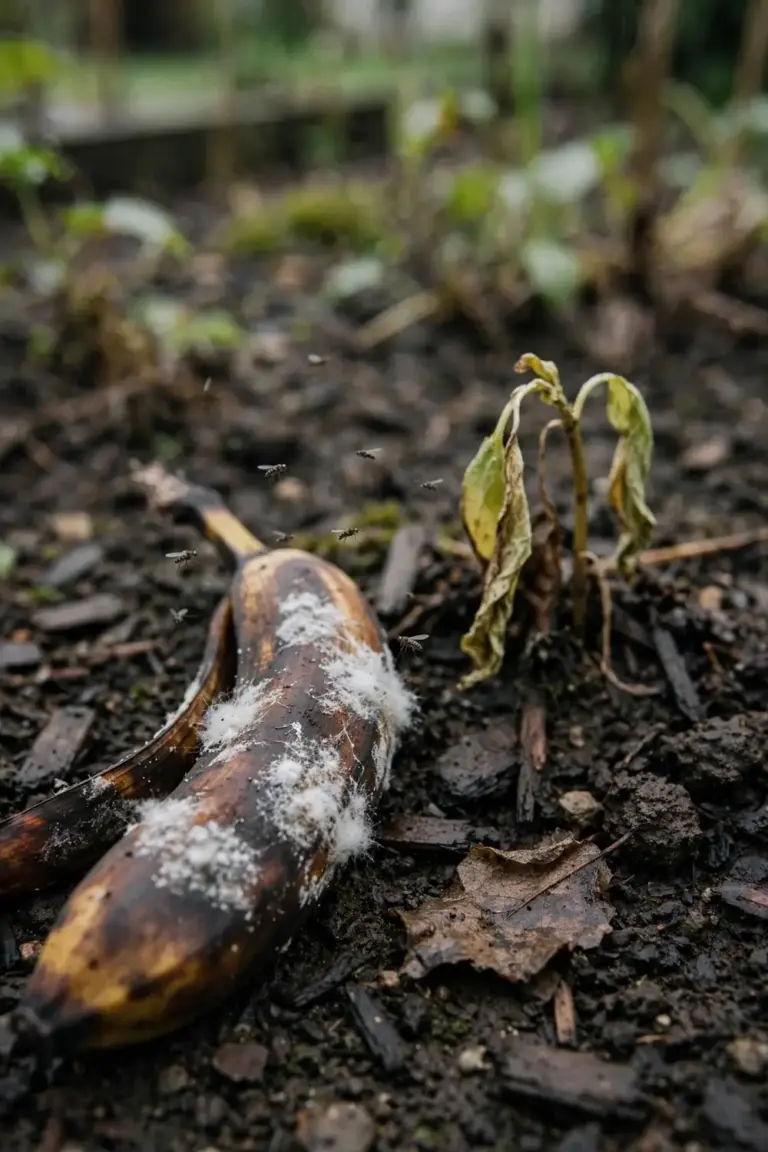
Skip peels in pots. A pot is a small, moist, enclosed system, and a rotting peel inside it invites fungus gnats and mold while the mix lacks the microbes to break it down usefully. Pots get finished compost and balanced liquid feed. Kitchen scraps stay out of them.
Skip peel-only feeding. A plant fed on peels alone runs short on nitrogen while its owner believes it is fed. The plant shows the truth first: pale leaves, slow growth, thin stems. When those signs appear, the fix is a soil test and a balanced feed, not another jar of peel tea.
Skip trusting the jar’s color. Brown water looks like plant food, and that look is the whole trick. Tea, coffee, and cola are all brown. Color says nothing about nutrient content. The only honest measure of a liquid feed is a label with numbers, and peel tea has no label. Judge a feed by its analysis, not its shade. Brown is a color, not a credential, and never a fertilizer analysis.
12. Run a Fair Peel Test in Your Own Garden
Doubt the debunk and test it yourself. Fair tests beat opinions, and this one costs nothing. Pick 2 identical pots, the same plant type, the same potting mix, and the same spot. Feed one with compost and a balanced fertilizer at the label dose. Give the other peel tea once a week. Water both the same.
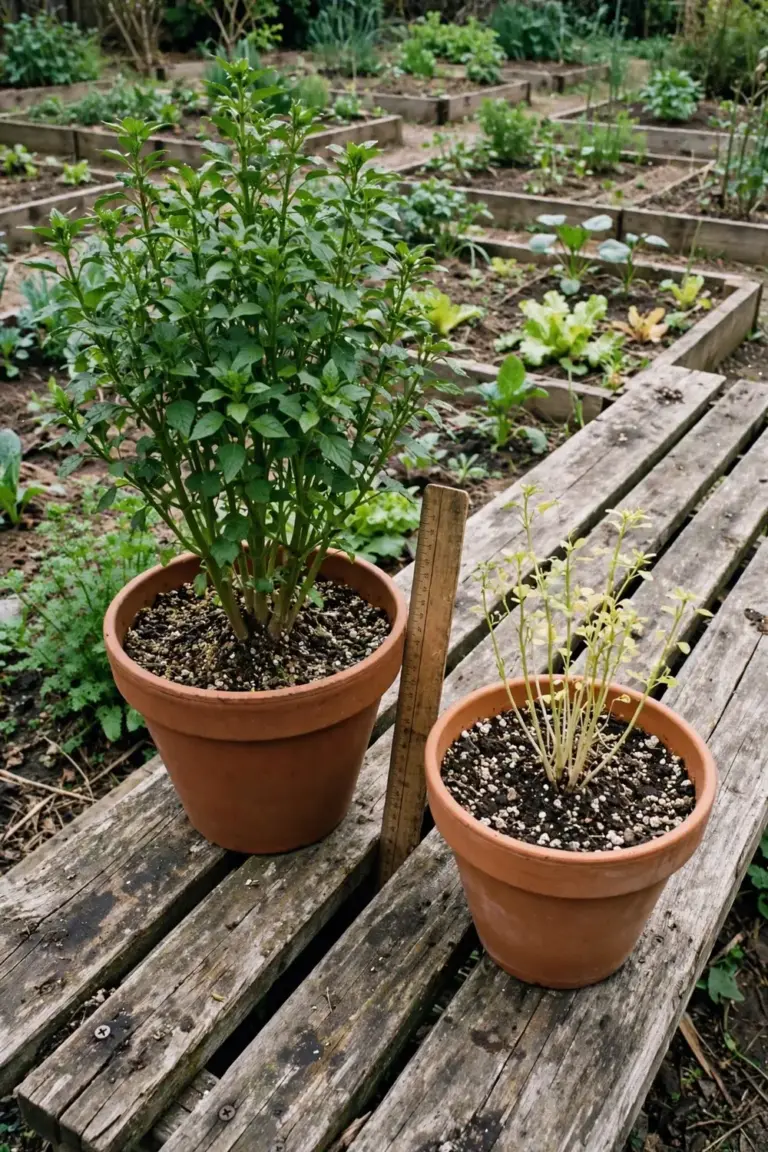
Measure 2 things weekly: stem thickness with a ruler at the same height, and new leaf count. Write both down. After 4 weeks, compare. The compost-fed plant should show thicker stems and steadier growth, because it received measured nutrition. The peel-tea plant should show little change, because the tea delivered almost nothing measurable.
Photograph both plants on day 1 and day 28, from the same angle, with the ruler in frame. Memory lies about growth. A dated photo pair does not. Keep the pots side by side so light and temperature stay equal, and label the pots so a helper watering them cannot mix up the treatments. Small discipline makes the result believable.
Run the test in the growing season, not in winter dormancy. Dormant plants grow slowly whatever you feed them, and a winter test proves nothing. Spring through early autumn gives the plants enough light and warmth to show a real difference. One fair test ends the argument better than any article can.
13. Frequently Asked Questions
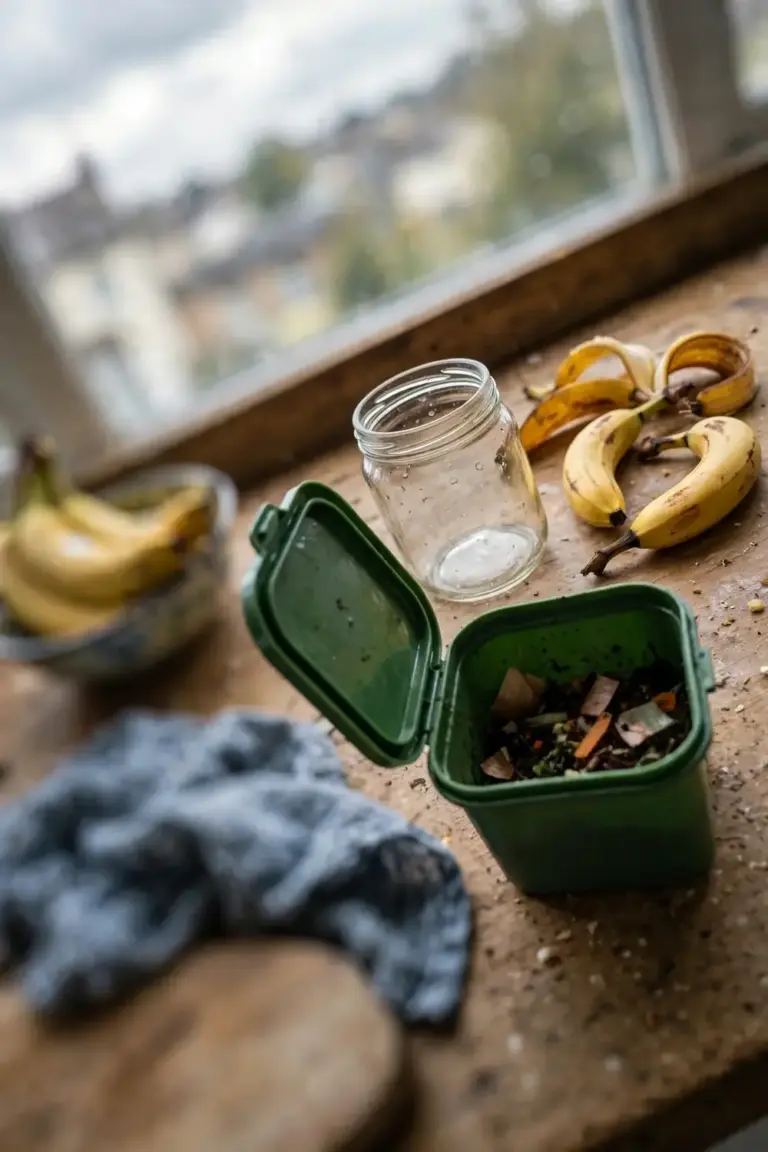
Peel tea rarely poisons a plant outright, but it can do real harm in pots. The sugary liquid feeds microbes and fungi in the mix, and the wet, rotting residue draws fungus gnats and fruit flies. A plant in sterile potting mix gets almost no nutrition from the tea while the pests move in. Compost the peels instead and water with plain water.
Finished compost looks dark and crumbly and smells like earth, according to the US EPA home composting guide. No peel pieces should remain visible, and the pile should no longer heat up when turned. If you still see peel strips, the pile needs more time, more browns, or more turning. Spread finished compost, not half-rotted scraps.
Yes, after decomposition. Peels carry potassium, and composting releases it into finished compost in a form plants can use. Soaking does not deliver the same result, because the soak extracts only a tiny fraction of the minerals. The potassium is real. The delivery method decides whether the plant ever sees it.
No. Burying raw peels beside roses repeats the same failure: slow breakdown, pest attraction, and nutrients arriving too late to matter. Roses are heavy feeders that want a balanced feed through the growing season. Compost the peels, spread the finished compost around the roses, and let the balanced feed carry the season.
Start with a soil test, then feed a balanced fertilizer at the label dose. Check light next, because a plant stretching for light grows thin stems no feed can stiffen. Water steadily. Compost your peels and let them add organic matter and a little potassium to soil that already gets a full feed. Stems follow the whole system.
14. Stop Chasing Peel Tea and Feed the Soil
Banana peels are not villains. They are kitchen scraps with a little potassium and a big reputation. The reputation outran the evidence, and the evidence says the same thing from every angle: soaking delivers almost nothing, burying feeds pests first, and composting is the route that actually returns the nutrients to your soil.
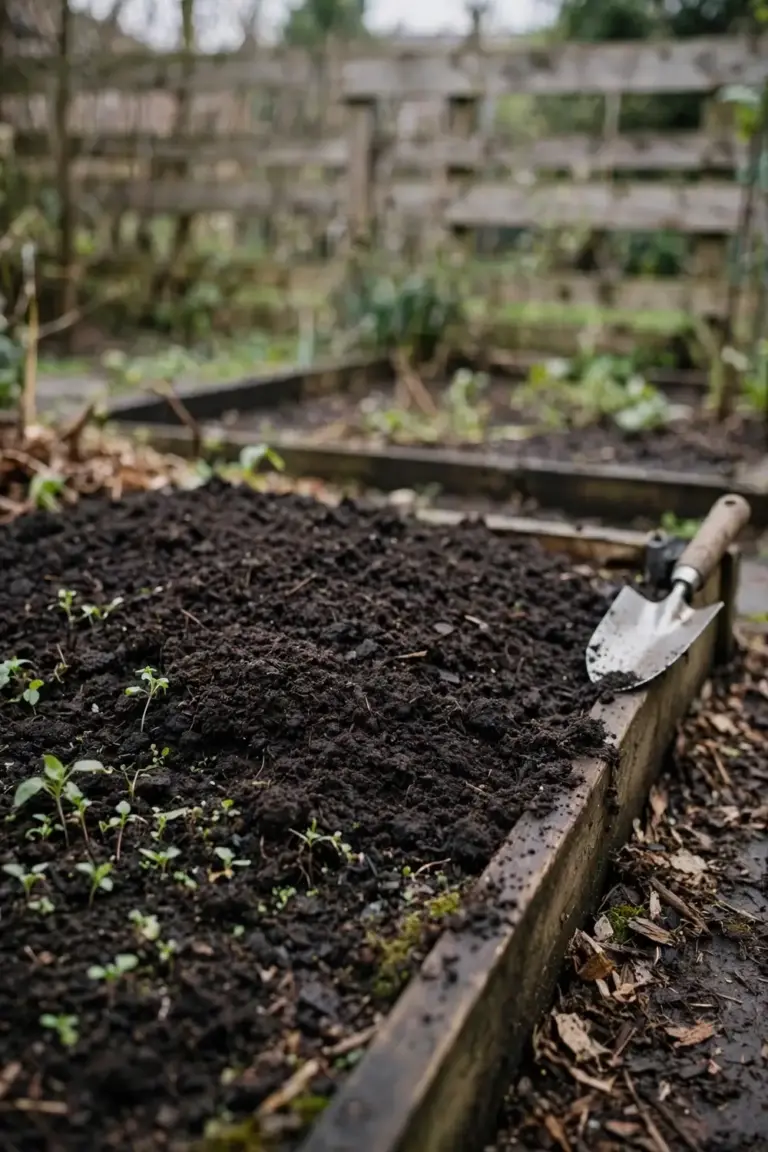
The trend survives because it feels resourceful. Turning waste into plant food is a good instinct, and the peel trend hijacks it. Composting honors the same instinct with a method that works. Nothing is wasted. The peel still feeds the garden. It just takes the slow road through the pile instead of the shortcut through the jar, and the slow road is the one that arrives.
I compost the peels now instead of soaking them, because the pile returns more than the jar ever did. Put the peels in the pile, cover them with browns, feed the plant a balanced diet, and give it the light it needs. The stems will take care of themselves. The cover crops for fall planting guide shows the same principle at bed scale: feed the soil, and the plants follow.