
Pick the hakea by its job, not its flower photo. Ten species cover every Australian garden job, from a 0.5 m groundcover to an 8 m screen. That is the best hakea species list for Australian gardens, and the table below sorts all ten by size, flower color, foliage, and job. I have learned that the hakea I plant in free-draining soil outlives the hakea I plant in a wet hollow. The rest of this page is 10 species picks, from the pincushion showpiece to the emu tree screen.
Hakea holds 150 species, all endemic to Australia, with the greatest diversity in the south of Western Australia, according to the Australian Native Plants Society. Most hakeas flower in winter and spring, when nectar is scarce. Birds follow that nectar. A hakea in flower pulls honeyeaters into a garden that has little else on offer.
Hakea flowers sit in the leaf axils. Grevillea flowers sit mostly at the stem tips. Hakea fruit stays on the plant as woody follicles that hold two winged seeds until fire or plant death opens them. Grevillea fruit falls soft. That pair of traits separates the two genera in the field. Nurseries sell most hakeas as species, not cultivars. The list below is mostly species. One entry is a named hybrid, and it is flagged as one.
East-coast gardeners start with the eastern species. Hakea sericea, Hakea nodosa, Hakea bakeriana, and Hakea salicifolia all grow wild in New South Wales, Victoria, or Queensland, and they take summer humidity better than the WA species. WA species need grafted plants or sharp drainage in the east. Frost changes the pick too. Hakea bucculenta tolerates at least moderate frosts. Hakea sericea takes frost once established. Young plants of every species need shelter through their first winter in cold inland districts. Match the species to the coast, then to the frost, then to the job.
Pick by Job: The 10 Hakeas at a Glance
| Species | Mature size | Flower color | Foliage | Pick it for |
|---|---|---|---|---|
| Hakea laurina | To 6 m | Deep pink and cream | Broad, blue-green | Feature tree, screen |
| Hakea bucculenta | To 4 m | Orange-red | Narrow, linear | Showpiece shrub, cut flowers |
| Hakea salicifolia | To 5 to 8 m | White | Narrow, willow-like | Fast screen, hedge, rootstock |
| Hakea sericea | To 4.5 m | Pink bud, white open | Needle, sharp | Tough east-coast shrub, hedge |
| Hakea myrtoides | To 0.5 m | Pink shades | Small, myrtle-like | Groundcover, rockery, pots |
| Hakea ‘Burrendong Beauty’ | 1.5 m high, 3 m wide | Pink and white | Stiff, blue-green | Spreading groundcover, banks |
| Hakea nodosa | To 3 m | Cream to deep yellow | Needle | Beginner shrub, bird habitat |
| Hakea bakeriana | 1 to 2 m | Pinkish-white to deep pink | Narrow, tubular | Small garden, old-wood flowers |
| Hakea invaginata | 2 to 2.5 m | Pink-purple | Needle, grooved | Broom-form shrub |
| Hakea francisiana | 3 to 8 m | Deep pink to red | Linear, grass-like | Tall screen, small tree |
1. Hakea Laurina: The Pincushion Showpiece
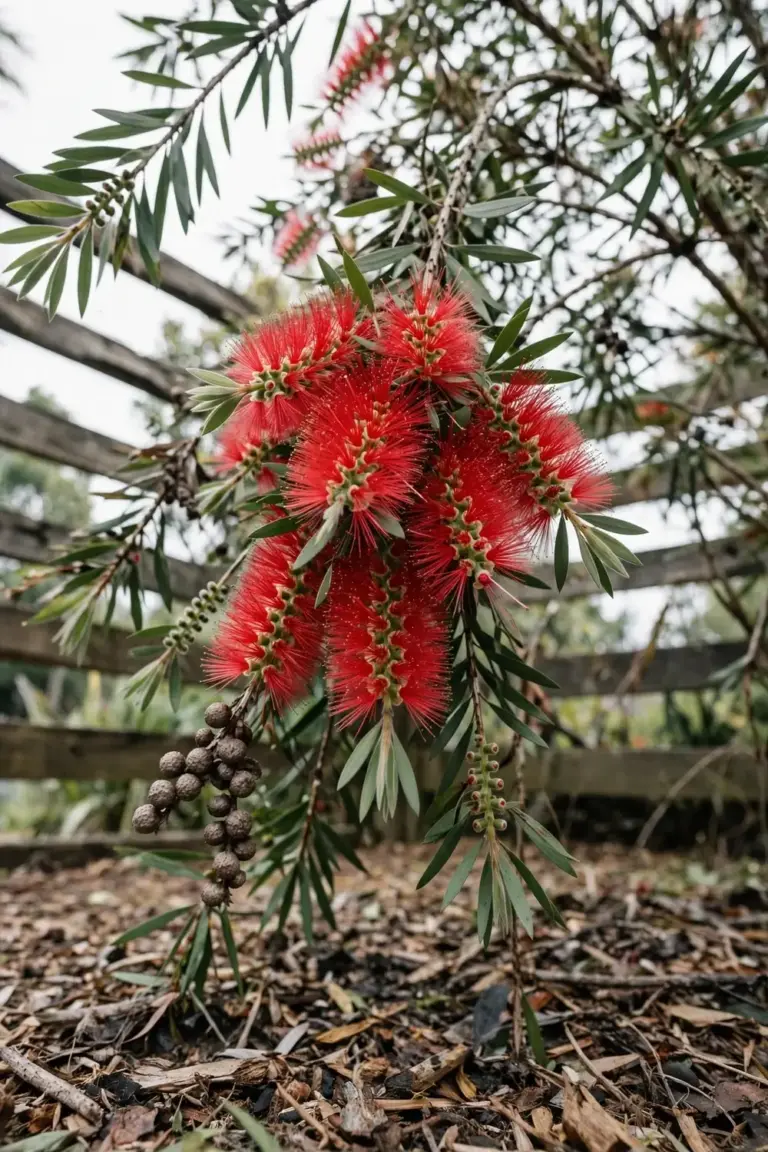
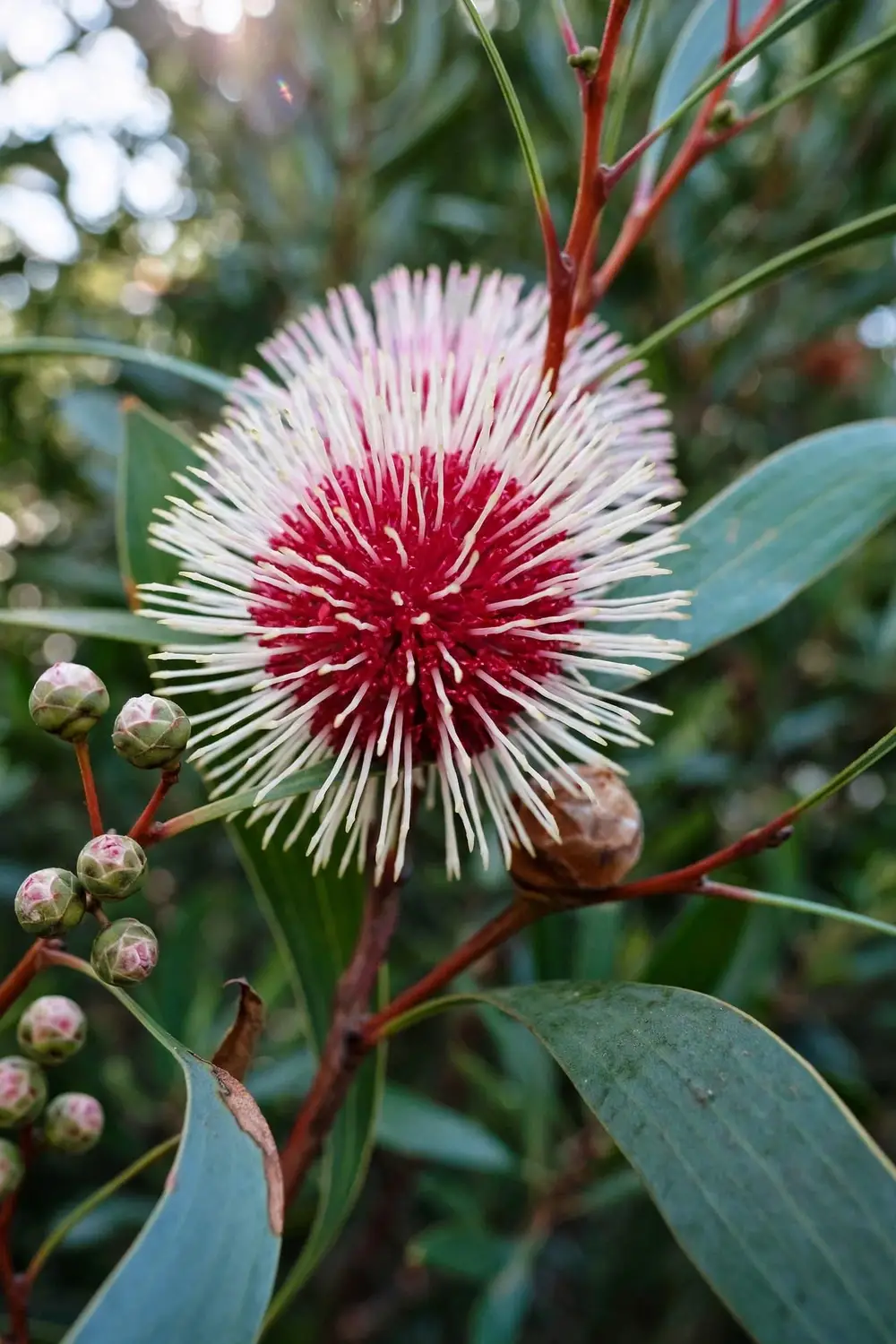
Hakea laurina is the showpiece pick. It grows as an erect shrub or small tree to a maximum height of 6 m, with dense olive-green foliage that works as a screen. Pick it when the job is one feature tree with winter flowers and bird traffic.
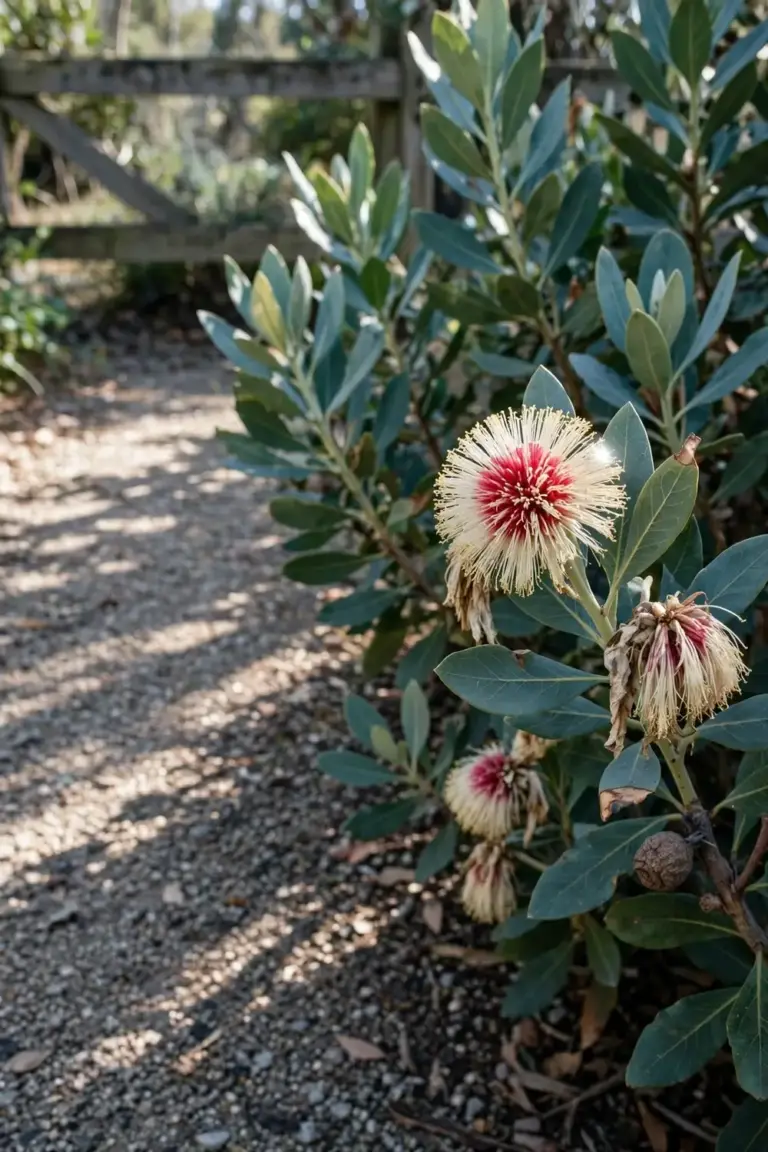
The flowers give the species its common name. Each flower head grows up to 5 cm across, with cream styles rising from a deep pink to red center, in clusters that reach 10, according to Kings Park and Botanic Garden. The flowers run from late April until August. Nectar-feeding birds follow them. The broad blue-green leaves sit dense on upright stems. That density is what makes the plant read as a screen even when it is out of flower.
Hakea laurina comes from the southwest coast of Western Australia, from Wagin south to Denmark and east to Israelite Bay. It grows in sandplain soils there. In a garden, give it full sun and free drainage. It tolerates sand, loam, and clay once drainage is right. It is hardy and drought tolerant once established. A gravel mulch keeps the root run cool and dry, and the mulching guide covers materials that suit natives. Skip it in humid summer districts, where it can fail. One line on feeding: use only low-phosphorus native fertilizer, since Proteaceae roots react badly to phosphorus.
The dense foliage also gives small birds cover. Thornbills and wrens feed in the lower branches while honeyeaters work the flower heads. A laurina beside a fence reads as a screen from the street and as habitat from the garden side. Prune lightly after flowering to hold the shape. Skip hard cuts into thick branches, since the plant may not reshoot.
2. Hakea Bucculenta: Red Pokers on a Shrub
Hakea bucculenta is the cut-flower pick. It grows as a large shrub up to 4 m high with linear leaves that reach 150 mm long and 3 mm wide, according to the Australian Native Plants Society. Pick it when the job is a showy shrub with long flower spikes for the vase.
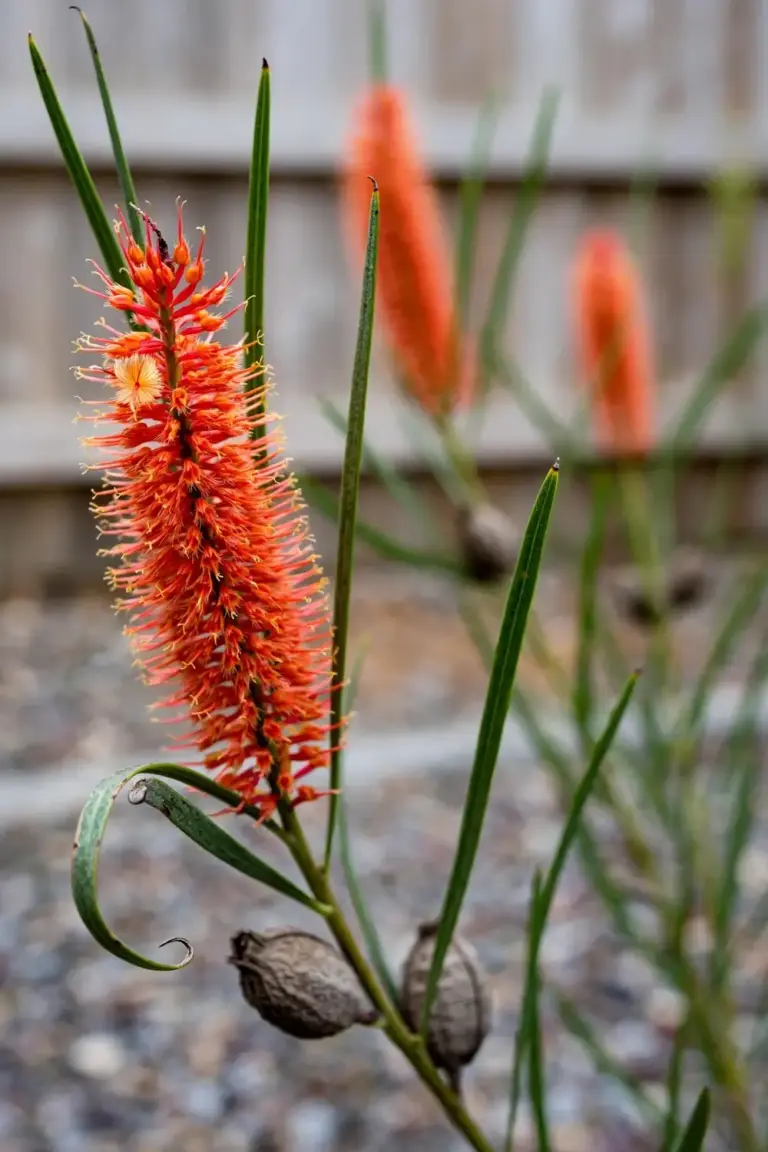
The flower spikes carry the show. Each raceme runs 150 mm long and sits in the leaf axils in winter and spring. The flower color is orange-red. The open habit of the plant keeps the spikes well displayed. Honeyeating birds work them. The woody seed pods that follow run 20 mm long and hold two winged seeds. The pods stay shut until fire or another environmental trigger opens them.
Hakea bucculenta suits areas of low summer humidity. In humid areas it can grow for some years and then collapse overnight. Grafting onto Hakea salicifolia fixes that weakness, and grafted plants now appear in specialist nurseries in eastern Australia. The species tolerates at least moderate frosts. Give it an open, very well drained, sunny position. Light tip pruning after flowering keeps the shape tight, and the same spring pruning techniques that shape other shrubs apply here. Skip heavy pruning into hard wood, since hakeas reshoot poorly from old wood.
3. Hakea Salicifolia: The Fast Screen and Rootstock
Hakea salicifolia is the screen pick. It grows as a large, bushy shrub or small tree up to 5 to 8 m high, with narrow leaves that reach 100 mm long and 20 mm wide, according to the Australian Native Plants Society. Pick it when the job is a fast, dense screen or a hedge that holds year round.
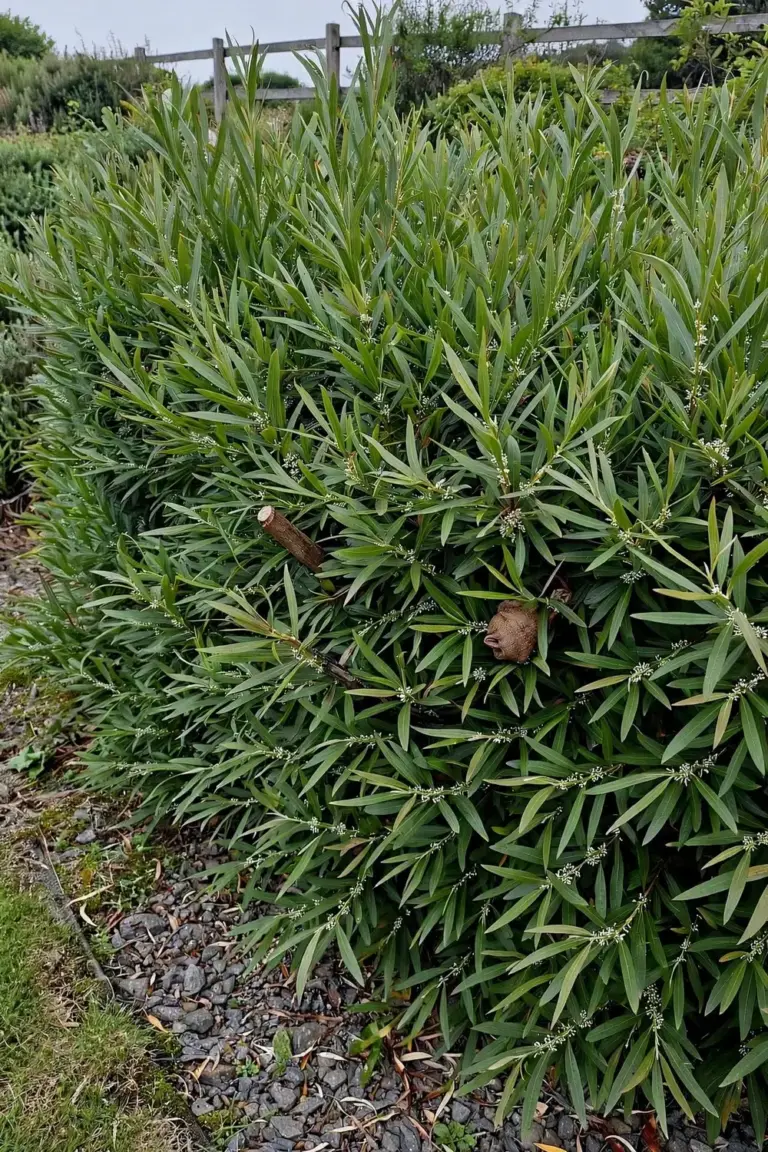
The flowers are white and sit in the leaf axils, generally seen in late winter to spring. They are small beside the red pokers of its cousins. The foliage does the work here. Narrow willow-like leaves pack dense on branching stems from ground level. The plant reads as a wall of green. Two cultivated forms circulate: a narrow-foliaged form and a form with cream and pink foliage sold as ‘Gold Medal’.
Hakea salicifolia also does a second job. Nurseries use it as rootstock for grafting harder species, including Hakea bucculenta, Hakea francisiana, and Hakea multilineata. That grafting is what lets WA grass-leafed species grow in eastern gardens. The species grows from seed without pre-treatment, and the seed starting guide covers the sowing steps. Cuttings also strike. The ‘Gold Medal’ form needs cuttings, since seed does not come true to type. Give it an open, sunny position in well drained soil. It handles temperate and sub-tropical climates. One line on feeding: low-phosphorus native fertilizer only.
Space plants 1.5 to 2 m apart for a dense informal screen, according to Evergreen Trees. Space them 3 m apart where each plant should read as an individual shrub. The screen closes in two to three years at that spacing. Growth runs 30 to 60 cm per year in good soil, according to the same nursery guide. Water deeply in the first summer, then back off. Established plants need little extra water.
4. Hakea Sericea: The Tough East-Coast White
Hakea sericea is the tough pick for the east coast. It grows as a shrub to 4.5 m tall, with needle leaves 1.3 to 7.2 cm long and 0.7 to 1.3 mm wide, tipped with a sharp point, according to Plants of South Eastern New South Wales. Pick it when the job is a hardy shrub on the NSW coast, ranges, or tablelands.
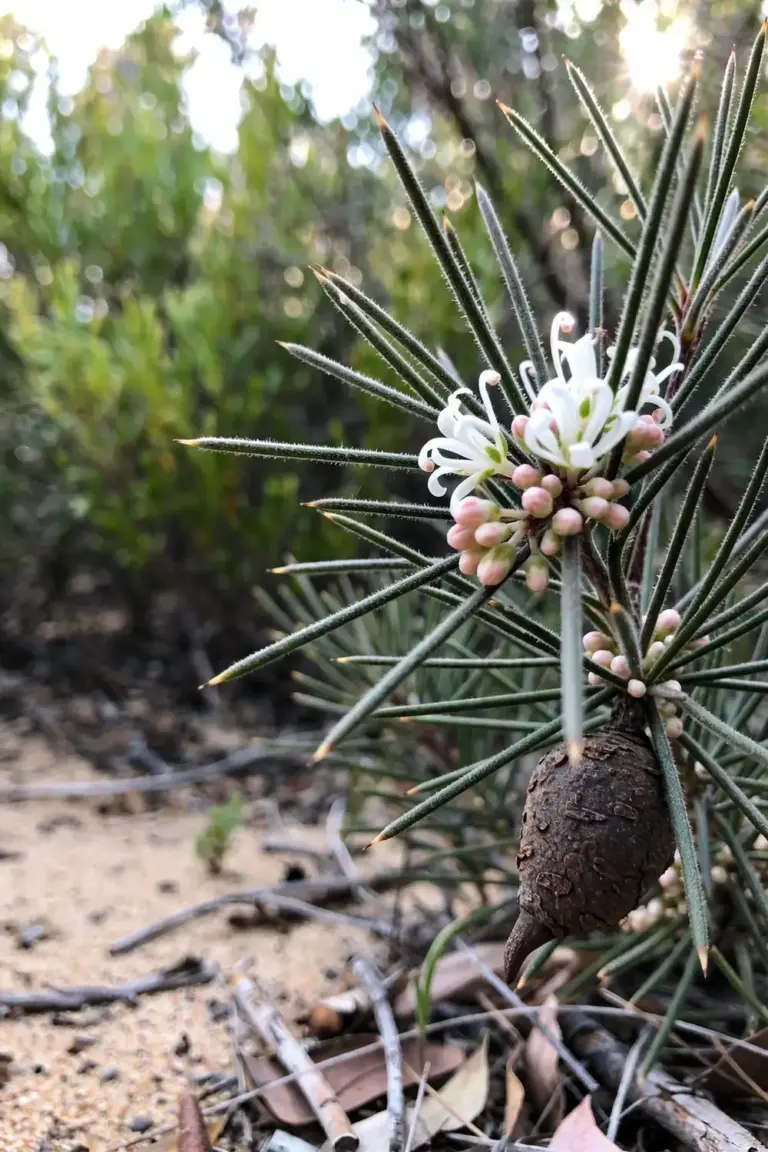
The flowers open white or cream after pinkish buds. They sit in clusters of 1 to 7 flowers in the leaf axils and flower from winter to spring. The needle leaves are stiff, grooved underneath, and end in a sharp point 1 to 2 mm long. That point is real. Wear gloves when you prune near it. The woody fruit runs 20 to 40 mm long and 15 to 32 mm wide, with a short beak. The fruit stays on the plant until fire or death opens it.
Hakea sericea grows in forest, woodland, heath, and swamps on the coast, ranges, and tablelands of NSW. It tolerates sand, loam, and clay. It has become an environmental weed in South Africa, New Zealand, and Portugal, so do not plant it outside Australia. In an Australian garden, give it full sun and free drainage. It takes frost once established. Light pruning after flowering keeps the shape dense. Skip planting it where needle leaves will brush a path edge, since the points catch skin and clothing.
5. Hakea Myrtoides: The Groundcover That Hugs the Soil
Hakea myrtoides is the groundcover pick. It grows as a small lignotuberous shrub to 0.5 m high, with small elliptical leaves about 2 cm long ending in sharp points, according to the Australian Native Plants Society. Pick it when the job is a low mat of pink flowers at the front of a bed, in a rockery, or in a pot.
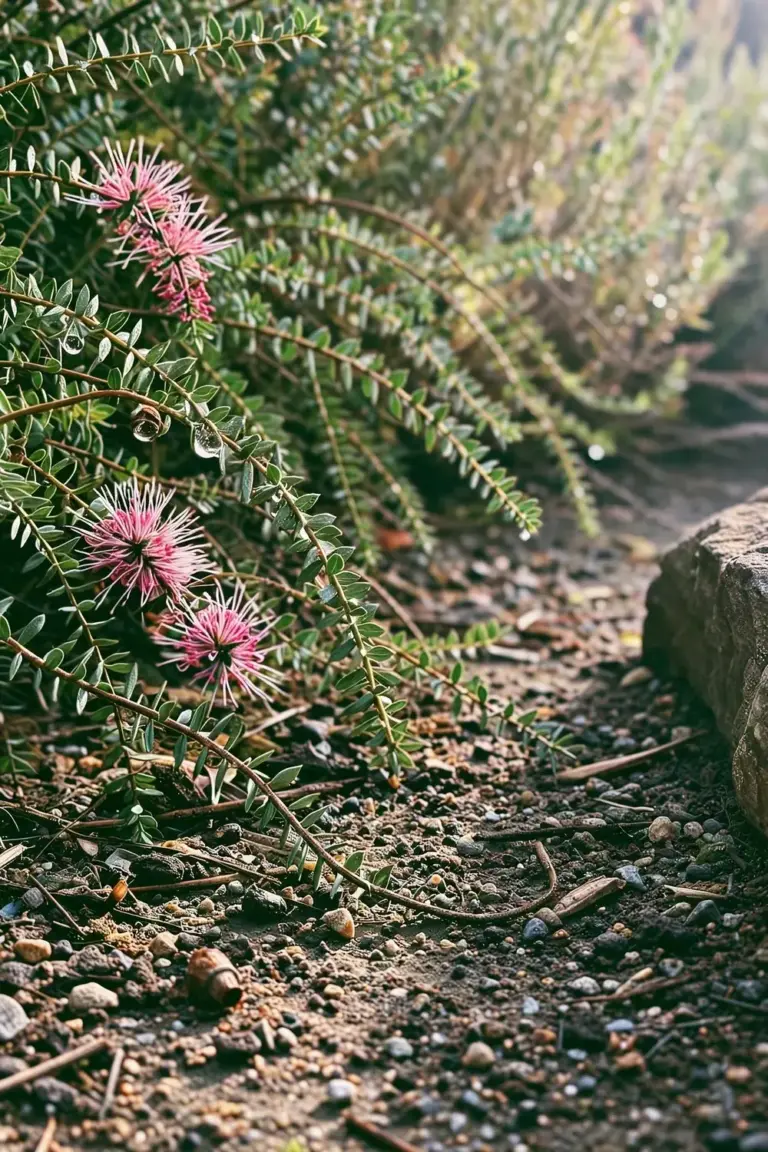
The flowers carry the display. Shades of pink cluster in the leaf axils near the ends of arching branches in winter and early spring. The small ovoid woody seed pods that follow run under 1 cm in diameter. The leaves are rigid, broad-elliptic, and myrtle-like, which gives the species its name. The plant forms a lignotuber, so it resprouts from the base after fire.
Hakea myrtoides needs excellent drainage and even then has proven short lived in climates with summer moisture. It prefers full sun or partial shade. Plants often suffer dieback of foliage, which spoils their appearance. Grafting onto Hakea salicifolia has proved very successful and lets the species grow in previously unsuitable areas. Grafted plants sometimes appear in specialist nurseries in eastern Australia. Grow it from seed without pre-treatment, or from cuttings that strike slowly. Skip it in humid subtropical gardens unless the plant is grafted and the bed drains fast.
Myrtoides also works in a pot. Use a large container with a free-draining native mix and a gravel mulch. Keep the pot in full sun. Water only when the mix dries through. A pot keeps the drainage sharp and lets you move the plant out of summer rain. Grafted plants in pots last longer than own-root plants in the ground in humid districts.
6. Hakea ‘Burrendong Beauty’: The Named Hybrid Spreader
Hakea ‘Burrendong Beauty’ is the spreading pick, and it is a named hybrid, not a species. It grows as a small, ground-hugging shrub to 1.5 m tall and up to 3 m wide, with a sprawling habit, according to the Australian Plants Society. Pick it when the job is a wide, low bank cover with winter pincushion flowers.
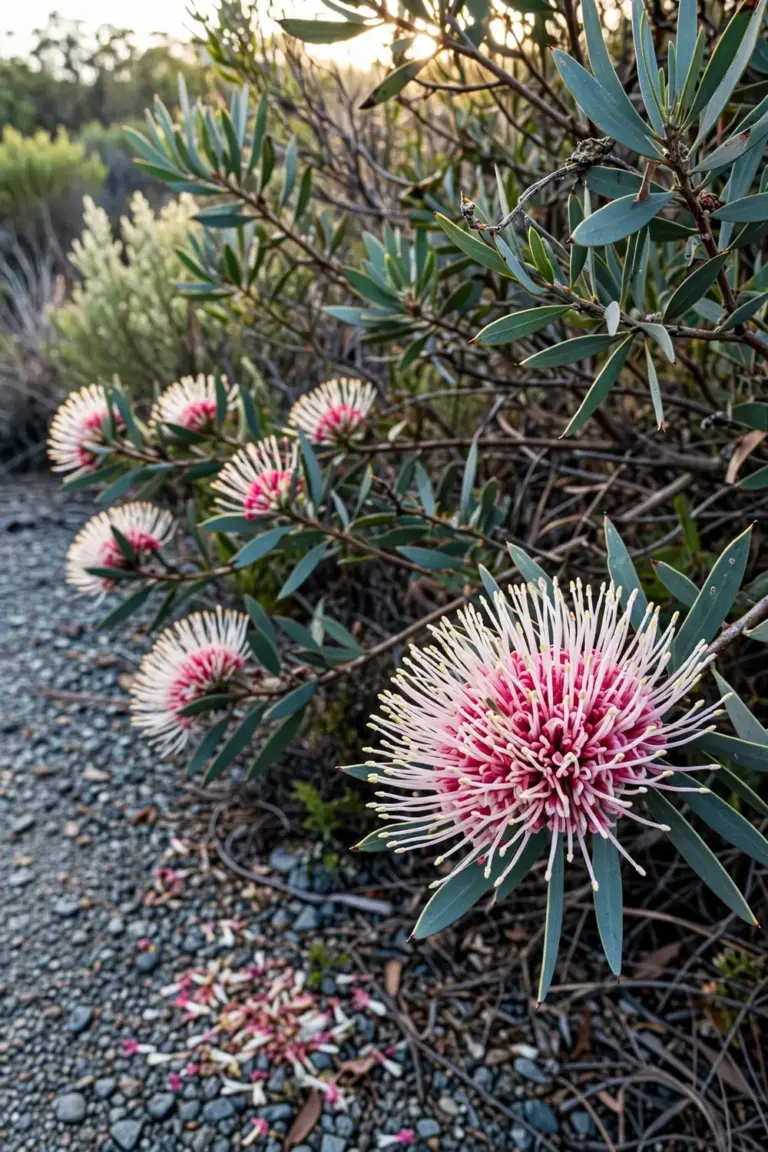
The hybrid crosses Hakea myrtoides with Hakea petiolaris. It arose in the 1980s at Burrendong Botanic Garden and Arboretum. The flower clusters run semi-circular to globular, with clusters that reach 50 flowers, to 20 mm long by 40 mm across, vivid pink and white, flowering en masse in winter to spring, according to the Australian Plants Society. The leaves are stiff, to 4 cm long by 1 cm wide, elliptic to ovate, blue-green, with a sharp point at the tip. Fruit is rarely produced, so the plant sets very little seed. That trait suits gardeners who want flowers without volunteers under the plant. Seedlings will not appear beneath it.
Hakea ‘Burrendong Beauty’ suits low humidity areas. It needs well drained soil in a sunny position. It tolerates moderate frost and dry spells once established. Its layered, somewhat prickly foliage gives small birds shelter, and a regular light prune keeps the shrub dense and stops it looking straggly. Skip it in heavy soils and humid summers, where dieback follows. A raised bed with airflow around the base fixes both problems.
7. Hakea Nodosa: Yellow Flowers for Beginners
Hakea nodosa is the beginner pick. It grows as a medium-sized shrub to 3 m high, occasionally 4 m, by a 3 to 4 m spread, with smaller forms reaching only 1 to 2 m high, according to the Australian Native Plants Society. Pick it when the job is a hardy yellow-flowered shrub for a first native garden.
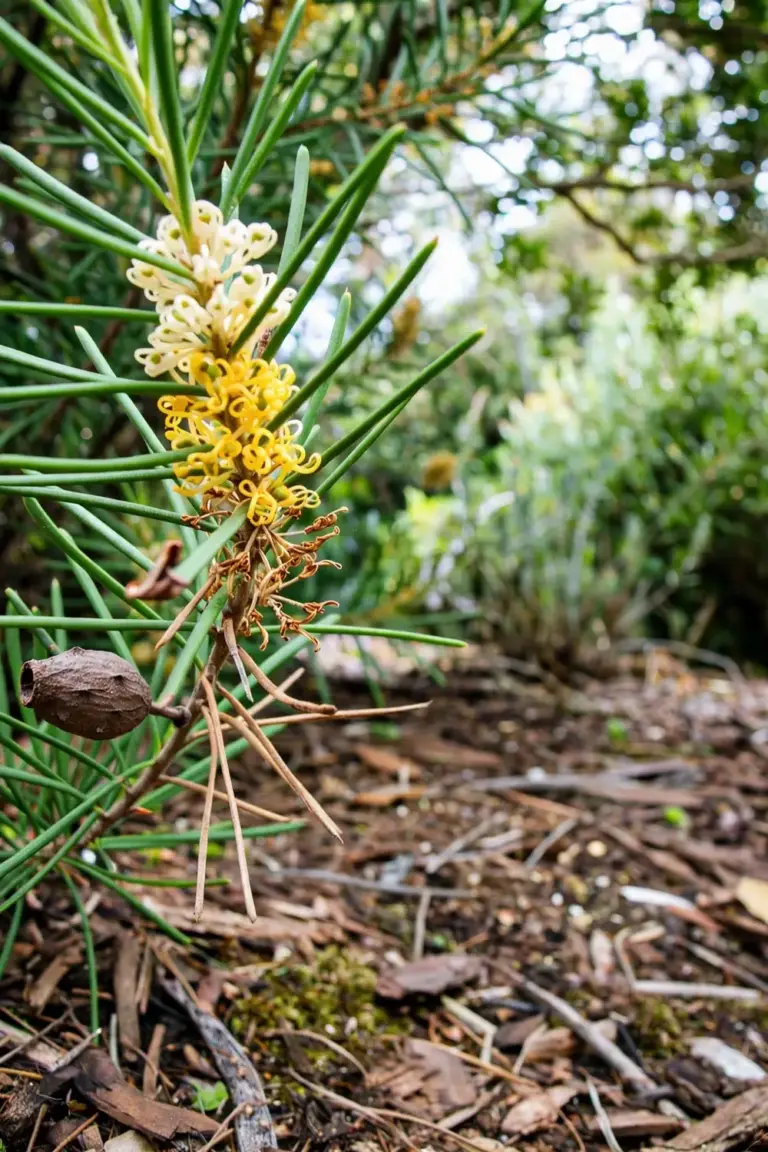
The flowers run from April or May to August, producing cream to deep yellow blooms along the branches. Their scent splits opinion. Some call it fragrant. Others call it smelly. The leaves are bright green, rounded in cross section, needle-like, generally 40 to 50 mm long by 1 to 2 mm wide. The woody seed pods run 30 by 35 mm and hold two winged seeds. The pods stay shut until fire or another trigger opens them.
Hakea nodosa grows in clay loam to sand. Soil health matters more than soil type for this species: drainage first, fertility second. In cultivation it has proven hardy in many climates and soils. It grows in full sun to part shade. It makes a good habitat plant for local fauna, especially where it is indigenous, such as the northern and eastern suburbs of Melbourne. It grows easily from seed. Cuttings of firm, current-season growth may succeed but usually strike slowly and unreliably. Skip rich fertilizer. A little low-phosphorus native fertilizer in poor soils is enough.
8. Hakea Bakeriana: Pink Flowers on Old Wood
Hakea bakeriana is the small-garden pick. It grows as a small to medium sized shrub spreading to 1 or 2 m high by the same in diameter, with bright green narrow, pointed foliage that is less prickly than many other hakeas, according to the Australian Native Plants Society. Pick it when the job is a compact pink-flowered shrub for a small bed.
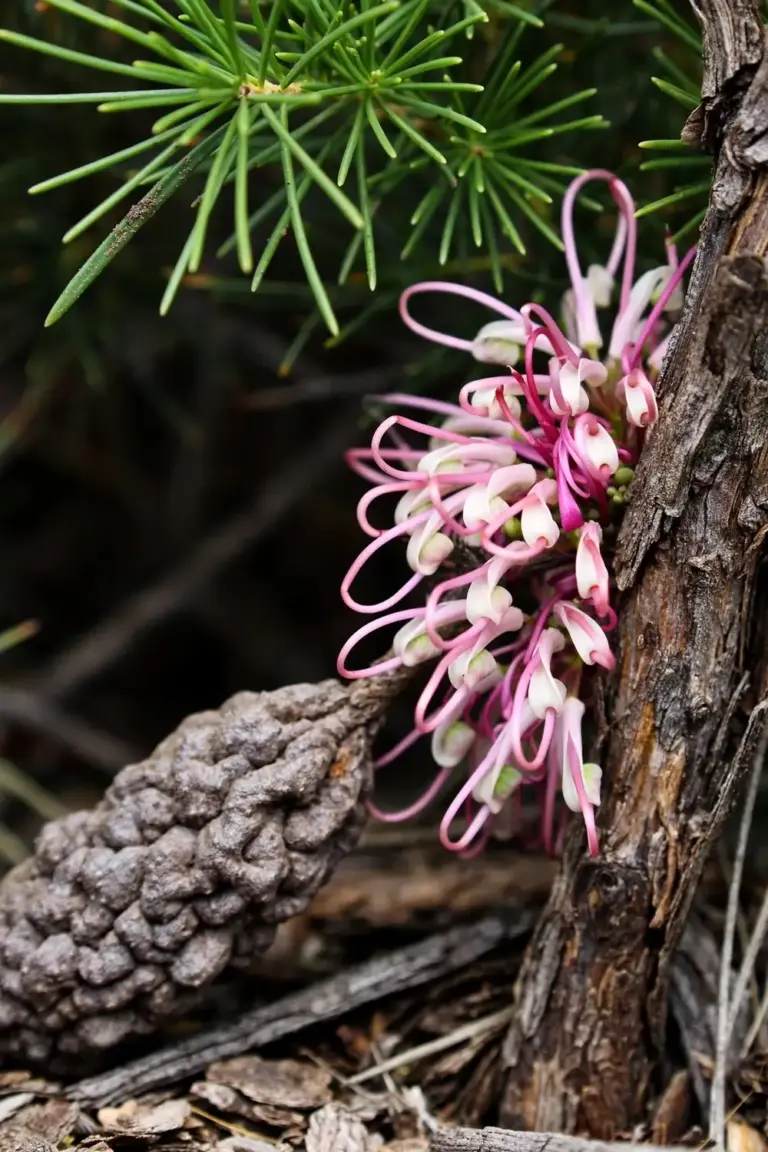
The flowers sit in loose clusters in the leaf axils and range from pinkish-white to deep pink. They appear in late winter through to spring. The flowers often appear on old wood, below the leaves or from bare stems, which is a showy trait. The woody seed pods that follow run 80 mm long by 45 mm wide, large and showy, yet hold only two winged seeds. The pods stay shut until fire or another trigger opens them.
Hakea bakeriana grows in open forest, woodland, and heath on the central coast of New South Wales, between Newcastle and just south of the Hawkesbury River. It grows on moist to dry sandy soils in nature, yet has grown successfully in heavier soils. It is hardy through temperate and subtropical climates. The pods draw attention even when the plant is out of flower. Leave them on the plant. They feed no pest and they mark the species for visitors. It may be slow growing and take some years to flower. As the flowers sit on old wood, they may hide behind foliage. Prune a few newer branches to open the view. It is rarely available outside specialist nurseries, so ask for it by name.
9. Hakea Invaginata: Pink-Purple Broom for Summer
Hakea invaginata is the broom-form pick. It grows with a dense, upright, broom-like habit, usually between 2 and 2.5 m high and wide, with fine, long green leaves, according to Kings Park and Botanic Garden. Pick it when the job is a narrow upright shrub with a profuse pink-purple display.
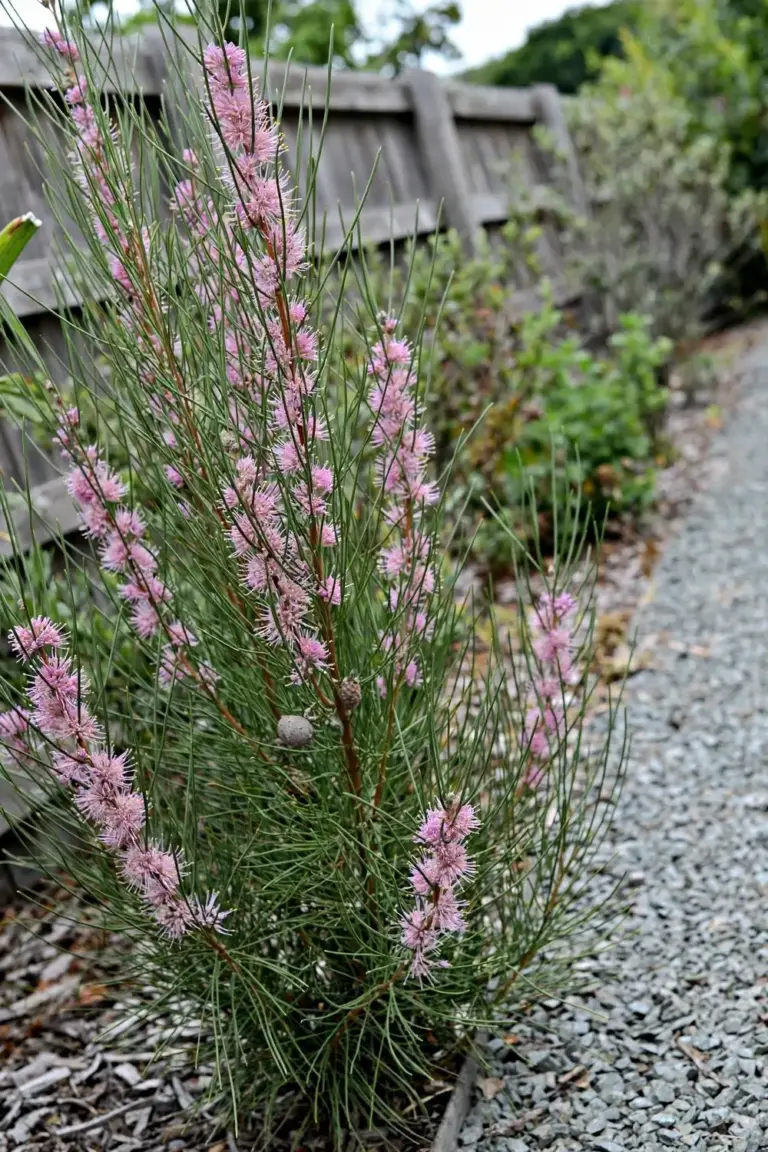
The flowers appear as a profuse display of pink-purple blooms along the branch stems. Small, woody ovoid fruits follow them. The species name invaginata means “within a sheath,” which refers to the grooves of the young leaf. The leaves carry five deep narrow grooves along their full length. The habit stays dense and upright without pruning, which suits a narrow bed or a gap between larger shrubs. The broom habit suits a narrow gap between a fence and a path. Two plants side by side read as one dense screen.
Hakea invaginata comes from the wheatbelt of Western Australia, from Geraldton to Coolgardie. It grows in sand, loam, and gravel provided they drain freely. Open sun suits it best. Light shade passes. Prune to maintain shape after flowering. Once established, the plant tolerates drought and feeds nectar-loving birds and insects through its flower season. When planting, feed with a granular slow-release fertilizer that is low in phosphorus and formulated for native plants. Skip wet feet. Drainage decides whether this species lives or dies.
10. Hakea Francisiana: The Emu Tree Screen
Hakea francisiana is the tall-screen pick. It grows as a striking upright, branched shrub between 3 and 8 m high, often spreading and quite bushy, according to Kings Park and Botanic Garden. Pick it when the job is a tall screen or a small tree with winter-to-spring flower spikes.
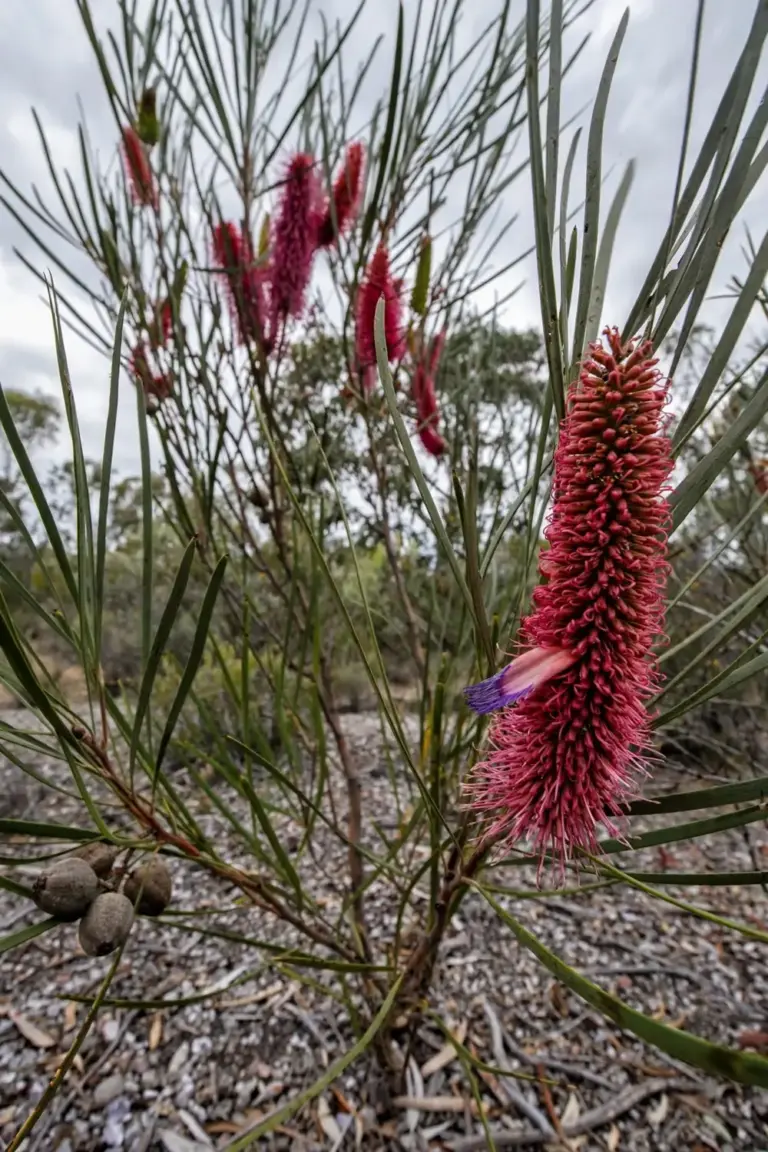
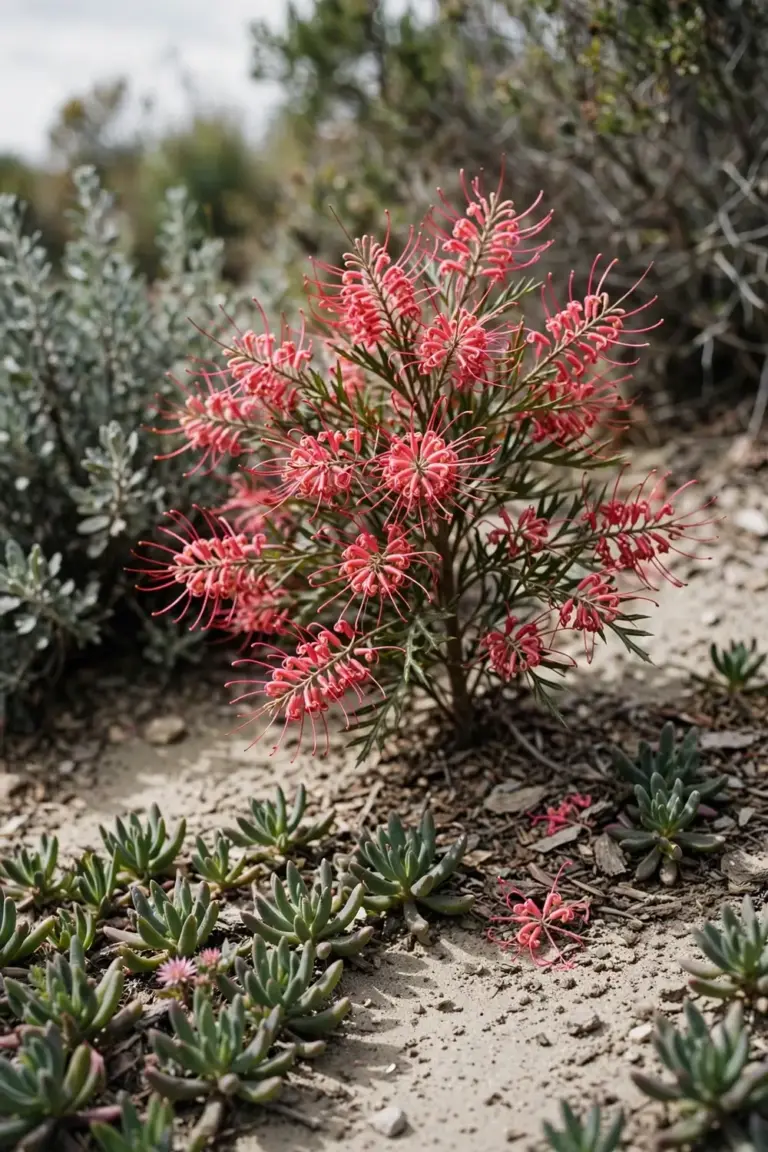
The flower clusters run as showy deep pink to red cylindrical spikes between July and October. They sit in the leaf axils and pull nectar-feeding native birds. The woody fruits that follow feed black cockatoo species. The leaves are linear and grass-like, which gives the species its common name of grass-leaf hakea. The plant is also sold as emu tree. The form once known as Hakea coriacea now sits inside this species, and it carries cream flowers with a pink center.
Hakea francisiana grows in arid areas from Wiluna to the north, Geraldton to the west, Lake Grace to the south, with populations extending east into the Great Victoria Desert. It grows in sandy, gravelly, and clay loam soils in open mallee woodland and shrubland. It grows best in full sun in areas with low humidity. It is very drought tolerant once established. It tolerates at least moderate frosts. Prune to maintain shape after flowering if needed. Skip heavy pruning. Light shaping is enough. In humid eastern gardens, buy a grafted plant on Hakea salicifolia rootstock.
Black cockatoos eat the woody fruits. The plant drops few fruits on its own, so the pods stay on the branches as a food store. That trait makes francisiana a habitat plant, not only a screen. Plant it where the canopy clears the roofline and the birds can feed without dropping pods on a path. In a small garden, hold it as a shrub with light pruning after flowering.
Frequently Asked Questions
Hakeas are easy when drainage is right and hard when it is wrong. Give the plant full sun, free-draining soil, and low-phosphorus fertilizer, and most species grow with little help. Wet feet kill them. Humid summers kill WA species on their own roots. Buy grafted plants for humid districts. Start with Hakea nodosa or Hakea salicifolia if you want the most forgiving species.
Hakeas need low-phosphorus fertilizer, not zero fertilizer. Proteaceae roots grow fine root clusters that pull phosphorus from poor soils. High-phosphorus fertilizer burns those roots and can kill the plant. Use a slow-release fertilizer formulated for native plants, with phosphorus under 3 percent. In good soils, skip fertilizer entirely. A mulch of gravel or bark keeps the root run cool.
Hakea flowers sit in the leaf axils. Grevillea flowers sit mostly at the stem tips. Hakea fruit stays on the plant as woody follicles holding two winged seeds until fire opens them. Grevillea fruit falls soft. Both genera sit in Proteaceae and both feed honeyeaters. If the plant holds hard woody nuts on its stems year round, it is a hakea. That fruit check settles most arguments.
Hakea myrtoides, Hakea ‘Burrendong Beauty’, and Hakea bakeriana suit small gardens. Myrtoides stays near 0.5 m high. ‘Burrendong Beauty’ spreads to 3 m wide but stays near 1.5 m high. Bakeriana stays 1 to 2 m in each direction. All three need free drainage, so grow them in a raised bed or a large pot with a native mix. Skip the tall species in pots. They outgrow the container fast.
Hakea salicifolia, Hakea francisiana, and Hakea sericea suit hedges and screens. Salicifolia grows fast and holds dense foliage from ground level. Francisiana runs taller, to 8 m, for a tall screen or small tree. Sericea gives a tough east-coast hedge with white flowers. Trim lightly after flowering to keep the screen dense. Skip hard cuts into thick branches, since hakeas reshoot poorly from old wood.
Start With the Job, Then Pick the Hakea
Start with the job. Measure the space. Name the height you need, the flower color you want, and the climate you garden in. Then pick the species that fits those three numbers. A groundcover in a screen gap wastes the plant. A screen tree in a pot wastes the pot. The table at the top of this page sorts the ten by those numbers. Work from it, buy the plant that matches, and plant it in free-draining soil in full sun.
Buy grafted plants for humid districts. Check the label for the rootstock name. Hakea salicifolia rootstock tells you the plant will take eastern soils. Own-root WA plants suit dry-summer gardens with sharp drainage. Ask the nursery which one you are buying. The wrong rootstock kills a good plant in one wet summer.