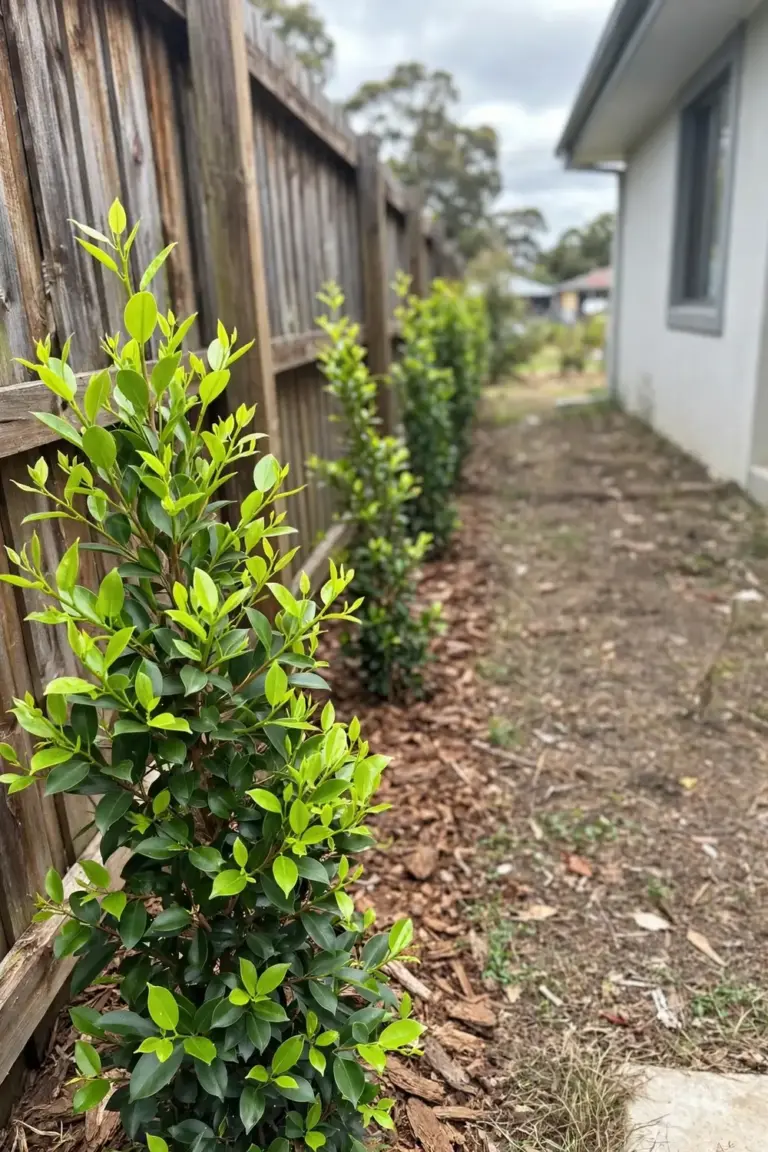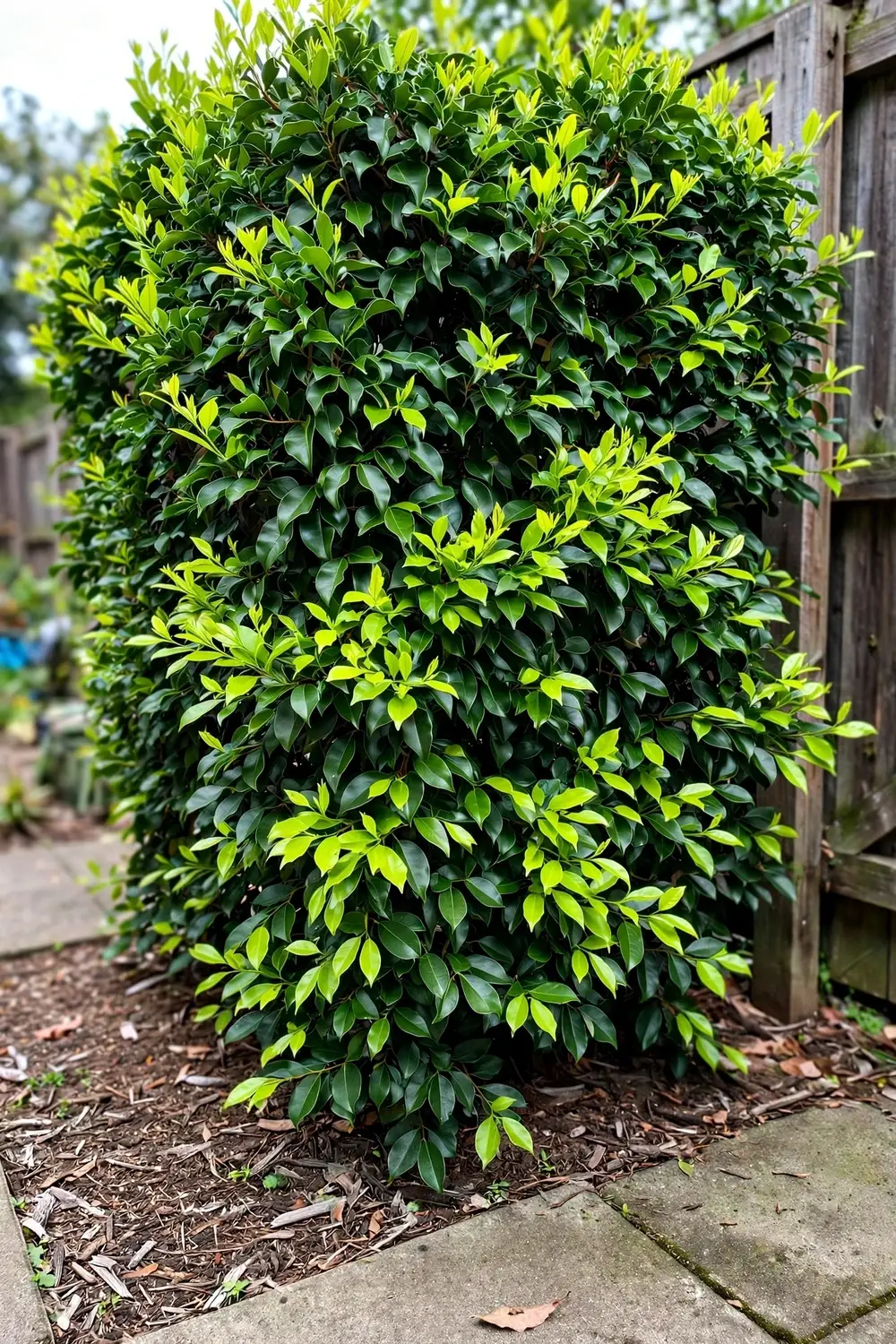

Ficus Hillii Flash is the cultivar Ficus microcarpa variety hillii ‘Flash’, sold in Australia as Ficus hillii ‘Flash’. Plant it 80 cm to 1 m apart, keep its roots 4 m from buildings, paving, and pipes, and trim it 2 to 3 times a year. It is a two-tone green hedge tree, not a cream-variegated plant.
I have learned that the hedge I trim three times a year stays a hedge, while the one I trim once turns into a tree. The rest of this page covers the name trap, the climate fit, planting, watering, feeding, pruning, roots, frost, and pests, from the first check to the last cut.
1. Name Flash Correctly Before You Buy It
Flash is a cultivar of Ficus microcarpa variety hillii. Nurseries sell it as Ficus hillii ‘Flash’. The two names point at the same plant. Flash is a cultivar. It is not a separate species.
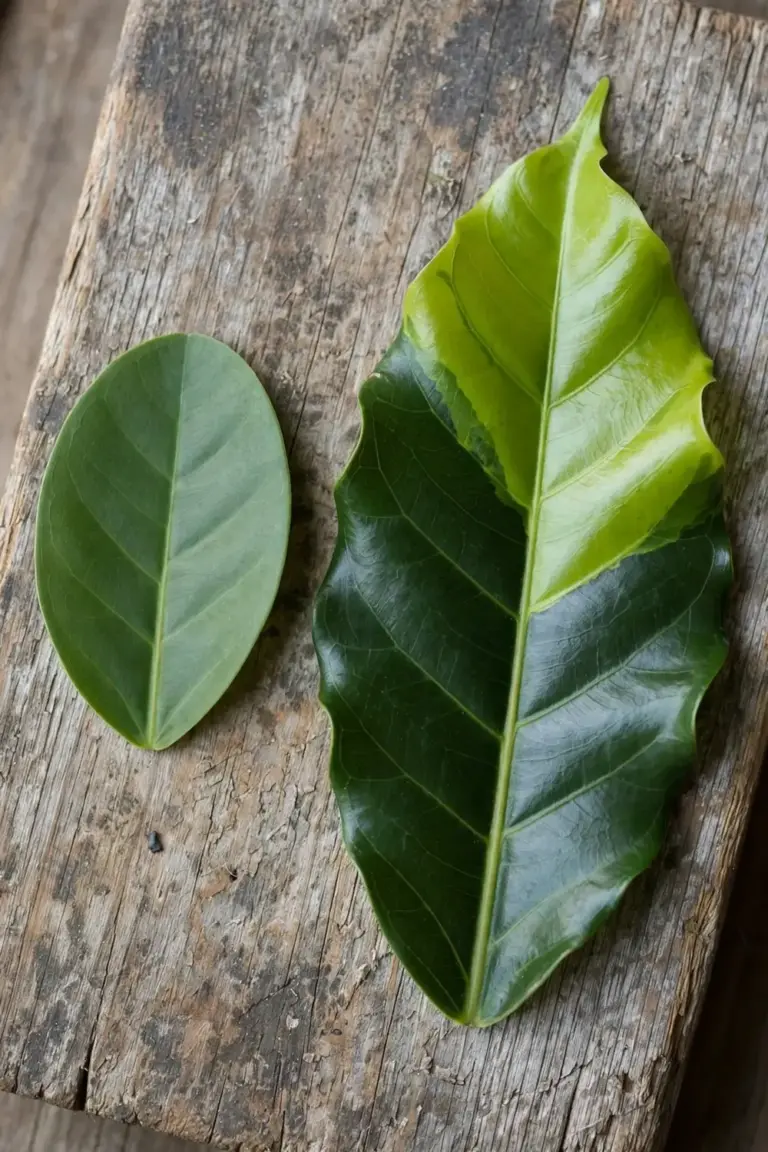
Three name traps catch buyers, and the first is cream variegation. Flash carries two shades of green, with lime-green new growth flushing against dark glossy mature leaves. No cream or white margin appears on Flash foliage. One seller page calls the foliage “variegated bright green”, a phrase that means two-tone green rather than cream variegation. A listing that shows cream or white margins shows a different plant entirely.
The second trap is Ficus microcarpa ‘Variegata’. That cultivar carries true cream-white leaf margins. It is a different cultivar from Flash. The third trap is Ficus ‘White Lightning’. That plant is a variegated cultivar of Ficus obliqua, a different species, with pale creamy-yellow leaves and a flush of pink on new growth. Flash, ‘Variegata’, and ‘White Lightning’ are three different plants. Check the botanical name on the label before you pay.
Flash differs from standard Hillii in three visible ways. Flash leaves run larger and glossier, with wavy margins, around 15 cm long, while standard Hillii leaves run smaller and oval, 10 to 12 cm long, according to the Evergreen comparison of Flash and Hillii. Flash grows more upright. Hillii spreads a little wider. Flash also grows taller if left alone.
| Trait | Flash | Standard Hillii |
|---|---|---|
| Mature height unpruned | 9 m | 6 m |
| Mature width unpruned | 4.5 m | 3 to 4 m |
| Leaf | Around 15 cm, glossy, wavy margin | 10 to 12 cm, oval |
| Form | Upright | Slightly spreading |
| Best job | Formal hedges, pleached screens | Cascading screens, soft boundaries |
The table uses the comparison figures. Other Evergreen pages give wider ranges for Flash height, and the planting section below gives the full spread. The table answers one question only: how Flash differs from its parent form.
2. Match Flash to Warm Temperate and Subtropical Australia
Flash suits warm temperate to subtropical Australia, along the eastern seaboard. It wants full sun to part shade and a frost-free or near frost-free site. Warmth drives its growth. Cold slows it and burns soft new growth.
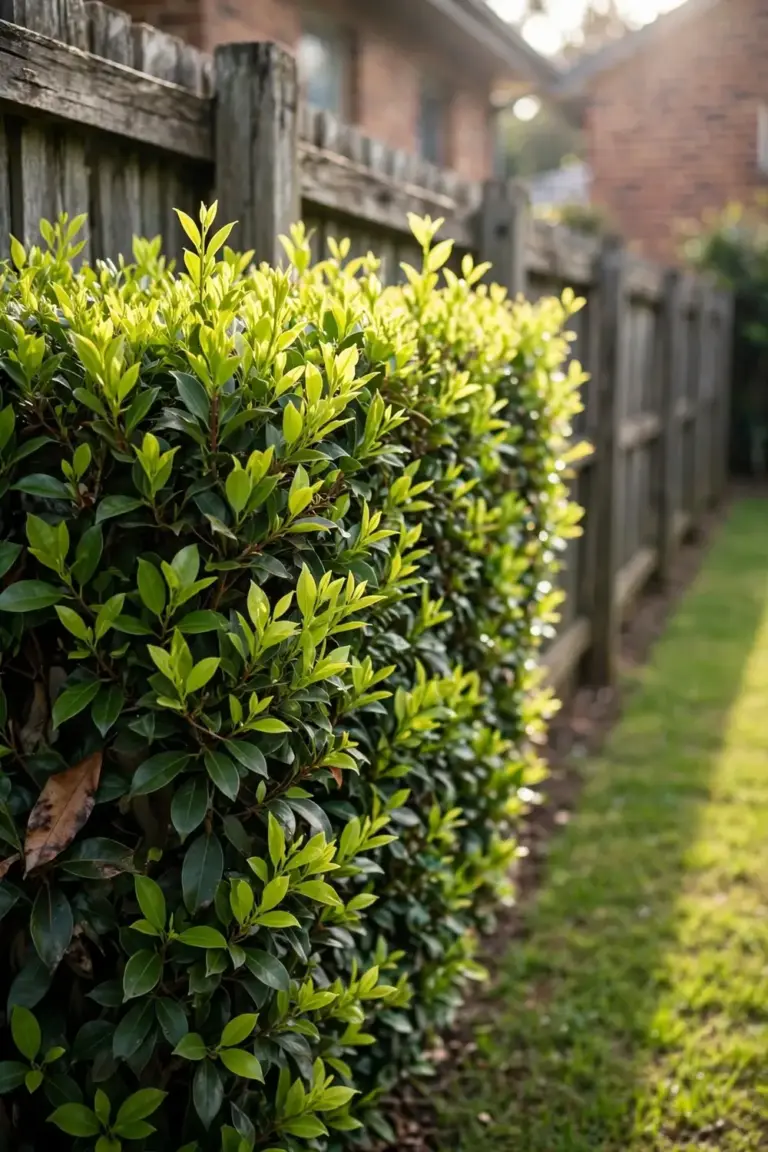
The same comparison that sized the leaves places Flash in warm temperate to subtropical climates and calls Melbourne workable in sheltered positions. Sheltered means a courtyard, a fence line that blocks the cold wind, or a north-facing wall that holds daytime heat. An exposed hilltop in a cold district is the wrong site. A coastal garden from Brisbane to Sydney sits in the core range. Adelaide and Perth suit Flash where frost stays light and rare.
Soil matters less than warmth. Flash grows in most soils if drainage holds. The same comparison gives a soil pH band of 6.0 to 7.5. That band covers most Australian garden soils. A heavy clay that holds water after rain needs work before planting. Dig gypsum through the planting zone and raise the bed 15 cm above the surrounding soil. A sandy soil that drains in minutes needs compost worked through the top 30 cm so the root ball holds moisture while it establishes.
City by city, the rule stays the same: warmth first, shelter second. Sydney and Brisbane sit in the core range, and Flash hedges there grow fastest. Perth and Adelaide suit Flash where frost stays light and rare, and a courtyard or a fence line that blocks the cold wind makes the difference. Melbourne needs a sheltered position, and a north-facing wall holds the daytime heat the hedge wants. Canberra and the cold inland districts sit outside the comfortable range. A hardier hedge species serves those blocks better than a Flash hedge that burns every winter.
3. Plant Flash 80 cm to 1 m Apart for a Hedge
Space Flash 80 cm to 1 m apart for a hedge. That spacing closes into a solid wall in two to three seasons. A tight formal hedge can go to 60 to 80 cm apart. A relaxed screen can sit at 1 m. Closer than 60 cm wastes plants. Wider than 1 m leaves gaps that take an extra season to close.
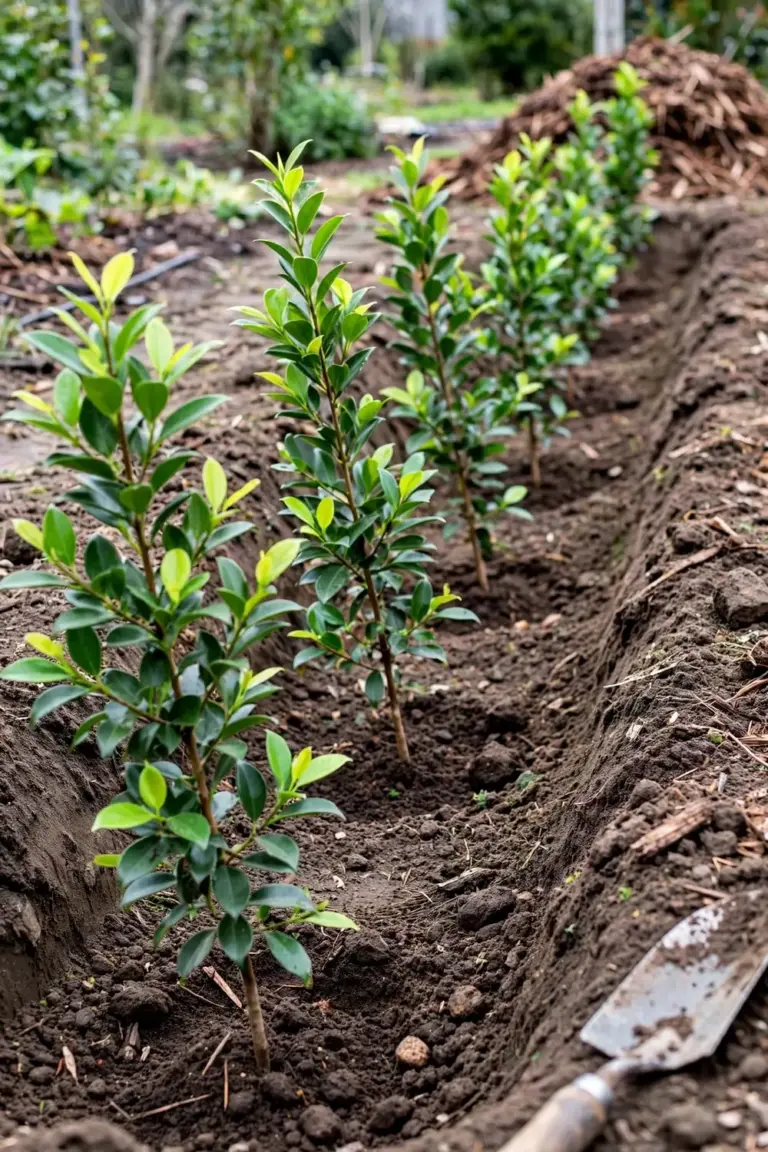
Flash reaches up to 15 m if never pruned, with a spread of 4 to 6 m, according to the Evergreen growth-rate guide. As a hedge it sits at 1 to 1.5 m wide. The product page gives a lower mature range of 6 to 10 m, commonly clipped between 2 and 5 m, per the Evergreen Flash product page. Treat the spread across pages as the honest picture. One page quotes the tallest unpruned tree. Another quotes the usual clipped hedge. Your hedge height is your choice, not the tree’s destiny.
| Step | Action | Number |
|---|---|---|
| 1 | Dig the planting hole | Twice the pot width, same depth as the pot |
| 2 | Space the plants | 80 cm to 1 m apart, 60 to 80 cm for a tight formal hedge |
| 3 | Set the root ball | Top of the root ball level with the soil surface |
| 4 | Backfill and water | Water deeply at planting, then mulch 5 to 8 cm thick |
| 5 | Keep the mulch clear | 10 cm gap between mulch and trunk |
Plant in any season with the right watering rhythm. Summer planting works well because warm soil grows roots fastest. Autumn planting works well because the soil stays warm while the air cools. Winter planting in a cold district risks frost on soft new growth, so wait for spring there.
Tip-prune from the start. A light tip-prune at planting pushes growth low down the plant. A hedge that starts dense at the base stays dense at the base. A hedge left unpruned for its first year grows tall and bare at the bottom, and no later trim fully fixes that gap.
4. Water Deeply Through the First Two Summers
Water Flash deeply through the first two summers. Deep watering grows deep roots. Shallow daily sprinkles grow shallow roots that suffer in the first dry spell. A deep soak once or twice a week beats a light sprinkle every day.
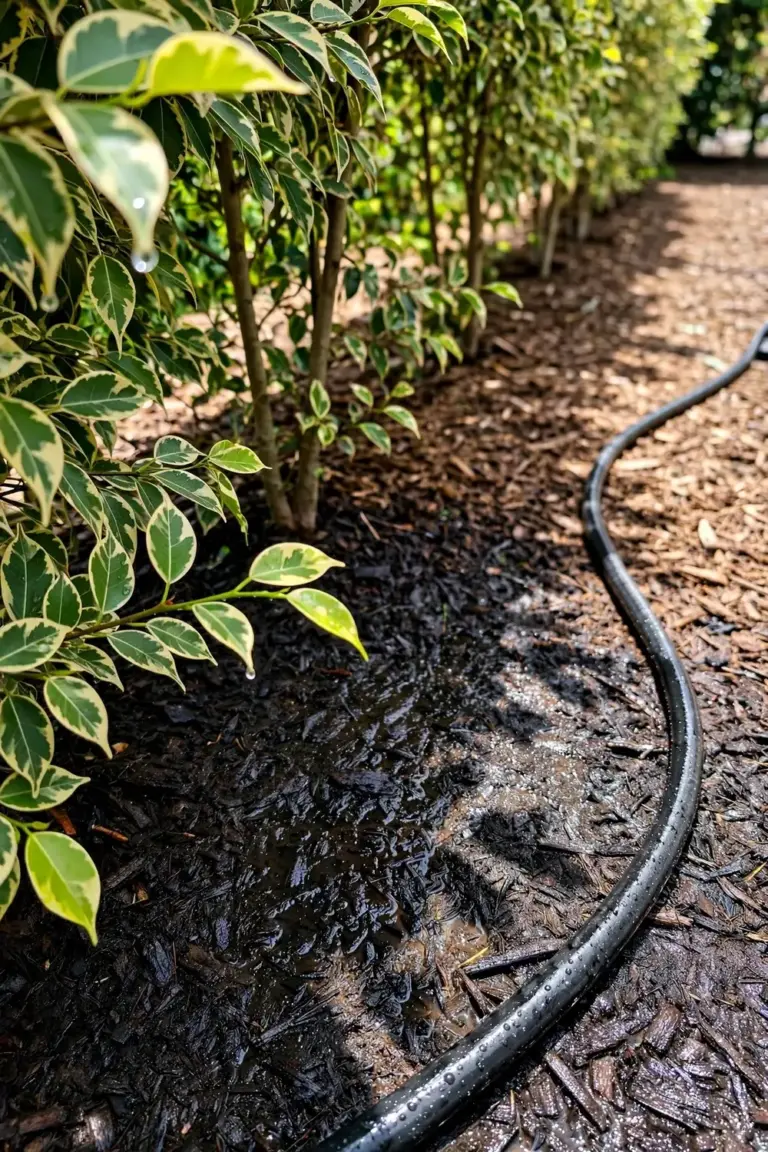
The growth-rate guide gives the same rule: water deeply through the first two summers, then let the hedge settle into a lower water routine. The comparison adds the establishment detail. Summer planting needs morning and evening watering for the first two weeks. That rhythm keeps the root ball moist while new roots reach into the surrounding soil. After two weeks, shift to deep soaks.
Once established, Flash tolerates dry spells. The product page calls its drought tolerance excellent once established, with minimal supplementary watering in hot, dry, coastal, and urban sites. Established means two full summers in the ground with deep watering. A one-year-old hedge still needs help through a heatwave. Check the soil 10 cm down with a finger. Dry soil at that depth means water now. Damp soil means wait.
Mulch holds the moisture you apply. A 5 to 8 cm layer of wood-chip mulch slows evaporation and cools the root zone. Keep the mulch 10 cm clear of the trunk. Mulch piled against the trunk holds moisture on the bark and invites rot. What Is Mulching covers mulch types and depth in full.
5. Feed Flash in Spring and Autumn
Feed Flash in spring and autumn with a balanced fertilizer. Two feeds a year match its two growth flushes. Spring feeding fuels the main flush, while autumn feeding stores energy for winter and the next spring push.
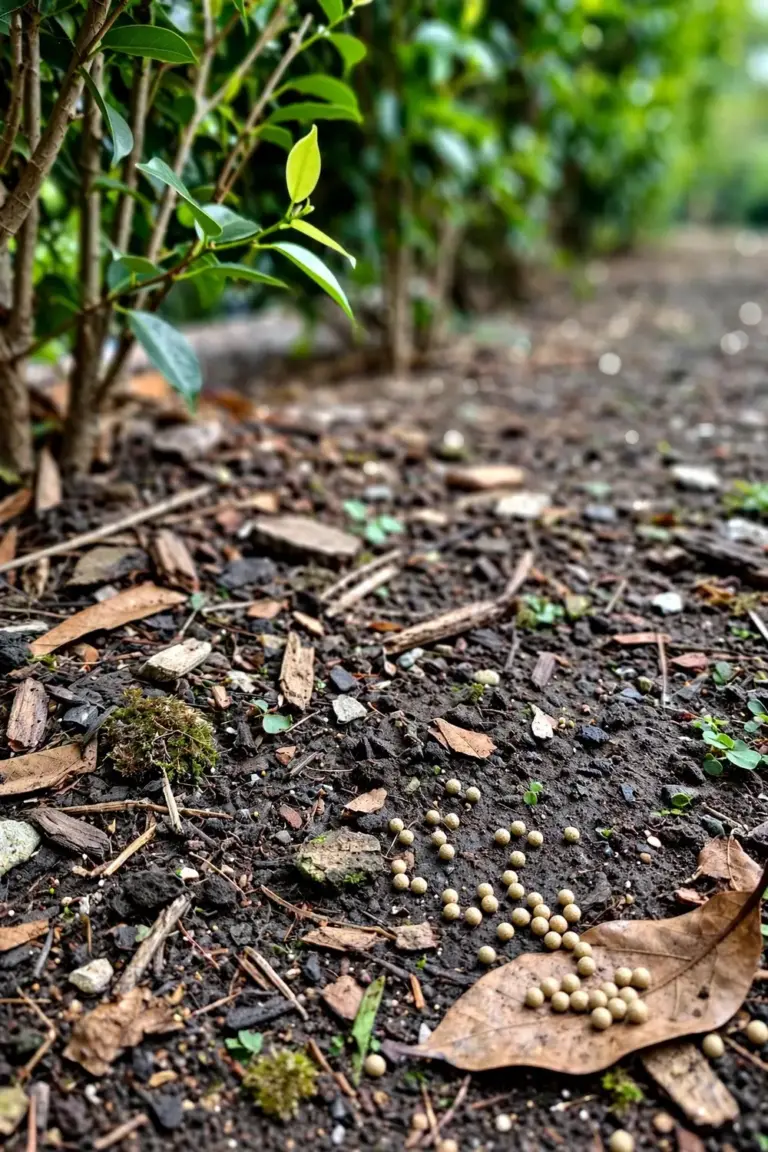
The growth-rate guide gives the same calendar: fertilize in spring and autumn. The comparison adds the product type: a balanced fertilizer in spring. Balanced means roughly equal nitrogen, phosphorus, and potassium on the label. Spread it under the canopy, not against the trunk, and water it in after spreading. Dry granules on dry soil feed nothing.
Skip feeding a stressed plant. A hedge hit by frost, drought, or a hard prune needs water and time first. Fertilizer on a stressed plant pushes soft growth that frost or heat burns. Feed it after new growth resumes on its own. Soil Health covers the soil biology that makes fertilizer work.
Young plants need less than the label rate. A first-year hedge takes half the label rate in spring and skips the autumn feed if growth already looks strong. An established hedge takes the full label rate. Overfeeding grows soft, leggy stems that flop and burn. The hedge tells you when it has enough. Dark green leaves and steady growth mean the rate is right. Pale leaves and slow growth mean feed. Soft stems and burnt leaf tips mean too much.
6. Trim Two to Three Times a Year and Taper the Top
Trim Flash 2 to 3 times a year for a formal hedge, because light clipping twice a year holds a relaxed screen while three clips a year hold a knife-edge formal face. One hard cut a year grows a lumpy hedge with bare patches. Frequent light clips thicken the outer growth. Hard annual cuts thin it.
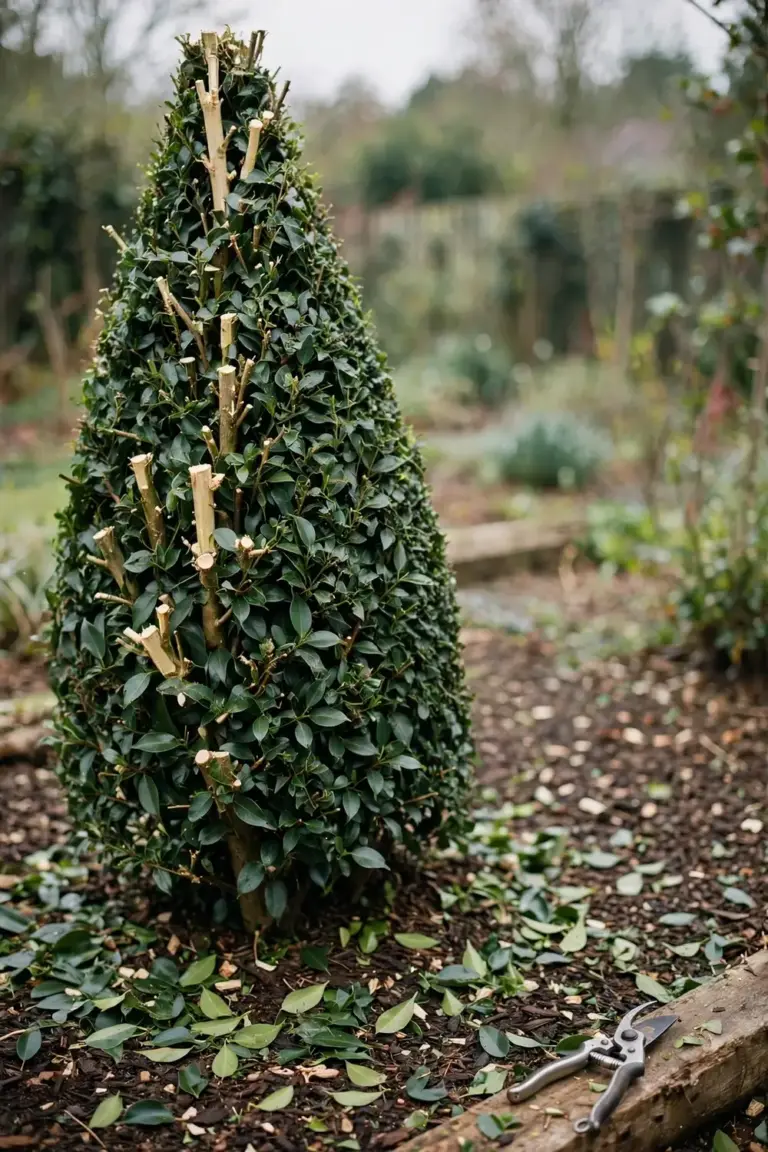
The Evergreen ficus care guide gives the same rhythm: light clipping 2 to 3 times a year. The comparison agrees: trim 2 to 3 times a year for a formal hedge. The Hillii product page adds the calendar that Flash pages leave out. Trim in early spring, midsummer, and early autumn. Avoid trimming in the coldest part of winter. Fresh cuts in deep winter heal slowly and invite frost damage on the exposed tips.
Taper the top. Cut the top back slightly narrower than the base so light reaches the lower foliage. A hedge wider at the top than the base shades its own bottom. The bottom thins, drops leaves, and shows bare stems. A hedge narrower at the top keeps its base dense. Check the taper from 5 m back after each clip. Your eye catches a top-heavy hedge faster than a tape measure does.
Use sharp shears. Blunt blades crush stems and leave ragged cuts that heal slowly. Clean the blades between plants if one plant shows disease. A spray of methylated spirits on the blades between cuts stops disease moving down the hedge line. Spring Pruning Techniques covers tool care and cut angles in full.
Pleaching suits Flash. Its upright form and strong response to pruning suit pleaching. The product page names Flash as a popular pleaching tree in Australia. Pleaching trains the canopy on a clear trunk, like a hedge on legs. Start with a single-stemmed plant, clear the lower growth, and clip the canopy into a flat panel. A pleached Flash screen gives privacy above a fence without shading the garden below.
7. Keep Roots 4 m From Buildings, Paving, and Pipes
Plant Flash at least 4 m from buildings, paving, and pipes. Flash roots are vigorous. They seek moisture. A pipe joint, a cracked drain, or a damp footing draws them. The product page states the rule plainly: at least 4 m from buildings, paving, and pipes, with large above-ground planters for tighter areas.
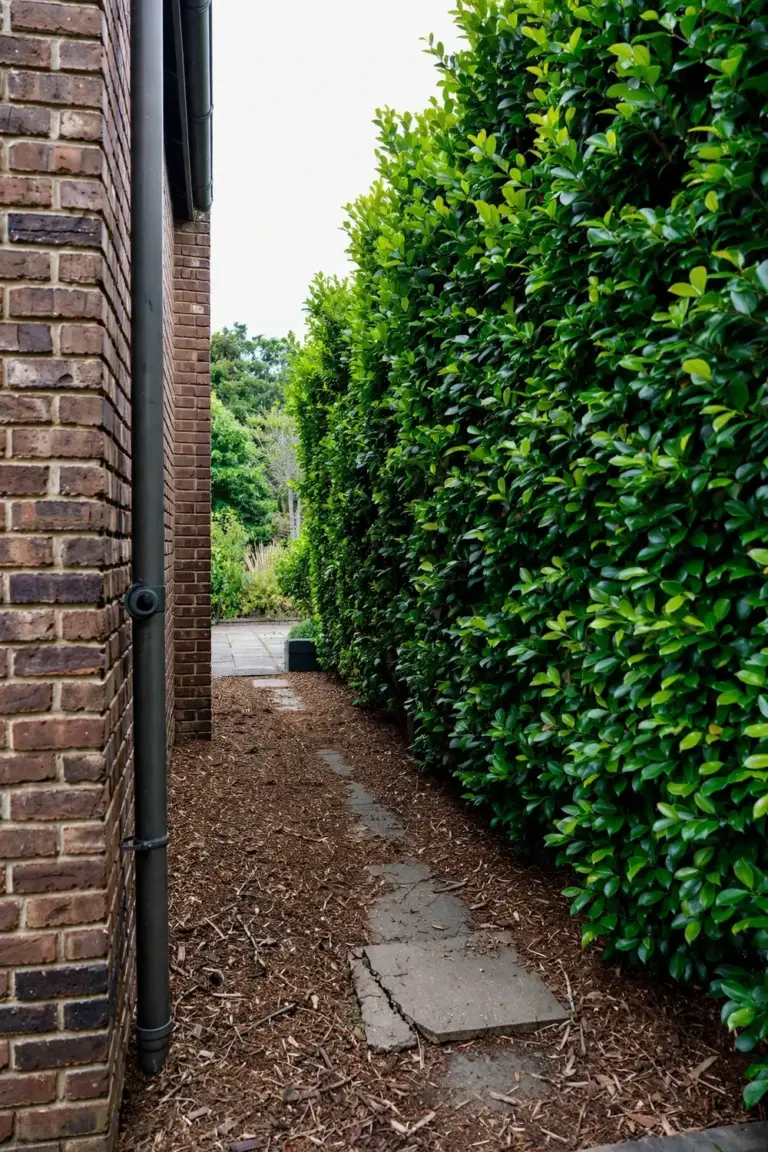
Two other Evergreen figures conflict with the 4 m rule, and the conflict deserves an honest airing. The comparison post says around 2 m from pool plumbing, paving, and structures gives the roots room to develop. The Hillii product page says 4 to 5 m from buildings, paving, pipes, and pools. Three figures from one seller: 2 m, 4 m, and 4 to 5 m. The 4 m rule sits in the middle and matches the Flash-specific page. Use 4 m as the working rule. Treat the 2 m figure as the seller’s lowest figure for pool plumbing, not as permission to plant closer everywhere.
Root barriers help but do not replace distance. A root barrier is a buried sheet that deflects roots downward. It buys time. It does not stop a vigorous ficus forever. A barrier plus 4 m of distance beats a barrier plus 1 m of distance. An annual edge-prune along the barrier line keeps the line tidy, per the comparison.
Tight sites need planters, not hope. A large above-ground planter holds Flash as a potted feature. The Hillii page gives the pot detail that Flash pages leave out: containers of 100 L or more, with root pruning every 2 to 3 years. No Flash-specific pot volume is published, so the 100 L figure is Hillii guidance, not Flash guidance. A planter on a paved courtyard works. A planter sunk into soil near a drain does not. Roots leave a sunk planter through the drainage holes and reach the drain anyway.
Check before you plant near services. Dial Before You Dig marks underground pipes and cables on your block. A free service call beats a broken sewer. Plant the hedge after the marks go down, not before.
8. Shelter Flash From Frost in Cold Districts
Flash wants warm, frost-free conditions. Established plants shrug off the occasional light frost. Soft new growth burns easily. Repeated heavy frost sets a hedge back. The product page states all three facts together, and they form the whole frost rule.

A light frost blackens the tips of the newest flush, and the hedge recovers from the buds below the damage. A heavy frost burns deeper and kills whole stems. The hedge regrows from lower buds, but the season’s shape is lost. Two heavy frosts in a row can kill a young hedge outright, while an established hedge survives one bad winter with dieback. A young hedge may not.
Site choice beats any aftercare. A north-facing wall holds daytime heat and blocks the cold wind. A low hollow collects cold air and frosts first. A coastal garden rarely frosts at all. An inland valley frosts often. Plant Flash on the warm side of the block. Put a hardier hedge species in the frost hollow.
Cover young plants before a forecast frost. A frost cloth draped over the hedge traps ground heat. Peg the cloth so it does not touch the leaves, because cloth on leaves conducts the cold straight through. Remove the cloth in the morning so the sun warms the hedge. How to Protect Plants From Late Frost covers cloth types and timing in full.
Skip pruning before a forecast frost. Fresh cuts expose soft tissue that burns first. Trim after the last frost passes. A hedge trimmed in early spring, after frost danger ends, heals fast and flushes strong.
9. Buy Flash From a Label You Can Trust
Buy Flash from a nursery that labels it Ficus microcarpa variety hillii ‘Flash’ or Ficus hillii ‘Flash’. Check the leaf before you pay. The label is the only proof you get at the counter.
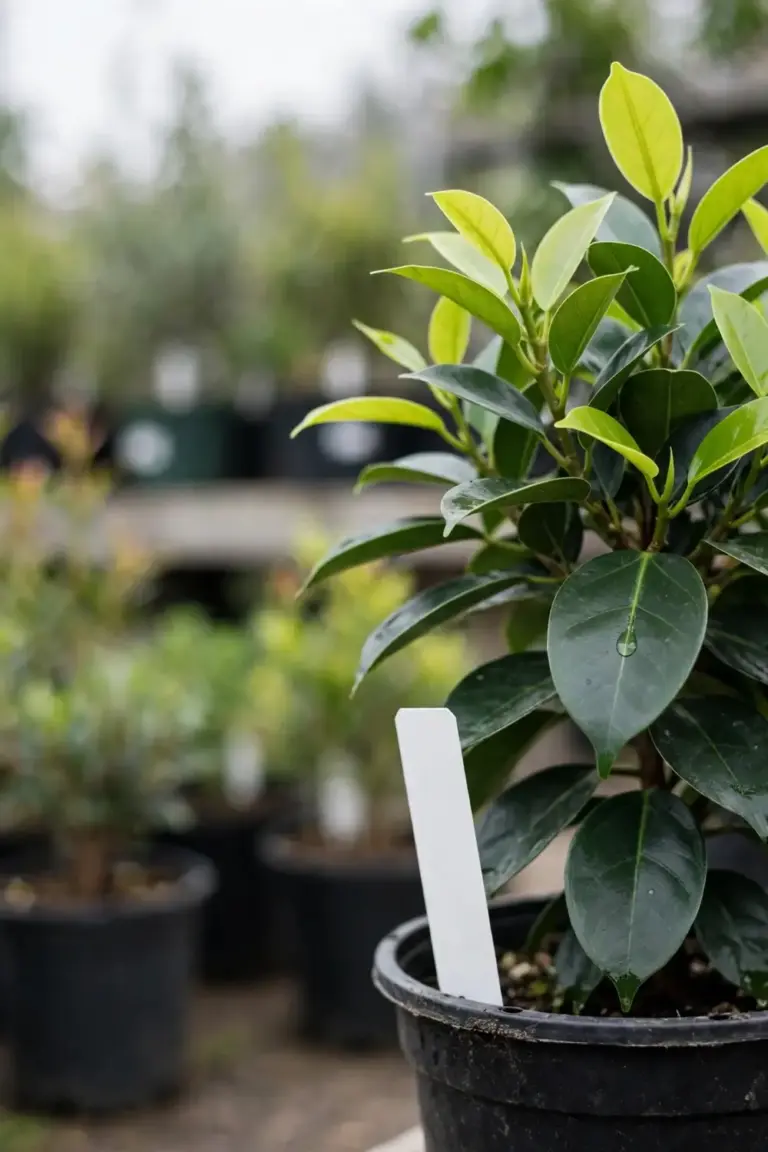
Check the leaf first. Flash leaves run large and glossy with wavy margins, around 15 cm long. New growth shows lime-green against dark glossy mature leaves. A plant with cream or white margins is not Flash, whatever the tag says. A plant with small oval leaves 10 to 12 cm long is standard Hillii, not Flash. Walk away from either one if you wanted Flash.
Check the pot second. Lift the plant and look at the drainage holes. A firm root ball with white tips showing is healthy. A mat of circling brown roots escaping the holes is pot-bound and slow to establish. A pot full of weeds tells you the plant sat unsold for a long time. A plant that wobbles in its pot has a weak root system. Pick the firm one.
Check the form third. A single-stemmed plant suits pleaching and a clear-trunk screen. A bushy multi-stemmed plant suits a hedge that must fill from the base. Tell the nursery which job the plant will do. The right form at planting saves a year of corrective pruning.
Prices vary by pot size, so compare per pot size, not per plant. No national price list for Flash is published. A 200 mm pot and a 400 mm pot are different products with different establishment times. The bigger pot closes a hedge faster and costs more. The smaller pot catches up within a season if water and feed stay steady. Ask for the botanical name in writing on the receipt. A written label gives you a return path if the plant proves to be standard Hillii or a cream-variegated cultivar.
10. Check Flash for Mealybug, Scale, and Mites
No Flash-specific pest guide is published. The pest list below comes from a general Ficus microcarpa care guide, not from a Flash study. Treat it as species-level guidance. A pest that attacks Ficus microcarpa can attack Flash. A pest-free Flash hedge still needs regular checks.
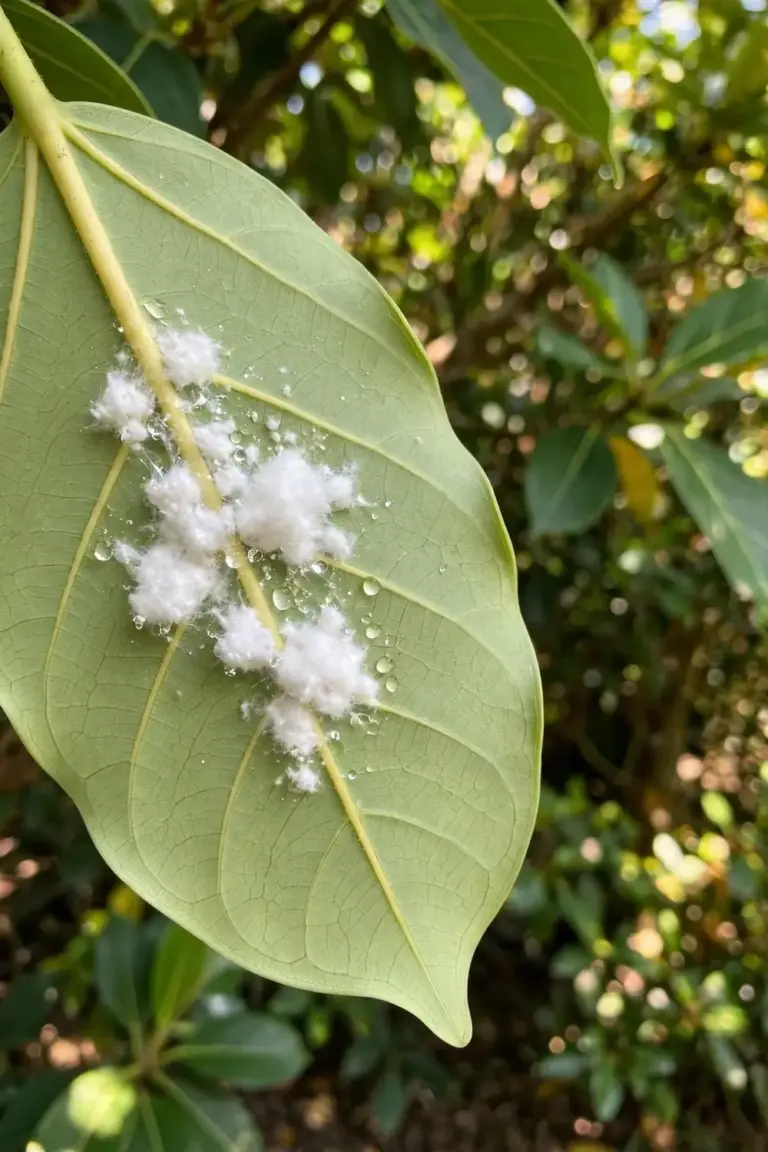
Mealybug and cottony cushion scale show as white, cottony masses on leaves and stems. They suck sap and weaken growth. They also excrete honeydew, which grows sooty mould on the leaves below. Remove small numbers by hand with a cotton swab soaked in alcohol. A heavy infestation needs a horticultural oil spray that smothers the insects. Spray the undersides of the leaves, where the insects cluster.
Mites cause discoloration, wilting, and fine webs, and they thrive in hot, dry weather. A strong jet of water from the hose knocks them off the leaves. Repeat the jet every few days until the webs stop appearing. Mites return fast in a dry summer. Check the undersides weekly from December to February.
Leaf spots appear when humidity stays high and air movement stays low. Remove affected leaves and destroy them. Do not compost them. Improve air flow with a lighter trim. Root rot follows overwatering or poor drainage. A hedge in a boggy corner with yellowing leaves and soft stems needs drainage work, not fertilizer. Lift the mulch, check the soil, and fix the water before you feed anything.
Check the undersides. Every pest on this list feeds or hides on the leaf underside first. A weekly flip of ten leaves across the hedge catches an outbreak while it is still small. A monthly check catches it after it has spread.
Sooty mould follows honeydew. Sap-sucking insects excrete honeydew, and a black mould grows on it. The mould itself rarely harms the hedge. It blocks light on the leaf surface and looks dirty. Wash the leaves with a hose jet and control the insects underneath. The mould fades once the honeydew stops. A hedge that stays black after the insects are gone needs a second check for a missed colony on the leaf undersides.
Frequently Asked Questions
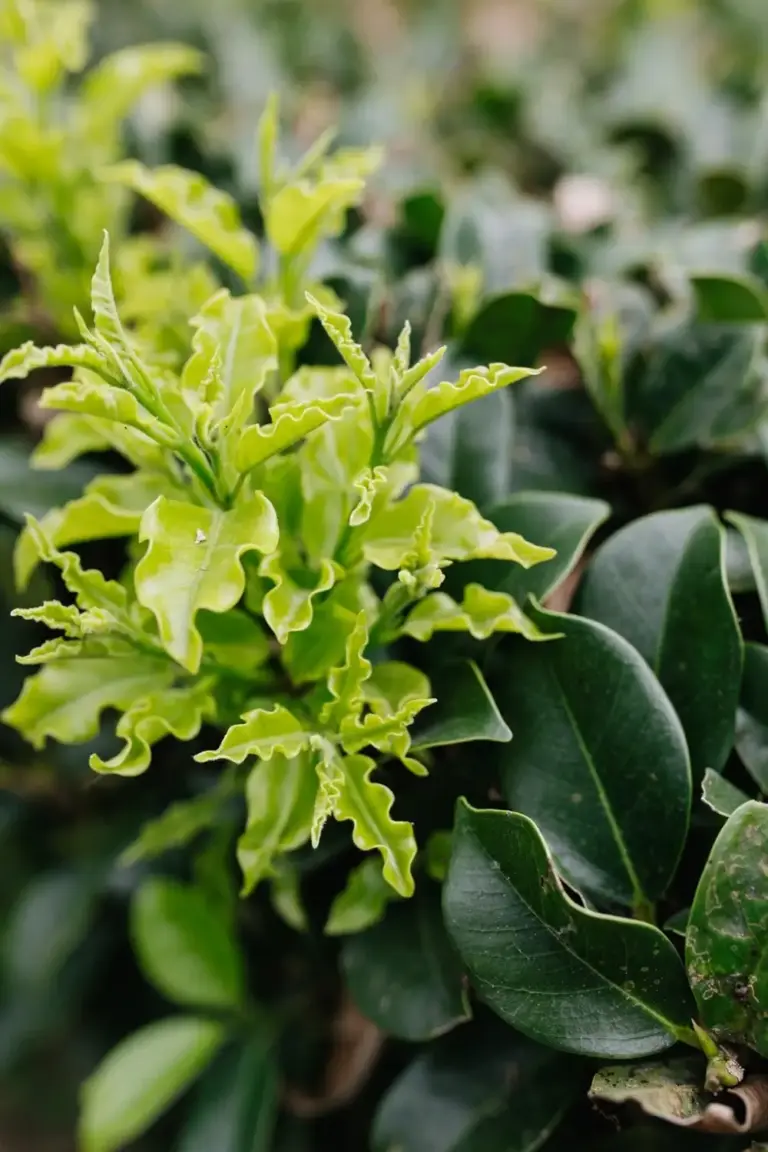
Flash carries two shades of green, not cream variegation: lime-green new growth flushes against dark glossy mature leaves. One seller page calls this “variegated bright green”, which means two-tone green. True cream-variegated figs are Ficus microcarpa ‘Variegata’ and Ficus ‘White Lightning’, a Ficus obliqua cultivar. A listing that shows cream or white margins shows a different plant from Flash.
Flash pushes 40 to 60 cm of new growth a year once settled, per the Evergreen growth-rate guide. The product page quotes up to 1.5 m a year in optimal conditions. Treat the two figures as the settled rate and the best-case rate. A hedge in warm soil, full sun, with deep watering and two feeds a year grows near the top of the range. A hedge in cold soil or shade grows near the bottom.
Plant Flash at least 4 m from buildings, paving, and pipes. That rule comes from the Flash product page. A comparison post from the same seller quotes around 2 m from pool plumbing, and the Hillii page quotes 4 to 5 m. Use 4 m as the working rule. Tighter sites need large above-ground planters. A root barrier helps but does not replace distance.
Flash grows in Melbourne in sheltered positions. A courtyard, a fence line that blocks the cold wind, or a north-facing wall all work. An exposed hilltop or a frost hollow does not. Established plants handle an occasional light frost. Soft new growth burns in a heavy frost. Cover young plants with frost cloth before a forecast frost and remove it in the morning.
Flash grows in a large above-ground planter on a paved courtyard. No Flash-specific pot volume is published. The Hillii page gives 100 L or more with root pruning every 2 to 3 years, and that figure is Hillii guidance, not Flash guidance. A planter sunk into soil near a drain fails because roots leave through the drainage holes and reach the drain. Keep the planter above ground and away from pipes.
11. Start With the 4 m Rule Before You Plant
Flash earns its place in Australian gardens. It grows fast, clips tight, and holds its leaves year-round. The 4 m root rule decides where it goes. The 80 cm to 1 m spacing decides how fast the hedge closes. The 2 to 3 trims a year decide whether it stays a hedge or turns into a tree. Get those three numbers right and the rest is routine. Buy the plant with the correct botanical name on the label, check the leaf for the two-tone green flush, and plant it where it has room to grow.