
Pick a magnolia that fits your climate, plant it in late winter or early spring, and give it acid soil, deep water, and shelter from wind. That is growing magnolias in Australia in one line. The rest of this page is 9 moves, from picking the type to fixing a tree that will not flower.
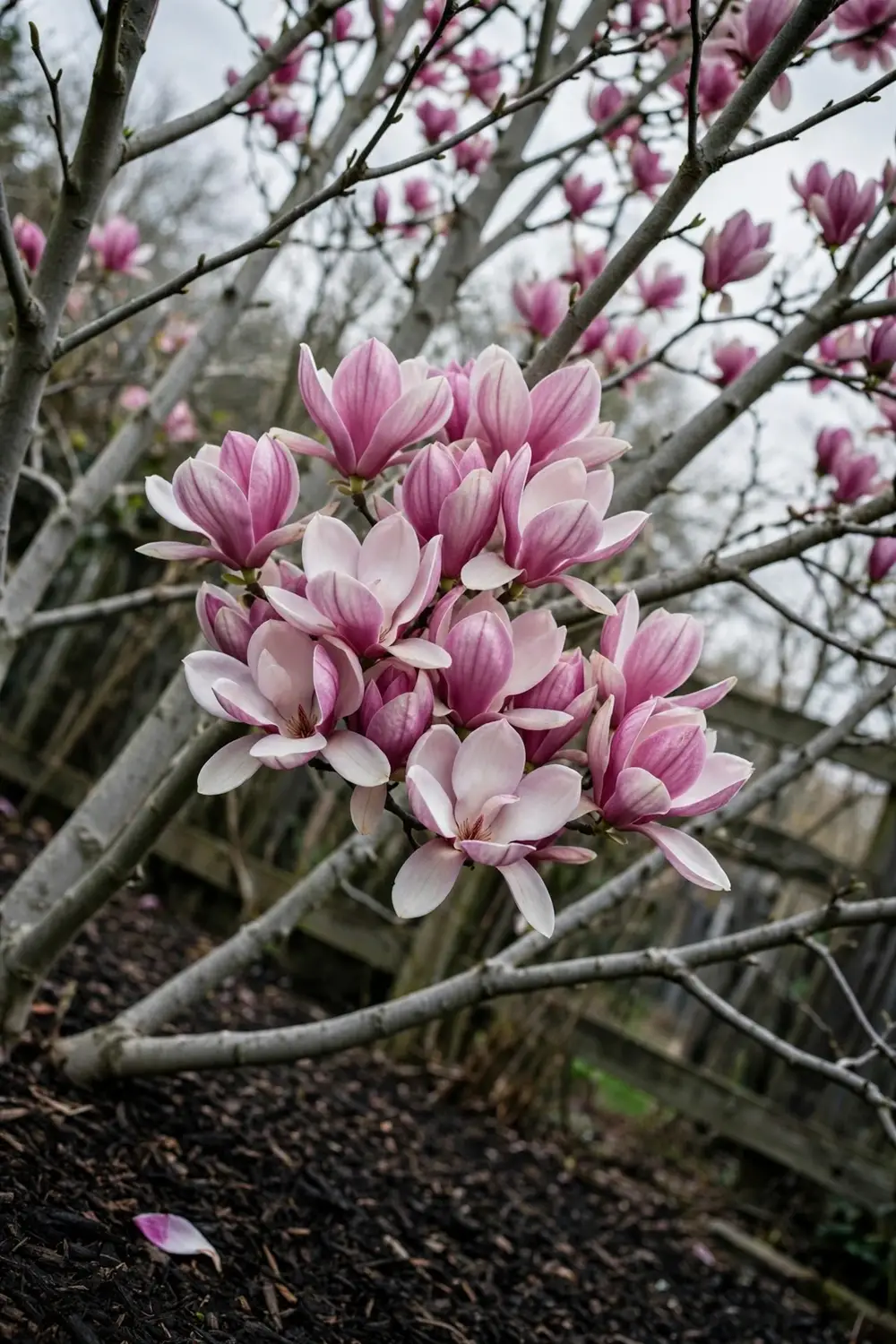
Magnolia is a genus, not a single tree. The genus splits into two groups. Evergreen magnolias hold glossy leaves all year. Deciduous magnolias drop their leaves in autumn and flower on bare branches in early spring. The groups are not two species. Each group holds many species and cultivars. Your climate band decides which group suits your garden.
I have learned that the magnolia I plant for its winter chill outblooms the magnolia I plant for its flower photo.
Work from the top if the tree is still in its pot. Plant in spring. Mulch the same day. Water weekly through the first summer.
1. Pick the Right Magnolia for Your Australian Climate Band
Start with climate, not with a flower photo. Deciduous magnolias want a chilly, moist winter followed by a warm, moist summer. They thrive along the Great Dividing Range and in south-east Australia, anywhere rainfall is reasonably generous or irrigation is available and winters are cool enough to induce dormancy. They are not for the tropics or the steamy subtropical coast, according to Home Beautiful’s Australian magnolia guide. Evergreen magnolias suit warmer coastal gardens and hold their leaves through winter.
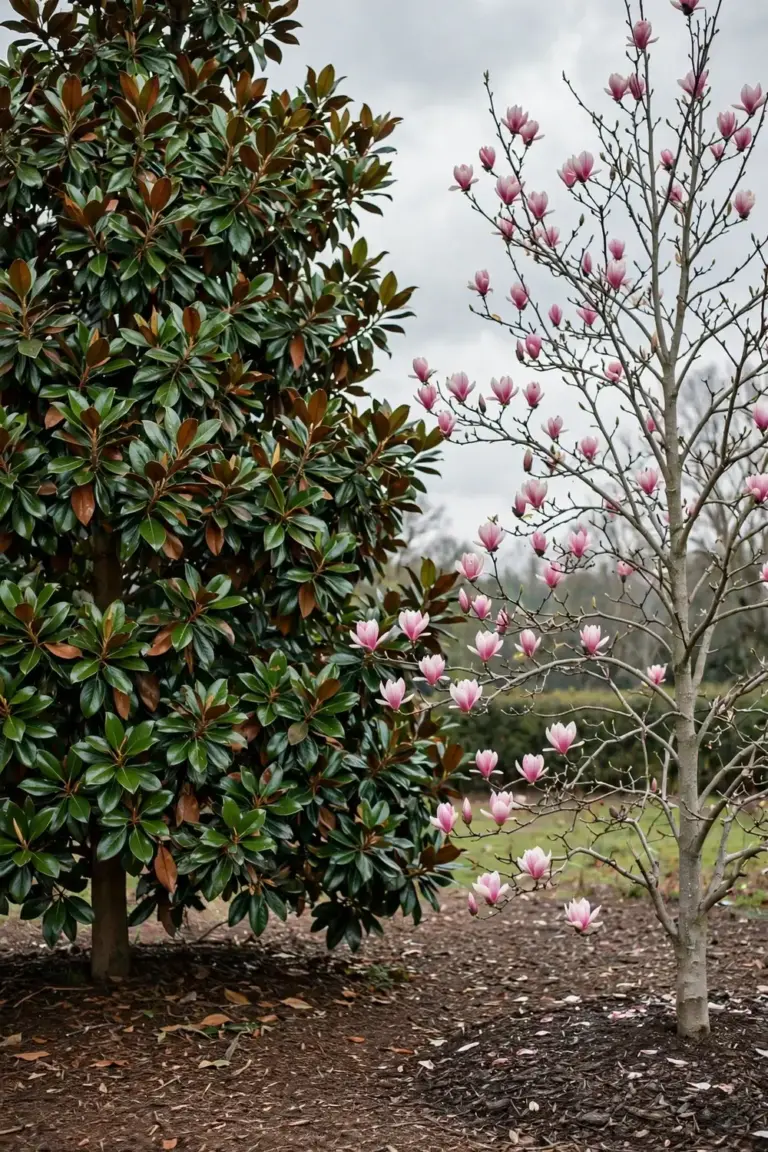
Match the mature size to the space you have. A saucer magnolia grows 4.6 to 10.1 m tall and 4.6 to 7.6 m wide, according to NC State Extension’s saucer magnolia profile. That spread surprises buyers who picture a small shrub. Teddy Bear, a compact evergreen cultivar, grows 4 to 5 m tall. The table below lines up the common AU picks so you can choose by size first and flower second.
| Cultivar or Species | Group | Mature Size | Best For |
|---|---|---|---|
| Magnolia x soulangeana (Saucer Magnolia) | Deciduous | Up to 8 m tall, 5 m wide | Bare-branch spring flowers in cool-winter gardens |
| Magnolia grandiflora Teddy Bear | Evergreen | 4 to 5 m tall | Small gardens, hedging, screening |
| Magnolia grandiflora Little Gem | Evergreen | 4 to 6 m tall | Pots, courtyards, small feature trees |
| Magnolia grandiflora Greenback | Evergreen | 5 to 6 m tall, 3 to 4 m wide | Mid-size feature trees |
| Magnolia Exmouth | Evergreen | Up to 12 m tall, 5 m wide | Large gardens, tall screening |
| Magnolia denudata (Yulan) | Deciduous | Up to 5 m tall | Small cool-climate gardens |
Sizes in the table come from the Home Beautiful guide cited above. Buy the tree for the space it will fill in ten years, not the size it shows in the pot today.
Choose the group by what you want in winter. Evergreen magnolias hold glossy leaves through winter and screen a fence line all year. Deciduous magnolias stand bare in winter and then flower on naked branches in early spring, a display no evergreen matches. A deciduous tree also drops a full canopy of leaves each autumn, so budget time for cleanup. An evergreen tree drops old leaves gradually through the year. Neither group is better. The right group is the one that fits your winter and your tolerance for leaf litter.
Read the nursery label with care. The label should name the cultivar, not just the genus. A tag that says only “Magnolia” tells you nothing about mature size or group. A tag that says “Magnolia grandiflora Teddy Bear” tells you the group, the cultivar, and the size to expect. Ask the nursery for the cultivar name if the tag omits it. Buying a tree without a cultivar name is buying a surprise.
2. Plant Magnolias in Late Winter or Early Spring
Plant in late winter or early spring, when soil holds moisture and the weather stays mild. Spring is the best time for planting, according to NC State Extension’s deciduous magnolia guide. A spring planting gives roots months of mild weather before summer heat. An autumn planting can work in frost-free coastal gardens, but spring stays the safer default across Australia.
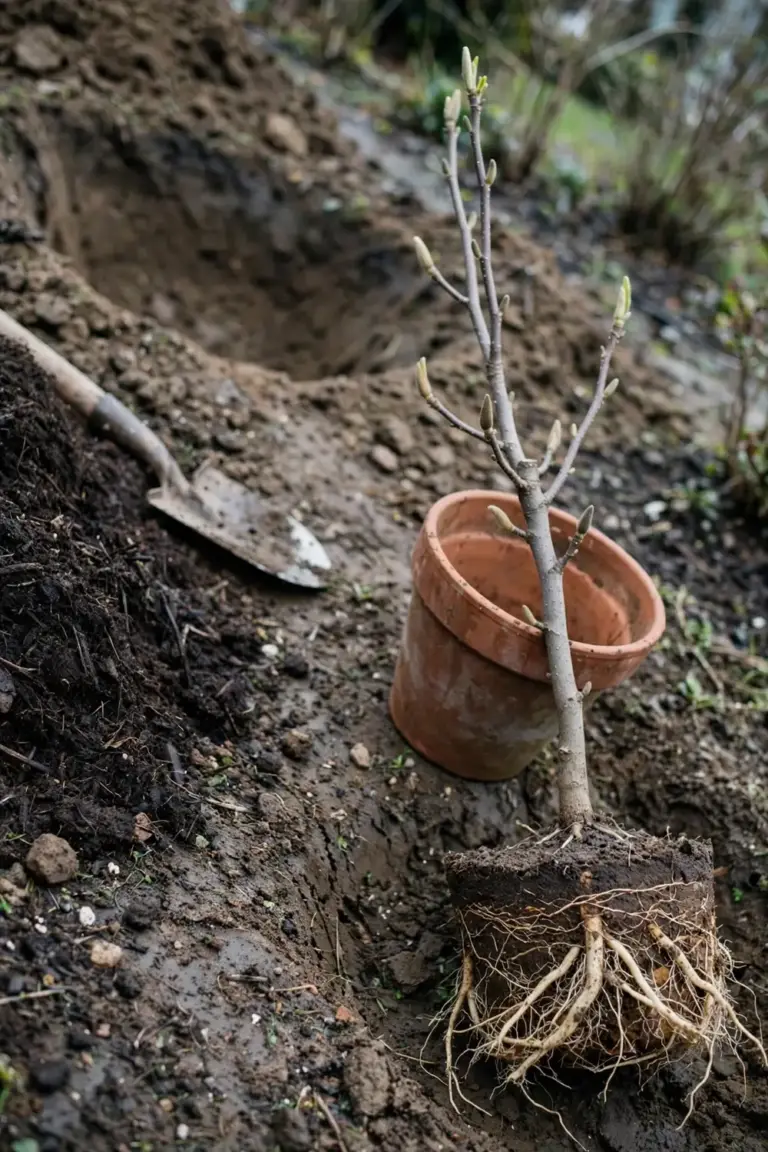
Dig the hole twice as wide as the pot and the same depth, because magnolias grow fleshy roots that need room to spread sideways. Set the root ball level with the surrounding soil. Planting deep buries the root collar and invites rot. Backfill with the excavated soil mixed with compost or well-composted manure, firm gently, and water the tree in well so no air pockets sit against the roots.
Leave space around the tree. Magnolias dislike being moved, and their roots spread wide. Do not plant lawn, shrubs, or edging hard against the trunk. Give the root zone a clear mulched bed. A tree with room to spread roots settles faster than a tree squeezed into a planting pocket.
Pick healthy nursery stock, and check the root ball before you buy. Roots circling the pot in a tight mat signal a pot-bound tree that struggles to establish. Leaves should look glossy and green, not yellow or scorched at the edges. A grafted tree should show a clean graft union with no swelling or cracking. Buy the tree in the season you plan to plant it, because a tree that sits in its pot through summer arrives stressed.
Stake a tall young tree if wind rocks it. Drive two stakes outside the root ball and tie the trunk loosely with soft ties. A tree that rocks in wind tears new roots. Remove the stakes after one growing season, once the roots anchor the tree. Check ties monthly. A tight tie strangles a growing trunk. A loose tie lets the trunk flex and build strength.
Pick the site before you dig. Choose a spot with morning sun and afternoon shelter. A northern or eastern aspect suits most Australian gardens. Shelter the tree from drying winds that shred flowers and snap brittle branches. Keep the tree clear of paths and driveways where falling flowers stain paving. Leave at least 3 m between the trunk and the house so the canopy can spread. A tree planted with room around it needs no corrective pruning later.
3. Water Deeply Through the First 2 to 3 Years
Water deeply at planting and keep watering through the first 2 to 3 years when rainfall falls short. That establishment window comes from NC State Extension’s deciduous magnolia guide. Young magnolias have shallow, fleshy roots that dry out fast. A deep soak once or twice a week in hot, dry weather beats a daily sprinkle. The soak must reach the root zone, not wet the surface.
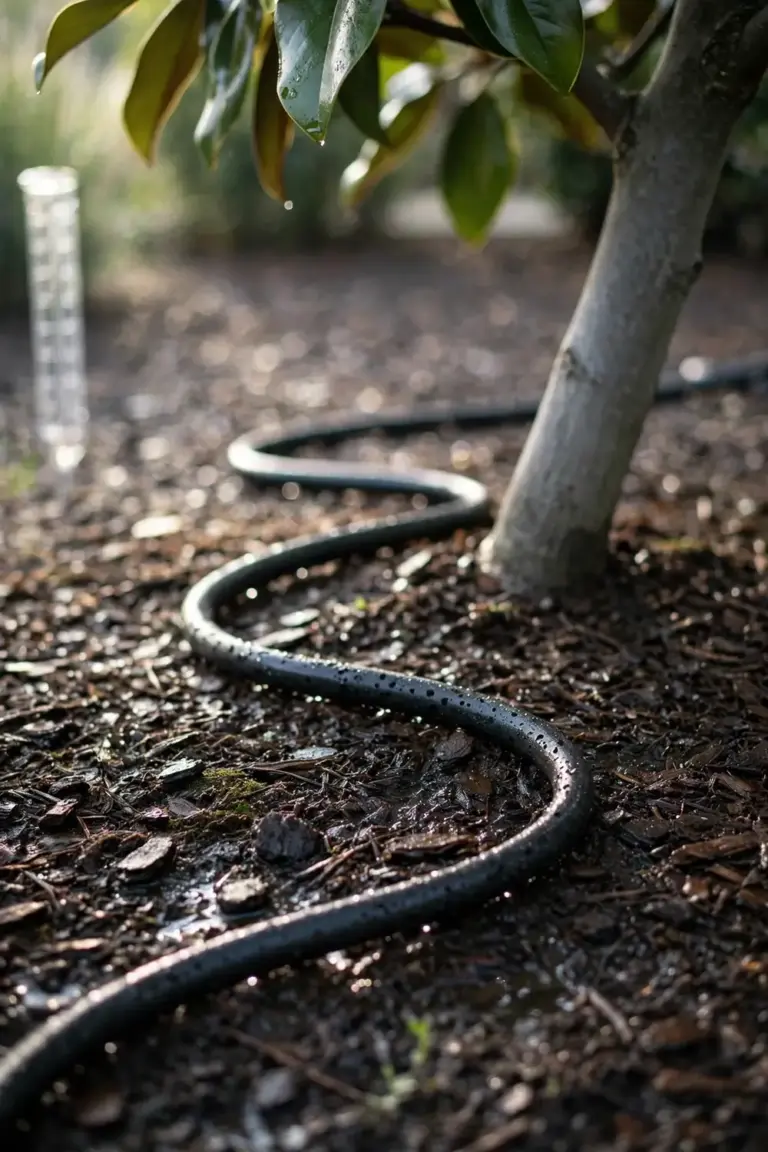
Once the tree establishes, ease off. Established magnolias tolerate short dry spells. In extended hot and dry periods, give an established tree a good deep watering once or twice a week, according to Yates’ Australian magnolia guide. Reduce watering in the cooler months. A tree that gets steady deep water in summer and a rest in winter grows a stronger root system than a tree watered lightly every day.
Watch the leaves for the water signal. Wilting leaves on a hot afternoon can mean heat stress, not thirst. Check the soil 5 cm down before you water. Dry soil at that depth means the tree needs a soak. Moist soil means the tree needs shade and time, not more water.
Overwatering kills more magnolias than drought. Soggy soil starves roots of air. Leaves yellow from the base up and drop. The soil smells stale. If you find those signs, stop watering and let the top 10 cm dry. Check drainage. A tree in a low spot that holds water after rain needs its drainage fixed, not more water. A tree in free-draining soil recovers once watering stops.
Water with a soaker hose or a slow trickle, not a sprinkler. A soaker hose puts water at the root zone without wetting leaves and flowers. Wet flowers bruise and brown. Wet leaves invite leaf spot. Water in the morning so any splashed foliage dries before night. A slow soak that runs for an hour beats a fast blast that runs off the surface. A rain gauge in the bed tells you how much rain fell, so you water only the shortfall.
4. Feed Magnolias for Acid Soil at pH 5 to 6
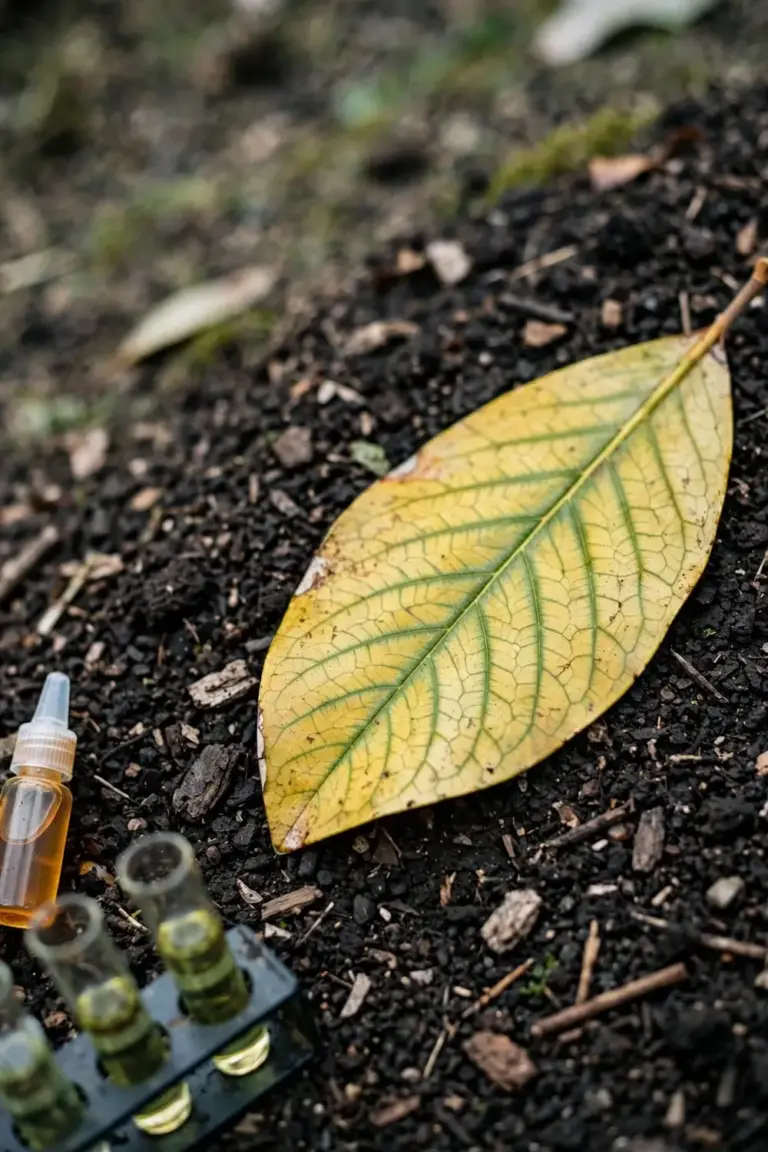
Magnolias grow best in acidic soil between pH 5 and 6, according to Yates’ Australian magnolia guide. Test your soil before planting. Test again if leaves start to yellow. A pH above 6 locks up iron and turns leaves yellow between the veins. A pH below 5 suits few garden plants, but magnolias tolerate the low end better than most trees.
Build the soil with organic matter. Dig compost or well-composted manure into the planting hole. Top-dress with compost each year. Building soil health with organic matter lifts fertility and drainage together, and magnolias reward both. Do not chase pH with raw sulfur unless a soil test shows the number is high. Guessing the dose burns roots.
Feed when buds appear. Yates advises feeding every 8 weeks with a roses and flowers fertilizer once buds show, per Yates’ Australian magnolia guide. That schedule feeds the bloom, not the leaf. Stop feeding in late autumn. A late feed pushes soft growth that frost damages.
Read the soil test before you amend. A pH of 6.5 or higher calls for acidifying. A pH of 5 to 6 calls for nothing. A pH below 5 calls for a small dose of lime, not acid. Amend in small steps and retest after a season. Soil pH moves slowly. A heavy single dose overshoots and burns roots. Steady small corrections beat one big fix.
Top-dress with compost each year. Spread a 3 to 5 cm layer of compost over the root zone in early spring, then mulch over it. The compost feeds soil life and lifts fertility without a sudden salt load. A compost top-dress also improves drainage in heavy clay and moisture holding in sand. It does the quiet work that a bag of fertilizer cannot.
5. Mulch Magnolias 10 cm Deep and Keep It Off the Trunk
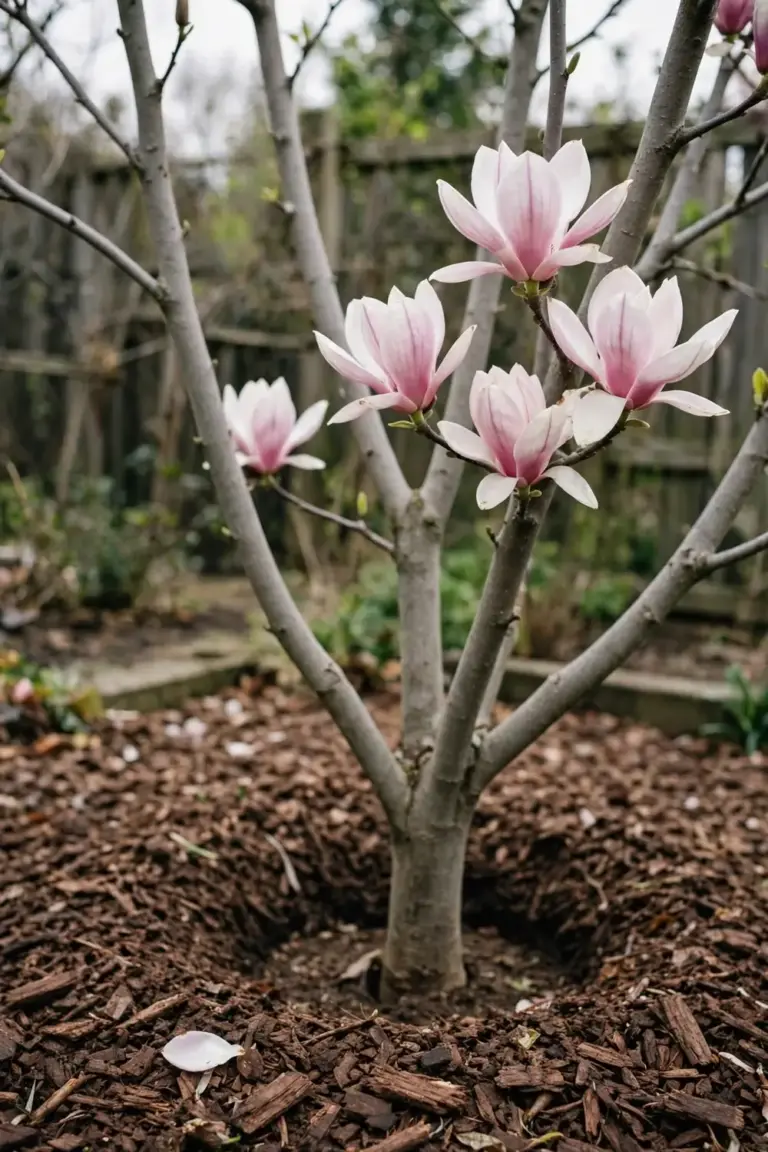
Mulch is the single highest-return job in magnolia care, because magnolias grow shallow roots that sit near the surface. A 10 cm layer of organic mulch keeps those roots cool and moist through summer. The layer also smothers weeds that compete for water. Re-mulch once or twice a year, in spring after flowering starts and again in autumn if the layer thins.
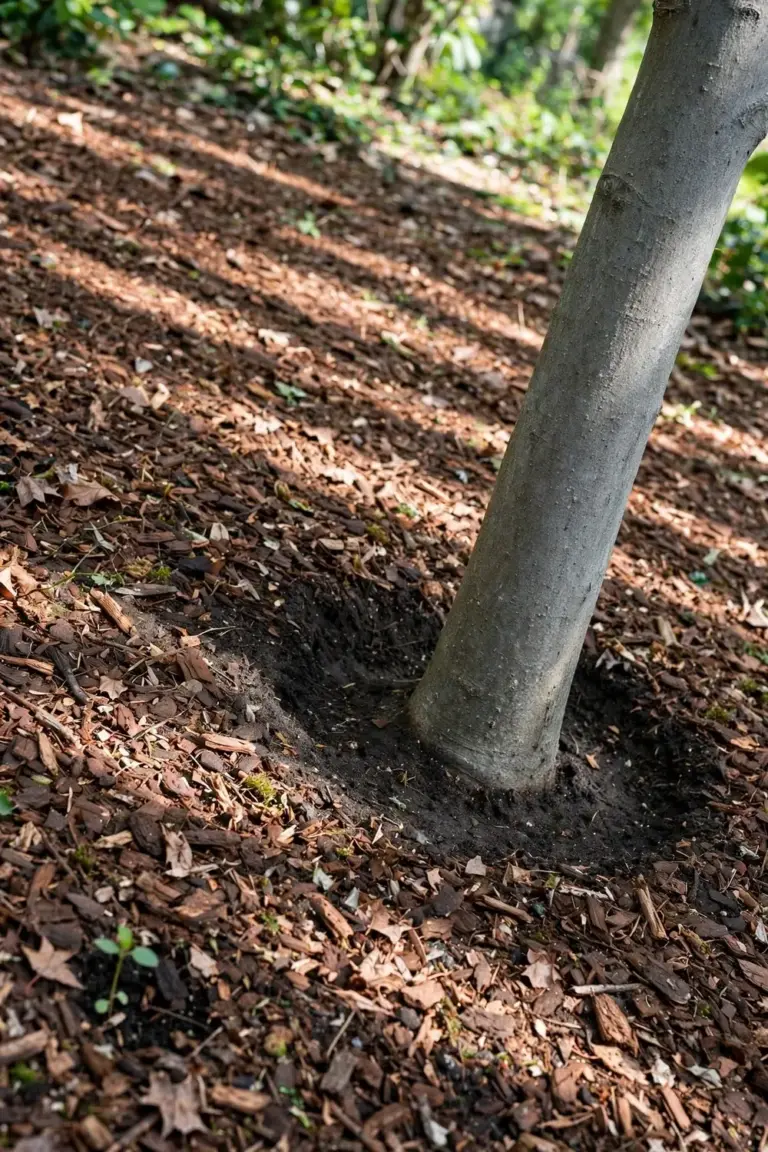
Keep the mulch off the trunk. Mounded mulch against bark holds moisture against the bark and invites rot. Leave a hand-width gap of bare soil around the trunk. Spread the mulch out to the drip line. What mulching does for weed, pest, moisture, and soil explains the mechanism: a thick organic layer slows evaporation and feeds soil life as it breaks down.
Pick a coarse organic mulch. Bark chips, leaf litter, or composted wood chips all work. Fine sawdust mats down and sheds water. Fresh wood chips steal nitrogen as they break down, so compost them first or top-dress with compost underneath. A mulch layer that stays coarse and open lets rain through and keeps roots cool.
Time re-mulching to the seasons. Lay fresh mulch in spring after flowering starts, when soil warms and growth resumes. Top it up in autumn if the layer has thinned below 5 cm. A thin layer stops working. Weeds push through and moisture escapes. A 10 cm layer through summer keeps roots cool. Check the depth with a ruler each spring. Your eyes guess short.
6. Prune Magnolias Lightly After Flowering
Magnolias need little pruning. Pruning is usually only needed to remove dead, damaged, or diseased wood, according to NC State Extension’s deciduous magnolia guide. The tree builds its own shape. Hard pruning ruins that shape and triggers a flush of weak vertical shoots. A light shaping cut after flowering keeps the form without fighting it.
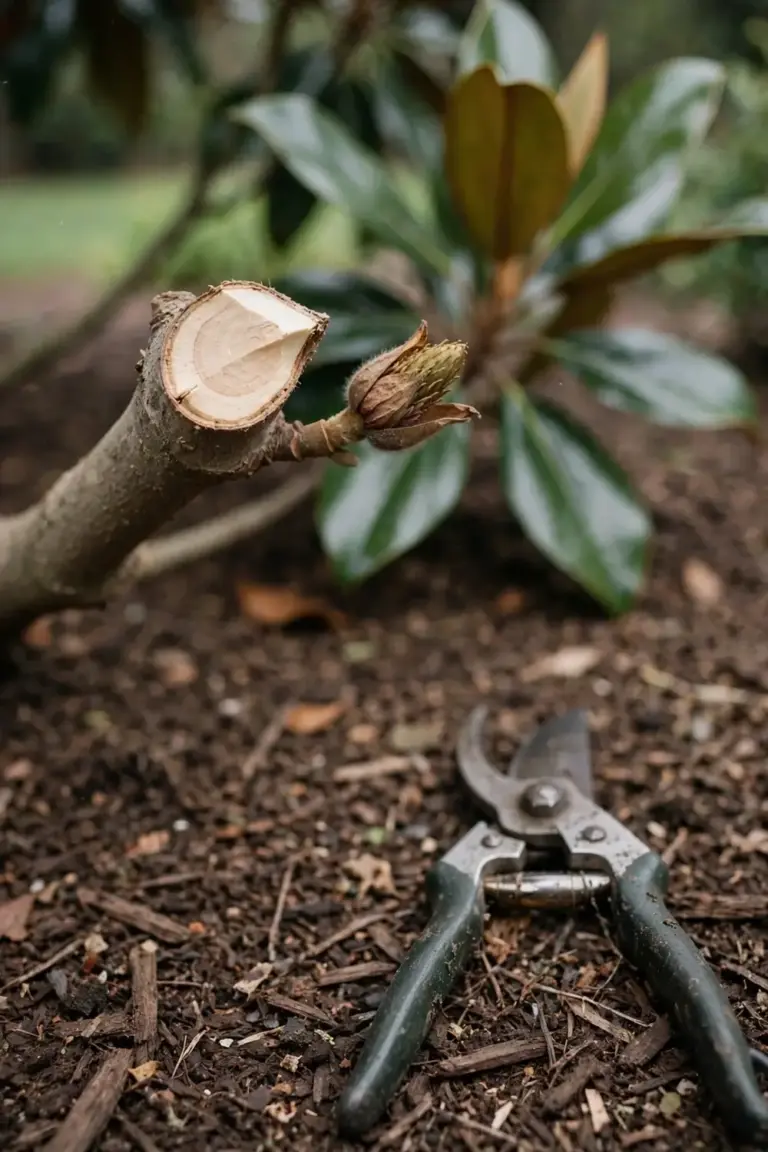
Cut right after flowering finishes, because the tree sets next season’s flower buds soon after. A late cut removes those buds and costs you a spring display. Remove crossing branches, dead wood, and any branch that rubs another, cutting back to a branch collar rather than a stub. A stub rots. A collar cut heals.
Shape young trees early, because a young tree accepts a shaping cut and an old tree resents one. Lift the canopy by removing lower branches if you want a trunked form. Leave the lower branches if you want a shrubby form. Spring pruning techniques covers the clean-cut method: sharp tools, cuts outside the collar, and disinfected blades between trees.
Never top a magnolia. Cutting the leader off a magnolia ruins its form and triggers a broom of weak shoots. Never cut into old bare wood expecting new growth. Magnolias resprout weakly from old wood. Cut only wood that carries leaves or buds. If a branch is dead, cut it back to living wood. If a branch is alive but in the wrong place, remove it whole at the collar.
7. Grow Magnolias in Pots at Least 600 mm Wide
Pots suit compact magnolias only. Choose a dwarf or compact cultivar, such as Little Gem or Teddy Bear. A full-size grandiflora outgrows any pot and sulks. The pot must be at least 600 mm wide, according to Yates’ Australian magnolia guide. A pot that wide holds enough soil to buffer heat and drying. A small pot dries out between waterings and cooks roots in summer.
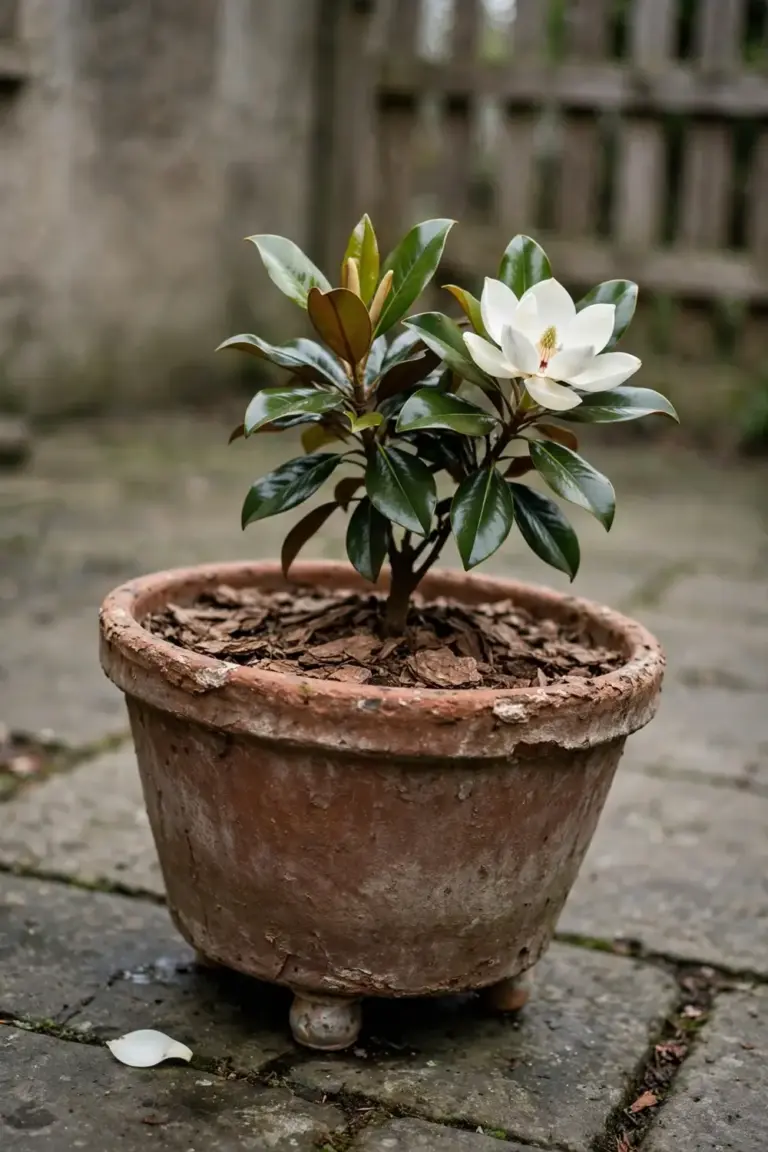
Fill the pot with a slightly acidic potting mix, the kind sold for azaleas and camellias. Tease the outer roots gently when you unpot the tree. Set the root ball at the same level it sat in the nursery pot, backfill, and water in well. Lay organic mulch over the surface to hold moisture.
Potted magnolias need more water and more feeding than in-ground trees. Keep the mix moist as the plant establishes. Water when the top 3 cm of mix dries. Feed every 8 weeks once buds appear, on the same schedule as in-ground trees. Repot every 2 to 3 years into fresh mix, or top-dress with fresh mix each spring.
Mind drainage in pots. A pot without drainage holes drowns a magnolia. A pot sitting in a saucer of water drowns it too. Raise the pot on feet so water drains freely. Empty the saucer after watering. In frost-prone gardens, move pots against a sheltered wall for winter. A pot exposes roots to cold from every side. An in-ground tree keeps roots insulated by soil.
8. Stop Magnolia Pests and Possums Before They Strip Buds
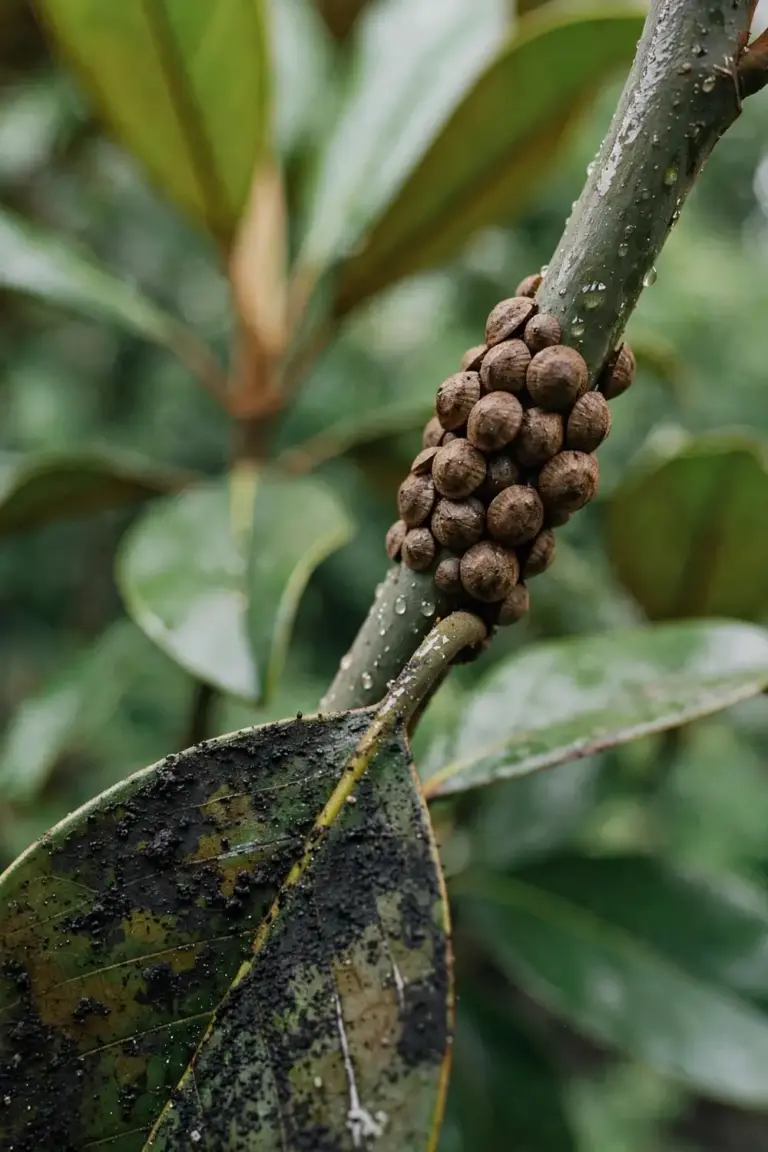
Magnolias suffer few serious pests, and scale insects are the main one to watch. Soft magnolia scale feeds on stems and leaves and excretes honeydew, and that honeydew feeds black sooty mold on the leaves below. Check stems and leaf undersides for small bumps. Treat scale with an oil-based product that smothers the insects. An oil spray works on contact, so coat the insects, not just the leaves.
Possums eat magnolia buds in Australian gardens. Aussie Green Thumb’s magnolia guide notes possums eating buds as a recurring Australian problem. A tree that loses its buds loses its spring display. Net the tree with wildlife-safe netting before buds swell. Use netting with a mesh fine enough that birds and bats cannot tangle in it. Remove the netting once flowering finishes.
Frost damages flowers more than pests do. Late frosts can kill late winter blooming flowers, according to NC State Extension’s saucer magnolia profile. Plant late-flowering cultivars in frost-prone gardens. Site the tree away from south-facing walls that absorb and reradiate heat, since the extra warmth opens buds early and the next frost kills them. Bunnings’ deciduous magnolia guide puts the cold limit near minus 5 degrees Celsius and calls frost protection essential for younger trees. How to protect plants from late frost covers covers, site choice, and watering before a frost night.
Treat scale early, while numbers are low. Check stems and leaf undersides in spring. Wipe small infestations off with a cloth dipped in soapy water. Spray larger infestations with horticultural oil, coating the insects themselves. Oil smothers scale on contact. Repeat after two weeks to catch crawlers that hatched since the first spray. Sooty mold washes off once the scale is gone. The mold feeds on honeydew, not on the leaf. Remove the honeydew source and the mold stops.
Leaf spot shows as brown or black spots on leaves in wet weather. The spots look alarming and rarely threaten the tree. Rake fallen leaves and destroy them rather than composting them, because clean up breaks the disease cycle. Improve air flow by thinning crowded branches. A tree that dries fast after rain suffers less leaf spot than a tree that stays wet. Fungicide sprays are rarely worth it on a home magnolia. Sanitation and air flow do the job.
9. Fix a Magnolia That Will Not Flower
A magnolia that will not flower usually misses one of four things: light, chill, age, or soil. Work through them in that order. The fix depends on which one is missing. Guessing the cause wastes a season.
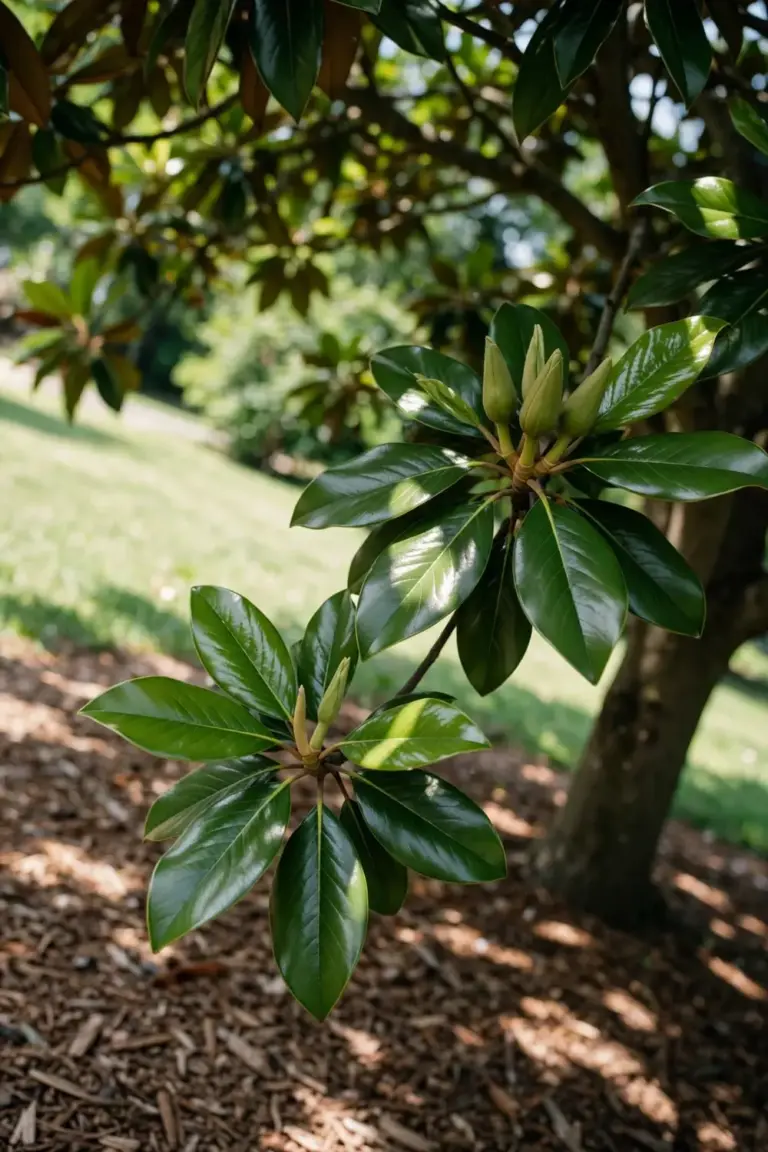
Light comes first. Magnolias flower best in full sun to part shade. A tree in deep shade grows leaves and skips flowers. A tree in a spot that gets morning sun and afternoon shelter flowers well. If shade is the cause, prune nearby branches that block morning sun, or move a young tree in late winter. A mature tree cannot move, so open the canopy above it instead.
Chill comes second. Deciduous magnolias need a chilly winter to set buds. A warm-winter garden in the subtropics may never deliver enough chill. An evergreen magnolia suits that garden better. A deciduous magnolia in a warm garden flowers sparsely or not at all. Matching the group to the climate band in H2 1 prevents this failure.
Age comes third. A young magnolia may take several years before its first blooms appear. A seed-grown tree takes longest. A grafted cultivar flowers sooner. If the tree looks healthy and grows well, give it time. Feeding a young tree harder does not force flowers. It forces leaf growth.
Soil comes last. A pH above 6 turns leaves yellow and weakens flowering. Test the soil. A yellow-leafed tree with green veins points at iron lockout from high pH. A tree with pale leaves all over points at low nitrogen. Fix the soil test result, not the symptom you see first.
Fix the causes in order. Light first, then chill, then age, then soil. A tree in deep shade will not flower no matter how perfect its soil. A tree in a warm winter climate will not flower no matter how much sun it gets. A young tree flowers on its own schedule. A tree with the wrong pH will not flower until the soil is fixed. One fix at a time shows you which cause mattered.
Frequently Asked Questions
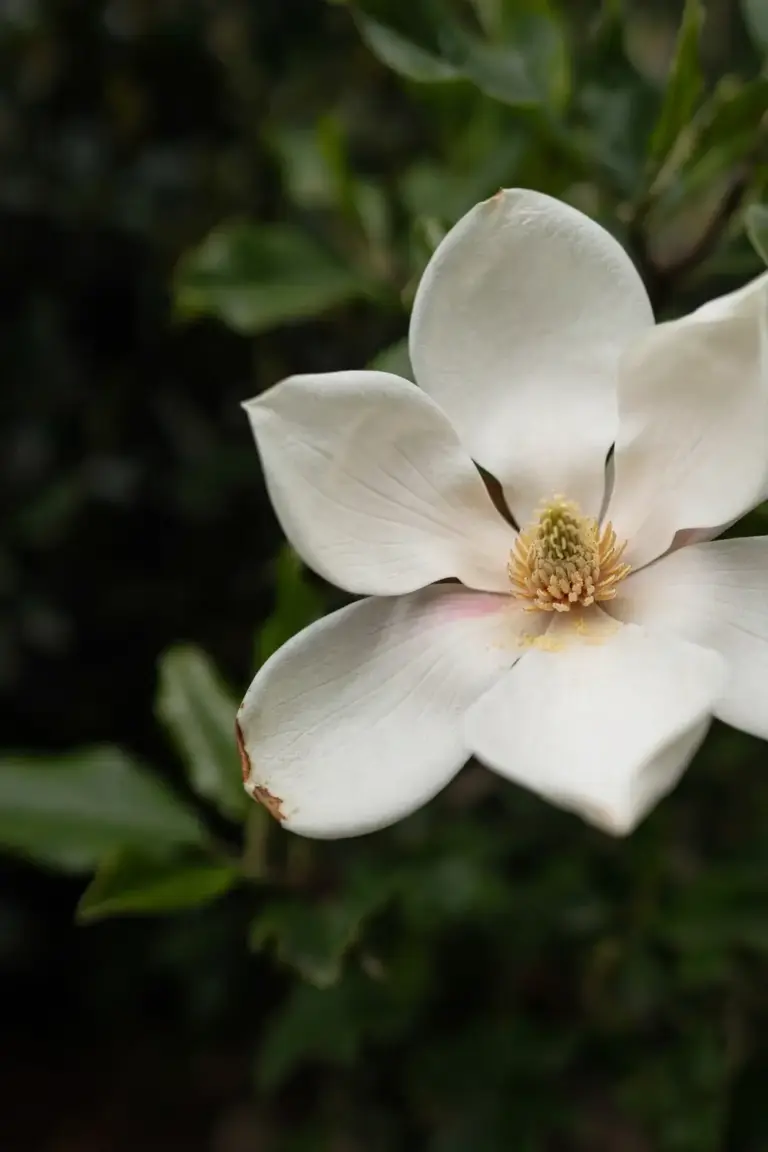
Magnolias struggle in tropical Australia. Deciduous magnolias need a chilly winter to set buds, and tropical winters stay warm. Evergreen magnolias cope better with heat, but steamy humidity and year-round warmth still stress them. Gardeners in the tropics do better with a native flowering tree that suits the climate.
A grafted magnolia often flowers within 2 to 4 years of planting, while a seed-grown magnolia takes longer, sometimes a decade or more. The tree must build enough wood and root mass first. A healthy young tree that grows well but skips flowers usually needs time, not fertilizer. Patience beats feeding here.
Deciduous magnolias drop their leaves in autumn and flower on bare branches in early spring. Evergreen magnolias hold glossy leaves all year and shed old leaves gradually. The two groups behave differently. Check which group your cultivar belongs to before you worry about leaf drop. Bare branches on a deciduous magnolia in winter are normal.
Teddy Bear suits small gardens best. It grows 4 to 5 m tall and holds a compact, dense shape that hedges well. Little Gem also suits small gardens and pots. Both are evergreen grandiflora cultivars. Saucer magnolia suits a small garden only if you have room for a tree 8 m tall and 5 m wide at maturity.
Yellow leaves with green veins point at iron lockout from soil pH above 6. Test the soil and adjust pH toward 5 to 6. Yellow leaves all over point at low nitrogen or waterlogging. Check drainage and feeding. Yellow leaves on a deciduous magnolia in autumn are normal leaf drop, not a problem.
Grow the Magnolia That Fits Your Garden
Growing magnolias in Australia comes down to one decision: match the group to your climate. Deciduous magnolias belong in cool-winter gardens along the Great Dividing Range and the south-east. Evergreen magnolias belong in warmer coastal gardens. Plant in late winter or early spring, keep the soil acid at pH 5 to 6, mulch 10 cm deep, water deeply for the first 2 to 3 years, and prune lightly after flowering. Do those jobs and the tree flowers for decades. Start with the climate band, then the size, then the site. A tree chosen for the garden it will live in beats a tree chosen for its flower photo. Plant it well once, and the tree repays you every spring. A magnolia planted well in its first year needs little from you after that, just mulch, water in dry spells, and a light cut after flowering.