
A tomato glut means more tomatoes than you can eat fresh before they soften. 15 use-it-now ideas clear it. Eat the ripe ones today, cook the soft ones tonight, and hand the rest to neighbours or a food bank before the week ends.
This article covers use-it-now ideas only. The 15 ideas below run in order: six fresh, four cooked, three shared, one given away, and one rescued. Every idea ends at the table today or in a neighbour’s kitchen this week.
A glut feels like a failure of planning, and it is really a sign of a strong season. Warm weather ripens fruit faster than one household eats it, and a week of sun can turn a manageable crop into a bench full of red fruit. The answer is pace, not panic: move today’s ripe fruit first, cook tonight’s soft fruit second, and pass the rest along before it softens.
1. Ask the Glut Question First: What Can You Use Today?
The glut question is simple: what can you use today? Ask it before you pick another basket, and ask it again each morning while the glut lasts. The answer sets the plan for the day.
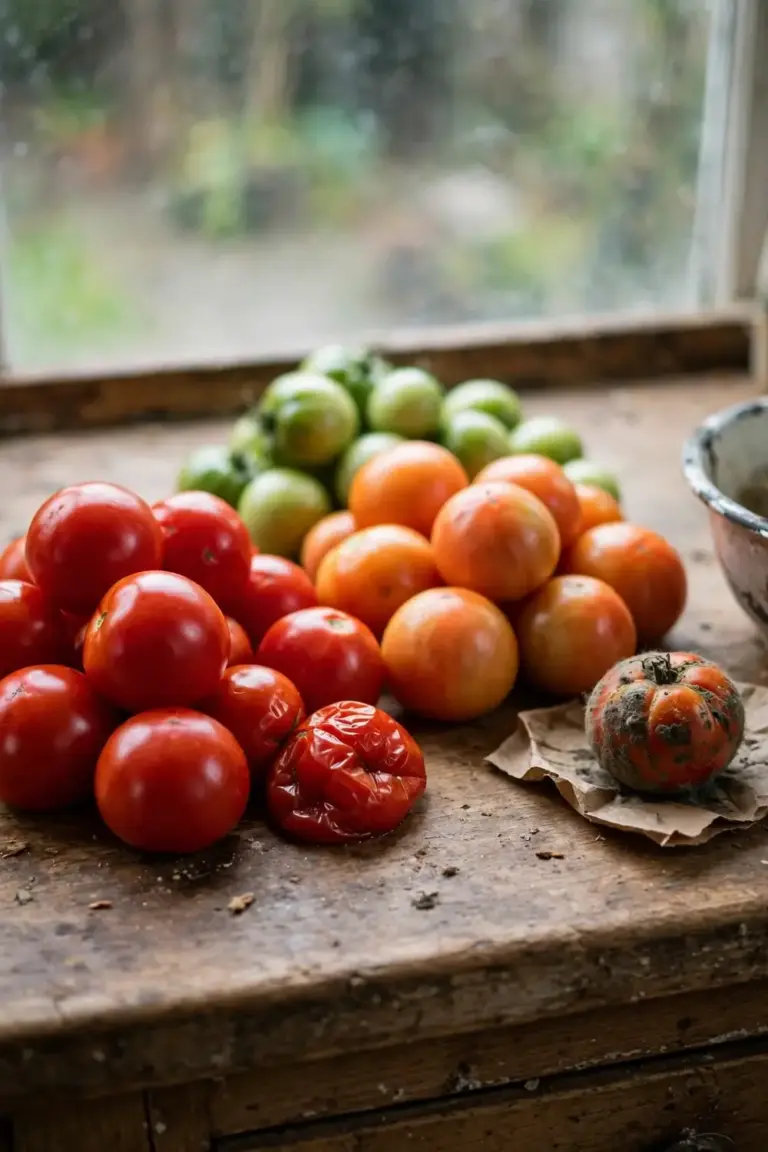
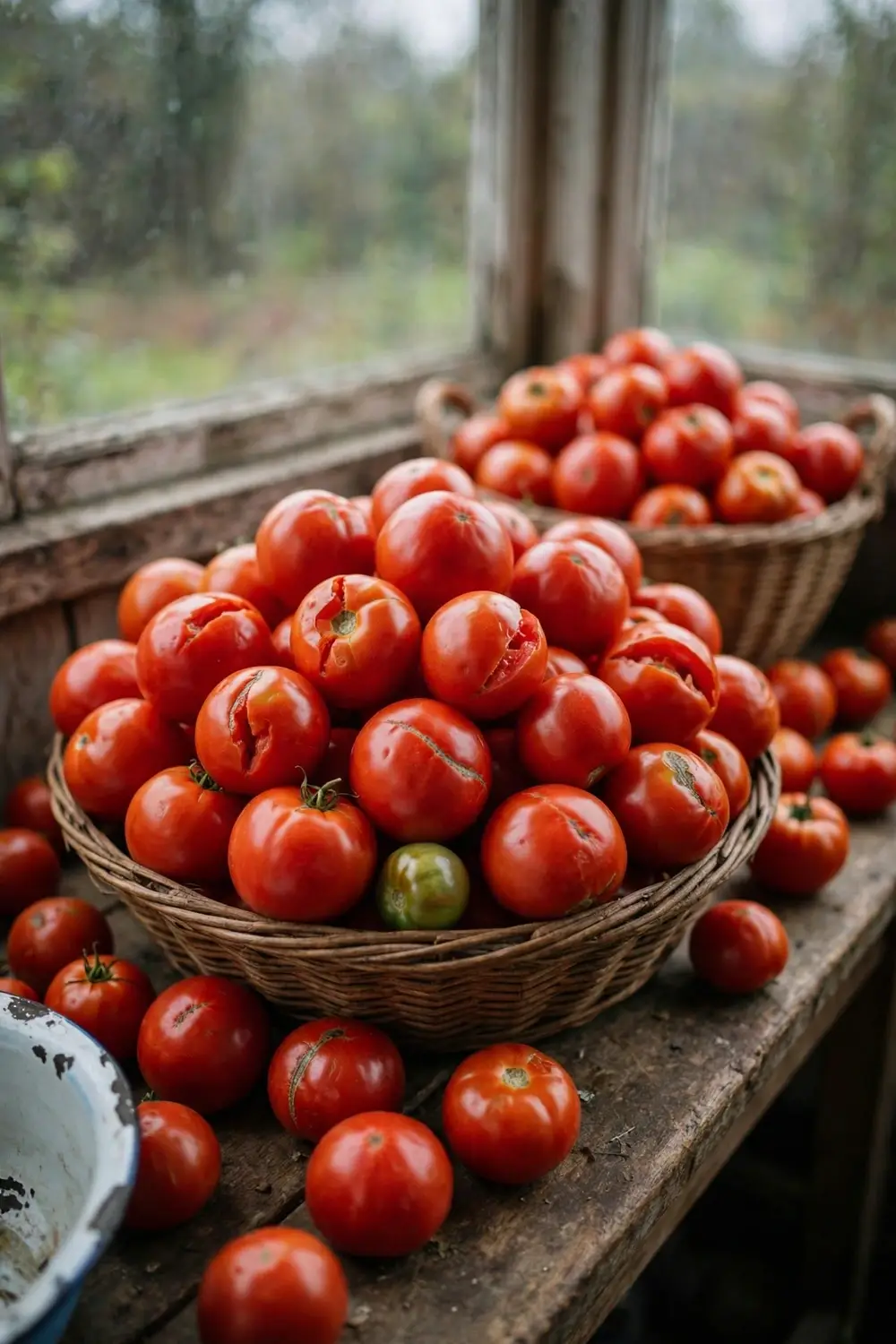
Sort the tomatoes into four piles. Pile one holds ripe fruit for eating today. Pile two holds firm fruit that will ripen in two to three days. Pile three holds soft fruit for the pot tonight. Pile four holds spoiled fruit for the compost. One claim per pile keeps the sort honest: ripe fruit goes to the table, firm fruit waits on the bench, soft fruit goes to the pot, and spoiled fruit leaves the kitchen.
Work through the piles in order. Eat pile one first. Cook pile three the same day. Give away what pile one and pile three cannot absorb. Pile two stays on the bench until its turn comes. A glut clears when each day’s ripe fruit has a named destination before noon.
Learn the signs that separate pile three from pile four. Soft fruit with sound skin and a fresh smell goes in the pot. Fruit with mould, sour smell, slime, or a fermented tang goes to the compost. When in doubt, cut the fruit open: clean flesh with a fresh smell cooks well, while darkened flesh with an off smell leaves the kitchen. One bad tomato can sour a whole pot, so the sort earns its time.
Repeat the sort each morning. A glut arrives in waves, and yesterday’s pile two becomes today’s pile one. The morning sort takes a few minutes, and it keeps the bench honest. A bench that gets sorted daily never hides a soft tomato at the bottom of the basket.
Set a noon deadline for the day’s plan. By noon, every ripe tomato should have a destination: the table, the pot, a neighbour’s bag, or the give-away point. Noon matters because afternoon heat softens ripe fruit faster, and fruit that waits through a hot afternoon turns from ripe to soft before dinner. A plan made in the cool morning holds; a plan made in the hot afternoon chases fruit that has already softened.
When the glut outruns the plan, run a second round. Cook a second pot for tomorrow’s lunch, carry a second bag to the neighbours, and make a second give-away trip before the week ends. A second round beats a bench that sits full overnight, because overnight fruit softens and moves from pile one to pile three without being eaten. Two small rounds clear more fruit than one large round, and they keep every tomato inside its best window.
2. Eat Them Fresh While They Are at Their Best
Fresh eating is the fastest way through a glut. A ripe tomato needs little help, and the best fresh ideas take minutes. Colorado State University Extension advises storing uncut tomatoes at room temperature, away from light, with the stem side down, and warns that refrigerator storage can reduce tomato quality (Colorado State University Extension). I have learned that the tomato I leave on the bench at room temperature out-tastes the one I chill in the fridge.
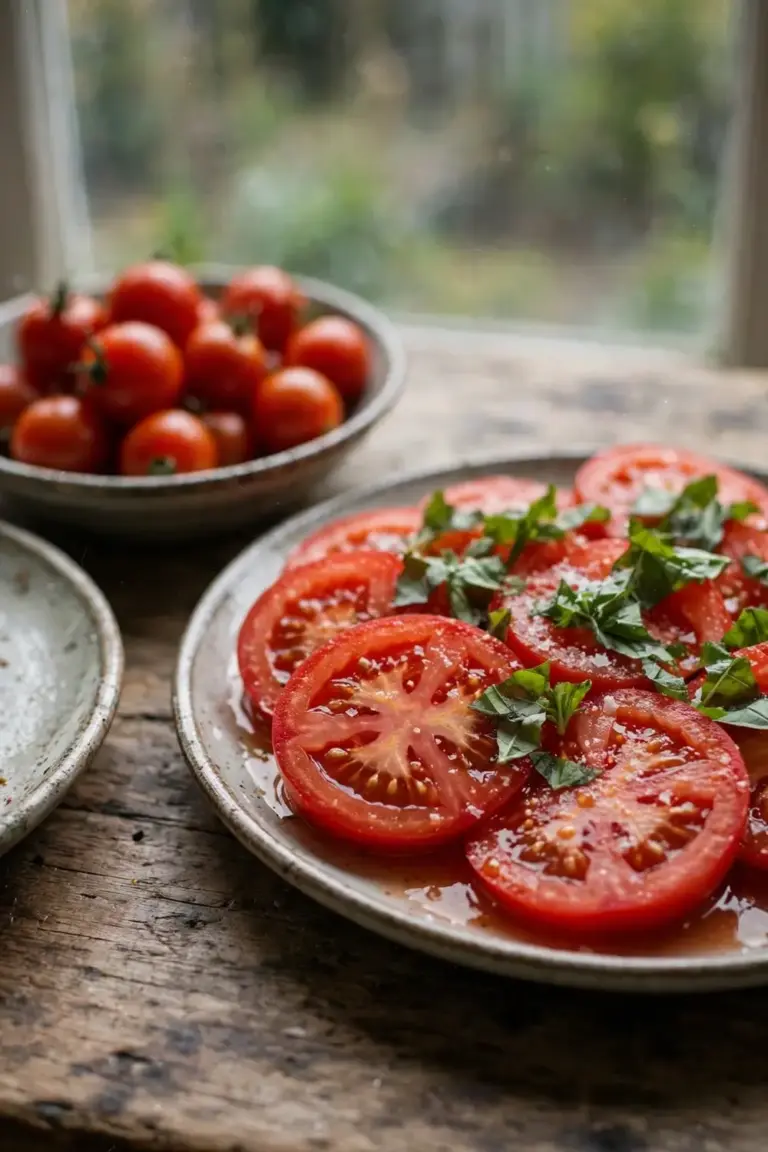
Cut tomatoes follow a shorter clock. The same source advises refrigerating cut tomatoes and using them within 3 to 4 days. Wash every tomato under cool, running water before you cut it. The same source gives that washing rule for all fresh tomatoes.
Serve fresh tomatoes in order of ripeness. The ripest fruit goes first because it softens fastest. Firm ripe fruit holds for a day or two on the bench, and it suits slicing for sandwiches and salads. Small tomatoes suit grazing straight from the bowl, and they disappear faster than sliced fruit at a shared table. Put the bowl where people walk past it, and the glut shrinks by itself.
Salt belongs on fresh tomatoes at the table, not in the bowl an hour early. Salt draws juice out of cut tomato, and a salad dressed too early turns watery. Dress the salad when people sit down. Keep the dressing light so the tomato flavour carries the dish.
Match the tomato to the fresh idea. Small tomatoes suit grazing, skewers, and snack plates because they hold their shape and pop in the mouth. Large slicing tomatoes suit sandwiches, caprese, and salads because one slice covers the bread. Meaty tomatoes with few seeds suit bruschetta because the topping stays on the toast instead of sliding off. Juicy tomatoes suit salads and salsa because their juice becomes part of the dressing. The glut usually holds all four types at once, so the table rarely repeats the same idea twice in a day.
| Idea | How | When |
|---|---|---|
| 1. Tomato salad | Slice ripe tomatoes, add onion and herbs, and dress lightly | Today, at lunch |
| 2. Caprese | Layer tomato slices with mozzarella and basil | Today, at lunch or dinner |
| 3. Bruschetta on toast | Spoon diced tomato over toasted bread and serve at once | Today, as a snack or starter |
| 4. Tomato sandwiches | Layer thick slices with salt and a spread of your choice | Today, at lunch |
| 5. Fresh salsa for tonight | Dice tomato with onion, chilli, lime, and coriander, and serve the same evening | Today, with dinner |
| 6. Snack plate | Set out whole small tomatoes with dip for grazing | Today, through the afternoon |
3. Cook Them Today: Sauce, Soup, and Curry for Tonight
Cooking turns soft tomatoes into tonight’s dinner. Soft fruit suits the pot because heat hides the texture that fresh eating exposes. Cook only what tonight eats, and serve it tonight.
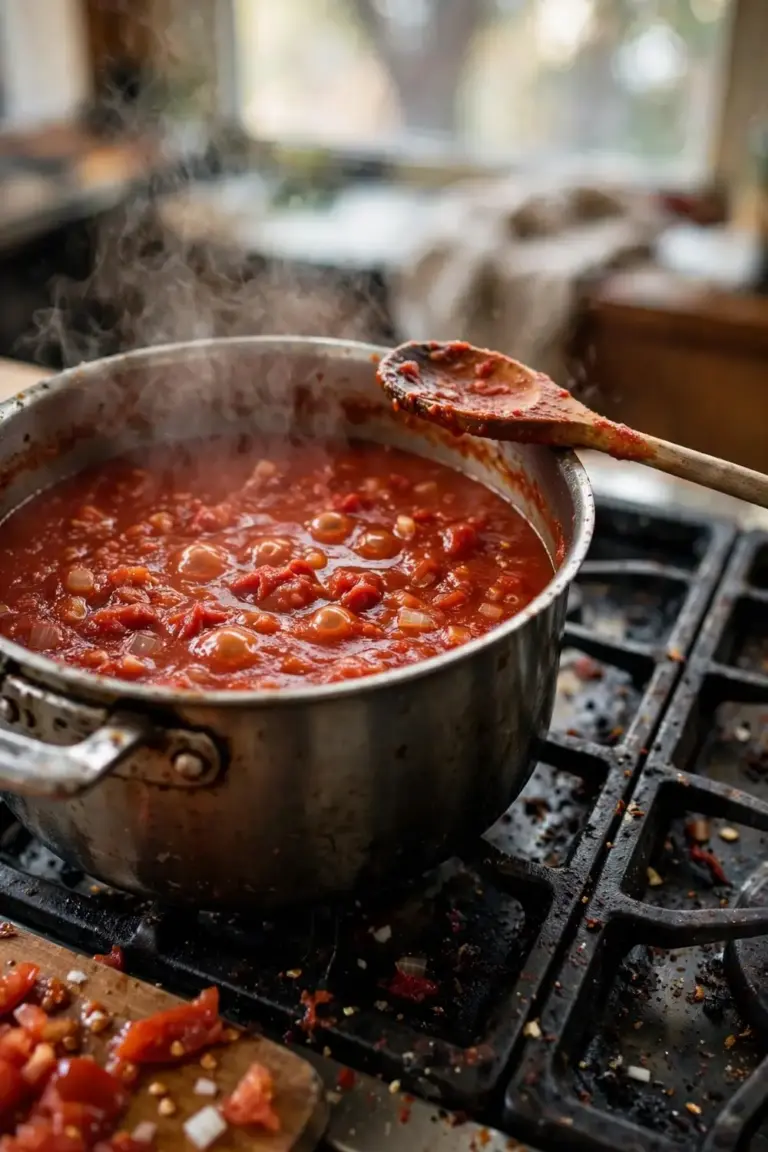
Idea 7 is pasta sauce for tonight. Cook tomatoes down with garlic, onion, olive oil, and herbs until the sauce coats a spoon, then serve over pasta. A sauce made from soft tomatoes tastes as good as one made from firm fruit, because the pot does the work that the knife cannot. Keep the heat gentle so the sauce thickens without scorching, and taste before you serve.
Idea 8 is tomato soup for tonight. Simmer tomatoes with stock and seasoning, blend smooth, and serve with toast. Soup takes the softest fruit in the pile, including tomatoes too soft to slice. A smooth soup hides every wrinkle, and a slice of toast turns it into a full meal. Serve the soup the evening you cook it.
Idea 9 is tomato curry for tonight. Simmer tomatoes with onion, spices, and lentils or chickpeas until the curry thickens. Tomato carries spice well, and the curry format feeds a table with one pot. A curry also stretches the glut further than a salad does, because one pot serves many plates. Cook the curry for tonight’s table, not for the week ahead.
Idea 10 is tomato and egg scramble. Saute tomatoes and garlic until the juices release, then add eggs and herbs and serve at once. The scramble suits breakfast, lunch, or a light dinner, and it clears a bowl of soft tomatoes in one pan. Serve it straight from the pan while the eggs stay soft.
Cooked food follows the two-hour rule. FoodSafety.gov advises refrigerating perishable food within two hours of cooking, or within one hour when the air temperature sits above 90 degrees Fahrenheit (32 degrees Celsius) (FoodSafety.gov). The same source advises eating refrigerated leftovers within four days and reheating them to an internal temperature of 165 degrees Fahrenheit (74 degrees Celsius). A pot of sauce left on the bench overnight goes in the bin, and a pot eaten tonight never becomes a storage problem.
Set the table before the pot finishes. A cooked glut clears fastest when people sit down hungry and the pot lands in the middle of the table. Leftovers shrink when the meal starts on time, and a second helping beats a second container in the fridge. Cook for the table you have tonight, and let tomorrow’s tomatoes wait their turn.
Serve the cooked dishes with what the pantry already holds. Bread suits soup and sauce because it scoops the last spoonful from the bowl. Rice suits curry because it carries the sauce and stretches one pot across many plates. A spoonful of yoghurt cools a hot curry, and a scatter of herbs freshens a soup that simmered long. None of these sides needs a shop trip, and each one turns a pot of tomatoes into a full meal.
Clean the pot while it is still warm. A soaked pot washes in minutes, and a pot left overnight needs a hard scrub the next morning. Wash the cutting board and knife straight after the tomatoes, because tomato juice stains boards and dulls the bench. A clean kitchen at the end of the cook makes tomorrow’s sort faster, and a fast sort keeps the glut moving.
4. Share Them With Neighbours Before They Soften
Sharing moves more tomatoes than any single kitchen can eat. A neighbour with an empty bench is the fastest destination for a full basket. Share while the fruit is firm and good, and share enough for one meal rather than a week’s worth.
Idea 11 is the neighbour drop-off. Carry a bag to the nearest doors and hand over tomatoes that will be eaten today or tomorrow. Knock, hand over the bag, and name the day the tomatoes suit: today for ripe fruit, and two to three days for firm fruit. A named day helps the neighbour plan, and a planned bag gets eaten.
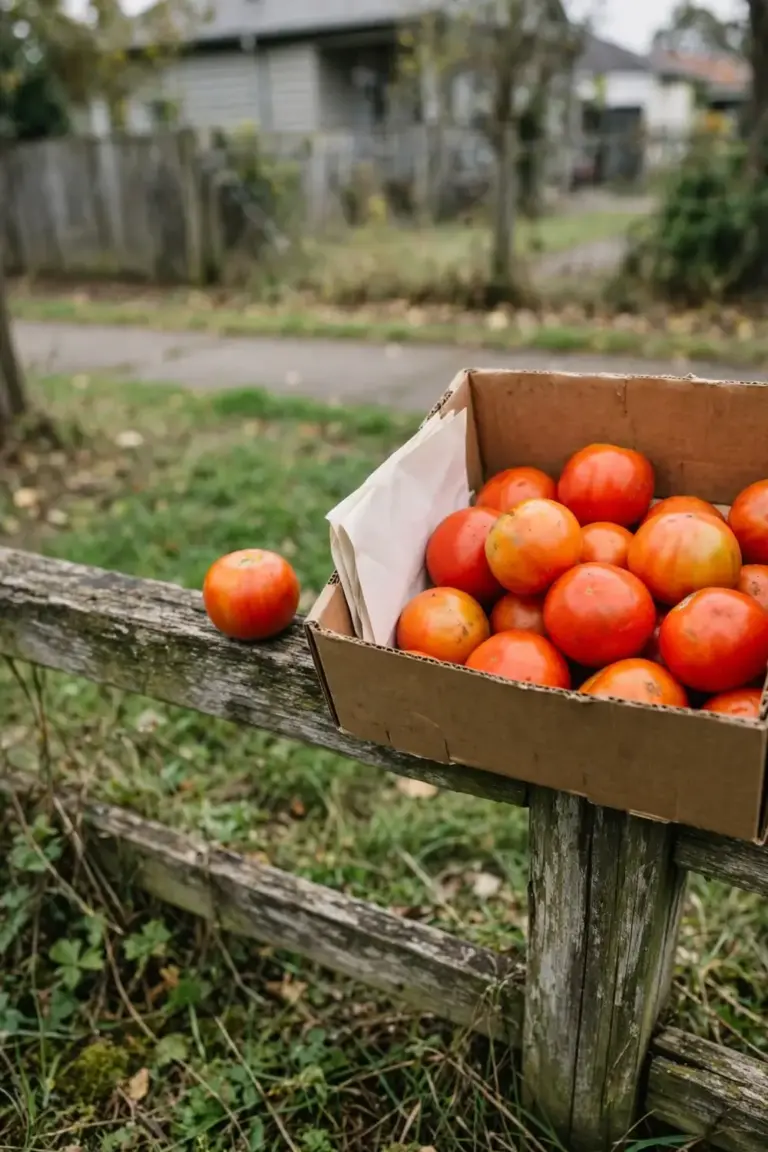
Idea 12 is the street share box. Set out a box at the front fence with a plain note that the tomatoes are free and fresh today. A share box works when the fruit inside stays good, so check it through the day and pull anything that softens. A box with sound fruit empties by evening, and a box with soft fruit teaches the street to walk past it.
Idea 13 is the swap. Trade tomatoes with a neighbour who has zucchini, herbs, or eggs, so each side eats something different tonight. A swap works when each side brings food the other side will eat today. Keep the amounts small. A small bag eaten today beats a large bag that softens on a neighbour’s bench.
Share the ripe fruit first and keep the firm fruit for later in the week. A neighbour who gets ripe tomatoes today comes back for firm tomatoes tomorrow. A neighbour who gets a bag of soft fruit learns to say no next time. Quality builds the sharing habit, and the habit clears the glut faster than any other single idea in the list.
When nobody answers the door, leave the bag with a short note and move on. The note names the day the fruit suits and asks the neighbour to take the bag inside. A bag left in shade stays good for hours, while a bag left in sun softens by afternoon. Hang the bag on the door handle when the sun hits the step, and never leave a bag where it blocks the path.
Take the share habit beyond the street. A bag of tomatoes at work clears by lunchtime, and a bag at school pickup clears before the bell. Work and school crowds eat fast because many hands share one bag, and a bag that feeds ten people never comes home again. Label the bag with the day you picked the fruit, and leave it where people gather. The same rule holds: ripe fruit today, firm fruit for later in the week.
5. Give Them Away: Food Banks and Community Fridges
Giving away suits the part of the glut that sharing cannot absorb. A food bank or a community fridge takes good fruit and puts it in front of people who need it. Give only fruit you would serve at your own table: firm, clean, and free of mould, splits, and soft rot.
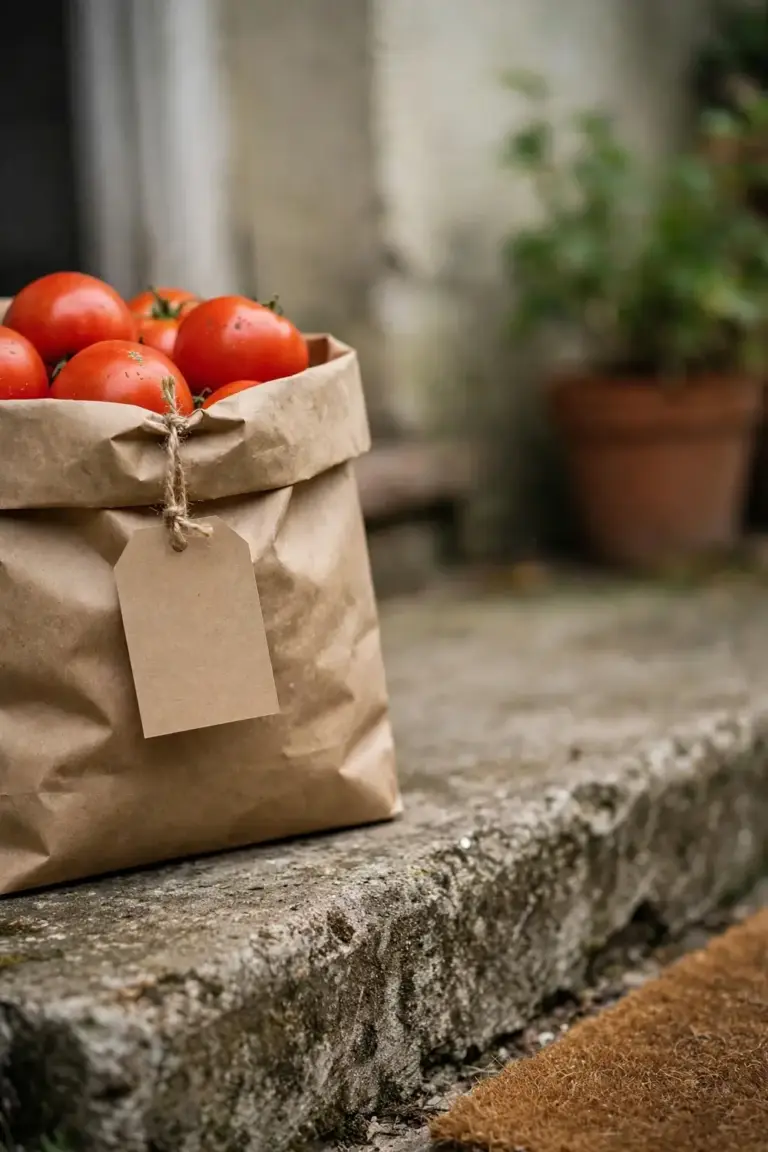
Idea 14 is the give-away: take a bag of good tomatoes to a local food bank, community fridge, or charity that accepts fresh produce. OzHarvest runs food rescue across Australia and invites surplus food donations through its give-food page (OzHarvest). Its donor program serves businesses, so a home gardener should ask a local branch or a local charity first and confirm what it accepts before dropping off food.
Ask before you drop off. Some collection points take fresh produce on set days, and some take it only in set amounts. A phone call or a visit saves a wasted trip and a bag of tomatoes that nobody can take. Ask what condition the fruit must be in, and ask how it should be packed.
Pack the give-away bag with care. Wash the tomatoes, pack them in a clean bag or box, and label the bag with the day you picked them. A labelled bag lets the receiver sort ripe fruit for today and firm fruit for later in the week. Keep the bag light enough to carry in one hand, and keep split or bruised fruit out of it.
A community fridge runs on the same honesty as a share box. Leave good fruit, take only what you need, and check the posted rules before you stock the shelf. A fridge with sound fruit feeds the street, and a fridge with spoiled fruit closes early. The give-away bag that leaves your kitchen in good order is the one that feeds someone tonight.
Never give away fruit you would not eat yourself. Split skins, bruised patches, and mould all stay out of the give-away bag, even when the rest of the fruit looks fine. A receiver who finds one spoiled tomato in a bag checks every tomato after it, and a bag that needs sorting at the far end slows the whole chain. Keep a small notebook by the bench and write down each give-away: the date, the place, and the number of bags. The notebook shows which drop-off point takes the most fruit, and next glut’s bags go there first.
6. Ripen the Stragglers and Rescue the Soft Ones
A glut rarely ripens all at once. The bench usually holds firm green fruit beside ripe fruit, and the green fruit needs a week of patience rather than a place in the bin. Ripening is the 15th idea, and it turns next week’s tomatoes into food instead of waste.
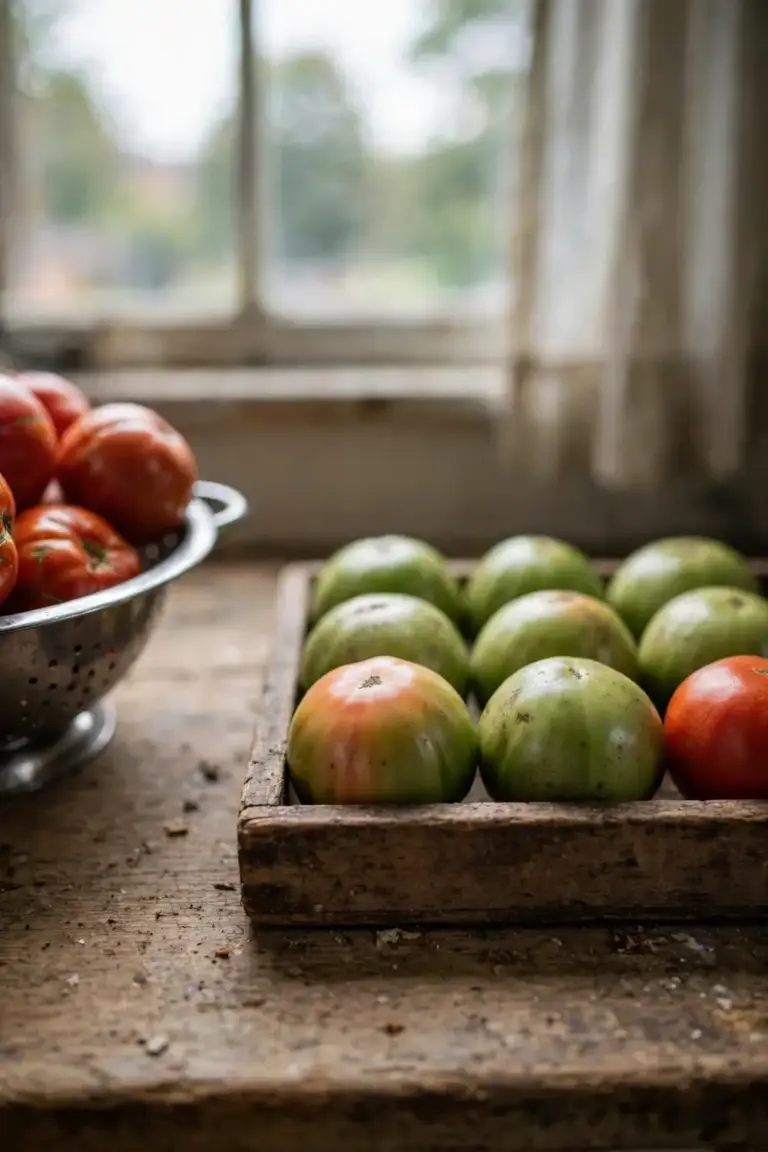
Idea 15 is bench ripening: keep firm green tomatoes in a single layer in a ventilated box or tray at room temperature, and check them every few days. PlantTalk Colorado advises storing ripening tomatoes at 55 to 70 degrees Fahrenheit (13 to 21 degrees Celsius), and notes that mature green tomatoes ripen in 14 days at 70 degrees Fahrenheit (21 degrees Celsius) (PlantTalk Colorado). The same source warns that refrigerator temperatures of 40 degrees Fahrenheit (4 degrees Celsius) are too cold for ripening. UC Davis postharvest guidance puts standard ripening at 18 to 21 degrees Celsius, and warns that chilling injury sets in below 10 degrees Celsius held for longer than two weeks, or at 5 degrees Celsius held for longer than six to eight days.
Learn to tell mature green from immature green. Mature green fruit shows a lighter green tone and a first hint of blush at the blossom end, and it ripens on the bench. Immature green fruit stays deep green and hard, and it never ripens well off the vine. The sort matters: mature green fruit joins the bench tray, and immature green fruit leaves the kitchen.
Check the ripening tray every few days. Pull fruit as it colors, and move colored fruit to the eating pile. Discard any fruit that softens with mould, because rot spreads fast in a closed box. A tray checked twice a week turns a green pile into a red pile without waste.
A ripe tomato or a ripe banana in the tray speeds the rest along. Ripe fruit gives off ethylene, the plant hormone that starts ripening, so one ripe fruit in the tray nudges the green fruit beside it. The trick needs no equipment beyond the fruit itself. Keep the tray ventilated. Still, damp air grows mould faster than it grows color.
Rescue the soft ones the same day you sort them. Soft fruit with no mould goes straight into tonight’s pot. Fruit with mould, sour smell, or slime goes to the compost. The soil guide on this site explains how compost feeds the bed that grew the glut (Soil Health).
7. Stop the Next Glut Before It Starts
A glut ends when picking matches eating. Take only what the table eats today, and leave the rest on the vine until tomorrow. Small daily picks beat one large weekend pick because each day’s fruit arrives at its best and leaves the same day.
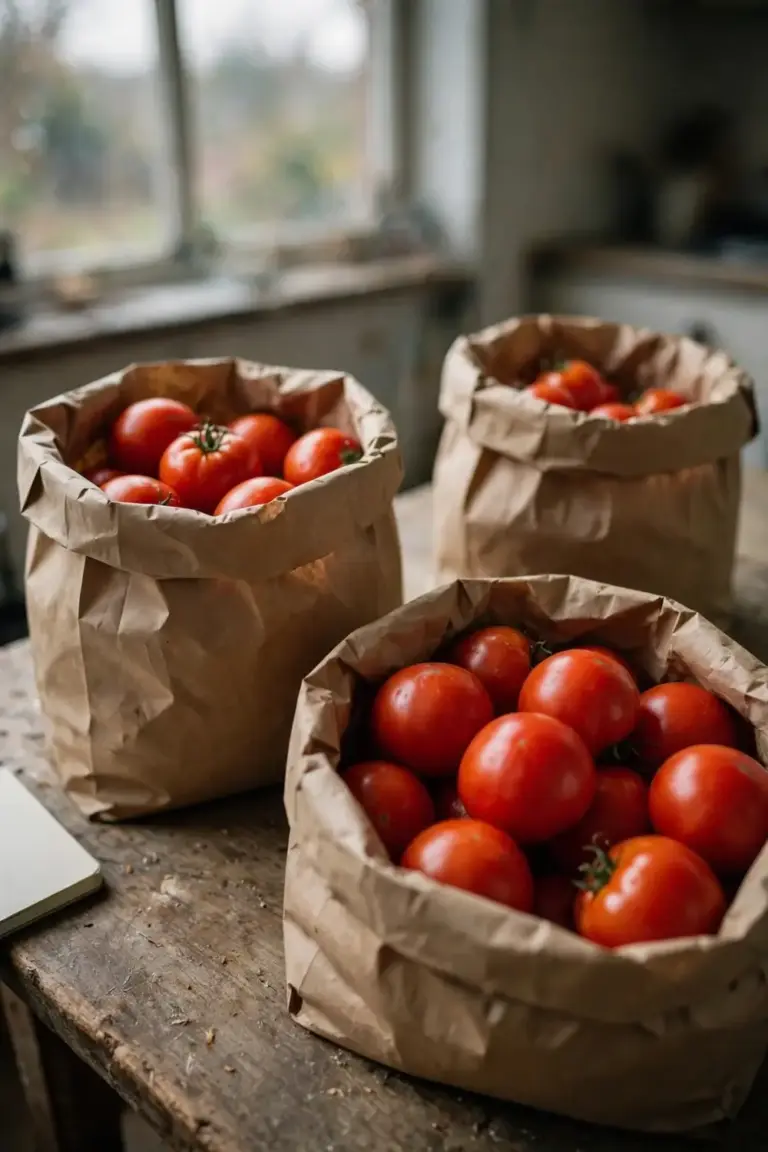
Set a standing share routine while the glut lasts. Keep one bag for the table, one bag for the neighbours, and one bag for the give-away point. When all three bags leave the kitchen each day, the bench stays clear. When a bag stays behind, the glut grows by one bag overnight.
Plan next season around the count that your table and your street can eat. A vine count that feeds the table, the neighbours, and the give-away point is the right count. A vine count that fills the bench past noon each day is too high, and it turns a good season into a sorting chore. One fewer vine next season beats a glut that nobody has time to clear. The seed guide on this site covers starting the next crop when the time comes (Seed Starting Guide).
Write the plan down while the glut is fresh in memory. Note how many bags the table ate, how many the neighbours took, and how many the give-away point accepted. Next season’s count follows those three numbers. A plan written in February beats a plan remembered in December, because February still holds the exact shape of the glut: the weeks it ran, the days it peaked, and the bags that cleared it.
Frequently Asked Questions
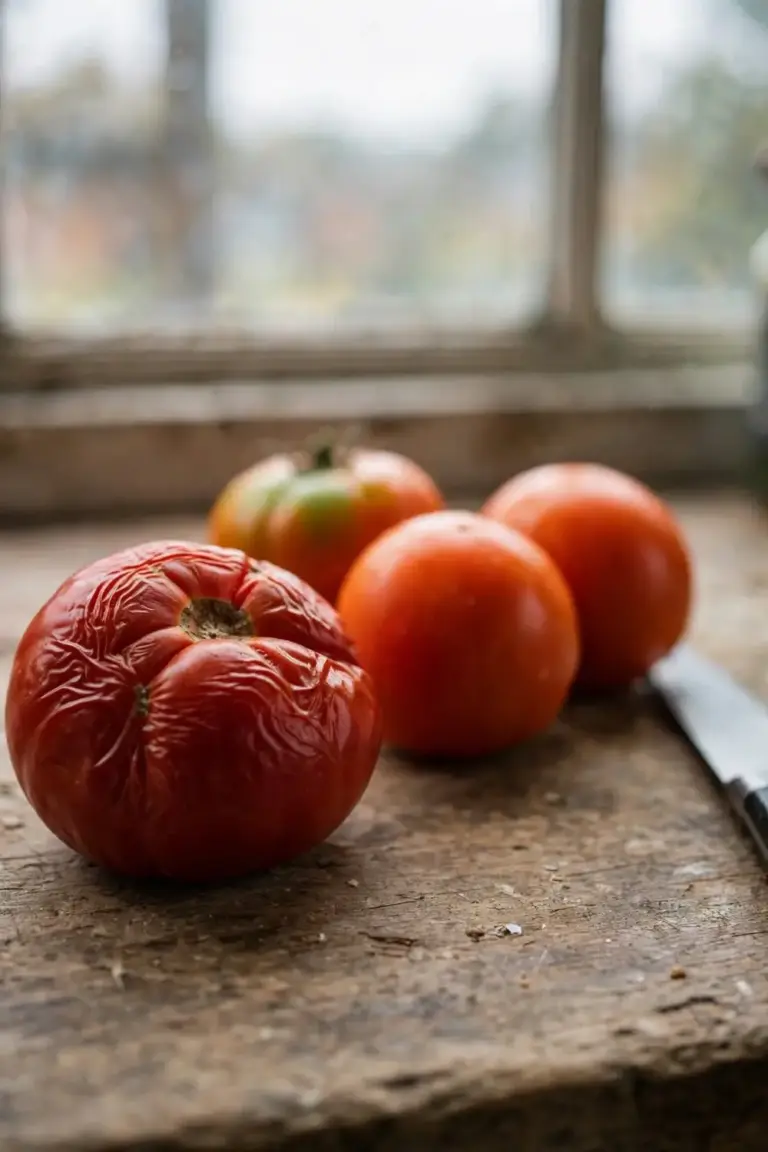
A glut is any amount beyond what you can eat fresh before the fruit softens. The count varies by household. A single person faces a glut at a few kilos a week, while a large family absorbs far more. The test is the bench: when ripe tomatoes outnumber the meals that will eat them, the glut has started.
Room temperature suits ripe tomatoes best. Refrigerator cold dulls flavour and texture, and cold storage below 10 degrees Celsius for longer than two weeks can cause chilling injury. Keep uncut tomatoes on the bench away from light. Refrigerate cut tomatoes only, and use them within 3 to 4 days.
No. FoodSafety.gov advises refrigerating perishable food within two hours of cooking, or within one hour on a day above 90 degrees Fahrenheit (32 degrees Celsius). Refrigerated leftovers stay safe for four days. Reheat leftovers to an internal temperature of 165 degrees Fahrenheit (74 degrees Celsius). Sauce left out overnight goes in the bin.
Ripen firm green tomatoes on the bench at 55 to 70 degrees Fahrenheit (13 to 21 degrees Celsius). Mature green fruit ripens in about 14 days at 70 degrees Fahrenheit (21 degrees Celsius). Check the fruit every few days and discard any that soften with mould. Refrigerator cold is too cold for ripening, so keep green tomatoes out of the fridge.
Yes, when the fruit is good quality. Give firm, clean, mould-free tomatoes that you would serve at your own table. Ask the collection point first, since some take fresh produce only on set days or in set amounts. OzHarvest runs food rescue across Australia, and its donor program serves businesses, so a home gardener should confirm the local route before dropping off food.
Start Tomorrow With an Empty Bench
A glut is a good problem. It means the vines produced more than the table could eat, and the surplus fed neighbours and strangers instead of the bin. Eat the ripe ones today. Cook the soft ones tonight. Share and give away the rest before the week ends. Tomorrow’s bench starts empty, and tomorrow’s pick starts the cycle again.
Keep the 15 ideas in order and the glut stays manageable. Fresh eating takes the ripe fruit, cooking takes the soft fruit, sharing and giving take the surplus, and bench ripening takes the green fruit. No idea needs special gear, and no idea asks for a skill beyond sorting, washing, and cooking. That is what to do with too many tomatoes, and it works every summer the glut returns. The tomato guide on this site covers the crop side of tomatoes (How to Grow Tomato Vegetable Juicy).