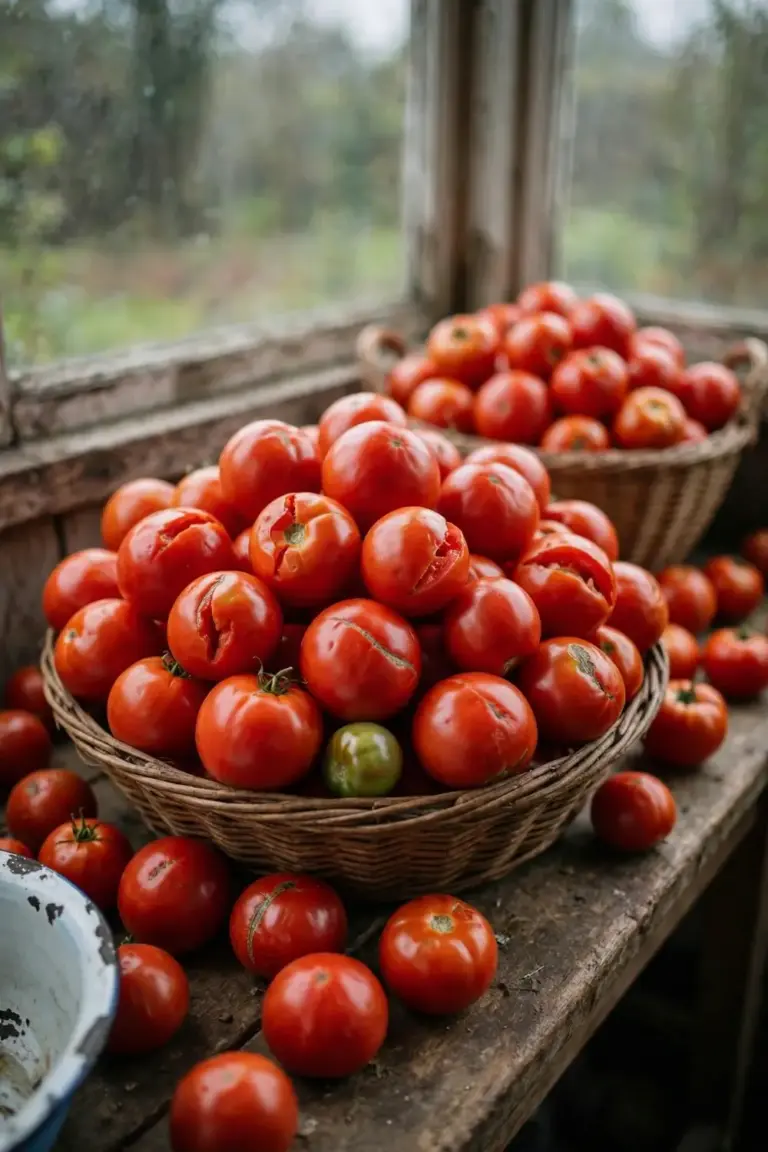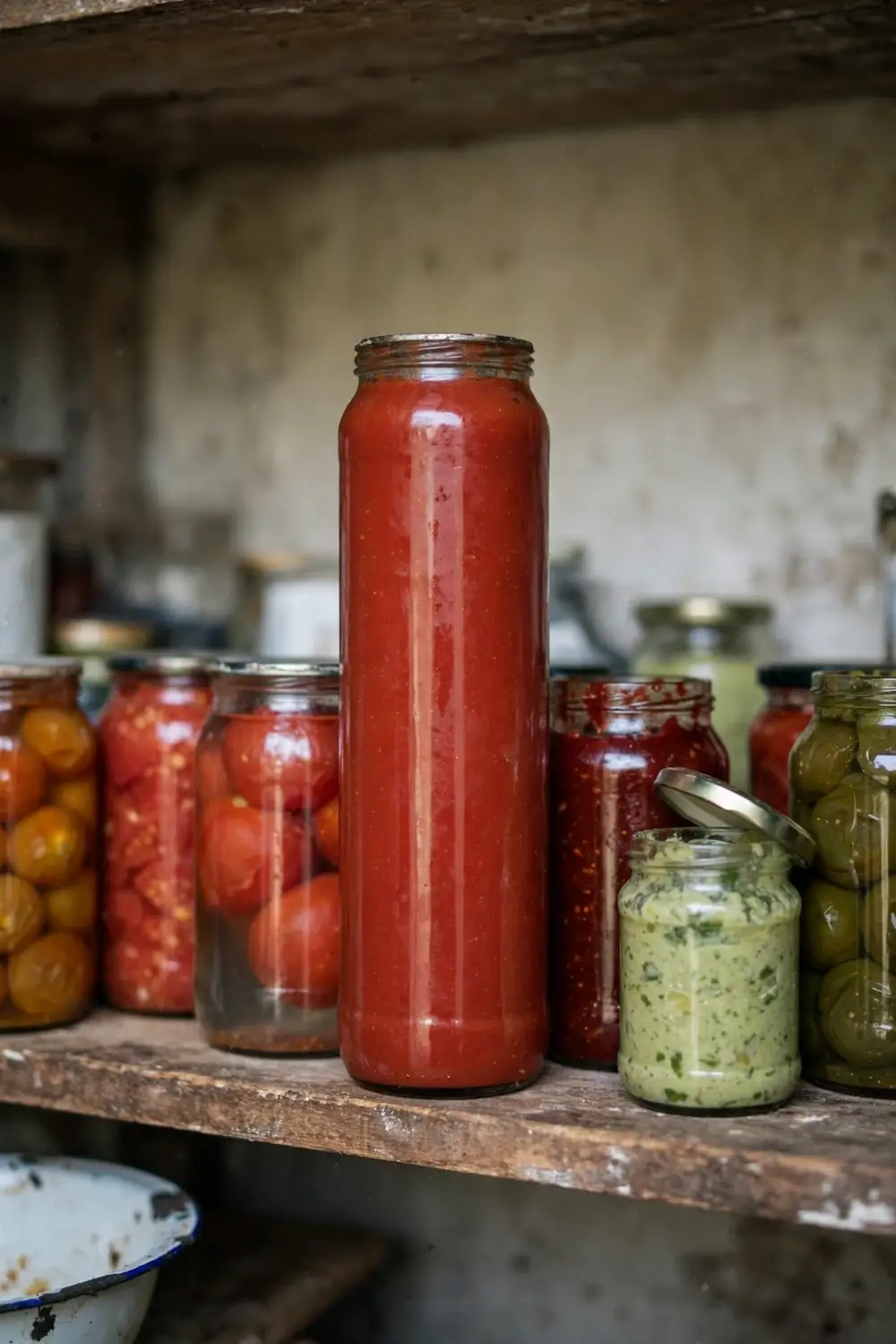

11 ways to preserve tomatoes turn a summer glut into jars, freezer bags, and dried stores. Pick the method by the tomato in front of you. Preserve means keeping tomatoes safe to eat later. Bottling means heat-processing tomatoes in sealed jars so they keep at room temperature.
The rest of this page runs 11 ways, from passata to pickles, then the safety rules that govern every jar. Each way names the tomato it suits, the storage it gives, and the safety rule that decides it.
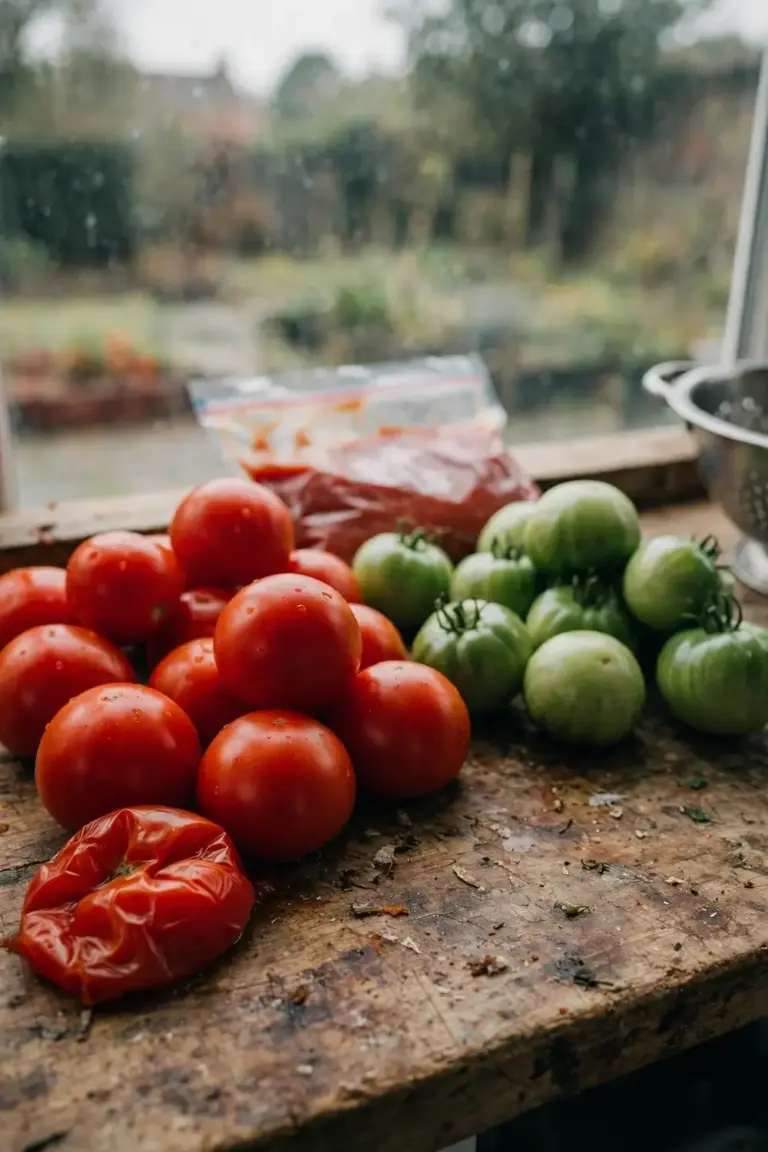
Work in late summer. Ripe fruit goes to the bottle or the freezer. Green fruit goes to chutney. Split, moldy, or spoiled fruit goes to the compost, never to a jar.
Match the Method to the Tomato First
Match the method to the tomato. Ripe fruit suits bottling and freezing. Green fruit suits chutney. Damaged fruit suits nothing on this page.
| Method | Best Tomato | Keeps | Safety Note |
|---|---|---|---|
| Bottle passata | Ripe, firm, meaty | Shelf-stable jars | Acidify every jar |
| Bottle whole tomatoes | Ripe, firm, small to medium | Shelf-stable jars | Acidify every jar |
| Bottle crushed tomatoes | Ripe, firm, any size | Shelf-stable jars | Acidify every jar |
| Red tomato chutney | Ripe, soft, overripe | Vinegar-preserved jars | Tested recipe only |
| Green tomato chutney | Green, firm, end-of-season | Vinegar-preserved jars | Tested recipe only |
| Freeze tomato sauce | Ripe, any size | Freezer | Cool before freezing |
| Freeze whole tomatoes | Ripe, firm | Freezer | Blanch to slip skins |
| Dry tomatoes | Ripe, meaty, low water | Dry stores | Dry fully, then condition |
| Ferment tomatoes | Ripe, firm, small | Fridge only | Salt by weight, keep submerged |
| Tomato paste | Ripe, meaty | Freezer | Freeze in portions |
| Pickle cherry tomatoes | Cherry, firm | Fridge, or shelf-stable from a tested recipe | Vinegar pickle |
Crack-damaged fruit is never for bottling. A crack lets mold in, and mold can lower acidity in the jar. Cook cracked fruit for the table today, or compost it. The glut starts on the vine, and the guide to how to grow tomatoes covers the crop that fills these jars.
Plan one method per batch. A bottling day, a freezing afternoon, and a drying tray each run clean on their own, and mixing three methods in one afternoon splits attention and stalls the pot. Count the fruit first, pick the method that fits the count, and work that method to the end. A small batch done right beats a big batch rushed.
1. Bottle Passata in a Boiling Water Bath
Bottle passata when the glut peaks. Passata is sieved tomato pulp, bottled plain, ready for winter cooking. In Australia the workhorse is a Fowlers Vacola outfit: glass jars, metal lids with rubber seals, and a large pot for the boiling water bath.
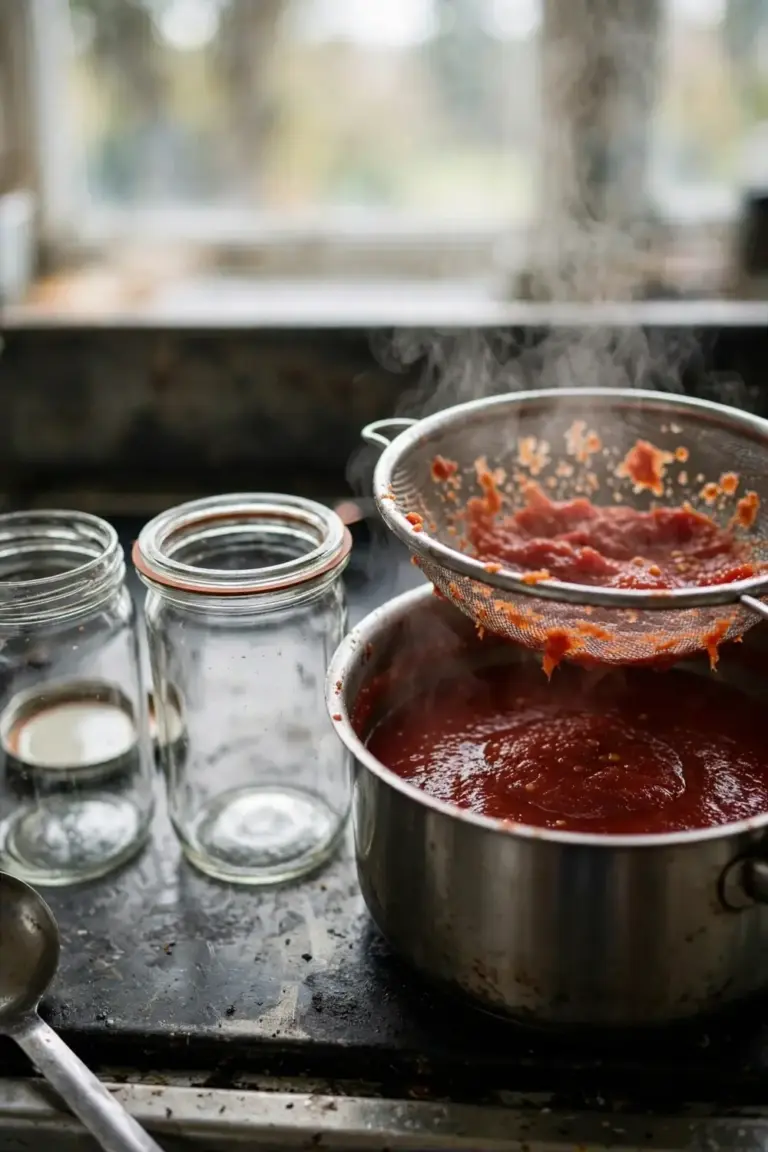
Work from a tested sauce method. The National Center for Home Food Preservation’s standard tomato sauce directions call for 35 pounds (15.9 kg) of tomatoes per canner load of 7 quarts for thin sauce, and 46 pounds (20.9 kg) for thick sauce, and the same directions give a bushel at 53 pounds (24 kg) yielding 10 to 12 quarts of thin sauce, or 7 to 9 quarts of thick sauce. Simmer the sieved pulp until the volume falls by about one-third for thin sauce, or by one-half for thick sauce.
Acidify every jar. Fill jars and leave 1/4-inch (6 mm) headspace. Process pints for 35 minutes and quarts for 40 minutes in a boiling water bath at 0 to 1,000 feet (0 to 305 m), and follow the tested method’s altitude table above that height. A jar that fails to seal goes in the fridge, never back on the shelf.
Passata day runs on a rhythm. Wash and chop in the morning, simmer through the middle of the day, sieve and bottle while the pulp is hot, and process while the jars are still warm. A Fowlers Vacola outfit holds jars upright in a deep pot, and the water must cover the jars by a finger’s width through the whole processing time. Top up with boiling water from a kettle when the level drops. Cool the jars on a towel, away from drafts, and check every seal before the jars go on the shelf.
2. Bottle Whole Tomatoes in Water
Bottle whole tomatoes when the fruit is small, firm, and evenly ripe. Whole tomatoes keep their shape in the jar and drop straight into winter stews. Cherry and Roma types suit this way best.
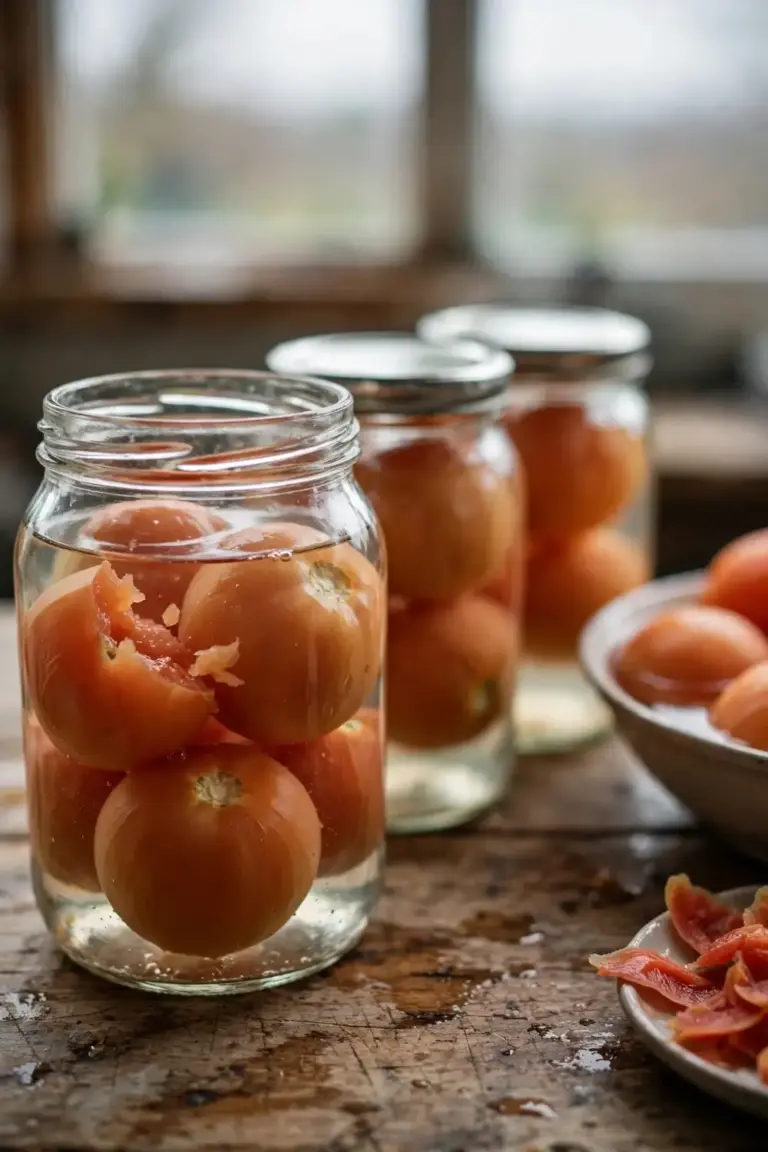
Work from the National Center for Home Food Preservation’s whole-tomato directions. An average of 21 pounds (9.5 kg) fills a canner load of 7 quarts, and an average of 13 pounds (5.9 kg) fills 9 pints. A bushel weighs 53 pounds (24 kg) and yields 15 to 21 quarts, an average of 3 pounds (1.4 kg) per quart. Wash the fruit, dip it in boiling water for 30 to 60 seconds until the skins split, then dip in cold water, slip off the skins, and remove the cores.
Acidify every jar. Pack raw or hot, cover with boiling water, and leave 1/2-inch (13 mm) headspace. Process pints for 40 minutes and quarts for 45 minutes in a boiling water bath at 0 to 1,000 feet (0 to 305 m). Tomatoes packed in juice, or packed raw without added liquid, need 85 minutes for pints or quarts at the same altitude.
Raw pack and hot pack both work. Raw pack fills hot jars with raw tomatoes and covers them with boiling water. Hot pack simmers the prepared tomatoes in a large pan with enough water to cover them, boils them gently for 5 minutes, then fills hot jars with hot tomatoes and cooking liquid. Hot pack drives out more air, so the jars sit fuller and the fruit floats less. Raw pack runs faster on a big day, and the fruit keeps a firmer bite.
3. Bottle Crushed Tomatoes for Soups and Stews
Bottle crushed tomatoes when the fruit is ripe and mixed in size. Crushed tomatoes suit soups, stews, and casseroles, where shape does not matter, and this way takes the fruit too soft for whole bottling and too mixed for passata.
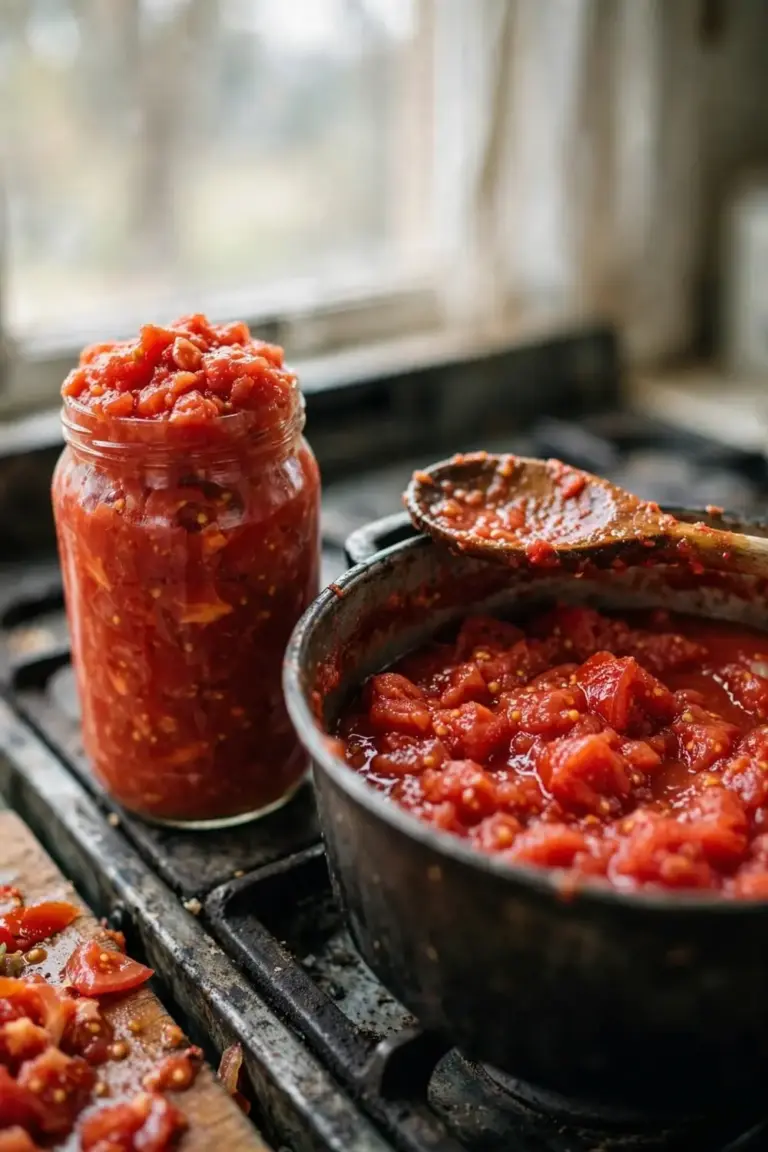
Work from the National Center for Home Food Preservation’s crushed-tomato directions. An average of 22 pounds (10 kg) fills a canner load of 7 quarts, and an average of 14 pounds (6.4 kg) fills 9 pints. A bushel weighs 53 pounds (24 kg) and yields 17 to 20 quarts of crushed tomatoes, an average of 2.75 pounds (1.2 kg) per quart. Wash, blanch, peel, and core the fruit, then quarter it. Heat one-sixth of the quarters quickly, crush them as they go in, and keep heating until all the fruit is added. Boil gently for 5 minutes.
Acidify every jar. Fill jars at once with hot tomatoes and leave 1/2-inch (13 mm) headspace. Process pints for 35 minutes and quarts for 45 minutes in a boiling water bath at 0 to 1,000 feet (0 to 305 m). Crushed tomatoes cool into a thick pack, so fill hot and work fast.
Crushed and passata differ in texture, not in fruit. Passata is sieved smooth. Crushed keeps the pulp and the body. Passata suits smooth sauces and soups that blend clean. Crushed suits chunky stews, chili pots, and slow-cooked dishes where the tomato stays visible. Bottle the way the winter pot cooks, and the jars open to the right texture.
4. Make Red Tomato Chutney
Make red tomato chutney when the fruit is ripe, soft, or overripe. Chutney is a vinegar preserve, and vinegar does the acid work that lemon juice does in bottled tomatoes. Overripe fruit that is too soft for bottling still suits chutney, as long as it is not moldy or spoiled.
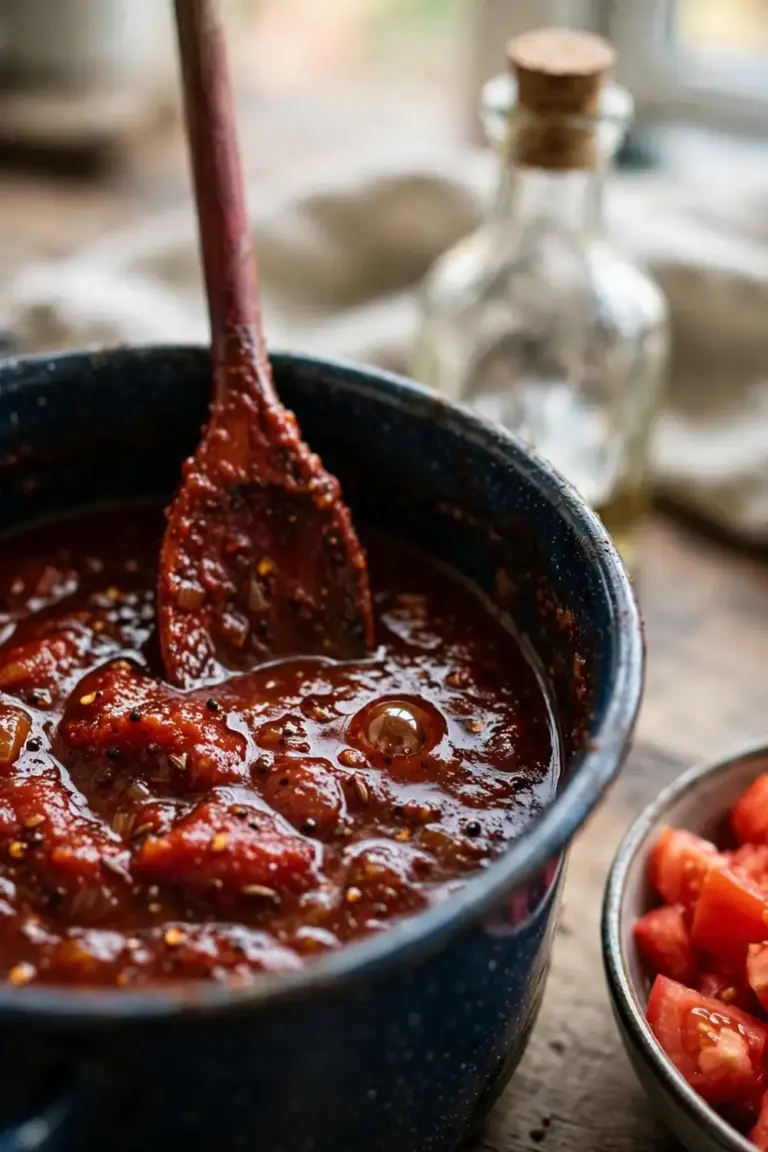
Work from a tested chutney method. Chutney methods vary in sugar, vinegar, spice, and processing time, so no single processing time covers them all. Pick a tested method from a university extension or the National Center for Home Food Preservation, and follow its jar size, headspace, and processing time exactly. A chutney method written for the fridge is a different product from a chutney method written for the shelf.
Refrigerate opened jars. Vinegar chutney keeps its character for months unopened when processed from a tested method, and it keeps in the fridge once opened. A jar with mold, off-odor, or a failed seal goes out, never back in the fridge.
Chutney is a cooked vinegar preserve. Vinegar, sugar, and spice cook with the fruit until the mix turns thick and glossy. The vinegar holds the acid line, and the sugar balances the sharp edge. Chutney mellows in the jar, so a jar opened a month after bottling tastes rounder than a jar opened the next day. Store sealed jars in a cool, dark cupboard, and label each jar with the fruit and the date.
5. Make Green Tomato Chutney
Make green tomato chutney at the end of the season. Green tomatoes carry more acid than ripe fruit, and they hold their shape in a vinegar preserve. A frost warning turns the last green fruit into chutney fruit.
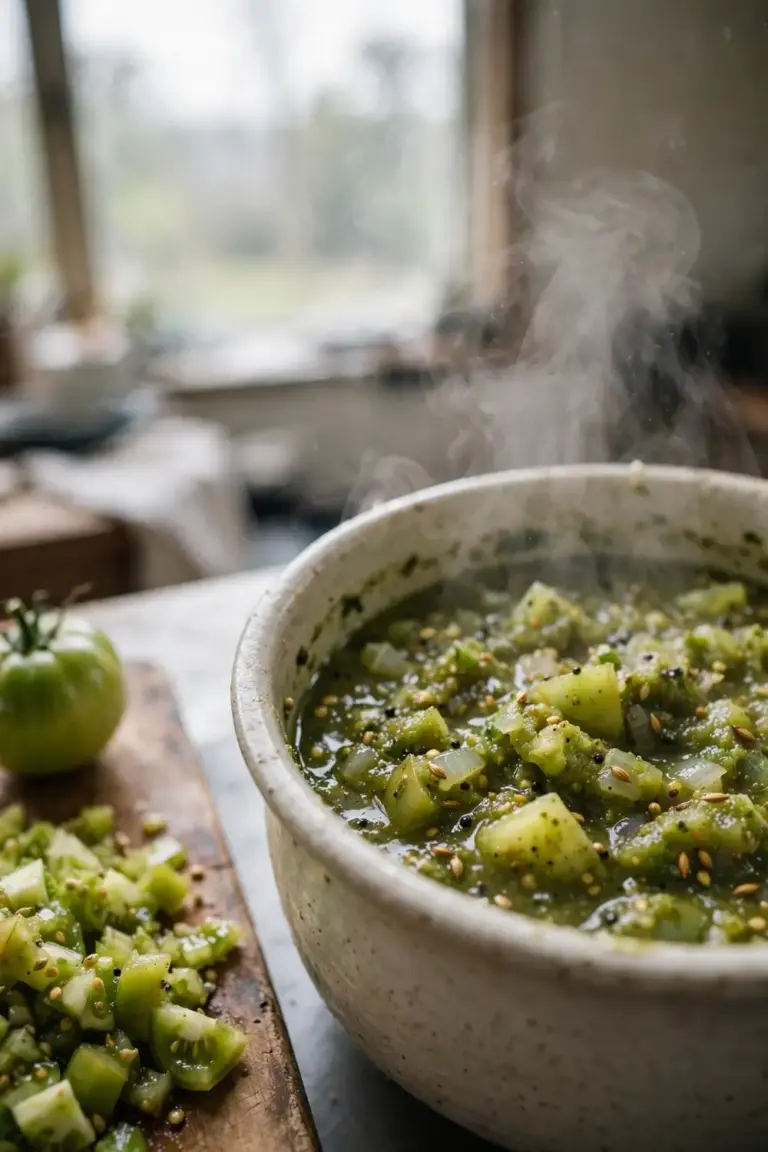
Work from a tested green-tomato chutney method. Green tomatoes are more acidic than ripened fruit, and they can be bottled safely with the tested method’s acid and processing rules. The same rule still applies: follow a tested method for jar size, headspace, and processing time. A green-tomato chutney method is not a red-tomato chutney method with the color swapped.
Skip fruit from dead or frost-killed vines. Frost-killed vines give fruit with unreliable acidity, and unreliable acidity has no place in a jar. Pick green fruit from living vines before the frost, or leave frost-hit fruit in the garden. The chutney pot takes sound green fruit, not frost-hit fruit.
Sort the green fruit before it goes in the pot. Firm, glossy green fruit cooks down firm and tangy. Fruit with soft spots, bruises, or mold goes to the compost. Wash the sound fruit, cut away the stem scar, and chop it even so the pot cooks through. A chutney pot full of uneven chunks cooks unevenly, and uneven cooking leaves hard pieces in a soft mix.
6. Freeze Tomato Sauce
Freeze tomato sauce when the glut outruns the bottling pot. Freezing needs no acid, no processing time, and no altitude table. Sauce goes from pot to freezer bag in one afternoon.
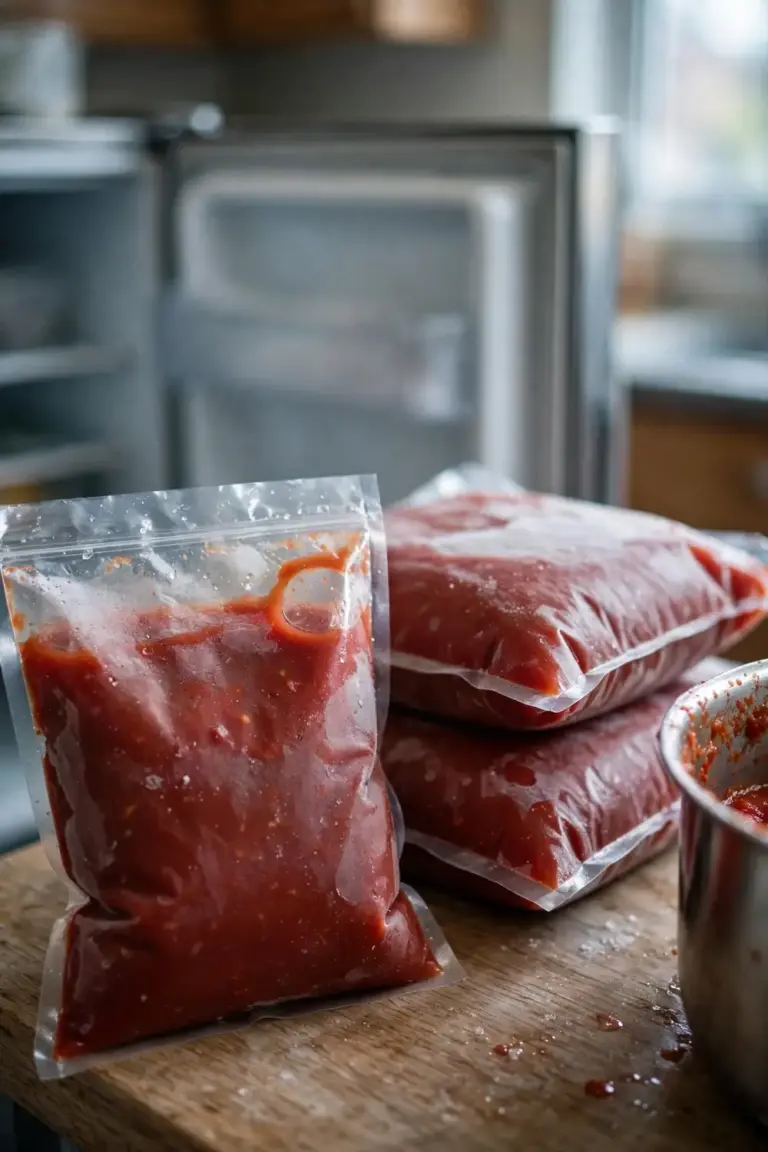
Cook the sauce down first. Quarter ripe tomatoes, crush, simmer, and sieve out skins and seeds. Simmer the sieved juice until it thickens. Cool the sauce before it goes in the freezer. Hot sauce melts frost off the walls and warms its neighbors.
Leave headspace. Sauce expands as it freezes, and a full bag splits. Freeze sauce flat in bags for fast thawing, or in rigid containers for stacking. Label each bag with the date. Frozen sauce suits pasta, soup, and stew all winter.
Thaw in the fridge overnight. A flat bag thaws by morning, and a thick block takes a day. Reheat thawed sauce to a full simmer before serving. Refreezing thawed sauce dulls the flavor, so thaw only the bag the pot needs. A bag that thawed warm on the bench, or sat in the fridge for days, goes out.
7. Freeze Whole Tomatoes
Freeze whole tomatoes when time is short. Freezing whole fruit is the fastest way on this page. The fruit loses its fresh texture, so frozen tomatoes suit cooked dishes, not salads.
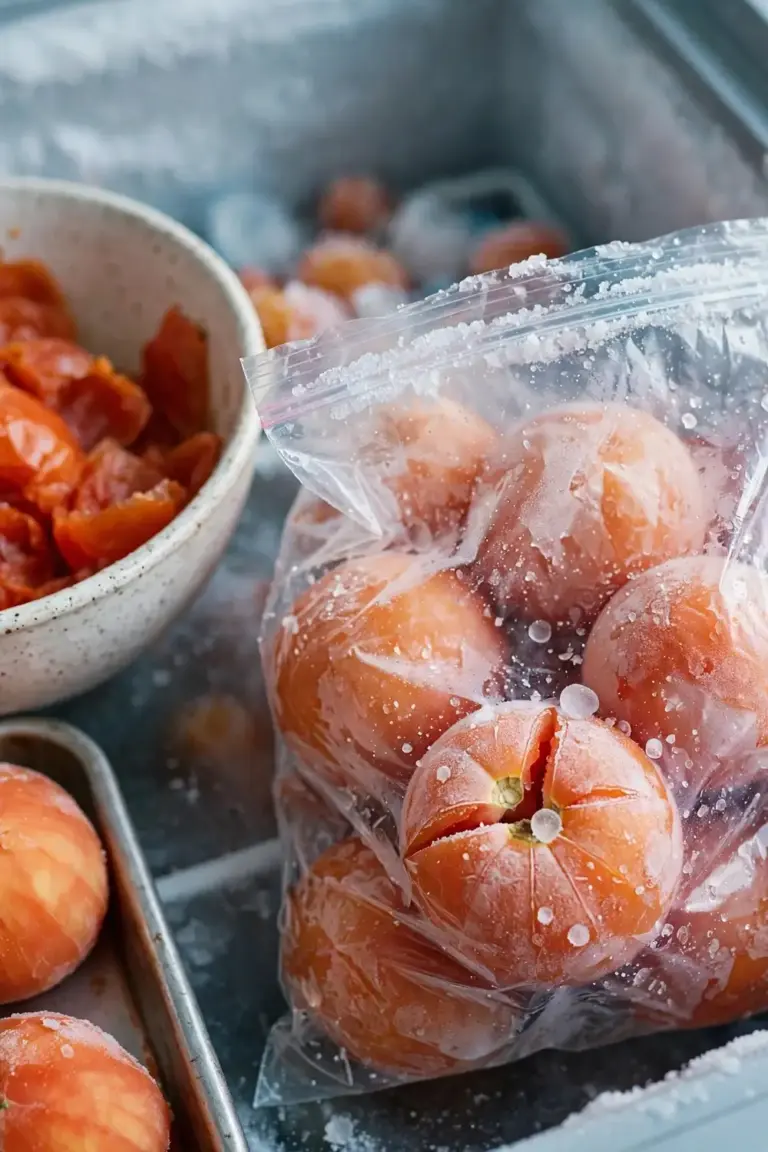
Blanch to slip the skins. Colorado State Extension’s how-to-use-tomatoes guide tells readers to clean tomatoes and dip them in boiling water for 30 to 60 seconds to loosen skins, then cool in ice water, drain, peel, core, and cut the tomatoes into pieces of the desired size for freezer bags or containers. Skins come off clean after the dip, and the fruit freezes without them.
Cut tomatoes keep in the fridge for 3 to 4 days, per the same guide. Freeze the rest the same day. Frozen tomatoes thaw soft and wet, which suits a sauce pot and ruins a salad plate. Plan the thaw for cooking, not for slicing.
8. Dry Tomatoes in a Dehydrator
Dry tomatoes when the fruit is meaty and low in water. Roma types dry best. Dried tomatoes pack small, keep without power, and drop into pasta, bread, and salads through winter.
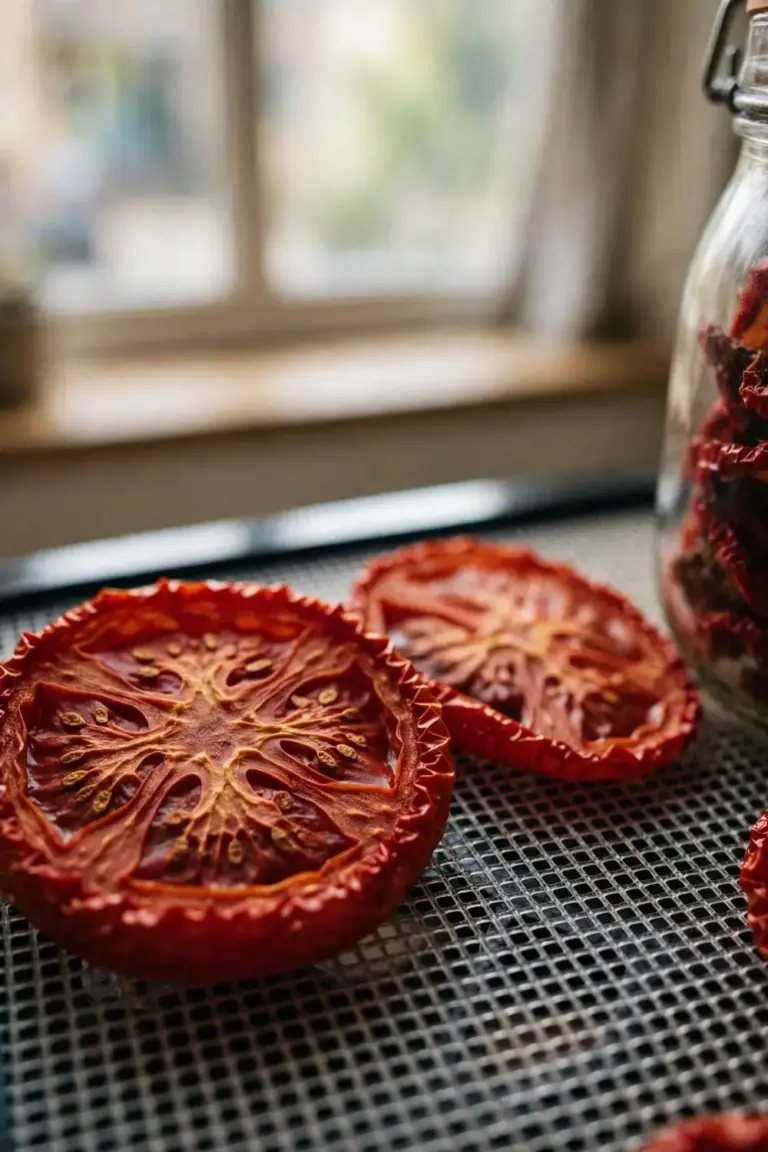
Dry at 140 degrees Fahrenheit (60 degrees Celsius). The National Center for Home Food Preservation’s vegetable leather directions dry tomato leather at 140 degrees Fahrenheit. Tomato leather starts with ripe tomatoes, cored and quartered, cooked over low heat in a covered pan for 15 to 20 minutes, then sieved and cooked until thickened, then spread and dried at 140 degrees Fahrenheit. Slices dry at the same temperature.
Condition before storage. The National Center for Home Food Preservation’s drying guidance tells readers to condition dried produce for 7 to 10 days in loosely packed jars, shaking daily, and to re-dry any batch that shows moisture or condensation. Squeeze a cooled slice. No moisture should show. Pack fully dry tomatoes in airtight jars or bags, and store them cool, dark, and dry.
9. Ferment Tomatoes in Brine
Ferment tomatoes when the fruit is small, firm, and sound. Fermentation is live preservation: salt and lactic acid bacteria do the work, and the jar stays in the fridge. Fermented tomatoes taste tangy and bright, and they suit salads and grain bowls.
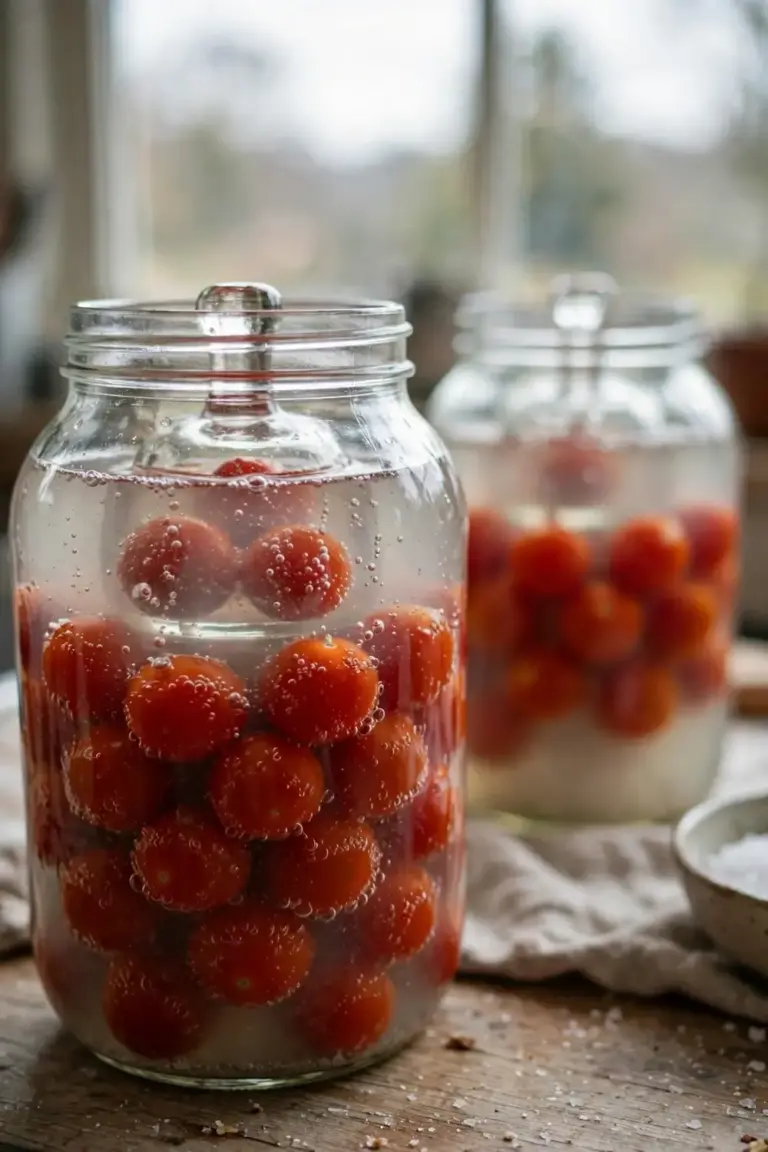
Salt by weight. The National Center for Home Food Preservation’s fermented-foods guidance works on about 2 percent salt by weight for vegetable ferments: 20 grams of salt per 1,000 grams of vegetables. Weigh the salt. Spoon measures vary with grain size, and salt concentration decides whether the ferment stays safe.
Keep everything submerged. Brine must cover every piece, and a weight holds the fruit down. Fruit above the brine molds. Fermentation does not make tomatoes shelf-stable. Fermented tomatoes live in the fridge, and they keep weeks there, not months. Work from a tested ferment method, and discard any batch with rot, slime, or a putrid smell.
Taste as the ferment runs. A ferment that bubbles gently and smells clean and sour is working. A ferment that smells putrid, grows pink or black mold, or turns slimy has failed, and that batch goes out. Taste with a clean spoon. Never return a tasted spoon to the jar. When the tang suits the table, move the jar to the fridge, where cold slows the ferment to a crawl and the flavor holds.
10. Cook Tomatoes Down to Paste
Cook tomatoes down to paste when the fruit is meaty and the pot is big. Paste is sauce cooked further, until it holds its shape on a spoon. A spoonful of paste seasons a whole pot of soup.
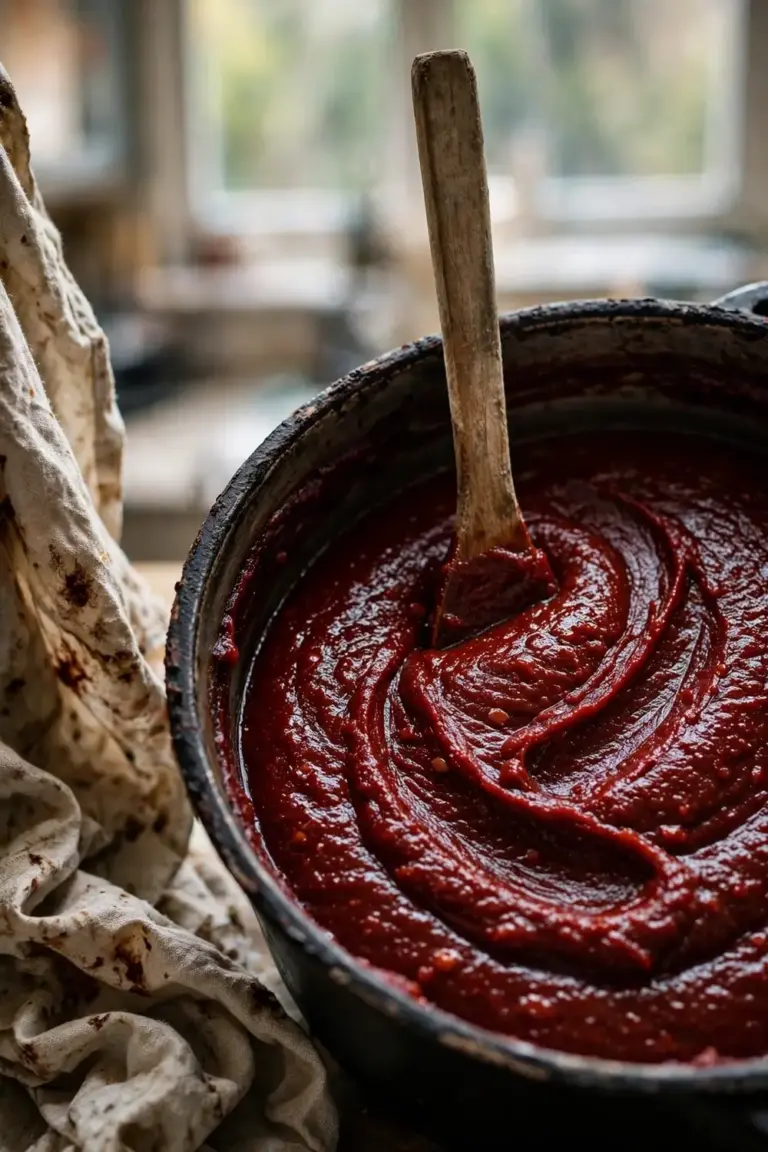
Simmer sieved pulp on low heat. Stir often. Paste scorches where it sits still, and scorched paste tastes burnt through the whole batch. Stop when the pulp turns deep red and thick. The pot takes hours, so start early and keep the heat low.
Freeze paste in portions. Spoon paste into ice-cube trays, freeze solid, then move the cubes to a bag. A cube or two seasons a pot. Bottling paste needs a tested method of its own, and sauce times do not transfer to paste. Freeze the paste unless a tested paste method is in hand.
Paste and sauce differ in water, not in fruit. Sauce pours. Paste holds its shape on a spoon and leaves a trail on the pot wall. The same pulp turns from sauce to paste as water leaves, so a sauce pot left on low heat becomes a paste pot with time and stirring. Stop at paste, and the jar holds concentrated flavor in a small space.
11. Pickle Cherry Tomatoes in Vinegar
Pickle cherry tomatoes when the fruit is small, firm, and whole. Pickling is a vinegar preserve, like chutney without the long simmer. Cherry tomatoes hold their shape in vinegar and turn tangy in the jar.
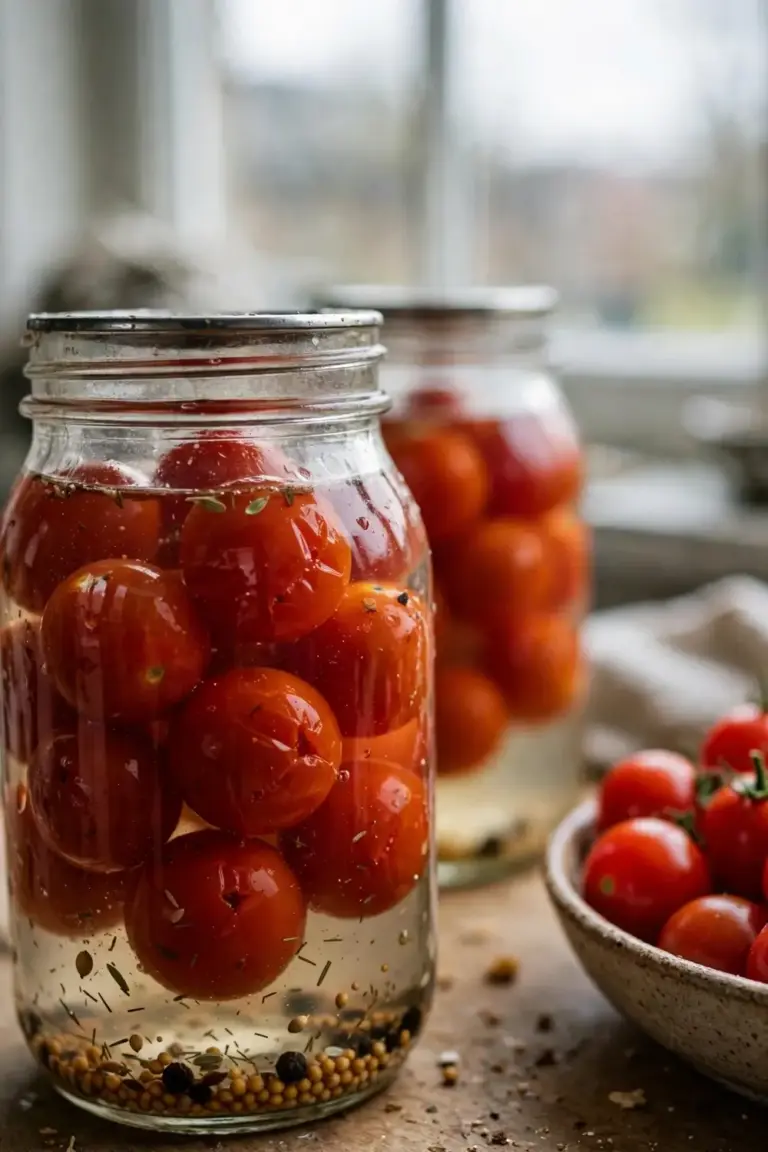
Work from a tested pickle method. Vinegar strength, jar size, and processing time all come from the tested method. A pickle method written for the fridge is a different product from a pickle method written for the shelf. Follow the tested method for processing time and headspace, and never guess either number.
Refrigerate fridge pickles. Shelf-stable pickles need a tested method and a full processing run. A jar with mold, off-odor, or a failed seal goes out. Pickled cherry tomatoes suit salads, cheese plates, and grain bowls straight from the jar.
Prep the cherry fruit before it meets the vinegar. Wash each tomato, pull the stem, and prick the skin once with a clean toothpick. The prick lets vinegar in, so the pickle reaches the center instead of sitting on the skin. Pack the fruit tight enough to hold its place, and cover it fully with hot vinegar. A tomato above the vinegar line pickles unevenly and spoils first.
Preserve Tomatoes Safely: Acidity, Processing, and Storage
Acidify every bottled jar. Tomatoes sit near the line between acid and low-acid foods, so the tested methods add acid to every jar. The National Center for Home Food Preservation’s canning tomatoes introduction sets the rule: add two tablespoons of bottled lemon juice or 1/2 teaspoon of citric acid per quart of tomatoes, and four tablespoons of 5 percent acidity vinegar per quart may stand in for lemon juice or citric acid, though vinegar may change the flavor. For pints, use one tablespoon of bottled lemon juice or 1/4 teaspoon of citric acid.

| Jar | Bottled Lemon Juice | Citric Acid | 5 Percent Vinegar |
|---|---|---|---|
| Pint | 1 tablespoon | 1/4 teaspoon | 2 tablespoons |
| Quart | 2 tablespoons | 1/2 teaspoon | 4 tablespoons |
Use bottled lemon juice, not fresh-squeezed. Bottled juice holds a steady acidity. Fresh juice varies, and varying acidity has no place in a tested method. Add the acid straight to each jar before filling, so every jar gets its dose. Sugar may soften an acid taste, but the acid dose never drops to taste.
I have learned that the jar I acidify by the book outlasts the jar I season by taste. The book dose is the safety line, and the book dose stays.
Process by the tested method. Boiling water bath times and pressure canner times come from the tested method, and altitude changes them. At altitude, process longer or at higher pressure per the tested method’s altitude table. Never can tomatoes from dead or frost-killed vines. Never bottle spoiled or frost-damaged fruit. Cool jars undisturbed, check each seal, and refrigerate any jar that failed to seal. Colorado State Extension’s preservation notes tell readers to discard without tasting any canned tomatoes with off-odors. A jar that smells wrong goes out untasted.
Store sealed jars cool, dark, and dry. A pantry shelf away from the stove suits bottled tomatoes, since heat fades color and thins flavor while damp shelves rust lids. Label every jar with the method and the date. A jar with a loose lid, a bulging lid, a broken seal, or seeping liquid goes out untasted. When in doubt, throw it out.
Frequently Asked Questions About Preserving Tomatoes

No. Tomatoes sit near the line between acid and low-acid foods, and some ripe tomatoes fall on the low-acid side. The tested methods add bottled lemon juice, citric acid, or vinegar to every jar to hold safe acidity. Fresh-squeezed juice varies in acidity, so bottled juice is the safe choice. Skip the acid, and the jar is not safe for the shelf.
Blanching loosens the skins, and skins slip off clean after a 30 to 60 second dip in boiling water. Freezing without blanching still works for cooking use, but the skins stay on and turn tough in the pot. Blanch, peel, core, and cut the fruit before it goes in freezer bags. Frozen tomatoes suit cooked dishes, not salads.
Dried tomatoes keep months in a cool, dark, dry spot when fully dry and conditioned. Condition dried tomatoes for 7 to 10 days in loosely packed jars, shaking daily, and re-dry any batch that shows moisture or condensation. Pack fully dry tomatoes in airtight jars or bags. Damp tomatoes mold, so dryness decides storage life.
Yes. Fermentation does not make tomatoes shelf-stable. Fermented tomatoes live in the fridge, where they keep weeks, not months. Keep the fruit submerged under brine, and discard any batch with rot, slime, or a putrid smell. Work from a tested ferment method, and weigh the salt by the tested method’s ratio.
Yes, from a tested method. Cherry tomatoes bottle whole, and small fruit suits pickling and drying too. Follow the tested method for jar size, headspace, acid dose, and processing time. Cherry tomatoes from dead or frost-killed vines stay out of the jar. Sound fruit from living vines bottles fine.
Start With One Batch This Weekend
Start with one batch this weekend. Pick the method that matches the fruit on the bench. Bottle a load of passata, freeze a bag of sauce, or dry a tray of slices. One batch teaches the rhythm, and the next batch runs faster.
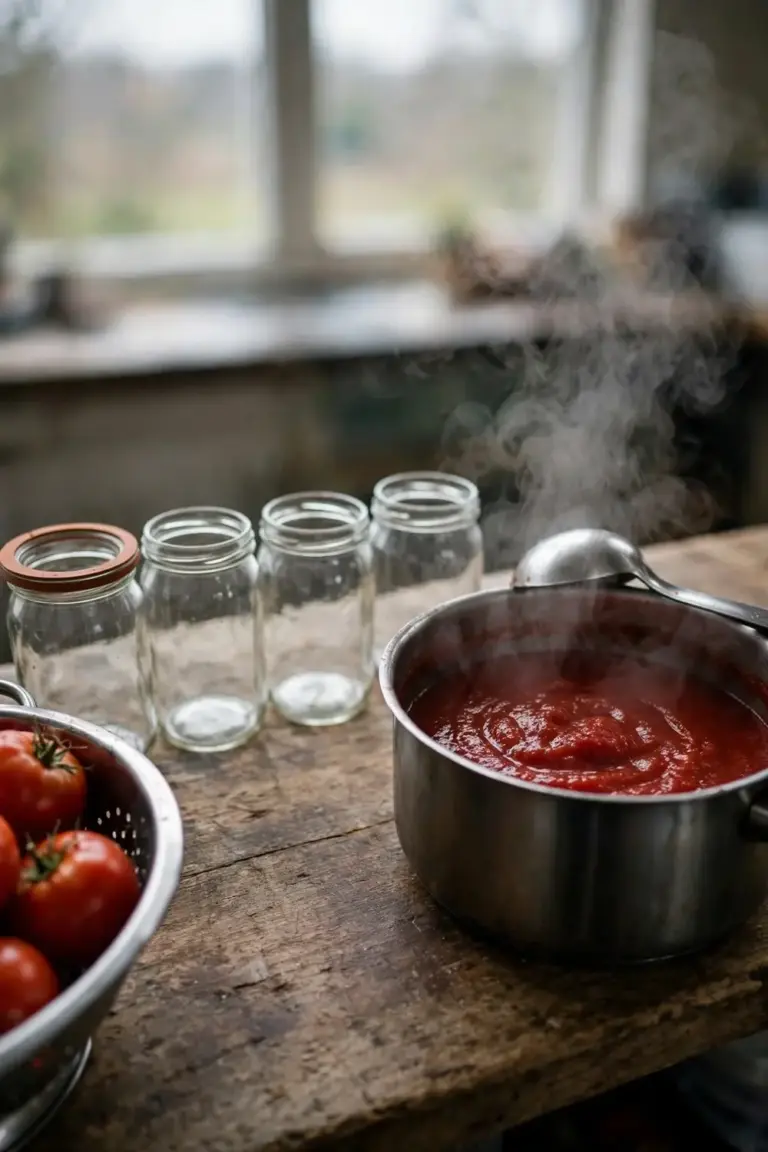
Rotate the shelf through winter. Eat the oldest jars first, and check lids each time a jar comes off the shelf. A jar that lost its seal, a jar with a bulging lid, and a jar with seeping liquid all go out untasted. A full shelf earns its keep only when every jar on it is sound.
Next season starts with seed and soil. Seed starting steps cover the tomato crop from sowing to transplant, and building soil health covers the bed that feeds it. A strong plant grows the glut that fills next year’s jars.