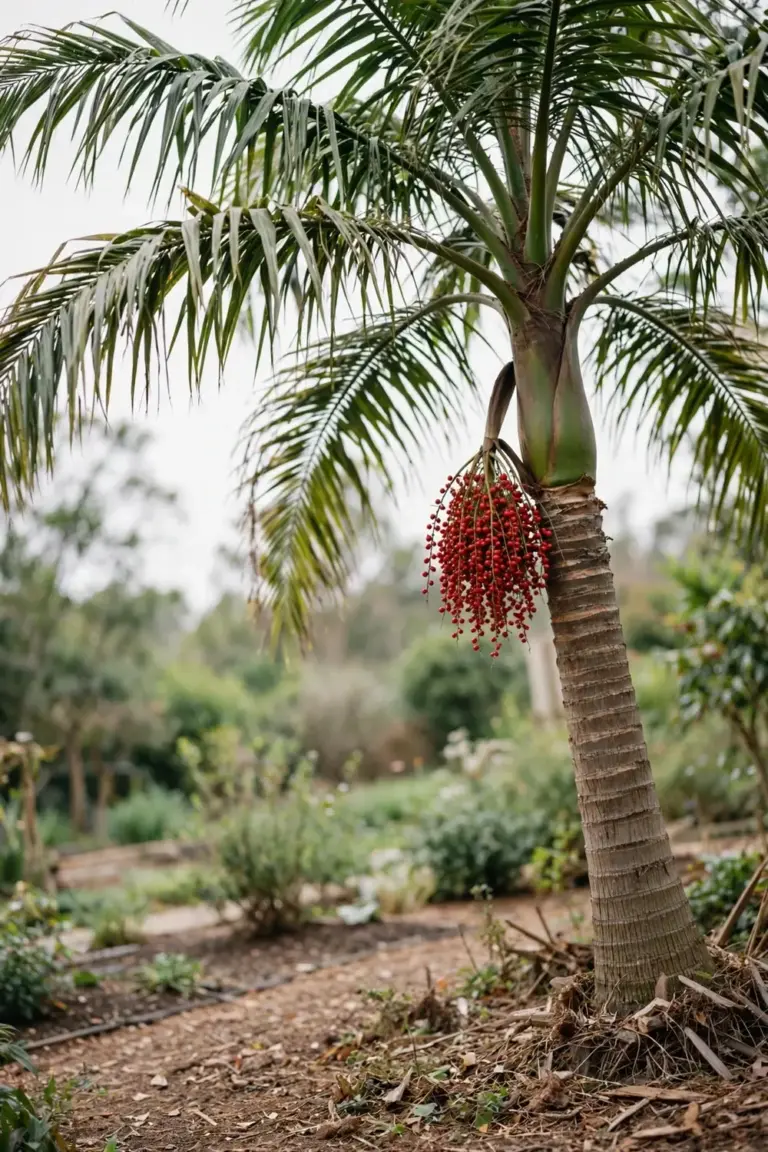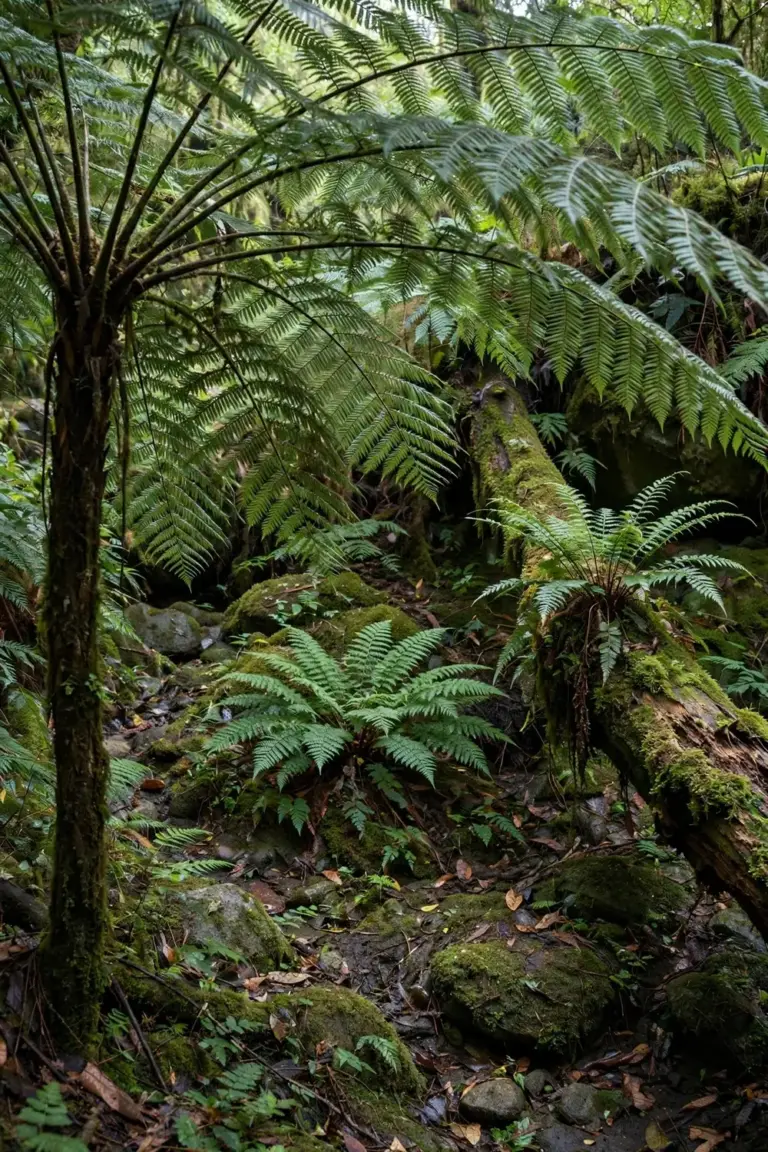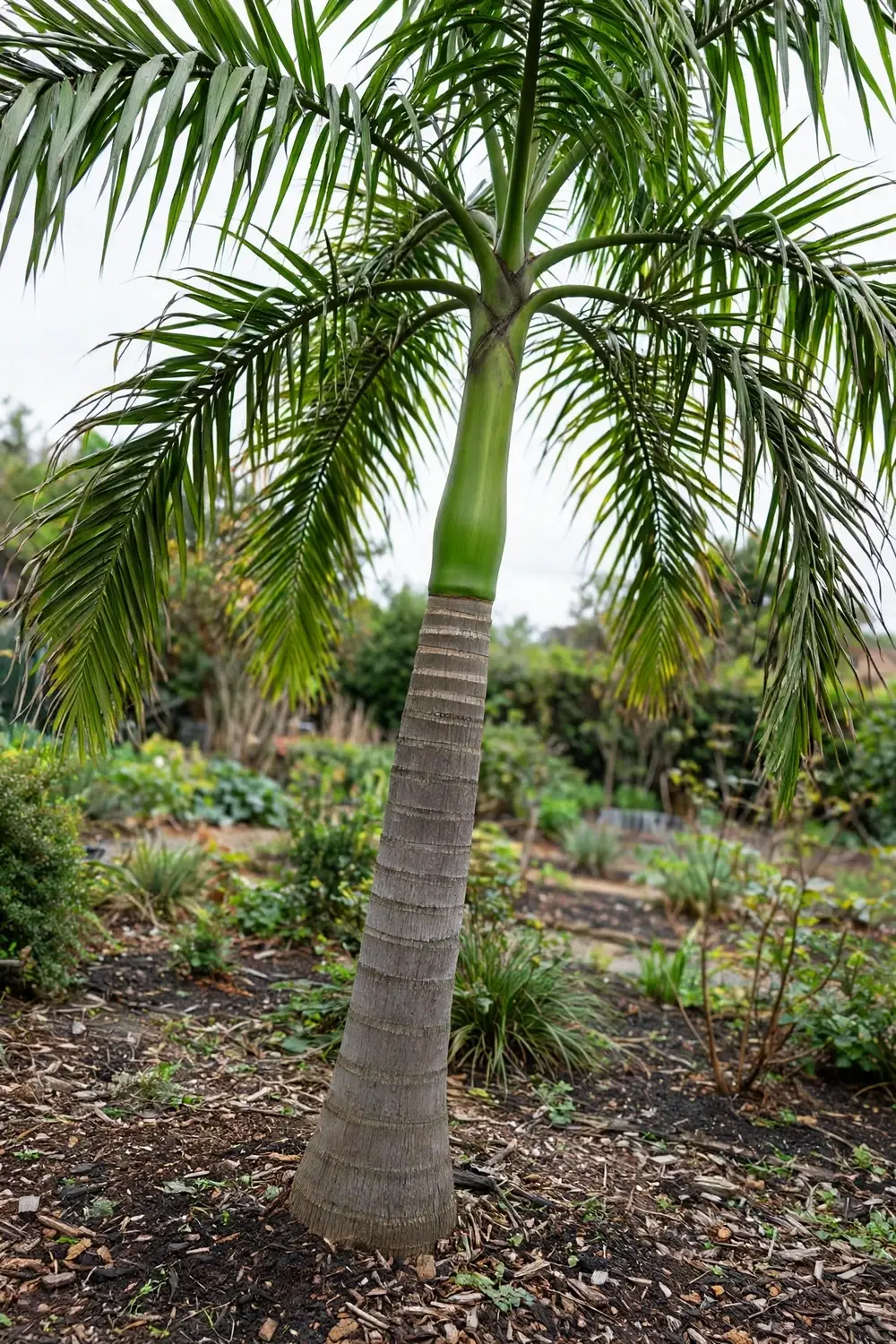

Name any palm in Australia from 5 clues together: frond shape, trunk, crownshaft, leaf detail, and fruit. One clue misleads. Five clues together name the palm. That is palm identification in Australia.
A feather-fronded palm could be a Kentia, a Bangalow, an Alexandra, or a queen palm. A fan-fronded palm could be a cabbage-tree palm, a Chinese windmill palm, or a Licuala. The frond alone never settles it. The trunk, the crownshaft, the leaf underside, and the fruit close the gap.
I have learned that the palm I name from its fronds, trunk, crownshaft, leaf, and fruit together beats the palm I name from a single photo of its crown.
1. Start With the 5 Clues, Never One Alone
The 5 clues name a palm. Frond shape splits the field first, trunk habit narrows it next, and crownshaft presence or absence splits the feather palms. Leaf detail separates the close pairs. Fruit confirms the name.
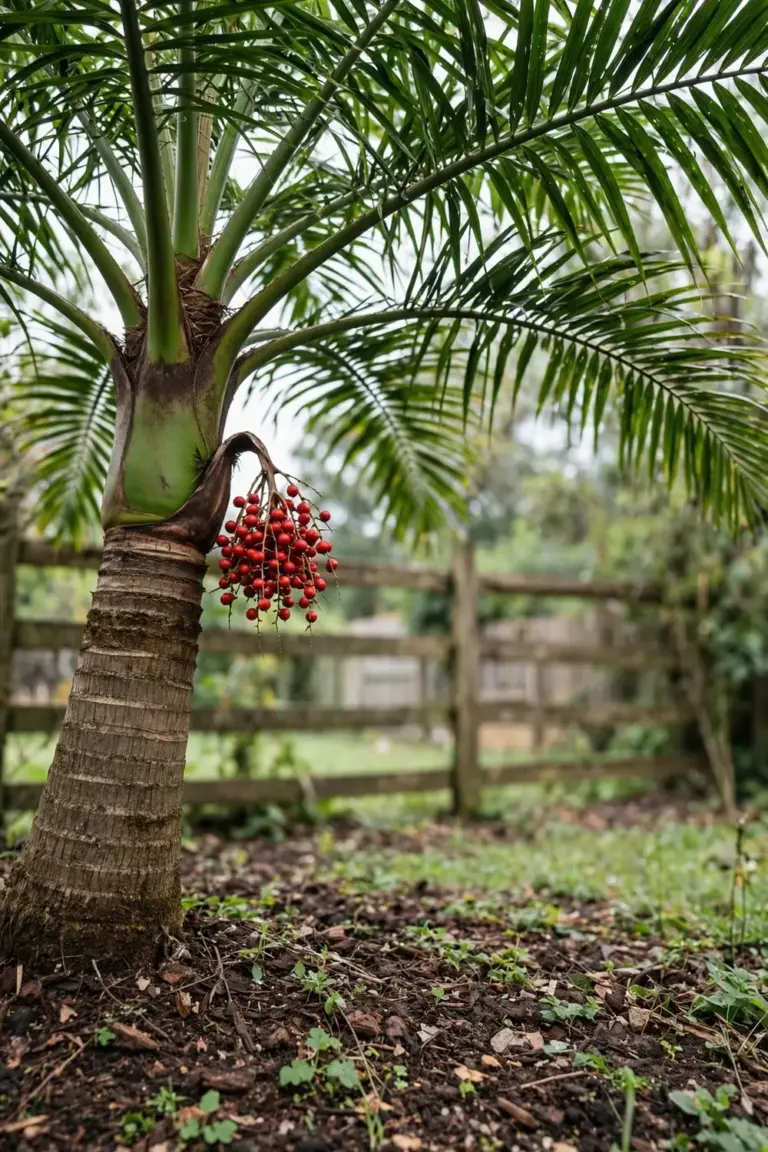
One clue fails because palms share traits across genera: Kentia and Bangalow both carry feather fronds, cabbage-tree palm and Chinese windmill palm both carry fan fronds, and golden cane and lady palm both cluster. The split that separates each pair sits in a different clue.
Run the clues in order: frond first, trunk second, crownshaft third, leaf fourth, fruit fifth. A palm that matches all five earns its name. A palm that matches four still needs one more look.
2. Run the 5-Clue Palm Identification Key: Frond, Trunk, Crownshaft, Leaf, Fruit
The key below runs the five clues in the order that cuts the field fastest. Start at the top. Answer each row before moving to the next.
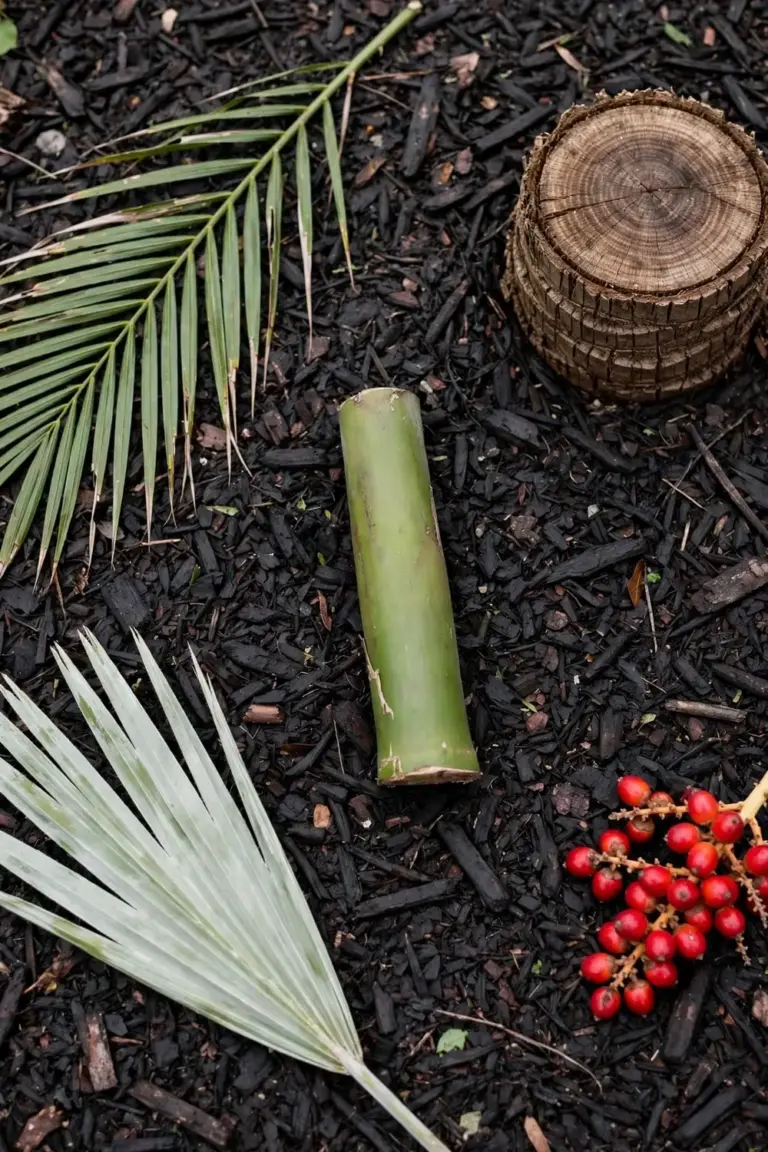
| Clue | What to Look At | What It Separates |
|---|---|---|
| Frond | Fan, feather, or in-between shape | Fan palms from feather palms |
| Trunk | Single stem or clustering stems | Solitary palms from clustering palms |
| Crownshaft | Smooth green column below the crown, present or absent | Crownshaft feather palms from non-crownshaft feather palms |
| Leaf | Leaflet fold, petiole spines, underside color | Close pairs inside one genus or one frond type |
| Fruit | Color, size, cluster shape, where the stalk sits | Final confirmation, plus native from introduced |
The table works as a filter. Each row removes candidates. A feather-fronded palm with a crownshaft and red fruit sits in a small group. A fan-fronded palm with a single trunk and spiny petioles sits in another. The fruit row closes the key.
The table rewards patience. A rushed key names the wrong palm. A slow key names the right one.
Photograph each clue as you run it, because a crown photo alone will not carry the key. A frond close-up, a trunk shot, a crownshaft shot, a leaf-underside shot, and a fruit-cluster shot will.
Run the key twice on a hard palm. The first pass narrows the field. The second pass checks the one clue you skipped or guessed. A palm that survives two passes earns its name. A palm that fails the second pass needs one more photo, usually of the fruit or the leaf underside, the two clues readers skip most.
3. Split Fan Fronds From Feather Fronds First
The frond split is the first cut. Feather fronds carry leaflets separated from each other along a central stalk. Fan fronds carry segments joined for some or most of their length, spreading from one point at the tip of the stalk.
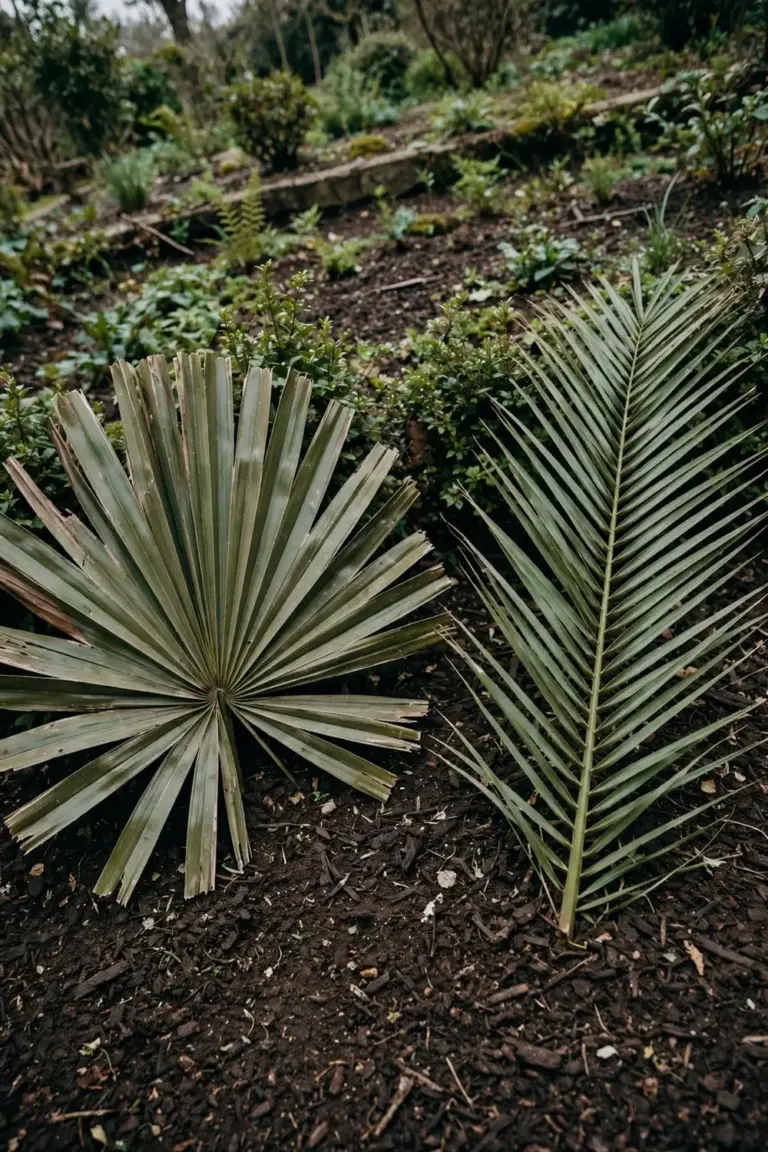
Botanists name three frond shapes. Pinnate fronds are feather-like, with leaflets attached along the rachis, the extension of the stalk into the blade. Palmate fronds are fan-like, with segments joined laterally and spreading from a single point, often with a small flap called a hastula where blade meets stalk. Costapalmate fronds sit between the two, with a rounded blade and segments attached along a costa, an extension of the stalk into the blade. Palm leaf structure, University of Florida IFAS Extension
The same IFAS notes give the standard examples. Coconut, queen, and date palms carry pinnate fronds. Mexican fan palm, windmill palm, and sugar palms carry palmate fronds. Sabal species carry costapalmate fronds. Those examples anchor the three shapes.
Saw palmetto is a fan palm with a different habit from the tall fan palms in this key. It grows low and spreading, and its fan fronds sit on spiny stalks. The frond shape matches the fan group, while the habit marks it apart. A saw palmetto guide treats it as a low, clumping fan palm, not a tall single-trunk tree. That habit split keeps it out of the cabbage-tree group even though the frond shape matches.
4. Read the Trunk: Single Stem or Clustering
The trunk split is the second cut. A palm carries one stem or many. A single-stemmed palm keeps one trunk for life. A clustering palm sends up several stems from the base, so the plant reads as a clump.
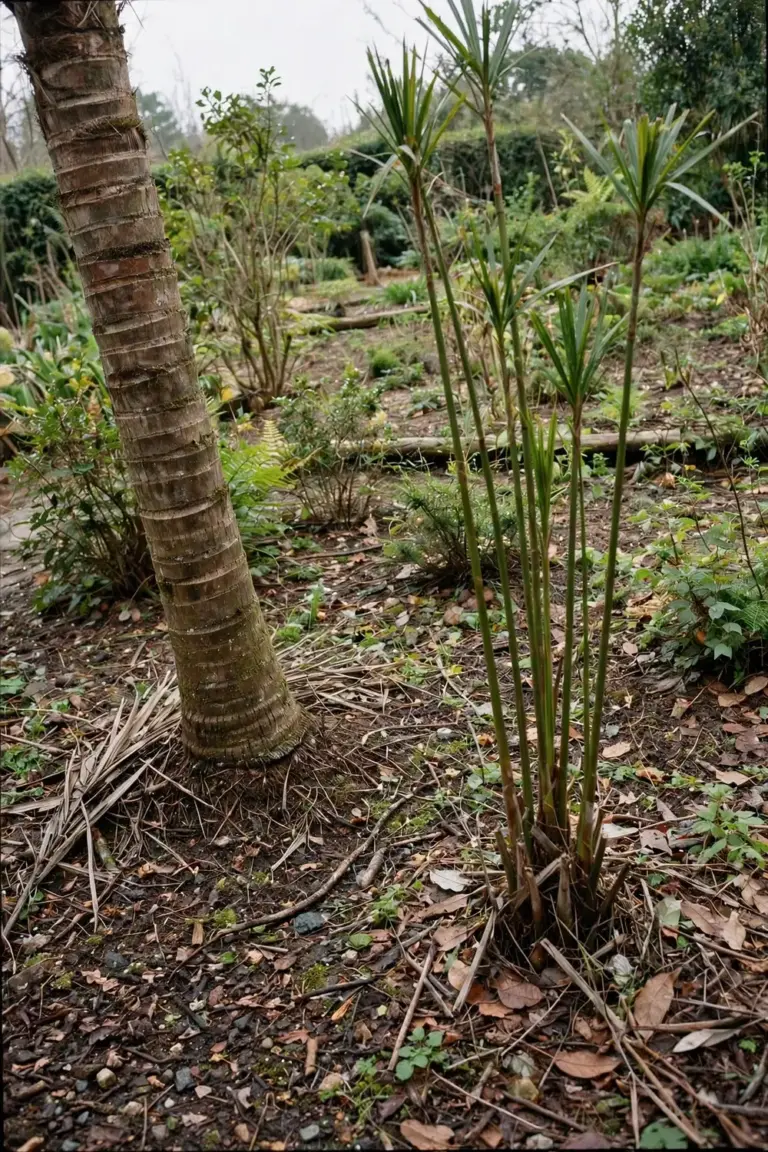
Trunk scars record the crown. Each fallen frond leaves a scar ring on the trunk. Ring spacing reads as growth history, not age in years. A palm trunk shows no annual rings. Palms are monocots, and they lay down no yearly wood ring the way a eucalypt or an oak does. Trunk diameter is set early and stays near that width.
A skirt of dead fronds hangs on some palms. Cabbage-tree palm holds its dead fronds in a skirt below the living crown. Other palms shed dead fronds cleanly. The skirt is an ID trait, not neglect. A swollen trunk base marks other palms. Bangalow often shows a slight bulge at the base. A trunk that leans, forks, or branches is not a palm at all, since palms never branch above ground.
Read the trunk base before the trunk shaft. A swollen base, a ring of old leaf bases, and a skirt line each carry signal. The base tells you whether the palm suckers, whether it held its dead fronds, and whether the trunk diameter stayed steady. A trunk that narrows sharply above the base points to a palm that lost its crown and regrew, a rare sight that usually marks a damaged specimen rather than a species trait.
5. Check the Crownshaft: Present or Absent
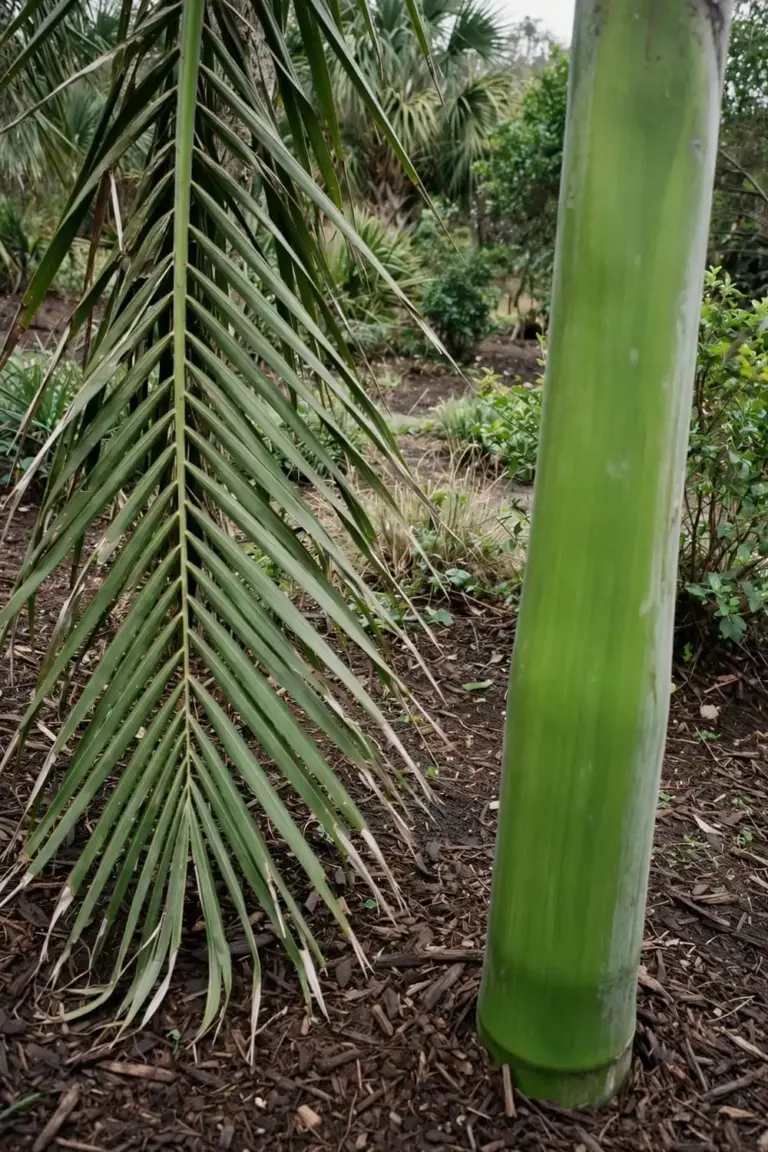
The crownshaft split is the third cut. A crownshaft is a smooth green column below the crown, formed by wrapped leaf sheaths. It looks like a polished green tube sitting on top of the trunk. It is present or absent. There is no halfway state.
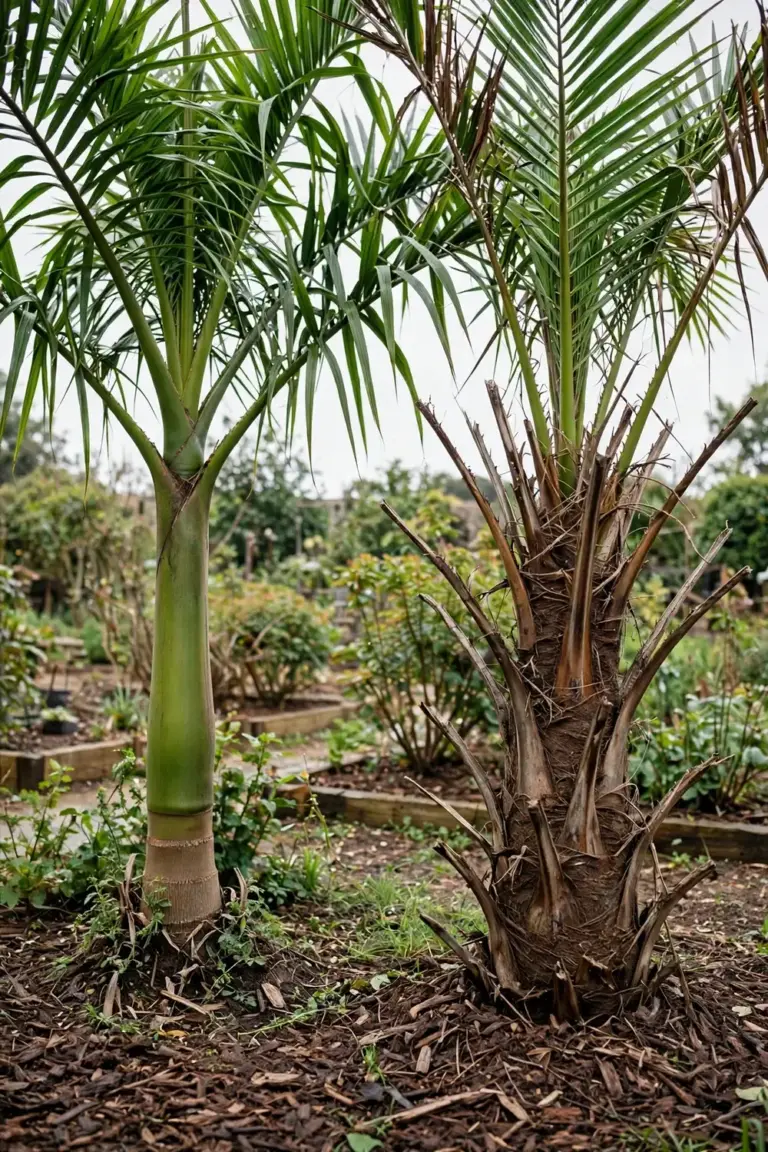
Crownshaft palms carry feather fronds. Bangalow, Alexandra, and golden cane all show a crownshaft. Their fronds emerge from the top of the column. Their flower stalks emerge from the base of the column. The crownshaft color runs green to purple-green in Bangalow.
Palms without a crownshaft show bare leaf stalks where the fronds meet the trunk. Kentia shows no crownshaft. Cabbage-tree palm shows no crownshaft. Chinese windmill palm shows no crownshaft. The frond stalks attach directly, and the flower stalks emerge between the leaf stems. A feather palm with no crownshaft sits in the Kentia group. A feather palm with a crownshaft sits in the Bangalow group.
North Queensland carries more crownshaft palms than the south. Carpentaria palm and black palm both show crownshafts, and both grow in far north Queensland rainforest country. A crownshaft palm in Cairns sits in a wider candidate set than a crownshaft palm in Sydney. The crownshaft narrows the field, and the setting narrows it further.
6. Read the Leaf Details: Leaflets, Spines, Underside
Leaf detail splits the close pairs. Start with the leaflet fold. Leaflets fold into a V shape with the midrib lower than the margins, or into an inverted V with the midrib raised. The fold direction holds steady within a species, and it separates palms that share frond shape and trunk habit.
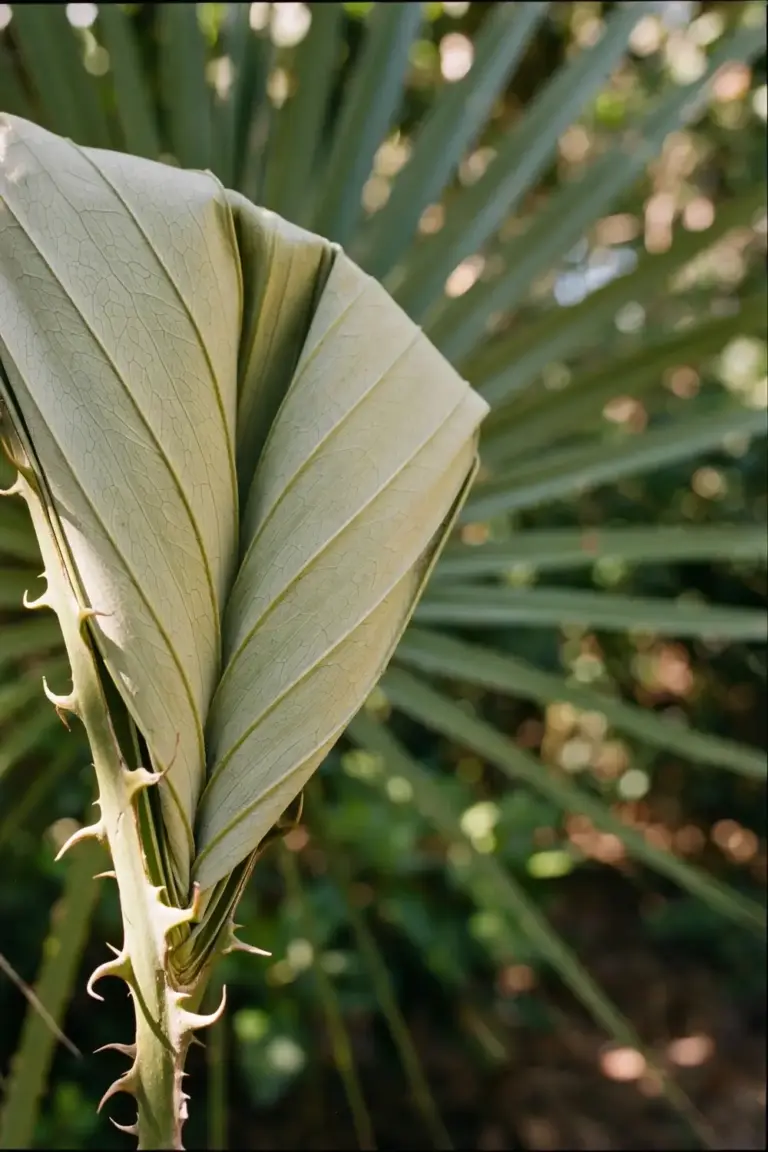
Petiole spines mark the fan palms. Cabbage-tree palm carries recurved spines along the petiole, mostly toward the base. The spines are stiff and hook-shaped. A fan palm with a smooth petiole is not a cabbage-tree palm. A fan palm with a hairy, fibrous petiole points toward Chinese windmill palm.
Underside color splits Bangalow from Alexandra. Bangalow leaflets run dark glossy green above and lighter green beneath. Alexandra leaflets run silvery beneath, a trait the ANBG native palm notes use to separate the two. Foxtail palm breaks the feather pattern outright. Its leaflets spring from all sides of the stalk, so the frond reads as a bottlebrush tail rather than a flat feather. That plumose frond names a foxtail palm at a glance.
7. Read the Flowers and Fruit: Color, Size, Cluster Shape
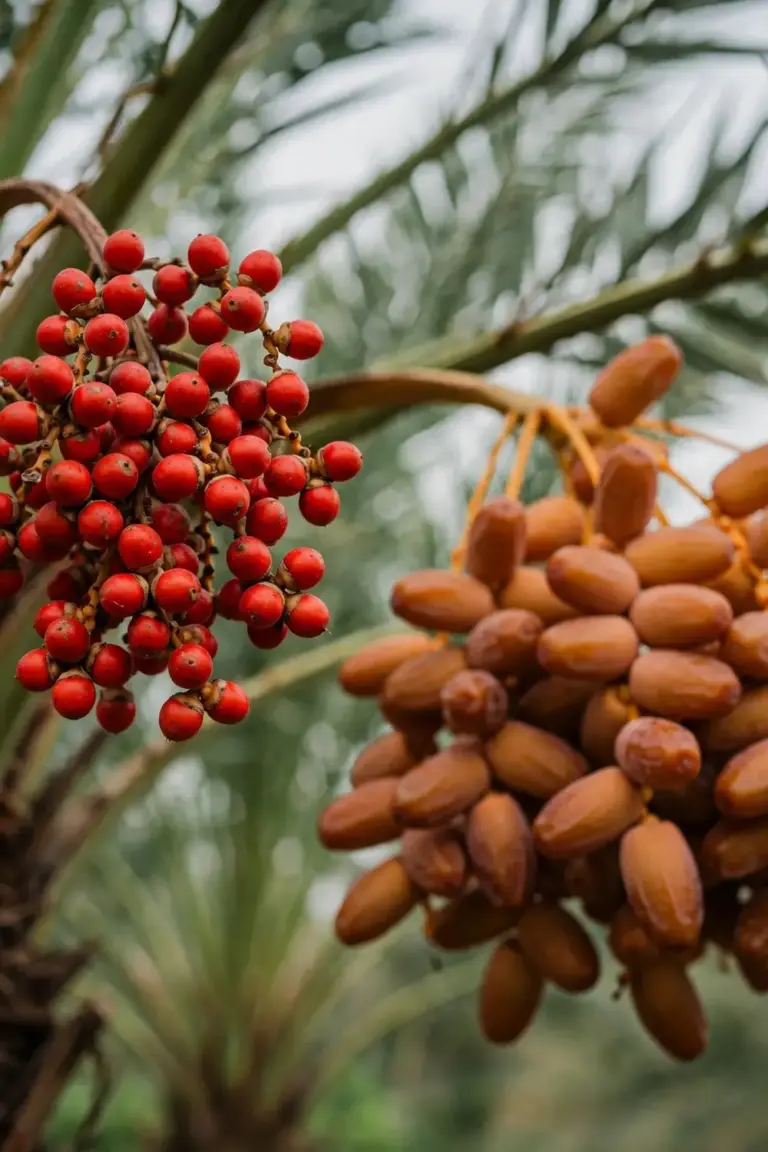
Fruit confirms the name. Color, size, and cluster shape each carry signal. Red fruit points toward Bangalow and Alexandra. Black fruit points toward Kentia. Orange-brown dates point toward Canary Island date palm. The same PlantNET notes that describe cabbage-tree palm give its fruit as globose, red turning black, and small.
Flower stalk position carries signal too. On a crownshaft palm, the flower stalk emerges from the base of the crownshaft. On a palm without a crownshaft, the flower stalk emerges between the leaf stems. A stalk that sits below the crown marks a crownshaft palm even when the crownshaft itself is hard to see.
Queen palm is not a coconut palm. Queen palm is Syagrus romanzoffiana, a feather palm with orange fruit in hanging clusters. Coconut palm is Cocos nucifera, a feather palm with large brown nuts. The trade name “Cocos palm” belongs to queen palm, and it causes the confusion. Fruit size settles it. A queen palm fruit fits in a palm. A coconut does not.
8. Read the Size and Setting: Habit, Height, Where It Grows
Size and setting narrow the field. A palm in a rainforest gully in north Queensland sits in a different candidate set from a palm on a Sydney nature strip. A palm in a garden bed sits in a different set again. Setting never names a palm alone, and it always narrows the list.
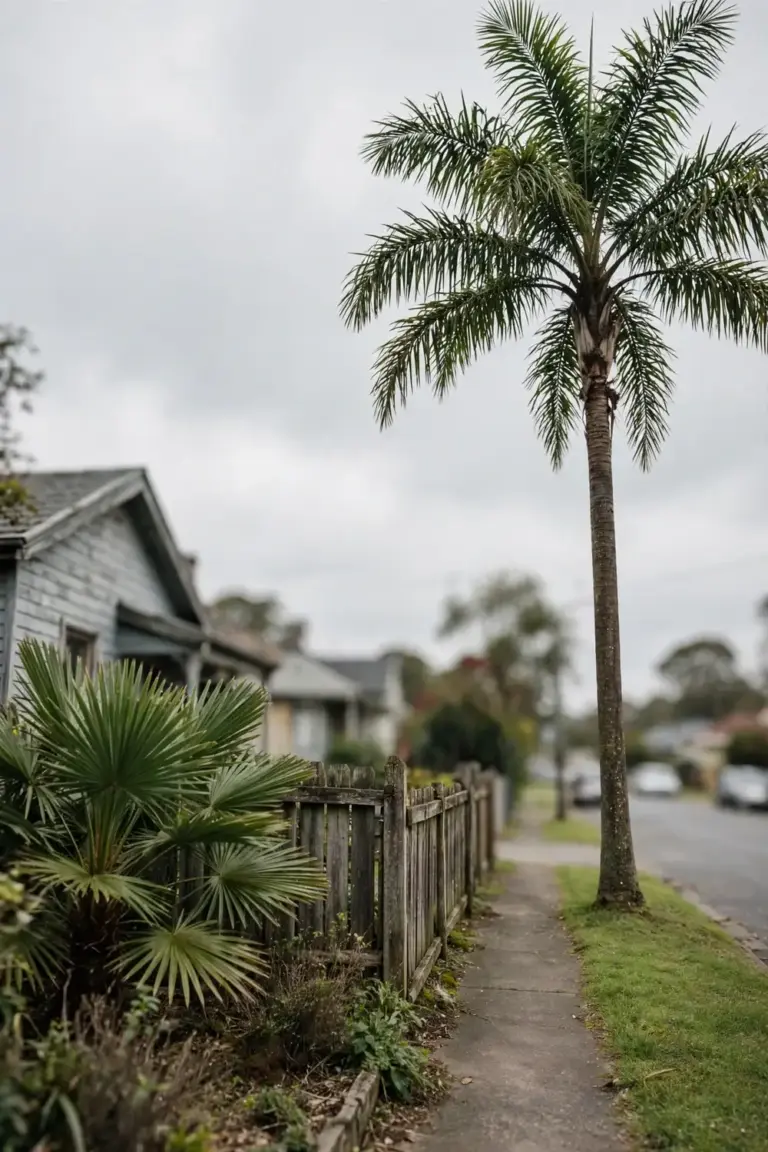
Native palms cluster by region. Cabbage-tree palm runs down the east coast from Queensland into Victoria, further south than any other native Australian palm. Bangalow runs from Mackay in Queensland to Batemans Bay in New South Wales. Kentia grows wild only on Lord Howe Island. Alexandra grows in north Queensland rainforest. A feather palm with a crownshaft in a Sydney street is more likely a Bangalow street tree than a wild Alexandra.
Juvenile fronds differ from adult fronds. A young palm can carry simpler, wider, or more divided fronds than the adult crown. A seedling Kentia reads differently from a mature Kentia. Name a palm from adult crown fronds where possible. A potted palm with juvenile fronds needs the trunk and fruit clues more than the frond clue.
Street trees add one more filter. A council street-tree list favors a small set of tough species: Canary Island date palm, queen palm, cabbage-tree palm, Bangalow, and golden cane among them. A palm on a nature strip is more likely one of those than a rare rainforest species. A palm in remnant bushland is more likely a local native. The setting context never names the palm, and it always shortens the list.
9. Drop the “Not a Palm” Traps First
Five common plants carry palm in their name and sit outside the palm family. Arecaceae is the palm family. Every plant below sits in a different family. Kew’s Plants of the World Online taxonomy places each one.
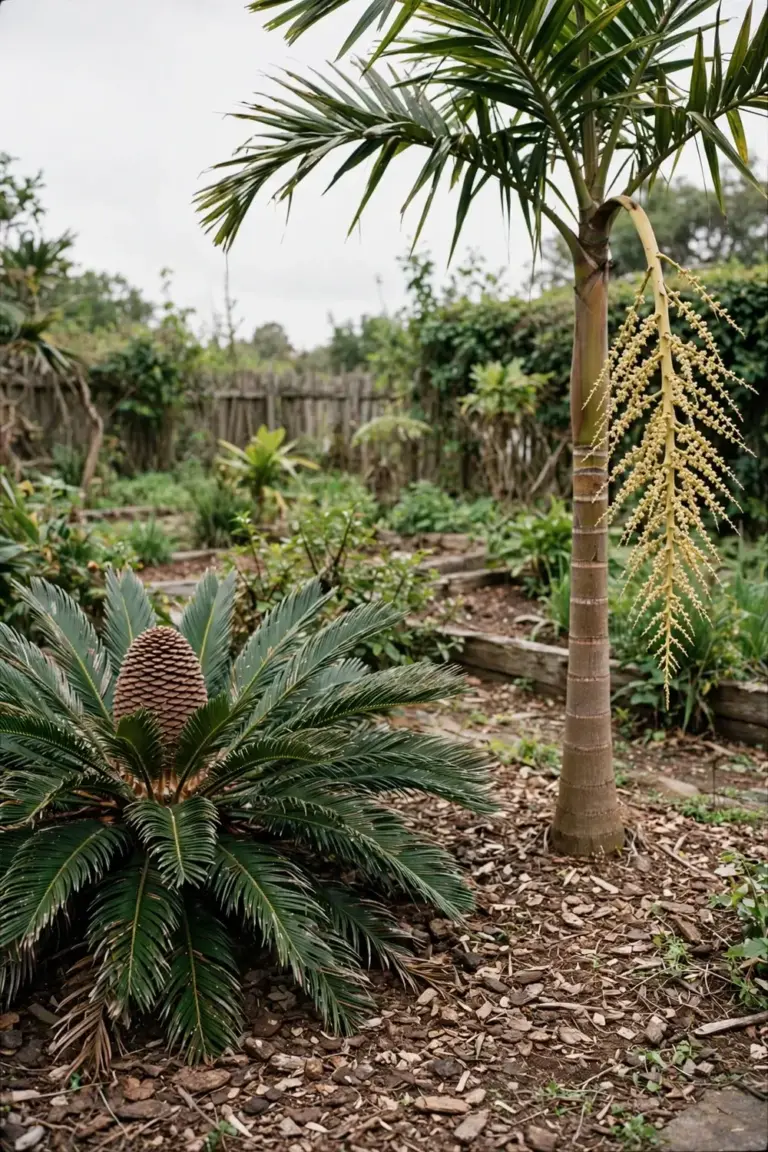
Sago palm is not a palm. It is Cycas revoluta, a cycad in Cycadaceae. Its stiff feather-like leaves grow from a squat trunk, and it carries cones, not flowers. A cone on a “palm” ends the palm key. The plant is a cycad.
Cordyline is not a palm. Palm lily is Cordyline, in Asparagaceae. Its leaves grow from woody stems that branch, and its trunk forks. A palm never forks above ground. A branching “palm” is a Cordyline.
Pandanus is not a palm. Screw palm is Pandanus, in Pandanaceae. Its leaves spiral up the stem in three ranks, and its trunk carries prop roots that arch into the ground. A prop root on a “palm” ends the palm key.
Ponytail palm is not a palm. It is Beaucarnea recurvata, in Asparagaceae. Its trunk swells into a bottle-shaped base, and its leaves fall as a fountain of narrow straps. A bottle base plus strap leaves names a ponytail palm, not a palm.
Yucca is not a palm. It is Yucca, in Asparagaceae. Its sword leaves carry sharp tips and fibrous threads along the margins, and its trunk branches with age. A branching stem with sword leaves names a yucca, not a palm.
10. Separate Kentia, Bangalow, and Alexandra
Kentia, Bangalow, and Alexandra form the hardest feather-palm trio in Australian gardens. All three carry feather fronds. All three grow tall and single-stemmed. The crownshaft and the leaf underside split them.
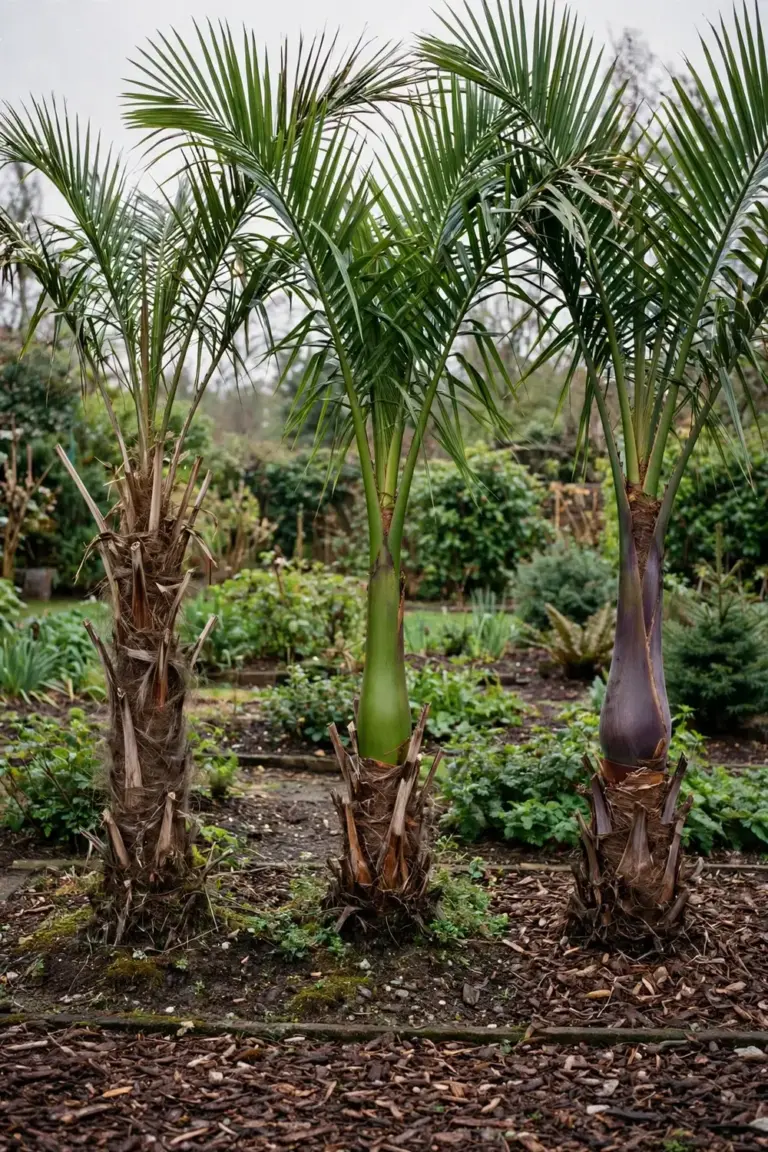
Bangalow carries a prominent crownshaft. The ANBG native palm notes describe Bangalow as a solitary-stemmed palm to 30 m tall with a stem to 30 cm across, a prominent crownshaft, and arching fronds to 4.5 m long with many leaflets. Bangalow palm, Australian National Botanic Gardens The same notes give the fronds as dark glossy green above and lighter green beneath, the flowers as small and lilac on creamy branches, and the fruit as bright red with a waxy finish. The same notes place Bangalow from Mackay in Queensland to Batemans Bay in New South Wales.
Kentia carries no crownshaft. Its leaf bases break down into a woven brown mass around the trunk. Its leaflets droop, and its fronds read as soft and arching rather than stiff. The Friends of ANBG palm notes place Kentia as a Lord Howe Island endemic, and they use the missing crownshaft plus the fibrous mass as the Kentia tell.
Alexandra carries a crownshaft, so the crownshaft alone will not split it from Bangalow. The leaf underside does the work. Alexandra leaflets run silvery-white beneath, against Bangalow leaflets that run lighter green beneath. Alexandra also grows in north Queensland rainforest, well north of the Bangalow range. A crownshaft palm with silvery leaflet undersides in far north Queensland points to Alexandra. A crownshaft palm with lighter-green undersides in New South Wales points to Bangalow.
11. Separate Cabbage-Tree Palm From Other Fan Palms
Cabbage-tree palm is the southern native fan palm. The PlantNET Flora of NSW entry describes it as a tree with a solitary stem to 30 m high and to 50 cm in diameter, marked with annular scars and furrows. Cabbage-tree palm, PlantNET NSW Flora Online The same entry gives the leaves as 3 to 4.5 m long with a circular lamina about 2 m across, divided into some 70 segments, on a petiole 1.5 to 2.5 m long with recurved spines mostly toward the base. The same entry gives the fruit as globose, red turning black, and small, and places the palm in coastal districts of New South Wales, Queensland, and Victoria.
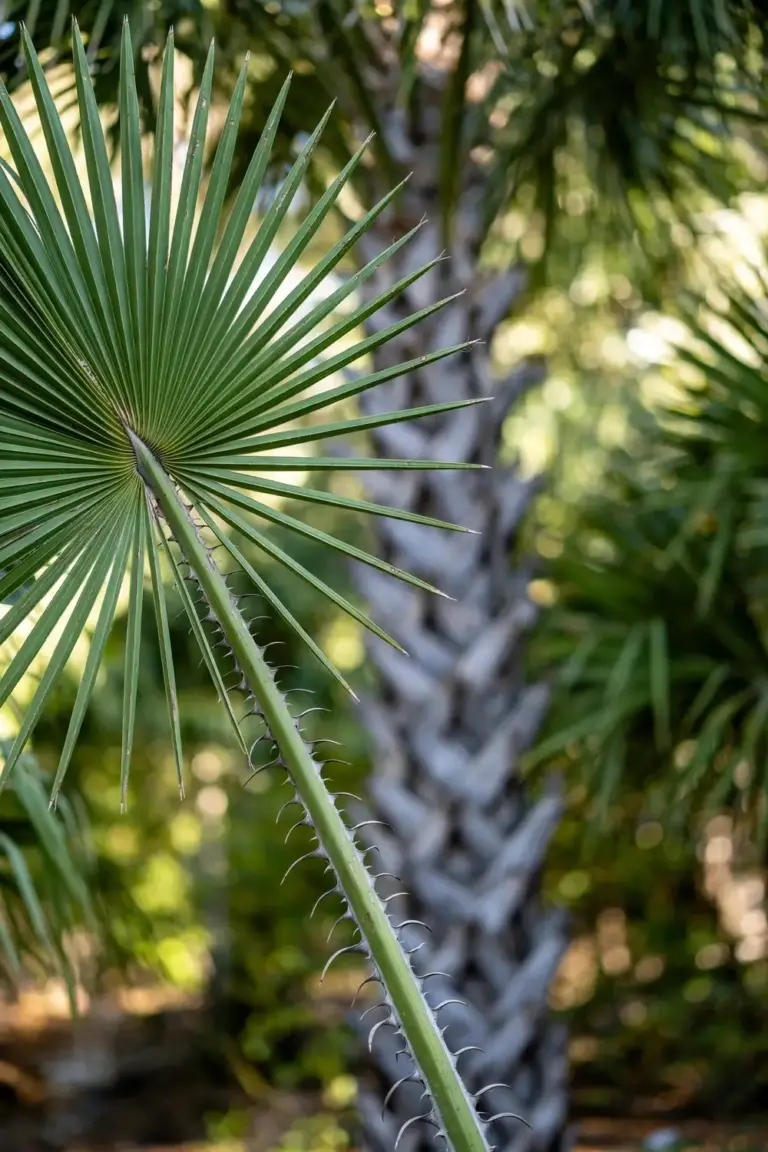
Licuala is the near-circular fan palm. Licuala ramsayi carries a fan blade that reads as almost a full circle, with segments joined for most of their length. It grows in far north Queensland rainforest. A fan palm with a near-complete circular blade in the wet tropics points to Licuala, not to cabbage-tree palm.
Chinese windmill palm is the introduced fan palm with a hairy trunk. Trachycarpus fortunei carries fan fronds on a trunk wrapped in brown matting. The matting reads as matted hair, not as clean scars. The same UF/IFAS notes that define palmate fronds list windmill palm among the standard palmate examples. A fan palm with a matting-wrapped trunk in a garden bed points to an introduced windmill palm.
Chinese fan palm is the introduced Livistona. Livistona chinensis carries costapalmate fronds, between fan and feather, with a costa running into the blade. It shares the genus with cabbage-tree palm, so the genus alone will not split them. The costa and the introduced garden setting do the work.
12. Separate Canary Island Date Palm From True Date Palm
Canary Island date palm is the big feather palm of Australian streets and parks. It carries a stout trunk ringed with old leaf bases, huge arching feather fronds, and clusters of small orange-brown dates. When pruned, the crown base reads as a pineapple shape. The trunk girth is the first tell. No other common street palm carries so thick a trunk.
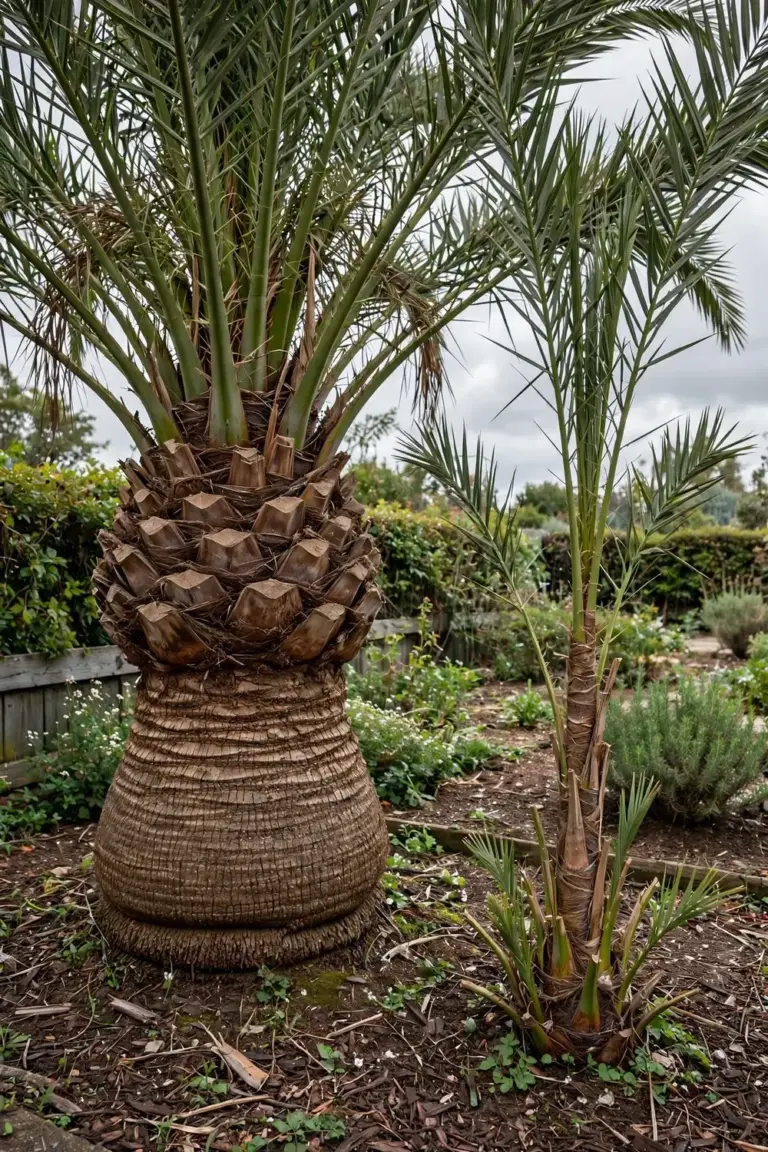
The same palm is a garden escapee. The IUCN Global Invasive Species Database full account records that Phoenix canariensis has been documented displacing native trees, and that it has spread in Australia as well as in Spain, Portugal, Italy, and New Zealand. Canary Island date palm, IUCN Global Invasive Species Database A feather palm seeding itself along a creek or roadside verge fits the escapee pattern.
True date palm is a different species. Phoenix dactylifera carries a slimmer trunk, suckers at the base, and long clusters of edible dates. The suckers are the tell. A date palm with basal suckers and edible fruit is a true date palm. A date palm with a single massive trunk, no suckers, and small ornamental dates is a Canary Island date palm.
13. Separate Golden Cane From Bamboo and Lady Palm
Golden cane is the clustering feather palm of Australian gardens. Dypsis lutescens sends up several stems from the base. The stems run golden-yellow, and the fronds arch outward in a fountain shape. The stem color plus the clustering habit names it.
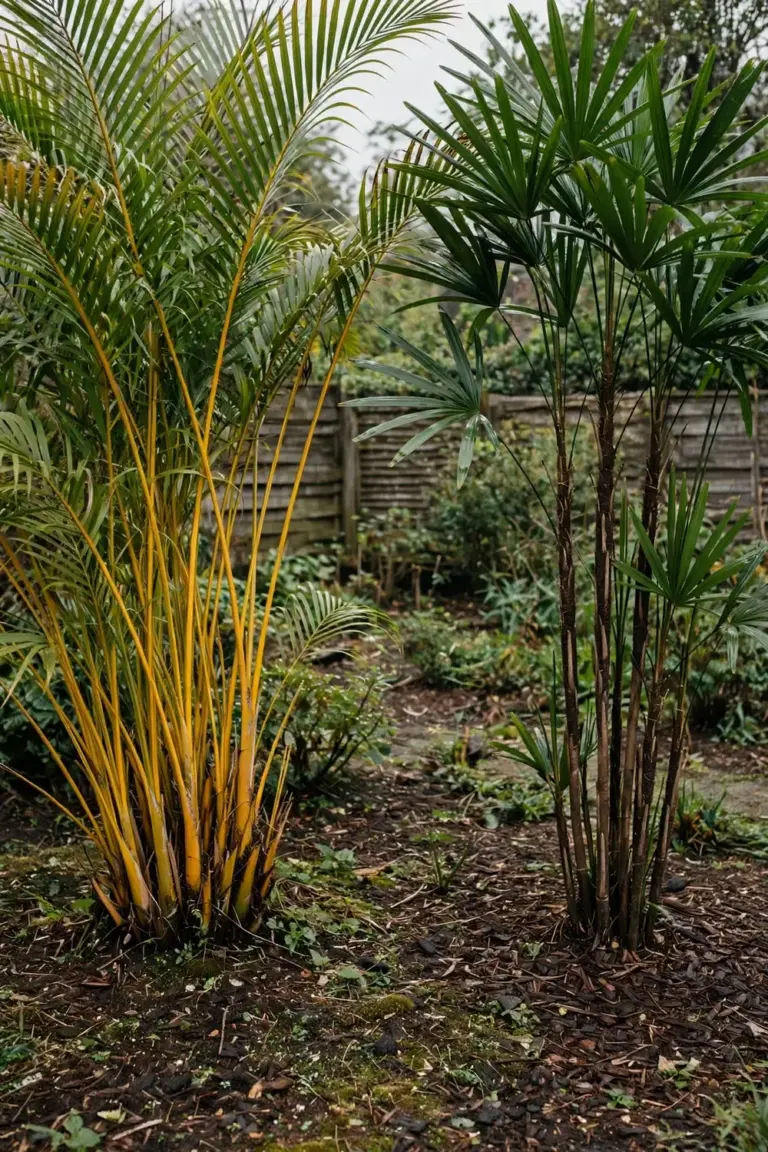
Bamboo is not a palm. Bamboo is a grass, in Poaceae. Its stems are hollow and jointed, with a node at each joint. A “palm” with hollow jointed stems is bamboo. The joint is the tell. No palm carries hollow jointed stems.
Lady palm is the clustering fan palm. Rhapis excelsa sends up slender canes from the base, each cane carrying fan fronds. The fronds are fan-shaped, not feather-shaped. The canes are slender and brown, not golden and thick. A clustering palm with fan fronds points to lady palm. A clustering palm with feather fronds and golden stems points to golden cane.
Count the stems before judging the cluster. A golden cane clump carries several stems of different heights, with the tallest in the center and younger stems around it. A lady palm clump carries many slender canes of near-equal height, packed tight. The stem count plus the stem color plus the frond shape closes the clustering split without a single measurement.
14. Photograph the 5 Clues Before You Name It
Photograph the whole palm first. Step back and frame the full crown, the trunk, and the setting in one shot. The whole-palm shot carries the habit and the setting. It never names the palm alone, and it anchors every closer shot.
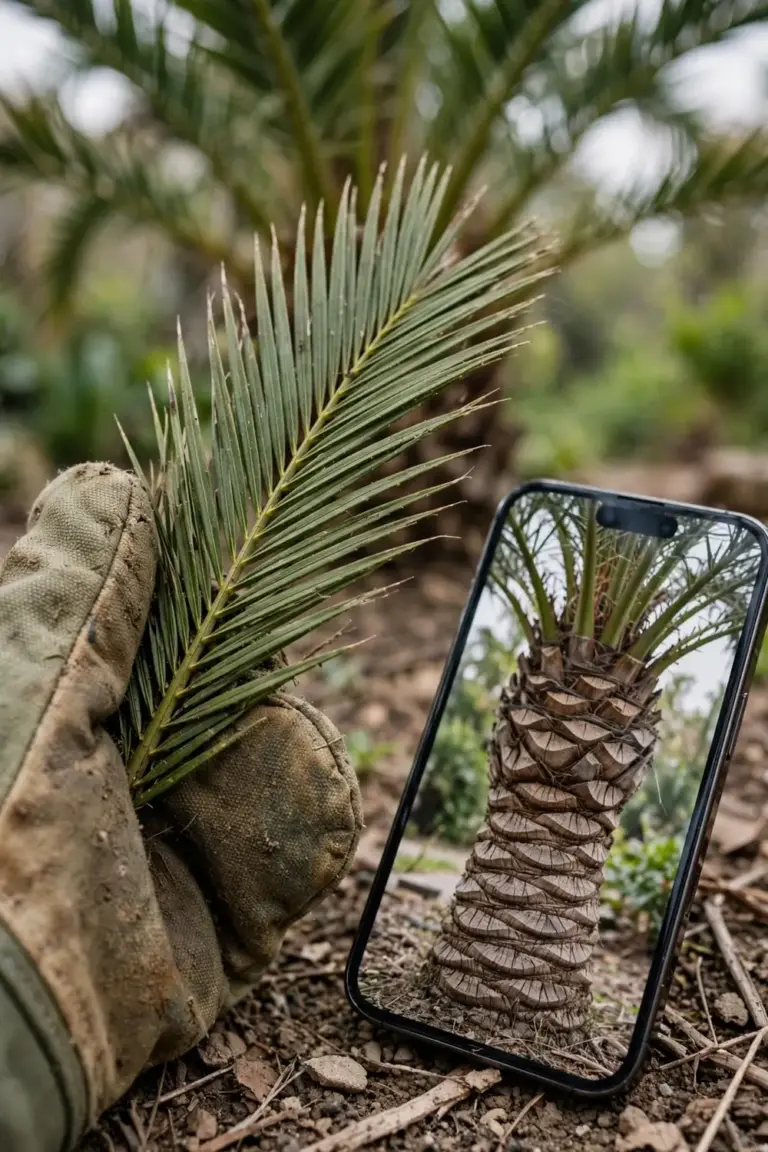
Photograph the frond next. Hold one frond flat and shoot the blade where it meets the stalk. The shot must show whether the segments join or separate, and whether the stalk extends into the blade. A frond shot that cuts off the stalk junction wastes the trip.
Photograph the trunk, the crownshaft zone, the leaf underside, and the fruit cluster. The trunk shot must show single stem or clustering, plus scars, while the crownshaft shot must show the column or its absence. The underside shot must show the leaflet color and fold, and the fruit shot must show color, size, and cluster shape. Five shots, one per clue, name the palm.
A field guide earns its place here. A printed key with line drawings settles the close pairs faster than memory, and it works without a signal. A field guide collection covers palms alongside the rest of the garden, so one book serves many identifications. Carry the guide, shoot the five clues, and name the palm at home from the photos.
Frequently Asked Questions
Start with frond shape. Feather fronds carry separate leaflets along a central stalk. Fan fronds carry joined segments spreading from one point. Costapalmate fronds sit between the two, with a rounded blade and segments along a costa. Then add trunk, crownshaft, leaf detail, and fruit. Leaves alone never settle a palm.
A crownshaft is a smooth green column below the crown, formed by wrapped leaf sheaths. It looks like a polished green tube on top of the trunk. Bangalow, Alexandra, and golden cane show one. Kentia, cabbage-tree palm, and Chinese windmill palm show none. Flower stalks emerge from the base of the crownshaft on palms that carry one.
No. Sago palm is Cycas revoluta, a cycad in Cycadaceae, not a palm in Arecaceae. It carries cones instead of flowers, and its stiff feather-like leaves grow from a squat trunk. A cone on a “palm” ends the palm key at once. The plant is a cycad, and the palm key does not apply to it.
Check the crownshaft. Bangalow carries a prominent crownshaft, and its leaflets run dark glossy green above and lighter green beneath. Kentia carries no crownshaft, and its leaf bases break down into woven brown strands around the trunk. Kentia grows wild only on Lord Howe Island. Bangalow grows on the east coast from Queensland to New South Wales.
It can be. The IUCN Global Invasive Species Database records Phoenix canariensis displacing native trees and spreading in Australia as a garden escapee. A Canary Island date palm seeding itself along a creek or roadside verge fits the escapee pattern. A self-sown palm near bushland is a weed report, not a garden find.
Start With the Frond, End With the Fruit
The frond opens the key. The trunk, the crownshaft, and the leaf narrow it. The fruit closes it. A palm that matches all five clues earns its name. A palm that matches four needs one more photo. Shoot the five clues, run the key, and trust the name that survives all five rows. Keep the photos. A palm that beats you today names itself next season, when the fruit shows.