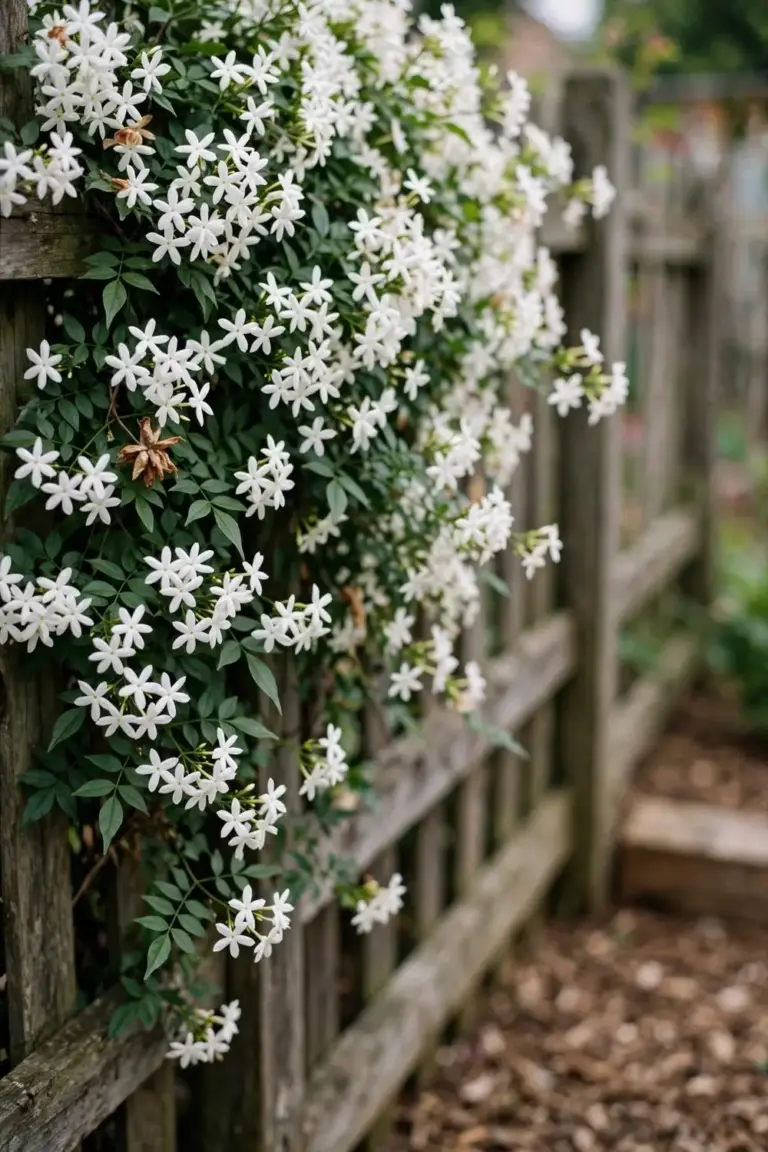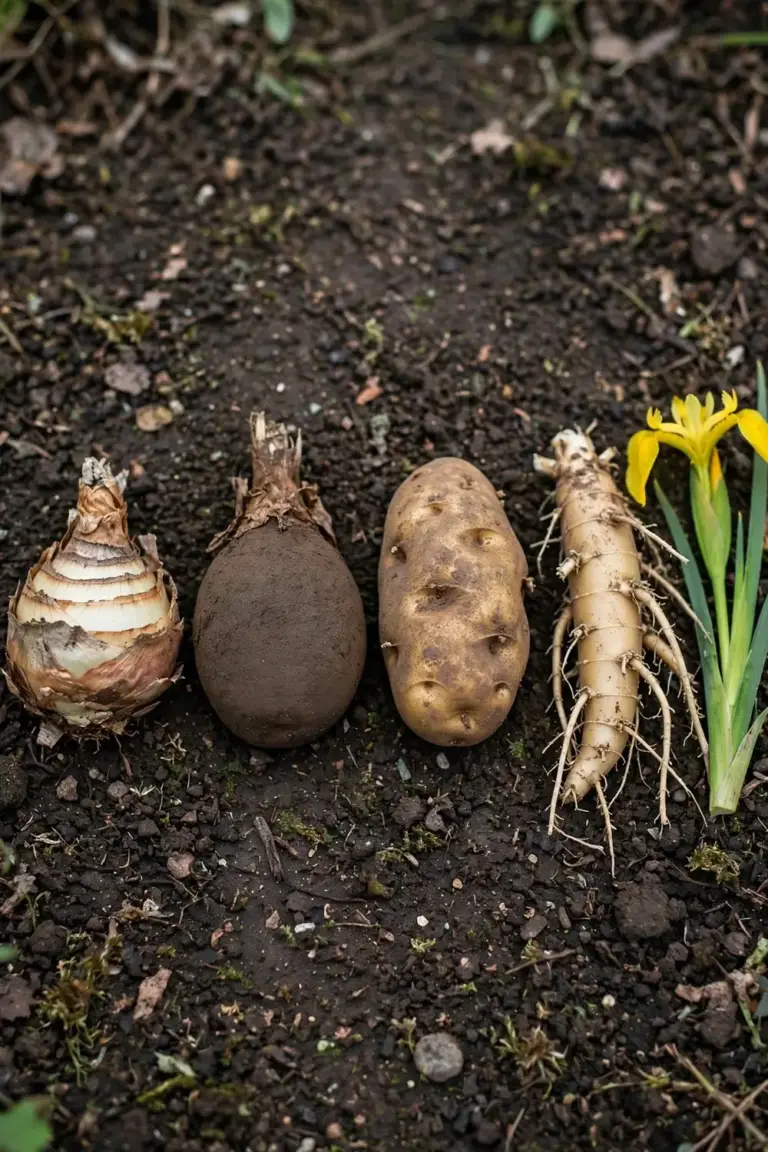

3 groups hold every plant sold or known as jasmine in Australia. True jasmines belong to the genus Jasminum. Jasmine-named relatives carry the name with a different genus. Lookalikes share the scent or the white flowers with no jasmine in their name at all. Place your plant in one of those 3 groups first. Jasmine identification in Australia rewards the gardener who checks the traits before trusting the name. The rest of this page runs a leaf, flower, habit, and fruit key across the plants in each group, then answers the weed question for the one jasmine that earns it.
I have learned that the jasmine I name from its leaves and its fruit together beats the jasmine I name from its scent alone.
1. Split Every Jasmine Into 1 of 3 Groups First
The name jasmine misleads more than it helps. Nurseries, neighbours, and old garden books attach it to plants from several families. A scented white flower on a climber does not make a jasmine. The genus decides the group.
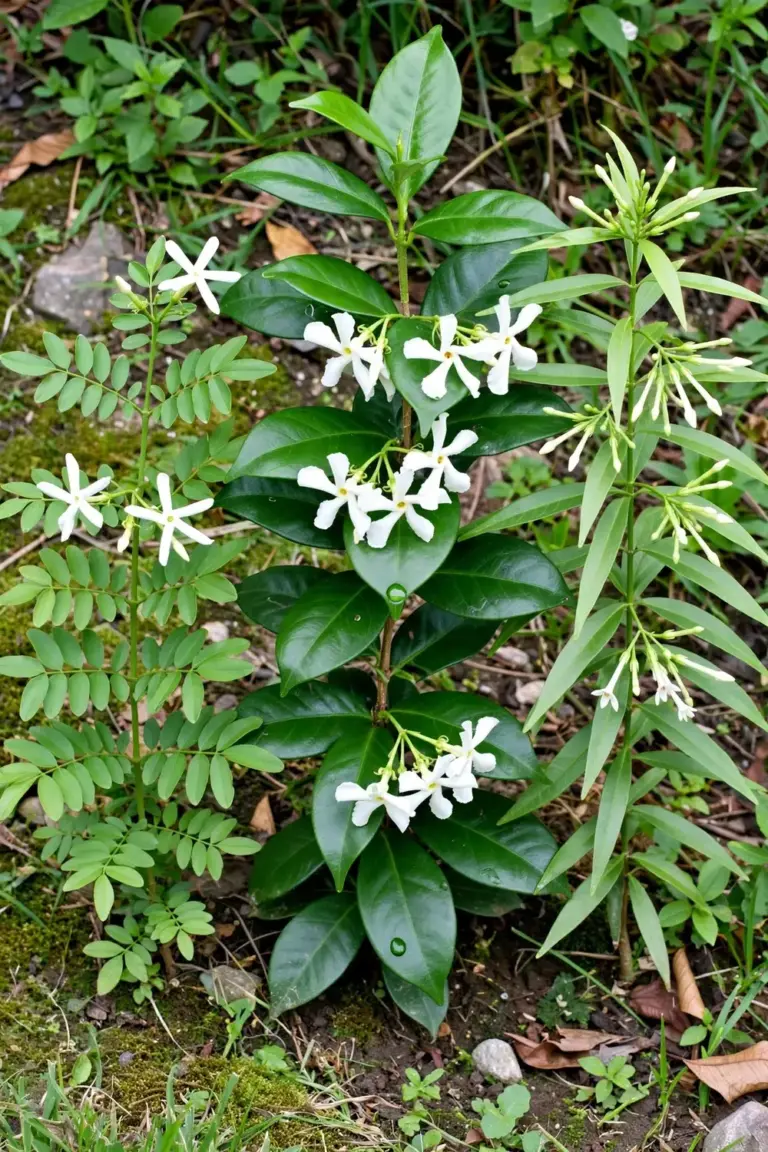
Group 1 holds true jasmines. True jasmine means the genus Jasminum in the olive family, Oleaceae. Common jasmine, pink jasmine, Arabian jasmine, winter jasmine, and the Australian native jasmines all sit here. They share opposite leaves and a corolla tube with spreading lobes, though leaf shape varies widely inside the genus.
Group 2 holds jasmine-named relatives. Star jasmine, Madagascar jasmine, and Carolina jessamine carry jasmine or jessamine in their common names. None of them belongs to Jasminum: star jasmine sits in Apocynaceae, the dogbane family, Madagascar jasmine sits in Apocynaceae too, and Carolina jessamine sits in Gelsemiaceae, the yellow-jessamine family. The name is a habit, not a kinship.
Group 3 holds lookalikes. Night-blooming jasmine, mock orange, and cape jasmine look or smell like jasmine to a passing nose, yet their botanical names place them far from Jasminum. Night-blooming jasmine belongs to Solanaceae, the nightshade family. Mock orange belongs to Hydrangeaceae or Rutaceae, depending on which mock orange stands in front of you. Cape jasmine belongs to Rubiaceae, the coffee family.
Work the groups in order. A plant that fails the true-jasmine test moves to group 2. A plant that fails both moves to group 3. The key in the next section gives you the traits to test.
2. Run the Quick Key: Leaf, Flower, Habit, Fruit
Five clues name most jasmine-like plants in an Australian garden, and they run in this order: leaf, flower, habit, fruit, scent. Scent comes last on purpose, because scent overlaps across all 3 groups, so it confirms a name instead of making one.
| Plant | True Jasmine? | Leaf | Flower | Weed? |
|---|---|---|---|---|
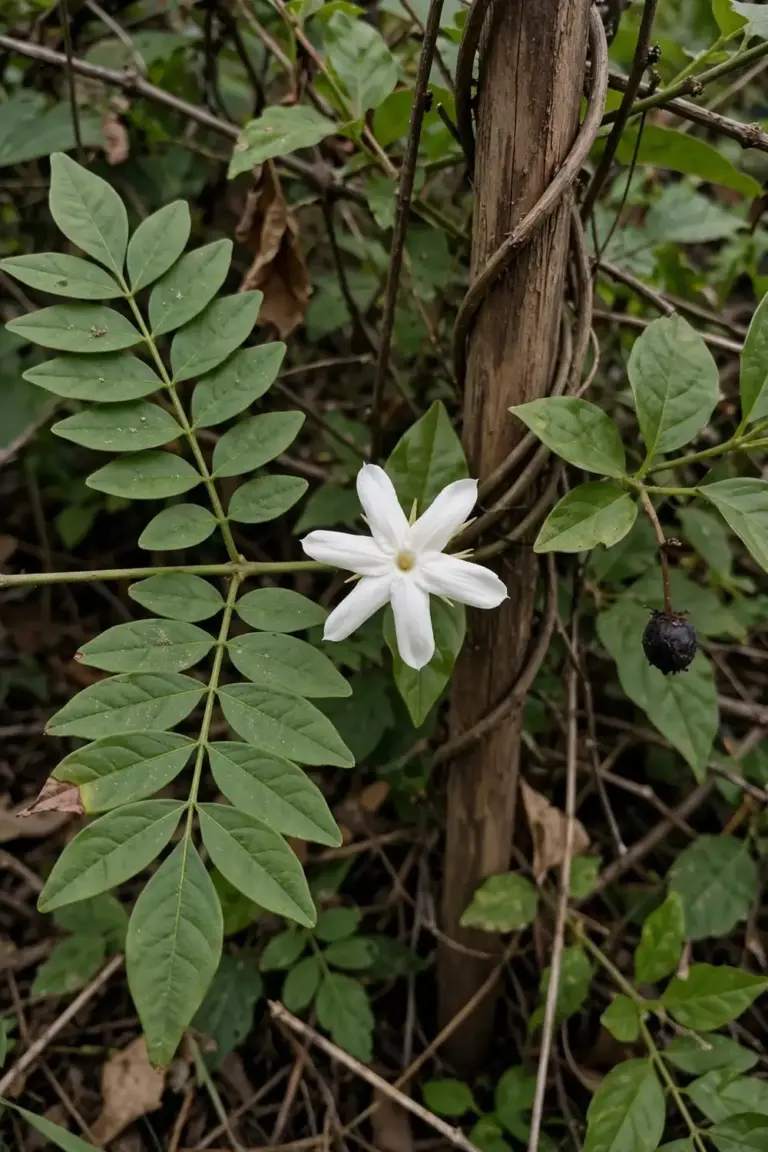
| Common jasmine (Jasminum officinale) | Yes | Pinnate, opposite, pointed leaflets | White, fragrant, star-shaped | No |
| Pink jasmine (Jasminum polyanthum) | Yes | Pinnate, 5 to 9 leaflets | White above, pink or red below, fragrant | Yes, environmental weed |
| Arabian jasmine (Jasminum sambac) | Yes | Simple, rounded, opposite | White, fragrant, layered petals | No |
| Winter jasmine (Jasminum nudiflorum) | Yes | Pinnate, small leaflets, late leaves | Yellow, scentless, on bare stems | No |
| Native jasmine (Jasminum volubile) | Yes | Single leaflet, ovate to lanceolate | White, winter flowers | No |
| Native jasmine (Jasminum suavissimum) | Yes | Narrow, elliptical | White, perfumed, loose clusters | No |
| Native jasmine (Jasminum didymum) | Yes | Variable, 1 to 3 leaflets | White, small clusters | No |
| Star jasmine (Trachelospermum jasminoides) | No | Simple, opposite, glossy, leathery | White, salverform, 5 petals | No |
| Madagascar jasmine (Stephanotis floribunda) | No | Simple, opposite, oval, leathery | White, waxy, tubular | No |
| Carolina jessamine (Gelsemium sempervirens) | No | Simple, opposite, lanceolate, glossy | Yellow, trumpet-shaped, fragrant | Weedy in disturbed ground overseas |
| Night-blooming jasmine (Cestrum nocturnum) | No | Simple, alternate, narrow lanceolate | Greenish white, tubular, night scent | Weedy in warm regions |
| Mock orange (Philadelphus) | No | Simple, opposite, toothed | White, 4 petals, citrus scent | No |
| Orange jessamine (Murraya paniculata) | No | Pinnate, glossy leaflets | White, fragrant, orange scent | Check local lists |
| Cape jasmine (Gardenia jasminoides) | No | Simple, opposite, glossy | White, large, waxy, fragrant | No |
Leaf arrangement settles many arguments fast. True jasmines carry opposite leaves, and so do star jasmine and Madagascar jasmine, so opposite leaves alone never prove a true jasmine. Night-blooming jasmine carries alternate leaves, which rules out Jasminum at once. Check arrangement before shape.
Flower form splits the rest. True jasmine flowers open as a tube with spreading lobes. Star jasmine flowers open as a salverform, a flat star on a narrow tube with five petals joined at the base. Carolina jessamine flowers open as trumpets, golden yellow and funnel-shaped. Cape jasmine flowers open large and waxy, with a heavy perfume that fills a room.
Fruit closes the case where flowers are gone. True jasmines bear fleshy berries. Stiff jasmine bears a black shining berry. Carolina jessamine bears a flattened capsule that splits open to release seed. Night-blooming jasmine bears small white berries. A capsule or a dry pod rules out Jasminum.
3. Name the True Jasmines: Officinale, Polyanthum, Sambac, Nudiflorum
Common jasmine, Jasminum officinale, sets the type for the genus. It climbs by twining stems and carries pinnate opposite leaves with pointed leaflets. The flowers open white and fragrant. They sit star-shaped in loose clusters through the warm months. Nurseries sell it as common jasmine, poet’s jasmine, or jasmine with no second word, and where a label says only jasmine, common jasmine is the usual plant behind it.
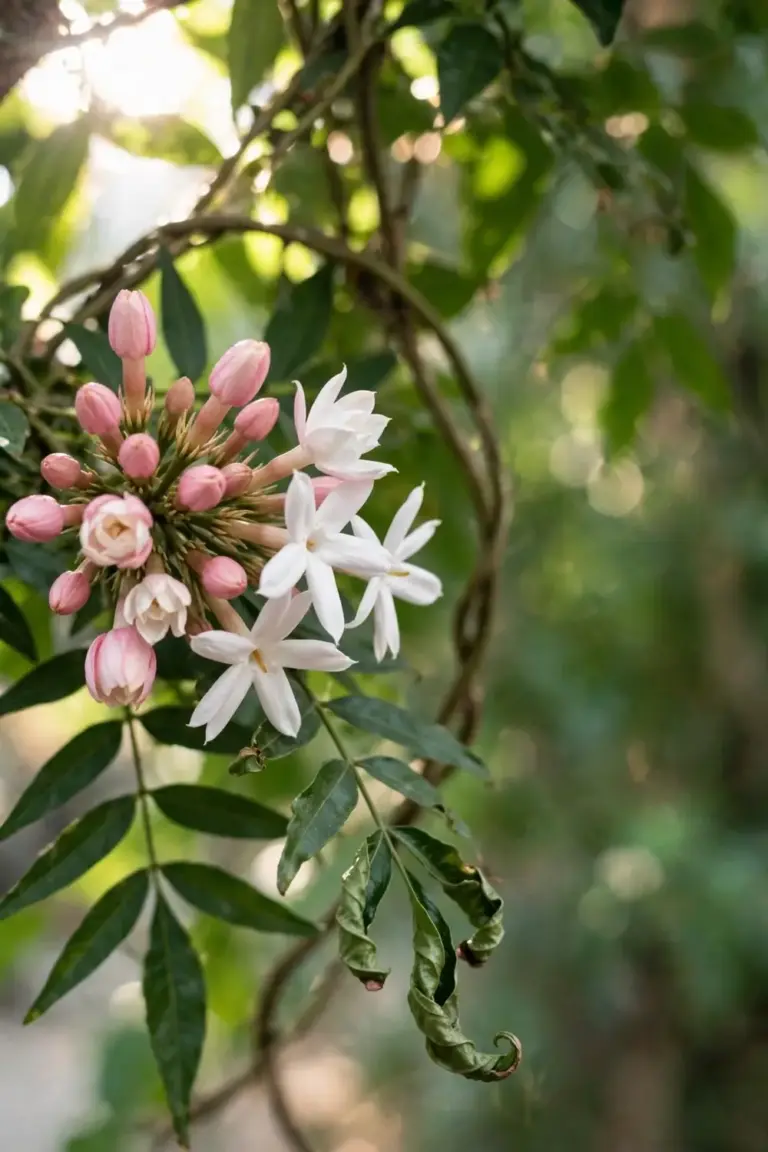
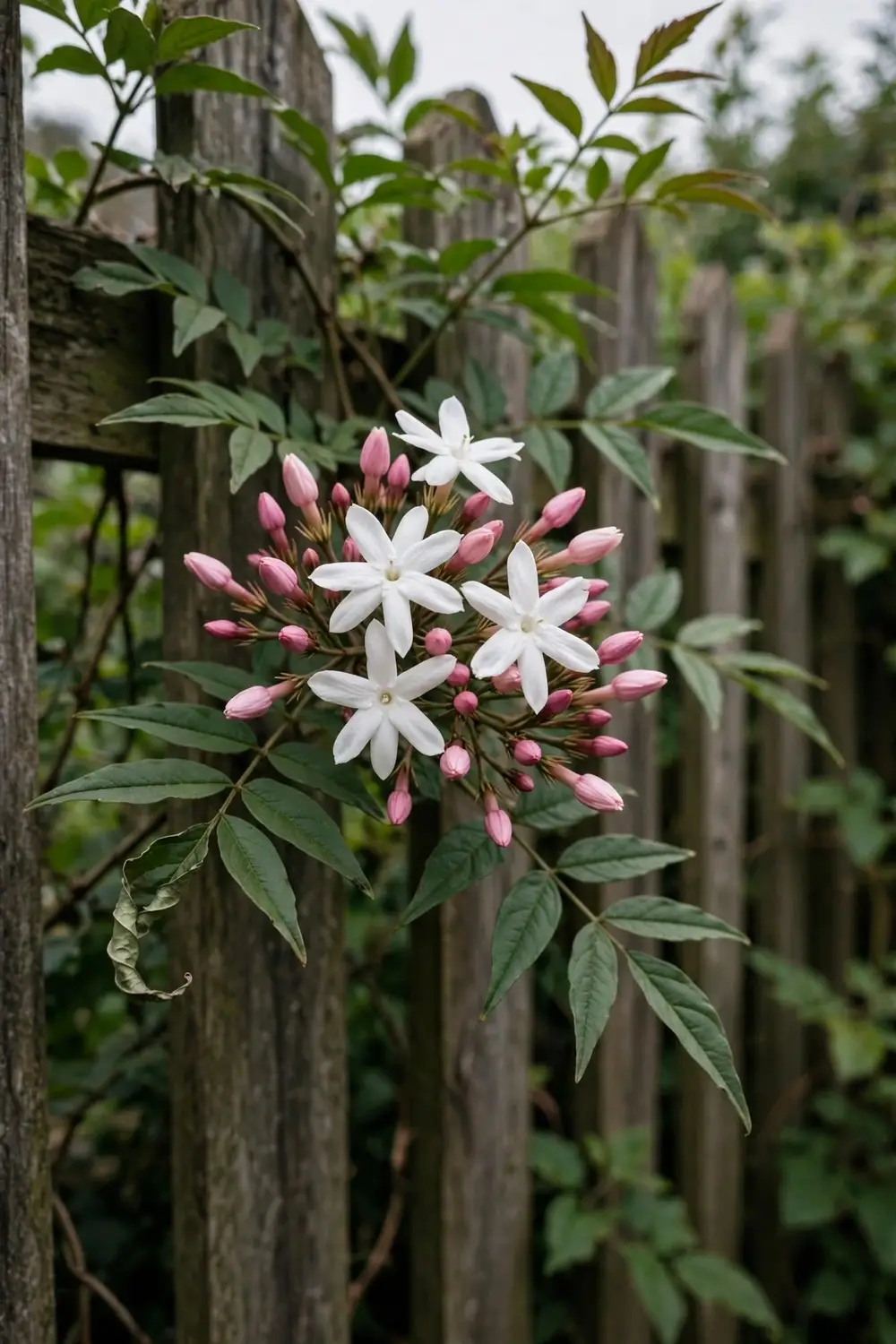
Pink jasmine, Jasminum polyanthum, is the jasmine most Australian gardeners actually meet. It grows as a vigorous evergreen climber with stems that reach 10 m long, according to the NSW WeedWise jasmine profile. Its leaves divide into 5 to 9 leaflets, with leaflets up to 7 cm long and 2.5 cm wide. The fragrant flowers sit white on top with pink or red on the underside, in clusters through spring and summer. Pink buds opening white mark it at a glance. The same profile records that it spreads from stems and dumped garden waste, and that seeds are rarely produced. That spread habit drives its weed status, covered in section 7.
Arabian jasmine, Jasminum sambac, breaks the pinnate-leaf pattern. Its leaves are simple and rounded, set opposite on the stem. The flowers open white and fragrant, with layered petals that read fuller than the star-shaped flowers of common jasmine. Growers know it as the jasmine of tea and garlands. A plant with simple rounded leaves and heavy white fragrant flowers points at sambac before any other true jasmine.
Winter jasmine, Jasminum nudiflorum, breaks the scent pattern. Its flowers open yellow and scentless on bare green stems in winter, before the leaves arrive. The leaves follow later, pinnate and small. Yellow flowers with no scent on a jasmine-shaped plant mean winter jasmine. No other true jasmine in Australian gardens flowers yellow and scentless on bare stems.
Spanish jasmine, Jasminum grandiflorum, sits close to common jasmine. Its flowers run larger, and its leaflets sit broader. Nurseries sometimes label it as Spanish jasmine or royal jasmine, the name used in the Spanish jasmine growing guide. For identification, treat it as a large-flowered cousin of common jasmine and check the flower size against the leaf.
Two true jasmines confuse buyers most: common jasmine and Spanish jasmine. Both climb, both carry pinnate leaves, and both open white fragrant star-shaped flowers. Spanish jasmine runs larger in flower, and nurseries sell it under royal jasmine as often as under Spanish jasmine. Where the label gives no species name, the flower size and the leaflet breadth are the only field marks, and a photograph of the flower beside a ruler settles it.
4. Spot the Jasmine-Named Relatives: Star, Madagascar, Carolina
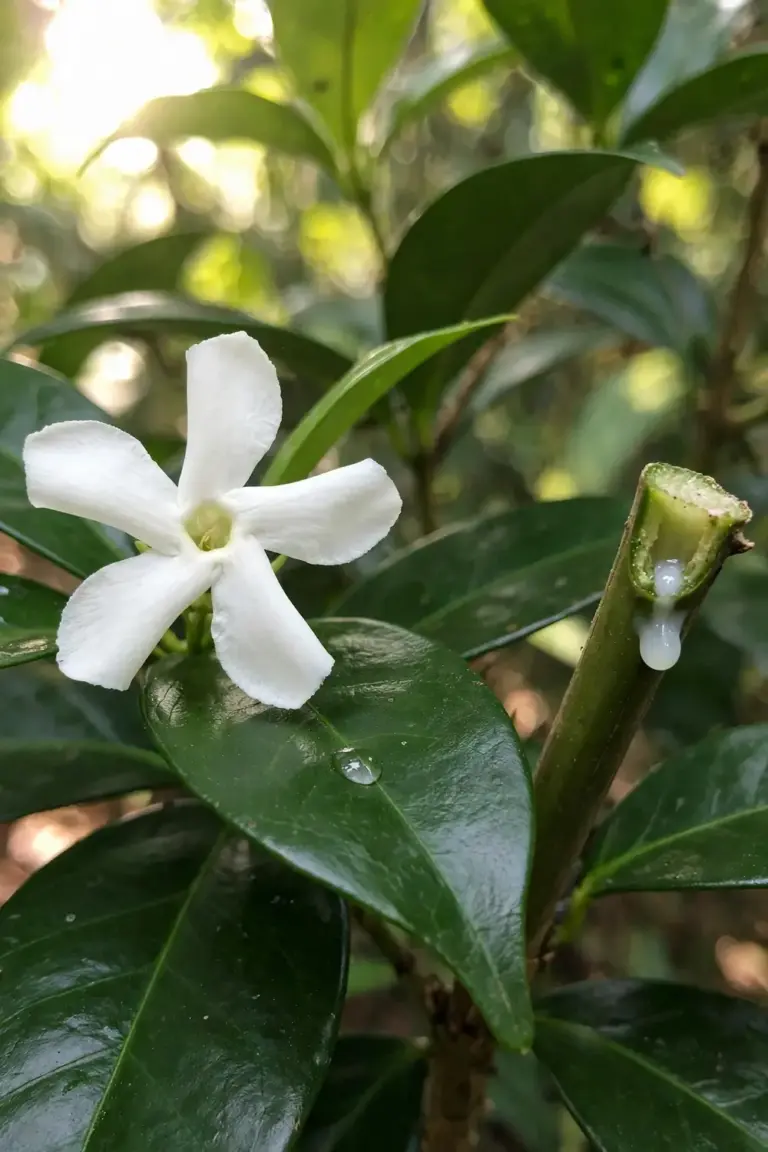
Star jasmine, Trachelospermum jasminoides, is the most common jasmine-named relative in Australian gardens. It belongs to the family Apocynaceae, and it is not a true jasmine and not of the genus Jasminum. Its leaves sit opposite, simple, broad lanceolate to ovate, 2 to 8 cm long and 0.5 to 4 cm broad. Its flowers open salverform, like those of phlox, simple, 2.5 to 7 cm broad, with five white, pale yellow, or purple petals joined at the base to form a tube. That flat star on a tube separates it from every true jasmine at a glance. The stems bleed milky sap when cut, a trait no true jasmine shows. Milky sap plus a flat star flower ends the argument.
Madagascar jasmine, Stephanotis floribunda, is the second relative to learn. It belongs to Apocynaceae, and it is not a true jasmine and not of the genus Jasminum. It climbs as an evergreen woody vine with oval leathery leaves and clusters of pure white waxy tubular flowers. The flowers run about 3 cm long, star-shaped at the mouth, intensely fragrant, and they fade to yellow after several days. The leathery oval leaf and the waxy tube separate it from true jasmines, whose leaves run thinner and whose flowers run less waxy. Florists sell its flowers as bridal flowers, which is how many gardeners meet it first.
Carolina jessamine, Gelsemium sempervirens, is the relative that demands caution. It belongs to the yellow-jessamine family, Gelsemiaceae. It climbs by twining as a thin wiry evergreen vine, and it can reach 12 to 20 feet as a twining vine trained to an arbor or trellis, according to the North Carolina Extension plant profile. Its leaves sit opposite, shiny green and lanceolate. Its flowers open golden yellow, funnel-shaped, and fragrant. Its fruit persists as a flattened capsule that splits open. Every part of the plant is dangerously poisonous, so never taste any part of it. The spelling trap sits here: jessamine with an e spells Gelsemium in this plant, while jasmine with an i spells Jasminum. A yellow trumpet flower with opposite glossy leaves and a jessamine label means Gelsemium.
5. Catch the Lookalikes: Night-Blooming, Mock Orange, Cape Jasmine
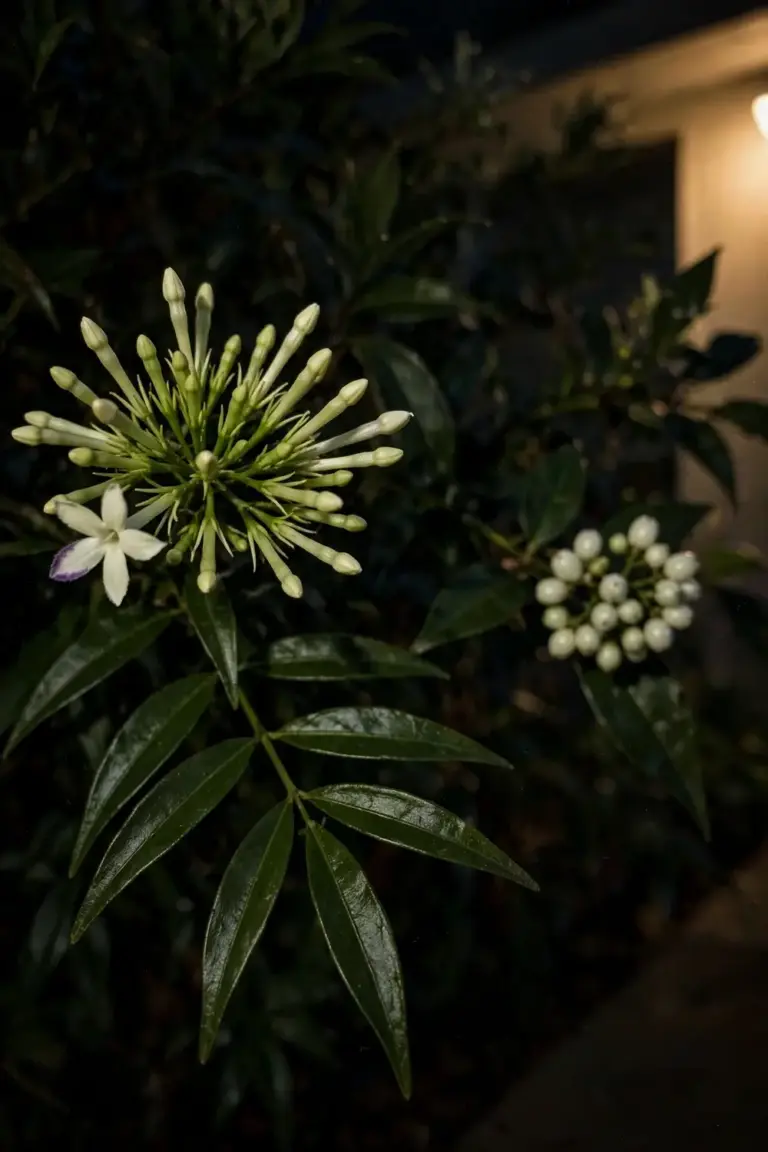
Night-blooming jasmine, Cestrum nocturnum, fools noses after dark. It belongs to Solanaceae, the nightshade family. It grows as an evergreen woody shrub with slender branches, and it can reach 4 m tall. Its leaves sit alternate, simple, narrow lanceolate, 6 to 20 cm long and 2 to 4.5 cm broad, smooth and glossy with an entire margin. Its small greenish white tubular flowers open at night and release a perfume that carries across a whole garden. The white berries follow. All parts of the plant are toxic if eaten, so keep children and pets away from the berries. Alternate leaves plus night scent plus white berries mark it. No true jasmine carries alternate leaves.
Mock orange covers two different plants under one common name, and both fool jasmine hunters. Philadelphus mock orange belongs to Hydrangeaceae. It carries simple opposite leaves with toothed margins and white four-petalled flowers with a citrus scent. Orange jessamine, Murraya paniculata, belongs to Rutaceae. It carries pinnate glossy leaflets and white fragrant flowers with an orange scent, followed by small red berries. Both read as jasmine to a passing nose. The petal count settles Philadelphus at four. The red berries and orange scent settle Murraya. Neither belongs to Jasminum.
Cape jasmine, Gardenia jasminoides, belongs to Rubiaceae, the coffee family. It grows as an evergreen shrub with simple opposite glossy leaves and large white waxy fragrant flowers. The flowers run far larger and waxier than any true jasmine flower, and the shrub habit differs from the twining climber habit of most jasmines. A large waxy white flower on a shrub with glossy opposite leaves means cape jasmine. Gardeners meet it under the name gardenia far more often than under cape jasmine.
Brazilian jasmine, Mandevilla, is the last lookalike to file. It belongs to Apocynaceae and carries the jasmine name with no Jasminum kinship. Its large trumpet flowers in pink, red, or white and its glossy opposite leaves separate it from every true jasmine. Nurseries list it under the name used in the Brazilian jasmine care guide. For identification, treat any large trumpet flower with a jasmine label as Mandevilla until the flower form proves otherwise.
Scent timing splits the lookalikes when the flowers look alike. Night-blooming jasmine releases its perfume after dark and holds little scent by day, while mock orange and cape jasmine release their perfume by day. A white-flowered shrub that perfumes the garden at midnight points at Cestrum, while one that perfumes the garden at noon points elsewhere. Scent timing never names a plant alone, but it narrows the field before the leaf check.
6. Meet the Australian Native Jasmines
Australia holds its own true jasmines, and they differ from the imported species in one plain way. They carry single-leaflet leaves far more often than the pinnate leaves of the imported jasmines. That single leaflet is the fastest field mark for a native jasmine, and it separates the native group from the imported pinnate-leaved species at a glance.
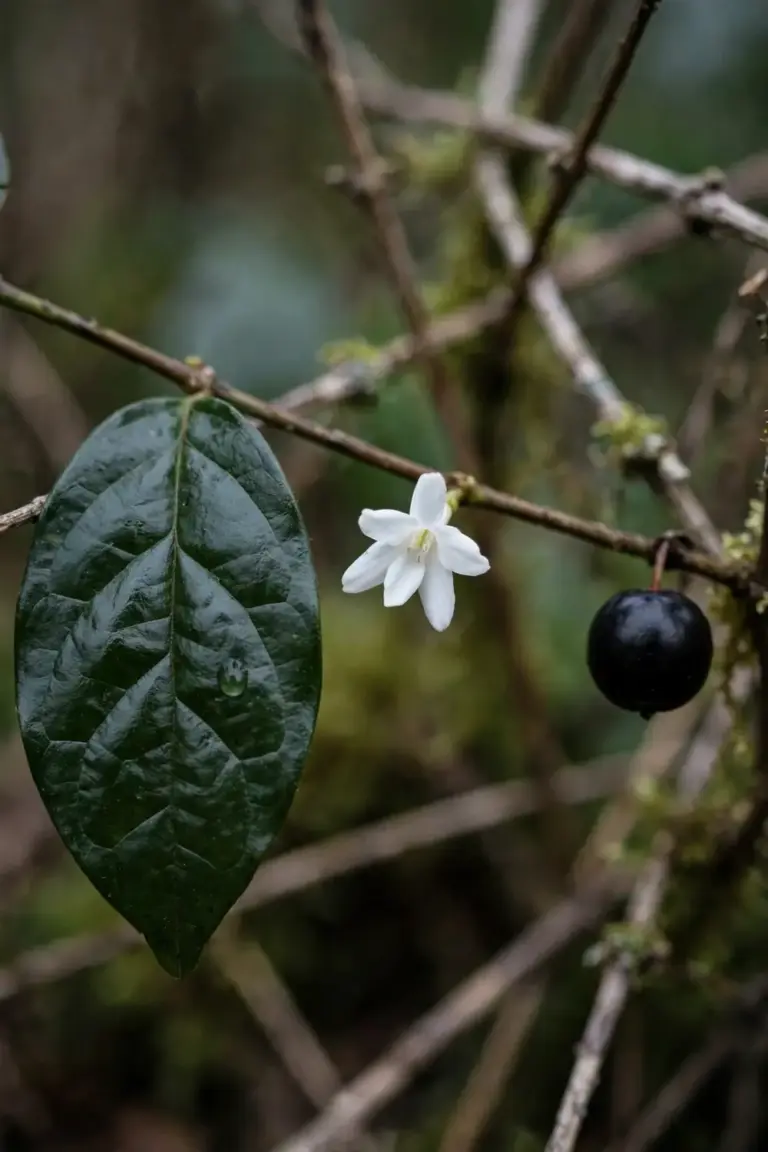
Stiff jasmine, Jasminum volubile, is the native jasmine most gardeners meet in eastern Australia. It grows as a scrambling shrub to 2 m high. It also climbs with stems to 10 m long, according to the PlantNET FloraOnline profile. Its leaves carry one leaflet, ovate to lanceolate, 3 to 7 cm long and 10 to 40 mm wide, with veins raised on both surfaces and a dark glossy green upper surface. The corolla tube runs 8 to 10 mm long, with 5 to 8 lobes 6 to 8 mm long, and the fruit is a fleshy black shining berry, 9 to 11 mm in diameter. It flowers in winter. It grows on rainforest margins, north from the Singleton district. One leaflet, one winter flower, and one black berry mark it.
Native jasmine, Jasminum suavissimum, twines with narrow elliptical leaves 50 mm long. Its perfumed white flowers sit in loose clusters toward the ends of the branches and run 15 mm in diameter. Its seeds are black fleshy berries. It grows in open forest and woodland in northeastern New South Wales and southeastern Queensland. Narrow leaves plus small perfumed flowers in loose clusters mark it.
Jasminum didymum scrambles as a vine or low shrub across a wide span of Australia. It grows in every state except Tasmania, and it also grows across Southeast Asia and the Pacific. Its leaf shape varies widely, which makes it the hardest native jasmine to pin down, since it carries 1 to 3 leaflets and the leaflets run from broad to narrow between plants. Botanists split it into 3 subspecies on leaf shape and habit. Where the leaf shape wavers, the small white flowers in clusters and the fleshy dark fruit hold the name. Variable leaves with small white clustered flowers point at didymum.
7. Answer the Weed Question: Is Your Jasmine a Weed?
One jasmine in Australian gardens earns the weed label outright. Pink jasmine, Jasminum polyanthum, is an environmental weed. It escaped cultivation as a garden ornamental, and it climbs rapidly into the tree canopy and covers vegetation at all levels, blocking light and restricting the growth and regeneration of native species, according to the NSW WeedWise jasmine profile. Its weight can bring down trees. The same profile lists it as a potentially serious weed of rainforests and riparian areas. That is the weed answer for pink jasmine: yes, in Australia, it is a weed.
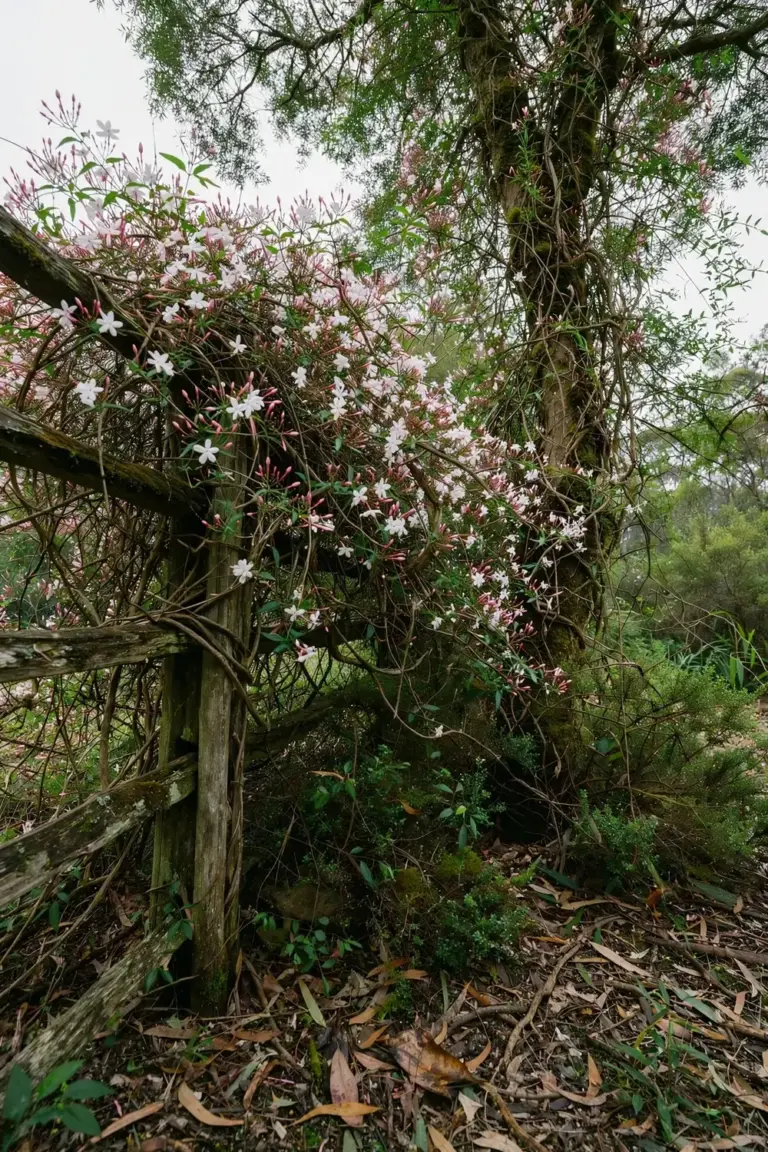
NSW regulates it under a general biosecurity duty. The duty requires any person who deals with the plant, and who knows or ought to know of the biosecurity risk, to prevent, eliminate, or minimise that risk so far as is reasonably practicable. In plain terms, do not plant it, do not dump its stems, and do not let it climb into neighbouring trees. Confirm the listing with your state weed list before acting, since weed listings vary by state and the NSW listing is the one verified here.
No other jasmine covered here carries the same weed weight in Australia. Star jasmine spreads, and it layers where stems touch the ground, but it does not carry a weed listing of the same kind. Carolina jessamine can become weedy in disturbed areas and along roadsides in its home range overseas. Night-blooming jasmine has naturalised and turned weedy in parts of the tropics. Orange jessamine sits on some local watch lists, so check your local list if you find it spreading. For the rest of the jasmines named here, the weed answer is no, with the standing rule that any plant spreading beyond your fence deserves a second look.
Confirm before removing any plant you suspect is a weed. A weed call rests on the botanical name, not the common name. Pink jasmine and star jasmine share the jasmine name and differ in weed status, which is why the name alone never settles the question. Photograph the leaf, flower, and habit, compare them against the key, and check your state list. If the plant matches pink jasmine, treat it as a weed and keep every stem fragment out of green waste that could resprout.
Pink jasmine spreads along fence lines, creek edges, and bushland margins, where dumped stems take root and climbing stems reach the canopy. A plant that climbs into a tree from a garden fence line deserves the pink jasmine check first. The leaf test settles it: 5 to 9 leaflets with pink-backed buds mean pink jasmine, whatever the label said. The organic weed control guide covers weed handling in general for readers who want the next step. This article names the weed. It does not teach removal.
8. Photograph the 5 Clues Before You Name It
A name made from one photo of one flower fails more often than it lands. Five photos carry the whole key. Shoot the leaf arrangement first, with the stem in frame so opposite or alternate shows. Shoot the flower head-on and from the side, so the tube and the lobe shape both show. Shoot the whole plant, so the habit reads as climber, shrub, or groundcover. Shoot the fruit if any hangs on the plant. Shoot the bark or stem base if the plant climbs.
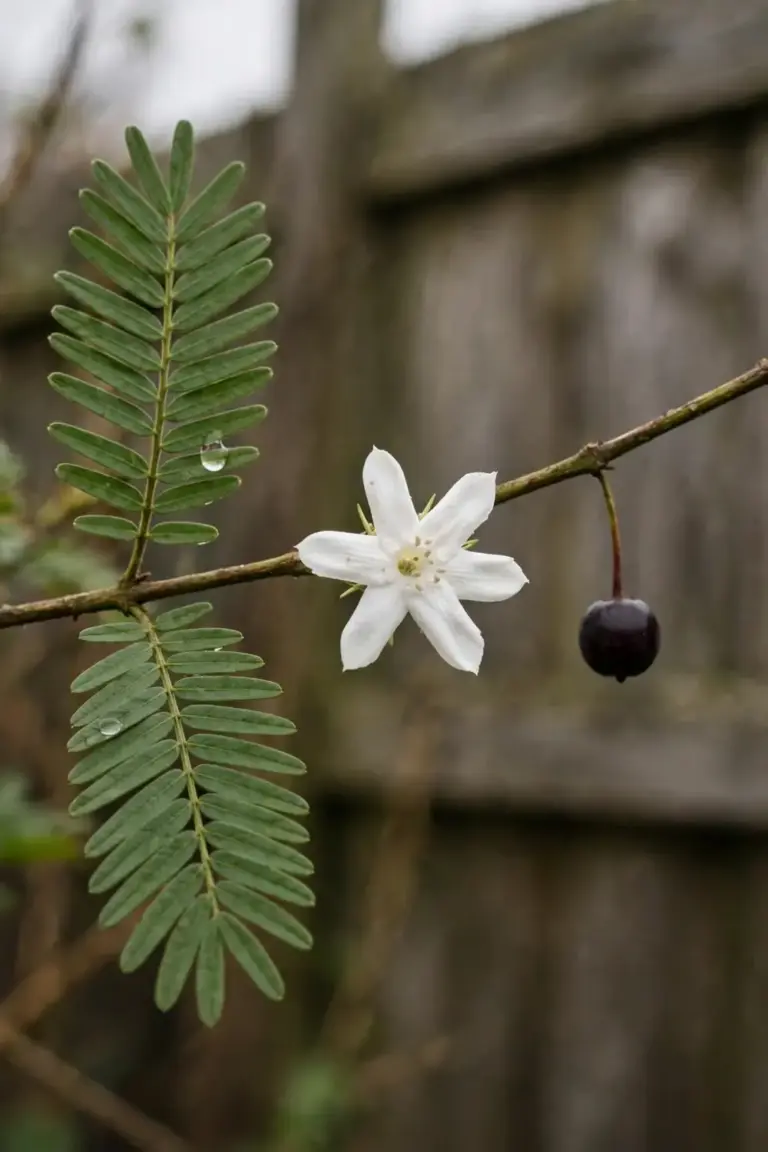
Leaf arrangement comes first in the field for a reason. Opposite leaves narrow the field to Jasminum, Trachelospermum, Stephanotis, Gelsemium, Philadelphus, Gardenia, and Murraya. Alternate leaves narrow it to Cestrum at once. A single photo of the stem with two leaves settles that split in seconds.
Count petals and lobes in the flower photo. Five lobes on a salverform flower mean star jasmine. Five lobes on a waxy tube mean Madagascar jasmine. Four petals mean Philadelphus mock orange. Trumpet flowers in gold mean Carolina jessamine, while trumpet flowers in pink, red, or white mean Mandevilla. Star-shaped white flowers with a tube mean a true jasmine.
Never collect a protected species, and never pick flowers that are not yours. Photograph the plant where it stands. If the plant grows in a reserve or a national park, the photograph is the whole record. If the plant grows on a neighbour’s fence, ask before touching it. A name is worth nothing if the record breaks the rules that protect the plant.
A plant out of flower still yields a name. Leaf arrangement and leaflet count carry the key when flowers are gone. Opposite pinnate leaves point at a true jasmine. Opposite simple leathery leaves point at star jasmine or Madagascar jasmine. Alternate leaves point at night-blooming jasmine. Fruit, where any hangs, closes the case: a berry points at Jasminum, a flattened capsule points at Gelsemium, and a white berry on an alternate-leaved shrub points at Cestrum.
Frequently Asked Questions
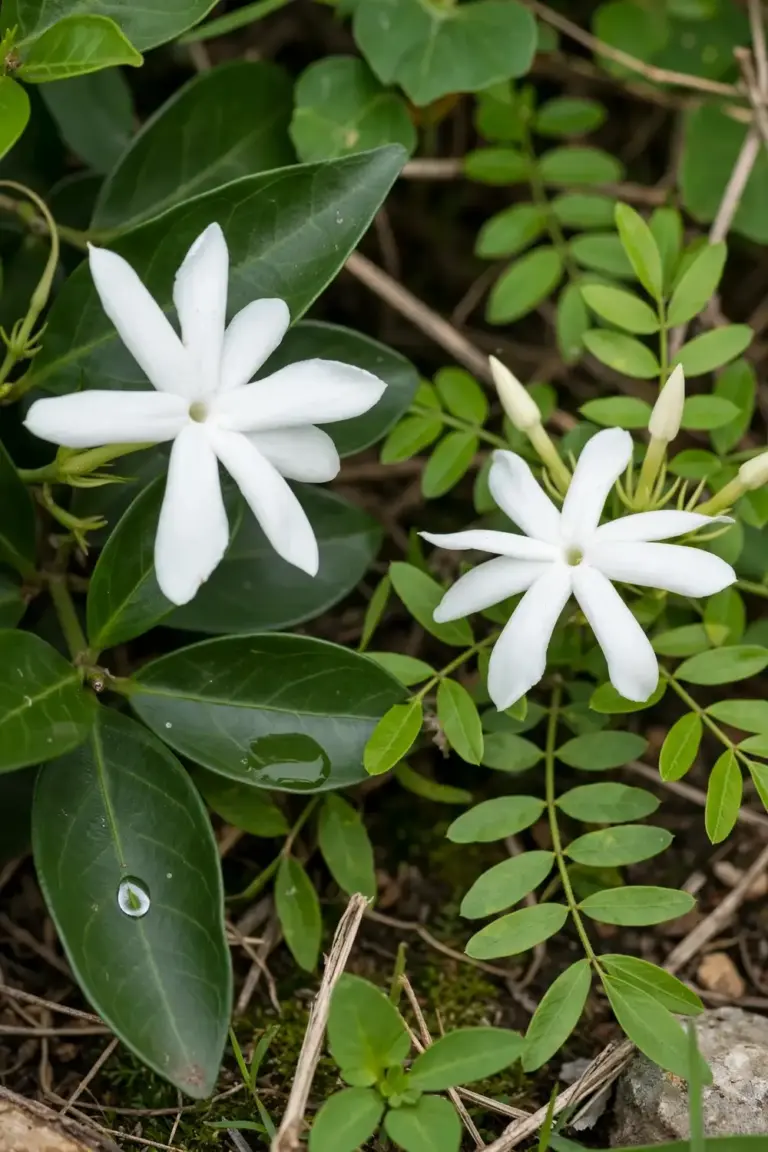
Check the flower form first. Star jasmine opens as a flat star on a narrow tube, with five petals joined at the base, and its cut stems bleed milky sap. True jasmine opens as a tube with spreading lobes and shows no milky sap. The leaf backs differ too. Star jasmine leaves run glossy and leathery. True jasmine leaves run thinner. Flower form plus sap settles it.
Yes. Pink jasmine, Jasminum polyanthum, is an environmental weed in Australia. It escaped cultivation, climbs into tree canopies, and smothers native vegetation at every level. NSW places it under a general biosecurity duty, which requires people who deal with the plant to prevent, eliminate, or minimise the risk it poses. Do not plant it, and keep stem fragments out of dumped garden waste.
Carolina jessamine, Gelsemium sempervirens, is the poisonous one. Every part of the plant is dangerously poisonous, so never taste any part of it. Night-blooming jasmine, Cestrum nocturnum, is also toxic if eaten, with the berries the greatest concern. True jasmines in the genus Jasminum do not carry the same poison warning. Never taste any jasmine-like flower, since the poisonous relatives share the scent and the name.
They can. The two plants differ in family, flower form, and sap, so a side-by-side comparison makes the difference plain. Star jasmine shows the flat star flower and milky sap, while common jasmine shows the star-shaped flower with spreading lobes and no milky sap. The comparison works. The two plants are easy to tell apart once both flower.
Australia holds several native true jasmines. Stiff jasmine, Jasminum volubile, is the best known, with one leaflet per leaf and winter flowers. Native jasmine, Jasminum suavissimum, carries narrow elliptical leaves and small perfumed flowers. Jasminum didymum scrambles across most of Australia with variable leaves. All three belong to Jasminum, so all three are true jasmines. The single leaflet marks the native group.
Start With the Genus, Then the Species
Jasmine is a name, not a plant. The genus answers the first question. The species answers the second. A plant that fails the Jasminum test still deserves a name, and the relatives and lookalikes covered here give it one. Run the leaf, flower, habit, and fruit key on every jasmine-like plant you meet. Check the weed list for pink jasmine. Keep your hands off the poisonous relatives. Jasmine identification in Australia comes down to one habit: check the traits before the name.