
Native hibiscus in Australia means three plant groups, not one plant. The label on the pot can say “native hibiscus” for an Alyogyne, a true native Hibiscus species, or a hybrid of the two. This guide covers growing hibiscus plants in australia with the native side first, and it names 3 groups, 4 site factors, and 1 shared routine, so you buy the group that fits your garden instead of the flower that caught your eye. Start with the three groups, then match one to your sun, frost, soil, and space.
1. Hibiscus Is Three Plants in Australian Gardens
Three groups share the hibiscus name in Australian gardens. Group one is Alyogyne, a separate genus that nurseries sell as native hibiscus. Group two is the true native Hibiscus species, including Hibiscus heterophyllus, Hibiscus splendens, and Hibiscus divaricatus. Group three is the exotic tropical Hibiscus rosa-sinensis, the garden-center hibiscus with the big glossy flowers. All three belong to the mallow family, Malvaceae. All three carry flowers that open in the morning and last about one day. The groups differ in frost tolerance, size, feeding needs, and where each one grows best.
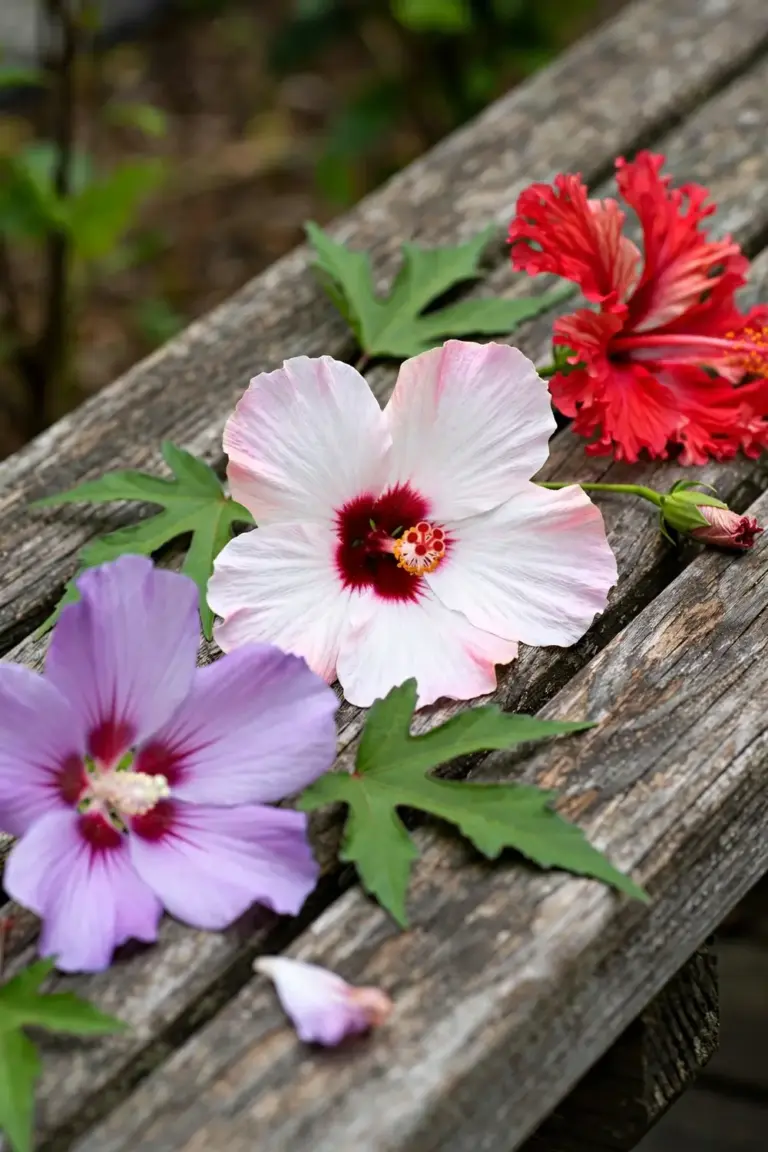
The table below names the groups side by side. Use it as the map for the rest of this guide. Every profile that follows expands one row of this table.
| Group | Botanical Names | Native to Australia? | Flowers | Frost | Best Use |
|---|---|---|---|---|---|
| Alyogyne (native hibiscus) | Alyogyne huegelii, Alyogyne hakeifolia | Yes | Lilac, violet, pink, or white, about 7 cm across | Light frost | Feature shrub, screen, pots |
| Native Hibiscus species | Hibiscus heterophyllus, Hibiscus splendens, Hibiscus divaricatus | Yes | White to pink with a deep red center, or pink | Light frost | Screen, feature shrub, garden beds |
| Sea hibiscus (cottonwood) | Talipariti tiliaceum, sold as Hibiscus tiliaceus | Yes | Yellow with a deep red center, deepening to orange and red through the day | Light frost | Coastal shade tree, windbreak, screen |
| Exotic tropical hibiscus | Hibiscus rosa-sinensis | No | Red, pink, orange, yellow, or white, single or double | Frost-tender | Warm-climate feature, pots in frost zones |
Read the label before you buy. A tag that says “native hibiscus” most often means an Alyogyne, not a native Hibiscus species. A tag that says only “hibiscus” most often means the exotic Hibiscus rosa-sinensis. The botanical name on the tag settles the question every time, and the rest of this guide shows you what each name means in practice.
2. Alyogyne: The Native Hibiscus Most Nurseries Sell
Alyogyne is a separate genus from Hibiscus. Alyogyne huegelii is the species behind most plants sold as native hibiscus in Australian nurseries. It is a fast-growing, medium-sized shrub that reaches about 2.5 metres tall and almost as wide. It grows naturally in sandy to sandy-gravel country in South Australia and Western Australia. It adapts to a wide range of soil types, and it hates bad drainage.
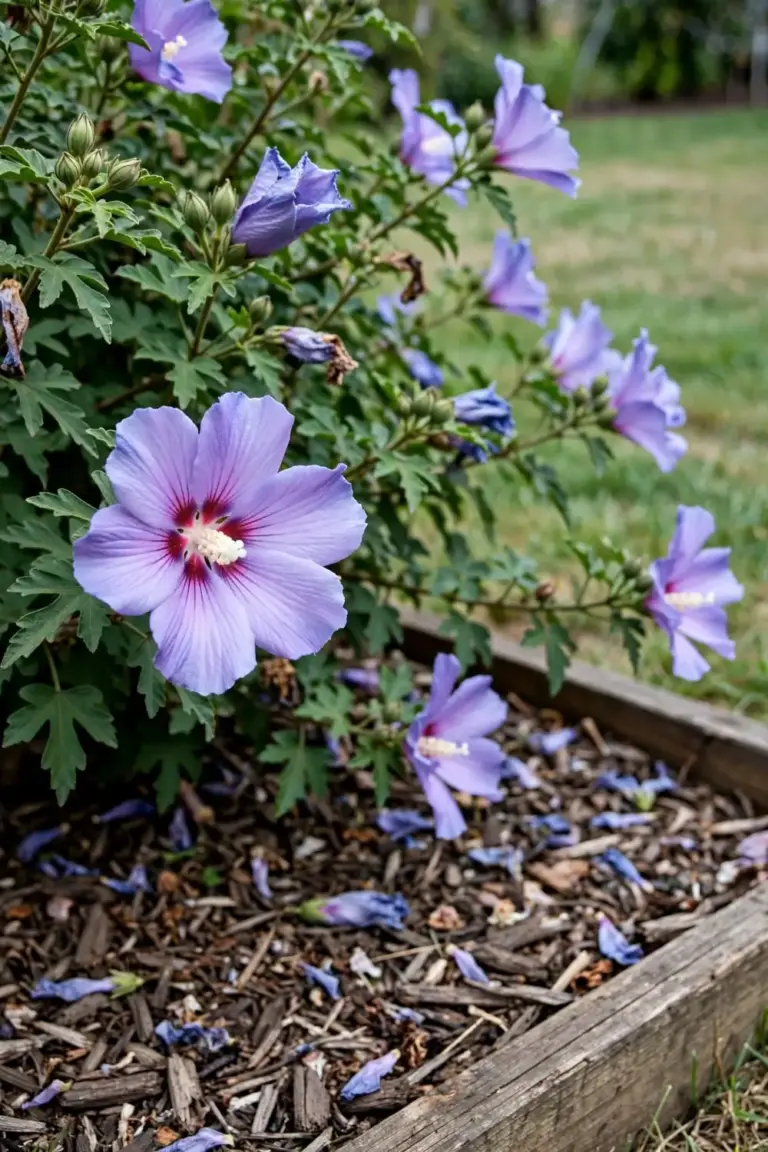
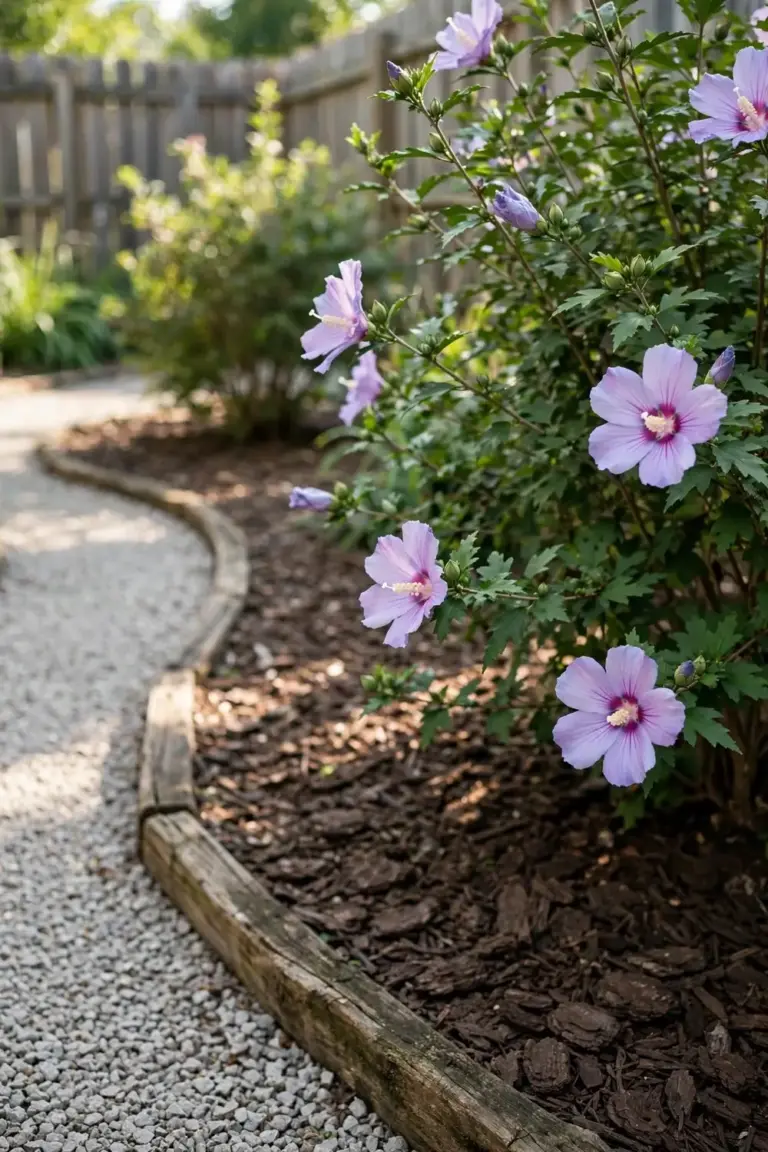
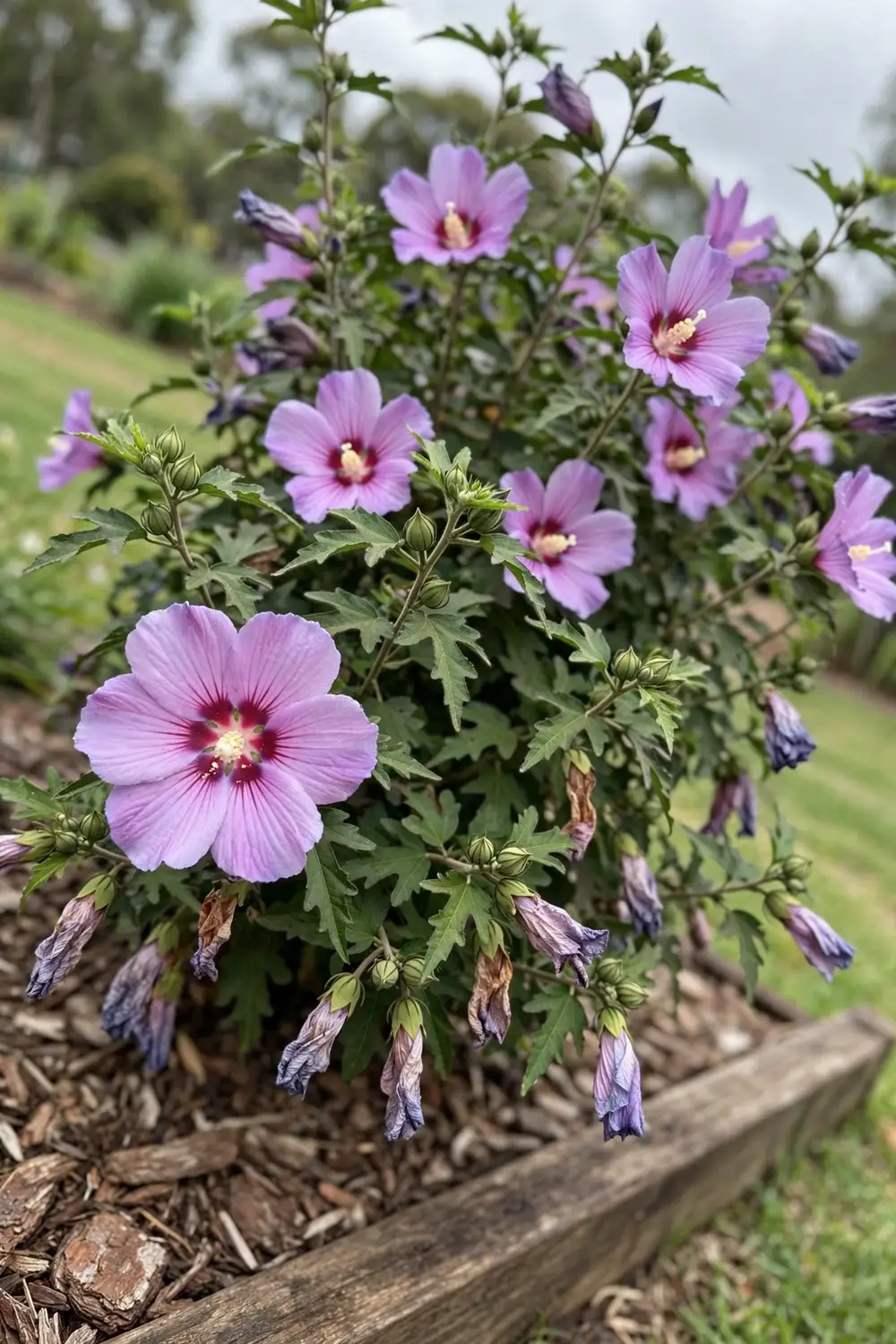
The flowers carry the hibiscus look in lilac shades. The Australian National Botanic Gardens describes flowers about 7 cm across with reddish-purple throats, in lilac, violet, blue, rose pink, and white forms. ANBG Alyogyne Flowering runs from late spring to the end of summer, and one shrub can produce hundreds of blooms in a season. Each flower opens in the morning and lasts one day, and fresh buds keep the display going for months. The leaves are hairy, deeply three to five lobed, and dull green.
Alyogyne suits a sunny, open position with wind protection from nearby shrubs or trees. It needs some protection from the hardest frosts, and it grows well in a pot in frost-prone districts. Prune after the main flowering flush in late spring. The ANBG notes that the shrub can be pruned back quite hard at that point, and it throws vigorous new shoots from old wood. That habit makes it easy to hold at a small, compact size. Propagation works best from half-hardened tip cuttings about 7 to 8 cm long, and soft tip cuttings also strike well. Few pests trouble it, although a moth caterpillar has been reported defoliating plants on the Gold Coast.
Cultivars widen the choice. Alyogyne huegelii ‘West Coast Gem’ grows to about 2 to 2.5 metres with purple flowers, and it tolerates light frost. Alyogyne ‘Karana’ stays smaller, at about 1 to 1.5 metres high and wide, with mauve-purple flowers from spring through autumn. Hybrids with Alyogyne hakeifolia, such as ‘Aussie Purple’, add deeper purple flowers on a shrub of about 1.5 to 2 metres. Buy the size that fits the spot, because a fast grower in a small bed becomes a pruning job within two seasons.
3. Native Hibiscus Species: Heterophyllus, Splendens and Divaricatus
The true native Hibiscus species are shrubs and small trees from eastern Australia. Hibiscus heterophyllus, the native rosella, is the best known of the three. Hibiscus splendens, the hollyhock tree or splendid hibiscus, grows larger and carries prickles. Hibiscus divaricatus is the third parent species, and it appears in gardens mostly through hybrids with Hibiscus heterophyllus. All three flower in warm months, and all three tolerate only light frost.
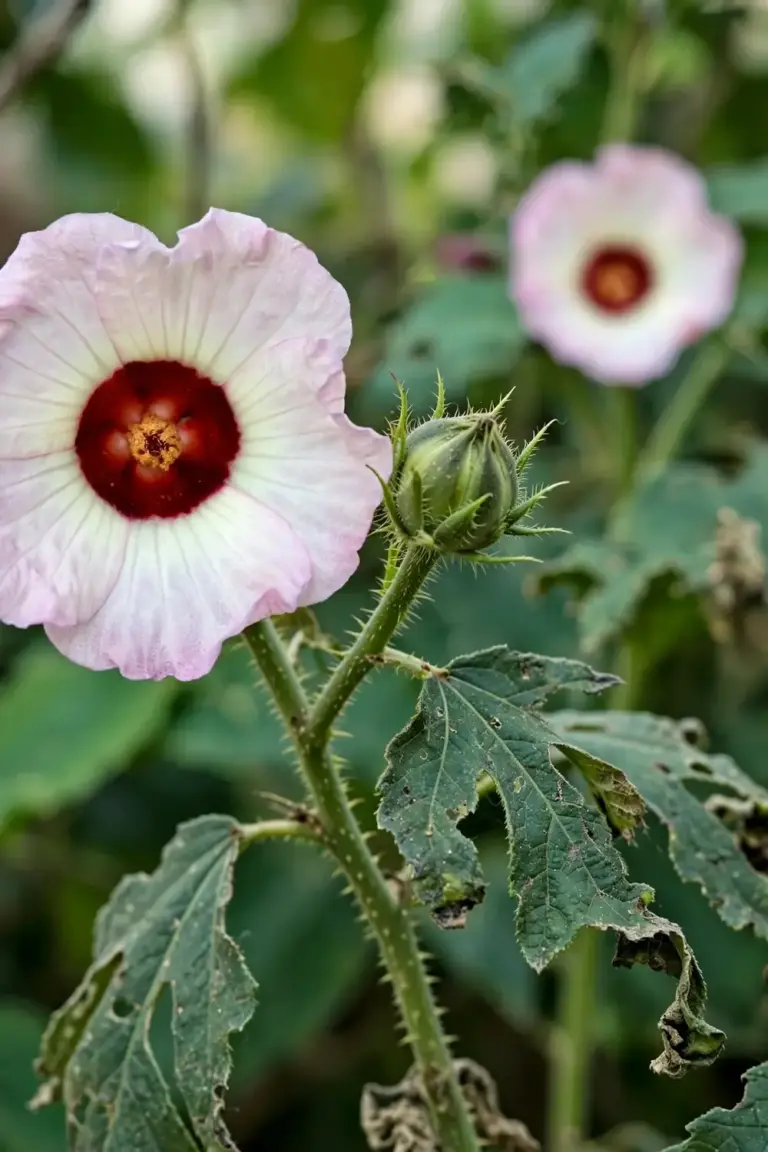
Hibiscus heterophyllus grows as a prickly shrub to small tree. Hawkesbury City Council describes a plant 2 to 3 metres high and 3 to 8 metres wide, with fragrant flowers in white to pale pink and a deep red center from November to January. Hawkesbury Hibiscus heterophyllus The leaves are large, three-lobed, and rough. The plant grows in moist forests along riverbanks, creeks, and rainforest margins, and it accepts sandstone, sand, loam, or clay soils. It tolerates only a light frost, so frost-prone gardens should grow it against a wall or fence, or in a pot that moves under cover. Prune back one third after flowering to hold a bushy form. The flower buds can be made into jam, and the fruit is edible.
Hibiscus splendens grows into a bush or small tree to about 6 metres tall. Its trunk and stems carry sharp prickles, and its leaves run 7 to 20 cm long, toothed, heart-shaped, and pointed at the tip. The pink flowers measure about 7 cm long and appear from October to December. The seed capsules carry hairs that cause severe skin irritation, so wear gloves when you handle fruit or collect seed. Germination from seed is easy, and cuttings strike well. Give it room, because a 6-metre prickly tree beside a path becomes a problem.
Hibiscus divaricatus rarely appears as a standalone garden plant. Its garden role is a parent species for hybrids. Crosses of Hibiscus heterophyllus and Hibiscus divaricatus include ‘Aussie Delight’, with pale pink perfumed flowers on a shrub of about 2 metres, and ‘Aussie Pearl’, with white flowers tinged pink on a compact bushy shrub of about 2 metres. Both hybrids suit hedging and screening, and both tolerate light frost. If the tag names a hybrid rather than a species, the hybrid name tells you the plant you bought, and the parent species tell you its habits.
4. Hibiscus Rosa-Sinensis: The Exotic Garden-Centre Hibiscus
Hibiscus rosa-sinensis is the exotic tropical hibiscus. It comes from outside Australia. It is the shrub behind most garden-center hibiscus displays, with large single or double flowers in red, pink, orange, yellow, purple, and white, and with new flowers opening daily from late spring to autumn. Seasol lists varieties from under 1 metre to well over 3 metres high, so size varies with the cultivar you buy. Seasol Hibiscus The shrub is evergreen in warm climates, and it drops leaves after cold snaps in cooler districts.
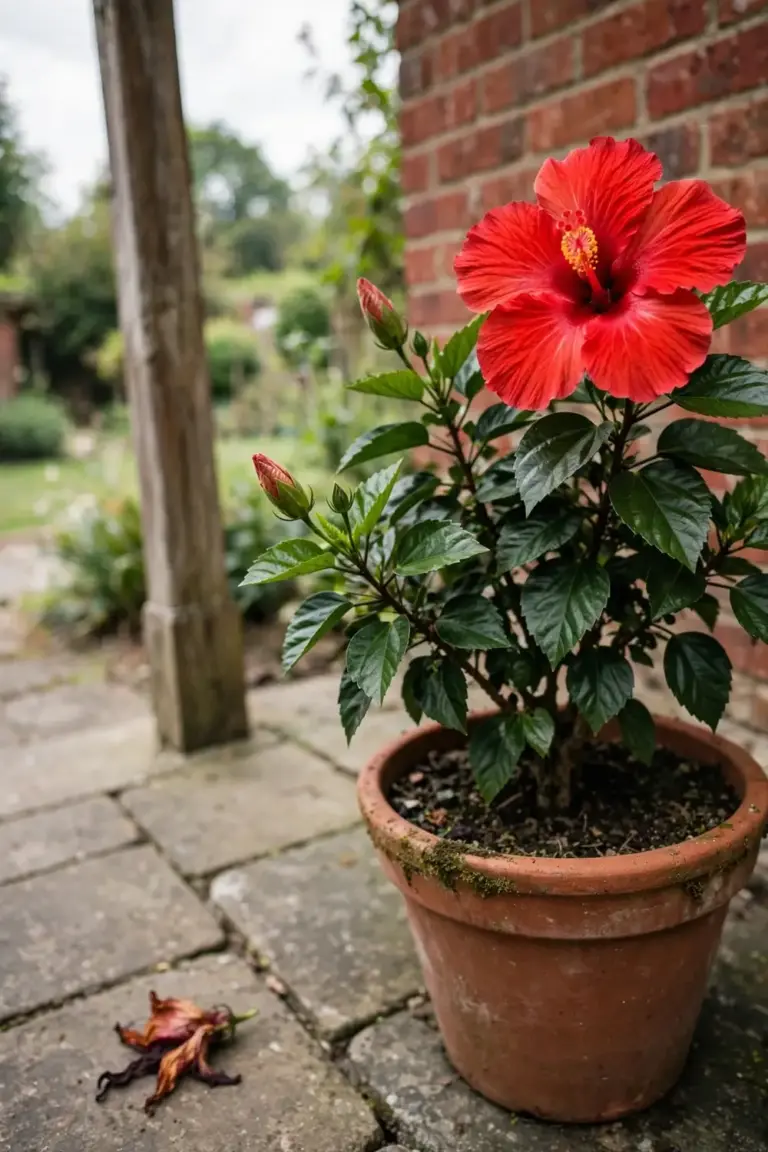
Frost honesty matters with this group. Hibiscus rosa-sinensis is frost-tender. A hard frost burns leaves and soft stems, and a repeated frost kills the plant to the base or kills it outright. Warm-climate gardens grow it in the ground as a feature shrub or an informal hedge. Frost-zone gardens should grow it in a pot and move it to a sheltered wall, a veranda, or a bright indoor spot before the first frost. The pot also suits renters and small courtyards, because a 40 cm pot holds a 1 to 2 metre shrub for years with yearly root pruning and fresh mix.
Feeding differs from the native groups. The exotic hibiscus is a heavier feeder, and it responds to regular feeding through the growing season with more flowers. The native groups want a light hand, and this guide covers that difference in the shared-care section. Do not apply the exotic feeding routine to a native plant, because heavy feeding pushes leafy growth and bud drop on natives. Buy Hibiscus rosa-sinensis for its flower colors and its long display, and buy it knowing it needs winter protection outside the warm zones.
5. The Name Traps: Native Hibiscus, Rose Mallow, Cottonwood and Rosella
Common names cause most hibiscus mistakes. Five traps catch buyers every spring. Each trap below names the confusion and the plant behind it.
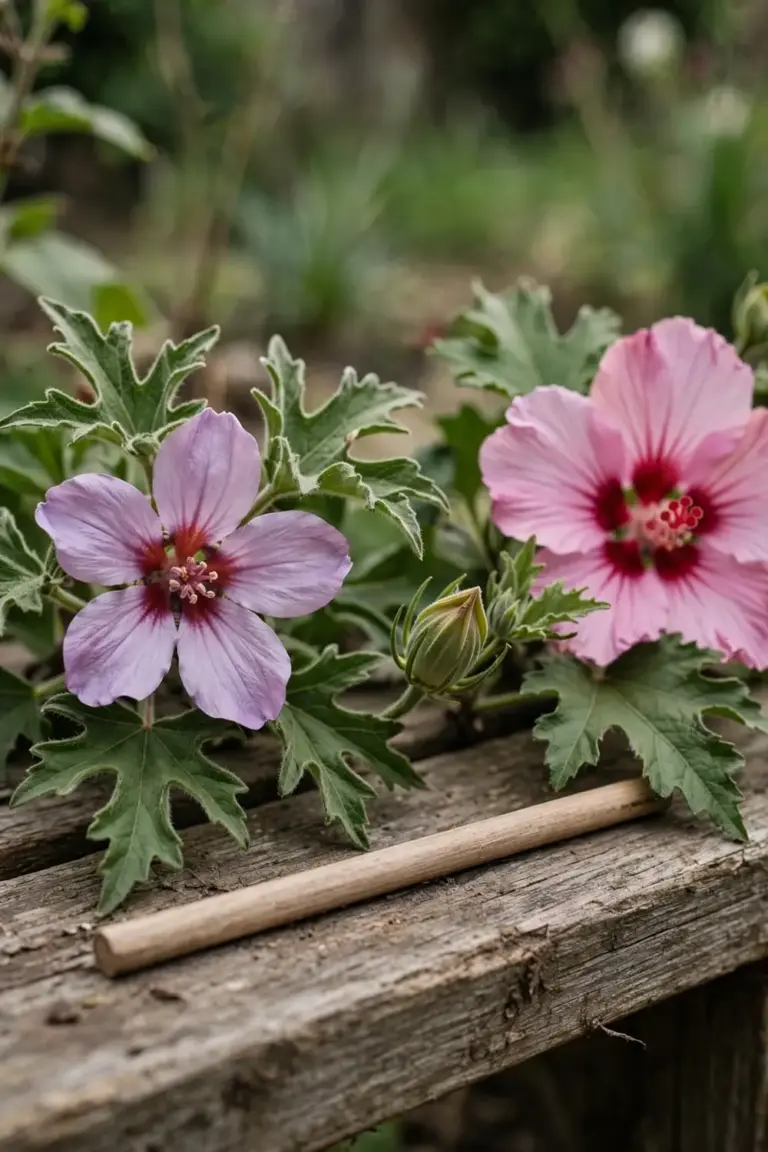
The first trap is “native hibiscus” itself. In nurseries, “native hibiscus” usually means an Alyogyne, which is a separate genus from Hibiscus. A true native Hibiscus species carries a Hibiscus botanical name, such as Hibiscus heterophyllus. The word “native” on a tag tells you the plant comes from Australia. The botanical name tells you which genus it belongs to. Check the botanical name every time.
The second trap is “rose mallow”. Rose mallow is Hibiscus moscheutos, a deciduous hardy hibiscus from North America. It dies back to the base in winter and regrows in spring. Gardeners who buy rose mallow expecting year-round leaves end up with bare stems all winter.
The third trap is “cottonwood”. Cottonwood hibiscus is Talipariti tiliaceum, sold in many references as Hibiscus tiliaceus. It is a coastal tree from northern and eastern Australia, and it grows to about 8 metres in gardens. Its yellow flowers open with a deep red center and deepen to orange and then red through the day. Its heart-shaped leaves and salt-wind tolerance make it a coastal shade tree and windbreak. The name also belongs to Populus trees in North America, which are a different plant entirely. In an Australian nursery, cottonwood hibiscus means the coastal tree, not a poplar.
The fourth trap is the Talipariti rename. Many references now list the sea hibiscus as Talipariti tiliaceum, with Hibiscus tiliaceus as a synonym. The plant is the same coastal tree under both names. This guide uses Talipariti tiliaceum after this point, because that name matches current herbarium and nursery listings. If your tag says Hibiscus tiliaceus, you hold the same plant.
The fifth trap is “rosella”. The edible rosella is Hibiscus sabdariffa, an exotic species grown for its fleshy red calyces, which cooks into jam and drinks. The native rosella is Hibiscus heterophyllus, an ornamental shrub whose flower buds also cook into jam. The two plants share a common name and a use, and they differ in habit, flower, and garden role. Buy Hibiscus sabdariffa for a vegetable bed, and buy Hibiscus heterophyllus for a shrub border.
6. Decide by Site: Sun, Frost, Soil and Space
Choose the group that fits your site, not the flower that fits your mood. Four site factors settle the choice. Sun comes first. All three groups flower best in full sun, and all three accept light shade with fewer flowers. A site with less than half a day of direct sun grows leaves and few blooms, so a shade-heavy courtyard suits a foliage plant better than any hibiscus.
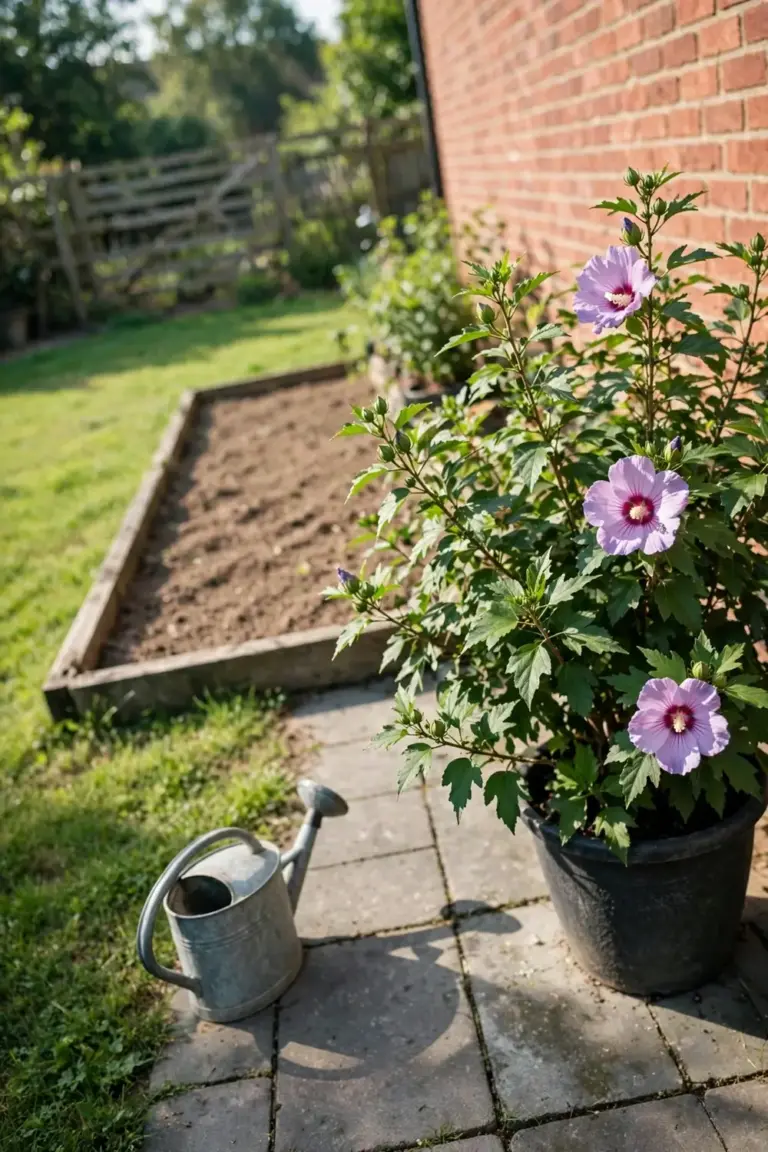
Frost comes second. Light-frost districts suit Alyogyne and the native Hibiscus species, with a wall or fence for shelter on the coldest nights. Frost-free districts suit all three groups, including the exotic Hibiscus rosa-sinensis. Frost-prone districts should grow any hibiscus in a pot that moves under cover, or should choose a hardy deciduous species instead. Australian Native Container Gardens A pot on a trolley or a pot stand turns a tender plant into a movable plant.
Soil comes third. All three groups need drainage. Alyogyne hates wet feet, and it fails in waterlogged clay. The native Hibiscus species accept a wider soil range, including loam and clay, as long as water drains away. The sea hibiscus accepts most soils, including poor coastal soils, and it tolerates salt wind. Improve heavy clay with coarse organic matter and a raised bed, or grow in a pot with a free-draining native mix.
Space comes fourth. Alyogyne huegelii needs about 2.5 metres of height and width at maturity, and the compact cultivars need about 1.5 metres. Hibiscus heterophyllus can spread to 3 metres wide or more. Hibiscus splendens and the sea hibiscus grow into small trees, so give them 4 metres or more of clear space. The exotic Hibiscus rosa-sinensis ranges from under 1 metre to over 3 metres by cultivar, so read the tag for the mature size. A small garden suits a compact Alyogyne cultivar in a pot, not a sea hibiscus beside a path.
7. Shared Care: One Routine for All Three Groups
One routine covers all three groups, with one feeding difference between natives and exotics. Sun, drainage, water, light feed, and a prune after flowering keep every hibiscus group healthy. The routine below applies to Alyogyne, native Hibiscus species, sea hibiscus, and exotic Hibiscus rosa-sinensis alike, and it flags the one point where the groups diverge.
Sun and drainage set the base. Plant in full sun, or in light shade in the hottest inland districts. Dig a hole twice as wide as the pot and no deeper than the pot, and check that water drains away within an hour. A soil test tells you the pH and the nutrient levels before you plant, and healthy soil supports every hibiscus group. Soil Health Mulch with coarse bark or leaf litter, and keep the mulch clear of the stem so the crown stays dry.
Water deeply and then let the soil dry partway. New plants need steady water through their first summer. Established natives cope with dry spells, and Alyogyne turns drought-tolerant once its roots settle. Potted plants dry faster than garden plants, so check the mix with a finger before you water, and water when the top few centimetres feel dry. Yellow leaves after a wet week usually mean wet roots, not a hungry plant, so check drainage before you reach for fertilizer.
Feed lightly for natives, and feed steadily for exotics. I have learned that the native hibiscus I feed lightly flowers longest, while the one I feed heavily grows leaves and drops buds. Give native plants one light feed of a native-plant fertilizer in early spring, and skip feeding in rich soil where the plant already grows well. A grower fact sheet for an Alyogyne hybrid recommends one yearly feed of a slow-release fertilizer formulated for native plants in early spring. Give the exotic Hibiscus rosa-sinensis regular feeding through the growing season, because it flowers on new growth and uses more nutrients. Never feed a dry plant, and always water before and after feeding.
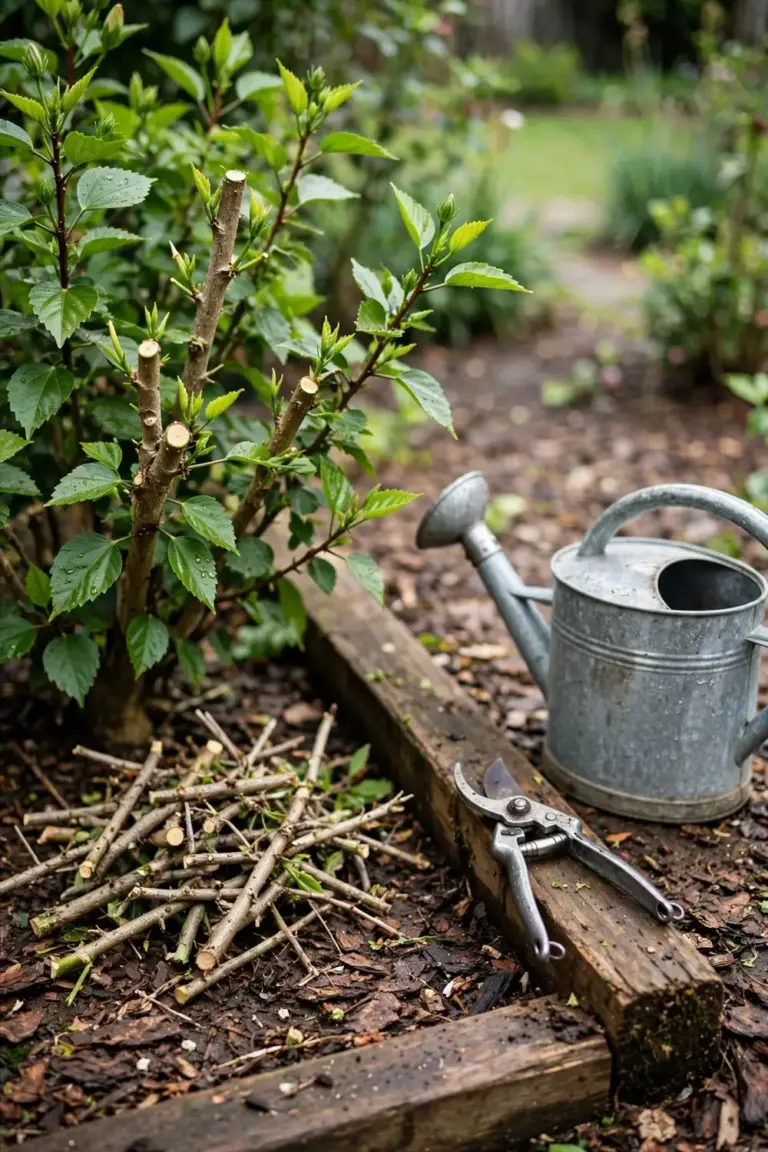
Prune after flowering, and prune lightly. Spring Pruning Techniques Alyogyne accepts a hard prune after its late-spring flush, and it regrows fast from old wood. Hibiscus heterophyllus holds a bushy form with a one-third prune after flowering. The exotic hibiscus flowers on new growth, so a spring prune shapes the shrub and lifts flowering. Remove dead, crossing, and rubbing stems first, then shape the outline. Wear gloves for the prickly species, and clean tools between plants.
8. Pests at a Glance: Aphids, Hibiscus Beetle and Mealybugs
Pests on hibiscus stay manageable with early checks. Aphids cluster on soft new growth and flower buds, and they distort leaves as they feed. Hibiscus beetle chews flowers and buds in summer. Mealybugs hide in leaf joints and on stems as white cottony clusters. Check new growth weekly in warm months, and check the undersides of leaves, where pests gather first. Healthy plants in sun with good airflow suffer less pest damage than stressed plants in shade.
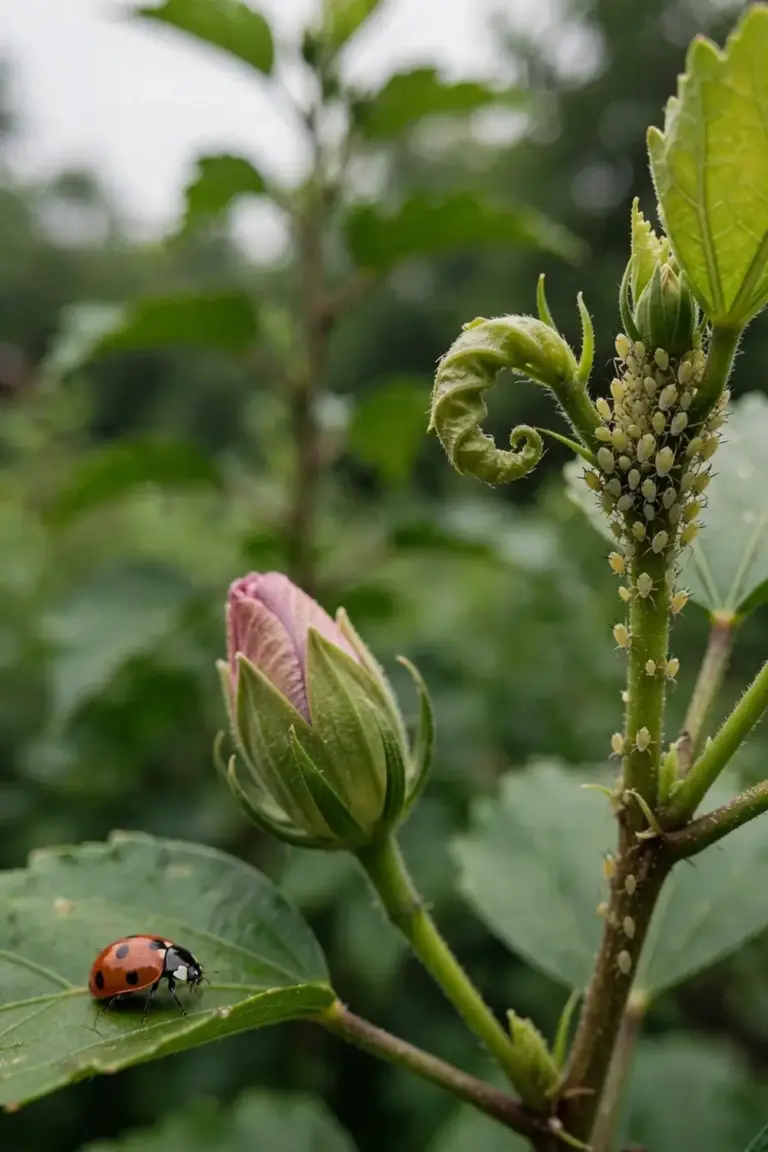
Treatment stays at pointer depth here. Blast aphids off with a firm jet of water, and repeat after a few days if they return. Pick hibiscus beetles off flowers by hand in the morning, when they move slowly. Dab mealybugs with a cotton swab dipped in rubbing alcohol, and prune out heavy clusters. Encourage ladybirds, lacewings, and hoverflies, because they eat aphids and keep numbers down. Never spray open flowers, because sprays kill the pollinators that visit them.
One pest deserves a special note. The hibiscus erineum mite, Aceria hibisci, is a tiny mite that feeds on Hibiscus rosa-sinensis and raises velvety galls on leaves, stems, and flowers. The University of Florida notes that the mite is host-specific to Hibiscus rosa-sinensis, and that heavy galling can stall growth and stop flowers opening. UF/IFAS Hibiscus Erineum Mite Prune out galled growth, bag it, and bin it, because the mites spread on infested cuttings. Western Australia runs the strictest plant quarantine in the country, so check the current WA quarantine rules with DPIRD before you order hibiscus plants interstate into WA. This guide does not cover hibiscus pest treatment in depth, because a dedicated hibiscus-bug guide owns that topic.
9. Propagation: Cuttings and Seed
Cuttings give you the same plant as the parent, and seed gives you variation. Cuttings suit named cultivars, because a cutting of ‘West Coast Gem’ grows into ‘West Coast Gem’. Seed suits species plants, because seedlings of Hibiscus heterophyllus grow into Hibiscus heterophyllus with natural variation. Choose cuttings when you want a known flower, and choose seed when you want numbers or you enjoy the surprise.
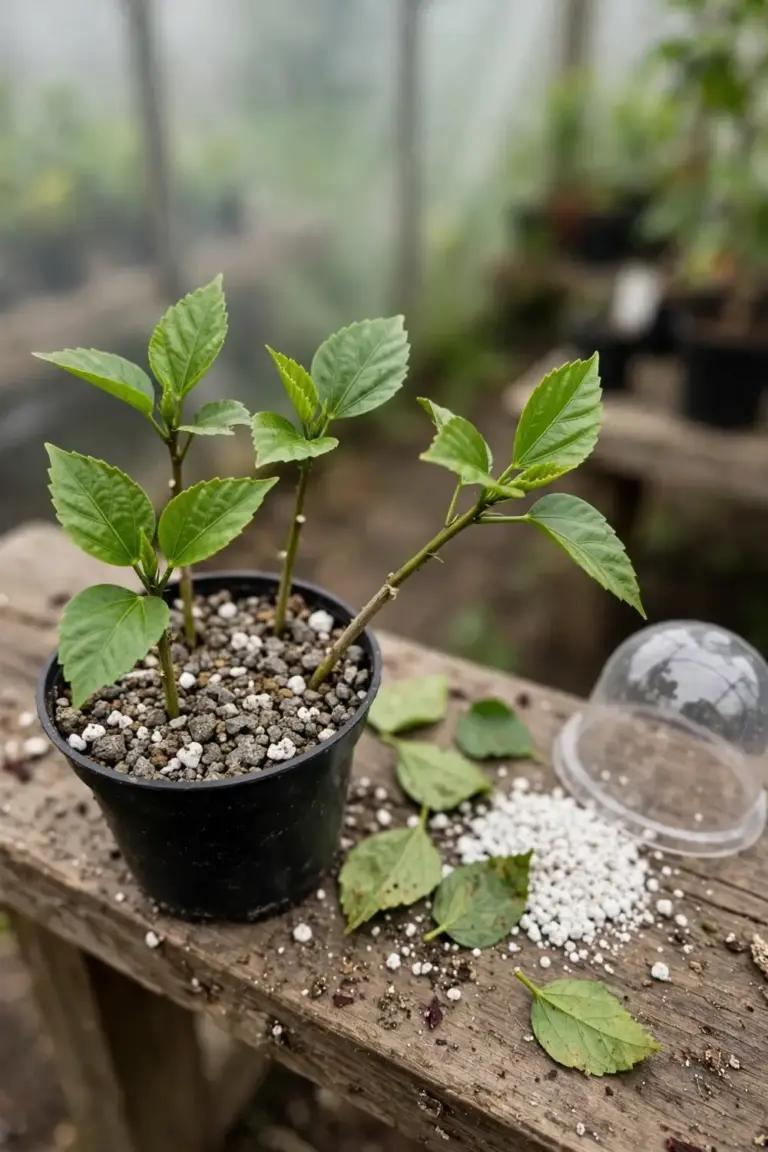
Take cuttings in late spring or early summer from healthy, disease-free growth. Cut a half-hardened tip about 7 to 8 cm long, strip the lower leaves, and set the cutting into a free-draining propagation mix. The ANBG gives that 7 to 8 cm length for Alyogyne huegelii, and the same length works across the groups. Keep the mix moist and the cutting out of direct sun, and roots form within weeks. A guide to starting plants from seed covers the trays, mix, and watering routine in detail. Seed Starting Guide Pot the rooted cutting into a small pot, grow it on until roots fill the pot, and plant it out in spring.
Seed needs one extra step. Hibiscus seed carries a hard coat, so nick the coat with sandpaper or a sharp knife before sowing. Sow in spring into a free-draining seed-raising mix, cover lightly, and keep the tray warm and out of direct light. Seedlings move into larger pots once they reach 20 cm tall, and they go into the garden once roots fill the pot. Seed-grown plants take longer to flower than cuttings, and seedlings from a hybrid may differ from the parent. Label every tray with the species name and the sowing date, because hibiscus seedlings look alike for months.
10. Troubleshooting: Bud Drop, Yellow Leaves and No Flowers
Three problems cover most hibiscus complaints. Bud drop comes first. Buds fall when roots dry out, when a cold snap hits, or when the pot moves to a new position. Keep water steady through budding, shelter the plant from sudden cold, and leave a budding plant where it stands. Heavy feeding also triggers bud drop on natives, so hold the fertilizer until flowering finishes. Buds that fall after a move usually settle once the plant adjusts to its new spot.
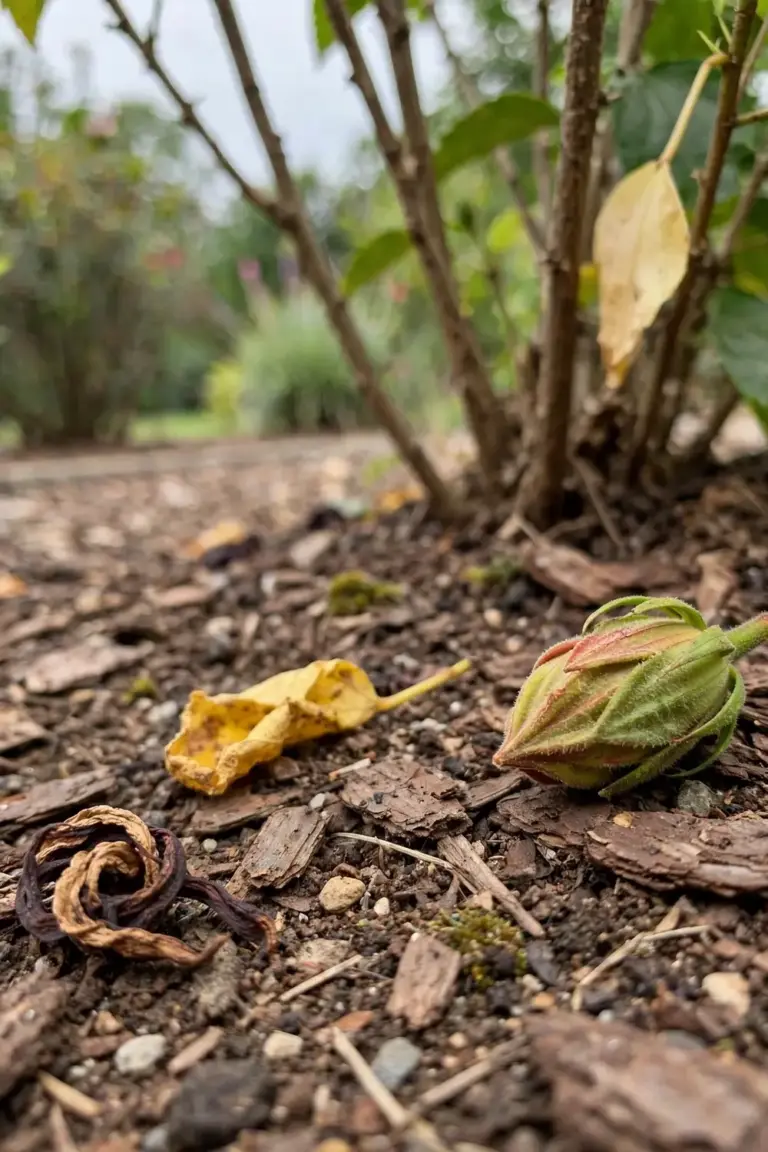
Yellow leaves come second. Old leaves yellow and drop in spring as new growth starts, and that pattern is normal. Yellow leaves across the whole plant point to wet roots, and the fix is drainage, not fertilizer. Yellow leaves with green veins point to an iron shortage in alkaline soil, and the fix is a soil test before any treatment. Yellow leaves on one branch point to a local problem, such as a damaged stem or a pest cluster, so inspect that branch before you treat the whole plant.
No flowers comes third. A hibiscus that grows leaves and no flowers usually sits in too much shade, carries too much nitrogen, or grows from a cutting that is too young. Move a potted plant into full sun, and hold the fertilizer on a native plant until you see buds. Prune after flowering, not before, because a hard prune at the wrong time removes the wood that carries the next flowers. A plant that flowered last year and skips this year may sit in a pot that is too small, so check whether roots circle the pot and move it up one size.
Frequently Asked Questions (FAQ)
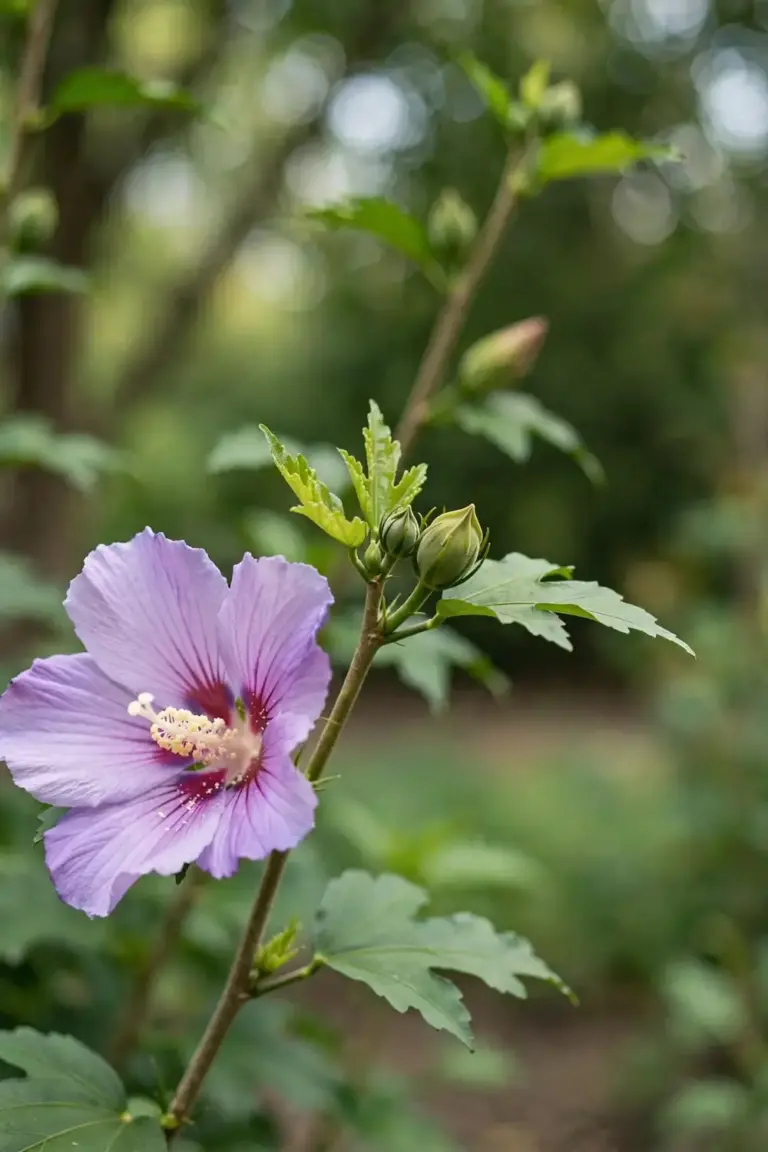
Alyogyne is not a true Hibiscus. It is a separate genus in the mallow family, and its botanical name is Alyogyne huegelii. Nurseries sell it as native hibiscus because its flowers carry the hibiscus shape. A true native Hibiscus species carries a Hibiscus botanical name, such as Hibiscus heterophyllus. Read the botanical name on the tag to tell the two apart.
Yes. A pot suits native hibiscus in frost zones and small gardens, and it turns a tender plant into a movable one that spends winter under cover. Choose a pot at least 40 cm wide with drainage holes, and use a free-draining native mix. Water when the top few centimetres feel dry. Feed once in early spring with a native-plant fertilizer, then move the pot under cover before the first frost.
Bud drop follows dry roots, a sudden cold snap, a move to a new position, or heavy feeding on a native plant. Keep water steady through budding, shelter the plant from cold wind, and leave a budding plant where it stands. Hold the fertilizer until flowering finishes. Buds that fall after a move usually settle once the plant adjusts to its new spot.
Yes, sea hibiscus and cottonwood hibiscus are the same coastal tree. Current references list it as Talipariti tiliaceum, with Hibiscus tiliaceus as a synonym. It grows to about 8 metres in gardens, and its yellow flowers deepen to orange and red through the day. The name cottonwood also belongs to Populus trees, which are a different plant entirely.
Check first, because Western Australia runs the strictest plant quarantine in the country. Rules change, and hibiscus plants have carried restrictions tied to pests such as the hibiscus erineum mite. Contact DPIRD or check the current WA quarantine rules before you order plants interstate into WA. Buy from a WA nursery when you garden in WA, because local stock already meets local rules.
Start With the Group That Fits Your Garden
Native hibiscus rewards the gardener who chooses by site. Pick Alyogyne for a sunny shrub border or a pot, and pick a native Hibiscus species for a screen or a feature shrub. Sea hibiscus suits a coastal garden with room for a tree. The exotic Hibiscus rosa-sinensis suits warm-climate color, with winter protection. Read the botanical name, give the plant sun and drainage, feed lightly, and prune after flowering. The flowers follow.