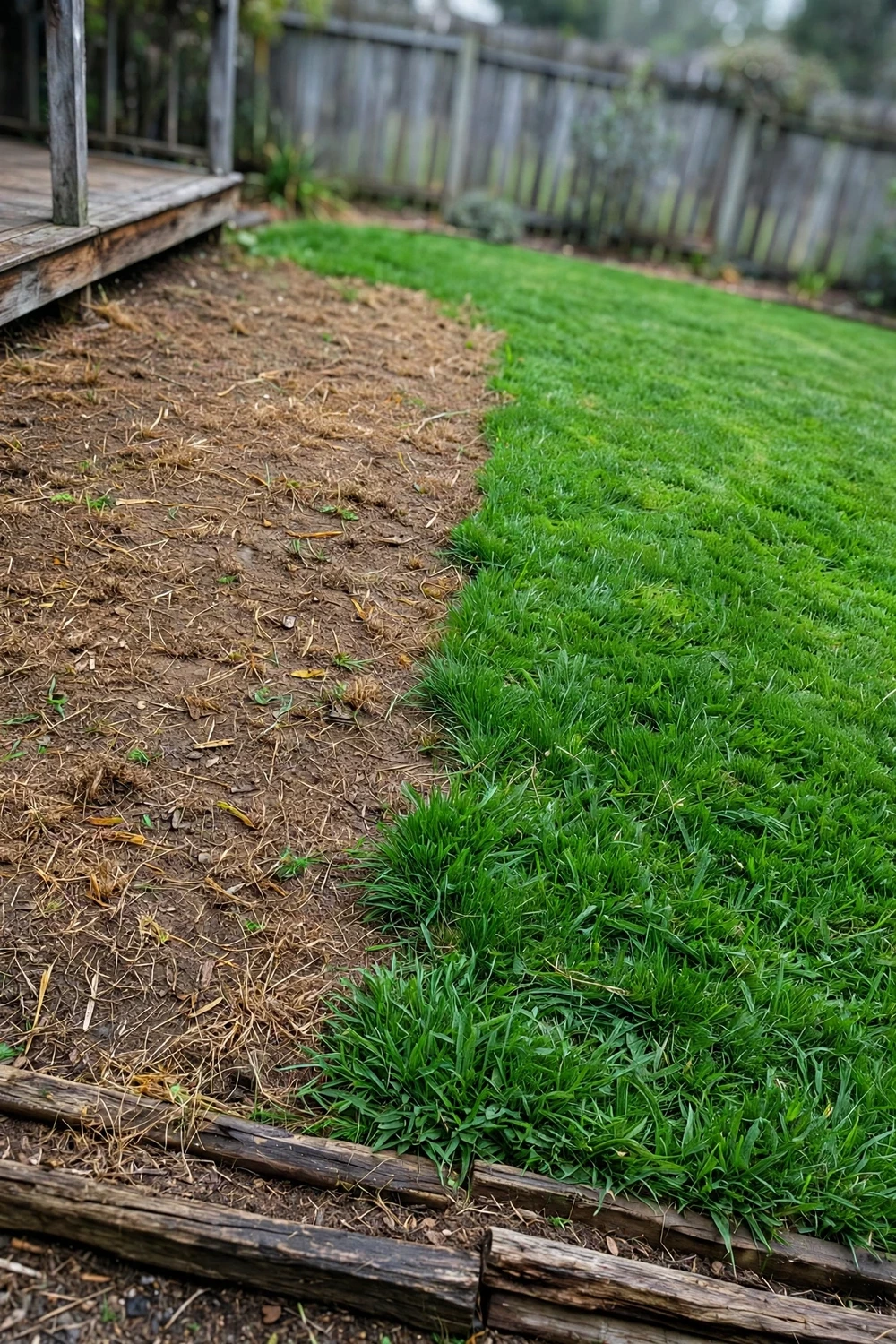

Buffalo lawn problems in Australia answer to pattern first and product second. 9 issues cause nearly every thin patch, brown circle, and bare strip on a Buffalo lawn, and each one shows a distinct pattern. Read the pattern, run one confirm test, then fix the cause.
I have learned that the lift test settles more Buffalo arguments than any spray bottle does.
The rest of this page is 9 issues, from the lift test on brown patches to winter color loss, plus the Buffalo rules that keep a fix from becoming a second problem. Buffalo grass is Stenotaphrum secundatum, the grass Americans call St. Augustinegrass. Sir Walter, Matilda, Palmetto, and Sapphire all answer to the same nine checks.
Read the Pattern Before You Treat Anything
The pattern names the cause faster than any product label does. A patch that peels up like a loose rug points to insects under the turf. A patch that stays anchored while the soil feels hard and dry points to water or soil. Round spots point to fungus. A slab-shaped brown rectangle on new turf points to establishment, not disease.
| Issue | Buffalo Sign | First Fix |
|---|---|---|
| Brown and yellow patches | Irregular patches, lift test decides insects vs water | Lift the turf, then water deep or treat confirmed grubs |
| Thinning in shade | Thin growth under trees and beside fences | Raise the cut, open the light, cut traffic |
| Thatch build-up | Spongy surface, water sits on top, mower scalps | Vertical-mow in the warm months, rake out the mat |
| Grubs and armyworm | Peeling turf, chewed blades, green frass in thatch | Soap flush to confirm, then treat per label |
| Dollar spot | Round bleached spots with straw-colored leaf lesions | Feed nitrogen, dry the leaf, stop thatch |
| Weeds and herbicide damage | Weeds plus twisted, bleached, or dead Buffalo | Check the label for Dicamba before any spray |
| Scalping and mowing damage | Brown stubble after a mow, torn leaf tips | Mow dry at 6 cm, keep the one-third rule |
| Compaction and drainage | Puddles, hard soil, thin growth on paths | Aerate the full lawn, top-dress, fix drainage |
| Winter color and new turf | Pale winter lawn, slab-pattern browning on new turf | Feed in late autumn, water new turf into contact |
Run the confirm test for the pattern you see. A test takes minutes, and a wrong spray costs a season.
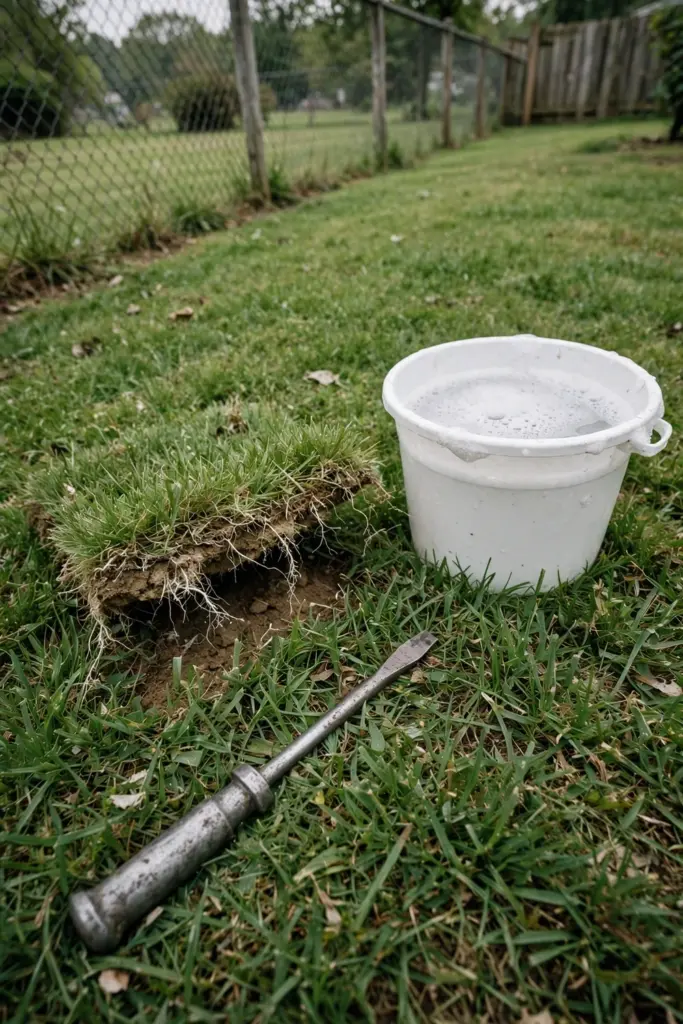
Three tools cover the whole page. A screwdriver tells you whether the soil is compacted or dry. A bucket of soapy water flushes out caterpillars. Your hands run the lift test on brown turf. Gather them before you treat anything. Work in daylight so you can see patch edges clearly.
1. Lift the Turf to Separate Grubs From Drought in Brown Patches
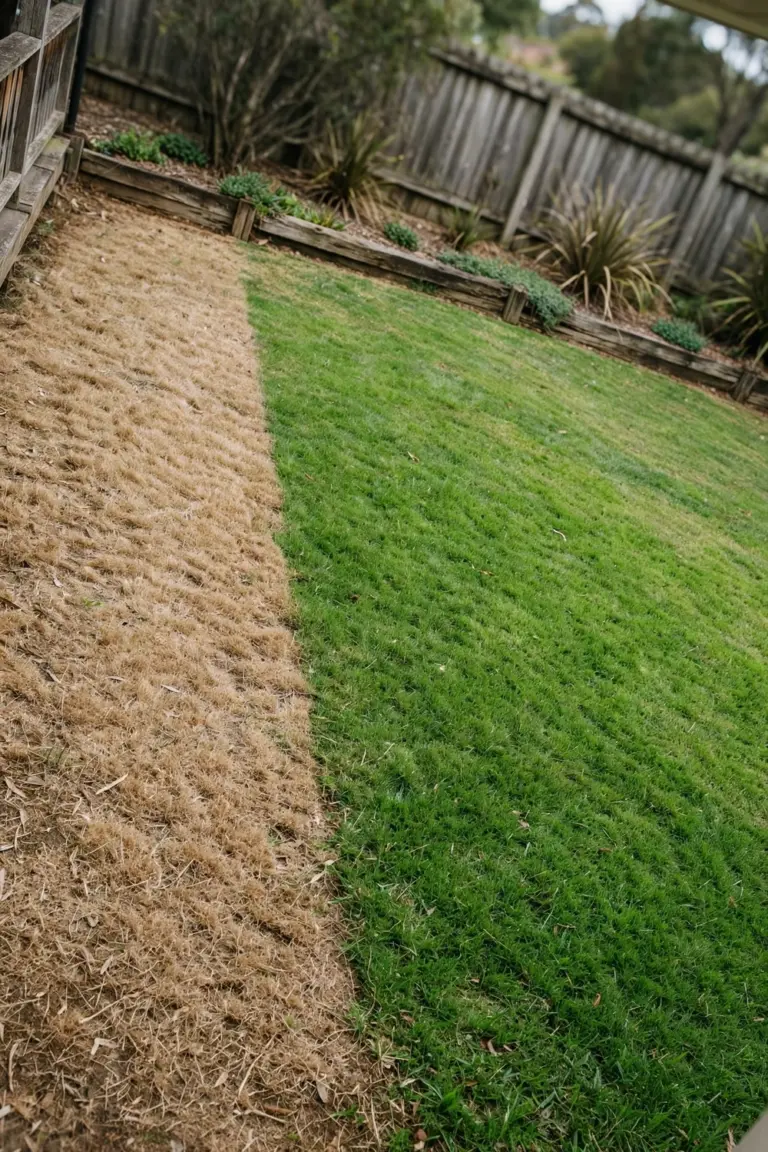
Brown patches on Buffalo come from drought, scalping, dog urine, compaction, grubs, or disease. The patch alone never names the cause. The lift test does.
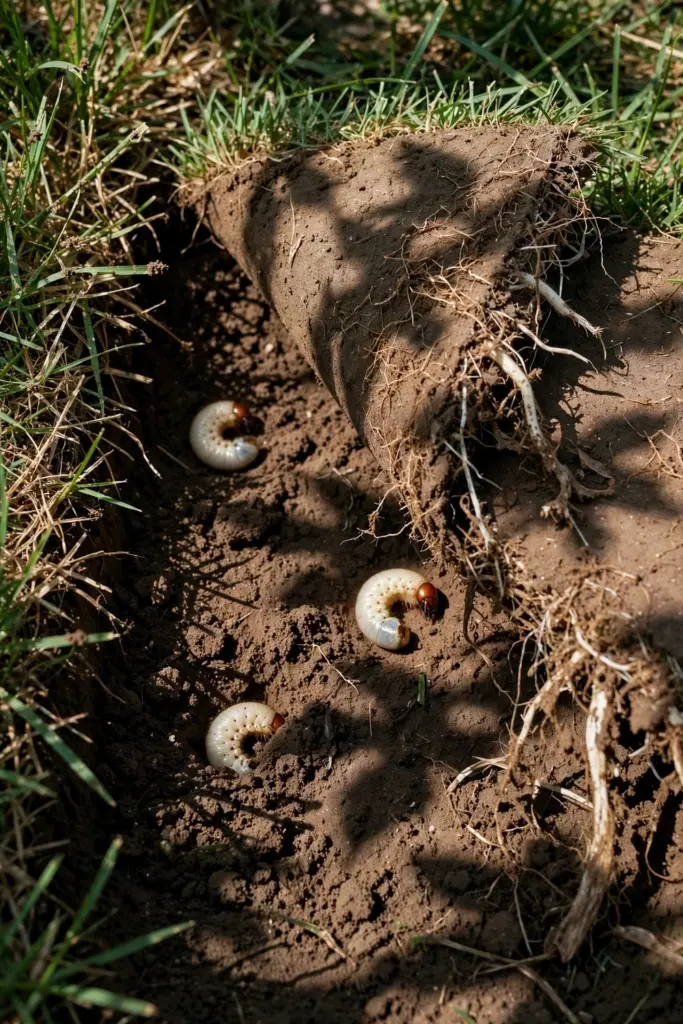
Grab a corner of the brown turf and pull upward. Turf that peels up like a loose rug with white grubs underneath points to insects eating the roots. Turf that stays anchored while the soil underneath feels hard and dry points to water or soil. That single pull splits the whole brown-patch problem into two jobs.
Read the patch edges too. A patch with a sharp border between brown and green turf often follows a spray line, a spill, or a mower pass. A patch that fades gradually from brown at the center to green at the edge often follows water or nutrition. Edges narrow the cause list before you spend anything.
A patch that stays brown after two correct fixes needs a different decision. Lift the dead turf, check whether living crowns remain underneath, and re-turf or plug the area if the crowns are gone. Buffalo spreads by stolons across bare ground, and plugs placed into prepared soil knit faster than seed on a dead patch.
Drought patches recover with deep, infrequent watering that soaks the root zone. Water in the early morning so the leaf dries before night. A patch that stays anchored but sits where a dog urinates needs a different flush: soak the spot with clean water to dilute the salts, then add a light top-dressing of soil. Repeat the flush after each new accident rather than waiting for the patch to spread.
Scalping and compaction also brown Buffalo, and each gets its own check later on this page. Treat the confirmed cause. Spraying for grubs on a drought patch wastes money and poisons soil life for no gain.
2. Raise the Cut and Open the Light in Thinning Shade
Buffalo tolerates shade better than other warm-season grasses, and shade still thins it. Growth turns sparse under heavy tree cover, beside high fences, and on south-facing aspects. Moss moves into the thinnest ground.
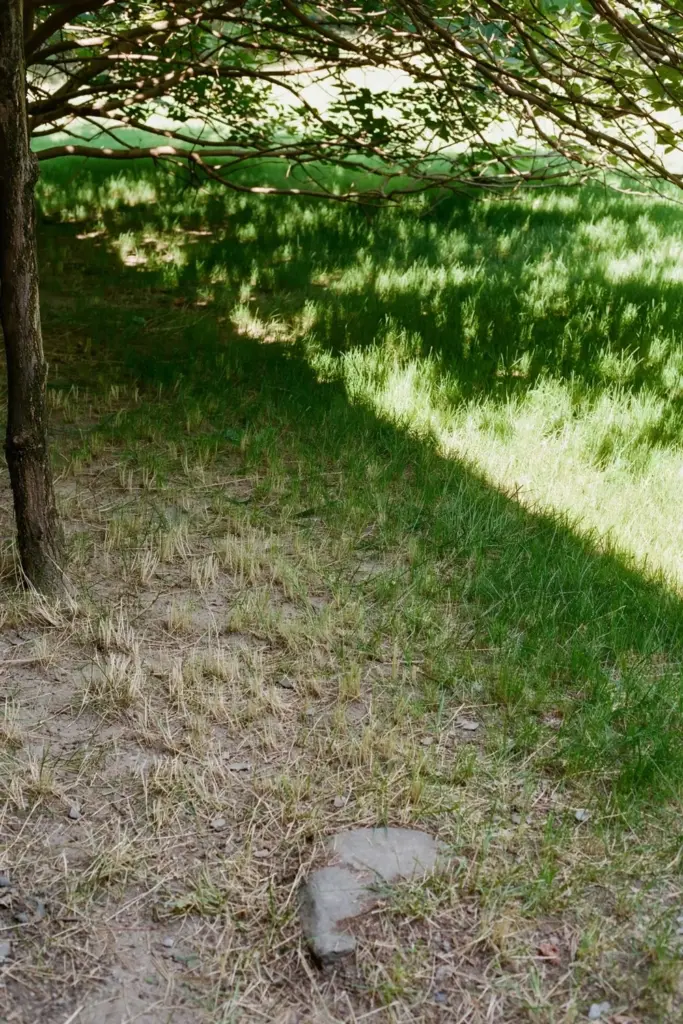
Raise the cut in shade. Longer blades carry more leaf surface, and more leaf surface catches more light. Cut traffic across the shaded strip. Feet compact the soil and snap the stolons that would otherwise creep across bare ground.
Open the light where you can. Prune low tree limbs and thin dense shrubs so sun and air reach the turf. Where shade cannot improve, stop fighting it. Lay stepping stones across a worn path or convert the deepest shade to a garden bed with mulch. Top-dress the remaining thin ground and push runners or plugs into bare spots so Buffalo stolons can knit across.
Moss tells you the ground stays damp and dark. Moss itself does not kill Buffalo, and raking moss off without fixing light and air only clears the way for the next moss. Treat moss as a symptom. Light, air, and drainage are the cure.
Shade thinning is a light problem before it is a lawn problem. A darker corner will never hold dense turf at a low cut, and no fertilizer closes that gap. Walk the shaded strip at midday and look up. Branches that meet overhead block the sun all day. A gap in the canopy lets a moving patch of sun cross the turf, and that moving patch is often enough to keep Buffalo alive.
3. Cut the Sponge Out of a Thatchy Buffalo Lawn
Thatch is the mat of dead leaves, stolons, roots, and crowns that builds between the green blades and the soil. A thin mat is normal. A thick mat turns the lawn spongy underfoot, holds water on the surface, starves the roots, and lets the mower scalp the crowns.
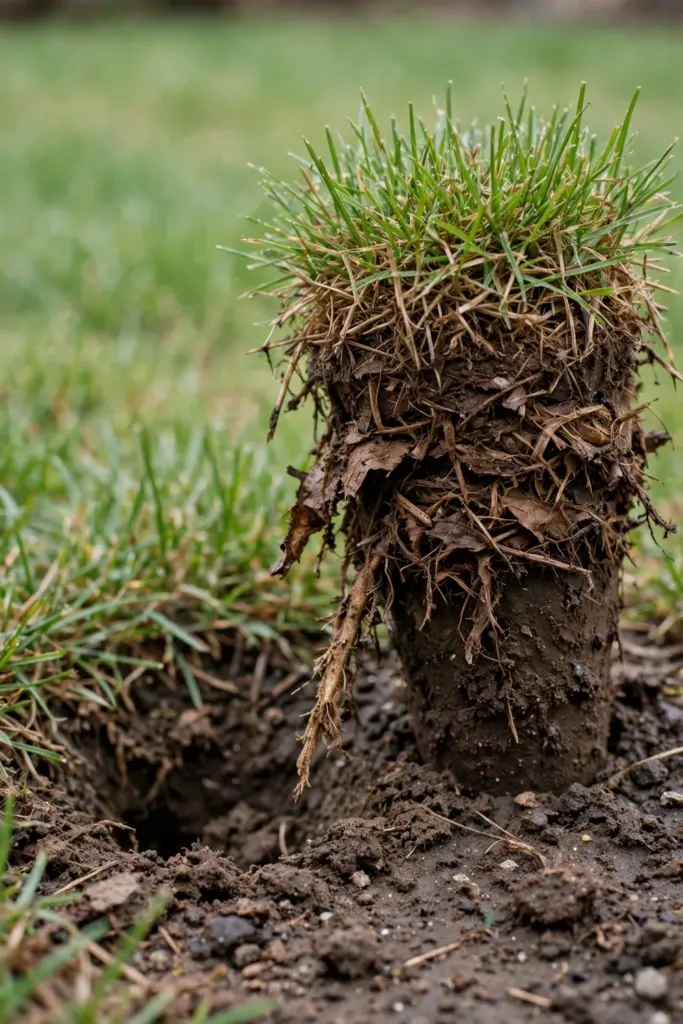
Press your thumb into the turf. A spongy bounce with a brown fibrous layer under the green blades means thatch. Water that sits on top instead of soaking in means the same thing. A mower that scalps at a height that used to cut clean also points to thatch lifting the crowns above the soil.
Cut a small plug to see the mat. A plug pulled with a garden fork shows the layers in cross-section: green blades on top, brown fibrous mat in the middle, soil at the bottom. The mat is the thatch, so measure it against your thumbnail. A mat that stays thin needs no work. A mat that holds water and bounces underfoot needs vertical mowing.
Vertical-mow while Buffalo grows strongly in the warm months. The vertical-mower blades slice through the mat and pull the loosened debris free for raking. Rake out every pile of debris afterward. A lawn rake with stiff tines clears the loosened mat faster than a leaf rake. Loose mat left on the lawn settles straight back in. Follow with a conventional mow to tidy the surface, then water to settle the crowns back into soil contact.
Prevent the next mat with discipline. Feed to the label rate and no more. Water deep and infrequent instead of daily sprinkles. Overfeeding and overwatering grow thatch faster than any other habit, and a lawn fed and watered right rarely needs the vertical mower at all.
Thick clippings left as mulch feed the same problem. Mulch-mow only when the clippings are thin, and remove them after a heavy cut. Overfeeding and overwatering grow thatch faster than any other habit.
4. Flush Caterpillars Out With Soapy Water Before You Spray
Grubs and armyworm eat Buffalo from below and above. Curl grubs chew roots until the turf peels up. Armyworm caterpillars chew blades at night and leave scorched-looking patches by morning. Both move fast, and both punish a guess.
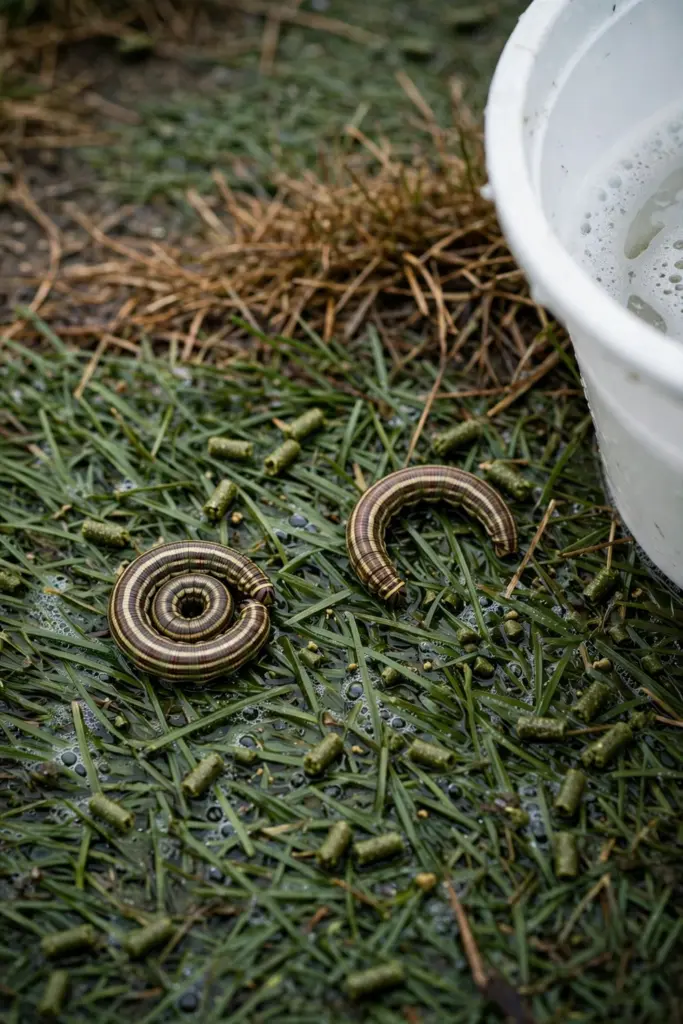
Watch for the signs first. Birds feeding in one patch of turf point to larvae below. Paper wasps walking the turf and carrying off larvae point to the same thing. Green pellets of frass in the thatch confirm caterpillars have been feeding.
Separate grubs from caterpillars by where the damage sits. Curl grubs chew roots, so the turf peels up with dead roots underneath. Armyworm caterpillars chew blades, so the turf stays rooted while the green leaf disappears. The lift test and the soap flush together name the pest. A patch that peels needs root work. A patch that stays rooted needs leaf work.
Run a soap flush before you spray anything. Mix 2 tablespoons of dishwashing soap in 3.8 liters of water and pour the mix over about 0.1 to 0.2 square meters of turf at the edge of the damage, as Alabama Extension describes for fall armyworm scouting. Larvae come to the surface within minutes. Count what surfaces. A flush that shows no larvae means the patch has a different cause.
Treat confirmed larvae with a product labeled for Buffalo lawns and for the pest you found. Apply in the evening when caterpillars feed, and follow the label rate and repeat interval. Beneficial insects eat caterpillars too, so a broad spray on an unconfirmed patch costs you allies for no gain. A Buffalo lawn with live crowns grows back after caterpillar damage once feeding stops.
5. Feed Nitrogen and Dry the Leaf to Beat Dollar Spot
Dollar spot shows as round bleached patches with straw-colored lesions that girdle individual leaves. Spots on longer-cut turf grow wider than the silver-dollar size seen on putting greens, and neighboring spots merge into ragged areas. The disease favors warm, humid weather, underfed turf, and leaves that stay wet.
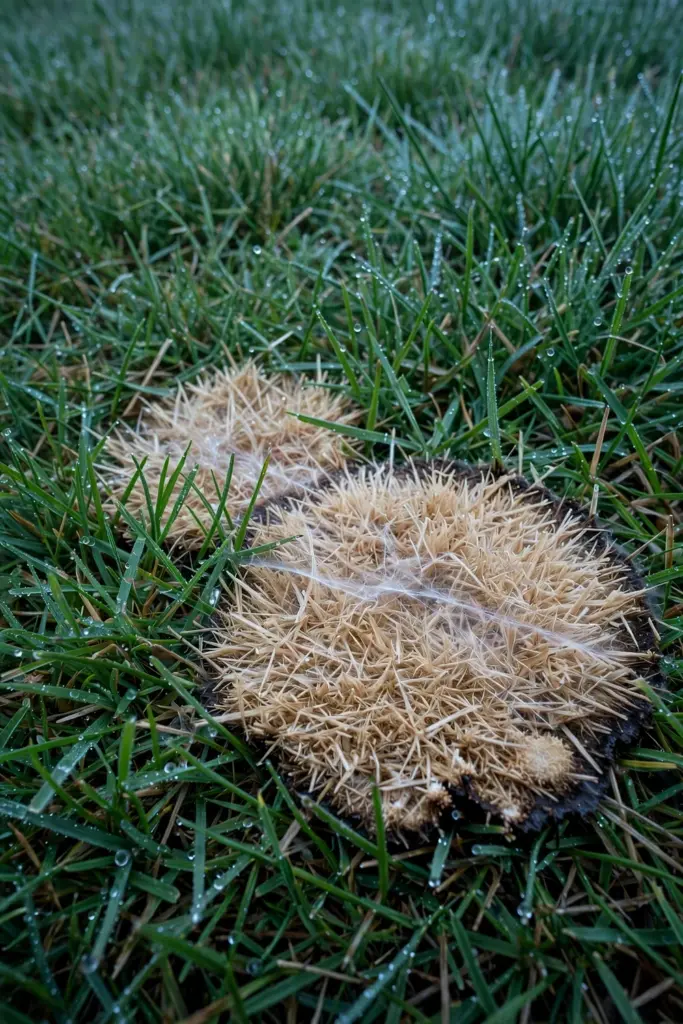
Separate dollar spot from brown patch by the shape. Dollar spot makes round bleached spots with straw-colored lesions on single leaves. Brown patch makes larger irregular areas, often with a smoke-ring edge in humid mornings. A patch that matches neither shape may be insect or water damage, and the lift test and the screwdriver test settle that question.
Nitrogen is the first lever. Mississippi State Extension calls nitrogen the single most effective management tool against dollar spot, because fed turf outgrows the damage. Feed to the label rate for Buffalo and water the feed in. Starved turf cannot outgrow anything.
Dry the leaf next. Water in the early morning so the blades dry quickly. Late watering stretches leaf wetness and feeds the fungus. Prevent thatch build-up, since a wet mat holds moisture against the crowns. Clean the mower deck and tools after cutting an infected patch so diseased clippings do not seed the next strip.
Fungicide is the last lever, not the first. Use a product labeled for dollar spot on home lawns, follow the label rate, and rotate chemical groups if you spray more than once, since resistant strains develop. A lawn that stays fed, dry by nightfall, and free of thatch rarely needs a spray at all.
6. Check the Label for Dicamba Before Any Weed Spray
Weeds in a Buffalo lawn tempt a fast spray. The spray can do more damage than the weeds. Buffalo reacts badly to several common broadleaf herbicides, and the wrong active ingredient burns the lawn it was meant to clean.
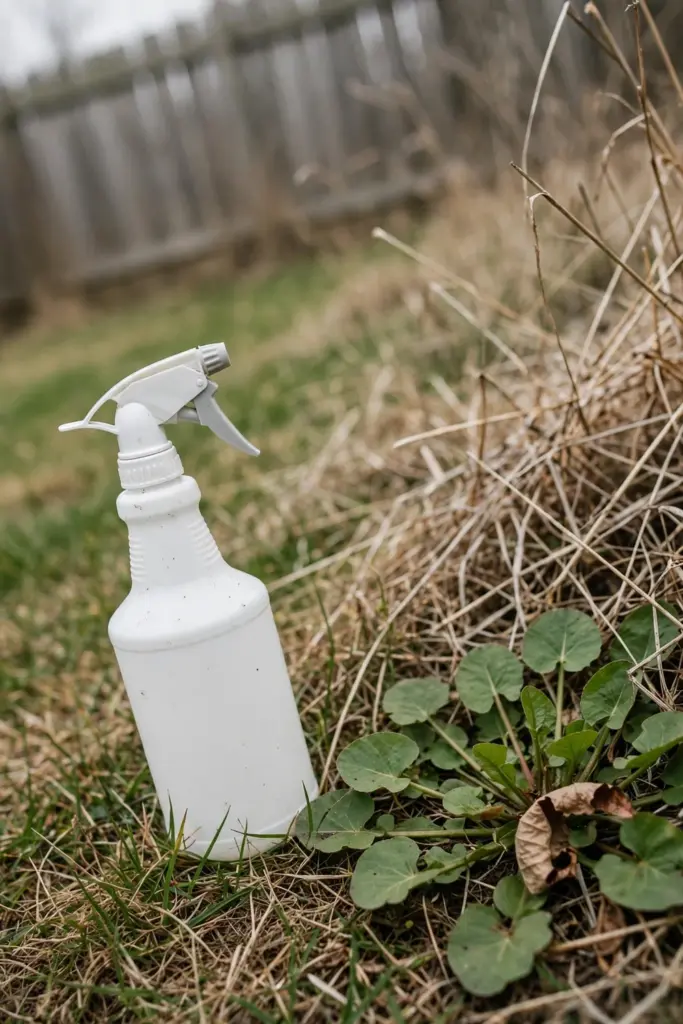
Read the active ingredients on the label before you buy or spray. In an NC State trial, a premix of 2,4-D, Dicamba, and MCPP caused unacceptable injury on St. Augustinegrass eight weeks after treatment, as the NC State TurfFiles report records. Dicamba sits in many weed-and-feed products sold for broadleaf weeds. A product that is safe on one grass can injure Buffalo.
Use only actives labeled safe for Buffalo, at the label rate, on a small test patch first. Spray on a calm day with no rain forecast, and keep pets and children off the lawn until the spray dries. A weed-and-feed granule that lands on a wet lawn can stick to Buffalo blades and burn them.
Run the test patch where damage costs little. Spray one square meter at the lawn edge and wait a week. Buffalo that stays green takes the product. Buffalo that twists, bleaches, or dies tells you to stop. A test patch costs a week. A full-lawn spray on the wrong product costs a season.
Dense Buffalo is the best weed control you own. Raise the cut, feed to the label rate, and thicken thin ground so weeds find no bare soil. Hand-pull the first weeds in a thin patch rather than spraying the whole lawn for a dozen plants.
One naming trap matters here. Buffel grass (Cenchrus ciliaris) is a different plant from lawn Buffalo. Buffel is an invasive pasture grass and a declared weed in South Australia. Lawn Buffalo is Stenotaphrum secundatum. Check the botanical name before you follow any advice written for the other grass.
7. Mow Dry and Keep the One-Third Rule
Scalping happens when the mower cuts into the crowns. Buffalo turns brown at the cut line, thins out, and lets weeds into the bare ground. Wet mowing makes it worse. Wet blades tear instead of cutting, clumps clog the deck, and wheels rip patches out of soft turf.
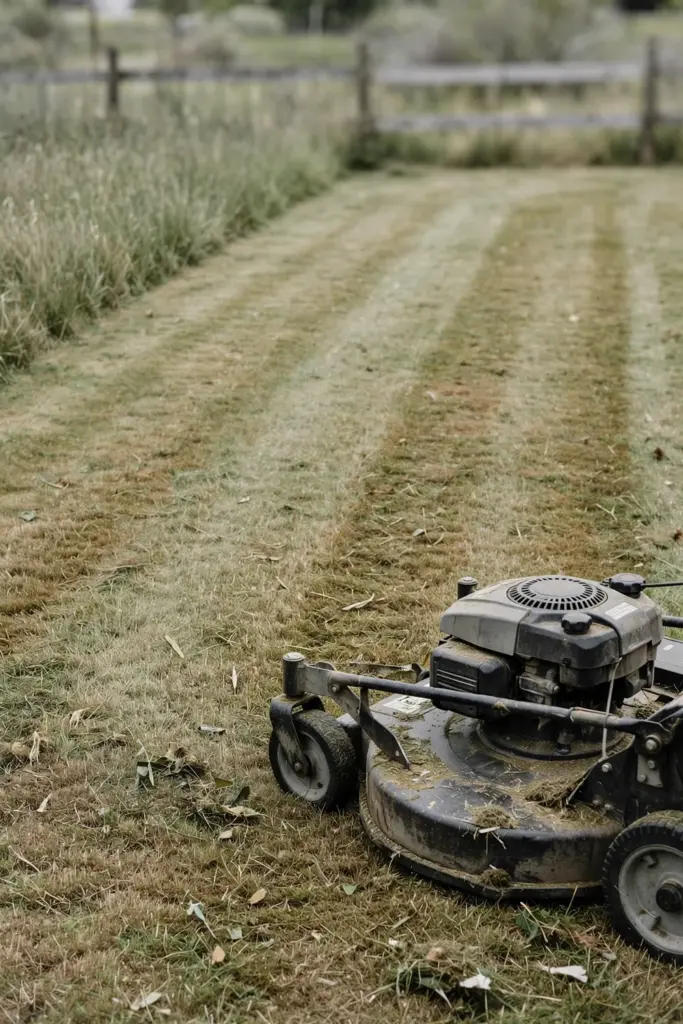
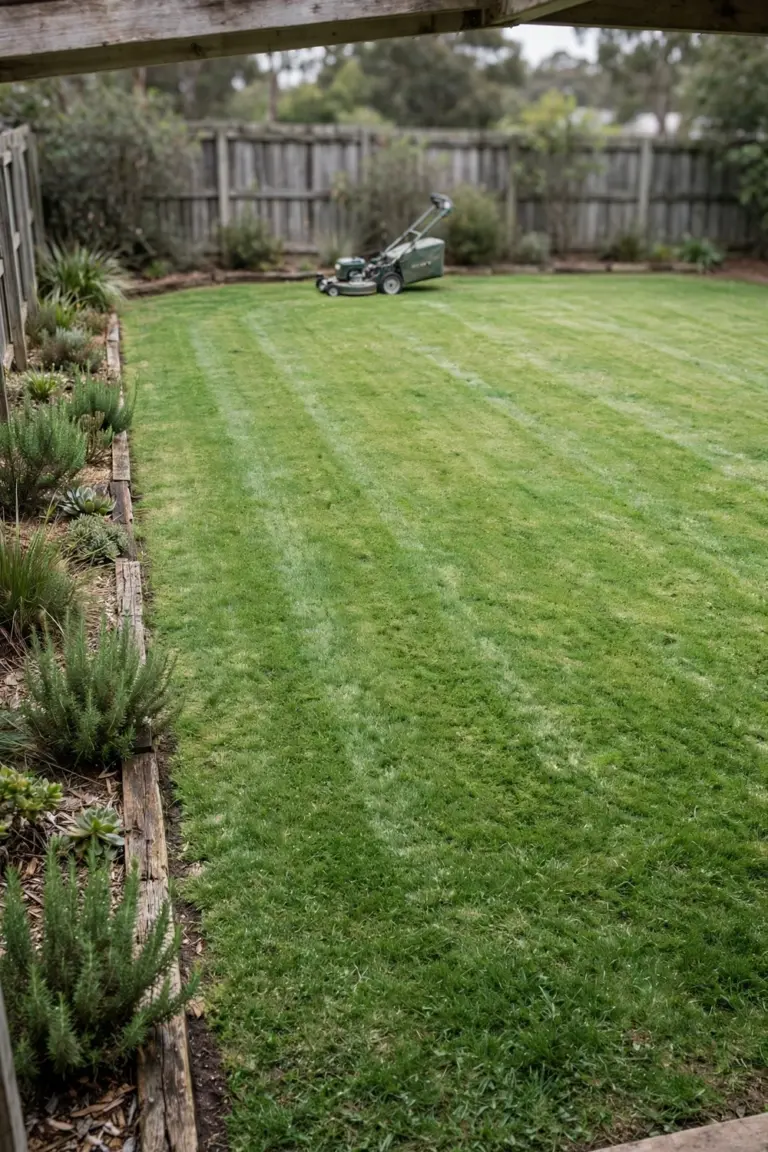
Mow only when the grass is dry. Cut Buffalo at 6.4 to 7.6 cm in sun and 7.6 to 8.9 cm in shade, and never remove more than one-third of the total blade height at one mowing, as LSU AgCenter sets out for St. Augustinegrass care. A lawn that stands 9 cm tall gets cut back to 6 cm at most. A lawn that grew to 12 cm needs two passes across two days, not one hard cut.
Leave the lawn longer over winter. Longer blades shade the soil, hold moisture, and protect the crowns through the cold months. Sharpen the blade before the growing season. A sharp blade cuts clean, and a clean cut heals faster than a torn tip. A dull blade shreds every tip and leaves the whole lawn looking frayed.
Mow in a different pattern each time. Wheels that follow the same track compact the same two lines and wear the same ruts. Alternate stripes keep the wear even and the cut level.
Send the clippings off the lawn after a heavy cut. A thick layer of fresh clippings mats down, holds humidity against the crowns, and feeds thatch. Thin clippings from a light mow can stay. Heavy clippings from a catch-up cut go to the compost pile or the green bin.
8. Aerate the Whole Lawn When Water Sits on Top
Compaction squeezes the air out of the soil. Roots cannot breathe, water cannot soak in, and Buffalo thins along paths, driveways, and play areas. Puddles that linger hours after rain point to compaction, drainage, or both.
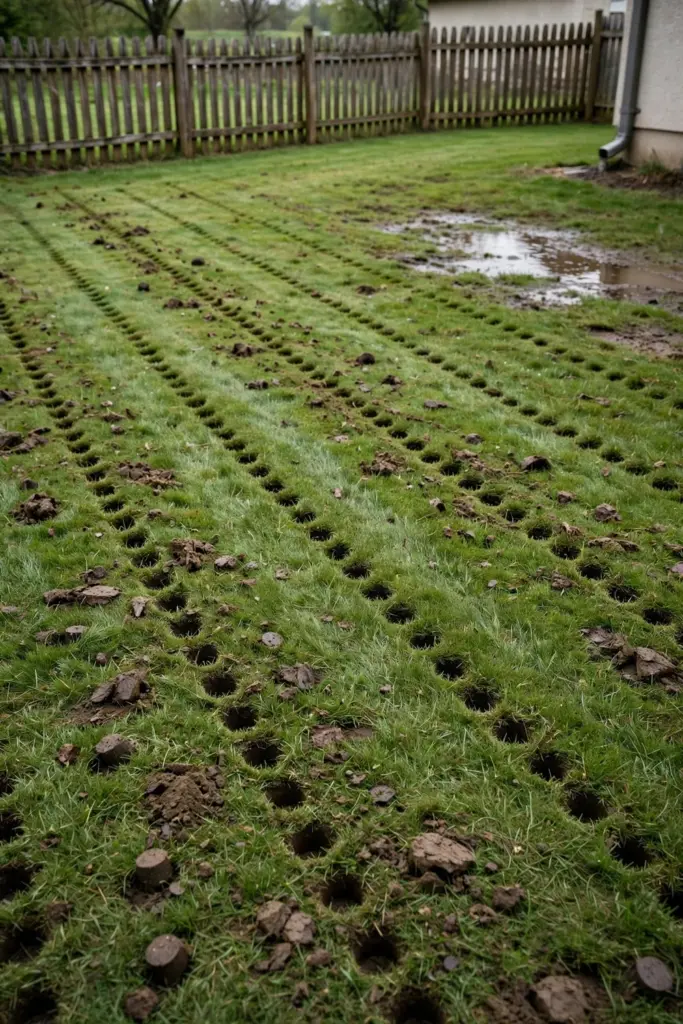
Push a screwdriver into the soil. A driver that stops after a few centimeters in dry soil means compaction. A driver that slides in but meets water sitting in the hole means drainage. Both problems thin Buffalo the same way, and both need the full lawn treated, not just the puddle.
Aerate the full lawn while Buffalo grows strongly. A hollow-tine aerator pulls plugs and opens channels for air and water. Piercing only the puddle moves the water to the next low spot. Top-dress after aerating with a thin layer of soil or compost so the holes fill with material roots can use. Water the lawn in after aerating to settle the top-dressing into the holes.
Fix the drainage underneath a chronic puddle. A low area that collects roof water needs the water redirected before any lawn work holds. A downspout that dumps onto the lawn will undo a fresh aeration in one storm.
Top-dress with a thin layer and no more. A thin layer fills aeration holes and feeds soil life. A thick layer smothers the crowns and holds water on the surface, which brings back the puddle you just fixed. Work the material into the holes with a broom and water it in. Rest a worn path for a month after aerating so fresh stolons can knit across without feet crushing them again.
9. Feed in Late Autumn and Water New Turf Into Contact
Buffalo loses color in winter. Growth slows, blades pale, and the lawn looks tired beside a cool-season lawn across the street. Color loss alone is not damage. Buffalo greens up again when warm weather returns, and a lawn that still shows living crowns under the pale blades is resting, not dying.
Feed with a slow-release fertilizer in late autumn and water it in. The feed carries the lawn into winter with stores to draw on. Do not chase winter color with heavy nitrogen. A late nitrogen push grows soft blades that frost burns, and the burn looks worse than the pale color it tried to fix.
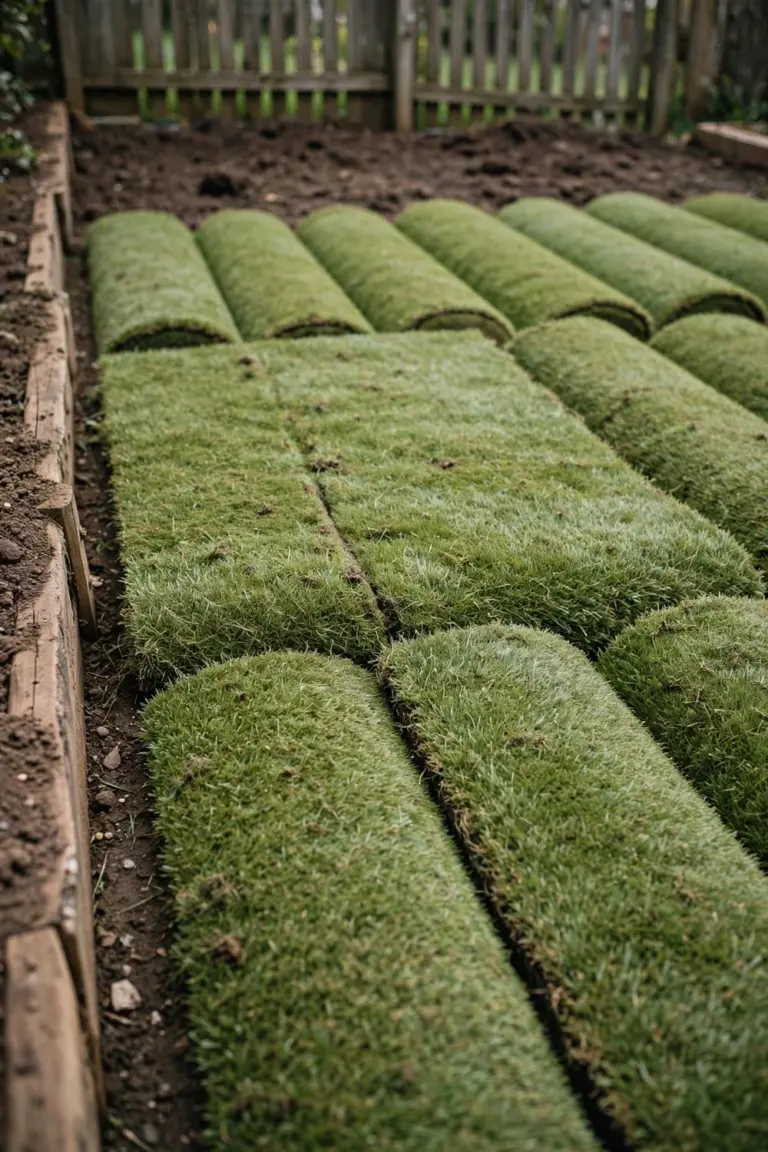
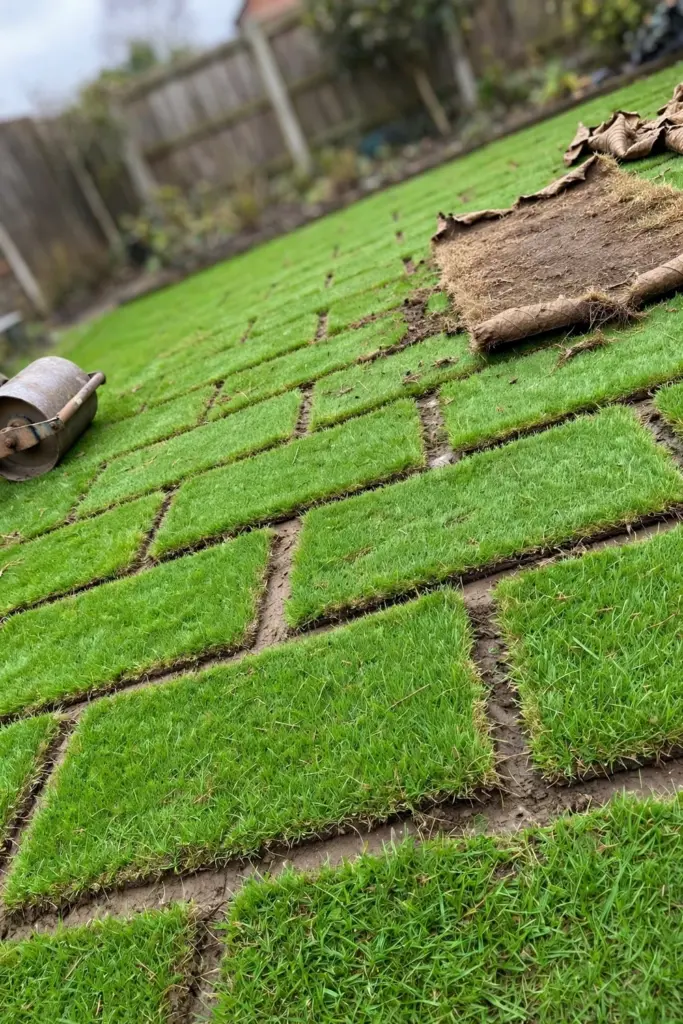
New turf fails differently. Turf that browns within days of laying usually lost soil contact or water, not disease. Check the seams first. A slab-shaped brown rectangle marks uneven water, poor soil contact, or roots drying before they knit into the soil below. Hot, windy days dry the edges of fresh slabs fast.
Fix new turf by fixing water and contact. Roll the slabs to press roots against the soil, water immediately, and water again before the soil under the slab dries. Water in the early morning so the leaf dries before night. Call the supplier if a full delivery browns at once, since the batch may have dried before it reached you.
Check green-up in spring with a tug test. Grip a pale blade and pull gently. A blade that resists sits on a living crown. A blade that slides out of a dead crown tells you the plant is gone. Living crowns green up with warm weather and water. Dead crowns need plugs or fresh turf, and no amount of fertilizer brings them back.
Frequently Asked Questions
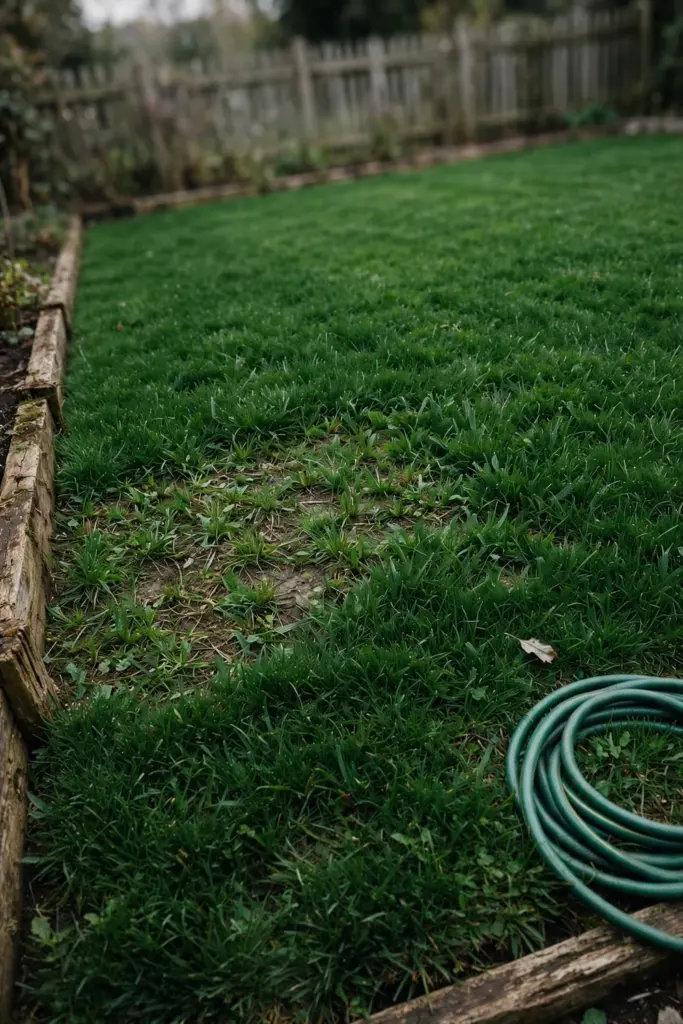
Yes, when the crowns stay alive. Armyworm caterpillars eat blades, not crowns, so a lawn with live crowns grows back once feeding stops. Confirm larvae with a soap flush, treat per label, and water the lawn to push new growth. Recovery takes weeks in the growing season. A lawn that peels up with dead roots underneath has grub damage instead, and that patch needs re-turfing or plugs.
Treat Dicamba as unsafe for Buffalo until the label says otherwise for your product. An NC State trial found a 2,4-D, Dicamba, and MCPP premix caused unacceptable injury on St. Augustinegrass eight weeks after treatment. Many weed-and-feed products carry Dicamba. Read the active ingredients, test on a small patch, and use only actives labeled safe for Buffalo. Dense turf plus hand-pulling beats a risky spray.
Shade cuts the light Buffalo needs to grow dense. Heavy tree cover, high fences, and south-facing aspects all thin Buffalo the same way. Raise the cut in shade so longer blades catch more light. Prune low limbs to open sun and air. Cut traffic across the strip. Where shade cannot improve, lay stepping stones or convert the deepest shade to a mulched bed rather than fighting a corner that will never hold dense turf.
Dethatch when the mat turns spongy, not on a calendar. A lawn that bounces underfoot, holds water on the surface, and scalps at a height that used to cut clean needs vertical mowing. Most Buffalo lawns need it at most once a year, while the grass grows strongly in the warm months. Rake out the debris afterward. A lawn with a thin mat needs no dethatching, and a needless pass tears healthy crowns.
Buffalo stays greener through winter than other warm-season grasses, and it still loses color. Pale blades and slow growth are normal in cold months. A slow-release feed in late autumn plus water carries the lawn through winter. Do not chase color with heavy nitrogen, since soft growth burns in frost. Green returns with warm weather, and a lawn with living crowns under the pale blades is resting, not dead.
Fix Buffalo Lawn Problems in Australia in Pattern Order
Work the nine checks in order. Read the pattern, run the confirm test, then fix the cause. A lift test, a soap flush, and a screwdriver settle most Buffalo arguments before a spray bottle opens. Photograph each patch before you treat it so you can compare the same ground a month later.
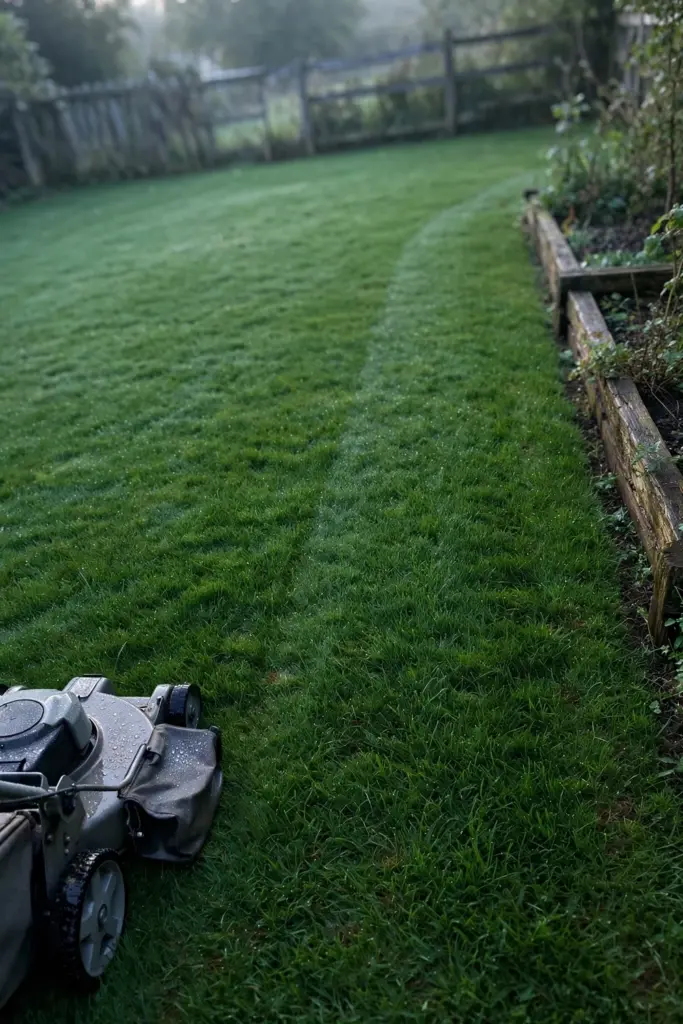
Keep the Buffalo rules in mind with every fix. Read the label for Dicamba before any weed spray. Mow dry and keep the one-third rule. Never leave thick clippings as mulch. Never overfeed. Dried-out Buffalo is not fire-safe in high-fire-risk areas, so water a drought-stressed lawn before a hot, windy day rather than leaving it tinder-dry.
A Buffalo lawn that gets the right cut, the right water, and the right feed outgrows most of its problems. The lawn that keeps failing after two correct fixes has a soil or drainage problem underneath, and that problem needs the soil test and the drainage work, not a third spray.
Run the checks on a seasonal rhythm. Spring brings aeration, feeding, and thatch checks. Summer brings the mowing rule, the soap flush, and the dollar spot watch. Autumn brings the late feed and the shade check. Winter brings a longer cut and patience while the lawn rests.