
What’s eating my plants in Australia? Start with the damage, not the pest. Holes, slime trails, curled leaves, and missing seedlings each point to a short list of culprits, and the 15 pests below match each sign to its maker and its organic fix.
I have learned that the damage tells the story faster than the pest ever shows itself.
This page reads the damage first. It groups the 15 pests by the damage they leave: chewers, sap-suckers, and night visitors. It ends with a weekly scouting habit that catches most outbreaks while they are still small.
Read the Damage Before You Reach for a Spray
Read the damage before you reach for a spray. The mark on the leaf names the pest more reliably than any guess, and the right fix follows from the mark.
Start with the table. Find the damage that matches your plant. Then read that pest entry for the confirmation check and the fix. Check at the right hour. Caterpillars and earwigs feed after dark. Slugs and snails leave their trail overnight. Aphids and whitefly sit on the plant in daylight.
| Damage Signs | Likely Culprit | First Move |
|---|---|---|
| Irregular holes in leaves, green caterpillar present | Cabbage white caterpillar | Hand-pick, then net the crop |
| Leaves skeletonised, veins left standing | Pumpkin beetle or earwig | Check at night with a torch |
| Silvery slime trail on leaves or soil | Snails or slugs | Beer trap and copper barrier |
| Leaves curled, sticky residue, ants present | Aphids | Strong water stream, then predators |
| White fluffy clumps in leaf joints | Mealybugs | Dab with soapy water on a cloth |
| White powder on leaves, no insects visible | Mildew, a disease | No insect did that; treat as disease |
| Seedlings cut clean at the base | Slaters or cutworms | Cardboard collar around the stem |
| Whole plants gone overnight | Possums or bandicoots | Exclusion netting or fence |
| Soil dug into small cones at night | Bandicoots | Fence the bed, leave the animal alone |
| Branch tops stripped, fruit bitten | Possums or rats | Net with wildlife-safe mesh |
White powder on leaves is mildew, a disease. No insect did that, and no insect spray helps it. Yellowing with no holes and no insects points to water or nutrients instead. Spraying a nutrient problem wastes the spray and kills the insects that were helping. A healthy bed resists pests better than a stressed one, and building soil health is the slow fix behind every fast fix on this page.
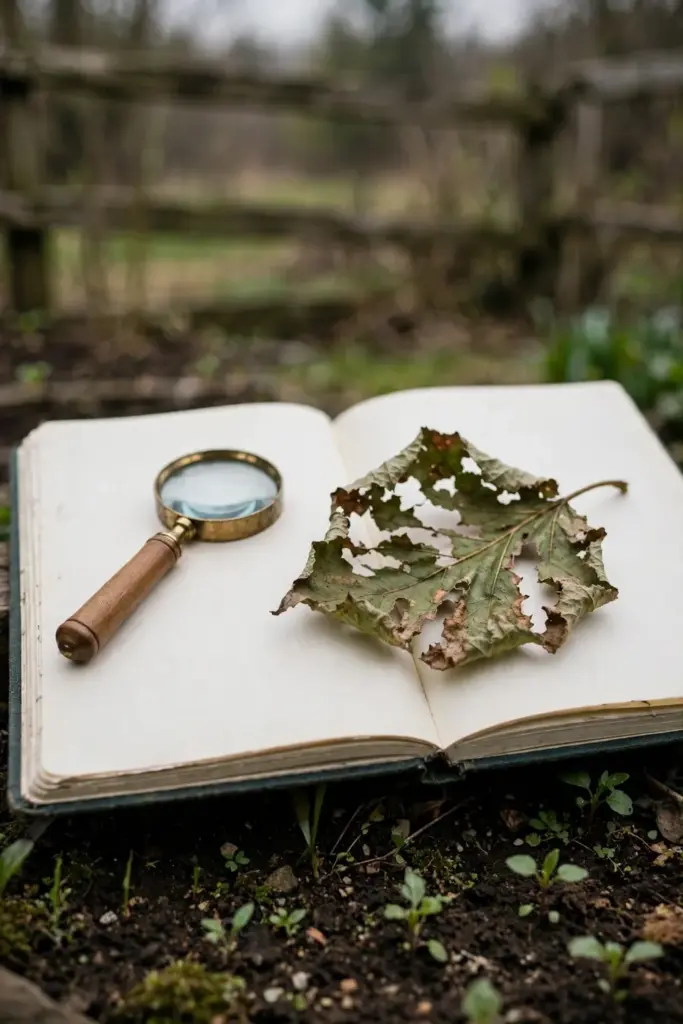
Scout on a schedule. Walk the garden once a week with a torch, a hand lens, and eyes on leaf undersides. Check new growth first, since aphids, thrips, and leafminer all start there. Flip a few leaves. Look at soil level around seedlings. Note what you see. A notebook entry that reads “aphids on the roses, light” beats a memory that reads “something on something.” Weekly scouting catches most outbreaks while water still fixes them.
1. Aphids
Aphids leave curled leaves, sticky honeydew, and ants farming the colony. Look for clusters of small soft-bodied insects on new growth, on buds, and on leaf undersides. Leaves curl toward the stem. Honeydew coats the leaf below and grows black sooty mold.
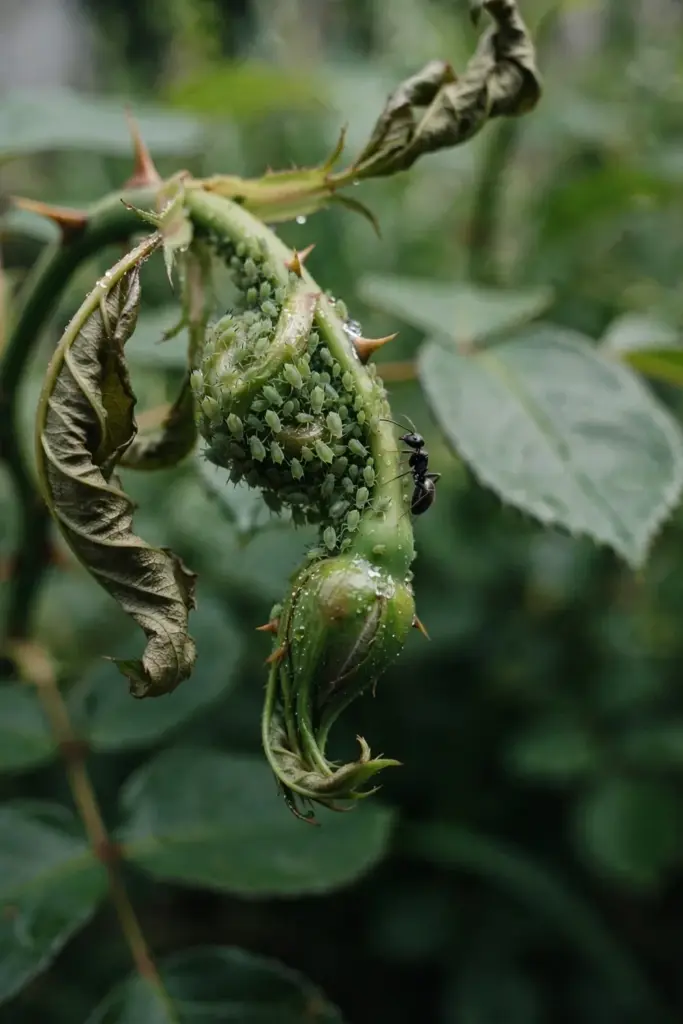
Aphids feed on soft new growth. They excrete honeydew, which attracts ants and sooty mold, and a strong stream of water knocks them off sturdy plants, according to the UC IPM aphids guide. Ants protect aphids from predators, so keep ants off the plant. Lady beetles and lacewings eat aphids, and their larvae eat more than the adults. Hold off on spraying when predators are present. They clear a colony in days.
Spray only when water and predators fall short, and reach for insecticidal soap or horticultural oil when that day comes. Cover both leaf surfaces. Follow the label. Spray in the evening, once bees have gone home for the night. Keep pets and children away until the spray dries. Skip broad-spectrum insecticides, which kill the predators and leave the aphids to rebound alone.
Check new transplants before they go in. Aphids ride in on nursery stock, and one infested transplant seeds a whole bed. Inspect buds and leaf undersides at the nursery. Leave infested plants on the bench. At home, keep new plants apart for a few days and check them again. Ants on a stem mean aphids nearby, even when the colony hides under a leaf. Follow the ants. They walk straight to the honeydew.
2. Cabbage White Caterpillars
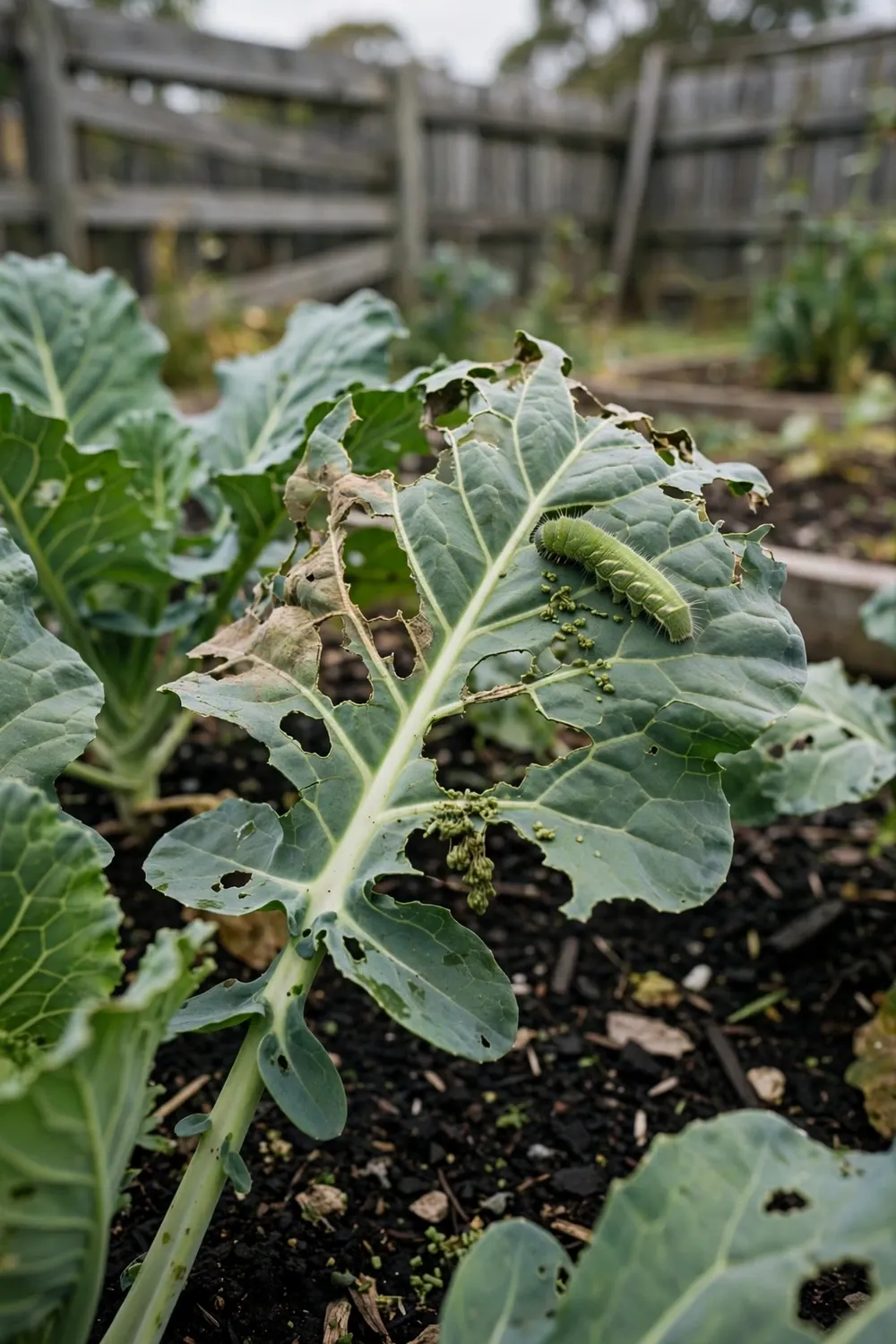
Cabbage white caterpillars leave irregular holes in brassica leaves and green droppings on the leaf. Look for velvety green caterpillars on cabbage, broccoli, kale, cauliflower, and bok choy. The adult is a white butterfly with black spots on the forewings. One female can lay 800 eggs, and the caterpillars grow fast once they hatch, according to the cabbage white butterfly guide. The species reached Melbourne in 1929 and Perth by 1943, and it now lives across the country.
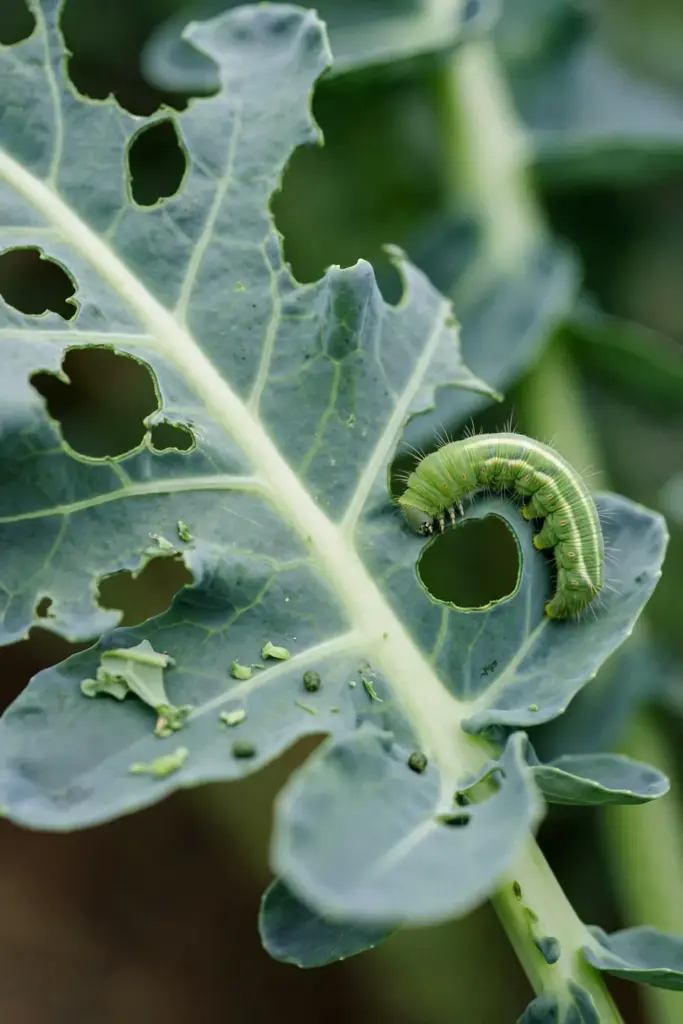
Hand-pick caterpillars first. Check leaf undersides for eggs and crush them. Net the crop with fine insect mesh from transplant day, before butterflies find it. Tuck the mesh edges into the soil so butterflies cannot slip under. Companion planting for pest control adds confusion for egg-laying butterflies when strong-smelling herbs grow beside the brassicas.
Use Bt (Bacillus thuringiensis) when hand-picking cannot keep up. Bt targets caterpillars and spares bees, birds, and predators. Follow the label. Reapply after rain. Spray in the evening. Keep pets and children away until the spray dries.
3. Snails and Slugs
Snails and slugs leave silvery slime trails and ragged holes in soft leaves. They feed at night and hide by day under pots, boards, mulch, and dense foliage. Seedlings vanish. Lettuce, hostas, and strawberries take the worst of it.
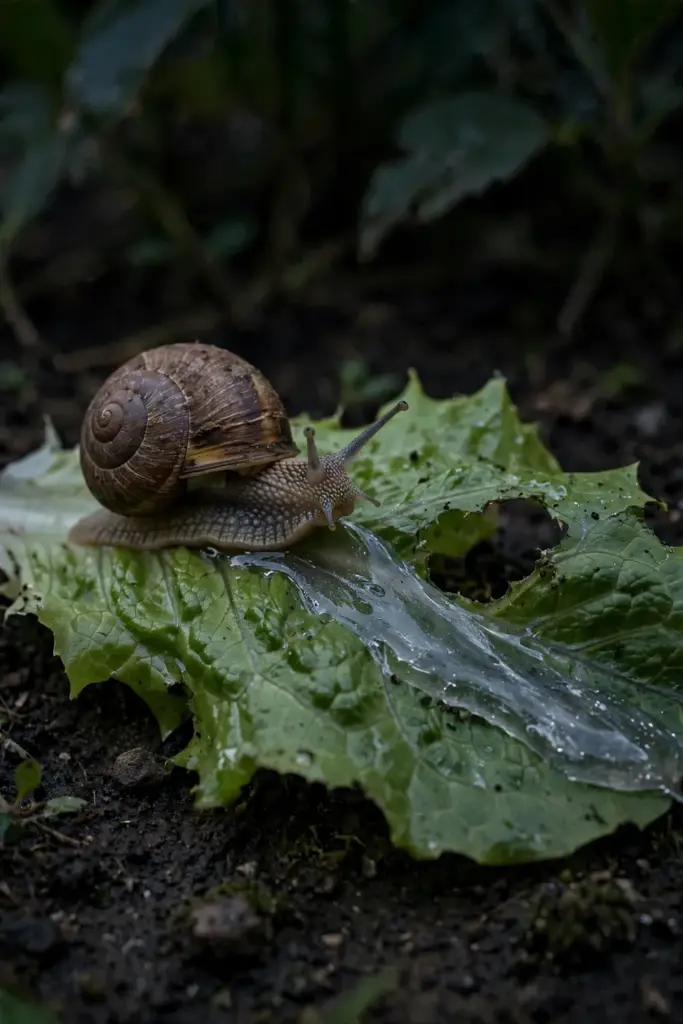
Pick them off at night with a torch. That single habit beats most products. Set beer traps in small gardens and vegetable beds, since fermented products attract slugs and snails and they die by drowning in them, according to the LSU AgCenter slug and snail guide. Sink a shallow container so its rim sits near soil level. Empty it every few days. Copper foil reacts with slime and turns slugs back, so wrap copper tape around pot rims and raised-bed edges.
Skip metaldehyde baits around pets and children. Metaldehyde baits are toxic to pets. If you use any bait, follow the label for the recommended dose and application method. Iron-based baits carry lower pet risk, and the label still governs. Clear daytime hiding spots near seedlings. Lift boards and pots each morning and remove the slugs sheltering under them.
Hunt the eggs too. Snails lay clusters of small white eggs in damp soil and under pots. Crush any cluster you find. One cluster removed in spring saves a season of seedlings. Keep the garden floor tidy near prized beds. Fallen boards, stacked pots, and dense ground cover shelter slugs by day and feed them by night.
4. Possums
Possums leave stripped branch tops, bitten fruit, and whole seedlings gone overnight. They feed after dark. The damage stops at the height a possum can reach. Droppings on paths and scratched bark confirm the visitor.
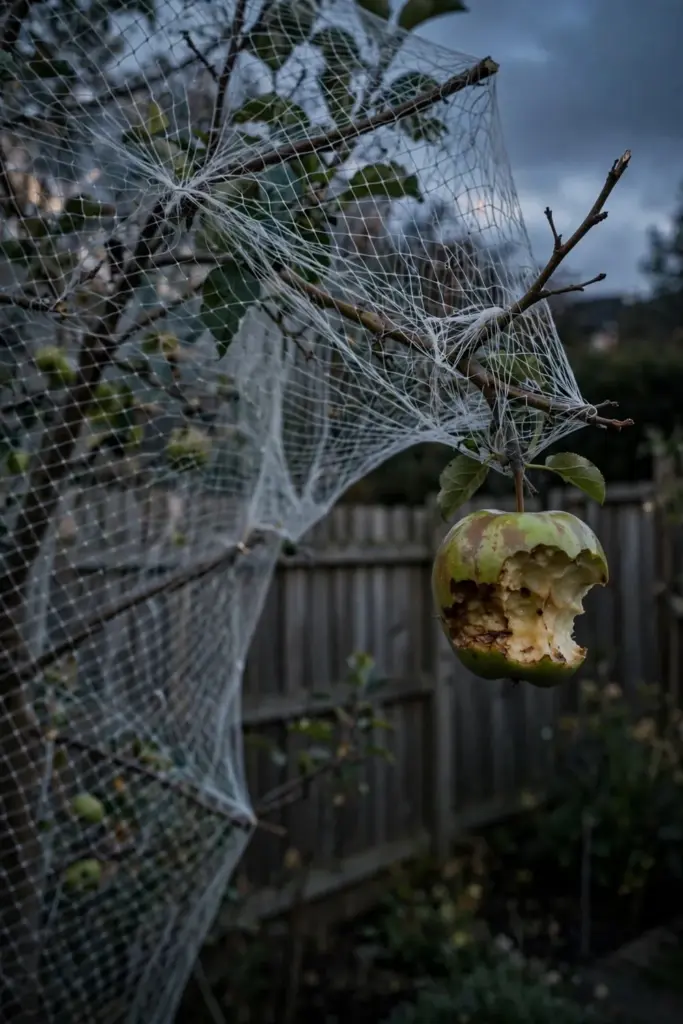
Possums are protected native animals in Australia. Never harm them. Never trap and relocate them yourself. Exclusion does the work. Net fruit trees and vegetable beds with wildlife-safe mesh. Netting used on household fruiting trees or plants must have a mesh size of 5mm x 5mm or less at full stretch, according to the Agriculture Victoria fruit netting guide. Fix netting tightly to the trunk. Never drape loose netting over a tree. Loose netting tangles birds, bats, and possums.
Trim branches that overhang beds and roofs, because possums travel along branches and a gap of open air stops them cold. Fruit bags and sleeves protect single branches without netting a whole tree. Check netting each week for holes and sagging. Release any trapped animal at once. Call a wildlife carer if it is injured.
5. Earwigs
Earwigs leave ragged holes and chewed flower petals, and they hide in tight damp places by day. Look inside rolled leaves, under pots, and in the folds of dahlia and rose blooms. The pincers at the tail identify them. They feed at night.
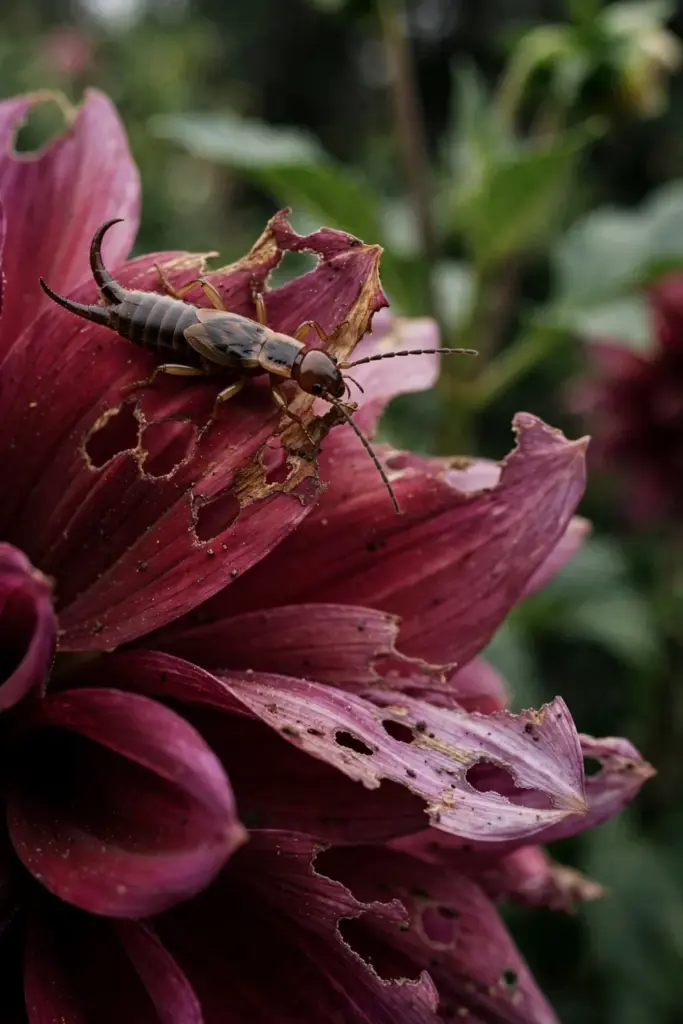
Earwigs eat both pests and plants. A few earwigs in a bed do more good than harm, since they hunt aphids and small larvae. Damage appears when numbers climb, usually in damp beds with heavy mulch and plenty of hiding spots. Confirm the culprit before acting. Check the plant with a torch after dark. If earwigs are feeding on the petals, act. If they are hunting aphids, leave them.
Trap them with a rolled newspaper or a short length of hose left on the soil overnight. Shake the trap into a bucket each morning. Reduce hiding spots near prized flowers. Pull mulch back from stems. Let the soil surface dry between waterings. Skip broad-spectrum sprays. They kill the predators that keep earwigs in check.
Dahlias and roses need the closest watch. Earwigs climb into dahlia blooms at dusk and chew the petals from inside. Check blooms each evening in summer and shake out any earwigs before they settle. Pick blooms in the morning. A bed of dahlias with clean blooms around it tells you the traps are working.
6. Slaters
Slaters leave seedlings cut clean at the base and small pits in soft fruit touching the soil. Slaters are woodlice, not insects, and they eat decaying matter, turning to living plants only when numbers run high or seedlings run weak. Strawberries resting on soil and young transplants take the damage.
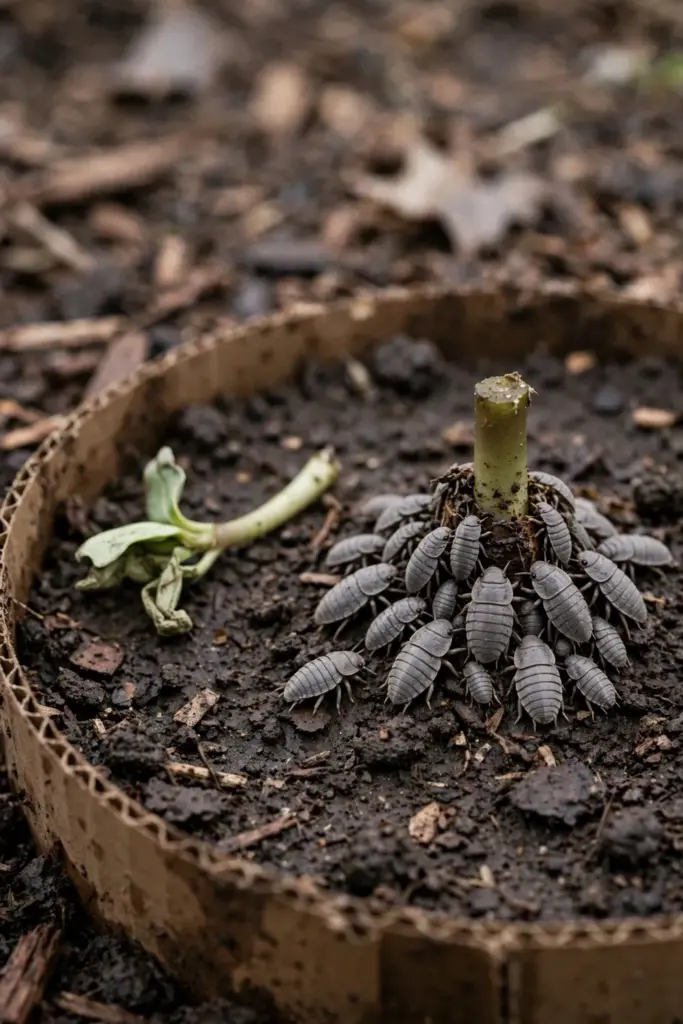
Check the scene before blaming slaters. Slaters work at soil level, so the cut sits at the base and the top of the seedling lies nearby. Cutworms cut the same way. Look for the culprit. Slaters cluster under pots and boards by day, while cutworms hide in the top few centimeters of soil near the cut stem.
Protect seedlings with cardboard collars, pushing a 5 cm collar 2 cm into the soil around each stem. Raise strawberries off the soil on straw or a low support. Remove dense mulch from around new transplants. Water in the morning so the soil surface dries by night, since healthy seedlings outgrow slater nibbling and weak seedlings do not.
7. Whitefly
Whitefly leaves stippled yellow leaves and a cloud of tiny white insects that lifts when the plant is shaken. Look on leaf undersides for flat pale nymphs and white adults. Honeydew coats the leaves below and grows sooty mold. Tomatoes, cucurbits, and ornamental plants host them.
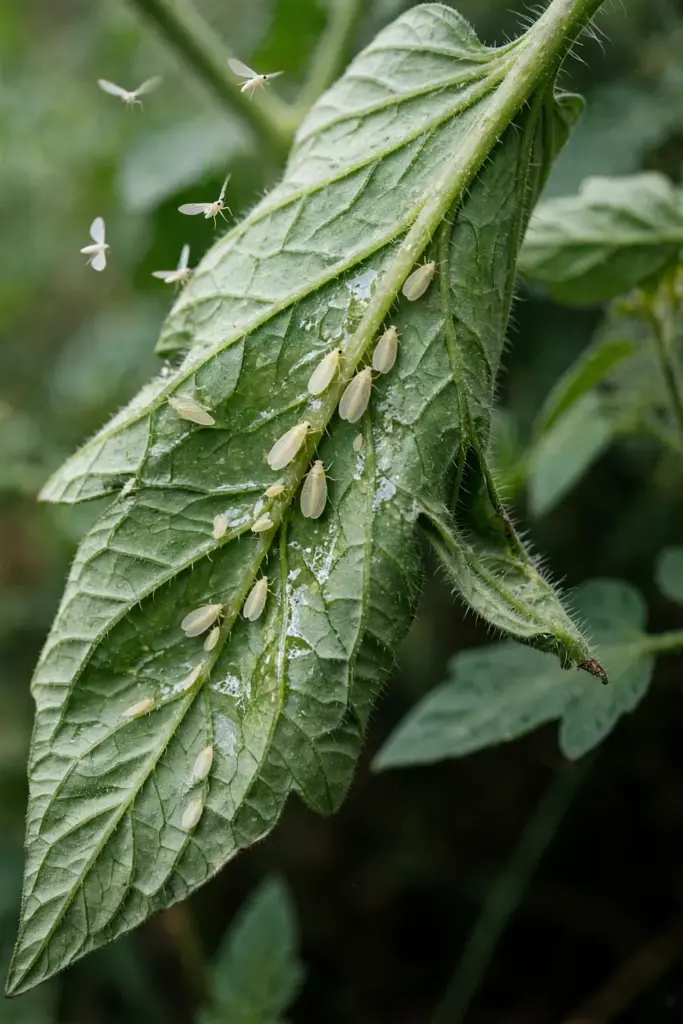
Whitefly feeds on sap and breeds fast in warm weather, while the nymphs sit still and suck and the adults fly when disturbed. Heavy infestations stunt growth and drop leaves. Check leaf undersides weekly in summer. Catch the first generation and the problem stays small.
Knock adults off with a strong water stream, then hang yellow sticky traps beside the crop to catch flying adults. Sticky traps do not clear nymphs, so pair them with water. Encourage parasitic wasps and lacewings. Skip broad-spectrum insecticides. They kill the wasps that control whitefly and leave the pest to rebound. Spray insecticidal soap only when water and predators fall short, and follow the label.
Tell whitefly damage from aphid damage before you act. Both leave honeydew and sooty mold. Whitefly lifts as a white cloud when the plant shakes. Aphids stay put in clusters. Whitefly nymphs sit flat and still on leaf undersides. Aphid colonies look like moving clusters on buds and tips. The fix overlaps, and the name still matters, since whitefly needs sticky traps and aphids do not.
8. Mealybugs
Mealybugs leave white fluffy clumps in leaf joints and along stems, plus sticky honeydew and sooty mold. The clumps look like tiny cotton balls. Under the wax sits a soft oval insect. Citrus, indoor plants, and ornamental shrubs host them.
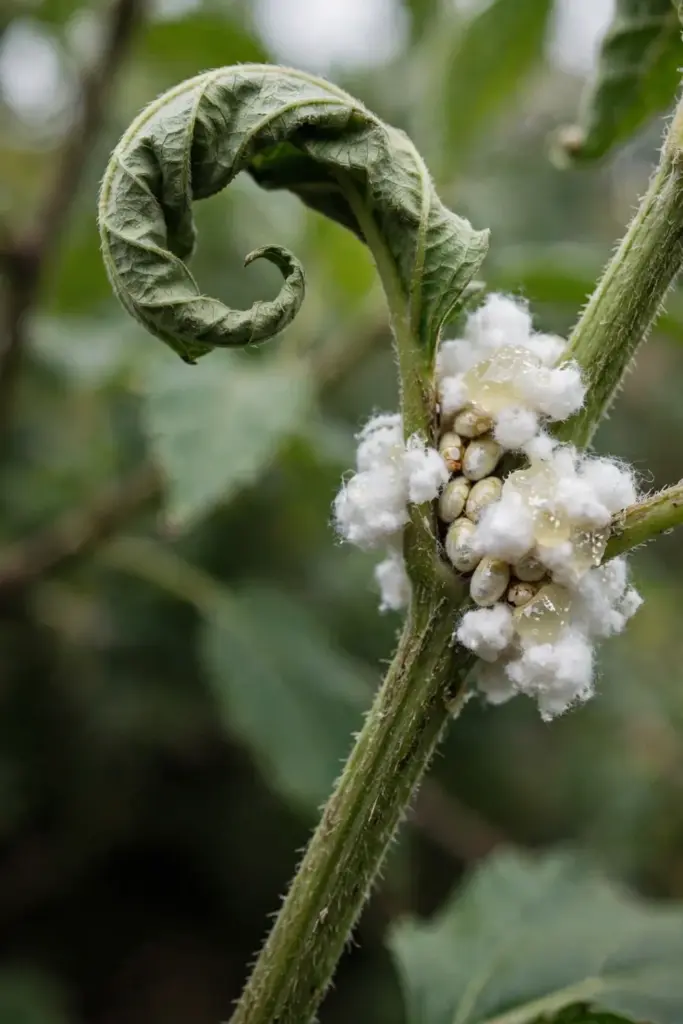
Dab each clump with a cloth dipped in soapy water, and that single move clears a light infestation. Prune out heavy clusters and bin them. Never compost them. Check leaf joints and stem forks weekly, since mealybugs hide where leaves meet stems. Ants farm mealybugs for honeydew, so keep ants off the plant. Hold off on spraying when ladybirds are working the colony.
9. Scale Insects
Scale insects leave small bumps on stems and leaf undersides that do not move. The bumps look like part of the plant. Leaves yellow above a heavy colony. Honeydew and sooty mold follow. Citrus, roses, and ornamental shrubs host them.
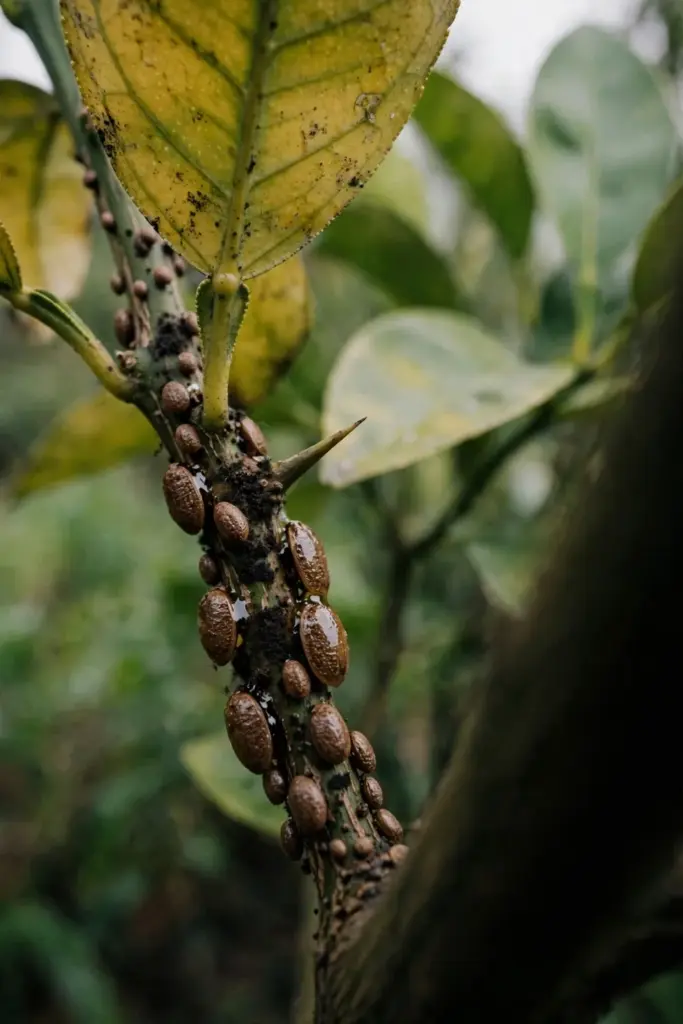
Scrape light colonies off with a fingernail or a soft brush. Prune out heavy stems and bin them. Check the plant in winter when the colony is exposed. Spray horticultural oil in the cooler months to smother settled scale. Cover the colony fully. Follow the label. Spray in the evening and keep pets and children away until the spray dries. Encourage ladybirds and parasitic wasps, which eat scale. Skip broad-spectrum insecticides. They kill the wasps and leave the scale behind.
10. Two-Spotted Mites
Two-spotted mites leave fine stippling on leaves, bronzed foliage, and delicate webbing on leaf undersides. Mites are not insects. They are tiny arachnids, and insecticides do not control them. Hot dry weather drives outbreaks. Roses, tomatoes, beans, and indoor plants suffer first.
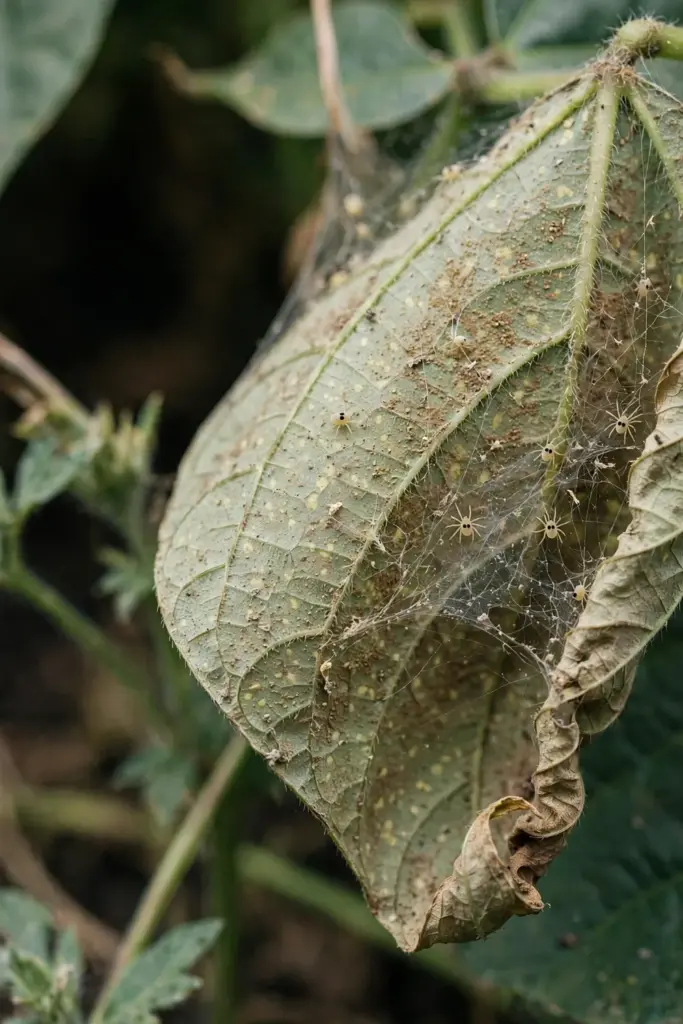
Check leaf undersides with a hand lens, where the mites look like moving dust, pale with two dark spots. Webbing confirms them. Leaves bronze and drop in a heavy infestation. Wash the plant with a strong water stream, covering leaf undersides, and repeat every few days. Water washes mites off and raises humidity, which mites hate.
Encourage predatory mites and lacewings, and skip broad-spectrum insecticides and miticides unless water fails outright. Insecticides kill mite predators and trigger worse outbreaks. Keep the plant watered in hot spells. Dusty stressed plants invite mites, so mulch the bed to hold soil moisture.
Indoor plants get mites too, and dry indoor air suits them. Move an infested pot to the shower and wash the foliage, covering leaf undersides. Repeat twice a week until webbing stops. Keep the pot away from other plants while it recovers. Check its neighbors. Mites walk from pot to pot across touching leaves.
11. Thrips
Thrips leave silvered streaks on leaves and petals, distorted buds, and tiny black droppings. The insects are slender and barely 2 mm long. They hide in buds and flower folds. Roses, onions, and ornamental blooms show the damage first.
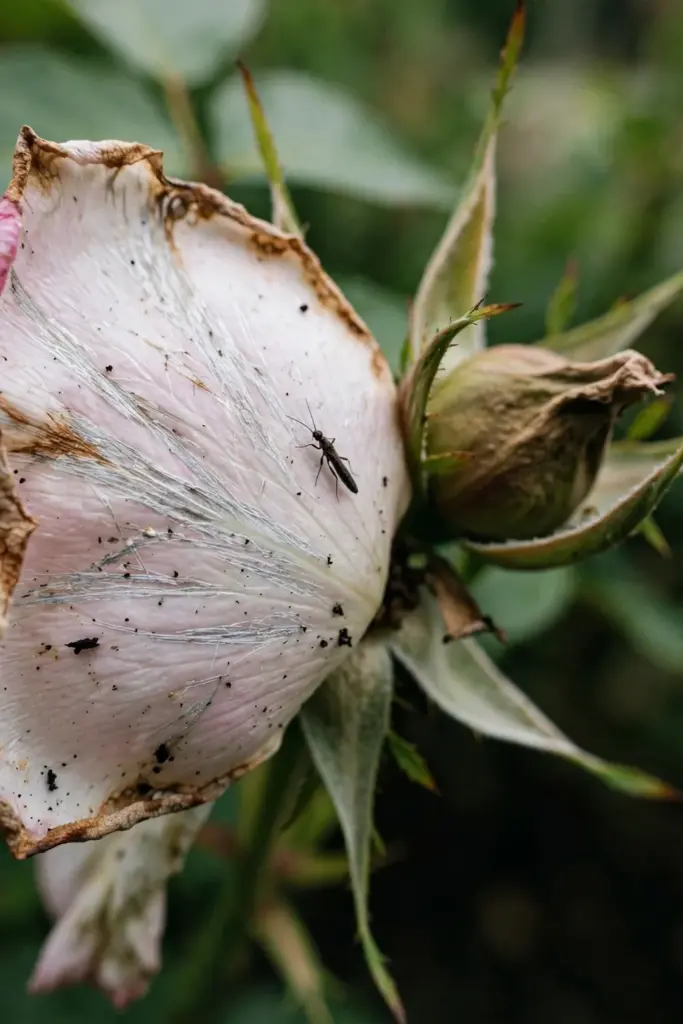
Shake a suspect flower over white paper. Thrips fall out as thin dark specks that crawl, and buds fail to open in a heavy infestation while petals carry brown edges. Check new buds weekly in warm weather. Catch the first generation and the damage stays light.
Prune out damaged buds and bin them, then wash the plant with a strong water stream. Hang blue sticky traps beside the crop to catch flying adults. Encourage lacewings and predatory mites. Spray insecticidal soap only when water and predators fall short, and follow the label. Skip broad-spectrum insecticides. They kill the predators that keep thrips down.
12. Citrus Leafminer
Citrus leafminer leaves winding silvery trails inside young citrus leaves. The leaf curls and distorts around the trail. The miner is a tiny caterpillar feeding inside the leaf, not on it. New flush growth takes the damage. Mature leaves escape it.
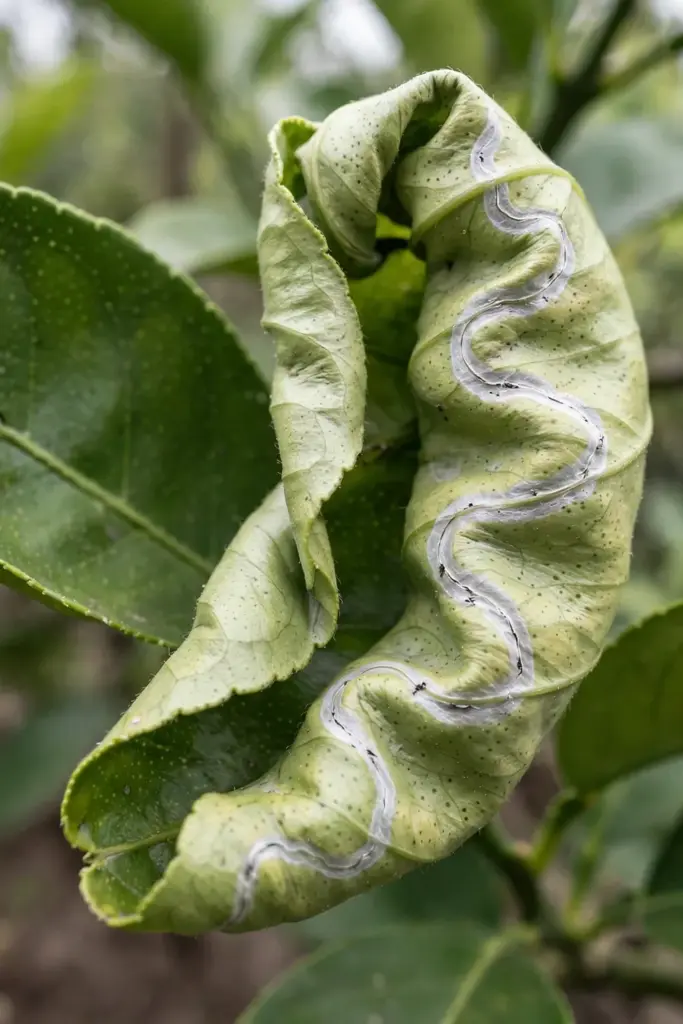
Look for the serpentine trail on soft new leaves. The leaf curls along the trail. The damage looks worse than it is. Healthy citrus outgrows leafminer attack, and fruit set rarely suffers. Young trees take the worst of it, since a small tree carries little leaf to spare.
Protect young trees with fine mesh over new flush. Prune out badly curled flush and bin it. Skip sprays aimed at the leaf surface. The miner feeds inside the leaf, where surface sprays cannot reach it. Feed and water the tree so it pushes strong flush after the attack. Let parasitic wasps work. They keep leafminer numbers down across a season.
Wasps do the long work here. Tiny parasitic wasps lay eggs in leafminer larvae, and their young eat the miner from inside. Broad-spectrum sprays kill those wasps and leave the miner free to breed. A tree that gets water, mulch, and a rest between flushes grows past leafminer damage without help. Judge the tree by its new growth, not by the curled leaves it already carries.
13. Pumpkin Beetles
Pumpkin beetles leave skeletonised leaves and chewed flowers on cucurbits. The adult is a small yellow-orange beetle with dark markings that feeds on leaves, flowers, and young fruit. Seedlings die when beetles strip them. Older vines survive with torn leaves.
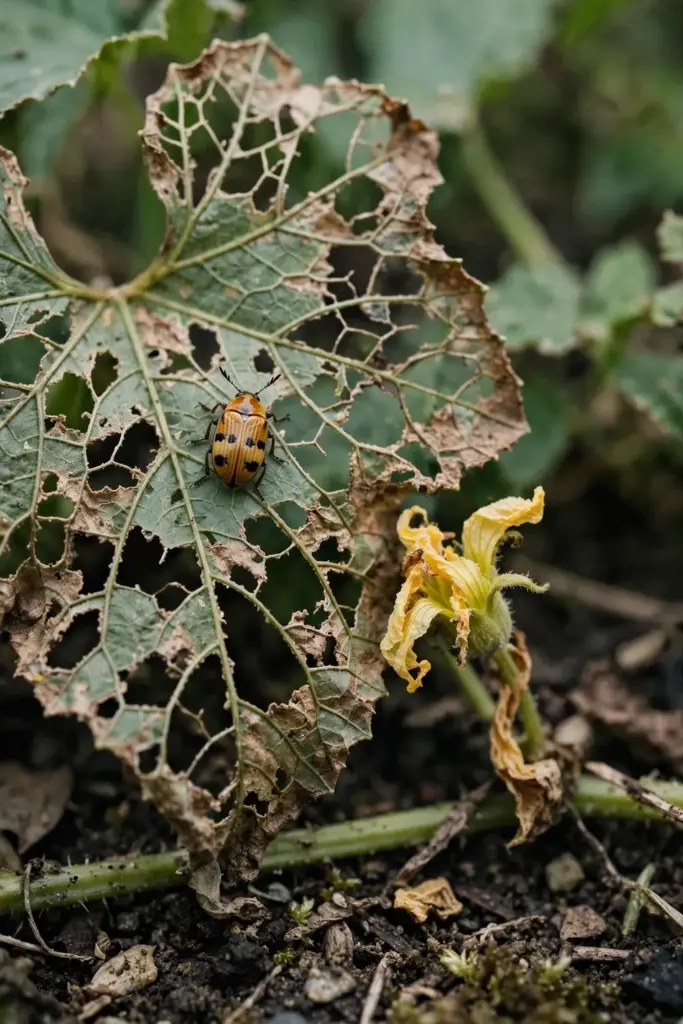
Check cucurbit leaves each morning, since beetles feed in the open in daylight. Hand-pick them into a bucket of soapy water. Net seedlings with fine mesh until vines are running, and tuck the mesh edges into the soil. Rotate cucurbit beds each season so beetles emerging from the soil find no host waiting.
Encourage birds and predatory insects. Birds eat adult beetles. Spray neem or pyrethrum only when hand-picking cannot keep up, and follow the label. Spray in the evening when bees have gone home. Keep pets and children away until the spray dries. Skip broad-spectrum insecticides. They kill bees and the predators that eat beetles.
14. Bandicoots
Bandicoots leave small conical holes dug in lawns and beds overnight. The holes look like someone poked the soil with a finger. They dig for grubs and worms. Beds lose mulch and seedlings get uprooted in the digging. The animal itself is rarely seen.
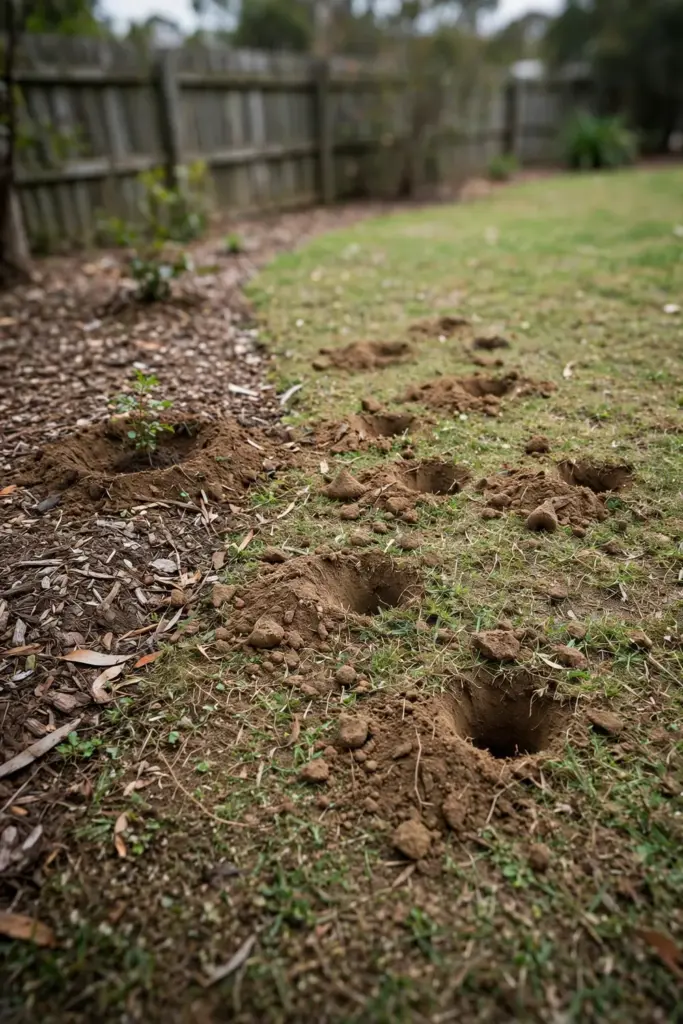
Bandicoots are protected native animals. Never harm them. Never trap them. Fence the beds they target with a low fence whose base sits buried, so digging under it fails, and keep the mesh tight to the soil with no gaps. Leave one part of the garden unplanted for them to dig in. They eat lawn grubs there and leave the beds alone.
Lift mulch from beds at night if digging persists, since bandicoots dig where grubs live and mulch holds the grubs. Check the bed each morning. Firm displaced seedlings back in. The digging fades when the grubs are gone, and a motion light near the bed startles bandicoots without harming them.
15. Rats and Mice
Rats and mice leave gnawed fruit, stripped seeds, and droppings near the bed. They feed at night. Fruit vanishes, stored seed disappears, and seedlings get pulled up and eaten. Droppings and greasy rub marks along walls confirm rodents.
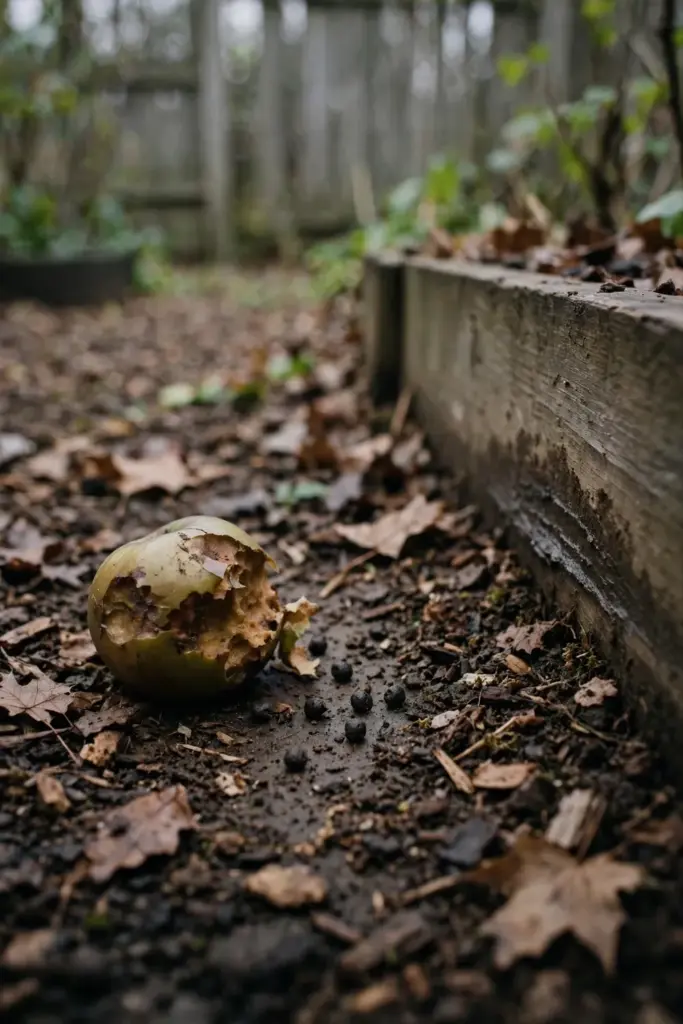
Remove the food that draws them. Pick fallen fruit daily. Store seed and animal feed in sealed metal or thick plastic containers, and compost only plant matter, never meat or cooked food. Clear dense shelter near beds. Stacks of timber and thick ground cover give rodents a home beside the food.
Trap with snap traps in covered boxes that keep pets and wildlife out. Check traps daily. Dispose of dead rodents at once. Skip poison baits in the garden. Poisoned rodents poison the owls, cats, and dogs that eat them. Seal gaps in sheds and greenhouses. A mouse fits through a gap the width of a pencil.
Frequently Asked Questions About What’s Eating My Plants in Australia
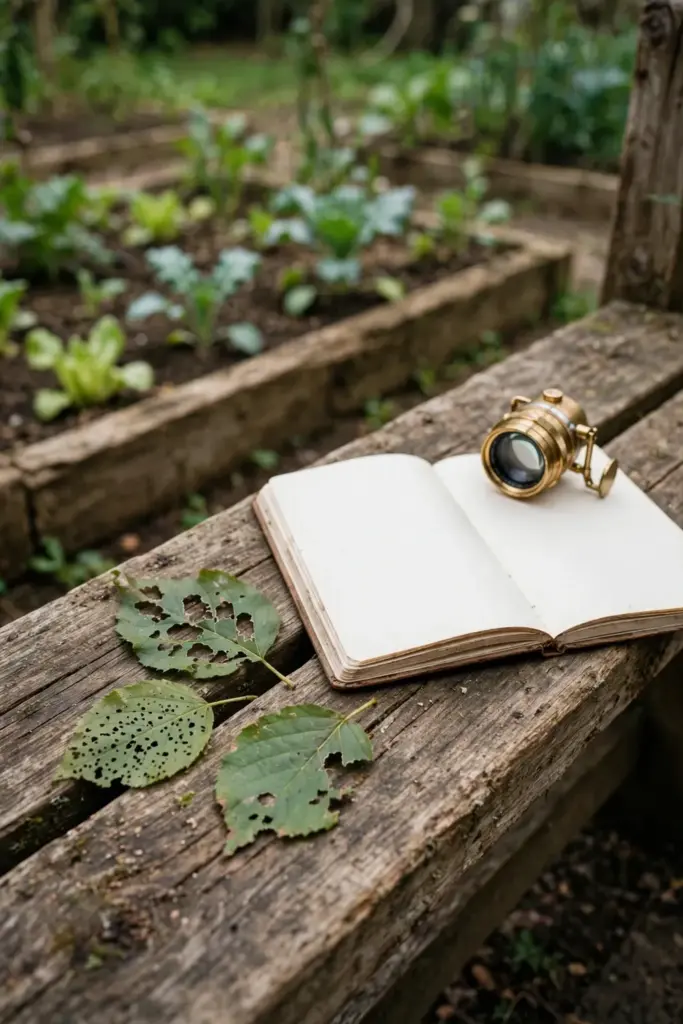
Snails, slugs, earwigs, and possums feed at night. Check the plant with a torch after dark to catch the culprit in the act. Slime trails point to snails or slugs. Ragged holes with no trail point to earwigs. Missing seedlings and stripped branch tops point to possums. Night scouting names the pest in one visit, and the fix follows from the name.
Exclusion stops possums. Net beds and fruit trees with wildlife-safe mesh of 5mm x 5mm or less at full stretch. Fix netting tightly to the trunk and never drape it loosely. Trim branches that overhang beds and roofs, since possums travel along branches. Possums are protected native animals, so never harm or relocate them yourself.
Slaters, cutworms, snails, slugs, and possums eat seedlings overnight. Check the cut. A clean cut at the base with the top lying nearby points to slaters or cutworms. Slime trails point to snails or slugs. Whole seedlings gone points to possums. Cardboard collars around stems stop slaters and cutworms, and fine mesh stops possums.
Neem oil and white oil are organic options, and the label governs their use. Check the label for the crops it covers, the withholding period on edible plants, and the plants it forbids. Spray in the evening when bees have gone home. Keep pets and children away until the spray dries. Water and predators come first, and oils back them up when those fall short.
Sprays kill predators along with pests, and pests rebound faster than predators. Aphids, whitefly, and mites breed in days. Predators take weeks to return. Each spray resets the balance in the pest’s favor. Water, hand-picking, barriers, and predators break the cycle. Spray only when those fall short, and spray the smallest area that holds the outbreak.
Scout Weekly, Spray Rarely
Scout weekly, spray rarely. Walk the garden once a week with eyes on leaf undersides, new growth, and soil level. Catch the first aphid cluster, the first caterpillar, the first slime trail. Small outbreaks yield to water, hand-picking, and a barrier. Large outbreaks need sprays, and sprays cost predators.
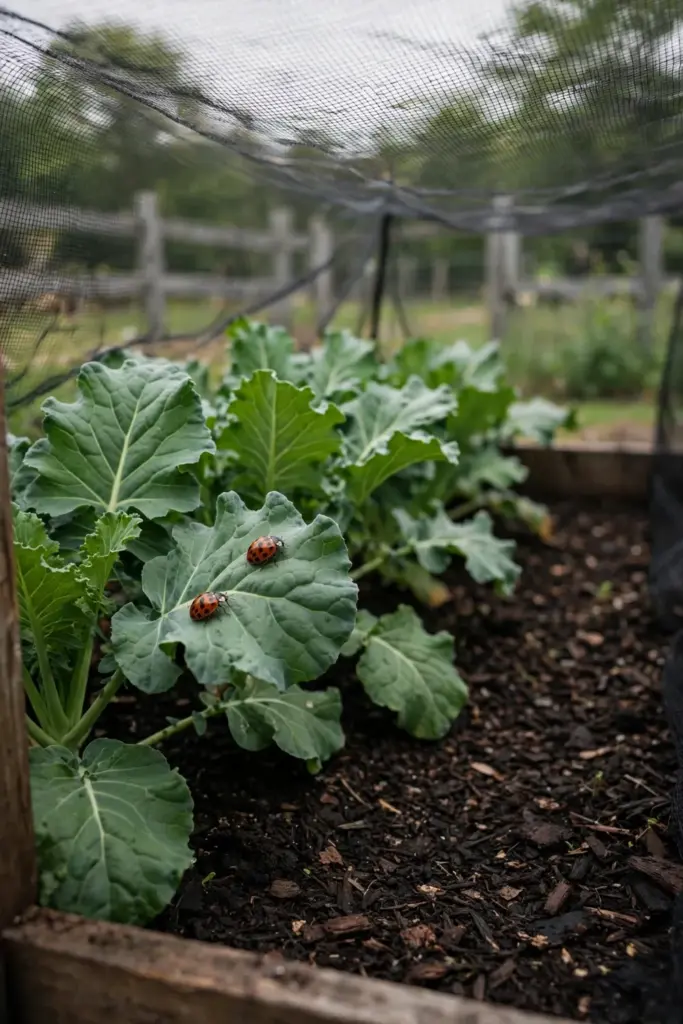
Keep the predators on your side. A beneficial insect guide shows which insects eat your pests and how to keep them. The organic pest control overview lays out the full method behind these fixes: exclude, trap, encourage predators, spray last. Leave some habitat for them. Let a few aphids live on one plant so ladybirds stay in the garden. The garden that feeds its predators needs fewer sprays each season. Start with the damage. Name the pest. Fix the smallest thing that works.