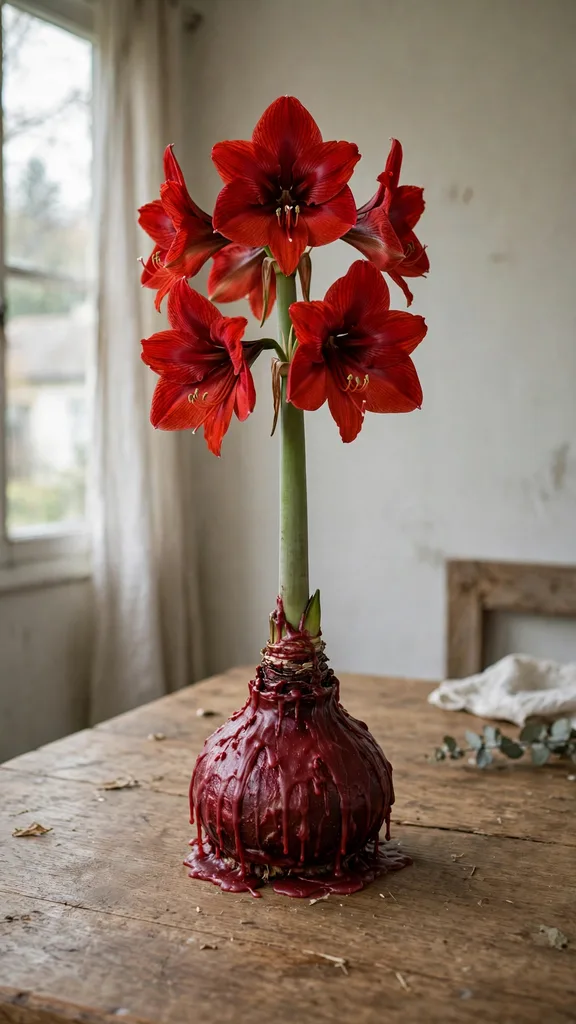
A waxed amaryllis is sold as a one-season wonder: a bulb sealed in colored wax, roots trimmed, a wire in its base so it stands alone, needing no pot, no soil, and no water to flower over 3 to 4 weeks. The flower is real, and so is the bulb inside the wax, which is why the question arrives every January: can it be saved? Yes, sometimes, and this guide is the honest version of how. A firm bulb, dewaxed carefully, potted, grown hard through summer, and rested in autumn can flower again. A soft bulb cannot, and part of this guide’s job is telling the two apart before you spend a year on the wrong one.
Set expectations first, because the waxed bulb starts its second life in debt. It flowered entirely on stored food and water, taking in nothing, so it ends the season smaller and weaker than a potted bulb that was fed as it grew. The rescue below takes a full growing season, and even then the second flowering may come a year later than you hope. I save the big, firm bulbs and compost the rest without guilt; the ones that make it are the most satisfying reblooms in the house, precisely because they were not supposed to happen.
| Stage | When | What the Bulb Needs |
|---|---|---|
| Bloom in wax | Weeks 0 to 6 | Bright light, a quarter turn every few days, no water |
| Dewax and inspect | At petal fall | Wax and wire off, rot check, keep every root |
| Pot and root | Weeks 1 to 4 after potting | Snug pot, top third of the bulb above the soil, light watering |
| Leaf season | Spring and summer | Full sun, regular feed, never cut the leaves |
| Rest | Autumn, 8 to 10 weeks | Cool, dark, dry, leaves off |
| Rebloom | The second winter | Warmth and water to wake, flowers in 6 to 8 weeks |
What the Wax Does to the Bulb
The wax is a seal, and the seal is the whole product. The NC State Extension New Hanover County guide to wax-dipped amaryllis explains what the coating does: it traps the moisture and nutrients already inside the bulb, which powers the flowering, and it also prevents the bulb from absorbing water or nutrients from outside, so the bulb shrinks and weakens as the bloom period ends. The roots are trimmed and a wire is set into the basal plate, the bulb’s root-growing base, so the bulb can stand without a pot.
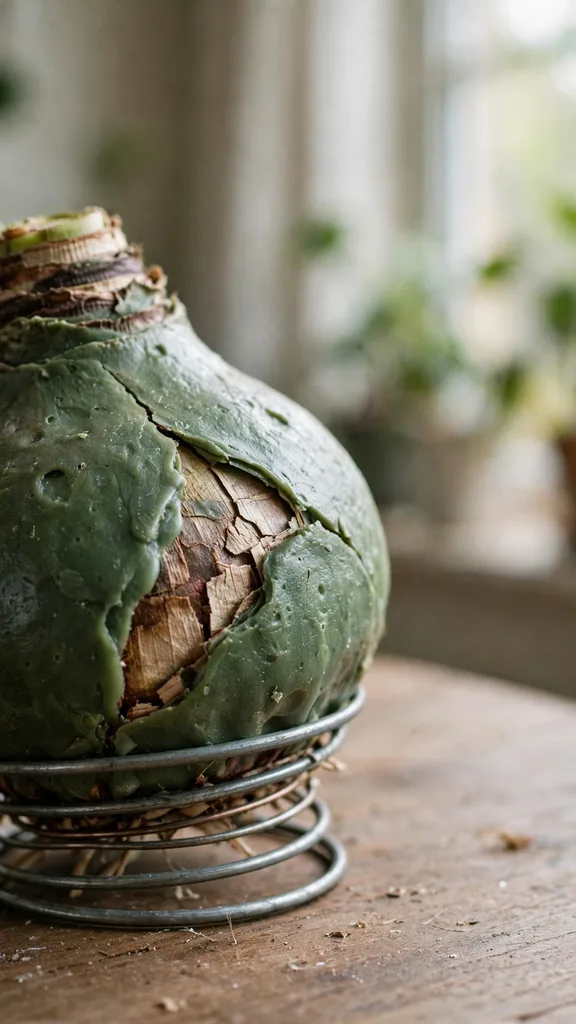
Understand that and the rescue strategy writes itself: everything after petal fall is about reversing the seal’s effects. The bulb needs its roots back, water and food back, and a full season of leaves to refill the store the flower emptied. Nothing about the wax poisons the bulb; the bulb is a battery run flat, and batteries of this kind recharge slowly, through leaves, in sunlight.
Enjoy the Bloom Without Helping It to Death
While the bulb is in flower, care is mostly restraint. Put it in bright, indirect light, turn it a quarter turn every few days so the stalk grows straight, and give it no water at all; water against the wax can only sit in the seams and invite rot at the base. Support a tall stalk loosely if it leans, since a waxed bulb’s wire base is not heavy and a top-heavy flower can tip the whole thing off a sill.
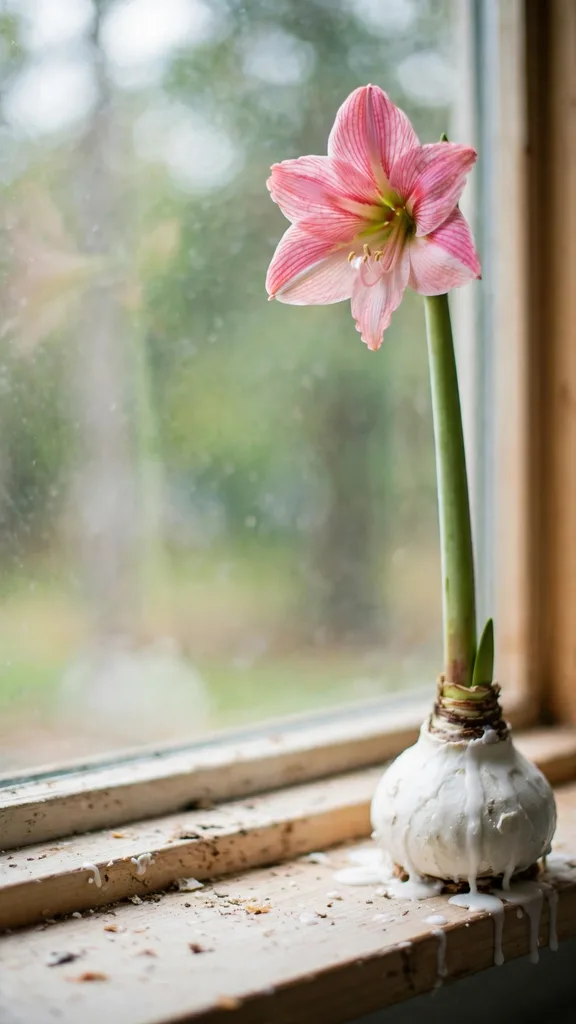
Resist moving it into soil early, mid-bloom, however strong the rescue instinct is. The flower is running on the bulb’s store and disturbing the base now helps nothing. Enjoy the bloom for its three weeks, keep every leaf that appears, and wait for petal fall. The leaves matter: a waxed bulb that leafs well during and after flowering starts its rescue with a head start, because those leaves are already refilling the store.
Decide at Petal Fall: Save or Compost
When the last flower fades, cut the stalk an inch or two above the bulb and make the decision with your hands: squeeze the bulb gently through the wax. A bulb that feels firm and heavy for its size is a candidate. A bulb that feels soft, light, hollow, or spongy is finished, and no potting mix will change that; compost it, wax removed first, since wax and glitter do not break down in the pile.
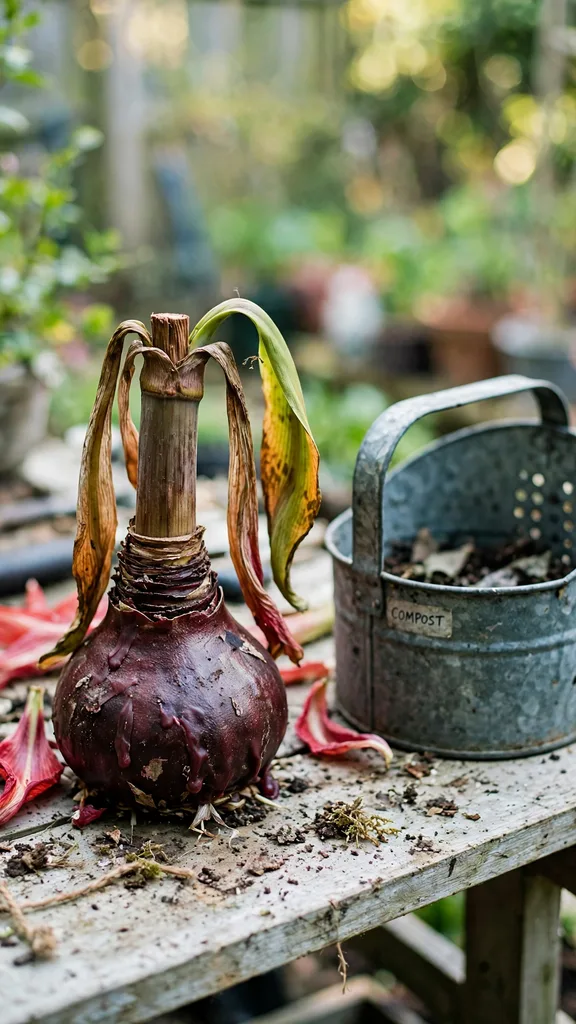
Size matters too. A large bulb, three inches or more across before waxing, holds reserves enough to flower, shrink, and still rebuild in a season. A small bulb that flowered in wax has spent proportionally more of itself and may need two growing seasons before it can flower again. Saving it is legitimate, but label the pot with the truth so next December’s expectations are set by the bulb, not by hope.
Remove the Wax Completely
Dewaxing is the delicate operation, because new roots often grow into the wax from the basal plate and tear away if you rush. Work slowly: score the wax with a blunt knife, peel it in sections with your fingers, and ease each piece away, checking for pale roots caught in it. Remove the wire stand from the base with a gentle twist and pull. Never soak the bulb in hot water to melt the wax off; heat that melts wax cooks the bulb’s surface and its root initials.
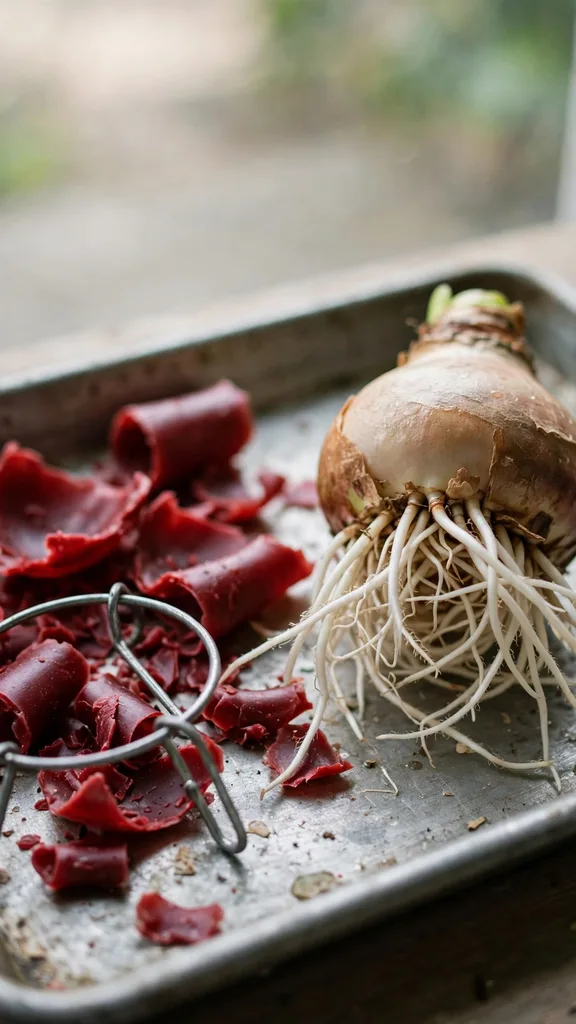
Pick off every remaining flake. Wax left in patches keeps water from the bulb’s skin unevenly and hides the soft spots you need to see in the next step. Work over a tray, since wax sheds crumbs and glitter, and keep the removed wax out of the compost. A clean bulb at the end should look like what it is: an ordinary amaryllis bulb, a little smaller than it was, with its basal plate bare and visible.
Inspect and Clean the Bulb
Now judge the bulb properly. The basal plate, the flat base where roots grow, decides everything: it should be firm, pale, and intact, capable of root growth. Soft, dark, or mushy patches, a foul smell, or a basal plate that crumbles at a touch all mean the bulb goes to the bin, not the pot. Small surface marks and loose papery scales are cosmetic; peel the loose scales away and let the bulb air for a day.
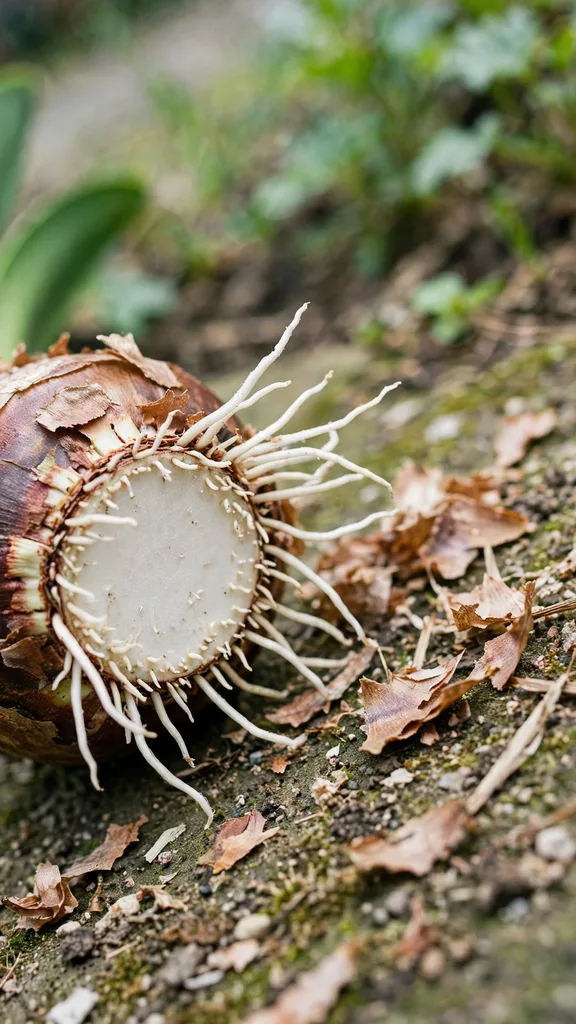
Check for the new roots you preserved during dewaxing and keep them damp while you work. If the base is sound but rootless, the bulb can still grow roots once potted, more slowly. This inspection is the whole secret of the rescue: gardeners who pot every waxed bulb regardless fill their shelves with slow failures, and gardeners who inspect first save nearly everything they actually plant.
Pot It Like a Normal Amaryllis
From here the bulb joins the normal amaryllis routine. Pot it in a container with drainage, only an inch or two wider than the bulb, in well-draining potting mix, with the top third of the bulb above the soil line, the standard amaryllis planting depth. Water once, lightly, and then wait: water again only when growth shows or the top of the mix is dry, because a rootless bulb sitting in wet mix rots faster than it roots.
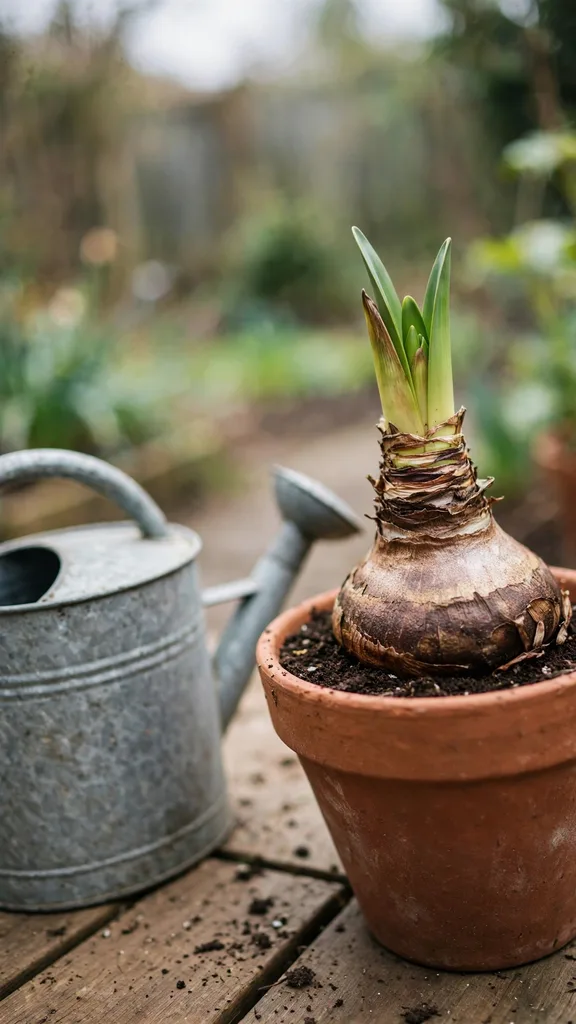
The full potting and aftercare routine is the one in the amaryllis care guide on this site; a rescued waxed bulb differs only in starting weaker. Put the pot in the brightest spot you have. Roots first, then leaves: expect the pot to look idle for two to four weeks while the base rebuilds underground, and do not dig the bulb up to check, however tempting. Idle is normal. Rot is not, and the difference is smell and softness at the neck, checked with a fingertip, not a spade.
Grow the Leaves Hard All Summer
The leaf season is the rescue. Every leaf is a solar panel refilling the bulb, so the rules are: maximum light, regular water once roots are working, a diluted liquid feed every two weeks through spring and summer, and never, ever cutting the leaves to tidy the plant. Move the pot outdoors after frost into a few days of shade, then full sun; a rescued bulb grown hard outdoors rebuilds twice the store of one kept on a sill.
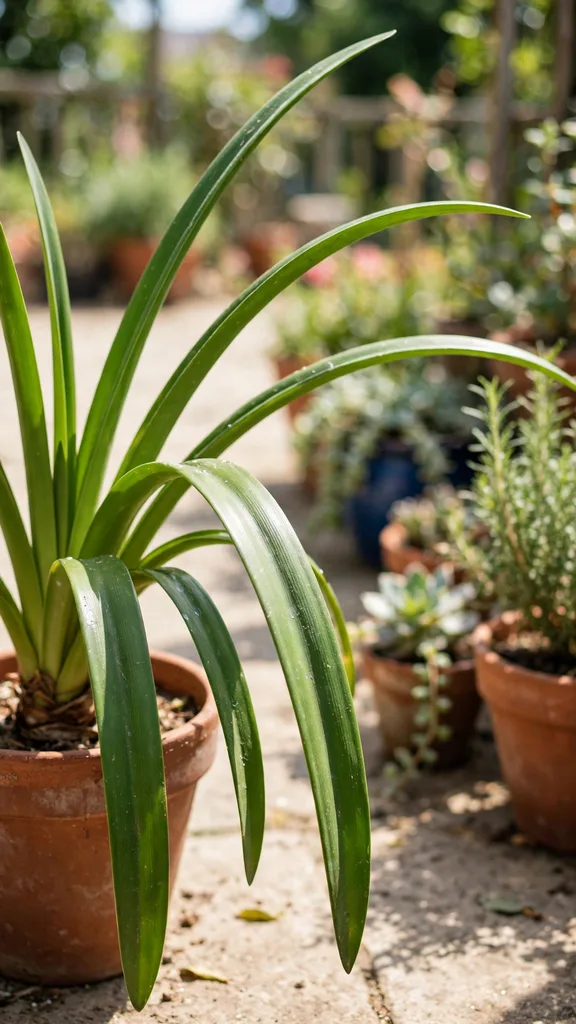
Judge progress by the bulb, not the leaves: by late summer the bulb should feel firm again and measure close to its pre-wax size. If it is still small, the honest plan is a second leaf season before expecting flowers, and there is no shortcut around it. The growing amaryllis bulbs for Christmas blooms guide covers the timing arithmetic for bulbs in full strength; a rescued bulb follows the same calendar once it has rebuilt, and not before.
Rest It in Autumn for 8 to 10 Weeks
A rebuilt bulb flowers again only after the rest every amaryllis needs. In early autumn, bring the pot in, stop watering, and let the leaves yellow and die back; then keep the bulb cool, dark, and dry for 8 to 10 weeks at 50 to 55°F. The Wisconsin Horticulture guide to forcing bulbs sets out the cold-period logic that all forced bulbs share: the rest is not neglect but the trigger, and a bulb that skips it produces leaves without flowers.
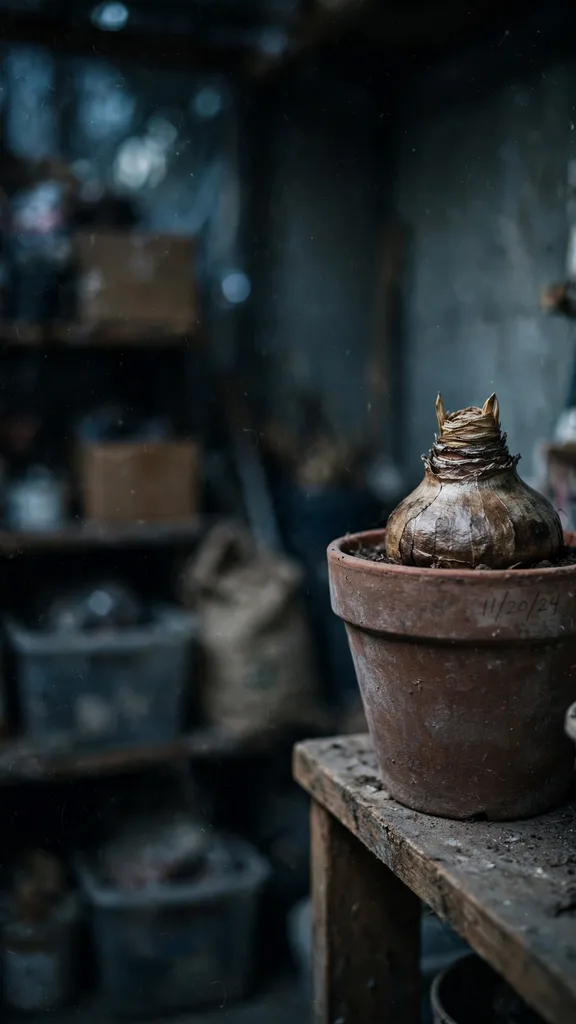
Cut the dead leaves at the neck when they come away freely, and leave the pot entirely alone during the rest: no water, no checking beyond a glance. Mark the wake date on the pot in pencil when you put it away. Eight weeks is the floor; ten suits a bulb that was waxed, since its margin for a weak performance is thinner and a full rest gives it its best chance.
Wake It for a Second Christmas
Wake the bulb by bringing it into warmth and light and watering once, thoroughly; then water sparingly until the bud or leaves are moving. A successfully rescued bulb shows a bud spear in two to four weeks and flowers six to eight weeks after waking, so a wake date in mid-October times the flowers for December. Count backward from the day you want, as with any forced amaryllis, and accept a week of drift either way.
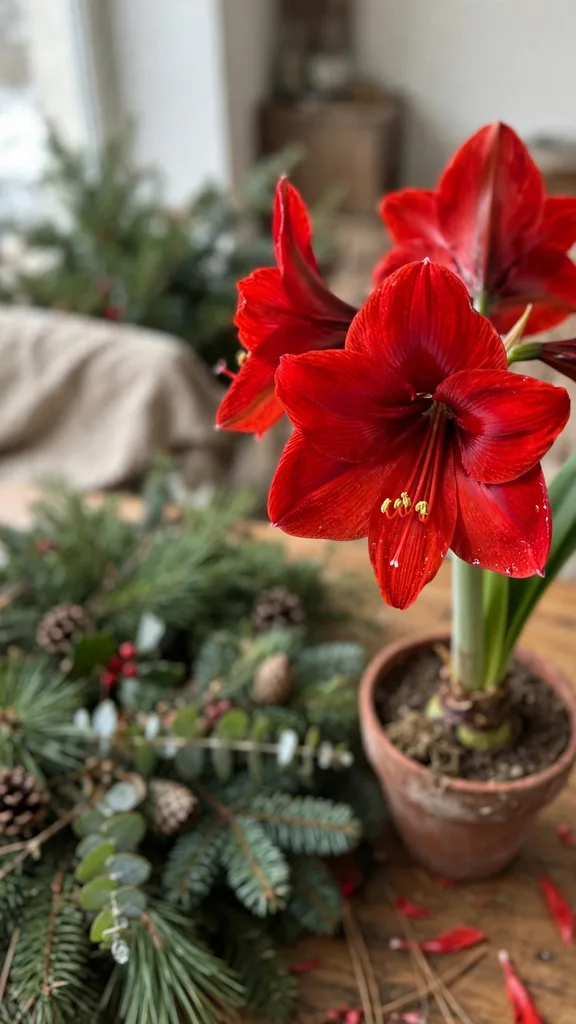
Support the stalk early, keep the pot turned, and enjoy the evidence. Then keep the leaves after this flowering too, because the bulb’s second rescue is its normal life from now on: leaf season, rest, flower. A waxed bulb that has rebloomed has fully rejoined the ordinary amaryllis cycle and needs nothing special ever again, beyond being the best story on your plant shelf.
Troubleshooting: No Leaves, No Bloom, and Rot
No leaves after a month in the pot: the basal plate was damaged or the bulb is rotting from the base. Tip it out once, inspect, and if the base is sound, repot in fresh, barely moist mix and wait another month in warmth; if it is soft, compost it and record the lesson. No bloom after a full leaf season and rest: the bulb did not rebuild enough store, which means more light and more feed next season, or it skipped a true rest, which means a stricter autumn. Both failures are calendar failures, not mysteries.
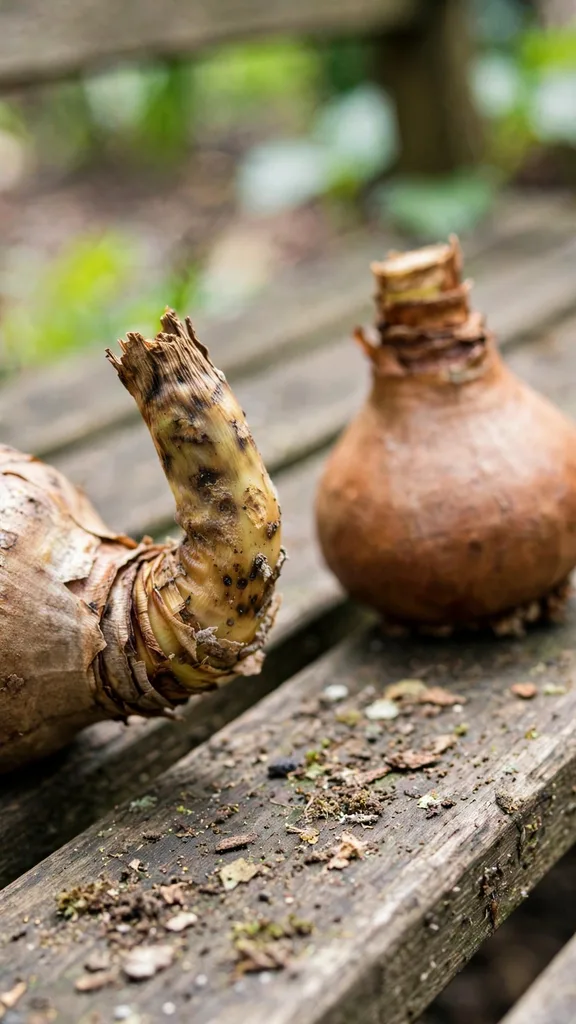
Rot at any stage smells sweet and foul and feels soft at the neck; there is no rescue from established rot, and keeping a rotting bulb among healthy ones risks the shelf. The pattern to notice is that every failure here traces back to one of three things: a bulb that was never firm at inspection, a leaf season too dim or too short, or a rest that was not cold, dark, and complete. Fix the calendar and the inspection, and waxed bulbs stop being a gamble.
Frequently Asked Questions
No. A waxed bulb can be saved when it is still firm and heavy at petal fall, with a sound basal plate capable of growing roots. Soft, hollow, mushy, or foul-smelling bulbs are finished and should be composted, wax removed first. Extension guidance treats waxed bulbs as single-use by design; saving one is a genuine possibility with a full season of rebuilding, never a guarantee, and the inspection at dewaxing is what tells you which bulb you have.
A large, firm bulb that gets a full leaf season of sun and feeding, then 8 to 10 weeks of cool, dark rest, can flower the second winter, six to eight weeks after waking. Smaller bulbs commonly need two growing seasons to rebuild enough store. Count the timeline in seasons, not weeks: bloom, dewax, pot, a summer of leaves, an autumn rest, and then, if the bulb has done its part, flowers.
No. The wax seals the bulb, so water cannot reach it usefully; it can only sit in the seams at the base and invite rot. The bulb flowers on the water and food already stored inside it. Your whole job during the bloom is bright, indirect light, a quarter turn every few days so the stalk grows straight, and support if the stalk leans. Watering starts only after the wax is off and the bulb is potted.
Two causes cover nearly every case: the bulb did not store enough food during its leaf season, fixed with more light and regular feeding next summer, or it never had its full cool rest, fixed with 8 to 10 weeks at 50 to 55°F, dark and dry. A rescued waxed bulb may also need another year of rebuilding. Repotting is rarely the answer; amaryllis prefer a snug pot and resent disturbance.
For reliable reblooming, yes: a bulb grown in soil from the start keeps its roots, feeds as it flowers, and enters the normal cycle without a rescue year. Waxed bulbs are gifts and novelties, designed for one easy bloom. Save the waxed ones that arrive in your life and pass the inspection, and buy potted or bare bulbs when you are choosing for yourself. The two kinds sit happily on the same shelf; they just arrive by different roads.