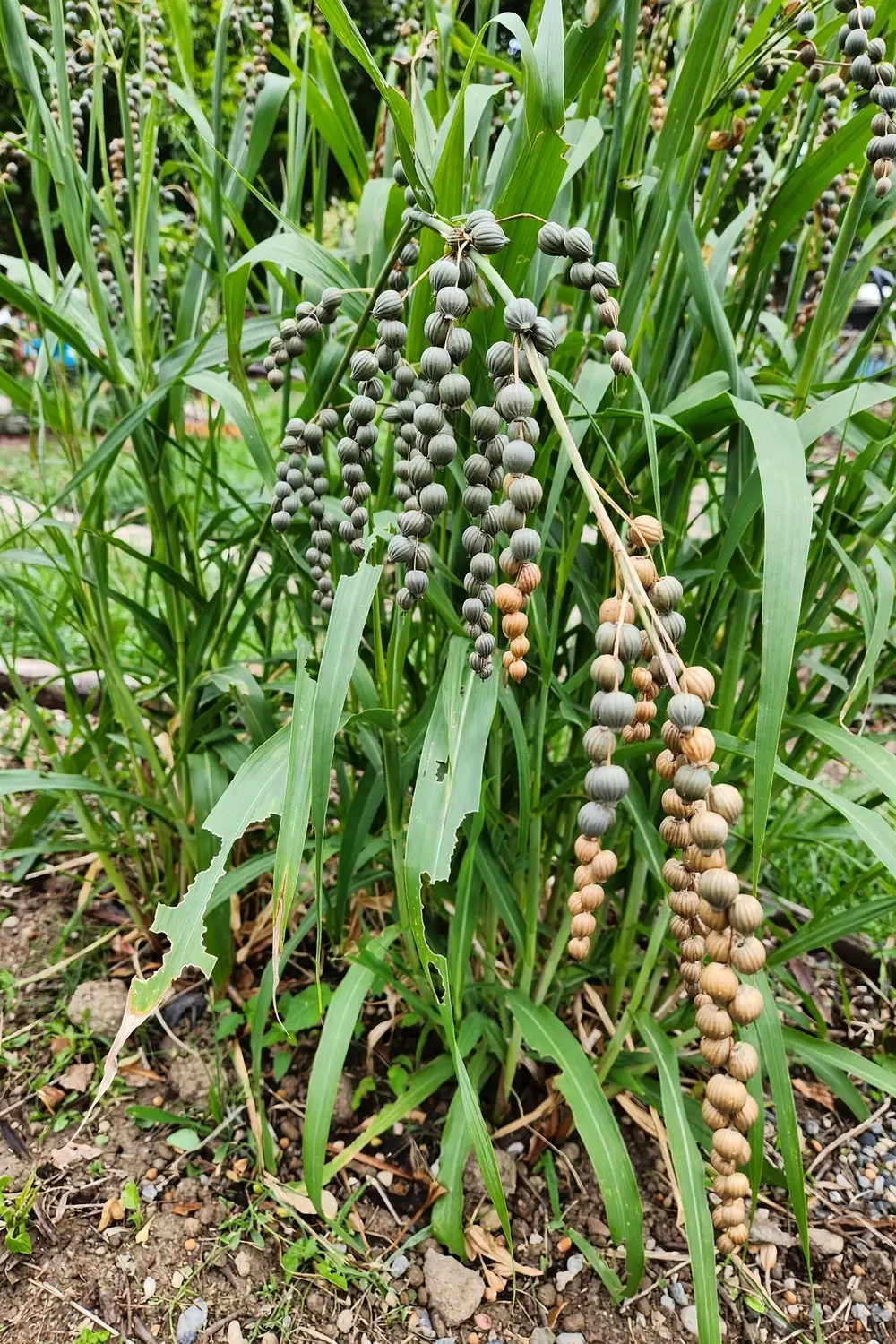

Job’s tears needs 110 to 120 frost-free days from seed to harvest, and one question decides your seed packet before you touch soil: do you want beads or do you want grain? Coix lacryma-jobi wears two completely different costumes. Wild hard-shelled forms produce the pearly, naturally holed beads strung into jewelry, while the edible form sold as yi yi ren in Chinese groceries yields the soft grain cooked into soups and teas. Buy the wrong seed and you will grow a plant that no recipe can use, or a food crop with husks too hard to crack.
The fix takes thirty seconds once you know it. Bead types are the wild Coix lacryma-jobi with rock-hard, naturally pierced shells. The edible type is Coix lacryma-jobi var. ma-yuen, the yi yi ren grain of Chinese kitchens, with a thinner shell you can actually cook. Seed sellers rarely spell this out, which is why page one of the search results confuses everyone. The table in the first section below makes the distinction permanent.
Give the plant a long warm season of 110 to 120 frost-free days, nick and soak the hard seeds overnight, and harvest when the heads turn yellow and the beads reach their darkest color. This guide covers both lanes from seed to harvest, including the indoor head start that matters in short-summer climates.
Know Which Job’s Tears You Are Growing
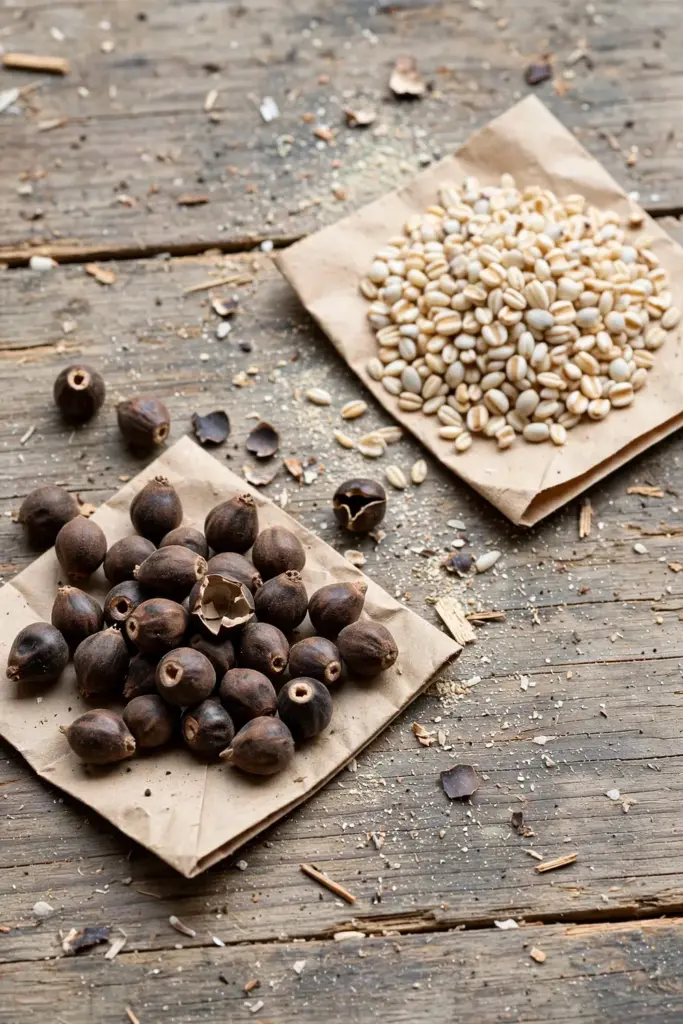
Everything about this crop splits along one line: beads versus grain. Get this wrong and the rest of the guide still works, but your harvest will not match your plan. Read this table before you buy seed.
| Trait | Bead Types (Wild Form) | Edible Type (var. ma-yuen) |
|---|---|---|
| Shell | Rock hard, naturally pierced | Thinner, cookable after processing |
| Main use | Jewelry, crafts, rosaries | Soups, teas, porridge (yi yi ren) |
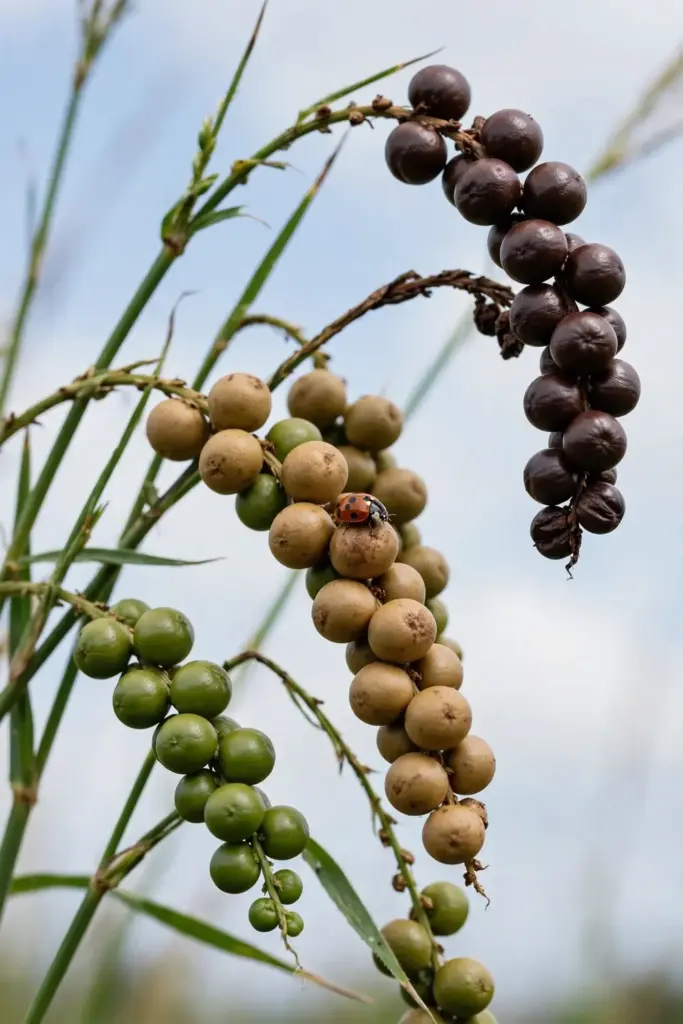
| Seed color at maturity | Dark mocha to gray-brown | Tan, paler when husked |
| What seed sellers call it | Job’s tears beads, craft seeds | Yi yi ren, adlay, Chinese pearl barley |
The wild bead forms include varieties like var. stenocarpa and var. monilifer with the classic hard pearly shells, a distinction the ECHO grain guide documents alongside the crop’s cultivation in tropical Asia. One Etsy-style trap worth knowing: some craft seed lots are sold with the note that they are “not the type for stringing as beads” because the shells lack a clean through-hole. If jewelry is your goal, buy seed explicitly sold for beads, not generic Job’s tears grain.
The edible type, var. ma-yuen, is the yi yi ren found in Chinese medicine shops and Asian groceries. It cooks like a chewy grain with a mildly sweet, earthy flavor, and in many recipes it replaces or sits beside pearl barley.
Here is the catch that trips buyers: the two forms look nearly identical as growing plants. Both are tall arching grasses with the same leaves and habit; the difference shows only in the mature seed. That is why the packet label matters more than any photo of the foliage. You cannot fix a wrong choice at transplant time, so choose before you buy. Note that pearl barley is a different plant entirely (Hordeum vulgare), so if a seller calls Job’s tears “Chinese pearl barley,” confirm you are still getting Coix and not actual barley.
Quick Growing Specs
| Factor | Number |
|---|---|
| Scientific name | Coix lacryma-jobi |
| Life cycle | Annual in most climates, perennial in zones 9 to 10 |
| Days to maturity | 110 to 120 |
| Seed depth | 1/2 inch |
| Spacing | 10 to 12 inches |
| Soil temperature to germinate | 65 to 95 F |
| Germination time | 7 to 28 days |
| Height | 4 to 6 feet |
| Sun | Full sun to part shade |
Climate and Zone Reality
Job’s tears is a frost-tender tropical grass that behaves like corn: it wants heat and a long season. It is hardy only in zones 9 and 10 as a perennial, and everywhere else you grow it as a warm-season annual. Plant only after the last spring frost, when nights stay reliably above 50 F.
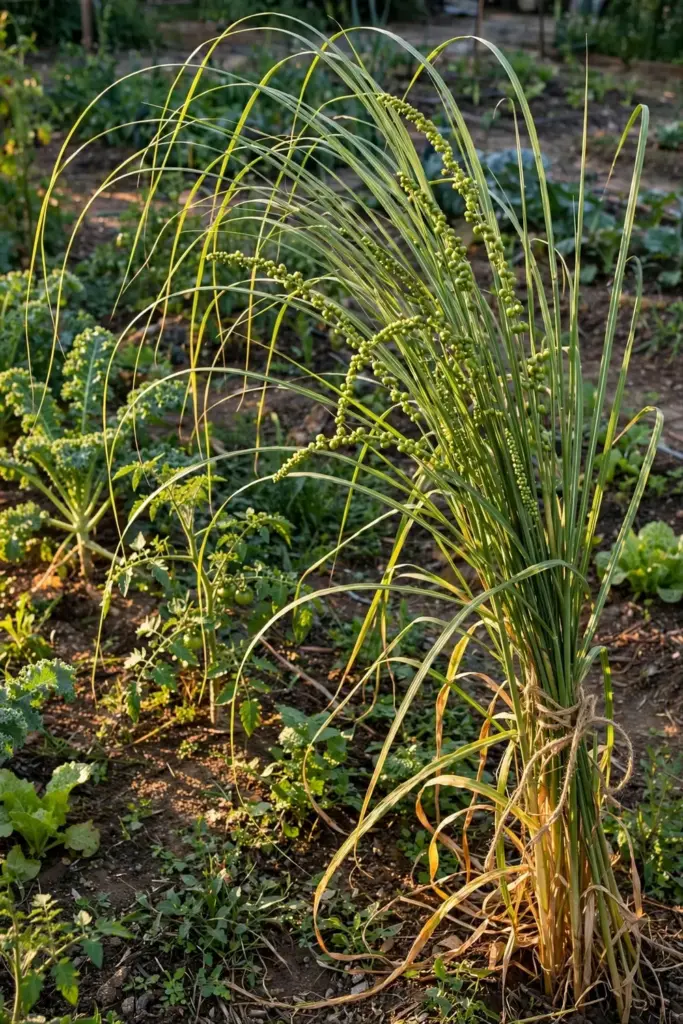
In short-summer regions, the season is the entire game. You need 110 to 120 frost-free days for the seed heads to fill and harden. If your frost-free window runs shorter than that, start seeds indoors four to six weeks before transplanting, and treat the plant like a tomato: no outdoor planting until the soil feels warm to your wrist.
Do the calendar math before you commit. Count backward from your average first fall frost by the season length in the specs table, then tack on the indoor head-start weeks. If that start date lands before your last spring frost, the indoor start becomes the only way the heads mature. Gardeners in zones 5 and 6 routinely succeed this way, while direct sowers in the same zones harvest immature heads.
Warm climates bring the opposite warning. In frost-free regions the plant self-sows prolifically and can become a nuisance weed. Cut seed heads as soon as they form if you do not want volunteers next season.
Seed Selection: Buy for Your End Goal
Match the seed packet to the table above. For jewelry and crafts, look for seed sold as beads with naturally pierced shells. For the kitchen, look for yi yi ren, adlay, or edible Coix lacryma-jobi var. ma-yuen. Generic packets labeled only “Job’s tears” can be either, so read the seller’s description before you buy.
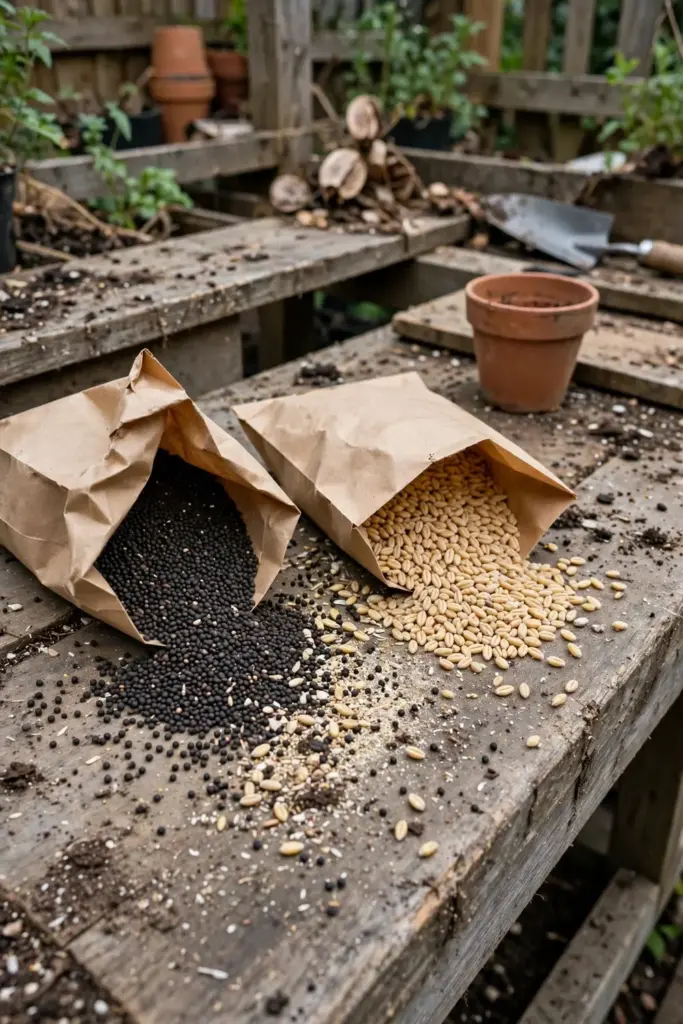
Buy fresh seed from a reputable seller. Old seed germinates poorly, and the hard shells already make this crop slower to wake up than beans or corn. A packet of twenty seeds sown well beats a packet of two hundred sown carelessly.
Read the listing like a detective. Vague labels such as “Job’s tears seeds” with no variety or use named are the red flag; the same packet could contain bead stock, grain stock, or field-run mix. Look for the words beads, craft, jewelry, var. ma-yuen, yi yi ren, or adlay, and check whether the seller states the shell character. If the description cannot tell you what the mature seed is for, buy from a seller who can.
Tools and Materials
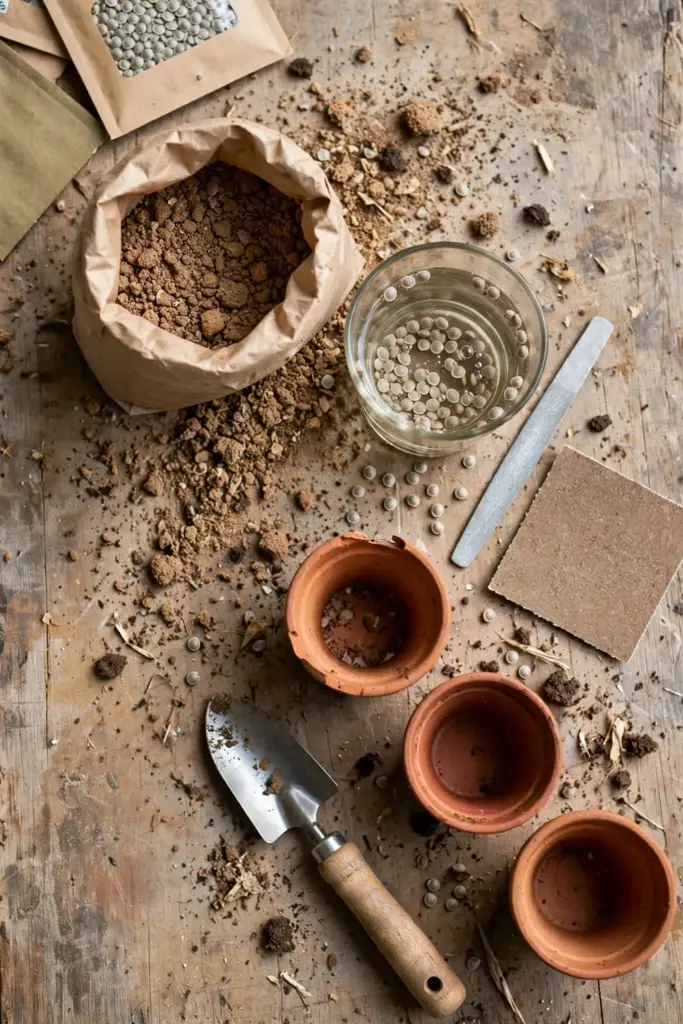
- Fresh Job’s tears seed (bead type or edible type, matched to your goal)
- Nail file, sandpaper, or a sharp knife for nicking seed coats
- Seed-starting mix and 3 to 4 inch pots
- A sunny windowsill, grow light, or greenhouse space
- Compost and a balanced organic fertilizer
- Mulch for weed suppression
- Paper bags or a basket for harvesting seed heads
Step 1: Nick and Soak the Seeds
The seed coat is the whole obstacle. Scarification plus soaking is the standard practice on page one of the search results, and it is the difference between sprouts in two weeks and silence in the tray.
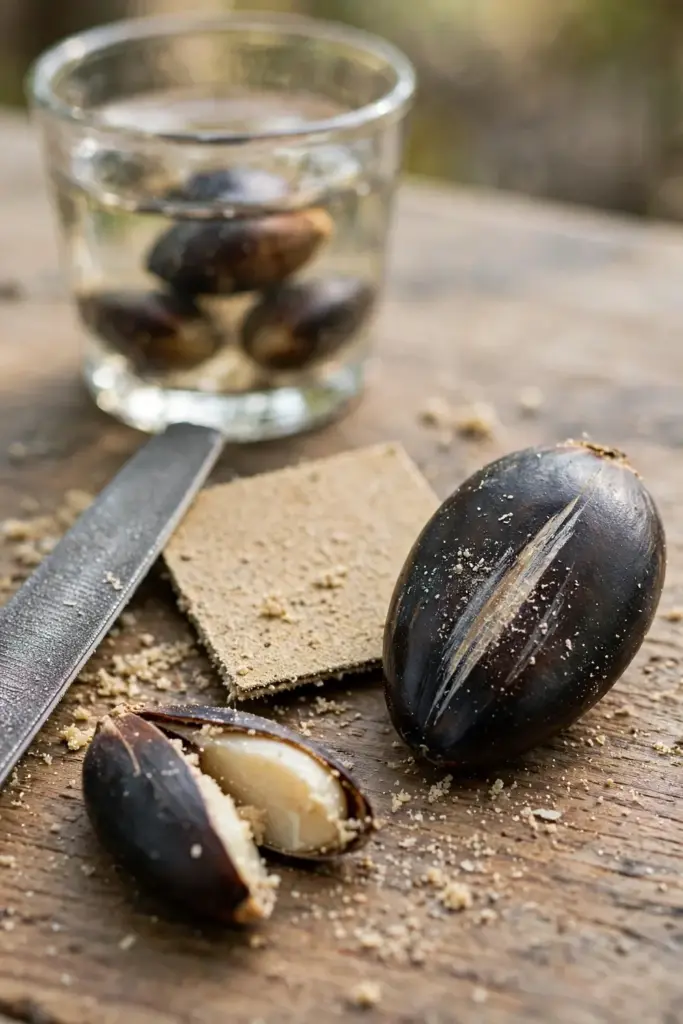
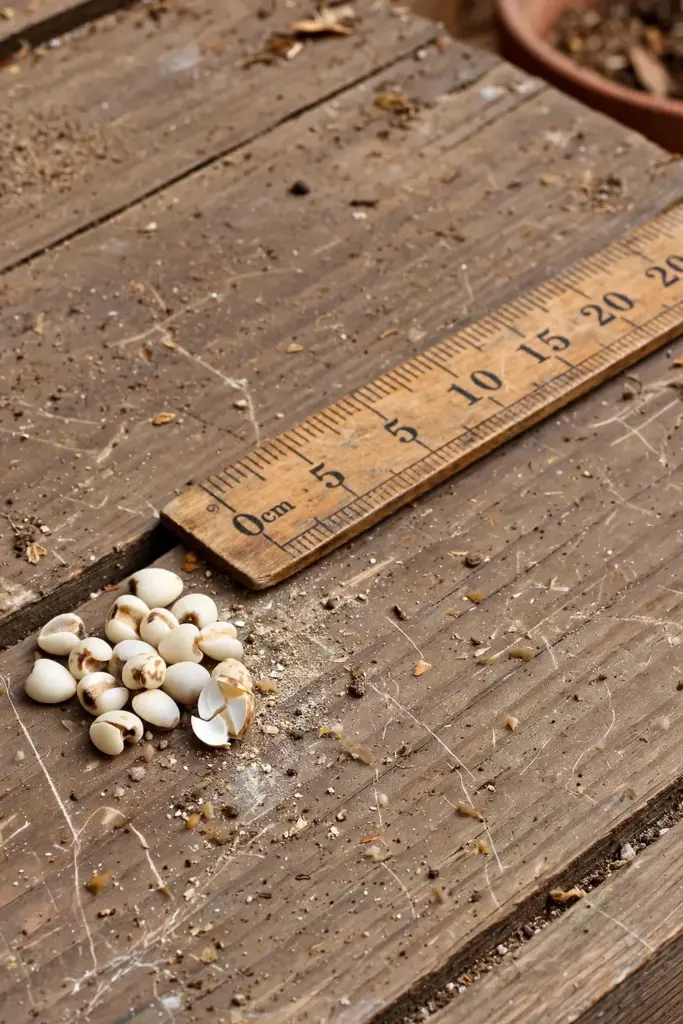
Hold each seed and nick the coat lightly with a nail file or sandpaper, just enough to scratch through the hard shell without damaging the pale interior. Then soak the nicked seeds in room-temperature water overnight, about 8 to 12 hours. Discard any seeds that float after soaking; sinkers are the keepers.
Sow within a day of soaking. Seeds that dry out again after soaking germinate more slowly.
Store unsoaked seed cool and dry until sowing day. The hard coat protects viability well in storage, but heat and humidity in a garden shed shorten it. Kept in a sealed jar in a cool room, Job’s tears seed stays plantable for two to three years, which makes saving your own seed a reliable tradition rather than a gamble.
Field growers use a hotter shortcut: submerging seed in 140 to 158 F water for about ten minutes, which both wakes the seed and knocks back the smut fungus that attacks developing grain, the same pre-soak practice recorded for this species. Home growers can skip the thermometer version and stick with nicking plus the overnight soak, which handles germination without the scald risk.
Step 2: Sow Indoors for a Head Start
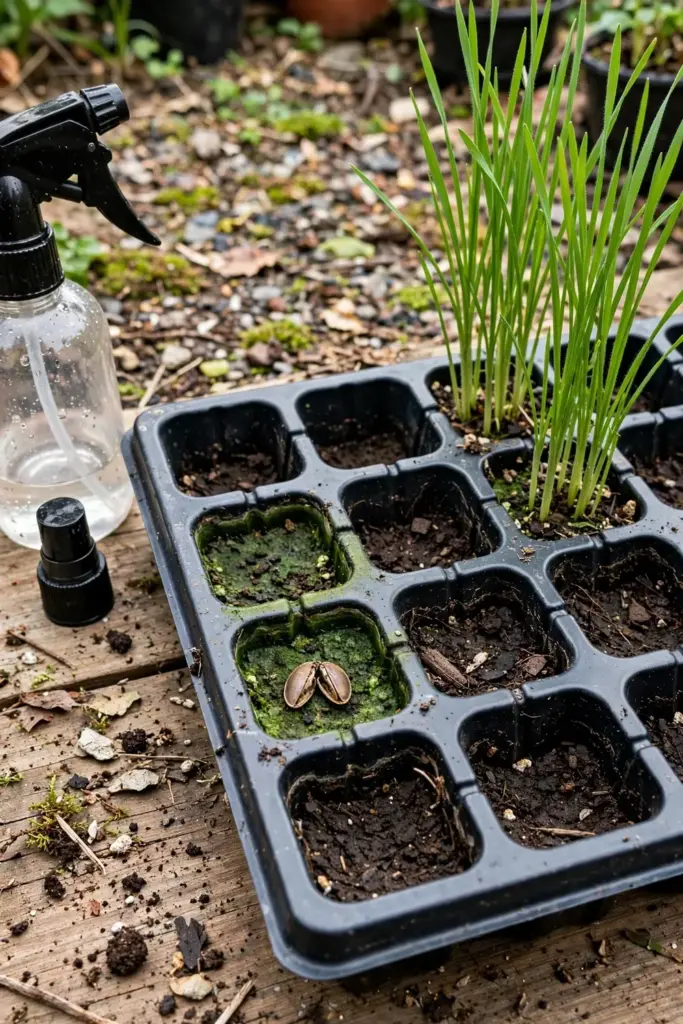
Start indoors four to six weeks before your last frost date if your season runs under 120 frost-free days. Use a standard seed-starting routine with a quality seed-starting mix.
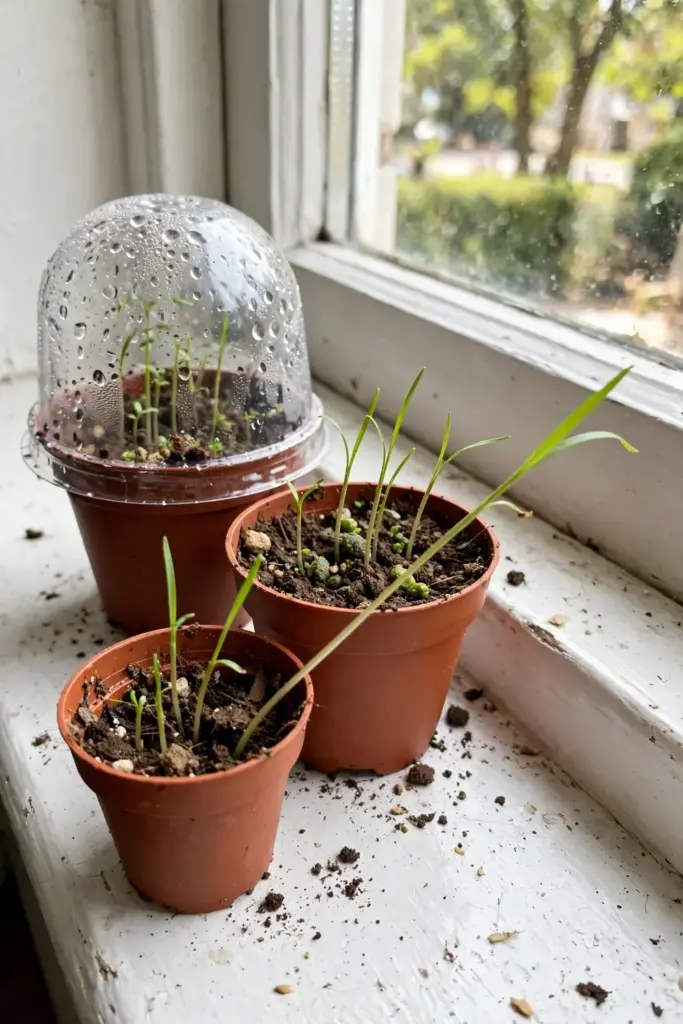
Plant each soaked seed 1/2 inch deep in its own 3 to 4 inch pot. Keep the mix evenly moist but not soggy, and hold the temperature between 65 and 95 F. Germination takes 7 to 28 days; most viable seed shows in the second to third week, matching the Baker Creek growing notes for this variety. A heat mat set to about 75 F evens out the timing.
Give seedlings strong light as soon as they emerge. Weak indoor light produces the tall, floppy plants that snap in the first spring wind. A simple shop light hung two to three inches above the leaves, raised as the plants grow, beats even a bright windowsill for stocky stems.
Step 3: Harden Off and Transplant
About a week before the last frost date, move pots outdoors for lengthening daily visits, starting with an hour of morning sun and working up to a full day. Skip this step and transplant shock can set the plants back two weeks.
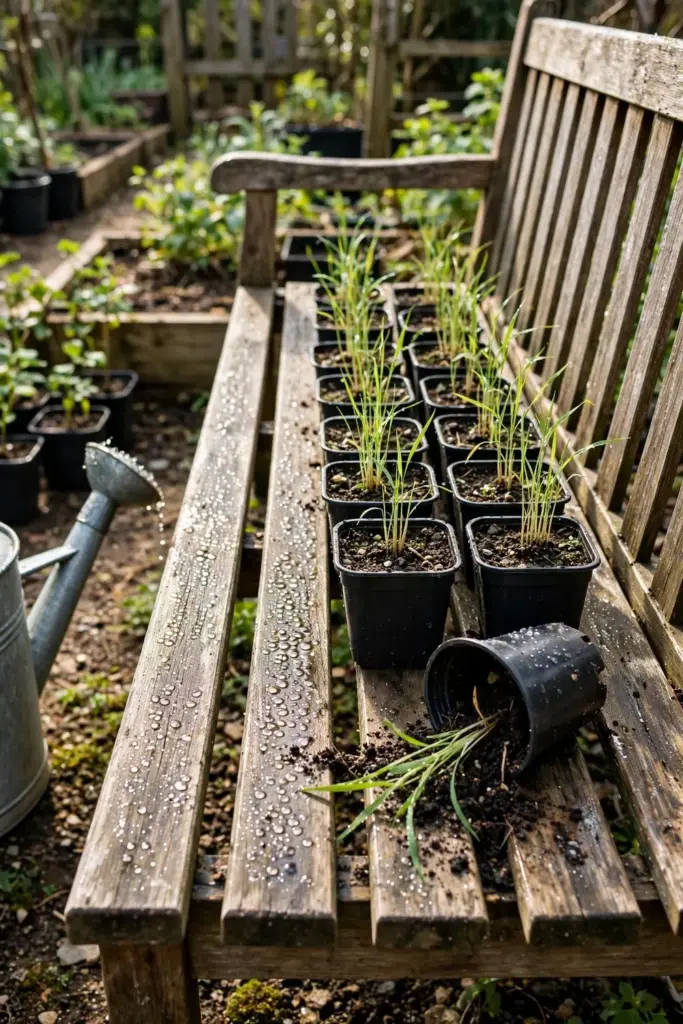
Transplant after all frost danger passes and the soil feels warm. Set seedlings 10 to 12 inches apart in rows 16 to 32 inches apart, planting at the same depth they grew in the pot. Water each plant in deeply so the root ball makes full contact with the surrounding soil.
Shade new transplants for the first two or three days if a heat wave hits right after planting. An overturned nursery pot or a piece of shade cloth over each seedling prevents the wilt-and-recover cycle that stalls growth for a week. Remove the shade once the leaves stay turgid through the afternoon.
Step 4: Direct Sow After Frost
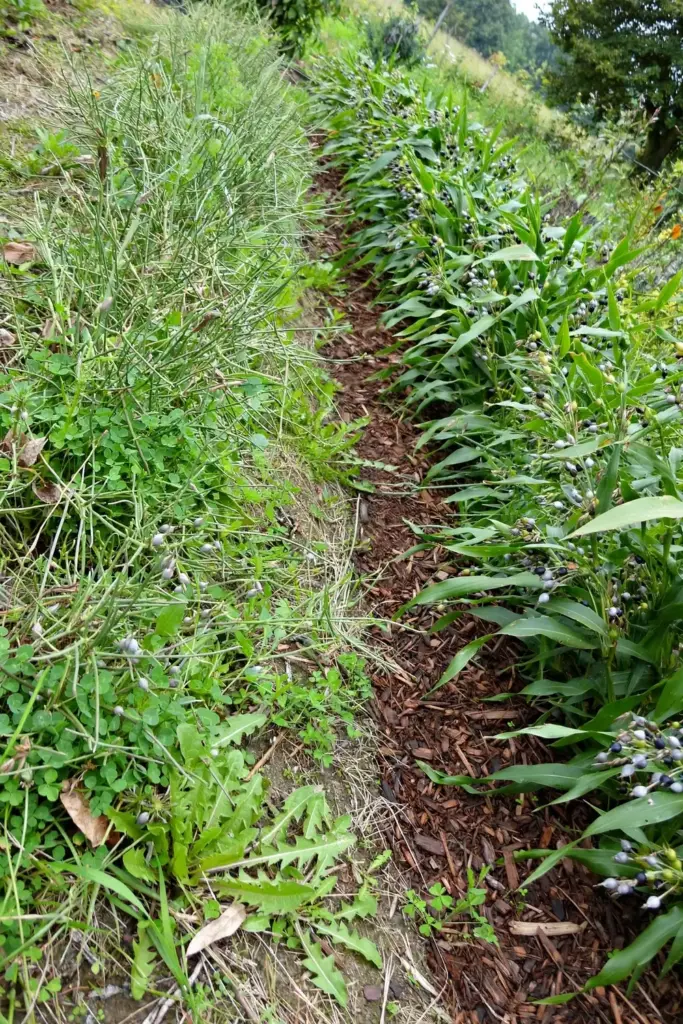
Where the season allows, direct sowing works fine and skips the indoor stage. Gardeners learning how to grow Job’s tears in long-season zones often prefer it, since the taproot establishes without transplant interruption. Wait until soil temperatures reach at least 60 F, plant nicked and soaked seed 1/2 inch deep, and space 10 to 12 inches apart.
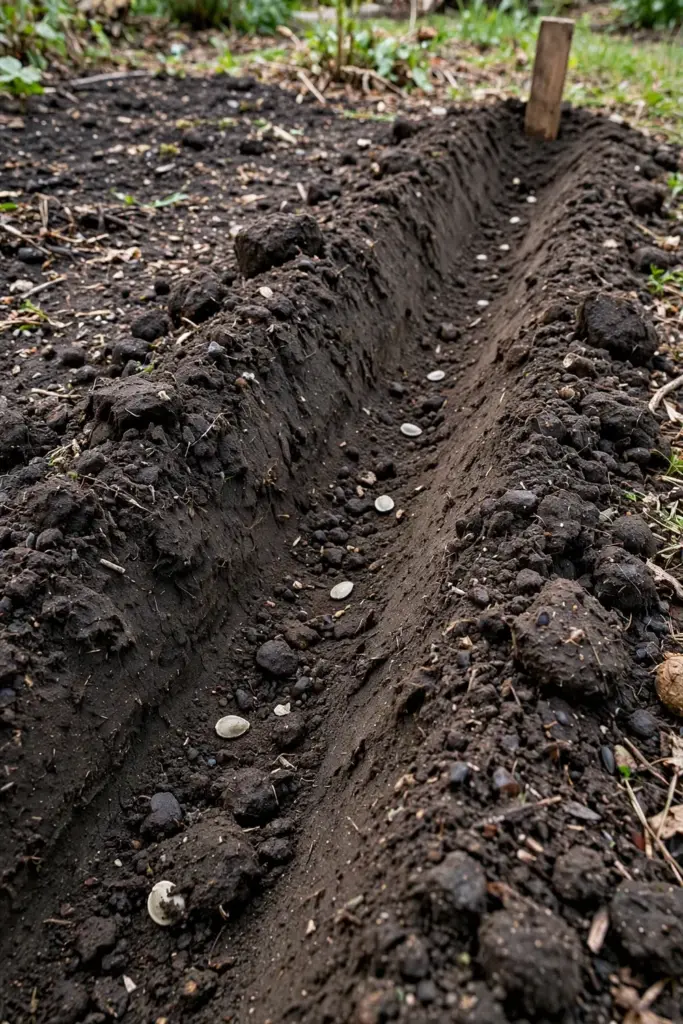
Mark your rows. Job’s tears seedlings look like ordinary grass for the first month, and more than one gardener has weeded out their own crop.
Sow a little thick and thin to the final spacing once seedlings stand a few inches tall. Keep the strongest plant at each station and snip the extras at soil level rather than pulling them, which disturbs the keeper’s roots. Thinning feels wasteful the first time and looks wise by August, when uncrowded plants carry the heaviest heads.
Step 5: Water for Steady Growth
This plant tolerates wet feet far better than most grains. Wild stands grow along streams and ditches, and the crop handles intermittent flooding in field production. Aim for consistently moist soil, roughly an inch of water per week when rain falls short.
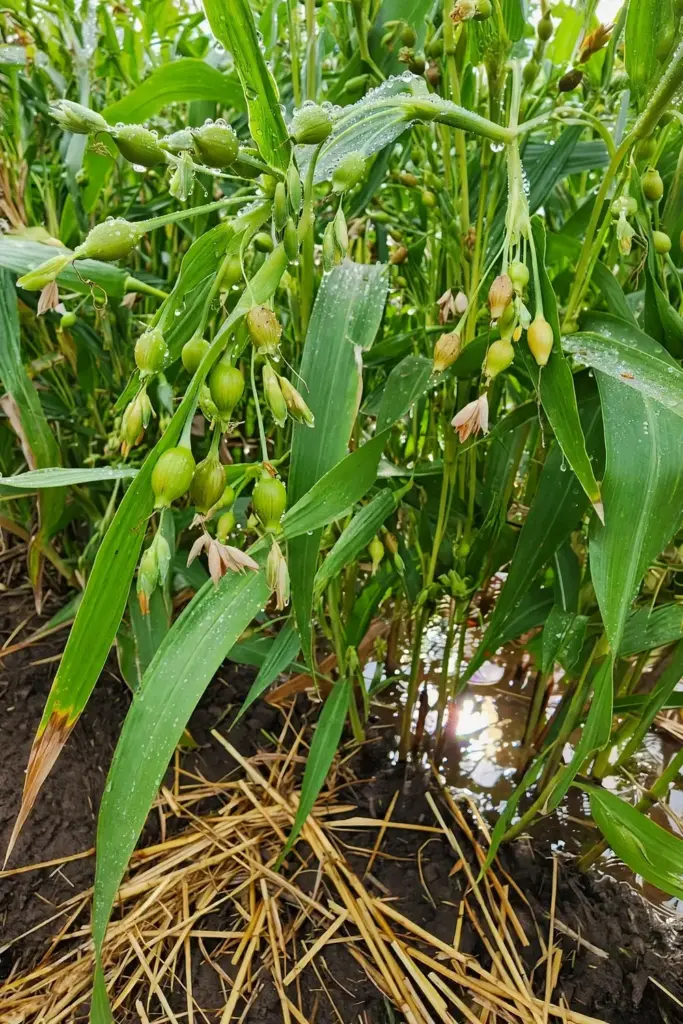
Do not confuse wet tolerance with drought tolerance. It is very intolerant of drought, and dry spells during flowering produce hollow, unfilled seeds. Mulch around the plants to hold moisture through hot weeks. This is one crop where a low spot in the yard is an asset rather than a problem; the damp ground that drowns tomatoes suits Job’s tears fine.
Step 6: Feed Lightly
Work compost into the planting area before sowing; reasonably fertile soil is all this crop demands. A light side-dressing of balanced organic fertilizer when plants reach knee height supports the tall stalks and heavy seed heads.
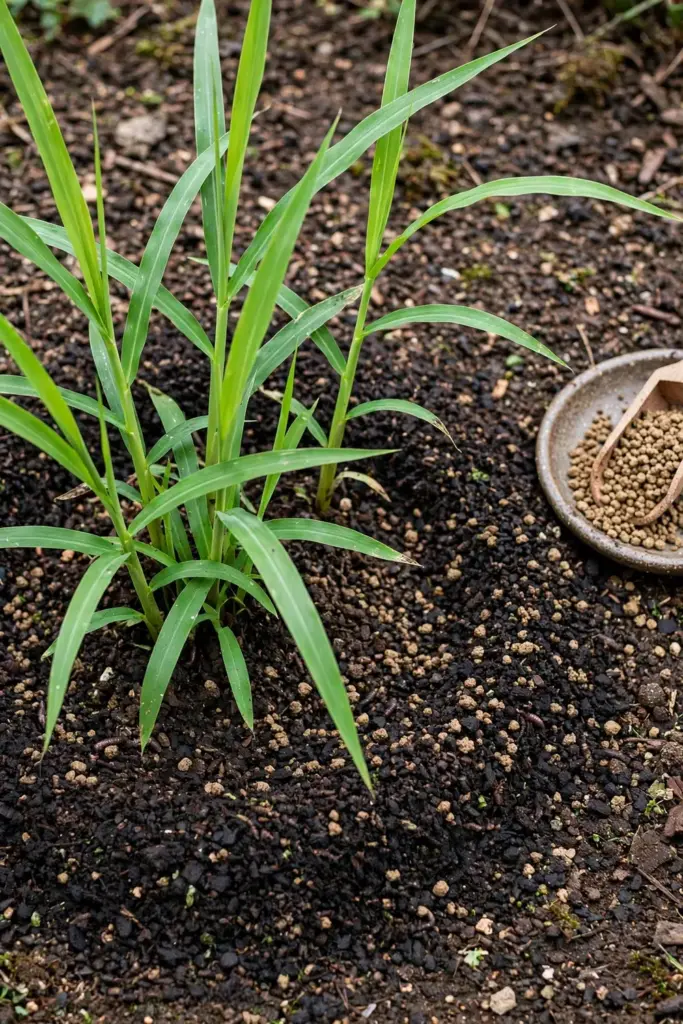
Skip heavy nitrogen. Too much produces soft oversized leaves and floppy stalks at the expense of seed fill. If plants look pale in midsummer despite the compost, a single light top-dressing of balanced fertilizer at knee height is enough; the crop is a light feeder by nature, closer to an ornamental grass than to corn in appetite. For the full soil-building approach behind this light-feeding strategy, see the guide to building soil health and pest resistance.
Step 7: Keep Weeds Down
Young Job’s tears grows slowly and loses to fast weeds in the first month. Till or hoe shallowly around plants when seedlings stand 5 to 10 inches tall, and lay mulch once the rows are established.
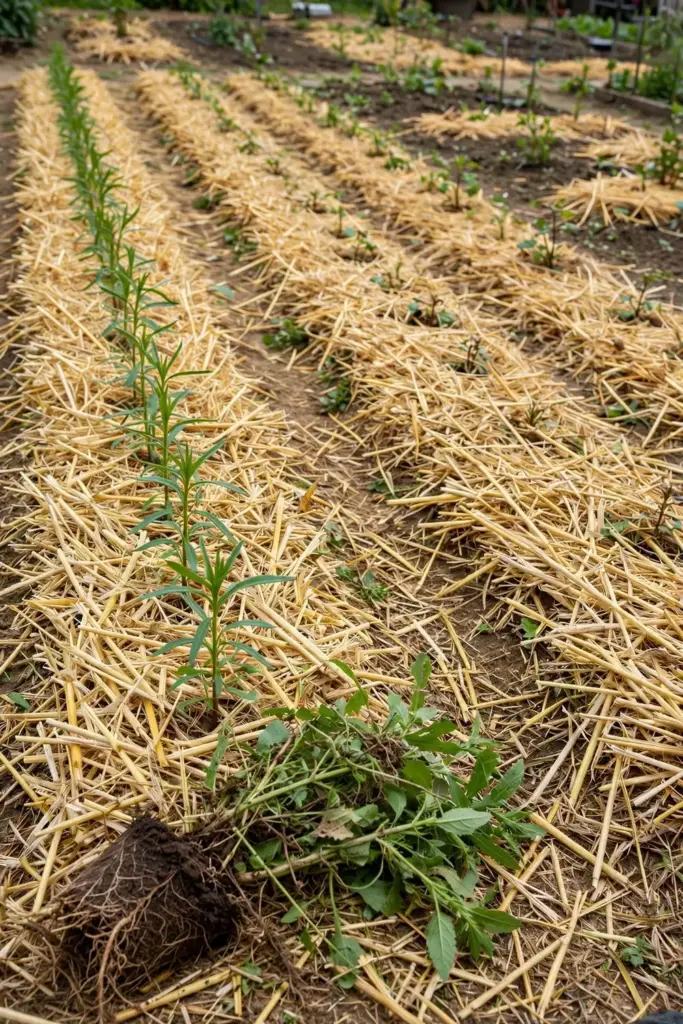
In field practice the crop gets tilled about three times during the season, with soil hilled up around the stalks at the final pass to support the tall plants against wind. Home gardeners can mimic this with a simple mulch-and-hill routine in midsummer.
Pests and Diseases
This crop has few serious enemies in home gardens. The main disease to prevent is smut, a fungus that attacks the developing seeds. Field growers pre-treat seed with hot water or fungicide before planting; home growers get most of the benefit from buying clean seed and rotating the planting spot each year.
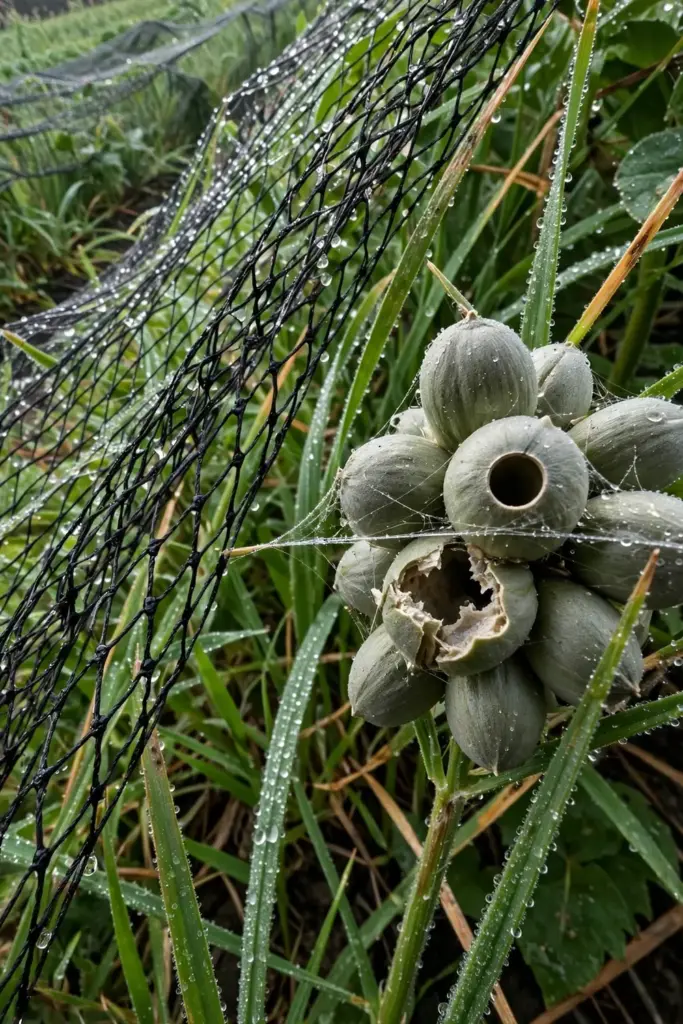
Birds discover the ripening heads before you do. If you plan to harvest every bead, drape bird netting over the rows once the seed heads begin to swell and color.
Grasshoppers and armyworms chew the leaves in outbreak years but rarely threaten the harvest itself; hand-picking or a targeted organic spray handles them. Good air circulation between plants, at the 10 to 12 inch spacing, keeps leaf-spot pressure low in humid summers.
Harvest Beads for Jewelry
Harvest timing differs by end goal, and beads want an earlier pick than grain. For jewelry, cut the seed heads when the beads are still green and fully formed, then dry them in a single layer in a warm, airy spot out of direct sun. As they dry they change color to an ivory or pearly hue and harden fully, the classic bead harvest described for craft use.
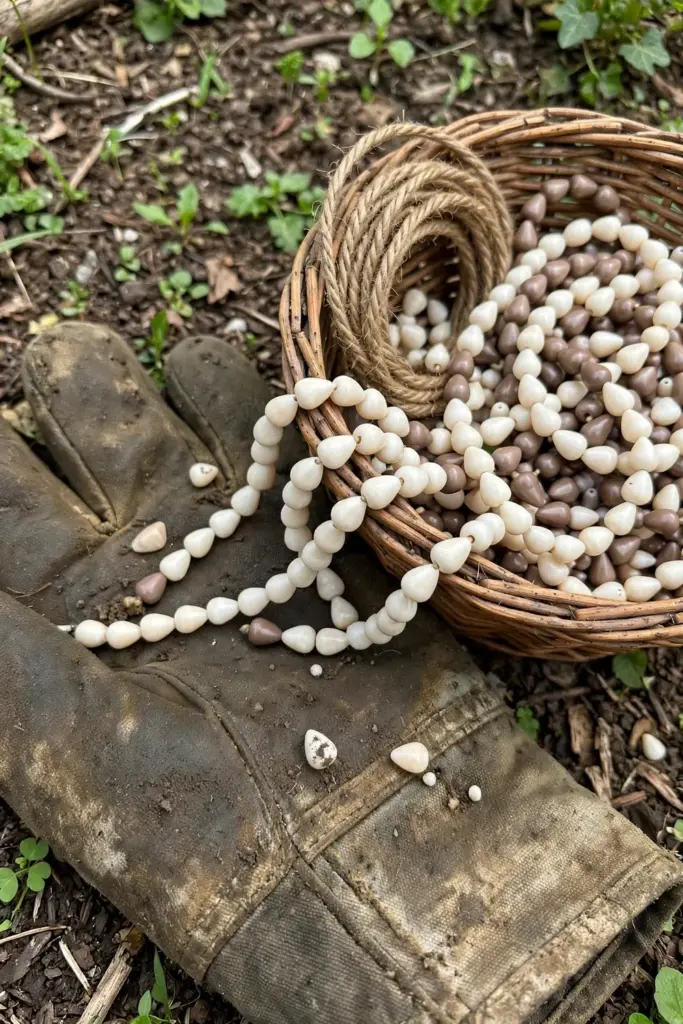
Allow two weeks of drying before stringing. Ream out the center hole gently with a thin awl, a needle file, or a piece of stiff wire before threading, and bead-type shells are the ones with the clean natural hole; grain-type seeds crack rather than thread. Work over a tray, because a slipped bead rolls farther than you expect. The dried beads take dye and paint well, which is why craft sellers stock them in streaked brown, gray, and ivory. String them on cord, wire, or elastic for necklaces and bracelets, or sew them onto textiles the way artisans across Southeast Asia have done for generations.
Harvest Grain for the Kitchen
For the kitchen, wait longer. Let the seed heads dry on the plant until the stalks yellow and the seeds reach their darkest color, dark mocha or gray-brown. Sow True Seed’s harvest notes put bead harvest at 110 days; grain wants every day of the season you can give it.
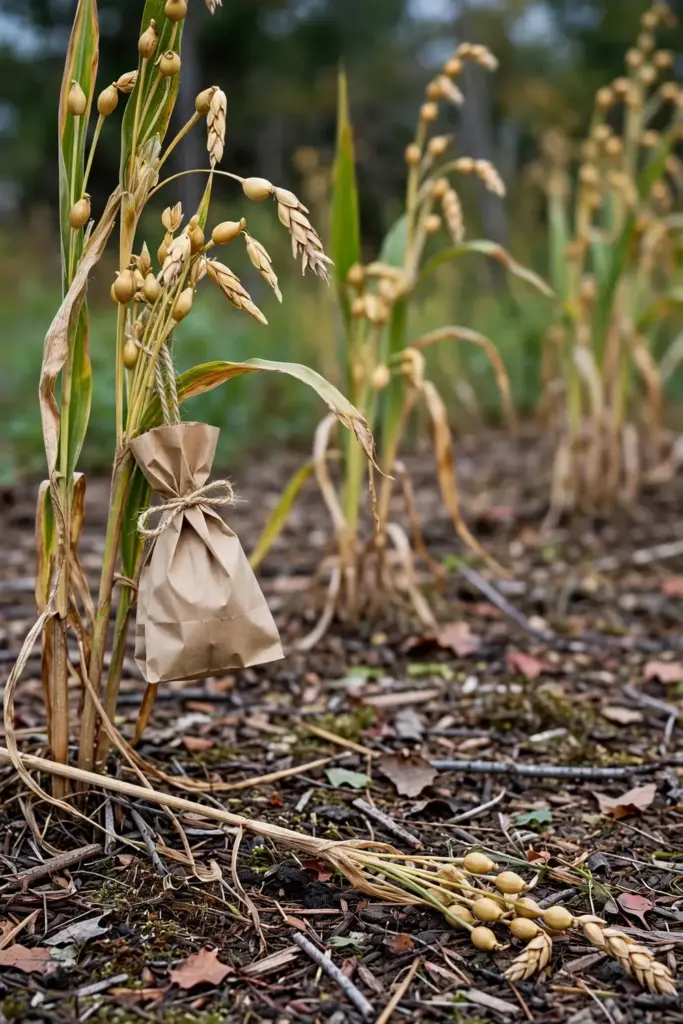
Cut whole heads into a basket or paper bag, because dry heads shatter and drop seed easily. Rub the heads between your hands or over a screen to free the grains, then winnow away the chaff with a fan or a breeze.
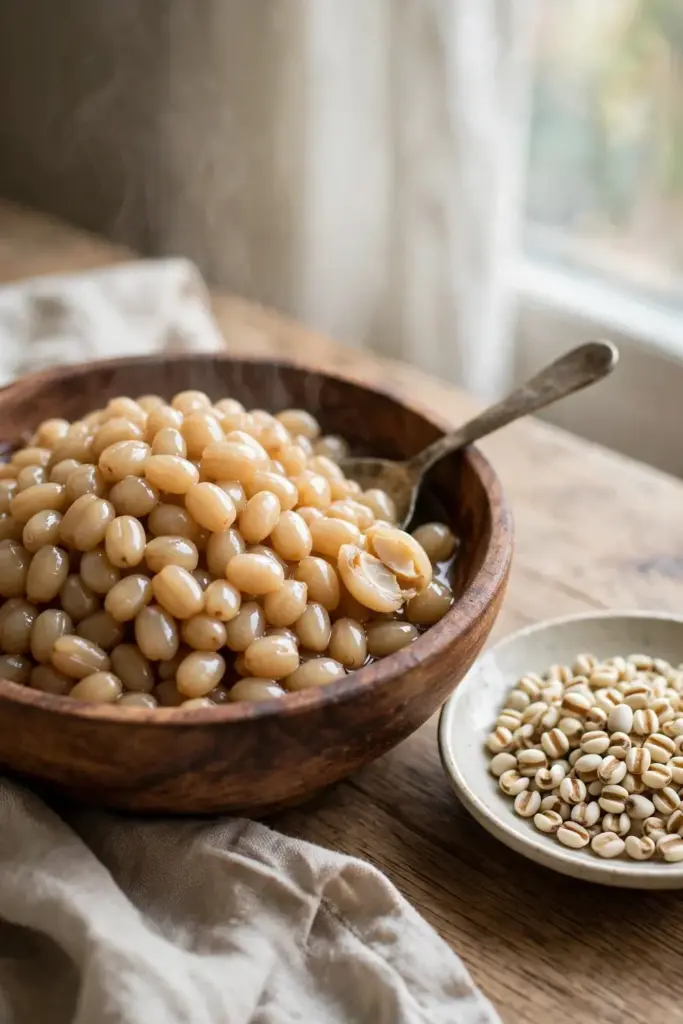
In the kitchen, yi yi ren cooks like a chewy whole grain. Simmer the husked grain in soups and broths where it turns tender and mildly sweet, stir it into congee and porridge, or brew it into the lightly nutty teas sold across East Asia. It is naturally gluten free, which is one reason health-food shelves stock it beside the ancient grains.
Hulling is the one chore grain growers underestimate. The edible type’s shell is thinner than the bead type’s armor but still too tough to chew whole. Crack the dried grain between two boards or in a sturdy mortar, then winnow the papery hulls away. Small batches hull fine by hand; larger harvests justify a hand-crank grain mill set wide, which cracks shells without crushing the kernels.
Dry and Store the Harvest
Spread the cleaned harvest in a thin layer and dry for about two weeks in a warm, dry location before storage. Beads destined for jewelry need this drying to harden and stabilize their color; grain destined for the kitchen needs it to prevent mold in storage.
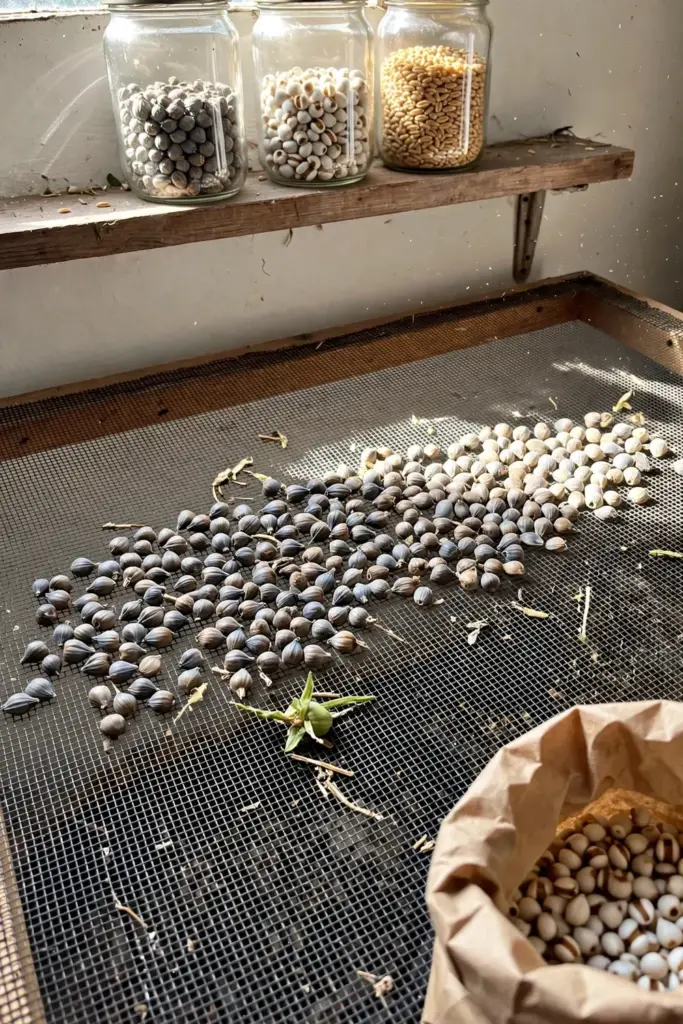
Store dry beads in jars or boxes away from moisture. Store grain in airtight containers in a cool, dark pantry, the same way you would store rice or barley. Properly dried grain keeps for a year or more.
Containers: The Pot Option
Job’s tears grows well in large containers, which also solves the self-seeding problem in warm climates. Use a pot of at least 5 gallons with drainage holes, filled with a rich potting mix, and plant one seedling per pot.
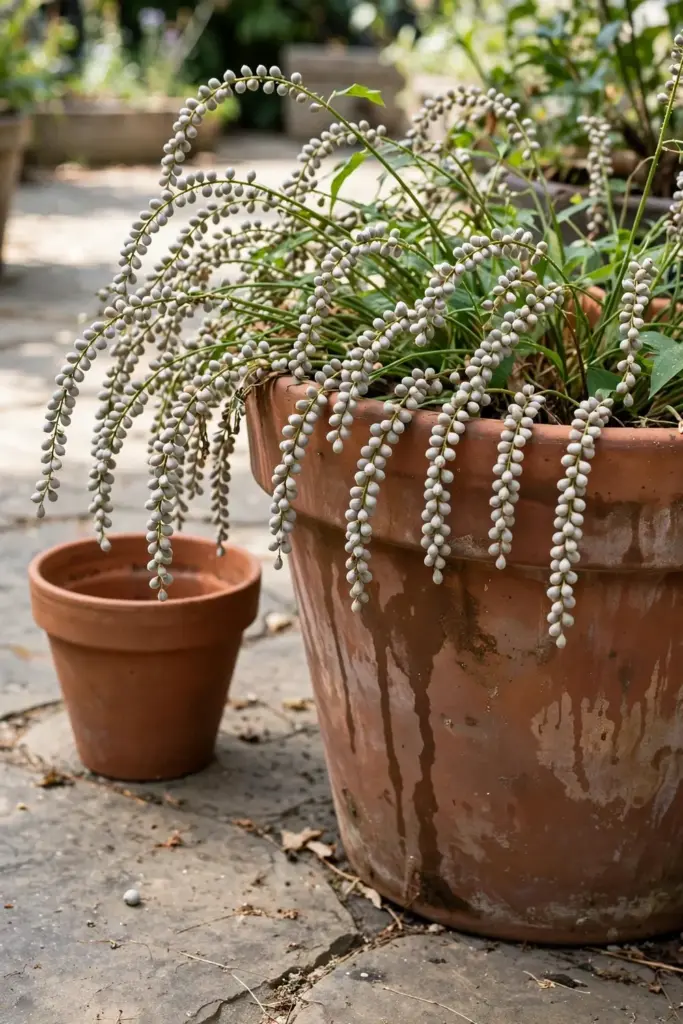
Container plants dry out faster than bed plants, so check moisture daily in hot weather. Feed monthly with a half-strength balanced fertilizer, since potting mix exhausts faster than garden soil. Expect slightly shorter plants and a smaller harvest than in-ground plants, but the beads and grain are the same.
The pot also gives you season control. In short-summer regions, start the container indoors and move it out after frost; in fall, drag it back under cover to let the last heads finish ripening. One strong plant per 5-gallon pot fills a surprising number of jewelry strands.
Common Mistakes and Fixes
Planting too early. Cold soil rots the seeds before they sprout. Wait for warm soil and warm nights, and use the indoor head start in short seasons.
Skipping the nick and soak. Untreated seed can sit for a month or germinate not at all. Nick, soak overnight, sow promptly.
Buying the wrong type. Bead seed for jewelry, var. ma-yuen for the kitchen. Match the packet to the table at the top of this guide.
Harvesting grain too early. Pale, soft seeds cook to mush and store poorly. Wait for the darkest color and full dryness on the plant.
Letting birds take the crop. Net the rows once heads begin to color if you want the full harvest.
Forgetting the self-seed warning. In warm climates, uncut heads mean volunteers everywhere next spring. Deadhead what you do not harvest.
Overfeeding nitrogen. Soft leaves, weak stalks, poor seed fill. Feed lightly and lean on compost.
Storing damp harvest. Grain stored before the two-week drying finishes molds in the jar. Spread the harvest thin, dry it fully, and only then seal the containers.
Troubleshooting Slow Germination and Poor Seed Set
Seeds never sprouted. The most common causes are cold soil, old seed, or skipping scarification. Next round, nick and soak fresh seed, hold 75 F, and give it the full 28 days before declaring failure.
Plants tall but no seed heads. Short season or drought during flowering. Start earlier indoors next year and keep water steady through bloom.
Hollow or lightweight seeds. Drought at flowering or harvest of unripe heads. Water consistently during bloom and wait for full color and dryness. Hot dry wind at heading can sterilize pollen the same way, so in exposed sites a windbreak hedge or even a row of tall sunflowers on the windward side pays off.
Seedlings eaten or flattened. Slugs, cutworms, and wind all hit young plants. Use collars against cutworms, bait or hand-pick slugs, and stake or hill soil around wind-exposed stalks.
Volunteers everywhere. The plant self-sows where winters stay mild. Harvest all heads before they drop, or grow in containers.
Frequently Asked Questions
It is perennial only in zones 9 and 10, where frosts do not occur. Everywhere else, including most of the United States, gardeners grow it as a warm-season annual started after the last frost. The plant dies with the first hard freeze, so save seed each fall if you want to grow it again.
No. Pearl barley comes from barley (Hordeum vulgare), while coix seed comes from Coix lacryma-jobi, a different grass. Some sellers call Job’s tears “Chinese pearl barley,” which causes real confusion. Check the Latin name on the packet: you want Coix for Job’s tears.
Yes, scarification makes a large difference. Nicking the hard coat with sandpaper or a file and then soaking overnight is the standard practice, and it shortens germination from a month or more to about two to three weeks. Without it, many seeds never wake up at all.
Plan on 110 to 120 days from sowing to harvest in a warm season. Bead harvests for jewelry come a little earlier, when heads are green and fully formed, while grain for the kitchen waits until the stalks yellow and seeds reach their darkest color.
Technically yes, but practically no. The wild bead types have shells too hard to cook or chew comfortably, which is why they became jewelry instead of food. For eating, grow the edible var. ma-yuen (yi yi ren), which has a thinner, cookable shell.
In frost-free climates it self-sows readily and can become weedy, so deadhead unharvested heads. In colder zones the plant dies with frost and you replant from saved seed each spring. Saving seed is easy: dry the heads fully, clean the seed, and store cool and dry.
Where to Go From Here
Decide your lane before you order seed: beads for craft or grain for the kitchen, because the two forms diverge at the seed packet. If your season runs short, start indoors and give the plants the full warm window they need. Raised beds with rich, moisture-holding soil suit this crop well, and the spring raised-bed guide covers the setup.
Once you know how to grow Job’s tears for your chosen lane, the plant largely takes care of itself. Save seed from your best heads each fall, share the surplus with a gardening friend, and enjoy a crop that has fed people and decorated them for centuries.