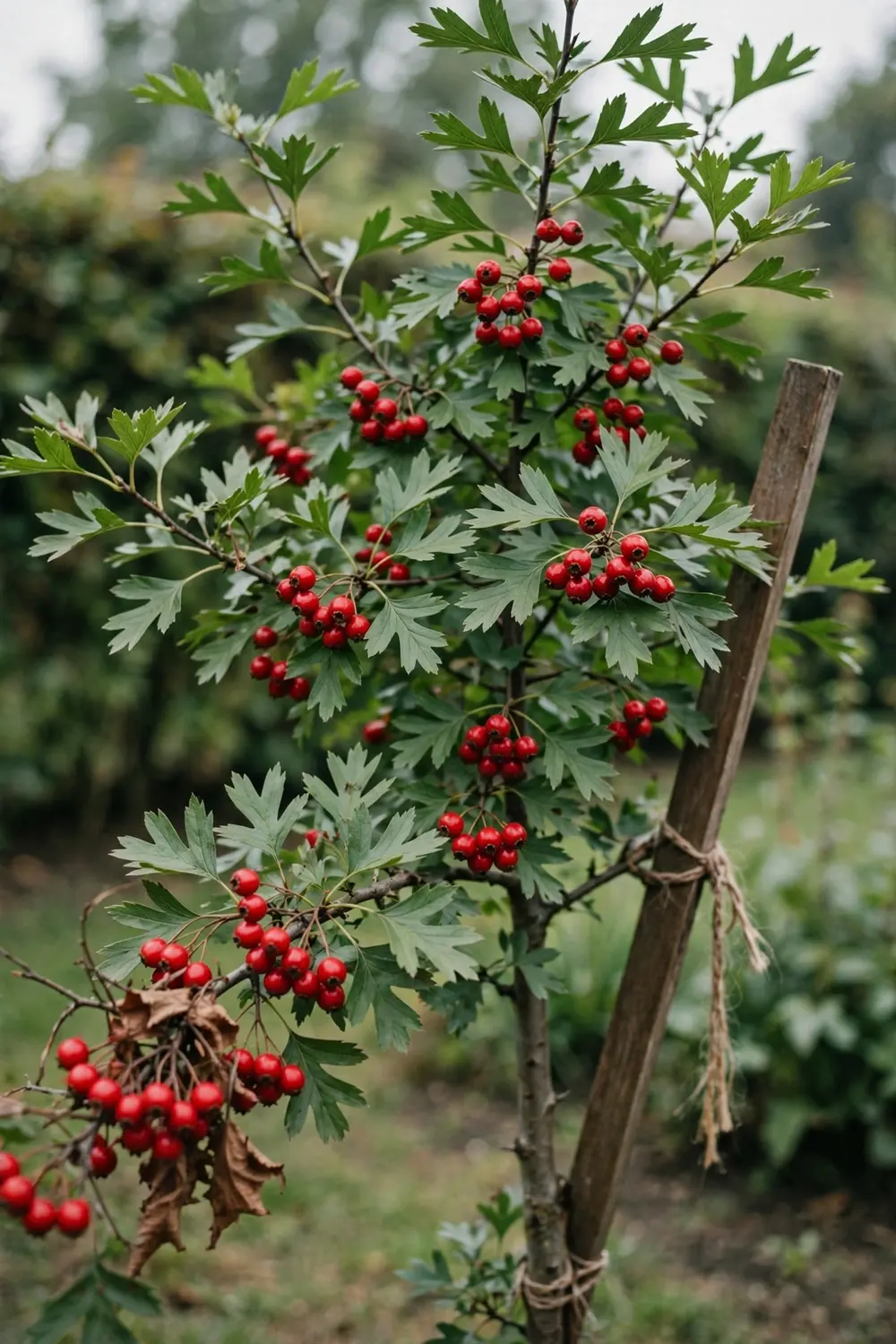

Chinese hawthorn seeds are some of the most patient seeds in the garden. Sow them in fall and nothing may happen for two full years, not because you failed, but because the seed is double-dormant: it needs a warm season followed by a cold one before it will even think about sprouting. Growers who learn this rhythm get a fruiting shan zha tree for the price of a packet of sand and some time.
Here is the honest trade in one paragraph. Stratify the seeds for about 3 months warm and 3 months cold, sow in spring, and expect the first seedlings the following spring. A seedling tree takes several years to bear, so if you want fruit sooner, start seeds as your long game and buy a grafted tree for the short one. And one safety rule that comes first, not last: hawthorn seeds contain amygdalin, a cyanogenic compound, so you cook with the flesh and leave the seeds out of the pot.
This guide shows how to grow Chinese hawthorn around the species itself, Crataegus pinnatifida, the shan zha of Chinese orchards and street snack stalls. The live companion guide on this site covers hawthorn as a general herb plant; this one owns the from-seed lane for the Chinese species: double-dormancy stratification, species honesty, and the seed-safety rules competitors skip.
1. Know Your Hawthorn: Shan Zha Is Not Every Hawthorn
Buy the wrong species and you wait years for the wrong fruit. Chinese hawthorn (Crataegus pinnatifida) is the large-fruited Asian species grown for its tart red berries, the shan zha used in candied skewers and teas. Page one of the search results is full of confusion, so pin the right entity before you buy a single seed.
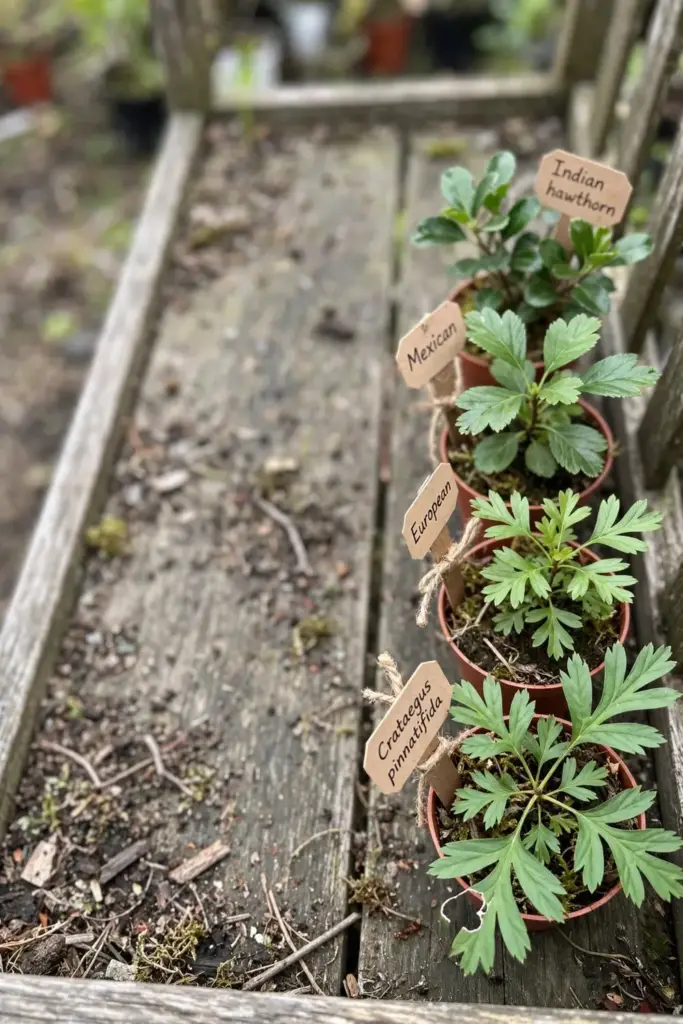
| Hawthorn | Species | What It Is |
|---|---|---|
| Chinese hawthorn (shan zha) | Crataegus pinnatifida | Your target. Large red fruits, East Asian orchard tree. |
| European hawthorn | Crataegus monogyna | The species most seed guides describe. Smaller fruits, fine for hedges, not the shan zha crop. |
| Mexican hawthorn (tejocote) | Crataegus mexicana | A different edible species sold at holiday markets. Not shan zha. |
| Japanese hawthorn (sanzashi) | Crataegus cuneata | Sold by specialty nurseries as sanzashi. Related but distinct. |
| Indian hawthorn | Rhaphiolepis indica | Not a hawthorn at all. An evergreen shrub that shares only the name. |
Buy seed labeled Crataegus pinnatifida from a seller who prints the Latin name. The NC State Extension plant profile confirms the species identity and its East Asian orchard background. If the packet says only “hawthorn,” assume it is the European species and keep shopping.
2. The Double-Dormancy Truth: Why Hawthorn Seeds Wait
Most garden seeds have one lock on the door. Hawthorn seeds have two, and that is why the failure stories all sound the same: someone sows fresh seed in spring, waits a season, digs it up in disgust, and declares the seed dead. The seed was alive. It was waiting for a warm spell it never got.
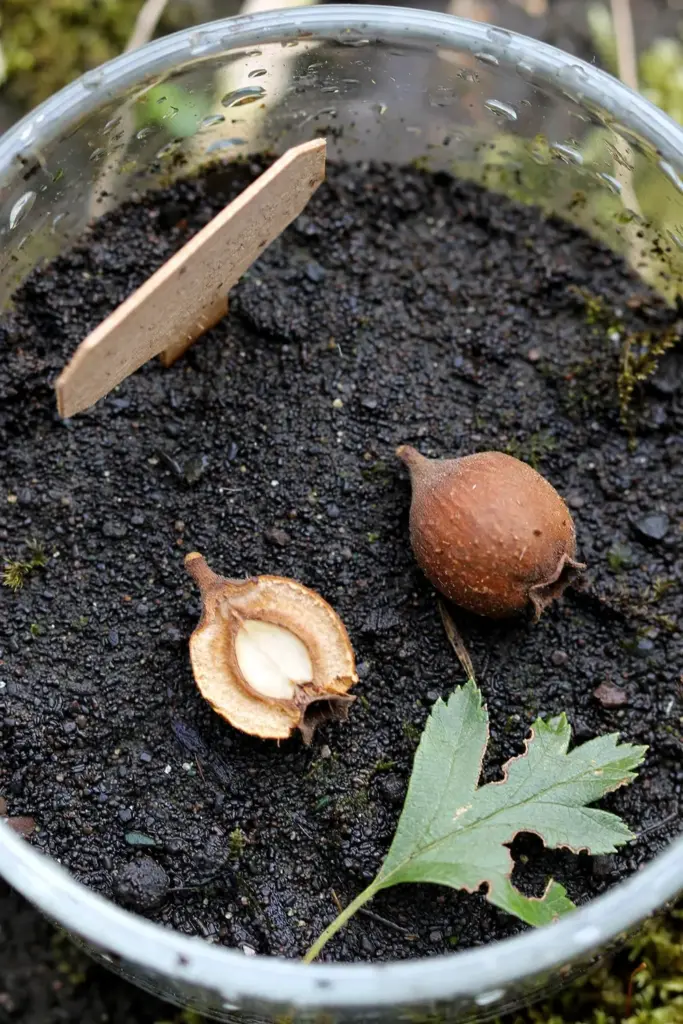
The USDA Woody Plant Seed Manual states that seeds of many hawthorns exhibit double dormancy, and that pregermination treatment usually consists of scarification followed by cold stratification, with several authors also recommending a period of warm stratification for selected species. In plain terms, the embryo needs warmth first to finish maturing, then cold to break the second lock. Christensen (1992), cited in the same manual, observed that under natural conditions seeds of Eurasian species may need from 2 to 6 years to germinate. That is the honest baseline you are beating with the protocol below.
The payoff for honoring the dormancy is real. Seeds given a proper warm-then-cold sequence germinate within weeks of sowing, according to the University of Washington propagation protocol, while seeds sown fresh in the ground often skip the first year entirely and sprout the following spring.
3. Quick Growing Specs for Chinese Hawthorn
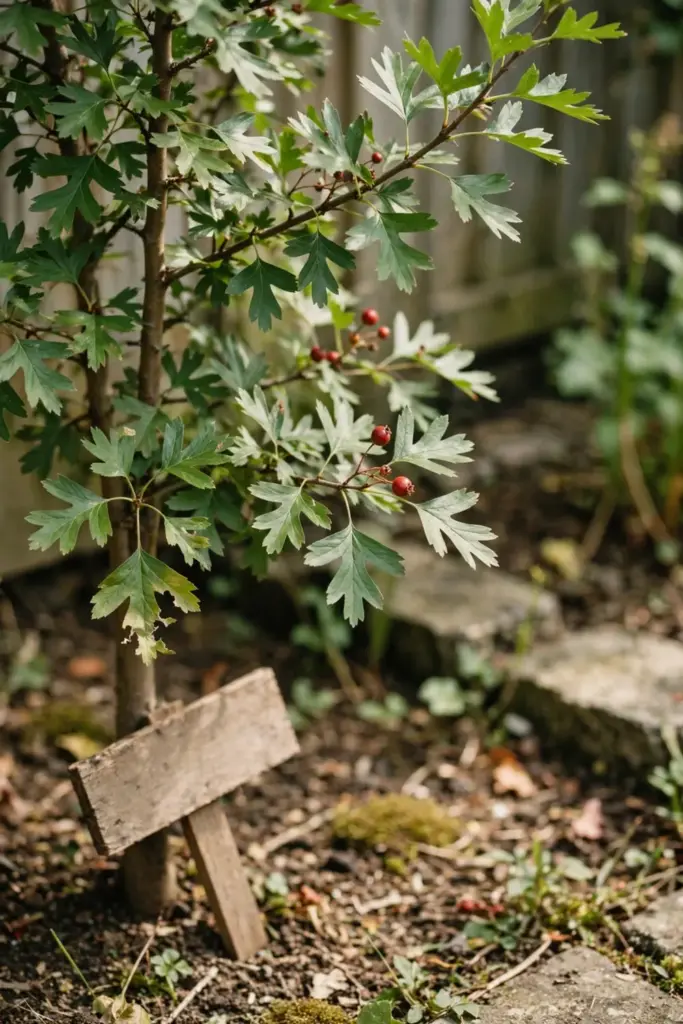
| Spec | Detail |
|---|---|
| Species | Crataegus pinnatifida (shan zha) |
| Climate | Temperate, hardy roughly zones 4 to 8 |
| Light | Full sun for the best fruiting |
| Soil | Well-draining loam, tolerates clay if drainage is decent |
| Seed timeline | 3 months warm + 3 months cold, then germination in weeks |
| Seed-to-fruit timeline | Several years; grafted trees fruit much sooner |
| Root zone honesty | Taprooted tree; plant where it will stay |
4. The Stratification Protocol: Warm First, Cold Second
This is the core procedure of how to grow Chinese hawthorn from seed. Do it in this order, and do not swap the phases. Warmth finishes the embryo; cold breaks the final dormancy. Skipping the warm phase is the single most common reason for a dead-looking tray.
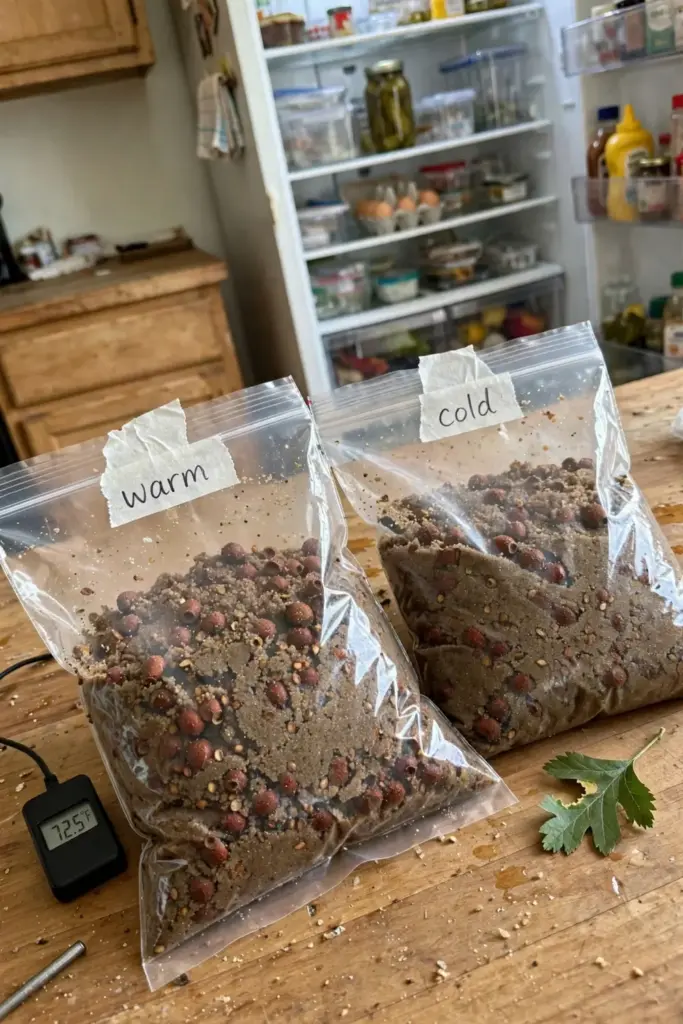
| Phase | Duration | Temperature | Medium |
|---|---|---|---|
| Clean and hydrate | 1 to 2 days | Room temperature | Water soak, then moist sand |
| Warm stratification | About 3 months | Around 59°F (15°C) | Moist sand or peat in a sealed bag |
| Cold stratification | About 3 months | Around 39°F (4°C) | Same bag, moved to the refrigerator |
| Sow | Spring | Above 50°F soil | Seedbed or deep pots |
The numbers come from Plants for a Future, which recommends warm stratifying stored seed for 3 months at 15°C followed by 3 months cold at 4°C, while noting that germination may still take another 18 months for stubborn lots. The USDA manual notes treatment recommendations vary between authors, so treat this as the proven center of the range, not a magic spell. Check the bag monthly: if the medium smells sour, rinse the seeds, refresh the medium, and restart the clock on that phase.
5. Gather Tools and Materials
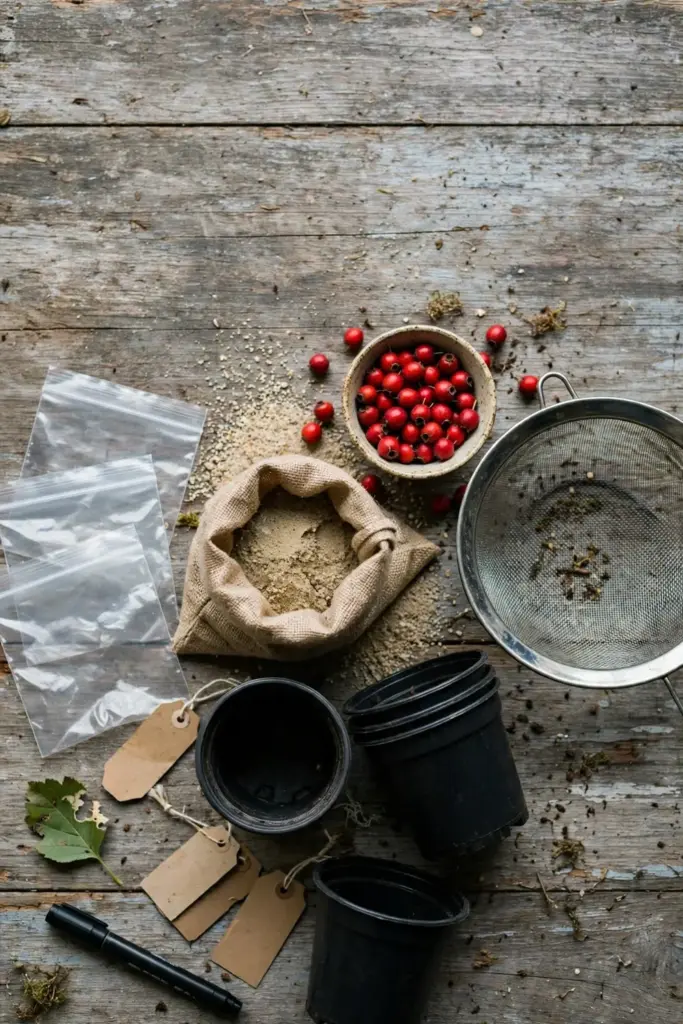
- Fresh Crataegus pinnatifida berries or labeled seed
- Bowl, sieve, and a towel for cleaning
- Coarse sand or peat moss for stratification
- Sealable plastic bags, labeled with the date
- A refrigerator thermometer (fridge shelves vary)
- Deep pots or a prepared seedbed
- Seed-starting mix and a watering can with a fine rose
- Bypass pruners and puncture-resistant gloves for harvest years later
- Labels and a permanent marker
6. Step 1: Pick and Clean Ripe Fruit
Collect berries in mid to late autumn when they are fully red and yield slightly to firm pressure. The Diy Herb Gardener guide to growing hawthorn from seed notes that haws reach peak quality after the first light frost, and recommends washing the fresh harvest under clean running water before processing. Fermenting freshly collected fruits for a few days can also speed germination, according to the USDA manual, but do not ferment longer than about a week: the same source reports that fermentation beyond 8 days damaged germination in trials on a related species. If you buy dried berries instead of fresh, rehydrate them overnight first; the cleaning step works the same once the flesh softens.
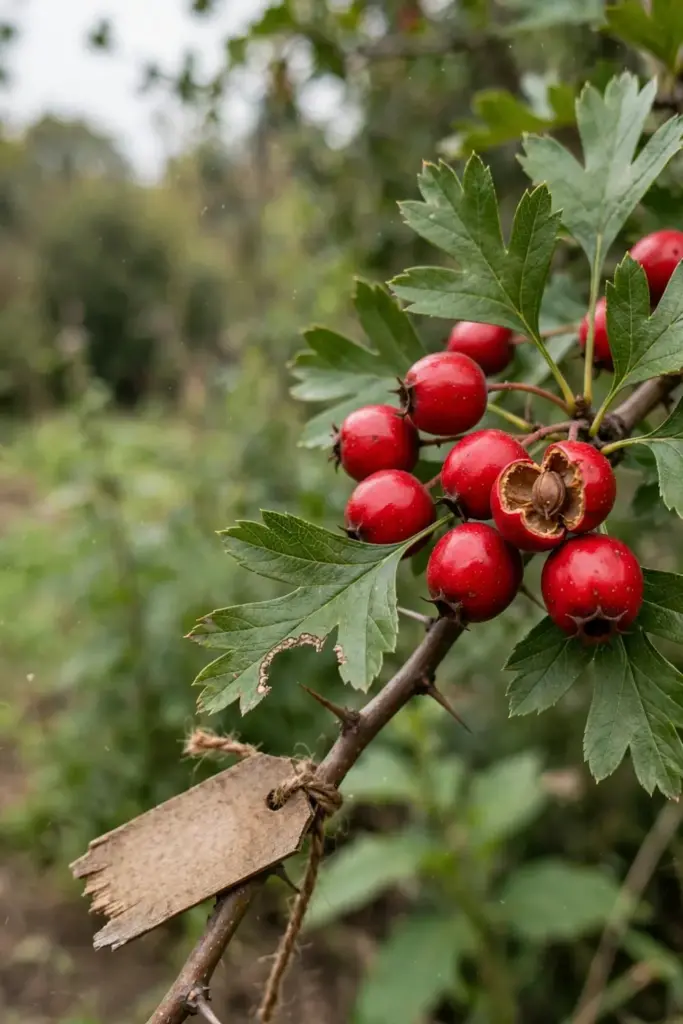
Macerate the berries in a bowl of water, rub the pulp free, and float off the skins. The seeds are hard stones that sink. Spread them on a towel for a day so the surfaces dry, then soak overnight before the warm phase begins.
7. Step 2: Sort the Seed Before You Commit Months
Cut-test a few seeds before you invest six months of stratification. Crack one open with pliers: a healthy seed shows a firm, cream-colored kernel filling the shell. Discard any that are hollow, shriveled, or smell rancid. Hawthorn fruits vary in how many viable seeds each berry carries, so test a dozen to get a fair read on the lot.
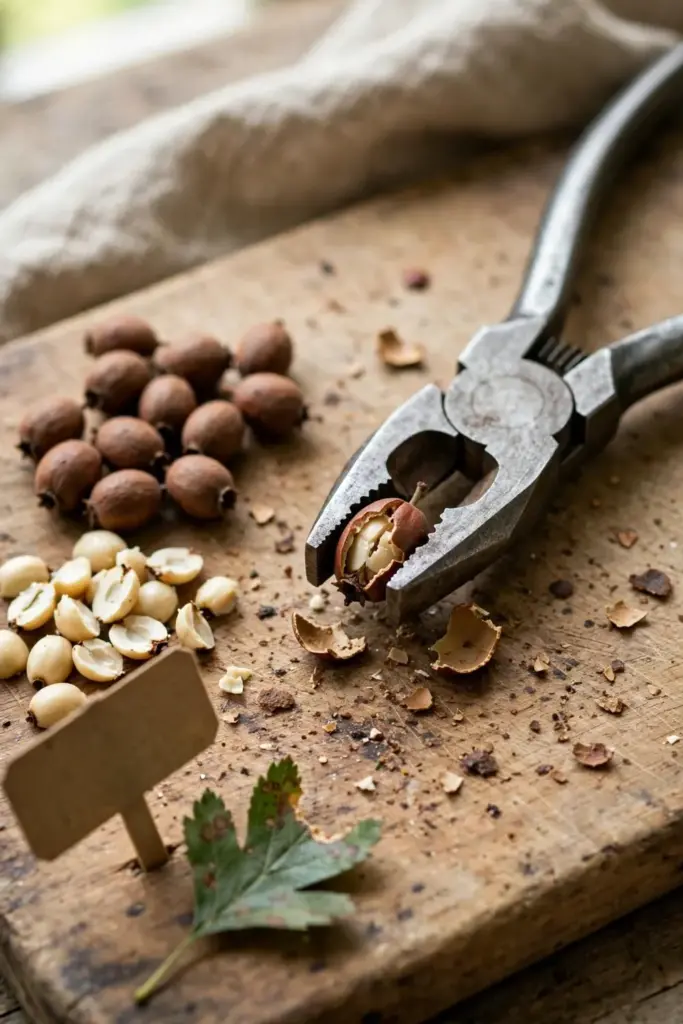
Seed storage is a losing game, so do this sorting now and stratify promptly. The USDA manual reports that hawthorn seeds can remain viable 2 to 3 years in cold storage, but also notes other researchers found viability declining after a single year. Fresh seed treated now beats old seed treated later, every time.
8. Step 3: Warm-Stratify for About 3 Months
Mix the seeds with moist sand or peat at roughly three parts medium to one part seed. The medium should feel like a wrung-out sponge: damp, not dripping. Seal it in a labeled bag and keep it at room temperature, ideally near 59°F (15°C). A cool basement corner works; a hot utility room does not.
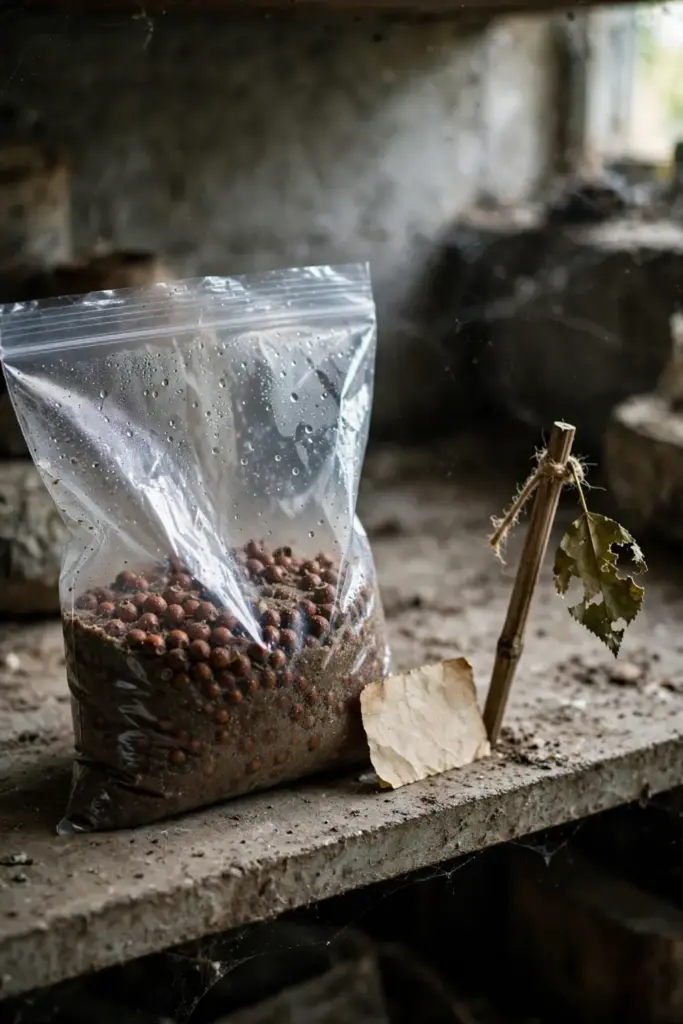
This phase is the one most guides skip, and it is the difference between the double-dormancy protocol and the cold-only shortcut that fails on stubborn lots. Mark the start date on the bag. Check monthly for mold, and stir the medium so no pocket stays soggy. After about three months, the seeds move straight to the cold phase with no drying in between.
9. Step 4: Cold-Stratify for About 3 Months
Move the sealed bag to the refrigerator, ideally 34 to 41°F (1 to 5°C). Keep it away from the freezer compartment and away from ripening fruit, whose ethylene can interfere with dormancy breaking. Three months is the standard target from the PFAF protocol.
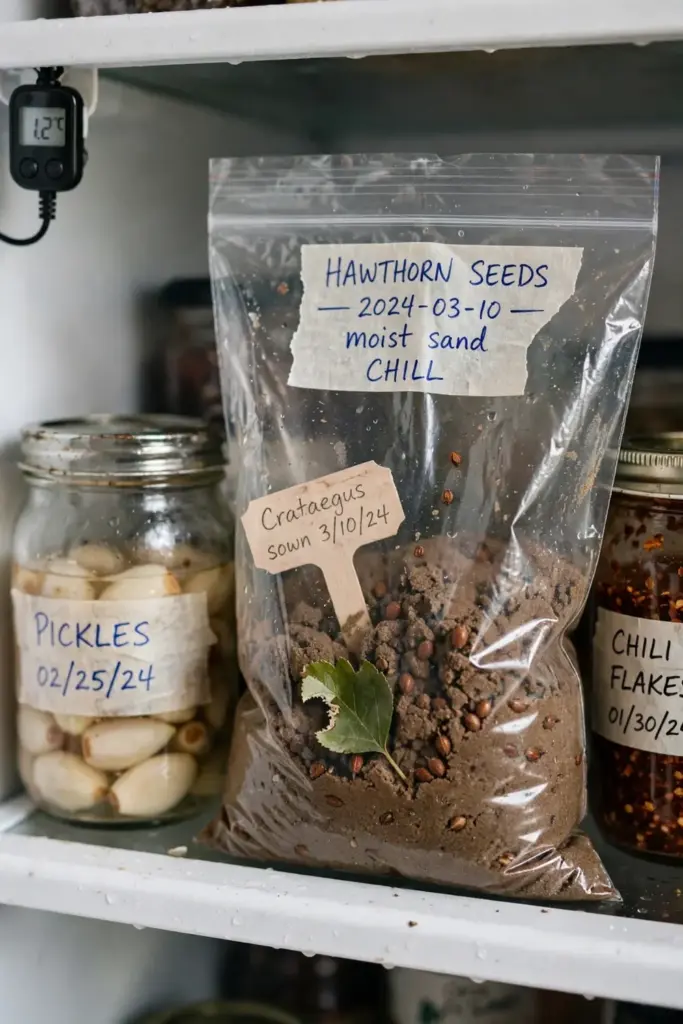
This is a good moment to build the seedbed or fill deep pots, because the cold phase ends in spring and the seeds should be sown promptly. Hawthorn makes a taproot early, so use pots at least 6 inches deep if you are not sowing directly outdoors. Fill them with a free-draining seed-starting mix.
10. Step 5: Sow in Spring and Mark the Calendar
Sow stratified seeds about 1/4 inch deep and 8 to 12 inches apart in the seedbed, or one seed per deep pot. Water gently after sowing and label everything with the species and the date. Then the hardest skill in this guide: patience. Properly treated seeds can germinate within a couple of weeks, per the UW protocol, but some lots take a full season. Do not dig them up to check. A seed that has not sprouted by midsummer may still be waiting for the following spring, which is normal for this genus.
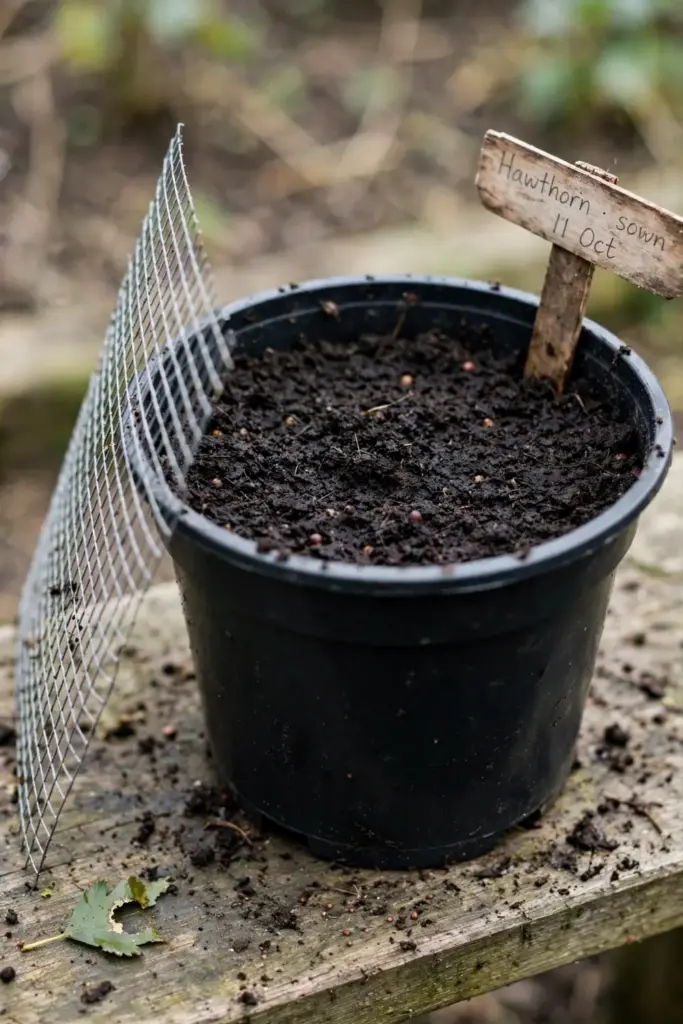
Protect the seedbed from mice and birds with wire mesh. Keep the soil evenly moist but never soggy through the first growing season.
11. Step 6: Nurse the First-Year Seedlings
Thin ruthlessly once true leaves appear. One strong seedling per pot, or 6 to 8 inches apart in the bed. Weak seedlings in hawthorn rarely catch up, and crowding invites damping off. Water when the top inch of soil dries, and feed nothing for the first two months; a seedling this young needs root, not fertilizer.
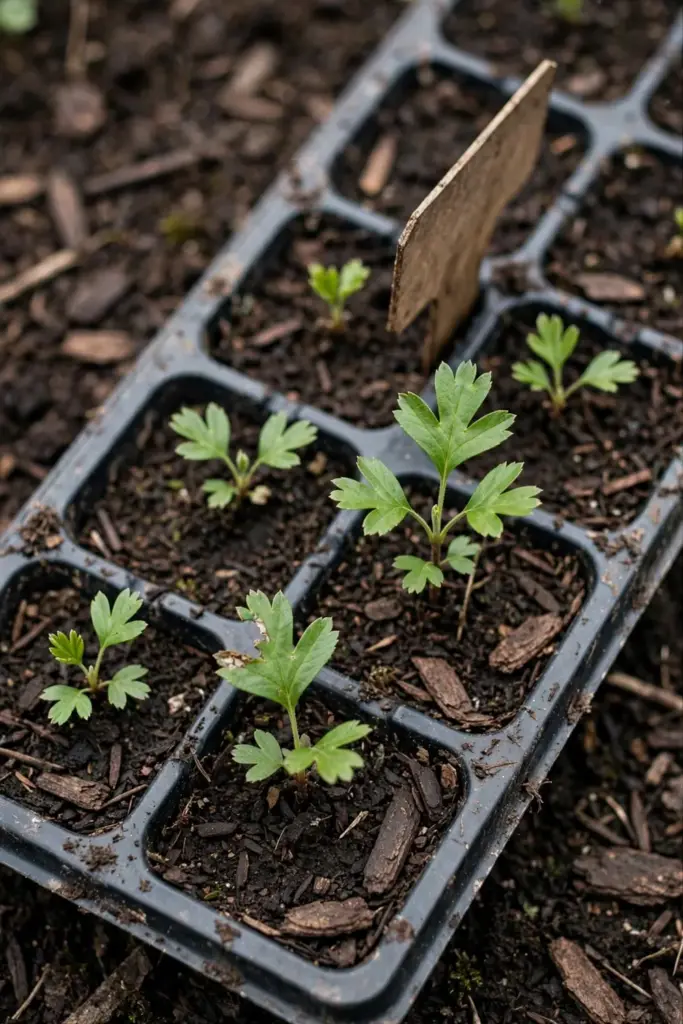
A light mulch of fine bark around (not touching) the stems keeps moisture even. Shade cloth is unnecessary in most climates, but in regions with brutal afternoon sun, a little afternoon shade in year one prevents leaf scorch without weakening the plant.
12. Step 7: Plant Out and Train the Young Tree
Plant out in the second spring, after the last hard frost, in a spot with full sun and room for a small tree. Dig the hole twice as wide as the root mass and no deeper, set the seedling at its nursery depth, backfill with native soil amended lightly with compost, and water deeply. Stake only if wind is a real problem, and remove the stake after one season so the trunk builds its own strength.
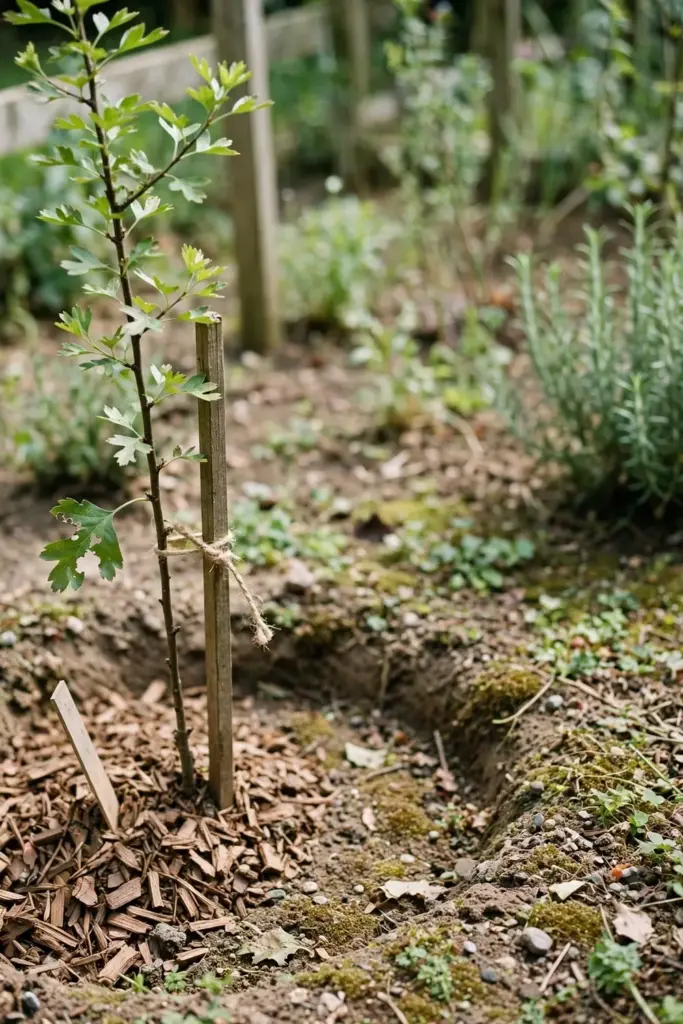
Decide the tree’s shape early. Chinese hawthorn is usually grown as a small single-trunk tree or a large multi-stem shrub. Rub off competing leaders in year two to keep a single trunk, or let three to five stems develop for the shrub form. Early decisions here save years of corrective pruning later.
13. Watering and Feeding a Young Hawthorn
Water deeply and infrequently for the first two summers, letting the top few inches dry between waterings. Once established, hawthorn is notably drought tolerant, but fruit size and set improve with steady moisture in dry spells. A 2 to 3 inch mulch ring, kept clear of the trunk, does more for a young tree than any fertilizer schedule.
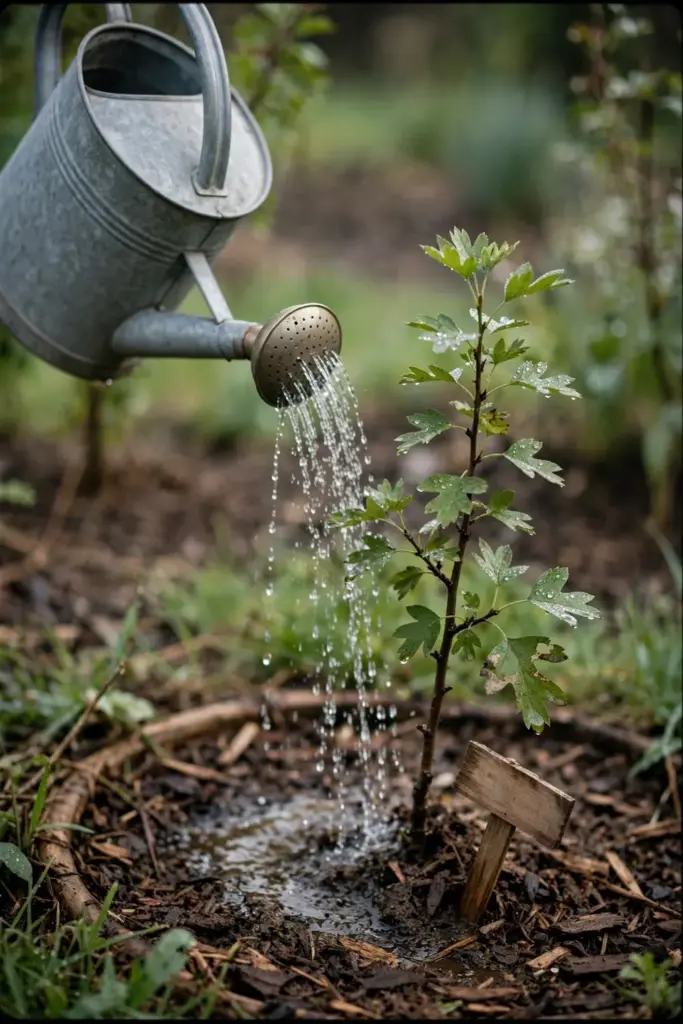
Feed lightly. A balanced fertilizer in early spring of years two and three is plenty; a tree that put on 12 to 18 inches of sturdy growth last season does not need pushing. overfeeding pushes soft leafy growth that invites aphids and fire blight. If the leaves are deep green and growth is steady, skip the fertilizer entirely and let the soil biology do the work. For the soil foundation behind all of this, the soil health guide explains how living soil carries young trees through their awkward years.
14. Prune for Shape and Fruit, Not Just Looks
Prune in late winter while the tree is dormant. Remove dead, damaged, and crossing branches first, then thin the canopy enough that light reaches the interior wood, because hawthorn fruits on wood that sees sun. Keep the center open in the vase form, or maintain a clear trunk with scaffold branches in the tree form.
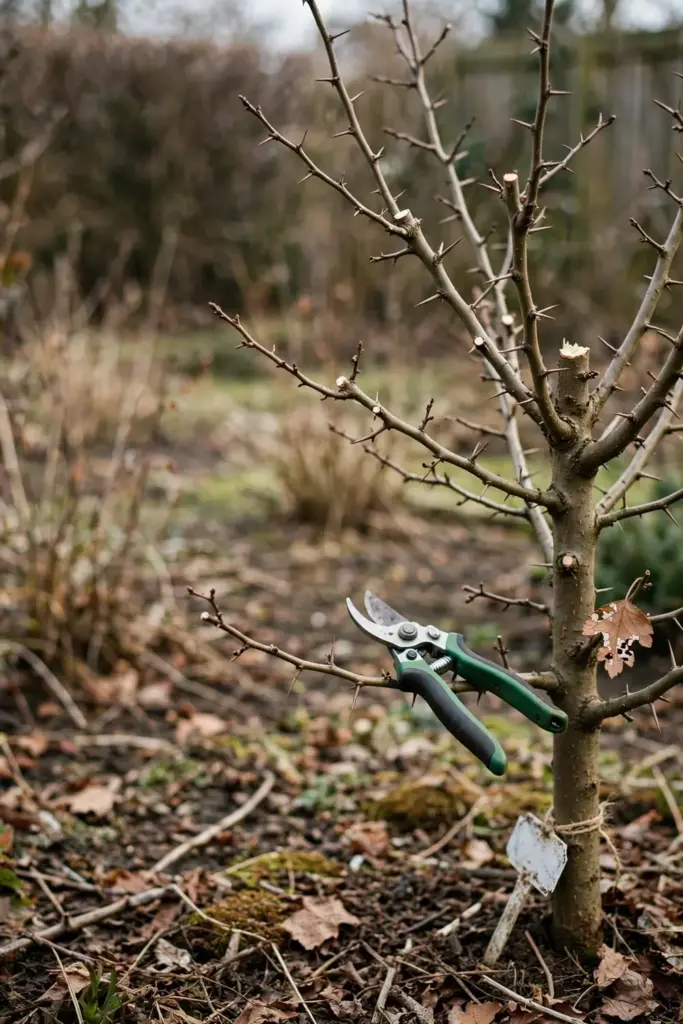
Do two small jobs every year instead of one big rescue every five. Cut back water sprouts and suckers in summer when they are soft. Disinfect pruners between trees, since hawthorn shares fire blight with apples and pears. The companion spring pruning guide covers clean cuts and timing in detail.
15. Pests and Diseases to Watch
Hawthorn is tough, but it shares the rose family’s problems. Fire blight is the serious one: shoots wilt and blacken as if scorched. Prune infected wood well below the damage in dry weather and disinfect tools between cuts. Cedar-hawthorn rust shows as orange spots on leaves and deformed fruit; it needs a nearby juniper or cedar to complete its life cycle, so planting away from junipers helps more than any spray.
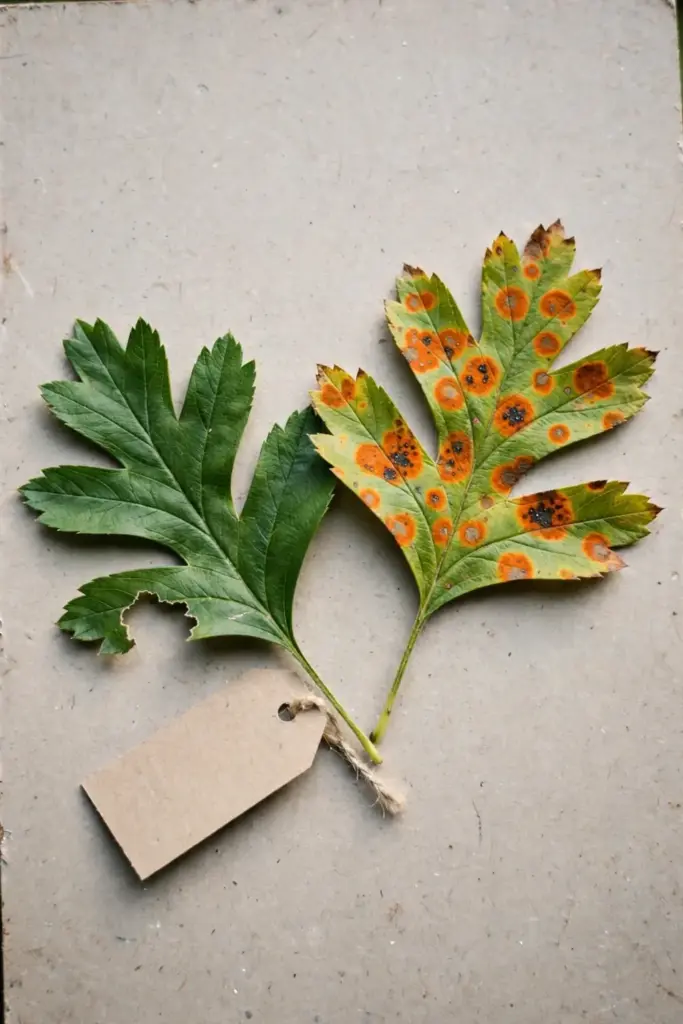
Aphids cluster on new spring growth and are usually handled by lady beetles within a week or two; blast them off with water if they persist. Avoid broad-spectrum insecticides entirely, since a tea-and-fruit tree should stay a clean harvest and the predators do the work for free. Leaf miners and lace bugs are cosmetic most years. Good airflow, morning sun, and not overfeeding are the entire prevention program for a home tree.
16. Harvest Shan Zha Berries for the Kitchen
Expect the first real crop several years after planting a seedling; a grafted tree can cut that wait dramatically. Harvest in mid to late autumn, after the first light frost sweetens the fruit. Clip whole clusters with pruners, wearing puncture-resistant gloves against the thorns, and wash the berries under clean running water before processing.
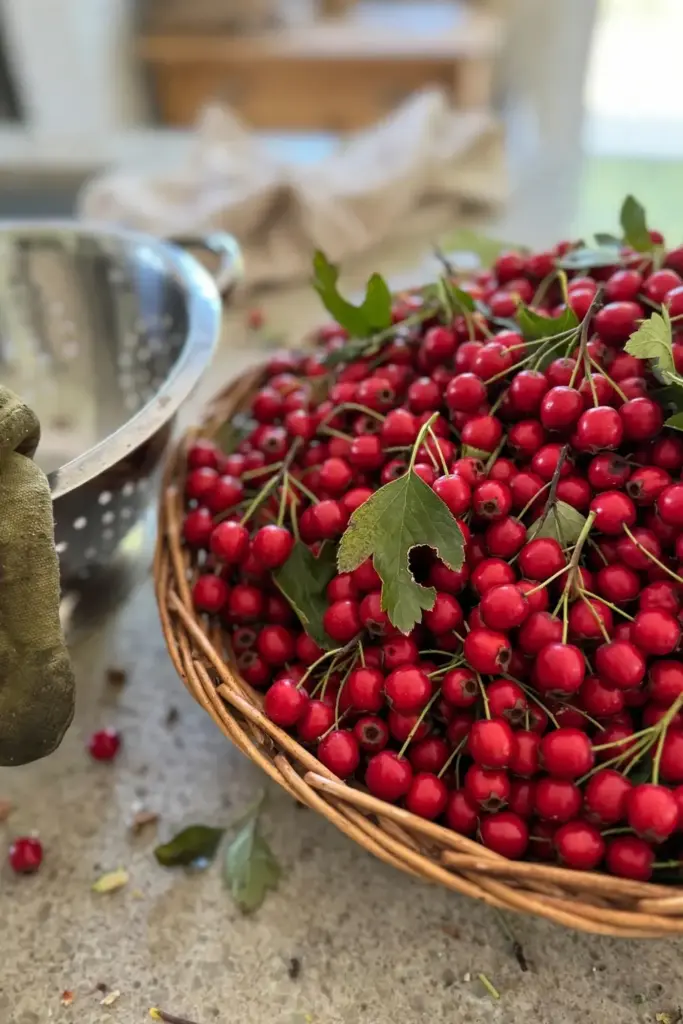
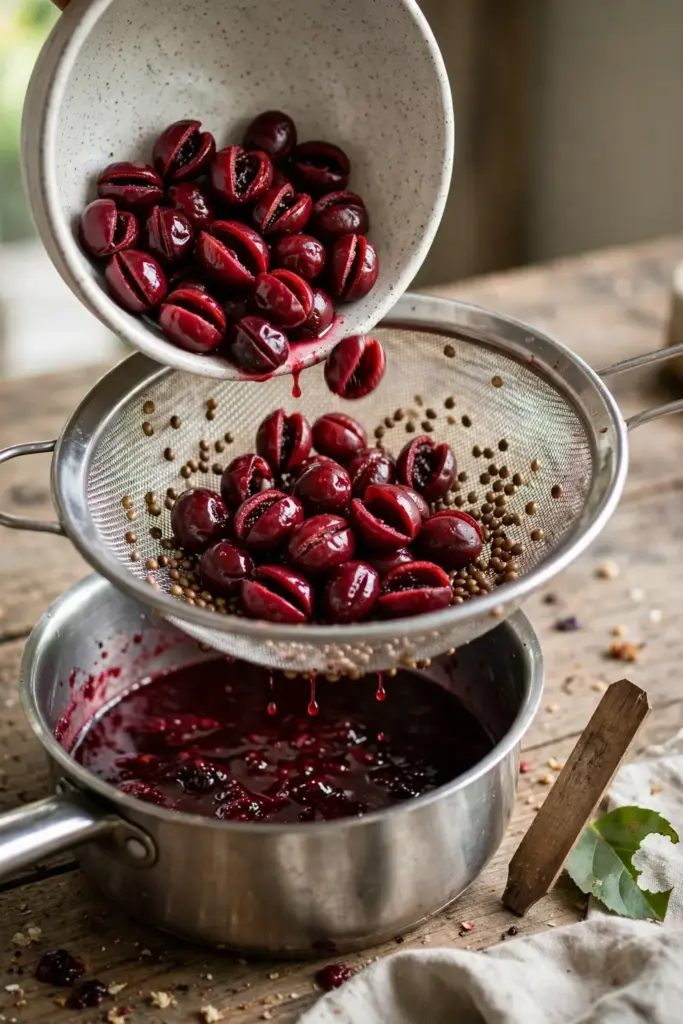
The flesh is the food. Simmer berries into syrups, jellies, and teas, or dehydrate them at about 115°F for dry storage, a temperature the Diy Herb Gardener guide recommends for preserving quality. Strain or pick out the hard seeds during prep: they contain bitter cyanogenic glycosides and have no place in the finished product. Taste the fresh berry before you commit to a big batch; shan zha is gloriously tart, and recipes built for sweet European haws will need adjusting. Dried berries keep for a year in airtight jars in a cool dark cupboard, which makes the harvest useful long after the tree drops its leaves.
17. Seed Safety and Medication Caution: The Honest Rules
Two cautions, stated plainly. First, hawthorn seeds contain amygdalin, a compound that releases hydrogen cyanide when the seed is crushed and digested. The flesh of the berry is the edible part; the seeds are not food. Spit them out when eating fresh berries, and strain them from every cooked preparation. A few accidentally swallowed whole seeds pass through harmlessly, but nobody should be chewing or grinding hawthorn seeds on purpose.
Second, hawthorn has a genuine interaction with heart medications. It has been studied for effects on heart function and blood pressure, which means it can overlap with prescription drugs for the same conditions. If you take heart or blood pressure medication, talk with your clinician before using hawthorn in any medicinal quantity. This guide is about growing the tree and cooking the fruit, not about dosing medicine, and nothing here replaces professional advice.
18. Common Mistakes and How to Fix Them
Every one of these mistakes has a grower behind it who waited a year for nothing. Read the list before you start the stratification clock, because the fixes are all cheapest at the beginning.
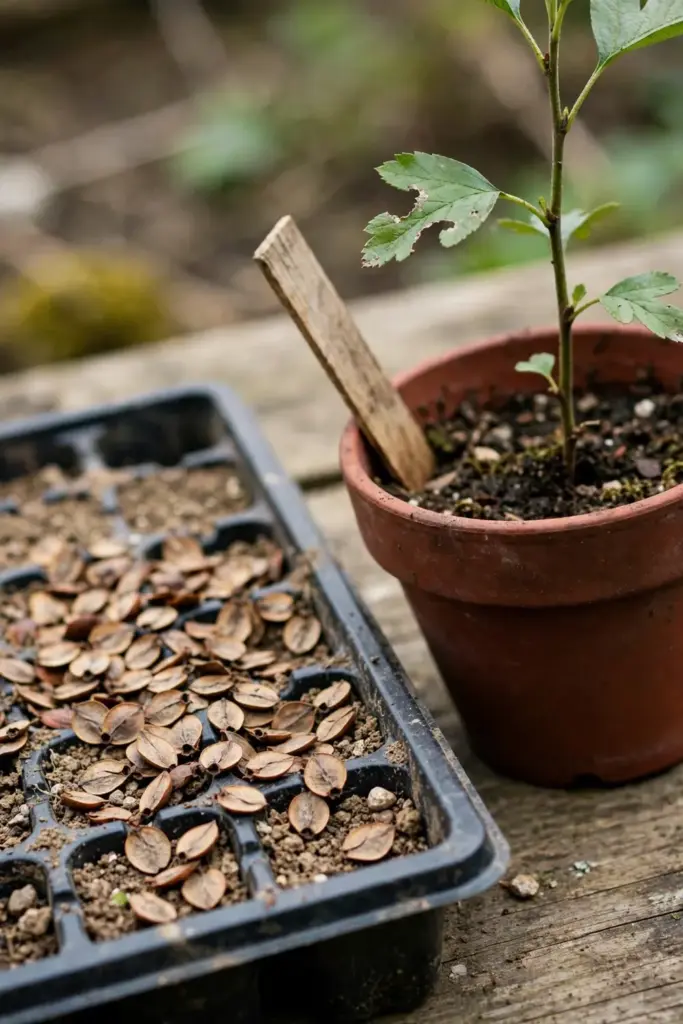
- Sowing in spring with no stratification. Fresh seed sown in spring usually waits a full year. Fix: run the warm-then-cold protocol and sow the following spring.
- Cold stratifying only. Cold alone breaks one lock. Fix: add the 3-month warm phase first, every time.
- Buying seed labeled only “hawthorn.” You will likely get the European species. Fix: demand the Latin name Crataegus pinnatifida on the packet.
- Sowing in shallow trays. The taproot hits the bottom and forks. Fix: use pots at least 6 inches deep or sow directly in the bed.
- Digging up “dead” seeds. Impatience kills more hawthorn seedlings than disease. Fix: mark the calendar and leave the bed alone for a full season.
- Overwatering the seedbed. Soggy soil rots stratified seed fast. Fix: moist, never wet; water only when the top inch dries.
- Cooking with the seeds. Bitter, and a safety problem. Fix: strain every preparation and spit seeds when tasting fresh fruit.
- Expecting fruit in year two. Seedlings take years. Fix: plant seeds as the long game and buy a grafted tree if you want shan zha soon.
19. Troubleshooting: When Nothing Sprouts
Nothing by midsummer after a proper stratification usually means one of three things: the seed lot was weak, the warm phase was too cool, or the medium dried out somewhere in the six months. Cut-test a few remaining seeds; firm cream kernels mean the protocol deserves a second run, while hollow shells mean the lot was the problem.
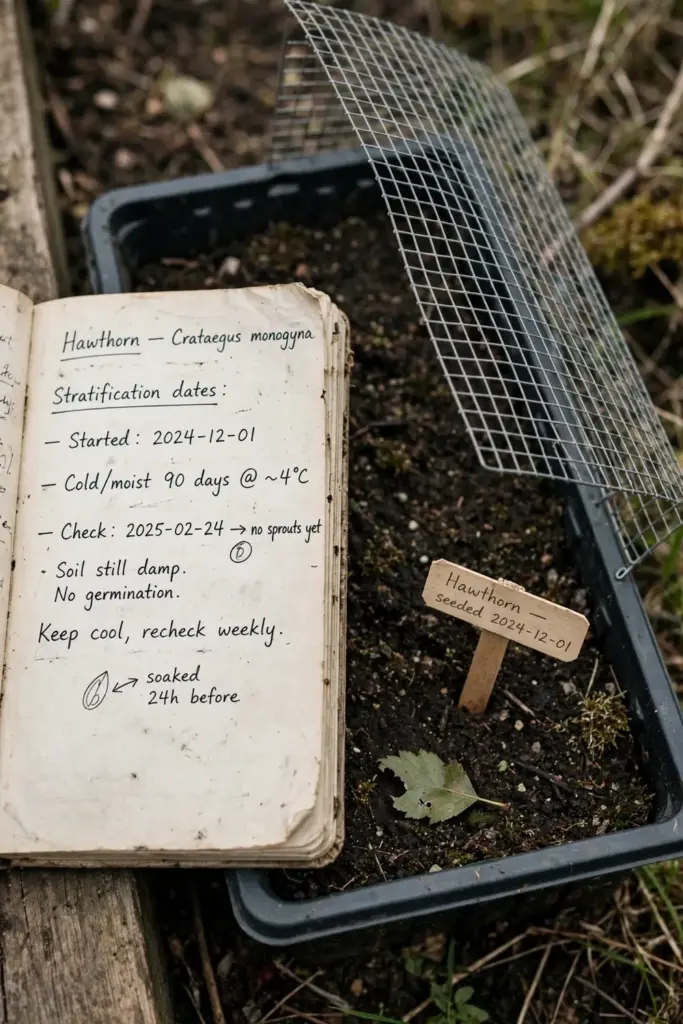
If only a few sprout, that is still a win. Hawthorn germination is erratic by nature, which is why every serious grower sows more than they need. Pot up every seedling you get and run the protocol again next autumn with fresh fruit. Two overlapping batches smooth out the erratic years and keep the pipeline moving.
20. Frequently Asked Questions
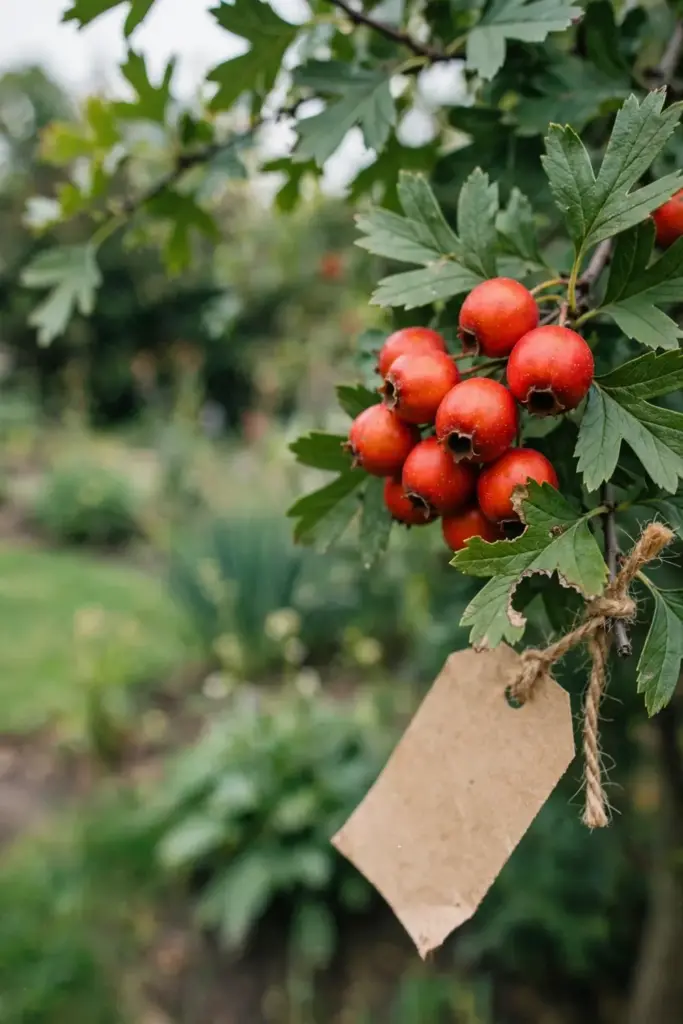
Plan on about 3 months of warm stratification plus 3 months of cold, then germination within weeks of spring sowing for treated seed. Untreated seed sown in the ground may wait one to two full years, and the USDA manual cites observations of Eurasian hawthorn seed taking up to 6 years under natural conditions.
For the first year or two, yes, in deep pots that suit the taproot. As a permanent home it is a poor fit: Crataegus pinnatifida becomes a small tree, and container life stunts it and slashes fruiting. Use pots as a nursery stage, then plant out.
The flesh is safe and widely eaten as shan zha. The seeds are not food: they contain amygdalin, which releases hydrogen cyanide when crushed. Eat the flesh, spit or strain the seeds, and keep children from chewing them. Anyone on heart medication should check with a clinician before medicinal use.
The usual cause is incomplete dormancy breaking: cold stratification without the warm phase, or sowing fresh seed and expecting spring germination. Run the full warm-then-cold sequence, verify seed viability with a cut test, and give the bed a full season before judging.
No. Chinese hawthorn is Crataegus pinnatifida, the large-fruited shan zha species; European hawthorn is Crataegus monogyna, the small-fruited hedge species. They share growing basics but differ in fruit size, uses, and the exact dormancy behavior, so buy seed with the Latin name printed.
Expect several years, often the better part of a decade for a seedling in ordinary garden conditions. This is the honest cost of the from-seed lane. A grafted tree of a named cultivar can fruit years sooner, which is why many growers run both: seeds for the long game, a grafted tree for the short one.
21. Where to Go From Here
You now hold the full chain for how to grow Chinese hawthorn from a packet of seed: the right species, the warm-then-cold protocol, the patience to let it work, and the safety rules that keep the harvest enjoyable. Start the stratification this autumn and the seeds will be ready for a spring sowing that actually sprouts.
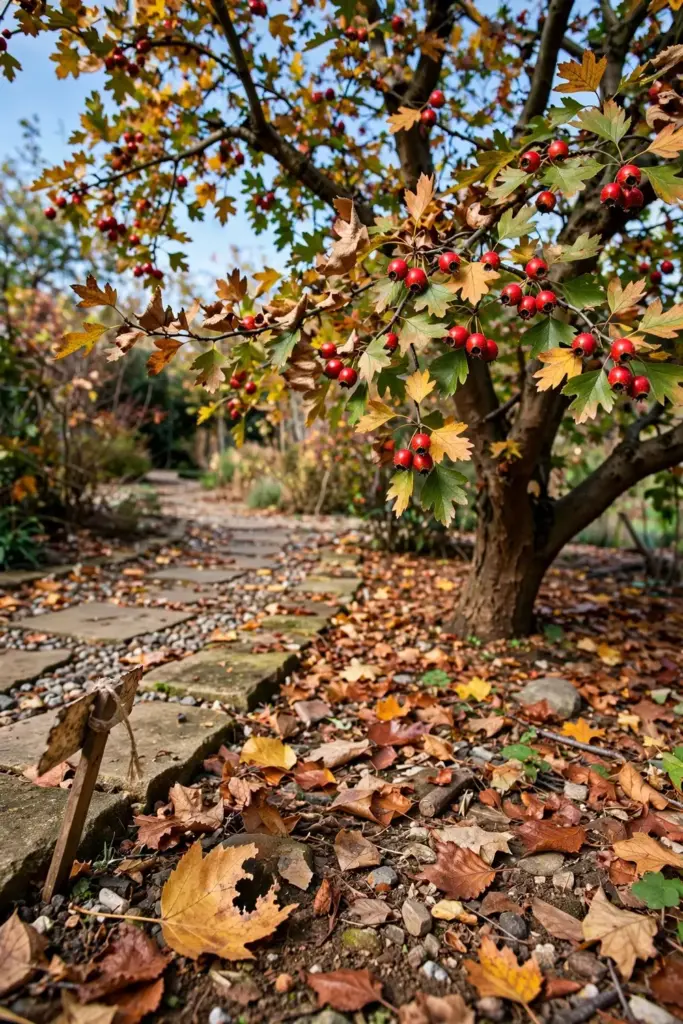
If you want the broader hawthorn picture beyond the from-seed lane, the companion hawthorn herb guide covers growing hawthorn as a general herb plant, while this article owns the seed bench for the Chinese species. Between the two, the whole plant is covered, from the first stratified seed to the first bowl of shan zha.