
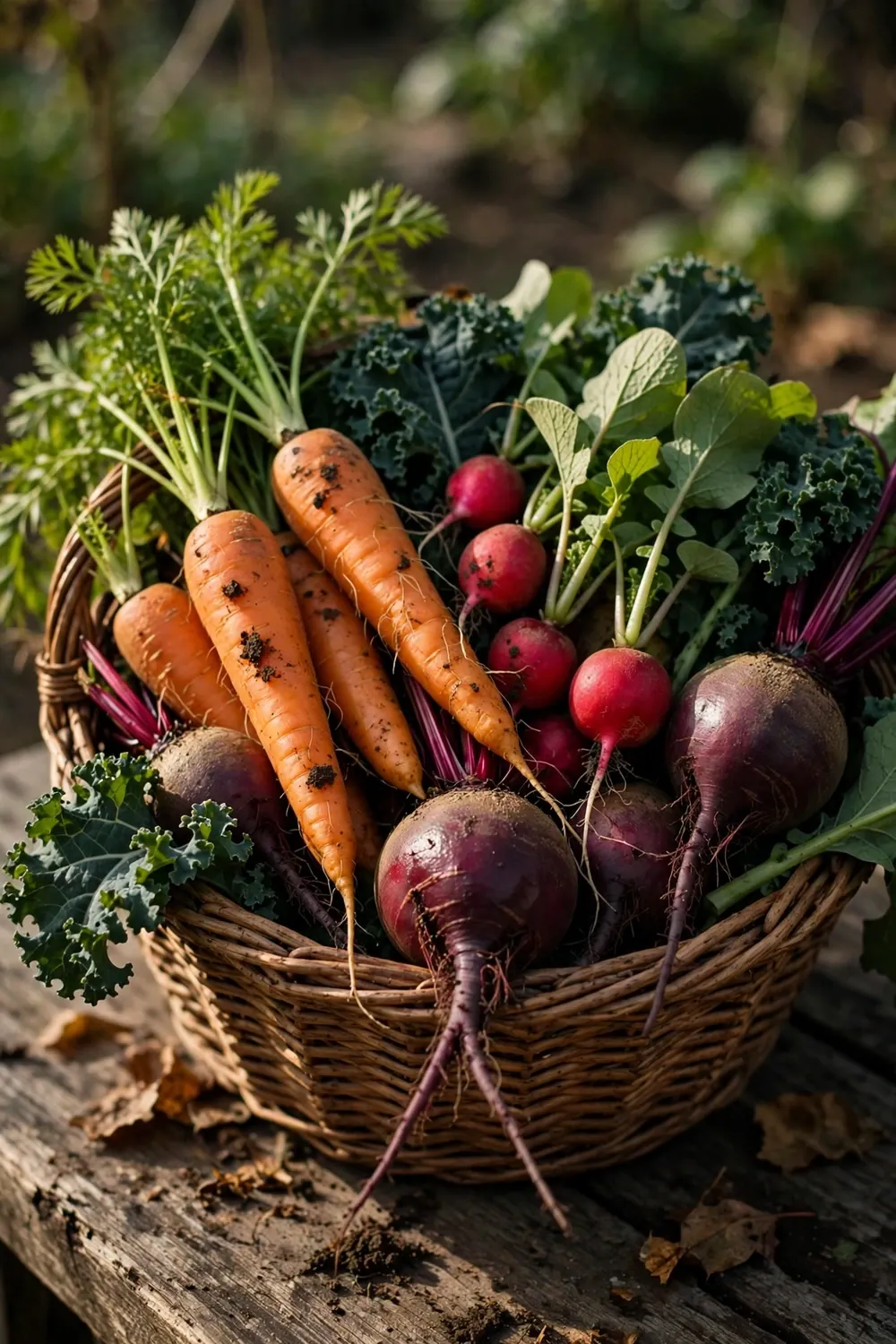

Pull 30 radish roots 25 days after sowing, and you will believe the rest of this page. That is fall vegetables to plant in their working form: 36 crops with a day count attached, sorted by how fast they grow. The rest of this page is 36 vegetables, from 20-day arugula to garlic that sleeps through winter and wakes up in July.
Sow the fast group this week. October is not too late. Set out transplants before your zone’s fall window closes, water every seedbed daily until the seeds break the surface, and mulch the overwinter group before the ground freezes hard.
Three sibling pages own nearby jobs, and this page does not steal them. The broad what-to-plant list, including what to skip, lives on the site’s fall planting guide. The full fall task list, beds and soil included, lives on fall gardening tips. Month-by-month sowing dates live on the fall planting calendar. This page stays on the vegetables: what to sow, how many days each one needs, and how much frost it can take.
The Speed Table: 36 Vegetables by Days, Frost, and Method
Read the table first, then pick your group. Days to maturity are standard seed-packet figures for fall sowing; cool soil and short days add roughly 7 to 14 days on top, so sow the slow end of your window early. Frost tolerance is the tier the crop survives without cover: tender folds at the first light frost, half-hardy takes 28 to 32 degrees, hardy takes the low 20s, very hardy laughs at the teens.
| Vegetable | Days to Maturity | Frost Tolerance | Start Method |
|---|---|---|---|
| Radishes | 25 to 30 | Half-hardy | Direct sow |
| Arugula | 20 to 40 | Hardy | Direct sow |
| Looseleaf Lettuce | 30 to 45 | Half-hardy | Direct sow |
| Spinach | 37 to 45 | Very hardy | Direct sow |
| Tatsoi | 21 to 45 | Very hardy | Direct sow |
| Mizuna | 20 to 40 | Hardy | Direct sow |
| Mustard Greens | 30 to 40 | Hardy | Direct sow |
| Bok Choy | 30 to 50 | Half-hardy | Direct sow |
| Turnip Greens | 30 to 40 | Hardy | Direct sow |
| Baby Kale | 25 to 30 | Very hardy | Direct sow |
| Baby Swiss Chard | 30 | Hardy | Direct sow |
| Komatsuna | 21 to 40 | Hardy | Direct sow |
| Pea Shoots | 14 to 21 | Hardy | Direct sow |
| Scallions (from sets) | 30 to 60 | Hardy | Sets |
| Carrots | 50 to 75 | Hardy | Direct sow |
| Beets | 50 to 70 | Hardy | Direct sow |
| Kohlrabi | 40 to 60 | Hardy | Direct sow |
| Turnips (roots) | 40 to 60 | Hardy | Direct sow |
| Swiss Chard (full) | 50 to 60 | Hardy | Direct sow |
| Collard Greens | 55 to 75 | Very hardy | Direct sow or transplant |
| Endive and Escarole | 45 to 60 | Hardy | Direct sow or transplant |
| Mache (Corn Salad) | 50 to 60 | Very hardy | Direct sow |
| Daikon Radish | 50 to 70 | Hardy | Direct sow |
| Broccoli | 55 to 70 | Hardy | Transplants |
| Cauliflower | 55 to 80 | Half-hardy | Transplants |
| Cabbage | 60 to 90 | Hardy | Transplants |
| Brussels Sprouts | 80 to 100 | Very hardy | Transplants |
| Leeks | 60 to 90 | Very hardy | Transplants |
| Rutabaga | 70 to 90 | Very hardy | Direct sow |
| Parsnips | 100 to 120 | Very hardy | Direct sow |
| Garlic | Plant Oct, harvest July | Very hardy | Cloves |
| Overwintering Onions | Plant Oct, harvest June | Very hardy | Sets |
| Shallots | Plant Oct, harvest July | Very hardy | Sets |
| Fava Beans | Plant Oct, harvest May | Hardy | Direct sow |
| Overwintering Spinach | Sow Oct, harvest Mar | Very hardy | Direct sow |
| Overwintering Kale | Sow Aug, harvest Mar | Very hardy | Direct sow |
Virginia Tech’s home garden planting guide puts the fall sowing window for zones 6a through 8b between early August and late October depending on the crop, and notes that row cover fabric or a cold frame stretches both the planting and harvest window by two to four weeks (Virginia Tech Publication 426-331). UGA frames the whole season the same way: fall plantings go in from mid-July to September and come out of the ground from October to December (UGA Extension Vegetable Garden Calendar). That October-to-December harvest is what the 36 items below are timed for.
Sow in Waves, Not All at Once
One sowing gives one harvest. Three sowings 10 days apart give six weeks of salads. That is succession sowing, and it matters more in fall than in spring because the season has a hard stop.
Sow the fast greens in waves. A 60 cm row of radishes every 10 days through October beats one long row sown once. The same goes for arugula, lettuce, mizuna, and spinach. Each wave catches slightly cooler weather, and the later waves often taste better.
Mark every sowing with the date on a wooden label. Memory lies about when things went in, and the label tells you which wave is ready. Pull the spent wave and sow the next one in its place; the bed never sits empty.
Stop the waves when the days to maturity no longer fit before your first hard freeze. The last wave is the gamble wave. Cover it and it usually pays.
Fast: Sow Now, Eat in 30 to 45 Days
These are the October crops. If today is early October and the seed packets are still on the shelf, start here. Every one of them germinates in cool soil and races short days.
1. Sow Radishes for the Fastest Payoff
Radishes are the 25-day crop. Sow the seed 1.3 cm deep, 2.5 cm apart, in soil that is still warm from September. Thin to one seedling every 5 cm once the true leaves show. Water daily until germination, then keep the bed evenly moist.
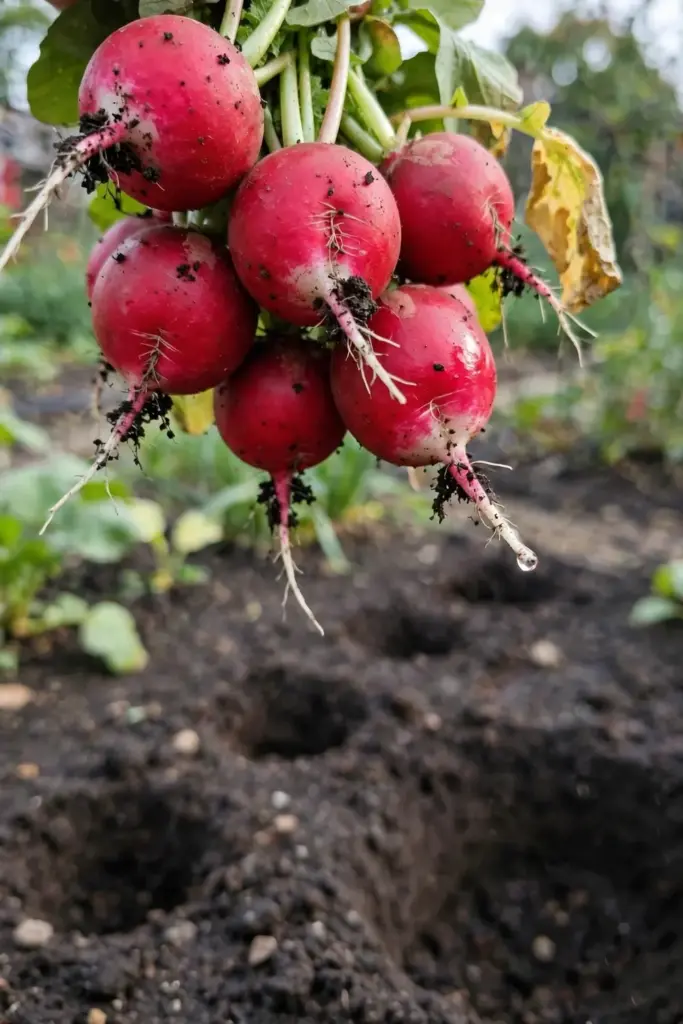
The speed is the point, and it is also the trap. A radish left in the ground past its day count turns pithy and hot. Pull them small. Sow a fresh 30 cm row every 10 days through October for a continuous supply, which is the succession habit Virginia Tech’s planting guide recommends for quick crops marked for multiple successions.
Cold nights sweeten them. A light frost firms the texture instead of ruining it. Cover only if a hard freeze below 25 degrees is forecast before you finish pulling.
French Breakfast pulls in 25 days with a mild bite; Cherry Belle rounds out a week later and stores better. In zones 9 and 10, sow into November for a winter crop. A 15 cm deep window box holds two rows, which makes radishes the first container crop to recommend to a skeptical neighbor.
2. Cut Arugula at 20 Days
Arugula germinates in 4 to 7 days in cool soil and gives a first cut in 3 weeks. Scatter the seed thickly, 0.6 cm deep, and cut the leaves at 8 to 10 cm with scissors. The plants regrow for two or three more cuts.
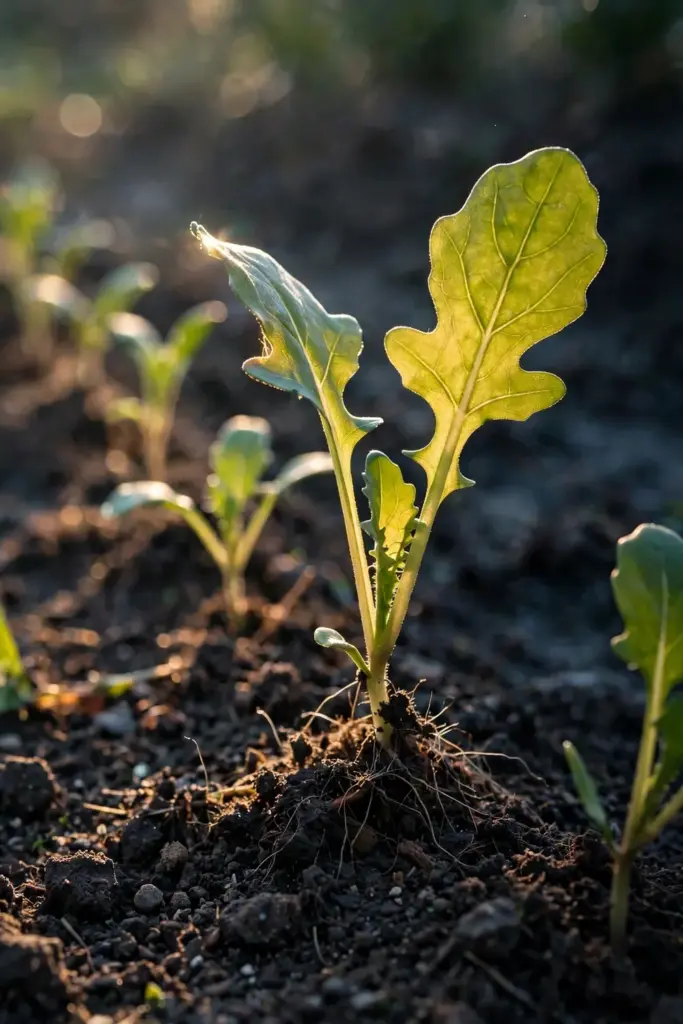
Heat made your spring arugula bolt and turn bitter. October fixes that. Cool nights keep the leaves mild and peppery instead of harsh. Sow in the shade of the spent tomato trellis if the afternoons still run warm.
Flea beetles can still find it in early October. A floating row cover laid at sowing solves both the beetles and the first surprise frost. Pull the cover on mild days so the leaves stay dry.
Astro resists bolting longer than wild types; Slow Bolt lives up to its name in warm Octobers. Let one plant flower in spring and it self-sows a permanent patch. The flowers feed early bees, which is a bonus the seed packet never mentions.
3. Sow Looseleaf Lettuce, Not Heads
Head lettuce needs a long, cool run that October cannot give most zones. Looseleaf types need 30 to 45 days and forgive a late start. Sow a 60 cm band, not a row, and cut outer leaves while the center keeps growing.
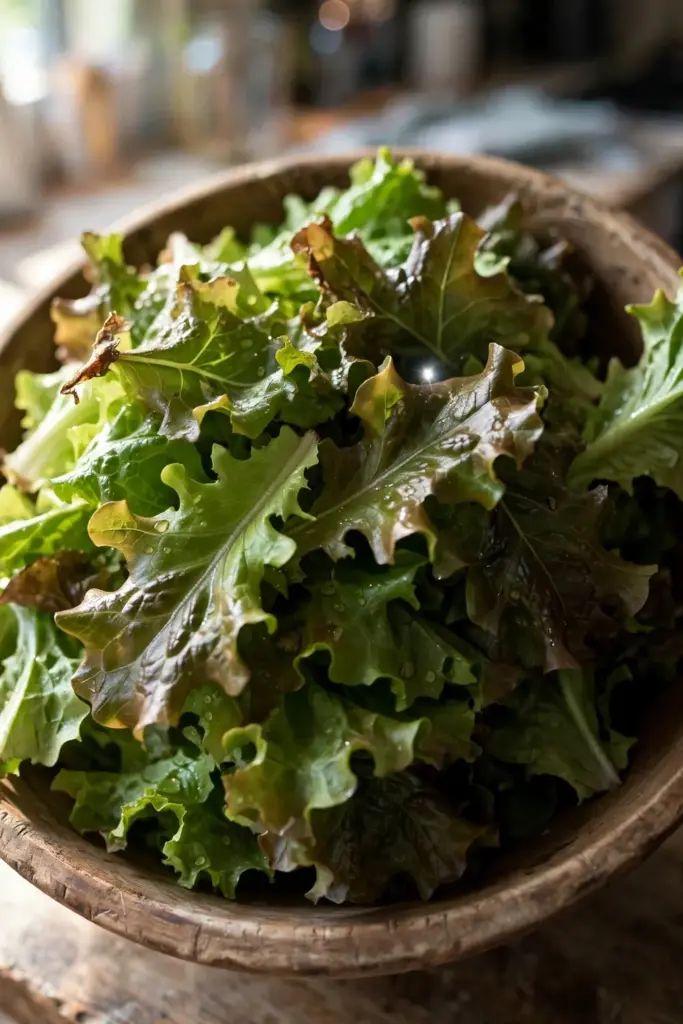
Lettuce seed sulks in warm soil. If your bed still reads above 24 degrees at sowing depth, shade the row with a board for 3 days after watering. Lift the board at the first green hook. Virginia Tech lists baby salad lettuce for fall sowing into October in zones 7 and 8, which is the latest window of any salad crop on their tables.
A hard freeze turns unprotected leaves to mush. Keep a frost blanket by the bed from late October on. The blanket buys 2 to 4 degrees, and that is often the whole margin.
Salad Bowl and Black Seeded Simpson are the reliable looseleaf pair; oakleaf types add shape to the mix. Cut outer leaves at 8 cm. The center keeps pushing new ones for a month, which beats replanting.
4. Sow Spinach Before the Soil Cools Too Far
Spinach needs 37 to 45 days, and it needs soil below 21 degrees to germinate well. That combination makes early October the sweet spot in zones 6 and 7: cool enough to sprout, warm enough to grow. Sow 1.3 cm deep and keep the bed moist for the full 10 days germination can take.
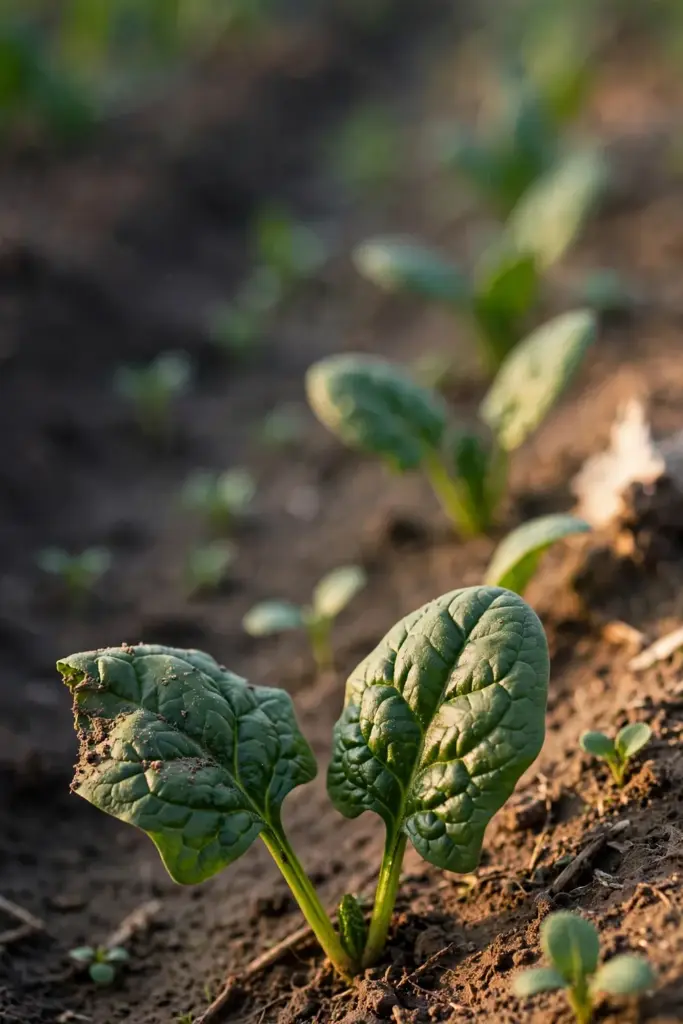
Spinach is the hardiest salad green on this list. Established plants survive into the teens under a blanket and resume growing in late winter. Thin to 10 cm apart; crowded spinach stays small and bolts at the first warm spell in spring.
Sow it where the garlic will go next year, not where it is now. Spinach hates the same bed twice in a row. Rotate.
Winter Bloomsdale has savoyed leaves that shrug off frost; Tyee grows faster for the October sprint. Sow a second patch 2 weeks after the first to stretch the harvest. Both freeze well blanched, so plant extra.
5. Grow Tatsoi for Cold-Weather Stir-Fry
Tatsoi forms a flat rosette of spoon-shaped leaves in 21 days for baby size and 45 for full heads. It tolerates frost into the low 20s and tastes better after a freeze, when the starches convert to sugar.
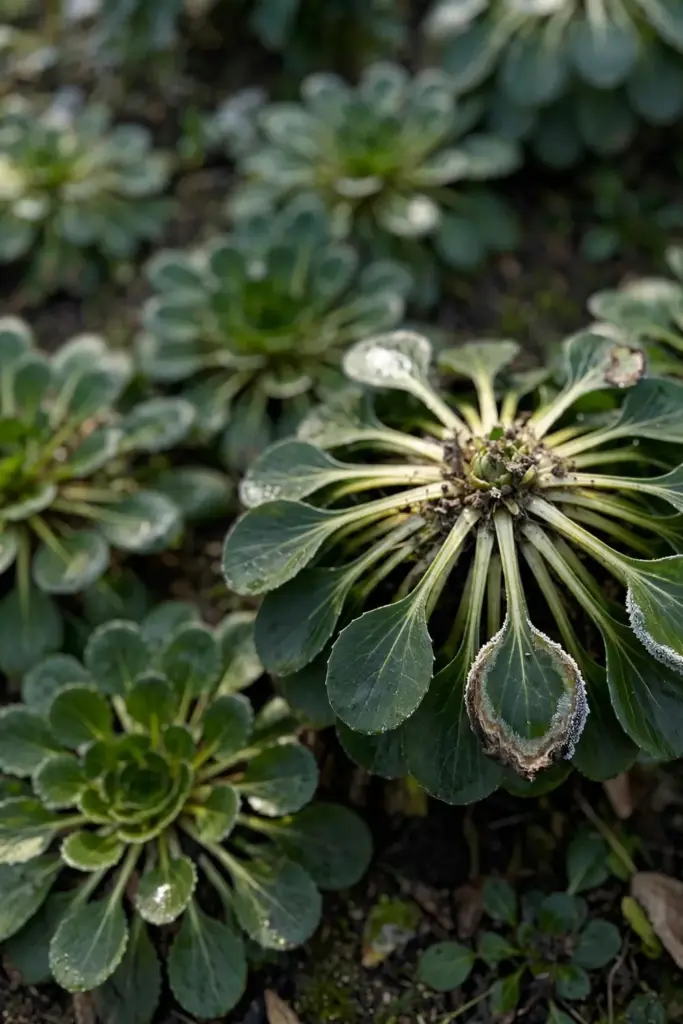
Sow it 1.3 cm deep, 15 cm apart for heads, or broadcast for cut-and-come-again baby leaves. The rosette shape sheds cold air, which is why it outlasts upright greens. Water at the base. Wet crowns rot when nights stay cold.
Slugs love tatsoi as much as you will. A ring of dry wood ash around the bed, renewed after rain, keeps them off without poison.
Tatsoi Rosette is the standard variety and it earns the name. Pair it with mizuna and komatsuna in one bed for a cut-and-come-again Asian greens patch. The three grow at the same speed and harvest together.
6. Cut Mizuna All Fall
Mizuna gives feathery mild leaves in 20 days and full bunches in 40. It is a cut-and-come-again workhorse: shear the outer leaves at 15 cm and the center pushes new growth for weeks.
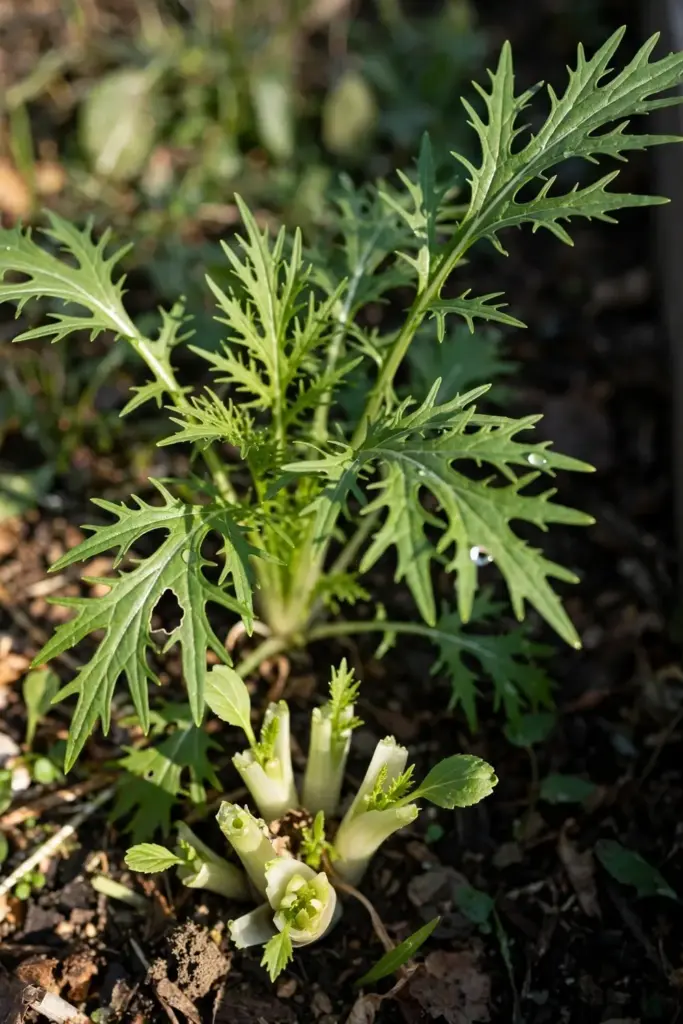
It handles light frosts without complaint and keeps producing under a simple row cover into December in zone 7. Sow every 2 weeks through October. The later sowings grow slower but catch the cold-sweet flavor that makes fall mizuna better than spring.
Do not let it flower. A warm spell in October can bolt a stressed plant. Keep it watered and cut it young, and it stays vegetative.
Mizuna Early is the quickest; purple mizuna adds color with the same mild bite. It tolerates crowding better than most greens, so broadcast it where space is tight. Thin the seedlings into salads.
7. Sow Mustard Greens for the First Frost Bite
Mustard greens need 30 to 40 days and shrug at frosts that kill lettuce. The flavor sharpens after cold nights, which is the point for cooks who want bite. Sow 1.3 cm deep, thin to 15 cm.
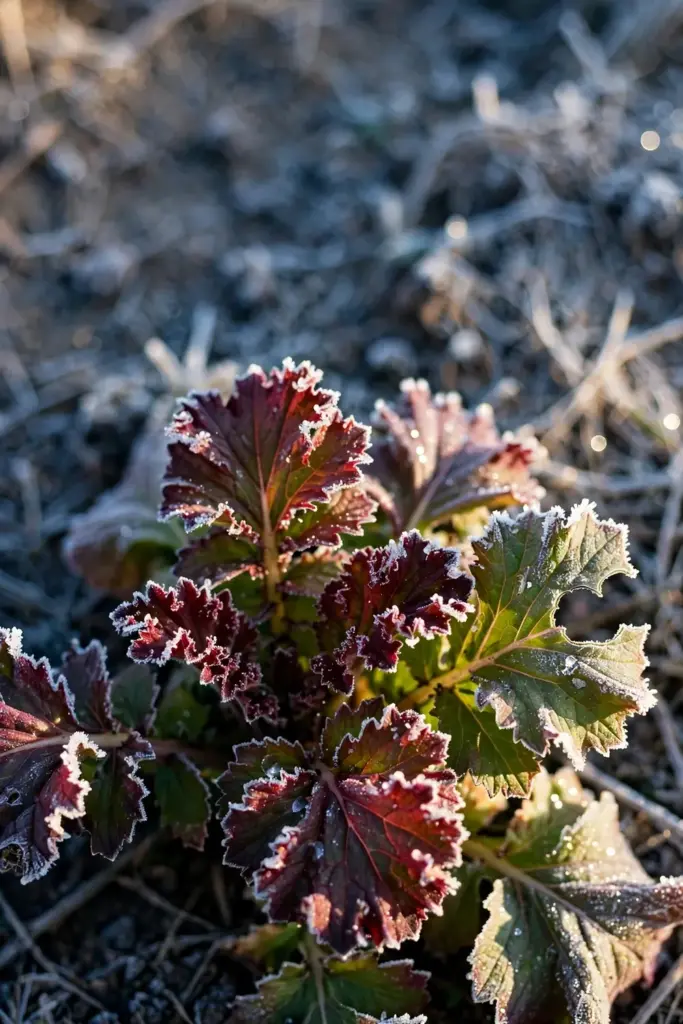
Red varieties like Red Giant add color to the bed and the plate. They grow at the same speed as the green types. Virginia Tech’s fall window for mustard runs into October in zones 7 and 8, later than almost every other green.
Aphids cluster on the undersides in warm Octobers. Blast them off with a hard hose spray in the morning. The leaves dry by noon and the aphids do not return the same day.
Red Giant brings burgundy leaves and Southern Giant Curled brings frills and heat. Mustards trap flea beetles. A border row protects the arugula and kale beside it; sacrifice the trap row and compost it.
8. Transplant or Sow Bok Choy Fast
Bok choy reaches baby size in 30 days and full heads in 50. It is the fastest head-forming vegetable on this list. Sow direct or set out transplants; transplants buy 2 weeks, which matters in October.
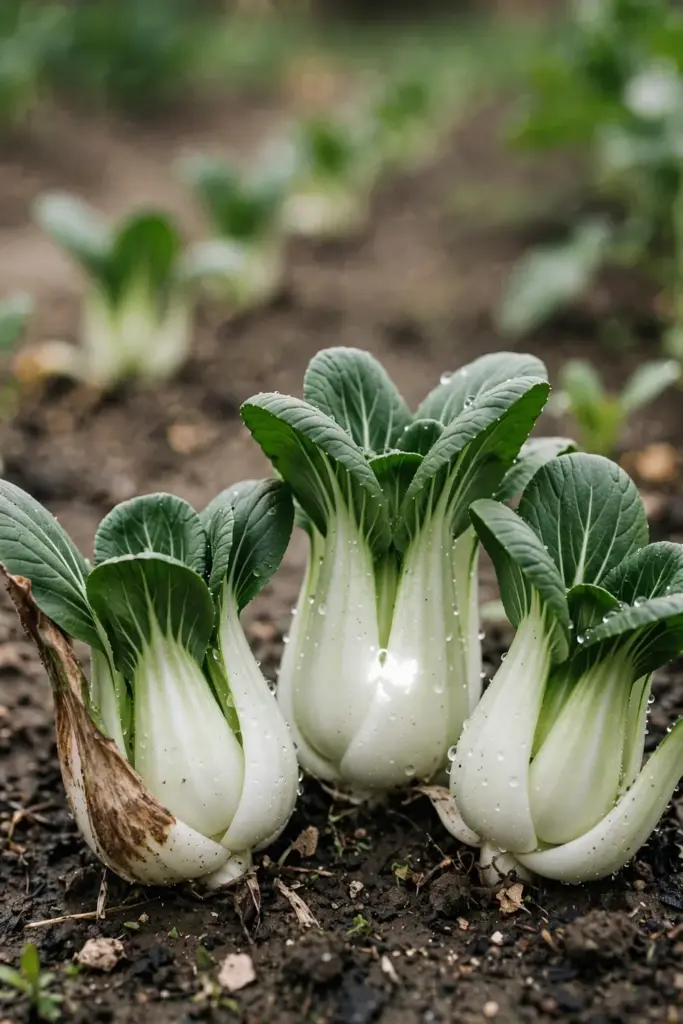
Bok choy bolts if a cold snap below 10 degrees hits young transplants. Harden transplants for a week before setting them out, and keep the row cover handy for the first 10 nights. Direct-sown plants bolt less because they never suffer transplant shock.
Harvest the whole head at 15 cm for baby bok choy, or wait for 25 cm full heads. Cut at the base; the stump sometimes resprouts a small second head.
Joi Choi resists bolting better than older types; Toy Choy stays small for tight beds. Space full-size heads 20 cm apart; crowded bok choy stays stunted. The white stems stay crisp 5 days in the refrigerator.
9. Sow Turnip Greens, Eat the Tops First
Turnip greens give edible tops in 30 to 40 days, with roots to follow at 50 to 60. Sow thickly, 1.3 cm deep, and start cutting outer leaves when they reach 10 cm. The roots keep sizing underground while you harvest the tops.
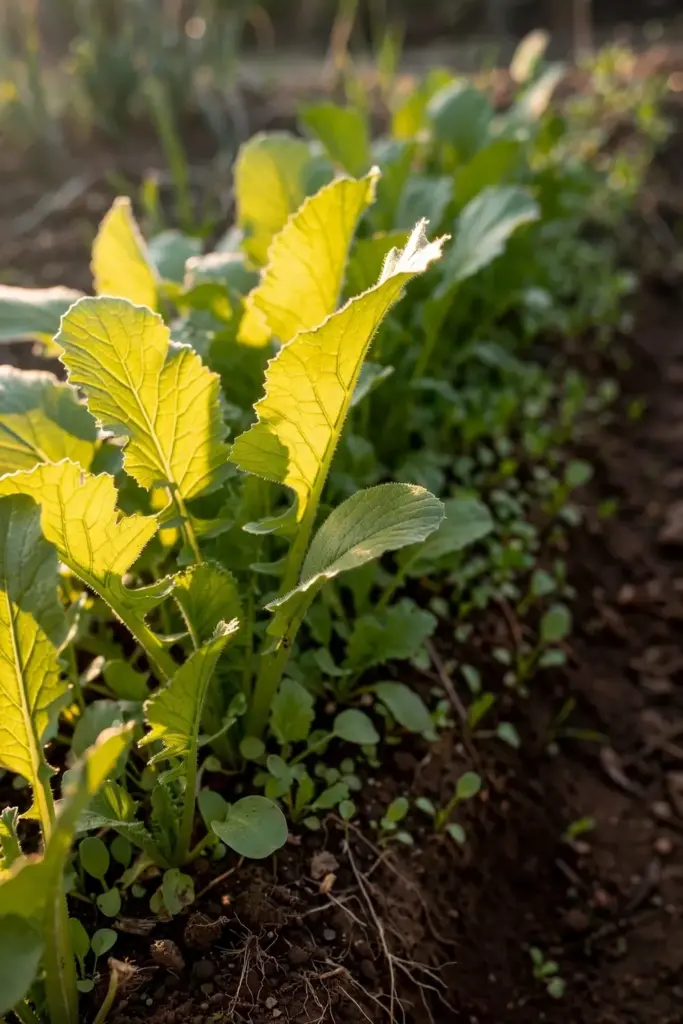
This is two crops from one sowing, which is why turnips earn their space. The greens take frost into the mid-20s. The roots sweeten after frost and store in the ground under mulch in zones 7 and warmer.
Thin the row to 10 cm once you start eating greens. Unthinned roots stay finger-thick. Thinned roots swell to proper turnips.
Seven Top is grown for greens alone and never makes much root; Topper does both. If you only want greens, sow Seven Top thickly and mow it with scissors. For roots too, Topper thinned to 10 cm is the dual-purpose pick.
10. Cut Baby Kale at 25 Days
Baby kale is a different crop from full-size kale, and October is its season. Sow thickly and cut at 10 to 15 cm in 25 to 30 days; the leaves are tender enough for salad with no massaging required.
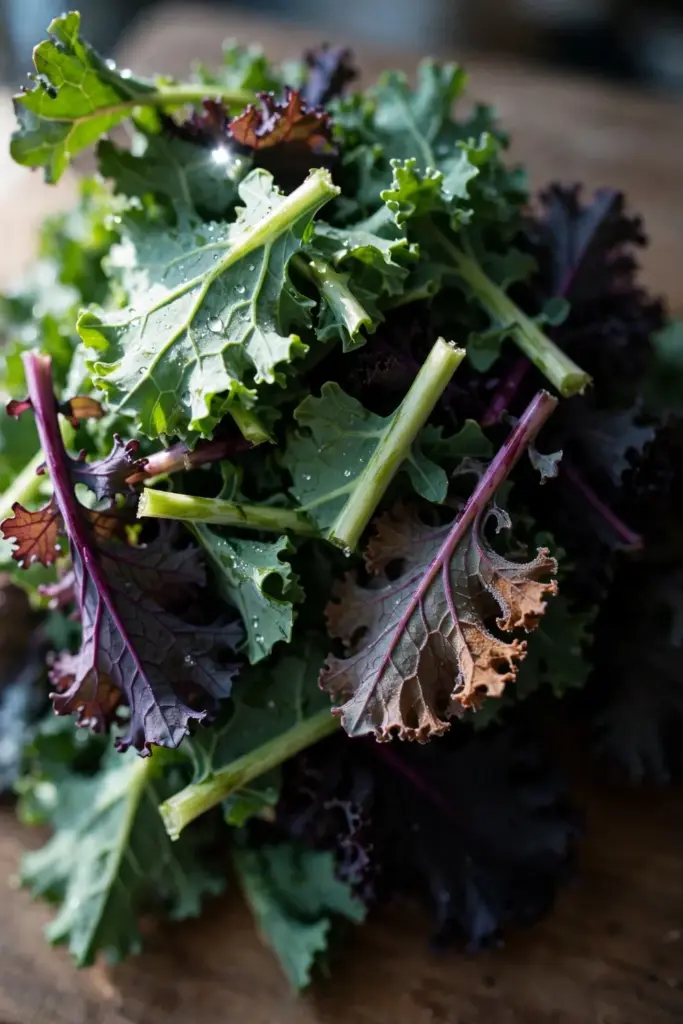
Kale is the hardiest leaf on this list. It survives single digits under snow and tastes sweeter for it. Sow the baby cut now; the plants left standing become the overwinter crop at item 36.
Flea beetles and cabbage worms both work October. The row cover you bought for the arugula covers this bed too. One cover, many beds, all fall.
Red Russian has tender flat leaves for salads; Dwarf Blue Curled is sturdier for cooking. Cut at 10 cm for baby leaves or let a few plants size up for winter. The red stems color up beautifully after frost.
11. Snip Baby Swiss Chard Early
Swiss chard needs 50 to 60 days for full stalks, but baby leaves cut at 30 days are the October play. Sow 1.3 cm deep, 5 cm apart, and cut at 10 cm. Bright Lights mix gives red, yellow, and white stems in one row.
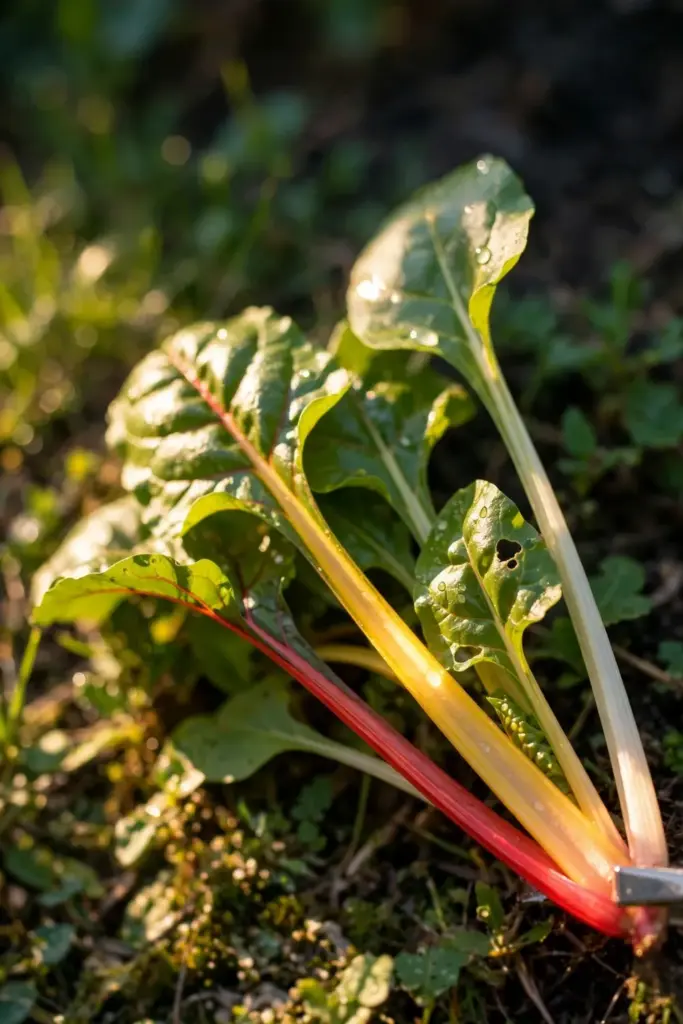
Chard tolerates light frost and keeps producing under cover. It is a biennial, so plants that survive winter bolt in spring; eat them before that. For fall purposes, treat it as a cut-and-come-again green.
Leaf miners tunnel the leaves in warm falls. Pick off and discard the tunneled leaves. The new growth comes in clean once nights cool.
Bright Lights mixes red, gold, pink, and white stems in one packet, and the colors intensify in cool weather. One sowing feeds the salad bowl. It also feeds the saute pan, depending on when you cut.
12. Sow Komatsuna for Mild Mustard Flavor
Komatsuna, Japanese mustard spinach, matures in 21 days for baby leaves and 40 for full size. The flavor is mild and sweet, between spinach and bok choy, and it takes frost into the low 20s.
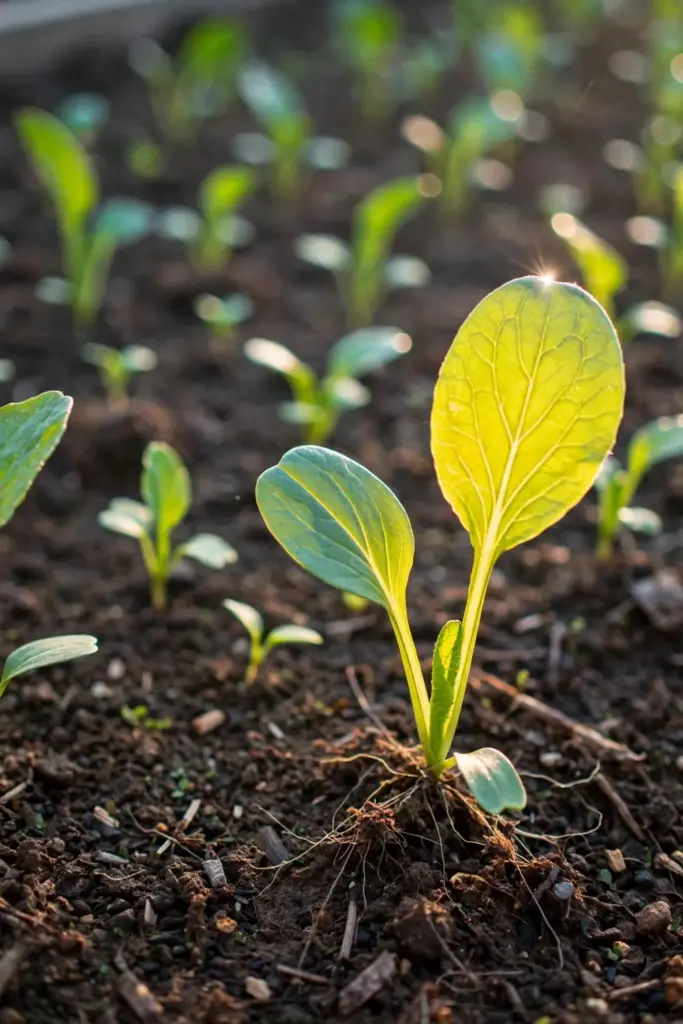
Sow 1.3 cm deep, thin to 15 cm for full-size plants, or broadcast for baby cut. It bolts slower than bok choy in fluctuating October temperatures. Safer for beginners.
Use it anywhere you would use spinach. It wilts in half the time in a hot pan and holds its green.
Komatsuna Summer Fest handles warm spells without bolting. It outyields spinach in the same space and asks for less water. Substitute it one-for-one in any cooked-greens recipe.
13. Harvest Pea Shoots in Two Weeks
Pea shoots are the fastest crop on this page: 14 to 21 days from dry pea to snippable tendrils. Soak the peas 8 hours, sow 2.5 cm deep and 2.5 cm apart in a tray or a bed corner, and cut the top 8 cm when the tendrils curl.
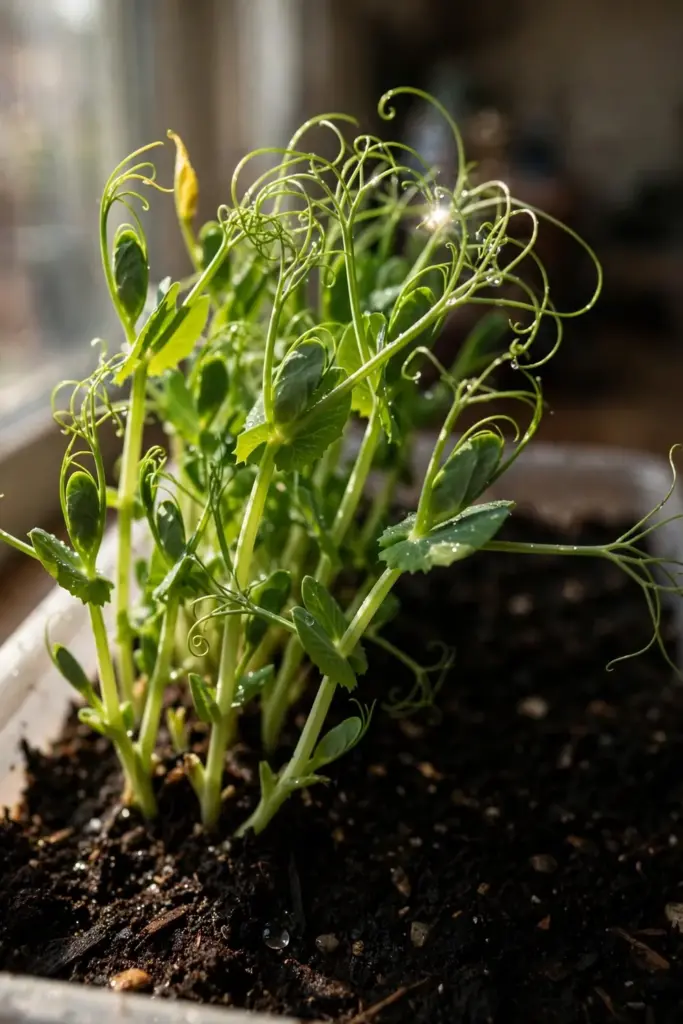
This is not the crop for pods. A fall sowing started in October will not make peas before hard frost in zones 6 and below. Grow it for the shoots, which taste like spring peas concentrated.
Sow in a window box if the bed is full. Pea shoots are the best container crop on this list, and the tendrils trail prettily over the edge.
Oregon Sugar Pod gives the sweetest shoots; the purple-tinged tendril types are the prettiest in the tray. Cut above the second node and many varieties regrow once. Two trays sown a week apart keep the supply constant.
14. Set Out Scallion Sets for Green Onions
Scallions from seed need 60 to 80 days, too long for October. Scallion sets and bunching onion transplants cut that to 30 to 60 days of green tops. Push sets 2.5 cm deep, 5 cm apart, in any leftover bed edge.
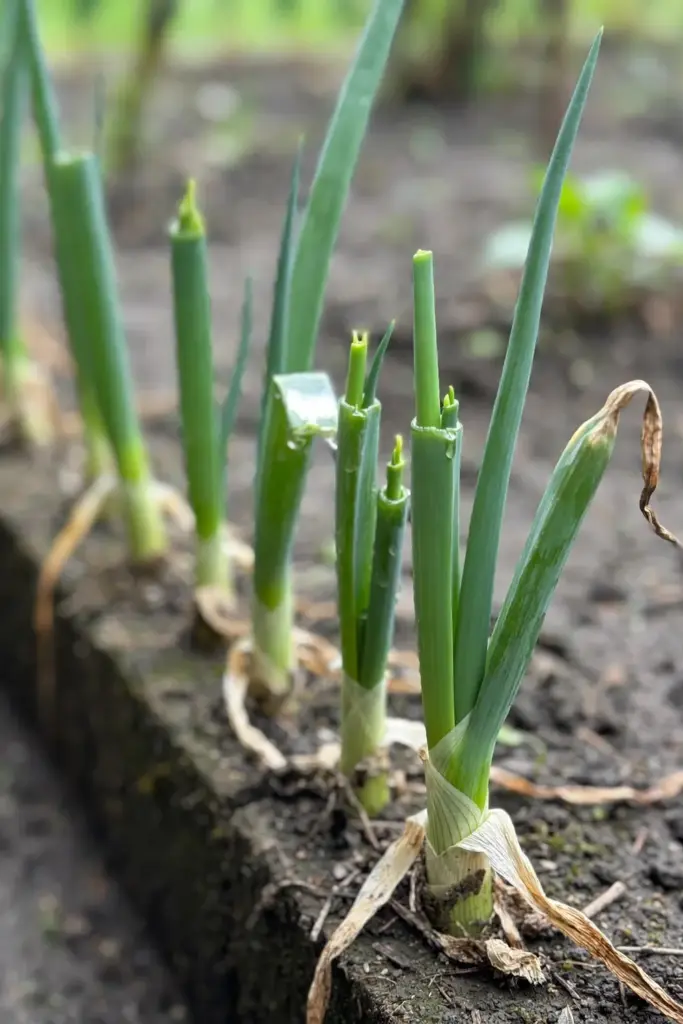
They are hardy into the 20s and sit patiently under mulch. Pull as needed; each pulled scallion is one less. The tops survive frosts that flatten the lettuce, so plant them at the bed edge as the last line of the fall garden.
Evergreen Hardy White and White Lisbon are the standard fall varieties. Both are sold as sets, which is what makes the timing work.
Mid: 45 to 65 Days, Sow by Early October
This group needs the full October and a mild November, or a row cover to finish. In zones 7 and 8 the window is comfortable. In zone 6, cover is not optional for the slow end of this group. Transplants are the shortcut here: UMN Extension notes that transplanting always gives a head start on the season, while radishes, carrots, and beets will not tolerate it and must be direct seeded (UMN Extension planting guide).
Evergreen Hardy White survives winter in zone 7 and regrows in spring; White Lisbon is faster for fall. In zone 8 and warmer, a scallion patch becomes perennial. Divide the clumps every 2 years.
15. Sow Carrots for Sweet Frost Roots
Carrots need 50 to 75 days, and fall carrots beat spring carrots on flavor. Cold nights convert starches to sugars, so a carrot pulled after the first frost tastes like a different vegetable.
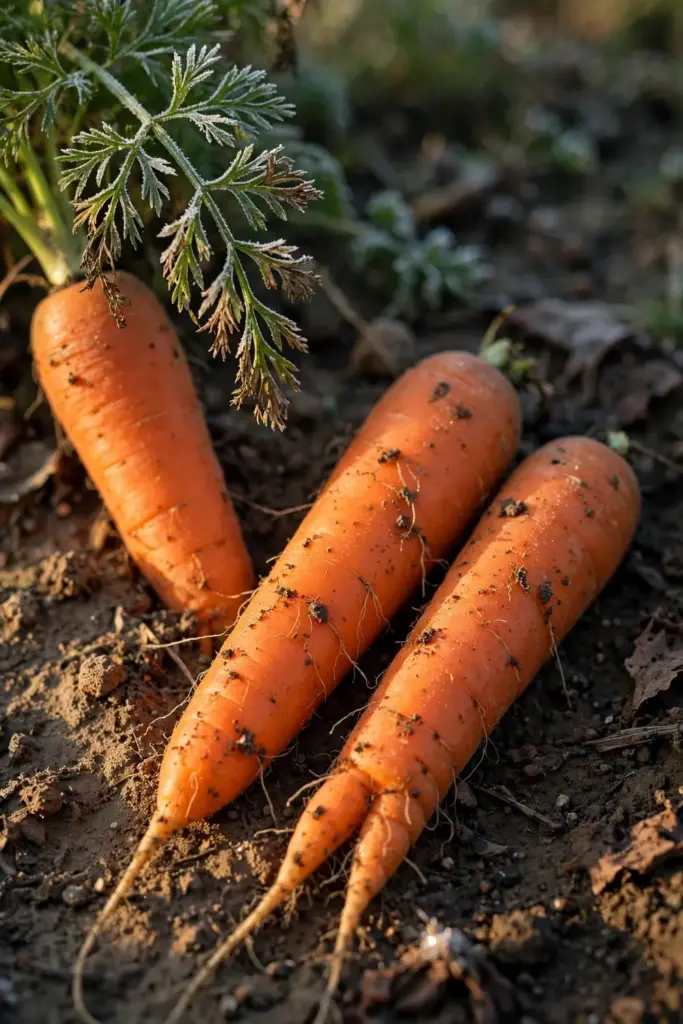
The hard part is germination. Carrot seed takes up to 21 days and the bed must stay moist the entire time. Loose, living soil is half the battle, which is why the site’s soil health guide earns a read before you sow a single row. Lay a board over the row after sowing and watering, and check daily. Lift it at the first green thread. Sow 0.6 cm deep; deeper and they never emerge.
Thin to 5 cm apart or every root forks. Mulch heavily with straw before hard freeze and pull through December in zone 7. The tops die back but the roots hold crisp underground.
Napoli is bred for fall sowing and sweetens fast; Mokum is the early market standard. Loosen the soil 25 cm deep and pick out every stone. A forked carrot is still edible, but a straight one is the goal.
16. Sow Beets for Roots and Tops
Beets mature in 50 to 70 days and give two harvests: greens at 30 days, roots to follow. Soak the seed clusters overnight, sow 1.3 cm deep, and thin to 10 cm. Each “seed” is a cluster that sprouts 3 or 4 seedlings, so thinning is mandatory.
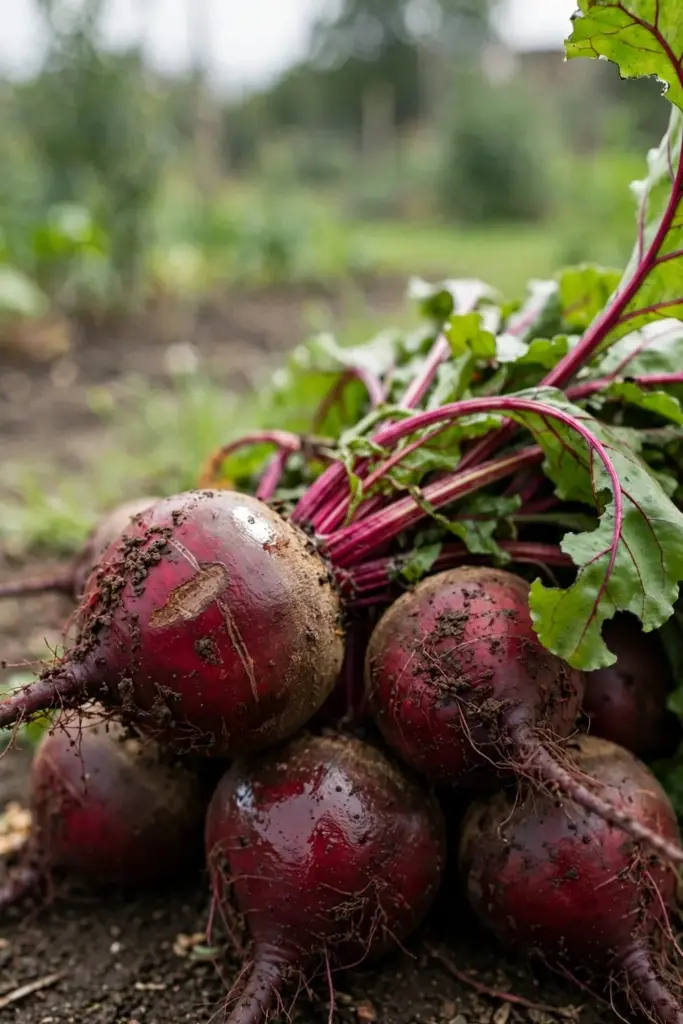
Beets take light frost and the roots store in the ground under mulch. Pull before the ground freezes solid. Small beets pickle better than large ones, so harvest at 5 to 8 cm.
The greens cook like chard. Do not compost them. They are the October side dish the roots were hiding.
Detroit Dark Red is the canning standard; Chioggia stripes pink and white inside and does not bleed. Roast small beets whole at 200 degrees for 40 minutes. The skins slip off under running water.
17. Grow Kohlrabi, the Fast Brassica
Kohlrabi swells its stem bulb in 40 to 60 days, faster than any heading brassica. Sow direct 1.3 cm deep, thin to 15 cm. The bulb forms above ground; harvest at 8 cm before it turns woody.
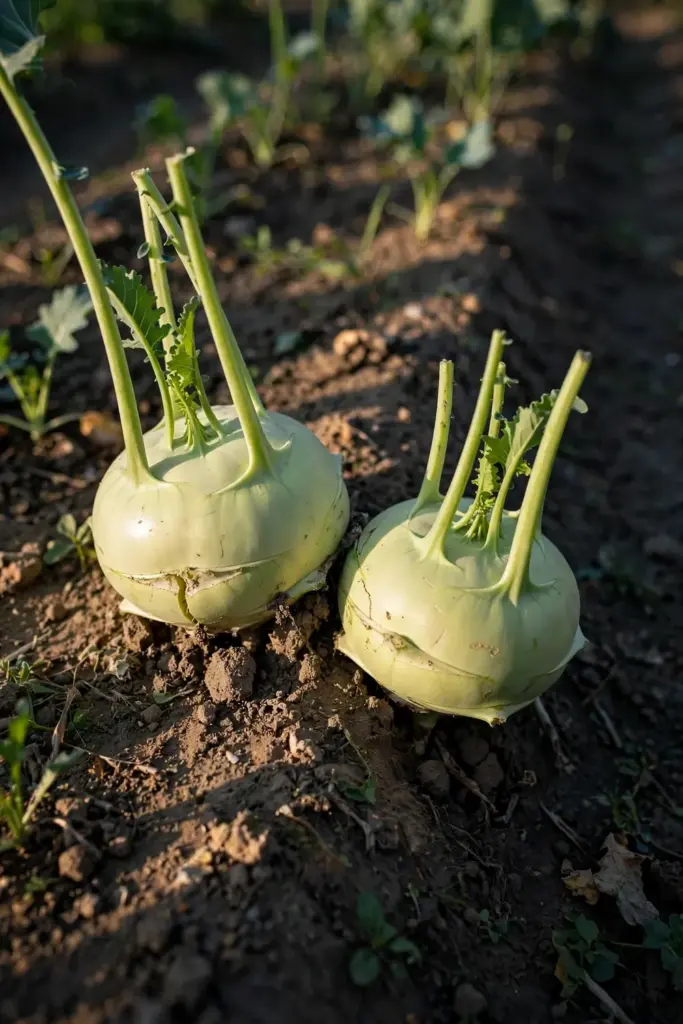
It takes frost into the mid-20s without damage. Purple varieties color up best in cool weather. Peel thickly; the skin is fibrous even on young bulbs.
Eat it raw like an apple, or slice it into stir-fry. The leaves cook like collards. Nothing is wasted.
Early White Vienna is the classic; Kolibri is purple and sweeter. Harvest at 8 cm, no bigger. Past 10 cm the bulb turns woody and no cooking fixes it. When in doubt, pull early.
18. Pull Turnips After the First Frost
Turnip roots need 40 to 60 days and peak after frost. The cold sweetens them the way it sweetens carrots. Sow 1.3 cm deep, thin to 10 cm, and wait for the frost before pulling the main crop.
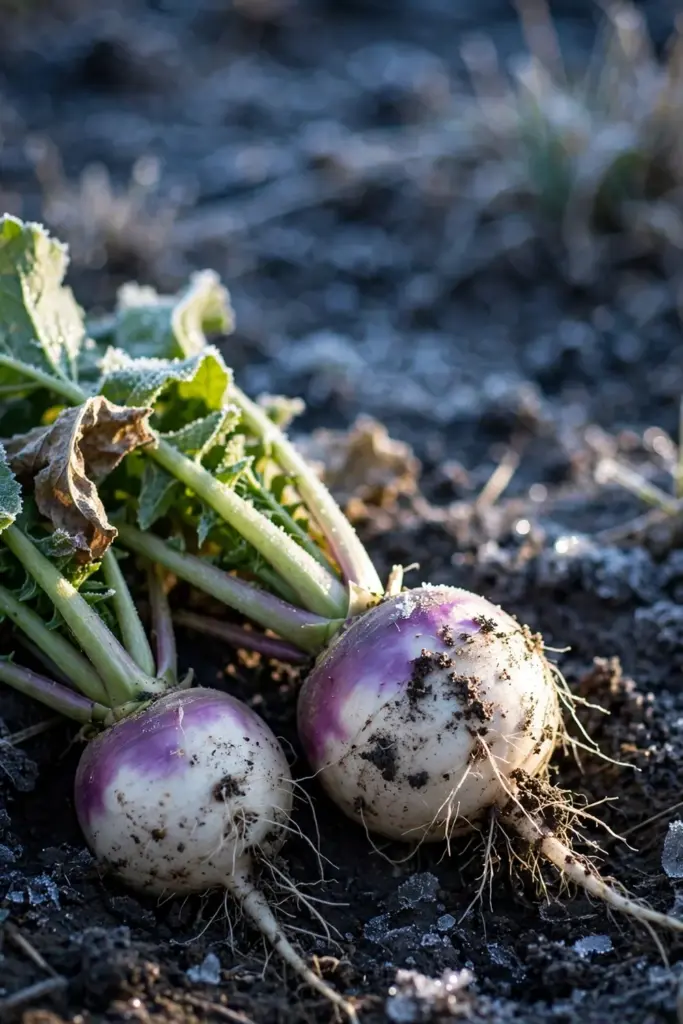
Purple Top White Globe is the standard. Tokyo Cross is faster and milder for raw eating. Both store for months in a cool garage at 0 to 4 degrees.
The greens from item 9 come from the same sowing. One packet, two harvests, zero waste.
Purple Top White Globe stores for months; Tokyo Cross and Hakurei eat raw like apples at golf-ball size. Hakurei never needs peeling. Pull the main crop after frost and store in damp sand.
19. Let Swiss Chard Size Up
Full-size chard needs 50 to 60 days for 30 cm stalks. The October sowing started at item 11 becomes this crop if you stop cutting baby leaves and let the plants size up. Thin to 25 cm apart.
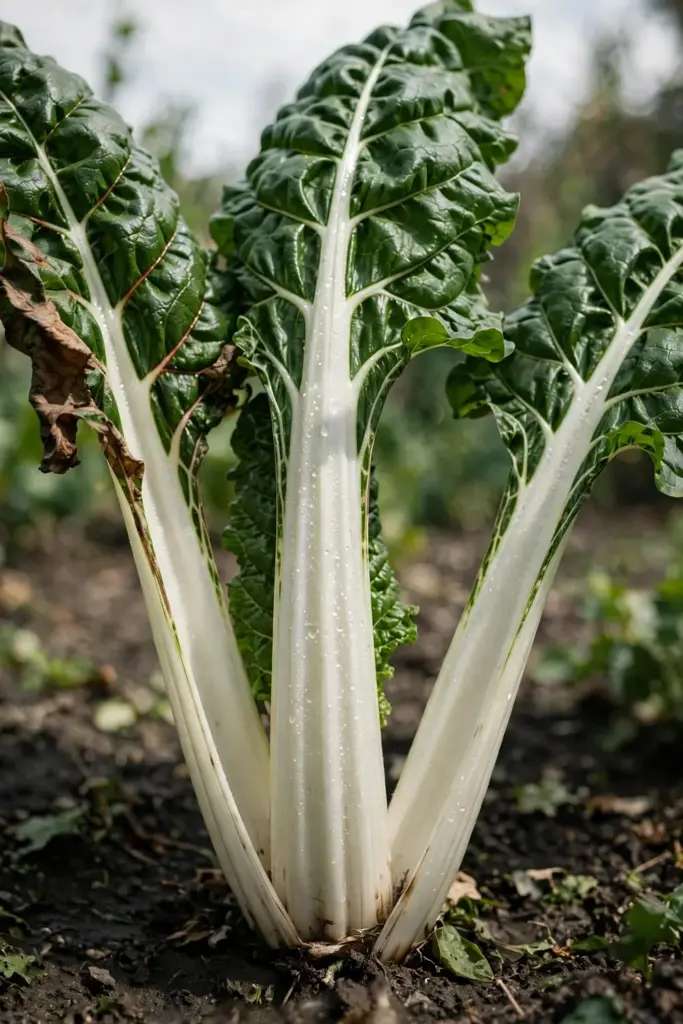
Chard survives light frosts and keeps producing under a cold frame into winter in zone 7. The stalks chop like celery and the leaves cook like spinach, so one plant does the work of two vegetables.
In zone 8 and warmer it overwinters outright. Cut it back in February and it resprouts for spring.
Fordhook Giant has the thickest white stalks, Bright Lights has the color. In zone 8, mulch the crowns. They resprout in February for a second round.
20. Plant Collards for the Coldest Greens
Collards need 55 to 75 days and are the hardiest cooking green here. They survive the teens and taste better after every frost. Sow direct or set out transplants; in October, transplants are the safer bet in zone 6.
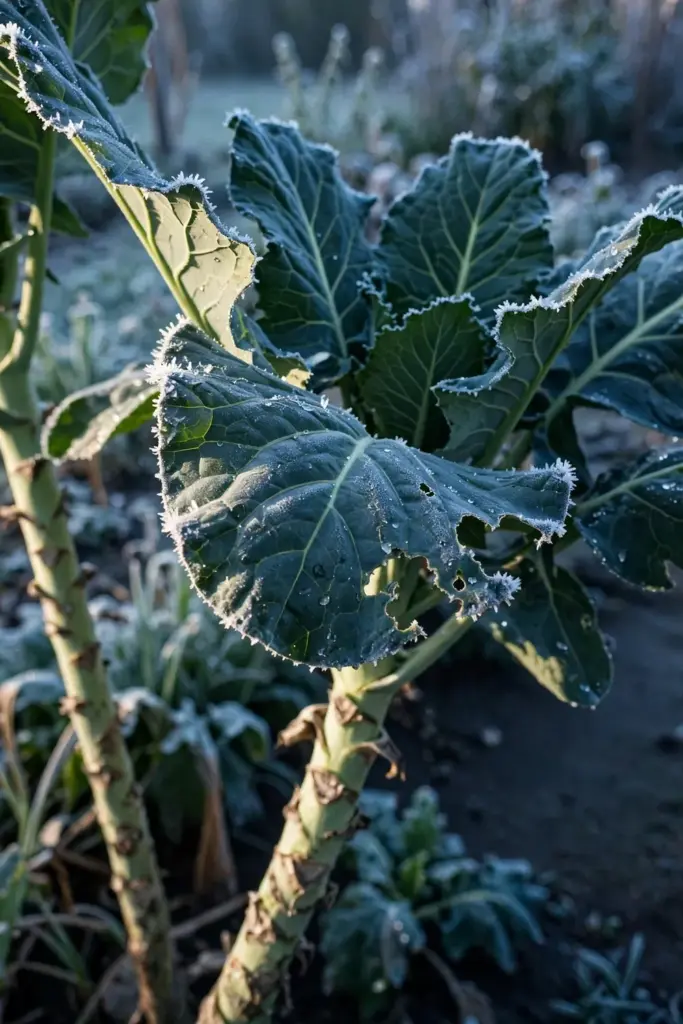
Space 45 cm apart. The plants get large. Pick the lower leaves first and the stalk keeps producing upward, a habit that feeds a family from 6 plants.
Cabbage worms work collards into October. Check the leaf undersides weekly and crush the yellow eggs. One planting feeds all winter under a blanket in zone 7.
Georgia Southern is the Southern standard; Champion is faster and more uniform. Both survive the teens. Strip the lowest leaves as they yellow; the stalk keeps climbing and producing into spring.
21. Sow Endive and Escarole for Bitter Salads
Endive and escarole mature in 45 to 60 days and bring the bitter note fall salads need. Sow 0.6 cm deep, thin to 25 cm. They take frost into the mid-20s.
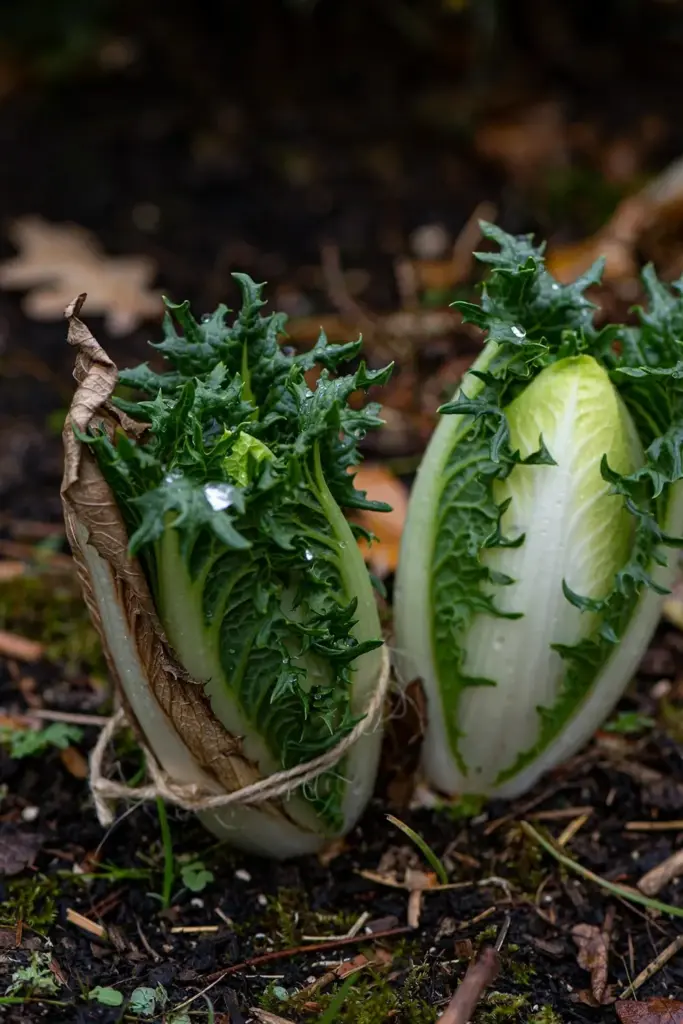
Blanch escarole for 2 weeks before harvest by tying the outer leaves over the heart. The heart turns pale and mild. Unblanched, it is assertively bitter, which is the point for some cooks.
These are the salad greens for people who find lettuce boring. Pair with the sweet frost carrots from item 15.
Bionda a cuore pieno hearts up without tying; Batavian types are sturdier for beginners. Start the blanch 10 days before you want to eat. The pale heart is mild enough for skeptics of bitter greens.
22. Sow Mache for the Hardiest Salad
Mache, corn salad, is a small rosette green that survives near zero under a blanket. It needs 50 to 60 days, so early October is the moment in zone 6. Sow 0.6 cm deep, 10 cm apart.
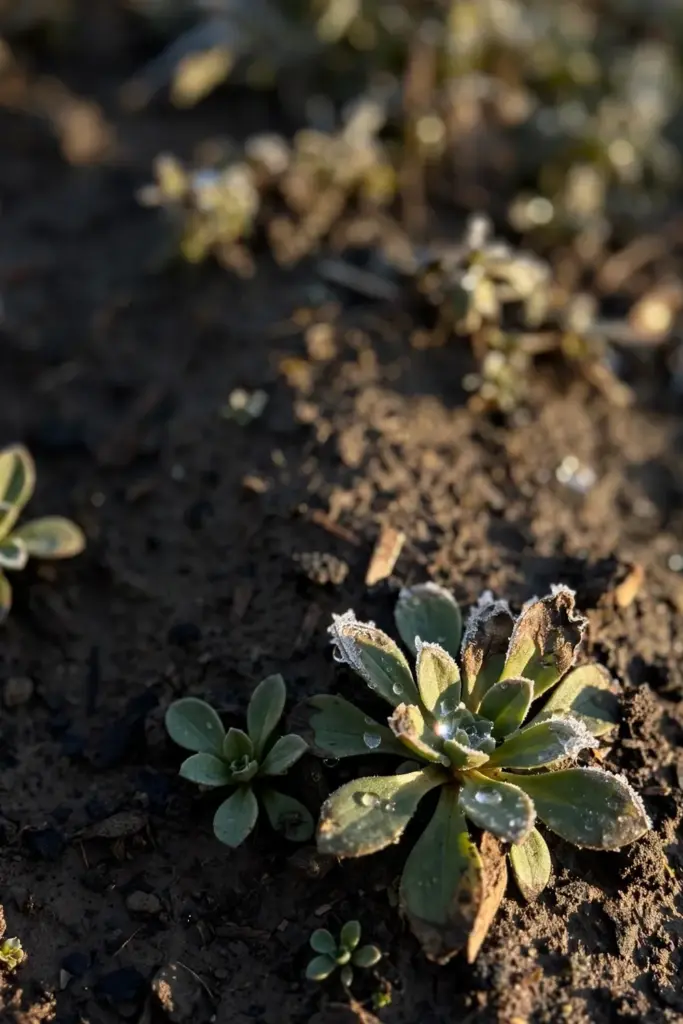
It self-sows freely. One planting becomes a permanent patch if you let a few plants flower in spring. The rosettes are tiny, so sow a lot; a salad takes two handfuls.
The flavor is nutty and mild. It is the green that keeps the salad bowl alive in January under cover.
Vit is the standard Dutch variety, bred for cold. Sow it where the tomatoes were; it appreciates the leftover fertility. Once established, it self-sows and you will never buy seed again.
23. Grow Daikon for Big Fall Roots
Daikon radishes size up in 50 to 70 days into roots 30 cm long, so sow 1.3 cm deep and 15 cm apart in deeply loosened soil. Stones and compaction fork the roots.
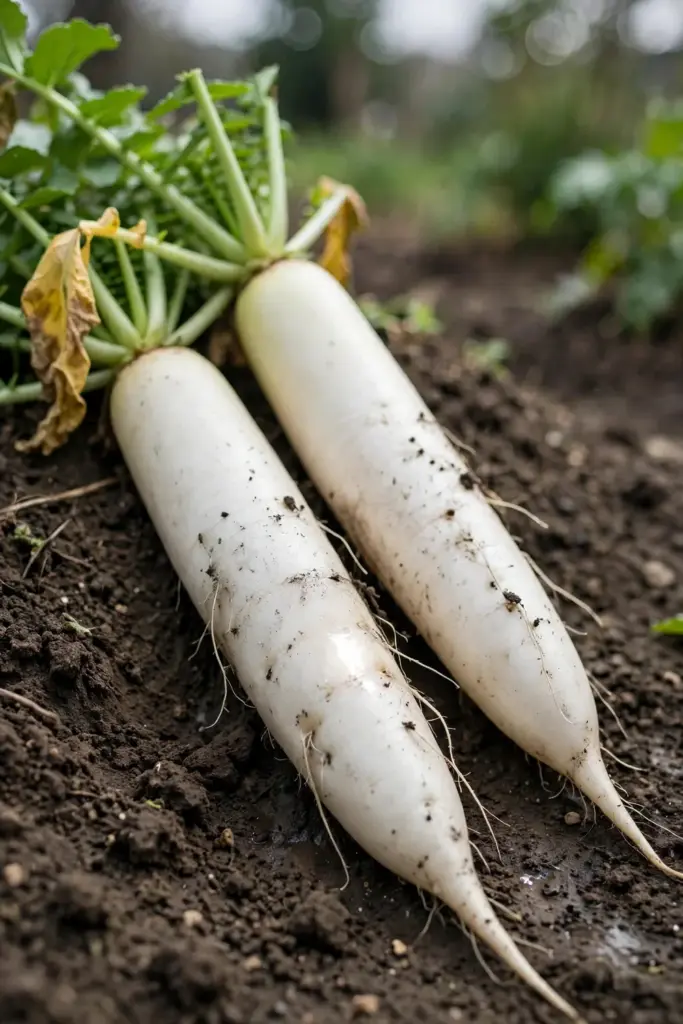
They take light frost. The roots store for months in the refrigerator or a cool root cellar. Grate fresh for salads or ferment into kimchi.
Daikon also breaks compaction. Leave a few roots to rot in place over winter and the channels they leave aerate the bed for spring.
Miyashige stays short and blunt for heavy soil; Minowase grows long and slender where the soil is deep. As a cover crop, daikon’s rotting roots leave channels that spring rain follows down. Two jobs, one sowing.
24. Set Out Broccoli Transplants Now
Broccoli from transplant needs 55 to 70 days to head, and October-set transplants head in late November under cover in zone 7. Buy sturdy transplants with 4 to 6 leaves; leggy ones never recover.
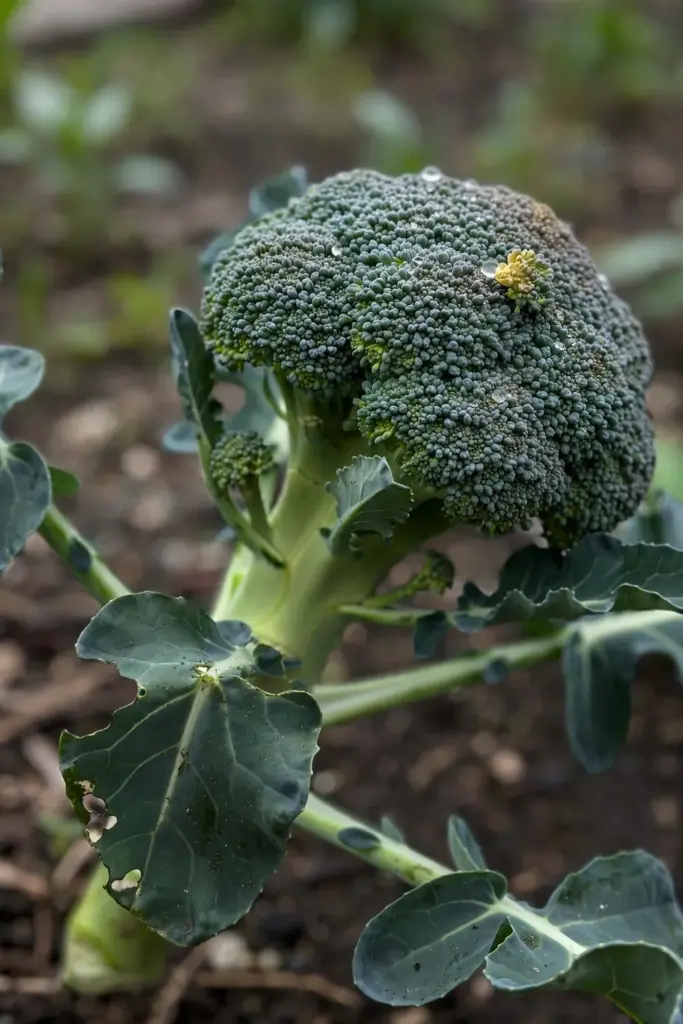
Space 45 cm apart and water deeply at planting. Side-dress with a nitrogen fertilizer 3 weeks later. The main head comes first, then side shoots for weeks. If you grow your own instead of buying them, the site’s seed starting steps cover the indoor timing.
Cut the main head with 15 cm of stem at a slant. The slant sheds water and the plant pushes side shoots instead of rotting. Cover before hard freeze; the heads survive light frost but not the teens.
Slow and Overwintering: Plant Now, Harvest Later
This group is the reason fall gardening pays past December. Some need the full fall to size up; others sleep through winter and wake up as the first harvests of spring. Plant them now and the garden feeds you in March, when the seed catalogs are still just pictures.
Belstar heads evenly in cool weather; Imperial tolerates heat spikes during establishment. After the main head, side shoots produce for a month. Pick them at 10 cm for the sweetest bite.
25. Set Out Cauliflower Transplants Early in the Window
Cauliflower needs 55 to 80 days and is fussier than broccoli; it wants steady cool weather, not swings. Set transplants out in early October at the latest in zone 7. Later than that, the heads button up small.
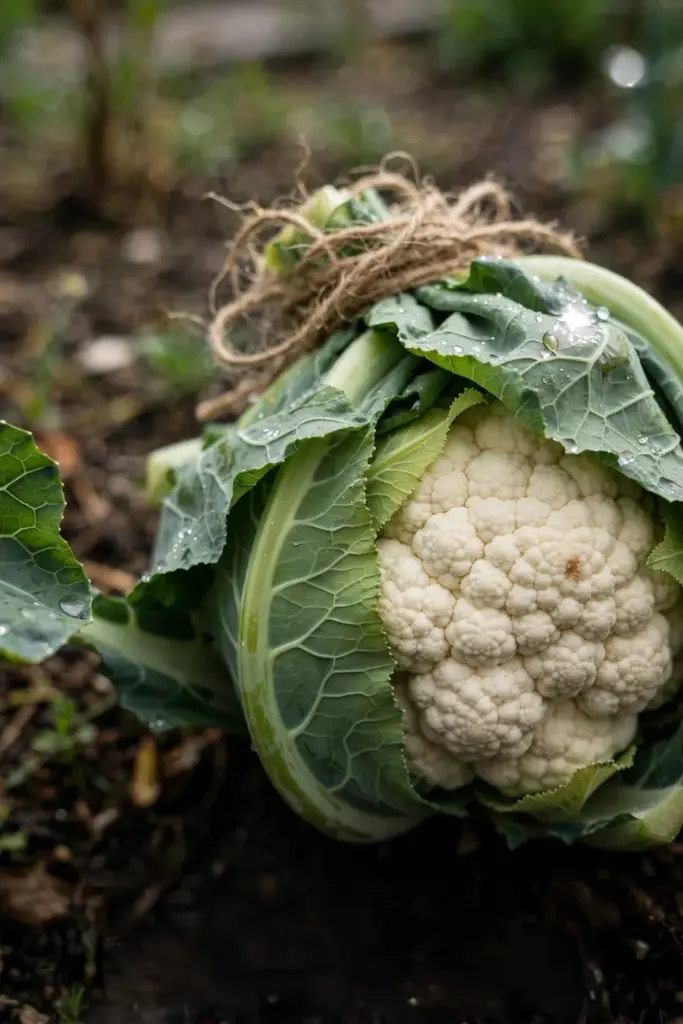
Blanch the heads by tying the outer leaves over the curd when it reaches 5 cm. Unblanched curds turn yellow-green and strong-flavored. Space 50 cm apart and keep the water even; drought at heading ruins the curd.
It is half-hardy. Cover at 28 degrees. Below that, the curd damages even if the leaves survive.
Snow Crown is the reliable fall variety; Cheddar is orange and sweeter. Tie the leaves loosely, not tight; trapped moisture rots the curd. Check the tie after rain.
26. Set Out Cabbage for Winter Heads
Cabbage transplants need 60 to 90 days and are the most reliable heading brassica for fall. Set them out 40 cm apart in early October. The heads tighten as nights cool.
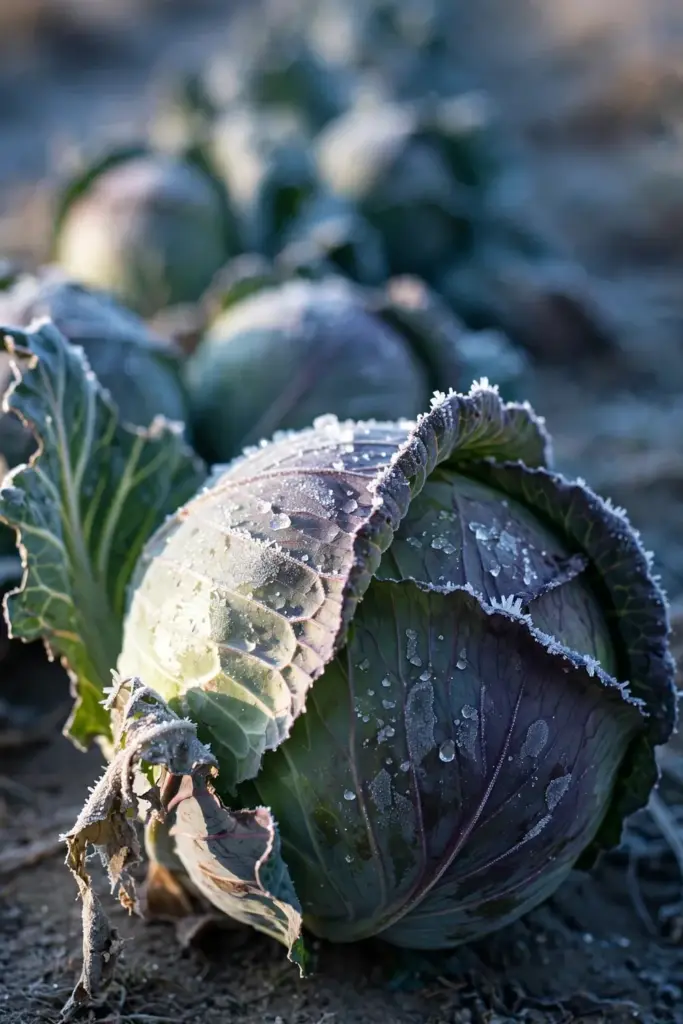
Cabbage takes frost into the low 20s and stores in the ground under mulch in zone 7. Late varieties like January King are bred for exactly this. Cut with a few wrapper leaves on; they protect the head.
Split heads come from uneven water. Mulch and water evenly, and the heads stay tight.
January King turns purple in frost and is the prettiest winter cabbage; Savoy types have crinkled leaves that catch frost beautifully. Both store 3 months in a cold garage. Keep the wrapper leaves on until cooking.
27. Give Brussels Sprouts the Long Fall
Brussels sprouts need 80 to 100 days, the longest on this page, and they must have it. Set transplants out in early October in zone 7; in zone 6, they should already be in the ground from a September planting. There is no hurrying this crop.
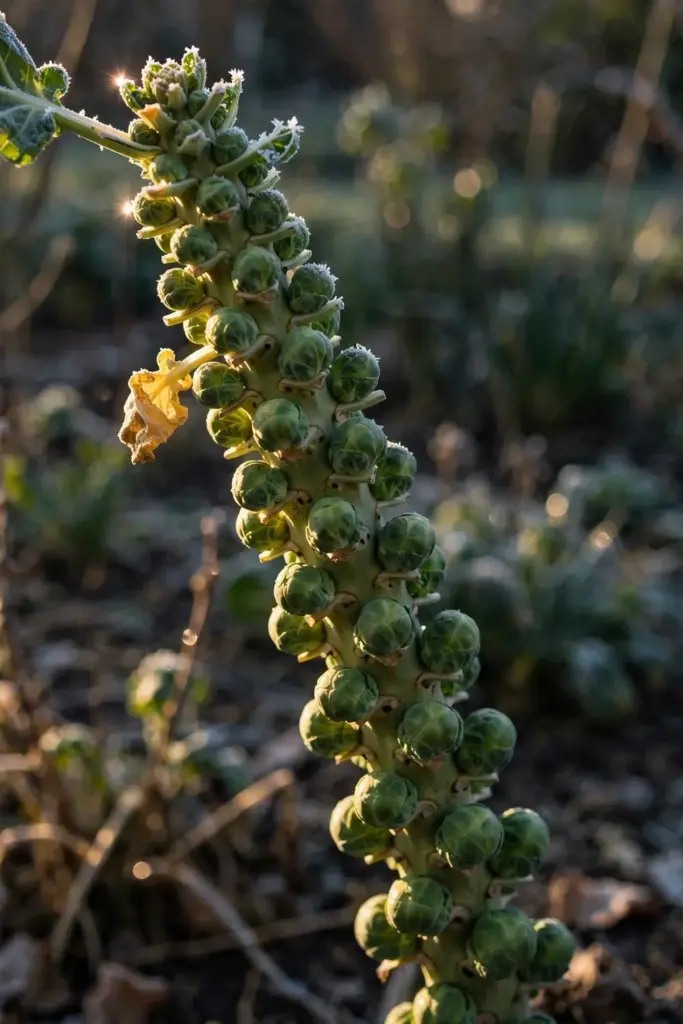
Frost is not the enemy; it is the recipe. Sprouts sweeten after several frosts and hold on the stalk into December. Strip the lower leaves as the sprouts size, and top the plant 3 weeks before you want the final harvest to push the upper sprouts.
Space 60 cm apart. These are large plants with an attitude. Give them room and they give back for months.
Long Island Improved is the old standard; Hestia is bred for even sizing. Top the plant by pinching the growing tip 3 weeks before the final harvest. The upper sprouts swell to match the lower ones.
28. Transplant Leeks for Winter Soup
Leeks need 60 to 90 days from transplant and overwinter in the ground in zone 7 and warmer. Set transplants 15 cm deep in a trench, 15 cm apart. The trench blanches the shanks white.
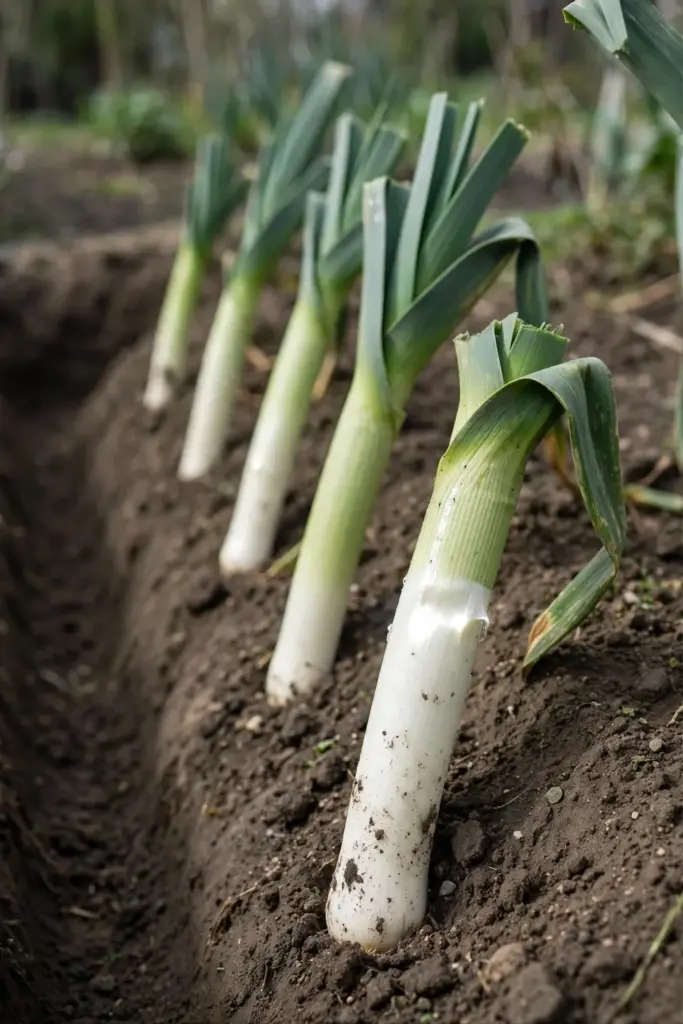
Hill soil up around the shanks as they grow. The white part is the crop; green tops are tough. Mulch heavily before hard freeze and pull through winter.
They are very hardy. Frozen ground is the only thing that stops the harvest, and mulch delays that by weeks.
King Richard is early and mild; Bandit is the hardiest for cold zones. Blanch by hilling soil 15 cm up the shank. The white section doubles in length with proper hilling.
29. Sow Rutabaga for the Root Cellar
Rutabagas need 70 to 90 days and want the whole fall. Sow in early October in zone 7, 1.3 cm deep, thin to 15 cm. They size up as the weather cools.
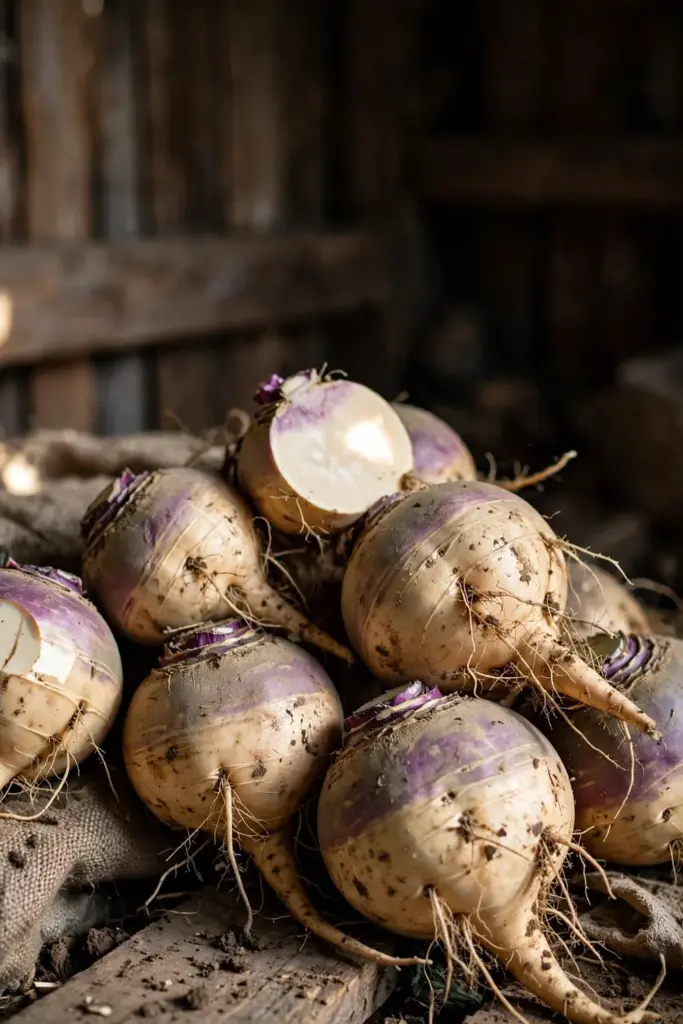
They are very hardy and store for months at 0 to 4 degrees with high humidity. The flesh is sweet and dense, better than turnips for mashing. One 3-meter row fills a root cellar shelf.
Do not confuse them with turnips. Rutabagas are larger, denser, and slower, and they keep twice as long.
American Purple Top is the classic; Laurentian is smoother and sweeter. They need the full season, so do not sow late. Stored at 0 to 4 degrees in humidity, they keep until March.
30. Sow Parsnips and Forget Them Until Spring
Parsnips need 100 to 120 days. Slowest crop on the page. Sow in early October in zone 7; they germinate slowly, grow slowly, then sit in the ground all winter. Harvest starts in March.
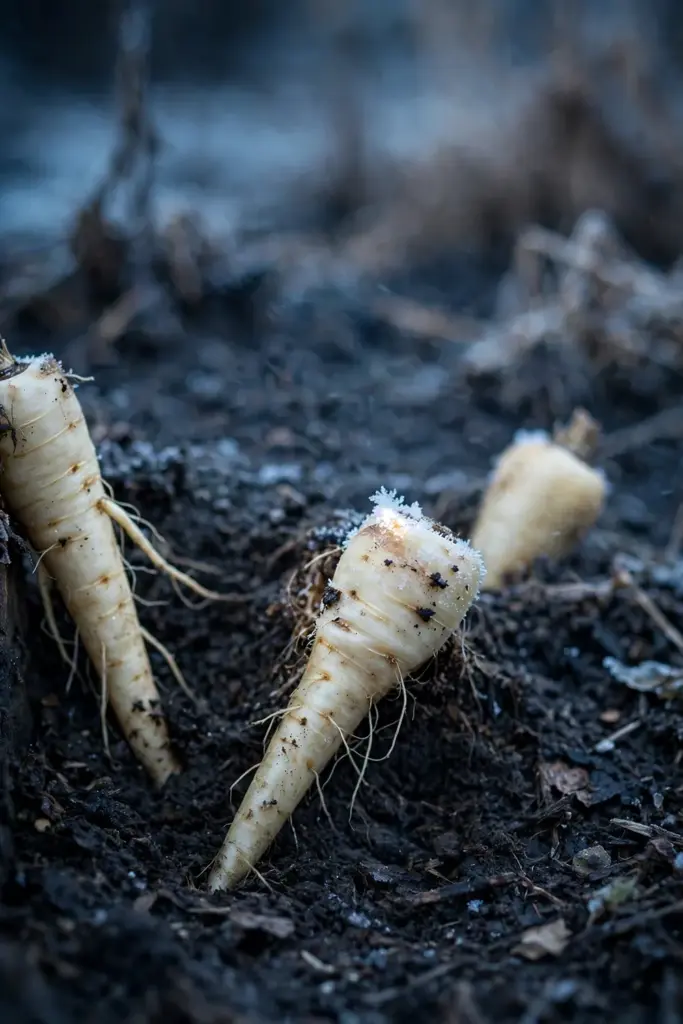
The roots must have frost to sweeten. They are inedible-starchy before cold and honey-sweet after. Leave them in the ground under mulch; they keep better there than in any cellar.
Sow fresh seed. Parsnip seed loses viability in a year. Old seed is the reason most parsnip plantings fail.
Hollow Crown is the old reliable; Gladiator resists canker. Buy fresh seed every year; germination drops off a cliff after 12 months. Mark the row well, because the seedlings look like weeds for a month.
31. Plant Garlic in October, Harvest in July
Garlic is the signature October planting. Break bulbs into cloves, plant pointy-end up 5 cm deep and 15 cm apart, in the second half of October. Virginia Tech’s tables put the fall garlic window at September 1 to October 1 in zone 6 and October 1 to 30 in zone 7 (Virginia Tech Publication 426-331).
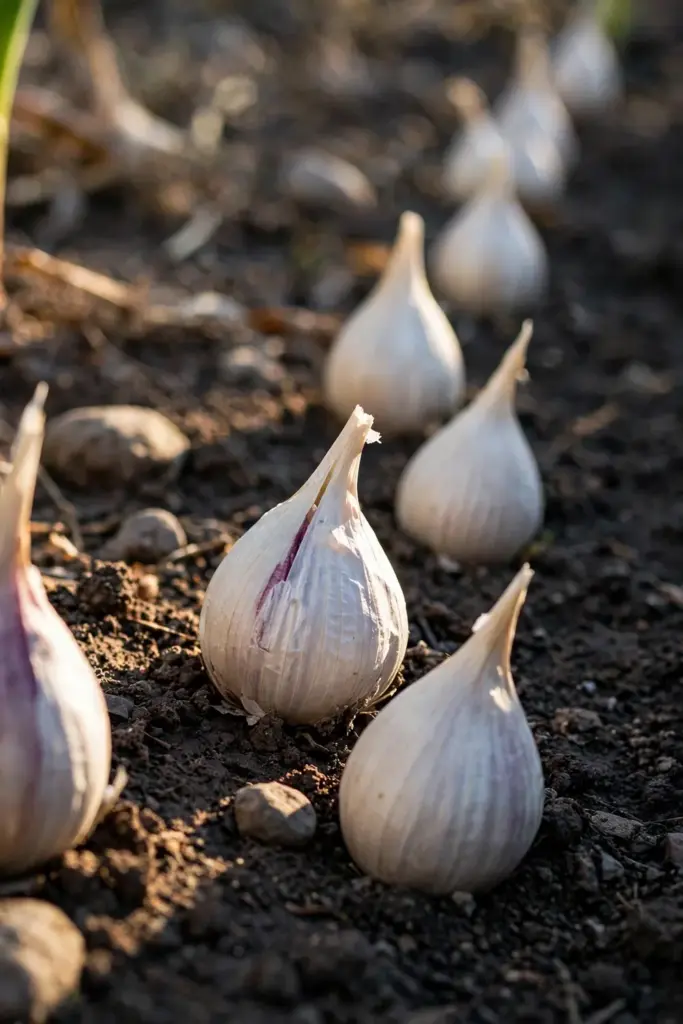
Mulch 10 cm deep with straw after planting. The cloves root before freeze, sleep through winter, and sprout in March. Hardneck varieties suit zones 6 and colder; softnecks suit zone 7 and warmer.
Harvest when the lower third of leaves brown, usually July, and cure 3 weeks in shade with airflow. One bed plants next year’s crop. It also fills the kitchen.
Music and German Extra Hardy are proven hardnecks for cold zones; Inchelium Red is the softneck for warmer ones. Plant the biggest cloves; small cloves make small bulbs. Save the runts for the kitchen.
32. Set Out Overwintering Onion Sets
Overwintering onions go in as sets in October and bulb up in June. Use varieties bred for overwintering, like Walla Walla in the Northwest or Texas 1015Y in the South; ordinary sets bolt instead of bulbing.
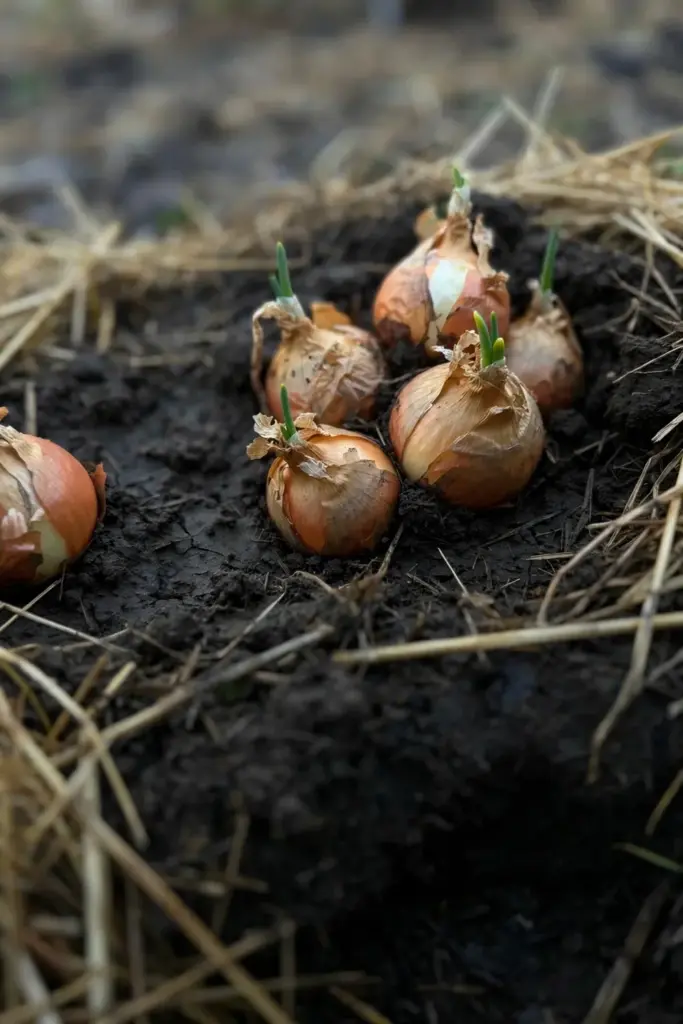
Plant 2.5 cm deep, 10 cm apart, and mulch after the ground cools. The sets root in fall, pause in winter, and grow fast in spring. They harvest a month before spring-planted onions.
This is the earliest onion crop you can grow. The June harvest beats every spring planting.
Walla Walla sweets up in the Northwest; Texas 1015Y is the Southern overwintering standard. Sets beat seeds for fall planting by 6 weeks. Do not use ordinary spring sets; they bolt instead of bulbing.
33. Plant Shallots With the Garlic
Shallots plant like garlic and harvest like onions. Set the bulbs 2.5 cm deep and 20 cm apart in October. Each one divides into a cluster of 6 to 10.
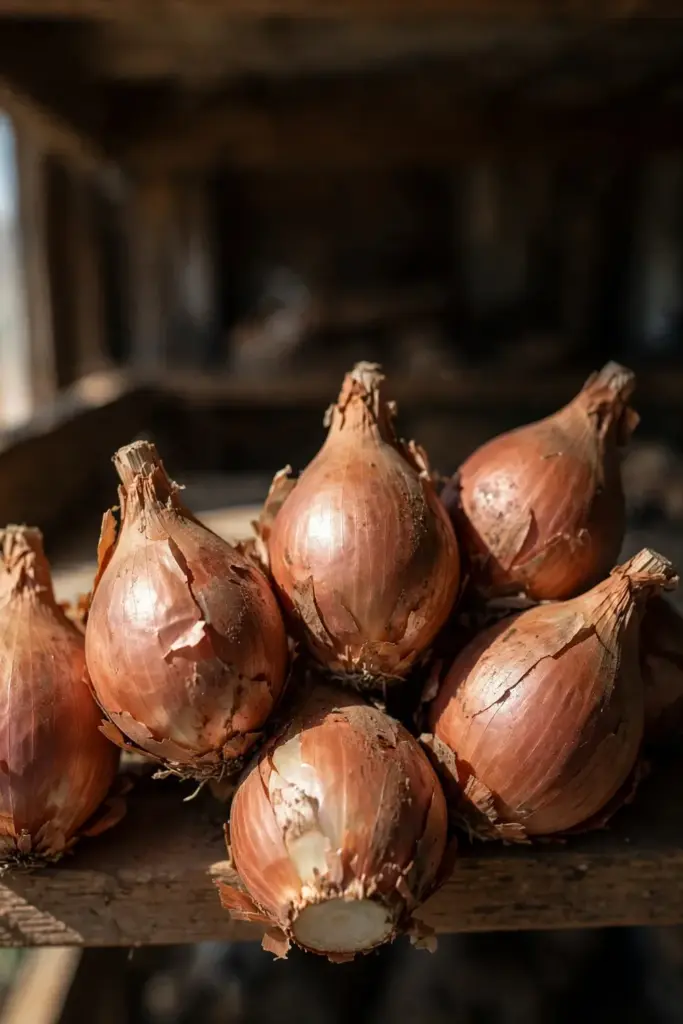
They are very hardy and store for 8 months after curing. The flavor is milder and sweeter than onions, which is why cooks hoard them. A 3-meter row plants a year’s supply for most kitchens.
Mulch like the garlic. Harvest when the tops fall, cure the same way.
French Red is the classic red shallot; Zebrune is a banana shallot that slices into perfect rings. Each planted bulb multiplies into 6 to 10. Cure them like garlic and they keep 8 months.
34. Sow Fava Beans for Spring Protein
Fava beans sown in October in zone 7 and warmer overwinter as small plants and explode in March. Sow 5 cm deep, 20 cm apart. They fix nitrogen all winter, feeding the bed they stand in.
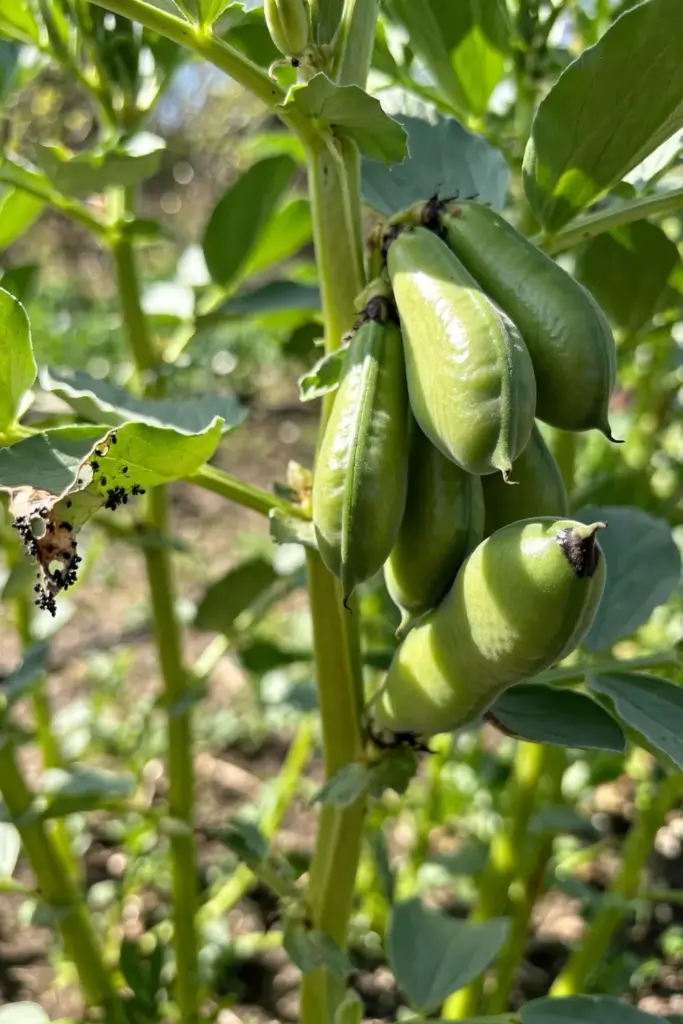
The spring harvest comes in May: broad pods of buttery beans. In zone 6, sow under a low tunnel or skip it; hard freezes below 15 degrees kill unprotected plants.
Chop the spent plants in June and leave the roots. The nitrogen nodules stay in the soil for the next crop.
Windsor is the broad bean standard; Aquadulce Claudia is the hardiest for overwintering. Pinch the growing tips when the first pods set to deter blackfly. The tips steam like asparagus.
35. Sow Overwintering Spinach for March Greens
A late October spinach sowing will not make a fall crop. It makes a spring one. Sow thickly, mulch lightly after freeze, and the small rosettes sit under snow until March. Then they grow faster than any spring sowing.
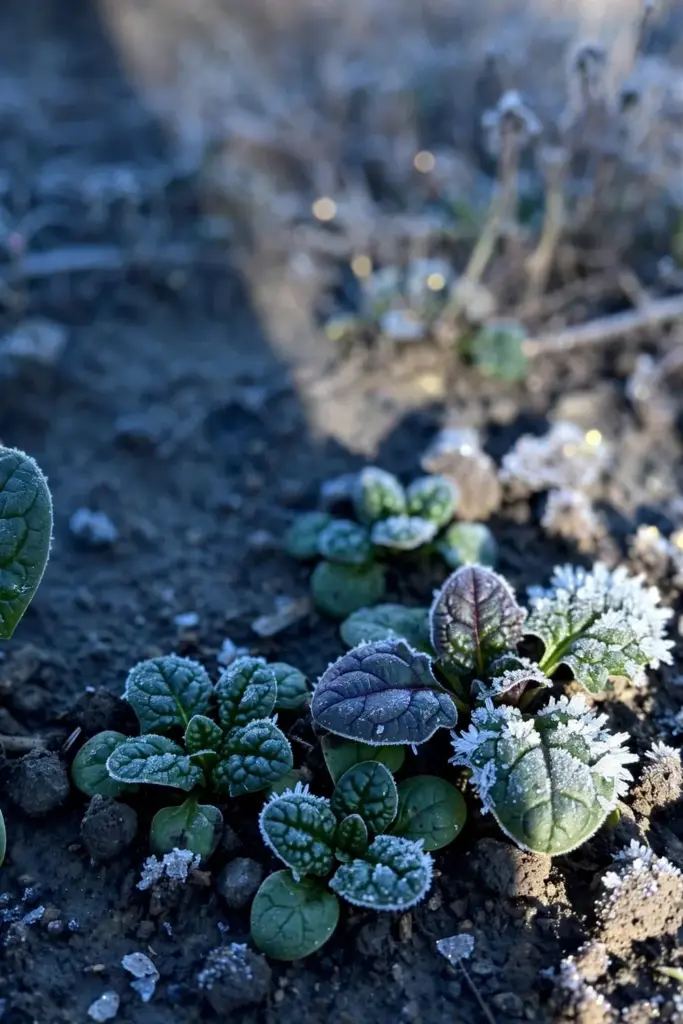
Use hardy varieties like Winter Bloomsdale or Tyee. The overwintered plants bolt eventually, but not before giving a month of cuttings. This is the earliest green harvest of the year.
The trick is the size going into winter: 3 to 5 true leaves. Bigger plants freeze out; smaller ones sleep through.
Winter Bloomsdale and Tyee are the hardy pair; both survive under a low tunnel in zone 6. Sow the last week of October so plants enter winter small. Small plants sleep; big plants freeze.
36. Leave Kale Standing for Spring
Kale sown in August, or the baby kale from item 10 left uncut, overwinters in place through zone 6. The plants look dead in February. They are not. March brings new leaves from the crown, weeks before anything sown in spring.
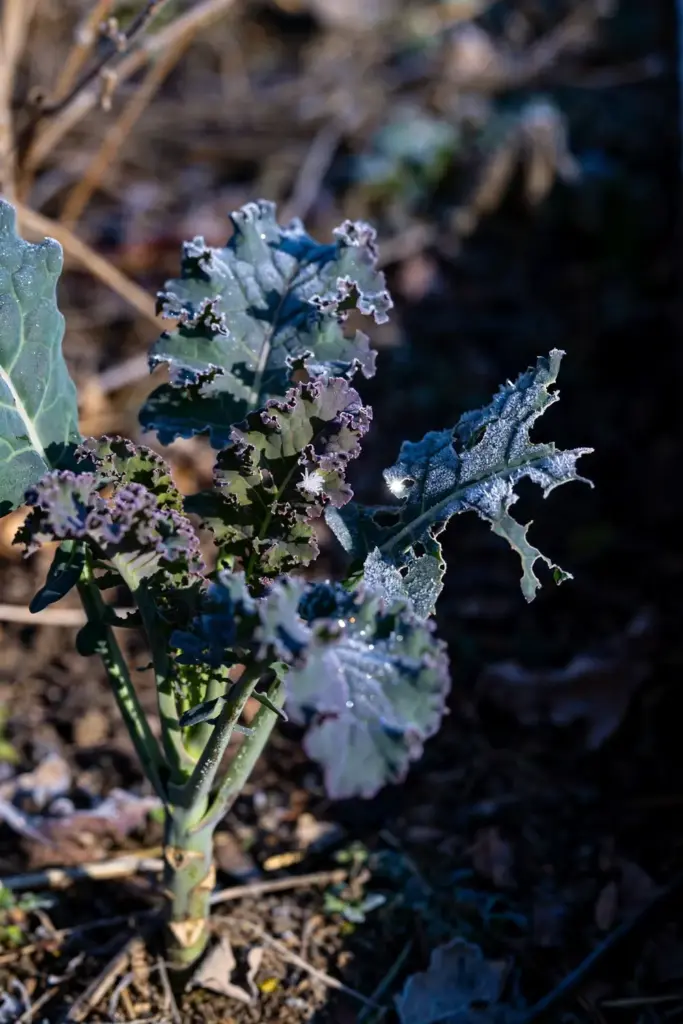
Cut the flowering stalk when it appears in April and eat it like broccoli raab. Then pull the plants before they shade the spring bed. The overwinter habit turns one sowing into two seasons.
This is the last item because it is the longest game. October sowings become March harvests. The fall garden never really ends; it just naps.
Lacinato, the dinosaur kale, overwinters best of all; Red Russian is faster for the fall cut. In April, the flowering shoots eat like broccoli raab. Pull the plants before they shade the spring bed.
Pots and Small Spaces: The Container Short List
No bed? Twelve of the 36 grow well in containers, which is the whole fall garden for apartment growers. Use pots at least 25 cm deep for roots and 15 cm for greens. Potting mix, not garden soil; garden soil compacts in pots and drowns roots.
The container all-stars: radishes, arugula, looseleaf lettuce, spinach, tatsoi, mizuna, mustard greens, baby kale, baby chard, komatsuna, pea shoots, and scallions. All 14 of the fast group except bok choy, which wants more room, plus the pea shoots from item 13 that were designed for a window box.
Water pots daily. They dry faster than beds, and a missed day in October wind sets greens back a week. Cluster the pots against a south wall for warmth and wind shelter. Drape the frost blanket over the whole cluster on cold nights; one blanket covers six pots.
Match the pot to the root. Salad greens do fine in 15 cm of mix. Radishes and scallions want 20 cm. Carrots need 30 cm and a round variety like Paris Market, which was bred for shallow soil. Beets manage in 25 cm if you harvest them small, which you should anyway.
Feed once with a balanced liquid fertilizer at half strength, 3 weeks after sowing. Potting mix runs out of nitrogen fast. Pale greens are hungry greens, and a second feeding at 6 weeks carries the slow pots into December.
Regional Timing Notes: Texas, California, and the Zones
Zone changes the whole page. In zone 9 and the Texas lowlands, October is the start of the main season, not the end of it. Sow the fast group through November and the mid group into October. Garlic goes in as late as December. The limiting factor flips from cold to heat; shade cloth matters more than row cover.
California’s Central Valley and coastal zones run a long fall that behaves like zone 9. Sow carrots, beets, and greens from September into November. Brassica transplants set out in October head in January. The marine layer does the cooling work for you.
Zone 6 sits on the edge. The fast group sows into early October and finishes under cover. The mid group needed a September sowing; in October, only transplants of broccoli and cauliflower still work, and only under a low tunnel. Garlic, shallots, and overwintering spinach are the safe October moves.
Zone 5 gets the short version. Sow fast greens in the first week of October under cover and call it done. The overwinter group is the real play: garlic in October, spinach sown small, kale left standing. Everything else waits for spring.
Virginia Tech’s zone tables put the first fall frost between October 5 and November 25 across zones 6a to 8b, which is why the same vegetable has a different deadline 200 km apart. Find your date, count back the days to maturity, and the table at the top does the rest.
Five Mistakes That Shrink the Fall Harvest
Sowing too late without cover. The fast group forgives October, but the mid group does not. Match the crop to the days left, or add the row cover that buys 2 to 4 weeks.
Letting the seedbed dry out mid-germination kills the whole sowing. Fall air looks moist and is not. Seeds that start germinating and then dry out die, so water daily until emergence. No exceptions.
Skipping the thinning. Crowded roots fork and crowded greens stay small. Thin carrots to 5 cm, beets to 10 cm, turnips to 10 cm. The thinnings are the first salad.
Planting garlic too early. Warm soil in early October wakes the cloves into top growth that winter kills. Wait for soil below 15 degrees, then plant. The Virginia Tech window exists for a reason.
Forgetting the blanket. A 5-dollar frost blanket is the cheapest crop insurance on this page. Keep it by the beds from late October. The nights you forget it are the nights it freezes.
What to Sow This Week
Count the days to your average first frost. Pick the group that fits. Sow the fast group now, set out the transplants this weekend, and tuck the garlic in when the soil cools. The table at the top is your shopping list; the 36 items are the instructions.
Start with radishes if you have never grown a fall crop. They prove the concept in 25 days. Then work down the table as confidence grows. When the seed packets run low, the site’s best seeds for fall planting rounds up what to buy. By the time the garlic goes in, you will be planning next spring’s bed around what overwintered.
FAQ
What Vegetables Can I Still Plant in October?
Radishes, arugula, lettuce, spinach, tatsoi, mizuna, mustard greens, turnip greens, baby kale, and pea shoots all sow in early October in zones 6 to 8 and harvest before hard freeze. Garlic, shallots, and overwintering onions also plant in October for a spring and summer harvest.
What Is the Quickest Vegetable to Grow in Fall?
Pea shoots, at 14 to 21 days, are the fastest crop on this page. Among full vegetables, radishes at 25 to 30 days and arugula at 20 to 40 days are the quickest. All three sow direct in October and need no transplant step.
Which Fall Vegetables Survive Frost?
Kale, spinach, mache, garlic, leeks, Brussels sprouts, parsnips, and rutabaga survive into the teens and lower under mulch. Carrots, beets, chard, and collards take light frosts in the upper 20s. Lettuce, bok choy, and cauliflower need a row cover below 28 degrees.
Can I Grow Fall Vegetables in Containers?
Yes. Radishes, arugula, lettuce, spinach, tatsoi, mizuna, mustard greens, baby kale, baby chard, komatsuna, pea shoots, and scallions all grow in pots at least 15 to 25 cm deep. Use potting mix, water daily, and cluster pots against a south wall under a frost blanket on cold nights.
What Vegetables Can I Plant in Fall for a Spring Harvest?
Garlic, overwintering onions, shallots, fava beans, parsnips, overwintering spinach, and overwintering kale all plant in fall and harvest in spring. Sow the spinach small enough to sleep through winter, mulch garlic 10 cm deep with straw after planting, and leave parsnips in the ground until March for peak sweetness.
When Should I Stop Sowing Fall Vegetables?
Stop when the days to maturity no longer fit before your average first hard freeze. Favor the faster crop when the math is close. In zone 7, fast greens sow into mid-October, then only garlic and overwintering crops. A row cover or cold frame adds 2 to 4 weeks to the season.








