
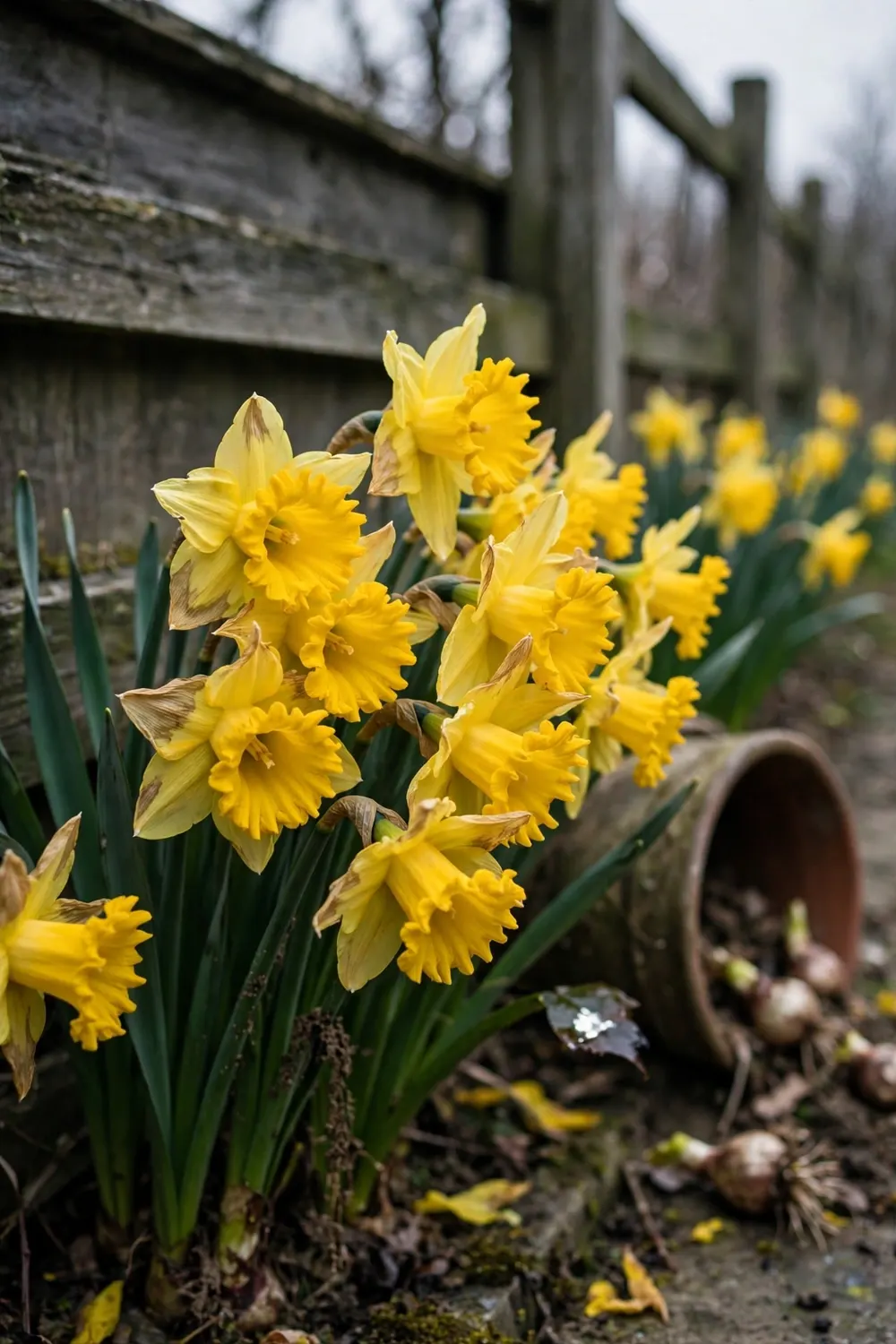

Plant 100 bulbs in one October weekend and spring pays you back for a decade. That is bulbs to plant in fall: hardy bulbs set in cooling soil, deep enough to root before the freeze, chosen so deer walk past them. The rest of this page is 21 moves, from the first snowdrop to the last lasagna pot.
Work in the afternoon, when the soil is warmest to the touch. Plant in groups of five or more. Water every bulb in once, then leave it alone.
The broad fall planting guide is a different job, and that cut lives on the site’s fall planting guide. This page stays on the bulbs: which ones earn a fall planting, how deep each one goes, and which ones the deer skip. The pillar fall gardening tips holds the whole season together.
Time It by Soil Temperature, Not the Calendar
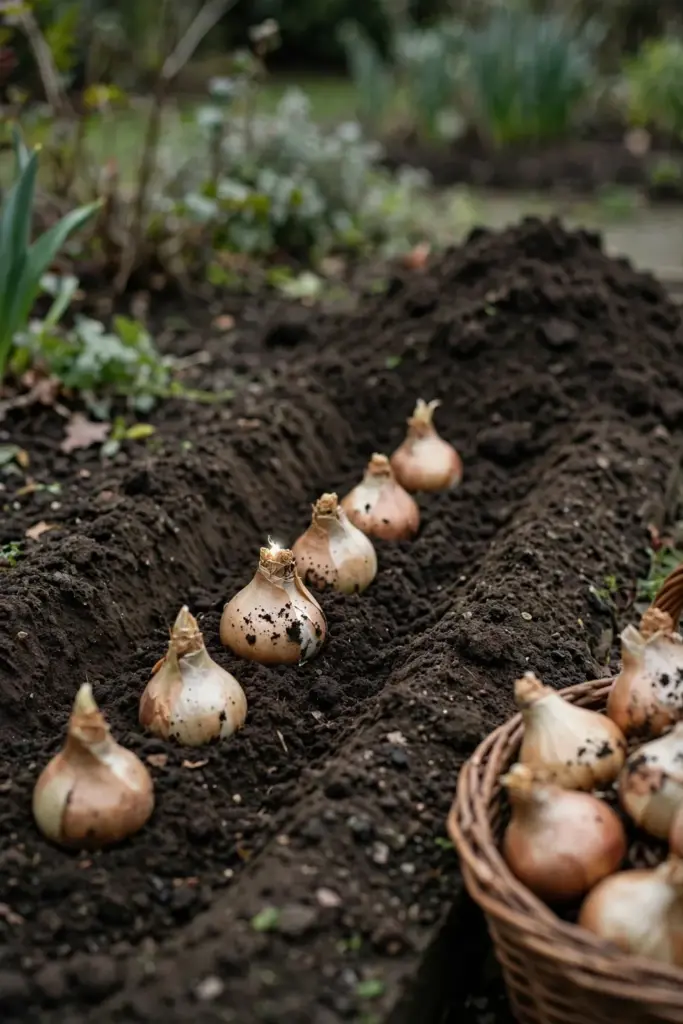
Bulbs root best when nights hold 40 to 50°F (4.4 to 10°C), and they want four to six weeks in the ground before it freezes, according to South Dakota State Extension’s fall bulb guide. The same guide sets the working depth rule: plant each bulb two to three times as deep as the bulb is wide, measured from the bulb’s shoulder to the soil surface. Large bulbs land 15.2 to 20.3 cm deep. Small ones land 7.6 to 10.2 cm deep.
Prep the ground before any bulb goes in. Loosen the soil to a fork’s depth, 30.5 cm, work in compost, and mix a balanced granular fertilizer such as 5-10-5 into the loosened layer. Space large bulbs 7.6 to 15.2 cm apart and small ones 2.5 to 5.1 cm apart, and set them in groups of five to seven or more. One bulb alone is a dot. Five is a drift.
| Zone | Plant window | The rule for this zone |
|---|---|---|
| 5 | Late September to mid-October | Finish by mid-October. The ground freezes early, so roots need the head start. |
| 6 | Early to late October | October is the core bulb month here. Soil cools fast after the first frost. |
| 7 | Mid-October to mid-November | Wait until nights hold 4.4 to 10°C. Planting into warm soil wakes bulbs too early. |
| 8 | Late October into December | Pre-chill tulips and hyacinths in the refrigerator. Plant when nights drop below 10°C. |
| 9 | November into December | Chilling is mandatory for classic Dutch bulbs. Species tulips and daffodils naturalize better than hybrids here. |
Mulch after planting in zones 5 and 6. A 5.1 to 7.6 cm layer of shredded leaves steadies soil temperature through the freeze-thaw cycles that heave shallow bulbs out of the ground.
1. Push Snowdrops In for the First Flowers
Snowdrops open in February or March, weeks before anything else dares. The white bells hang from 15.2 cm stems and shrug off late snow. Deer leave them alone. Squirrels dig around them and move on.
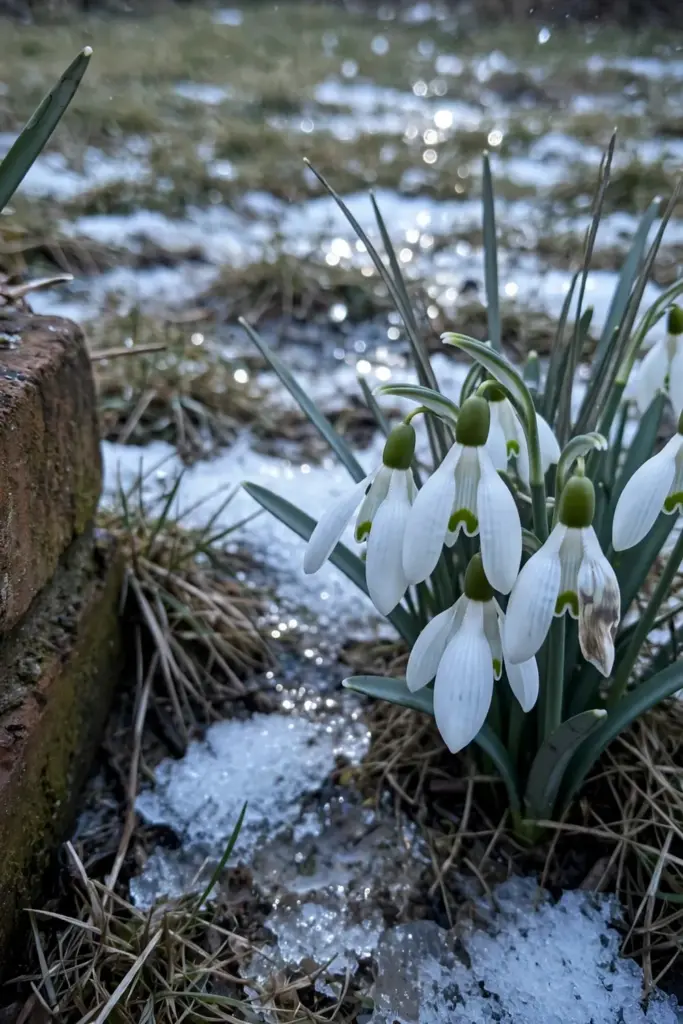
Set each bulb 7.6 cm deep and 7.6 cm apart, in drifts of 25 or more under deciduous trees or along a path you walk daily. Dry bulbs establish slowly. Bulbs bought “in the green,” dug and shipped with leaves attached in spring, settle in faster. Either way, patience pays: a drift doubles every three years or so once it likes the spot.
Do not mow or cut the foliage until it yellows. The leaves feed next year’s flower. A snowdrop patch cut short in April blooms thin the next February.
Divide congested drifts in spring, right after flowering, while the leaves are still green. Lift, split, and replant immediately at the same depth. Snowdrops moved in the green barely notice the relocation. Dry bulbs bought in fall take a full season to settle, so patience is part of the price.
2. Set Winter Aconite Beside the Snowdrops
Winter aconite opens butter-yellow cups at the same moment snowdrops hang their bells. The pairing is old and it works: yellow against white, both at ankle height, both ignored by deer. The plant is toxic, which is exactly why nothing eats it.
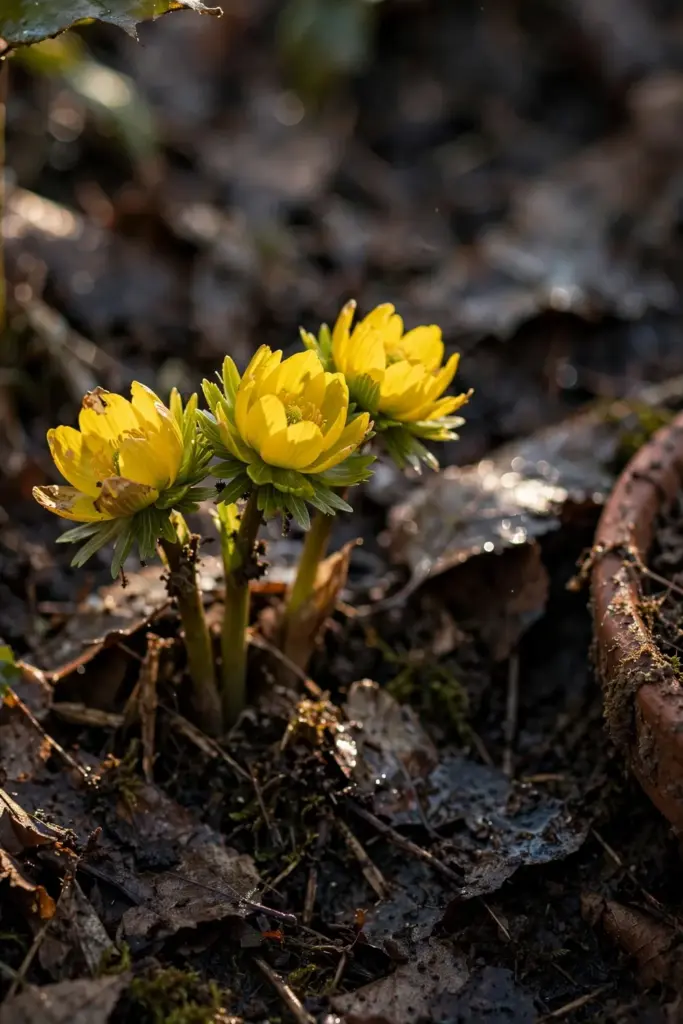
Soak the knobby tubers in a bucket of water overnight before planting. Dry aconite tubers wake up slowly. The soak cuts weeks off their start. Set them 5.1 cm deep in soil that stays moist through spring. Aconite sulks in dry shade and thrives where downspouts drain or a low spot collects snowmelt.
Under a deciduous shrub, aconite gets the winter sun and summer shade it wants. The shrub’s leaf drop mulches the tubers for free. Plant outside the drip line, where rain still reaches the ground.
Give it one undisturbed corner. Aconite resents moving and takes two seasons to forgive a transplant. Plant it where it can stay for a decade, then stop thinking about it.
3. Naturalize Glory of the Snow in the Lawn
Glory of the snow throws starry blue, white, or pink flowers across the lawn in March, then vanishes by the time mowing season starts. Deer ignore it. The bulbs multiply freely and ask for nothing.
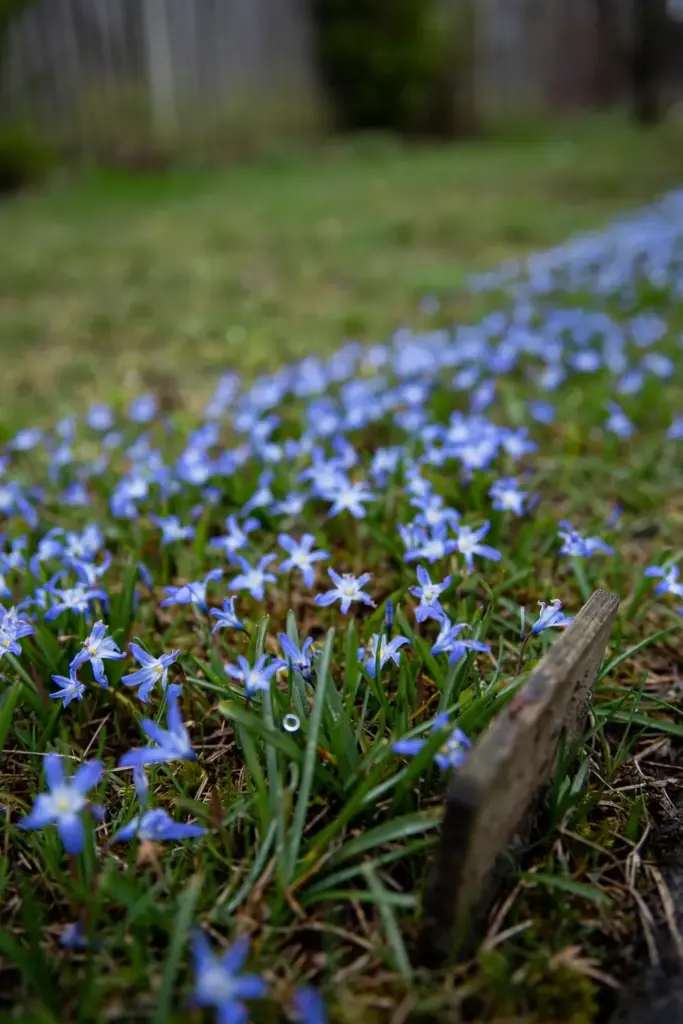
Scatter 50 bulbs across a patch of lawn and plant each where it falls, 7.6 cm deep. The random pattern reads natural because it is natural. Water once at planting. After that, rainfall does the work.
Hold the mower until the foliage yellows, usually six weeks after bloom. Cutting green leaves starves the bulb. Mark the patch with a stick so the first spring mow does not scalp it.
The blue form is the classic, but white and pink strains exist and mix well in one drift. All three seed around freely. Deadhead if you want to limit spread, or let the seedlings build the colony. A 50-bulb start becomes several hundred in five years under a deciduous tree.
4. Plant Crocuses Where Squirrels Cannot Watch
Crocuses are the one early bulb that rodents treat as food. Squirrels dig the corms, chipmunks eat the flowers, and deer browse the blooms too. None of this means skipping crocuses. It means planting them with a plan, and planting extra.
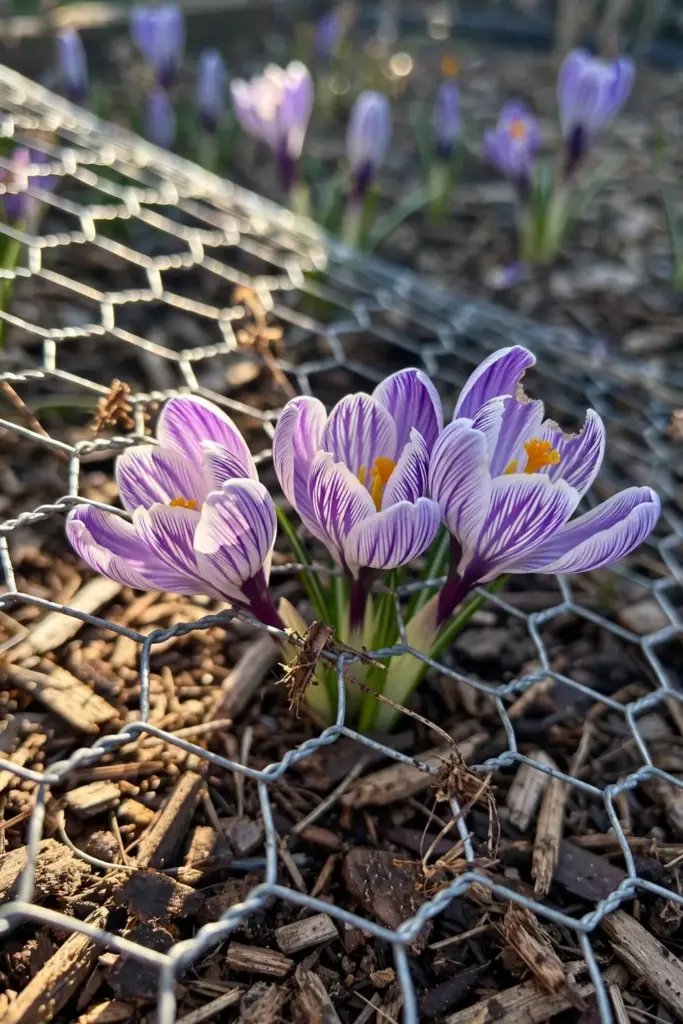
In lawns, crocuses work because they finish before the first mow. Plant drifts of 100 or more in the turf, 10.2 cm deep, and hold the mower until the foliage yellows. The flowers open on sunny days and close at night, which keeps the display fresh for three weeks.
Plant deep, at 10.2 cm, which is deeper than the standard rule. Lay a square of chicken wire flat over the planting area under the mulch, or set the corms inside a wire bulb basket. Both stop digging cold. In lawns, accept some losses and plant extra: 100 corms where you want 70 flowers.
Buy corms firm and heavy. A light, papery corm is last year’s stock and may not bloom. Plant within days of purchase. Crocus corms dry out fast sitting in a warm house.
5. Tuck Siberian Squill Under Deciduous Trees
Siberian squill turns the ground under bare trees cobalt blue in March and April. It blooms before the canopy leafs out, soaks up the early sun, then rests through summer shade. Deer pass it by.
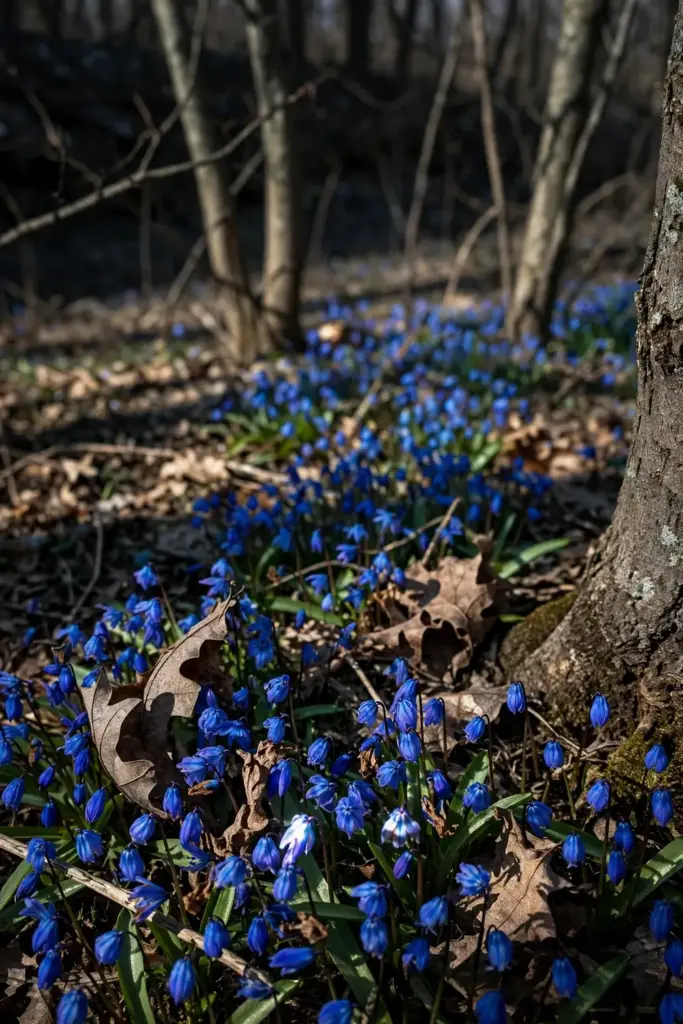
Set bulbs 7.6 cm deep in drifts of 50 or more. Squill self-sows with enthusiasm, which is a feature under trees and a problem in a tidy border. Keep it out of perennial beds where its seedlings become weeds. Under a maple or oak, let it run.
The foliage ripens fast. By the time the tree above leafs out fully, the squill has vanished underground. No cleanup. No deadheading. The blue returns on its own each March.
Pair squill with snowdrops for a six-week blue-and-white sequence. The snowdrops open first, the squill follows, and the overlap week in March is the best the early garden offers. Both naturalize under the same trees and ask for the same benign neglect.
6. Edge the Bed With Grape Hyacinths
Grape hyacinths pack cobalt or sky-blue flower spikes onto 15.2 cm stems in April. Deer ignore them. The bulbs multiply fast, which makes them cheap groundcover for the front of a border and a menace anywhere you wanted restraint.
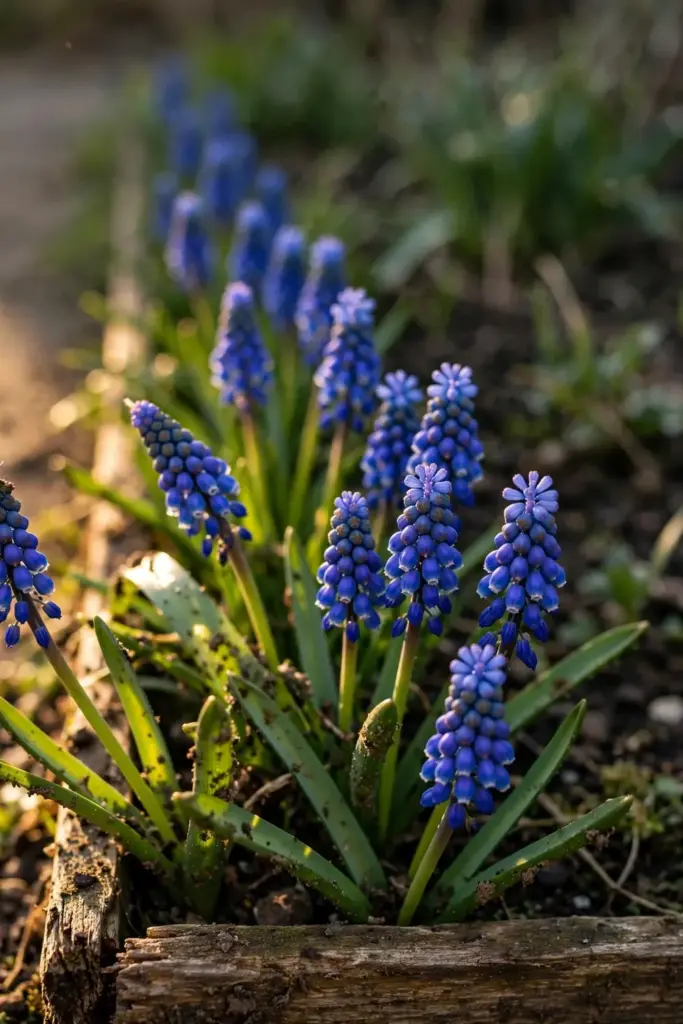
Plant 7.6 cm deep and 7.6 cm apart in bands along bed edges. One bag of 100 bulbs edges about 3 m of border. The grassy foliage appears in fall, which alarms first-time growers. It is normal. The leaves overwinter and the flowers follow in April.
Lift and divide congested clumps every three years, in June after the foliage fades. Toss the extras into the lawn or a neighbor’s bed. Nobody ever has too few grape hyacinths for long.
The standard blue Muscari armeniacum is the toughest of the clan. White and pale blue forms exist but seed less reliably. For a wilder look, try Muscari latifolium, with two-tone flowers, one spike carrying both dark blue and pale blue bells. It multiplies slower, which suits gardeners who fear the spread.
7. Make Daffodils the Deer-Proof Backbone
Daffodils are the backbone of every deer-country spring garden because deer will not touch them. The bulbs carry bitter alkaloids, and N.C. Cooperative Extension’s fall bulb notes list daffodils alongside alliums and snowdrops as naturally pest-resistant for exactly that reason. Squirrels leave them alone too. No other classic bulb offers that double protection.
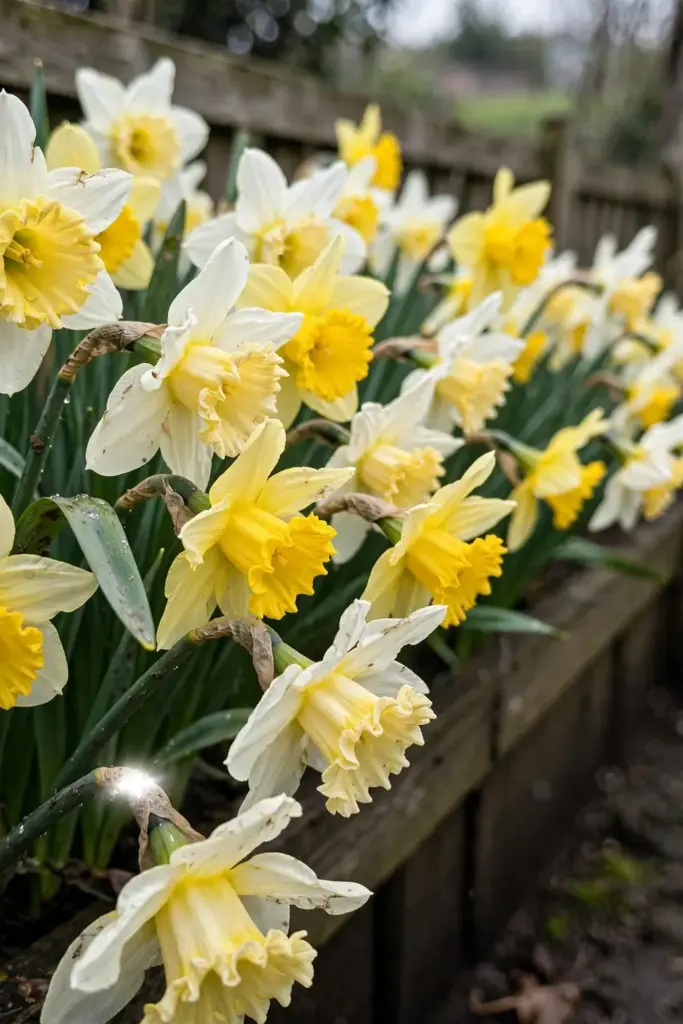
Plant 15.2 to 20.3 cm deep and 15.2 cm apart. Depth matters more for daffodils than for any other bulb on this list: shallow daffodils split into grass-like leaves and stop blooming. A drift of 50 bulbs along a fence line or under trees gives the high-count display the small bulbs cannot.
Never cut, braid, or tie the foliage. Leave every leaf standing until it yellows fully, usually six weeks after bloom. The leaves are building next year’s flower. Braided daffodil foliage is a starved bulb wearing a costume.
The family divides into trumpets, large cups, jonquils, and poets, blooming in that order across six weeks. Plant one of each and the daffodil season runs from March into May. Jonquils carry the sweetest scent. Poets bloom last and tolerate the wettest soil of the clan.
8. Grow Tulips in Groups You Can Guard
Tulips are deer candy and squirrel treasure. Plant them anyway, but plant them where you can protect them: inside a fenced bed, near the front door, or behind a ring of daffodils. The daffodil ring is not folklore. Deer browse the edge planting, hit the bitter daffodils, and often move on before reaching the tulips.
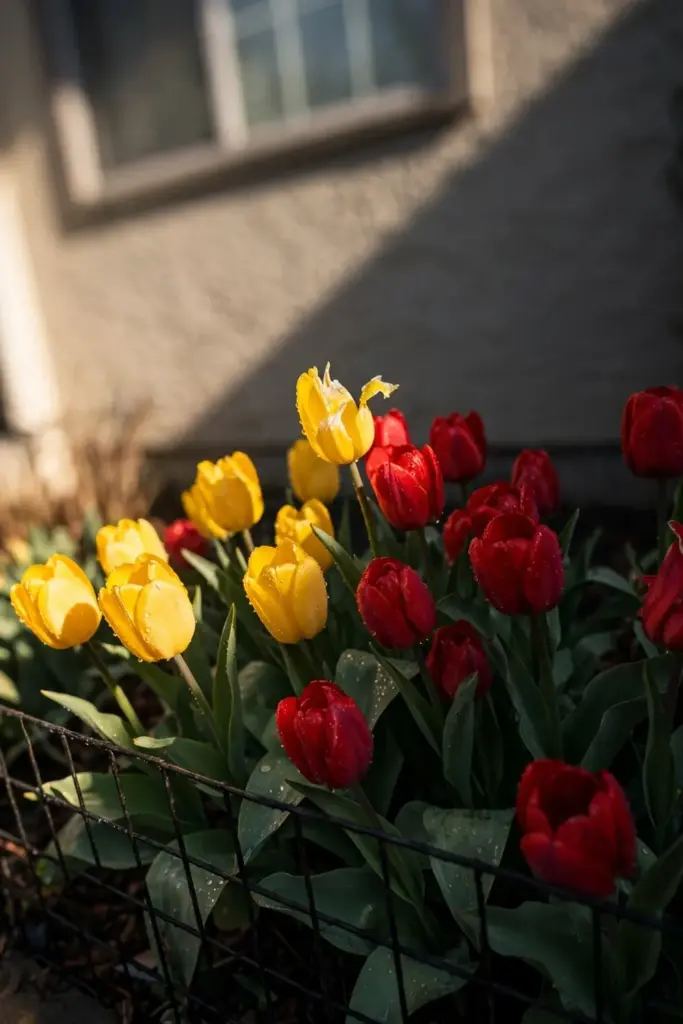
Set bulbs 15.2 to 20.3 cm deep and 10.2 to 15.2 cm apart, in groups of ten or more. A single row of tulips along a walk looks thin. A block of 30 reads like a painting. Species tulips such as Tulipa tarda and Tulipa clusiana naturalize where Dutch hybrids fade after two seasons.
In zones 8 and 9, treat Dutch hybrid tulips as annuals unless you chill them. The refrigerator routine is covered in item 19. Buy fresh bulbs every fall and the display stays full.
Darwin hybrid tulips perennialize better than any other Dutch class. Their stems run 55.9 to 66 cm tall and the flowers survive rain that shreds fringed types. Plant them 20.3 cm deep, deeper than the bag suggests, and they return for four or five years in zones 5 through 7.
9. Set Hyacinths for Scent Near the Door
Hyacinths throw dense, sweet-scented spikes in April, and the fragrance carries several meters on still air. Plant them where you walk: beside the front steps, under a bedroom window, along the path to the mailbox. Deer mostly leave them alone, put off by the same dense texture and strong scent that humans love.
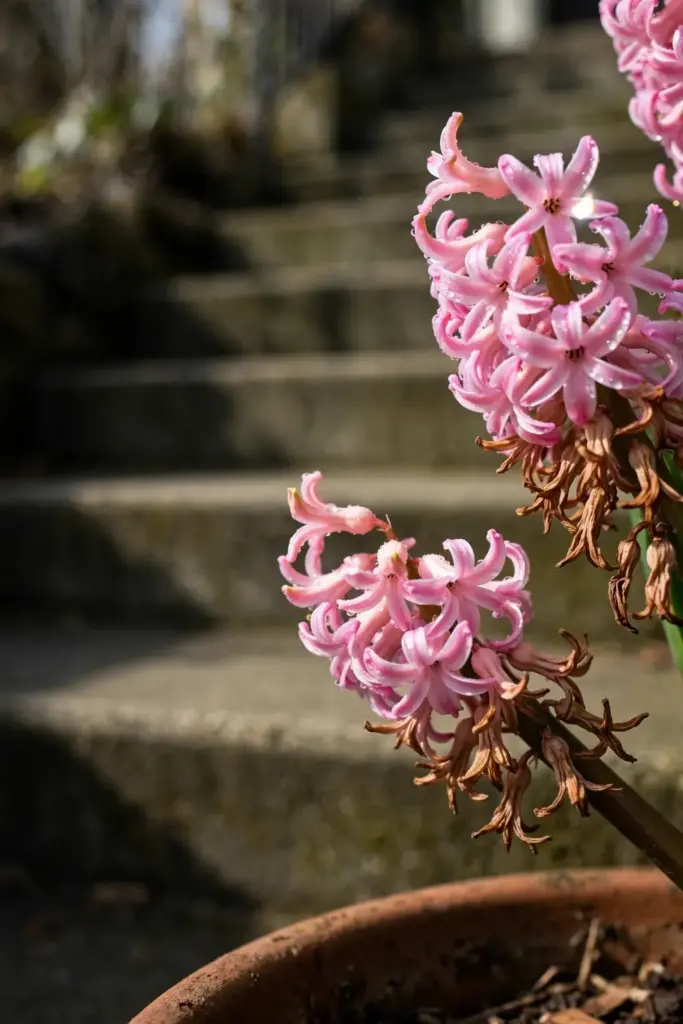
Plant 15.2 cm deep and 15.2 cm apart. Hyacinth bulbs are large and their flower spikes are heavy, so a sheltered spot matters. Wind snaps the stems. A wall or fence at their back keeps them upright through April storms.
Mark the planting spot with a label. Hyacinth foliage dies back by June, and the bare patch tempts summer digging. A wooden label saves the bulbs from your own trowel in July.
Deadhead spent spikes before they set seed. A hyacinth pouring energy into seed makes a smaller bulb next year. Snap the faded flower stalk at its base and leave the foliage. The leaves need six weeks of sun to rebuild the bulb for the following April.
10. Raise Crown Imperials for Height and Stink
Crown imperials send up 91 cm stems crowned with a ring of orange or yellow bells and a tuft of leaves on top. They smell faintly of skunk, which is why deer and voles avoid them completely. Gardeners either love them or find them absurd. There is no middle opinion.
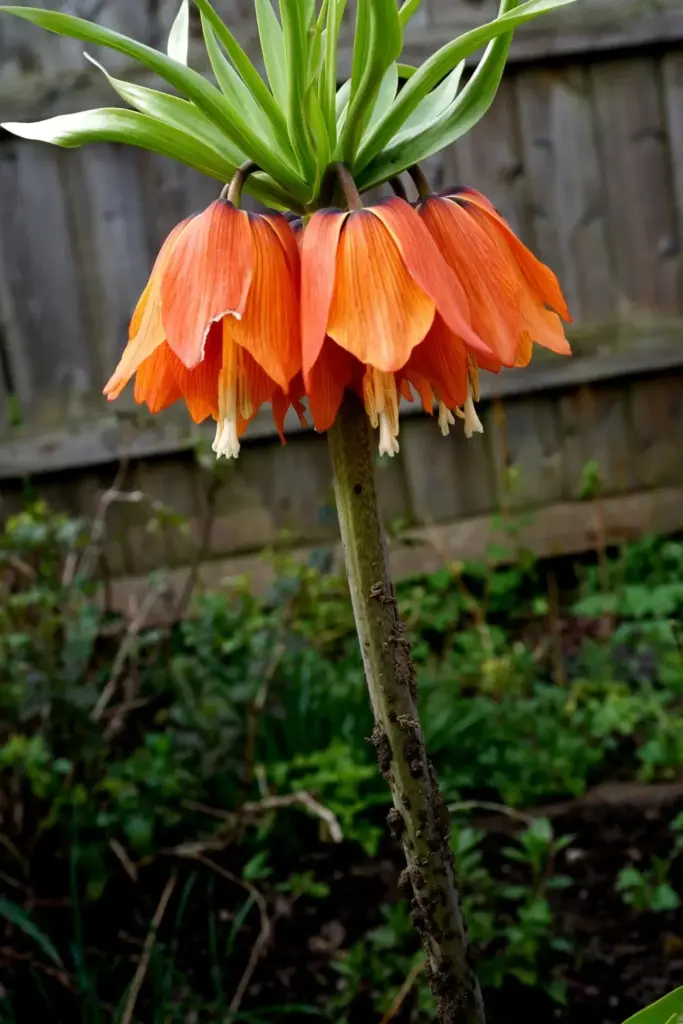
Plant the large bulbs on their sides, 20.3 cm deep. The sideways position stops water pooling in the bulb’s hollow crown, which is the main cause of rot. Sharp drainage matters more than fertility: mix coarse grit into heavy soil at planting time.
Buy three, not thirty. One crown imperial is an exclamation point. Thirty is a skunk farm. Space them 30.5 cm apart at the back of the border where their height reads against a fence or hedge.
The bulbs smell faintly of fox, which is the point. Plant them where voles tunnel and the smell does perimeter defense for the whole bed. Underplant with grape hyacinths to hide the crown imperial’s bare lower stem. The combination looks intentional and the hyacinths appreciate the same sharp drainage.
11. Plant Bluebells Where the Shade Arrives Late
Bluebells belong under deciduous trees and along woodland edges, where they get full sun in March and April and shade by June. The nodding blue bells naturalize into drifts that return for decades. Deer browse them lightly but rarely destroy a planting.
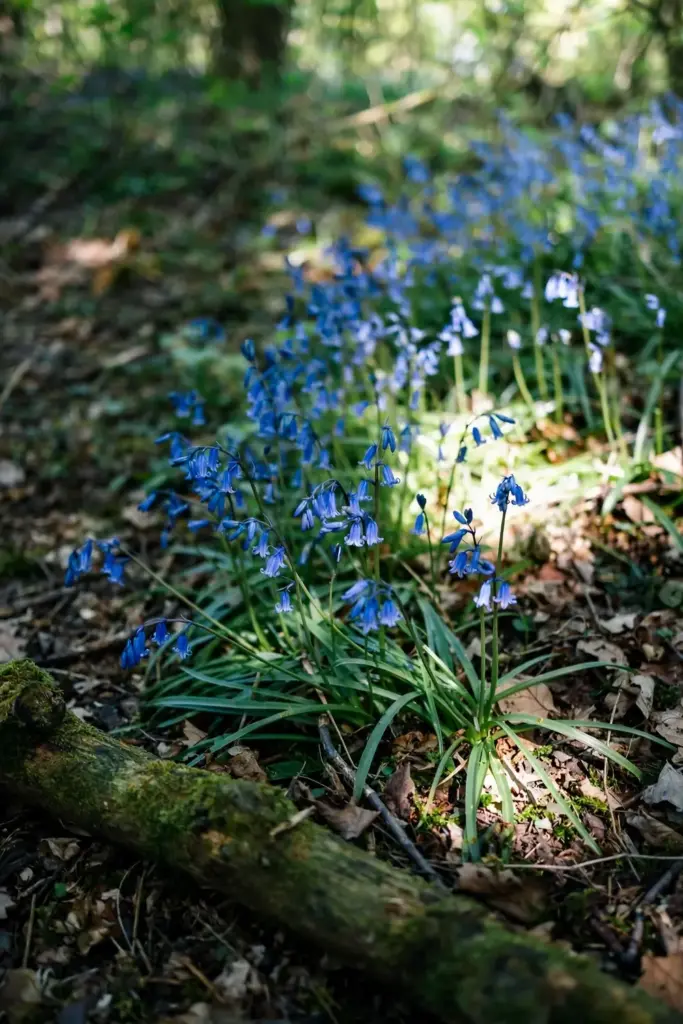
Set bulbs 10.2 cm deep and 10.2 cm apart in groups of 25 or more. Bluebells planted as singles vanish visually. A drift under one tree beats scattered bulbs across five beds.
Know which bluebell you are buying. English bluebells arch to one side with a sweet scent. Spanish bluebells stand upright, unscented, and hybridize freely with the English kind. If native purity matters in your region, buy from a supplier that names the species.
A 5.1 cm blanket of shredded leaf litter each fall feeds bluebells the way a forest floor does. The leaves break down into the humus bluebells evolved in. Skip the bark mulch here. Bark sits on top and sheds water, while leaf litter melts into the soil the bulbs want.
12. Fill Lawn Edges With Spring Starflower
Spring starflower is the bulb big catalogs skip. It opens pale blue or white striped stars in April, smells faintly of onion when crushed, and naturalizes in grass the way crocuses wish they could. Deer ignore it. The onion scent does the guarding.
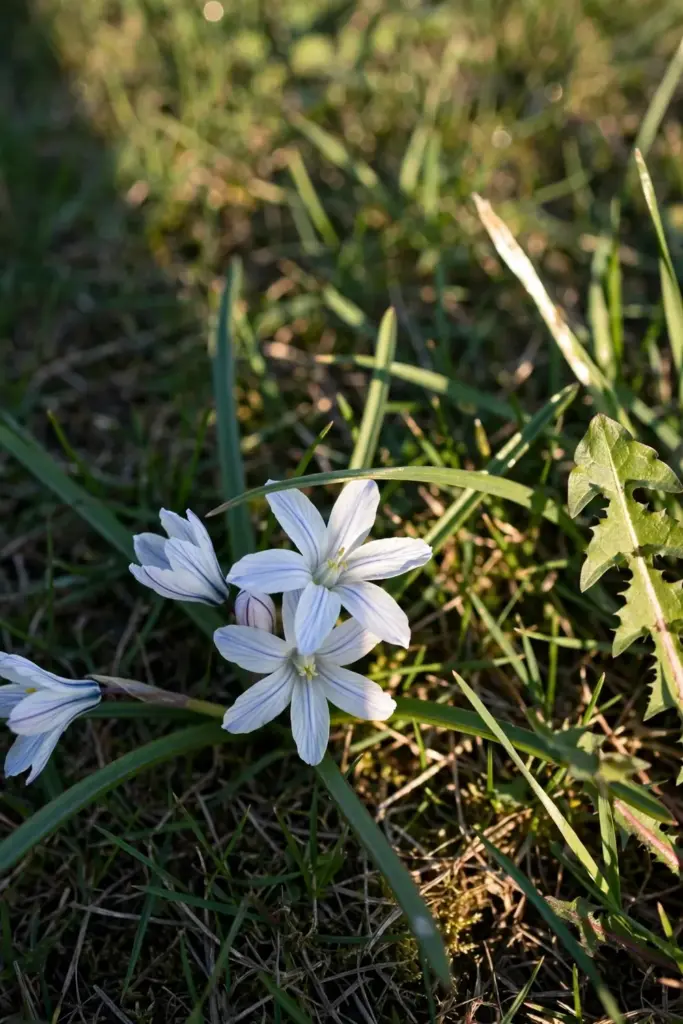
Plant 7.6 cm deep in the rough grass at the lawn’s edge, 50 bulbs to a patch. Mow around it until the foliage yellows. Starflower tolerates the mower once dormant and returns thicker each year. It fills the awkward strip between lawn and bed where nothing else looks intentional.
The flowers close on cloudy days. Plant where morning sun hits them and they open by ten. A north-facing strip stays shut half the week.
The named form ‘Wisley Blue’ carries larger flowers in a clearer blue than the species. It costs little more and multiplies as freely. Mix it with the white species form for a two-tone drift. Both close on cloudy days, so the morning-sun rule from the main entry still applies.
13. Try Summer Snowflake in Damp Corners
Summer snowflake is the bulb for the spot where everything else rots. It tolerates wet spring soil that would kill tulips and daffodils, sending up 45.7 cm stems of white nodding bells in April and May. Deer leave it alone. The alkaloids run in the family.
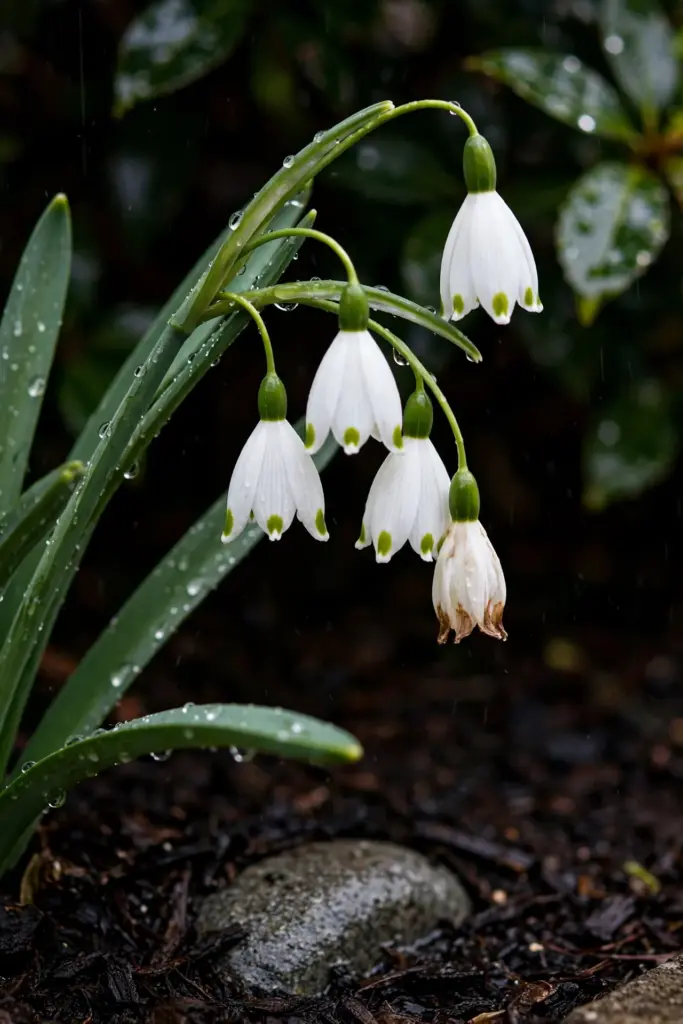
Plant 10.2 cm deep in groups of 15 or more near downspouts, rain gardens, or the low end of the yard. Most bulbs demand drainage. This one asks for the opposite. Match the bulb to the site. Do not rebuild the site for the bulb.
Divide congested clumps in early fall, when you would be planting new bulbs anyway. Replant the divisions immediately at the same depth. Summer snowflake dislikes sitting out of the ground.
Its earlier cousin, spring snowflake, blooms in March at half the height. Plant both and the snowflake season runs two months. Spring snowflake wants the same damp soil and the same leave-it-alone routine. The two are easy to confuse in catalogs, so check the species name: vernum for spring, aestivum for summer.
14. Slip Puschkinia Into the Rock Garden
Puschkinia opens pale blue flowers with a darker stripe down each petal in March and April, at 15.2 cm tall. It is one of the least-planted bulbs on this list and one of the toughest. Deer ignore it. Cold does not faze it.
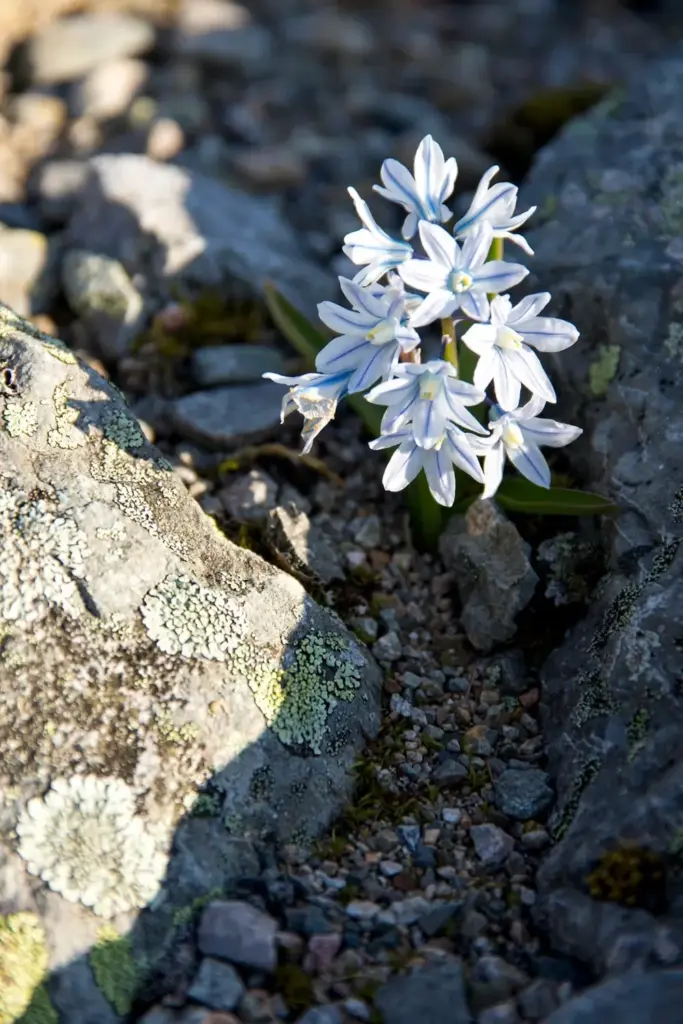
Set bulbs 7.6 cm deep at the front of the border or in a rock garden, where small scale reads as detail rather than insignificance. Puschkinia disappears in a big perennial bed. In gravel and stone, it looks deliberate.
Leave the seed heads alone. Puschkinia self-sows politely, filling gaps between stones over three or four years. A 25-bulb start becomes a colony without any further spending.
Puschkinia pairs naturally with early crocuses. The crocuses open first in gold and purple, the puschkinia follows in striped blue, and the heights match at 15.2 cm. Plant them in the same rock garden pocket, 7.6 cm deep, and the pocket blooms for a month with zero maintenance.
15. Spike the Border With Ornamental Alliums
Ornamental alliums send up purple globes on stiff stems in May and June, after the tulips finish and before summer perennials take over. Deer will not touch them. Nothing with onion compounds in its tissue gets a second bite.
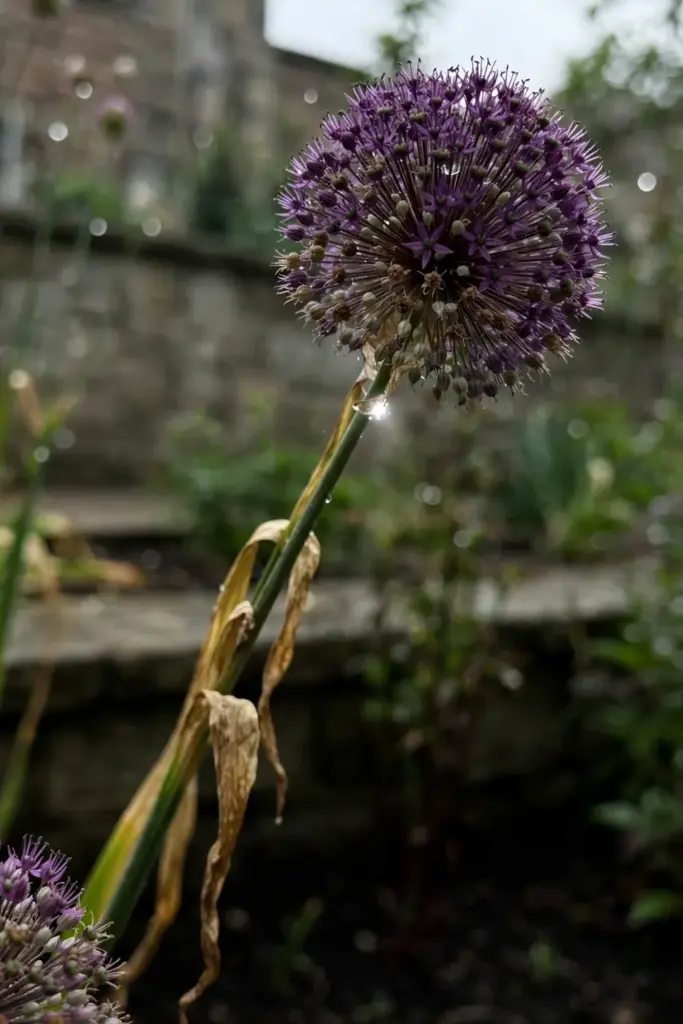
Plant large allium bulbs 15.2 to 20.3 cm deep and 20.3 cm apart. The foliage is the weak point: it yellows as the flowers open, so plant alliums behind daylilies or ornamental grasses that hide the dying leaves. The flower head itself stays handsome for weeks, then dries into a seed head worth keeping through summer.
Leave the seed heads standing. They catch frost and look structural in the winter garden. Cut them down in March when the new foliage pushes up.
Small alliums deserve space too. Allium christophii opens starry lilac fireworks 20.3 cm across, and Allium schubertii looks like a purple sparkler caught mid-burst. Both naturalize in well-drained soil and cost a fraction of the giant ‘Globemaster’ bulbs. Plant them 10.2 cm deep in groups of ten.
16. Plant Camassia for a Native Meadow Note
Camassia is a North American native that opens spires of blue or white stars in May. It tolerates clay and damp spring soil, the two conditions that defeat most Dutch bulbs. Deer browse it lightly but established clumps recover.
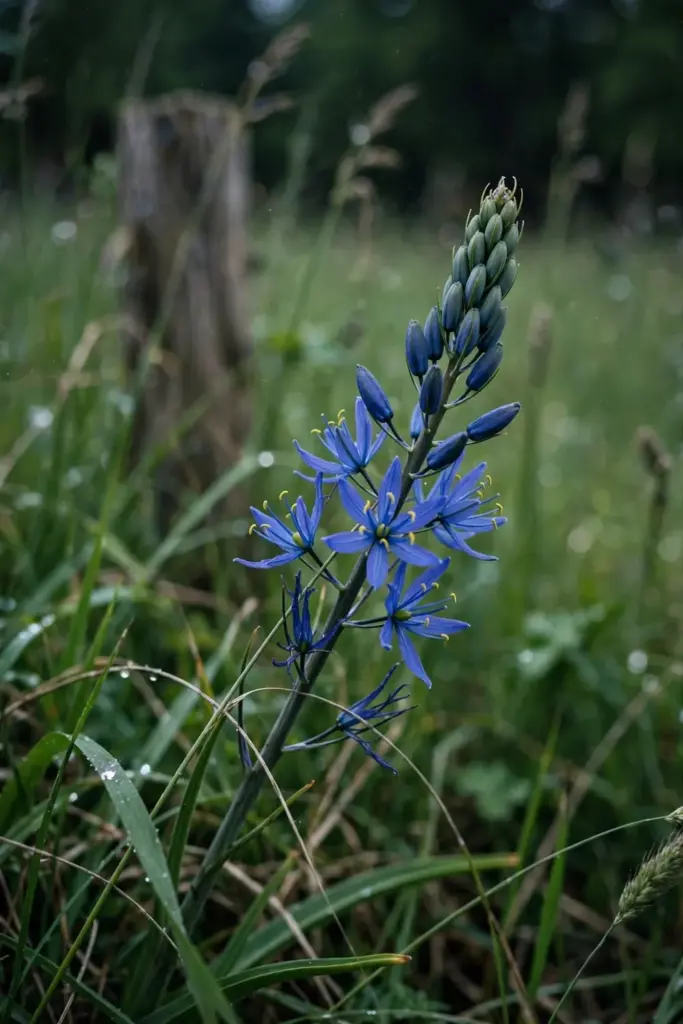
Set bulbs 10.2 cm deep and 15.2 cm apart in groups of 25 or more, in a meadow patch or the back of a border that stays moist through spring. Camassia wants the opposite of a rock garden. Give it the low spot and it multiplies.
Do not confuse camassia with death camas. The edible camas bulb of Indigenous food traditions is Camassia quamash. Death camas is a different genus entirely. Buy nursery stock, never wild-dug bulbs.
Camassia wants full sun in spring and tolerates summer drought once dormant. A meadow patch mowed once a year in late summer suits it perfectly. The bulbs sit 10.2 cm deep, below the mower’s reach, and the seed heads feed goldfinches if you leave them standing into July.
17. Set Foxtail Lilies for the Tallest Statement
Foxtail lilies throw 1.8 m spires of tiny peach or yellow flowers in May and June. Nothing else in the spring garden reaches that height that fast. Deer ignore them. The display lasts three weeks and stops traffic.
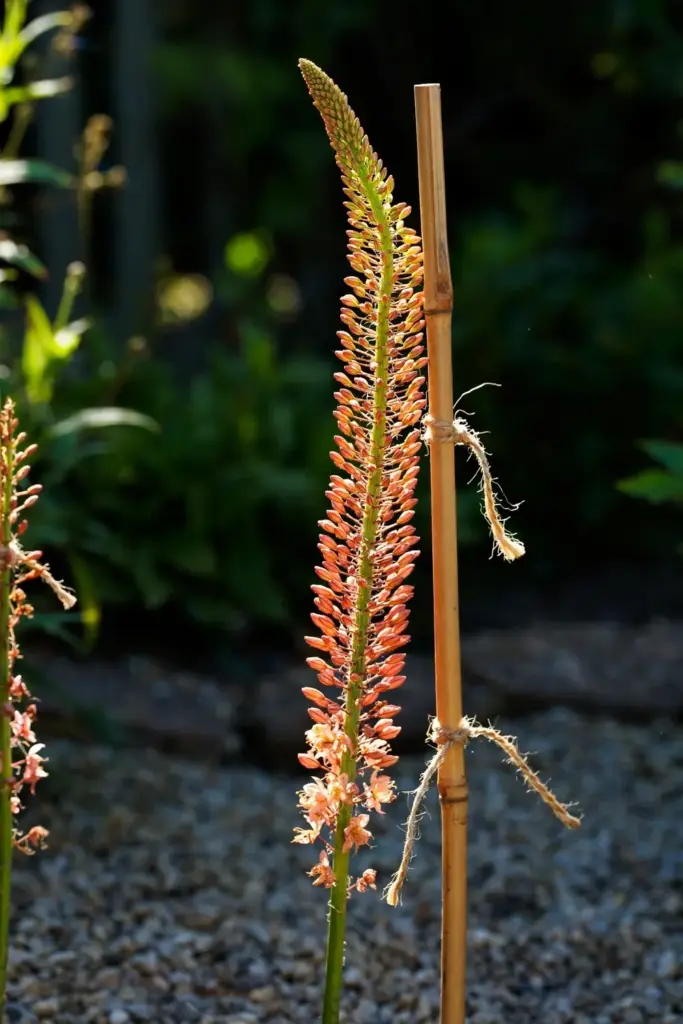
Plant the brittle, octopus-like roots shallow, with the crown 5.1 to 7.6 cm below the surface, in the best-drained spot you own. Foxtail lily roots snap like carrots, and a broken root is a dead plant. Dig a wide shallow hole, spread the roots like fingers, and backfill with gritty soil. Never let the crown sit in winter wet.
Stake in windy sites. A 1.8 m flower spike is a sail. One stout cane and a loose tie at two heights holds it through a May storm.
The shorter Eremurus stenophyllus tops out at 91 cm and fits beds where the giant species would dominate. Its yellow flowers open earlier, in late May. Give it the same sharp drainage and shallow planting. A gravel mulch around the crown keeps winter wet off the growing point.
18. Build a Lasagna Pot in Three Layers
Lasagna planting stacks three bulb layers in one deep pot so it blooms for two months straight. Use a pot at least 30.5 cm deep with drainage holes. Anything shallower starves the bottom layer.
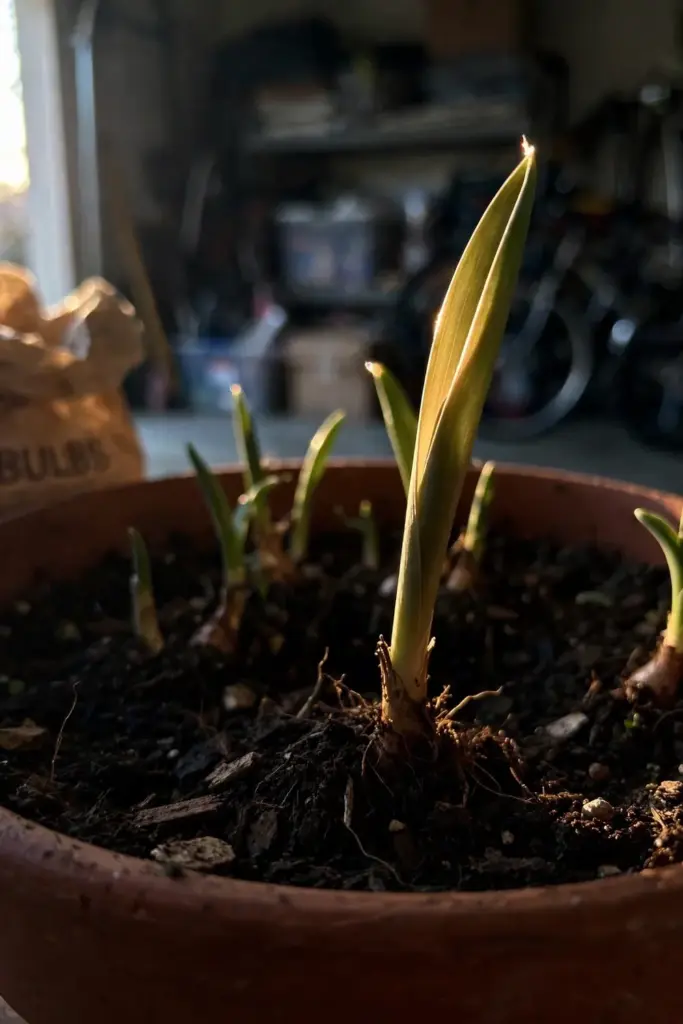
Set the bottom layer first: daffodils or tulips, nose up, 15.2 cm deep. Cover with 5.1 cm of potting mix. Set the middle layer: hyacinths or dwarf daffodils, 10.2 cm deep. Cover again. Set the top layer: crocuses or grape hyacinths, 5.1 cm deep. Cover to 2.5 cm below the rim. Water once, deeply.
Overwinter the pot in an unheated garage or buried to its rim in the garden. Bulbs in pots freeze harder than bulbs in the ground because cold attacks from the sides. In zones 5 and 6, wrap the pot in burlap or bubble wrap if it must sit above ground.
Feed the pot once in spring when shoots reach 10.2 cm. A liquid tomato fertilizer at half strength carries the bulbs through bloom. After flowering, keep watering until the foliage yellows, then let the pot go dry for summer. Tip the pot out in fall, divide the multiplied bulbs, and rebuild the layers.
19. Time Every Bulb to Your Zone, Not the Calendar
The zone table at the top of this page is the whole timing system. Two zone-specific rules sit underneath it. First, in zones 8 and 9, tulips, crocuses, many daffodils, and Dutch hyacinths need six to ten weeks of refrigerator chilling before planting, then go into the ground around December when nights drop below 50°F (10°C), according to Texas A&M AgriLife’s bulb chilling advice. Keep chilling bulbs away from ripening fruit in the refrigerator. Ethylene gas from apples and pears aborts the flower bud inside.
Second, north of zone 5, add mulch and subtract optimism. Bulbs rated hardy to zone 4 survive zone 5 winters under 7.6 cm of shredded leaves. Bulbs rated to zone 6 do not, mulch or no mulch. Read the hardiness on the bag before you buy.
Count backward from your average first hard freeze, not from a month name. October in Minneapolis and October in Atlanta are different seasons wearing the same label.
A soil thermometer ends the guessing. Push the probe 15.2 cm deep in the afternoon and read it for three days running. When it holds below 15.6°C, plant. The thermometer costs less than one bag of tulip bulbs and gets used for vegetables all summer too.
20. Rescue the Bulbs You Forgot to Plant
A bag of bulbs found in December is not a lost cause. If a trowel still goes into the ground, plant them. A late bulb in cold soil beats a perfect bulb baking in a warm garage every time. Roots grow in soil above 4.4°C long after the air turns bitter.
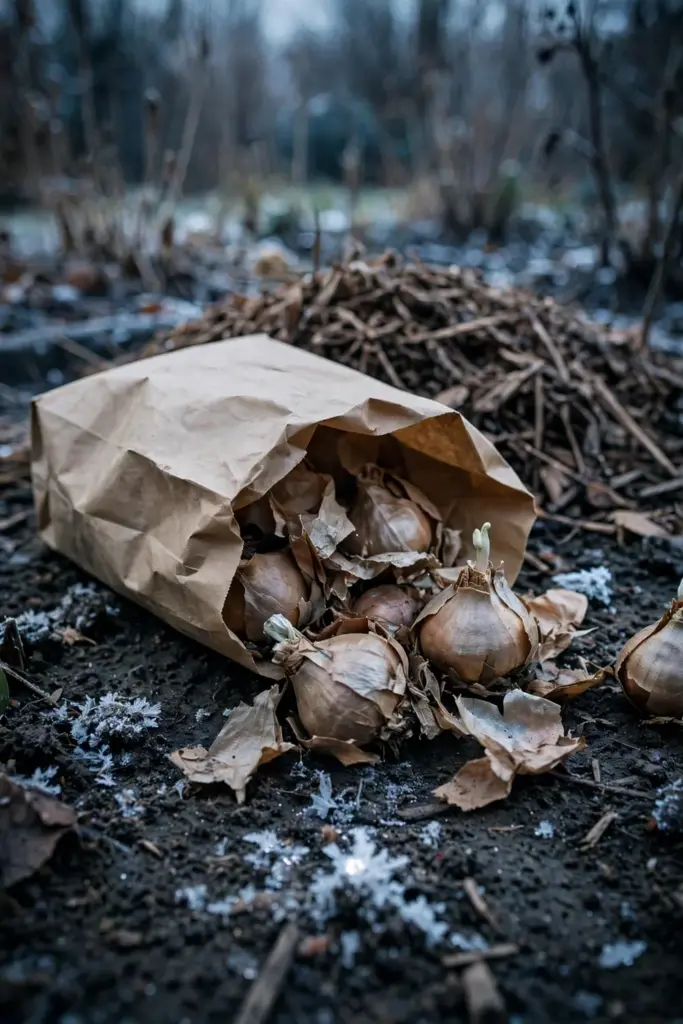
Plant at the normal depth and water once. Skip the fertilizer; the bulb carries its own lunch. Mulch 7.6 cm deep to hold what warmth the soil has left. Expect bloom two to three weeks later than on-time plantings. Late does not mean failed. It means delayed.
If the ground is frozen solid, pot the bulbs in damp potting mix and hold the pots in an unheated garage until spring. Plant the whole root ball out when the soil thaws. Never store unplanted bulbs in a heated room. Warmth plus darkness grows pale sprouts that snap at planting time.
Check stored bulbs for mold before planting. A bulb with a small moldy patch can go in after dusting with sulfur, a standard garden fungicide. A bulb that is soft all the way through is compost. Plant the firm ones and discard the rest without sentiment.
21. Stop the Five Mistakes That Kill Bulbs
First mistake: planting too shallow. Shallow bulbs heave out of the ground during freeze-thaw cycles and bloom blind. The two-to-three-times rule from the timing section exists to prevent exactly this. Measure from the bulb’s shoulder, not from the soil you piled on top.
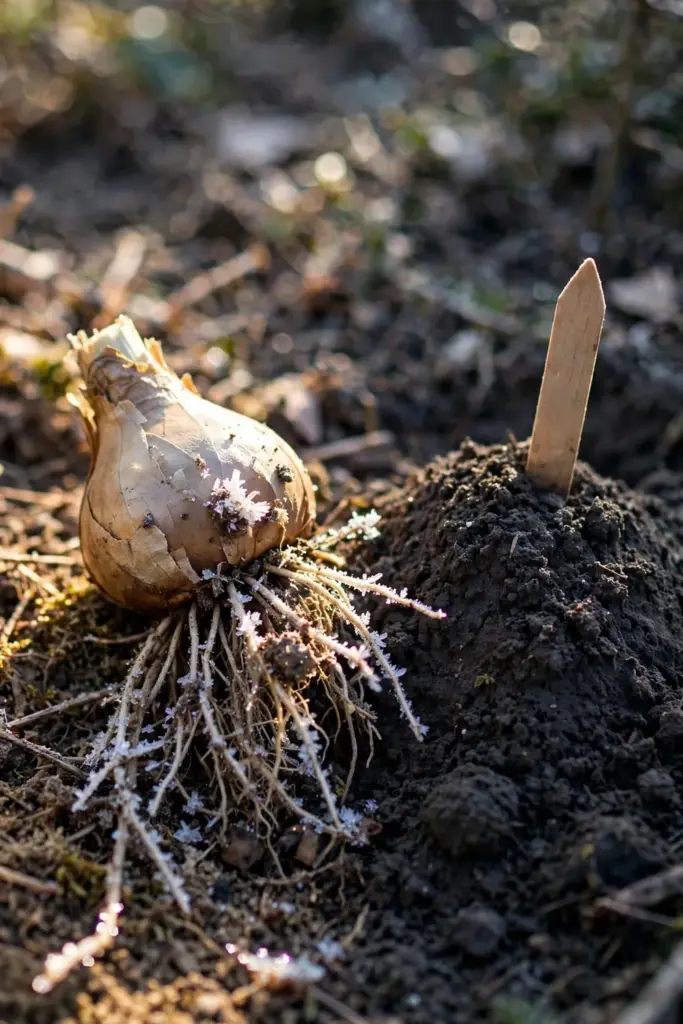
The second mistake is soggy soil. More bulbs die of rot than of cold. If water stands in the hole after rain, the site is wrong. Raise the bed 15.2 cm or switch to summer snowflake and camassia, the two bulbs on this list that tolerate wet feet.
Third: cutting daffodil foliage early. Every leaf feeds next year’s flower. Wait for full yellowing, about six weeks after bloom. A braided bulb is a starved bulb, and it shows the following spring.
Fourth, bulbs planted upside down. The pointed nose faces up, the flat basal plate faces down. A sideways bulb rights itself slowly. An upside-down bulb wastes weeks and blooms short.
The fifth mistake happens at the store: buying soft bulbs. Squeeze every bulb before it goes in the ground. Firm and heavy means alive. Soft, moldy, or feather-light means compost. One rotten bulb in a lasagna pot infects its neighbors.
Run through this list with every new bag of bulbs. The mistakes are all preventable, all cheap to avoid, and all expensive to repeat. A gardener who plants deep, plants in drained soil, and leaves the foliage alone will out-bloom a gardener with twice the budget and half the discipline.
The Deer Question, Answered in a Table
Deer pressure decides more bulb plantings than soil type does. Read the table before you buy. Every bulb on this page carries its rating.
| Bulb | Deer | Squirrels and voles | Why it survives |
|---|---|---|---|
| Daffodil | Resistant | Ignored | Bitter alkaloids in every part |
| Snowdrop | Resistant | Mostly ignored | Alkaloids, blooms before pests wake |
| Winter aconite | Resistant | Ignored | Toxic tissue |
| Glory of the snow | Resistant | Mostly ignored | Unpalatable foliage |
| Siberian squill | Resistant | Mostly ignored | Unpalatable foliage |
| Grape hyacinth | Resistant | Mostly ignored | Dense, bitter tissue |
| Crown imperial | Resistant | Ignored | Skunky scent repels mammals |
| Spring starflower | Resistant | Ignored | Onion compounds |
| Summer snowflake | Resistant | Ignored | Alkaloids, like its daffodil cousins |
| Puschkinia | Resistant | Mostly ignored | Unpalatable foliage |
| Bluebell | Resistant | Mostly ignored | Bitter sap |
| Ornamental allium | Resistant | Ignored | Onion compounds |
| Camassia | Resistant | Mostly ignored | Unpalatable to browsers |
| Foxtail lily | Resistant | Ignored | Coarse, unpalatable foliage |
| Hyacinth | Mostly resistant | Ignored | Strong scent, dense texture |
| Tulip | Eats the flowers | Digs the bulbs | Deer candy, plant behind protection |
| Crocus | Eats the flowers | Digs the corms | Squirrel favorite, use wire guards |
The pattern is simple. Bulbs in the onion and daffodil families defend themselves chemically. Tulips and crocuses defend themselves not at all. Plant the defended bulbs where deer patrol, and save the tulips and crocuses for fenced beds and pots near the door.
When Bulbs Fail
Squirrels dig up a fresh planting overnight. The soil smells of your hands and the bulbs smell of food. Lay chicken wire flat over the bed under the mulch, or dust the bulbs with red pepper flakes at planting time. Both lose effectiveness by spring, but spring is when the bulbs are rooted and less tempting.
Voles eat bulbs from below, leaving a hollow shell and no surface sign. If tulips vanish without a trace, voles are the likely culprit. Plant future bulbs inside wire mesh baskets, available at any garden center. Daffodils, alliums, and crown imperials resist voles on their own, which is another reason the deer-proof backbone earns its place.
Bulbs come up blind, all leaves and no flowers. The usual causes are shallow planting, foliage cut too early last year, or a warm winter with too few chill hours. Replant deeper, leave the leaves alone, and in zones 8 and 9, chill before planting. A blind daffodil usually recovers in one season. A blind tulip rarely does.
Spring Belongs to the Bulbs
One October weekend of planting buys a decade of March color. Start with the deer-proof backbone: 50 daffodils, 25 alliums, and a drift of snowdrops. Add the lesser-known bulbs the second year, once the backbone proves itself. The third year, build the lasagna pot.
When the last allium fades in June, the garden hands the season to summer. For color that arrives in autumn instead of spring, the page on fall blooming perennials carries that half of the year.
Frequently Asked Questions
What Bulbs Are Best Planted in the Fall?
Daffodils, tulips, crocuses, hyacinths, alliums, snowdrops, and grape hyacinths all go in the ground in fall for spring bloom. Daffodils are the safest start in deer country because nothing eats them. Tulips give the biggest color per bulb but need protection from deer and squirrels. Buy from a supplier that stores bulbs cool and dry, and plant them within days of arrival.
Do You Plant Bulbs in Fall or Spring?
Spring-flowering bulbs go in the ground in fall. They need weeks of cold soil to root and set their flower buds before winter. Summer-flowering bulbs such as dahlias and gladioli go in the ground in spring after the frost danger passes, because they cannot survive a frozen winter underground. The rule is simple: spring bloom means fall planting, summer bloom means spring planting.
How Deep Do You Plant Bulbs?
Set each bulb two to three times as deep as the bulb is tall, measured from the bulb’s shoulder to the soil surface. Large bulbs such as tulips and daffodils land 15.2 to 20.3 cm deep. Small bulbs such as crocuses and snowdrops land 7.6 to 10.2 cm deep. Shallow planting is the most common cause of blind bulbs and winter heaving, so measure the first few holes.
Which Fall Bulbs Will Deer Leave Alone?
Daffodils, snowdrops, winter aconite, alliums, grape hyacinths, crown imperials, and summer snowflakes all resist deer through bitter alkaloids, toxic tissue, or strong scent. Tulips and crocuses are the two bulbs deer eat first, so plant those inside fenced beds or ring them with daffodils. In heavy deer country, build the whole planting from the resistant list and skip the tulips entirely.
Is It Too Late to Plant Bulbs in December?
No, if the ground still takes a trowel. Plant at the normal depth, water once, and mulch 7.6 cm deep. Bulbs planted in December bloom two to three weeks later than October plantings but bloom fully. The real deadline is frozen ground, not a calendar date. If the soil is frozen solid, pot the bulbs in damp mix and hold them in an unheated garage until spring.
Can You Plant Fall Bulbs in Pots?
Yes, and pots solve the two hardest bulb problems: drainage and hungry rodents. Use a pot at least 30.5 cm deep, stack a lasagna of daffodils, hyacinths, and crocuses in three layers, and water once. Overwinter the pot in an unheated garage or buried to its rim, because container soil freezes harder than garden soil. Bring it into sun when shoots appear.








