Cowpea severe mosaic virus is a beetle-spread plant virus that can leave black-eyed peas and other garden legumes with crinkled, mottled leaves, stunted growth, and a much thinner harvest. If new cowpea leaves are coming in puckered and blotchy while beetles chew the foliage nearby, this guide covers how to tell the disease apart from lookalike mosaic problems and how to keep it from moving through the rest of the bed. For the basics of raising a healthy crop, see our black-eyed pea growing guide.
What Cowpea Severe Mosaic Virus Is
Cowpea severe mosaic virus, often shortened to CPSMV, is a member of the genus Comovirus in the family Secoviridae. Its official species name is Comovirus severum. The virus has a split genome made of two positive-sense RNA segments, a structure it shares with its close relative cowpea mosaic virus, though the two viruses are serologically distinct and CPSMV typically produces harsher symptoms on the same host.
The virus is a recognized disease of cowpea, also sold as southern pea or black-eyed pea, and it can move into related legumes when leaf-feeding beetles are active. In Georgia, where cowpea is a commercial crop as well as a home-garden staple, UGA Extension lists cowpea severe mosaic virus among the diseases growers are advised to watch for alongside more familiar problems such as Cercospora leaf spot and bacterial blight.
There is no spray that removes the virus from an already infected plant. Management focuses on keeping beetles from moving sap between plants, removing infected vines early, and starting the next crop from clean seed and clean ground.
How to Identify Cowpea Severe Mosaic Virus
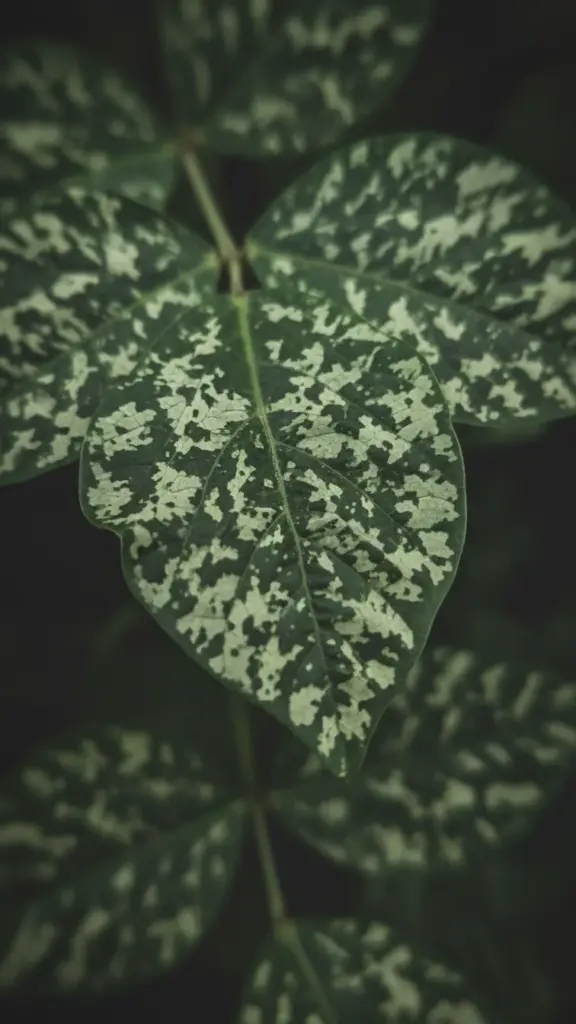
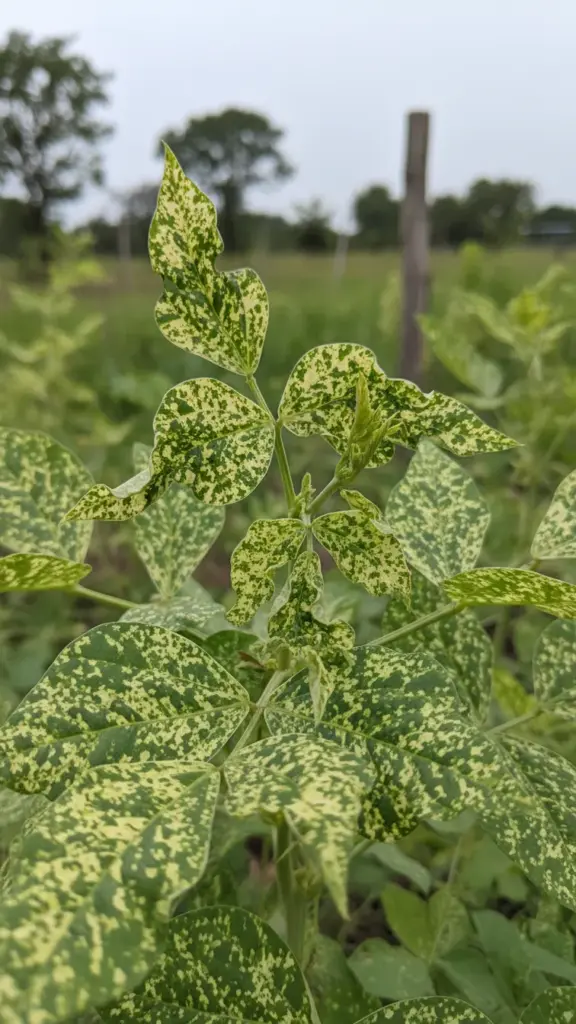
The first leaves to watch are the newest ones. Characteristic symptoms of CPSMV include leaf crinkling and severe mottling on newly emerging foliage, with stunting when infection is heavy or starts while the plant is still young. Older leaves may show a coarse mosaic of light green and dark green patches, and some cultivars add chlorosis, leaf distortion, or necrotic patches as the infection builds.
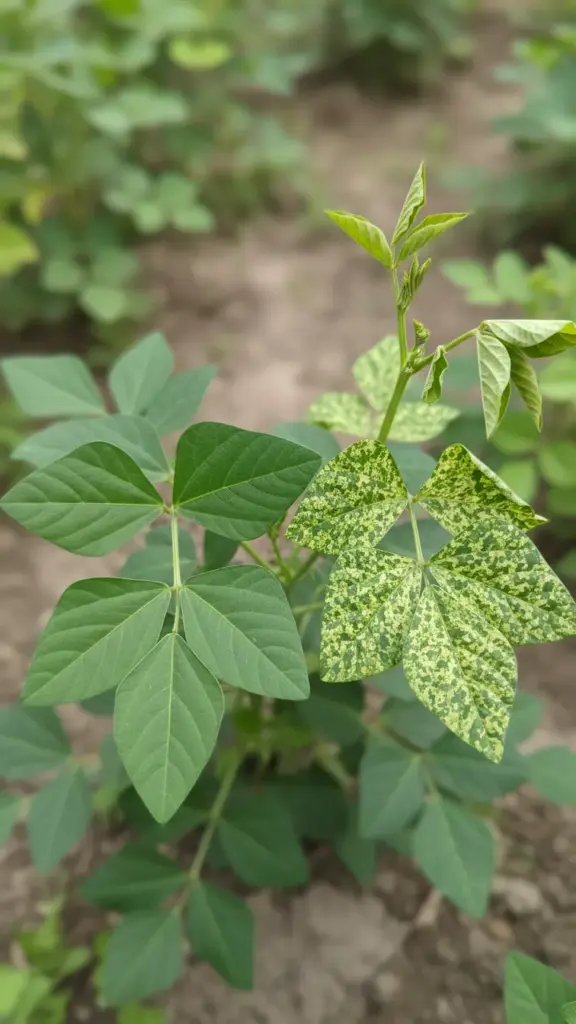
Side-by-side with a healthy plant, an infected cowpea often looks shorter, bushier, and less even in color. Pod set can drop, and the seeds that do form may be smaller or poorer in quality. Because several cowpea viruses produce mosaic patterns, a single blotchy leaf is not a laboratory diagnosis. What helps in the garden is the combination of severe crinkling on new growth, beetle feeding nearby, and a rapid slide from mottling into stunting.
CPSMV symptoms are typically harsher than those of cowpea mosaic virus on the same plant. Cowpea mosaic virus more often produces yellow chlorotic or mottling spots with relatively little leaf distortion, while CPSMV is more likely to crinkle, distort, and stunt the plant. That difference is useful in the field, though mixed infections can blur the picture.
Plants Most at Risk From Cowpea Severe Mosaic Virus
Cowpea is the primary crop host, but CPSMV is not limited to one species. The virus can infect soybean and common bean, and researchers also maintain it in Nicotiana benthamiana in the laboratory. Home gardeners who grow black-eyed peas next to snap beans or a small soybean patch should treat the whole legume bed as one risk zone once beetles appear.
| Host Plant | Role in the Garden | What You Are Most Likely to See |
| Cowpea, black-eyed pea, southern pea | Primary crop host | Severe mosaic, crinkled new leaves, stunting, thinner pod set |
| Common bean | Secondary crop host | Mosaic and mottling after beetle feeding |
| Soybean | Secondary crop host | Mosaic on leaflets, reduced vigor in young plants |
| Other legumes | Occasional or experimental hosts | Variable mosaic, depending on species and isolate |
A planting that mixes several of these hosts in a small space gives beetles a short hop from one susceptible plant to the next, which is why a tidy single-crop row is easier to protect than a mixed legume tangle.
How Cowpea Severe Mosaic Virus Spreads
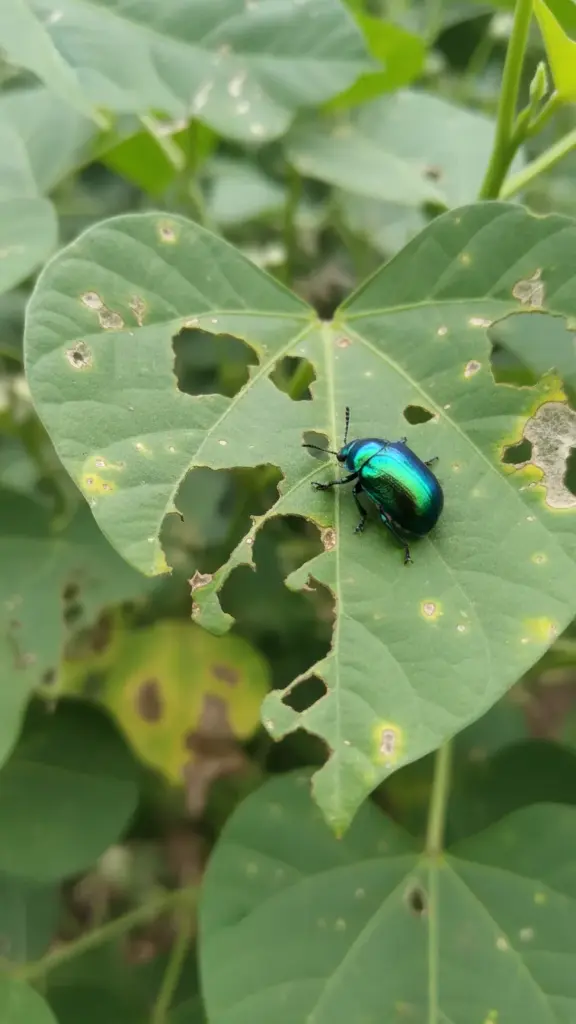
In nature, comoviruses are transmitted exclusively by beetles, especially leaf beetles in the family Chrysomelidae, and those beetles can keep the ability to transmit virus for days or weeks after feeding on an infected plant, according to the ICTV profile of the genus Comovirus. That retention window is what makes a small beetle outbreak so costly. One infected cowpea can supply virus to many neighboring plants for as long as the beetles keep moving and feeding.
Several chrysomelid species have been shown to move CPSMV. Among them, the South American leaf beetle Diabrotica speciosa has been documented transmitting cowpea severe mosaic virus to bean, according to a Purdue CAPS pest datasheet. Related leaf beetles in the genera Cerotoma and Diabrotica are the group to watch in cowpea and bean plantings more generally, because they chew foliage and carry contaminated sap on their mouthparts.
The virus is also easy to move by hand. Sap on pruning shears, stakes, or even wet fingers can inoculate a healthy plant after you have handled an infected one. Seed is not the main pathway for CPSMV the way it is for some other cowpea viruses, so a clean-looking packet is not a guarantee the crop will stay healthy if beetles and infected neighbors are already in the bed.
Does Cowpea Severe Mosaic Virus Cause Lasting Damage
Yes, once a plant is systemically infected, the virus stays with it for the rest of the season. There is no garden treatment that clears CPSMV from the tissues. Plants infected while they are still seedlings take the hardest hit, because the virus is already circulating before the vine has built a canopy or set pods. Those plants often remain stunted, produce fewer flowers, and yield a thinner crop of smaller seed.
The virus does not usually kill the plant outright the way a crown rot or wilt pathogen can. A mature vine that picks up CPSMV later in the season may keep growing and still produce some pods, though quality and quantity often decline. The larger risk is spread. Every infected plant becomes a source of virus for beetles and for anyone working the row with dirty tools.
CPSMV does not infect people. Peas and beans from a plant that later shows mosaic are not a food-safety problem in the way a bacterial soft rot would be. The practical issue is yield and the chance of carrying the problem into next year’s planting through leftover infected plants or volunteer seedlings.
Step 1: Start With Healthy Seed and Clean Plants
Buy seed from a reputable source and avoid saving seed from any plant that showed mosaic, crinkling, or unexplained stunting. Even though CPSMV is not primarily a seed-borne virus, several other cowpea viruses are, and a mixed infection in saved seed can bring more than one problem into the bed at once.
Inspect seedlings as soon as the first true leaves open. Pull any plant that comes up already mottled or distorted, and do not compost that material next to the remaining crop. Starting clean is cheaper than trying to slow a virus after beetles have already begun to shuttle it down the row.
If you transplant rather than direct-sow, isolate new plants for a few days and check them again before they go into the main bed. A single infected transplant can seed an outbreak faster than a beetle arriving from a weedy fence line.
Step 2: Scout for Leaf Beetles Early
Walk the planting in the morning, when beetles are often easier to spot on the upper leaves, and look for both the insects and the shot-hole or ragged feeding they leave behind. The goal is to catch feeding while it is still light, because virus spread tracks beetle movement more closely than it tracks the calendar.
| What You See | What It Usually Means | What to Do Next |
| Small holes or ragged edges on young cowpea leaves | Leaf beetles are already feeding | Hand-pick beetles and check neighboring plants for mosaic |
| Beetles present plus crinkled new growth | Virus may already be moving | Remove the worst plants and keep scouting daily |
| Feeding only, foliage still even in color | Vector pressure without obvious infection yet | Keep scouting and protect the newest leaves |
| No beetles, but mosaic on new leaves | Infection may have started earlier, or another virus is involved | Remove symptomatic plants and compare with other mosaic diseases |
Row covers can keep beetles off young plants until flowering, as long as the edges stay sealed and you remove the cover when the crop needs pollinators. In a small home planting, hand-picking is often enough if you stay consistent.
Step 3: Remove Infected Plants Promptly
As soon as a plant shows the combination of severe mosaic, crinkled new leaves, and declining vigor, pull it. Leaving a mildly mottled vine in place because it still has a few flowers gives beetles a convenient virus source for the rest of the row.
Bag the pulled plants and take them out of the garden rather than tossing them on the compost pile beside the bed. After you finish, wash your hands and clean any tools that touched the sap before you move to healthy plants. One hurried thinning session can do as much to spread CPSMV as a day of beetle feeding if the shears stay wet with infected sap.
Check the plants on either side of the one you removed for the next several days. Early infections can sit in a lag period where the newest leaves are just beginning to crinkle, and those neighbors are the ones most likely to show symptoms next.
Step 4: Limit Mechanical Spread in the Garden
Work dry plants when you can, because wet foliage smears sap more readily from leaf to leaf. Clean pruners, knives, and tomato cages with soapy water after you finish a symptomatic plant, and keep a dedicated pair of shears for the cowpea row if the planting is large enough to justify it.
Avoid brushing down the row with your shirt or harvest basket after you have handled an infected vine. The same habit that spreads tomato mosaic in a greenhouse will move CPSMV through a dense cowpea stand. Staking or light trellising that keeps vines off one another also reduces casual leaf-to-leaf contact, though it will not replace beetle control.
If you grow cowpeas as a summer cover crop as well as a food crop, keep the cover-crop patch away from the kitchen-garden row. A weedy or unmanaged stand can hold both beetles and unnoticed infected plants.
Step 5: Choose Resistant Varieties and Rotate Hosts
Where resistant or tolerant cowpea varieties are available, they are the most reliable long-term control for virus diseases in this crop. Breeding programs have screened cowpea genotypes for resistance to CPSMV and to other major cowpea viruses, and home gardeners should ask seed suppliers which varieties have documented virus resistance rather than relying on a pretty packet photo.
Rotate legumes out of a bed that had a clear CPSMV outbreak. A year or two of non-host crops such as corn, greens, or cucurbits breaks the easy path from leftover volunteers and nearby beetles back into a fresh cowpea planting. Pull volunteer cowpeas and beans as soon as you recognize them the following spring.
Resistance is not a reason to stop scouting. A tolerant variety can still host beetles that then walk into a more susceptible neighbor, including snap beans in the next bed.
Common Questions
How Is Cowpea Severe Mosaic Virus Different From Blackeye Cowpea Mosaic Virus
They are different viruses with different lifestyles. CPSMV is a comovirus moved mainly by leaf beetles. Blackeye cowpea mosaic virus is a potyvirus moved by aphids and often carried in seed. The two can look similar on a cowpea leaf, which is why our blackeye cowpea mosaic virus guide is worth reading beside this one if you are trying to sort out a mottled planting.
Can You Save a Plant With Cowpea Severe Mosaic Virus
No. Once the plant is systemically infected, the virus remains for the rest of that plant’s life. Keeping it in the bed mainly risks spreading the problem. Pull it and protect the plants that still look clean.
Does Cowpea Severe Mosaic Virus Infect Soybeans and Garden Beans
Yes. Soybean and common bean are documented hosts, so a CPSMV outbreak in cowpeas is a warning to scout nearby bean plantings as well. Treat the whole legume corner of the garden as one unit when beetles are active.
Can You Eat Peas From an Infected Plant
The virus does not infect people, and sound pods are generally fine to eat. Infected plants often produce fewer pods and smaller seed, so the harvest is usually disappointing. Do not save seed from those plants for next year.
Will Insecticide Alone Stop Cowpea Severe Mosaic Virus
Rarely. Insecticides may knock down beetles, but a few survivors can still move virus, and sprays will not cure plants that are already infected. Beetle scouting, prompt removal of sick plants, and clean seed remain the core of home-garden control.
Where to Go From Here
Cowpea severe mosaic virus is a beetle-and-sap problem more than a soil problem, which is why the most useful work happens early, while plants are still small and beetles are just arriving. Clean seed, regular scouting, and a short memory for any vine that starts to crinkle will keep most home plantings out of trouble. If you are planning the rest of a legume bed, pair this page with the growing guides for black-eyed peas and garden beans so the next crop starts with healthy plants and a layout that is easier to scout.