
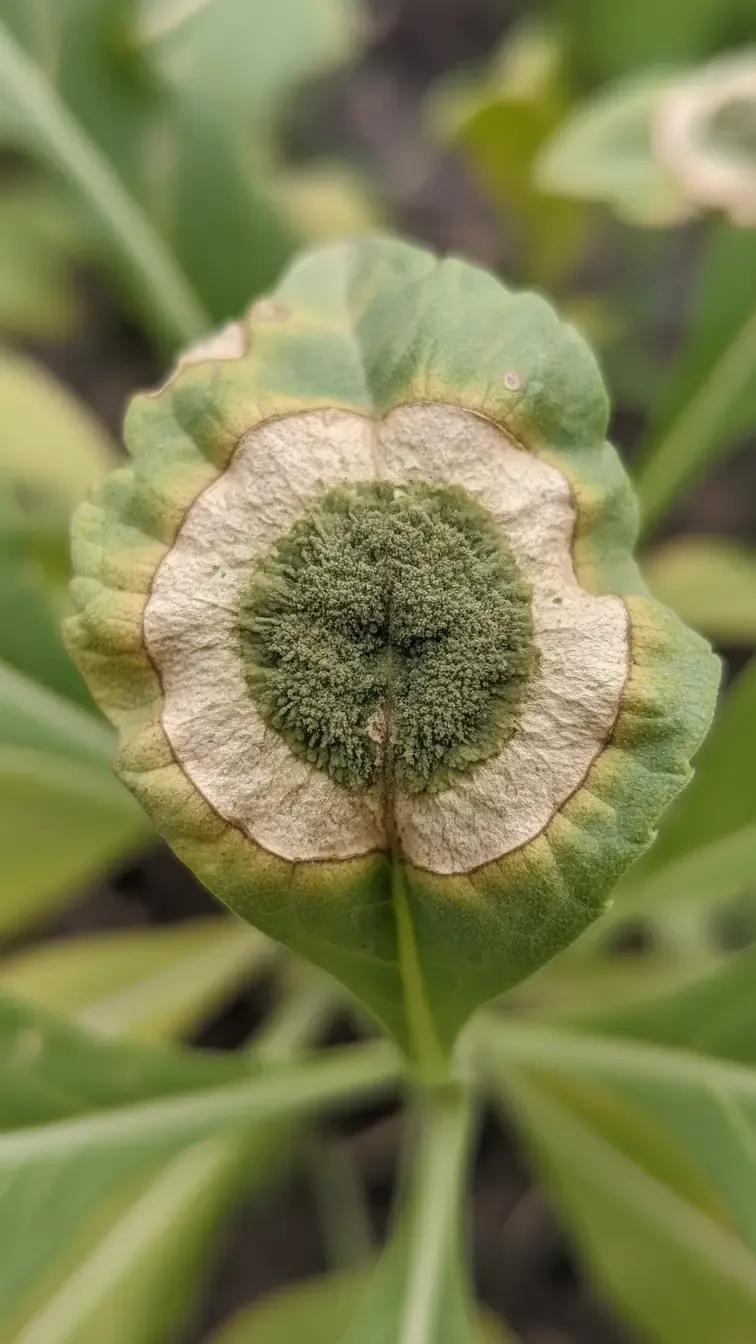

Cladosporium leaf spot is one of those diagnosis names that covers more ground than most gardeners expect. It is not a single disease of one plant, it is a description of what happens whenever a fungus in the genus Cladosporium sets up shop on a leaf, producing round or irregular spots with a distinctive dark green, almost powdery growth in the center or underneath. I have seen it on spinach in raised beds, on sweet william in a cutting garden, and on the older leaves of shade trees, and every time the underlying story is the same even though the host plant is completely different.
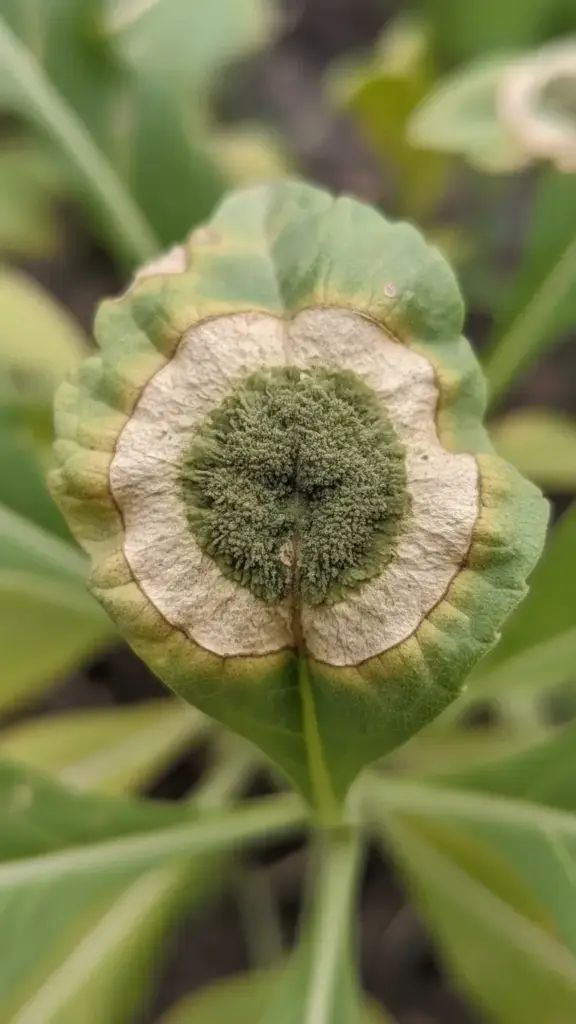
This page walks through what the spots actually look like, why the fungus behaves the way it does, which plants tend to get hit, how to avoid confusing it with other common leaf spot diseases, and the actual steps that reduce it without reaching for a spray program most home gardens do not need.
What Cladosporium Leaf Spot Actually Is
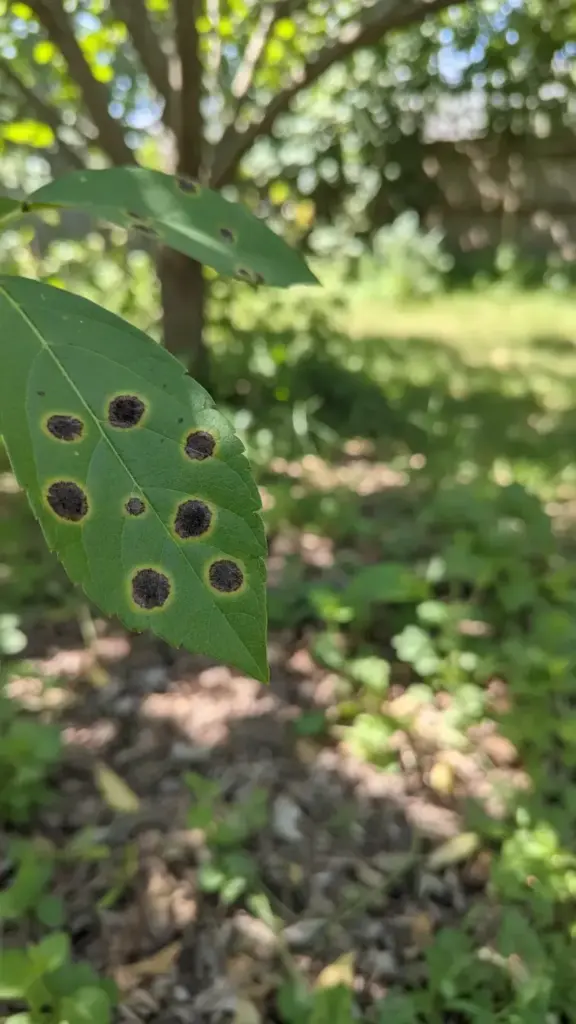
“Cladosporium” is not one single disease, it is a genus of fungi, and gardeners use the phrase “Cladosporium leaf spot” for any leaf spotting caused by a species within that genus. The specific fungus, and the plant it targets, changes from garden to garden. On spinach the culprit is typically Cladosporium variabile. On sweet william and other dianthus relatives it is usually Cladosporium echinulatum. On shade trees and ornamentals, several other Cladosporium species can be responsible, often as a secondary or minor leaf spotting fungus behind the more common leaf spot pathogens.
What ties all of these together is the appearance of the fungus itself once it starts producing spores. Where many leaf spot fungi stay flat, dry, and brittle looking, Cladosporium species produce a distinctly fuzzy, velvety, olive to dark green spore layer, usually in the center of the spot or on the underside of the leaf. That texture and color is the single most reliable clue that you are looking at a Cladosporium infection rather than one of the many other leaf spot diseases with a similar first impression.
How to Identify Cladosporium Leaf Spot Symptoms
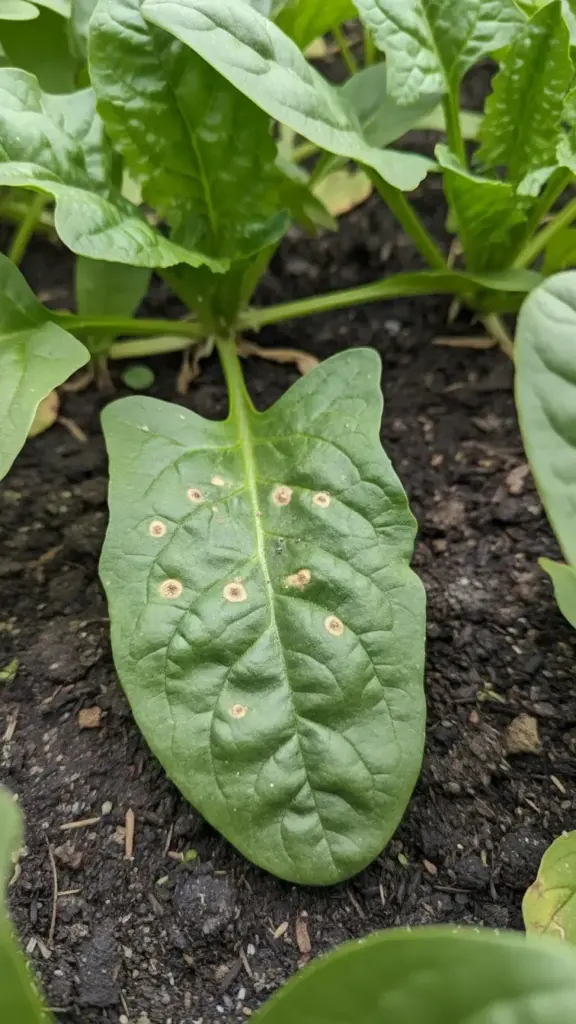
The pattern is fairly consistent across hosts even though the exact color and size of the spot varies.
On spinach, the University of California’s pest management guidelines for Cladosporium leaf spot describe round, tan leaf spots that rarely grow past a quarter inch across, with dark green spores and mycelium developing in the centers of the spots as the disease matures. That dark green sporulation is specifically what separates Cladosporium leaf spot from anthracnose and Stemphylium leaf spot, two other diseases that also produce circular lesions on the same crop.
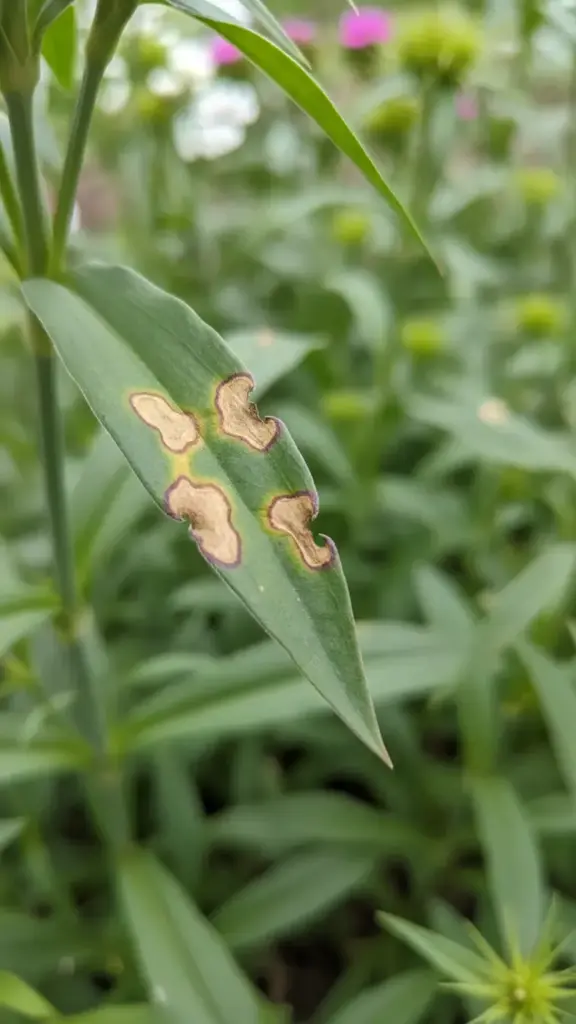
On sweet william and related dianthus, the presentation looks different at first glance, showing up as yellowish brown, withered spots surrounded by a purplish margin. Left unchecked, the spots enlarge until entire leaves and stems turn necrotic.
Despite the different starting color, the underlying tell is the same. Turn a spotted leaf over, or look closely at the center of an older spot in humid weather, and you are looking for that dark, faintly fuzzy spore layer. A hand lens or a phone camera on macro mode makes this much easier to see than the naked eye.
Which Plants Cladosporium Leaf Spot Affects
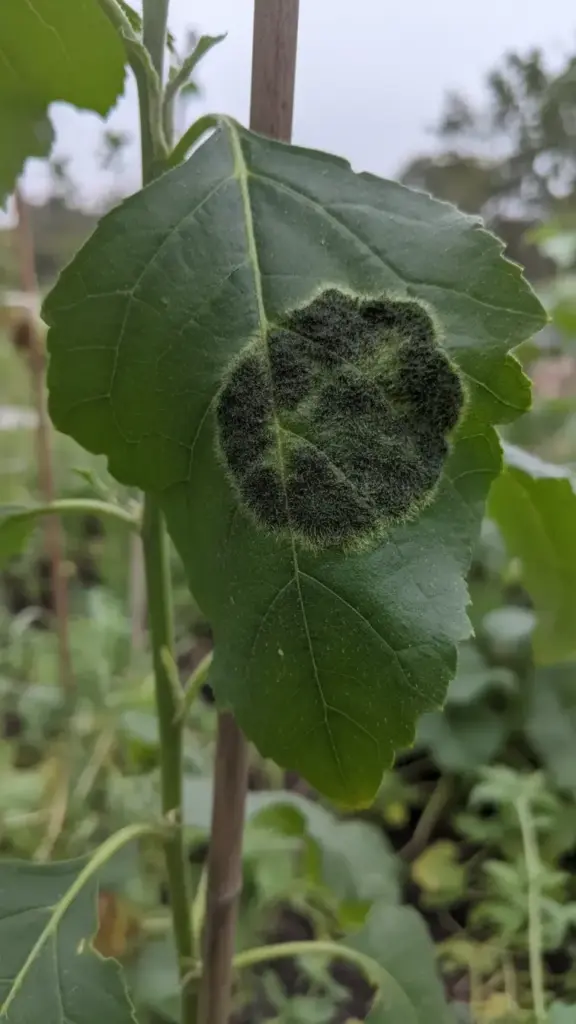
Because “Cladosporium leaf spot” describes a genus rather than one pathogen and one host, the honest answer is that it turns up across a surprisingly wide range of plants.
Spinach is one of the better documented hosts, where the disease occurs to some degree almost every year but rarely becomes severe unless spring rainfall is unusually heavy. Sweet william and other dianthus are a second well documented host in ornamental beds. Beyond those two, various Cladosporium species have been reported as a minor or secondary leaf spotting fungus on a long list of shade trees, shrubs, and other ornamentals, usually behind more common problems like anthracnose or the various named leaf spot diseases already covered on this site.
If you have found round or irregular spots with an olive to dark green fuzzy center or underside on a plant not mentioned by name here, that pattern still points toward a Cladosporium species even without a documented case for that exact plant.
Cladosporium Leaf Spot vs Other Common Leaf Spot Diseases
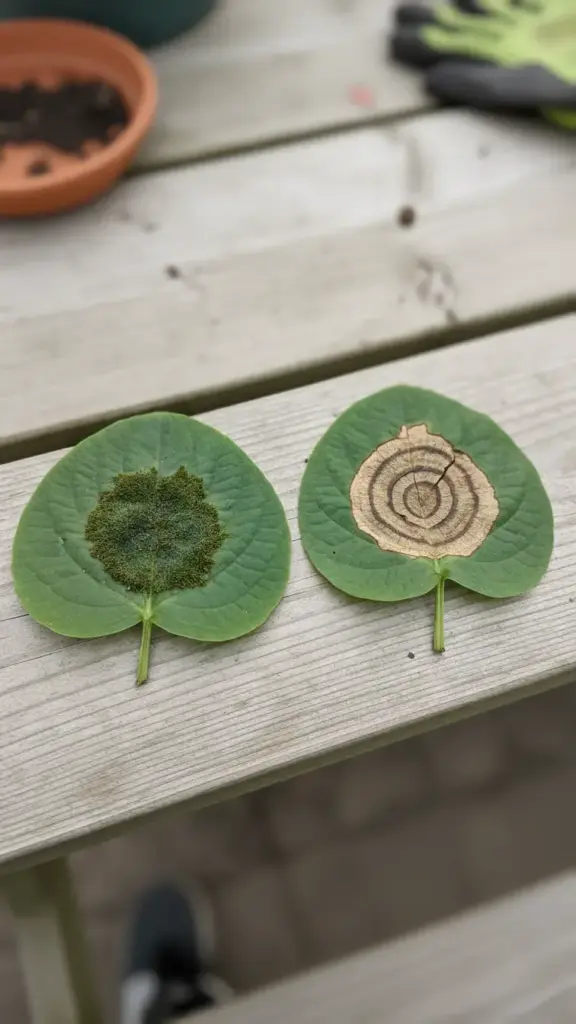
| What You See | Likely Cause | How To Tell It Apart |
| Round or irregular spots with a fuzzy olive to dark green spore layer in the center or on the leaf underside | Cladosporium leaf spot | The spore layer looks distinctly fuzzy or velvety rather than flat, and is usually darker green than the surrounding spot |
| Tan to brown spots with concentric target-like rings and a chance of the whole leaf yellowing | Alternaria leaf spot | Rings are more defined and the spore layer, when present, is dry and dark brown rather than green and fuzzy |
| Water-soaked spots with a yellow halo that can ooze in wet weather | Bacterial leaf spot | No fungal spore layer forms at all, spots look wet rather than fuzzy, and edges are often angular where they meet leaf veins |
| Small circular tan to gray spots, often with a purplish border, common on ornamentals | Cercospora leaf spot | Spots stay smaller and more uniform in size, and lack the coarse fuzzy texture Cladosporium spots develop |
Melanose and other rind or bark specific diseases are not really part of this comparison, since Cladosporium leaf spot is specific to foliage rather than fruit or woody tissue.
Known Cladosporium Leaf Spot Hosts and Typical Symptoms
| Plant | Typical Symptom | Source |
| Spinach | Round tan spots under a quarter inch, dark green spore layer in the center | UC IPM |
| Sweet william and dianthus relatives | Yellowish brown spots with a purplish margin, progressing to necrotic leaves and stems | UC IPM |
| Shade trees and ornamentals, various species | Occasional secondary leaf spotting, usually minor compared to more common named diseases on the same plant | Missouri Botanical Garden |
Why Wet Weather and Crowding Make It Worse
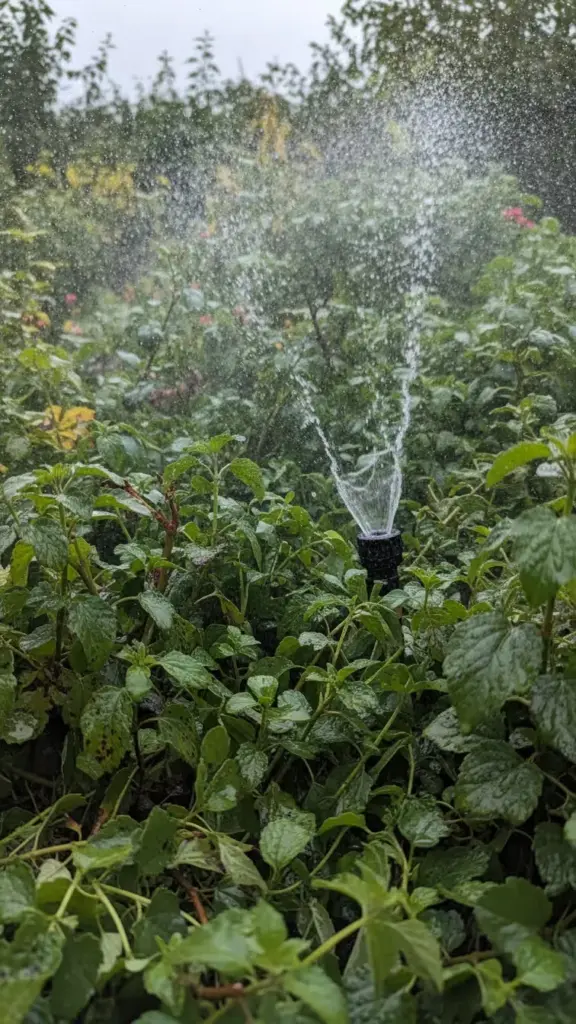
Like most fungal leaf spot diseases, Cladosporium species spread through airborne and splash dispersed spores, and the fungus survives between seasons on old plant debris left in the bed. University of California guidance on sweet william disease management notes that spores are airborne and favored specifically by wet weather and overhead irrigation, and that the fungus persists on old plant debris to seed the next infection.
That combination, water sitting on the leaf surface plus spores already present from a previous season, is why the same bed of spinach or the same row of sweet william often shows the disease again the following year if nothing changes about how it is watered or cleaned up.
Is Cladosporium Leaf Spot Dangerous to My Plant
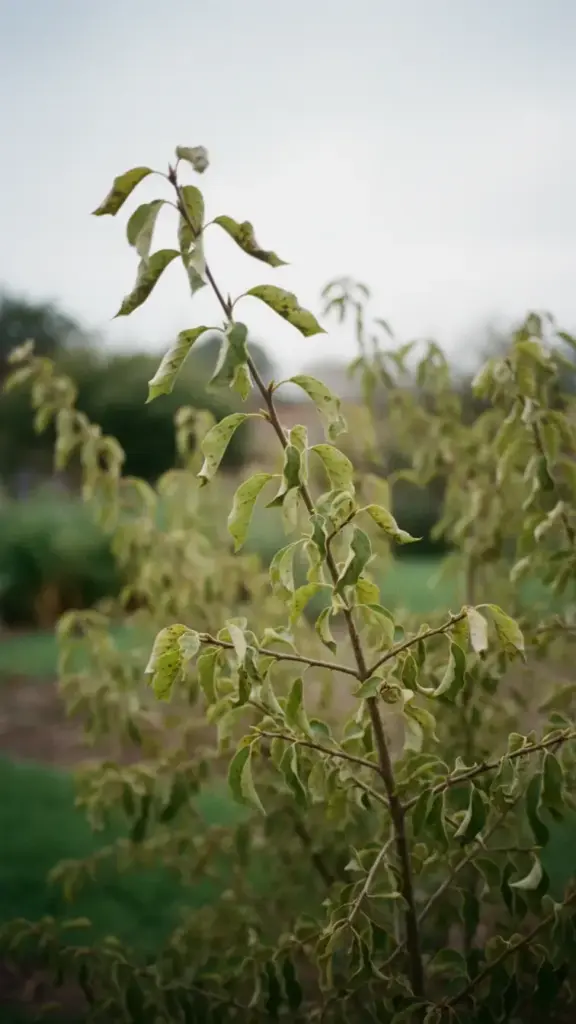
Usually not seriously. On spinach, the disease is described as occurring to some extent almost every year without becoming severe unless there is significant spring rain, and treatment is described as rarely necessary. On established shade trees and shrubs, general leaf spot disease guidance from the Missouri Botanical Garden notes that a plant can tolerate almost complete defoliation if it happens late in the season or not every year, though small or newly planted specimens are more at risk if defoliation happens repeatedly.
The exception is a young or already stressed plant. Repeated, severe defoliation on a small transplant, or on a plant already struggling with drought, poor drainage, or root problems, is a bigger deal than the same spotting on a mature, otherwise healthy plant.
Step 1: Confirm the Diagnosis Before Treating
Before doing anything else, check the underside or the center of a few spots for that fuzzy, olive to dark green spore layer. If the spots are dry, flat, and papery with no fuzzy texture at all, you are more likely looking at one of the other leaf spot diseases in the comparison table above, and treating for Cladosporium will not help.
Step 2: Improve Airflow and Change Watering Habits
Switch from overhead watering to soil level watering wherever the layout allows it, since wetting the foliage is exactly what spreads the spores from leaf to leaf and plant to plant. Space plants further apart than feels necessary, and thin out crowded stems on perennials like sweet william, so that leaves dry quickly after rain instead of staying damp for hours.
Step 3: Remove and Destroy Infected Debris
At the end of the season, or as soon as you notice heavily spotted leaves, remove them rather than letting them fall and sit in the bed. Old infected debris is exactly what the fungus uses to survive the winter and start the next round of infections, so bag and dispose of it rather than adding it to a home compost pile that may not get hot enough to kill the spores.
Step 4: Use Fungicide Only When Necessary
For most home gardens, the first three steps handle the problem without a spray. If a particular plant has a real history of severe infection, a copper based fungicide applied as a protectant before symptoms appear is the approach used on documented hosts like spinach, though University of California guidance is clear that copper sprays are not highly effective and should be seen as a minor supplement to sanitation and watering changes rather than a primary fix. If repeat applications are needed on an ornamental like sweet william, rotate between different fungicide types rather than reusing the same product every time, which helps avoid building resistance in the fungus.
Common Questions
Is Cladosporium Leaf Spot the Same as Tomato Leaf Mold
No, though the two are related historically. Tomato leaf mold is caused by a different fungus, now classified as Fulvia fulva, that was formerly grouped in the Cladosporium genus under the name Cladosporium fulvum. It produces a similar velvety spore layer but is specific to tomato and is usually a greenhouse or high tunnel problem rather than an open garden one.
Can I Eat Vegetables or Fruit From an Infected Plant
Yes, in the documented cases on this page the fungus affects leaf tissue rather than fruit. A spinach plant with leaf spot is generally still fine to harvest and eat, working around any visibly damaged leaves.
Will It Spread to Every Plant in My Garden
Not usually. The Cladosporium species behind this disease tend to be fairly specific to particular hosts or closely related plant families, so a case on your spinach is unlikely to jump to your roses, and a case on sweet william is unlikely to spread to unrelated vegetables.
Does It Come Back Every Year Once a Bed Has It
It can, mainly because the fungus survives on old plant debris. Cleaning up infected material at the end of the season and changing overhead watering habits are what actually break that cycle, rather than a single round of spraying.
What Is the Single Most Useful Change I Can Make
Stop wetting the foliage. Nearly every source describing this disease and its relatives points to overhead irrigation and splashing water as the main way spores move from leaf to leaf, and switching to soil level watering does more than any other single step.
Where to Go From Here
Start by checking the texture of the spots themselves. A fuzzy, olive to dark green spore layer in the center or on the underside points to a Cladosporium species, while dry flat spots, target-like rings, or wet oozing lesions point toward one of the other diseases in the comparison table above. Once you know what you are dealing with, the fix for Cladosporium leaf spot is rarely a spray program. Improving airflow, moving water to the soil, and cleaning up debris at the end of the season resolve most home garden cases before a fungicide is ever needed.








