

Citrus scab looks worse than it usually is. The first time I found wart-like bumps crawling across a young grapefruit leaf I assumed the tree was in real trouble. It was not. Scab is almost entirely cosmetic, it only ever infects young soft tissue, and on most home garden trees it is a problem you can choose to ignore.
That said, choosing to ignore it is different from not knowing what it is. Scab gets confused with melanose, with citrus canker, and with several insects that leave raised bumps of their own, and those confusions lead to wrong treatments and wasted sprays. This page sorts out what scab actually looks like, which citrus it bothers, why timing is everything if you do decide to spray, and when the fruit is still fine to eat even if the rind looks rough.
I garden with a Temple orange that gets scab most years and a Meyer lemon that has never shown a trace of it, which is a smaller version of the same pattern that shows up across citrus varieties everywhere.
What Citrus Scab Actually Is
Citrus scab is a fungal disease caused by Elsinoe fawcettii, spread mainly by splashing rain rather than wind. It infects only young, still expanding tissue. Once a leaf hardens off or a fruit reaches a certain size, the fungus can no longer get in, which is the single most useful fact on this page and the reason the whole management approach revolves around timing rather than repeated spraying.
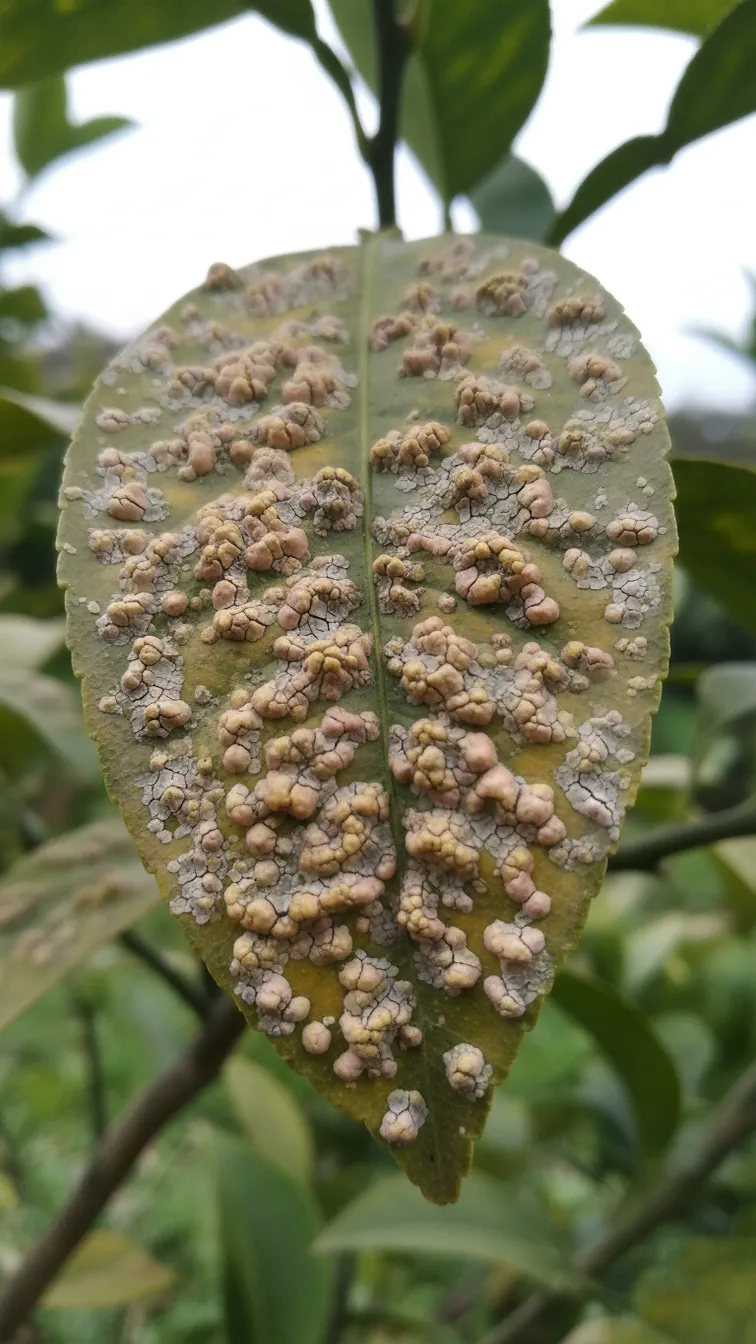
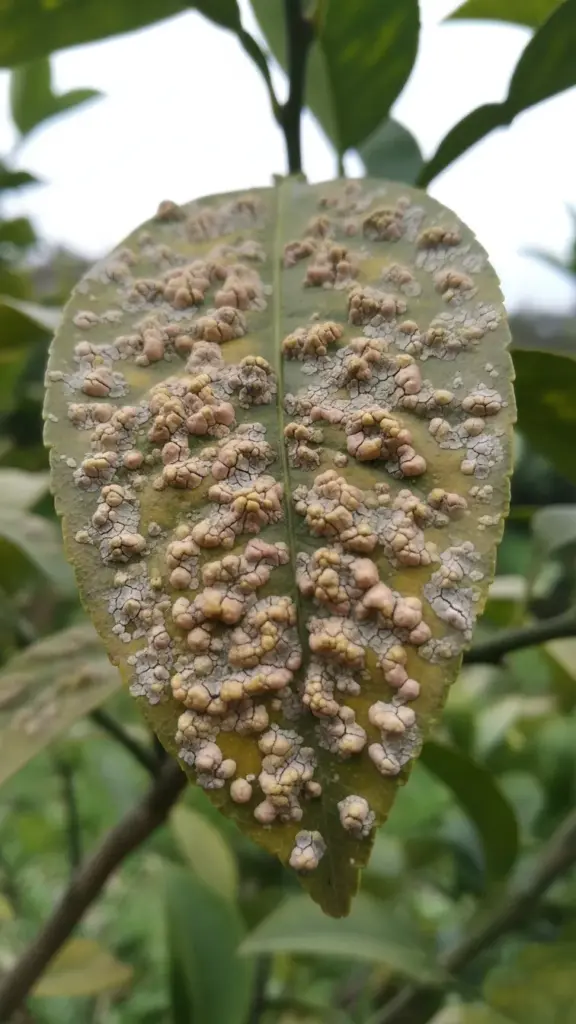
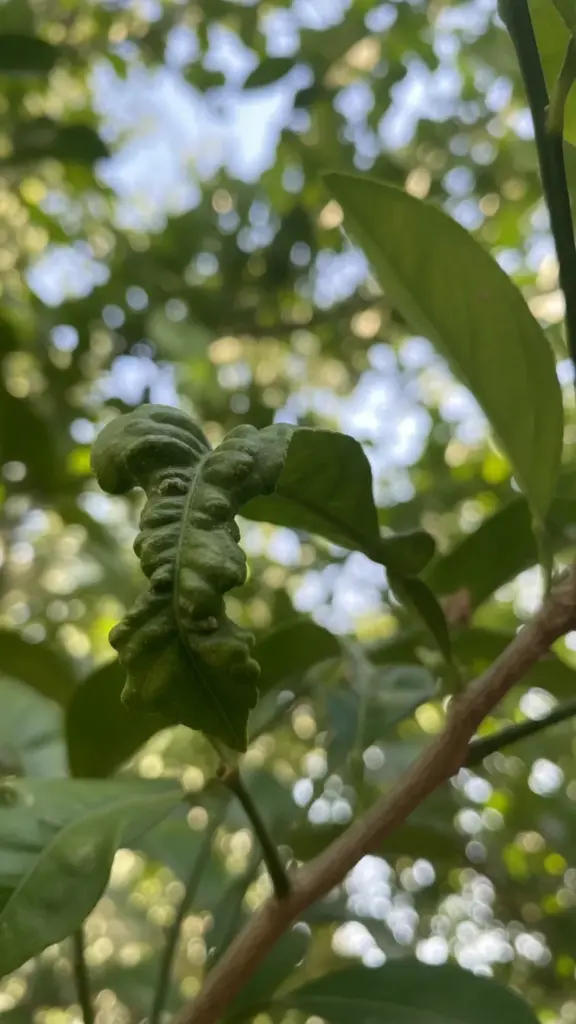
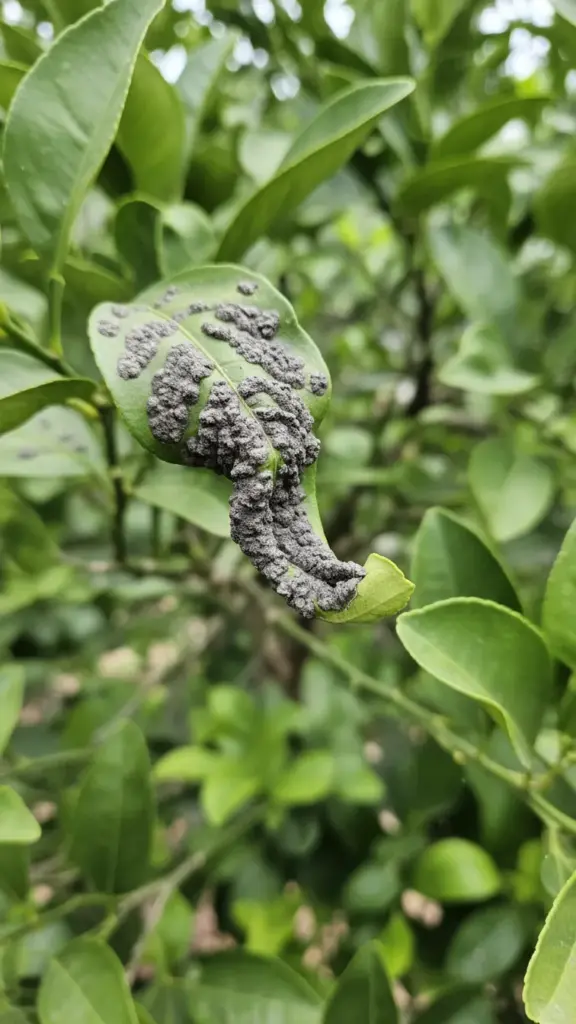
The fungus produces small raised outgrowths, not flat lesions, which is what gives the disease its name and its texture. On leaves this shows as crinkling and distortion of the whole leaf as it develops, not just a spot sitting on an otherwise normal leaf. On fruit it shows as a scattering of individual warty bumps, sometimes dense enough to run together into a rough, corky patch of rind.
A separate but related fungus, Elsinoe australis, causes what is specifically called sweet orange scab and behaves similarly. The common Elsinoe fawcettii form that most home gardeners run into does not generally infect sweet oranges at all, which is worth knowing if you are trying to work out whether your particular tree is a likely host.
How to Identify Citrus Scab on Leaves
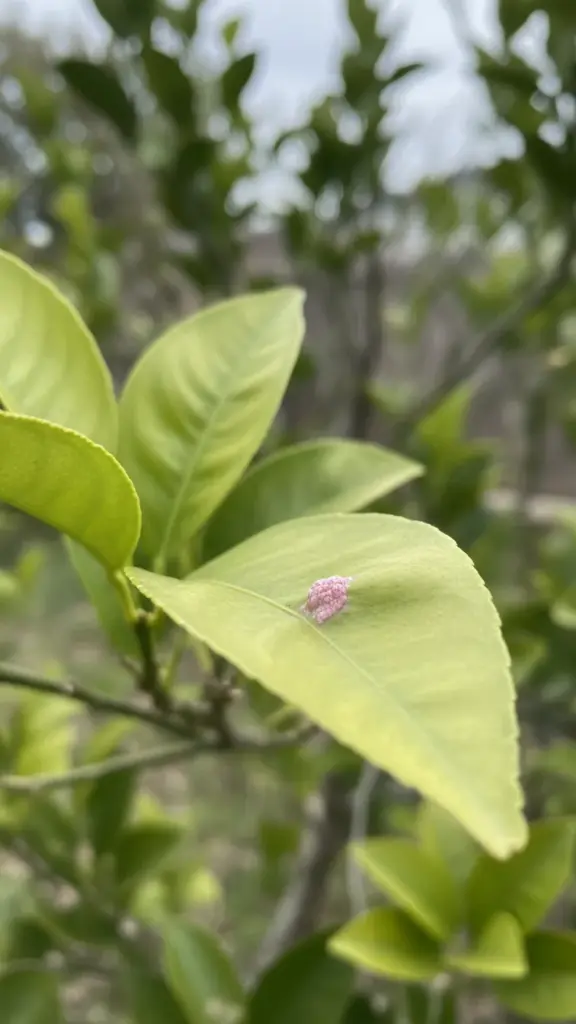
Check the newest flush first, because that is the only place scab can start.
The earliest sign is a small raised bump on a leaf that is still expanding, usually pink or light brown at this stage. As the leaf matures around the infection, the bump enlarges into a wart-like, corky projection, sometimes with a slightly pointed or fingerlike shape and a paler tip. Colour darkens with age, moving from that initial pink or light brown toward grey and eventually black.
Because the infection happens while the leaf is still growing, badly affected leaves do not just carry spots, they come out crinkled, twisted, and smaller than they should be. A leaf with a dozen scattered bumps pulling the surface in different directions looks distorted in a way that a leaf with a simple flat spot never does.
Mature, already-hardened leaves elsewhere on the tree stay completely clean no matter how bad the new flush looks, which is a useful reassurance when a tree looks alarming at first glance.
How to Identify Citrus Scab on Fruit
Fruit infection follows the same rule as leaves. Only fruit that is still small and expanding can be infected, so scab tells you something about when in the season the rain and the fungus lined up, not about anything currently happening to a full-sized fruit.
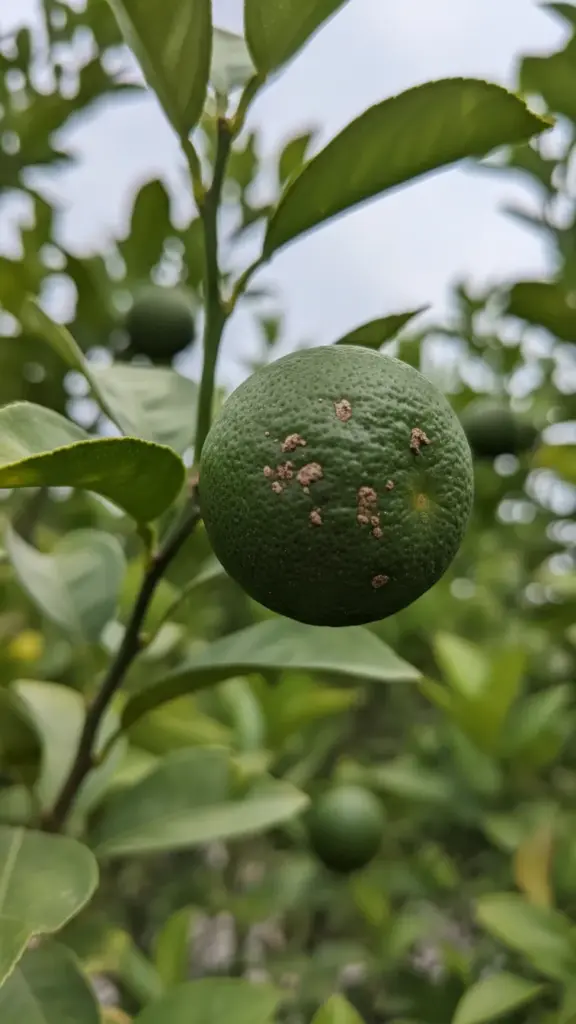
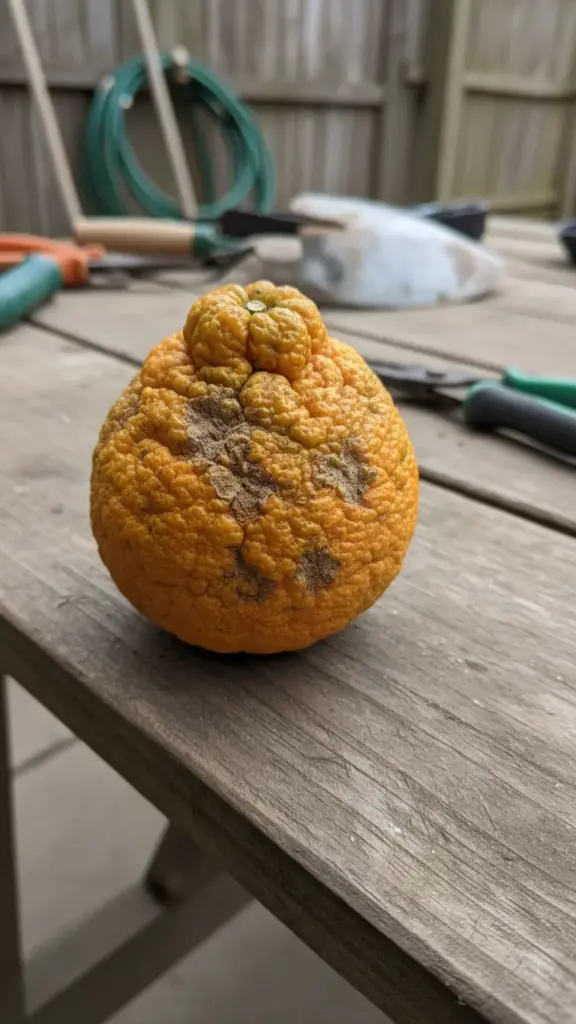
Early lesions are small raised brown spots on the young rind. As the fruit continues to size up around them, those spots swell into the same warty, corky outgrowths seen on leaves, and a heavily infected fruit can end up with a rind that is thickened, puffy, and rough over a large portion of its surface. In severe cases on fruit that was infected very young, the whole fruit can end up misshapen rather than just marked.
Inside, none of this matters. The flesh and juice are unaffected, and a lumpy, corky-skinned fruit is just as good to eat as a smooth one. The only real cost is appearance, which matters if you sell or give away fruit and does not matter at all if you are eating it yourself.
Which Citrus Gets Hit Hardest
Susceptibility varies enough that the same rainy spring can wreck one tree in a yard and leave the one next to it untouched.
The University of Florida’s guide to citrus disease identification notes that scab can be particularly severe on Temple oranges and lemons, and is often troublesome on Murcotts, Minneola tangelos, and grapefruit. In my own garden that matches exactly, the Temple is the tree I watch and the true sweet oranges nearby barely register it.
The Louisiana State University AgCenter’s citrus disease reference lists a broader home garden host range: grapefruit, lemon, satsuma, and tangerine, along with the sour orange and trifoliate orange rootstocks that many citrus trees are grafted onto. That same reference is explicit that sweet orange is not affected by this form of the fungus, which lines up with the Florida guide’s ranking and with the pattern I see in my own garden.
If your tree is a lime, a mandarin cross, or a rootstock sucker growing up from below a graft union, do not assume it is exempt just because it is not on the exact varieties named above. Susceptibility is broad and inconsistent enough across citrus relatives that the safest approach is to check what is actually on your tree rather than rule it out by variety alone.
Citrus Scab vs Melanose vs Other Rind Blemishes
Several very different problems all leave textured marks on citrus rind, and treating the wrong one wastes a season.
| What you see | Likely cause | How to tell it apart |
| Raised wart-like corky bumps, pink to grey to black, on young crinkled leaves and small fruit | Citrus scab | The bumps are truly raised and the affected leaf itself is twisted and distorted |
| Small raised dots and pustules, brick red to black, feel like sandpaper, often in tear-streak patterns running down the fruit | Melanose | Pustules are flatter and more uniform, and the streaking pattern follows where water ran down the fruit |
| Sunken, water-soaked lesions with a raised rim and a yellow halo, sometimes oozing | Citrus canker | Lesions look wet and cratered rather than warty, and often affect stems too |
| Blistered, greasy-looking dark patches mainly on the underside of older mature leaves | Greasy spot | Shows up on last season’s leaves, never on the current young flush |
| Flat, immobile brown or grey bumps that do not have a crinkled leaf underneath them | Scale insects | The bumps sit on top of the leaf surface and can be scraped off with a fingernail, revealing a soft insect body |
Melanose is the mix-up I see most often, since both diseases raise the surface of the rind and both look worse on grapefruit than on other citrus. The Florida guide describing melanose notes that its lesions are small, raised, superficial pustules ranging from brick red to black that feel like sandpaper, and that they often form in a tear-streaking pattern caused by water flowing down the fruit and carrying spores. That streaking pattern, and the flatter and finer texture, is what separates it from the coarser, more three-dimensional bumps of scab.
Scale insects are the other common confusion. If you are seeing flat bumps rather than the crinkled, textured growths described above, look at citrus scale before assuming it is a fungal problem, since scale covers stems and mature leaves as well as fruit and scab does not.
Why the Flush Timing Matters So Much
Everything about managing this disease comes back to one fact: the fungus can only get into tissue that is still soft and expanding.
That means a tree that pushes several separate flushes of new growth through spring and summer can pick up several separate rounds of infection, one per flush, each limited to whatever was tender at the time rain fell. It also means that once you see mature scab lesions, the infection event that caused them is long finished, and there is nothing left to spray for on that particular leaf or fruit.
The practical result is that scab management is entirely forward looking. You are never treating the damage you can see. You are deciding whether to protect the next flush before it emerges, based on how bad the problem has been in previous years.
What Makes Scab Worse in a Home Garden
A few conditions turn an occasional light case into a tree that looks rough every year.
Overhead watering that wets the new flush adds exactly the moisture the fungus needs to spread, on a schedule you control rather than one dictated by weather. Moving irrigation to the soil rather than the leaves helps this disease the same way it helps several other citrus fungal problems.
A tree crowded against a wall, a fence, or other citrus holds humidity around the new growth for longer after rain, giving the fungus more time on tender tissue. Thinning out crowded plantings and pruning for airflow through the canopy reduces that window.
A history of scab on a particular tree is itself a risk factor, since old infected leaves and twigs can carry the fungus into the next season, ready to spread again as soon as fresh growth and rain coincide.
Step 1: Decide Whether Treatment Is Actually Worth It
Before reaching for a fungicide, look honestly at what the disease is costing you.
If the fruit is for your own kitchen, scab is a cosmetic problem you can eat around, and the flesh is completely unaffected. Many home gardeners, myself included, simply let a mild case run its course rather than committing to a full spray programme for a blemish that never touches the juice.
If you sell, gift, or show your fruit, or if a tree has been severely disfigured for several years running, that calculation changes, and moving on to active management makes sense.
Step 2: Prune Out Old Infected Growth
Old scab lesions on twigs and leaves are a reservoir for the next season, the same way old leaf litter is for greasy spot.
In late winter, before new growth starts, cut out twigs and shoots that were heavily scabbed the previous year, along with any obviously dead or weak wood in the same area. This will not remove all inoculum, since neighbouring untreated citrus can still be a source, but it reduces the amount of fungus sitting close to the tissue that is about to become vulnerable.
Step 3: Protect the Flush Before It Opens, Not After
If a tree has a bad enough history to justify spraying, the spray has to go on before the new leaves and small fruit are exposed to infection, not after symptoms appear.
A copper based fungicide applied as the new flush is just beginning to push, and repeated as later flushes emerge through the season, is the traditional home garden approach for scab and several other citrus fungal diseases at the same time. Because the vulnerable window is short for any one flush, getting the timing close matters more than the exact product used. I have not been able to confirm an authoritative source for a single universal spray calendar, so treat any specific schedule, including the one I use on my own Temple orange, as a starting point to adjust based on how your own tree’s flushes actually run.
Living With Fruit You Already Have
If your harvest already has scabby rind, there is nothing left to do about the marks themselves, and nothing that needs doing.
Peel and juice affected fruit exactly as you would clean fruit. The texture stops at the rind. If you are giving fruit away and want it to look its best, choose the smoothest of the crop for gifting and keep the rougher ones for your own kitchen, where nobody minds a corky patch on the outside of an orange that tastes completely normal.
Common Questions
Is Citrus Scab Harmful to Health
No. It affects only the surface of the rind and never the flesh or juice. Fruit with scab is entirely safe and normal to eat.
Does Citrus Scab Kill a Tree
No. It is a cosmetic disease of young tissue, and even a tree with scab on most of its new growth every year continues to grow, flower, and fruit normally.
Can I Use the Same Spray for Scab and Melanose
Copper based fungicides are commonly used against both, but the timing differs because the two fungi infect on slightly different schedules. Identify which one you actually have before planning a spray programme, using the comparison table above.
Will Removing Affected Leaves Cure the Tree
No single round of removal cures it, because the fungus can survive on old wood and neighbouring citrus can reinfect a clean tree. Pruning out old lesions in winter reduces the local source of spores rather than eliminating the disease.
Why Does Only My Grapefruit Get Scab and Not My Orange
Because the common form of the fungus has a genuinely different host range, and sweet oranges are one of the citrus types it does not generally infect. Grapefruit, lemons, and several tangerine relatives are far more commonly affected.
Does Scab Spread to My Other Garden Plants
No. It is specific to citrus and closely related plants. Your vegetables, roses, and other fruit trees are not at risk from it.
Where to Go From Here
Start by checking whether what you are looking at is actually scab. Crinkled young leaves and warty, three-dimensional bumps on soft new growth point to scab, flatter sandpapery pustules with tear streaking point to melanose, and flat immobile bumps point to an insect rather than a fungus at all.
Once you know what you have, the decision is usually simple. Most home gardens can live with citrus scab and eat the fruit without a second thought. If a particular tree has a real history of disfiguring infection, prune out the old lesions in winter and get any spray onto the new flush before it opens, because that is the only point in the whole cycle where treatment actually does anything.








