
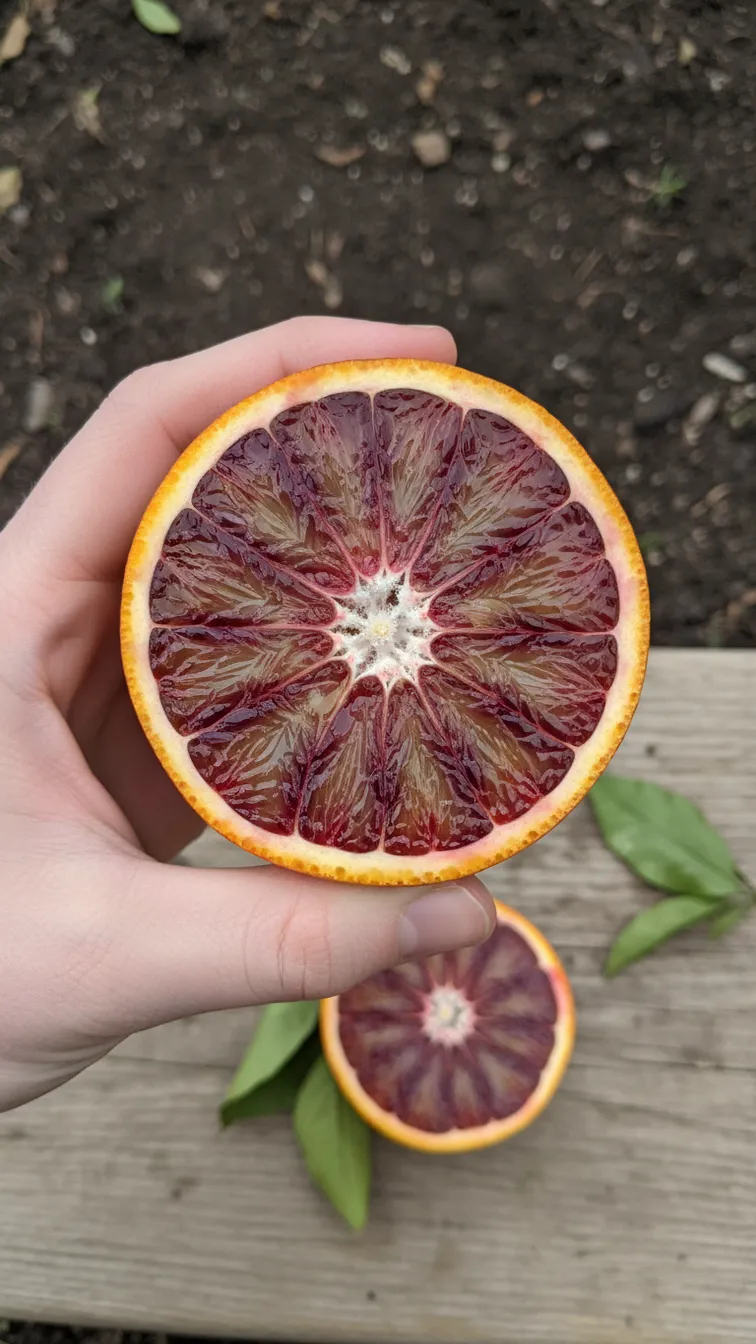

My first blood orange tree gave me eleven fruit that looked exactly like ordinary oranges inside. No crimson, no streaks, nothing. I had fed it, watered it, and picked it in December like any other citrus, and the internet told me I had bought a fake tree. The tree was fine. My winter was not cold enough, and I had picked far too early.
That is the part most guides skip. Learning how to grow blood orange fruit is really two separate jobs: growing a healthy citrus tree, which is straightforward, and getting the red pigment to develop, which depends almost entirely on your night temperatures and your patience at harvest.
The short version. Check your winter nights before you buy anything. Choose Moro if your winters are mild and you want the most colour you can get. Plant in the warmest, sunniest corner you have. Water deeply and feed with nitrogen through spring and early summer. Then leave the fruit hanging weeks past the point it looks ripe, and cut one open before you harvest the rest.
The red colour is weather, not fertiliser
The crimson in a blood orange comes from anthocyanin, the same family of pigments that colours red cabbage and blueberries. Ordinary oranges carry the genes for it too, but blood orange varieties switch it on strongly, and only when the fruit gets cold while it is finishing on the tree.
UF/IFAS puts a number on it. Their researchers describe the pigment developing when fruit sits through temperatures between 46 and 59 degrees Fahrenheit for at least twenty days, which is 8 to 15 degrees Celsius. Not frost, and not a single cold snap. A long stretch of cool nights while the fruit is still hanging.
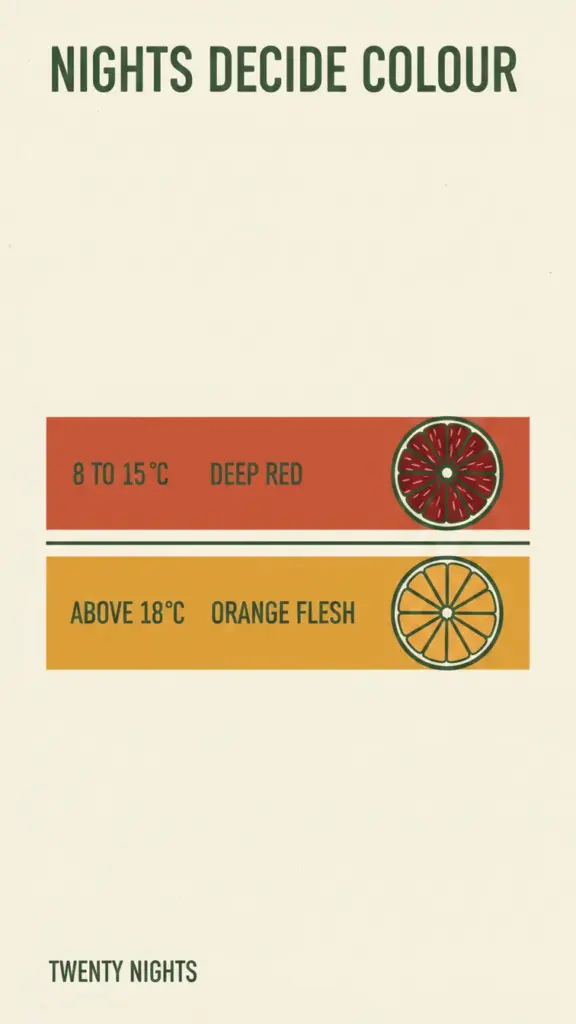
This explains most of the disappointment people report. Nothing you add to the soil creates that pigment. No fertiliser, no additive, no pruning trick. If your winter nights sit in the low twenties Celsius, you will grow a perfectly good sweet orange on a blood orange tree, and there is no way around it except moving the pot somewhere cooler.
Step 1: Check your winter before you buy the tree
This is the step that saves you three wasted years, so do it before you look at a single nursery listing. Find your average night low for the two months before harvest, roughly December and January in the northern hemisphere.
| Your winter nights | What you will get | Worth planting? |
| Regular nights at 8 to 15 C | Deep, reliable colour | Yes, plant any variety |
| Occasional cool spells only | Streaks and blush, varying by year | Yes, choose Moro |
| Nights rarely below 18 C | Sweet fruit, little or no red | Only if you accept an orange fruit |
| Hard freezes below minus 3 C | Damaged canopy and lost crop | Only in a pot you can move |
UF/IFAS is blunt about this problem in its own state. Their assessment of blood oranges in Florida treats the subtropical climate as the main obstacle to growing them commercially, because the cool period the pigment needs simply does not arrive most years. Florida grows superb citrus. It struggles with this particular fruit, and that tells you how much the climate matters.
If you fall in the third row and still want to try, grow it in a large pot. Moving a pot to the coldest corner of your property for six weeks is the only practical lever a home grower has.
Step 2: Pick the variety that matches your winter
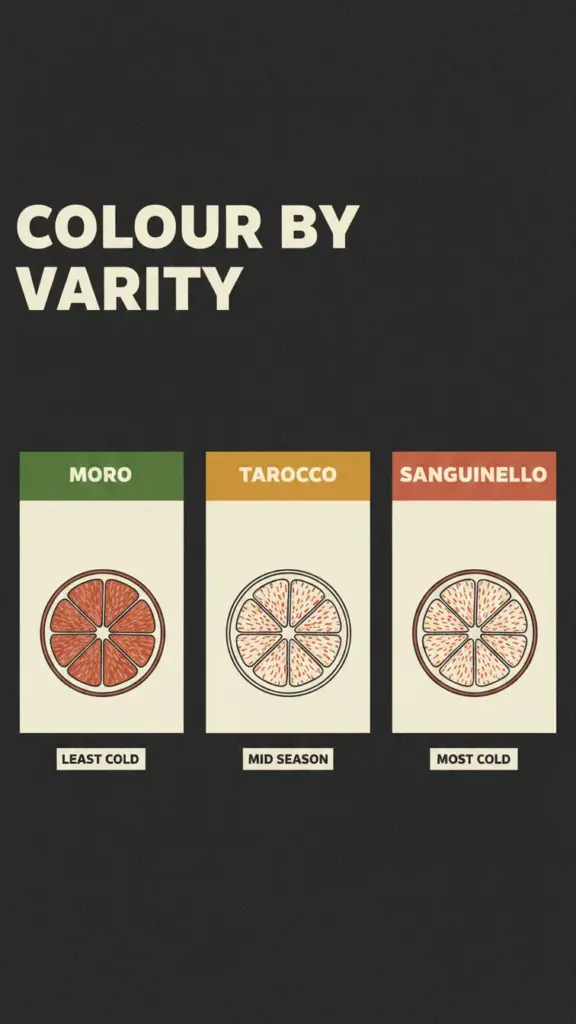
The three varieties you will actually find are not interchangeable, and the difference between them is mostly about how much cold they need to colour up.
- Moro. The darkest of the three, often near maroon inside, with a red blush on the rind. It colours earlier and with less cold than the others, which makes it the sensible choice for anyone whose winters are only moderately cool. The flavour is sharper, with a berry note some people love and others find bitter.
- Tarocco. The best eating fruit of the three by most accounts, sweet and easy to peel. It needs a genuinely cold winter to pigment well, and in a mild year you may get orange flesh with red flecks.
- Sanguinello. Ripens late, holds on the tree well, and sits between the other two for colour. Less common in nurseries outside the Mediterranean.
If you have room for one tree and your winters are unpredictable, plant Moro. A tree that gives you some colour every year beats a Tarocco that dazzles once every five.
Step 3: Plant it in the warmest spot you have
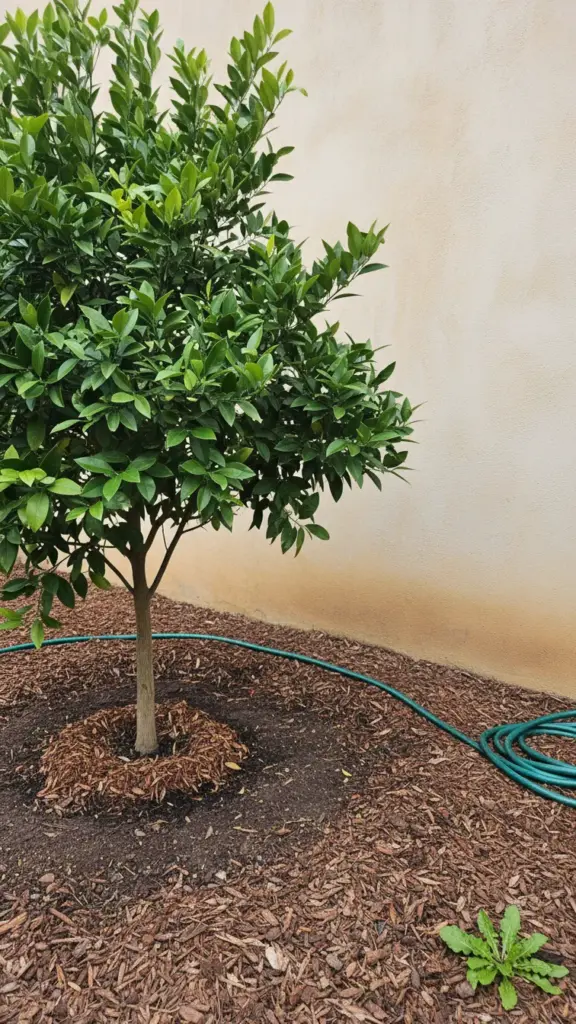
This sounds like it contradicts everything above, so it is worth being clear. The tree needs summer heat to make sugar and grow wood. The fruit needs cool nights in winter to make pigment. Those two things happen in different seasons, so you are not choosing between them.
Give it full sun, at least six hours and preferably eight. A south facing wall in the northern hemisphere is ideal, because the masonry holds warmth overnight and buys you a few degrees of frost protection. Keep it away from lawn sprinklers and away from the drip line of large trees.
Plant high. Set the top of the root ball two to three centimetres above the surrounding soil and slope the backfill up to it, because citrus roots die in ground that stays saturated. Do not enrich the planting hole with compost. A rich pocket in ordinary soil holds water and keeps the roots circling inside it instead of spreading out. Pull mulch back a hand span from the trunk so the graft union stays dry and exposed.
Step 4: Water and feed on a rhythm
Watering
Deep and infrequent beats little and often. Water until the soil is wet through the whole root zone, then wait until the top few centimetres are dry before you water again. Push a finger in to the second knuckle to check rather than watering on a fixed day.
In a container, water until it runs freely from the drainage holes and tip out whatever collects in the saucer. Potted citrus goes downhill fast in standing water, and blood oranges are no more forgiving than any other orange.
Feeding
Citrus is a heavy nitrogen feeder. Split the year into three feeds: late winter before flowering, after fruit set in mid spring, and once more in early summer. Then stop, because nitrogen in late summer pushes tender growth straight into frost season.
How you apply it matters as much as how much. Texas A&M advises spreading fertiliser uniformly under the tree canopy and slightly beyond it, then watering it in thoroughly. Piling it in a ring against the trunk burns bark and misses most of the feeding roots, which sit out near the edge of the canopy.
Step 5: Leave the fruit hanging longer than feels sensible
Here is where I lost my first crop. Blood oranges colour on the tree, and both the sugar and the pigment keep building through the coldest part of winter. A fruit that looks finished in December is often at its best in February or March.
Citrus does not sweeten after picking. Whatever sugar and pigment the fruit holds when you cut it is all you will ever get, so an early harvest is permanent, not just early. Blood oranges hold on the tree far better than mandarins do, which is exactly why growers leave them there.
The rind lies to you as well. Rind colour responds to cold nights and to the variety, not to what is happening inside. A Moro with a heavy red blush can still be pale in the flesh, and a plain orange looking Tarocco can be crimson when you cut it. Judging by the outside is how most people end up disappointed.
Watch for the real signals instead: the fruit feels heavy for its size, the skin gives very slightly under thumb pressure, and the tree has been through several weeks of cool nights.
Step 6: Cut one open before you pick the rest
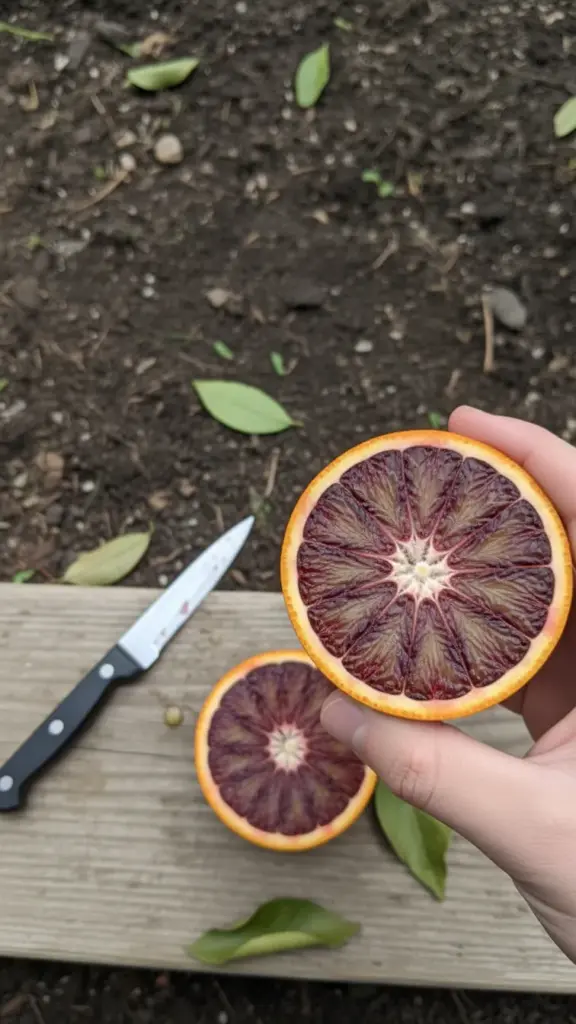
Sacrifice a single fruit from the coldest, most exposed side of the tree, usually the north side in the northern hemisphere. Cut it across the middle rather than through the stem, so you see the full cross section.
If the flesh shows only flecks, put the knife down and wait two weeks. If it is streaked through, you are close. If it is uniformly dark, start harvesting, because holding fruit past its peak eventually costs you texture. One test fruit every fortnight from midwinter onward is the whole method.
What a blood orange year looks like
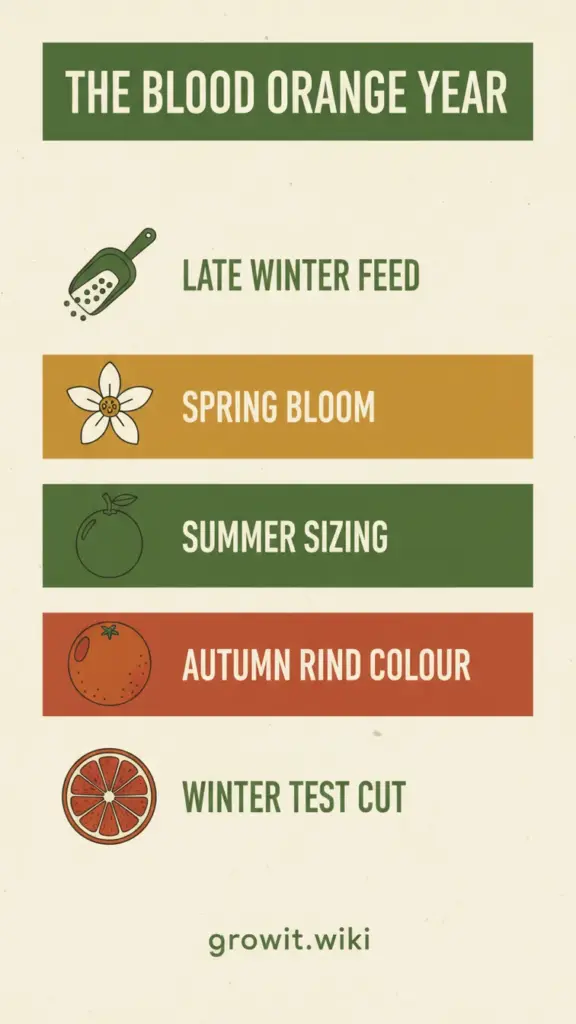
| Season | On the tree | Your job |
| Late winter | Dormant, buds swelling | First nitrogen feed |
| Spring | Heavy white bloom, natural fruit drop | Second feed, steady water |
| Summer | Fruit sizing, green | Third feed, deep watering |
| Autumn | Rind colouring, flesh still pale | Stop nitrogen, protect from early frost |
| Winter | Pigment developing in the cold | Test one fruit, then harvest |
The spring bloom is worth waiting for on its own. Blood orange flowers are as fragrant as any citrus, and if the scent is what draws you in, orange blossom is worth growing for its own sake.
When it goes wrong
- Flesh is orange, not red. Almost always insufficient cold at the right time, sometimes combined with picking early. Try a later harvest next season before you blame the tree.
- Colour varies wildly from year to year. Normal. Pigment tracks that winter’s weather, so a warm winter gives a paler crop even on a mature tree.
- Leaves stippled and dull, fine webbing in dry weather. Look closely for mites. Citrus red mite damage builds quietly during hot dry spells and shows up as a silvery cast across the leaf surface.
- Heavy flowering, almost no fruit. Common on young trees, and normal after a very heavy crop the previous year. Keep the water and feeding steady rather than intervening.
- Fruit splitting near the stem. In my garden this follows a dry spell broken by heavy rain or heavy watering. Consistency is the only fix I have found.
Common questions
Can I grow a blood orange in a pot?
Yes, and in a marginal climate a pot is the better option. Use a container of at least 15 gallons or a half barrel, choose a dwarfing rootstock, and take advantage of the one thing potted trees offer: you can wheel the tree into a cooler position in winter to chase the night temperatures the pigment needs.
Do I need two trees to get fruit?
No. Blood oranges are self fertile and will set a crop alone. A second citrus nearby does not improve fruiting, though cross pollination can introduce seeds into varieties that would otherwise be nearly seedless.
How long before it fruits?
A grafted nursery tree usually sets a small crop in its second or third year in your garden, with a real harvest from year four. The first crop or two often colours poorly even in a good climate, because young trees ripen fruit later and less evenly.
Why is the rind red but the inside pale?
Rind blush and flesh pigment are driven separately, and Moro in particular blushes on the outside readily. A red skin is not a harvest signal. Cut one open.
Will a cold frame or a fridge finish the colour?
Cold storage after picking does increase pigment in commercial handling, but it will not rescue fruit that came off the tree pale, and it does nothing for sweetness. Cold on the tree is what you want.
Where to go from here
If your winter nights turned out to be too warm, do not write off citrus. A kumquat grown in a small pot asks far less of your climate and fruits reliably on a balcony.
And if you do plant a blood orange, mark a date in midwinter now for your first test fruit. The tree will look ready long before it is, and the only thing standing between you and that crimson cross section is the willingness to wait another two weeks.








