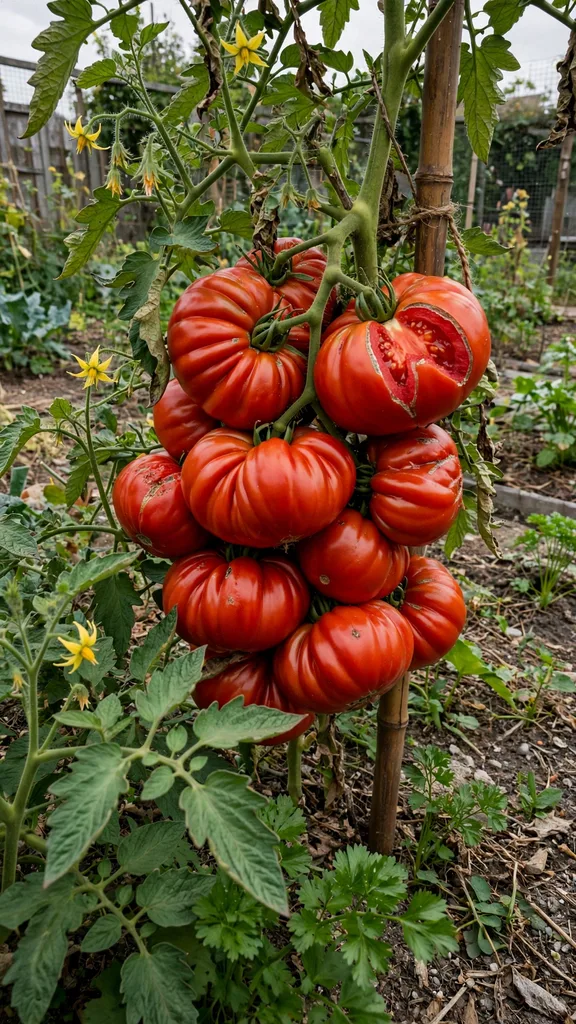
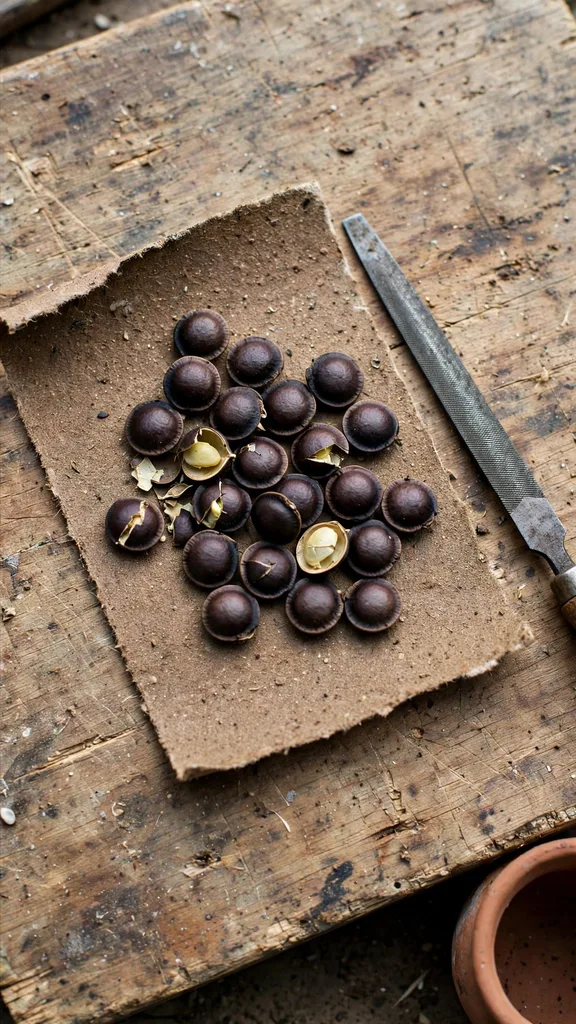
Let 5 tomato plants ripen past eating, and save their seed for next spring. Seed saving is harvesting ripe seed from your own plants, drying it, storing it cool and dry, and sowing it next season.
Seed saving trades money for attention. A packet costs a few dollars and arrives true to type. Saved seed costs nothing and carries your garden in it, yet it also carries every cross that happened in the bed. The gardener who saves seed from the right plants, at the right ripeness, with the right isolation, grows the same variety next year. The gardener who saves seed from any plant grows a surprise.
The first rule is the variety type. Open-pollinated and heirloom varieties grow true from saved seed, since their genetics stay stable. Hybrid seed grows into a mix of plant types next season, and most of them run inferior to the parent. Save seed from open-pollinated plants only, and buy hybrid seed fresh each year. The seed germination guide covers the sprouting test that checks saved seed before sowing.
| Seed Saving at a Glance | Detail |
|---|---|
| What it is | Harvesting, drying, and storing your own seed |
| Save from | Open-pollinated and heirloom varieties only |
| Skip | Hybrids, diseased plants, weak plants |
| Isolation | 0.4 km for insect-pollinated, 1.6 km for wind |
| Storage | Cool dry place below 10 degrees C |
| Label | Variety and date on every packet |
| Test | Germination test before sowing |
What Is Seed Saving?
Seed saving is the practice of collecting seed from plants in your own garden, cleaning and drying it, storing it through winter, and sowing it the next season. The gardener picks the best plants, lets their fruit or seed heads ripen fully, harvests the seed at peak ripeness, and keeps it until planting time. The practice is as old as gardening itself.
The deciding numbers are isolation distances. Insect-pollinated species need separation of at least 0.4 km between varieties, peppers need 152.4 m, melons, pumpkins, cucumbers, and squash need at least 0.8 km, and wind-pollinated crops such as corn need at least 1.6 km between varieties to maintain purity, according to the University of Arizona Extension guide to seed saving. Without that distance, pollen from another variety lands on the flower, and the saved seed grows a cross.
Seed saving differs from seed storage in one respect: selection. Storage keeps any seed alive. Saving chooses the best plants and the best fruit, and it keeps only their seed. A gardener who saves seed from the first plant to ripen selects for earliness. A gardener who saves seed from the biggest fruit selects for size. Every saved seed carries a choice, and the garden changes a little each year because of it.
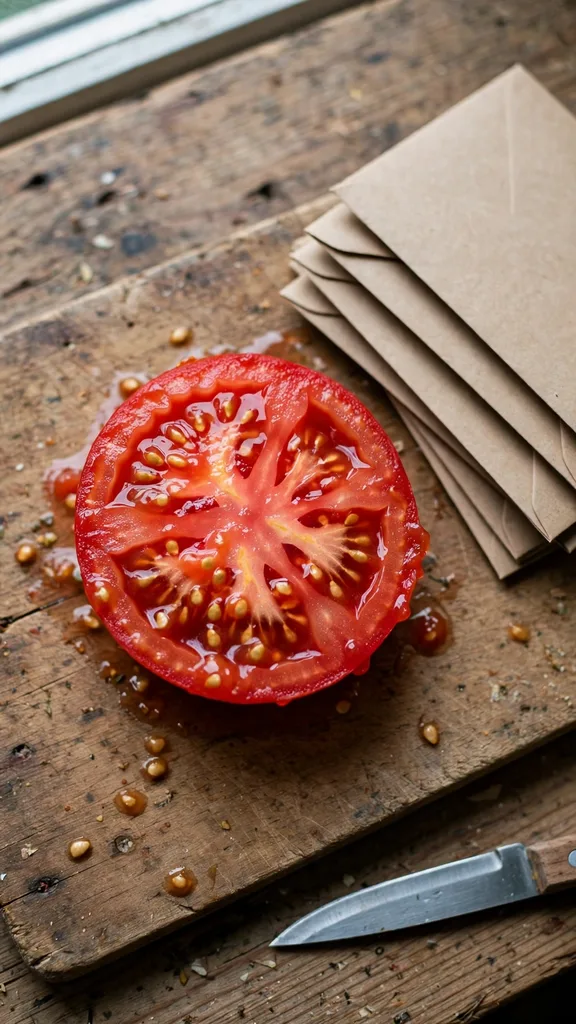
The practice also needs ripeness past eating. A tomato picked for the table is ripe for eating, yet its seed finishes ripening after that point. A pepper picked green holds immature seed. A bean picked young holds soft seed. Let the fruit pass eating ripeness before harvesting seed: tomatoes fully red and soft, peppers in their final color, beans dry and rattling in the pod. The stratification page covers the cold treatment some saved seed needs before it sprouts.
How Seed Saving Works
Seed saving works through pollination, ripening, drying, and storage. Pollination sets the genetics: self-pollinated crops fertilize themselves inside the flower, while cross-pollinated crops take pollen from other plants by wind or insect. The gardener controls the cross with distance, timing, or a bag over the flower. The saved seed grows what the pollen decided.
Ripening finishes the seed. A seed harvested green has a soft coat and a weak embryo, and it rots in storage. A seed harvested fully ripe has a hard coat and a full food store, and it waits out the winter. Wet seed from tomatoes and cucumbers needs fermenting or washing to remove the gel coat, then drying. Dry seed from beans and lettuce needs only threshing and winnowing.
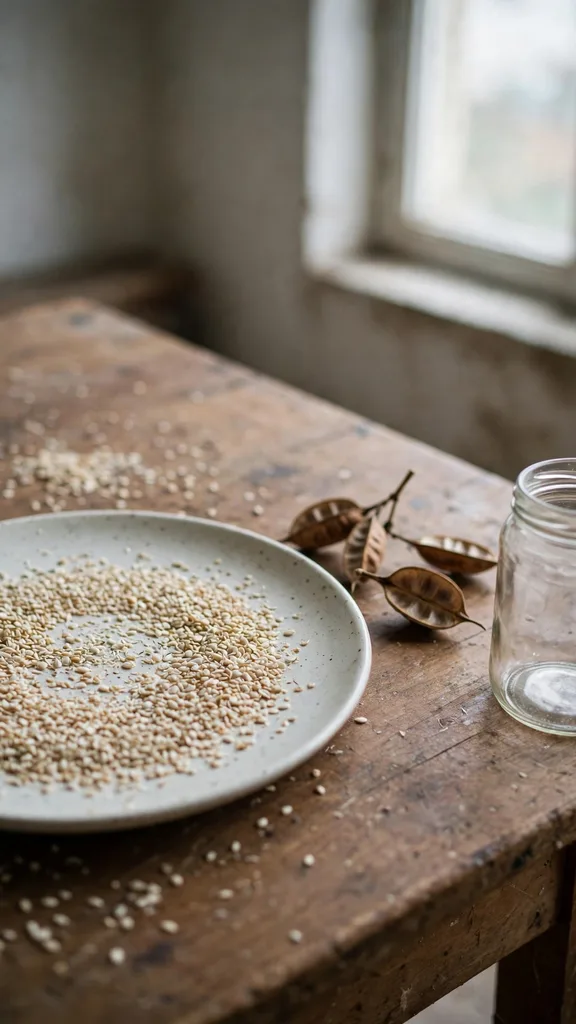
Drying decides storage life. Seed must dry fully before it goes into a packet, or mold grows in the dark. Spread seed thin on a plate or a screen, in a dry room with air movement, and stir it daily. Dry seed snaps when bent, while damp seed bends. A seed that snaps is ready. A seed that bends needs more days.
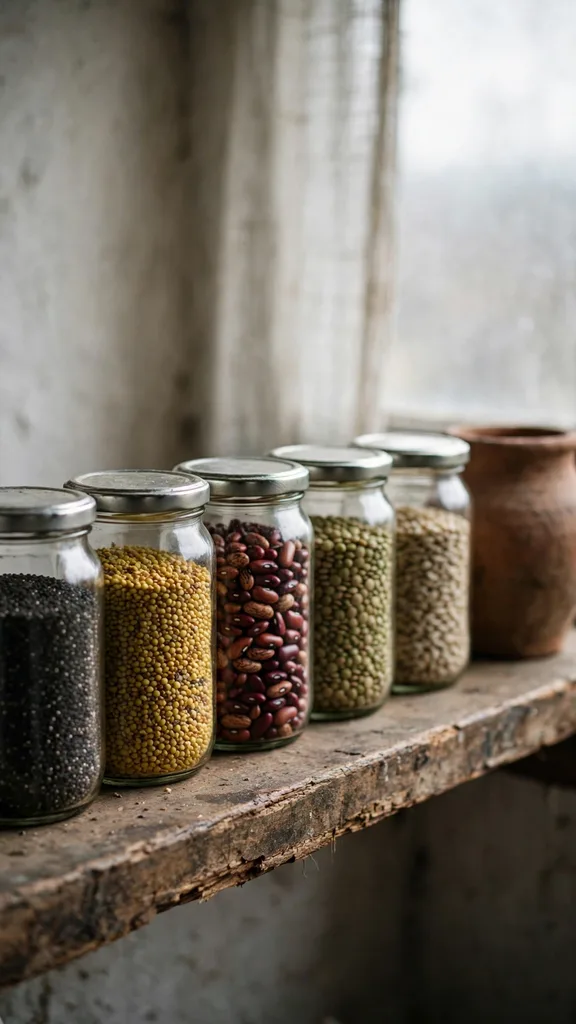
Storage holds the seed until spring. Store seeds in a paper envelope in a cool dry place below 10 degrees C, according to the Montana State University Extension guide to harvesting and saving garden seeds. A fridge shelf suits most seed, in a dry jar with a packet of silica gel. Mark every container with the variety and the date in permanent ink. Most seed stays viable for years when stored cool and dry in paper.
Seed Saving vs Buying Seed
| Feature | Seed Saving | Buying Seed |
|---|---|---|
| Cost | Free after the first packet | A few dollars per packet |
| True to type | Yes for open-pollinated, no for hybrids | Yes, guaranteed by the seller |
| Adapted to your garden | Improves each year by selection | Bred for wide regions |
| Variety choice | Limited to what you grew | Hundreds of varieties |
| Effort | Harvest, clean, dry, store, test | Open the packet and sow |
| Risk | Cross-pollination, disease, weak seed | Low, with a germination guarantee |
| Best for | Tomatoes, beans, peas, lettuce | Hybrids, squash, corn, new trials |
Buying seed buys certainty. The seller guarantees the variety and the germination rate, and the packet carries the sowing instructions. Saving seed buys adaptation and independence. The saved line adapts to your soil, your shade, and your season a little each year, and it costs nothing after the first packet.
The two also differ in risk. A bought packet fails only when the seed is old or the sowing is wrong. A saved batch fails when the parent crossed, the seed carried disease, or the drying fell short. Test saved seed before sowing, and keep a bought packet as backup for the crops that matter most.
A gardener can do both at once. Save seed from the reliable self-pollinated crops, and buy seed for the cross-pollinated crops and the hybrids. The garden gains a saved line for tomatoes and beans, and a fresh line for squash and corn. The seed box holds both kinds, each labeled with its source and its year.
How to Tell Saved Seed Is Good
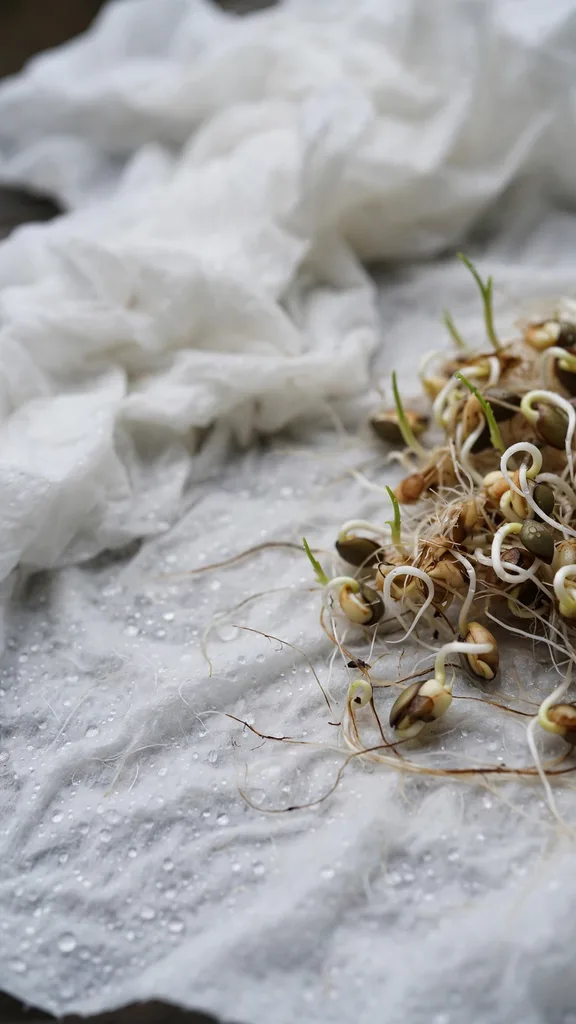
Tell saved seed is good by the germination test. Count 10 seeds onto a damp paper towel, fold it, seal it in a bag, and keep it warm. Count the sprouts after a week. A batch with 8 sprouts from 10 seeds sows well. A batch with 4 sprouts needs double sowing. A batch with 2 sprouts goes in the compost, and the gardener buys fresh seed.
Tell it by the look and the feel. Good seed feels hard and full, with a smooth coat and a uniform color. Bad seed feels light and hollow, with a cracked coat, a pale color, or a moldy smell. A seed that snaps when bent is dry and ready. A seed that bends is damp and needs more drying. A seed that smells musty is moldy and goes out.
Tell it by the label. A packet marked with the variety and the date tells the gardener what it is and how old it is. A packet with no label is a mystery, and a mystery seed wastes a bed. Label every packet at harvest time, in permanent ink, with the variety, the year, and the plant it came from.
Tell it by the parent. Seed from a healthy vigorous plant grows a healthy vigorous seedling. Seed from a diseased plant carries the disease into the next season. Seed from the weakest plant in the row breeds weakness. Save seed only from the best plants, and rogue out the sick ones before they flower.
Common Mistakes With Seed Saving
Saving hybrid seed tops the list. Hybrid seed grows into a mix of plant types next season, and most of them run inferior to the parent. The packet marks hybrids with F1. Save seed only from open-pollinated and heirloom varieties, and buy hybrid seed fresh each year.
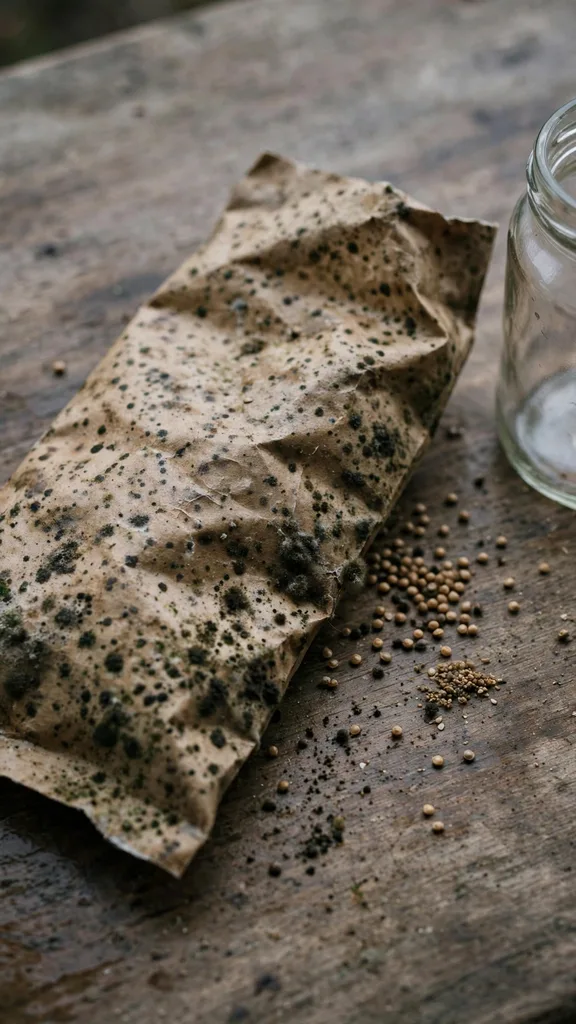
Saving seed from diseased plants runs second. Seed-borne disease rides inside the seed coat, and the next season starts sick. Save seed only from healthy plants, and destroy diseased plants before they set seed. A clean parent gives a clean batch.
Skipping isolation runs third. Cross-pollinated crops need real distance between varieties, and a small garden cannot provide it. Grow one variety per crop when saving seed, or bag the flowers before they open. A saved squash seed from a bed with 2 varieties grows a cross, not the parent.
Harvesting seed too early runs fourth. Green seed has a weak embryo and rots in storage. Let fruit pass eating ripeness before harvesting seed, and let dry seed rattle in the pod. A seed harvested ripe stores for years. A seed harvested green stores for weeks.
Storing damp seed runs fifth. Seed stored damp grows mold in the packet, and the batch dies over winter. Dry seed fully before packing, store it cool and dry, and check the packets in midwinter. A packet that feels damp gets dried again at once.
When Seed Saving Matters in Your Garden
Seed saving matters most for self-pollinated crops: tomatoes, beans, peas, lettuce, and peppers. These crops fertilize themselves, so saved seed grows true without isolation distance. A small garden can save these with confidence. A gardener with 2 tomato varieties still needs care, since some pollen escapes, yet the risk stays small.
It matters for heirloom varieties too. Heirlooms survive only because gardeners save them, and a variety lost from the seed trade survives in a single garden. A gardener who saves an heirloom keeps a food line alive. A gardener who buys only hybrids lets the old lines fade.
It matters for the budget as well. A gardener who saves seed from 5 crops buys 5 fewer packets each spring, and the savings compound each year. The money saved buys compost, tools, or a new variety to trial. The seed box grows richer while the seed bill shrinks. The full index of seed terms lives in the gardening glossary.
FAQ
You can, but the plants will not match the parent. Hybrid seed grows into a mix of types next season, and most run inferior to the parent plant. Save seed only from open-pollinated and heirloom varieties, and buy hybrid seed fresh each year for a reliable crop.
Most seed stays good for years when stored cool and dry in paper envelopes, with the exact span depending on the crop. Tomatoes keep longer than onions, and beans sit in the middle. Test germination before sowing, and sow older seed thicker to cover losses.
Self-pollinated crops need little isolation, while cross-pollinated crops need real distance. Insect-pollinated varieties need at least 0.4 km apart, and wind-pollinated corn needs at least 1.6 km. In a small garden, grow one variety per crop or bag the flowers before they open.
Spread seed thin on a plate or a screen in a dry room with air movement, and stir it daily. Dry seed snaps when bent, while damp seed bends. Pack dry seed in labeled paper envelopes, and store them in a cool dry place below 10 degrees C until sowing time.