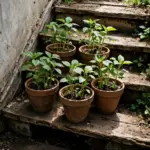
Pull 1 fallen seedling the moment you see it, and dry the tray out the same day. Damping off is when soil fungi rot the stem at the surface, and the seedling falls over and dies within days.
Damping off strikes seedlings at their weakest stage, in the first days after emergence. The fungi live in soil, on dirty trays, and on tools that touched garden dirt. They wait for cool wet conditions, then attack the stem where it meets the mix. A healthy seedling one morning lies flat by nightfall. No spray saves it once the stem pinches shut.
Prevention beats cure by a wide margin. Sterile mix, clean trays, warm soil, dry air, and thin sowing keep the fungi hungry and the seedlings fast. The disease rarely touches a seedling that grows fast in warm dry air. It feasts on a seedling that sits cold and wet. The seed starting guide covers the clean tray setup that keeps it out.
| Damping Off at a Glance | Detail |
|---|---|
| What it is | Stem rot of young seedlings at the soil line |
| Causes | Pythium, Rhizoctonia, Fusarium, Phytophthora |
| Conditions | Cool, wet soil with still air |
| First sign | Thin brown pinched stem, seedling flops over |
| Prevention | Sterile mix, clean trays, warm soil, dry surface |
| Soil warmth | 21.1 to 23.9 degrees C under trays |
| Cure | None once the stem collapses; remove and dry out |
What Is Damping Off?
Damping off is a disease of germinating seeds and young seedlings, caused by soil fungi and water molds that rot the stem at the soil line. The seedling emerges, then the stem thins to a brown wire, and the plant topples and dies. Seeds can also rot before they emerge, which looks like poor germination from above.
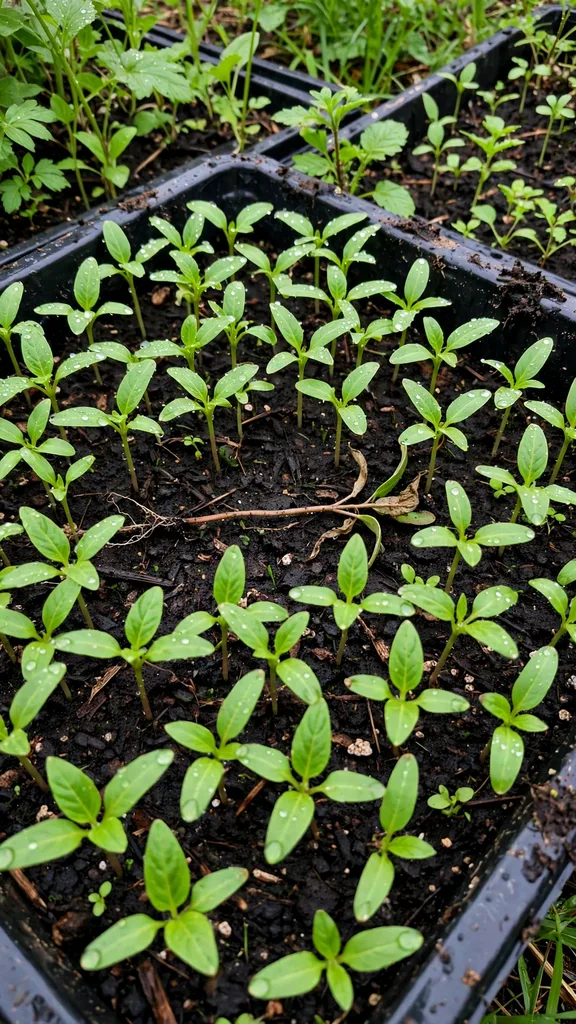
The culprits are a small set of soil organisms. The fungi Rhizoctonia species and Fusarium species, along with the water mold Pythium species, are the most common pathogens behind damping off. A North Carolina State Extension publication on damping-off adds Phytophthora, Sclerotinia, and Botrytis to the list. Pythium strikes hardest in cool wet soils, while Rhizoctonia and Fusarium prefer warmer drier ones.
The deciding number is soil warmth. A heating pad under trays warms soil to 21.1 to 23.9 degrees C for indoor plant production, according to the University of Minnesota Extension guide to preventing seedling damping off. Warm soil grows seedlings fast, and fast seedlings outrun the fungi. Cold soil stalls seedlings, and stalled seedlings sit in the danger zone for days.
Damping off differs from other seedling troubles in its speed. A seedling with damping off collapses in a day, while a seedling short of light stretches over a whole week and a seedling short of food yellows slowly from the lower leaves. Speed plus the pinched brown stem at the soil line names the disease. The true leaves page shows the growth stage when seedlings outgrow the worst risk.
How Damping Off Works
Damping off works through water and contact. Pythium swims in a film of water through the mix, so a tray standing in water carries spores from one seedling to the next. Rhizoctonia and Fusarium spread through soil contact and through dirty tools, trays, and hands. A single dirty tray can infect a whole flat, and a single infected seedling can infect its neighbors through the wet surface.
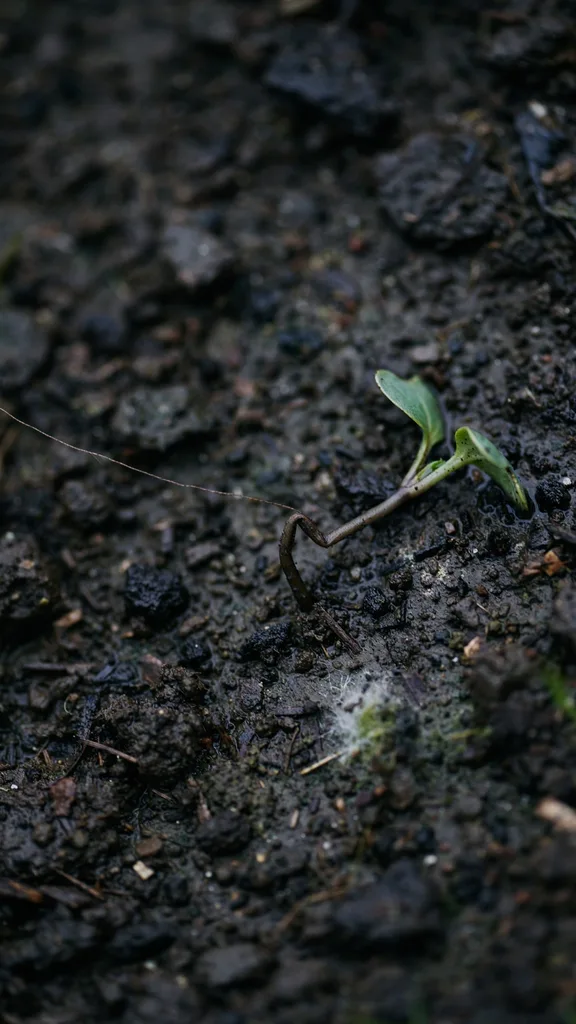
The fungi attack the stem at the soil line because that band stays wettest. Watering from above wets the stem base. A still room holds damp air against it. The fungi digest the soft stem tissue, and the stem narrows to a brown thread that cannot hold the seedling upright. Roots below the rot may look fine, yet the plant dies because the stem can no longer carry water upward.
Cool wet weather favors the attack. The damping off pathogens thrive in cool wet conditions, and low light, overwatering, high salts from over fertilizing, and cool soil temperatures all raise the risk. Warmth, light, and air movement reverse the odds. A seedling that grows fast in warm soil builds a tough stem before the fungi gain ground.
The disease also hides before emergence. Seeds rot in the mix without ever breaking the surface, and the gardener counts empty cells as bad seed. Test the seed first: a germination test on a damp paper towel shows whether the seed itself failed. Empty cells with good seed point at the mix, the water, or the tray, not at the packet.
Damping Off vs Poor Germination
| Feature | Damping Off | Poor Germination |
|---|---|---|
| Seedling emerges | Yes, then collapses | No, or only a few emerge |
| Stem at soil line | Thin, brown, pinched | Normal, or absent |
| Speed | Collapse within days | Nothing happens for weeks |
| Cause | Soil fungi and water molds | Old seed, cold soil, deep sowing |
| Spread | Moves across a wet tray | Stays in the cells sown badly |
| Fix | Sanitation, warmth, dry surface | Fresh seed, warm soil, right depth |
Poor germination leaves empty cells and no stems to inspect. Damping off leaves fallen seedlings with pinched stems. Dig into an empty cell: a rotted seed with a sour smell points at damping off, while a firm ungerminated seed points at cold soil or deep sowing. A paper towel germination test settles the seed question in days.
The two problems also respond to opposite fixes. Poor germination wants warmer soil and shallower sowing. Damping off wants drier air and cleaner trays, plus warm soil too. A gardener who re-sows into the same dirty wet mix repeats the loss. Clean the tray, change the mix, and dry the surface before the next sowing.
Timing separates them as well. Damping off strikes in the first days after emergence, when stems are soft and the tray is wettest. Poor germination shows at the end of the packet window, when the expected sprouts never arrive. A row that comes up patchy in week one has damping off in the gaps. A row that never comes up at all has a germination problem.
How to Recognise Damping Off
Recognise damping off by the stem, not by the leaves, and look at the soil line each morning for the first week after emergence. A healthy stem stands green and firm. A damped-off stem shows a thin brown band that pinches inward, and the seedling leans, then falls. The leaves above the pinch may still look green on the day the stem fails.
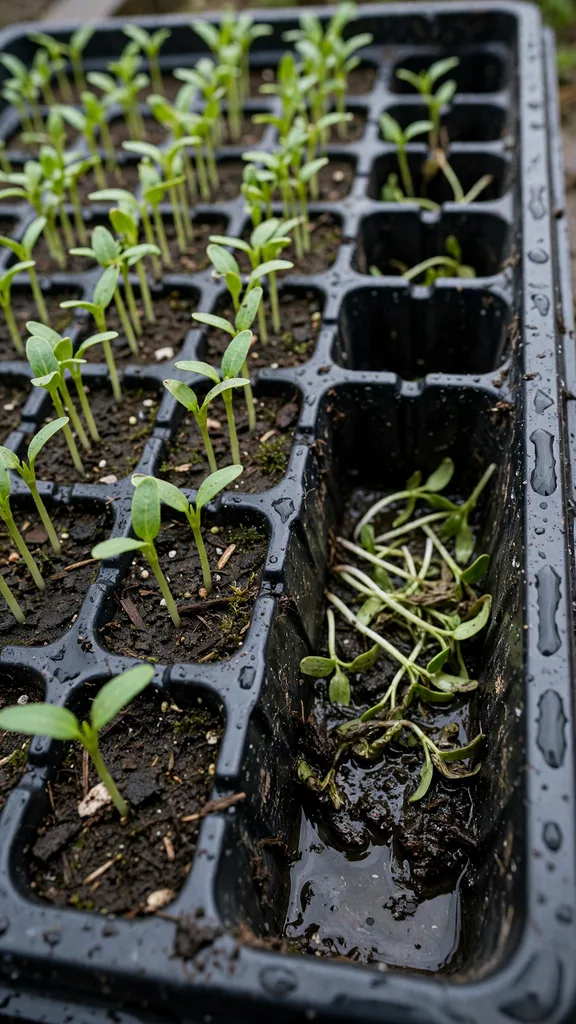
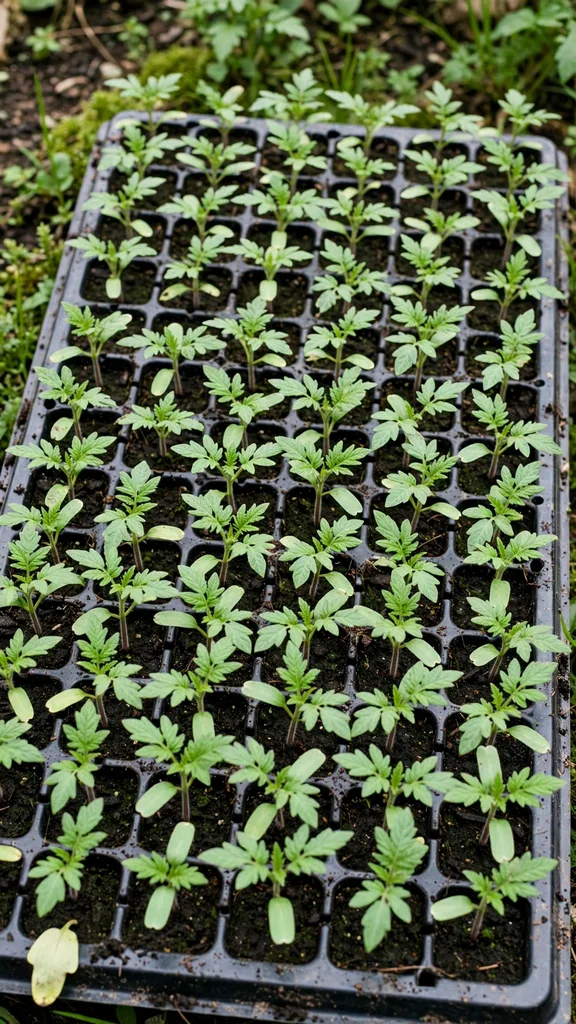
Check the pattern across the tray. Damping off spreads in patches from one infected seedling to its neighbors, often in the wettest corner of the tray. A single fallen seedling in a dry tray may be a broken stem from handling. A patch of fallen seedlings in a wet corner is the disease. Remove the fallen seedlings at once, and let the surface dry before watering again.
Smell the mix. A sour or musty smell from the tray signals fungi at work. Healthy mix smells like damp earth. A tray that smells sour needs air, less water, and a fan. A tray that smells sour and shows pinched stems needs the seedlings removed and the survivors moved to fresh mix.
Watch the water. Cool water slows plant growth and raises the chance of infection, while warm water keeps seedlings growing. Water with warm water, water from below, and never let trays stand in water. A tray that drains freely dries at the surface between waterings, and the fungi lose their swimming lane.
Common Mistakes With Damping Off
Reusing old potting mix tops the list. Old mix carries last season fungi, and garden soil carries them in bulk. Use new potting mix for every tray, and never fill a seed tray with garden soil or compost. The savings from reused mix cost a whole tray of seedlings.
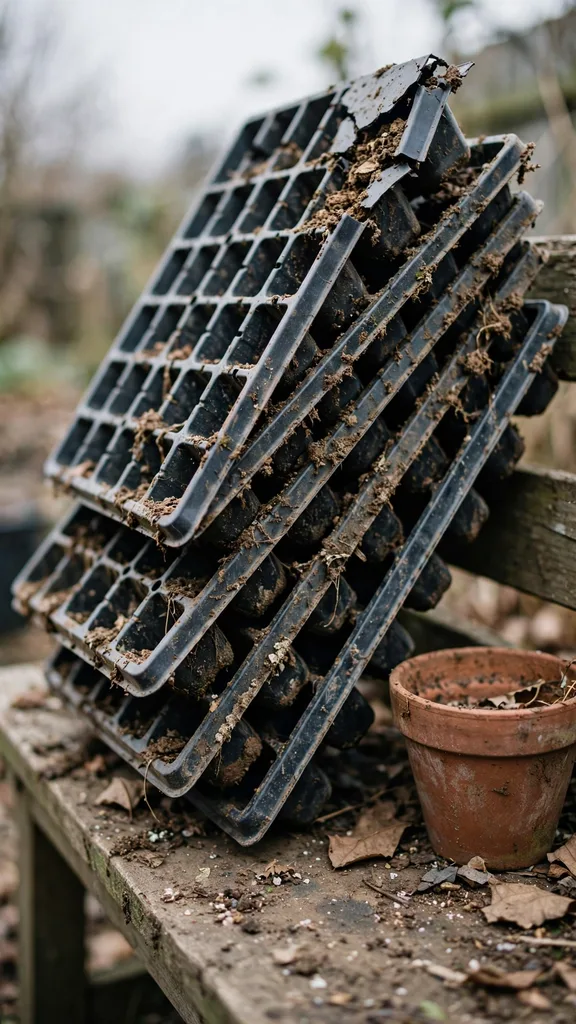
Skipping tray sanitation runs second. Used pots and trays carry fungi on their surfaces, and a quick rinse does not remove them. Sterilize all used pots and trays in a solution of 10 percent household bleach by soaking for 30 minutes, according to the University of Minnesota Extension guide to preventing seedling damping off. Rinse after soaking, and let trays dry in the sun before filling.
Overwatering from above runs third. A wet stem base invites Pythium, and a wet surface keeps it moving. Water from below, let the surface dry between waterings, and run a small fan for air movement. A dry surface with damp mix below grows seedlings and starves fungi at the same time.
Sowing too thickly runs fourth. A dense stand holds damp air between stems, and the disease jumps from seedling to seedling. Sow thinly, thin early, and keep air moving through the tray. The thinnings go in the compost, and the keepers get the air they need.
When Damping Off Matters in Your Garden
Damping off matters most in the indoor nursery, where trays sit close, air stays still, and one dirty tray infects the season. It matters less outdoors, where sun and wind dry the surface fast. A gardener who starts seed indoors fights damping off every spring. A gardener who direct sows in warm soil rarely sees it.
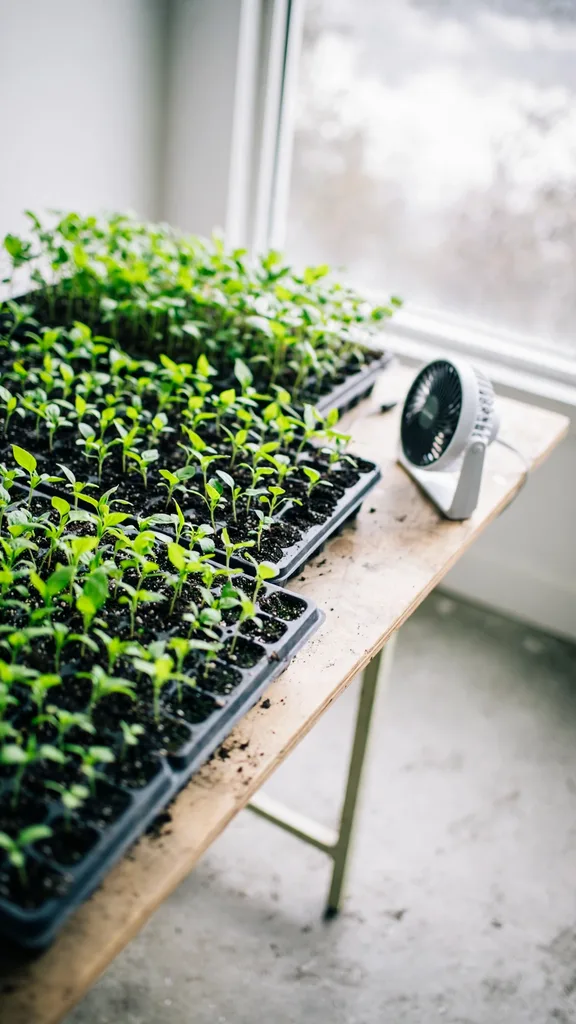
It matters for expensive seed and slow crops. A tray of peppers or eggplant takes weeks to reach transplant size, and a damping off outbreak in week 2 costs a month. A tray of radishes takes days, and a loss costs little. Spend the sanitation effort on the slow valuable trays, and keep the fast trays simple.
It matters after any outbreak. The fungi stay on trays, benches, and tools until cleaned. An outbreak in March infects April sowings on the same bench. Clean every tray, bench, and tool after an outbreak, and store trays clean and dry. The full index of seed terms lives in the gardening glossary.
FAQ
No. A seedling with a pinched brown stem at the soil line cannot carry water upward, and it dies. Remove fallen seedlings at once so the disease does not spread across the tray. Dry the surface, add air movement, and re-sow into fresh sterile mix in a clean tray.
Cinnamon gets named as a home remedy, yet no extension trial supports it as a control, so treat it as unproven. The measures with evidence are sterile mix, sanitized trays, warm soil, dry surfaces, and thin sowing. Spend effort on those five, and skip the spice jar.
Soak used trays in a household bleach solution, then rinse with clean water and let them dry. Clean benches and tools the same way. Use new potting mix for every sowing, and never reuse mix from a tray that showed damping off.
Warm soil at 21.1 to 23.9 degrees C under trays grows seedlings fast and holds the fungi back. Water with warm water at 20 to 25 degrees C, and keep trays out of cold corners. Cool wet soil is the main invitation, so warmth plus a dry surface is the main defense.