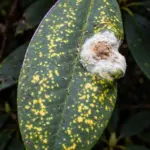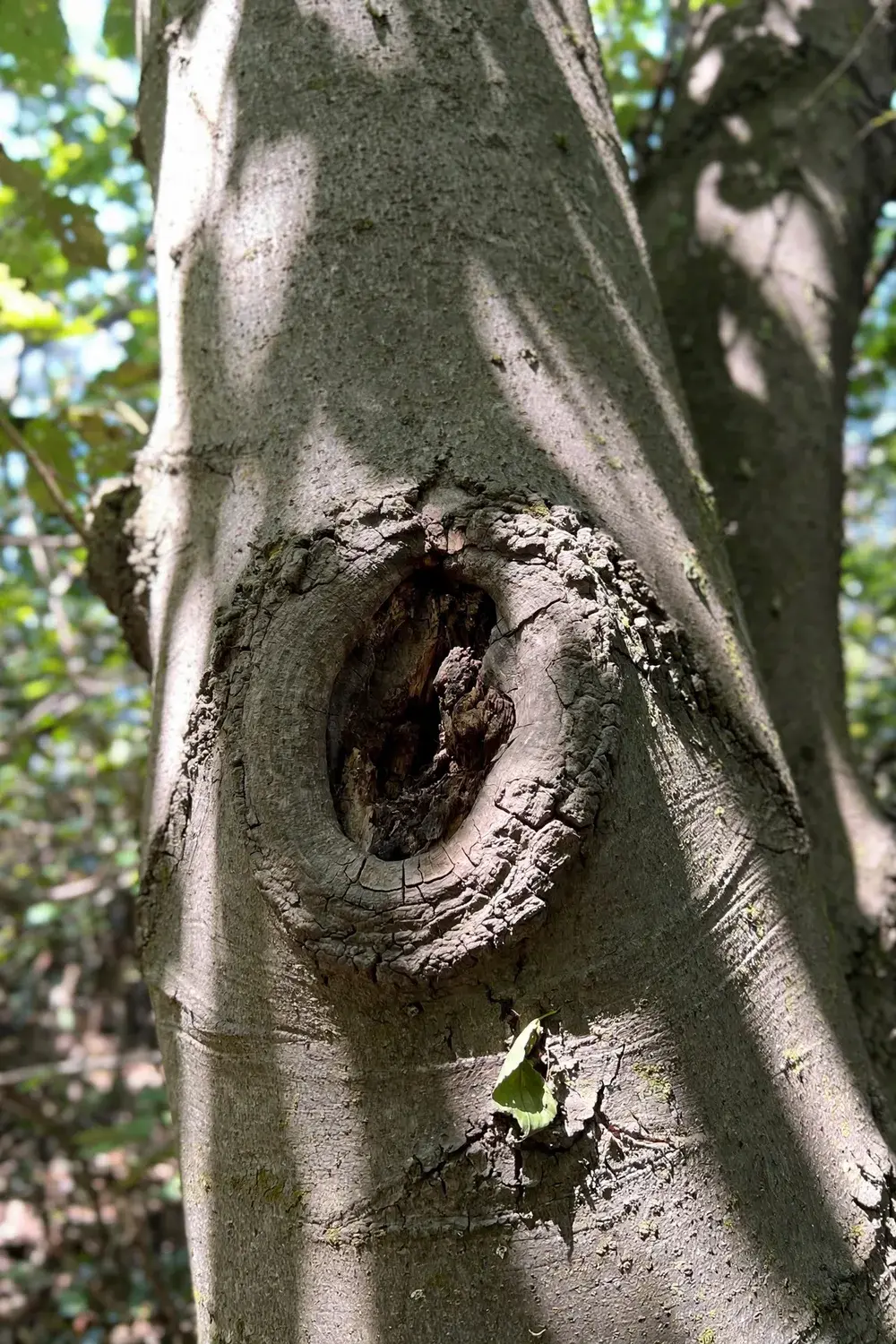

Trunk canker is a sunken, dead patch of bark on a trunk or branch. The patch marks bark and cambium that a wound infection has already killed. Cut 7.6 to 10.2 cm below the dead patch when it sits on a branch you can remove. No spray cures a trunk canker. Leave the patch alone when it sits on the trunk.
I have learned to read the bark before I reach for any tool, since one sunken patch means cut on a branch and wait on a trunk.
This page shows what a trunk canker looks like, why it names no single pathogen, and what to do for branch cankers, trunk cankers, and trees that may need an arborist.
What Trunk Canker Looks Like on a Tree
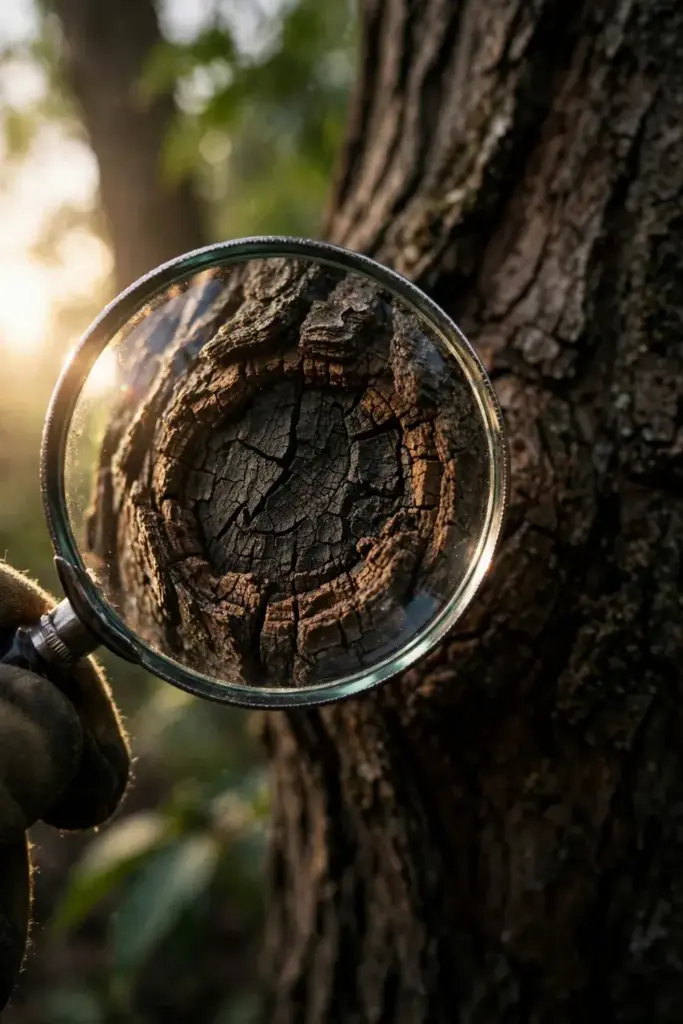
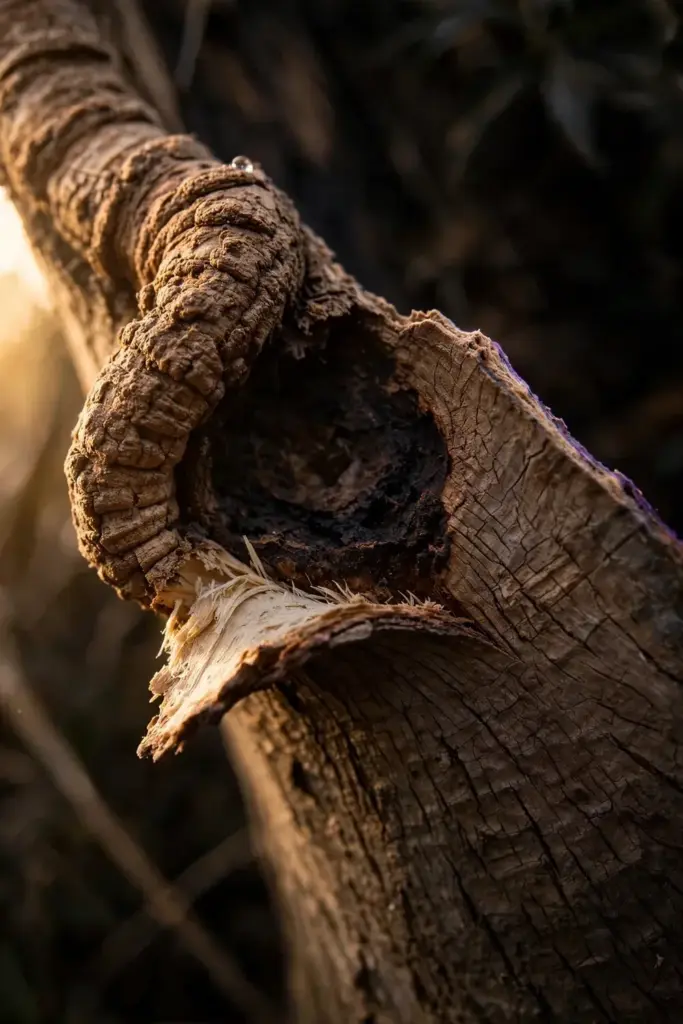
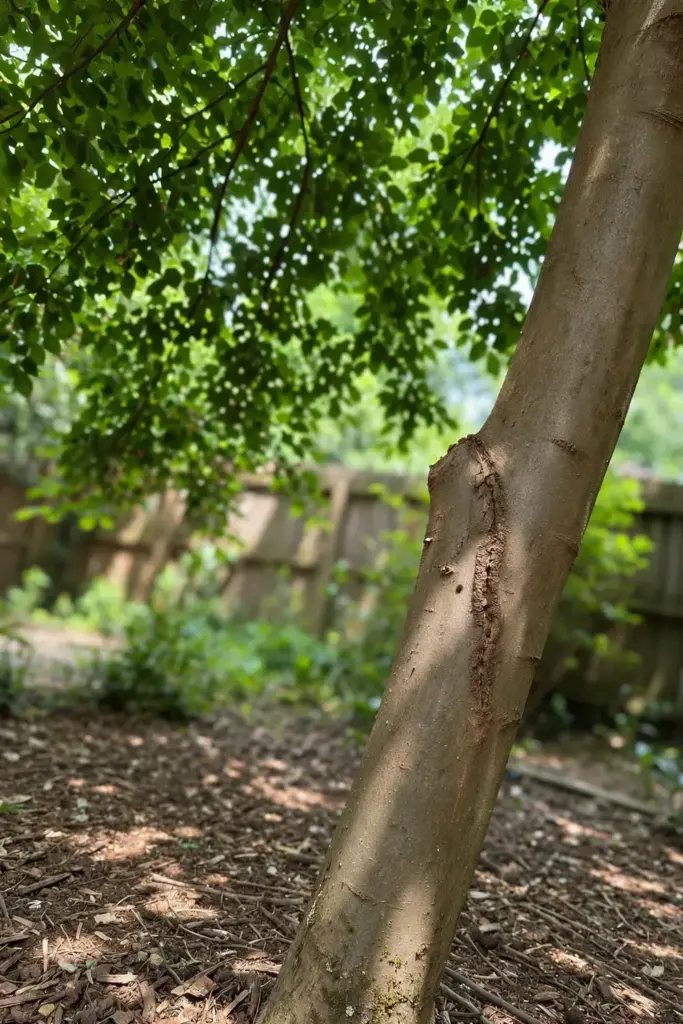
A trunk canker looks like a sunken patch of dead bark, often oval, centered on an old wound or branch stub. The bark inside the patch may crack, split, or ooze sap.
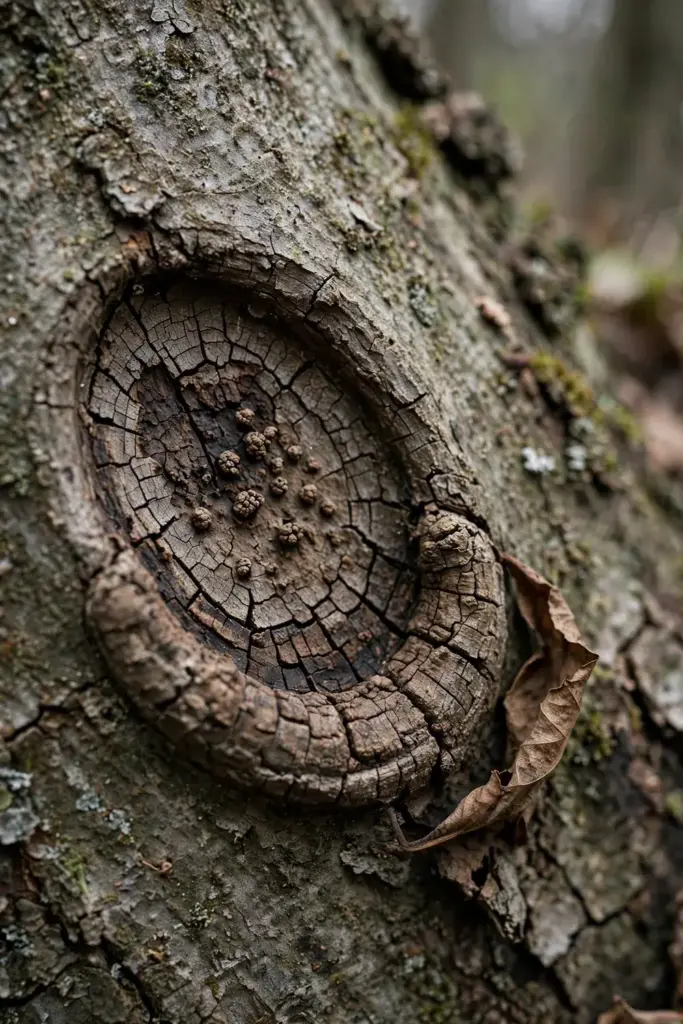
The wood under the patch turns discolored. The University of Saskatchewan describes these sunken patches in its guide to canker diseases on trees, including bark that splits open and sap that oozes from the wound.
Penn State Extension lists the same field marks in its guide to cankers of hardwood deciduous trees: roughened or cracked bark around wounds and branch stubs, callus laid down in ridges, and small pimple-like fruiting structures in the center or around the edges.
Cankers enter through wounds. Pruning cuts, hail strikes, storm breakage, sunscald, and winter kill all open the bark. The same Saskatchewan guide names each of these entries. A canker that encircles a branch or trunk cuts off water to everything above it. Everything above a girdled branch wilts and dies.
Bacterial canker shows a similar sunken patch with a gummy ooze on stone fruit, and the bacterial canker guide covers that type in full. The pattern on this page fits many hosts and many causes.
Why This Page Names No Single Pathogen
This page names no single pathogen because the one index entry behind the name carries no species. The entry reads Rhizoctonia sp. under redbud, genus only, with no species and no syndrome description behind it.
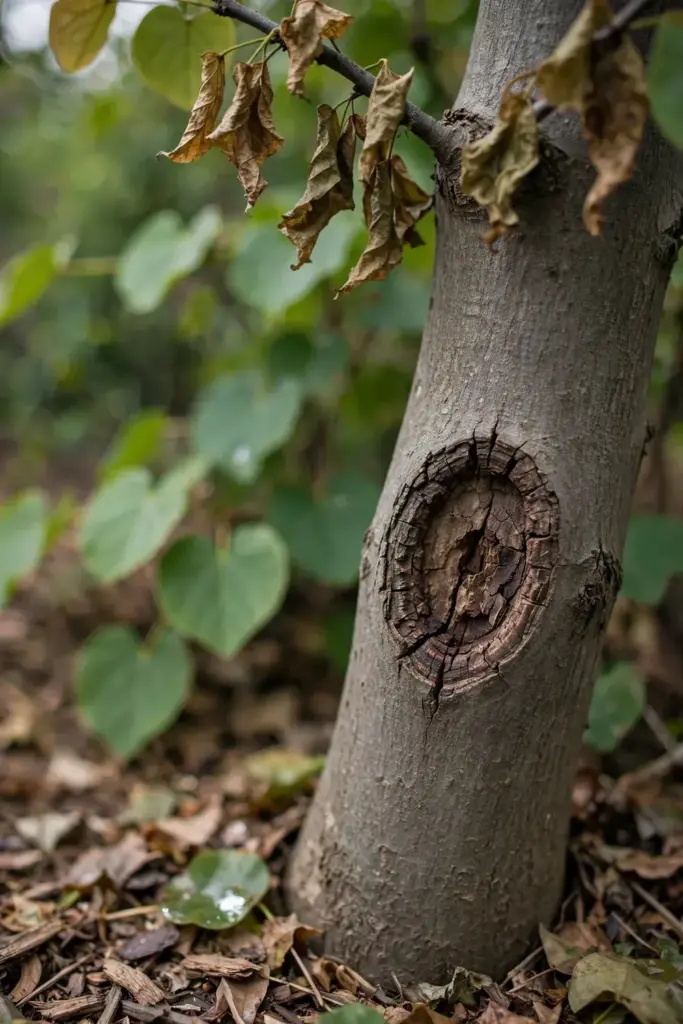
Redbud canker literature names Botryosphaeria, and it never names Rhizoctonia. Michigan State University Extension identifies Botryosphaeria as a fungus that can cause cankers on branches and stems of trees and shrubs, and it reports no effective fungicide control for Botryosphaeria dieback.
Rhizoctonia behaves differently. UC IPM reports that Rhizoctonia attacks the lower stem of seedlings where the stem touches the soil, and infected seedlings wilt, turn purple, stay stunted, or break off at the soil line. That pattern is damping-off and stem rot at the soil line. It is not a canker on the trunk of an established tree.
Picking Rhizoctonia solani as the cause would be a guess. The index gives genus only, and the genus alone cannot carry a treatment plan. The response below comes from general canker guides. It treats the patch on its own terms.
Read the Canker Before You Act
Read three things before you cut or wait: where the canker sits, how far it wraps around the stem, and what the growth above it looks like. Those three readings decide the move.
| Where the Canker Sits | What You See | Your Move |
|---|---|---|
| On a branch you can reach and remove | Wilted leaves or dead twigs above the patch | Cut the branch out with clean tools |
| On the main trunk, short of girdling | Callus ridges at the edges, live crown above | Leave the patch, watch it each season |
| On the main trunk, wrapping all the way around | Dead crown, lean, cracks, or fungal brackets | Call an arborist before you cut |
| At the soil line on a seedling | Stem pinched and dark where it meets the soil | Pull the seedling and discard it |
A patch that leaves living bark on one side leaves the tree a working water path. A patch that rings the stem leaves none. Growth above a ringed stem tells the same story fast. Leaves wilt and twigs die back.
Check the soil line separately on seedlings. A pinched dark stem at the soil line belongs to the damping-off group, and it calls for removal of the seedling. It is a different problem from a trunk canker on an established tree.
Cut Branch Cankers Out With Clean Tools
Cut out a branch canker when the branch is one you can remove. Cut in dry weather, since moisture spreads the disease.
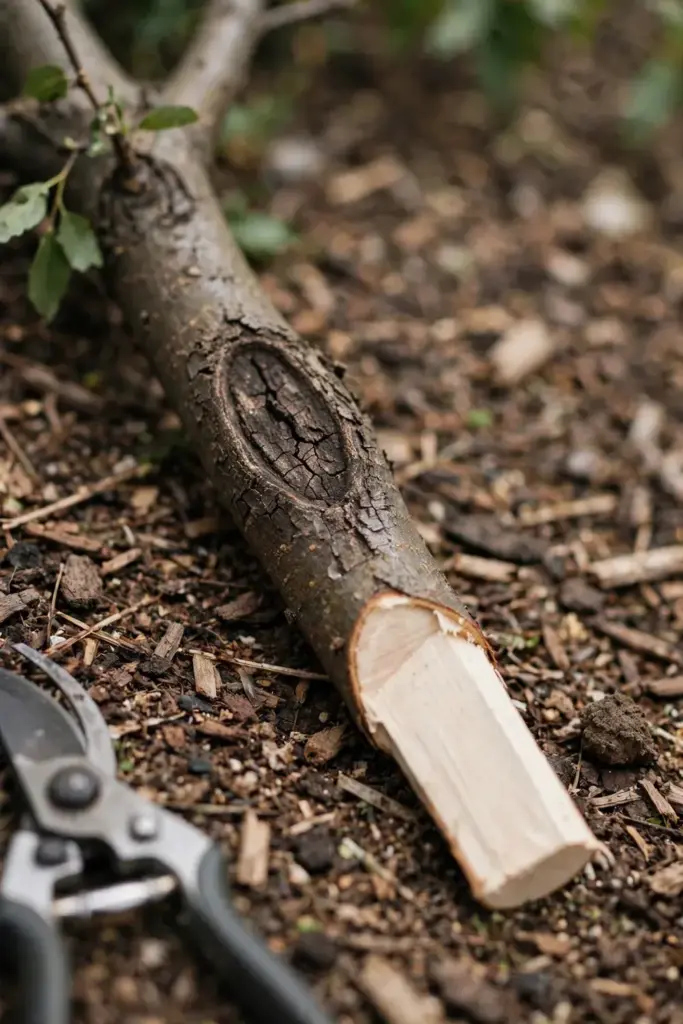
The same Penn State guide advises cutting 7.6 to 10.2 cm below the canker, down to healthy wood. Make a clean cut without cutting into the branch collar, and leave no stub. A stub rots, and a collar cut heals slowly.
Disinfect the tool between cuts. The same Saskatchewan guide advises sterilizing pruners between cuts with a disinfectant spray, and it warns against bleach, which corrodes tools.
Bag the prunings and take them off site. Infected wood keeps producing spores after the cut. For clean cuts, timing, and tool care on the rest of the tree, see spring pruning techniques.
Leave Trunk Cankers Alone When the Tree Still Holds
Leave a trunk canker alone when the crown above it still looks alive. No treatment cures a canker infection, and carving the patch out of a trunk wounds the tree further.
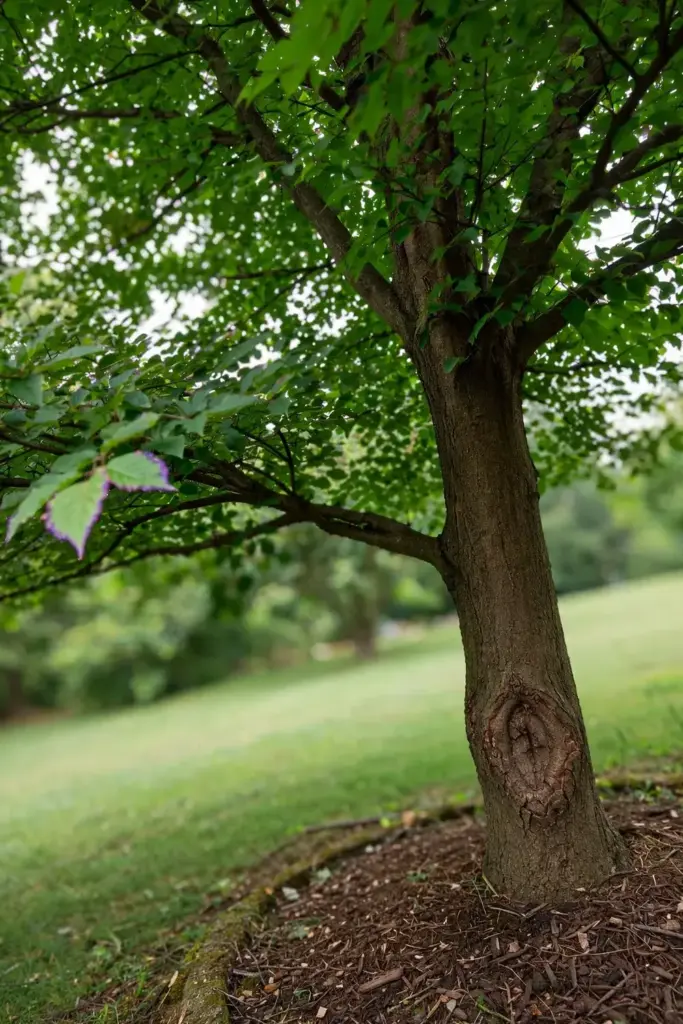
Skip pruning paint. The same Saskatchewan guide warns against it, since paint can trap bacteria or fungi under the seal and disease can grow under the seal.
Skip fungicide too. The same Penn State guide states that no chemicals adequately control canker-causing fungi. Spraying the bark cannot reach fungus already inside the wood.
Keep the tree vigorous instead. Water through drought, keep mulch off the trunk, and avoid fresh wounds from mowers and string trimmers. A vigorous tree lays down callus and walls off dead tissue. A stressed tree lets the patch spread.
Call an Arborist When the Trunk Is Girdled or Leaning
Call a certified arborist when a trunk canker girdles the stem, when the tree leans, or when the crown dies back across a season. A girdled trunk can fail without warning.
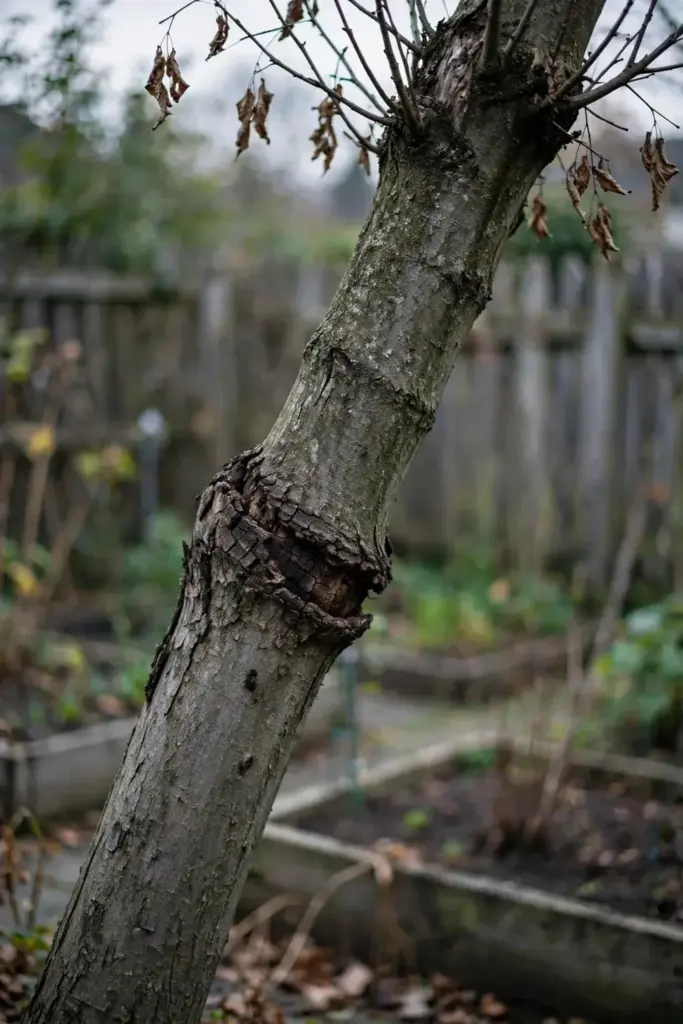
The same Michigan State Extension answer advises a certified arborist for a valuable tree, since an arborist can examine the tree and recommend pruning or removal. Find one through a local arborist association.
Remove a sapling with a trunk canker outright. The same Penn State guide states that cankers on the main trunk of saplings show the whole tree should go. A young tree with a trunk canker rarely outgrows it, and it can pass infection to neighbors through spores.
Frequently Asked Questions
No. No spray cures a canker infection, and no chemical adequately controls canker-causing fungi. A fungicide sits on the bark, while the damage sits inside the wood. Spraying wastes money and leaves the dead tissue in place. Cut out branch cankers, leave trunk cankers to callus, and spend the effort on water and wound prevention instead.
No. Pruning paint seals moisture, bacteria, and fungi under the coating, and disease can grow under the seal. A fresh cut heals faster open to the air, with a clean edge and no stub. Skip the paint on canker cuts and on normal pruning cuts alike. Let the tree lay down its own callus over the wound.
No. Trunk canker is a symptom name, and many fungi and bacteria can leave the same sunken patch on different hosts. The patch alone never names the cause. Location, host, and lab work name it when naming it matters. Most home trees never need that step. Read the patch, cut branch cankers, and leave trunk cankers to callus.
It depends on where the patch sits. A branch canker costs a branch. A trunk canker that leaves living bark on one side costs the tree time, and the tree can stand for years with it. A girdled trunk, a lean, or a dying crown changes the call. Bring in a certified arborist before you decide, and remove a cankered sapling outright.
Where to Go From Here
Walk the tree this week. Find each sunken patch, note whether it sits on a branch or on the trunk, and check the growth above it.
Cut the branch cankers in dry weather, 7.6 to 10.2 cm below the dead patch, with clean tools. Leave the trunk cankers open to the air. Call an arborist for a girdled trunk, a lean, or a dying crown.
More plant care guides live in the Plant Care archive. Start with the patch. End with the tree.