
Thielaviopsis Trunk Rot on palms is 1 of the 2 lethal Thielaviopsis diseases of landscape palms in Florida, a fatal trunk infection caused by the fungus Thielaviopsis paradoxa. The rot eats one side of the trunk, usually in the upper third, and the palm often looks healthy until the trunk collapses on itself or the canopy falls off with no warning. No spray cures it, and no proven method prevents it.
I have learned to read a bleeding palm trunk as a warning sign that needs a closer look.
The rest of this page gives the field signs, the reason no treatment exists, 4 moves that still help, and what to do after a palm collapses. The moves cost little, and none of them claims to cure the disease.
What Thielaviopsis Trunk Rot Actually Is
Thielaviopsis Trunk Rot is rot of palm trunk tissue by Thielaviopsis paradoxa, a fungus that infects palms through fresh wounds. The fungus has a sexual-stage name, Ceratocystis paradoxa. That stage is rarely observed in nature, so the Thielaviopsis name is the one gardeners meet.
The fungus enters only where the trunk is freshly wounded. It favors soft, lightly lignified tissue, so the rot shows most often in the upper third of the trunk, where lignified fiber is scarcest. All palm species count as potential hosts. Coconut is the palm most often pictured with this disease, and its stem bleeding is the classic field sign.
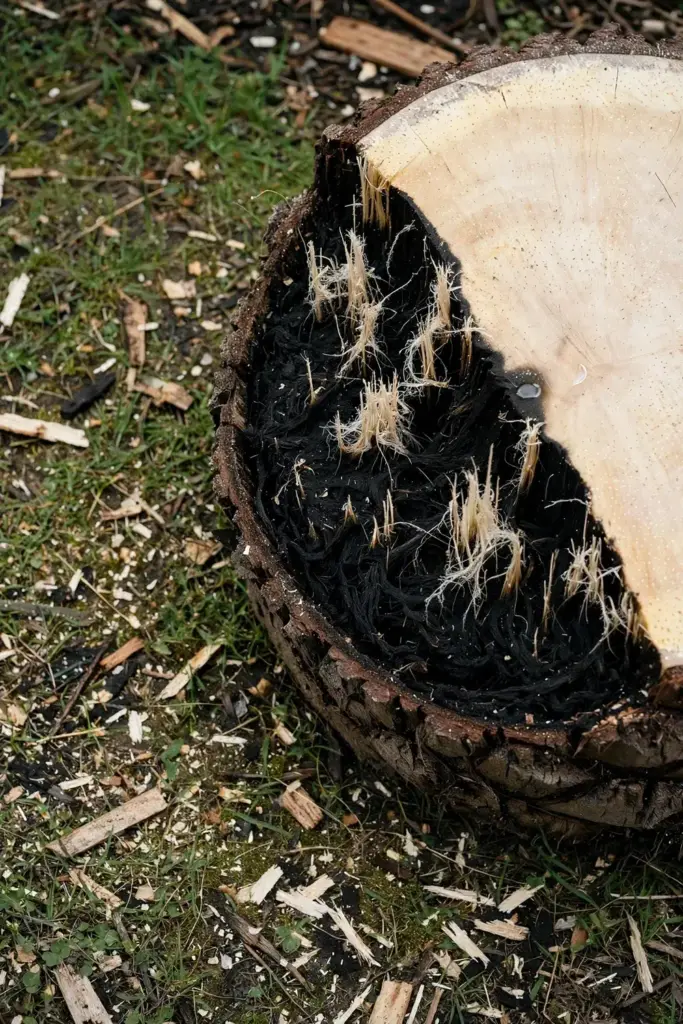
The rot stays on one side of the trunk and moves from the outside inward. The fungus cannot degrade lignin, so the trunk fibers stay nearly intact while the tissue around them breaks down. Cut tissue turns black and stringy. That stringy black tissue is the signature of this rot.
How to Spot the Signs Before a Palm Collapses
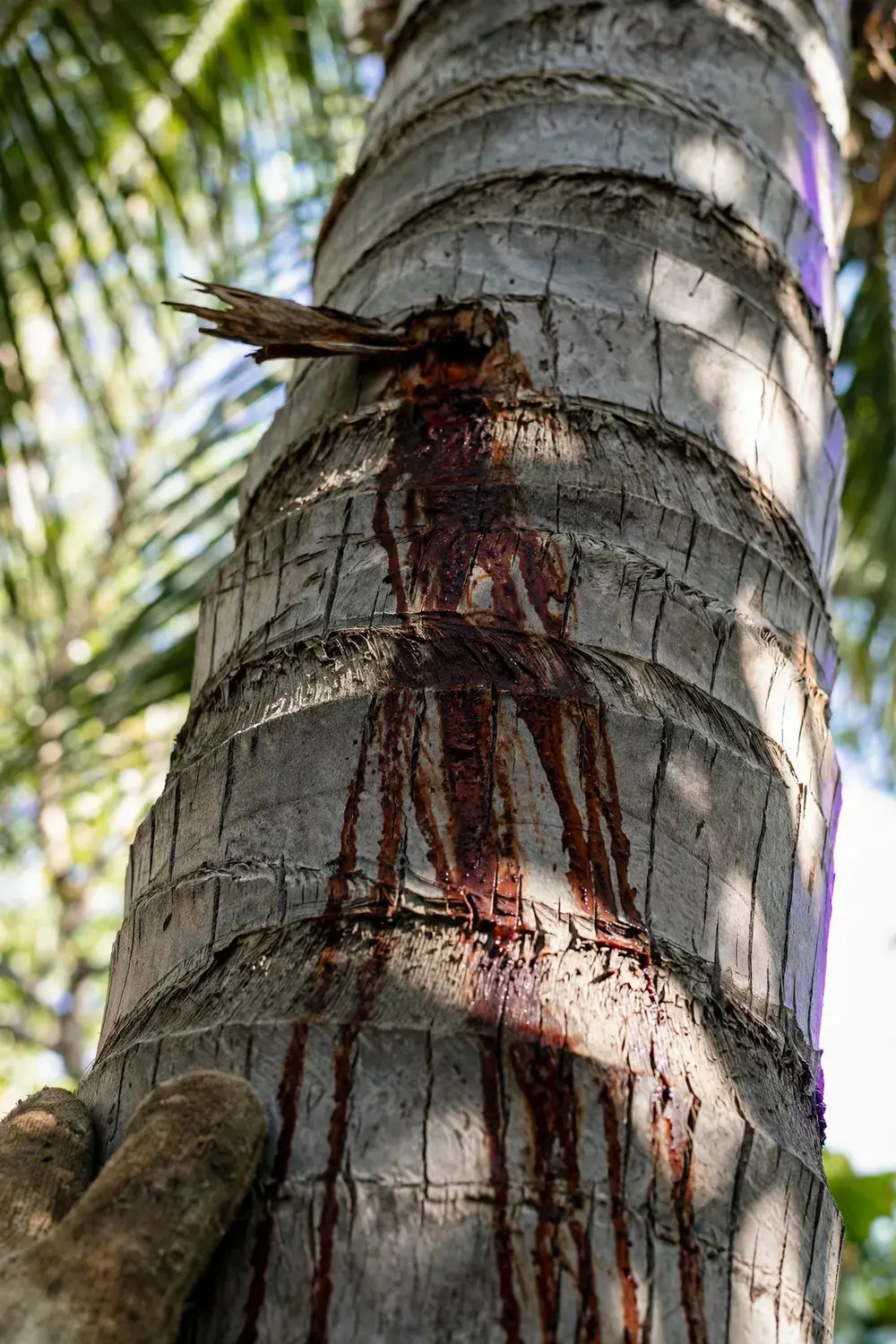
You may see nothing at all. Except for stem bleeding, there are often no outward signs that a palm carries Thielaviopsis Trunk Rot. A healthy-looking canopy proves nothing. The palm can still collapse.
| What You See | What It Tells You |
|---|---|
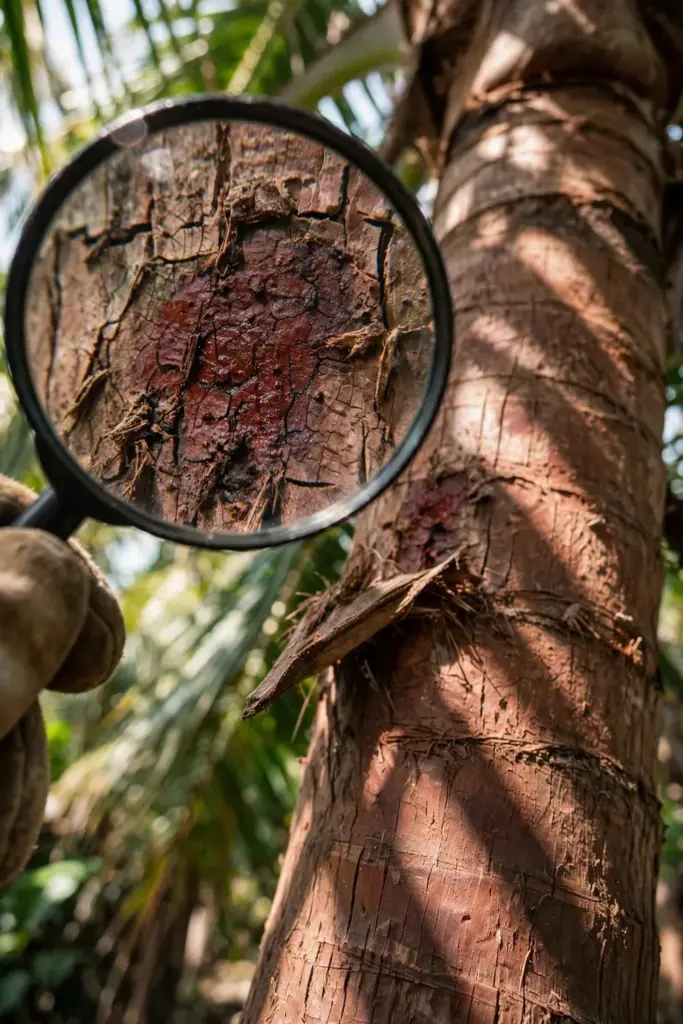
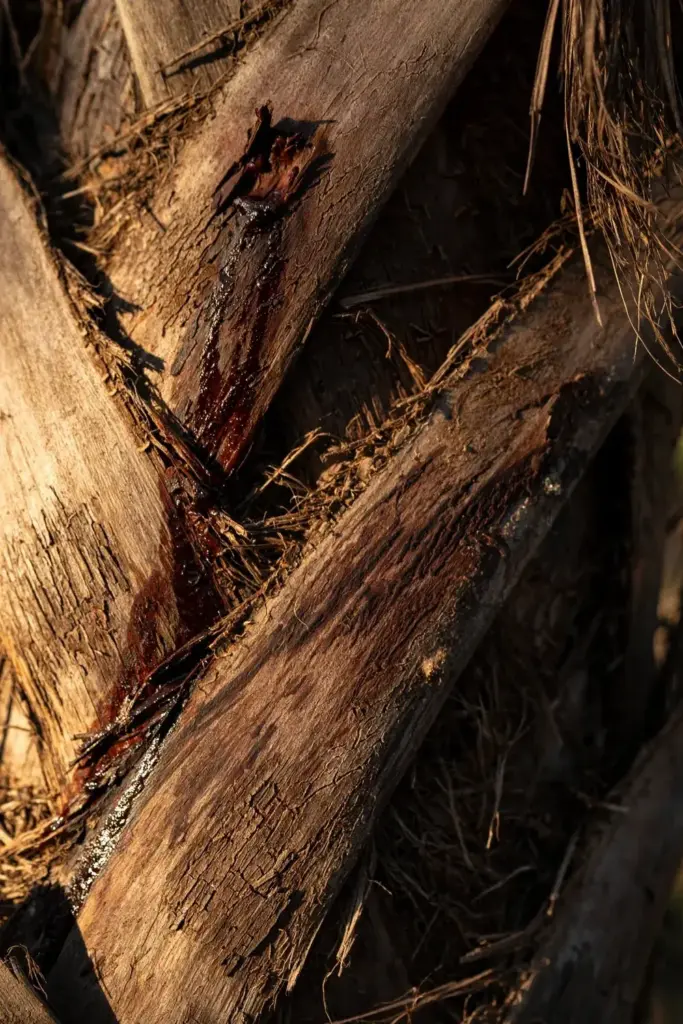
| Reddish-brown, brown, or black stain running down the trunk from one point | Stem bleeding from an infection point, most common on coconut |
| Lowest leaves dying early and hanging down from the canopy | Possible early sign, and easy to confuse with normal leaf aging |
| Tissue around a wound point soft enough to push a finger past the pseudobark | Infection has progressed deep at that point |
| Black, stringy tissue where fibers remain but surrounding tissue is gone | Trunk fibers left intact because the fungus cannot degrade lignin |
| Fermented fruit odor near the wound | Volatile compounds the fungus often, though not always, produces |
Stem bleeding alone never settles the diagnosis. Any trunk wound can bleed. Close examination of the wound point and the soft tissue around it points toward the name, and lab identification of spores from trunk tissue settles it. The UF/IFAS Extension fact sheet on Thielaviopsis trunk rot of palm describes the bleeding, the push test, and the stringy tissue in full.
Why There Is No Cure and No Proven Prevention
There is no cure, and there is no proven prevention. The UF/IFAS Extension fact sheet on Thielaviopsis trunk rot of palm states the position plainly: there are no methods to prevent or cure this disease. That sentence is the whole honest answer, and this page does not dress it up.
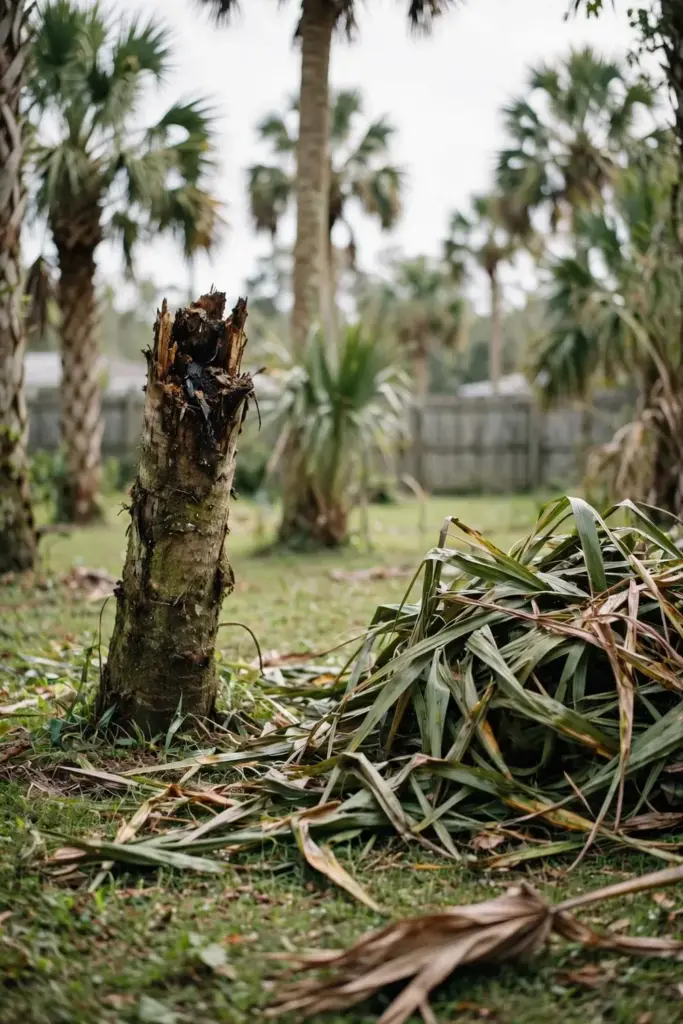
A fungicide cannot reach rot already inside a trunk, and no fungicide in the Extension guidance prevents a fresh wound from becoming infected. Cutting rotted wood out of a standing palm trunk is arborist work on a structurally weakened trunk, and it is not a home-gardener fix.
Ganoderma butt rot is the closest lookalike, and it differs in pattern. Ganoderma starts at the trunk base and rots from the center outward, while Thielaviopsis starts at a wound point and rots one side from the outside inward. The UF/IFAS Extension fact sheet on Ganoderma butt rot covers that disease in full. Ganoderma Butt Rot is named here without a link because the companion article on this site is not yet published.
4 Moves That Still Help
These 4 moves do not cure Thielaviopsis Trunk Rot. They cut the number of fresh wounds, and fresh wounds are the only way the fungus gets in.
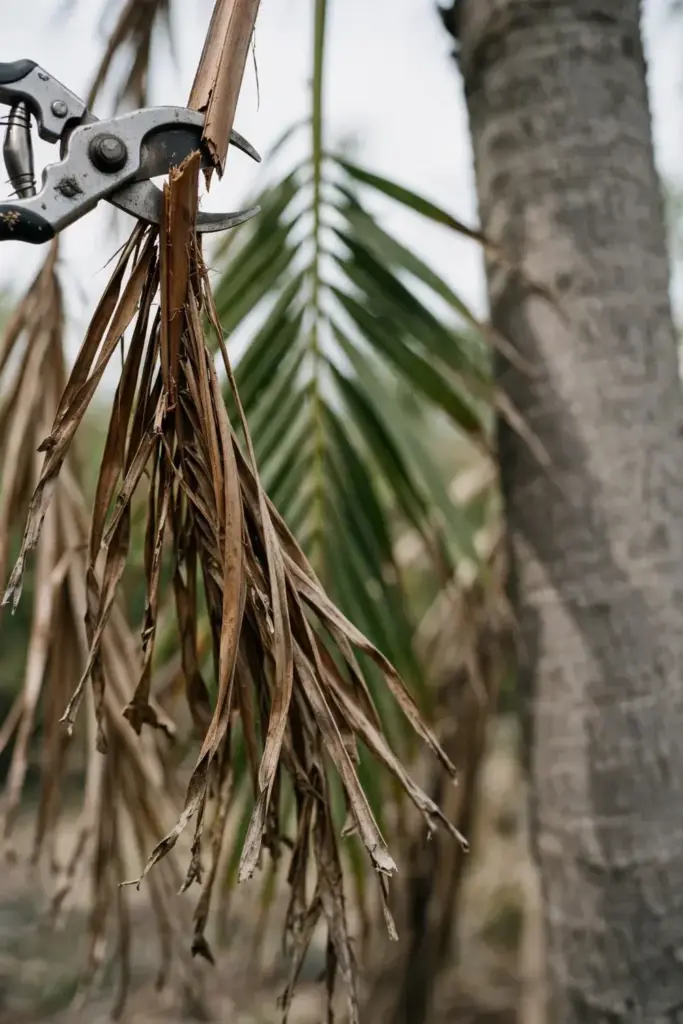
1. Prune Only Dead Leaves
Prune only leaves that are fully dead. A petiole with any green color is still living, and cutting it opens a fresh wound that the fungus can infect. Pulling a living leaf off the trunk does the same damage. The spring pruning techniques guide shows how a clean cut on dead material closes fast.
2. Disinfect Tools Between Palms
Disinfect pruning tools between palms, or use a new blade for each palm. The UF/IFAS Extension fact sheet on Thielaviopsis trunk rot of palm lists disinfectants that work: 25% chlorine bleach made from 3 parts water and 1 part bleach, 50% rubbing alcohol, 50% denatured ethanol, or 5% quaternary ammonium salts. Soak tools for 10 minutes, then rinse in clean water.
3. Keep Wounds Off the Trunk
Keep nails, climbing spikes, and careless tool strikes off the trunk. Trunks also wound during digging and transplanting, so handle a moved palm gently and keep the work clean. Wind-blown objects, sapsuckers, rats, and ambrosia beetles wound trunks too, and those wounds are harder to control. The wounds you cause are the ones you can stop.
4. Keep Soil Off the Upper Trunk
Keep the upper half of the trunk from contacting soil. Chlamydospores, the long-lived resting spores of this fungus, survive in soil for long periods, and soil against a wound gives them their opening. When you replant, set the palm so the upper trunk stays clear of the soil line.
What to Do After a Palm Collapses
Remove a collapsed palm immediately. A collapsed palm is a source of fungal spores, and it stays a source while it stands. Remove the whole palm, trunk included.
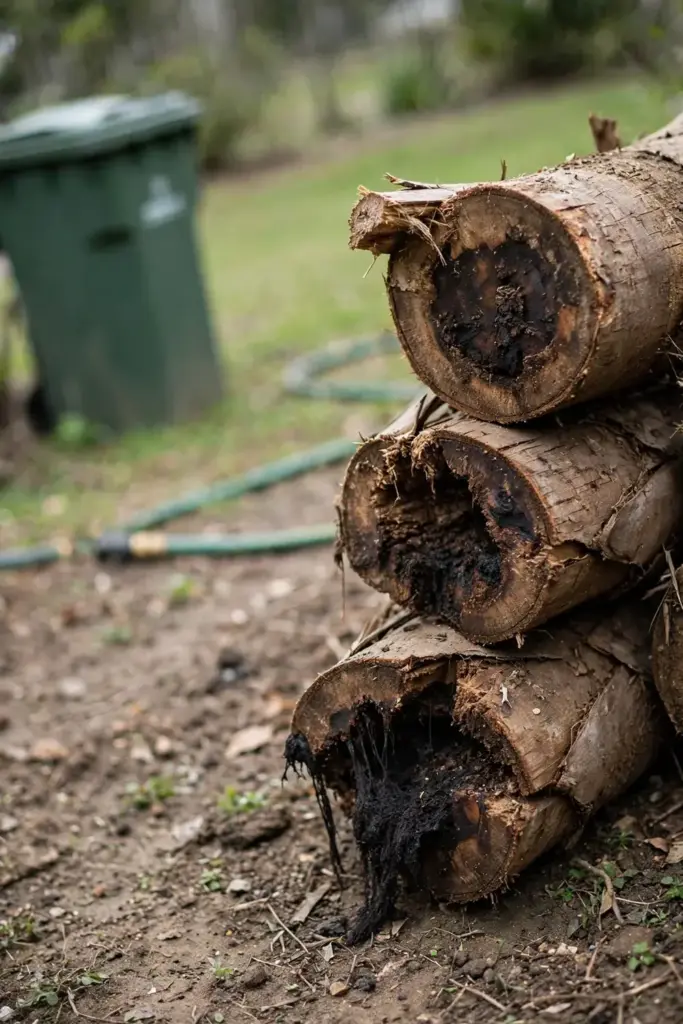
Destroy the diseased trunk material. Do not recycle it in the yard. Chipping the trunk and spreading the chips can carry the fungus to healthy palms. If the trunk is chipped, the UF/IFAS Extension fact sheet on Thielaviopsis trunk rot of palm gives two safe endpoints: a properly built and monitored compost heap, or a trip to a landfill or incinerator.
Replanting in the same spot is acceptable with caution. Minimize trunk wounds on the new palm, and keep the upper half of its trunk clear of soil. A fallen palm trunk is heavy work. Get help for the lift, and keep people clear while the trunk comes down.
Frequently Asked Questions
No. There is no cure for Thielaviopsis Trunk Rot, and no treatment restores rotted trunk tissue. The rot weakens the trunk from the inside, and the palm stays at risk of sudden collapse. Remove a collapsed palm at once, and destroy the diseased trunk instead of chipping it into the yard. Spend the effort on the palms still standing: prune only dead leaves, disinfect tools, and keep wounds off the trunk.
No. Sudden crown drop is a syndrome, a pattern of the canopy falling off with little warning, and Thielaviopsis Trunk Rot is one associated cause. Research has not established Thielaviopsis paradoxa as the only reason for the condition. Other causes can produce the same falling canopy. Treat a fallen canopy as a symptom that needs a cause, and let lab identification of trunk tissue name the fungus when Thielaviopsis is suspected.
It can, through fresh wounds. Spores from diseased tissue move by wind, water, insects, and rodents, and long-lived chlamydospores survive in soil. Still, the disease usually strikes at random, with only a few palms in a yard affected. The fungus cannot infect a palm without a fresh wound. Disinfect tools between palms, prune only dead leaves, and keep soil off the upper trunk to cut the openings the fungus needs.
Yes, with caution. Extension guidance allows replanting in the same location. Keep trunk wounds to a minimum on the new palm, and keep the upper half of its trunk from contacting soil. Remove and destroy the old diseased trunk first, and never spread its chips in the yard. Chipped diseased material belongs in a monitored compost heap, a landfill, or an incinerator, never as fresh mulch under a healthy palm.
Where to Go From Here
Walk out and look at the trunks. A reddish-brown stain running down from one point, soft tissue at a wound, or a fermented fruit odor earns a closer look, and lab identification settles the name.
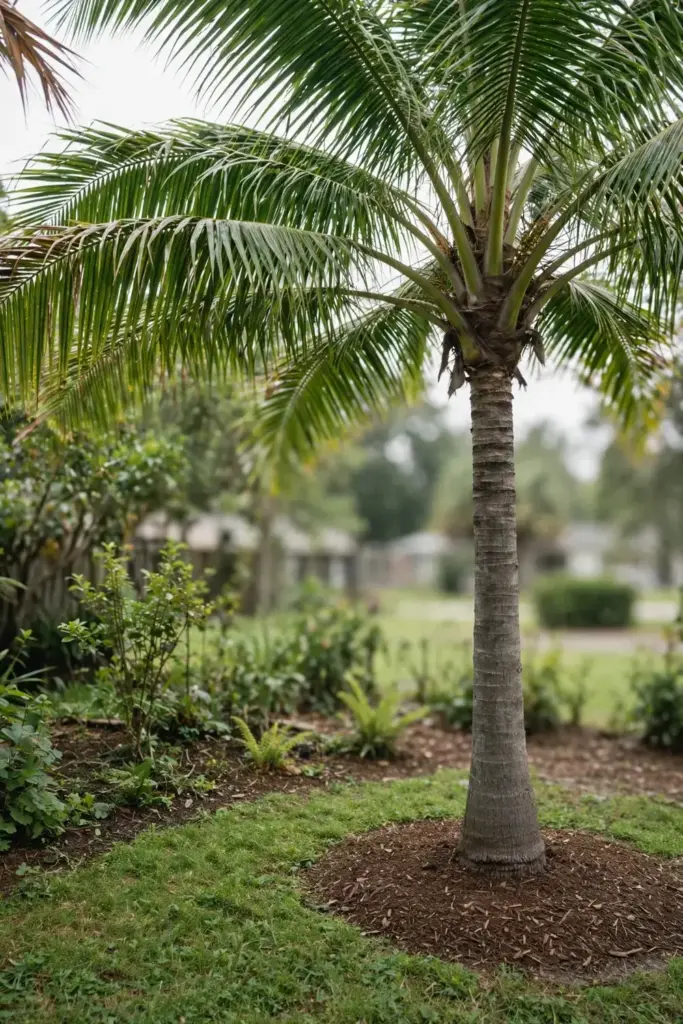
Prune only dead leaves. Disinfect tools between palms. Keep nails and spikes off the trunk. Remove a collapsed palm at once, and destroy the trunk instead of chipping it into the yard.
Thielaviopsis Trunk Rot has no cure and no proven prevention. The honest work is wound control, tool hygiene, and fast removal. That work protects the palms still standing.