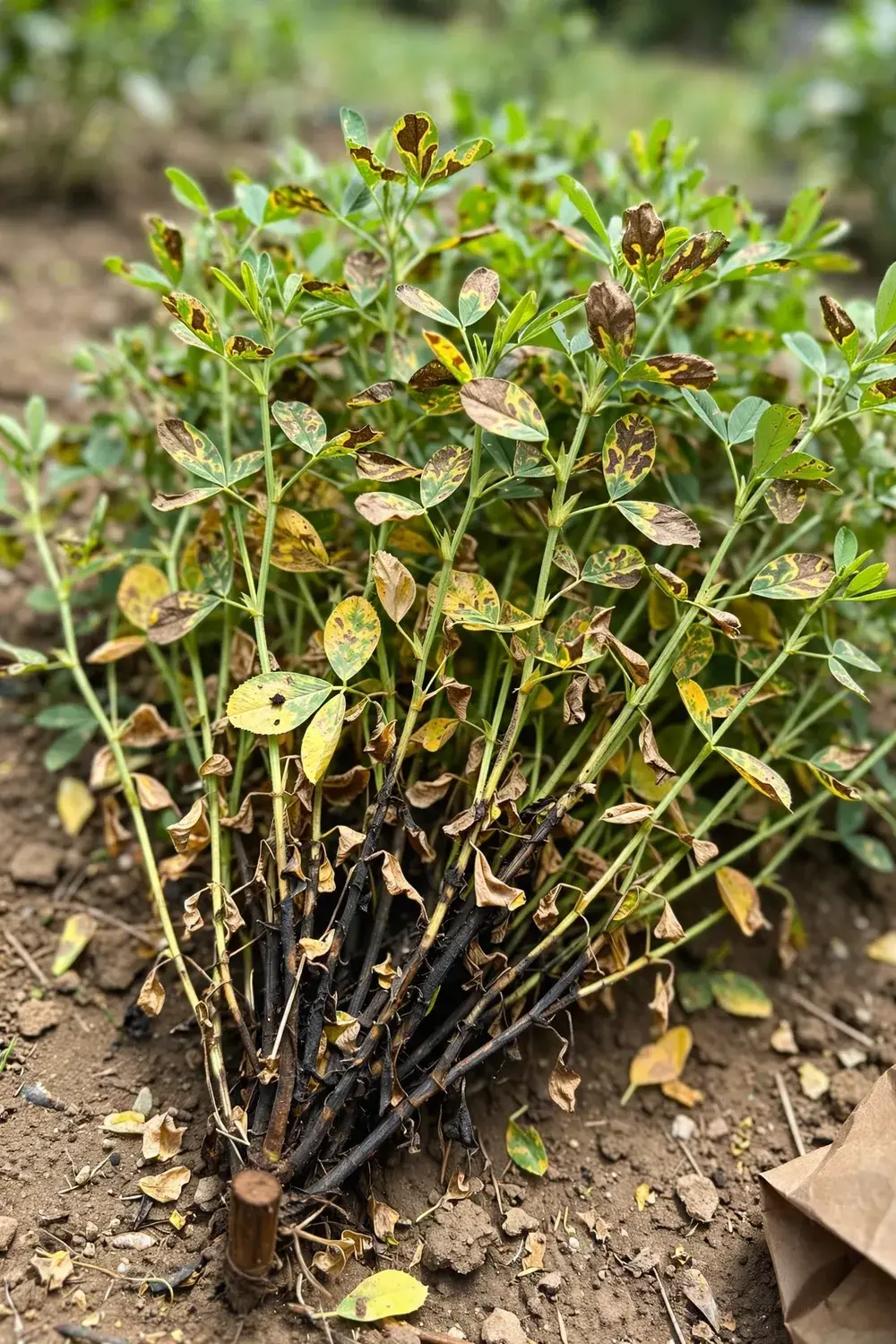

Summer Black Stem of alfalfa shows up after the first cutting, in warm, humid weather. The fungus Cercospora medicaginis causes it, and 2 lesions on one leaf can start the drop. Leaves spot, then drop, and stems darken from the base upward.
I have learned to read a spotted alfalfa patch as a cutting signal.
The rest of this page gives one symptom check, one honest table, and one move that fits a home patch. The move is small. Cut early and clear the residue.
What Summer Black Stem of Alfalfa Actually Is
Summer Black Stem of alfalfa is a fungal leaf and stem disease of alfalfa (Medicago sativa). The fungus Cercospora medicaginis causes it.
Summer Black Stem is a different disease from Spring Black Stem. Spring Black Stem comes from Phoma medicaginis, now Ascochyta medicaginicola, and favors cool spring weather. The two share a host and a season word in the name. They do not share a pathogen. The University of Nebraska-Lincoln fact sheet treats the two as separate diseases in one sheet.
One older Wisconsin guide prints Cercospora zebrina beside Cercospora medicaginis. United States Extension sources use Cercospora medicaginis. This page follows that use.
| Fact | Detail |
|---|---|
| Pathogen | Cercospora medicaginis, a fungus |
| Host | Alfalfa (Medicago sativa) |
| When | Warm, humid weather after the first cutting |
| First sign | Brown leaf spots with yellow halos, starting low |
| Home move | Cut early and clear the residue |
How to Spot Summer Black Stem on Alfalfa Leaves and Stems
Start at the lowest leaves. Spots appear there first, then climb the shoot.
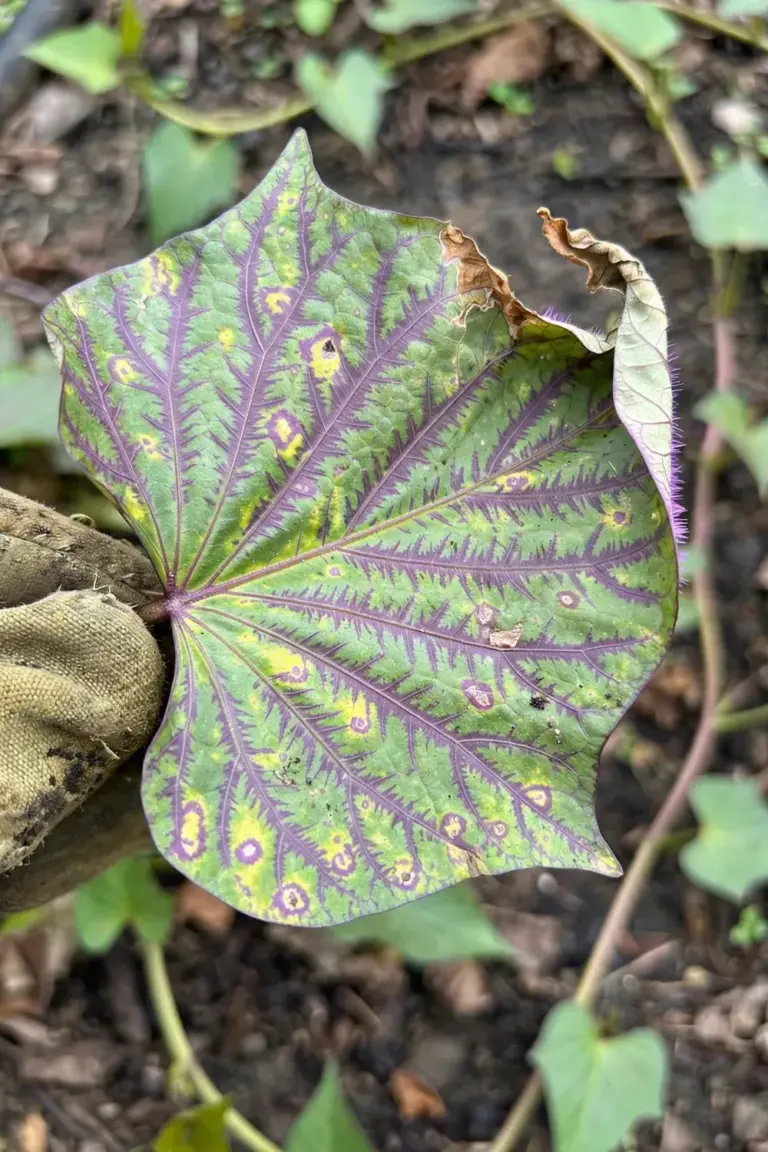
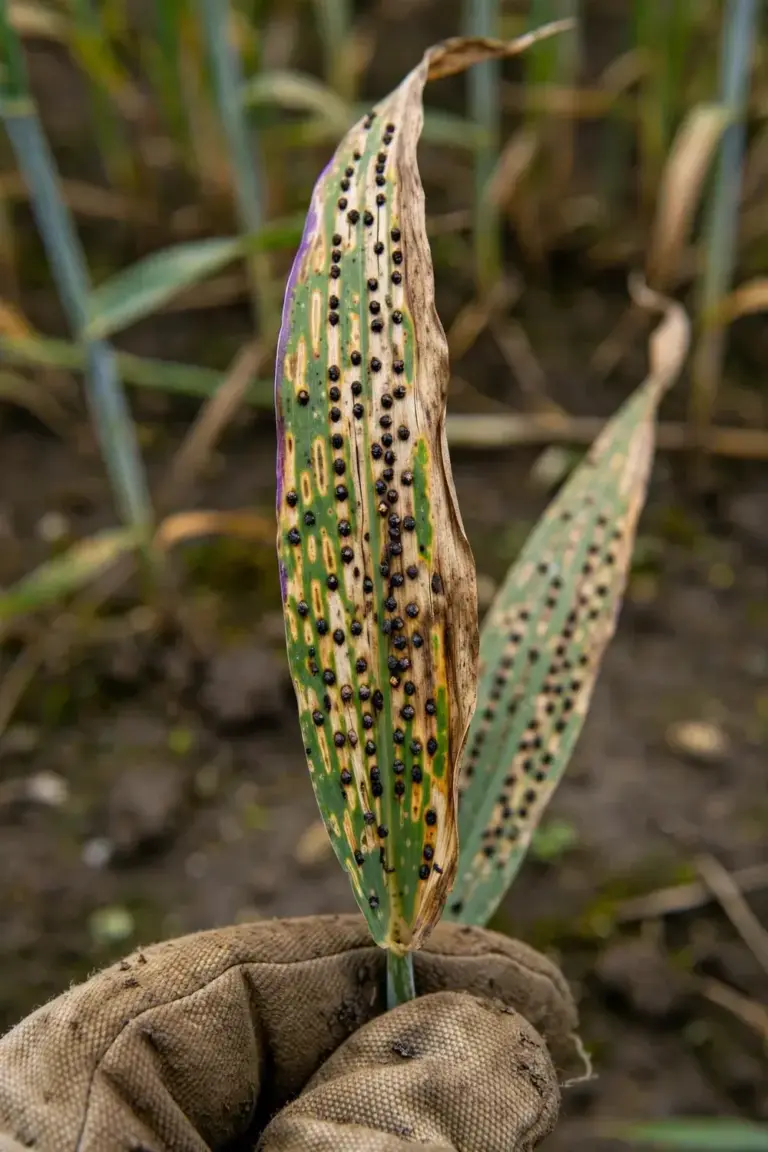
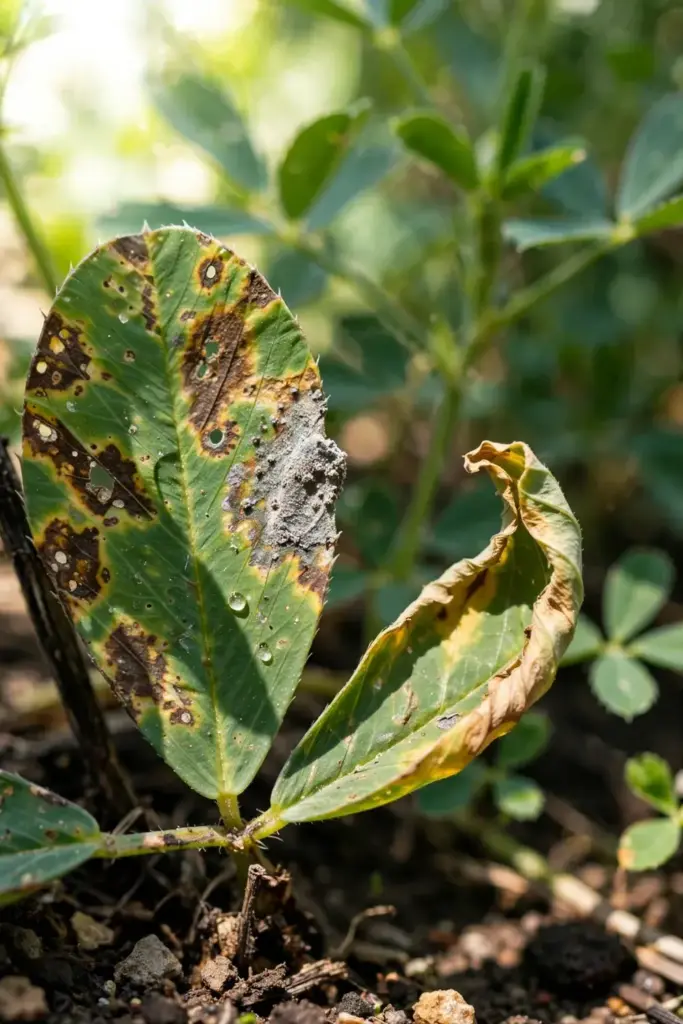
Irregular brown lesions with yellow halos form on leaves and show on both leaf surfaces. Spores turn the lesions silvery. A leaf can drop with as few as two lesions, according to the Crop Protection Network guide on summer black stem.
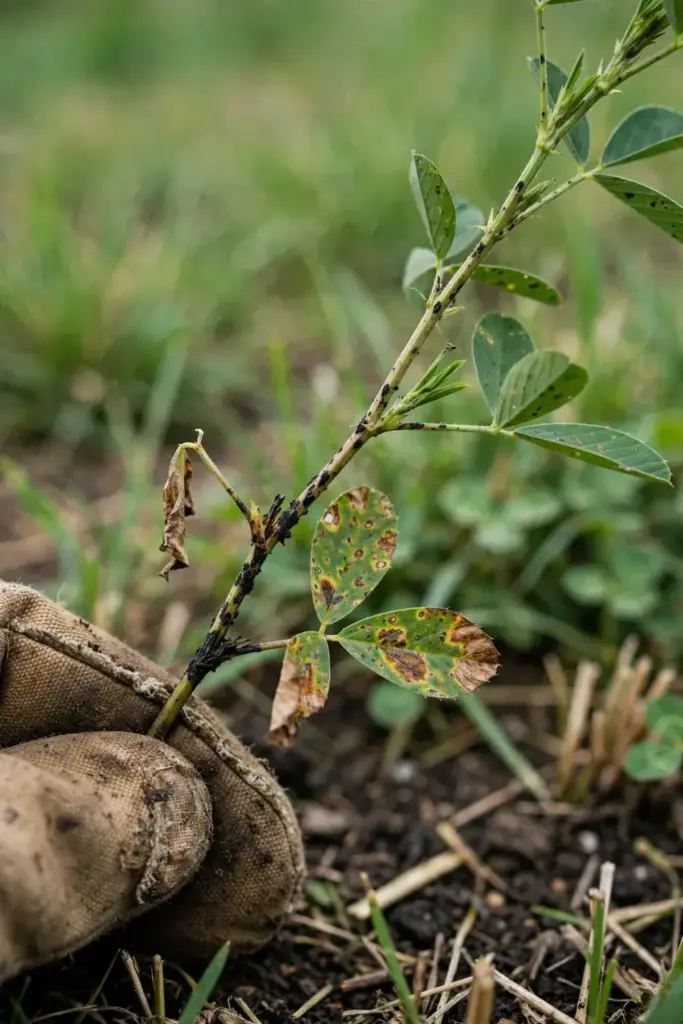
Stem lesions start small and dark. They can merge and cover large portions of the stem. Defoliation runs from the base upward, and the lowest leaves fall first.
Field identification stays provisional. Other alfalfa leaf spots look close. A lab settles a doubtful case.
Why Summer Black Stem Stays a Small Problem in Home Gardens
This disease stays minor even in commercial alfalfa. The University of California IPM guideline calls summer black stem a disease of limited importance, observed primarily in the Imperial Valley.
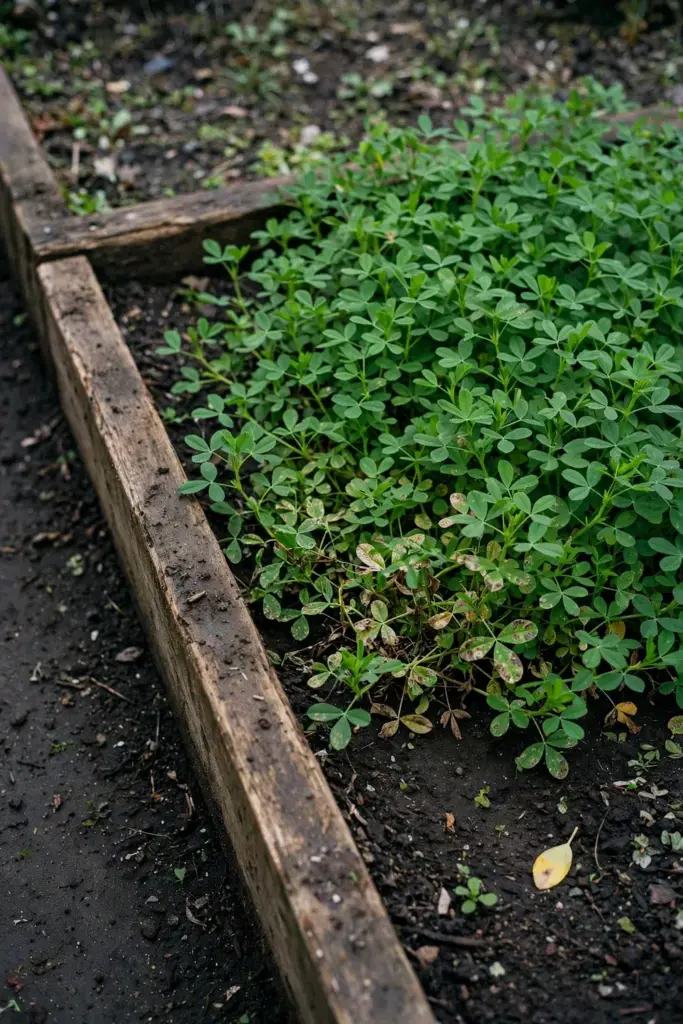
Warmth and wet leaves drive it. Disease development follows humidity close to 100 percent and temperatures from 24 to 28 degrees Celsius, according to the University of California IPM guideline.
Alfalfa usually enters a home garden as a cover crop, one living-fertilizer option among several. The cover-crop guide treats it that way. A spotted cover-crop patch costs a cutting, not a crop.
No home spray program exists for this disease. Field guides time copper hydroxide to cuttings, and that schedule belongs to forage growers. The home patch gets shears and a bag.
Cut Early and Clear the Residue
Cut the stand as soon as spots show. Do not wait for full bloom or a planned cutting date.
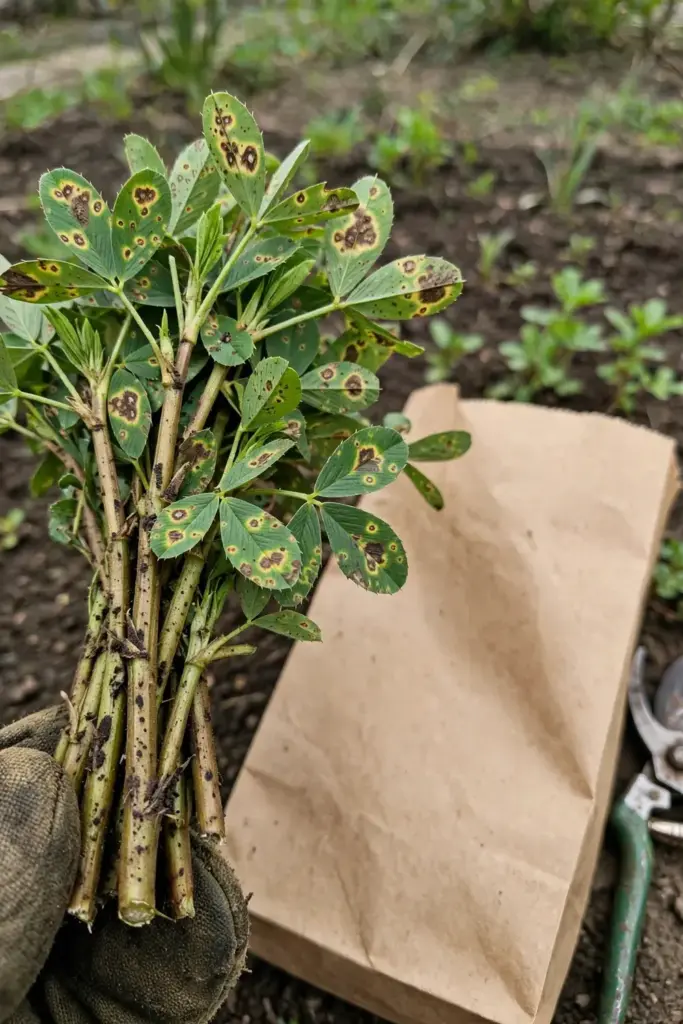
The fungus survives as dormant mycelium in infected stems and leaves. The same University of Nebraska-Lincoln fact sheet describes that carryover, so cut growth leaves the patch in a bag, never on the soil.
Bag the cuttings and drop them in the trash or municipal green waste. Do not compost a spotted stand. End-of-season cleanup follows the same rule. Clear the residue, then prep the bed. The fall bed prep guide covers that cleanup in full.
Watch the regrowth after the cut. Fresh leaves with no spots mean the cut came in time. Fresh spots mean a second early cut.
Frequently Asked Questions
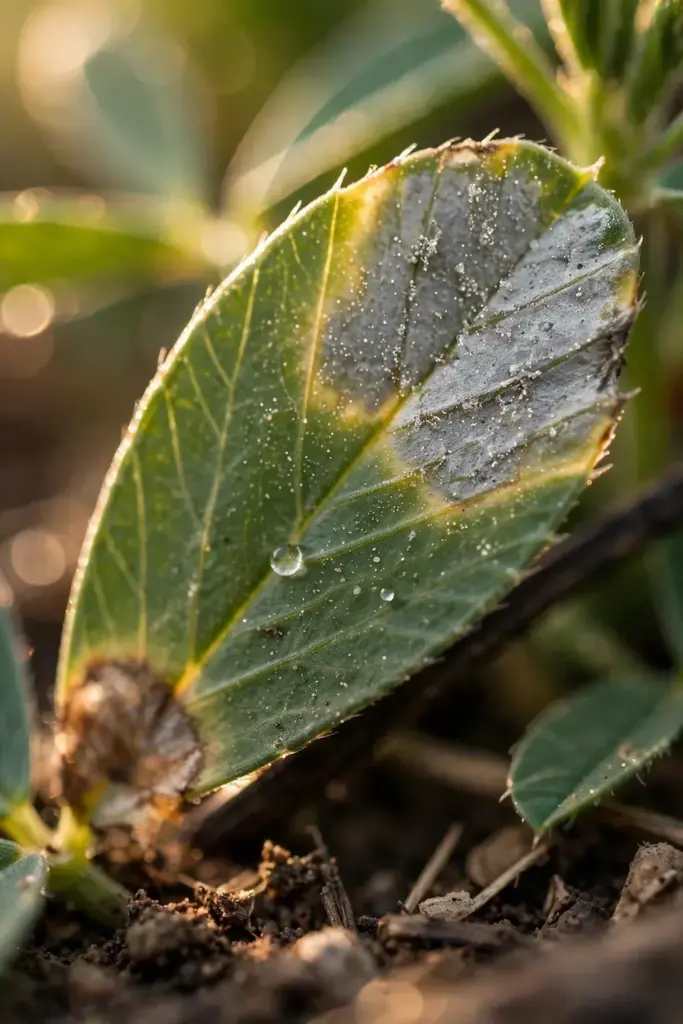
Stands usually survive it. The disease strips leaves and weakens growth, and heavy defoliation cuts vigor for the next cutting. Field guides report that plants are not killed in the field by this disease. A stand that keeps dropping leaves after early cuts needs a different diagnosis, and a lab sample settles it.
No. The two diseases share a host and a season word in the name. Spring Black Stem comes from Phoma medicaginis, now Ascochyta medicaginicola, and favors cool, wet spring weather. Summer Black Stem comes from Cercospora medicaginis and favors warm, humid weather after the first cutting. Advice for one does not transfer to the other.
No. No home-garden spray program exists for this disease. Field guides time copper hydroxide to cuttings, and that schedule belongs to forage growers. A home patch gets an early cut, bagged clippings, and cleared residue. Spraying a cover-crop patch costs money and adds chemical load for a disease that an early cut already limits.
It can. The fungus survives as dormant mycelium in infected stems and leaves left on the soil. Clearing residue at season end breaks that carryover. A new patch starts clean when the bed is clear. If spots return on regrowth after an early cut, cut early again and keep the residue out of the compost.
Where to Go From Here
Summer Black Stem of alfalfa is a warm-weather leaf and stem disease with one honest home move. Spot the halos. Cut early. Clear the residue.
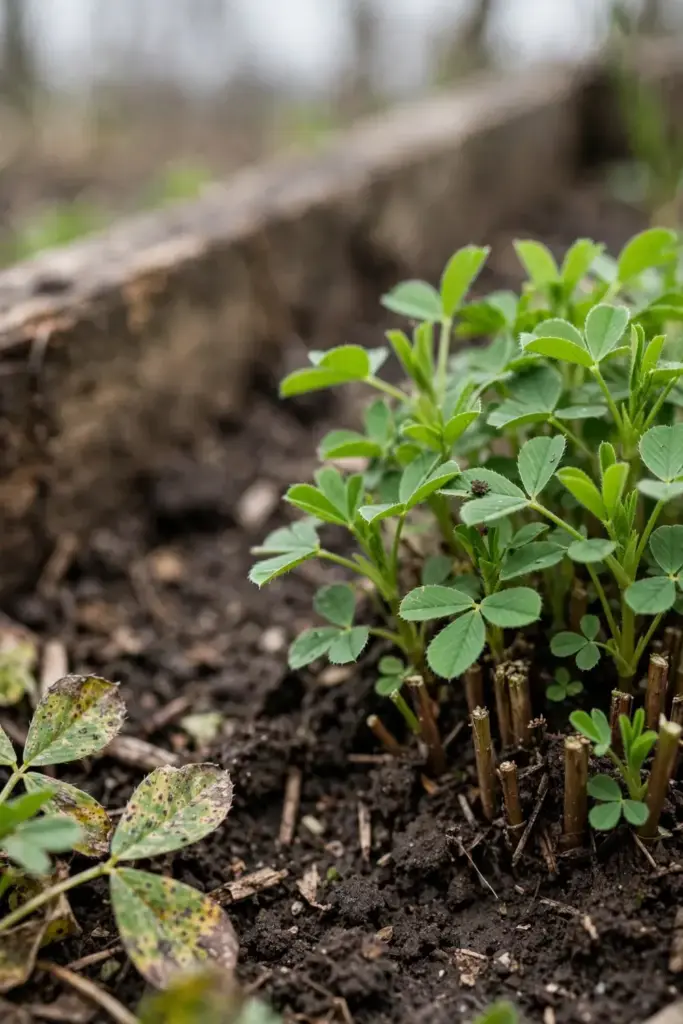
If the patch is a cover crop, fold the cut into the normal bed cycle. If spots keep returning after early cuts, send a sample to a lab before trying anything stronger.