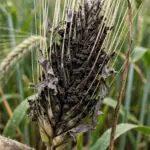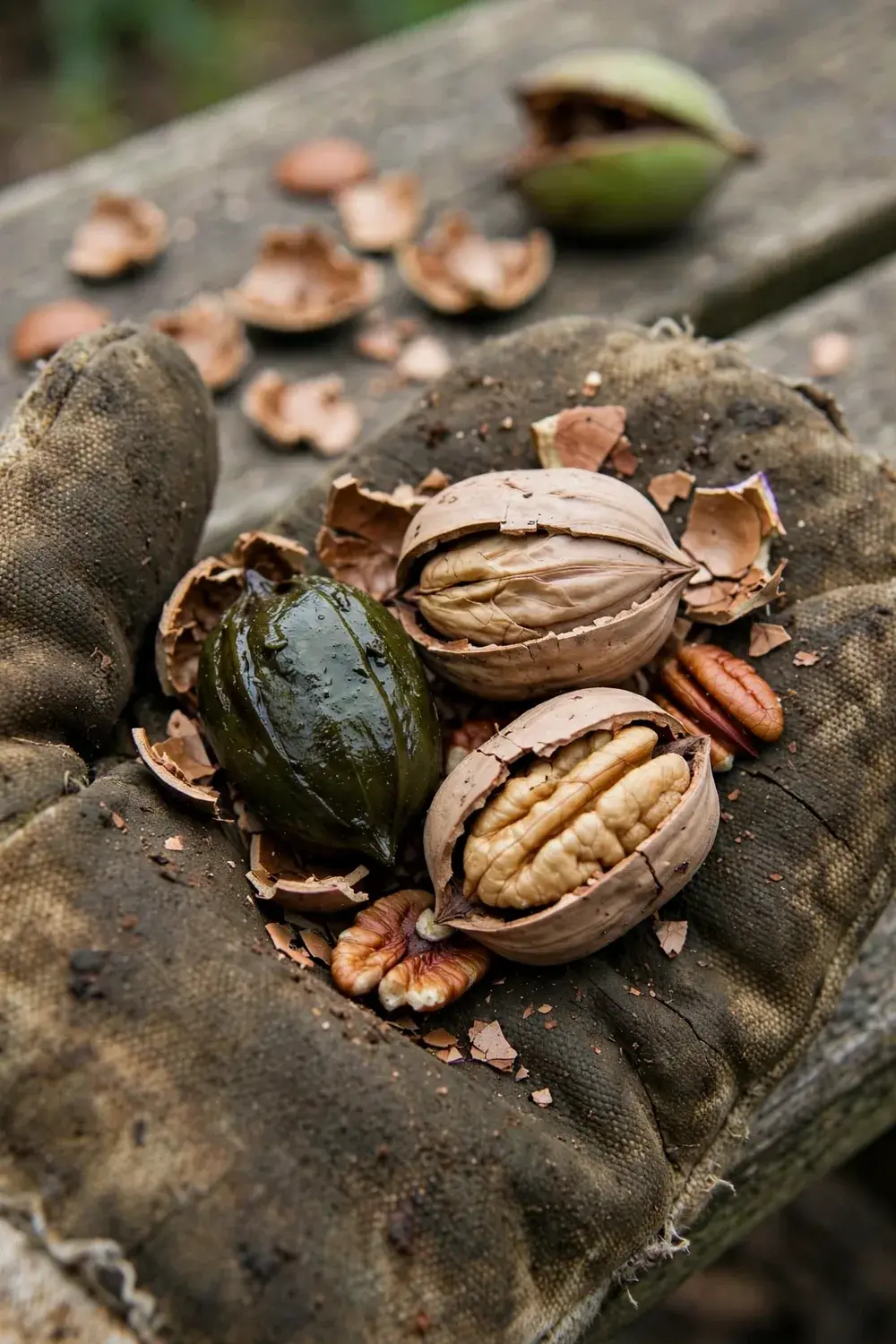

Crack 3 pecans before you trust the harvest. Stigmatomycosis on pecan turns kernels wet, smelly, rancid, and slimy, and you see it only after cracking. Stink bugs carry it. Fungicides do not control it. Home orchardists have no good stink bug control option either.
I have learned to judge the harvest at the cracking table, not at the tree. Stigmatomycosis is a yeast disease of pecan kernels. The Clemson index lists it under pecan as Nematospora sp., paired with the name kernel spot. The disease is a complex of yeasts, not one fungus: Ashbya gossypii, Eremothecium coryli, and Aureobasidium pullulans cause it. Eremothecium coryli carries the older name Nematospora coryli as a synonym.
The rest of this page gives one cracking-time ID check, one correction on fungicides, and 5 moves for a home pecan tree. The moves are sorting, restraint, and cleanup. No spray in this list cures the disease.
What Stigmatomycosis on Pecan Actually Is
Stigmatomycosis is a yeast disease that damages the kernel inside the pecan. Three yeasts cause it: Ashbya gossypii, Eremothecium coryli, and Aureobasidium pullulans, per the Stigmatomycosis reference page. The same page names six hosts: cotton, soybean, pecan, pomegranate, citrus, and pistachio. The damage on pecan shows in the kernel.
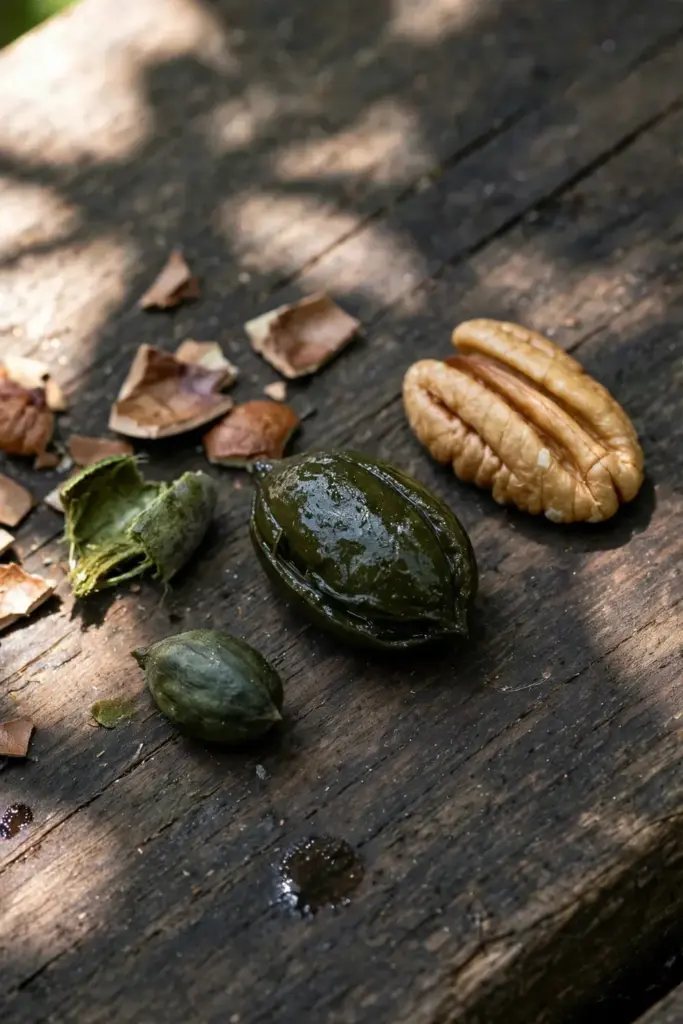
Stink bugs and leaffooted bugs carry the yeasts. The bugs belong to the families Pentatomidae and Coreidae. A bug feeds on a developing nut, and the yeasts enter through the feeding puncture. The UC IPM stigmatomycosis guideline describes the yeasts as associated with these true bugs, and notes that the disease shows in the kernel.
Pecan scab is a different pecan disease. Scab marks shucks and leaves. This page does not cover it. If you are planting a pecan tree, the growing pecan trees from scratch guide covers spacing and establishment.
How to Spot Stigmatomycosis at Cracking Time
You spot stigmatomycosis at the cracking table. The shell and the shuck look normal. The kernel tells the story. The UC IPM guideline names three forms.
| Form | What the Kernel Looks Like | What to Do |
|---|---|---|
| Small and dark | Small dark-green kernel, only partly developed, with a brown stem scar | Discard the kernel |
| Full size and rancid | Well-developed kernel, dark green, wet, smelly, and rancid | Discard the kernel |
| Full size and jellylike | Full-sized kernel, white or light yellow, jellylike, with a lobed shape | Discard the kernel |
The Texas Plant Disease Handbook pecan page lists Nematospora spp. on pecan nuts and says kernels develop dark spots and may become rotted. That short row matches the cracking-time picture above.
Feeding alone can leave a dry dark lesion in a kernel. The two conditions can occur in the same nut. Field ID cannot always separate them, and a lab settles a call that decides next year. The name kernel spot is also used for dry feeding injury, where the skin shows dark circular spots with a whitish pithy area under the skin and a bitter taste. The descriptions do not match, so treat the shared label as unsettled.
Why Fungicides Will Not Fix Stigmatomycosis
Fungicides will not fix stigmatomycosis. The same UC IPM guideline states that fungicide applications are not effective in controlling it. The same guideline notes that an insecticide spray against stink bugs and leaffooted plant bugs has reduced incidence, and that finding comes from orchard work.
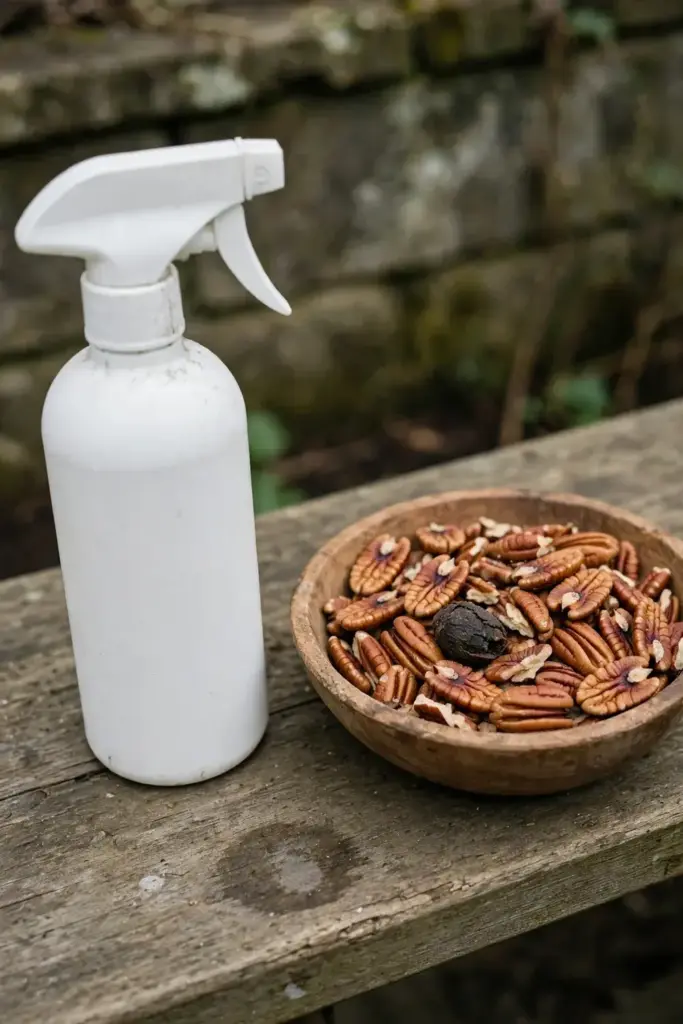
Skip the fungicide spray. A spray aimed at the fungus misses the route into the nut. The route is the bug. The next section gives the 5 moves that stay honest at home scale.
1. Crack, Sort, and Discard the Bad Kernels
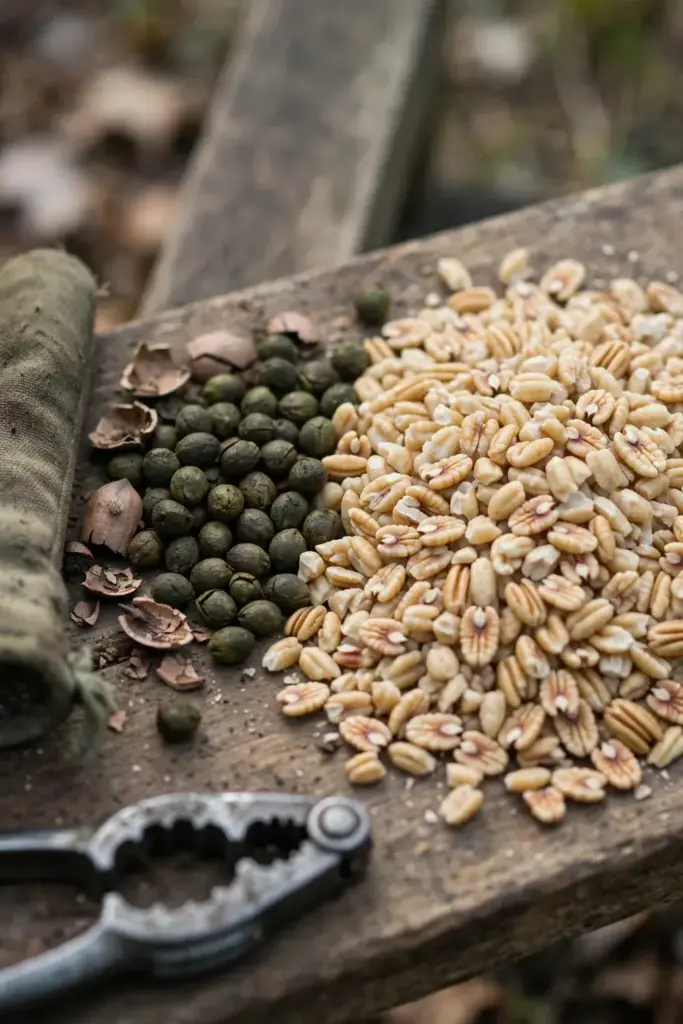
Crack a sample from each tree before you crack the bulk harvest. Sort the kernels into two piles: sound kernels and bad kernels. Discard every kernel that is wet, smelly, rancid, slimy, dark green, or jellylike.
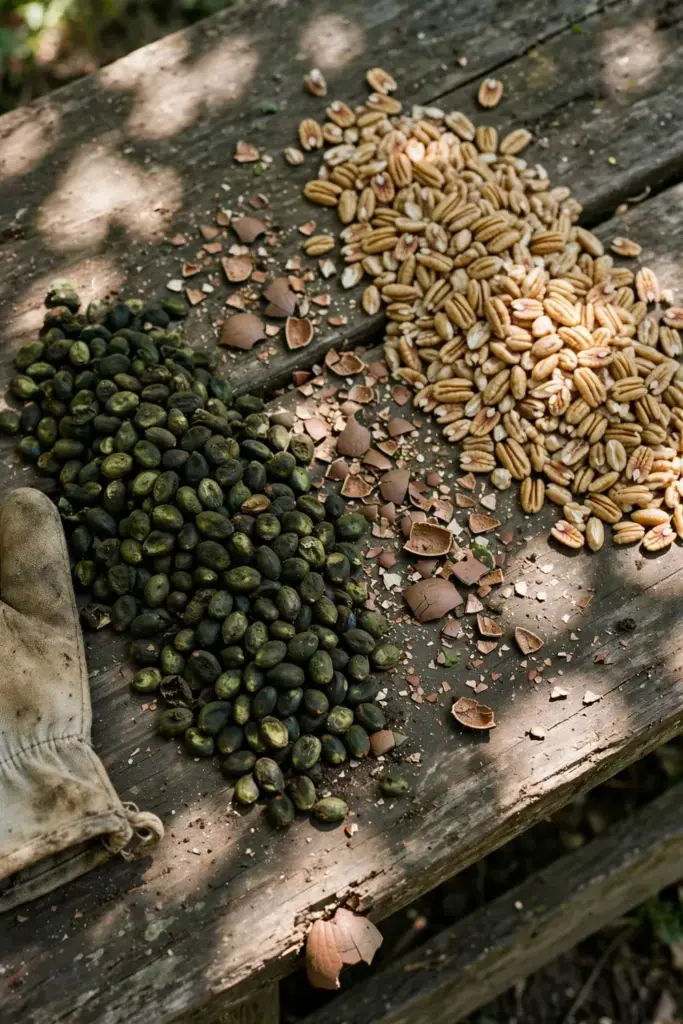
Taste nothing from the bad pile. Rancid kernels taste rancid, and slimy kernels carry yeasts you do not want in the kitchen. Wash your hands, knife, and board after handling bad kernels.
A sorted harvest beats a sprayed harvest. Sorting is the one move that always pays.
2. Accept the Stink Bug Limit at Home
Home orchardists have no good stink bug control option. Mississippi State Extension states it plainly in its disease and insect management guide for pecans in home landscapes: “There are no good stink bug control options for home orchardists who cannot apply such sprays.” Commercial producers control stink bugs with repeated foliar sprays. A backyard tree gives no equivalent.
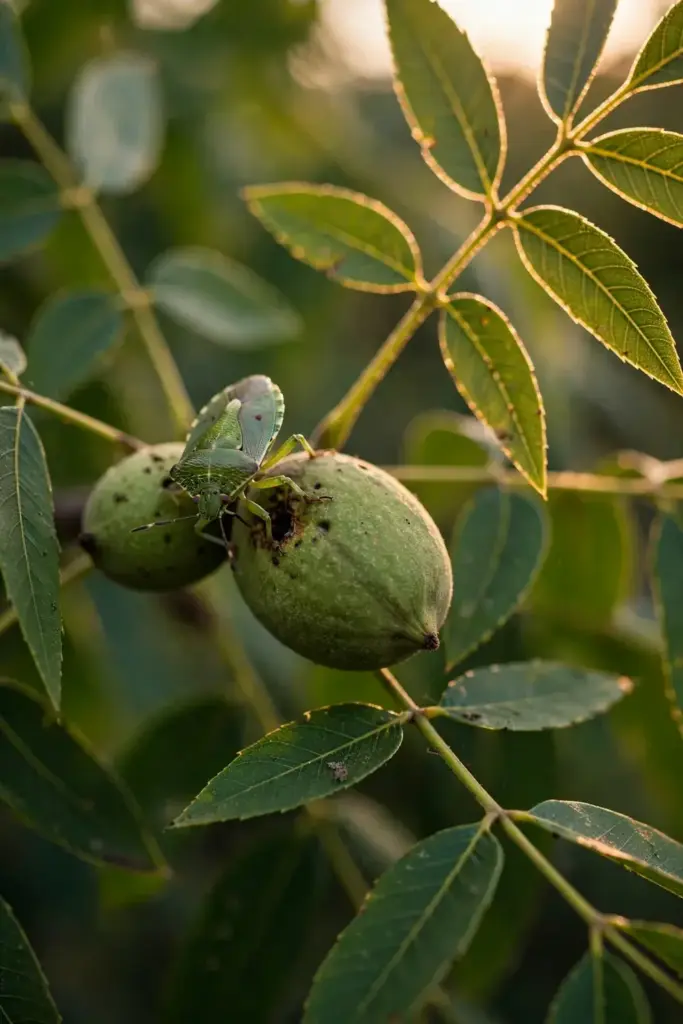
For general stink bug habits around the garden, the managing brown marmorated stink bugs guide covers the insect. That guide does not change the pecan finding above. Do not buy a trap or a spray expecting it to protect the crop.
3. Water Through Dry Spells and Clear Fallen Nuts
Water the tree through dry spells. A stressed tree crops poorly, and a well-watered tree fills its kernels. Water at the root zone. Keep mulch off the trunk.
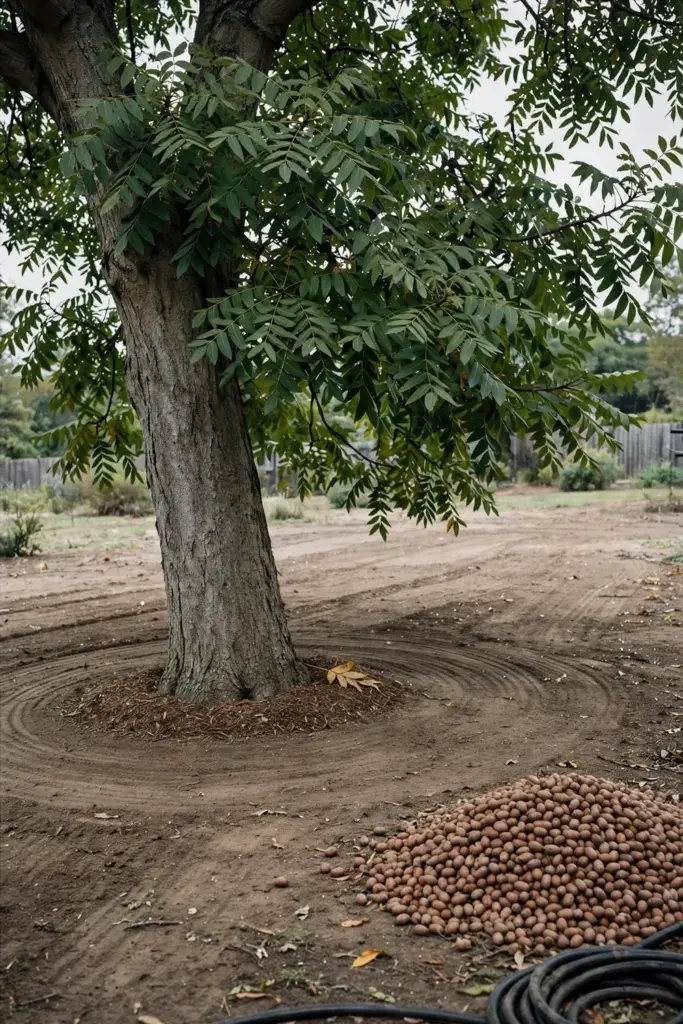
Clear fallen nuts and debris at harvest. Fallen nuts hold bad kernels and draw insects. Rake the ground under the tree after harvest and remove the fallen crop.
Cleanup will not prevent stigmatomycosis. Cleanup keeps the harvest area honest and the next season tidy.
4. Keep Bad Kernels Out of Storage and the Compost Pile
Store sound kernels only. Do not mix a bad kernel into a storage bag. One rancid kernel spoils the bag and hides among sound kernels until you crack it months later.
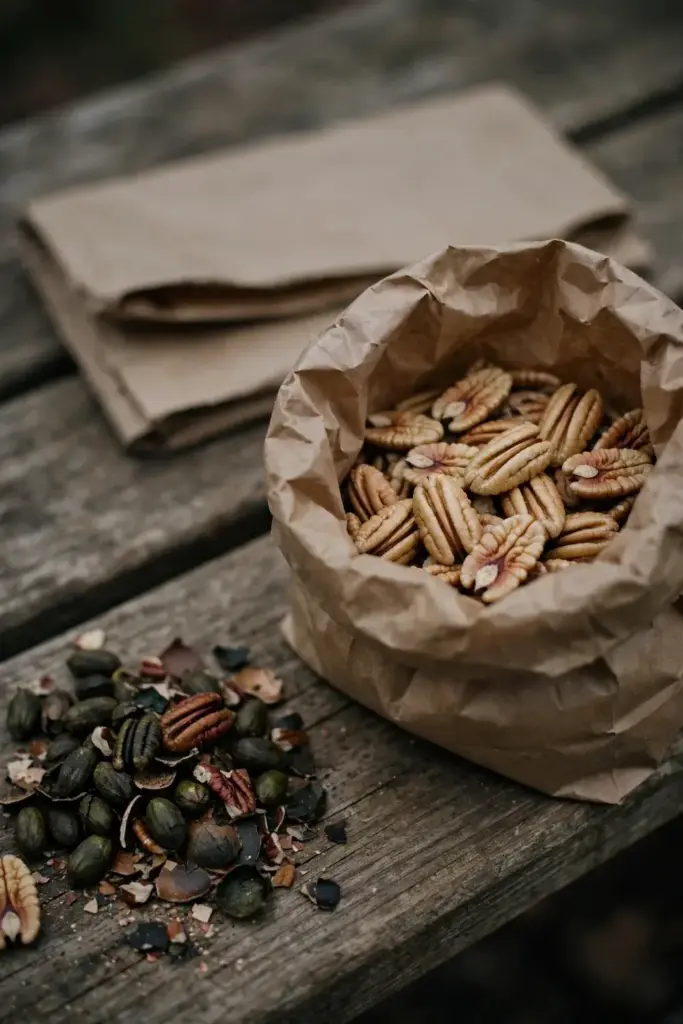
Bag bad kernels and put them in the trash. Do not compost infected nuts. Composting returns the material to the garden, and the yeasts would ride along to the next bed. Clear the sorting table after each session.
5. Send a Sample When the Call Matters
Field ID sorts suspects. A lab names the agent. Send a sample when the call decides next year, such as whether to keep a heavy-cropping tree or change how you sort.
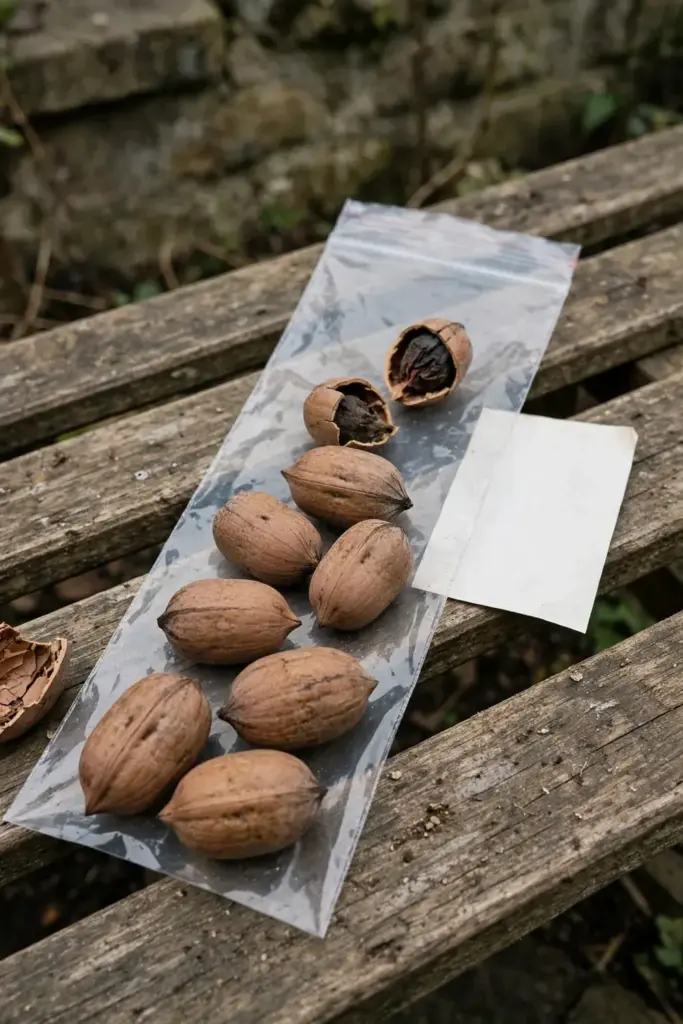
Send fresh nuts with symptoms plus a note on stink bug pressure and the share of bad kernels. Keep the sample cool and dry. Your local Extension office can route the sample to a diagnostic lab.
A lab result beats a second season of guessing.
Frequently Asked Questions
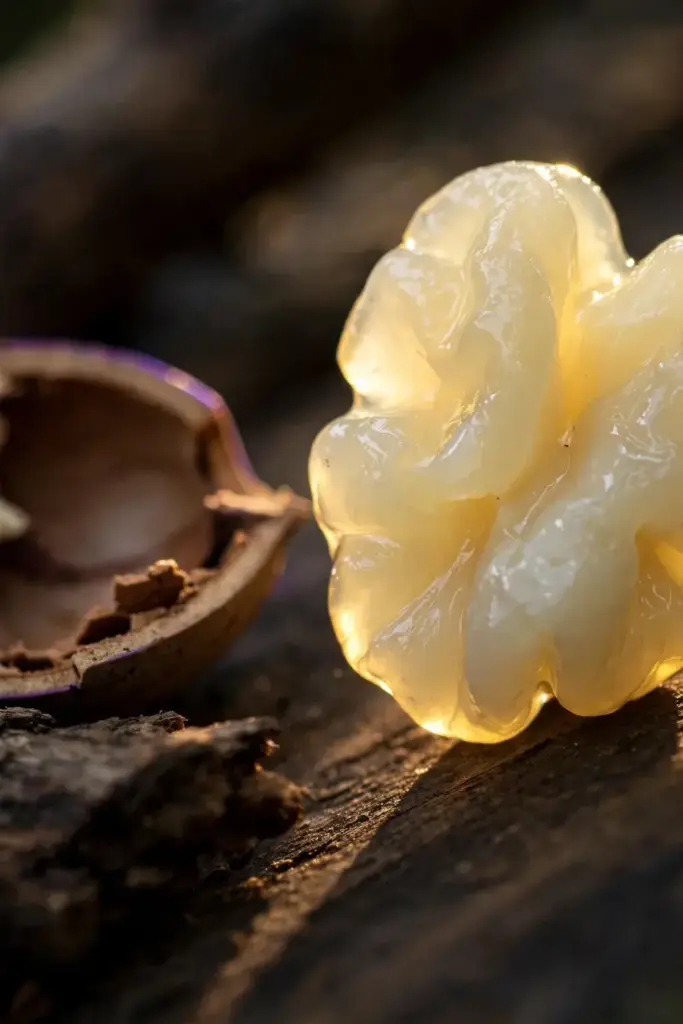
Discard every kernel that is wet, smelly, rancid, slimy, dark green, or jellylike. Eat sound kernels from the same harvest. Wash your hands, knife, and board after handling bad kernels. When most of the batch shows symptoms, discard the batch. Sorting protects the kitchen, and no rescue step makes a rancid kernel worth eating.
No. The UC IPM guideline states that fungicide applications are not effective in controlling stigmatomycosis. The yeasts ride in on stink bug feeding. A spray aimed at the fungus misses the route into the nut. Skip the spray. Put the effort into cracking, sorting, and discarding the bad kernels at harvest time.
The label is unsettled. Some pages use kernel spot for dry feeding injury, where the skin shows dark circular spots with a whitish pithy area under the skin and a bitter taste. Stigmatomycosis kernels turn wet, smelly, rancid, and slimy. The descriptions do not match. Treat the shared label with care, and name the symptom you see.
Mississippi State Extension states that there are no good stink bug control options for home orchardists who cannot apply whole-canopy sprays. Commercial producers use repeated foliar sprays. A backyard tree gives no equivalent. Do not buy a trap expecting it to protect the crop. Sort at harvest and discard the bad kernels.
The sources describe kernel damage, not tree death. No source used on this page reports a tree lost to this disease. Keep the tree. Sort at harvest and discard the bad kernels. When the damage decides next year’s plan, send a sample to a lab for a firm answer.
Where to Go From Here
Crack 3 pecans from each tree before you crack the bulk harvest. Discard the bad kernels. Skip the fungicide spray.
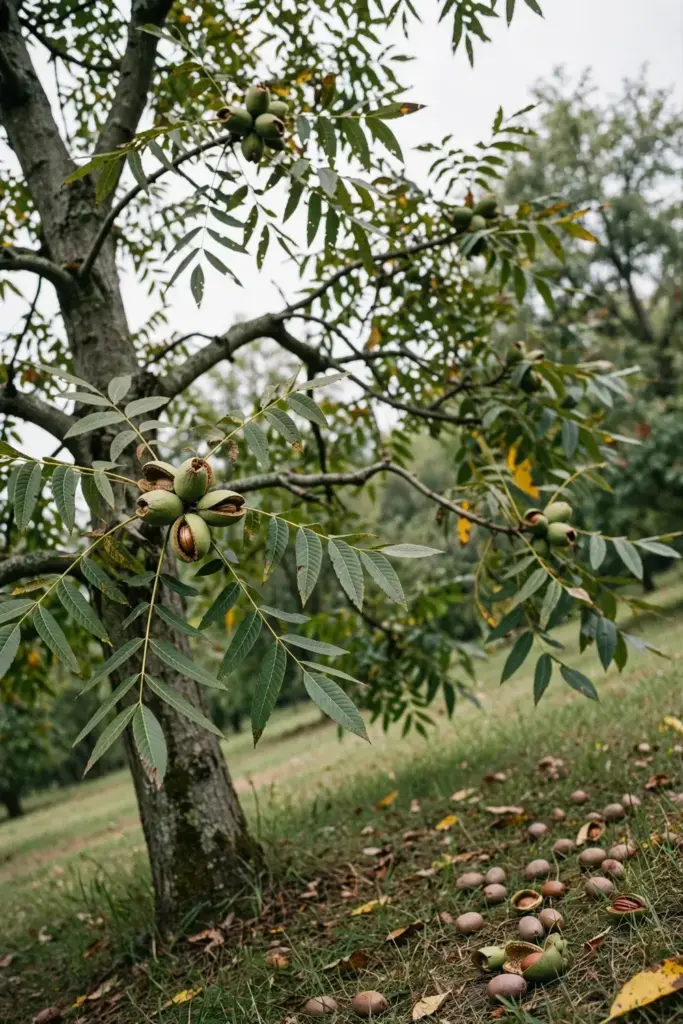
Plan next year around the cracking table, not the spray tank. Water through dry spells, clear fallen nuts, and sort every batch. The soil health guide covers building the ground the tree stands in.
Stigmatomycosis gives a home grower one honest job: sort the harvest and know what a bad kernel looks like. Start at the cracking table.