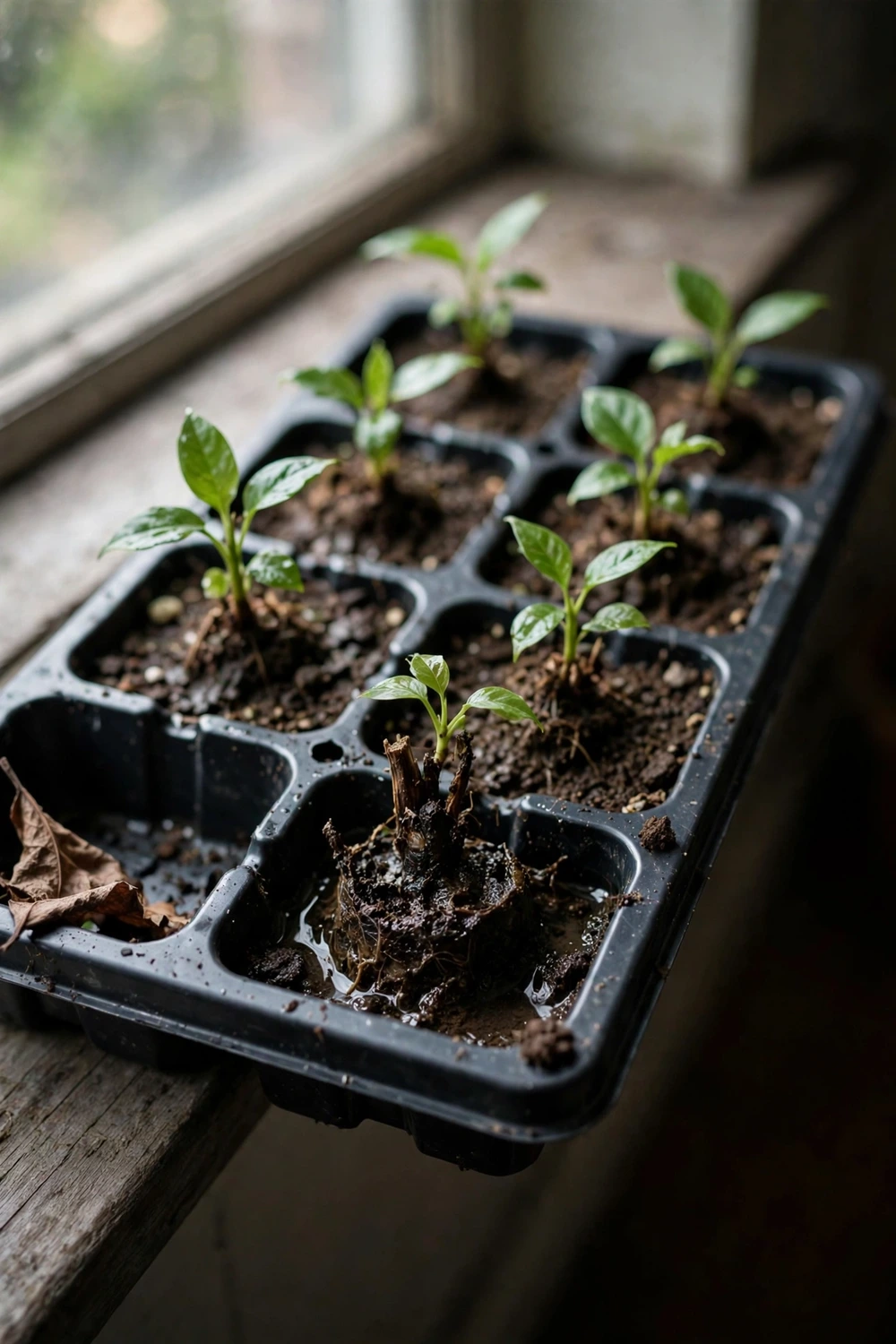

Cutting rot is the moment a propagation goes wrong. The cutting looked healthy yesterday, and today the base is soft, dark, or slimy. The 10 strategies below tell you how to read the rot type, wet, dry, gray, or slimy, rescue what can be rescued, and set up the next batch so the rot never starts, because a cutting with rot at the base has no cure, only a rescue.
Cutting rot is a syndrome, not one disease. Several pathogens cause it: Pythium and Phytophthora, which are oomycetes, water molds, not fungi; Rhizoctonia and Botrytis, which are true fungi; Fusarium, another fungus; and bacteria such as Erwinia, Pseudomonas, and Xanthomonas. The pathogen decides the rot type, and the rot type decides the response. The syndrome framing is the whole article.
One fence up front: cutting rot is not damping-off, since damping-off hits seeds and seedlings while cutting rot hits cuttings, and although the two share pathogens, they are different propagation stages, so this article covers cuttings only.
What Cutting Rot Actually Is
Cutting rot is the rotting of a cutting at the cut end or stem base before it roots. The cutting is a wound. The wound sits in a warm, moist medium. The pathogens in the medium, on the tools, or on the cutting itself enter the wound and rot the tissue. The cutting dies before it roots. The rot is the propagation failure.
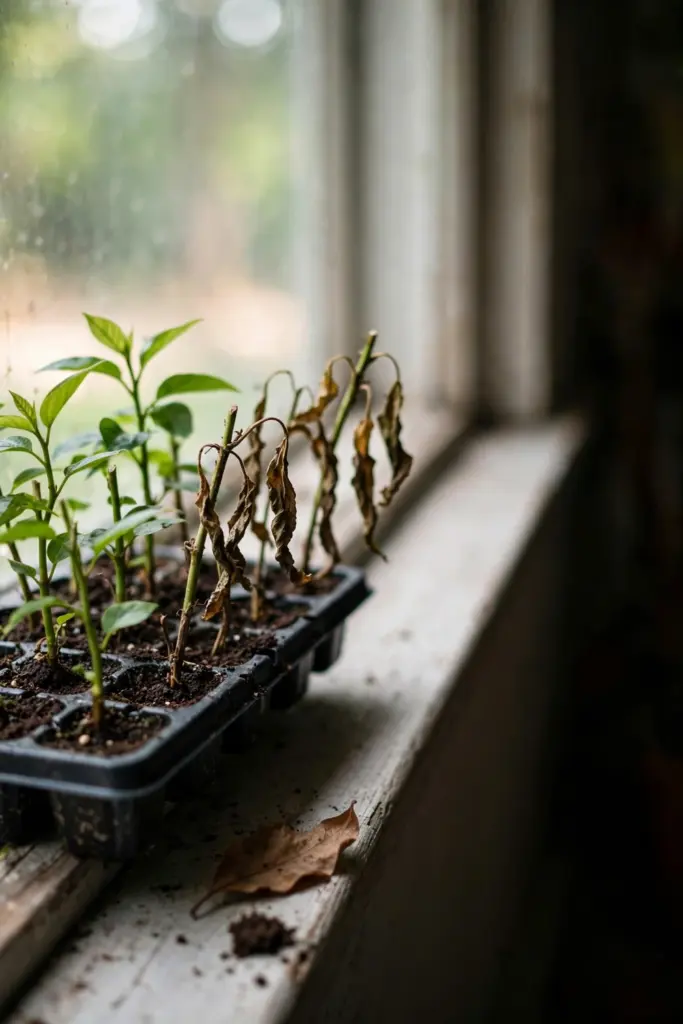
The pathogens are a mixed crew: Pythium and Phytophthora are oomycetes, water molds, not fungi, while Rhizoctonia, Botrytis, and Fusarium are true fungi, and Erwinia, Pseudomonas, and Xanthomonas are bacteria. The article never calls Pythium a fungus. The article never presents bacterial soft rot as fungal. The type discipline matters, because the fungicide that controls Rhizoctonia does not control Pythium, and no chemical cures a symptomatic bacterial rot.
The cutting is most vulnerable before it roots, since an unrooted cutting cannot replace rotted tissue while a rooted cutting can outgrow a small lesion, so the unrooted cutting is the vulnerable cutting and the rooting window is the danger window.
Mixed infections are common. Two pathogens can rot the same cutting at once, a Pythium rot can open the wound for Botrytis, and a bacterial rot can follow a fungal rot, so the mixed infection is why the rot type can look blended, and the field identification names the dominant rot while the lab settles a blended case. A cutting with rot at the base cannot be cured in place. The rescue is to trim above the rot, re-cut, disinfect, and restart. The rescue is the only treatment. The prevention is the whole playbook.
How to Identify Cutting Rot on Your Cuttings
Check the cut end first. Cutting rot starts at the cut end as a brown water-soaked rot and progresses up the stem. The cut end is the entry. The rot at the cut end is the first sign. A cutting with a brown water-soaked cut end is a cutting with rot.
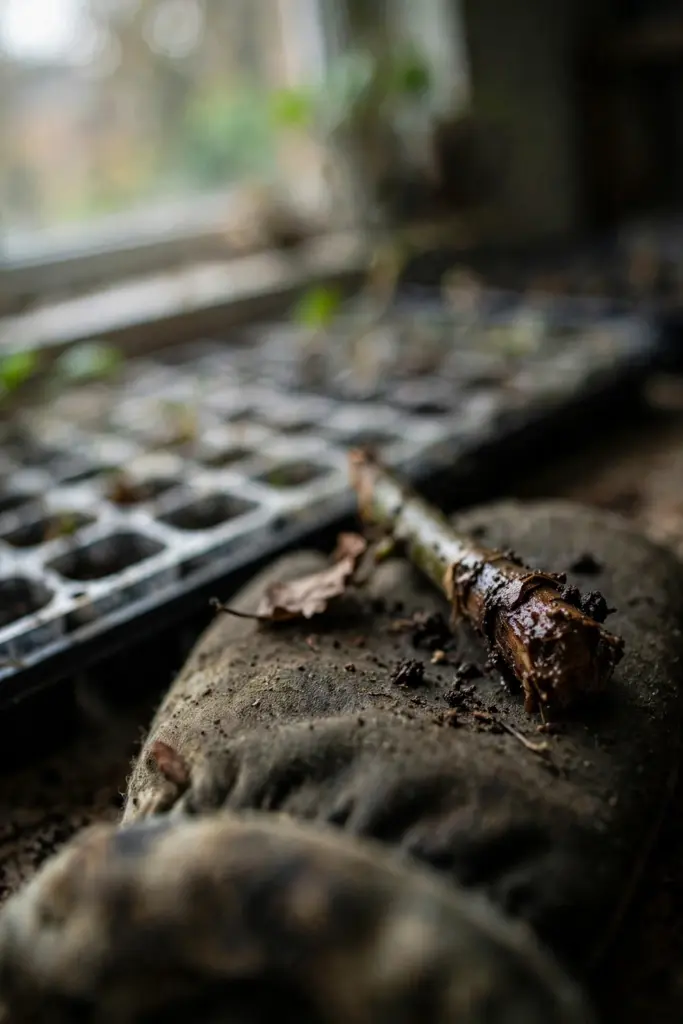
Smell the cutting: a bad smell marks rot, a soft, mucous, slimy feel marks rot, and the smell and the feel are the fast checks, so a cutting that smells bad is a cutting to remove at once.
Watch the stem color, since Pythium rot turns coal black and spreads up the stem fast, Rhizoctonia rot stays dull brown to dark brown and dry, Botrytis rot shows fuzzy gray spore masses, and bacterial rot turns slimy with a strong foul odor, so the color and the texture together name the rot type.
Watch the leaves. Leaves wilt, yellow, and die as the stem rots. The wilting leaf is the secondary symptom. The stem is the primary symptom. The leaf follows the stem.
Check the root tips where roots exist: in Pythium rot the root tips appear translucent and water-soaked, and the outer layer of root tissue strips off easily, leaving the central core bare, so the stripped root is the Pythium mark and the stripping test is the root check.
Which Cuttings Get Hit Hardest
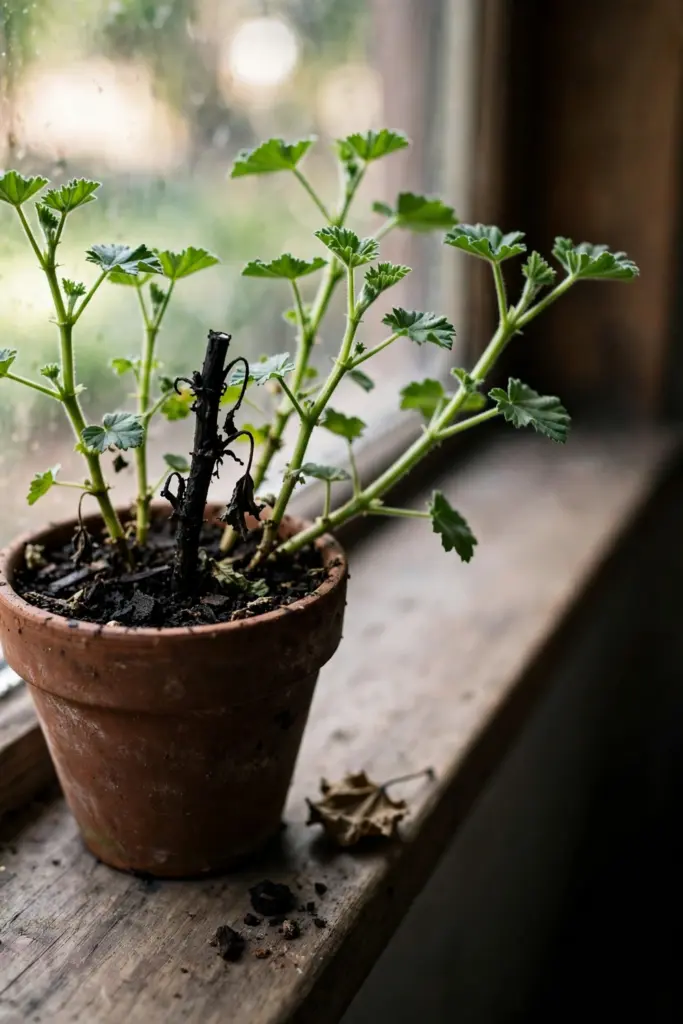
Pelargonium cuttings suffer the named form. Blackleg on pelargonium cuttings is the named host-specific form of cutting rot. The rot starts at the cut end as brown water-soaked rot, turns coal black, and spreads up the stem fast. Pelargonium cuttings in wet compost are the blackleg cuttings. The pelargonium lane is the diagnostic lane.
Soft-stemmed cuttings suffer most. Soft, fleshy cuttings rot faster than woody cuttings. The soft tissue holds more water. The soft cutting is the vulnerable cutting. The woody cutting resists longer.
Cuttings in wet compost suffer most, since wet compost is the Pythium compost and overwatering is the Pythium invite, so the wet cutting is the rotting cutting and the dry cutting is the safe cutting.
Cuttings from stressed mother plants suffer most. Less than optimal cutting quality, high growing medium moisture, and low oxygen content in the propagation medium are the contributing factors. The stressed cutting is the vulnerable cutting. The healthy cutting resists.
Cuttings with leaves in the water suffer in water propagation. Leaves in the water rot and foul the water. The fouled water rots the cutting. The leaf out of the water is the safe leaf. The water change is the rescue.
Cutting Rot Types: Wet vs Dry vs Gray vs Slimy
The rot type names the pathogen group: wet rot means water mold, dry rot means Rhizoctonia, gray rot means Botrytis, and slimy rot means bacteria, so the type is the diagnosis, and the diagnosis sets the response.
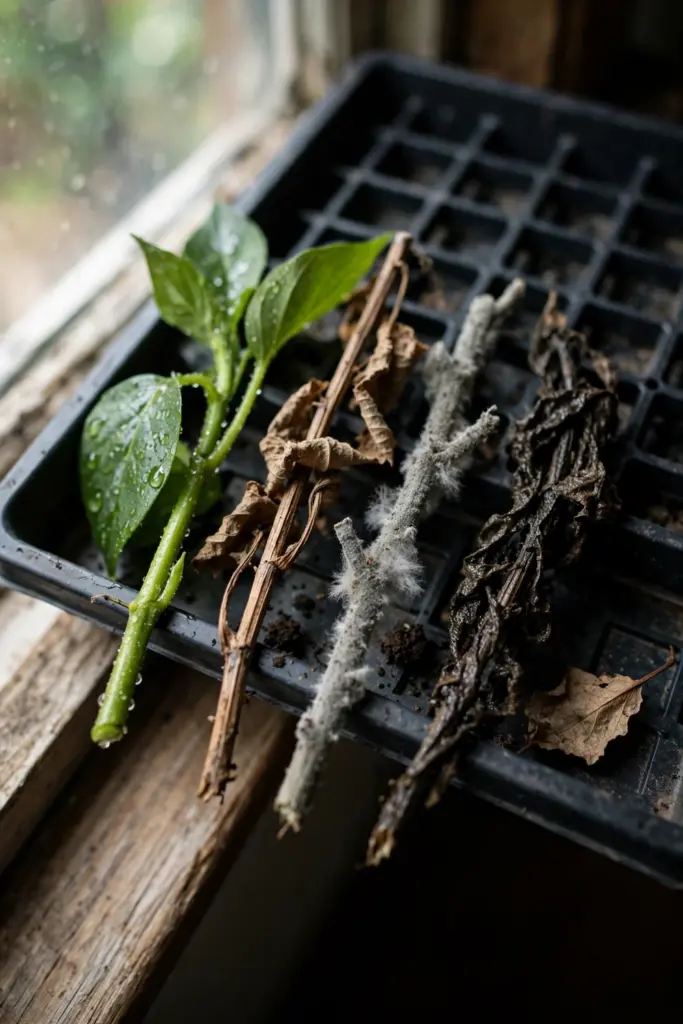
| Clue | Wet Rot (Pythium / Phytophthora, oomycetes) | Dry Rot (Rhizoctonia, fungus) | Gray Mold (Botrytis, fungus) | Slimy Rot (Bacteria) |
|---|---|---|---|---|
| Texture | Soft, water-soaked, mushy | Dry, firm, sunken canker | Fuzzy gray spore masses on tissue | Slimy, collapsing tissue |
| Color | Brown water-soaked, then coal black | Dull brown to dark brown | Gray fuzz over brown tissue | Water-soaked, then dark, slimy |
| Smell | Mild, earthy | Mild | Musty | Strong foul odor |
| Speed | Fast, spreads up the stem | Slower, lesion progresses inward | Moderate, spreads on leaf and stem | Very fast, collapse in 24 to 72 hours |
| Location | Cut end, stem base, root tips | Soil line, stem base | Any part of stem or leaf | Stem base, sudden soft kink |
| Moisture | Wet conditions, poor drainage | Intermediate moisture, neither too wet nor too dry | High humidity, wet leaves | Wet conditions |
| Cure | None once established | None once established | None once established | None once symptomatic |
No published head-to-head comparison article exists for this table. This table compiles the distinction from parallel sources: UConn, Cornell, the AHDB container-ornamentals guide, Greenhouse Management, Penn State, NC State, and the Pacific Northwest Handbook. The FarmProgress conflict is carried here: FarmProgress, writing on vegetable seedlings, says Rhizoctonia damping-off symptoms are almost impossible to tell apart from Pythium. The wet-versus-dry rule is a useful field guide, not a definitive diagnostic. Field identification is presumptive. The lab confirms.
Rule out the neighbors in one pass. Damping-off hits seeds and seedlings, not cuttings. Established-plant root rot hits rooted plants, not cuttings. Fusarium cutting rot is a separate fungal cutting rot, with darker red lesions that become brown with reddish borders. Each neighbor gets one line, never a second table.
How Cutting Rot Spreads
Dirty tools spread it. A knife that cuts a rotted cutting carries the pathogen to the next cutting. The knife is the vector. The disinfected knife is the prevention. The knife gets disinfected between cuttings.
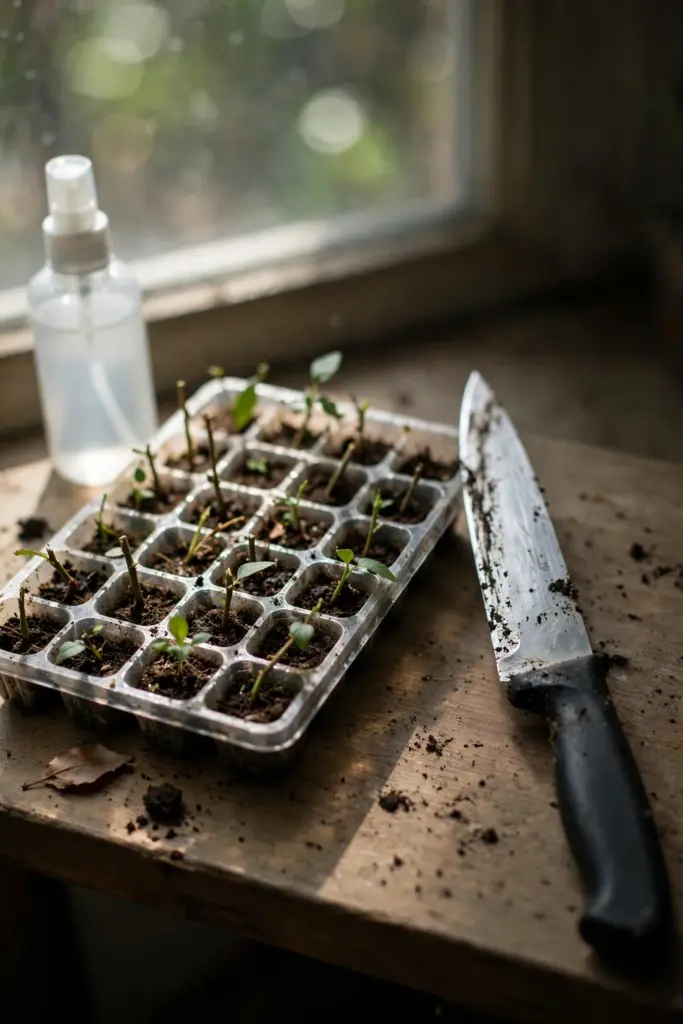
Dirty media spreads it. Field soil, sand from streams, and pond sediment carry Pythium. The dirty medium is the reservoir. The sterile soilless mix is the prevention. The steam-sterilized medium is the reset.
Water spreads it. Pythium spreads by water, and its zoospores swim in water. Shared water, ebb-and-flood benching, and hose ends on the floor spread the pathogen from pot to pot. The shared water is the highway. The separate water is the fence.
Infected cuttings spread it. Cuttings taken from an infected mother plant carry the pathogen. Cuttings received with Botrytis on them rot in the bench. The infected cutting is the import. The inspection on receipt is the quarantine.
Contaminated hormone spreads it. Dipping cuttings into a shared rooting-hormone jar contaminates the jar. The contaminated jar rots every cutting dipped after it. The single-use hormone portion is the prevention. The shared jar is the trap.
What Raises the Risk of Cutting Rot
Overwatering raises the risk most, since overwatering is the Pythium invite, the wet medium is the rotting medium, and the dry medium is the safe medium, so the watering hand is the biggest lever.
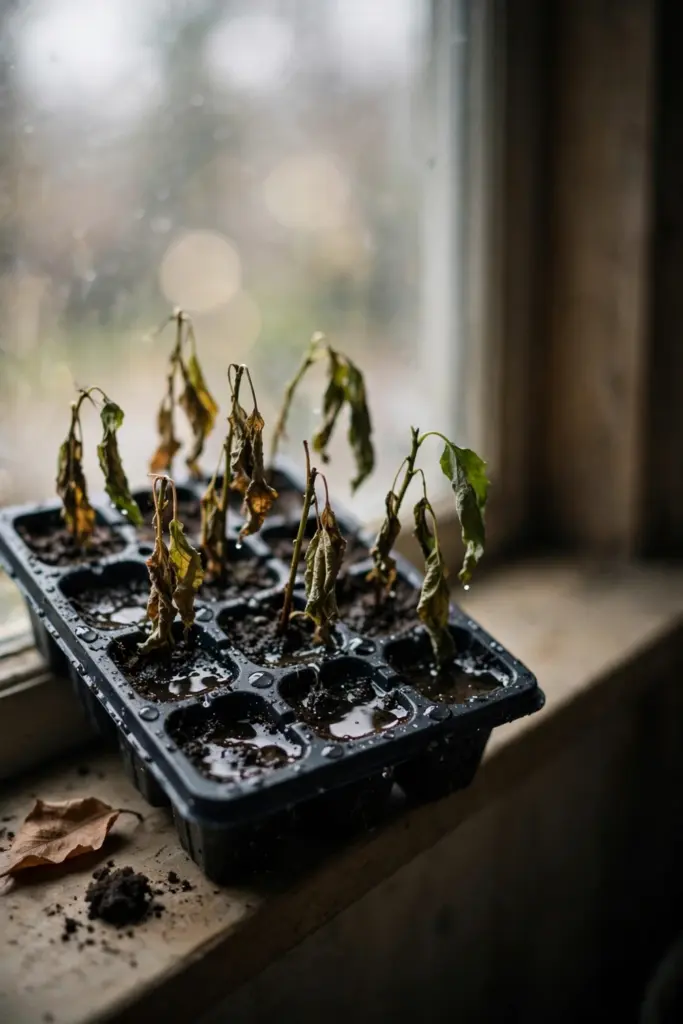
Poor drainage raises the risk. Poor soil drainage holds water at the cut end. The puddled medium is the rotting medium. The draining medium is the safe medium. The drainage is the defense.
Stagnant air raises the risk, since stagnant air keeps leaves wet and feeds Botrytis, the still air is the gray mold air, and the moving air is the safe air, so the airflow is the Botrytis defense.
Wrong hormone use raises the risk. Wrong or excessive hormones damage and rot cuttings. The hormone is a tool, not a magic powder. The correct dose is the safe dose. The overdose is the rot.
Low oxygen in the medium raises the risk. Compaction lowers the oxygen content of the propagation medium. Low oxygen weakens the cutting and favors Pythium. The compacted medium is the low-oxygen medium. The loose medium is the safe medium.
High soluble salts raise the risk. Excess soluble salts injure and weaken root tissues, and the injured tissue invites infection. The salty medium is the injured medium. The clean medium is the safe medium.
Strategy 1: Confirm the ID by Rot Type
Feel the base. Soft and water-soaked means wet rot, dry and firm means dry rot, fuzzy gray means gray mold, and slimy with a foul odor means bacterial rot, so the feel test takes seconds and names the rot type, and a propagator who feels the base knows the pathogen group.
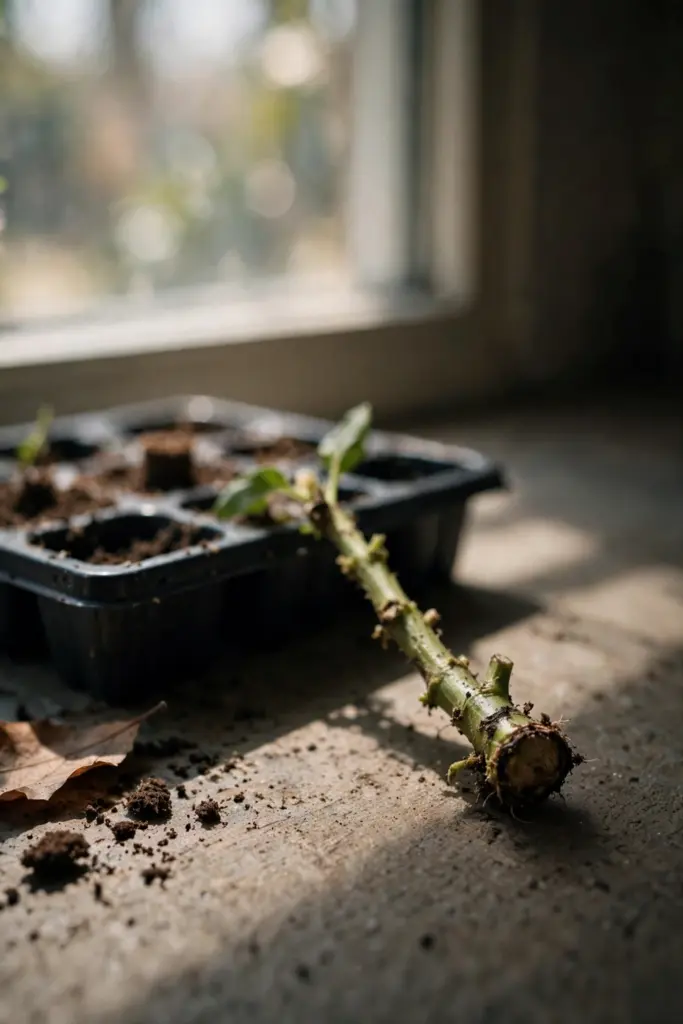
Check the color. Brown water-soaked turning coal black means Pythium. Dull brown to dark brown means Rhizoctonia or Botrytis. Gray fuzz means Botrytis. Slimy dark means bacteria. The color confirms the feel test. The color and the feel together name the rot.
Check the speed. Coal-black spread up the stem in days means Pythium. A sudden soft kink in the stem within 24 to 72 hours of sticking means bacterial rot. The speed separates the fast killers. The fast rot is the emergency rot.
Remember the FarmProgress conflict. The wet-versus-dry rule is a field guide, not a definitive diagnostic. Pythium and Rhizoctonia can look almost identical on seedlings. Field identification is presumptive. The lab confirms where the diagnosis matters.
Strategy 2: Tell Wet Pythium Rot From Dry Rhizoctonia Rot
Use the wet-versus-dry test. Pythium rot is soft, water-soaked, and mushy, while Rhizoctonia rot is dry, firm, and sunken, so the texture is the differential: a cutting with soft water-soaked rot is Pythium, and a cutting with dry firm rot is Rhizoctonia.
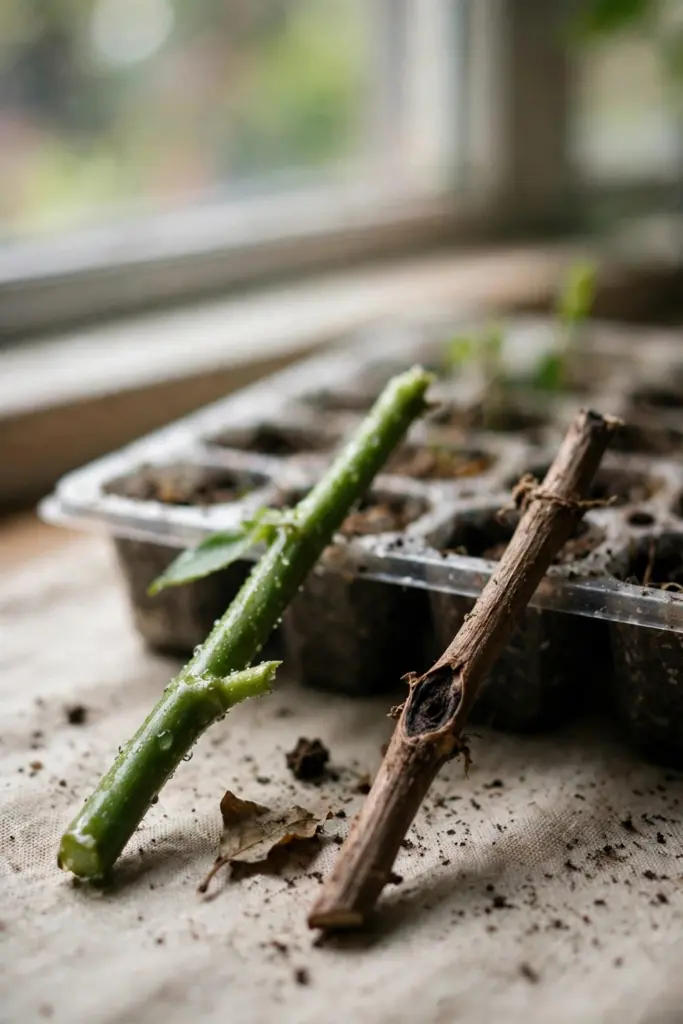
Use the root-strip test. In Pythium rot, the outer layer of root tissue strips off easily, leaving the central core bare. In Rhizoctonia rot, the stem stays firm and dry. The stripping test is the root check. The stripped root is the Pythium mark.
Use the moisture history. Pythium favors wet conditions and poor drainage, while Rhizoctonia favors an intermediate range of moisture, neither too wet nor too dry, so the moisture history is the context: the wet bench is the Pythium bench, and the intermediate bench is the Rhizoctonia bench.
Know the fungicide trap. The fungicides that control Pythium do not control Rhizoctonia, and vice versa, per Cornell. A fungicide chosen on a guess treats the wrong pathogen. The correct identification is the fungicide’s prerequisite. The guess is the wasted spray.
Strategy 3: Spot Gray Mold Before It Spreads
Look for the fuzz. Botrytis shows fuzzy gray spore masses on the tissue, the fuzz is the signature, and a cutting with gray fuzz is a Botrytis cutting, so the fuzz is the field mark.
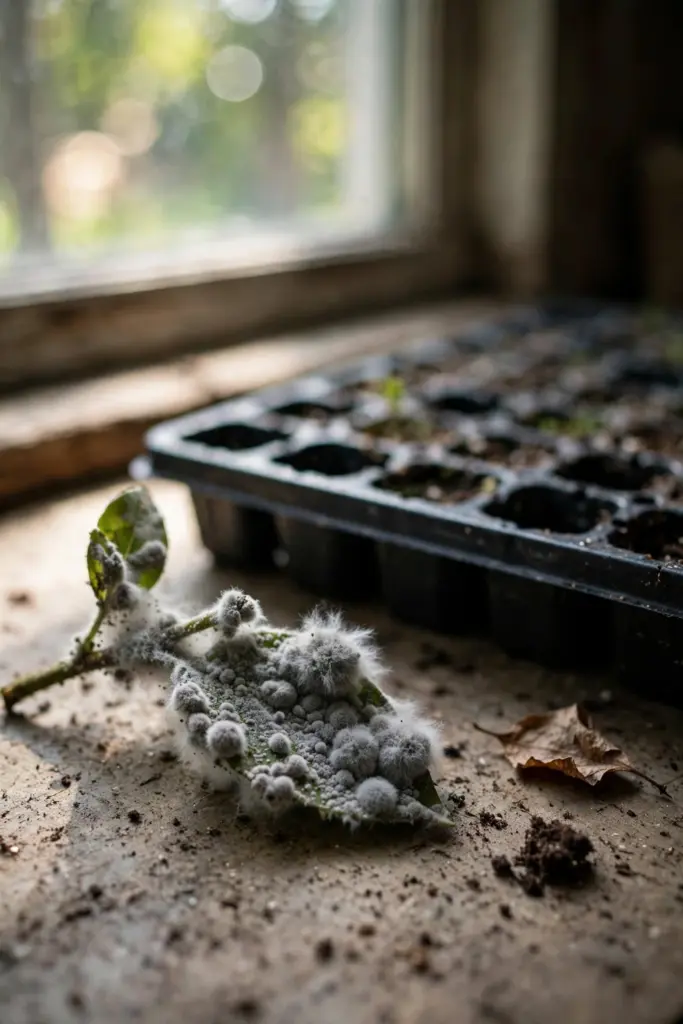
Check any part of the stem or leaf. Botrytis can develop on any part of the stem, while Pythium stem rot most commonly develops on the part of the stem in contact with the soil. The location separates them. The fuzz above the soil line is Botrytis. The rot at the soil line is Pythium.
Scout cuttings on receipt. Botrytis-contaminated cuttings rot in the bench. Inspect purchased cuttings at once. The infected cutting gets removed before it joins the bench. The inspection is the quarantine.
Remove infected cuttings at once. Botrytis spreads on leaf and stem in high humidity. The infected cutting is the spore source. The removal cuts the spread. The bag is the disposal route.
Strategy 4: Spot Bacterial Soft Rot and Act Fast
Smell the cutting. Bacterial soft rot carries a strong foul odor, the odor is the signature, and a cutting with a foul odor is a bacterial cutting, so the smell test is the fast check.
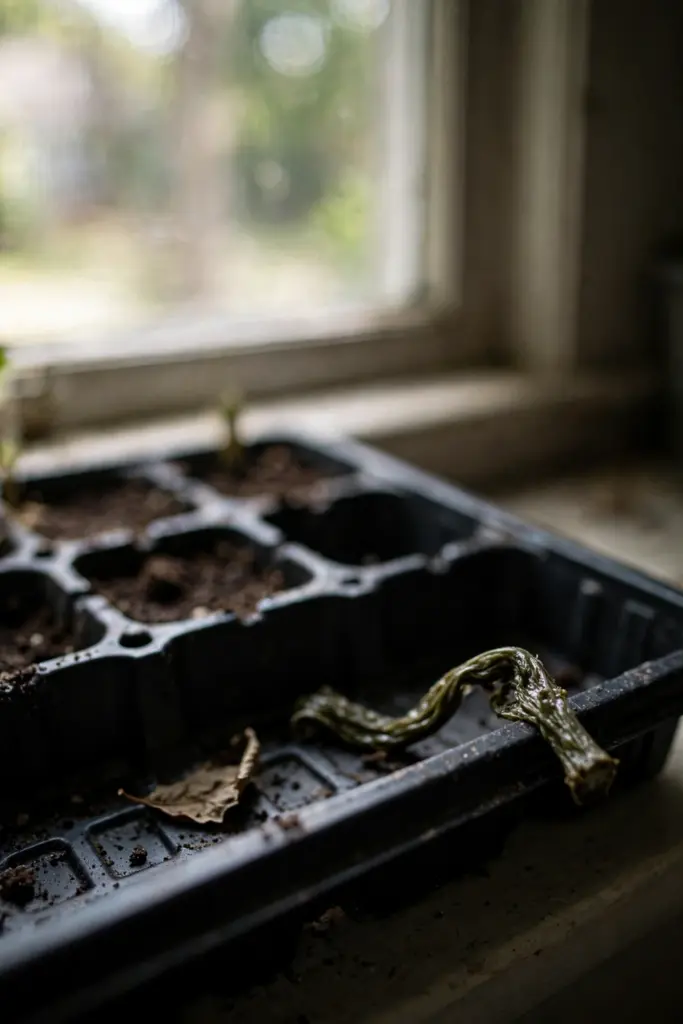
Feel the collapse. Bacterial rot is slimy, collapsing tissue, and a sudden soft kink in the stem within 24 to 72 hours of sticking marks bacterial rot, so the kink is the emergency and the collapse is the bacterial mark.
Remove and destroy at once. Chemical treatments will not cure symptomatic bacterial plants, so the bacterial cutting gets removed and destroyed, not treated, and the removal protects the bench, while the treatment is a waste on a symptomatic cutting.
Disinfect everything the cutting touched. The bacteria spread on tools, hands, and water. The tools get disinfected. The bench gets cleaned. The water gets changed. The disinfection is the containment.
Strategy 5: Rescue Triage, Trim, Re-Cut, Disinfect, Restart
Remove rotted cuttings at once. A rotted cutting is a spore source, so the removal cuts the spread, the bag is the disposal route, and the bench stays clean.
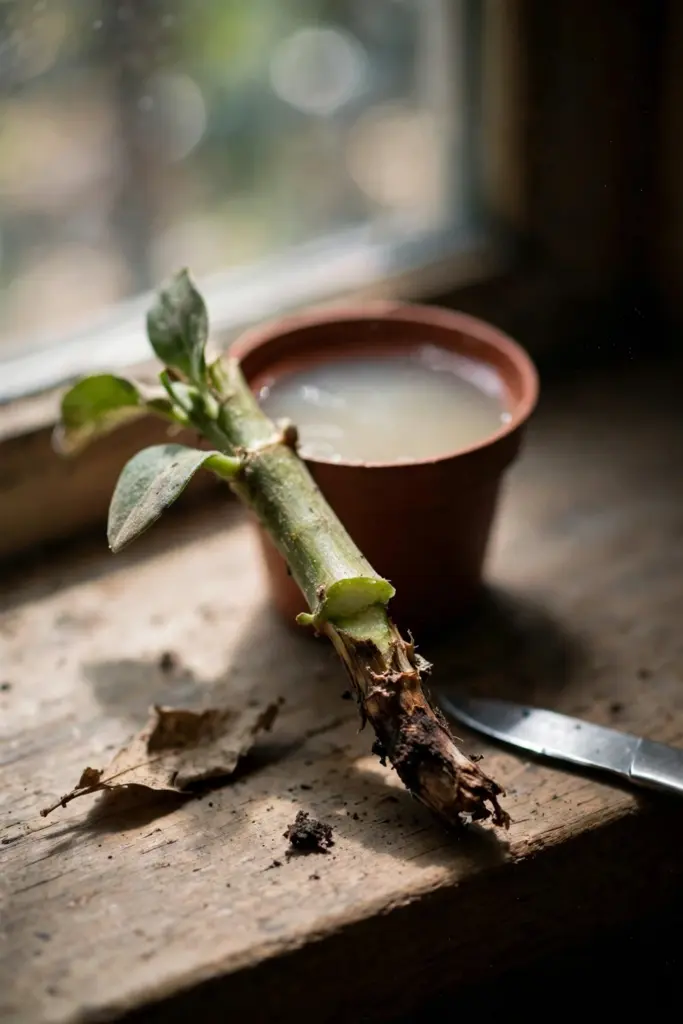
Trim above the rot. Cut the stem above the rotted tissue, into healthy tissue. The trim removes the rot. The healthy tissue is the new cut end. The trim is the rescue.
Re-cut with a disinfected knife. Disinfect the knife before the re-cut and after it. The disinfected knife does not carry the pathogen to the next cutting. The knife discipline is the rescue discipline.
Restart in fresh sterile medium. The old medium holds the pathogen. The fresh sterile soilless mix is the clean start. The restart is the second chance. The fresh medium is the prevention.
Strategy 6: Sterile Tools and Clean Media
Disinfect cutting knives often. Clean and disinfect cutting knives often, between cuttings and between batches. The knife is the vector. The disinfected knife is the prevention. The knife discipline is the cheapest prevention in propagation.
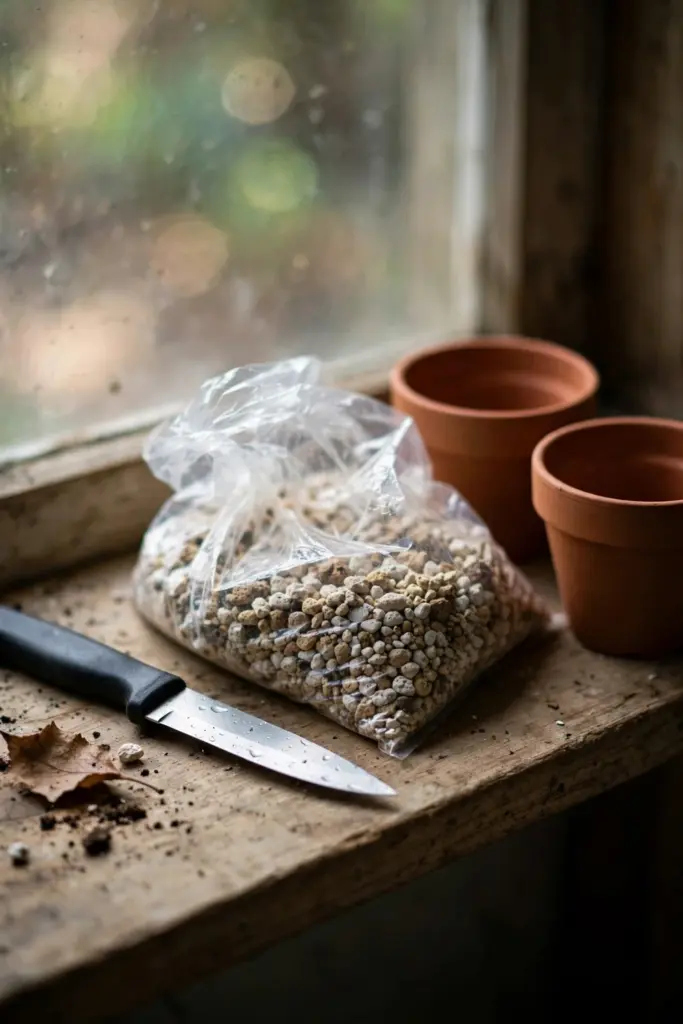
Use pathogen-free propagation material. Take cuttings from healthy mother plants. Inspect purchased cuttings on receipt. The healthy cutting is the safe cutting. The infected cutting is the import.
Steam the rooting media or use a sterile soilless mix. Steam sterilizes the medium. A sterile soilless mix starts clean. The sterile medium is the clean start. The field soil is the reservoir.
Disinfect tools and equipment. Disinfect any tools and equipment that might contaminate the media. The bench, the trays, and the pots get disinfected between batches. The disinfection is the batch reset.
Strategy 7: Water Discipline, Drainage, and Oxygen
Avoid overwatering. Overwatering is the Pythium invite. Water only when the medium surface dries. The dry surface is the safe surface. The wet surface is the rotting surface.
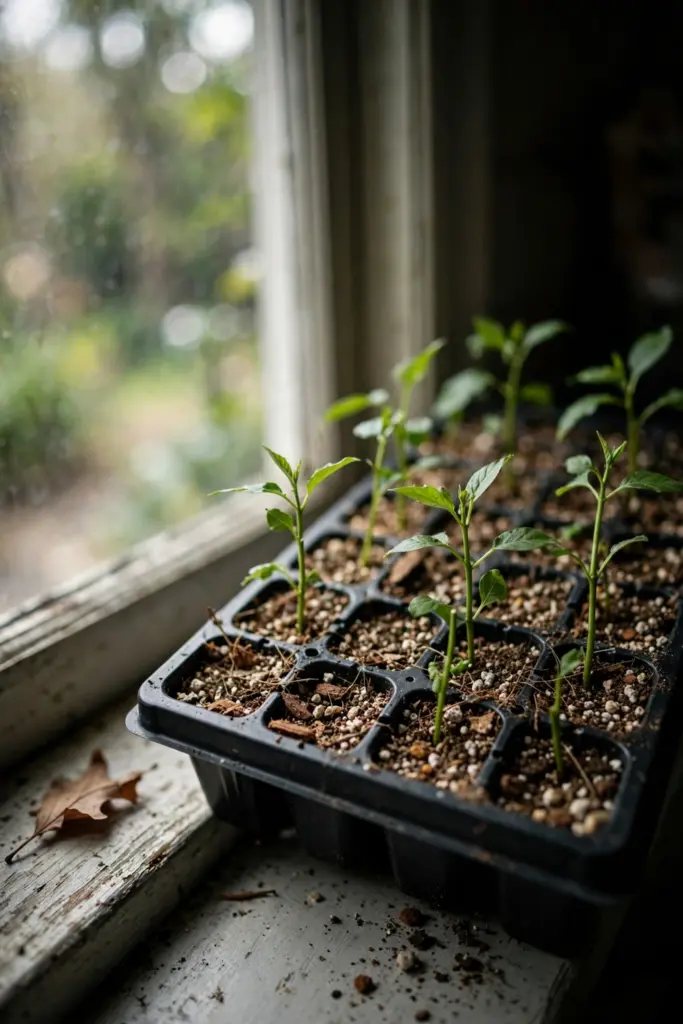
Use a draining mix. A draining mix holds air and water in balance. A compacted mix holds water and starves the cutting of oxygen. The loose mix is the safe mix. The compacted mix is the low-oxygen mix.
Change water in water propagation. Change the water regularly in water propagation. Stagnant water fouls and rots the cutting. The fresh water is the oxygenated water. The water change is the rescue.
Keep leaves out of the water. Leaves in the water rot and foul the water. The leaf out of the water is the safe leaf. The leaf in the water is the rot source.
Strategy 8: Air, Light, and Temperature
Move the air. Stagnant air keeps leaves wet and feeds Botrytis. A fan on low moves the air. The moving air dries the leaves. The dry leaves are the safe leaves.
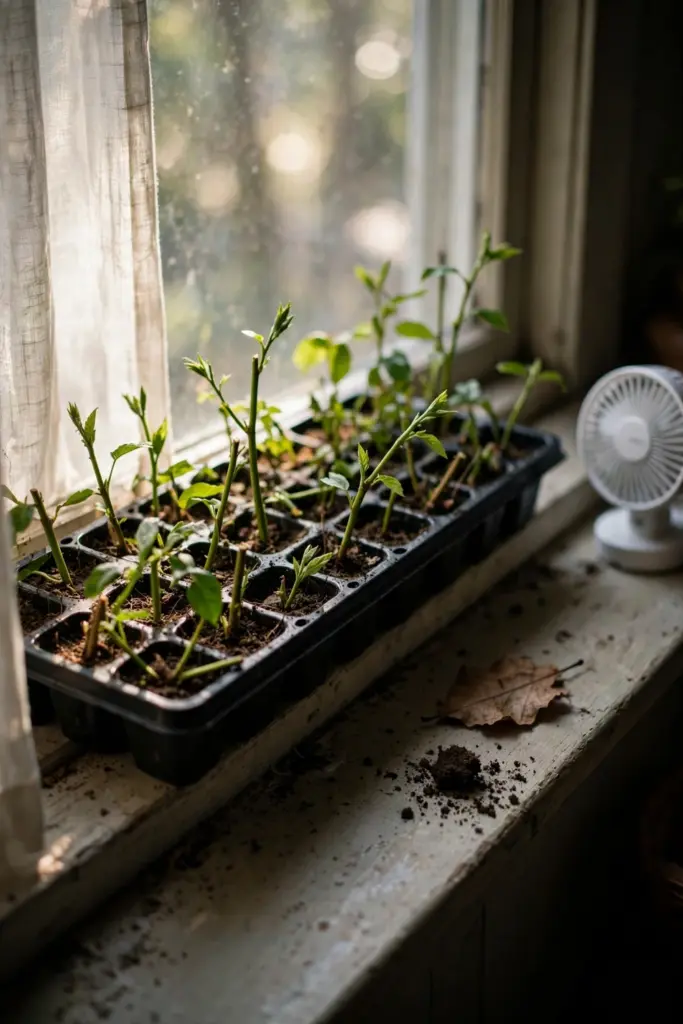
Give bright filtered light. Bright filtered light drives rooting without cooking the cutting. Direct sun cooks the cutting. Dark shade stalls it. The filtered light is the rooting light.
Hold 70 to 75 degrees. Warmth drives rooting. Cold stalls it. Heat cooks it. The 70 to 75 degree window is the rooting window. The temperature is the pace setter.
Keep hose ends off the floor. Hose ends on the floor pick up soil pathogens and carry them into the medium. The hose end off the floor is the clean hose end. The floor is the reservoir.
Strategy 9: Callus Before Planting, Hormone Hygiene
Let the cut end callus where the plant allows it. A callused cut end resists rot. A fresh wound invites it. The callus is the wound seal. The dry cut end is the safe cut end.
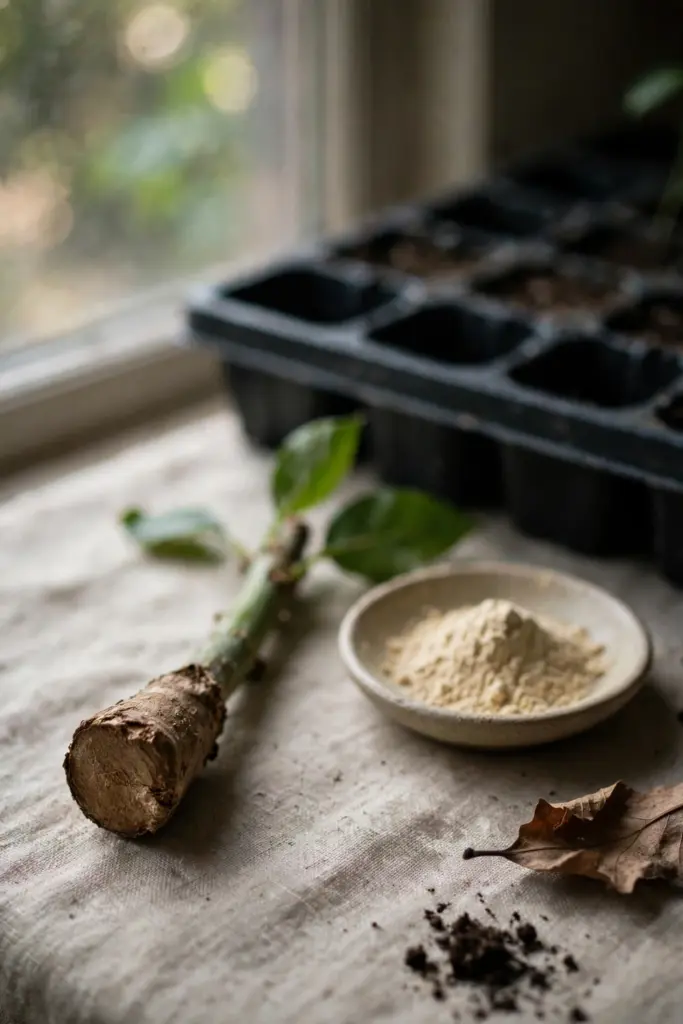
Dry the base before inserting. Dry the base of pelargonium cuttings for 30 minutes before inserting. The dried base resists Pythium. The wet base invites it. The 30-minute dry is the pelargonium rule.
Use hormone in single-use portions. Dipping cuttings into a shared rooting-hormone jar contaminates the jar. Pour a single-use portion, dip, and discard the remainder. The single-use portion is the prevention. The shared jar is the trap.
Use the correct hormone dose. Wrong or excessive hormones damage and rot cuttings, so the correct dose is the safe dose, the overdose is the rot, and the label governs the dose.
Strategy 10: Start Clean, Buy Healthy, Quarantine New Cuttings
Buy pathogen-free material. Pathogen-free propagation material is the clean start. The infected import is the bench disaster. The trusted source is the prevention.
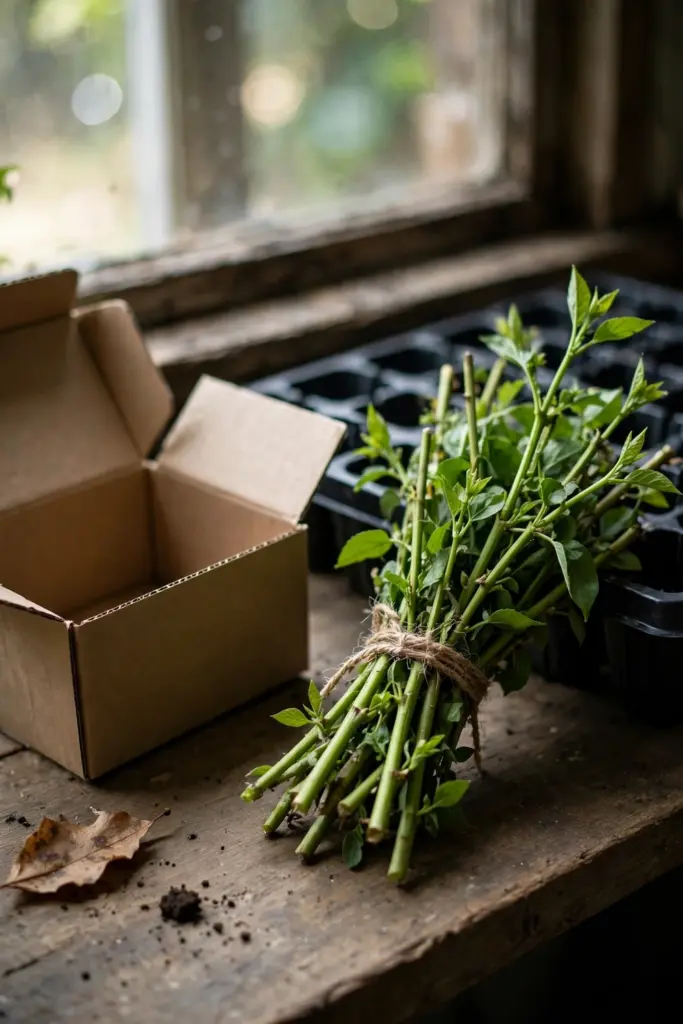
Inspect cuttings on receipt. Scout cuttings for Botrytis on receipt. The infected cutting gets removed before it joins the bench. The inspection is the quarantine. The quarantine is the fence.
Isolate new cuttings briefly. A short isolation lets hidden rot show before the new cuttings join the bench. The isolation is the observation. The bench stays clean.
Clean the bench between batches. The bench holds the last batch’s pathogens. The cleaned bench starts the next batch clean. The batch reset is the prevention.
Living With Cutting Rot in a Propagation Setup You Already Run
A propagation setup with cutting rot is a setup to clean, not a setup to abandon. Remove rotted cuttings. Disinfect tools. Change the medium. Fix the watering. Move the air. The rot will still appear, but it will appear late, light, and contained to the weakest cuttings.
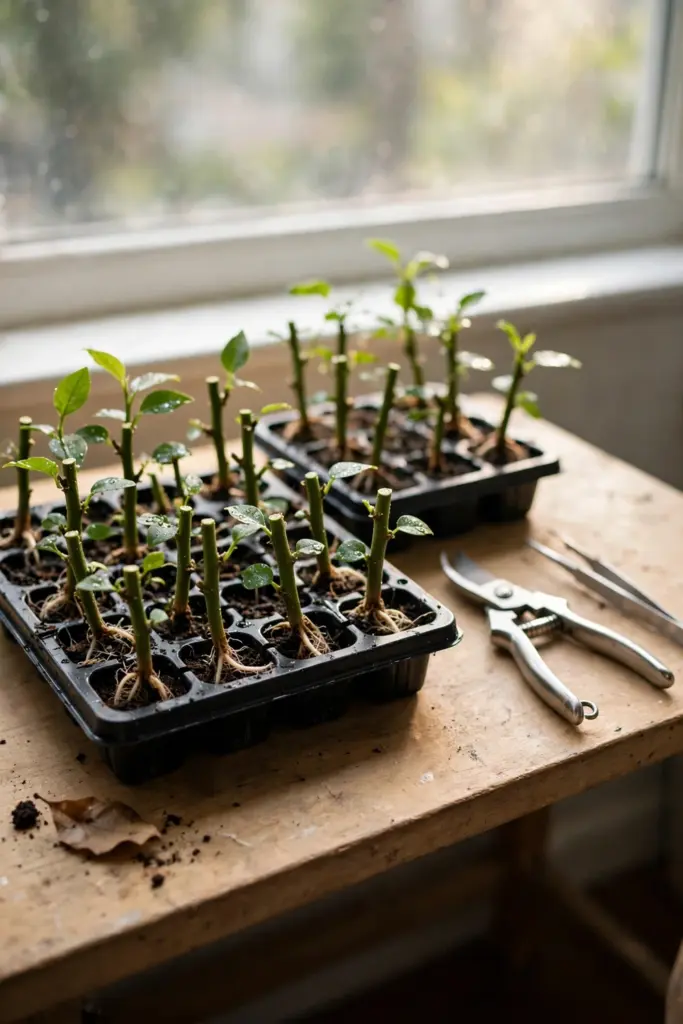
Stop three habits. Do not dip cuttings into a shared hormone jar. Do not leave rotted cuttings in the bench. Do not water on a schedule instead of by feel. Keep those three lines unbroken and the rot stays rare. The Plant Care archive collects the site’s disease coverage for the next problem the bench throws up.
Frequently Asked Questions
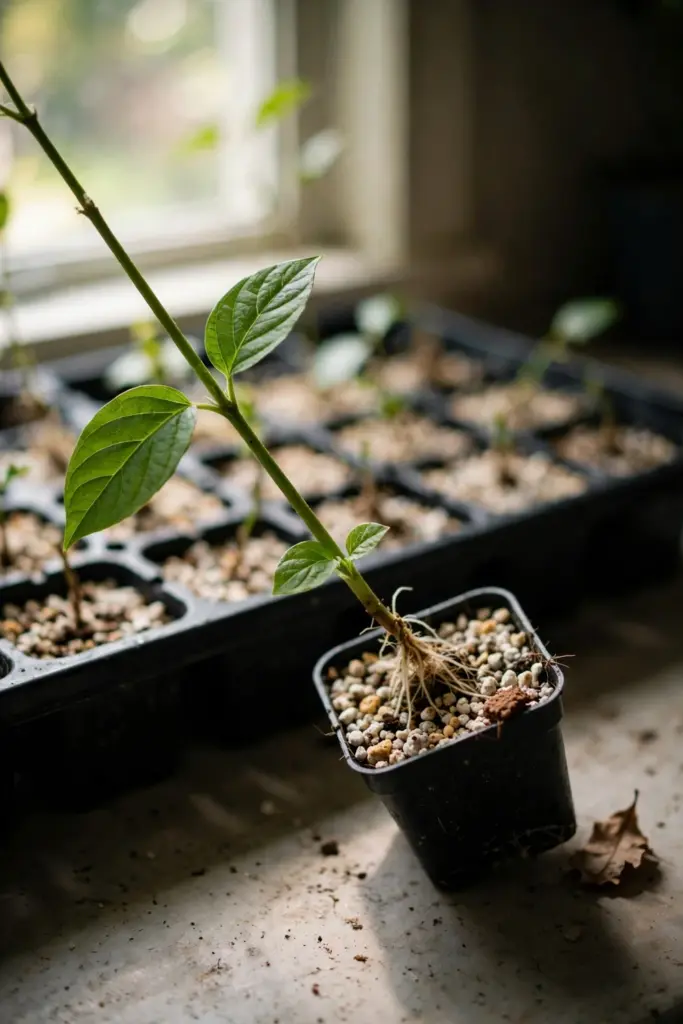
Sometimes, by rescue, not by cure. Trim above the rotted tissue into healthy tissue, re-cut with a disinfected knife, and restart in fresh sterile medium. A cutting with rot confined to the base can root from the healthy stem. A cutting with rot spread up the stem, slimy bacterial collapse, or coal-black stem is done. The rescue is the only treatment. The prevention is the playbook.
No. Damping-off hits seeds and seedlings, while cutting rot hits cuttings. The two share pathogens, including Pythium and Rhizoctonia, but they are different propagation stages. Damping-off collapses seedlings at the soil line. Cutting rot rots the cutting at the cut end before it roots. The stage separates them. The prevention overlaps, but the article covers cuttings only.
Cinnamon dusting is a home remedy with anecdotal support only, not a proven treatment. Some propagators dust the cut end with cinnamon, and some report fewer rots. No Extension trial establishes cinnamon as a cutting-rot control. A propagator who uses cinnamon should treat it as an experiment, not a guarantee, and should keep the proven controls, sterile tools, draining mix, and water discipline, in place.
No, not as a first step. Sanitation and environment lead: sterile tools, clean media, drainage, airflow, and water discipline. Fungicides are preventive-only, never the first step, and the fungicide must match the pathogen, since Pythium fungicides do not control Rhizoctonia and vice versa. A fungicide chosen on a guess treats the wrong pathogen. The label governs any product used.
That is blackleg, the pelargonium form of cutting rot, caused by Pythium. Cutting rot starts at the cut end as a brown water-soaked rot and progresses up, turning coal black until leaves wilt and the stem dies, per UMass. Blackleg has no cure once established. Prevention is the answer: pathogen-free cuttings, sterile soilless mix, disinfected knives, and no overwatering. Dry the base for 30 minutes before inserting.
Where to Go From Here
Cutting rot rewards the propagator who disinfects the knife, starts with sterile medium, waters by feel, moves the air, and removes rotted cuttings at once. Confirm the ID by rot type. Tell wet Pythium from dry Rhizoctonia. Spot gray mold. Spot bacterial soft rot. Rescue by trim, re-cut, disinfect, and restart. Keep tools sterile. Water with discipline. Move the air. Callus and dose hormone right. Start clean.
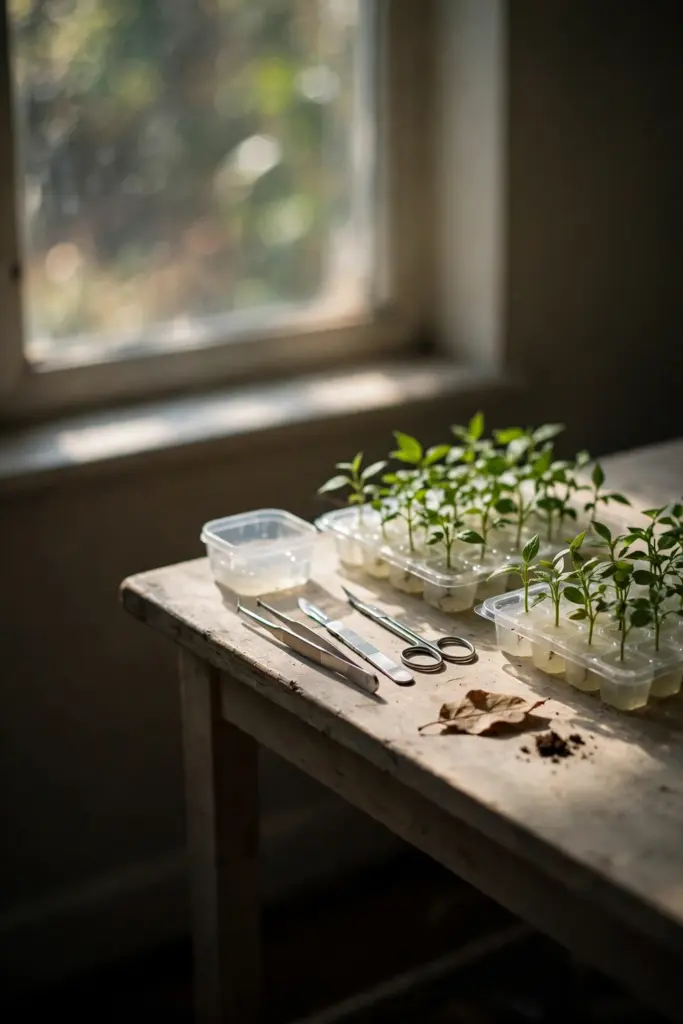
Next batch, start with the clean setup. A bench with disinfected tools, sterile medium, draining mix, moving air, and fresh water will hold cutting rot to the weakest cuttings. The Pacific Northwest Handbook page on geranium blackleg and damping-off is a useful companion for the full Extension picture, since it sets the home-propagation response here against the university evidence behind it, and the Plant Care archive collects the site’s other disease guides.