
A swelling on your pine is usually not an emergency. Most galls will not kill a tree, most insect galls need no treatment at all, and the right move is often to leave the gall alone and watch it. The 5 checks below tell you which galls matter, which to prune, and which to leave, and they work because the decision turns on where the gall sits and what the rest of the tree looks like, not on the gall’s name.
The first fact to hold is the question. A homeowner who finds a swelling on a yard pine asks three things: what is this, does it matter, and what do I do? This article answers in that order. I have learned that a gardener who checks location, texture, powder, vigor, and breakage risk before reaching for a saw makes the right call most of the time.
The rest of this page walks what galls are, the 5 checks, and the honest limits of home control. The symptom leads. No single disease is the subject.
What Galls on Your Pine Actually Are
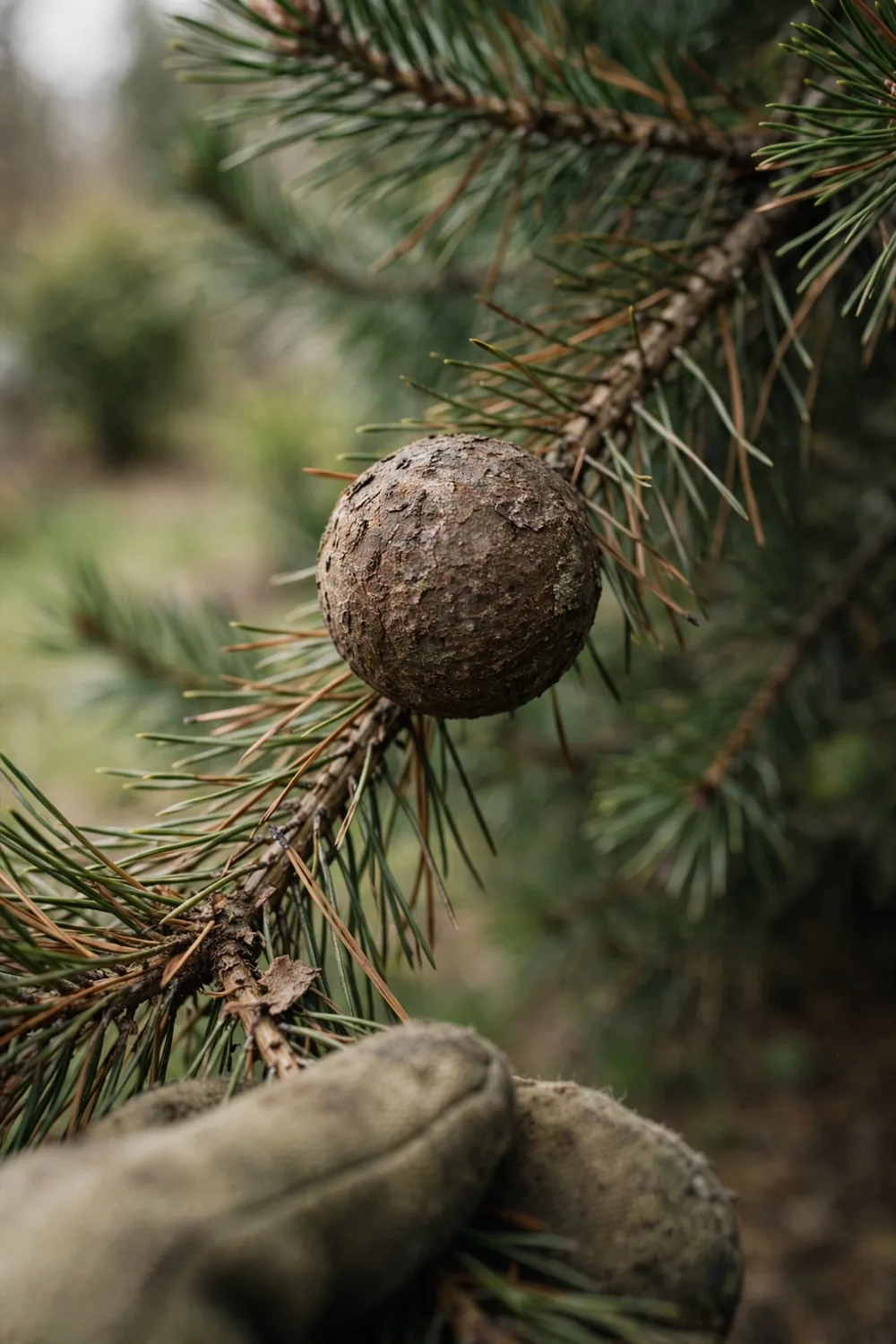
A gall is a swelling of plant tissue. The tree grows the swelling in response to a fungus, an insect, a mite, or a bacterium. The gall itself is the tree’s reaction, not the invader. Galls on pine appear on twigs, branches, and trunks, and they range from small round bumps to large hard burls.
Rust galls are the pine gall that matters most. Rust galls are woody swellings, globose to irregularly shaped, on stems and branches, caused by gall rust fungi. One named cause is eastern gall rust, also called pine-oak gall rust, caused by Cronartium quercuum, which needs oak as an alternate host to complete its life cycle. In spring, rust galls crack open and release powdery orange-yellow spores. Rust galls on branches can be pruned out. Rust galls on trunks are the ones to watch.
Insect and mite galls are the common harmless kind. Most insect and mite galls are not a threat to plant health, and control is usually not warranted. The gall maker feeds inside, the tree walls it off, and the tree keeps growing. Small insect galls on twigs and needles are a cosmetic issue. One pine insect-gall maker, the pine resin-gall moth, is Eurasian, not a US yard-pine concern, and this article does not present it as a US counterpart.
Other gall types exist on pine. Phomopsis galls are fungal galls that many people choose to live with. Fusiform rust causes spindle-shaped galls on southern pines and is covered in its own article. The checks below sort any of these by what matters: location, texture, powder, vigor, and hazard.
Check 1: Where Is the Gall, Branch or Trunk?
A gall on a twig or branch is a pruning problem. Branch galls can be cut out with the branch, and the tree keeps growing. A branch gall that girdles its branch kills only that branch. The branch is expendable. The tree is not.
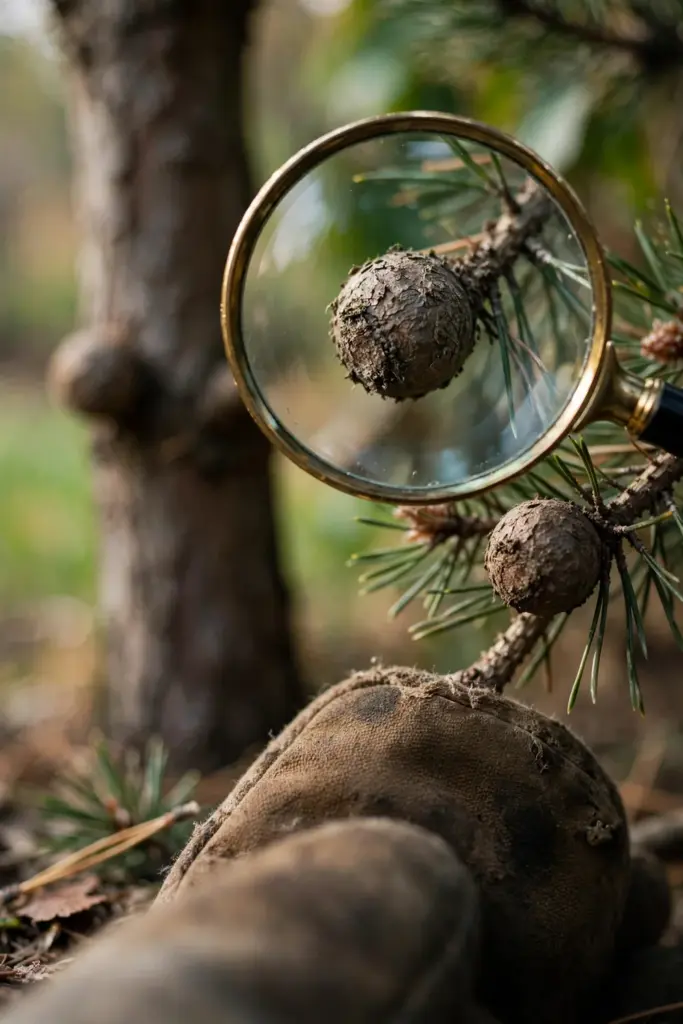
A gall on the trunk is a watching problem. Trunk galls cannot be pruned out without wounding the trunk itself. A trunk gall may keep growing for years into a large hard burl, or it may partially girdle the stem. A trunk gall weakens the stem, invites decay, and raises the breakage risk. Trunk galls decide the tree’s future, not the branch’s.
Start every gall decision with location. Branch gall: prune it or leave it. Trunk gall: watch it, measure it, and call an arborist if it grows or the tree shows stress. Location first, everything else second.
Check 2: Woody Swelling or Resin Lump?
Feel the gall. A rust gall is a woody swelling: hard, bark-covered, part of the wood itself. It grows a little each year and may reach 6 inches across or more. The bark over it cracks in spring when spores release. A woody swelling that grows year after year is a rust gall until proven otherwise.
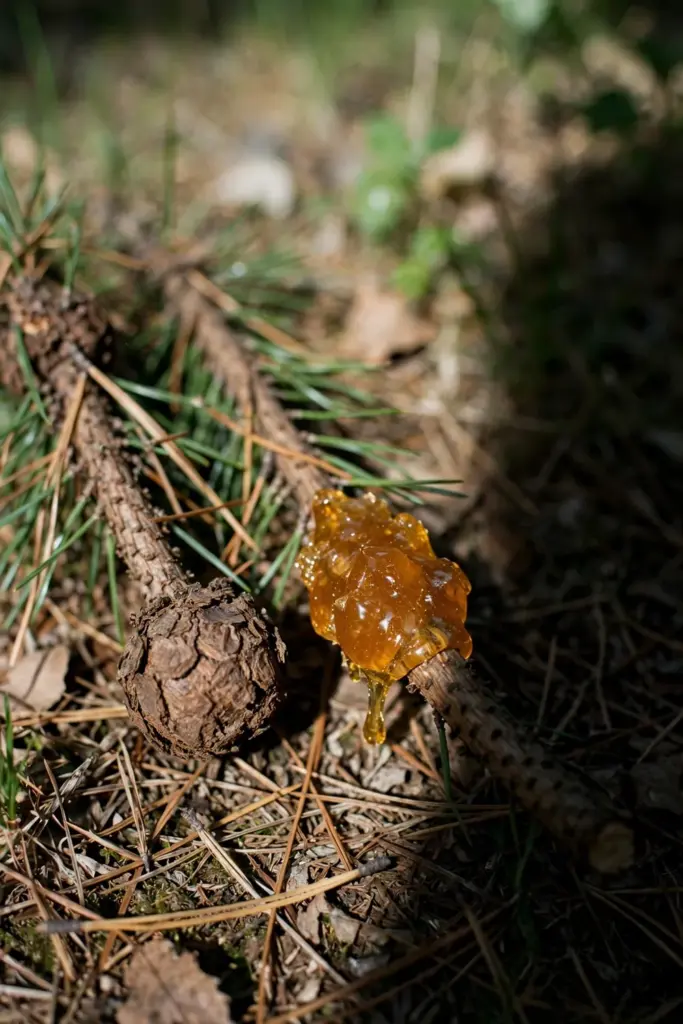
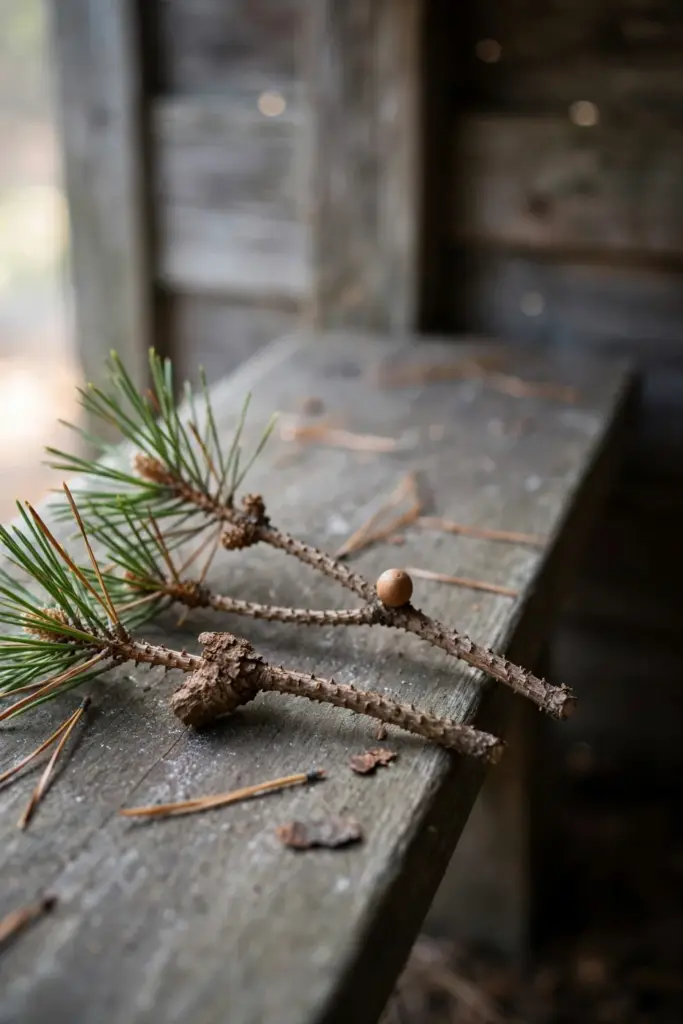
A resin lump is different. Resin lumps are soft, sticky, and made of pitch, not wood. Resin flows from a wound, an insect bore, or a canker, and hardens into a lump. A resin lump that wipes away or crumbles is pitch, not a gall. A resin lump does not need gall treatment. It needs the wound behind it checked.
Do not guess the species from the gall shape. Eastern and western gall rusts produce galls similar in size and shape, and the galls cannot be distinguished on gall type. Species-level identification needs the oak-leaf stage or lab work, and the home decision does not need it. The article says “rust gall” and stops there.
Check 3: Yellow Powder in Spring?
Watch the gall in spring. Rust galls crack open in spring and release powdery orange-yellow spores from blister-like structures on the gall surface. The powder may puff out in a visible cloud on a dry day. A gall that puffs yellow-orange powder in spring is a rust gall, actively sporulating.
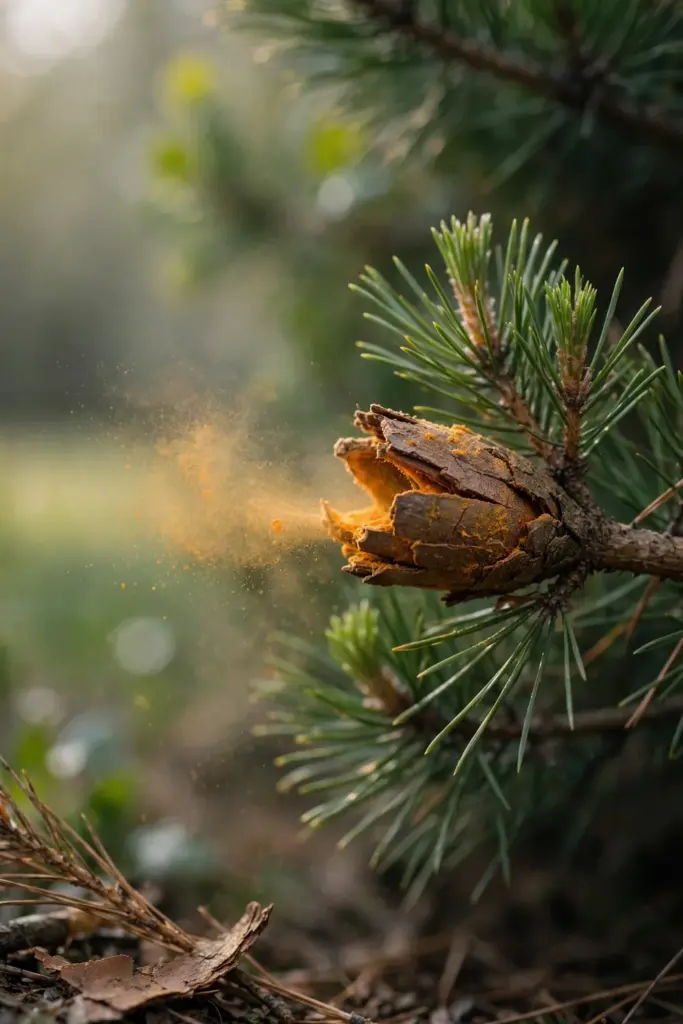
The powder is safe to touch, and it is infectious to pines and oaks nearby. Do not compost pruned rust galls. Bag the prunings and put them in municipal waste, or burn or bury them where local rules allow. A pruned gall left under the tree still releases spores.
No powder, no rust diagnosis. A gall that never powders is probably an insect gall or a healed wound swelling. The powder check runs in spring only. A gall checked in winter tells you nothing about powder. Mark the calendar and look again in spring.
Check 4: How Is the Rest of the Tree?
Look past the gall at the whole tree. Needles green, shoots growing, no branch death beyond the gall: the tree is coping. A tree with one gall and a full healthy canopy is a tree to watch, not a tree to treat. Most galls will not kill a tree, and patience is the best management tool.
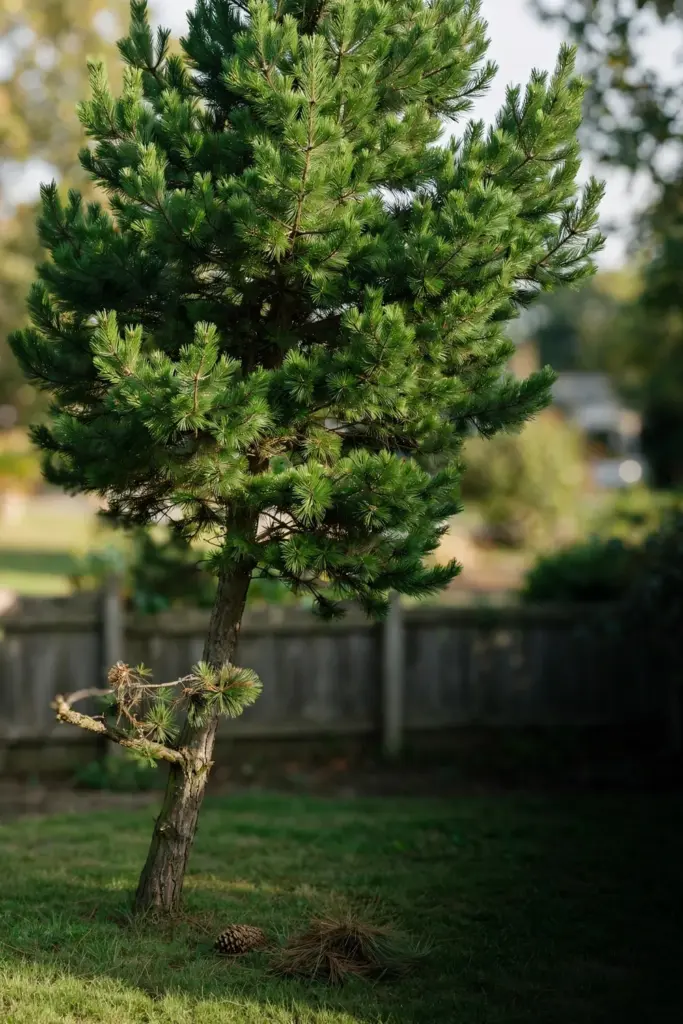
Look for stress beyond the gall. Yellowing needles across the canopy, dead branches beyond the gall, thinning crown, and stunted shoots all signal a tree in trouble. A gall plus a stressed tree is a different problem from a gall alone. The stress may come from the gall, from drought, from root damage, or from a second disease. A stressed tree with a trunk gall needs an arborist’s eyes, not a homeowner’s saw.
Count the galls. One gall on one branch is a small problem. Dozens of galls across the canopy is a heavy infection. A tree with galls on most branches, or with galls on the trunk and the branches, is a tree whose future is limited. The count turns a single gall into a pattern.
Check 5: Is There a Breakage Hazard?
Measure the trunk gall. A trunk gall weakens the stem at the gall point. A large trunk gall, a trunk gall that has cracked or decayed, or a trunk gall on a tree near a house, a driveway, or a play area is a breakage hazard. Wind breaks trees at their weak points, and a trunk gall is a weak point.
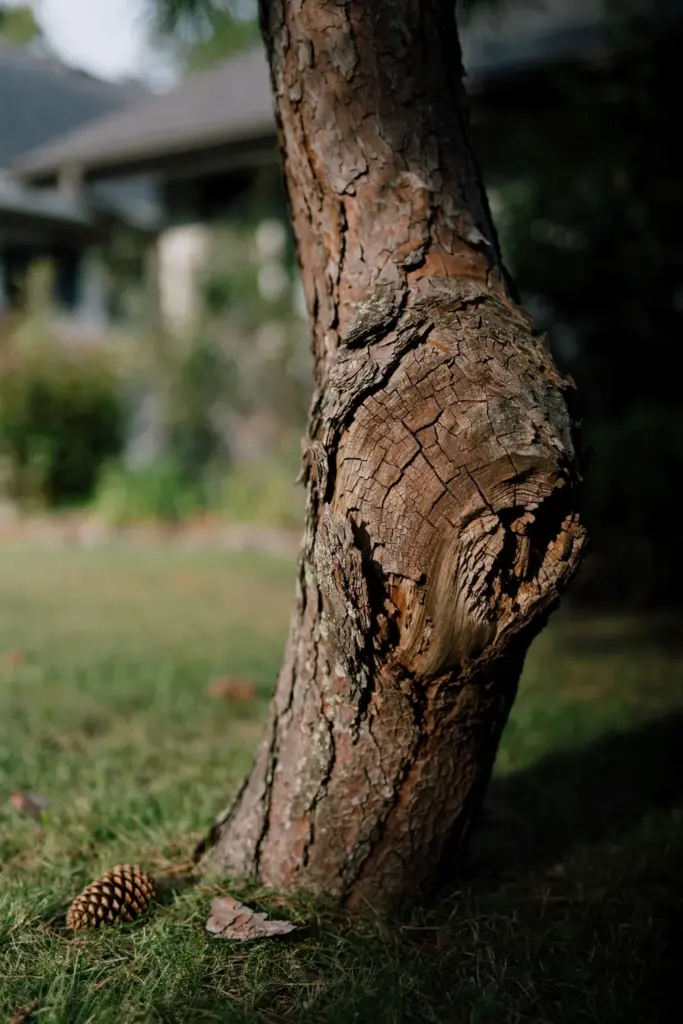
Judge the target, not just the tree. A trunk-galled pine in an open field, far from anything, can stand for years with monitoring. The same tree leaning over a roof is a removal candidate. The hazard is the combination of the weak stem and what it would hit. A homeowner judges the target. An arborist judges the stem.
Call an arborist for trunk galls with hazard. Trunk galls cannot be pruned out, and no spray fixes them, so an arborist assesses the stem, recommends cabling or removal, and times the work. The call costs less than the roof repair, and you should not climb a hazard tree with a saw.
What to Do About Galls on Your Pine
Prune branch galls when they are worth removing. Cut the branch at least 4 inches below the gall, just above a bud or branch union. Cut in dry weather. Bag the prunings at once. Disinfect tools between cuts with a disinfectant such as a bleach solution, and again after finishing. The 4-inch margin matters, because the fungus grows beyond the visible swelling.
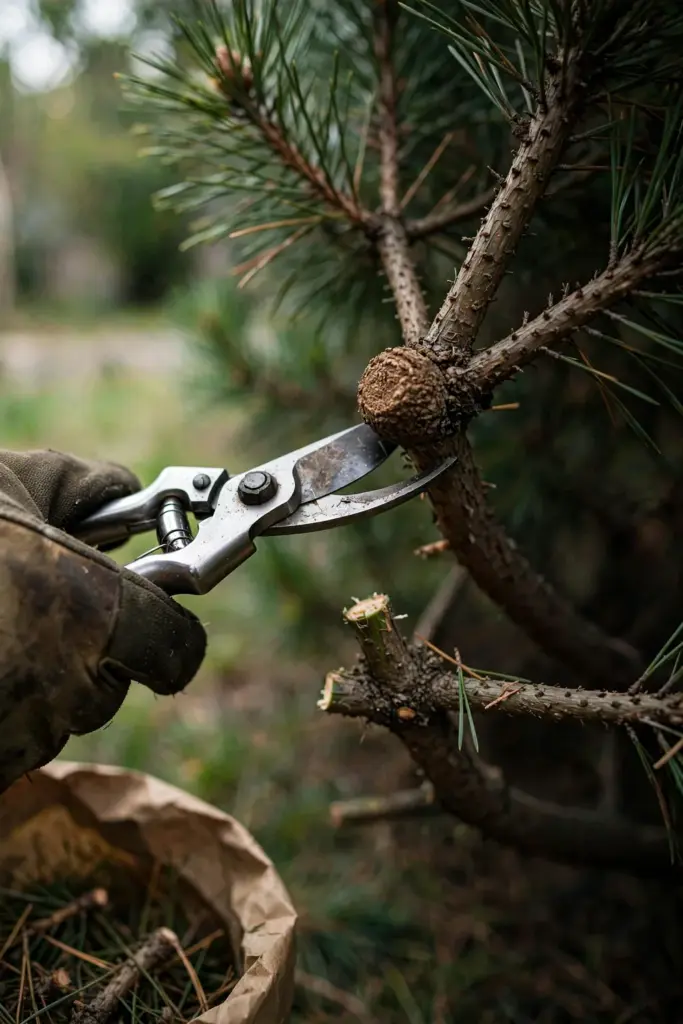
Leave small, harmless galls alone. A small insect gall on a twig, a small rust gall on a branch of a healthy tree, and a gall with no powder and no stress are all leave-alone candidates. Leave-alone is a legitimate outcome. The tree walls off the gall and keeps growing. Monitoring beats meddling.
Never spray for galls. No chemical control exists for rust galls on a home pine, and insecticide applications do not reduce new stem galls. A spray applied to a gall protects nothing, because the gall maker is inside the wood or the swelling is already formed. The spray bottle stays on the shelf for galls.
Living With Galls on a Pine You Already Own
A pine with galls is a pine to monitor, not a pine to mourn. Walk the tree each spring and each fall. Measure trunk galls and note the size. Check for powder in spring. Check for stress in summer. A tree with one branch gall and a healthy canopy will outlive the worry.
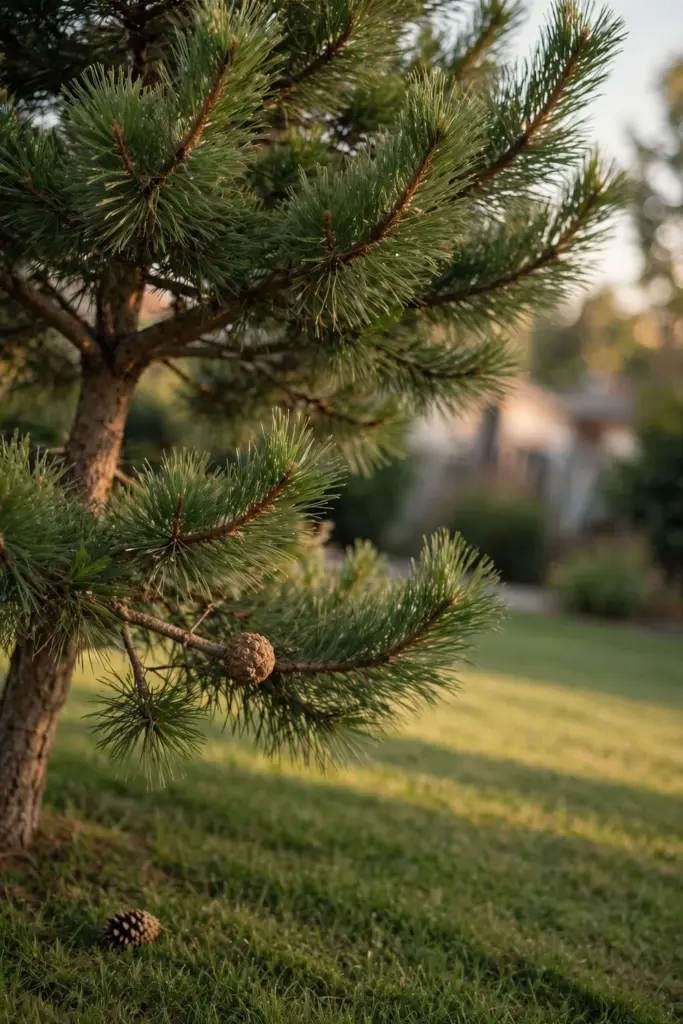
Stop three habits. Do not shave a gall off the bark. Do not leave pruned galls under the tree. Do not spray a gall and call it treated. Keep those three lines unbroken and the galls stay a monitoring task, not a crisis.
The Plant Care archive collects the site’s disease coverage, and the tree care archive covers pine care as a whole. Neither replaces the 5 checks here. Location, texture, powder, vigor, and hazard carry the decision.
Frequently Asked Questions
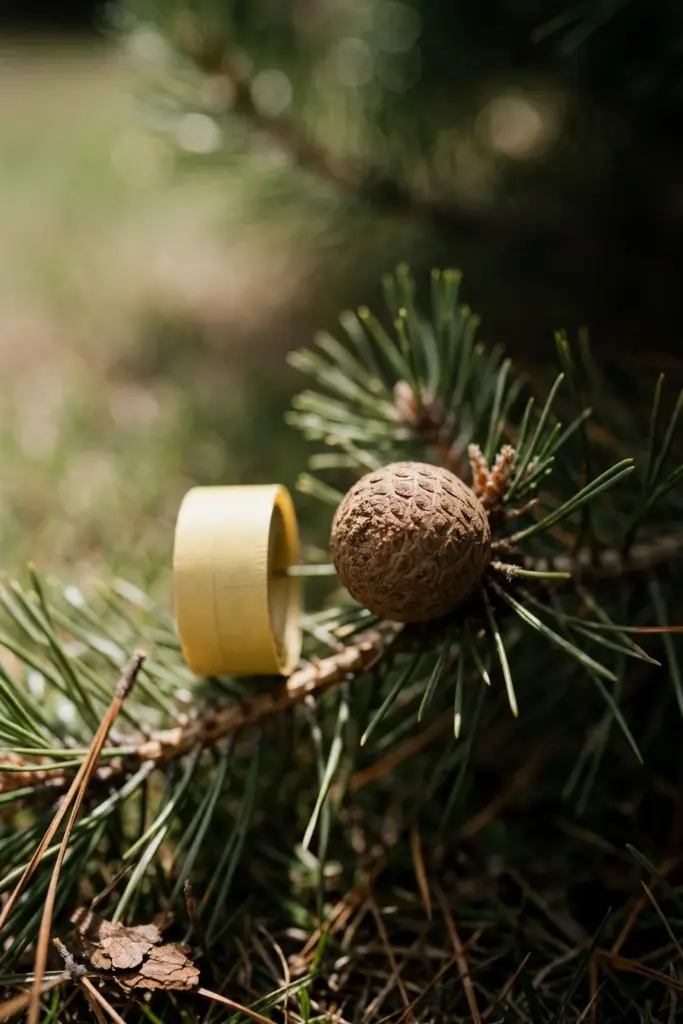
Usually not. Most galls will not kill a tree, and most insect galls need no treatment at all. A single branch gall costs the tree one branch. A trunk gall weakens the stem and raises the breakage risk over years. A tree with dozens of galls, or with trunk galls plus canopy stress, is a tree whose future is limited. The gall count and the trunk location decide the risk.
Prune branch galls when they are worth removing. Cut the branch at least 4 inches below the gall, just above a bud or branch union, in dry weather. Bag the prunings and disinfect tools between cuts. Do not shave the gall off the bark, and do not prune trunk galls. A small harmless gall can be left alone. The cut goes below the gall, not through it.
No. No chemical control exists for rust galls on a home pine, and insecticides do not reduce new stem galls. The gall maker sits inside the wood or the swelling is already formed, so a spray reaches nothing. Pruning, sanitation, and monitoring are the whole response. An arborist is the answer for trunk galls with hazard, not a product.
Rust spores. Rust galls crack open in spring and release powdery orange-yellow spores from blister-like structures on the gall surface. The powder spreads the rust to nearby pines and oaks. Do not compost pruned rust galls, since a pruned gall still releases spores. Bag the prunings and put them in municipal waste, or burn or bury them where local rules allow.
For trunk galls with a breakage hazard, yes. Trunk galls cannot be pruned out, and no spray fixes them, so an arborist assesses the stem, recommends cabling or removal, and times the work. Branch galls on a healthy tree do not need an arborist, while a stressed tree with many galls deserves one, since the hazard, not the gall alone, drives the call.
Where to Go From Here
Galls on your pine reward the homeowner who checks before cutting. Find the location, feel the texture, watch for spring powder, read the whole tree, and judge the breakage hazard before reaching for a saw.
Next season, walk the tree twice. A spring check for powder and a fall check for growth will catch every gall that matters. The USDA Forest Service guide to eastern and western gall rusts is a useful companion for the rust-gall background, since it sets the homeowner triage here against the forestry evidence behind it.