Tobacco ringspot virus has no cure. The 9 strategies below prevent it and protect the garden, starting with the seed and planting stock that carry it in.
The virus is a nepovirus, not a tobacco disease. Tobacco ringspot virus spreads through soil by dagger nematodes, through seed in some hosts, and through infected planting stock. Its real hosts are vegetables, blueberry, grapevine, and ornamentals.
The rest of this page runs the order a gardener should follow. Understand the virus first, learn its signs, clear the naming confusion, then work the 9 strategies from clean seed to rotation. I have learned that the infected plant that looks healthy is the one that spreads the virus to the whole bed.
What Tobacco Ringspot Virus Actually Is
Tobacco ringspot virus is a nepovirus that infects vegetables, fruit, and ornamentals. The virus Tobacco ringspot virus, abbreviated TRSV, causes ringspots, mosaic, bud blight, and decline across many hosts.
The honest frame comes first. There is no cure for an infected plant. Oklahoma State University Extension gives the prevention-first message for grapevine decline and yellow vein disease: plant certified disease-free stock, remove and discard infected plants, disinfect tools, and soil-test for nematodes before replanting. The Oklahoma State University Extension page on tobacco ringspot decline and yellow vein disease carries the core guidance for growers, and its lessons transfer directly to home gardens.
The virus spreads three ways. Dagger nematodes carry it through soil from infected roots to healthy roots. Seed carries it in some hosts. Infected planting stock carries it across regions, from a nursery bench into a home garden. All three pathways are silent. The nematode is invisible in the soil. The seed looks normal. The infected cutting looks healthy. Prevention means blocking all three pathways at once.
The virus is a nepovirus, a group of soilborne viruses transmitted by nematodes. Nepoviruses persist in soil through their nematode vectors for years. A nematode that feeds on an infected root picks up the virus and carries it to the next root it feeds on. The virus does not need a wound made by a tool. It needs only the nematode’s feeding. That is why soil testing before replanting matters so much. A clean plant in infected soil becomes an infected plant.
The scope stays on home gardens. Vegetables carry the flagship cases: beans, peas, cucumber, spinach, and eggplant. Fruit carries the second set: blueberry, grapevine, blackberry, and cherry. Ornamentals carry the third: dahlia, gladiolus, bleeding heart, impatiens, and pelargonium. Tobacco is not the disease host. One source notes that tobacco shows little or no economic loss from this virus. The name is history. The hosts are vegetables, fruit, and ornamentals.
How to Spot Tobacco Ringspot Virus in the Garden
| Pathway | How It Spreads | How To Block It |
|---|---|---|
| Dagger nematodes | Carry virus through soil from infected roots to healthy roots | Soil-test before replanting, rotate, fallow |
| Seed | Carries virus in some hosts | Never save seed from infected beds, buy clean seed |
| Infected planting stock | Carries virus across regions, symptom-free | Buy certified virus-free seed and virus-tested stock, inspect |
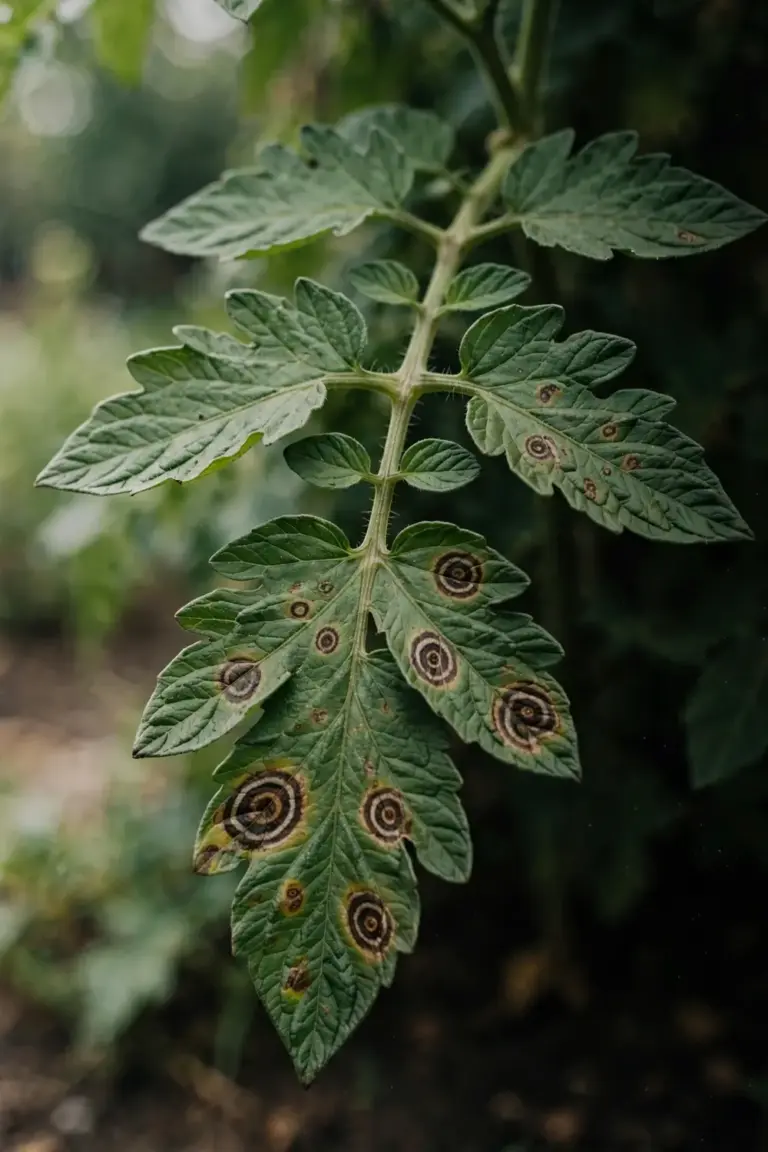
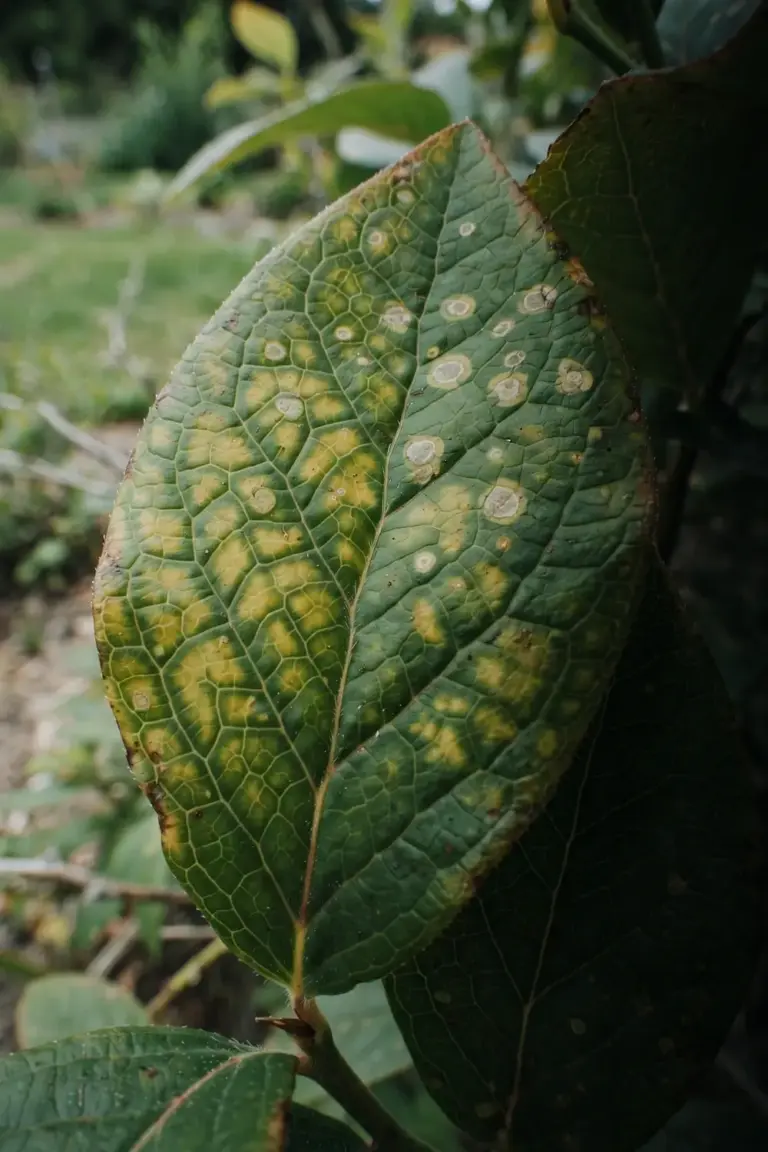
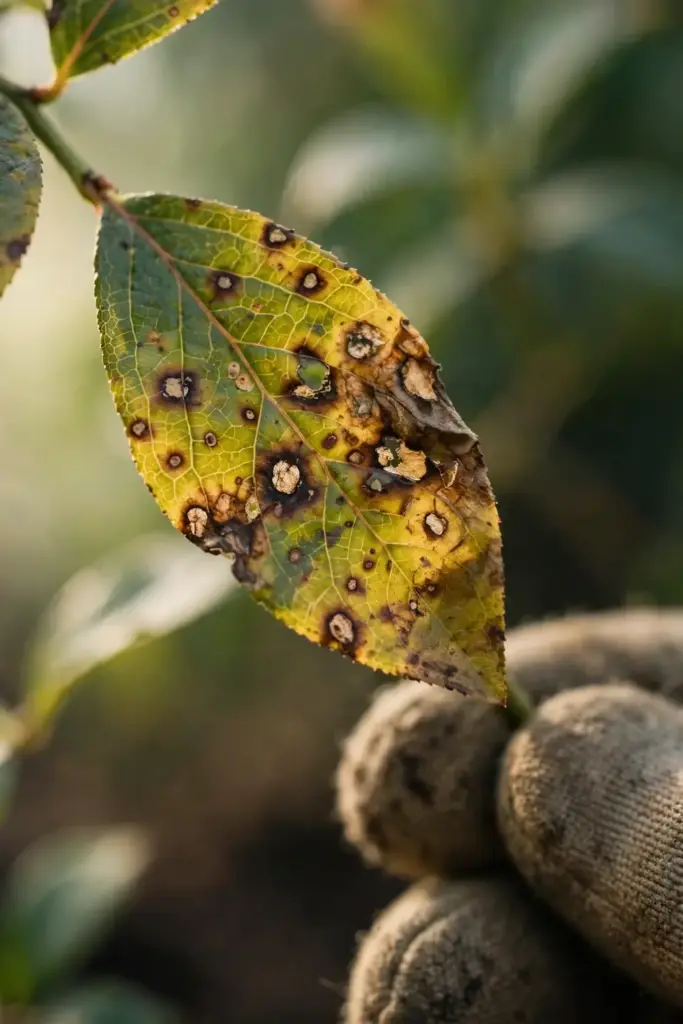
Ringspots, mosaic, bud blight, and decline point at tobacco ringspot virus. Symptoms vary wildly by host, and infection is often latent and asymptomatic.
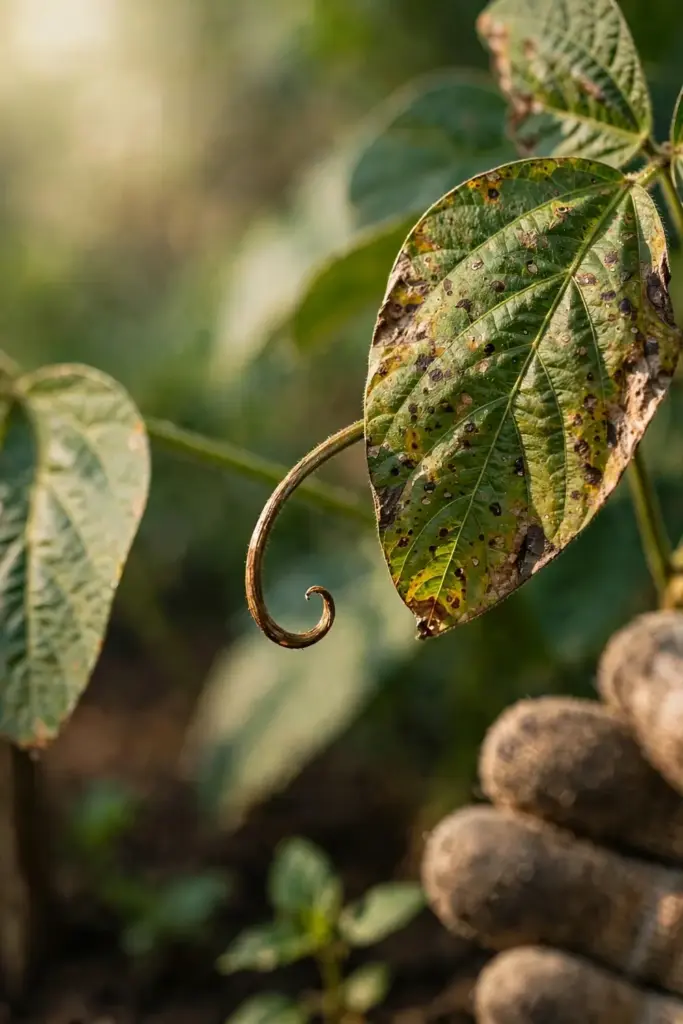
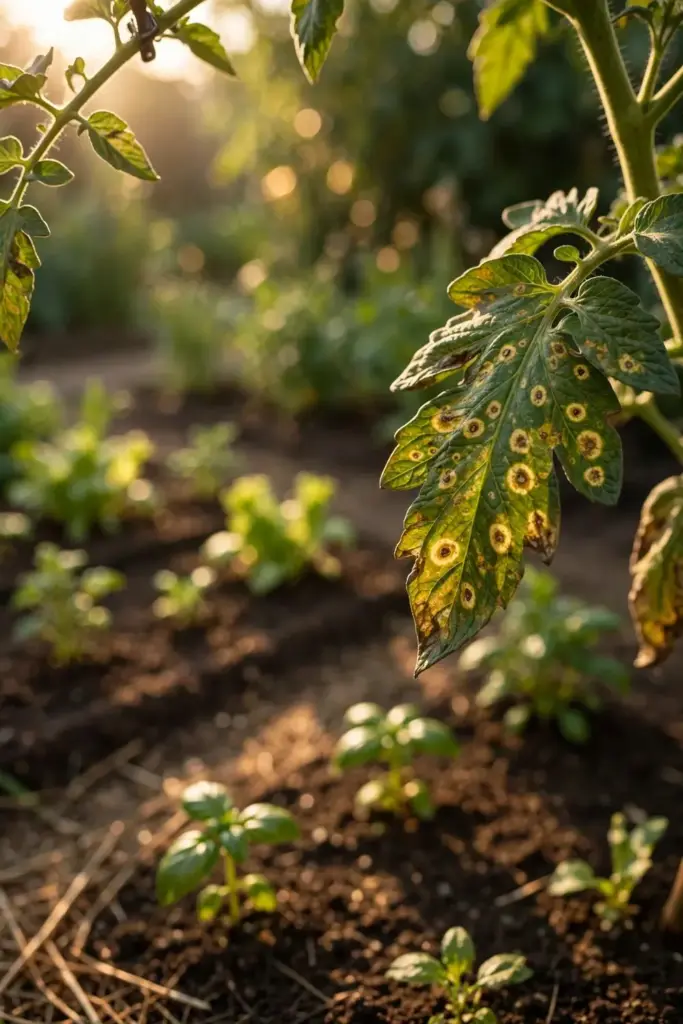
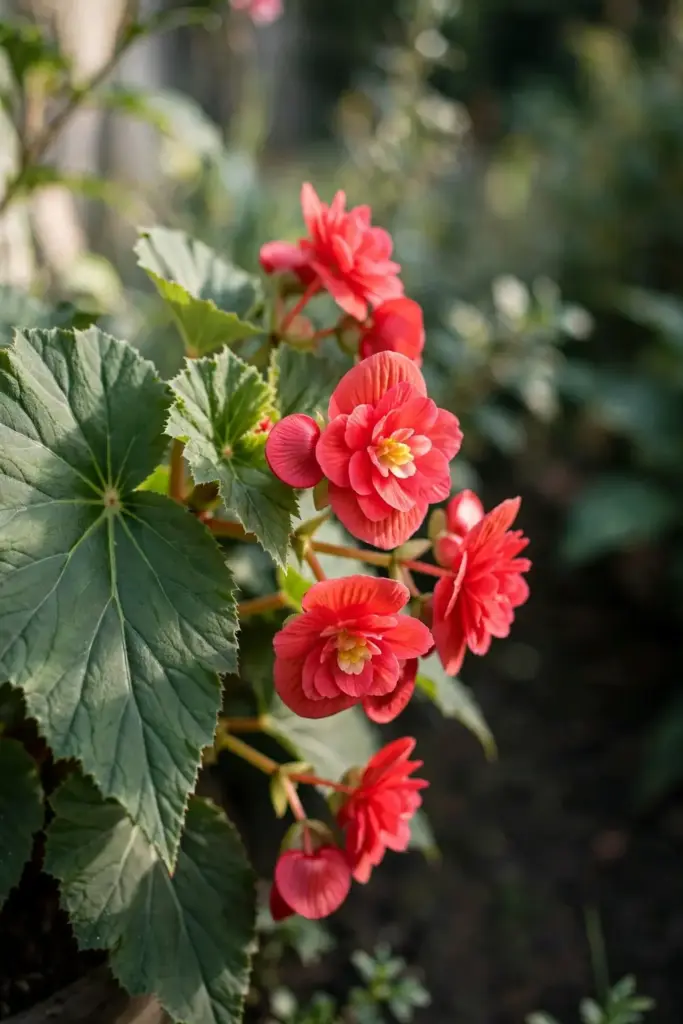
On soybean, the virus shows bud blight: buds die, stems curve into a shepherd’s crook, and growth stops. On blueberry, the virus shows necrotic ringspots on leaves. On eggplant, the virus shows yellowing and stunting. On tobacco, the virus shows an oak-leaf pattern on leaves. On begonia, the virus shows white-yellow rings that look almost variegated. The symptom set shifts by host, by season, and by the individual plant. Two plants in the same bed can show different symptoms from the same virus.
Latent infection is the trap. Infection is often latent and asymptomatic. A plant can carry the virus for years without showing a single ringspot, while nematodes carry the virus from its roots to the next plant. Detection is unreliable, and virus titer varies by season. A plant that looks healthy in August may show symptoms in spring. A plant that shows symptoms in spring may mask them in summer. The virus stays through the masking.
Field identification is presumptive. Ringspots and mosaic overlap with nutrient deficiency, herbicide drift, other viruses, and insect damage. A home gardener cannot separate them by eye. Treat ringspots as a prompt to act: flag the plant, disinfect tools, control weeds, and send a sample to the lab where it matters. Do not wait for certainty before flagging. The flag costs nothing. The delay costs the bed.
Check the whole planting, not one plant. TRSV on one begonia in a bed points at that plant’s cutting. TRSV across a whole bean row after a wet season points at the bed’s soil and weeds. The spread of symptoms across the planting tells the gardener whether the problem is one cutting or one bed.
The Name Problem: TRSV, ToRSV, and TRV Are Three Different Viruses
Three viruses share confusing names. Tobacco ringspot virus, tomato ringspot virus, and tobacco rattle virus are three different viruses with different vectors.
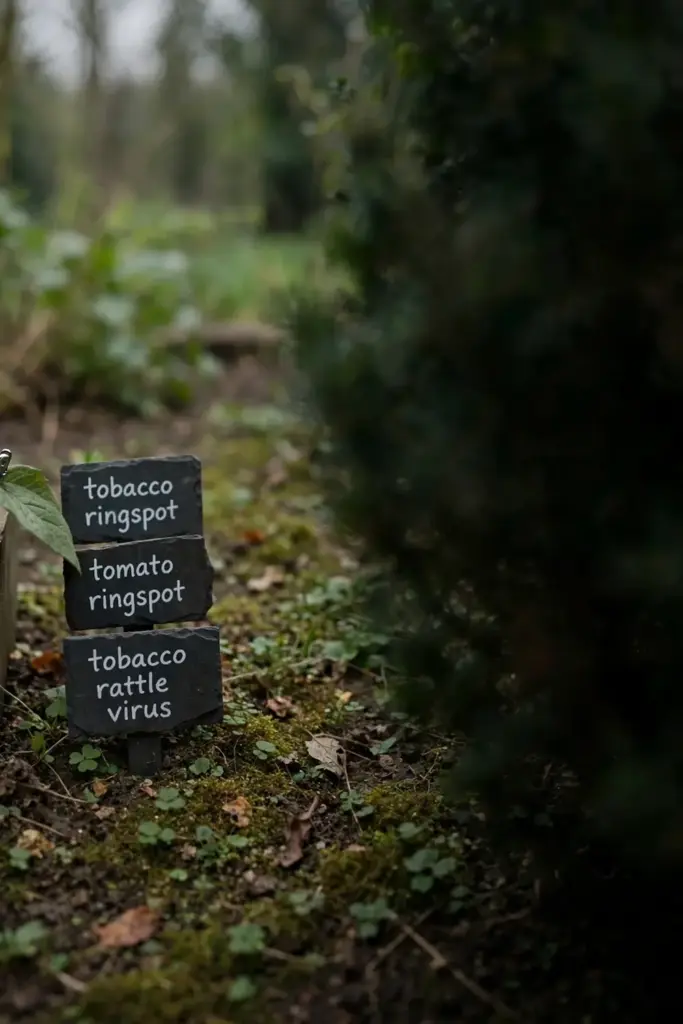
Tobacco ringspot virus is a nepovirus in the family Secoviridae. It spreads through soil by dagger nematodes. It hits vegetables, blueberry, grapevine, and ornamentals. It is the subject of this article.
Tomato ringspot virus is a nepovirus in the family Secoviridae. It spreads through soil by dagger nematodes. It hits perennial fruit and berry plants. Oklahoma State University Extension treats the two viruses together, because both cause grapevine decline, with similar symptoms and the same dagger-nematode vector. Lab testing separates them. Field identification does not. The field routine is the same for both.
Tobacco rattle virus is a tobravirus in the family Virgaviridae. It spreads through soil by stubby-root nematodes. It hits potatoes, bulbs, and ornamentals. It is a different virus from a different family with a different vector. The two tobacco viruses are often confused, because the names share two words. The vector separates them: dagger nematode for TRSV, stubby-root nematode for TRV.
The naming confusion is a plain plant fact, not a search-engine problem. Gardeners who hear “tobacco virus” reach for the wrong control. A gardener who tests for stubby-root nematodes against TRSV wastes the assay, because stubby-root nematodes do not carry TRSV. A gardener who tests for dagger nematodes against TRV wastes the assay, because dagger nematodes do not carry TRV. The name tells the gardener which control to use. The wrong name buys the wrong control.
Do not present “tobacco ringspot virus 2” as a settled synonym for tomato ringspot virus. One reference lists it as a synonym, but the synonymy is unverified. This article names the viruses by their standard names and leaves the synonym out. The lab separates them where it matters.
Strategy 1: Buy Certified Virus-Free Seed and Virus-Tested Stock
Buy certified virus-free seed and virus-tested planting stock. Never plant stock of unknown virus status beside healthy plants.
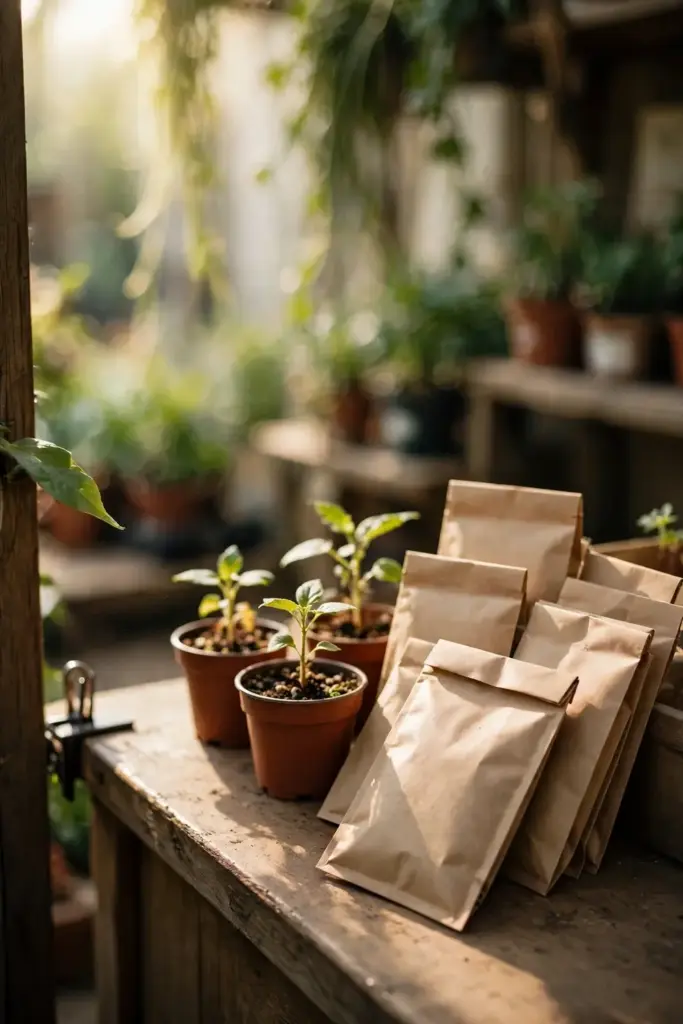
Oklahoma State University Extension gives this as the first prevention step: plant certified disease-free stock. A certified plant passed testing for the viruses that matter in its crop. A plant of unknown status may carry the virus without symptoms. The price difference between certified and uncertified stock is small. The cost difference between a clean planting and an infected planting is large.
Ask the nursery for the certification. A reputable nursery states the testing plainly: which viruses the stock was tested for, and what the result was. A nursery that cannot answer, or that waves the question away, earns no sale. The question costs nothing. The infected bush costs the bed.
Buy seed from a reputable source. A seed packet from a reputable supplier carries tested seed. A seed packet from an unknown seller carries unknown virus status. Seed transmission carries TRSV in some hosts. The seed packet from the shop is the safe packet. The seed packet from an unknown source is a gamble the garden cannot afford.
Do not accept free plants of unknown status. A neighbor’s extra begonia, a friend’s spare dahlia tubers, a cutting from an unknown bush: each carries unknown virus status. A free plant that brings TRSV costs more than the most expensive certified plant. Buy clean. Plant clean. Keep the planting clean.
Strategy 2: Inspect New Plants Before Bringing Them In
Inspect new plants before bringing them in. Never buy a symptomatic plant, and never plant one beside healthy stock.
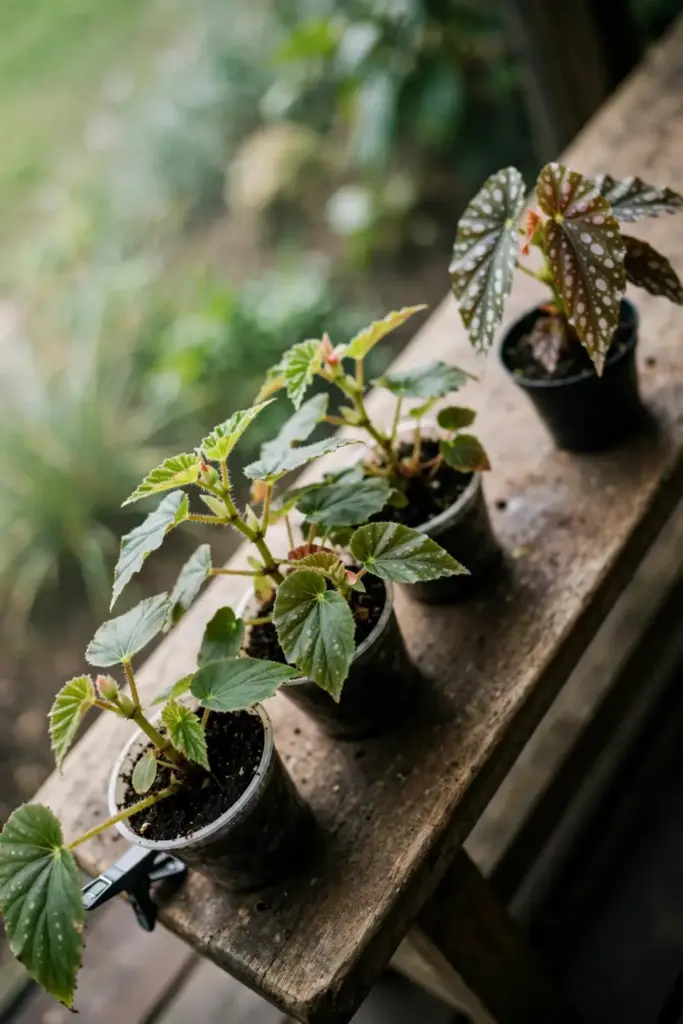
Inspect the leaves, the stems, and the base. Look for ringspots, mosaic, yellowing, and stunting. Look at the plants beside the one you want. A whole bench of begonias with white-yellow rings is a nursery problem, not a bargain. Reject a bench that shows symptoms across many plants. Buy the clean bench from the clean nursery.
Quarantine new plants when the garden already holds valuable specimens. Hold a new plant apart from the main planting for a few weeks, water it at the base, and watch the leaves. A plant that shows symptoms in quarantine stays out of the main bed. A plant that stays clean joins the garden. Quarantine costs nothing and catches the infection that inspection missed.
Do not buy a sick plant to rescue it. A gardener who buys a spotted begonia at a discount imports the virus into a clean garden. Rescue feels kind. It spreads disease. The kindest purchase is the healthy plant from the clean nursery. Leave the sick plant for the nursery to destroy under its own protocols.
Inspect the roots when the plant is bare-root or easily checked. A root system that looks sparse, dark, or stunted may signal a soilborne problem. A root system that looks full, pale, and firm is a healthy start. The roots tell the truth that the leaves hide. Trust the roots.
Strategy 3: Never Save Seed From Infected Beds
Never save seed from infected beds. Seed from an infected planting carries the virus into the next season.
Seed transmission carries TRSV in some hosts. A seed packet saved from an infected bed carries the virus into the next season’s bed. A seed packet bought from a reputable source carries tested seed. The saved packet feels thrifty. The saved packet costs the next planting. Buy clean seeds. The seed packet from the shop is the safe packet.
Do not save seed from a bed that showed ringspots, even from plants that looked healthy. A plant that looked healthy in an infected bed may carry the virus without symptoms. Its seeds may carry the virus too. The healthy-looking plant in an infected bed is not a safe seed parent. The bed’s history disqualifies the seed, not the individual plant’s appearance.
Label and discard seed from suspect beds. A seed envelope with no label becomes next year’s mystery packet. A seed envelope labeled “infected bed, discard” becomes trash. The label is the discipline. Discard the suspect seed. The discard costs a packet. The planting costs a season.
Strategy 4: Remove and Destroy Infected Plants Promptly
Remove and destroy infected plants promptly. Trash them, never compost them.
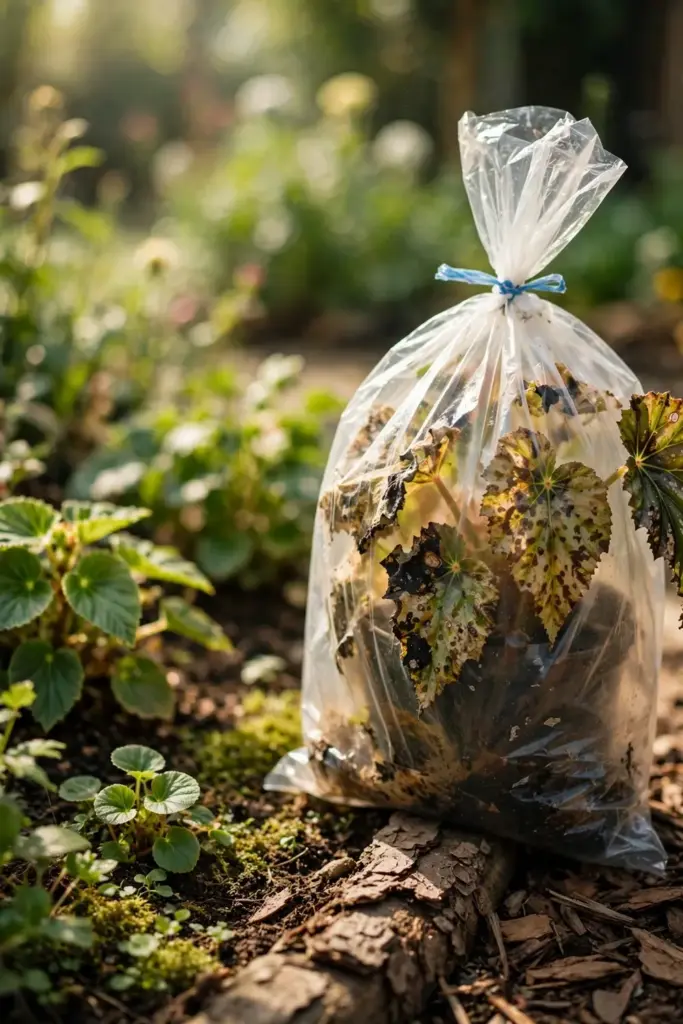
Oklahoma State University Extension gives the removal rule: remove and discard infected plants. An infected plant left in the bed sheds virus through its roots to nematodes, and through its seeds to the next season. An infected plant removed promptly stops shedding. The removal is the only response. No spray, no systemic, and no pruning rescue removes a virus.
Bag the plant before moving it. Hold the plant by the stem, bag it, and tie the bag. Bagging first keeps soil, seeds, and insects from scattering across the bed during the carry. A plant carried unbagged drops soil and seeds along the path. A plant carried bagged drops nothing. The bag is the whole strategy. Carry it with you around the bed.
Pull the whole plant, roots and all. A root left in the ground keeps feeding nematodes. A stump left in the ground keeps the virus in the soil. Dig the root ball out, bag it, and trash it. Do not shake soil off the roots over the bed. The soil around infected roots carries nematodes.
Do not leave an infected plant in place because it still flowers or fruits. A flowering begonia that carries TRSV feeds nematodes that carry the virus to the next plant. The flowers are not worth the bed. Pull the plant. The bed is worth more than one plant.
Strategy 5: Disinfect Tools Between Cuts
Disinfect tools between cuts. A dirty blade carries soil, sap, and nematodes from an infected plant to a healthy one.
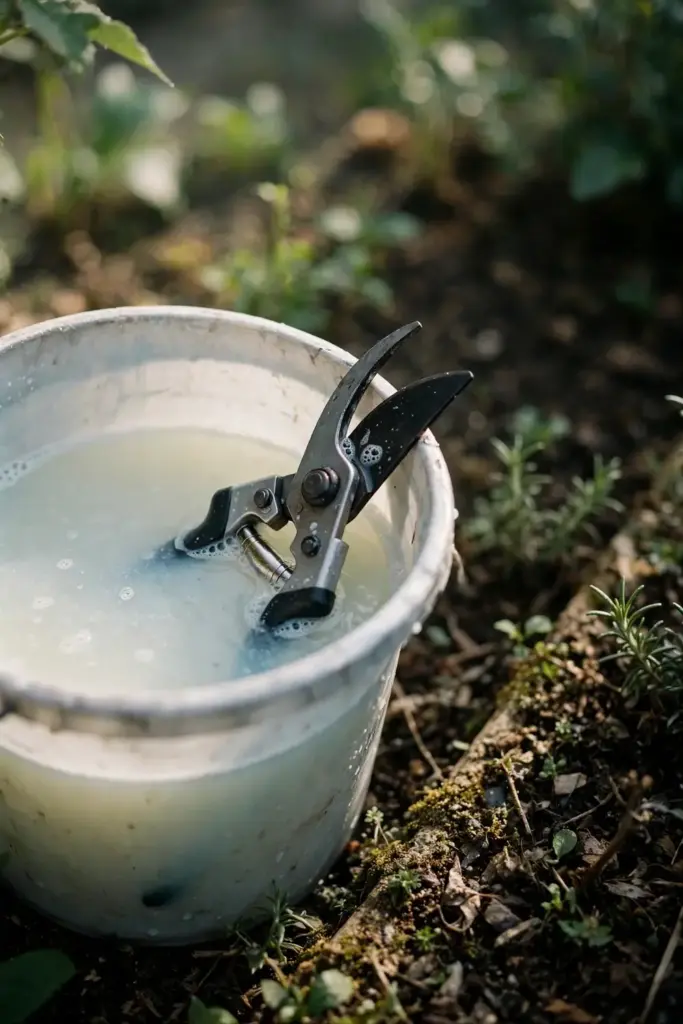
Disinfect tools with a 1 to 9 bleach solution, the 10 percent strength in the Oklahoma State University Extension guidance, a figure Greenhouse Grower states the same way. Dip the blades, wipe them, and cut again. Keep the disinfectant bucket within arm’s reach of the bed. A bucket left at the shed does not get used.
Bleach corrodes steel fast. Wash the blades with soap and water after the last cut, dry them, and oil them before storage. Alcohol is gentler on steel and dries fast, which makes it the better choice for a long pruning session with many cuts. Either option works when used between cuts. Neither works when used once at the end of the job.
Disinfect after the job too, and wash gloves. Soil rides on glove fabric, on pruner handles, and on the tarp that caught the prunings. Wash gloves with soap and water. Rinse the tarp. Let tools dry before storage. A clean tool kit is the cheapest disease prevention a gardener owns.
Do not prune through an infected plant and keep cutting. A blade that passes through infected tissue loads up with sap and soil. A blade that passes through infected tissue needs disinfecting before the next cut, without exception. Slow down at the worst plants. The worst plants are the ones that load the blade.
Strategy 6: Keep the Garden Weed-Free
Keep the garden weed-free. Dandelion, narrowleaved plantain, and common chickweed host the virus and feed the nematodes.
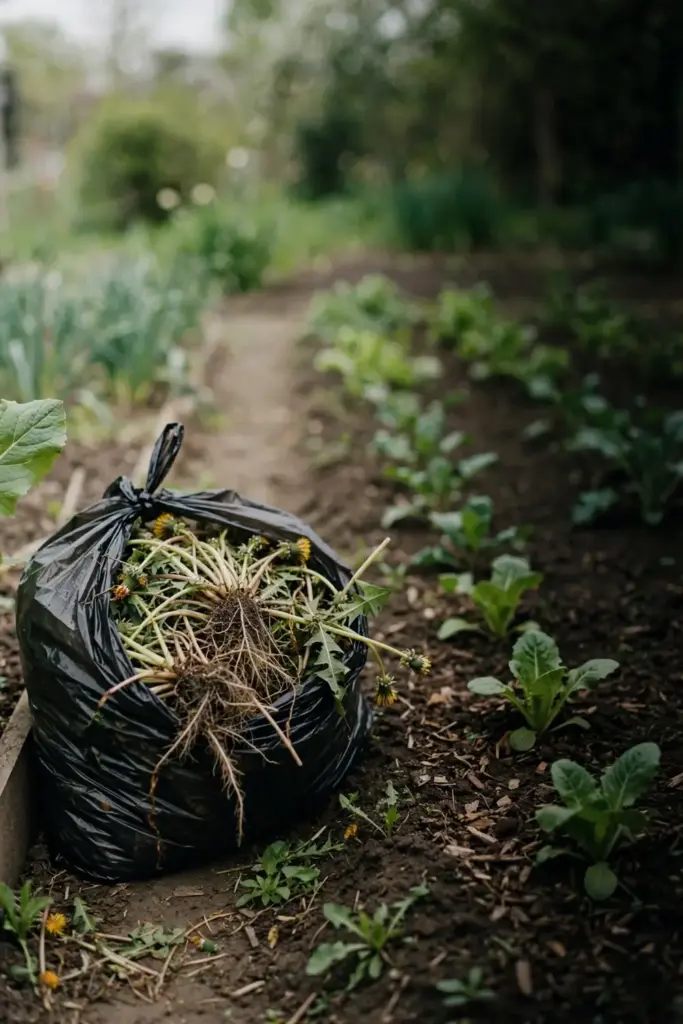
Weeds in and around the planting carry the virus in their roots and in their seeds. Nematodes feed on weed roots and pick up the virus. The weed becomes the bridge between the old planting and the new one. A bed kept weed-free all season breaks the bridge. A bed weeded once and left alone rebuilds the bridge.
Pull weeds in and around the planting, including the edges and the paths. Weed roots are the reservoir. Weeding that leaves roots in the ground leaves the reservoir. Pull the whole plant, roots and all, when the soil is moist and the roots come clean. Bag and trash weeds from a bed with a virus history. Do not compost them.
Mow the edges and the paths. A lawn edge that holds dandelion beside a vegetable bed is a reservoir at the bed’s doorstep. A mowed edge that holds no dandelion is a clean border. The edge matters as much as the bed. The nematodes do not respect the border between the lawn and the bed.
Keep the planting weed-free through the season, not only at planting time. A weed that germinates in June becomes a reservoir by August. A weed that survives into autumn drops seed that carries the virus into next spring. A planting kept weed-free all season breaks the bridge. A planting weeded once and left alone rebuilds the bridge.
Strategy 7: Never Move Soil From an Infested Area
Never move soil from an infested area. Soil carries nematodes, and nematodes carry the virus.
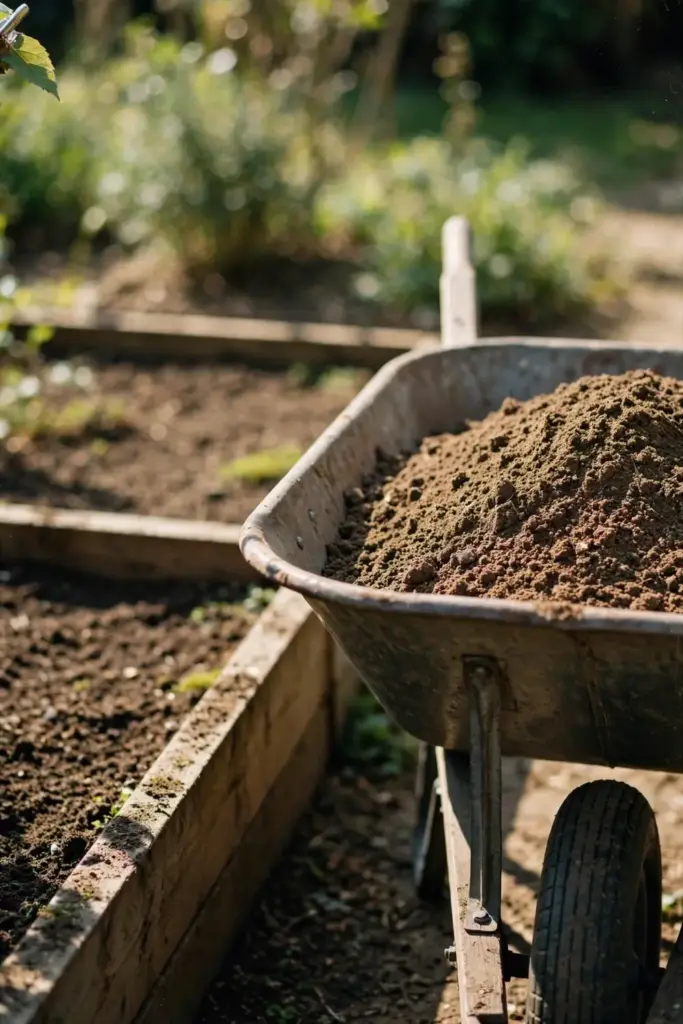
Do not move soil from a bed with a virus history to a clean bed. A wheelbarrow of soil from an infected bed carries nematodes into the clean bed. A shovelful of soil on a boot carries nematodes to the next bed. The soil is the vector’s home. Moving the soil moves the vector.
Clean tools and boots after working in an infested bed. Knock off soil. Wash soles with soap and water. Rinse tools. A boot that walks an infested bed and then walks a clean bed moves nematodes. A tool that digs an infested bed and then digs a clean bed moves nematodes. The cleaning habit closes the pathway.
Do not share potting soil between infected and clean plants. A bag of potting soil that held an infected plant holds nematodes and virus. A new bag of potting soil starts clean. The new bag costs little. The shared bag costs the next planting. Use fresh potting soil for each new planting.
Do not move compost from an infected bed to a clean bed. Compost from an infected bed may carry weed seeds that carry the virus. Compost only healthy debris. Trash infected material. The trash route removes the virus from the garden. The compost route returns it.
Strategy 8: Soil-Test for Dagger Nematodes Before Replanting
Soil-test for dagger nematodes before replanting susceptible hosts in a spot with a virus history. A clean plant in infected soil becomes an infected plant.
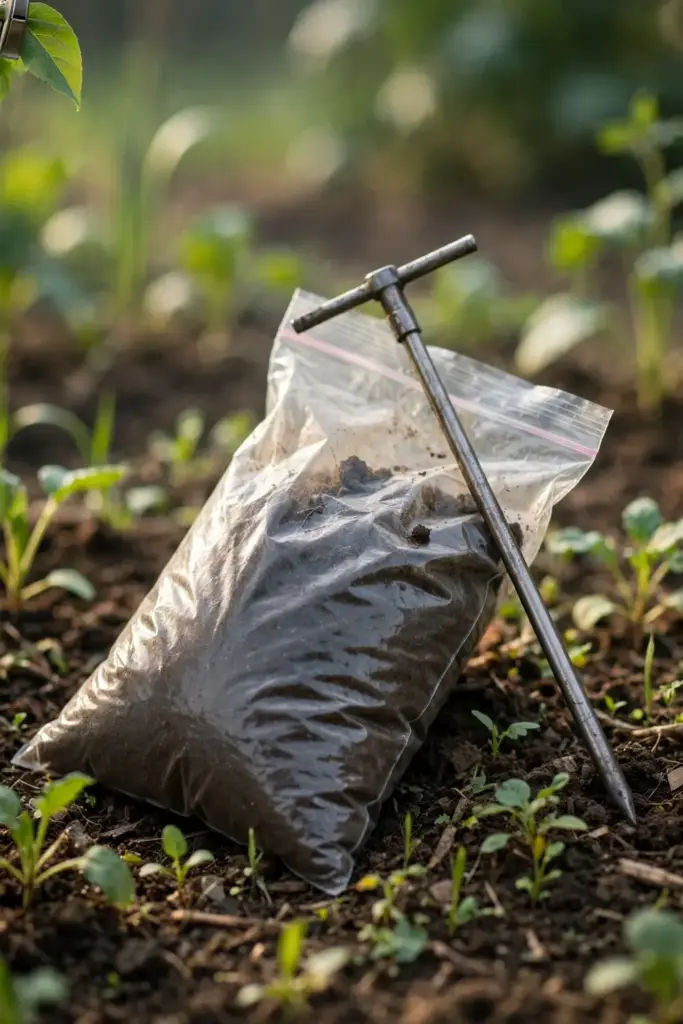
Oklahoma State University Extension gives the soil-test rule: soil-test for nematodes before replanting. Take soil cores from the root zone at the depth the lab specifies, mix them, and submit the sample to the nematode assay lab. The lab reports the genus and the count. The count tells the gardener whether dagger nematodes are present at a level that matters.
Dagger nematodes are the soilborne vector. They carry the virus from infected roots to healthy roots. A soil test that finds dagger nematodes in a bed with a virus history warns the gardener before planting. A soil test that finds no dagger nematodes clears the bed for planting. The test is the only way to know. Dagger nematodes are invisible in the soil, and their feeding damage is invisible on the roots.
Do not plant susceptible hosts into a bed with a known virus and nematode history without a test. A begonia planted into a bed that held infected beans faces the same nematodes that fed on the beans. The nematodes carry the virus. The new plant becomes the next host. Test first. Plant second.
The companion article on dagger nematode covers the vector in full: identification, sampling, and management. This article uses the vector where it matters for TRSV. The companion carries the rest. Read the companion before sampling, and follow the lab’s sampling instructions exactly.
Strategy 9: Rotate With Non-Susceptible Crops or Fallow
Rotate with non-susceptible crops, or fallow the bed for a few years. Rotation starves the nematodes and breaks the virus cycle.
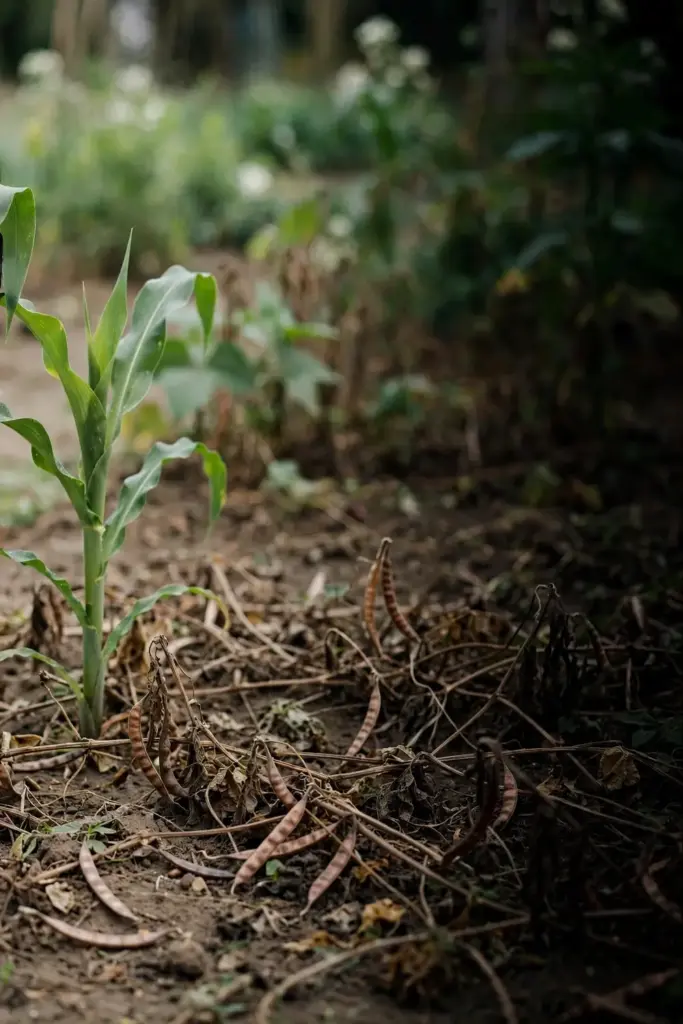
Rotate susceptible hosts out of the bed. Beans, peas, cucumber, spinach, and eggplant all host the virus. A bed that swaps beans for peas swaps one host for another. The virus stays. The rotation must move the host family out of the bed. Rotate with non-susceptible crops: corn, onions, and other crops outside the host list. A rotation break starves the virus of its hosts for a season.
Fallow the bed when the history is heavy. Fallow means no susceptible host in the bed for the full period. Fallow for a few years when the bed held a heavy infection. The nematodes lose their virus source. The virus loses its hosts. The bed resets. Fallow is hard for a home gardener. A bed that sits empty feels wasted. The honest framing matters: fallow is the price of a clean replant.
Keep the fallow bed weed-free. Weeds in a fallow bed defeat the fallow. A dandelion in a fallow bed feeds nematodes and carries the virus. A weed-free fallow starves the nematodes. A weedy fallow feeds them. Weed the fallow bed through the full period, or the fallow is theater.
Use the fallow bed for a non-host crop when space is tight. A fallow bed can hold a non-host vegetable or a grass cover crop. The point is no susceptible host. A bed that holds corn, beans, or grass is a bed that starves the virus. A bed that holds a volunteer bean is a bed that feeds it. Choose the non-host. Pull the volunteer.
Living With Tobacco Ringspot Virus in the Garden
Some damage stays. A bed with a virus history lives under prevention habits for as long as the bed is in use.
Keep the garden weed-free through every season. The weed-free habit is the cheapest insurance in the whole routine, and it never expires. A planting kept weed-free all season breaks the bridge between the soil and the next host. A planting weeded once and left alone rebuilds the bridge. Weed the planting. Weed the edges. Weed the paths.
General bacterial blight care follows the same order: cut, clean, destroy, then keep the canopy dry. The guide to bacterial blight simple solutions covers that order for bacterial blight problems across the garden. The pathogens differ. The habits do not.
Do not present nematicides or soil fumigation as home defaults. Nematode control is not practical in home garden settings and is not recommended for home gardens, per Wisconsin plant disease diagnostic guidance. A home gardener who buys a nematicide wastes money and risks the soil. The home response is clean seed, clean stock, removal, weed control, soil testing, rotation, and fallow. The routine is the treatment. The chemical bottle is not.
Do not replant a susceptible host into a bed with a virus history without testing, rotation, and fallow. The virus stays. The nematodes stay. The weeds return. A new plant in the same bed faces the same season with the same disadvantage. Fix the bed first: test the soil, rotate the crops, fallow the bed, and give the new planting a clean start. The guide to spring pruning techniques covers clean cut placement for garden plants in full.
Frequently Asked Questions
No cure exists for tobacco ringspot virus. No spray, no systemic, and no pruning rescue removes a virus from an infected plant. The virus is systemic, through the whole plant. Prevention is the whole response: certified virus-free seed, virus-tested stock, inspection, removal, tool disinfection, weed control, soil testing, rotation, and fallow. A plant that shows symptoms gets removed and destroyed. The planting stays clean because the gardener removes the source.
Tobacco ringspot virus is named for a ringspot symptom first described on tobacco, but it is not a tobacco disease in the home garden. One source notes that tobacco shows little or no economic loss from this virus. Its real hosts are vegetables, blueberry, grapevine, and ornamentals. The article opens with the naming correction because the name misleads gardeners into the wrong control. The name is history. The hosts are vegetables, fruit, and ornamentals.
A home gardener cannot separate TRSV from tobacco rattle virus by eye. TRSV is a nepovirus carried by dagger nematodes. TRV is a tobravirus carried by stubby-root nematodes. The symptoms overlap. The vectors separate them. The field routine overlaps too: clean seed, clean stock, removal, weed control, soil testing, and rotation. The lab separates the viruses where it matters. The soil test names the nematode, and the nematode points at the virus.
Do not save seeds from infected beds. Seed transmission carries tobacco ringspot virus in some hosts. A seed packet saved from an infected bed carries the virus into the next season’s bed. Buy clean seeds from a reputable source. The seed packet from the shop is the safe packet. The saved packet from an infected bed is a gamble the garden cannot afford. Label and discard seed from suspect beds.
No nematicide cures tobacco ringspot virus. Nematicides are commercial-scale tools, not home-garden defaults. Nematode control is not practical in home garden settings and is not recommended for home gardens, per Wisconsin plant disease diagnostic guidance. The home response is clean seed, clean stock, removal, weed control, soil testing, rotation, and fallow. The routine is the treatment. The chemical bottle is not part of the home routine.
Fallow the bed for a few years before replanting susceptible hosts. Fallow means no susceptible host in the bed for the full period. Keep the fallow bed weed-free, or the weeds defeat the fallow. Use the fallow bed for a non-host crop or a grass cover crop. The fallow is hard for a home gardener, and the article states that plainly. The fallow is the price of a clean replant. The bed resets when the nematodes lose their virus source.
Where to Go From Here
Start with the seed packet. Check the source before the next planting.
The order is buy certified seed and stock, inspect new plants, never save seed from infected beds, remove infected plants, disinfect tools, keep the garden weed-free, never move soil, soil-test for dagger nematodes, and rotate or fallow. One next action beats ten good intentions. Test the soil before the next planting. The bed stays clean because the gardener tested first.