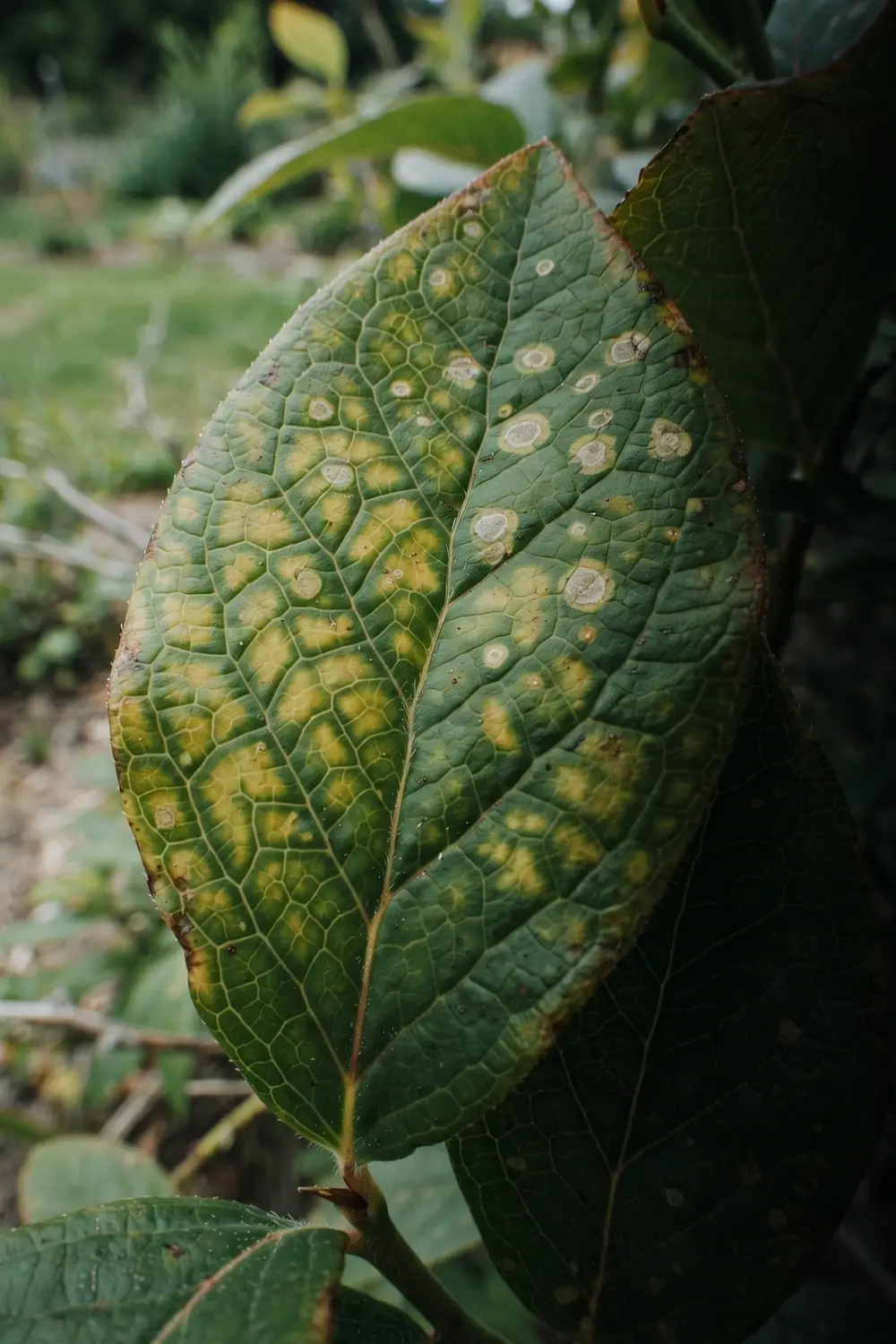

Tomato ringspot virus has no cure. The 9 strategies below protect blueberries, raspberries, and fruit trees from a hidden virus, starting with the planting stock that carries it into the garden.
The virus is a nepovirus, not a tomato disease. Tomato ringspot virus spreads through soil by dagger nematodes, through seed in some hosts, and through infected planting stock. Its flagship host is highbush blueberry, and it also hits raspberry, cherry, grape, and strawberry.
The rest of this page runs the order a gardener should follow. Understand the virus first, learn its signs, clear the naming confusion, then work the 9 strategies from clean stock to lab testing. I have learned that the infected plant that looks healthy is the one that spreads the virus to the whole row.
What Tomato Ringspot Virus Actually Is
Tomato ringspot virus is a nepovirus that infects fruit and berry plantings. The virus Tomato ringspot virus, abbreviated ToRSV, causes ringspots, mosaic, and decline in perennial fruit and berry hosts.
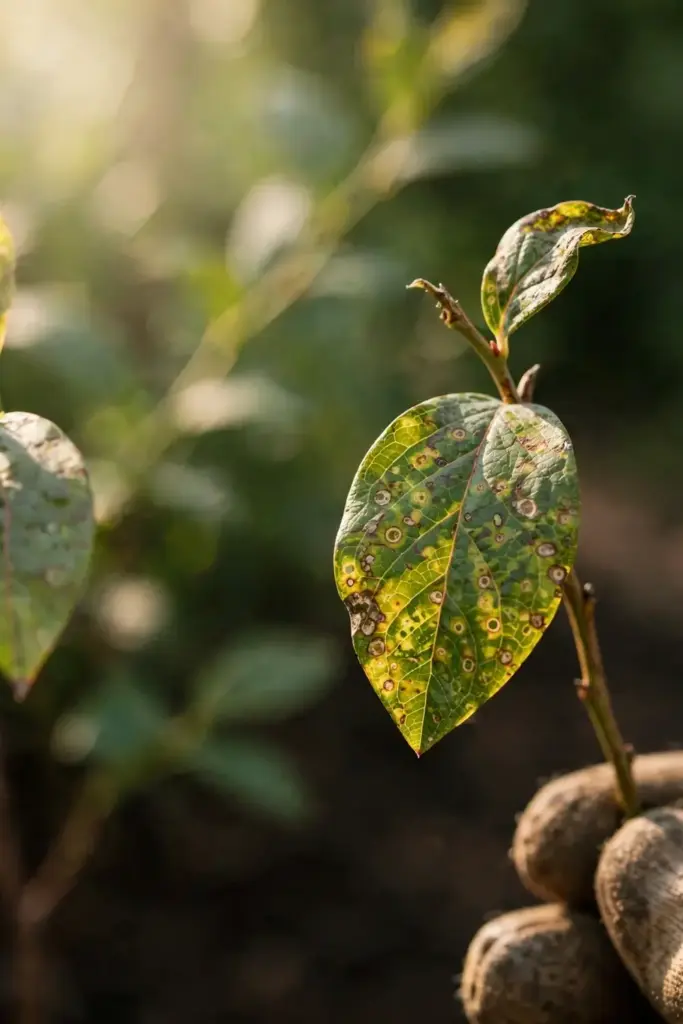
The honest frame comes first. There is no cure for an infected plant. Michigan State University Extension gives the prevention-first message for blueberry: plant certified virus-tested stock, remove and destroy infected plants, and control the weed reservoirs that carry the virus. The Michigan State University Extension page on tomato ringspot virus carries the core guidance for growers, and its lessons transfer directly to home fruit plantings.
The virus spreads three ways. Dagger nematodes carry it through soil from infected roots to healthy roots. Seed carries it in some hosts, including dandelion and other weeds. Infected planting stock carries it across regions, from a nursery bench into a home garden. All three pathways are silent. The nematode is invisible in the soil. The seed looks normal. The infected cutting looks healthy. Prevention means blocking all three pathways at once.
The virus is a nepovirus, a group of soilborne viruses transmitted by nematodes. Nepoviruses persist in soil through their nematode vectors for years. A nematode that feeds on an infected root picks up the virus and carries it to the next root it feeds on. The virus does not need a wound made by a tool. It needs only the nematode’s feeding. That is why soil testing before planting matters so much. A clean plant in infected soil becomes an infected plant.
The scope stays on home fruit and berry plantings. Highbush blueberry carries the flagship case. Raspberry, cherry, grape, and strawberry carry the secondary cases. Ornamentals such as hydrangea, geranium, begonia, iris, peony, petunia, and phlox get one-line mentions only. Tomatoes are not the disease host. The name is the confusion, and the next section clears it.
How to Spot Tomato Ringspot Virus in Fruit and Berry Plantings
| Pathway | How It Spreads | How To Block It |
|---|---|---|
| Dagger nematodes | Carry virus through soil from infected roots to healthy roots | Soil-test before planting, fallow, cover crop |
| Seed | Carries virus in some hosts, including weeds | Never save seed from infected beds, buy clean seed |
| Infected planting stock | Carries virus across regions, symptom-free | Buy certified virus-tested stock, inspect, quarantine |
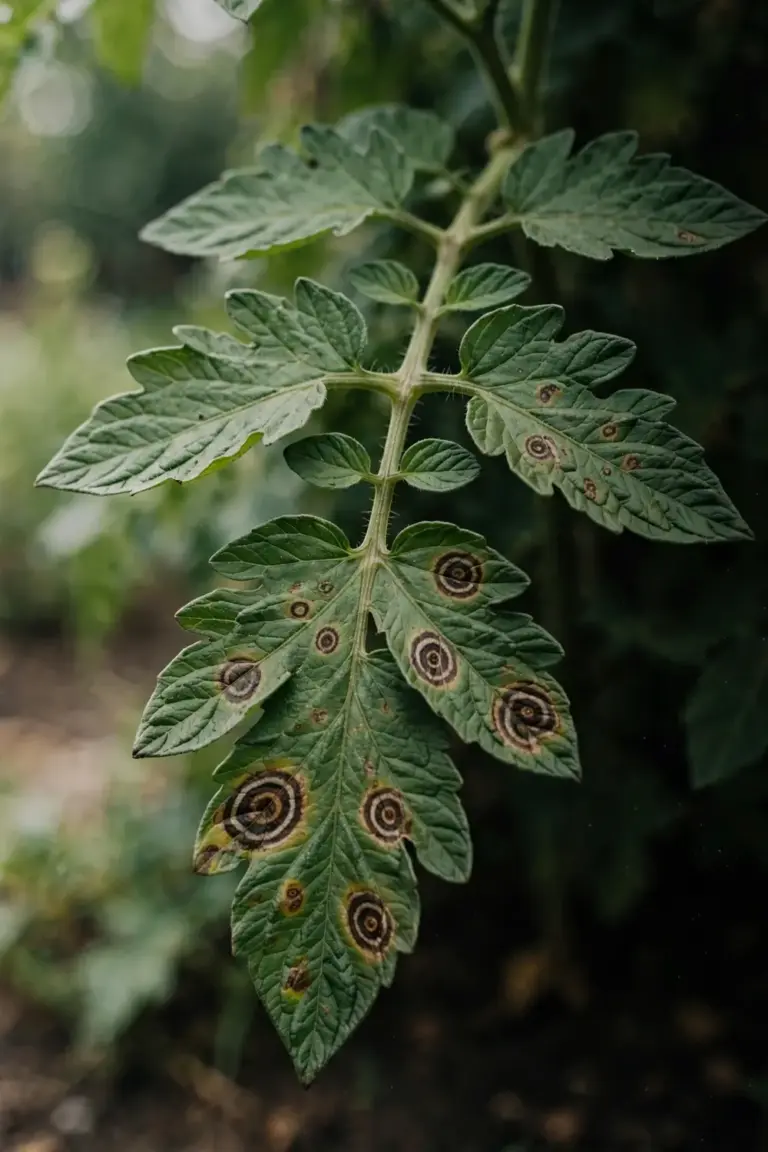
Ringspots on leaves, mosaic mottling, and uneven growth point at tomato ringspot virus. Symptoms vary within a single plant, and some infected plants show no symptoms at all.
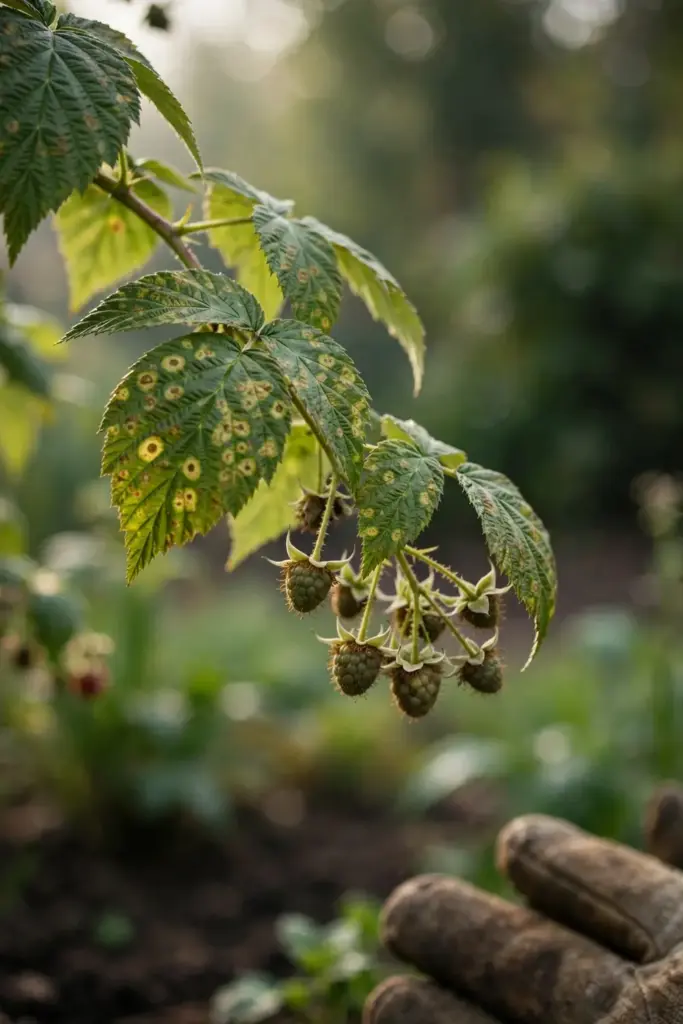
On blueberry, the virus shows ringspots on leaves, yellowing, and reduced vigor. On raspberry, the virus shows ringspots that may vanish by midsummer. On cherry, the virus shows ringspots, mosaic, and decline. On grape, the virus shows decline, smaller leaves, and shortened internodes. The symptom set shifts by host, by season, and by the individual plant. Two bushes in the same row can show different symptoms from the same virus.
The vanishing-ringspot trap matters most on caneberry. Ringspots on raspberry may disappear by midsummer. The disappearance is masking, not recovery. The virus stays in the plant, and the plant stays a virus distribution point. A gardener who reads the fading spots as a cure leaves the source in the row all season. A gardener who knows the masking pattern pulls the plant when the lab confirms it.
Hot weather reduces symptom severity. Warm conditions suppress the visible ringspots and mosaic, even while the virus stays active in the plant. A bush that looked sick in spring can look healthy in August. The virus did not leave. The symptoms masked. The bush still infects its neighbors through nematodes and through seed.
Some plants stay asymptomatic yet infectious. A bush can carry the virus for years without showing a single ringspot, while nematodes carry the virus from its roots to the next bush. That is why the article never relies on visual identification alone. Visual signs start the suspicion. The lab confirms the infection. The planting stock’s virus-tested status prevents the infection.
Field identification is presumptive. Ringspots and mosaic overlap with nutrient deficiency, herbicide drift, other viruses, and insect damage. A home gardener cannot separate them by eye. Treat ringspots as a prompt to act: flag the plant, test the soil, control weeds, and send a sample to the lab where it matters. Do not wait for certainty before flagging. The flag costs nothing. The delay costs the row.
The Name Problem: Three Different Viruses Share the Word Tomato
Three different viruses share the word tomato. Tomato ringspot virus, tomato spotted wilt virus, and tomato brown rugose fruit virus are three different viruses with three different vectors.
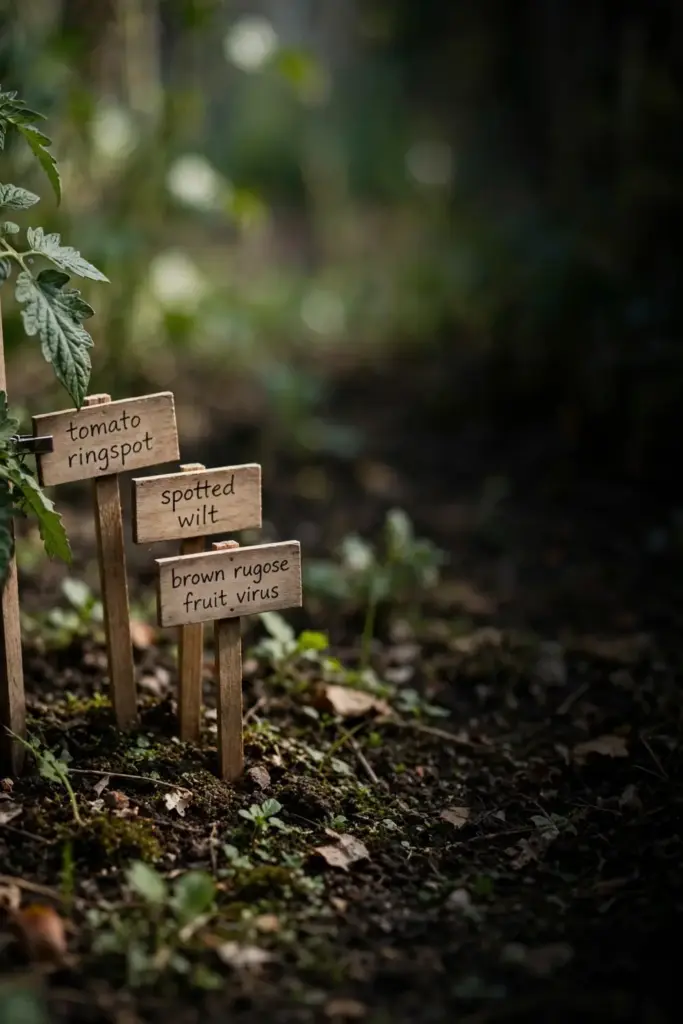
Tomato ringspot virus is a nepovirus. It spreads through soil by dagger nematodes. It hits perennial fruit and berry hosts. It is the subject of this article. It is not a tomato disease.
Tomato spotted wilt virus is an orthotospovirus. It spreads through flowers by thrips. It hits tomatoes, peppers, and other vegetables. It is a different virus from a different family with a different vector. A companion article covers it separately.
Tomato brown rugose fruit virus is a tobamovirus. It spreads by contact and by seed. It hits tomatoes and peppers. It is a different virus from a different family with a different vector. It is not the subject of this article.
The naming confusion is a plain plant fact, not a search-engine problem. Gardeners who hear “tomato virus” reach for the wrong control. A gardener who sprays for thrips against ToRSV wastes the spray, because thrips do not carry ToRSV. A gardener who tests for dagger nematodes against spotted wilt wastes the assay, because nematodes do not carry spotted wilt. The name tells the gardener which control to use. The wrong name buys the wrong control.
Do not build a field differential between tomato ringspot virus and tobacco ringspot virus. Published research notes that their symptoms are very similar, and only laboratory assays separate them. Both viruses share the dagger nematode vector. Both cause grapevine decline. The field routine is the same for both: clean stock, soil testing, weed control, removal, and fallow. The lab separates them where it matters.
Strategy 1: Buy Certified Virus-Tested Clean Planting Stock
Buy certified virus-tested clean planting stock. Never plant stock of unknown virus status beside healthy bushes.
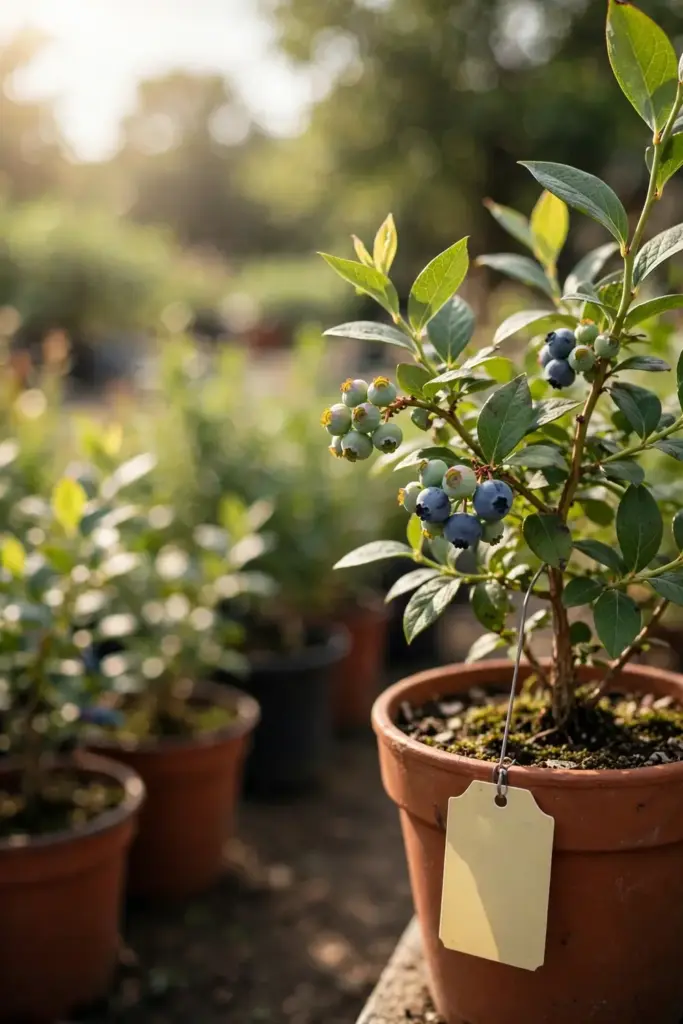
Michigan State University Extension gives this as the first prevention step for blueberry: plant certified virus-tested stock. A certified plant passed testing for the viruses that matter in its crop. A plant of unknown status may carry the virus without symptoms. The price difference between certified and uncertified stock is small. The cost difference between a clean planting and an infected planting is large.
Ask the nursery for the certification. A reputable nursery states the testing plainly: which viruses the stock was tested for, and what the result was. A nursery that cannot answer, or that waves the question away, earns no sale. The question costs nothing. The infected bush costs the row.
Inspect new plants before planting, even certified ones. Look for ringspots, mosaic, stunting, and uneven growth. A certified plant that shows symptoms has a problem worth investigating, even if the certificate says clean. Certificates reduce risk. They do not remove it. Inspection plus certification is the gate.
Do not accept free plants of unknown status. A neighbor’s extra raspberry canes, a friend’s spare blueberry bush, a cutting from an unknown bush: each carries unknown virus status. A free plant that brings ToRSV costs more than the most expensive certified bush. Buy clean. Plant clean. Keep the planting clean.
Strategy 2: Test the Soil for Dagger Nematodes Before Planting
Test the soil for dagger nematodes before planting susceptible hosts. A clean plant in infected soil becomes an infected plant.
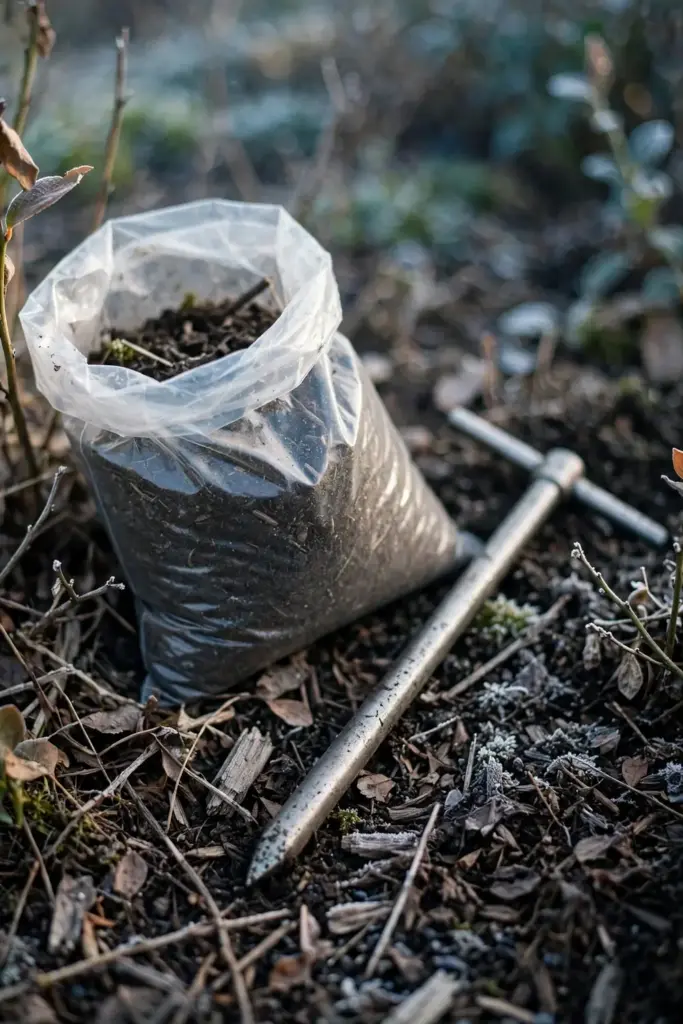
Pacific Northwest Extension guidance gives the sampling window: December through March. Sample in that window, before spring planting. Take soil cores from the root zone at the depth the lab specifies, mix them, and submit the sample to the nematode assay lab. The lab reports the genus and the count. The count tells the gardener whether dagger nematodes are present at a level that matters.
Dagger nematodes are the soilborne vector. They carry the virus from infected roots to healthy roots. A soil test that finds dagger nematodes in a bed with a virus history warns the gardener before planting. A soil test that finds no dagger nematodes clears the bed for planting. The test is the only way to know. Dagger nematodes are invisible in the soil, and their feeding damage is invisible on the roots.
Do not plant susceptible hosts into a bed with a known virus and nematode history without a test. A blueberry planted into a bed that held infected raspberries faces the same nematodes that fed on the raspberries. The nematodes carry the virus. The new bush becomes the next host. Test first. Plant second.
The companion article on dagger nematode covers the vector in full: identification, sampling, and management. This article uses the vector where it matters for ToRSV. The companion carries the rest. Read the companion before sampling, and follow the lab’s sampling instructions exactly.
Strategy 3: Control Weed Reservoirs That Carry the Virus
Control weed reservoirs that carry the virus. Dandelion, chickweed, and narrowleaved plantain host the virus and feed the nematodes.
American Phytopathological Society guidance names dandelion as a seed-transmission host. Michigan State University Extension names weed control as part of the ToRSV routine. Weeds in and around the planting carry the virus in their roots and in their seeds. Nematodes feed on weed roots and pick up the virus. The weed becomes the bridge between the old planting and the new one.
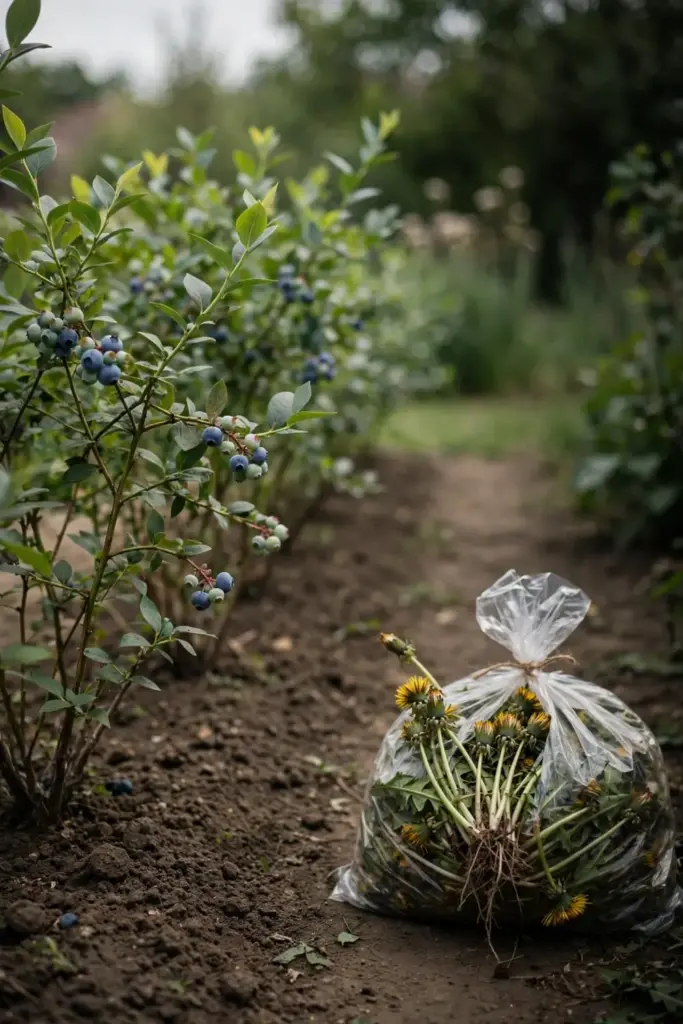
Pull weeds in and around the planting, including the edges and the paths. Weed roots are the reservoir. Weeding that leaves roots in the ground leaves the reservoir. Pull the whole plant, roots and all, when the soil is moist and the roots come clean. Bag and trash weeds from a bed with a virus history. Do not compost them.
Keep the planting weed-free through the season, not only at planting time. A weed that germinates in June becomes a reservoir by August. A weed that survives into autumn drops seed that carries the virus into next spring. A planting kept weed-free all season breaks the bridge. A planting weeded once and left alone rebuilds the bridge.
Mow the edges and the paths. A lawn edge that holds dandelion beside a blueberry row is a reservoir at the row’s doorstep. A mowed edge that holds no dandelion is a clean border. The edge matters as much as the bed. The nematodes do not respect the border between the lawn and the bed.
Strategy 4: Remove and Destroy Infected Plants and Their Neighbors
Remove and destroy infected plants. Remove adjacent symptom-free plants too, because they may be infected without showing symptoms.
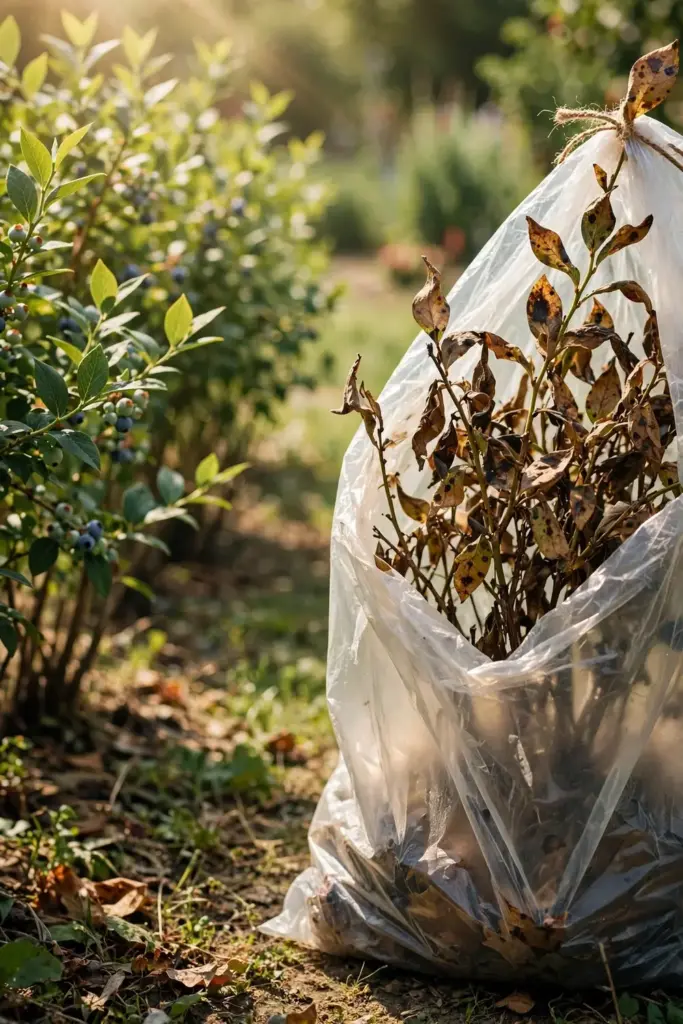
Michigan State University Extension gives the removal rule for blueberry: remove and destroy infected plants. Pacific Northwest Extension guidance goes further: remove infected plants and adjacent symptom-free plants, because the neighbors may be infected but asymptomatic. A row of bushes shares soil, shares nematodes, and shares the virus. One confirmed bush means the neighbors are suspect. Pull the confirmed bush and its neighbors. The neighbors are the next confirmed cases.
Pull the whole plant, roots and all. A root left in the ground keeps feeding nematodes. A stump left in the ground keeps the virus in the soil. Dig the root ball out, bag it, and trash it. Do not shake soil off the roots over the bed. The soil around infected roots carries nematodes.
Do not prune an infected plant and hope it recovers. Pruning does not remove a virus. Sprays do not remove a virus. The virus is systemic, through the whole plant. A pruned bush grows back infected. A sprayed bush stays infected. Removal is the only response. The sooner the removal, the fewer nematodes carry the virus to the next bush.
Do not leave an infected plant in place because it still fruits. A fruiting bush that carries ToRSV feeds nematodes that carry the virus to the next bush. The fruit is not worth the row. Pull the bush. The row is worth more than one bush.
Strategy 5: Never Compost Infected Material or Save Infected Seeds
Never compost infected material. Never save seeds from infected plants. Both carry the virus into the next season.
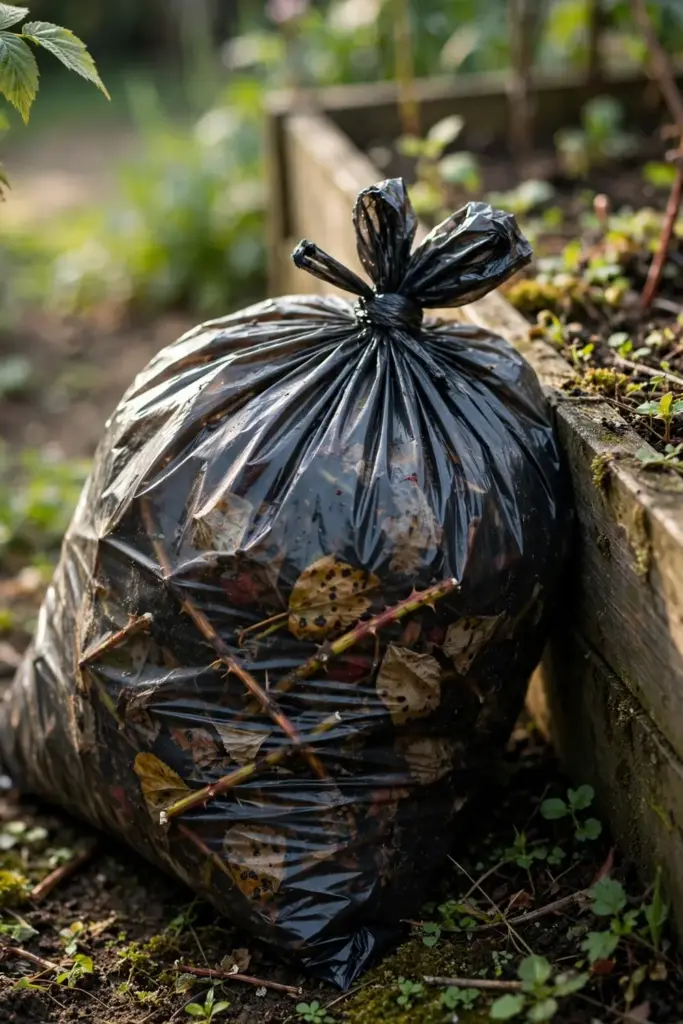
Composting does not kill a virus in plant tissue reliably at home scale. A home compost pile runs too cool to guarantee destruction of virus in thick tissue, roots, and seeds. Bag infected plants, tie the bag, and put it in the trash. Burn them where burning is allowed. The trash route removes the virus from the garden. The compost route returns it.
Do not save seeds from infected plants or from infected beds. Seed transmission carries ToRSV in some hosts, including dandelion and other weeds. A seed packet saved from an infected planting carries the virus into the next season’s bed. Buy clean seeds from a reputable source. The seed packet from the shop is the safe packet.
Do not bring live samples to nurseries. A cutting carried to a nursery for identification carries the virus into the nursery. Photograph the plant instead. Send the photo to the extension office. The photo carries no virus. The cutting does. The extension office reads the photo and decides whether a sample is needed.
Wash tools and hands after handling infected plants. The virus spreads mainly through soil and nematodes. Soil left on tools still carries nematodes. Clean the soil off tools. Wash hands. Change gloves. The habits are cheap. The habits close pathways.
Strategy 6: Rogue Out Hiding Places and Kill Stumps Completely
Rogue out hiding places. Remove weed roots, old roots, and stumps completely, because each hides the virus.
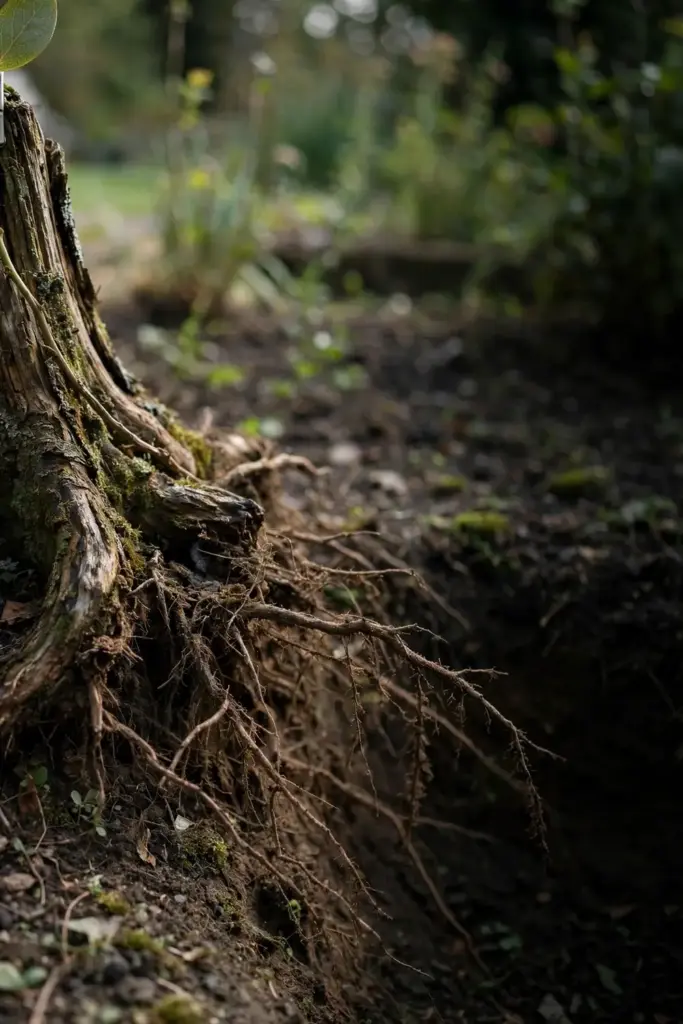
Pacific Northwest Extension guidance gives the roguing rule: rogue out hiding places, including weeds, trees, and stumps, and make sure stumps are completely dead. A stump left alive keeps roots alive. Live roots keep nematodes fed. Nematodes carry the virus. A stump that resprouts is a reservoir with a trunk. Kill the stump completely.
Dig out old root systems after removal. A root system left in the ground after the bush is pulled keeps the virus in the soil. Dig the root ball out, bag it, and trash it. Do not leave roots to rot in place in a bed with a virus history. Rotting roots feed nematodes for a season after the bush is gone.
Clear the bed completely before replanting. Remove every root, every weed, every scrap of old planting. A bed that looks clean but holds old roots is not clean. A bed cleared to bare soil, with every root out, starts clean. The clearing costs a day. The clean start saves the next planting.
Check the bed for resprouts for a full season after clearing. A root fragment that survived the dig sends up a sprout. Pull the sprout at once, roots and all. A sprout left alone rebuilds the reservoir. A sprout pulled at once removes it. The check takes minutes a week. The habit protects the next planting.
Strategy 7: Fallow Up to Two Years Before Replanting
Fallow the bed for up to two years before replanting susceptible hosts. Fallow starves the nematodes and breaks the virus cycle.
Pacific Northwest Extension guidance gives the fallow rule: fallow for up to two years before replanting. Fallow means no susceptible host in the bed for the full period. No blueberry, no raspberry, no cherry, no grape, no strawberry. The nematodes lose their virus source. The virus loses its hosts. The bed resets.
Fallow is hard for a home gardener. A bed that sits empty for two years feels wasted. The honest framing matters: fallow is the price of a clean replant. A gardener who replants at once into a bed with a virus and nematode history buys a second infection. A gardener who fallows for two years buys a clean planting. The fallow is not wasted time. It is the treatment.
Keep the fallow bed weed-free. Weeds in a fallow bed defeat the fallow. A dandelion in a fallow bed feeds nematodes and carries the virus. A weed-free fallow starves the nematodes. A weedy fallow feeds them. Weed the fallow bed through the full period, or the fallow is theater.
Use the fallow bed for a non-host crop when space is tight. A fallow bed can hold a non-host vegetable or a grass cover crop. The point is no susceptible host. A bed that holds corn, beans, or grass is a bed that starves the virus. A bed that holds a volunteer raspberry is a bed that feeds it. Choose the non-host. Pull the volunteer.
Strategy 8: Cover Crop With Grass or Rapeseed Before Planting
Cover crop the bed with grass or rapeseed in the year before planting. A cover crop suppresses nematodes and breaks the virus cycle.
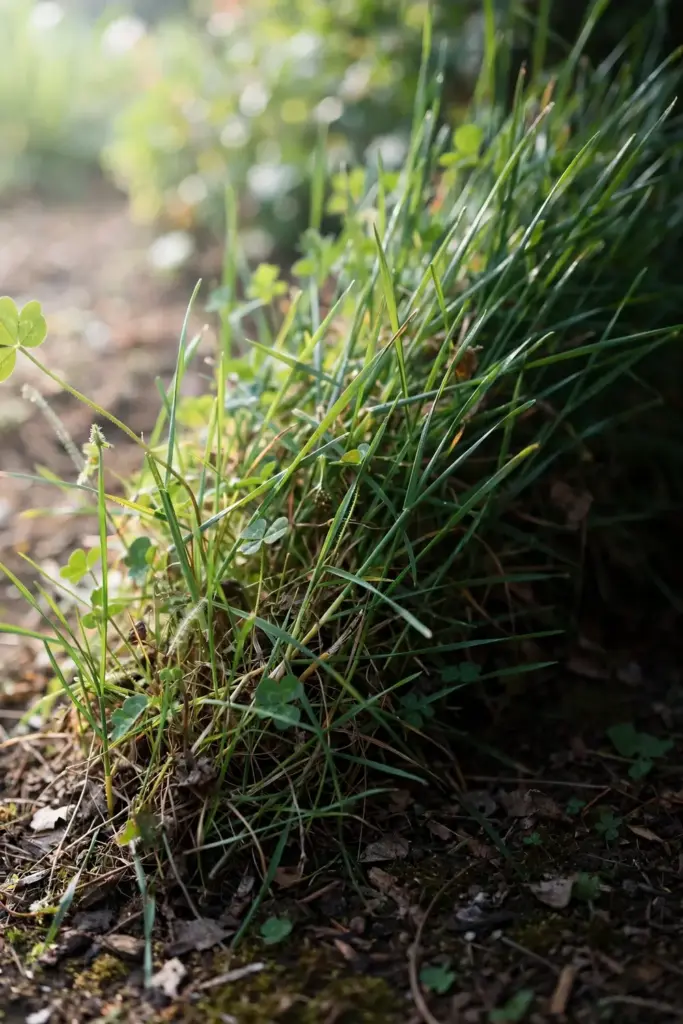
Pacific Northwest Extension guidance gives the cover-crop rule: plant grass, tall fescue, or rapeseed in the year prior to planting. Grass cover crops suppress dagger nematode populations. Rapeseed adds biofumigation compounds to the soil as it breaks down. Both options leave the bed cleaner than a bare fallow.
Plant the cover crop in the season before the new planting. Sow grass or rapeseed, let it grow, and mow it or till it in before planting. The cover crop occupies the bed, suppresses weeds, and feeds soil life. The bed that held a cover crop plants better than the bed that sat bare. The cover crop is not wasted time. It is the bed’s preparation.
Do not plant a susceptible host as a cover crop. A blueberry or raspberry planted as a placeholder in the fallow bed is not a cover crop. It is a host. The cover crop must be a non-host: grass, tall fescue, or rapeseed. The non-host rule is the whole point. A host cover crop feeds the virus.
Till the cover crop in before planting. Mow it, till it, and let the soil settle before setting the new plants. The tillage breaks up root systems and exposes nematodes to drying and predators. The settled soil plants cleanly. The new planting starts in a bed that was prepared, not in a bed that was merely empty.
Strategy 9: Confirm With Lab Testing Where It Matters
Confirm with lab testing where it matters. Enzyme-linked immunosorbent assay and polymerase chain reaction testing identify the virus.
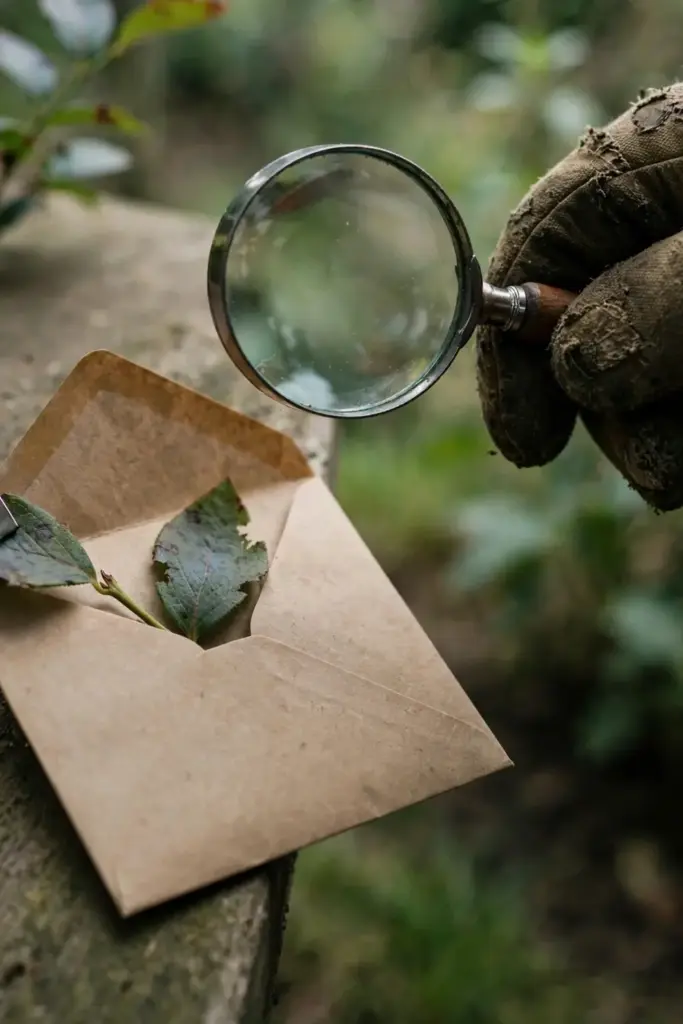
Lab testing settles the identity when the decision is expensive. A blueberry planting worth hundreds of dollars earns a lab test before the gardener pulls the whole row. A single raspberry cane in a small bed earns a flag and a pull without a lab bill. The gardener weighs the cost of the test against the cost of the decision. The lab test costs a fee. The wrong decision costs the planting.
Send a sample with fresh symptoms, kept cool and moist, to the state diagnostic lab or county extension office. The lab report names the virus. The report also names the confidence. A positive result confirms the virus. A negative result on a single sample does not prove the virus is absent, because the virus titer varies by season and by tissue. The lab knows its own limits. Read the report with the lab’s caveats.
Do not present pruning, sprays, or nematicides as cures. No spray cures a virus. No nematicide cures a virus. Nematicides are commercial-scale tools, not home-garden defaults. The home response is clean stock, soil testing, weed control, removal, fallow, cover cropping, and lab confirmation. The routine is the treatment. The spray bottle is not.
Living With Tomato Ringspot Virus in the Planting
Some damage stays. A planting with a virus history lives under prevention habits for as long as the bed is in use.
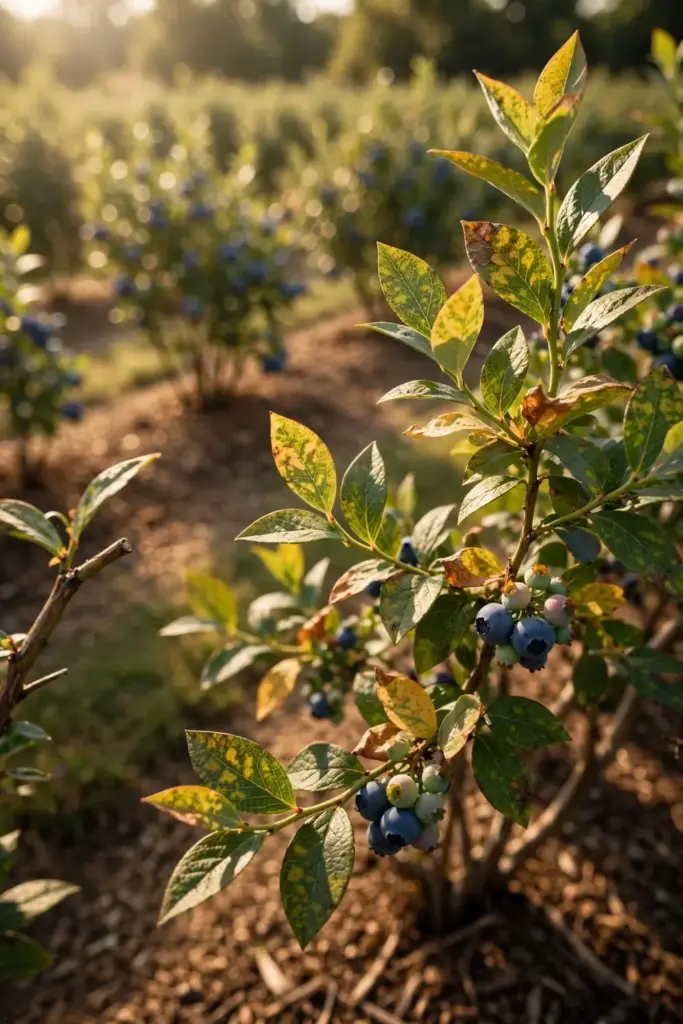
Keep the planting weed-free through every season. The weed-free habit is the cheapest insurance in the whole routine, and it never expires. A planting kept weed-free all season breaks the bridge between the soil and the next host. A planting weeded once and left alone rebuilds the bridge. Weed the planting. Weed the edges. Weed the paths.
General bacterial blight care follows the same order: cut, clean, destroy, then keep the canopy dry. The guide to bacterial blight simple solutions covers that order for bacterial blight problems across the garden. The pathogens differ. The habits do not.
Do not replant a susceptible host into a bed with a virus history without testing, fallow, and cover cropping. The virus stays. The nematodes stay. The weeds return. A new bush in the same bed faces the same season with the same disadvantage. Fix the bed first: test the soil, fallow the bed, cover crop it, and give the new planting a clean start. The guide to spring pruning techniques covers clean cut placement for garden plants in full.
Frequently Asked Questions
No cure exists for tomato ringspot virus. No spray, no systemic, and no pruning rescue removes a virus from an infected plant. The virus is systemic, through the whole plant. Prevention is the whole response: certified virus-tested stock, soil testing for dagger nematodes, weed control, removal of infected plants, fallow, cover cropping, and lab confirmation. A plant that shows symptoms gets removed and destroyed. The planting stays clean because the gardener removes the source.
Tomato ringspot virus is named for a ringspot symptom first described on tomato, but it is not a tomato disease in the home garden. Its hosts are perennial fruit and berry plants: highbush blueberry, raspberry, cherry, grape, and strawberry. The article opens with the naming correction because the name misleads gardeners into the wrong control. A gardener who treats a tomato disease in a blueberry row wastes the effort. The name is history. The hosts are fruit and berry plants.
Ringspots vanishing by midsummer does not mean the plant recovered. On caneberry, ringspots may disappear by midsummer through masking, not recovery. The virus stays in the plant, and the plant stays a virus distribution point. Hot weather reduces symptom severity without removing the virus. A gardener who reads fading spots as a cure leaves the source in the row all season. The plant that masked its symptoms still infects its neighbors.
Do not save seeds from infected plants or from infected beds. Seed transmission carries tomato ringspot virus in some hosts, including dandelion and other weeds. A seed packet saved from an infected planting carries the virus into the next season’s bed. Buy clean seeds from a reputable source. The seed packet from the shop is the safe packet. The saved packet from an infected bed is a gamble the garden cannot afford.
Fallow the bed for up to two years before replanting susceptible hosts. Fallow means no susceptible host in the bed for the full period. Keep the fallow bed weed-free, or the weeds defeat the fallow. Use the fallow bed for a non-host crop or a grass or rapeseed cover crop. The fallow is hard for a home gardener, and the article states that plainly. The fallow is the price of a clean replant.
Lab testing separates tomato ringspot virus from tobacco ringspot virus, but field identification cannot. Published research notes that their symptoms are very similar, and only laboratory assays separate them. Both viruses share the dagger nematode vector. Both cause grapevine decline. The field routine is the same for both: clean stock, soil testing, weed control, removal, and fallow. The lab separates them where it matters for a spray decision or a research question.
Where to Go From Here
Start with the nursery gate. Check the planting stock before the next plant purchase.
The order is buy certified stock, test the soil, control weeds, remove infected plants and their neighbors, never compost or save seeds, rogue out hiding places, fallow, cover crop, and confirm with the lab. One next action beats ten good intentions. Test the soil before the next planting. The row stays clean because the gardener tested first.