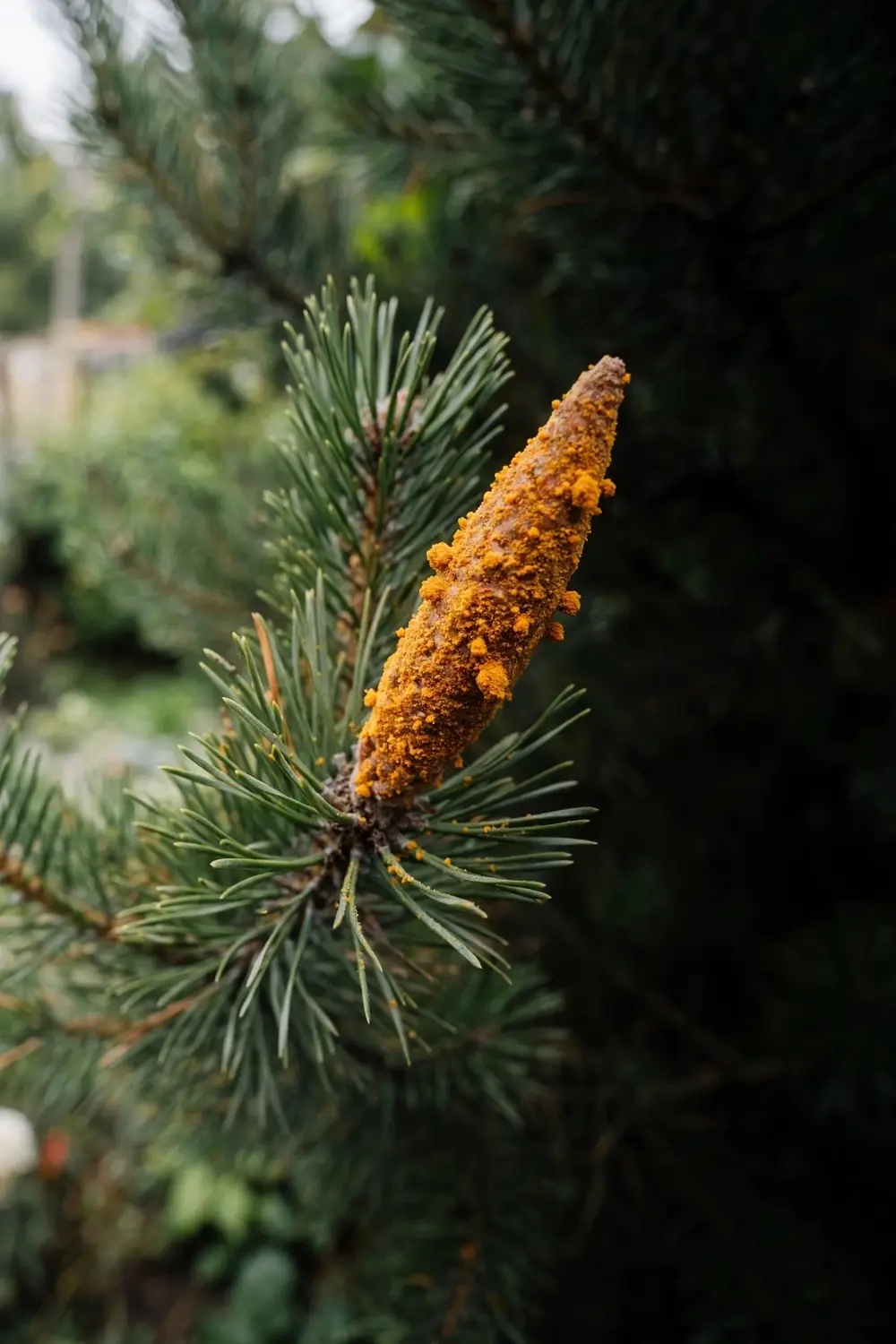

Fusiform rust has no cure once a pine is infected. The 9 strategies below care for yard pines and prevent breakage, starting with the spring check that catches galls while they are still prunable.
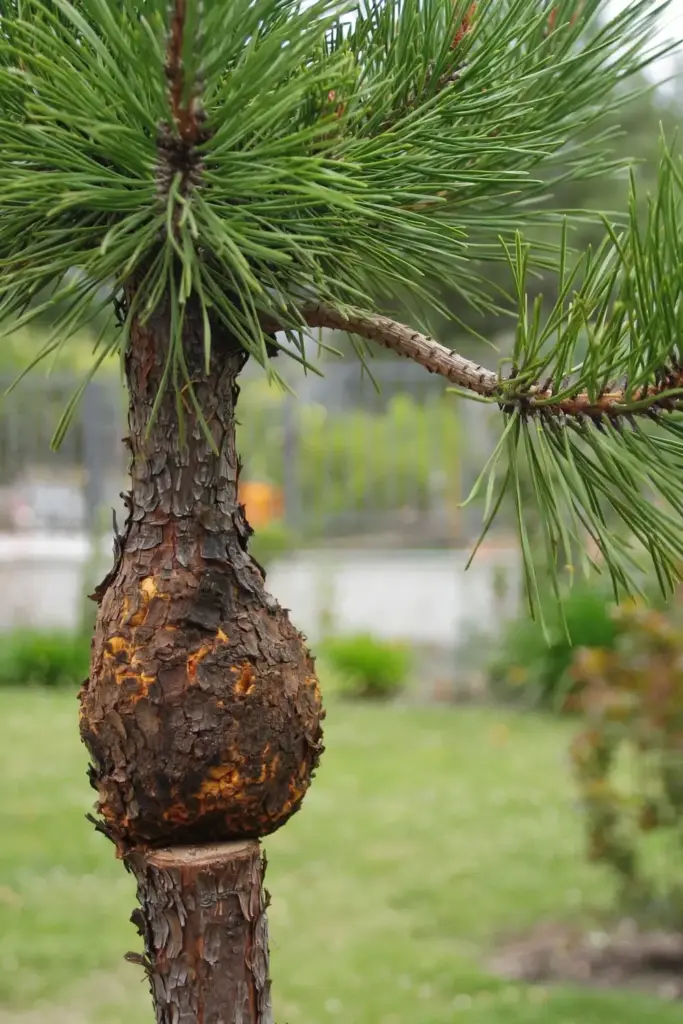
The signature is a spindle-shaped swelling, a gall, on a branch or stem, dusted with orange powdery spores in early spring. The gall weakens the wood at that point. A gall on a branch can be pruned. A gall on the main stem needs an arborist.
The rest of this page runs the order a gardener should follow. Understand the rust first, learn its signs, then work the 9 strategies from spring spotting to the oak link. I have learned that the gall I prune in spring is the branch that never breaks in the next storm.
What Fusiform Rust on Southern Pines Actually Is
Fusiform rust on southern pines is a fungal rust disease of loblolly and slash pine. The fungus Cronartium quercuum f. sp. fusiforme causes fusiform rust.
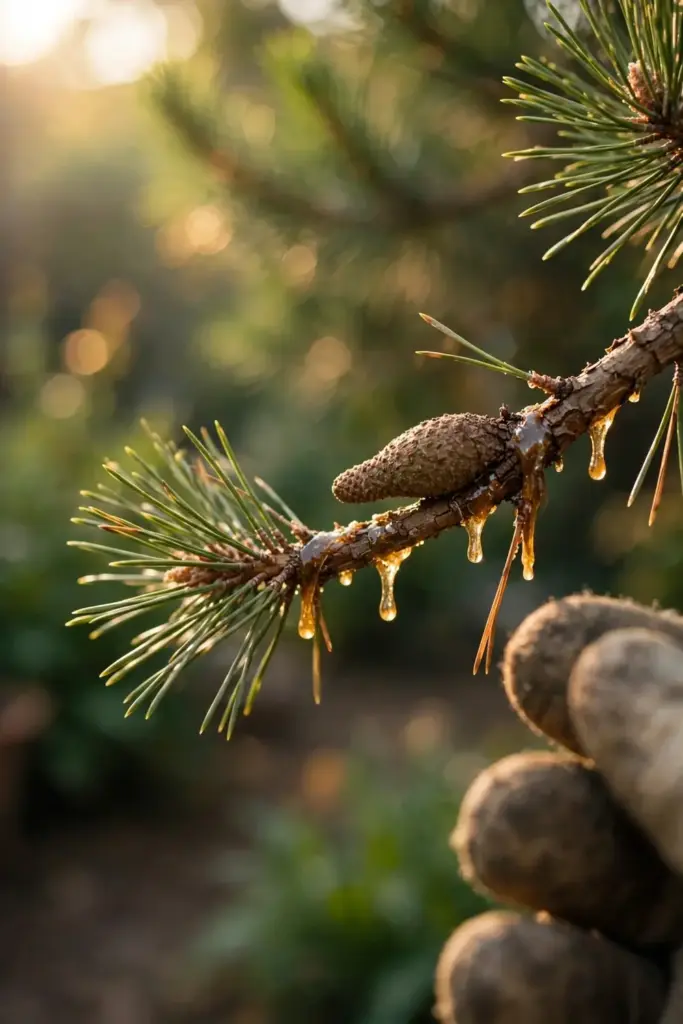
The honest frame comes first. There is no cure once a pine is infected. Alabama Extension gives the landscape framing: fusiform rust management in forest and landscape settings rests on pruning, removal, resistant stock, and breakage-risk decisions, not on treatment. The Alabama Extension page on managing fusiform rust on loblolly and slash pine carries the core guidance for homeowners and landowners, and its landscape lessons transfer directly to yard pines.
The rust needs two hosts to complete its life cycle. The pine is the main host. Oaks in the red oak group are the alternate host. Spores from pine galls infect oak leaves. Spores from oak leaves infect pine shoots. The cycle runs pine to oak to pine, year after year. A yard pine beside a red oak group oak faces the full cycle. A yard pine far from oaks faces a lighter cycle. The oak link matters, and Strategy 9 covers it without recommending oak removal.
The gall is the disease. The fungus grows inside the branch or stem and forces the wood to swell into a spindle-shaped gall. The gall is weak wood. The gall is also a spore factory: in early spring, the gall surface erupts with orange powdery spores. Those spores ride the wind to oak leaves. The gall never heals. The gall only grows. A gall on a branch can be cut out. A gall on the main stem cannot be cut out without cutting the tree.
The scope stays on southern pines in home landscapes in the Southeast. Loblolly and slash pine carry the flagship cases, as the most susceptible species. Longleaf pine carries a moderately resistant note. Shortleaf pine carries a highly resistant note. Forestry and timber framing stays out. This article is a care and prevention explainer for yard pines, not a forest-management guide.
How to Spot Fusiform Rust on Yard Pines
| Gall Location | Tree Size | Action |
|---|---|---|
| Branch gall | Young tree | Prune out at least 12 inches from the trunk |
| Branch gall | Larger tree | Leave alone, monitor yearly, prune only if it threatens a target |
| Main-stem gall | Any size, especially near a house or target | Call a certified arborist for assessment |
| Any gall | Any size | Bag and trash prunings, never leave galled limbs on site |
Spindle-shaped galls on branches or stems, dusted with orange powdery spores in early spring, point at fusiform rust.
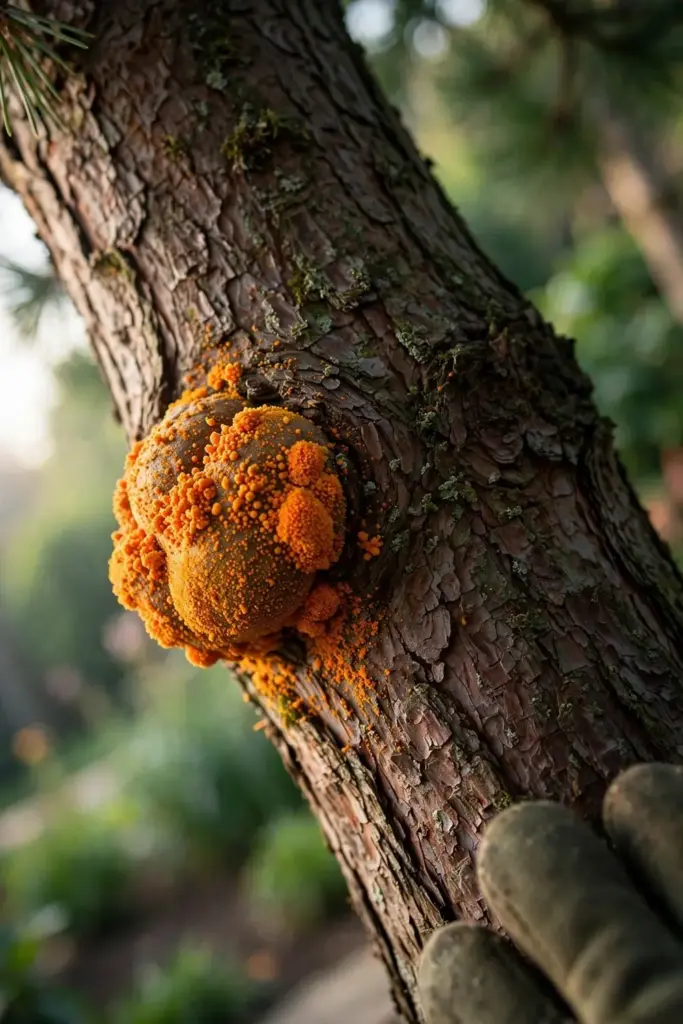
Look at the branches first. A gall on a branch swells the branch into a spindle shape, wider in the middle and tapered at the ends. The bark over the gall may crack and ooze resin. In early spring, the gall surface shows orange powdery spores. The orange dust is the most visible sign. A branch with a spindle gall and orange dust in spring is a fusiform gall.
Look at the main stem next. A gall on the trunk swells the trunk at that point. The trunk gall may show the same orange spores in spring. A trunk gall is the serious case. A trunk gall weakens the tree at that height. A trunk gall near the base weakens the whole tree. A trunk gall earns an arborist visit, not a saw.
Check young trees first, and check after wet springs. Young pines show galls first, because the rust infects young, succulent shoots. A wet spring favors the oak-to-pine infection. A yard with young loblolly or slash pine after a wet spring earns a careful gall check. A yard with mature pines and no young trees earns a lighter check.
Field identification is presumptive, but the gall shape is strong. One historic USDA source contrasts gall shapes: fusiform galls are spindle-shaped, while western gall rust galls are round. That contrast is a one-line identification note, not a differential table. A spindle gall on a southern pine in the Southeast is fusiform rust until an arborist says otherwise. A round gall on a western pine is a different rust. The gall shape plus the host plus the region names the disease for home purposes.
Strategy 1: Spot It in Early Spring When Spores Show
Spot it in early spring, when orange powdery spores show on the galls. The spring check catches galls while they are still prunable.
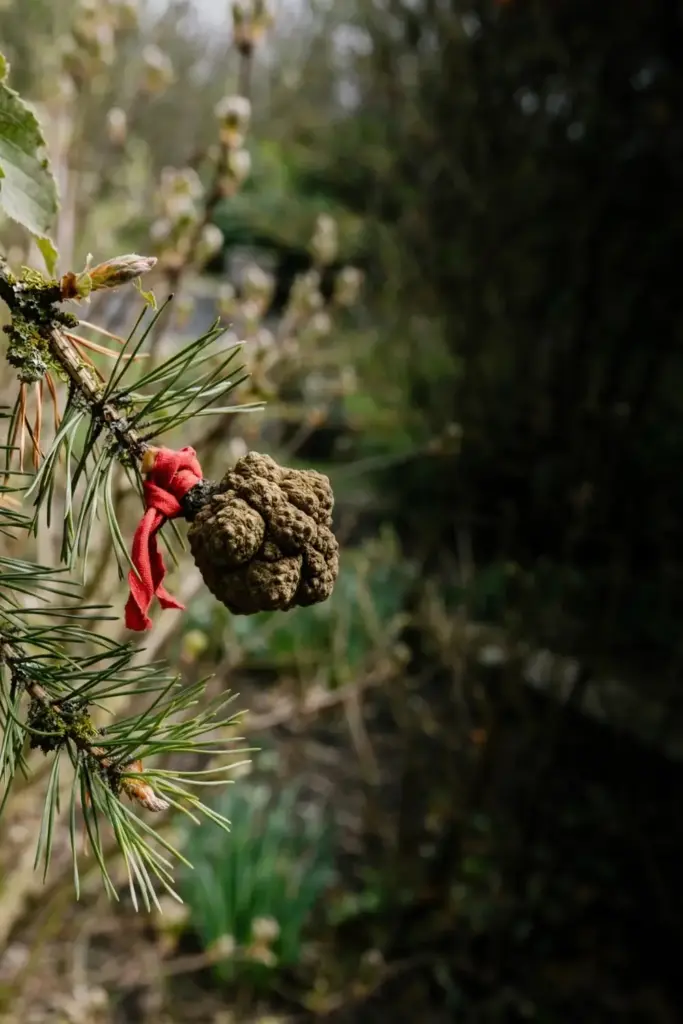
Walk the yard pines in early spring, before the new growth hardens. Look at every branch, from the lowest to the highest reachable. Look for spindle swellings on branches and stems. Look for orange dust on those swellings. The orange dust is the spore mass, and it shows best in spring. A gall found in spring can be pruned before it sheds spores all season. A gall found in autumn has already shed a season of spores.
Carry a marker or a ribbon. Tag each gall found, with a ribbon tied below the gall. A tagged gall is a gall that will not be forgotten. A gall found and left untagged is a gall that hides again once the orange dust fades. Tag the branch galls for pruning. Tag the trunk galls for the arborist. The ribbon is the work order.
Check the young trees twice. A young pine grows fast, and a gall on a young pine grows fast with it. A spring check plus a midsummer check catches the galls that the spring check missed. A mature pine needs one spring check a year. A young pine earns two. The check takes minutes per tree. The minutes save branches.
Strategy 2: Prune Out Branch Galls at Least 12 Inches From the Trunk
Prune out a branch gall at least 12 inches from the trunk. Cut back to clean wood, and destroy the cutting.
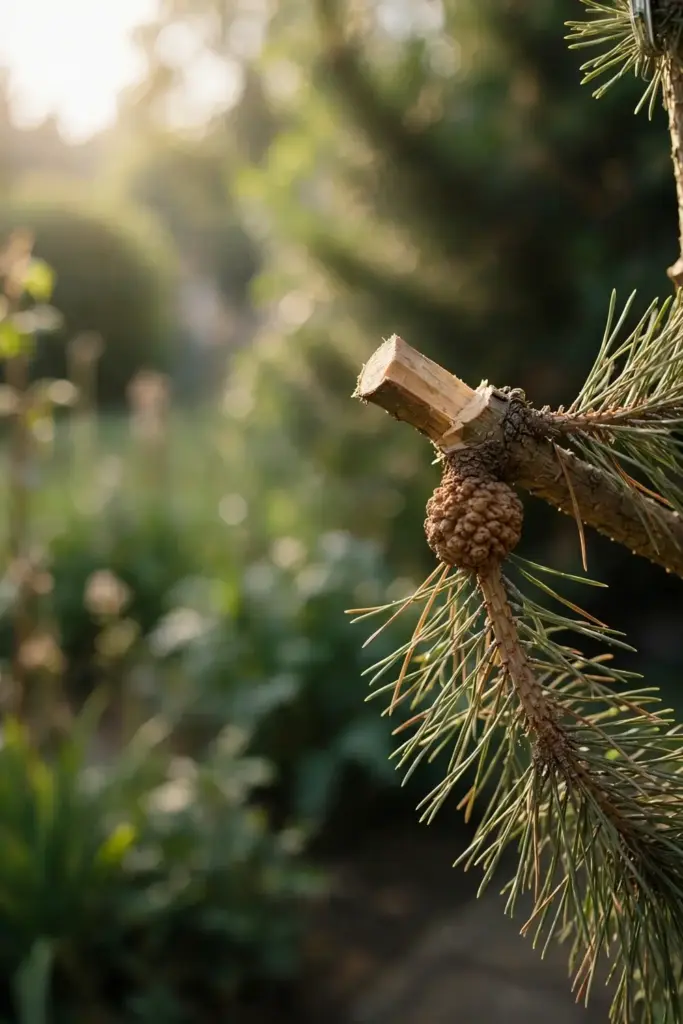
North Carolina State University Extension gives the 12-inch rule for Craven County: prune a branch gall at least 12 inches from the trunk. The distance matters. The fungus grows inside the branch beyond the visible gall. A cut right at the gall leaves infected wood behind. A cut 12 inches out removes the gall plus the invisible infection ahead of it. The 12-inch margin is the cure for a branch gall.
Cut in dry weather. A dry day keeps the spores where they are while the cut removes them. Cut with a sharp saw or pruner. A sharp blade cuts cleanly and closes fast. A dull blade crushes and tears tissue, and the crushed tissue stays open longer. Cut the branch at a junction, or back to a side branch. Do not leave stubs, which seldom close over and give the fungus a fresh wound.
Bag the cutting as it comes off. Drop each galled branch straight into a bag or onto a tarp. Do not let cuttings fall onto healthy pines or onto the soil under the tree. A cutting left on the ground sheds spores onto the next rain. A cutting bagged and trashed leaves the garden. The same bag-first habit governs every disease article on this site, and it governs here.
Do not prune through a gall and keep cutting. A saw that passes through a gall loads up with spores. Disinfect the blade after cutting a gall, before the next cut. The disinfection habit closes the pathway between branches. The guide to spring pruning techniques covers clean cut placement for garden plants in full.
Strategy 3: Leave Branch Infections Alone on Larger Trees
Leave branch infections alone on larger trees. A branch gall on a large pine is a small threat to the main stem.
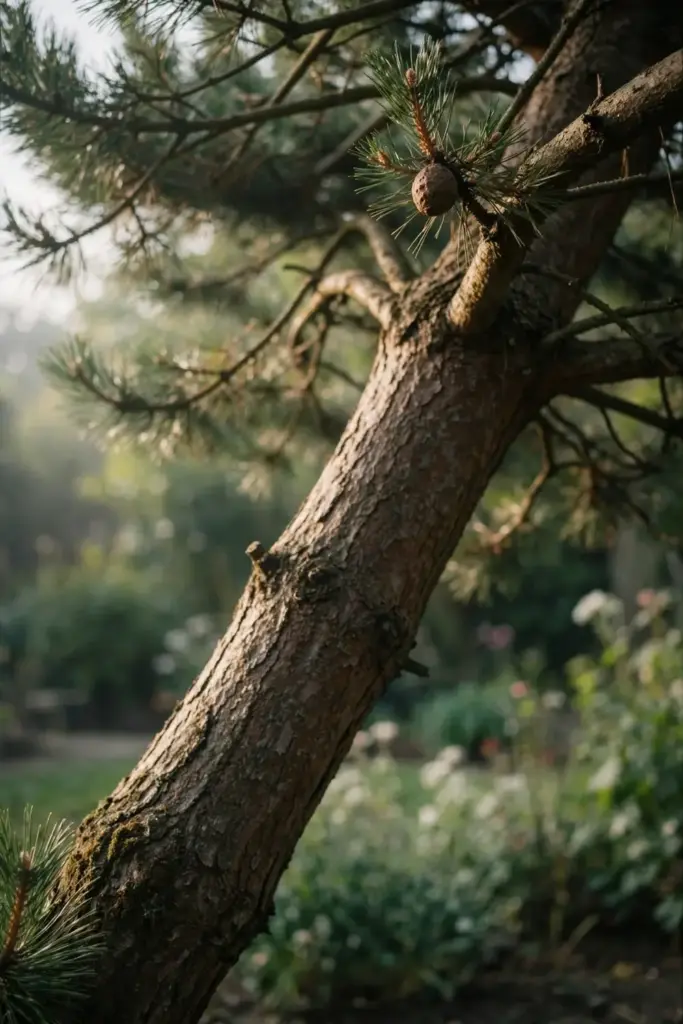
Alabama Extension gives the size rule: branch infections on larger trees pose little threat to the main stem. A gall on a branch tip of a 60-foot pine will not travel 60 feet to the trunk. The branch may die back. The tree will not. Pruning every gall off a large pine costs time and opens wounds for no benefit. The large tree outgrows the branch gall.
Watch the branch gall, and prune it only if the branch threatens a target. A galled branch over a roof, a driveway, or a play area earns pruning for safety, not for disease. A galled branch over open lawn earns watching. The decision is a safety decision, not a disease decision. A branch gall on a large tree is a cosmetic problem until it becomes a hazard problem.
Do not confuse leaving alone with ignoring. A large tree with branch galls still earns a spring check every year. A new gall on the trunk changes the decision. A branch gall that grows toward the trunk changes the decision. The yearly check catches the change. The check takes minutes. The minutes keep the tree safe.
Strategy 4: Get an Arborist for Main-Stem Galls Near a Target
Get a certified arborist for a main-stem gall, especially near a house or a target. A trunk gall weakens the tree at that height, and the breakage risk is a professional call.
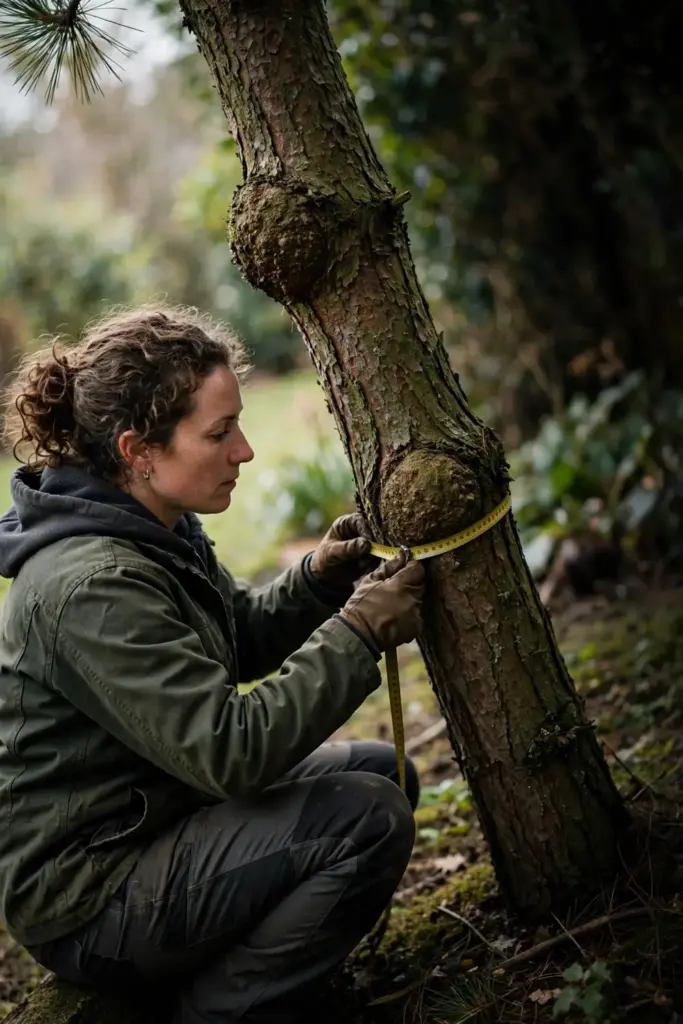
Alabama Extension gives the homeowner option: homeowners may prune out main-stem infections to save the tree. That option is a range, not a single rule. A small trunk gall on a young tree, low on the stem, may be cut out by a careful homeowner with a clean saw. A large trunk gall on a mature tree, high on the stem or near a house, is an arborist job. The arborist measures the gall, the trunk diameter, the lean, and the target, and decides between monitoring, cabling, or removal. The homeowner does not guess at breakage risk.
Call the arborist early, before the gall grows. A gall measured in spring is a gall that can be monitored. A gall ignored for five years is a gall that may force removal. The arborist visit costs a fee. The visit buys a professional risk assessment. A tree that falls on a house costs far more than the visit.
Do not cut into a trunk gall without a plan. A cut into a trunk gall opens a large wound in the main stem. The wound invites decay fungi. The wound weakens the trunk further. A trunk gall cut without a plan trades a rust problem for a decay problem. The arborist’s plan covers the cut, the wound, and the follow-up. Follow the plan.
Do not burn galled wood. Cankers produce flammable resin and pitch. Burning galled prunings risks a pitch fire. Bag the prunings. Trash them. The bag is the safe disposal route.
Strategy 5: Remove and Destroy All Pruned Galled Material
Remove and destroy all pruned galled material. Never leave galled limbs on site.
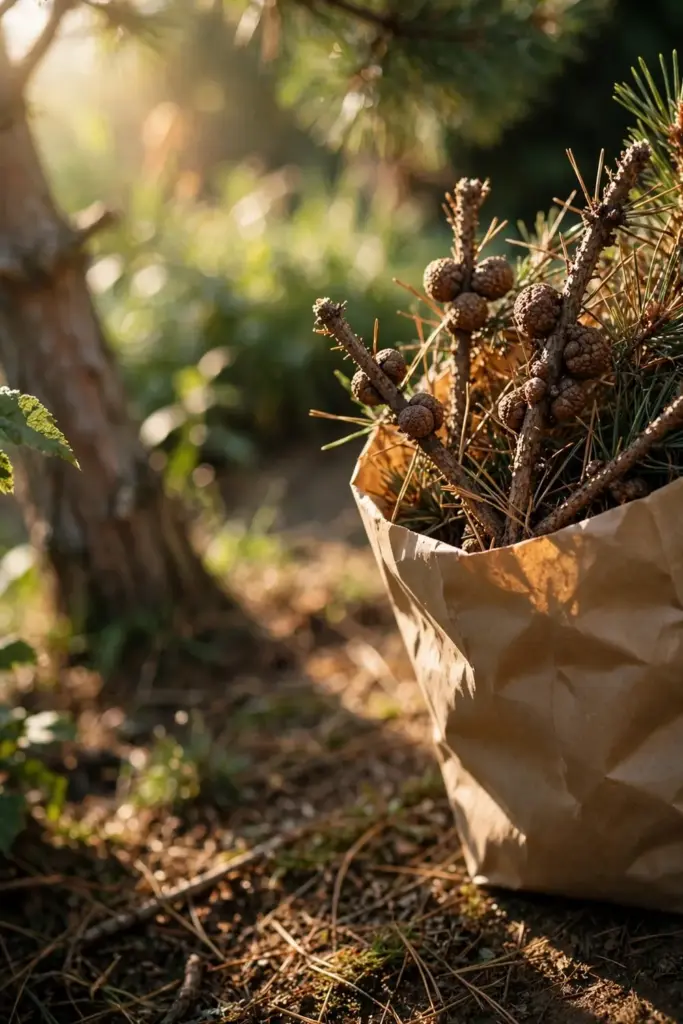
Galled limbs left on the ground shed spores onto the next rain. A pile of galled prunings beside the tree is a spore factory at the tree’s feet. A galled limb left in the woods behind the yard sheds spores into the wind. The pruning only works when the prunings leave the site. Cut, bag, and trash, in that order.
Bag the prunings as they come off the tree. Drop each galled branch straight into a bag or onto a tarp. Do not let cuttings fall onto healthy pines or onto the soil under the tree. The bag travels with you around the tree. A cutting dropped on the ground is a cutting that may stay on the ground.
Do not chip galled limbs and spread the chips under pines. Chipping shreds the gall and scatters spores through the chips. Chips spread under a pine carry the spores to the pine’s root zone and lower branches. Chip clean wood only. Trash galled wood. The chipper is not a disposal method for diseased wood.
Clean the tools after the pruning session. Disinfect blades with alcohol or bleach solution. Wash gloves. Rinse the tarp. The cleanup closes the pathway between trees. A blade that cut a gall and then cuts a healthy branch moves the rust. A blade disinfected between cuts does not.
Strategy 6: Thin Residential Pine Stands to at Least 20 Feet
Thin residential pine stands to at least 20 feet between trees. Spacing cuts the infection pressure and the breakage risk together.
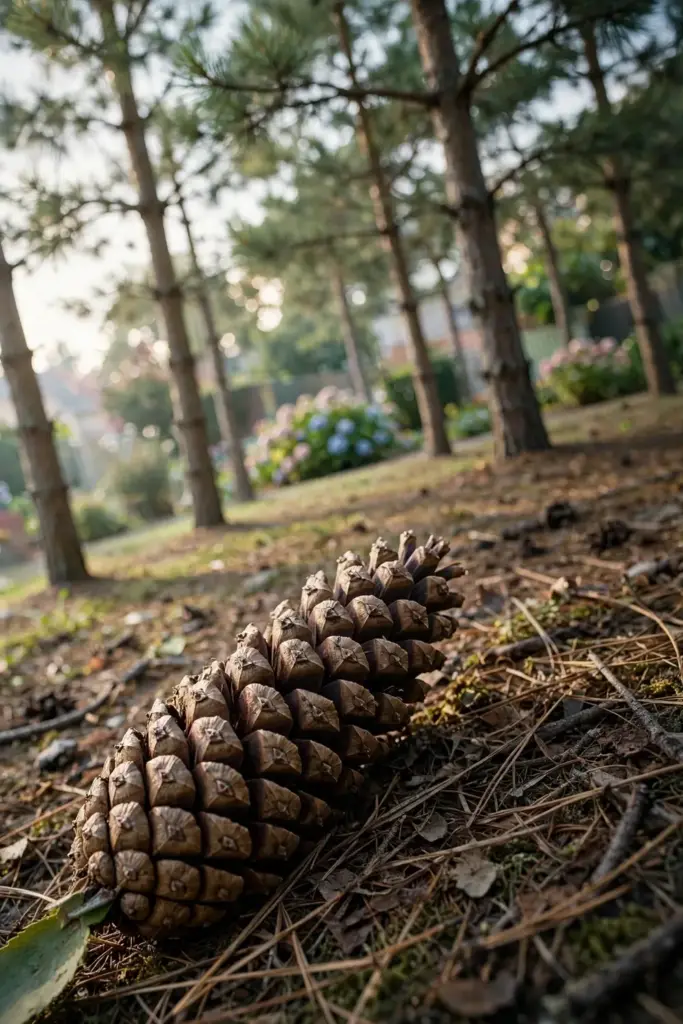
Alabama Extension gives the spacing rule for residential stands: thin to at least 20 feet between trees, and remove compromised pines first. A stand planted tight holds moisture, blocks wind, and lets spores travel tree to tree on every breeze. A stand thinned to 20 feet dries fast, catches wind, and gives each tree room to grow a strong trunk. The spacing is the stand’s disease prevention.
Remove compromised pines first. A pine with a trunk gall, a pine with a broken crown, a pine with heavy gall load: these are the first trees to go. A compromised pine sheds spores onto its neighbors and risks falling on them. A stand thinned of its compromised trees keeps its healthy trees healthier. The removal order matters. Compromised first. Healthy never, unless the spacing demands it.
Thin in the dormant season. A dormant thinning cuts trees that are not shedding spores. A spring thinning cuts trees that are shedding spores. The dormant cut keeps the spores out of the air. The dormant cut also gives the remaining trees a full season to adjust before the next spring’s spore flight.
Do not thin so hard that the remaining trees lose wind protection. A stand thinned from 10 feet to 20 feet gains air and light. A stand thinned from 20 feet to 40 feet loses its windbreak and exposes each tree to storm wind. Thin to the 20-foot rule, and stop. The rule is a floor, not a target to exceed.
Strategy 7: Buy Resistant, Disease-Free Stock for New Plantings
Buy resistant, disease-free stock for new plantings. Resistant stock is the longest-lasting prevention on this page.
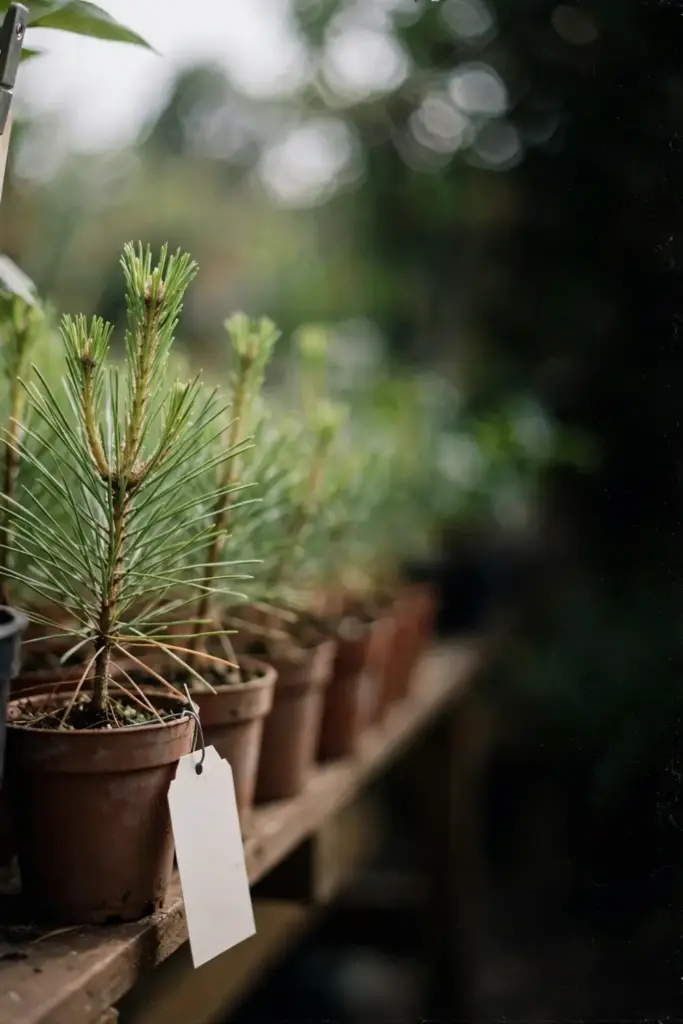
Ask the nursery or forester for rust-resistant stock. No retail shopping list of resistant varieties exists for home gardeners, and this article does not invent one. The nursery or forester knows which seed sources carry resistance in the region. A resistant seedling costs no more than a susceptible one. A resistant seedling saves a decade of gall checks and pruning. Ask the question. The question costs nothing.
Inspect new seedlings before planting. Look for galls on stems and branches. Look for orange dust. Reject a seedling with a gall. A seedling that arrives infected brings the rust into a clean yard. A seedling that arrives clean starts clean. The inspection takes minutes. The minutes save a tree.
Plant longleaf pine in high-hazard areas. Longleaf is naturally more resistant to fusiform rust than loblolly or slash. Shortleaf is highly resistant. A yard in a high-hazard area that plants longleaf or shortleaf instead of loblolly buys resistance with the species choice. A yard that plants loblolly in a high-hazard area buys the full routine. The species choice is the longest-lasting decision in the article.
Do not transplant infected seedlings. A seedling with a gall is a seedling to destroy, not a seedling to plant and hope about. Hope is not a disease control. The infected seedling goes in the bag. The clean seedling goes in the ground.
Strategy 8: Delay Fertilizer and Avoid Excess Nitrogen
Delay fertilizer until age 8 in high-hazard areas. Avoid excess nitrogen at every age, because too much nitrogen can increase infection likelihood.
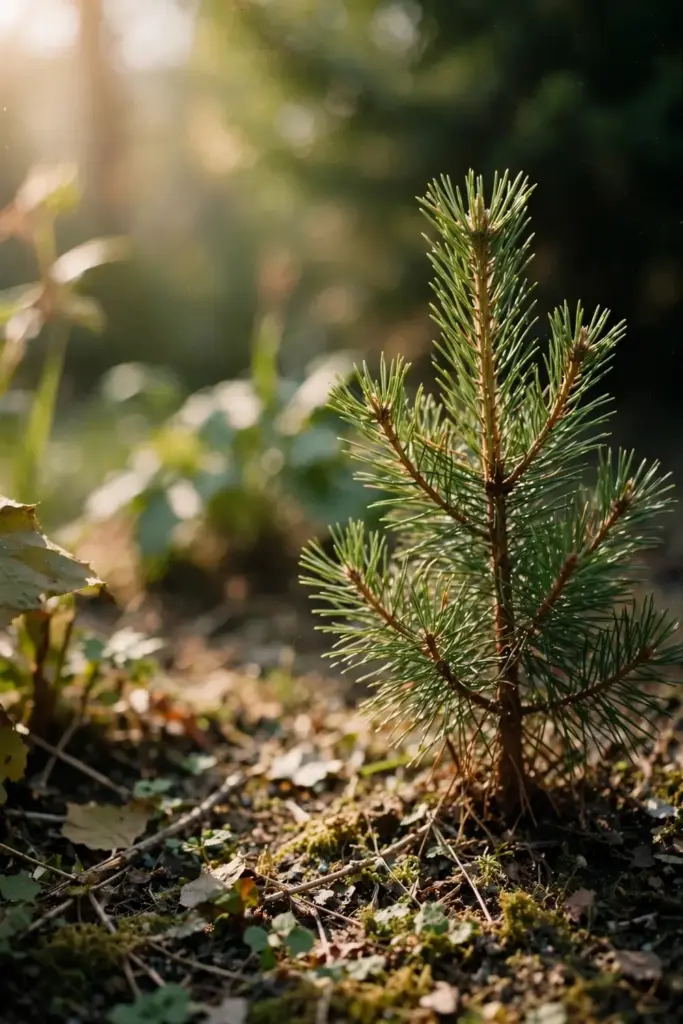
Alabama Extension gives the fertilizer rule: delay fertilization until age 8 in high-hazard areas. Young pines push soft, succulent growth in response to nitrogen. Soft growth is the tissue the rust infects. A young pine fed heavily in a high-hazard area grows a flush of susceptible shoots into the exact weather the rust wants. A young pine left unfed grows slower, tougher shoots that resist infection.
Davey Tree adds the nitrogen warning: too much nitrogen can increase the likelihood of infection. The warning covers every age, not only young trees. A pine fed to a soil test grows steady tissue. A pine fed by guesswork gets either starved or pushed. Both extremes open the door. Test the soil, feed to the result, and stop when the result says stop.
Feed the soil, not the calendar. A pine that grows steadily, holds its color, and pushes normal shoots is fed enough. A pine that grows leggy, pale, and soft is overfed or underlit. Cut the fertilizer before cutting the tree. The tree answers steady feeding with steady tissue.
Do not fertilize a galled tree to help it outgrow the gall. Fertilizer grows soft tissue around the gall. Soft tissue around the gall gives the rust fresh shoots to infect. A galled tree needs pruning, spacing, and monitoring, not fertilizer. The fertilizer helps the rust, not the tree.
Strategy 9: Know the Oak Link Without Removing Every Oak
Know the oak link. Red-oak-group oaks are the alternate host, and managing the oaks near pines is context, not a removal program.
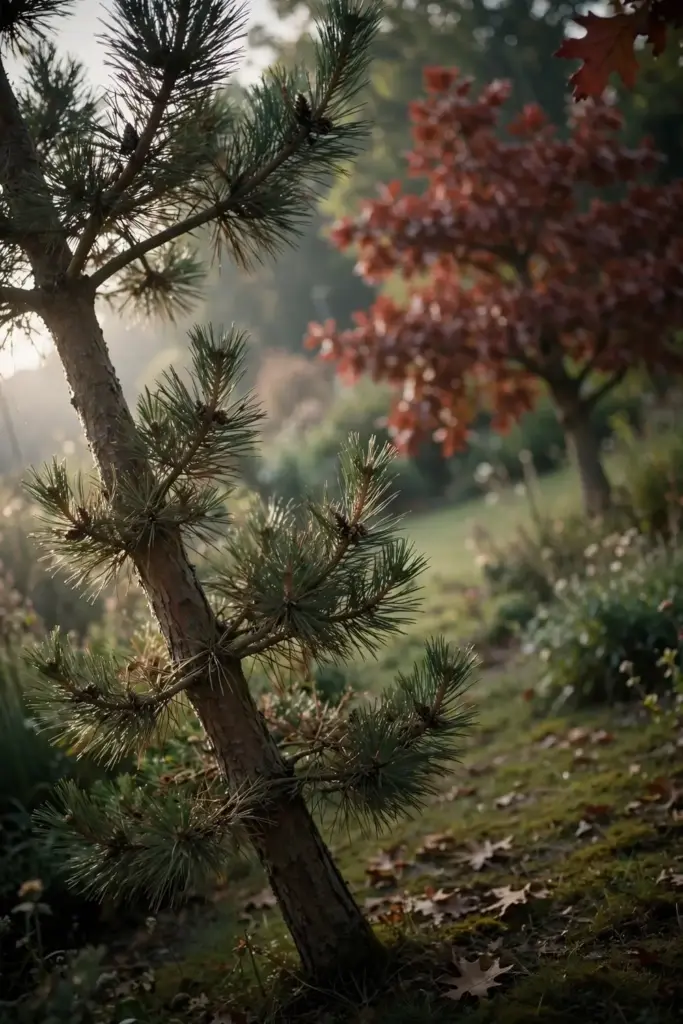
The rust’s life cycle runs pine to oak to pine. Spores from pine galls infect oak leaves. Spores from oak leaves infect pine shoots. A yard pine beside a red oak group oak faces the full cycle. A yard pine far from oaks faces a lighter cycle. The distance between the pine and the nearest red oak group oak sets the infection pressure. The gardener who knows the link reads the yard correctly.
Manage nearby susceptible oaks as context. A red oak group oak that stands close to a young pine is a risk factor. A red oak group oak that stands far from any pine is not. The management is distance and awareness, not removal. Prune the oak’s low branches that overhang the pine. Open the air between the oak and the pine. The gap cuts the spore traffic.
Do not present oak removal as the default. Eliminating all oaks wastes a healthy canopy and buys little protection. Oaks are native trees, wildlife hosts, and shade trees. A yard that removes every oak to protect a pine trades a healthy oak canopy for a pine that still faces spores from oaks beyond the property line. Spores travel miles. The neighbor’s oaks feed the cycle whether the yard’s oaks are gone or not. Keep the oaks. Manage the gap. The gap is the control.
Do not cut an oak to save a pine without an arborist. An oak cut without a plan wastes a tree and buys little protection. The arborist measures the real risk: which oak, how close, which pine, how young. The arborist’s plan covers the oak and the pine together. Follow the plan.
Living With Fusiform Rust Damage You Cannot Undo
Some damage stays. A gall never heals, and the wood inside a gall never regains its strength.
Monitor the galls that stay. A branch gall left on a large tree earns a spring check every year. A trunk gall under arborist monitoring earns the arborist’s schedule. A gall that grows, cracks, or oozes earns a faster call. The monitoring habit keeps the tree safe. A tree that is monitored does not surprise its owner.
General bacterial blight care follows the same order: cut, clean, destroy, then keep the canopy dry. The guide to bacterial blight simple solutions covers that order for bacterial blight problems across the garden. The pathogens differ. The habits do not.
Tip blight on pines has its own lookalikes and its own article. The guide to Diplodia tip blight on pines covers the pine tip blight that most often confuses gardeners, with its own shoot and canker signs. Fusiform rust galls are a different disease. The gall shape plus the host plus the region names it for home purposes.
Do not replant a susceptible pine in the same spot and expect a different result. The rust stays. The oaks stay. The wet spring stays. A new pine in the same spot faces the same season with the same disadvantage. Fix the site first: thin the stand, open the spacing, choose a resistant species, and give the new pine sun and air flow from the day it goes in.
Frequently Asked Questions
No cure exists for fusiform rust once a pine is infected. Fungicides do not treat landscape trees. The response is pruning of branch galls, arborist assessment of trunk galls, removal of compromised trees, resistant stock for new plantings, and breakage-risk management. The article’s value is early identification, pruning decisions, and prevention for new plantings, not rescue of an infected tree. The gall never heals.
A branch gall on a large pine is not a reason to remove the tree. Alabama Extension notes that branch infections on larger trees pose little threat to the main stem. Prune the gall when it threatens a target. Leave it and monitor it when it does not. A trunk gall is the serious case, and it earns an arborist visit. The decision is a safety decision, not a disease decision. The arborist measures the real breakage risk.
Removing one infected tree does little to reduce risk for trees over 10 years old. Spores travel miles, and late infections land on branches and upper crowns where they are less likely to cause a real problem. The removal helps when the tree is a breakage hazard or when the stand needs thinning. The removal does not protect the neighbors from spores that travel from beyond the property line. Spacing and resistant stock protect the neighbors.
Fungicides do not treat fusiform rust on landscape trees. Nursery spray programs exist for seedlings in production, and they stay in the nursery. A home gardener who sprays a yard pine wastes money and chemistry. The home response is pruning, thinning, resistant stock, and arborist assessment. The spray bottle is not part of the home routine. Prevention and breakage-risk management are the whole response.
Never remove every oak near pines as a default. Wholesale oak removal wastes a healthy canopy and buys little protection. Oaks are native trees, wildlife hosts, and shade trees. Spores travel miles, so the neighbor’s oaks feed the cycle whether the yard’s oaks are gone or not. Manage the gap between oaks and pines. Prune low oak branches that overhang pines. Keep the oaks. Manage the gap. The gap is the control.
Never burn galled prunings. Cankers produce flammable resin and pitch. Burning galled prunings risks a pitch fire. Bag the prunings. Trash them. The bag is the safe disposal route. The same rule covers all resinous pine prunings with cankers. Bag and trash, never burn.
Where to Go From Here
Start with the spring check. Walk the yard pines and look for spindle galls with orange dust.
The order is spot in spring, prune branch galls 12 inches out, leave large-tree branch galls alone, call the arborist for trunk galls, destroy the prunings, thin to 20 feet, buy resistant stock, delay fertilizer, and manage the oak gap. One next action beats ten good intentions. Tag the galls. Prune the branch galls. The pine stands safer because the gardener checked in spring.