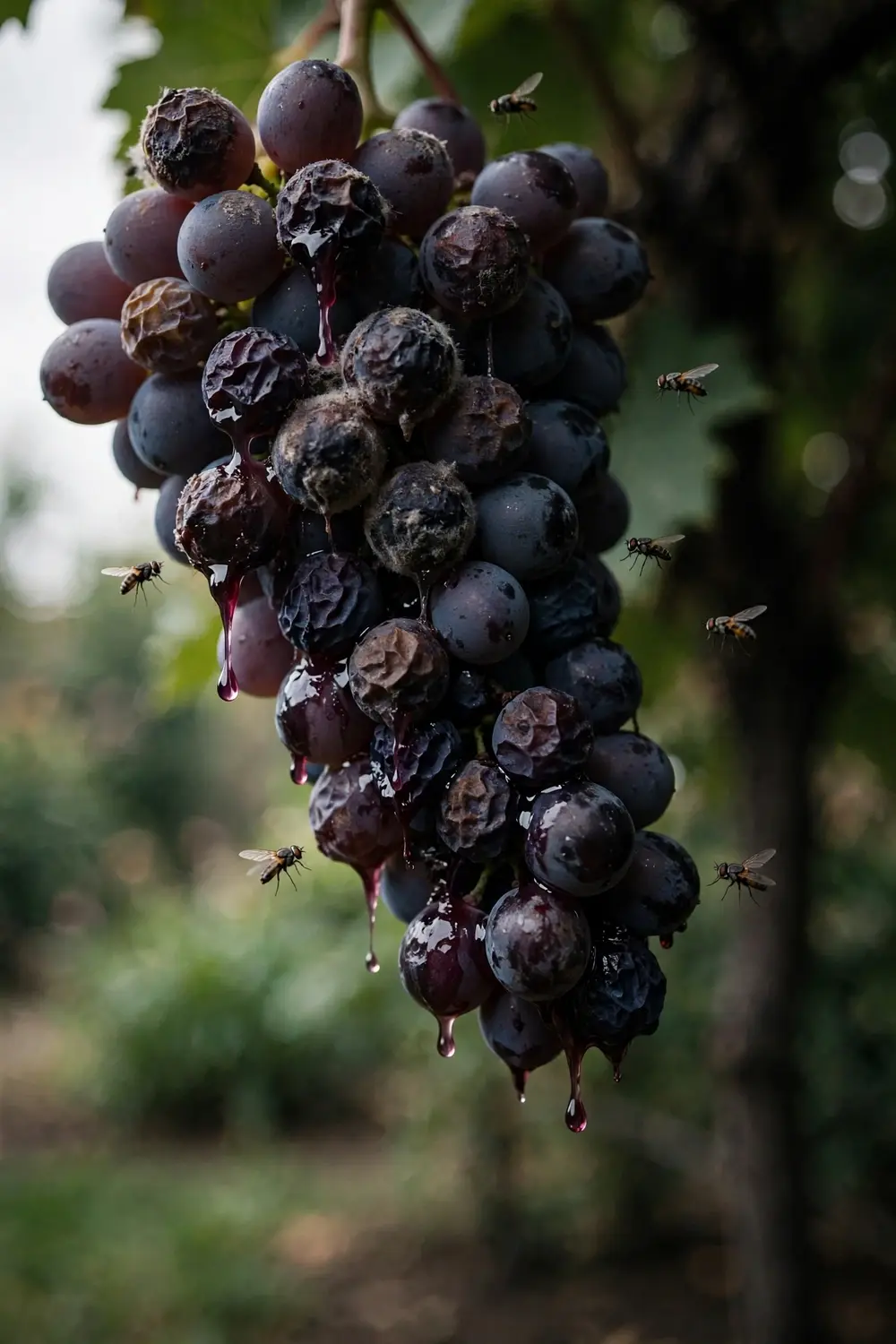

Sour rot has no cure for the berries it touches. The 10 strategies below spot it early, tell it from Botrytis, and protect the rest of the harvest, starting with the sniff test that names it.
The signature is wet, oozing rot with a vinegar smell, fruit flies over the bunch, and no gray fuzz. By the time the vinegar smell arrives, those berries are lost. The value of this page is the berries that are still clean.
The rest of this page runs the order a gardener should follow. Understand the complex first, learn its signs, separate it from Botrytis in the differential table, then work the 10 strategies from the sniff test to winter sanitation. I have learned that the bunch I smell first is the bunch that saves the vine behind it.
What Sour Rot on Backyard Grapes Actually Is
Sour rot on backyard grapes is a disease complex, not a single pathogen. Yeasts, acetic acid bacteria, and Drosophila fruit flies together cause sour rot.
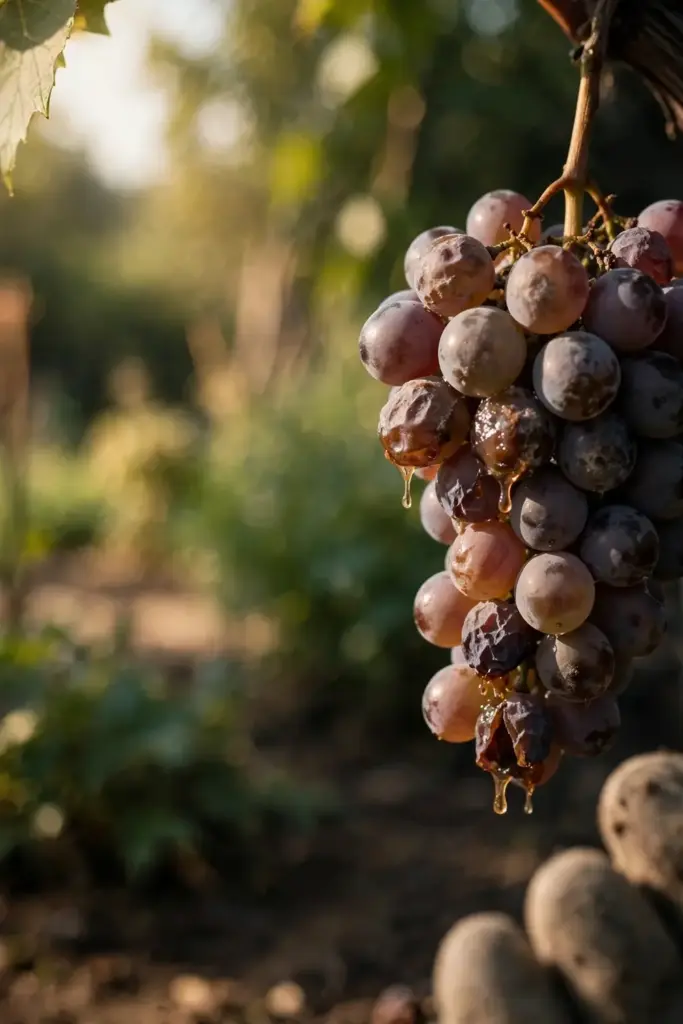
The three-component complex is the spine of the article. None of the three components causes the symptoms alone. Yeasts ferment the juice in a damaged berry. Acetic acid bacteria convert the alcohol to vinegar. Fruit flies carry the microbes from berry to berry and open new wounds as they feed. Remove any one component and the disease stalls. Leave all three together and the bunch rots.
Sour rot needs a damaged berry to start. A berry cracked by rain, split by uneven watering, punctured by a wasp, or nicked by a bird opens the door. The juice inside the berry feeds the yeasts. The yeasts ferment the juice. The bacteria turn the alcohol to acetic acid, which is vinegar. The fruit flies arrive for the fermenting juice, and they carry yeasts and bacteria to the next berry. The cycle runs berry to berry across the bunch.
Penn State Extension gives the home-garden framing: sour rot is a disease complex of grapes, and the Penn State Extension page on grape sour rot carries the core guidance for growers. The page’s lessons transfer directly to backyard vines. The complex hits table grapes and wine grapes grown at home alike. The prevention routine is cultural-only at home. Commercial spray programs stay out of this article.
The disease appears late in the season, as berries ripen and soften. Sugar rises. Skin thins. Rain cracks berries. Wasps and birds puncture berries. Fruit flies gather. Every late-season factor feeds the complex. A dry season with sound berries and few flies brings little sour rot. A wet season with cracked berries and many flies brings much of it. The gardener cannot control the rain. The gardener can control the canopy, the watering, the harvest timing, and the sanitation.
Do not present sour rot as a stage of gray mold. Older sources folded sour rot into gray mold. Modern research separates them. Sour rot is its own complex, with its own microbes and its own vector. Botrytis can lead to secondary sour rot, because a Botrytis-damaged berry opens the door for the sour-rot complex. The two diseases meet in the same bunch. They are not the same disease.
How to Spot Sour Rot on Grapes
Wet, oozing rot with a vinegar smell, fruit flies over the bunch, and no gray fuzz points at sour rot.
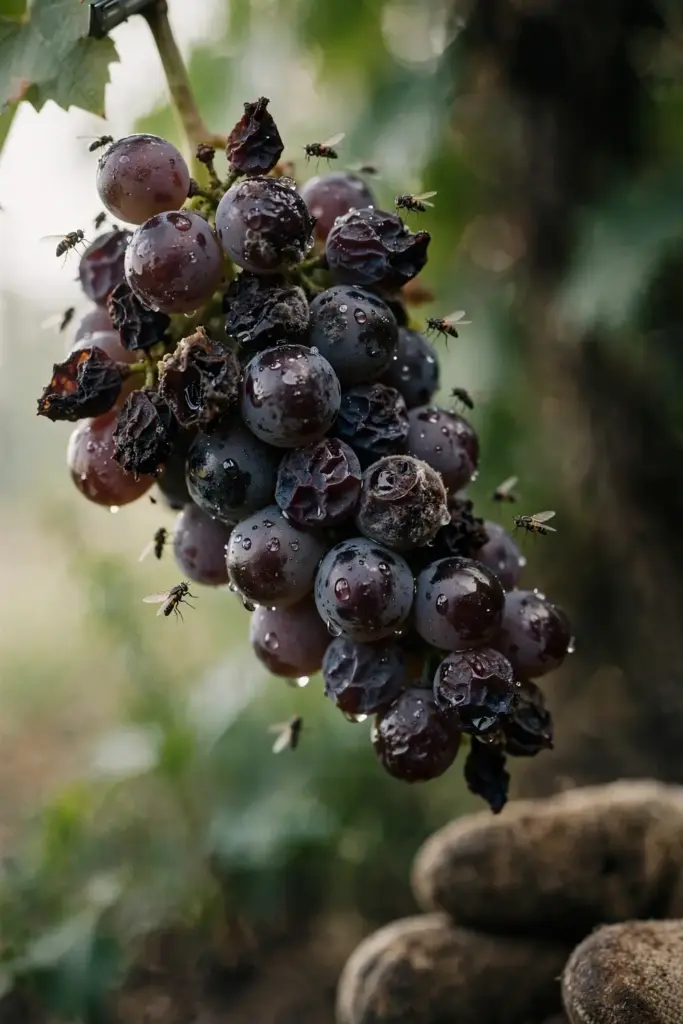
Walk the vine in the late season and sniff the bunches. A bunch with sour rot smells like vinegar at arm’s length. The smell is the fastest field check a gardener owns. Research from the Pacific Northwest and from the University of Massachusetts names the smell test as a home-usable check. A bunch that smells like vinegar has sour rot. A bunch that smells like fresh grapes does not.
Look for the wet rot. Affected berries soften, leak juice, and collapse. The juice runs down the bunch. The bunch looks wet and discolored. The berries lose their shape. A bunch with sour rot looks wet and smells sharp. A bunch with Botrytis looks dry and fuzzy. The wet-versus-dry contrast is the second field check.
Watch for fruit flies. Drosophila fruit flies gather over a sour-rot bunch. They feed on the fermenting juice and carry microbes to the next berry. A bunch with a cloud of small flies and a vinegar smell is a sour-rot bunch. A bunch with no flies and gray fuzz is a Botrytis bunch. The flies are the vector. The flies are also the sign.
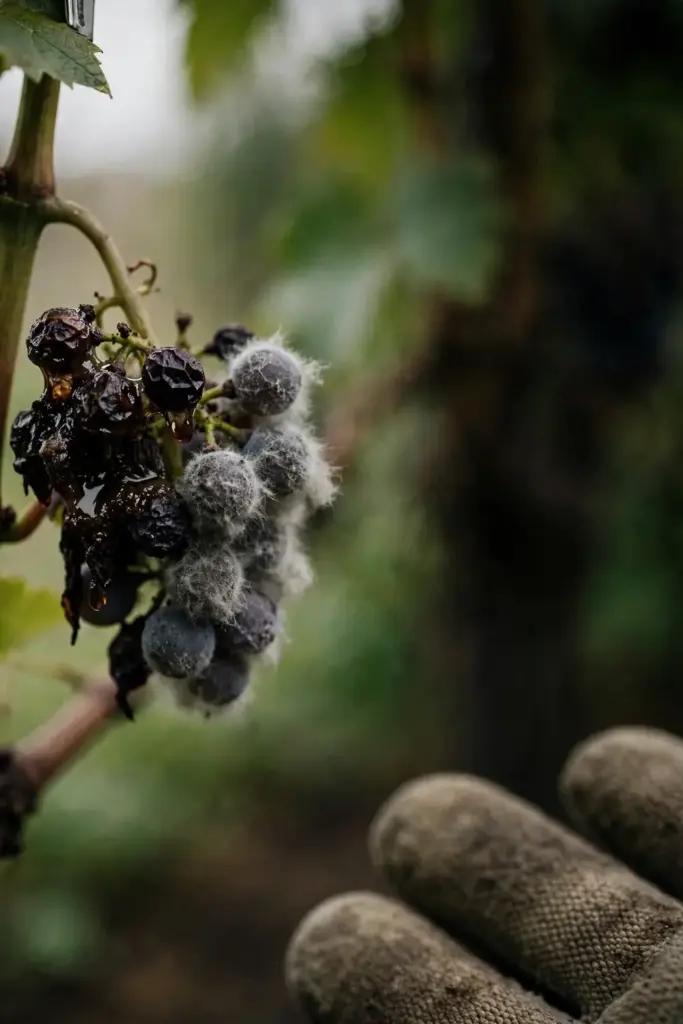
Check for the absence of gray fuzz. Sour rot shows no gray mold. The rot is wet, and the surface stays wet. Botrytis shows a gray, fuzzy mold that covers the berry. The absence of gray fuzz on a wet, vinegary bunch points at sour rot. The presence of gray fuzz points at Botrytis, or at Botrytis that has opened the door for secondary sour rot.
Field identification is presumptive, but the smell test is strong. A wet bunch with a vinegar smell and fruit flies is sour rot until proven otherwise. A dry bunch with gray fuzz is Botrytis. The differential table in the next section lays out the contrast in full. Where the identity matters for a spray decision, a lab sample settles it. For a home gardener, the smell test plus the wet-versus-dry contrast is enough to start the removal routine.
Sour Rot vs Botrytis Bunch Rot: The Field Differential
Sour rot shows wet rot with a vinegar smell and fruit flies, and no gray fuzz. Botrytis bunch rot shows dry, fuzzy gray mold, and no vinegar smell. The table below lays out the contrast.
| Feature | Sour Rot | Botrytis Bunch Rot |
|---|---|---|
| Cause | Disease complex: yeasts plus acetic acid bacteria plus Drosophila fruit flies | Single fungus: Botrytis cinerea |
| Rot texture | Wet, oozing, leaking juice | Dry, soft, fuzzy |
| Smell | Vinegar, sharp, sour | Musty, earthy, or none |
| Surface growth | No gray fuzz | Gray, fuzzy mold covering berries |
| Insects | Fruit flies gather over the bunch | Few or no fruit flies |
| Berry state at start | Needs a damaged berry to start: crack, puncture, or split | Can infect sound berries in wet weather |
| Spread speed in bunch | Fast, berry to berry, carried by flies | Slower, spreads by contact and spores |
| Double infection | Can follow Botrytis damage in the same bunch | Can precede secondary sour rot in the same bunch |
| Cure for affected berries | None: affected berries are lost | None: affected berries are lost |
| Home response | Remove bunch, net, trap flies, dry canopy | Remove bunch, open canopy, dry clusters |
Read the table with the smell test in hand. A wet bunch with a vinegar smell and flies is sour rot. A dry bunch with gray fuzz is Botrytis. A bunch with both gray fuzz and a vinegar smell carries Botrytis damage that opened the door for secondary sour rot. The response is the same in all three cases: remove the bunch, keep the rest of the vine dry, and protect the clean clusters.
Do not treat the table as a laboratory diagnosis. The table separates the two diseases at the level a home gardener can use. A lab sample settles the identity where it matters. The table’s job is to get the gardener to act correctly on the spot: remove the bunch, do not drop it on the ground, and protect the rest of the harvest.
Do not confuse sour rot with citrus sour rot. Citrus sour rot is a different disease, caused by Geotrichum citri-aurantii, on citrus fruit. It shares the name and nothing else. This article covers grape sour rot only. The citrus disease gets one line and no more.
Strategy 1: Sniff-Test Early and Act at the First Vinegar Smell
Sniff-test the bunches early and often, and act at the first vinegar smell. The sniff test is the earliest home check.
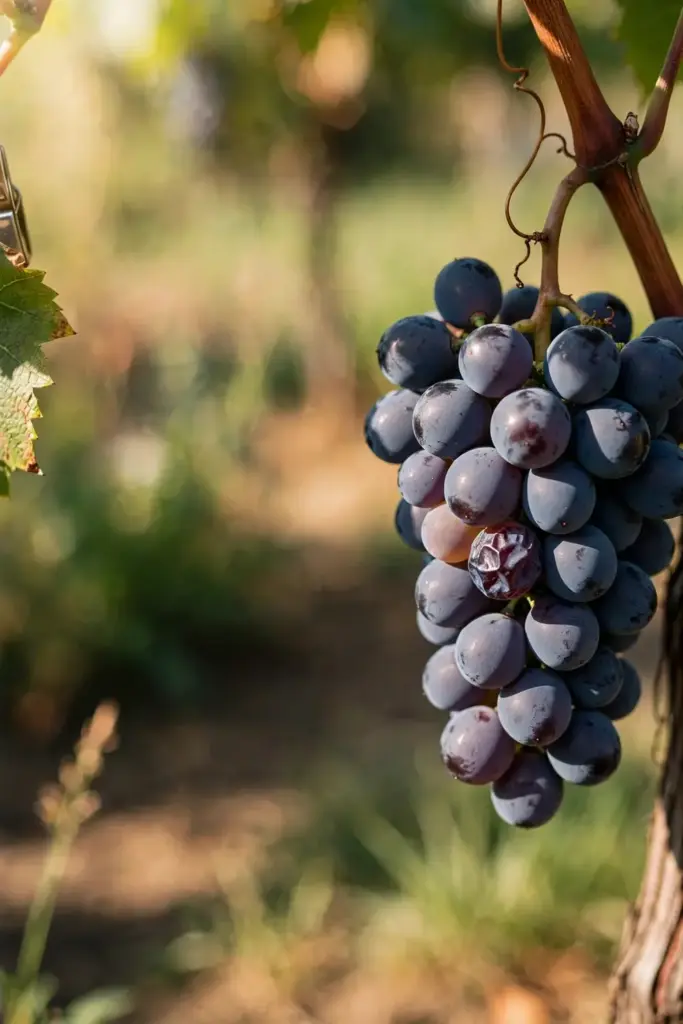
Walk the vine every two or three days once berries start to soften. Lean close to each bunch and sniff. A bunch with the first faint vinegar note is a bunch to remove today. A bunch left until the smell is strong has already spread the complex to its neighbors. The early sniff catches the outbreak at one bunch. The late sniff catches it at ten.
Check the bunches after rain. Rain cracks berries, and cracked berries start the complex. A dry week needs a sniff every few days. A rainy week needs a sniff every day. The rain schedule sets the sniff schedule. A gardener who sniffs after every rain catches the cracked-berry outbreak before the flies find it.
Check the bunches after wasp and bird activity. A wasp puncture opens the door. A bird peck opens the door. A bunch with fresh punctures earns a sniff the same day. A bunch with punctures and a vinegar note earns removal the same day. The puncture is the entry. The smell is the confirmation.
Teach the household the sniff test. A child who sniffs the bunches and reports the vinegar smell is a scout. A partner who sniffs while watering is a scout. The sniff test costs nothing, takes seconds, and catches the outbreak earlier than any visual check. The vine that gets sniffed daily loses fewer bunches than the vine that gets checked weekly.
Strategy 2: Remove and Destroy Affected Berries and Bunches at Once
Remove affected berries and bunches at once. Bag them, trash them, and never drop them on the ground.
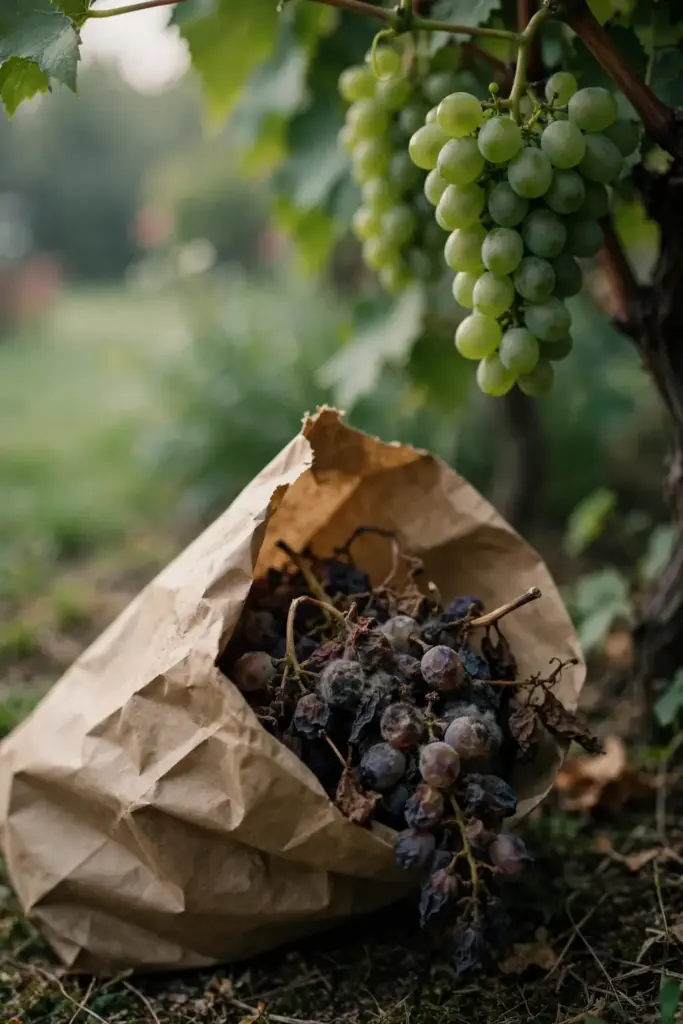
Hall’s guidance gives the ground rule: dropping bad fruit on the ground encourages flies to attack healthy fruit. A dropped berry ferments on the soil, draws flies, and breeds the next generation of vectors beside the vine. A bagged berry leaves the garden. The bag is the whole strategy. Carry it with you around the vine.
Remove the whole bunch when the rot covers several berries. A bunch with three rotting berries and ten clean ones still carries the complex. The flies on the rotting berries carry microbes to the clean berries in the same bunch. Pull the whole bunch. The ten clean berries are not worth the risk to the next bunch. A bunch with one rotting berry earns removal of that berry plus the two beside it, bagged at once.
Do not squeeze or split berries during removal. Squeezing a rotting berry sprays juice and microbes across the bunch. Splitting a berry opens a fresh wound. Handle the bunch by the stem, cut the stem, and drop the bunch straight into the bag. Cut, bag, and move on. The clean cut keeps the juice inside the bag.
Wash hands and tools after removal. Juice on hands carries microbes to the next bunch. Juice on pruners carries microbes to the next cut. Wash hands with soap and water. Wipe pruners with alcohol. The habits are cheap. The habits close the pathway between bunches.
Strategy 3: Net the Fruit and Screen Out Fruit Flies
Net the fruit. Bird netting and screen houses keep fruit flies, wasps, and birds off the bunches.
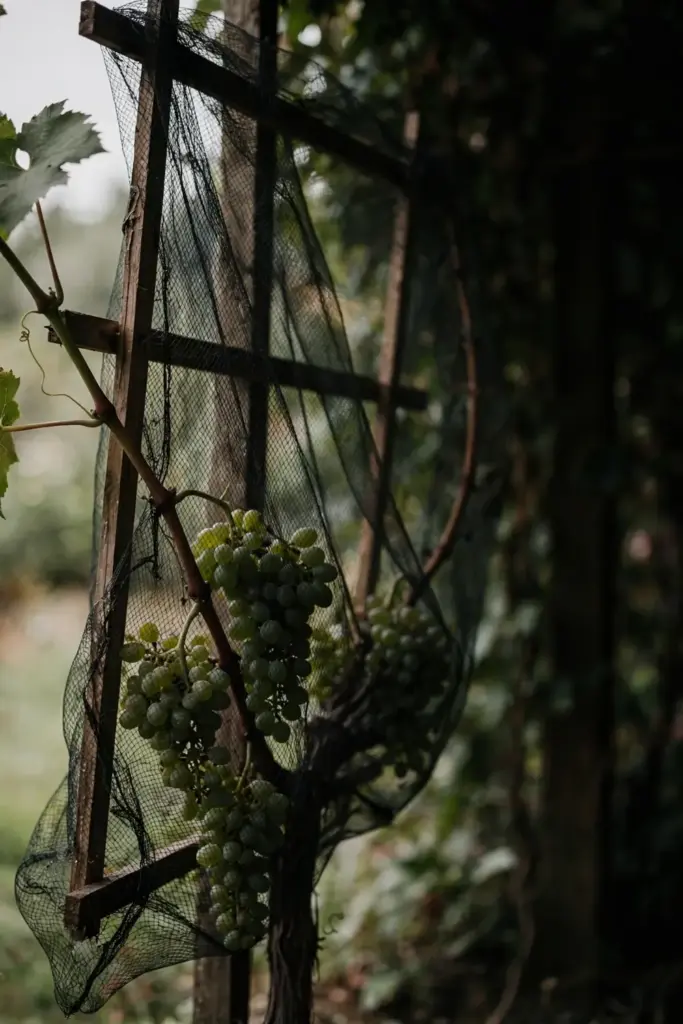
Bird netting is the home-garden default. Drape netting over the vine, secure the edges, and keep the netting off the bunches. Netting that rests on the bunches traps moisture and presses against berries. Netting held off the bunches by a frame keeps insects out and air moving. The netting blocks the birds that peck berries, the wasps that puncture berries, and the flies that carry the complex.
A screen house is the stronger option for a vine that suffers every year. A screen house encloses the whole vine in fine mesh. The mesh excludes fruit flies, wasps, and birds together. The screen house costs more than netting, and it needs a frame. A vine inside a screen house faces far fewer punctured berries and far fewer flies. The screen house pays for itself in saved harvests on a vine that loses a third of its crop to sour rot.
Check the netting weekly. A hole in the netting is a door for flies. A netting edge that slipped open is a door for birds. A netting panel that sags onto the bunches traps moisture. Walk the netting, patch the holes, resecure the edges, and lift the sagging panels. Netting that is maintained works. Netting that is neglected is decoration.
Do not present insecticide sprays against fruit flies as the home default. The home default is cultural control plus netting plus trapping. Any spray is label-verified and a last resort, never the default. A home gardener who nets and traps controls the flies without spraying the fruit the family will eat.
Strategy 4: Open the Canopy With Fruit-Zone Leaf Removal and Thinning
Open the canopy. Remove leaves around the fruit zone, thin shoots, and prune for airflow so clusters dry fast.
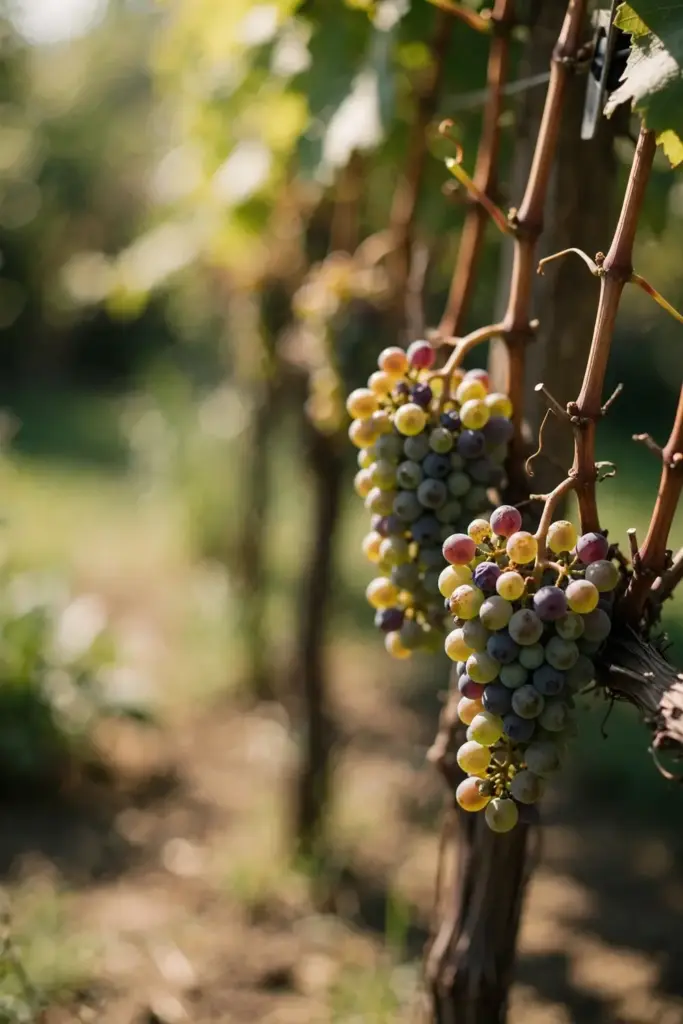
Fruit-zone leaf removal strips the leaves that shade and crowd the clusters. A cluster buried in leaves stays wet after rain and after dew. A cluster with air around it dries fast. Remove the leaves that touch the cluster, and the leaves that shade it from the morning sun. Keep enough leaves above the cluster to feed the vine. The goal is air around the fruit, not a stripped vine.
Thin shoots to open air channels through the vine. A vine with too many shoots holds moisture in a dense canopy. A vine with thinned shoots dries fast. Cut whole weak shoots at their base, not by shearing the outside. Thinning cuts open real air channels. Shearing stimulates a flush of soft growth that stays wet and catches disease first.
Prune the vine in the dormant season for structure. A well-pruned vine starts the season with an open canopy. A poorly pruned vine starts the season crowded and stays crowded. The guide to spring pruning techniques covers clean cut placement for garden plants in full. The dormant pruning sets the canopy. The summer leaf removal maintains it.
Do not strip every leaf from the fruit zone. Sunscald burns exposed berries. A cluster with no leaf cover in hot sun cooks. Leave enough leaves to shade the cluster from the afternoon sun. The balance is air around the cluster plus shade above the cluster. A cluster that dries fast and stays shaded is a cluster that resists sour rot.
Strategy 5: Water at the Base and Never Wet the Clusters
Water at the base, and never wet the clusters. Wet clusters feed the complex.
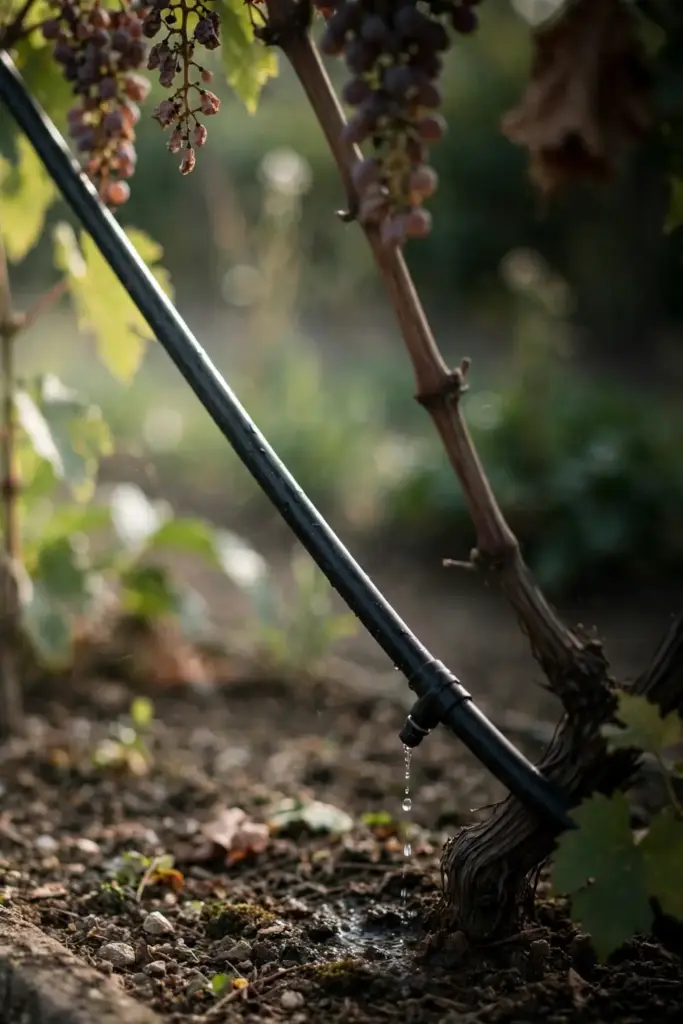
Use drip or soaker watering at the root zone. Lay drip line or a soaker hose along the vine, not over the fruit. Water slowly so the soil absorbs it without runoff. Water in the morning so any splash that reaches low foliage dries during the day. A morning base watering that splashes a little beats an evening overhead watering that soaks the clusters overnight.
Fix sprinklers that hit grape clusters. A lawn sprinkler that arcs across a vine every evening is an overhead irrigation system by accident. Redirect the head, shorten the arc, or move the sprinkler. A vine that gets sprayed every night will show sour rot no matter how well the rest of the routine runs.
Keep the clusters dry after rain too. Rain cannot be controlled, but its aftermath can. An open canopy dries fast after rain. A mulched, well-drained root zone does not pond water under the vine. A vine with space around it catches wind that dries the clusters. The canopy in Strategy 4 and the watering in Strategy 5 work together. One dries the clusters from inside. The other stops wetting them from above.
Strategy 6: Avoid Overwatering and Excess Nitrogen
Avoid overwatering and excess nitrogen. Both grow soft, thin-skinned berries that crack and invite the complex.
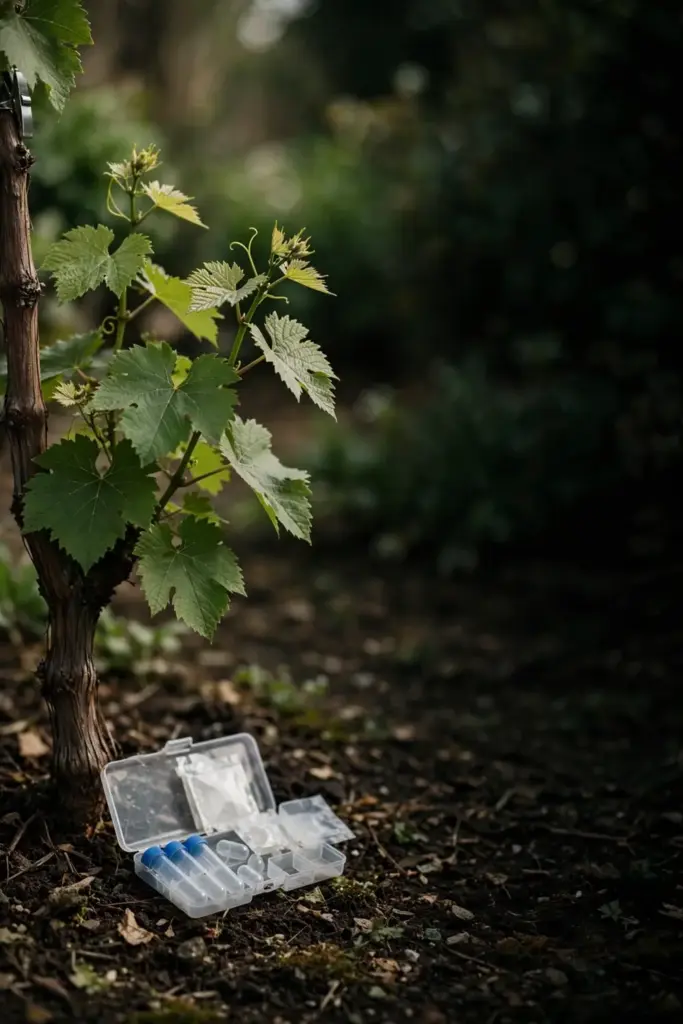
Water deeply and infrequently. A vine watered deeply once a week grows steady tissue. A vine watered lightly every day grows shallow roots and soft berries. Check soil moisture with a finger or a probe before watering, not on a calendar schedule. A vine watered to its actual need grows the steady berries that resist cracking.
Avoid uneven watering. A vine that swings from dry to soaked cracks its berries. A cracked berry opens the door for the complex. Keep the soil moisture steady through the ripening period. Mulch helps: a 2 to 3 inch mulch layer under the vine holds moisture steady and keeps the soil from swinging between dry and soaked. Keep the mulch pulled back from the trunk by a few inches.
Feed to a soil test, not to a guess. Excess nitrogen grows soft, thin-skinned berries that crack at the first rain. A soil test tells the gardener what the vine actually needs. A vine fed to its test result grows steady berries with skins that resist cracking. A vine fed by guesswork gets either starved or pushed. Both extremes open the door. Test the soil, feed to the result, and stop when the result says stop.
Strategy 7: Thin Fruit and Favor Loose-Cluster, Thick-Skin Varieties
Thin fruit to open the clusters. Favor loose-cluster, thick-skin varieties when planting a new vine.
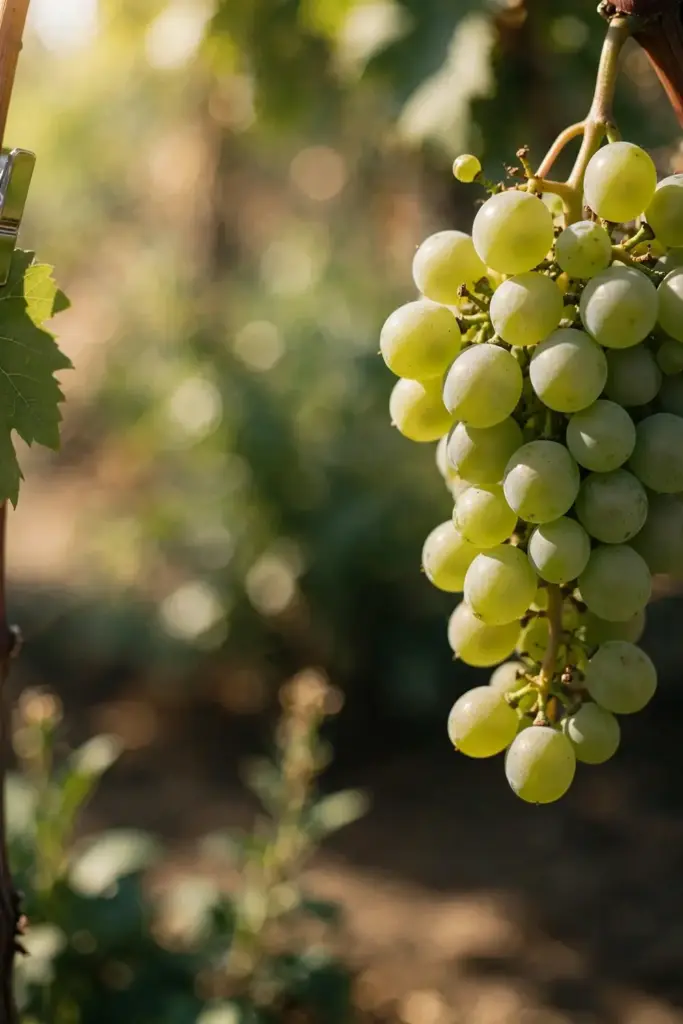
Thin tight clusters so air moves between berries. A tight cluster traps moisture between berries that touch. A loose cluster dries fast. Remove a few berries from the center of a tight cluster early in the season, before the berries size up. The remaining berries grow larger, with air between them. The cluster dries fast. The complex loses its wet pocket.
Favor loose-cluster varieties at planting time. A variety with naturally loose clusters dries faster than a variety with tight clusters. Favor thick-skin varieties at planting time. A thick skin resists cracking, wasp punctures, and bird pecks. A thin skin cracks at the first rain. The variety choice is the longest-lasting prevention on this page. A vine planted with loose clusters and thick skin resists sour rot for decades. A vine planted with tight clusters and thin skin needs the full routine every season.
Do not thin so hard that the vine is stripped. A cluster thinned by a third dries faster and keeps its yield. A cluster thinned by two thirds loses yield for no added benefit. Thin for air, not for emptiness. The remaining berries need neighbors to shade them from sunscald.
Plant for the site. A vine in a wet, airless corner needs the most resistant variety the gardener can find. A vine in a sunny, breezy site tolerates a thinner-skinned variety. The site and the variety work together. A resistant variety in a wet corner still needs the routine. A thin-skinned variety in a breezy site still needs the routine. The routine never leaves the article.
Strategy 8: Trap Vinegar Flies and Wasps
Trap vinegar flies and wasps. Trapping cuts the vector population and slows the spread across bunches.
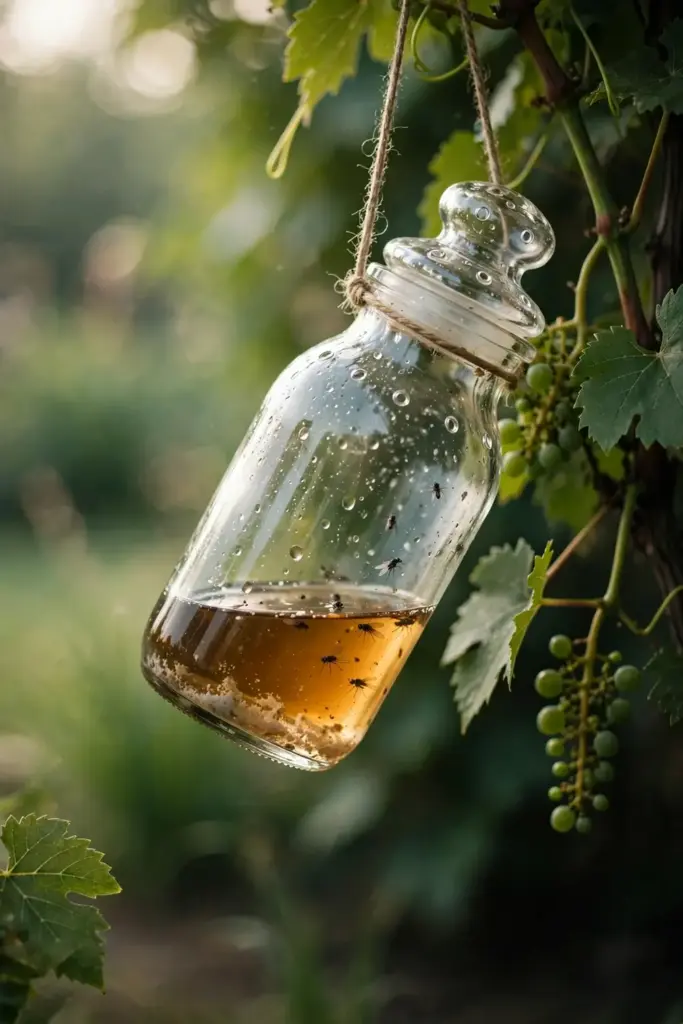
Set vinegar fly traps beside the vine. A jar with apple cider vinegar and a drop of dish soap catches fruit flies. Poke small holes in the lid, and the flies enter and drown. Hang or set the trap near the vine, not among the clusters. A trap among the clusters draws flies to the fruit. A trap beside the vine draws flies away from the fruit.
Set wasp traps beside the vine. A bottle trap with sweet bait catches wasps before they puncture berries. Hang the trap at the vine’s edge, away from the clusters. A wasp trap beside the fruit draws wasps to the fruit. A wasp trap at the vine’s edge draws wasps away from the fruit. Empty and refill the traps weekly. A full trap stops catching.
Trap early, before the harvest season. A trap set in early summer catches the first generation of flies and wasps. A trap set after the rot appears catches flies that already carried the complex. The early trap cuts the population before the berries soften. The late trap cuts the population after the damage is done. Set the traps when the berries are still hard.
Do not present trapping as a cure. Trapping reduces the vector population. Trapping does not remove the complex from a bunch that already has it. A trapped fly is a fly that never carried the complex to the next bunch. A bunch with sour rot still needs removal. Trapping protects the clean bunches. Removal handles the infected ones.
Strategy 9: Harvest Promptly and Never Leave Overripe Fruit
Harvest promptly. Never leave overripe or damaged fruit on the vine, because overripe fruit is the complex’s best food.
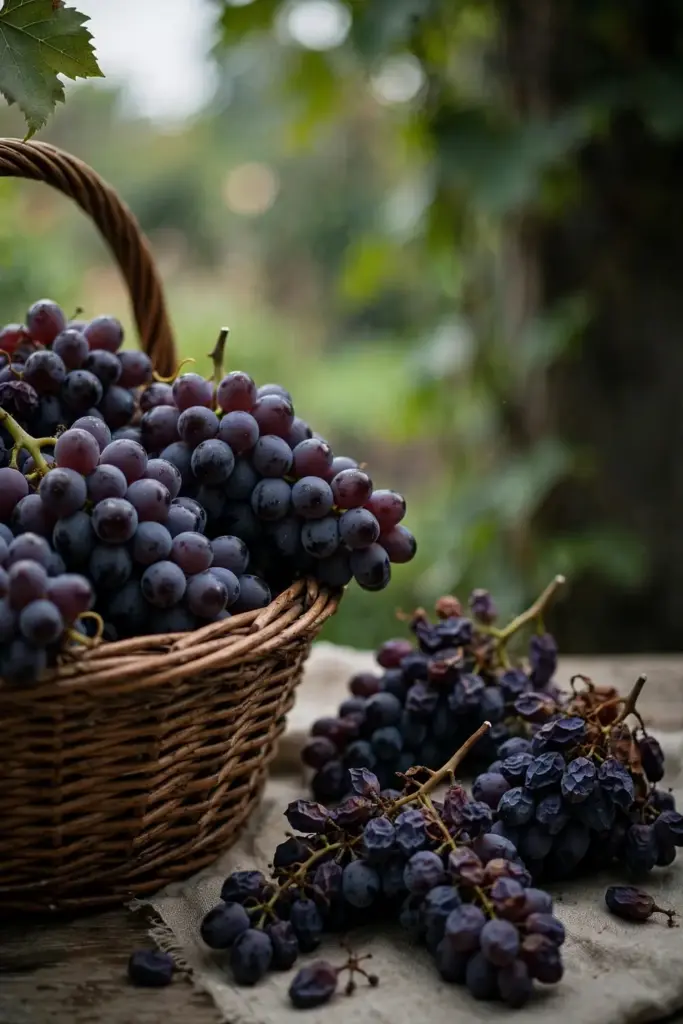
Pick clusters as soon as they ripen. A cluster left on the vine past ripeness softens, cracks, and ferments. A cluster picked at ripeness stays sound. Check the vine every day or two during harvest season. Pick the ripe clusters. Leave the unripe clusters to ripen. The daily pick keeps the vine free of overripe fruit.
Do not leave damaged fruit on the vine. A cluster with a cracked berry, a pecked berry, or a rotting berry is a source. Pull the cluster. Bag it. Trash it. A cluster left on the vine because it still has a few clean berries is a cluster that spreads the complex to its neighbors. The few clean berries are not worth the next cluster.
Do not leave fallen fruit under the vine. Fallen berries ferment on the soil, draw flies, and breed the next generation of vectors beside the vine. Pick up fallen fruit at every visit. Bag it. Trash it. A clean floor under the vine starves the flies. A dirty floor feeds them.
Harvest in dry weather when possible. A cluster picked wet carries moisture into the harvest basket. A cluster picked dry keeps. Pick in the morning after the dew dries. The dry pick keeps the harvest clean and the clusters sound in storage.
Strategy 10: Sanitize in Fall and Winter
Sanitize in fall and winter. Remove mummies, debris, and leftover clusters, because the complex overwinters in them.
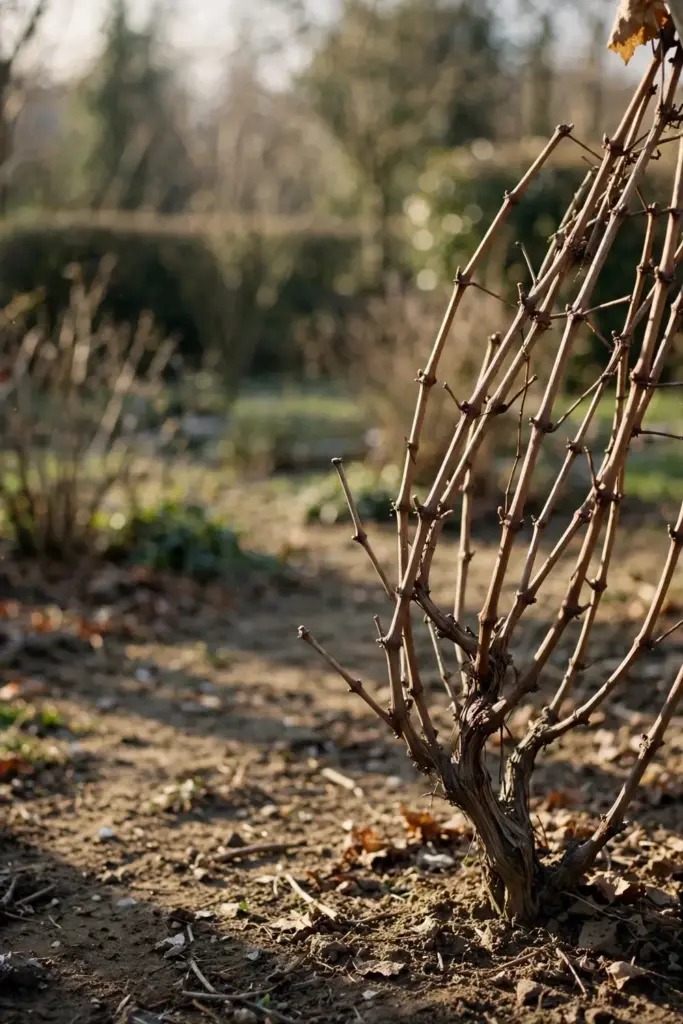
Pick up every mummified bunch after harvest. A mummy is a dried, shriveled bunch left on the vine after harvest. Mummies carry yeasts and bacteria through winter. A vine that holds its mummies starts spring with the complex in place. A vine stripped of mummies starts spring clean. Strip the vine bare after leaf fall. Bag the mummies. Trash them.
Rake up fallen leaves and fallen fruit under the vine. Debris under the vine holds yeasts, bacteria, and fly pupae. A clean floor under the vine breaks the carryover. Rake the floor bare. Bag the rakings. Trash them. Do not leave the rakings piled beside the vine for later. Later rarely comes, and the pile sheds spores and flies all winter.
Prune in the dormant season and remove the prunings. Pruning opens the canopy for next season’s airflow. Prunings left under the vine hold the complex. Bag the prunings. Trash them. A vine pruned and cleaned in winter starts spring with an open canopy and a clean floor. A vine left unpruned and dirty starts spring crowded and infected.
Clean the tools after the winter pruning. Disinfect blades with alcohol or bleach solution. Wash gloves. Rinse the tarp. The winter cleanup is the last act of the season and the first act of the next. A clean winter makes a clean spring.
Living With Sour Rot Damage You Cannot Undo
Some damage stays. A bunch with sour rot never recovers, and the berries it touched are lost.
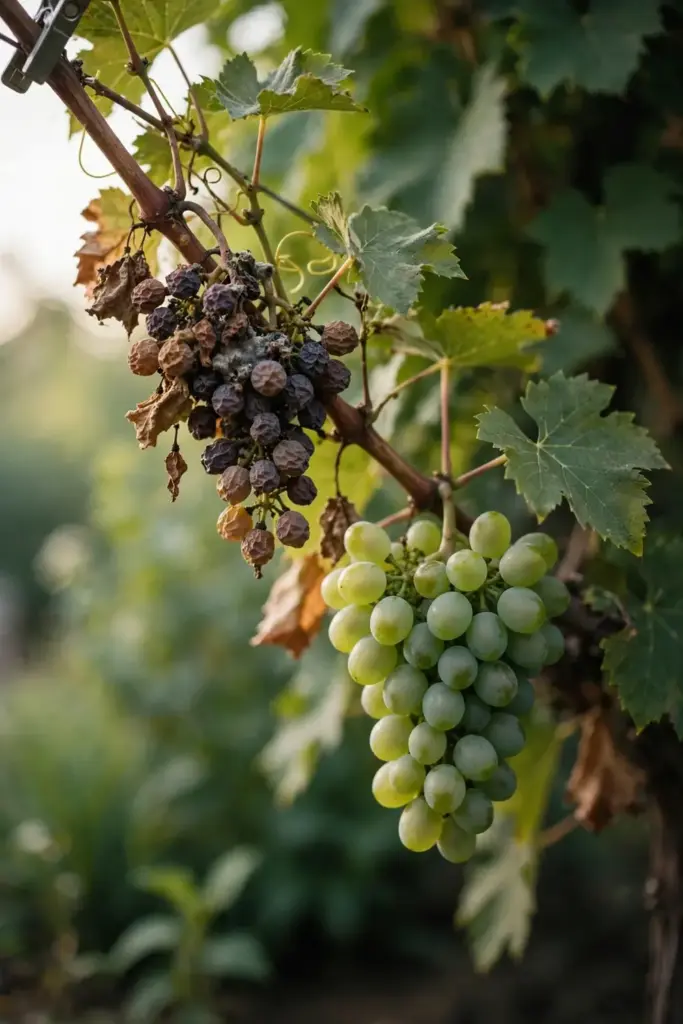
Remove the damaged bunches and let the vine replace them next season. A vine pushes new shoots in spring and new clusters in summer. The new clusters need the same routine: sniff, remove, net, dry, harvest promptly. A vine that keeps its new clusters clean earns its place. A vine that rots every cluster needs a harder look at site, drainage, and variety.
General bacterial blight care follows the same order: cut, clean, destroy, then keep the canopy dry. The guide to bacterial blight simple solutions covers that order for bacterial blight problems across the garden. The pathogens differ. The habits do not.
The guide to growing muscadine grapes from seeds covers starting muscadine grapes at home for readers who want to grow a new vine the slow way. Muscadines carry their own disease pressures, and the same sanitation habits apply. A clean start with a resistant variety and an open canopy is the longest-lasting prevention a gardener can buy.
Do not replant a susceptible grape in the same wet, airless spot and expect a different result. The complex stays. The wet soil stays. The shade stays. A new vine in the same spot faces the same season with the same disadvantage. Fix the site first: improve drainage, open the spacing, move the sprinkler, and give the new vine sun and air flow from the day it goes in.
Frequently Asked Questions
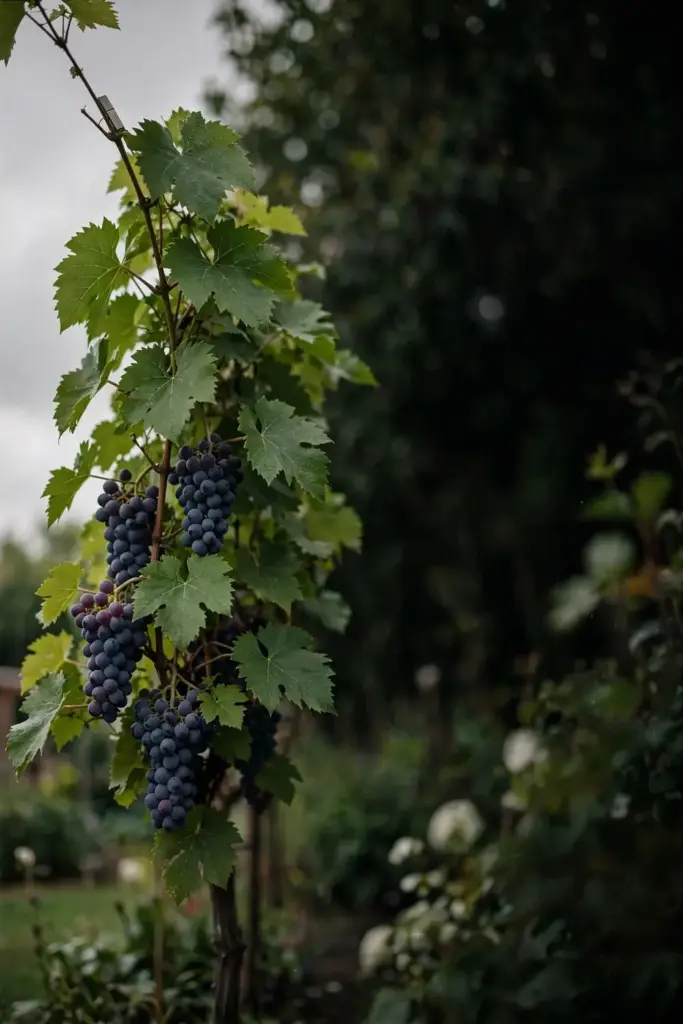
No cure exists for berries with sour rot. By the time the vinegar smell arrives, those berries are lost. Remove and destroy the affected bunch, protect the rest of the harvest, and prevent the next infection. The value of this article is early identification and prevention, not rescue. A bunch removed at the first vinegar note saves the bunches beside it. A bunch left until the smell is strong spreads the complex across the vine.
Sour rot smells like vinegar, sharp and sour. Botrytis smells musty and earthy, or has no smell. The smell test is the fastest home check. A wet bunch with a vinegar smell and fruit flies is sour rot. A dry bunch with gray fuzz and no vinegar smell is Botrytis. A bunch with both gray fuzz and a vinegar smell carries Botrytis damage that opened the door for secondary sour rot. Remove the bunch in all three cases.
Never drop infected berries on the ground. Dropping bad fruit on the ground encourages flies to attack healthy fruit. A dropped berry ferments on the soil, draws flies, and breeds the next generation of vectors beside the vine. Bag the infected bunch, tie the bag, and put it in the trash. The bag is the whole strategy. A bagged bunch leaves the garden. A dropped bunch feeds the next outbreak.
Netting stops the punctures and the flies that start sour rot. Bird netting blocks birds that peck berries, wasps that puncture berries, and flies that carry the complex. A screen house encloses the whole vine and excludes all three. Netting held off the bunches by a frame keeps insects out and air moving. Netting that rests on the bunches traps moisture. Maintain the netting, patch the holes, and keep it off the fruit.
No spray cures sour rot on a home vine. The home response is cultural: remove infected bunches, net the fruit, trap flies, open the canopy, water at the base, and harvest promptly. Commercial vineyard spray programs stay out of home advice. Any spray is label-verified and a last resort, never the default. A home gardener who nets and traps controls the flies without spraying the fruit the family will eat.
Citrus sour rot is a different disease. Citrus sour rot is caused by Geotrichum citri-aurantii, on citrus fruit. Grape sour rot is a disease complex of yeasts, acetic acid bacteria, and Drosophila fruit flies, on grapes. The two diseases share the name and nothing else. This article covers grape sour rot only. The citrus disease gets one line and no more.
Where to Go From Here
Start with the sniff test. Walk the vine and sniff the bunches today.
The order is sniff, remove, net, open the canopy, water at the base, avoid excess nitrogen, thin fruit, trap flies, harvest promptly, and sanitize in winter. One next action beats ten good intentions. Sniff the bunches. Bag the rotting ones. The harvest stays clean because the gardener smelled the first bunch early.