
Myrothecium leaf spot has no cure once a plant is infected. The 8 strategies below keep the fungus from establishing on bedding plants, perennials, and melons, starting with the watering habit that keeps foliage dry.
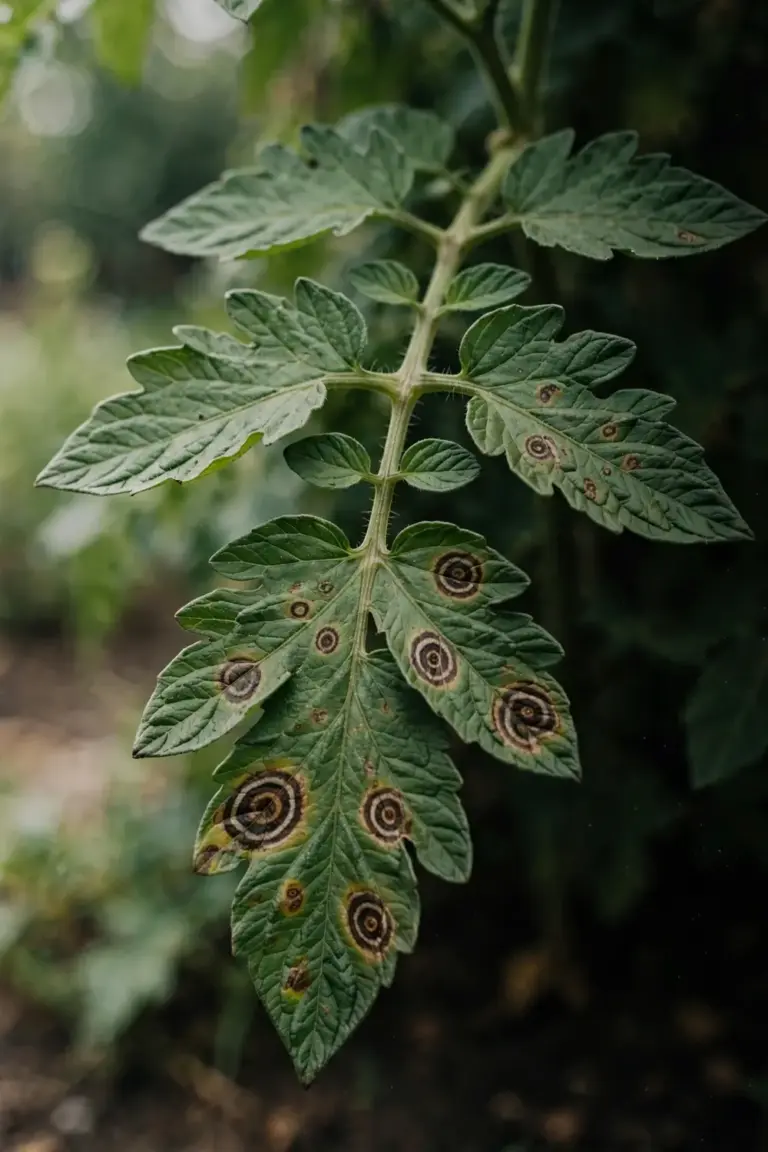
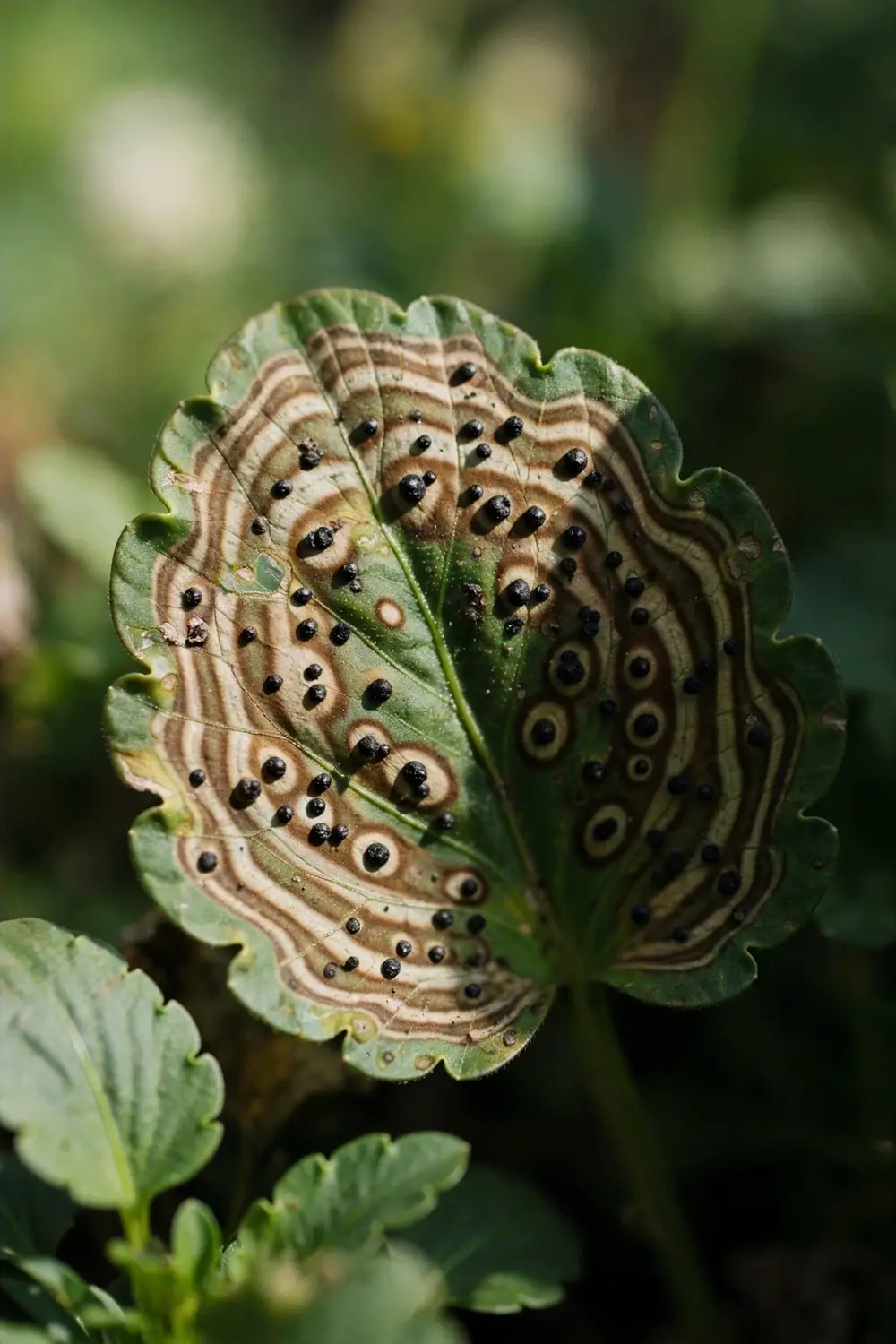
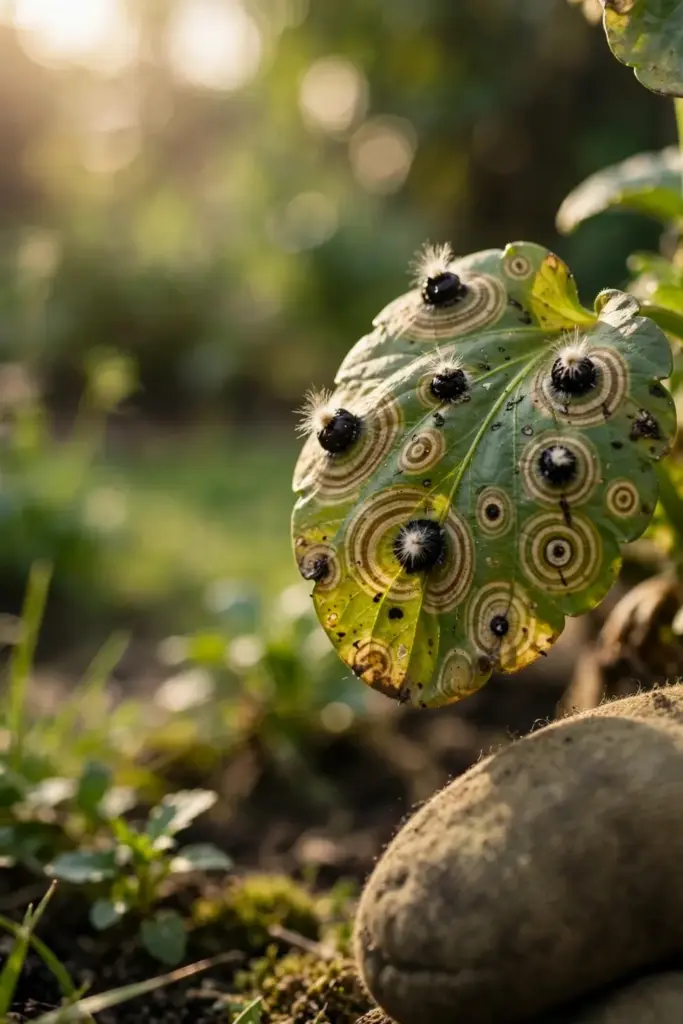
The signature is a leaf spot with concentric rings, sometimes carrying raised black spore bodies that show a white tuft in high humidity. Crown rot at the base mimics Rhizoctonia, which is why field identification stays presumptive and the lab confirms where it matters.
The rest of this page runs the order a gardener should follow. Understand the fungus first, learn its signs, then work the 8 strategies from watering to rotation. I have learned that the bedding plant bought infected is the outbreak that the rest of the season pays for.
What Myrothecium Leaf Spot Actually Is
Myrothecium leaf spot is a fungal disease of bedding plants, perennials, and melons. Fungi in the Myrothecium group, chiefly Myrothecium roridum, cause Myrothecium leaf spot.
The honest frame comes first. There is no cure for an infected plant. Michigan State University Extension gives the prevention-first message across its floriculture and perennial guidance: dispose of infected plants, media, and pots, clean and disinfect benches and mats, and avoid irrigation schedules that keep leaves wet. The Michigan State University Extension page on Myrothecium leaf spot carries the core guidance for growers, and its lessons transfer directly to home gardens.
The fungus is uncommon in home gardens. Home-press guidance calls it fairly new, rather rare, and rarely observed in field-grown melons. That rarity is a reason to keep the article calm, not a reason to skip it. Bedding-plant growers, perennial gardeners, and melon growers meet this fungus in exactly the conditions this article covers: wet foliage, crowded plants, soft growth, and infected cuttings.
The fungus travels on cuttings and on plants. Garden Center Magazine notes Myrothecium on unrooted New Guinea impatiens cuttings, and Michigan State University Extension notes that the disease readily develops following shipping. A flat of bedding plants that ships wet and crowded can arrive infected. The gardener who inspects before planting catches the outbreak at the nursery gate. The gardener who plants first and looks later spreads it across the bed.
The fungus also survives in debris and in used pots. Spores persist on plant debris, on cell packs, and on bench surfaces. A pot reused without cleaning carries last season’s fungus into this season’s planting. The cleanup steps below break that carryover. The disease is a sanitation problem before it is a spray problem.
The scope stays on home gardens. Bedding plants carry the flagship cases: pansy, New Guinea impatiens, begonia, petunia, verbena, and lantana. Herbaceous perennials carry the second set: Lamium, Molucella, Rudbeckia, and Salvia. Watermelon and melon carry the third. Greenhouse spray programs, commercial rates, and production schedules stay out. This article is a prevention-first care guide, not a treatment guide.
How to Spot Myrothecium on Bedding Plants, Perennials, and Melons
| Host Group | Signs | First Action |
|---|---|---|
| Bedding plants (pansy, impatiens, begonia, petunia, verbena, lantana) | Leaf spots with concentric rings, raised black spore bodies, white tuft in humidity | Remove and destroy infected leaves and plants |
| Herbaceous perennials (Lamium, Molucella, Rudbeckia, Salvia) | Leaf spots, crown rot at the base | Remove infected plants, clean tools and pots |
| Watermelon and melon | Leaf spots, rare in field-grown melons | Remove affected leaves, rotate, clean debris |
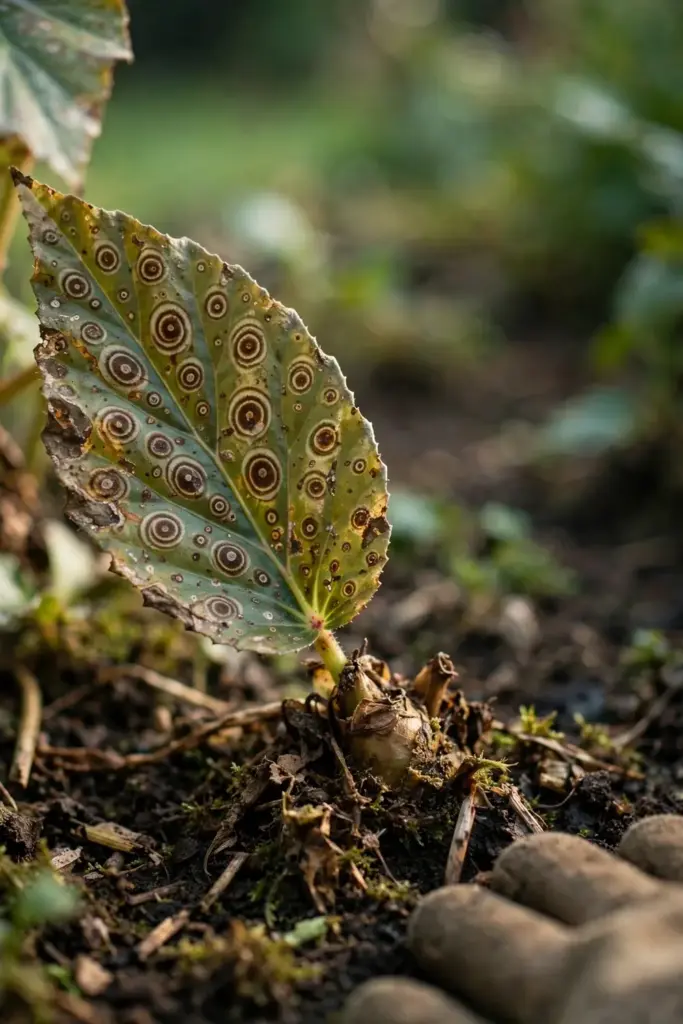
Leaf spots with concentric rings point at Myrothecium. Raised black spore bodies on the spot, with a white tuft in high humidity, strengthen the call.
The leaf spots start small and round, then develop concentric rings that give a target-like look. In humid weather, raised black structures called sporodochia form on the spots, and a white tuft may show on top. That tuft is the spore mass. A spot with rings plus a black raised dot plus a white tuft in humidity is Myrothecium until the lab says otherwise.
Crown rot is the second syndrome, and it is the one that confuses gardeners. The base of the plant softens and rots, and the plant wilts. Michigan State University Extension notes that crown-rot symptoms mimic Rhizoctonia, but the fungicide recommendations differ, which makes misdiagnosis costly. A gardener who guesses Rhizoctonia and sprays the Rhizoctonia program treats the wrong fungus. A gardener who sends a sample gets the right answer.
On watermelon and melon, the spots follow the same pattern on leaves, and the disease stays rare in field-grown melons. Home-press guidance for watermelon lists rotation, end-of-season cleanup, avoiding overhead watering in the evening, spacing, and removing affected leaves. The rarity in field melons is worth stating plainly. A melon grower who sees spots should check the bedding plants first, because the bedding flat is the more likely source.
Field identification is presumptive. The resemblance to Alternaria blight is a resemblance note, not a field differential. The crown-rot mimicry of Rhizoctonia is a warning, not a comparison table. Lab testing confirms where it matters, such as a valuable perennial bed or a greenhouse flat. For a home bedding plant, the spots plus the rings plus the season are enough to start the removal routine. Do not wait for a lab result before pulling an infected plant. The removal helps whatever leaf fungus is present.
Check the whole planting, not one plant. Myrothecium on one pansy in a flat points at the flat. Myrothecium across a whole perennial border after a wet week points at the border’s watering and spacing. The spread of symptoms across the planting tells the gardener whether the problem is one cutting or one habit.
Strategy 1: Water at the Base in the Morning
Water at the base, in the morning. Keep foliage dry, and never leave leaves wet overnight.
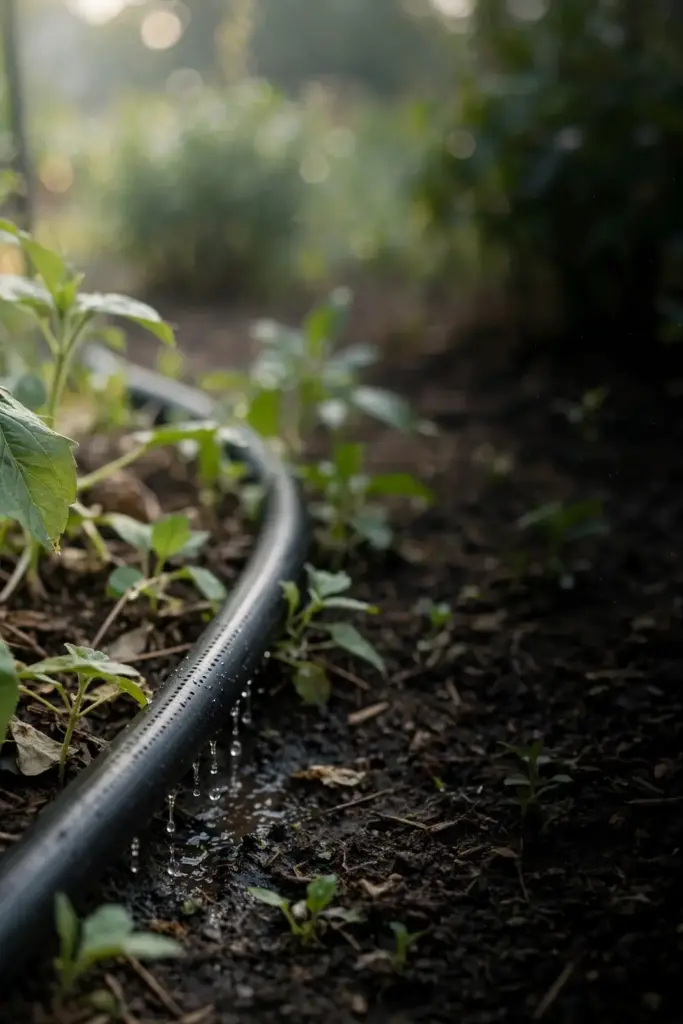
Michigan State University Extension gives the watering rule through its leaf-wetness guidance: reduce leaf-wetness periods by changing irrigation timing and method. Home-press guidance for watermelon adds the evening warning: avoid overhead watering in the evening, when leaves will not dry. Evening overhead watering soaks the canopy and holds it wet all night. Morning base watering wets the soil and leaves the canopy dry by midday.
Use drip, soaker, or a slow hose at the soil line. Lay drip line or a soaker hose along the bed, not over the plants. Water slowly so the soil absorbs it without runoff. Water in the morning so any splash that reaches low foliage dries during the day. A morning base watering that splashes a little beats an evening overhead watering that soaks the bed overnight.
Fix sprinklers that hit bedding plants and perennials. A lawn sprinkler that arcs across a pansy bed every evening is an overhead irrigation system by accident. Redirect the head, shorten the arc, or move the sprinkler. A bed that gets sprayed every night will show leaf spot no matter how well the rest of the routine runs.
Reduce leaf wetness after rain too. Rain cannot be controlled, but its aftermath can. An open planting dries fast after rain. A mulched, well-drained bed does not pond water under the plants. Plants with space around them catch wind that dries the foliage. The spacing in Strategy 2 and the watering in Strategy 1 work together. One dries the planting from inside. The other stops wetting it from above.
Strategy 2: Space Plants for Airflow
Space plants for airflow so leaves dry quickly. Crowded plants stay wet, and wet plants catch leaf spot.

Home-press guidance for watermelon lists spacing as a core prevention step. Production guidance for pansy agrees: leaf wetness, humidity, and poor air circulation favor the disease. Dense planting holds moisture on foliage long after rain stops. Open planting dries fast. The difference between a bed that stays wet until noon and a bed that dries by 9 in the morning is often a few inches of space.
Plant bedding plants at the spacing on the nursery tag, not tighter for instant fill. A bed planted tight for instant color pays for that color with wet foliage and leaf spot. Read the mature width on the tag, and plant at that spacing. A bed with air between plants at maturity needs less thinning, dries faster, and shows fewer spots.
Thin a crowded perennial border by removing whole weak stems at the base, not by shearing the top. Shearing stimulates a flush of soft, dense growth on the surface, and that flush stays wet and catches disease first. Thinning cuts remove entire stems and open real air channels through the plant. The plant keeps its natural shape. The interior dries.
Stake and support plants that flop onto their neighbors. A perennial that flops across a bedding plant traps moisture where the two plants touch. A simple stake, a ring support, or a cut back after bloom keeps the air channel open. Each gap in the planting is a drying channel. Protect the gaps. The guide to spring pruning techniques covers clean cut placement for garden plants in full.
Strategy 3: Inspect New Bedding Plants and Cuttings First
Inspect new bedding plants and cuttings before bringing them in. Myrothecium arrives on cuttings, and inspection is the gate.
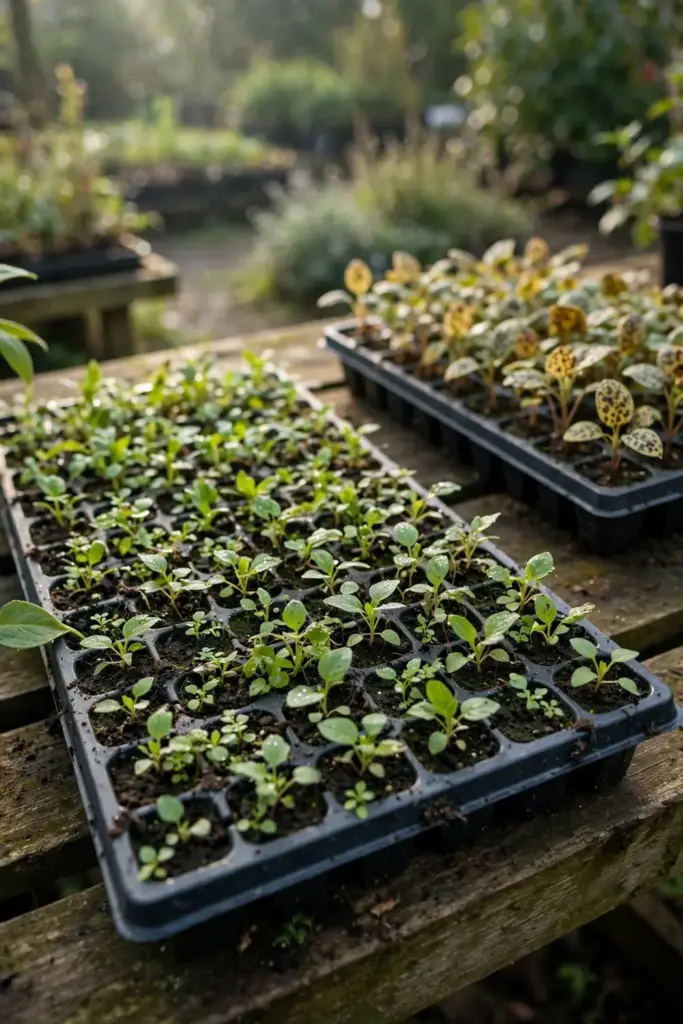
Garden Center Magazine notes Myrothecium on unrooted New Guinea impatiens cuttings, and Michigan State University Extension notes that the disease readily develops following shipping. A flat that ships wet and crowded can arrive infected. The gardener who inspects at the nursery gate catches the outbreak before it enters the bed. The gardener who plants first and looks later spreads it across the bed.
Inspect the leaves, the stems, and the base. Look for spots with concentric rings. Look for soft, dark tissue at the crown. Look at the plants beside the one you want. A whole flat of pansies with spots is a nursery problem, not a bargain. Reject a flat that shows symptoms across many plants. Buy the clean flat from the clean bench.
Quarantine new flats when the garden already holds valuable perennials. Hold a new flat apart from the main beds for a few days, water it at the base, and watch the leaves. A flat that shows spots in quarantine stays out of the main bed. A flat that stays clean joins the garden. Quarantine costs nothing and catches the infection that inspection missed.
Do not buy a symptomatic flat to rescue it. A gardener who buys spotted bedding plants at a discount imports the fungus into a clean garden. Rescue feels kind. It spreads disease. The kindest purchase is the healthy flat from the clean nursery. Leave the spotted flat for the nursery to destroy under its own protocols.
Strategy 4: Do Not Over-Fertilize Soft Foliage
Do not over-fertilize. Soft, overfed foliage invites outbreaks, and steady growth resists them.
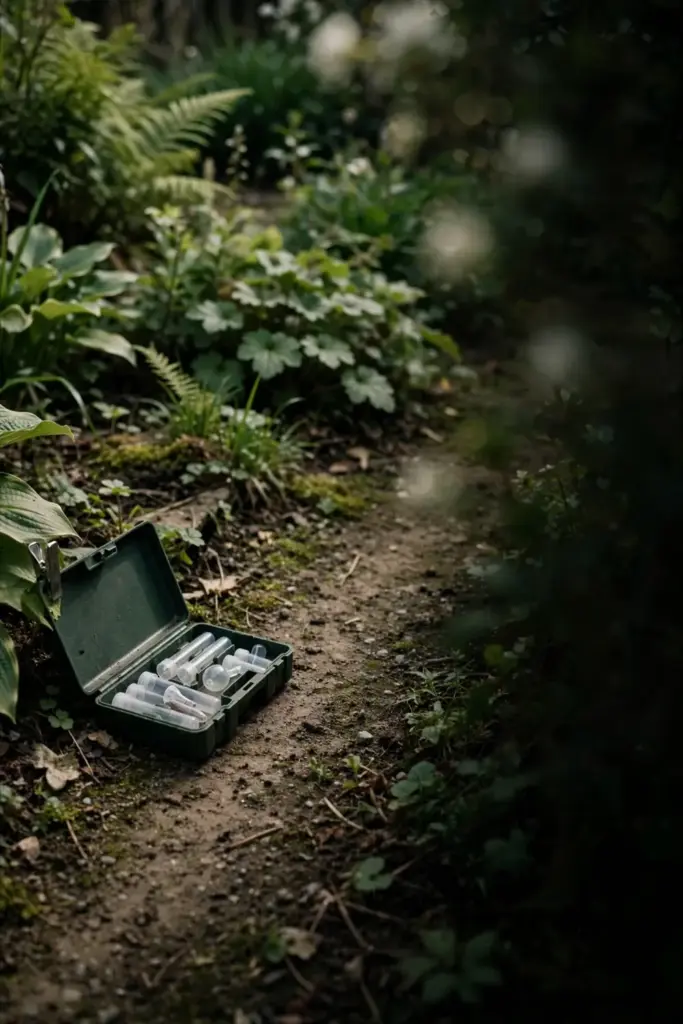
Michigan State University Extension lists excess fertility among the conditions that favor Myrothecium on perennials and in floriculture. Heavy nitrogen grows soft, thin leaves with weak tissue. Soft leaves stay wet longer, tear easier, and give the fungus an easy entry. Steady growth produces tougher leaves that dry faster and resist infection.
Feed to a soil test, not to a guess. A soil test tells the gardener what the bed actually needs. A bed fed to its test result grows steady tissue with moderate vigor. A bed fed by guesswork gets either starved or pushed. Both extremes open the door. Test the soil, feed to the result, and stop when the result says stop.
Avoid high-nitrogen pushes during wet spells. A nitrogen push in a rainy week grows a flush of soft foliage into the exact weather the fungus wants. Time fertilizer for dry, settled weather, and use a balanced, slow-release product at the label rate. A slow-release fertilizer feeds steadily and avoids the soft flush that a fast-release product triggers.
Watch the plant, not the calendar. A perennial that grows steadily, holds its color, and flowers on schedule is fed enough. A perennial that grows leggy, pale, and soft is overfed or underlit. Cut the fertilizer before cutting the plant. The plant answers steady feeding with steady tissue.
Strategy 5: Handle Plants Gently and Avoid Wounds
Handle plants gently. Avoid wounding, because young and injured tissue is the most susceptible.
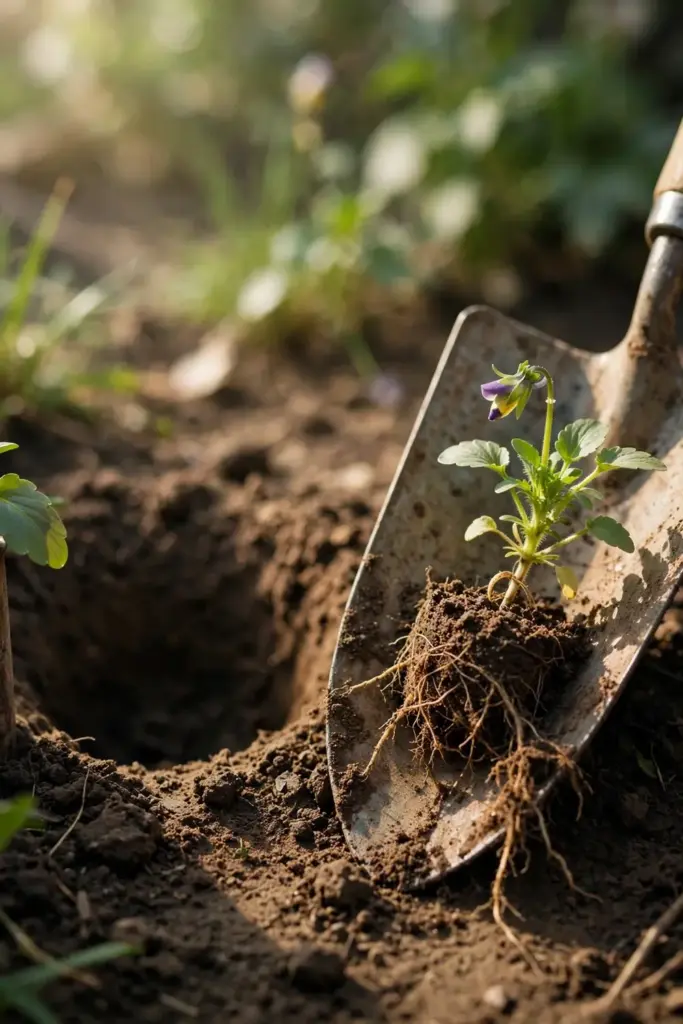
Michigan State University Extension notes that young and injured tissue is the most susceptible to Myrothecium. Every wound is an entry point. A torn leaf, a bruised stem, a root torn in transplanting, or a stem nicked by a tool all open doors. The fungus walks through doors that stay open in wet weather.
Transplant with care. Harden off bedding plants before setting them out. Set them at the same depth they grew in the flat, not deeper. Firm the soil gently around the roots without crushing the stem. Water at the base after transplanting. A transplant handled gently establishes fast. A transplant handled roughly spends its first week healing wounds in wet soil.
Avoid working plants when wet. Wet tissue tears easier than dry tissue, and wet hands and tools move spores. Wait until the foliage dries before thinning, staking, or deadheading. A morning wait until the dew dries costs an hour. A wet-weather work session costs a bed.
Keep tools sharp and cuts clean. A sharp blade cuts cleanly and closes fast. A dull blade crushes and tears tissue, and the crushed tissue stays open longer. Sharpen blades before the planting session. The extra ten minutes at the sharpener saves a season of wound infections.
Strategy 6: Remove and Destroy Infected Leaves and Plants Promptly
Remove infected leaves and plants promptly. Trash them, never compost diseased material.
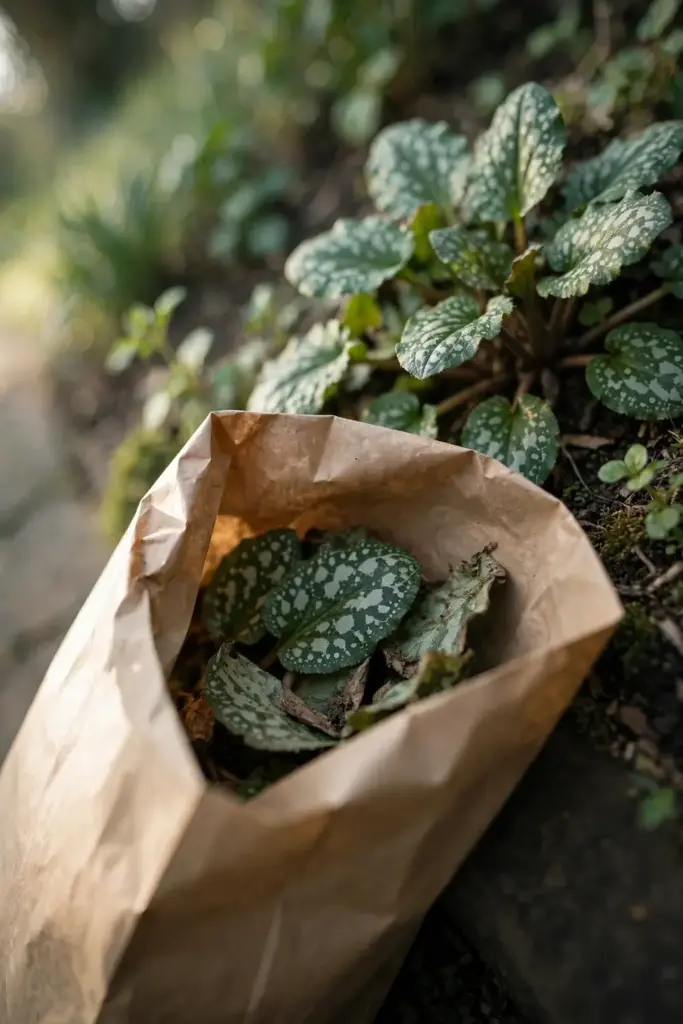
Home-press guidance for watermelon lists removal of affected leaves as a step that minimizes spread. Michigan State University Extension floriculture guidance goes further: dispose of infected plants, media, and pots. An infected leaf left on the plant sheds spores onto healthy leaves below it every time rain or dew wets it. An infected plant left in the bed sheds spores onto its neighbors. Removal stops the shedding.
Pick off infected leaves by hand when the count is small. Hold the leaf by the petiole, snap it off, and drop it straight into a bag. Do not drop it on the ground and pick it up later. The bag travels with you around the bed. A leaf dropped on the ground is a leaf that may stay on the ground.
Pull and bag a whole plant when the infection covers most of its leaves or reaches the crown. A plant with crown rot will not recover, and it sheds spores while it dies. Bag the whole plant, including the root ball and the media around it. Do not shake soil off the roots over the bed. The soil around an infected crown carries spores.
Resolve the compost conflict in favor of trash. One home-press source says to compost leftover plant material, but Michigan State University Extension says to dispose of infected plants, media, and pots. For infected material, follow the Extension rule: trash or dispose. Compost only healthy debris. A home compost pile runs too cool to kill spores in thick tissue, and the finished compost carries the fungus back into the bed.
Strategy 7: Clean and Disinfect Pots, Tools, and Benches
Clean and disinfect pots, tools, and benches before reuse. A reused pot without cleaning carries last season’s fungus into this season’s planting.
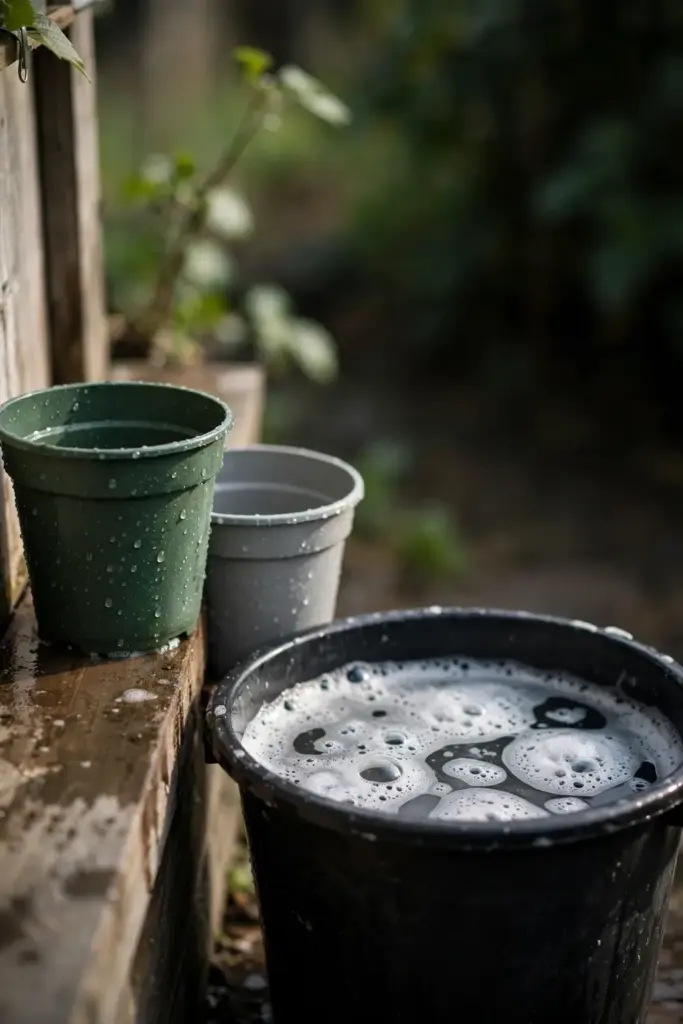
Michigan State University Extension floriculture guidance gives the rule: clean, then disinfect benches and mats, and dispose of cell packs and pots that held infected plants. Cleaning removes soil and debris. Disinfecting kills the spores that cleaning leaves behind. Either step alone is half a job. Both steps together break the carryover.
Wash pots with soap and water first. Scrub off soil, algae, and root fragments. Rinse clean. Then soak in a 10 percent bleach solution, following the clean-then-disinfect routine in Michigan State University Extension guidance, rinse again, and let the pots dry in the sun. A pot that still shows soil after washing is not ready to disinfect. The bleach cannot reach spores hidden under soil. Wash first, disinfect second.
Disinfect tools between plants during the work session, not only at the end. Dip blades in 70 percent rubbing alcohol or a 10 percent bleach solution between cuts, the standard disinfection step in Michigan State University Extension guidance. Keep the disinfectant bucket within arm’s reach of the bed. A blade that cuts an infected plant and then cuts a healthy plant moves the fungus. A blade disinfected between cuts does not.
Clean the bench and the work area after the session. Wipe bench surfaces with disinfectant. Sweep up debris. Bag and trash the sweepings. A bench left dirty holds spores for the next flat. A bench cleaned and disinfected starts the next flat clean.
Strategy 8: Clean Up Debris and Rotate Melons
Clean up debris at the end of the season, and rotate melons. Do not replant melons where melons grew.
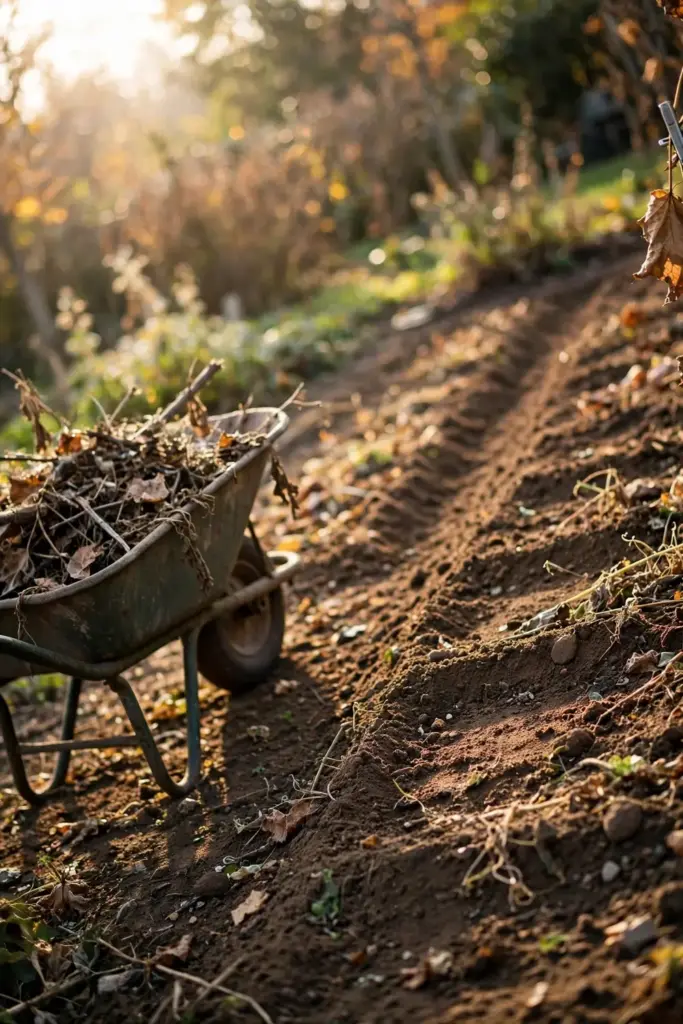
Home-press guidance for watermelon lists rotation and end-of-season cleanup as core prevention. Production guidance for pansy agrees: discard all plant debris at the end of the cycle. The fungus survives in debris through winter. A bed left dirty in autumn starts spring with inoculum in place. A bed cleaned in autumn starts spring clean.
Remove all plant debris from the bed at season’s end. Pull spent bedding plants, including roots. Rake up fallen leaves. Bag everything and trash it. Do not leave debris piled beside the bed for later. Later rarely comes, and the pile sheds spores all winter.
Rotate melons to a new bed each year. Do not plant watermelon or melon where melon grew last season. Rotate with crops from a different family, such as beans, corn, or onions. A rotation break starves the fungus of its host for a season. Two seasons of rotation are better than one when space allows.
Rotate the bedding-plant flats too, in the sense that matters: do not set new flats on the same bench surface that held infected flats without cleaning it. The bench is the flat’s soil. Strategy 7 covers the cleaning. Strategy 8 covers the habit. Together they keep last season’s fungus out of this season’s planting.
Living With Myrothecium Damage You Cannot Undo
Some damage stays. A spotted leaf never heals, and a crown-rotted plant never recovers.
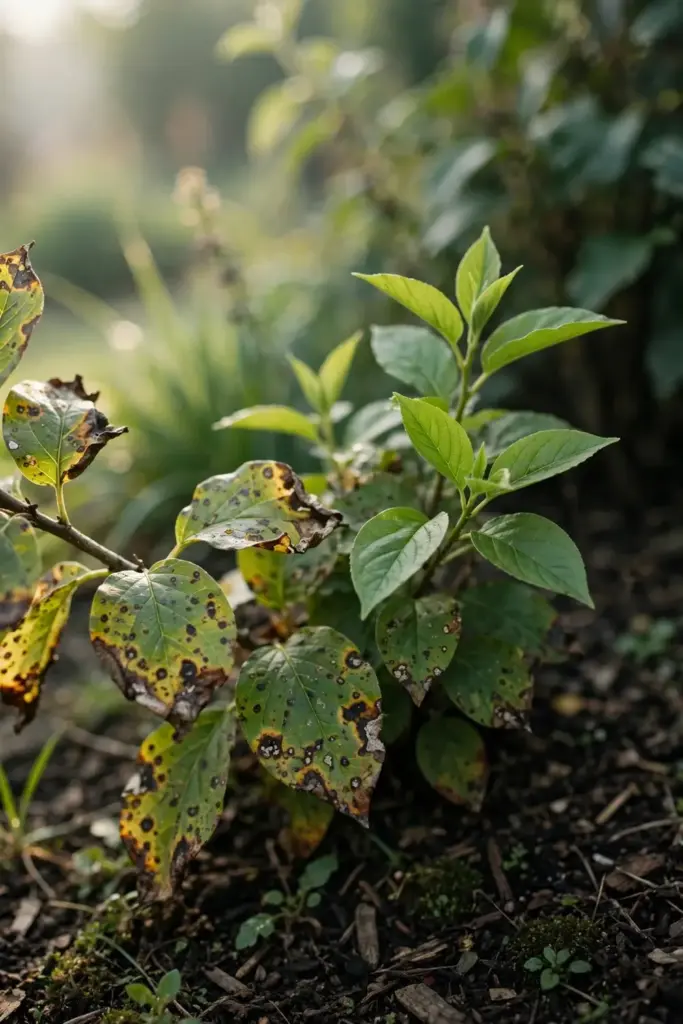
Prune the damaged tissue and let the plant replace it. A perennial pushes new growth from healthy crowns. A bedding plant pushes new leaves from healthy stems. The new growth needs the same routine: dry foliage, clean tools, steady feeding. A plant that keeps its new growth clean earns its place. A plant that spots every new flush needs a harder look at site, drainage, and watering.
General bacterial blight care follows the same order: cut, clean, destroy, then keep the canopy dry. The guide to bacterial blight simple solutions covers that order for bacterial blight problems across the garden. The same removal-and-destroy order governs fruit-tree blight sanitation, covered in the guide to blossom blight on fruit trees. The pathogens differ. The habits do not.
Copper fungicide appears in some home guidance for watermelon as an early-season spray. Treat it as optional, protective-only, and label-directed, never as a cure. Copper coats uninfected tissue and slows spore germination. It does not cure a spotted leaf, it does not fix a deficiency, and it does not replace sanitation. Greenhouse fungicide products and rates stay out of home advice. The cultural steps carry the prevention. A labeled protectant, used after a lab confirmation, is the last resort, not the default.
Do not replant the same bedding flat in the same dirty bed and expect a different result. The fungus stays. The wet soil stays. The crowding stays. A new flat in the same spot faces the same season with the same disadvantage. Fix the bed first: clean it, space the plants, fix the watering, and give the new flat sun and air flow from the day it goes in.
Frequently Asked Questions

No cure exists for an infected plant. Remove and destroy infected leaves and plants, protect the rest, and prevent the next infection. Michigan State University Extension floriculture guidance directs growers to dispose of infected plants, media, and pots. Copper and other protectants coat uninfected tissue only. They do not cure a spotted leaf. Prevention is the whole game. The 8 strategies above are the prevention.
Myrothecium leaf spot is uncommon in home gardens. Home-press guidance calls it fairly new, rather rare, and rarely observed in field-grown melons. Bedding-plant growers, perennial gardeners, and melon growers meet it in wet foliage, crowded plants, soft growth, and infected cuttings. Frame it as a low-frequency but real risk, not an epidemic threat. The prevention routine costs little and covers several leaf-spot diseases at once.
Never compost infected bedding plants. Michigan State University Extension floriculture guidance says to dispose of infected plants, media, and pots. A home compost pile runs too cool to kill spores in thick tissue, and the finished compost carries the fungus back into the bed. Bag infected plants, tie the bag, and put it in the trash. Compost only healthy debris. The trash rule protects next season’s planting.
A home gardener cannot reliably separate them by eye. Michigan State University Extension notes that Myrothecium crown-rot symptoms mimic Rhizoctonia, but the fungicide recommendations differ, which makes misdiagnosis costly. Treat crown rot as a prompt to act: remove and destroy the plant, clean the tools, and fix the watering. Send a sample to the diagnostic lab where the identity matters for a spray decision. The lab names the fungus.
Do not save seeds from infected beds. The fungus survives in debris and on plant material, and saved seeds from an infected planting carry risk into the next season. Buy clean seeds from a reputable source. Rotate melons to a new bed. Clean the bed at season’s end. The new season starts clean when the gardener refuses to carry the old season’s problems forward in a seed packet.
Copper is a protective-only option, never a cure. Home-press guidance for watermelon mentions copper fungicide sprayed early in the season. Copper coats uninfected tissue and slows spore germination. It does not cure a spotted leaf, and it does not replace sanitation, dry foliage, or clean tools. Use it only after a lab confirmation, follow the label, and treat it as a last resort. Greenhouse fungicide products and rates stay out of home advice.
Where to Go From Here
Start with the worst flat. Pull the infected plants, bag them, and trash them today.
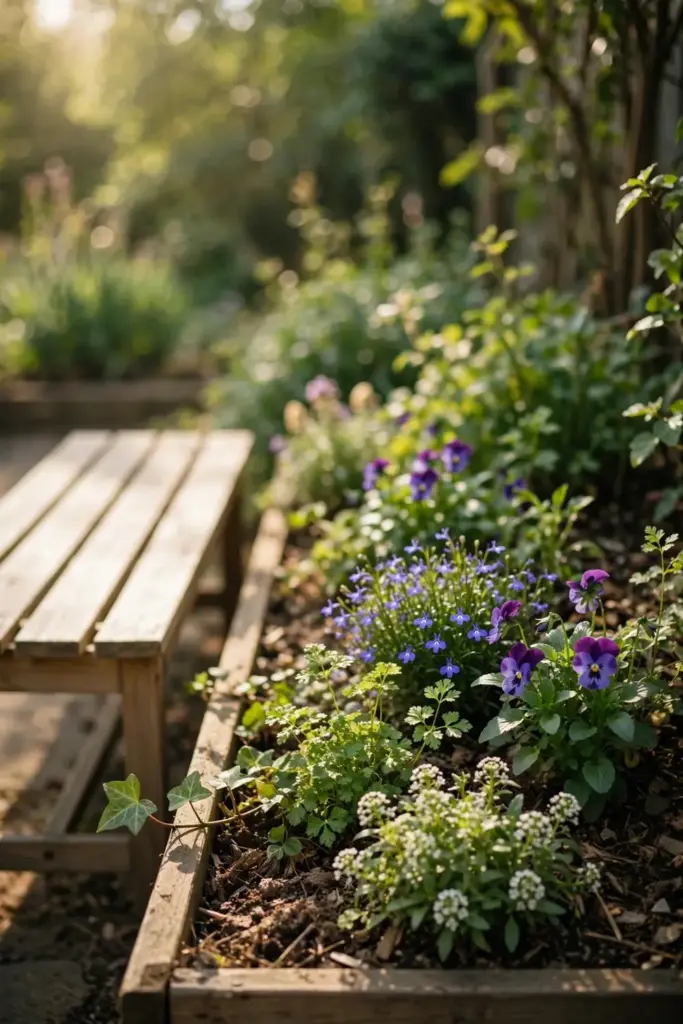
The order is water at the base, space for airflow, inspect new plants, feed steady, handle gently, remove infected tissue, clean tools and pots, and rotate. One next action beats ten good intentions. Pull the sick plants. Clean the bench. The bed stays clean next season because the gardener cleaned it this season.