
Zucchini yellow mosaic virus has no cure. The 10 strategies below protect the cucurbits around an infection, starting with the triage call that tells you whether protection is worth the effort at all.
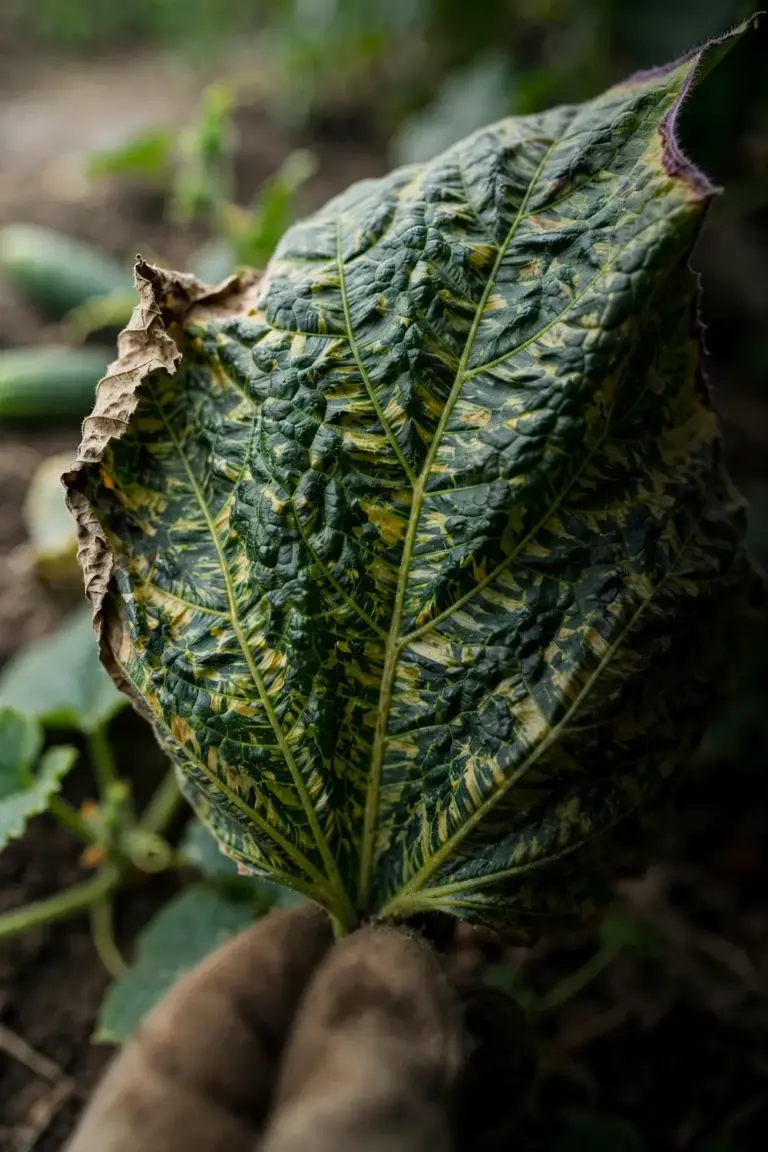
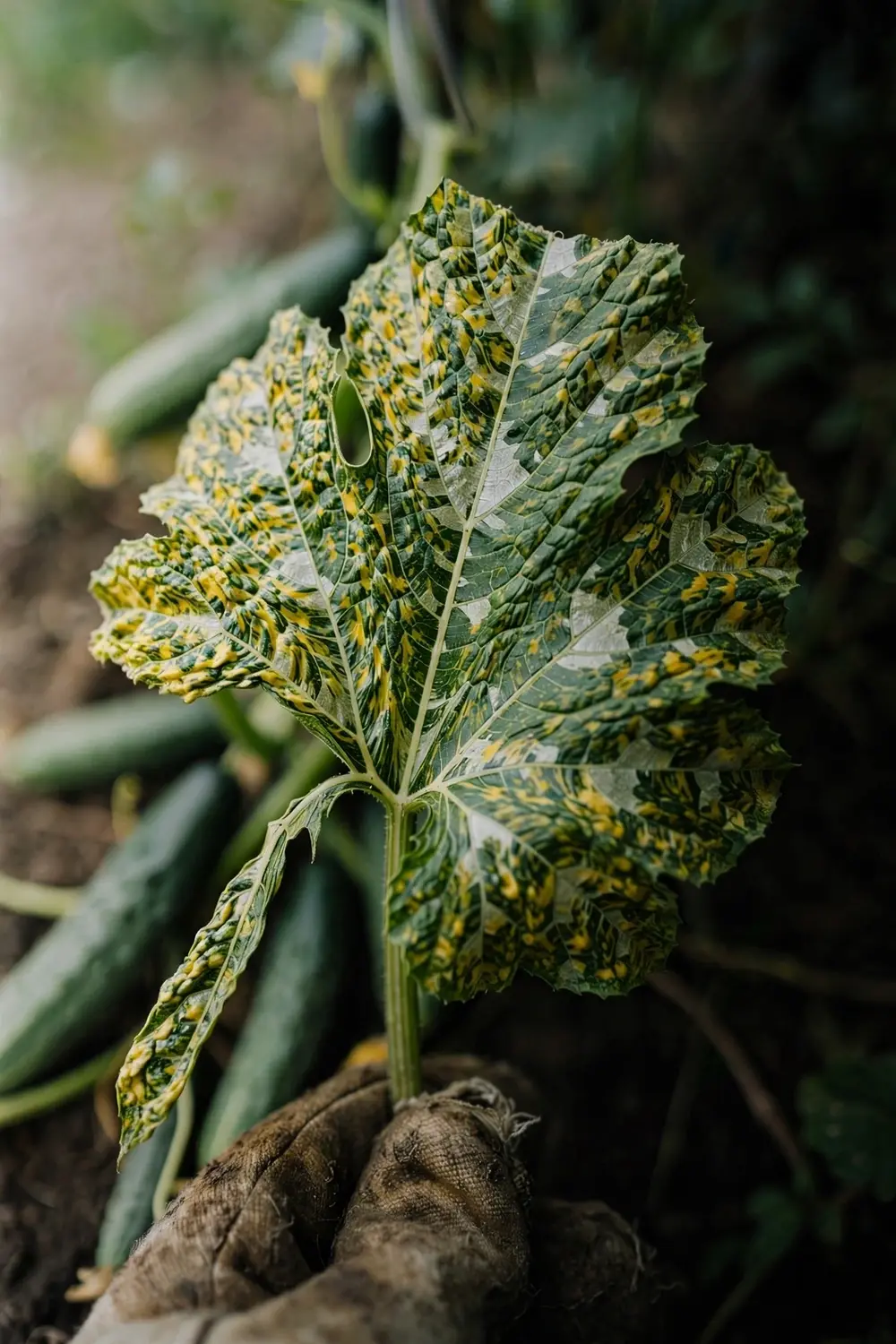
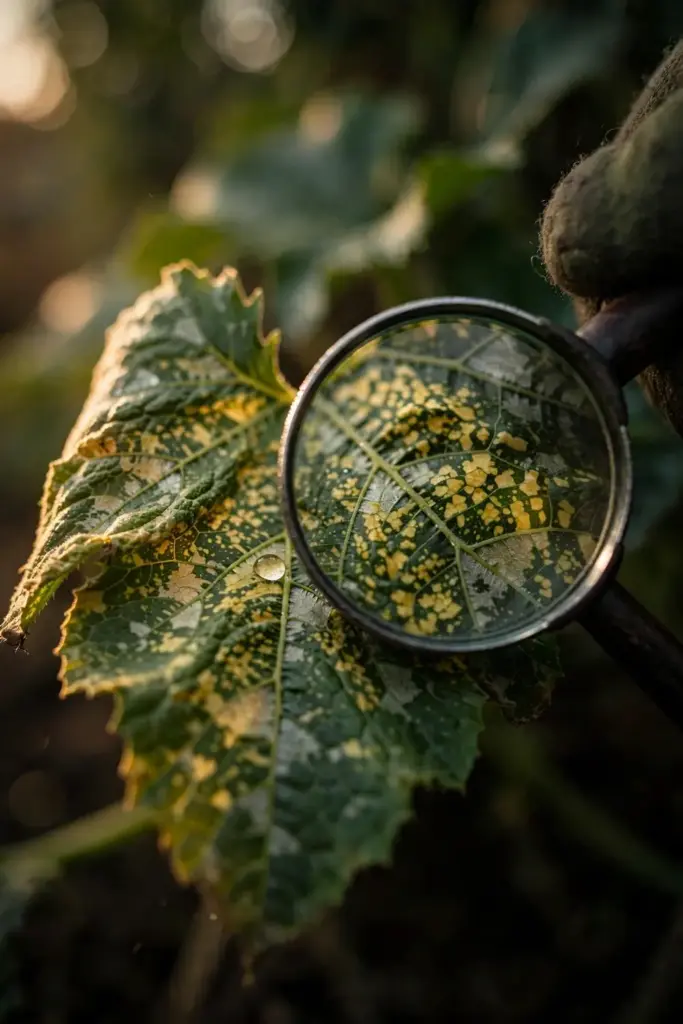
The signature is a yellow mosaic across puckered leaves, with stunted growth, long narrow leaf lobes, and fruit that comes out small, lumpy, and discolored. Plants infected young stop producing marketable fruit soon after infection, and a bed that looked healthy in June can sit full of distorted fruit by midsummer.
The rest of this page runs the order a gardener should follow. Identify the virus first, then learn why aphid sprays cannot prevent it, then work the 10 steps from certified seed to next-season planning. I have learned that the week spent clearing weeds and laying reflective mulch before planting pays back more than any spray.
What Zucchini Yellow Mosaic Virus Actually Is
Zucchini yellow mosaic virus is an aphid-borne virus of cucurbits. The pathogen is Potyvirus cucurbitaflavitesselati, a member of the Potyviridae family, and it carries a positive-sense single-stranded RNA genome.
The Utah State University Extension fact sheet on zucchini yellow mosaic virus calls the pathogen a potyvirus, an RNA virus spread primarily by aphids. The same fact sheet lists infected seed as one more way the disease reaches a garden, and it states plainly that no treatment exists after infection. The virus lives inside plant cells, so a chemical that kills the virus would kill the plant.
Zucchini yellow mosaic virus hits the whole cucurbit family. Zucchini, summer squash, winter squash, pumpkin, cucumber, melon, watermelon, and gourds all host the virus. The Cornell fact sheet on virus diseases of cucurbits notes that muskmelon, watermelon, and squash suffer severe effects from this virus. The name points at zucchini because zucchini shows the damage first and hardest in most home gardens, and the virus itself never stays inside one crop.
The virus is a recent arrival by plant-disease standards. The same Cornell notes record its first identification in Europe in 1981 and its discovery in New York State in 1983. The virus has since spread through most regions where cucurbits grow, and a gardener in any temperate or warm climate grows cucurbits inside its range.
How to Identify Zucchini Yellow Mosaic Virus on Leaves
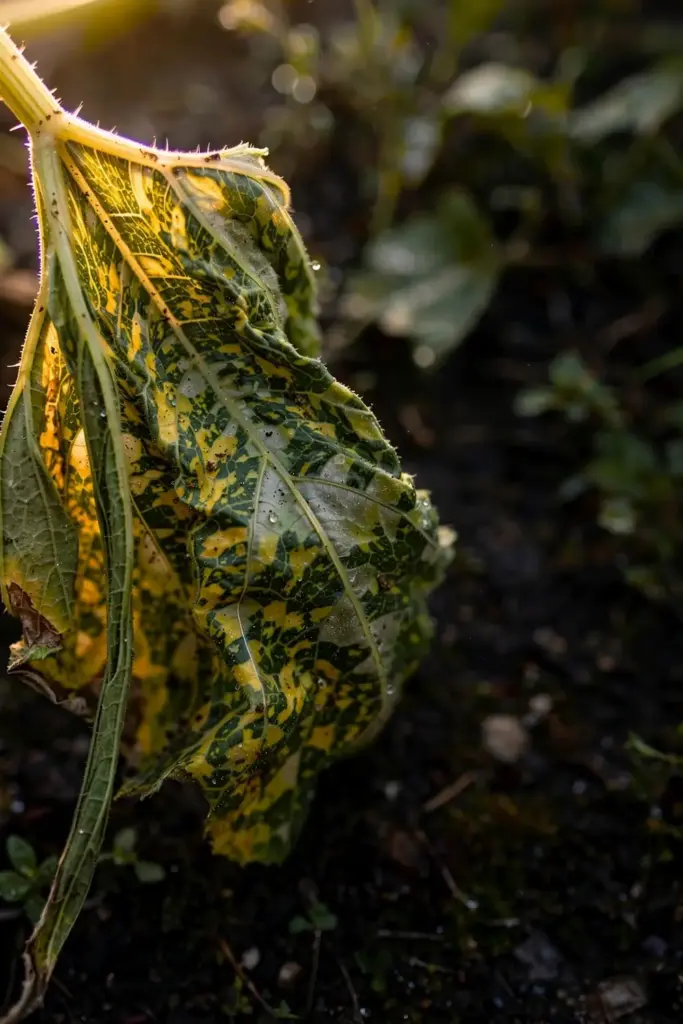
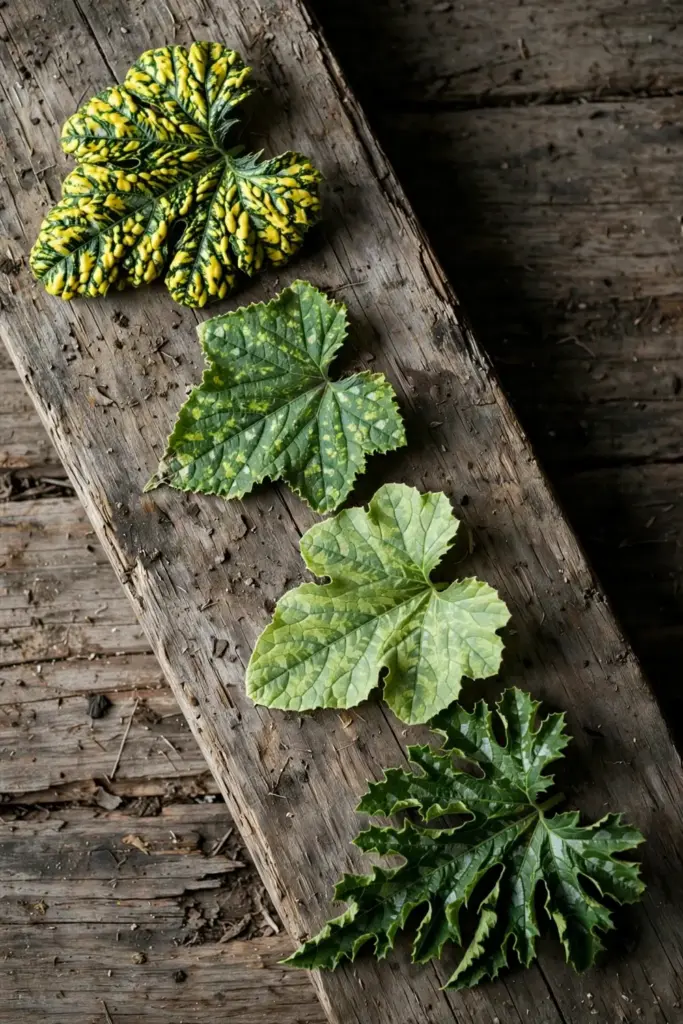
Look for vein clearing first, then mosaic. A leaf with pale cleared veins that develops irregular dark green patches alternating with light green or yellow patches has zucchini yellow mosaic virus until proven otherwise.
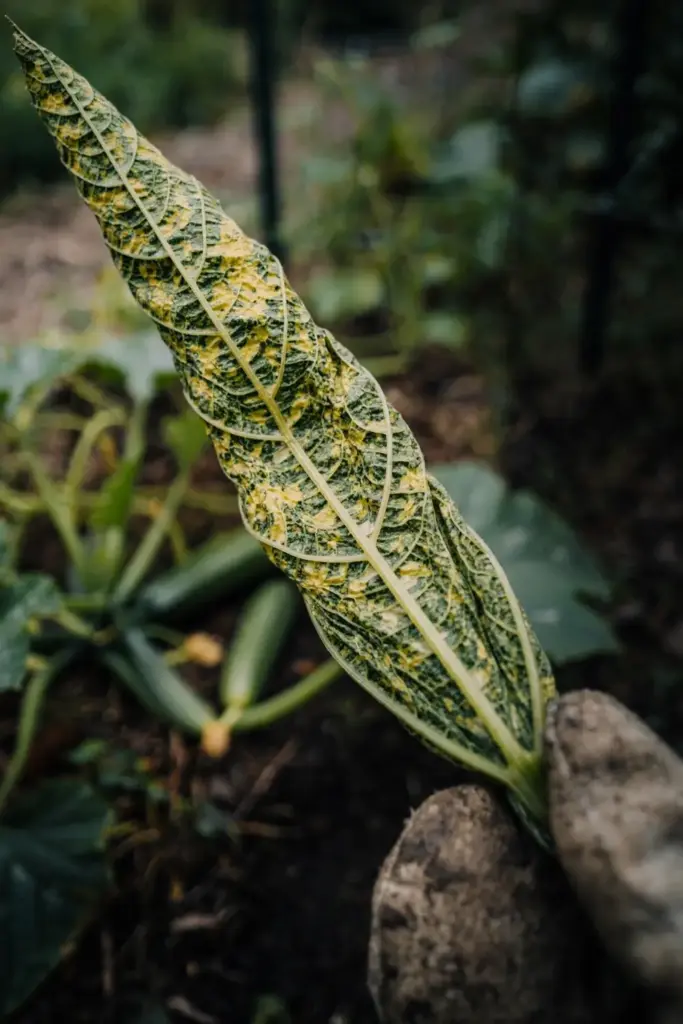
The UC Marin Master Gardeners profile of zucchini yellow mosaic virus gives vein clearing as the first symptom, followed by mosaic or mottling of irregular dark green areas alternating with light green or yellow areas. Leaves on some species and cultivars shrink drastically in size, growth slows, and leaf lobes turn long and narrow. A leaf that narrows into a strap shape while its neighbors stay broad fits the pattern.
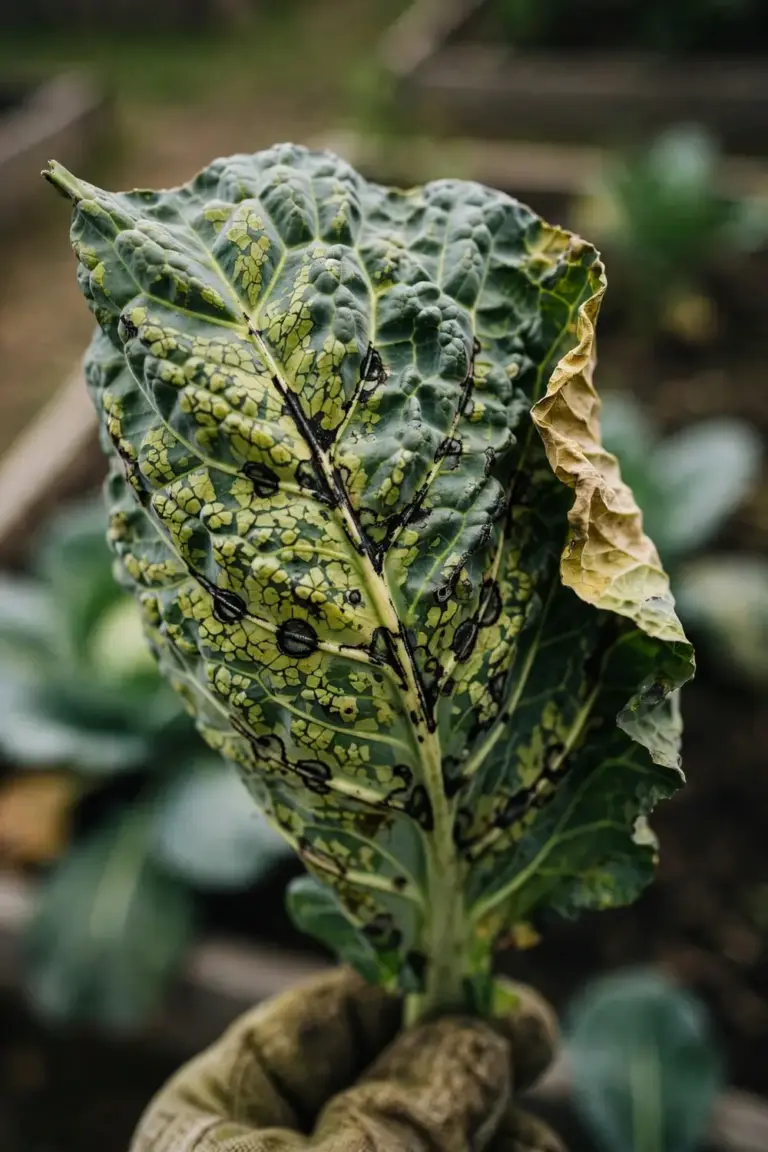
Later signs separate zucchini yellow mosaic virus from a passing nutrient problem. Patches turn a stronger yellow, leaf tissue puckers between the veins, and new leaves come out small, wrinkled, and distorted. Plants stall. Internodes shorten. The whole plant takes on a bushy, upright habit with leaves that never reach full size. A plant that yellows evenly without mosaic, puckering, or distortion points at nutrition or water instead.
Young leaves show the damage first. Older leaves may carry a milder mosaic while the newest growth comes out twisted and undersized. Check the newest leaves at the growing tip when scouting, since the tip shows what the virus is doing right now.
How to Identify Zucchini Yellow Mosaic Virus on Fruit and Flowers
Check the fruit next. Fruit that comes out small, lumpy, and discolored while the leaves mottle carries zucchini yellow mosaic virus until proven otherwise.
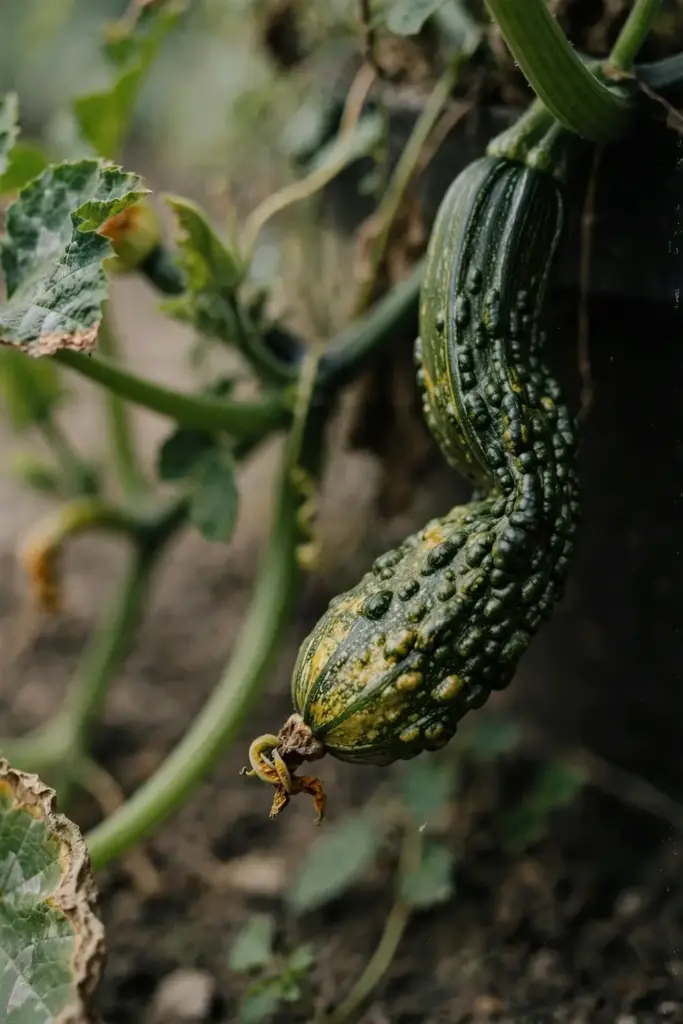
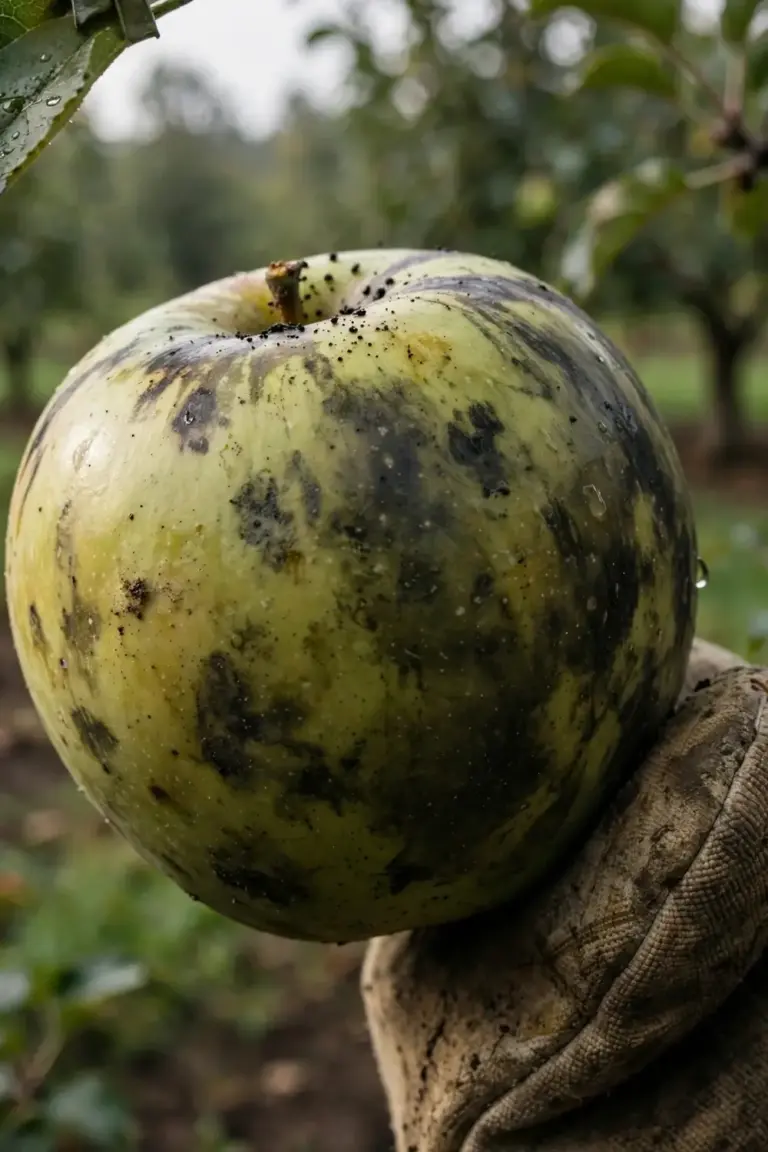
The Utah notes describe fruit that is discolored and distorted, including raised lumps and bumps. The same Cornell notes describe fruit that remains small, greatly malformed, and green mottled. Bumps, ridges, and color breaking across the skin all belong to the same pattern. A zucchini with green mottling over yellow skin, or a pumpkin with warty ridges across one side, fits the diagnosis.
Timing decides how much fruit a plant still gives. Infection before pollination usually means no fruit production at all. Fruit that was pollinated and started growing before infection may carry blotches or stripes of green or yellow color, then show surface discoloration, bumps, early browning, shrinking, or death. The University of Delaware Weekly Crop Update describes that timing split, and it matches what home gardeners see. Fruit set before infection sometimes finishes. Fruit set after infection rarely does.
Flowers show the damage too. The Utah notes describe stunted and deformed growth of leaves and flowers. Blossoms on an infected plant stay small, twist, or drop without setting fruit. A vine that flowers heavily and sets nothing while its leaves mottle has likely carried the virus since early in the season.
Fruit from an infected plant stays safe to eat. The virus harms yield and appearance, and it never makes the harvest unsafe to eat. Wash the fruit and cook it as usual. A lumpy zucchini still grates into bread, and a mottled pumpkin still roasts.
Which Cucurbits Get Hit Hardest by Zucchini Yellow Mosaic Virus
Zucchini and summer squash take the worst visible damage from zucchini yellow mosaic virus. Pumpkin, melon, and watermelon follow close behind, and cucumber shows strong leaf symptoms with fruit damage on top.
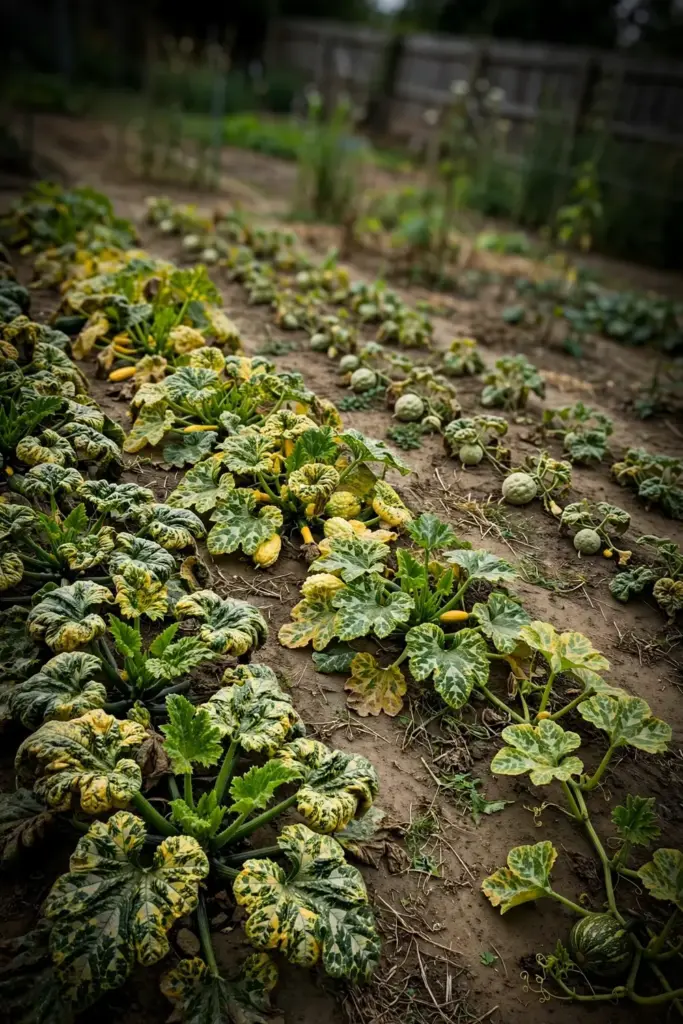
Zucchini earns its place in the virus name. The plant grows fast, fruits heavily, and shows every stage of the disease on one vine, from vein clearing on young leaves to lumpy fruit at the base. The guide to growing zucchini from seed walks through spacing and harvest for a clean crop, and a zucchini bed is where most home gardeners meet this virus first.
Squash across the board suffers. The guide to growing squashes covers the summer and winter types that share the same susceptibility, and the same Cornell notes name squash among the crops that suffer severe effects. Pumpkins show the fruit damage in its most dramatic form, with warty ridges and green mottling across a large fruit that should have colored evenly.
Melon and watermelon carry the same risk. The same Cornell notes list muskmelon and watermelon among the crops severely affected by the virus. Cucumber shows stunted distorted leaves with fruit damage, and gourds, Luffa, and Momordica all host the virus. The LucidCentral Pacific pests fact sheet names melon, pumpkin, watermelon, Luffa, and Momordica among the hosts, and it describes the virus as a pathogen of cucurbits generally. The virus stays largely inside the cucurbit family, and every cucurbit in the bed shares the risk.
Zucchini Yellow Mosaic Virus vs Cucumber Mosaic Virus vs Watermelon Mosaic Virus vs Papaya Ringspot Virus
Check the fruit first. Watermelon mosaic virus gives leaf mosaics with far less fruit distortion, cucumber mosaic virus roughens the fruit surface, papaya ringspot virus distorts leaves and fruit hard, and zucchini yellow mosaic virus pairs a prominent yellow mosaic with severe fruit damage.
The table below lines up the four viruses that confuse cucurbit growers most. Read the fruit row first, then the leaf row, then the severity row.
| Sign | Zucchini Yellow Mosaic Virus | Cucumber Mosaic Virus | Watermelon Mosaic Virus | Papaya Ringspot Virus Type W |
|---|---|---|---|---|
| Pathogen | Potyvirus cucurbitaflavitesselati, Potyviridae, single-stranded RNA | Cucumovirus, Bromoviridae, single-stranded RNA | Potyvirus, Potyviridae, single-stranded RNA | Potyvirus, Potyviridae, single-stranded RNA |
| Leaf signs | Prominent yellow mosaic, necrosis, distortion, stunting, long narrow lobes | Stunted distorted leaves, mosaic | Mosaics of light and green patterns on the leaves | Strong mosaic, distortion, deep leaf serration |
| Fruit signs | Small, greatly malformed, green mottled fruit with raised lumps and bumps | Surface roughness on the fruit | Less distortion than the other potyviruses, mosaics mostly on leaves | Malformed, knobby fruit with strong distortion |
| Host range | Cucurbits, largely inside the family | Cucurbits plus many vegetables and other plants outside the family | All commercially grown cucurbits | Cucurbits |
| Severity | Often more severe than cucumber mosaic virus and watermelon mosaic virus | Milder than zucchini yellow mosaic virus on cucurbits | Milder than zucchini yellow mosaic virus and papaya ringspot virus | Severe, close to zucchini yellow mosaic virus |
| First move | Remove infected plants, clear weed hosts, protect seedlings | Same sanitation and weed control as for zucchini yellow mosaic virus | Same sanitation and weed control as for zucchini yellow mosaic virus | Same sanitation and weed control as for zucchini yellow mosaic virus |
Field symptoms alone can mislead. The Vegetable Growers News report on mosaic viruses in squash states that positive identification of the virus infecting a crop rests primarily on serological tests, such as enzyme-linked immunosorbent assay (ELISA). The same report states that identification based on field symptoms alone can be misleading. A home gardener who needs a certain answer sends a sample to a diagnostic lab for an ELISA test, since the lab result settles what the eye cannot.
Co-infection is common and worse. The same University of Delaware update notes that a plant infected by one virus shows milder symptoms than a plant infected by two or more. Two viruses together bring strong mosaic and distortion on leaves, with smaller and smaller new leaves as the infection advances. A plant that looks far worse than its neighbors may carry two viruses at once.
Other cucurbit problems stay separate diagnoses. Squash mosaic virus spreads by cucumber beetles and infected seed, a different route from aphids. Cucurbit aphid-borne yellows virus is a luteovirus that yellows plants without the mosaic pattern. Cucurbit yellow stunting disorder travels by whiteflies, not aphids. Bacterial wilt clogs the vascular system and travels by cucumber beetle, and it wilts vines rather than mottling them. Bean yellow mosaic virus is a different virus that hits beans, and it never merges into a cucurbit diagnosis. Each problem keeps its own diagnosis, and none of them merges into zucchini yellow mosaic virus.
Why Nonpersistent Aphid Transmission Decides Everything
An aphid transmits zucchini yellow mosaic virus in under a minute. An aphid that feeds on an infected plant for less than a minute picks the virus up, and a similar feed deposits the virus into the next plant.
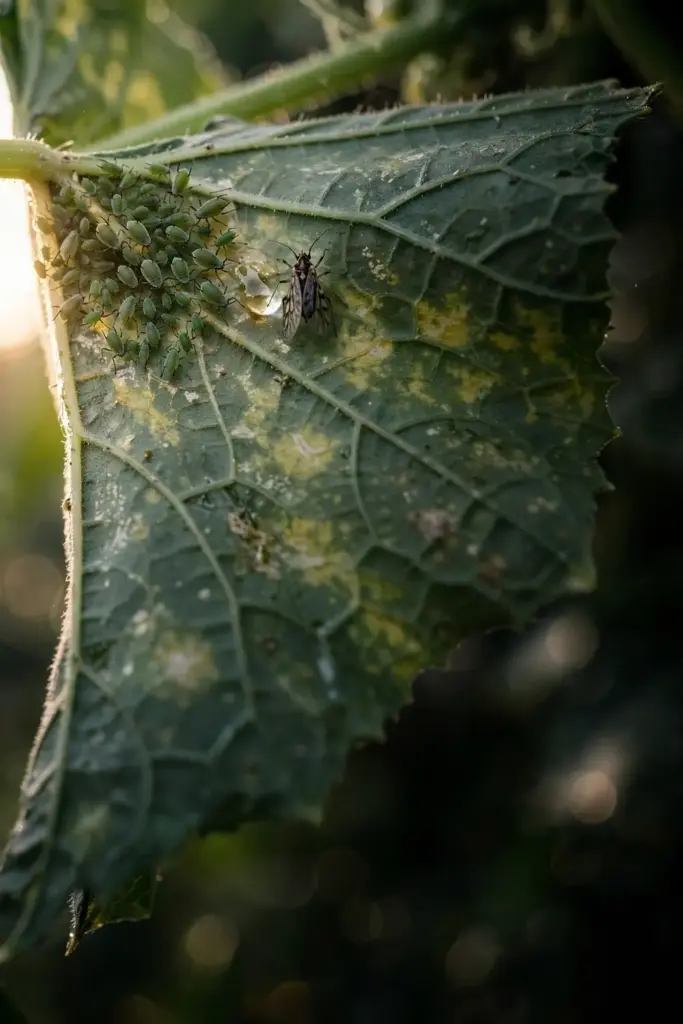
The LucidCentral Pacific pests fact sheet describes that timing. An aphid acquires the virus on its mouthparts after a short feed of less than one minute, infects a healthy plant after another short feed, and then loses the ability to infect. The same UC Marin notes put the infective window at minutes to a few hours. The virus rides on the aphid mouthparts and never circulates inside the aphid. A spray that kills aphids in hours cannot stop a transmission that takes seconds. The aphid dies after the virus already moved.
Two aphid species do most of the carrying. The same Utah notes name the melon aphid and the green peach aphid as the vectors behind this virus. Other aphid species carry it too, and any aphid on a cucurbit leaf is a possible carrier. A colony on an infected plant is a loaded one.
Mechanical transmission adds a second route. The virus moves on sap through hands, tools, and plant-to-plant contact. A blade that cuts an infected stem carries sap to the next cut, and a hand that strips infected leaves carries sap to the next plant. Work the healthy plants first and the suspect plants last, so the dirtiest work lands at the end of the session.
Seed transmission stays an open question. The same Utah notes list infected seed as one way the disease reaches a garden. One research review reports no seed transmission. The evidence conflicts, so treat saved seed from infected plants as suspect and buy certified seed. The seed question matters less than the aphid route, and the aphid route is the one that decides every management choice.
What Makes Zucchini Yellow Mosaic Virus Worse in a Home Garden
Young plants, high aphid activity, and nearby weed hosts decide how bad zucchini yellow mosaic virus gets. A bed with all three fills with mosaic fast. A bed with none of the three often escapes.
Early infection does the worst damage. The same Vegetable Growers News report states that plants suffer most when infected as young plants, because yields drop and fruit quality suffers from bumps and discoloration. A seedling infected in its first weeks may never produce a marketable fruit. A plant infected late in the season, with fruit already sizing, loses far less.
Aphid activity drives the spread. The same UC Marin notes state that spread of potyviruses in the field occurs when aphid activity is high, and the spread is often very rapid and localized. A week of heavy aphid flights can infect a whole row while the next bed over stays clean. Warm weather speeds symptom development. The same University of Delaware update notes that symptoms develop more rapidly at 26 to 32 degrees Celsius than at 16 to 24 degrees Celsius. Heat plus aphids is the worst combination.
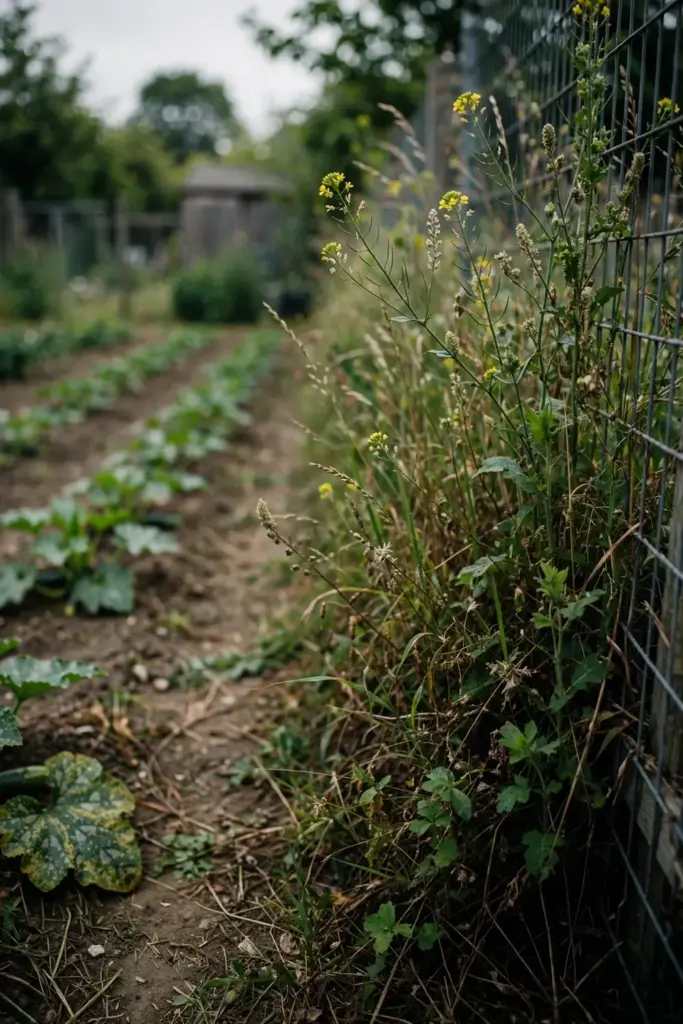
Weed hosts carry the virus between seasons. The same Cornell notes state that weeds may serve as hosts enabling overwintering of this virus. A weedy border beside the bed holds the virus through the cold months and feeds the first aphids of spring. Clear the weeds, and the virus loses its bridge from one season to the next.
Infected plants left standing feed every aphid that lands. A mottled plant in the middle of the bed is a virus source with leaves. Pull it the day it shows, and the aphids lose their source. Leave it, and every aphid that feeds on it carries the virus to the next plant.
Step 1: Decide Whether Protection Is Worth the Effort
Start with the triage call. A small cucurbit bed with early symptoms repays protection. A large bed with every plant mottled and stunted repays removal and replanting more than protection.
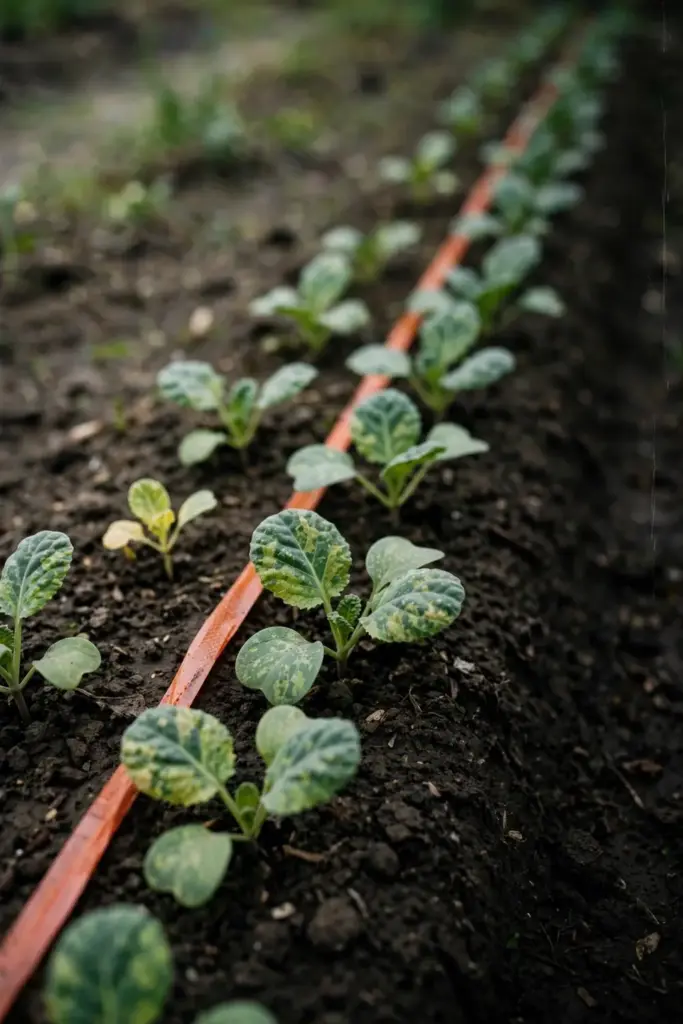
Early infection of a young plant can end its season. The same Vegetable Growers News report states that young plants suffer the worst damage, with yields reduced and fruit quality harmed by bumps and discoloration. A seedling-stage infection deserves the full routine. A late-season infection on a crop near harvest deserves harvest, not rescue.
Protection costs time and attention, and the virus pays nothing back once inside a plant. Spend the effort where the plant still has a season ahead of it. Pull the plants that have none.
Step 2: Start With Certified Disease-Free Seed
Buy certified disease-free seed for every cucurbit you plant. Certified seed removes the seed question entirely, and it costs nothing extra at planting time.
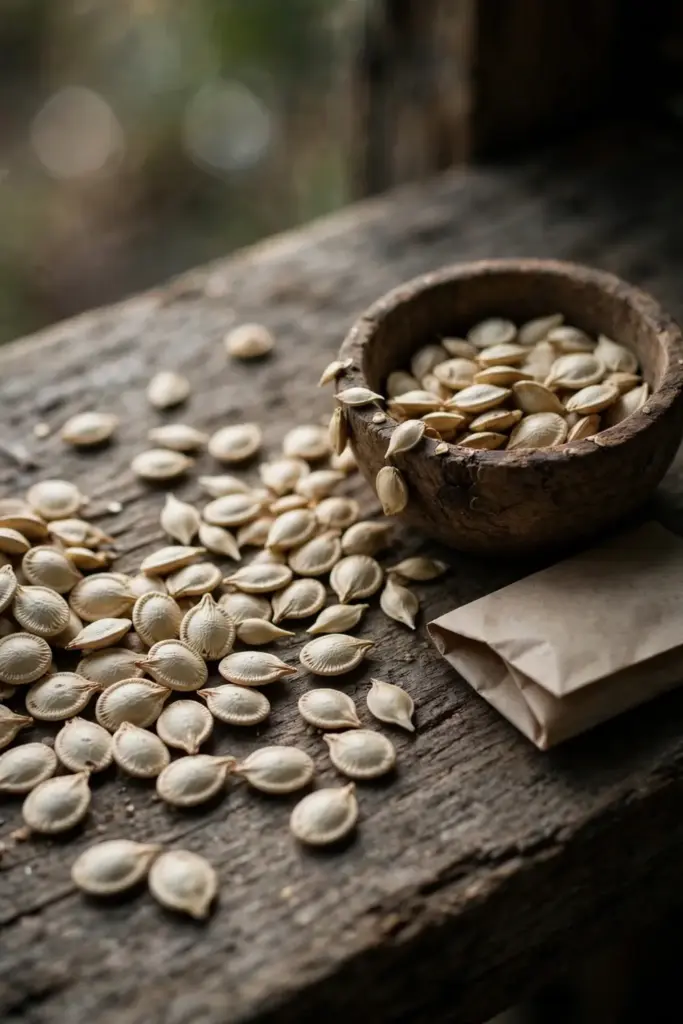
The same Utah notes list certified disease-free seed as the first management step. The seed evidence conflicts, with Utah listing infected seed as an introduction route and one research review reporting no seed transmission. Certified seed settles the argument before it starts. A packet with a certified disease-free label carries no such doubt.
Do not save seed from infected plants. A seed lot from a bed that carried the virus is suspect, and the saving is small against the risk. Save seed only from healthy plants in a bed that showed no mosaic all season. Buy fresh certified seed when the parent bed showed any mosaic at all.
Step 3: Lay Reflective Mulch Before Aphids Arrive
Lay silver reflective plastic mulch at planting. The reflective surface repels aphids, and fewer aphids landing means fewer infections starting.
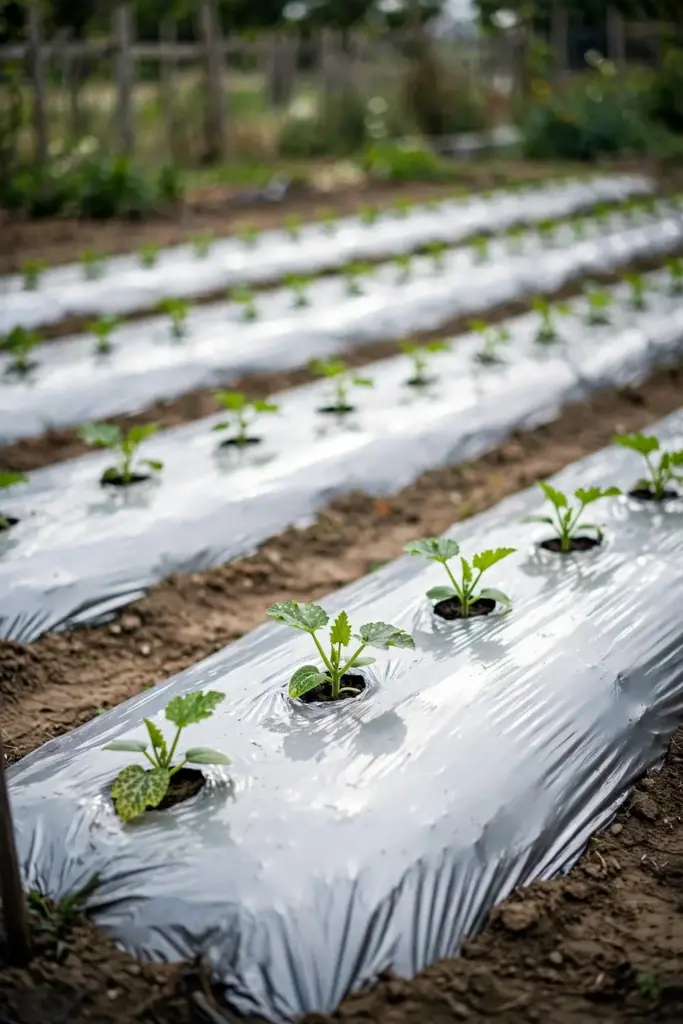
The same UC Marin notes state that silver reflective plastic mulches applied at planting repel aphids from plants, thereby reducing or delaying virus infection. The mulches help plants off to a healthy start, and they stay effective until expanding foliage covers the reflective surface. In the Central Valley and cooler areas, the mulches caused no plant damage in summer, and they improved soil moisture and nutrient retention.
Lay the mulch at planting, not after aphids arrive. A mulch laid after the first aphid flights protects nothing, since the virus may already sit inside the plants. The mulch is a start-of-season move, and it works best on a bed that starts clean.
Step 4: Pull and Destroy Infected Plants on Sight
Pull an infected plant the day you see mosaic. Bag it, bin it, and keep it out of the compost pile.
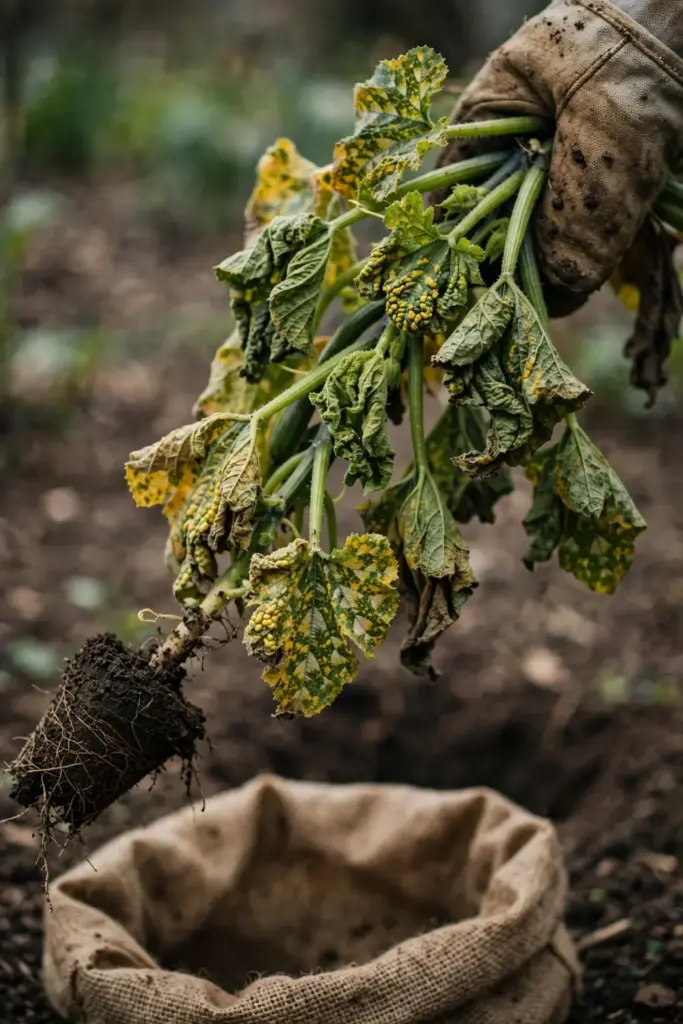
The same Vegetable Growers News report states that plants with mosaic symptoms that test positive for zucchini yellow mosaic virus should be destroyed to limit spread of the disease within a region. An infected plant left in the bed feeds every aphid that lands on it. A pulled plant feeds none.
Handle debris the same day. The same Utah notes advise disposing of plant debris and infected plants. Infected leaves left on the soil keep the virus beside healthy plants, and aphids work the ground-level leaves first. A same-day pull keeps one infected plant from becoming a bed-wide infection.
Step 5: Clear Weed Hosts Around the Bed
Clear every weed host before the crop goes in. Pull weeds from the bed, the paths, the fence rows, and the ditch banks beside the bed.
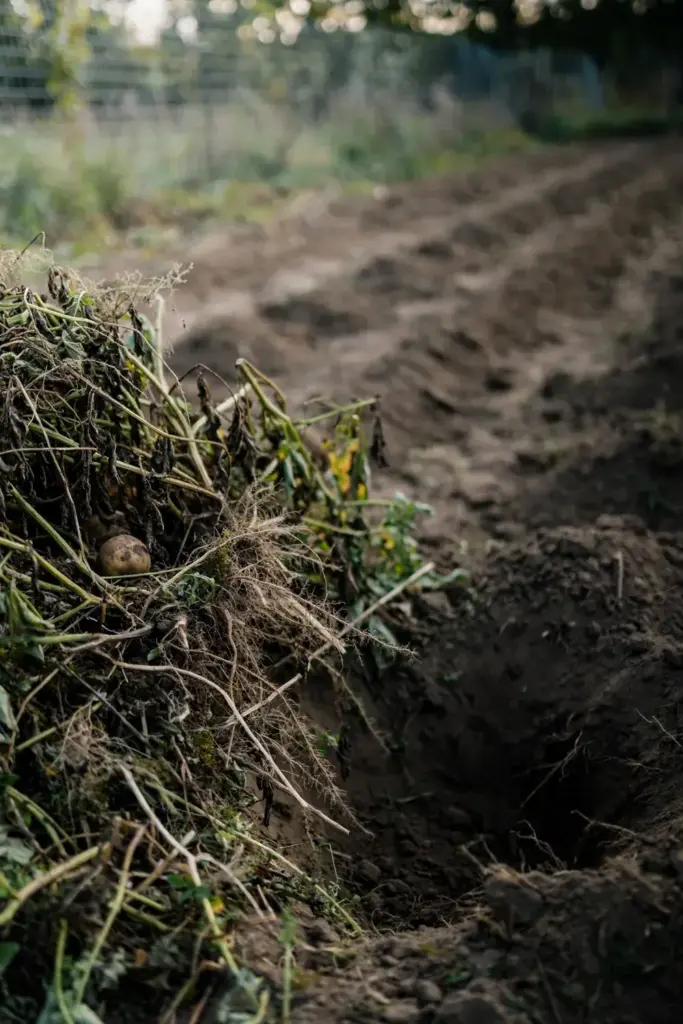
The same Cornell notes state that weeds may serve as hosts enabling overwintering of this virus. Weeds beside the bed hold the virus through winter and feed the first aphids of spring. A clean border breaks that chain.
Clear weeds early, before aphids start moving. A weed pulled after aphids arrive has already served as a virus source. A bed cleared a week before planting starts clean.
Step 6: Cut Aphid Numbers Without Expecting Prevention
Spray aphids to cut their numbers, never to prevent transmission, since a spray that lowers aphid numbers slows the spread across the bed. No spray stops the first bite.
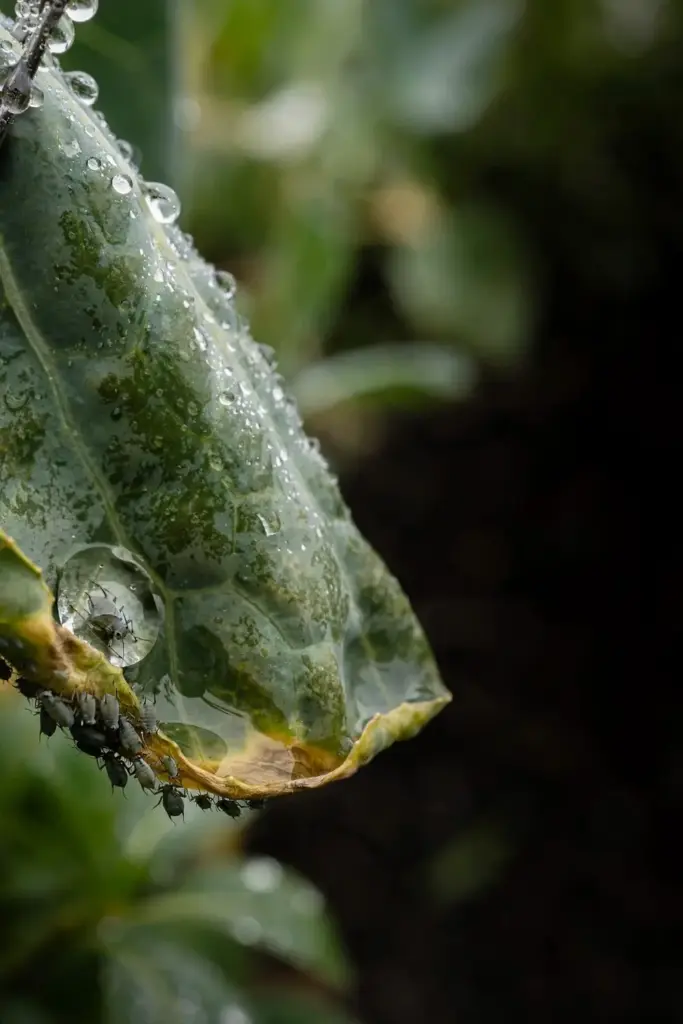
The same Utah notes state that insecticides for aphids are of limited value to control this disease. The same UC Marin notes state the harder version. Spraying with insecticides is rarely effective because the insect transmits the virus before being killed by the insecticide. Both statements describe the same biology. Sprays shrink the aphid population. Sprays never make a bed virus-proof.
Weigh the spray against the return. A spray on a seedbed with high aphid pressure protects the next planting by cutting the vector population. A spray on a fully infected bed protects nothing, since the virus already sits inside every plant. Spend spray effort on the clean plants, not the lost ones.
Step 7: Sanitize Tools and Hands Between Plants
Wash tools and hands between plants when working an infected bed. Soap and water for hands, disinfectant for blades, and a fresh start at each healthy plant.
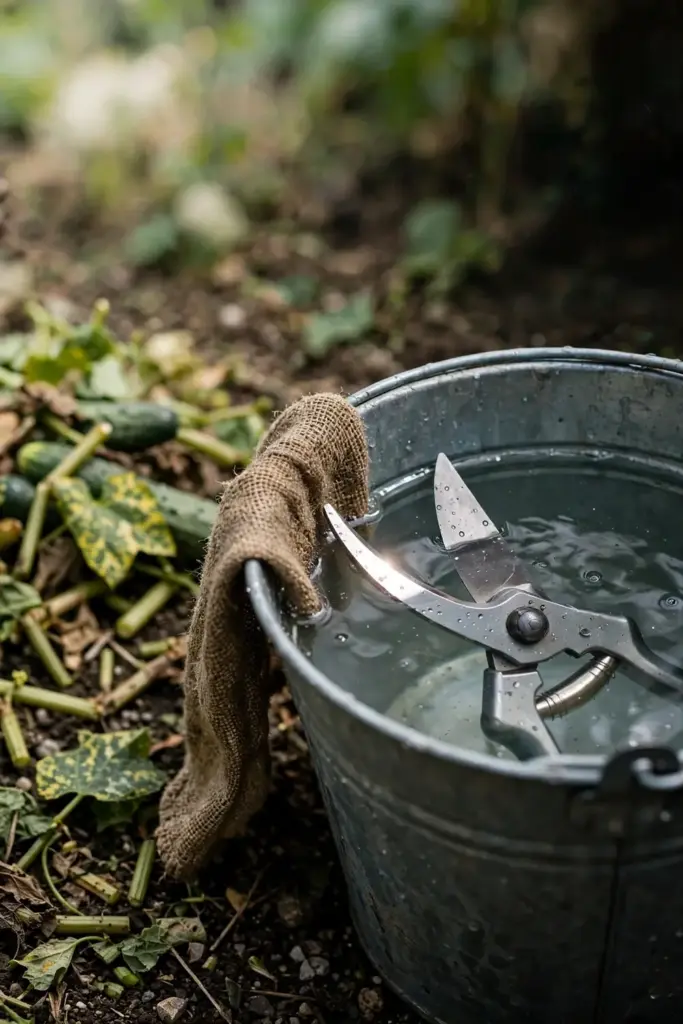
The virus moves on sap. A blade that cuts an infected stem carries sap to the next cut, and a hand that strips infected leaves carries sap to the next plant. Work the healthy plants first and the suspect plants last, so the dirtiest work lands at the end of the session.
Clean tools at the end of the session, not the start of the next one. A blade left dirty overnight starts the next session infected. Wash, dry, and store tools clean, and the next cut starts clean.
Step 8: Protect Seedlings First
Guard the seedling stage above every other stage. Seedlings infected early lose the most yield. Plants infected late in the season lose little.
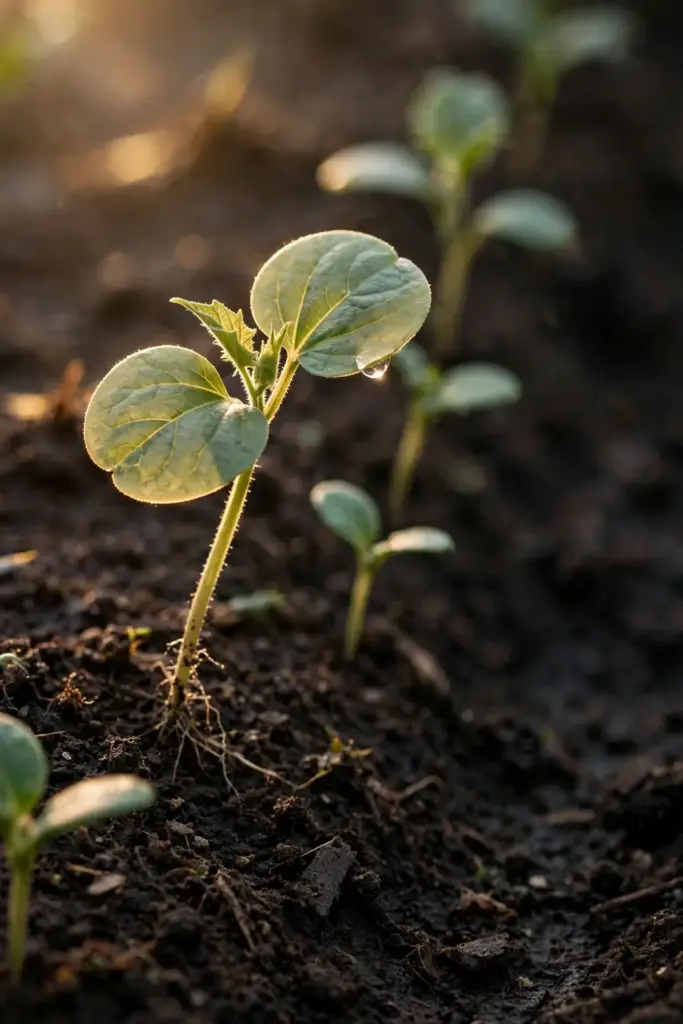
The Step 1 timing gap sets the priority. Young plants suffer the worst damage from early infection, while late infection costs far less, and the same timing holds across cucurbits. A seedling week with no aphid contact and no infected neighbor is worth more than any later rescue.
Scout seedlings daily in the first weeks after transplanting. Check the undersides of young leaves, where aphids gather first. Pull a mottled seedling the day it shows, and the bed keeps its clean start. The seed starting guide covers clean containers, fresh mix, and strong light for seedlings that start clean and grow fast.
Step 9: Choose Varieties With Eyes Open
Buy resistant varieties when a real one exists for your crop. Do not count on resistance that no catalog can name.
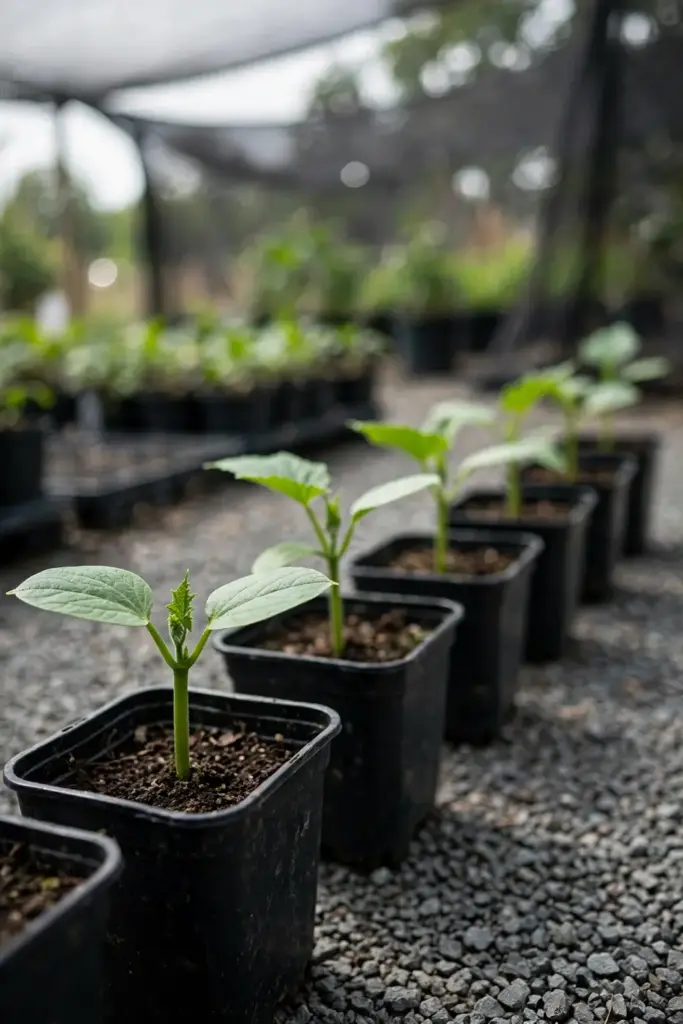
The same Cornell notes state that genetically enhanced varieties of yellow summer squash and zucchini carry a high degree of resistance to zucchini yellow mosaic virus as well as cucumber mosaic virus and watermelon mosaic virus. Other Extension guidance still describes all commercial varieties as susceptible. The two statements conflict, and the honest reading is that resistant types exist in limited form and never as a full catalog of choices. A catalog claim of resistance deserves a check against trial data, and a variety with no resistance data is an ordinary variety. Resistance is a bonus when proven, never the plan.
Do not try to inoculate seedlings with a mild strain. Cross-protection with a non-virulent strain is research work, not home advice. A home gardener who infects seedlings on purpose risks spreading the virus to every cucurbit nearby.
Step 10: Plan the Next Cucurbit Crop
Move cucurbits to fresh ground next season. Keep the old bed cucurbit-free while you clear weeds and debris, and let the new bed start without a virus source beside it.
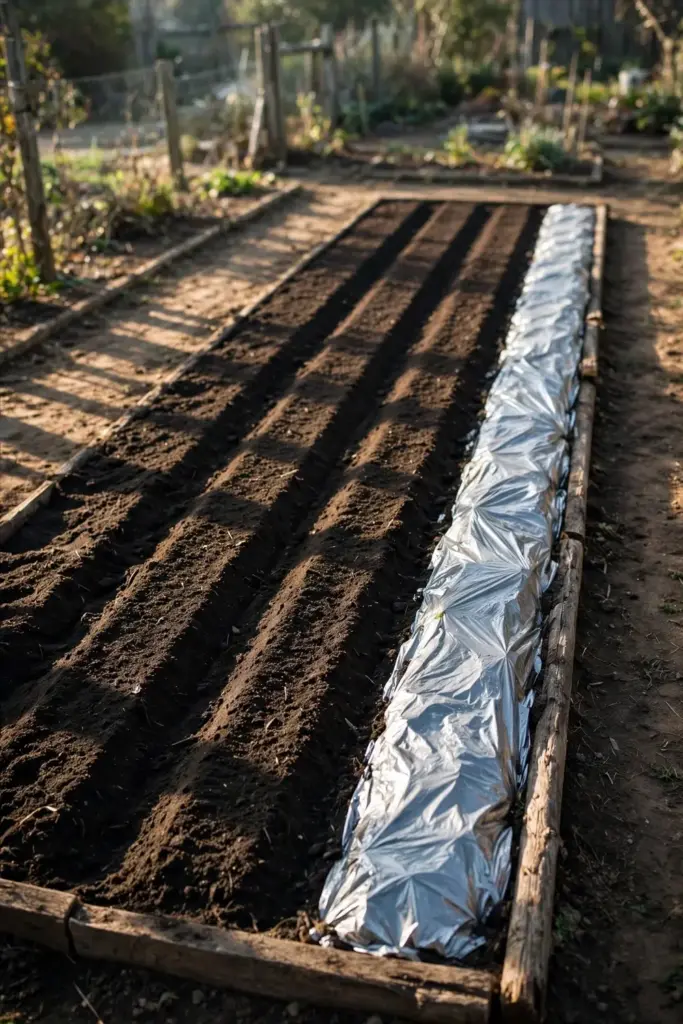
Plan the next planting before the current season ends. Order certified disease-free seed early. Plan reflective mulch at planting, not after aphids arrive. Set the new bed away from the old bed and away from weedy borders, so the first aphids of spring meet clean plants.
Keep the old bed clean through the off-season. Pull weeds that follow harvest, and clear debris promptly. A bed that held infected zucchini gets a non-cucurbit crop next, while the cucurbits move to a bed with a clean weed history. One clean season plus the weed clearing in Step 5 gives the next cucurbit planting a fresh start.
Living With Zucchini Yellow Mosaic Virus Damage You Cannot Undo
A bed with zucchini yellow mosaic virus still produces food. Harvest what formed, eat it fresh, and keep the virus out of next season.
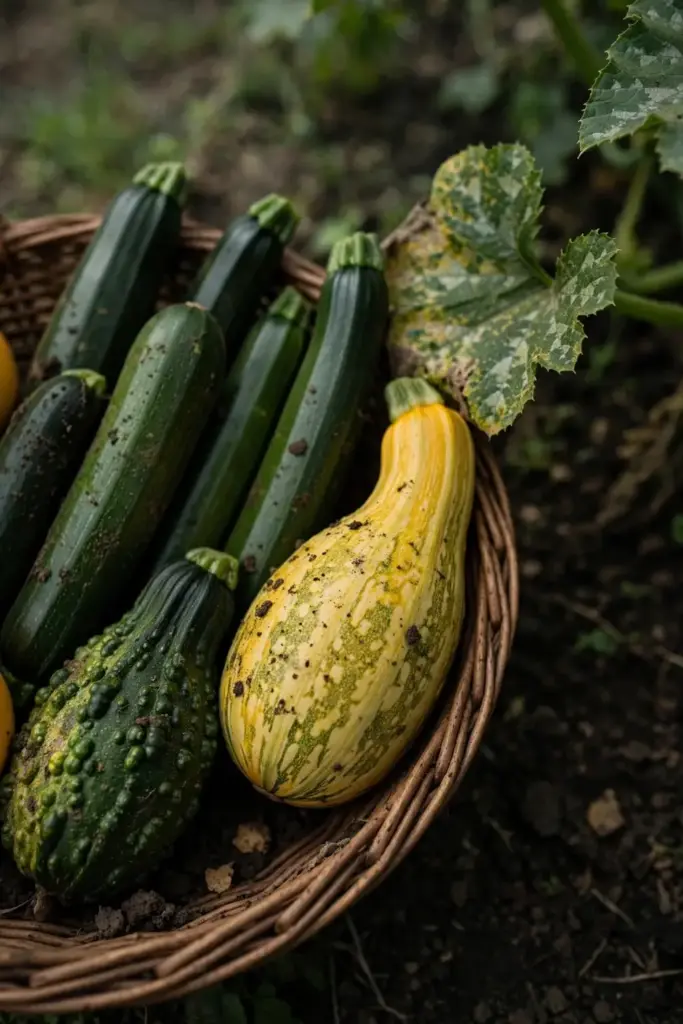
Infected fruit stays edible when the plant is otherwise sound, and a lumpy zucchini still cooks. The virus harms yield and appearance, not the cook. Wash the harvest and cook it as usual.
Do not store infected fruit for long. Eat the harvest fresh, and clear the bed after harvest. Pull weeds that follow, and keep the bed clean through the off-season, so the next planting starts without a virus source beside it.
Frequently Asked Questions
Zucchini yellow mosaic virus rarely kills an established plant outright. Infected plants stunt, distort, and drop leaves early, and fruit stays small and lumpy. Early infection ends the season for a young plant, while late infection costs far less. A seedling that stalls and mottles in its first weeks may never fruit. Pull it early. The healthy plants beside it gain the space.
Eat fresh fruit from infected plants. The virus harms yield, appearance, and fruit shape, and it never makes the harvest unsafe to eat. Wash the fruit and cook it as usual. A lumpy zucchini still grates into bread, and a mottled pumpkin still roasts. Do not save seed from infected plants, since the seed evidence conflicts and certified seed removes the doubt.
No spray stops zucchini yellow mosaic virus. Aphids transmit the virus in under a minute, and no insecticide kills that fast. Sprays cut aphid numbers and slow the spread, which helps a clean seedbed. Sprays never protect a bed that already carries the virus. Spend spray effort on clean plants and seedlings, and spend the rest on weed clearing and infected-plant removal.
The evidence conflicts. Utah State University Extension lists infected seed as one way the disease reaches a garden, while one research review reports no seed transmission. Treat saved seed from infected plants as suspect. Buy certified disease-free seed for every cucurbit you plant, and save seed only from healthy plants in a bed that showed no mosaic all season.
Check the fruit. Cucumber mosaic virus gives stunted distorted leaves with surface roughness on the fruit, and it infects many plants outside the cucurbit family. Zucchini yellow mosaic virus gives a prominent yellow mosaic with severe fruit malformation, raised lumps, and green mottling. Field symptoms alone can mislead. A lab ELISA test settles the identification.
Zucchini yellow mosaic virus returns when weeds or debris carry it through winter. Weeds beside the bed hold the virus and feed the first aphids of spring. Clear weeds before planting, destroy infected plants, and rotate cucurbits to fresh ground. A clean bed with certified seed, reflective mulch, and a weed-free border breaks the cycle in one season.
Where to Go From Here
Start with one walk around the cucurbit bed. Mark every mottled plant, then pull it the same day.
Clear the weeds, lay reflective mulch at the next planting, and buy certified seed. The virus has no cure, and the bed that beats it is the bed with fewer weeds, cleaner seed, and seedlings guarded in their first weeks.
One clean season resets the bed. Work the 10 steps in order, and next year’s cucurbits start without the virus beside them.