
Stand 6 market stalks in a jar of water and wait 28 days. That is how to grow lemongrass at home without touching a seed packet. The rest of this page is 16 moves, from sorting the cooking species from its look-alikes to the first harvest, plus the pot-indoors trick that saves cold-climate growers every winter.
Two facts decide the whole project. The first is that the grocery stalk roots at all: lemongrass stalks carry a basal plate that pushes new roots in plain water in about a week. The second is that you must buy the right species. In my experience, a stalk with the whole base intact roots within weeks, which is exactly what the propagation guides insist on.
Seed-starting is a different job, and it lives on How to Grow Lemongrass. This page stays on the stalk: grocery-stalk propagation, the citronella mix-up, and cold-climate overwintering for gardeners far from the tropics.
1. Master How to Grow Lemongrass from Store-Bought Stalks in 28 Days
The grocery method beats every other way to start lemongrass for one reason: the stalk you cook with already contains the plant. The basal plate at the bottom of a fresh stalk holds dormant root initials that wake in water.
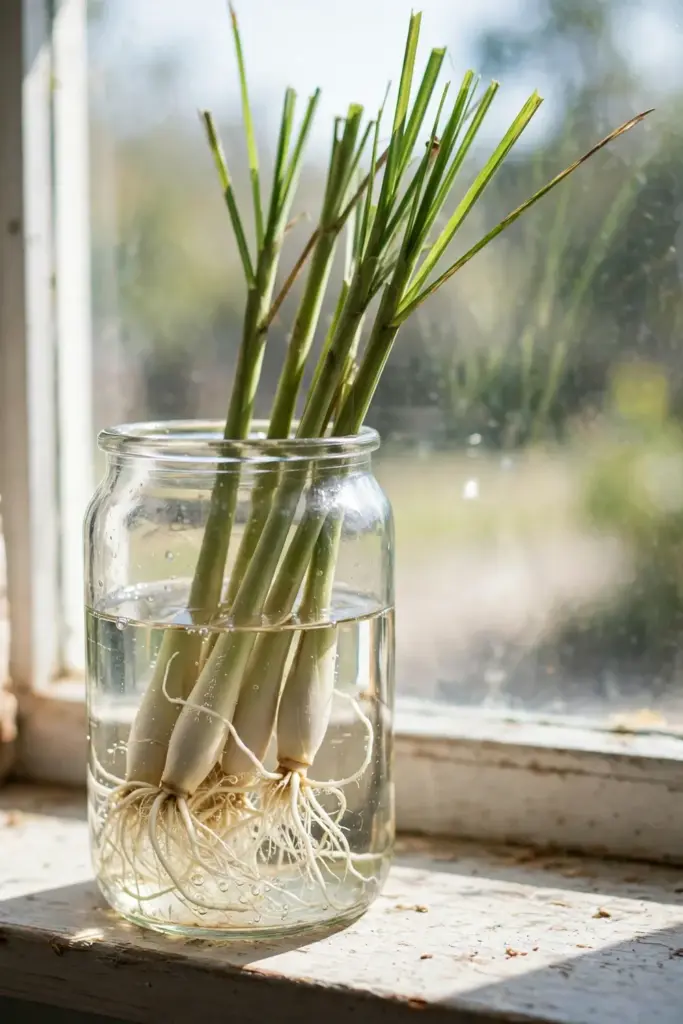
Garden Betty’s stalk-propagation walkthrough lays out the full cycle at about 28 days from jar to garden-ready plant: roots begin after roughly a week, the plant moves into soil once roots reach 7.6 cm and the stalk starts dividing into offshoots, and the first real harvest lands 2 to 4 months after planting. Her harvest mark is concrete: stalks at least 30.5 cm tall and 1.3 cm wide at the base. Those are the numbers to aim at, not the calendar date.
Pick stalks with the entire base intact. The stalk may arrive without a single root. It must arrive with the entire stem base whole; a crushed or severed base never roots. Trim the stiff tops where the leaves split, leave the woody outer layers alone because new growth pushes from inside them, and stand the stalks in a few inches of water on a sunny sill. Change the water whenever it clouds. Leaves underwater rot. The water goes cloudy. The rest of the stalk fails by dessert, which is the honest way of saying cloudy water is a rotting stalk.
At the market, choose the plumpest, firmest stalks with the longest intact bases, and sniff for a clean lemon scent. Asian grocery stores sell the freshest stalks with the longest bases; supermarket herb packets are usually trimmed too short to root. Stalks sold for soup should smell like lemongrass, not like damp cardboard. Avoid bunches with slimy bases or brown mushy ends; those stalks are already decaying and no jar of water revives them. A bunch of six fresh stalks becomes a lifetime supply within two seasons, so buy quality once.
| Method | Start | Ready to plant | Effort |
|---|---|---|---|
| Water-rooted stalks | Grocery bunch | 28 days | A jar and patience |
| Clump division | Established plant | Same day | One spade, spring |
| Seed | Packet | Days to months | Erratic, often disappointing |
2. Name the Species: Cymbopogon Citratus Is the Indonesian Cooking Serai
The Indonesian cooking serai, serai dapur, is Cymbopogon citratus, the West Indian lemongrass. That single name is your buying filter at every market and nursery.
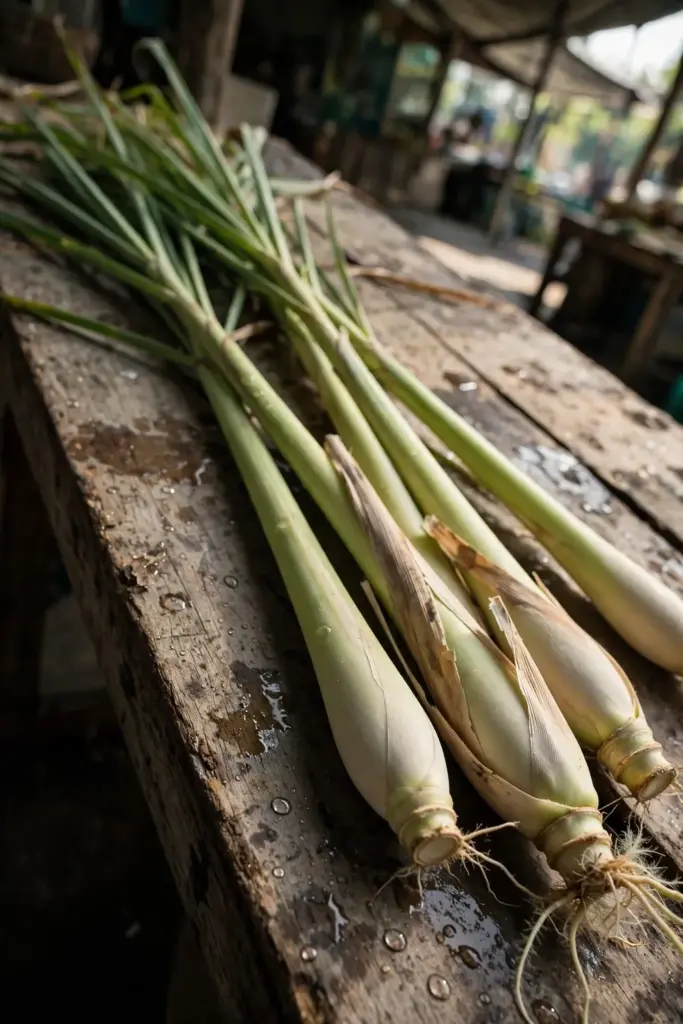
Cymbopogon citratus is the species behind the plump pale stalks in Indonesian cooking, from soto to rendang. Botanical references place its origins in maritime Southeast Asia, and the same botanical reference notes that both Cymbopogon citratus and its East Indian cousin can be used in cooking, with Cymbopogon citratus the more suitable choice for the kitchen. Cymbopogon citratus rarely flowers outside the tropics, which is why gardeners propagate it by stalk or division instead of seed.
The fence on this page: lemongrass belongs to the Indonesia lane. India grows its own lemongrass traditions around Cymbopogon flexuosus, the East Indian species, and the India queue covers those separately. Buy stalks labeled lemongrass at an Asian grocery and you are almost certainly holding Cymbopogon citratus. Keep the name on the tag until you plant.
3. Spot Citronella by Its Magenta Stem Bases
Citronella grass is not lemongrass, and the stem bases give it away: citronella shows magenta-red to purplish stems at the base, while the cooking species stays pale green and straw at the base.
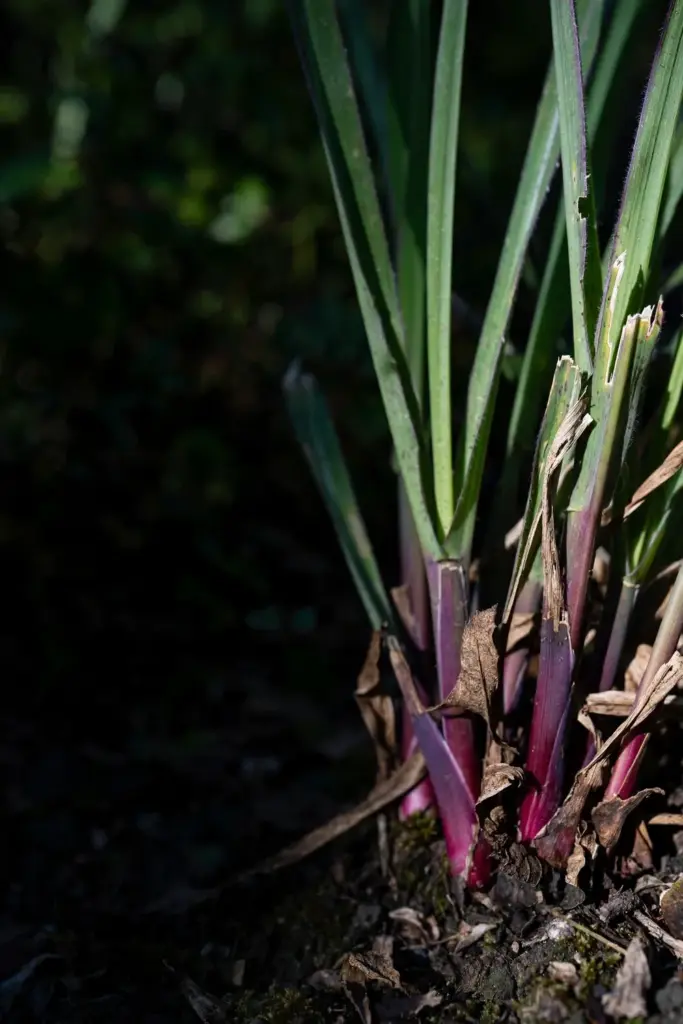
Citronella grass means Cymbopogon nardus and Cymbopogon winterianus, two species that grow to 2 m tall and carry those magenta-colored base stems. Growers raise them for citronella oil, which goes into soaps, mosquito-repellent sprays and candles, and aromatherapy products; the same botanical reference lists the oil’s principal constituents as geraniol and citronellol, not the lemon scent cooks want. Nursery shelves and big-box garden centers sell Cymbopogon nardus as the mosquito plant, and its coarse leaves and red-blushed stems are the whole identification kit you need.
If the plant in your hand smells harsh and chemical rather than clean and lemony, and the stem bases blush red-purple, walk away. That is the repellent plant, not the cooking plant. Cooks need Cymbopogon citratus. Repellent makers need Cymbopogon nardus. The Latin name on the tag settles every argument.
4. Compare the 4 Cymbopogon Cousins in One Table
Four Cymbopogon species share the shelves, the seed racks, and the search results. One table ends the mix-ups for good.
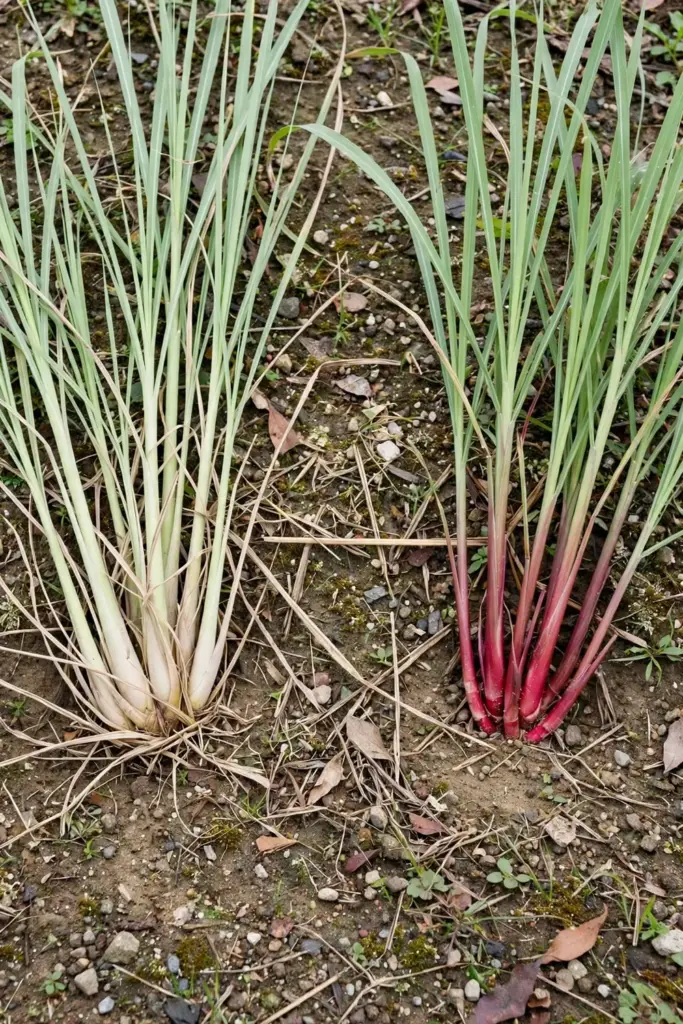
| Species | Common name | Use | Tell |
|---|---|---|---|
| Cymbopogon citratus | West Indian lemongrass, serai dapur | Cooking | Pale green base stems; the grocery stalk |
| Cymbopogon flexuosus | East Indian lemongrass, Cochin grass | Cooking, oil | The India-tradition species |
| Cymbopogon nardus | Ceylon citronella | Repellent oil | Magenta-red base stems, to 2 m |
| Cymbopogon winterianus | Java citronella | Repellent oil | The commercial oil species |
Cymbopogon flexuosus, the East Indian lemongrass also called Cochin grass or Malabar grass, grows across Cambodia, Vietnam, Laos, India, Sri Lanka, Myanmar, and Thailand, while Cymbopogon citratus comes from maritime Southeast Asia. Cooks can use either, but the genus references mark Cymbopogon citratus as the more suitable for cooking. The two citronella species exist for oil, and the magenta base stems mark them in the nursery.
Memorize one row: Cymbopogon citratus equals pale stems equals the kitchen. Everything else on the table is either a regional cooking cousin or a repellent plant. When a tag says only “lemongrass” with no Latin name, ask. Vague tags are how citronella ends up in soup pots.
5. Root Fresh Stalks in a Jar of Water for 1 to 4 Weeks
Stand trimmed stalks in a jar with a few inches of water on a sunny windowsill and wait. Roots show after about a week; the stalk moves to soil when roots reach 7.6 cm and new offshoot stalks start dividing.
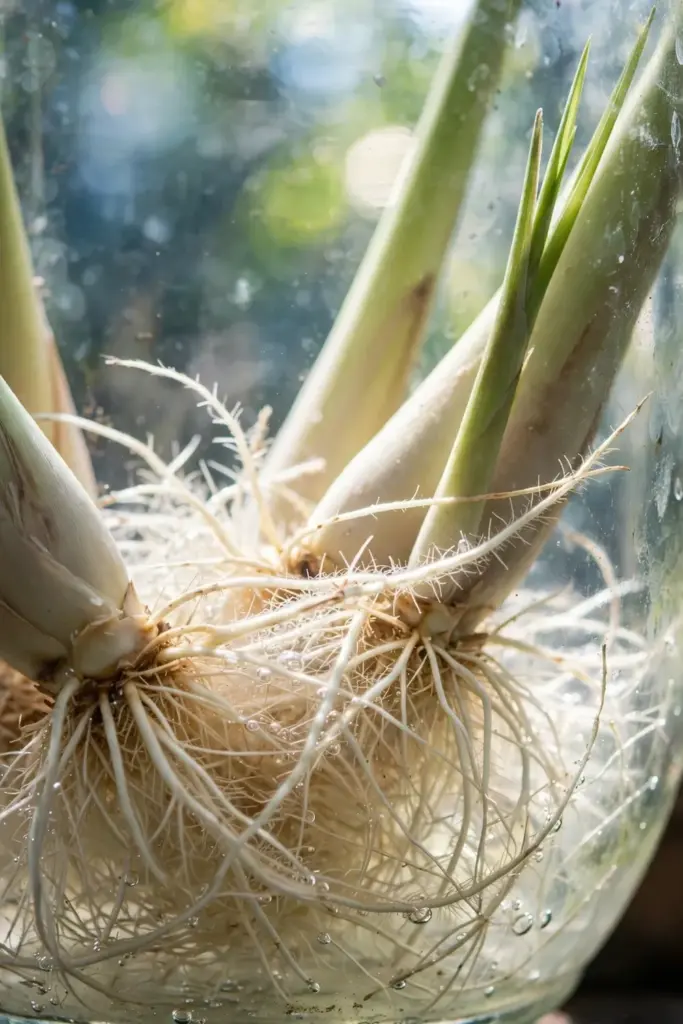
Cut the tops off where the stiff leaves split apart, then shave nothing off the base. A fresh cut across the bottom helps only if the base looks dry or bruised. Set the stalks upright in the jar so the bottom 5.1 to 7.6 cm sits underwater, and park the jar on a south-facing sill where it gets direct sun. Change the water every few days, or the moment it clouds.
New leaves push from the center first, which is your sign the stalk is alive. Roots follow. Some stalks root in a week, stubborn ones take three or four. A stalk that stays green and firm is still working; a stalk that goes soft and brown at the base is compost. Do not bury a stalk in soil before the roots reach that 7.6 cm mark. Soil before roots is how stalks rot.
This water-rooting trick is the heart of how to grow lemongrass in a cold climate, because the whole jar phase happens indoors while frost still rules outside. If roots hit 7.6 cm but the last frost is weeks away, pot the stalks into small nursery pots and keep them on the sill. They wait happily in pots for a month, growing stronger, and transplant without a sulk once the nights warm.
6. Skip the 5 Jar Mistakes That Rot Stalks Before They Root
Most failed stalks die from five avoidable mistakes, not bad luck. Run this checklist before the first jar goes on the sill.
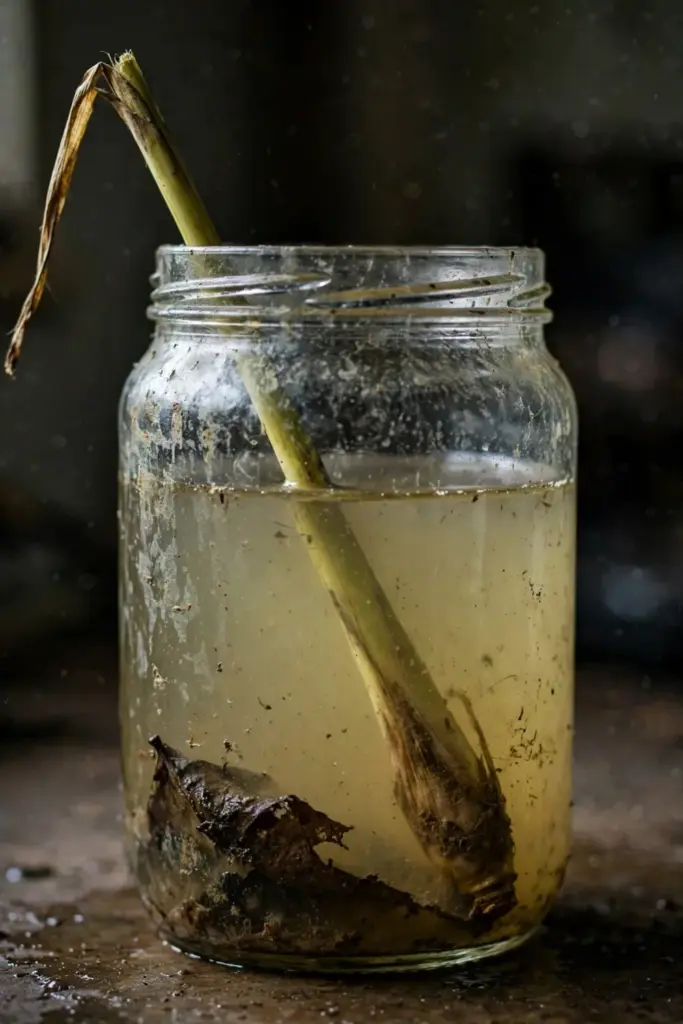
First, cloudy water. Bacteria bloom in stagnant water and the base rots instead of rooting. Change the water every two or three days without fail. Second, submerged leaves. Strip every leaf that would sit underwater; leaves below the waterline decay and poison the jar. Third, a damaged base. Stalks with crushed, sliced-off, or dried bases cannot form roots. Start over with intact ones.
Fourth, weak light. A dim kitchen corner stretches the rooting from one week to four and invites rot in the meantime. The jar belongs on the sunniest sill in the house. Fifth, potting up too early. A stalk with 2.5 cm of nubby roots looks ready but collapses in soil; wait for the full 7.6 cm of roots plus visible offshoot division. Every one of these failures is visible days before it turns fatal. Catch them early and the jar method almost never loses a stalk.
7. Divide a Mature Clump in Spring for Instant New Plants
A mature clump of Cymbopogon citratus holds 50 to 200 tillers. Slice the clump into divisions that each carry roots and shoots, and every division is a new plant the same day.
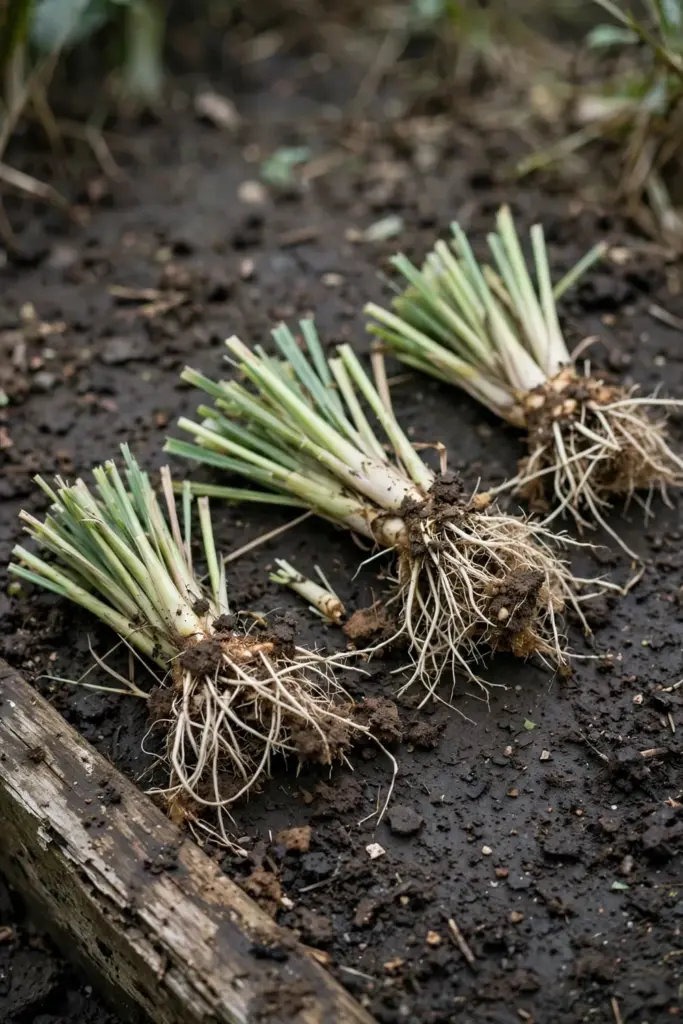
Division is the recommended propagation strategy for Cymbopogon citratus in extension references, and it skips the whole jar phase. Dig around an established clump in spring, lift it with the spade, and pull or cut it into sections. The same botanical reference that sorted the species gives the division recipe too: cut the upper leaves back, then separate rooted divisions 10 to 15 cm long from the mother plant and set them straight into prepared soil.
Water the divisions in hard and mulch them. They look flat and sad for a week. Then the centers green up and new spears push. One grocery-store start becomes a clump in a season; the next spring that clump becomes three or four plants. The math compounds fast, which is why one stalk is a lifetime supply. Two seasons of division turn a single jar of stalks into a row of clumps big enough to share with neighbors.
8. Plant After Your Last Spring Frost Passes
Cymbopogon citratus is a tropical grass that dies back below freezing, so rooted stalks and divisions go outside only after the last spring frost. One late frost erases a month of jar work.
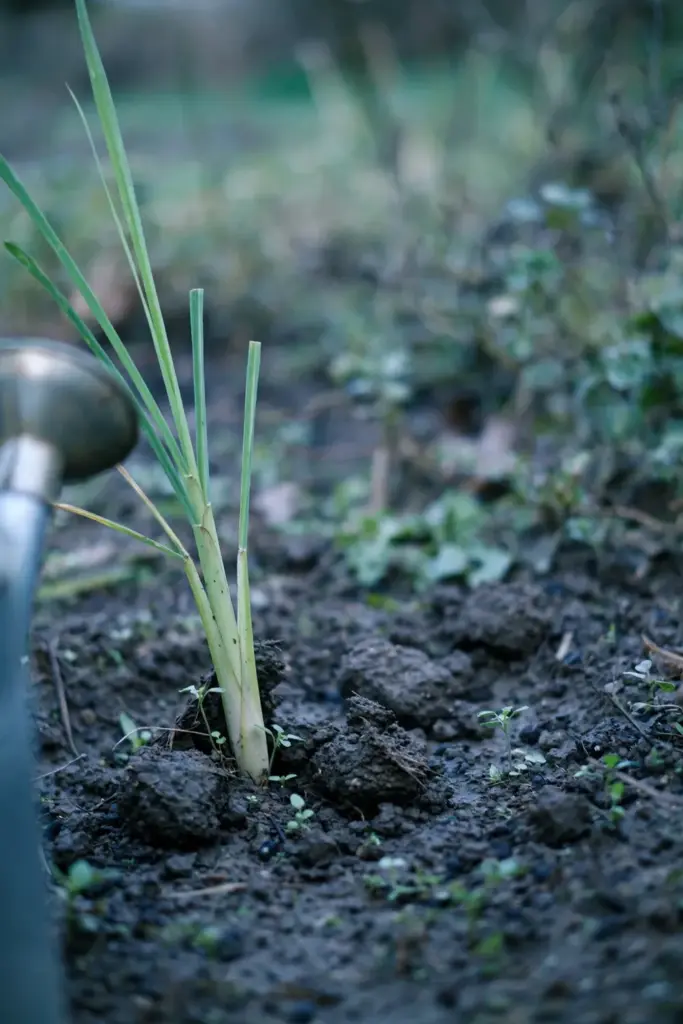
Extension references list Cymbopogon citratus as hardy only in zones 8b through 11b, and a British growing guide marks its hardiness at about 7 degrees Celsius. Everywhere else it grows as a warm-season annual or a container plant that winters indoors. The plant stalls in cool weather, and prolonged cold kills the crown outright.
Watch the night forecast, not the calendar. A week of reliably warm nights is the green light in most temperate gardens. Harden the plants off first: a few days in shade, a few days in morning sun, then the full-sun bed. Nursery-grown transplants and grocery stalks both scorch if they jump straight from a windowsill to July sun.
9. Give Each Clump 61 to 91 cm of Space in Full Sun
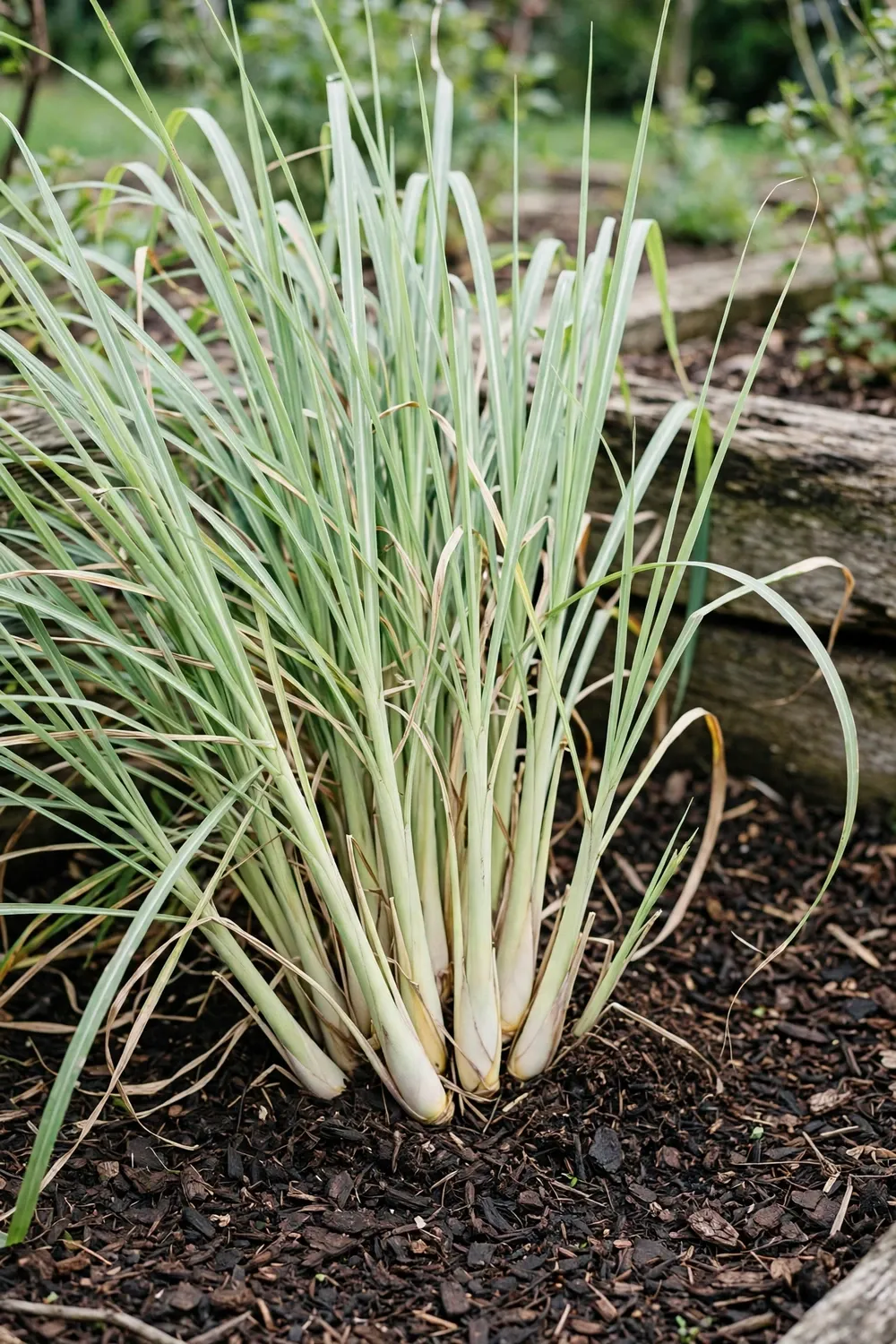
Space plants 30.5 to 91 cm apart in full sun, at least 6 hours of direct light a day. A happy clump reaches 61 to 122 cm tall and 61 to 91 cm wide by midsummer.
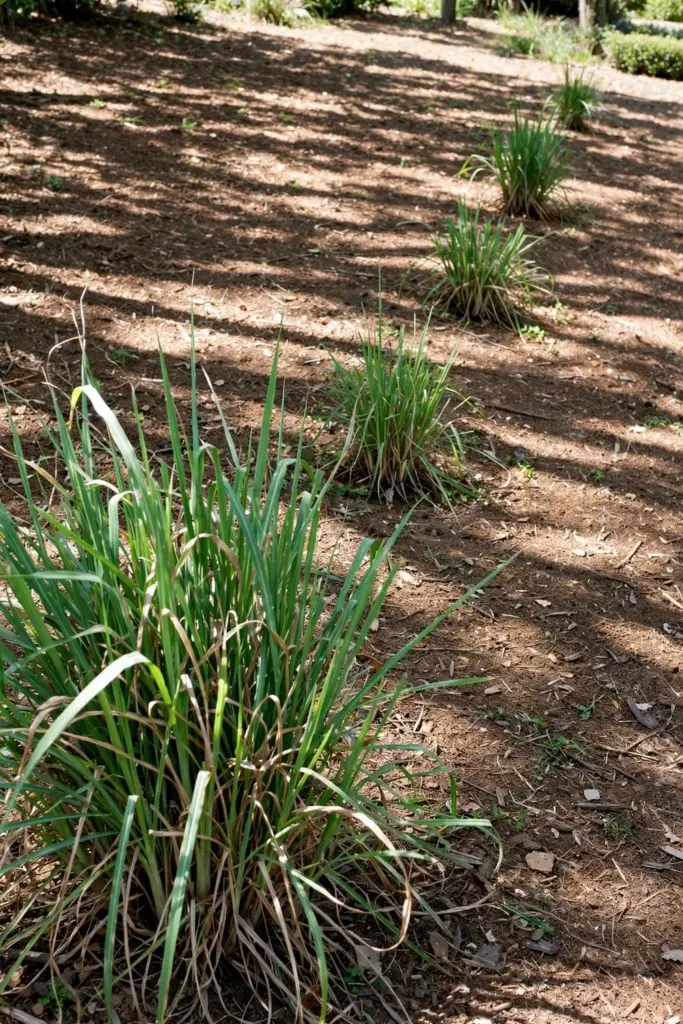
The North Carolina Extension profile of Cymbopogon citratus sets these marks: full sun at 6 or more hours daily, good drainage with soil kept moist, and 30.5 cm to 91 cm of room per plant. Crowded clumps stay thin and pale because the inner stalks never see light. The same extension profile lists the plant as a clumping, erect, fine-textured herbaceous perennial, which is a technical way of saying it gets big and stays where you put it.
Dig the planting hole no deeper than the root ball. Set the crown just below the soil surface, exactly as it sat in the jar or the mother clump. Burying the crown invites rot; leaving roots exposed invites drying. Water the hole in, then back off. Lemongrass wants moisture, not a swamp.
10. Pot Up Rooted Stalks in 30 cm Containers
A mature plant wants a pot at least 30 cm across. Smaller pots work for young starts, but a full clump needs the volume.
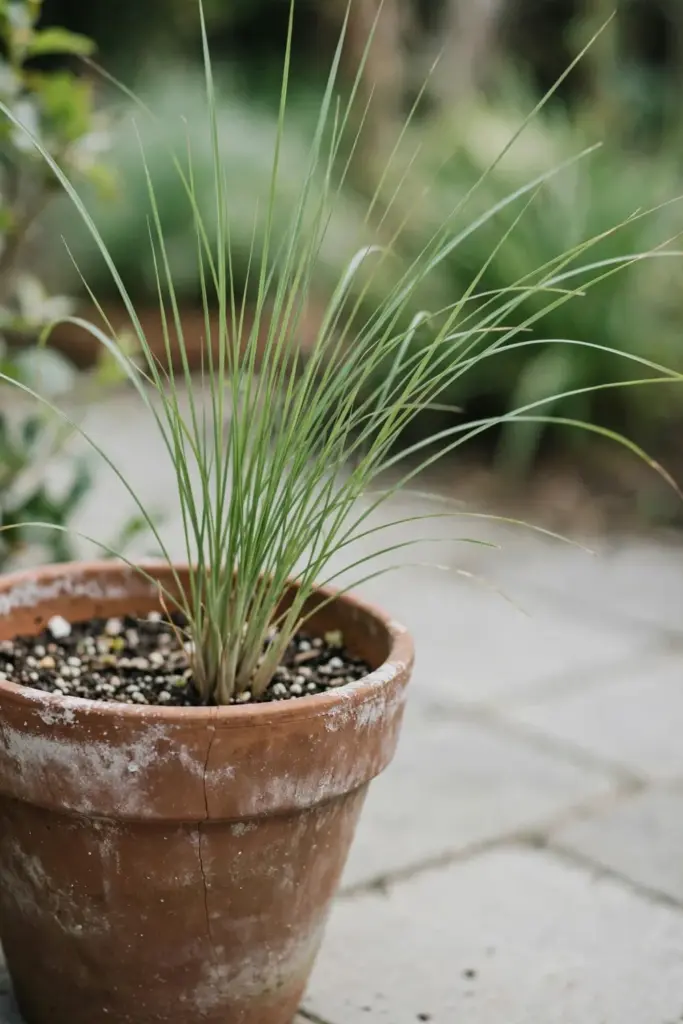
The container is the whole strategy for cold-climate growers: the pot that spends summer on the patio spends winter by a bright window. The same British growing guide that sets the 7-degree hardiness line also sets the pot rule: a mature plant needs a container of at least 30 cm diameter, and bigger is better. Fill it with a quality well-draining potting mix, plant the crown just below the surface, and water thoroughly at planting. One plant per pot. Two plants per pot fight for water by August and both lose.
Heavy pots matter. A 30 cm pot full of wet mix and a 1-meter grass clump topples in wind. Set the pot where the house wall breaks the wind, or drop the nursery pot inside a heavier ceramic cachepot. Drainage holes are non-negotiable. A sealed decorative pot with no holes is a slow drowning, and the plant shows it with yellowing outer leaves first.
11. Keep Soil Evenly Moist and Keep Mulch off the Crown
Cymbopogon citratus wants soil evenly and lightly damp, never waterlogged. Mulch thickly around the clump but never pile mulch against the stalk bases.
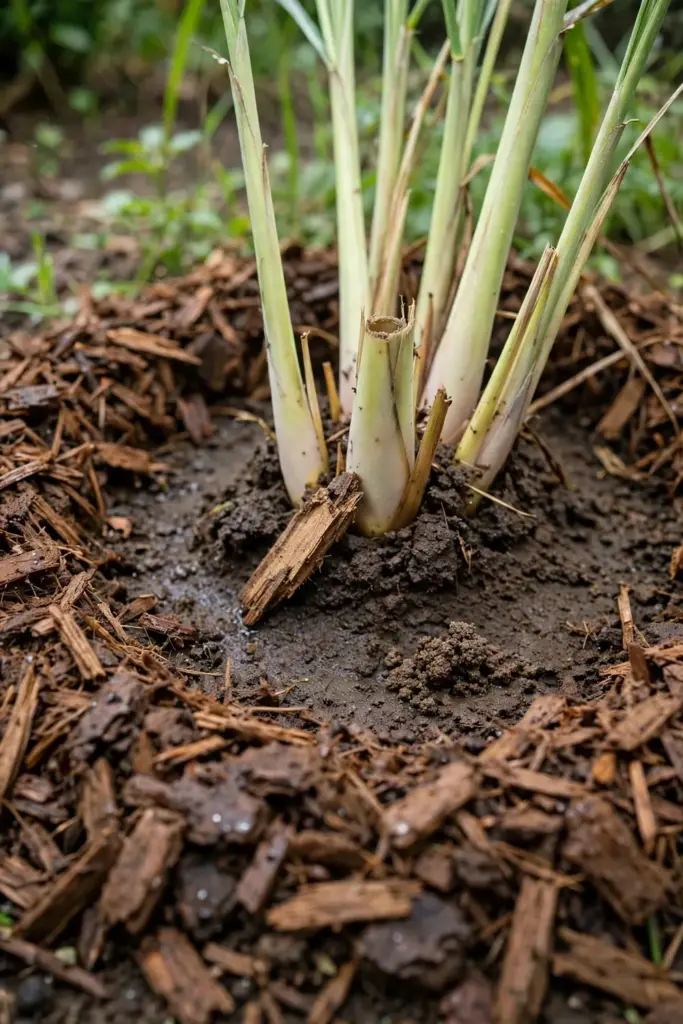
The rule from the same propagation guide is plain: keep the soil evenly and lightly damp, not waterlogged, and spread a thick layer of organic mulch while keeping it off the base. Mulch piled against stems holds moisture where the crown wants air, and crown rot follows. Leave a hand-width gap of bare soil around every stalk base.
Containers dry faster than beds. In hot weather a 30 cm pot may need water daily; in-ground plants drink once or twice a week depending on rain. Stick a finger 5.1 cm into the mix. Dry at that depth means water now. Soggy at that depth means the drainage failed, not the plant.
12. Feed with All-Purpose Fertilizer at Planting Time
Work an all-purpose fertilizer into the soil at planting time. Cymbopogon citratus is a grass, and grasses eat nitrogen to make leaves.
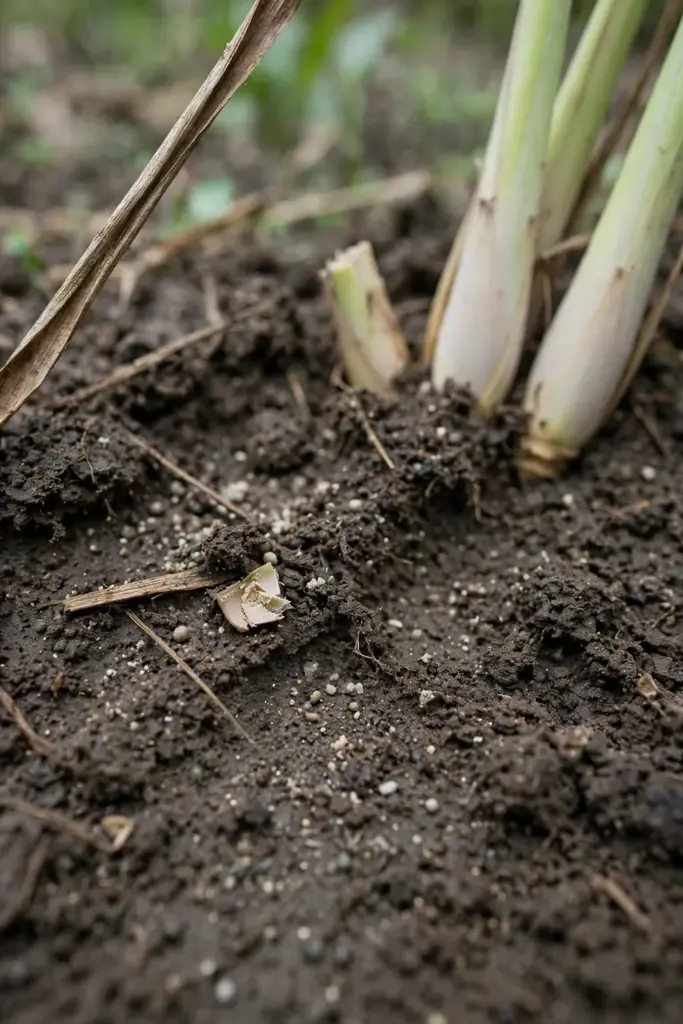
The propagation recipe that produced the 28-day timeline includes organic all-purpose fertilizer stirred into the potting soil before the rooted stalks go in, mixed at the package rate. That single feeding carries the plant through establishment. In containers, where every watering leaches nutrients out the drainage hole, a second light feeding in midsummer keeps the spears thick.
Skip the fertilizer math anxiety. A balanced granular fertilizer or a compost-rich planting hole both work. What fails is the starved plant: thin pale spears, slow division, stalks that never reach the 1.3 cm harvest width. If the spears look anemic by August, feed once and water it in. The clump responds within two weeks.
13. Move the Pot Indoors Before Nights Drop to 7 Degrees
Bring the pot inside before nights flirt with 7 degrees Celsius. Cymbopogon citratus survives down to about that mark, and one hard freeze kills the crown outright.
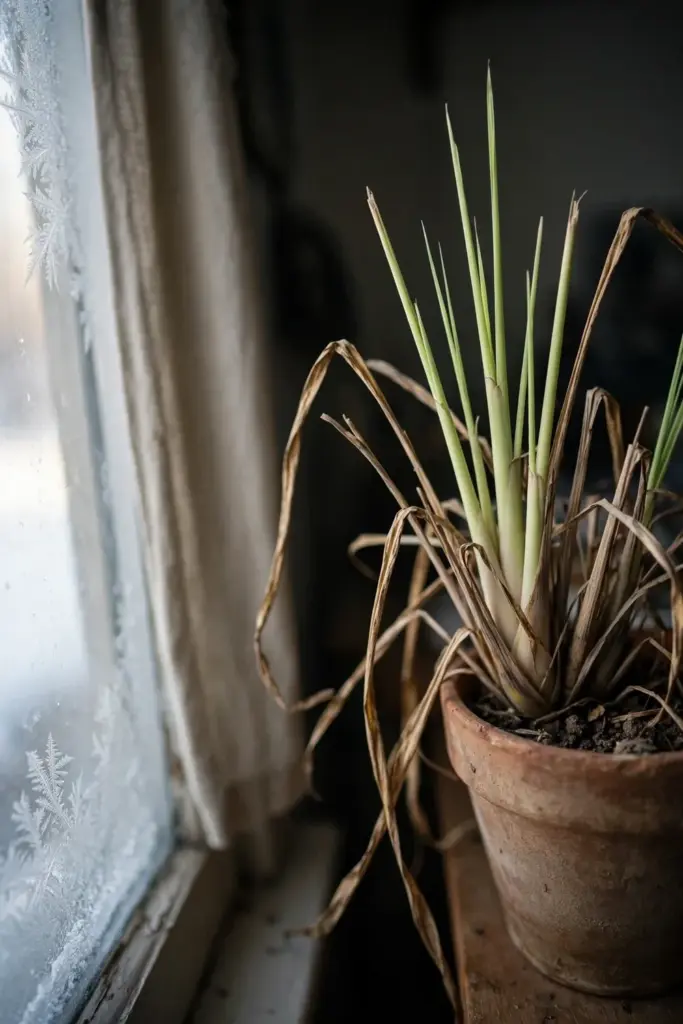
This is the whole cold-climate playbook: the plant lives outdoors from last frost to first frost, then winters as a houseplant. Park it at the brightest window you own, cut watering back to keep the mix just barely moist, and stop fertilizing. Extension notes on overwintering Cymbopogon citratus as a container plant add one warning: do not let it dry out. The winter killer indoors is neglect: a pot forgotten behind the curtain until the leaves crisp.
Before the move, cut the foliage back by a third and check every leaf for hitchhikers, because outdoor pots carry aphids and spider mites inside every autumn and a neglected infestation spreads to the houseplants by December. Expect ugly anyway. Indoor leaves brown at the tips. The clump looks tired by February, which is normal. Cut the dead leaves off in March, harden the plant off again, and set it out after the last frost. The crown that survives winter explodes in spring, thicker than any first-year plant, because the root mass keeps growing all winter even while the top sulks.
14. Harvest Stalks at 30.5 cm Tall and 1.3 cm Wide
Harvest starts 2 to 4 months after planting. Cut stalks that reach at least 30.5 cm tall and 1.3 cm wide at the base, slicing about 2.5 cm above the ground.
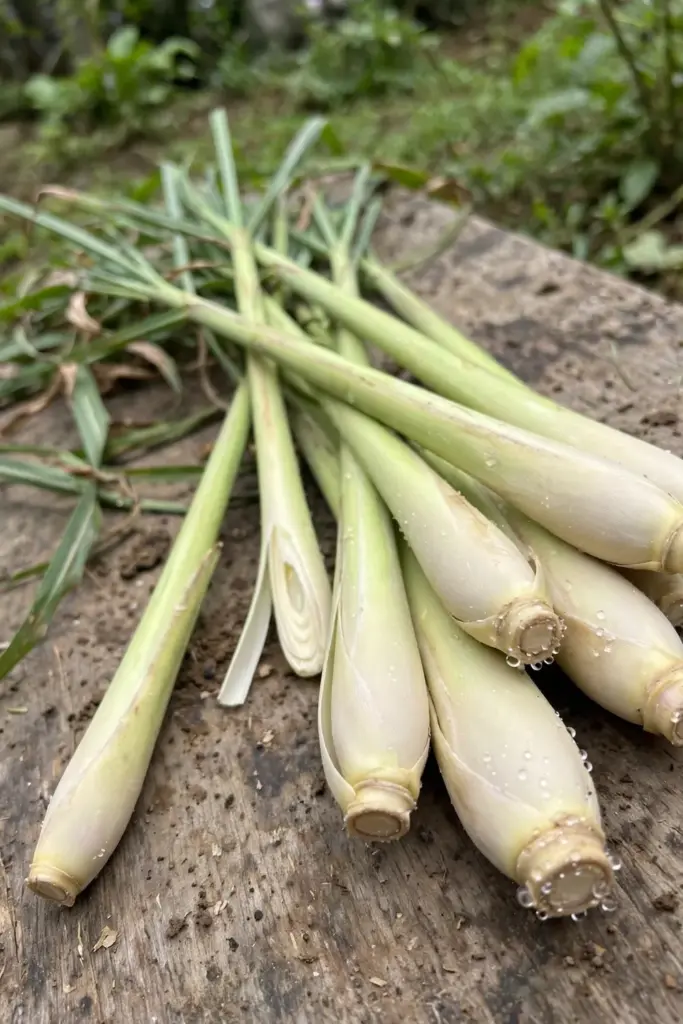
Take the outer stalks first and leave the young center spears to keep growing. Snap or cut the stalk low, peel off the tough outer layers, and trim the green tops away; the prize is the tender pale base, which carries the strongest lemon flavor. The clump keeps dividing and replacing what you take, so a weekly harvest through the warm months is realistic.
Never strip a young clump bare. Take a third of the stalks at most and let the plant recover. The flavor peaks in warm weather; stalks cut in cool autumn taste thinner. For the biggest kitchen yield, harvest hard in late summer and freeze the bases. Frozen stalks keep their aroma for months and drop straight into the pot. The trimmed green tops are not waste either: steeped in boiling water they make a clean lemony tea, the same use that made lemongrass a household herb across Southeast Asia.
15. Sow Seeds at 13 to 18 Degrees Only If You Accept Erratic Germination
Seeds of Cymbopogon citratus germinate erratically, anywhere from a few days to many months at 13 to 18 degrees Celsius. The stalk method wins on speed, reliability, and flavor certainty every time.
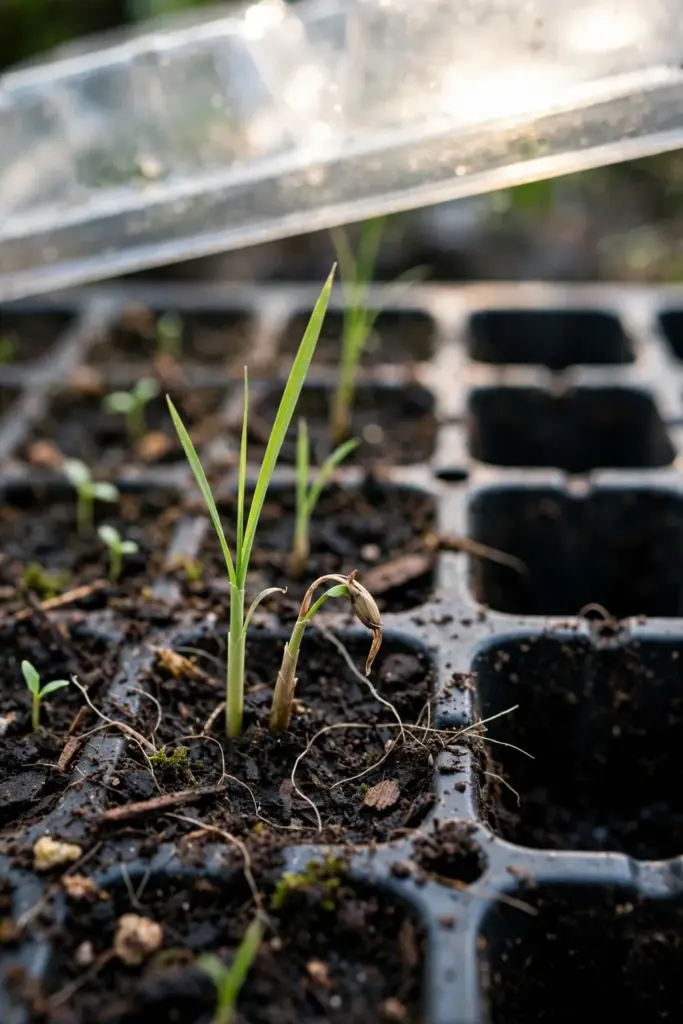
Seed exists mostly for breeders and for gardeners who cannot find fresh stalks. Sow in small pots in early spring, keep them at 13 to 18 degrees, and expect uneven results; the growing guide reports germination ranging from days to months, with some seed lots refusing outright. Patience is the only input seed asks for, and it pays poorly. Seed-grown plants also take a full season longer to reach harvest size. If you insist on the seed route, the site’s seed starting steps cover the mechanics.
For everyone else, the market bunch is the seed packet. Three fresh stalks with intact bases outperform a whole packet of seed, and they cost less. Save seed-starting for plants that demand it. Lemongrass does not.
16. Pair Lemongrass with Ginger and Turmeric in the Tropical Corner
Cymbopogon citratus, ginger, and turmeric all want the same thing: heat, full sun, and steady water. Plant them in one tropical corner and water them together.
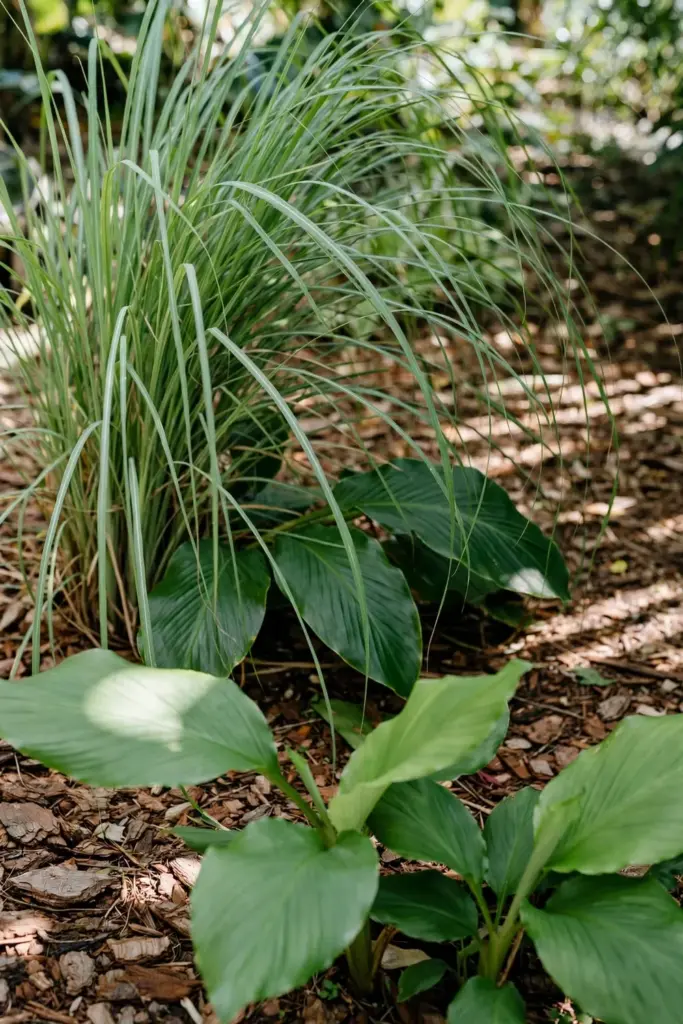
The trio shares a growing calendar. All three go out after the last frost, drink heavily through summer, and come inside or get harvested before the first frost. Lemongrass brings height and structure at up to 122 cm; ginger and turmeric stay low and fill the foreground. A big container grouping on the patio works the same way, and the single watering routine keeps all three happy.
Companion notes from the site’s tropical growers cover the details: growing ginger at home for a big harvest and the beginner’s turmeric guide both run on the same frost-to-frost rhythm as this page. The extension profile backs the grouping too: it lists Cymbopogon citratus as resistant to heat, humidity, and insect pests, which is exactly the climate this corner creates. Keep the corner mulched, keep the water steady, and the whole trio cruises through summer with one routine.
Frequently Asked Questions
No. Lemongrass for cooking is Cymbopogon citratus, with pale green stem bases. Citronella grass is Cymbopogon nardus or Cymbopogon winterianus, with magenta-red stem bases, grown for citronella oil used in repellents and soaps. Nurseries sell the oil species as mosquito plants, and their harsh chemical scent is the giveaway. Check the Latin name on the tag before a citronella plant lands in your soup pot.
Only in zones 8b through 11b, where it grows as a perennial. In colder zones the crown dies at a hard freeze, so growers treat it as an annual or overwinter the pot indoors. Move containers inside before nights approach 7 degrees Celsius and keep the mix barely moist through winter. Expect brown leaf tips indoors; the crown rebounds in spring once it returns to warmth and full sun.
Two to four months after planting, once stalks reach at least 30.5 cm tall and 1.3 cm wide at the base. Harvest outer stalks first by cutting about 2.5 cm above the ground, leaving the young center spears to keep growing. Take no more than a third of the clump at once. Established clumps keep dividing and replacing harvested stalks, so weekly cutting through warm months is realistic.
Yes, in a bright warm spot, though outdoor summer growth is always thicker. Give the pot your sunniest window, at least 6 hours of direct light, and water when the top 5.1 cm of mix dries. Skip fertilizer in winter and expect some brown leaf tips. Extension references specifically recommend overwintering Cymbopogon citratus as a container plant, with one warning: do not let the pot dry out completely.
Cloudy water is the usual killer; change it every few days and keep only the bottom 5.1 to 7.6 cm submerged. Stalks with crushed or cut-off bases cannot root, so start with stalks whose entire base is intact. A stalk that stays green and firm is still working even after two weeks, while a soft brown base is finished. Weak winter windowsill light also slows rooting, so move the jar to the sunniest glass you own.