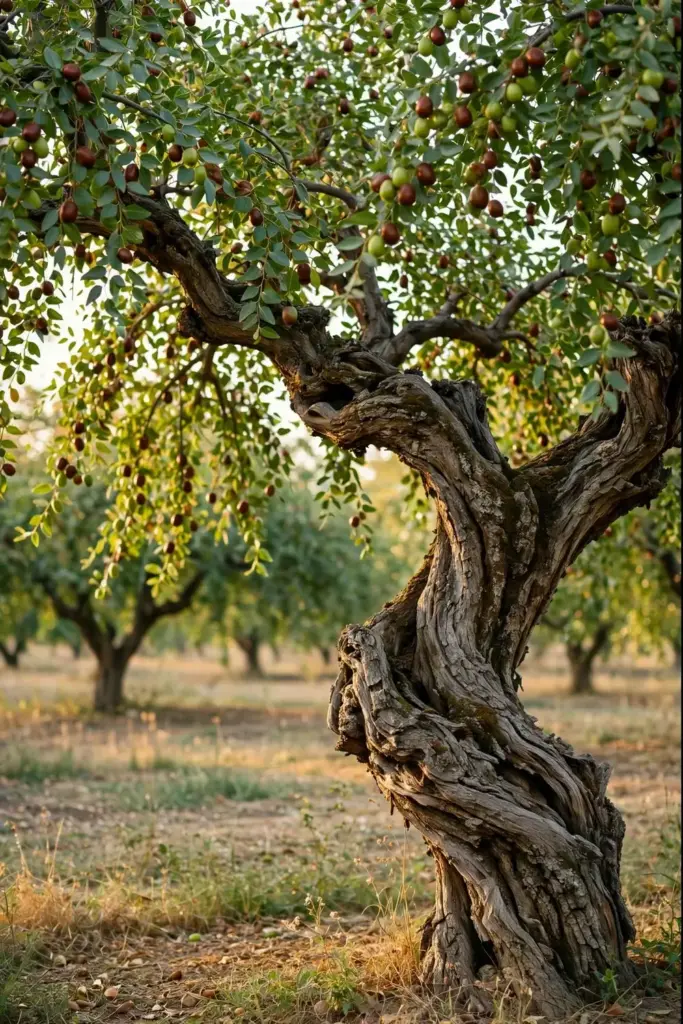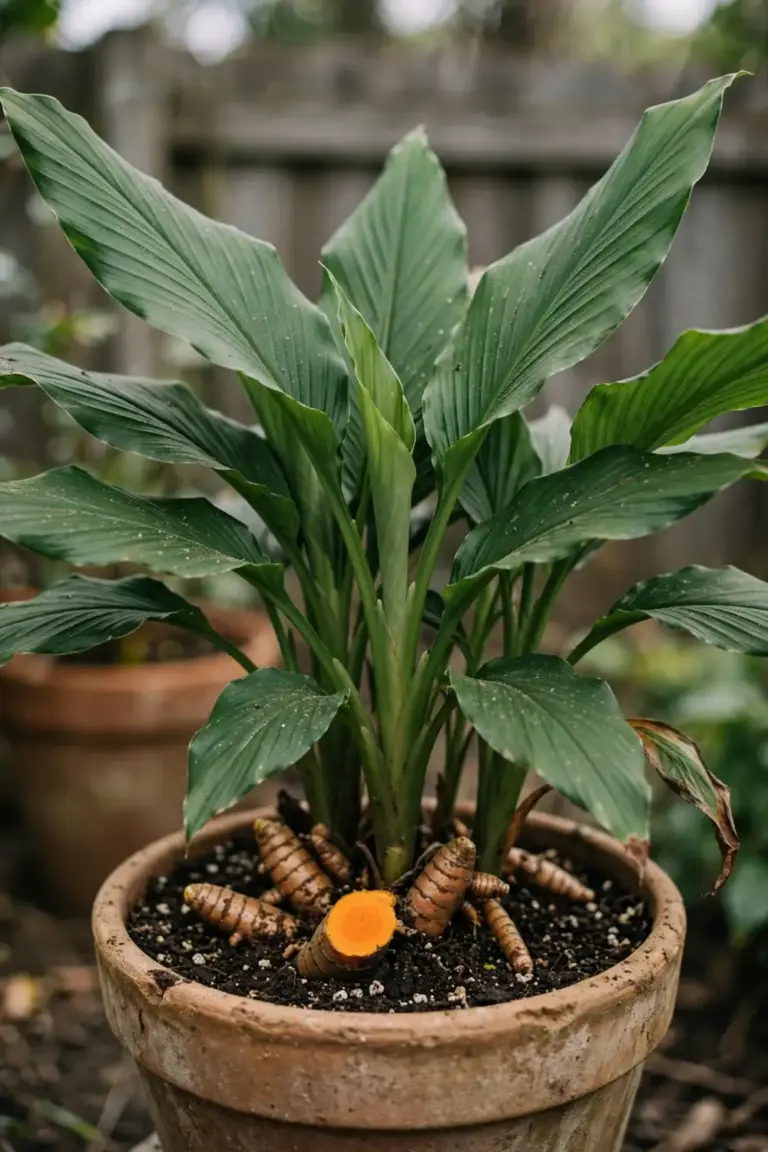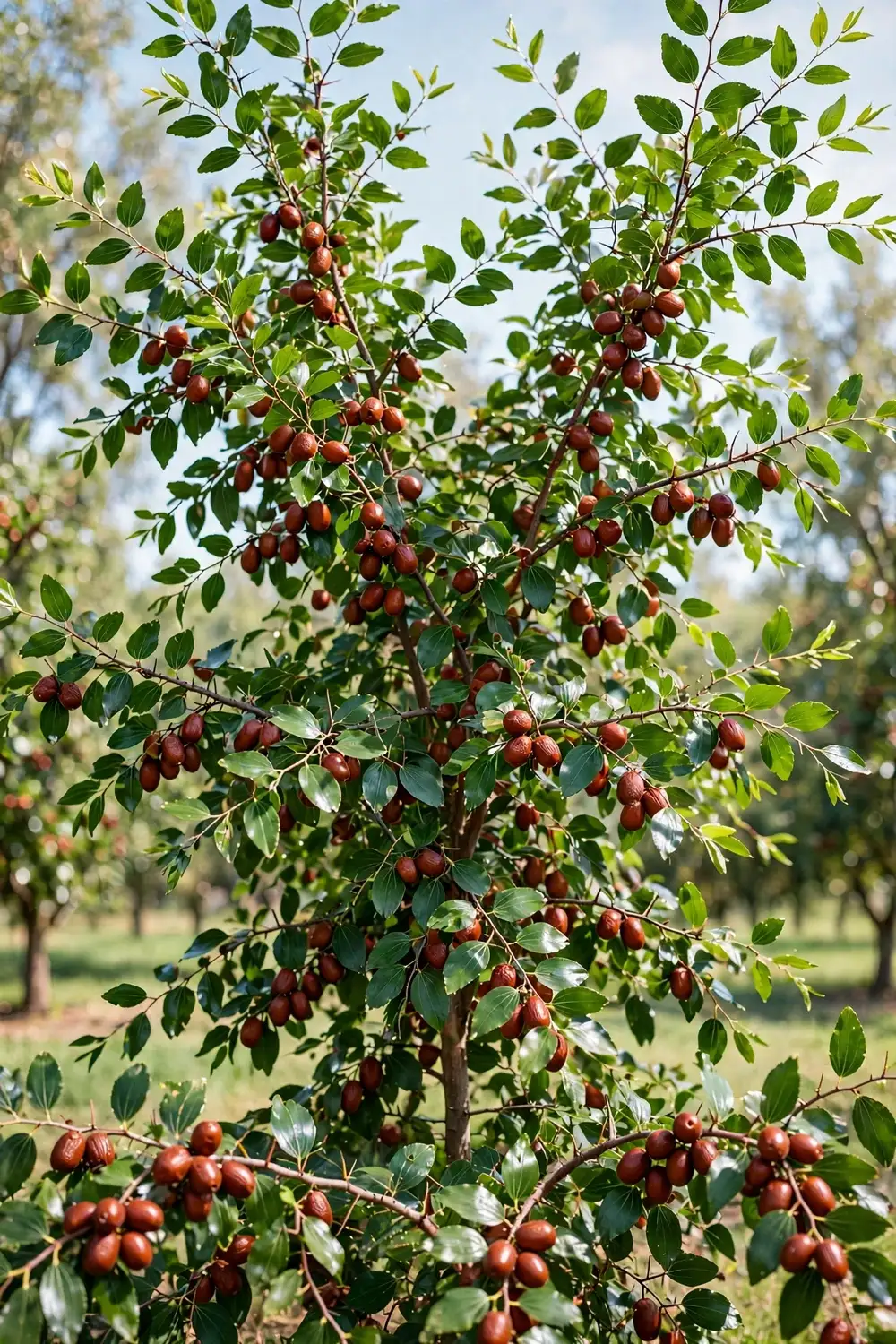

Crack 10 jujube pits this spring. That is how to grow jujube from seed: a thorned, drought-proof tree that turns out date-sweet fruit and outlives the gardener who plants it. The rest of this page is 15 moves, from stone to sweet harvest. I have learned that jujube forgives every mistake except shade and wet feet. Plant it well once and it pays you back for a century.
Jujube (Ziziphus jujuba), also called Chinese date or red date, is a deciduous fruit tree from China with thousands of years of cultivation behind it. The fruit tastes like a crisp apple fresh and a chewy date dried. One tree is enough, because jujube is self-fertile. Seed takes years longer than grafted stock to fruit, which is why this guide walks both roads and tells you honestly when the shortcut beats the scenic route. Choose your road before you sow.
1. Meet the Chinese Date
Two species share the jujube name, and they suit opposite climates. Ziziphus jujuba is the Chinese date: deciduous, with smooth hairless leaves, the less tropical of the two, and the species grown across China for millennia. Chinese records show the jujube has been cultivated in China for 4,000 years, according to ECHOcommunity’s jujube profile. Ziziphus mauritiana is the Indian jujube, called ber: evergreen, with hairy leaves, commercially most important in India. The relationship between the two is obscured in the literature by writers misusing the name Z. jujuba for mauritiana, as the ResearchGate jujube review notes. For temperate gardeners, jujuba is the species. Buy seed labeled Ziziphus jujuba and you get the cold-hardy, deciduous, date-fruited tree this guide describes.
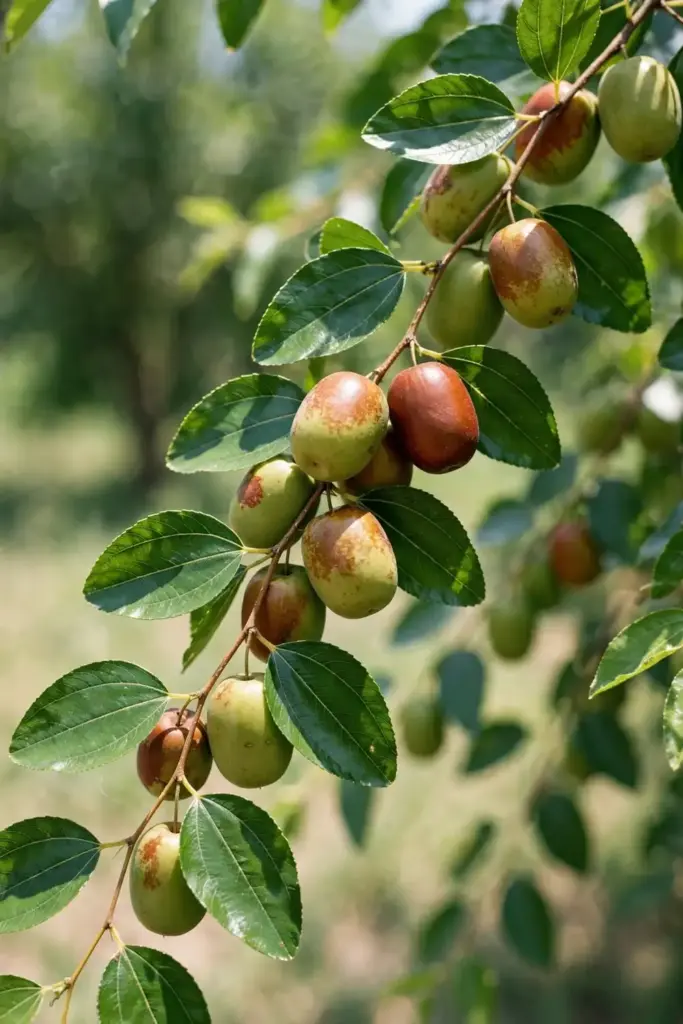
The name on the packet matters more than usual here. Because writers have mixed up the two species for decades, seed sold as “jujube” without a Latin name is a gamble: you might get the temperate tree or the tropical one. A tropical seedling planted in zone 7 dies in its first winter, and you will not know why until you learn about mauritiana. Insist on the Latin name from the seller. Serious seed houses print Ziziphus jujuba on the packet without being asked. If the seller cannot provide it, buy elsewhere; the few dollars saved are not worth three years of growing the wrong tree.
| Feature | Ziziphus jujuba (Chinese date) | Ziziphus mauritiana (Indian jujube / ber) |
|---|---|---|
| Leaves | Deciduous, smooth and hairless | Evergreen, hairy beneath |
| Climate | Temperate, frost-hardy | Tropical/subtropical |
| Main region | China | India |
| For your garden | Yes, zones 6–10 | Only frost-free climates |
2. Seed or Grafted? Decide Before You Sow
This decision shapes the next five years. Seedlings are cheap, vigorous, and genetically variable: the fruit may be better or worse than the parent, and you wait years to find out. Grafted trees are exact clones of named cultivars like Li, Lang, or Sugar Cane, fruit sooner, and cost more. Seedlings take 4 to 5 years to bear fruit while grafted plants fruit in 2 to 3 years, as The Polyculture Project’s jujube guide records. The seed-vs-grafted comparison for stone fruits shows the same tradeoff in plums. Choose seed if you want many trees cheaply, enjoy surprises, or need rootstocks for grafting later. Choose grafted if you want a known cultivar fruiting fast.
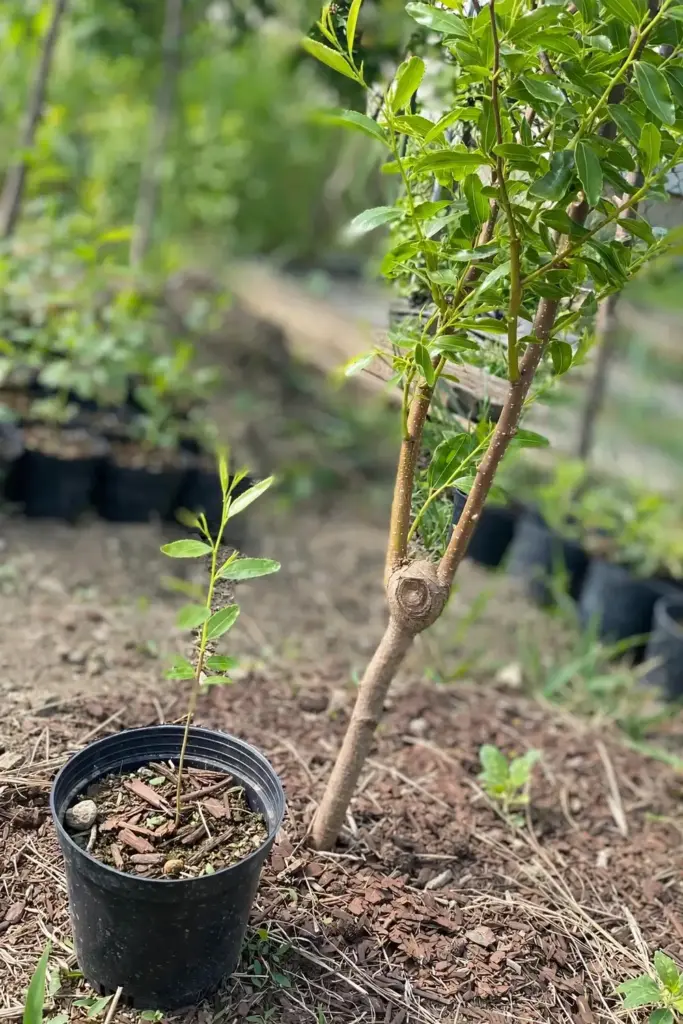
Think about what you want from the tree. A seedling is a lottery ticket with good odds: most seedlings produce decent fruit, a few produce outstanding fruit, and the rare one is worth naming and propagating. Breeders found many named cultivars exactly this way, by growing out seedlings and selecting the winners. A grafted tree is a sure thing: the exact fruit the nursery promised, on schedule. There is no wrong choice, only a mismatch between the choice and your patience. Many growers do both: a grafted tree for early fruit and a row of seedlings for the future.
| Seed-grown | Grafted | |
|---|---|---|
| Years to first fruit | 4–5 | 2–3 |
| True to type | No: seedlings vary | Yes: exact clone |
| Cost | Lowest | Higher |
| Best for | Orchards, rootstocks, experiments | One perfect tree, fast fruit |
3. Confirm Your Climate
Jujube is a heat lover with a cold backbone. It thrives in zones 6 to 10, demands long hot summers to ripen its fruit, and tolerates drought, frost, and poor soil once established. Give it the hottest, sunniest spot you own: against a south wall is ideal. In zone 6, plant in spring so the tree establishes before winter; in zones 9 and 10, autumn planting works too. Cool-summer climates produce leaves but little ripe fruit, because the fruit needs sustained warmth to sweeten. If your summers regularly top 30°C, the jujube will feel at home. If they do not, grow it anyway for the ornamental value and enjoy whatever ripens.
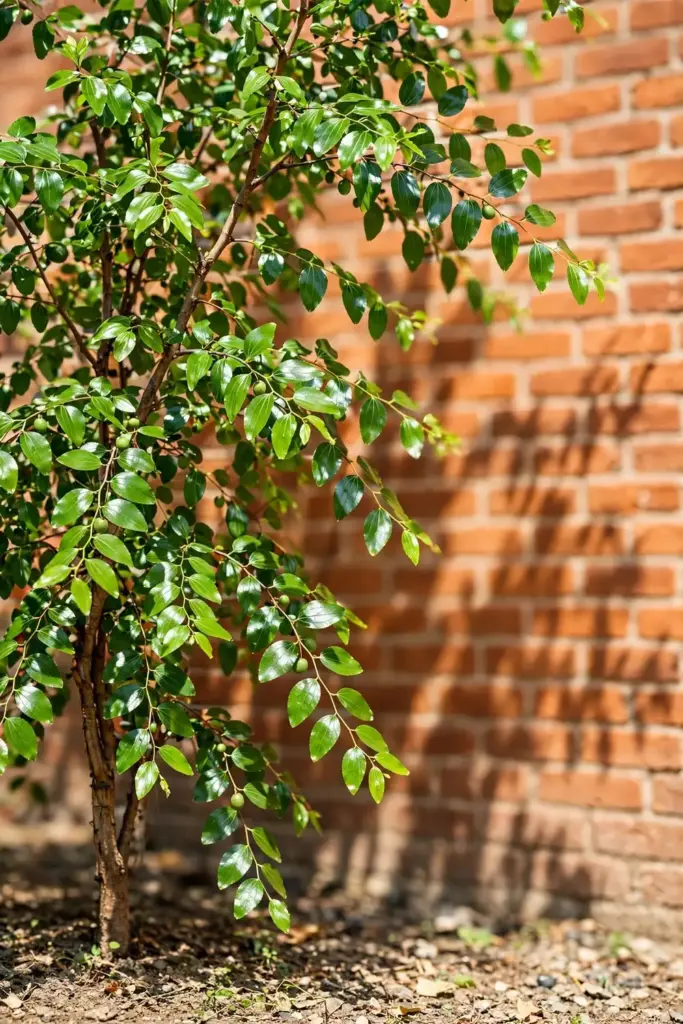
Heat is the real requirement; cold is the afterthought. Jujube shrugs off winter lows that kill figs and survives droughts that crisp lawns, but it sulks through cool, cloudy summers and drops unripe fruit. Track your summer heat, not your winter cold, when deciding. Gardeners in the Southeast, Texas, and California grow jujubes almost carelessly. Gardeners in the Pacific Northwest grow them as curiosities. Both are valid; only the harvest differs. A south-facing slope or a walled courtyard can add the extra degrees that turn a curiosity into a crop.
4. Crack the Hard Pit
The “seed” is a stone: a hard, ridged pit holding one or two kernels. Germination improves dramatically if you breach it. Hold the pit with pliers and crack it gently with a hammer, aiming to split the shell without crushing the kernel inside. Extract the brown kernel and discard shell fragments. Cracked kernels sown whole-pit style rot; extracted kernels sprout weeks faster. Work over a tray so nothing bounces away. Ten pits give you roughly ten kernels, and not every kernel is viable, so crack more than you need. Wear eye protection. Pits shatter unpredictably, and a shard in the eye ends the project.
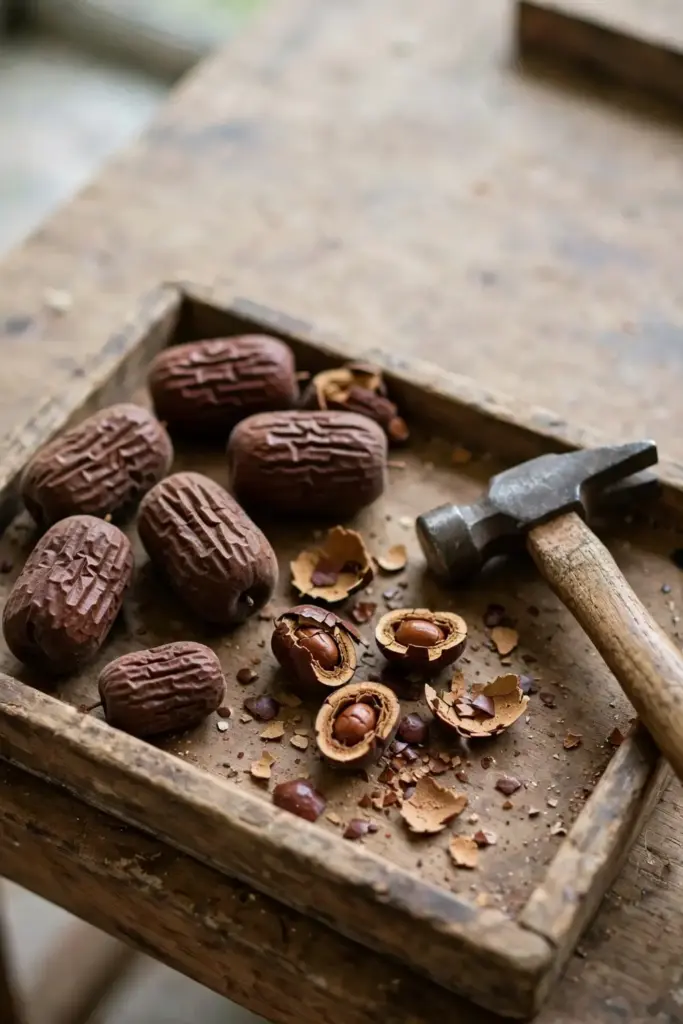
Sort the kernels after cracking. Plump, intact, brown kernels are the keepers; shriveled, moldy, or hollow ones go in the bin. A kernel that crumbles when pinched was dead long before you cracked the pit. Do not waste soak water and tray space on dead kernels. This two-minute sorting step doubles your effective germination rate, because every dead kernel you discard is a cell that gets a live one instead. If more than half the kernels are duds, the pit batch was poor; crack more pits rather than nursing dead seed.
5. Soak 24 Hours
Soak the extracted kernels in warm water for 24 hours before sowing, as the Organic India Seeds planting guide recommends for jujube seed preparation. The soak softens the kernel coat and wakes the embryo. Discard floaters after the soak; sinkers are the keepers. Change the water once if it clouds. Do not soak longer than 36 hours: drowned kernels rot instead of sprouting. Sow immediately after draining. A soaked kernel left on the counter dries out and dies within a day, wasting the crack you worked for.
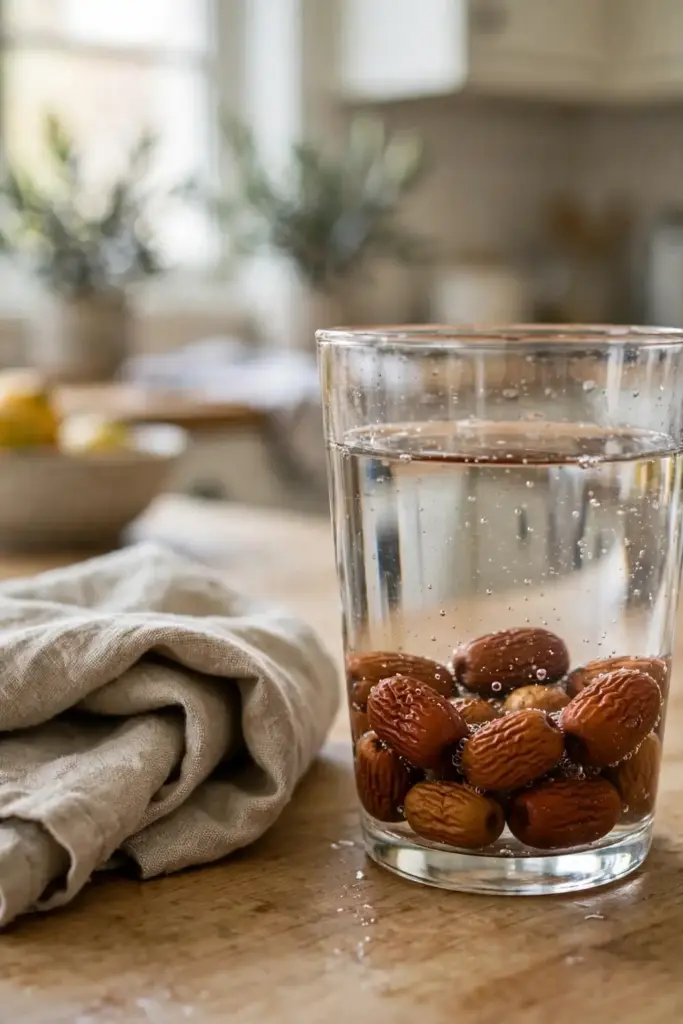
Use room-temperature water, not hot. Hot water cooks the embryo; cold water merely works slower. A kitchen counter away from direct sun is the right spot. If the water turns brown, that is tannins leaching from the kernel coat, which is normal and harmless. Rinse and refill once, then leave the kernels alone for the rest of the soak. Patience here is measured in hours, not weeks, which makes this the easiest step in the whole guide.
6. Sow 2.5 cm Deep in Warmth
Sow indoors 6 to 8 weeks before the last frost. Plant each kernel 2.5 cm deep in deep pots of free-draining mix; the seedling throws a taproot quickly and resents shallow trays. Keep the pots at 21 to 27°C on a heat mat. Expect sprouts in 3 to 8 weeks under warm conditions, per that same seed guide’s germination notes. Water gently and never let the mix go soggy. The seed-starting steps for stone fruits cover this routine. Once sprouted, give the seedlings the brightest light you own. Jujube seedlings grow fast in heat and stall in cool shade.
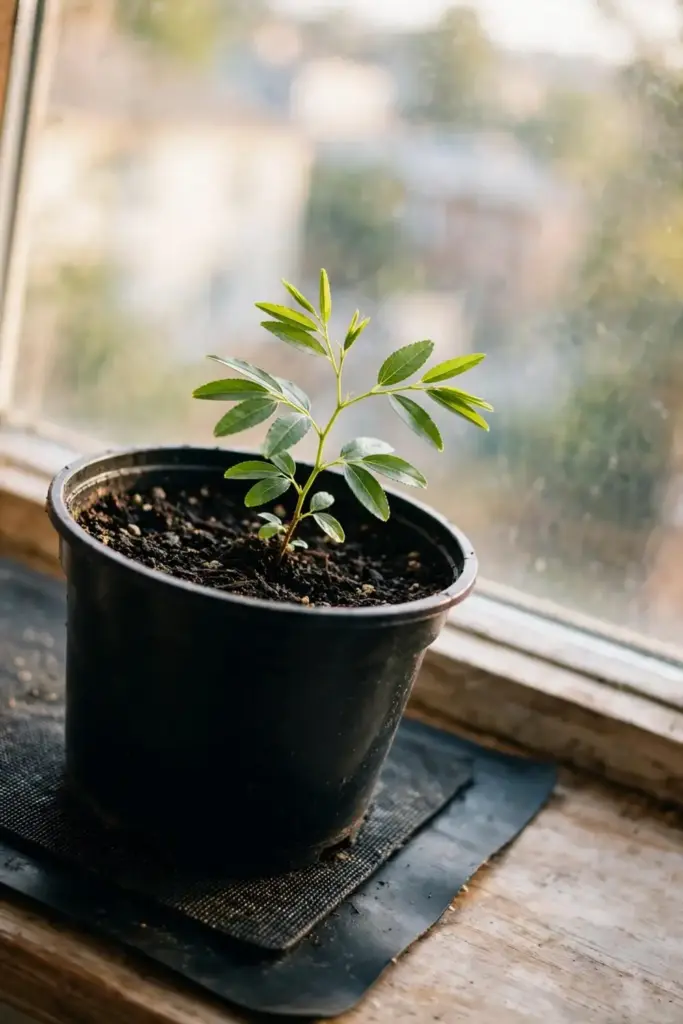
Do not sow too early. A seedling started in February sits in weak indoor light for months and grows leggy; one started in April catches strong spring sun and overtakes it by June. Later sowing beats earlier sowing for this heat-loving species. If your last frost is late, wait. The seedling wants to go outside into warmth, not linger on a windowsill. Time the sowing so the seedling moves out within eight weeks of sprouting, and it will never look back.
7. Grow Seedlings Fast in Full Sun
Jujube seedlings want sun, heat, and room. Pot up into 2-liter pots when roots show at the drainage holes, and move the pots into full sun as soon as nights stay above 10°C. Water when the top dries; the species tolerates dry spells but grows fastest with steady moisture. Feed monthly at half strength through the first summer. Seedlings often reach 60 to 90 cm in their first season, which surprises growers expecting a slow tree. The thorns appear early: small, sharp, and paired at each leaf node. Handle pots by the rim, not by the plant. Those first thorns are already businesslike.
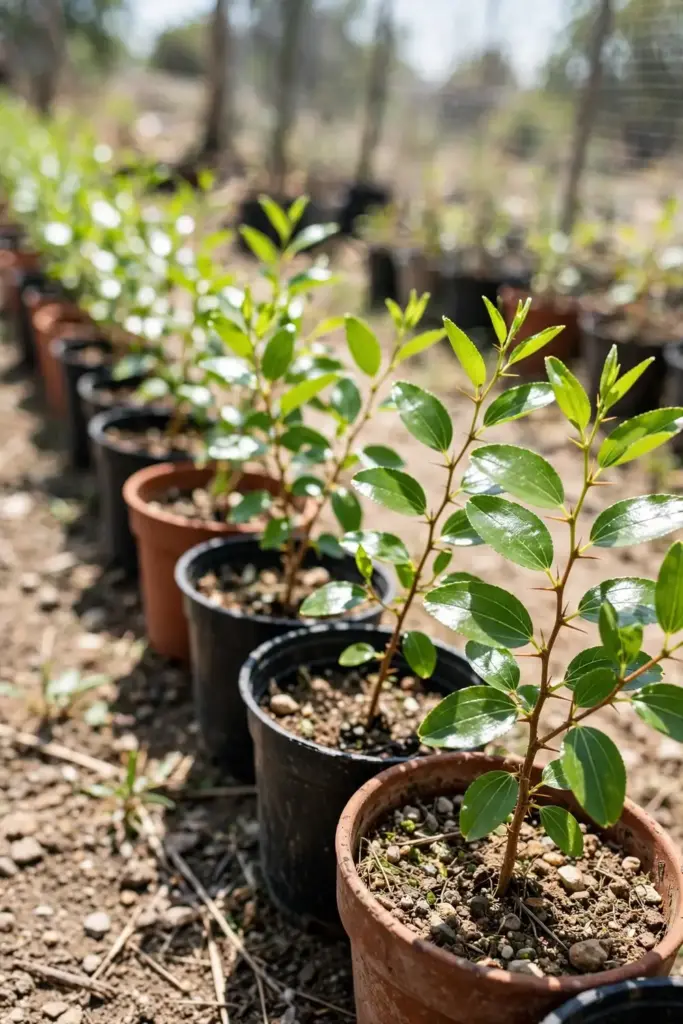
Push the growth in year one. A seedling that reaches 90 cm by autumn has the root system to establish fast when planted out; a stunted 30 cm seedling takes an extra year to catch up. Full sun, consistent water, and monthly feeding are the three levers. Do not coddle the seedling in shade “to protect it.” Protection produces weaklings. This is a tough tree from harsh climates, and it grows toughest when grown hard from the start.
8. Plant Out After Frost
Plant out in spring after the last frost, once the seedling is 60 cm or taller. Choose full sun and well-drained soil; jujube tolerates sand, loam, and even clay if drainage is adequate. Space trees 3.7 to 4.6 m apart: the canopy spreads wide with age. Dig the hole twice as wide as the root ball but no deeper, set the tree at its nursery depth, and water deeply. Mulch 8 cm deep with bark or straw, keeping mulch clear of the trunk. Stake for the first year only in windy sites. A spring-planted jujube usually pushes a few precocious flowers in its first summer; pinch them off so the tree puts energy into roots.
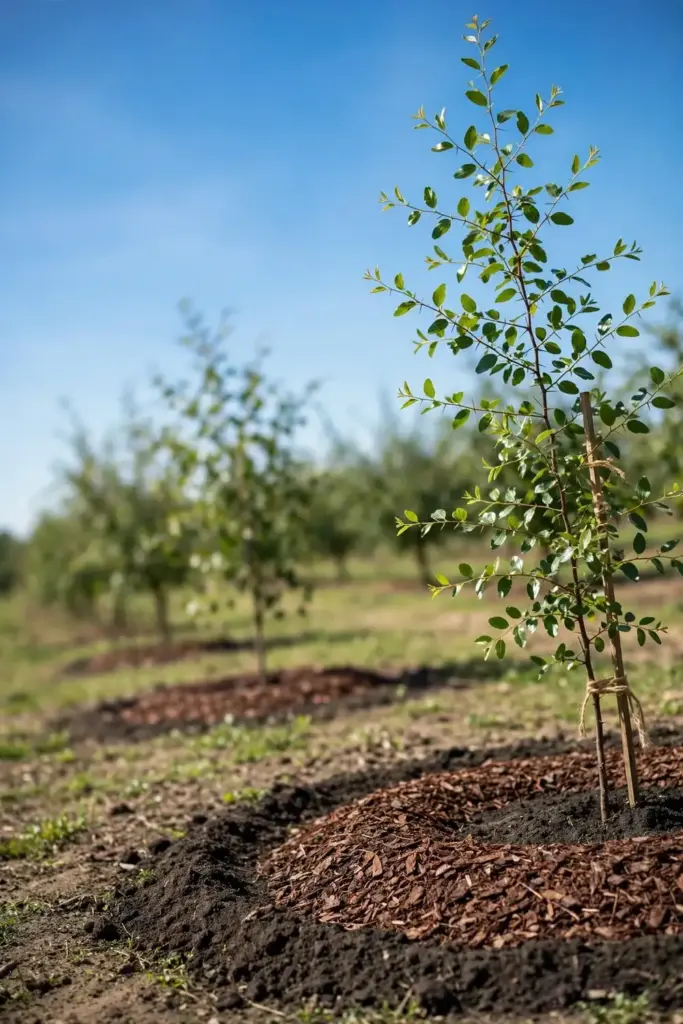
Plant on a calm day and water the hole first. Dry soil walls wick moisture from the root ball, and a tree set into a dry hole sulks for weeks. After backfilling, build a shallow basin and fill it twice to settle the soil with no air pockets. Check the tree weekly through the first summer. The tree is established when new shoots extend freely in the second spring. Until then, you are its weather, and a deep weekly watering is your main job.
9. Water Deeply, Then Back Off
Water weekly through the first summer, then relax. Established jujube is famously drought-tolerant: in most climates, rainfall alone suffices, and irrigation only during extended drought. Overwatering causes more problems than drought, including root rot and bland, watery fruit. The sweetest fruit comes from trees that work a little for their water. In the first year, a deep weekly soaking builds the deep root system that makes later drought tolerance possible. After that, let the sky handle it. A jujube that never sees a hose after year two is a normal, healthy jujube.
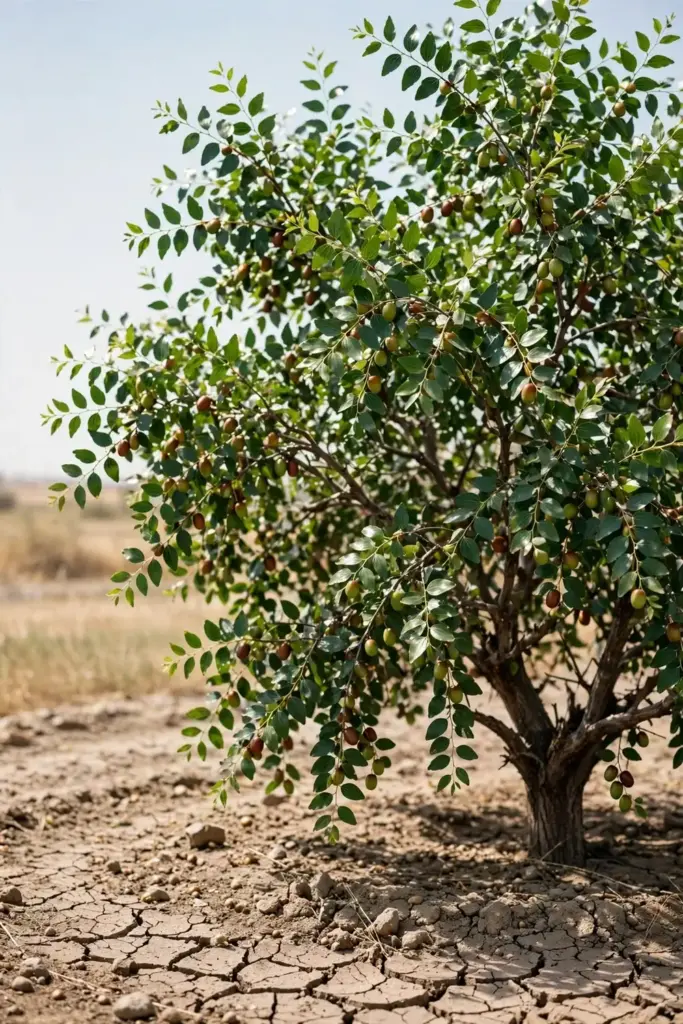
Learn the tree’s drought language. Slightly wilted leaves on a hot afternoon that recover by morning are normal; the tree is conserving water. Leaves that stay wilted into the cool morning mean the roots are truly dry and a deep watering is due. In practice, this happens a few times per summer at most. A rain gauge near the tree ends the guessing. Mature jujubes in Mediterranean climates fruit heavily on winter rain alone, which tells you how little summer water they truly need. Trust the tree; it evolved for exactly this.
10. Feed Almost Nothing
Jujube thrives on neglect. Most trees need no fertilizer at all; a yearly compost top-dressing in spring is plenty. Excess nitrogen grows rank shoots and delays fruiting, which is the opposite of the goal. If leaves yellow and growth stalls in genuinely poor soil, apply a balanced fertilizer once in early spring at half the label rate. Fruit quality depends more on heat and sun than on feeding. A jujube in lean soil with full sun out-produces a pampered tree in shade every time. When in doubt, skip the feed and give it another hour of sun instead.
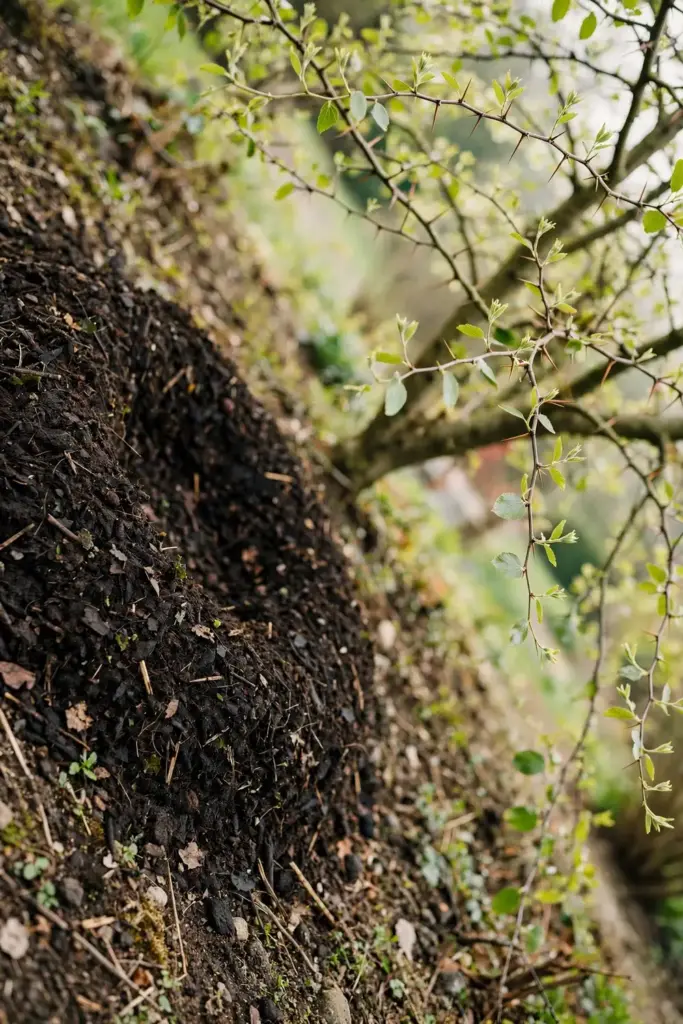
The compost top-dressing does triple duty: it feeds gently, holds soil moisture, and suppresses weeds. Spread 5 cm of compost under the canopy each spring, keeping it clear of the trunk. That is the entire feeding program for most trees. If you inherit an over-fertilized jujube with rank growth and no fruit, stop all feeding for a year and let it rebalance. The tree knows how to fruit; excess nitrogen just distracts it with leaves.
11. Prune in Late Winter
Prune during dormancy in late winter. Remove dead, crossing, and inward-growing branches, and open the center for light and air. Jujube fruits on the current season’s growth, so winter pruning shapes the tree without removing fruit. Keep the tree to a manageable height: mature trees reach 7.6 m or more, but 3 to 4 m is plenty for home harvest. The spring pruning techniques for fruit trees apply directly. Wear thick gloves and long sleeves; the thorns are formidable. Cut suckers at their base while you prune. A yearly winter session keeps the tree fruitful and pickable.
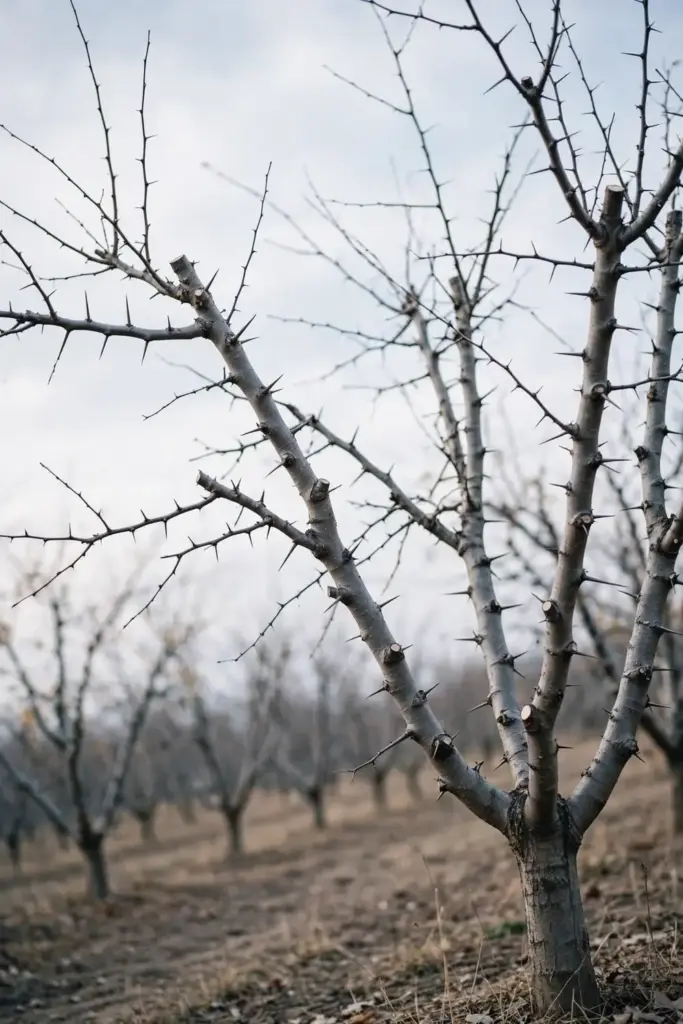
Keep your tools sharp and your cuts clean. Jujube wood is hard and dense. Dull tools tear the bark, inviting canker, so sharpen before every session. Loppers handle most branches; a pruning saw takes the limbs. Cut just outside the branch collar and never leave stubs. The tree seals small wounds quickly, but large cuts heal slowly, so remove big limbs over two winters rather than all at once. Step back after every few cuts. A jujube pruned with a plan looks like a fruit tree; one pruned in a hurry looks like a thorn bush.
12. Train Young Trees Early
Shape the tree in its first three years and you will thank yourself for decades. Select three to five well-spaced scaffold branches radiating from the trunk and remove competing leaders. Jujube naturally wants to be a thorny thicket; training imposes the open vase that carries light to the fruit. Head back overly vigorous shoots in summer to keep the canopy compact. Remove any branch growing straight up through the center. A well-trained young tree fruits earlier and heavier than an untrained one, because light reaches the fruiting wood. Fifteen minutes of training each winter beats hours of corrective pruning later.
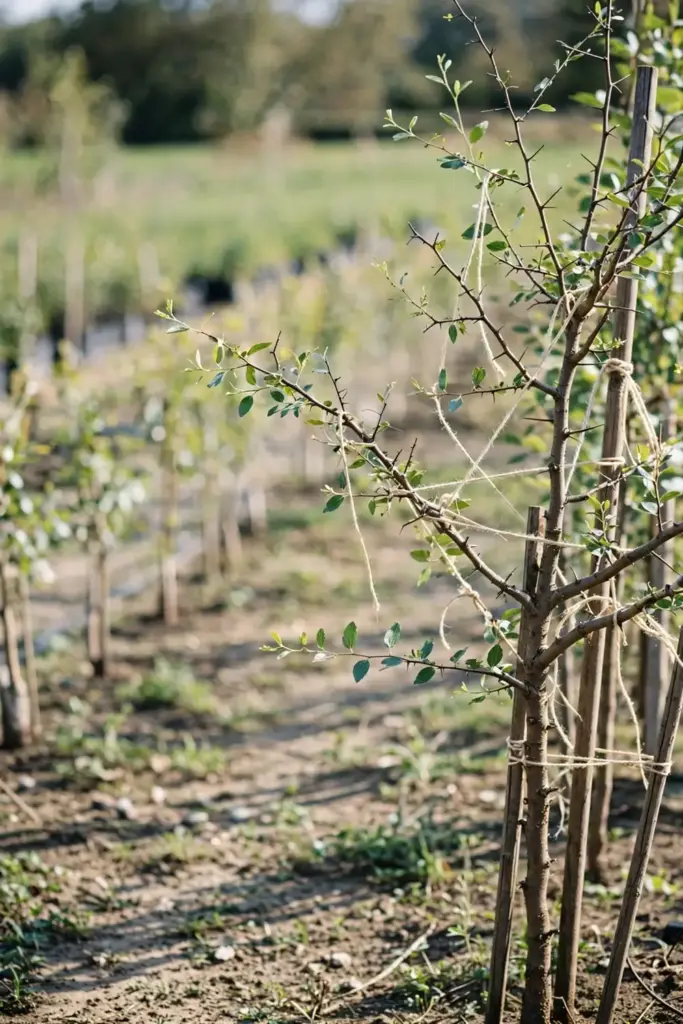
Tie, do not force. When a young branch needs guiding outward, tie it loosely to a stake with soft twine and let it set over the season. Forcing a branch snaps it, and jujube wood is brittle when young. Check ties in autumn and remove them before they girdle the growing branch. The goal is a wide-angled scaffold that carries fruit without splitting under the load. A branch angled at 45 degrees holds twice the fruit of a vertical one without breaking.
13. Watch for Suckers
Jujube suckers enthusiastically from the roots, especially when roots are disturbed. In a lawn or small garden, mow the suckers or cut them at ground level; digging them out triggers more. A root barrier sunk 45 cm deep around the planting area contains the spread. For an orchard or hedge, let selected suckers grow: they make free new trees, though seedling suckers will not match a grafted cultivar. Pot up strong suckers in winter as gifts or rootstocks. A jujube thicket left alone becomes impenetrable within a decade, so decide in year one whether you want a tree or a hedge.
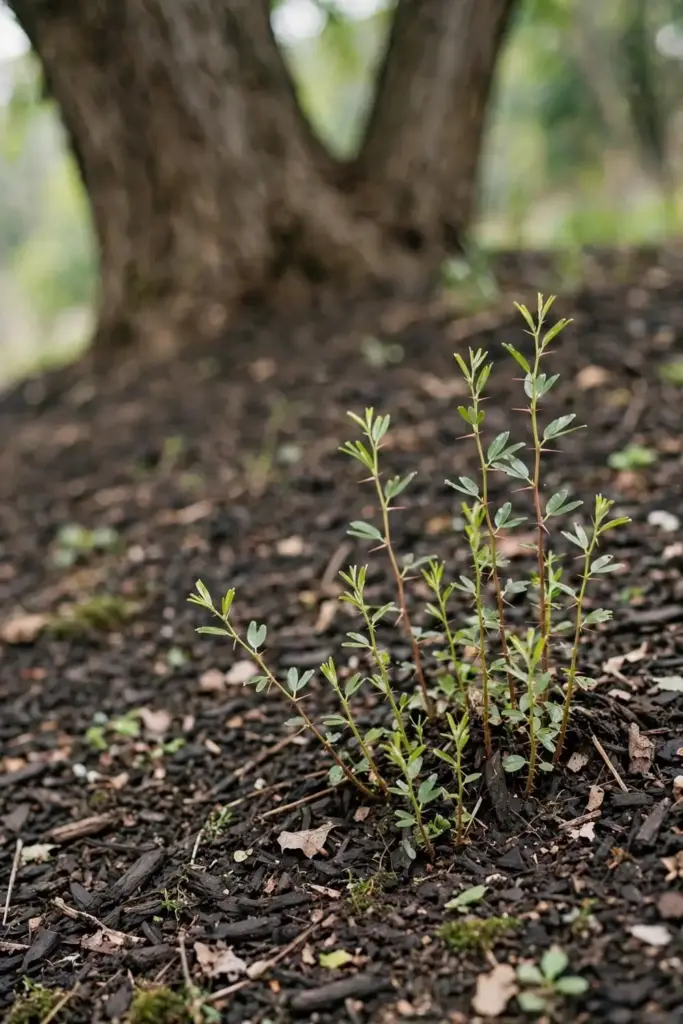
Turn the suckering into an asset where you can. A row of jujube suckers makes a formidable thorny hedge that fruits, shelters birds, and stops intruders better than any fence. If you want the hedge, plant the parent and let it colonize a defined strip; mow both edges yearly to hold the line. If you want a single tree, commit to the yearly sucker patrol. Five minutes with the loppers each winter beats a weekend of excavation in year five. The suckers also make excellent grafting rootstocks: graft a named cultivar onto a sucker and you get a known fruit on a vigorous free root.
14. Grow in a Big Pot
No ground? A large container works, especially for naturally compact cultivars like Chico, which stays bushy and fruits well in pots. Use the biggest pot you can manage: a half wine barrel or 50-liter container minimum. Fill with gritty, free-draining mix and place in the hottest sun available. Water deeply but infrequently, and expect a smaller tree with a lighter crop than in-ground specimens. In zones colder than 6, wheel the pot into an unheated garage for winter. Repot every three years, root-pruning lightly. A potted jujube will never match an orchard tree, but it will still hand you real fruit.
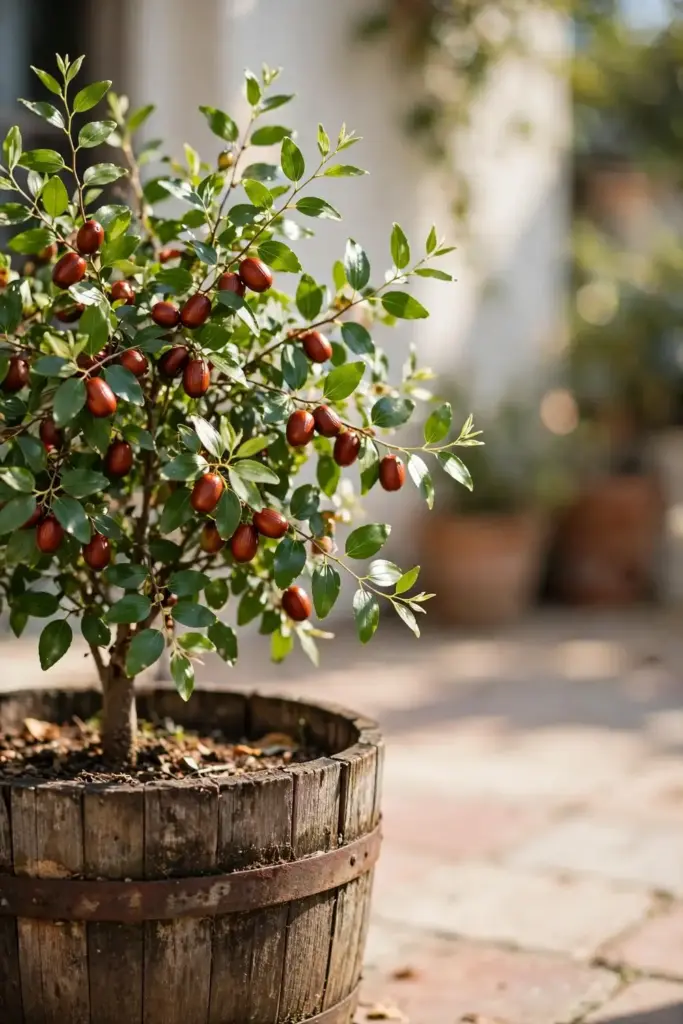
Feed potted jujubes more than in-ground ones. Every watering leaches nutrients from the limited soil, so top-dress with compost each spring and add a half-rate balanced feed in early summer. Watch the drainage holes: roots circling the base mean repot time. When repotting, shave 5 cm off the root ball’s sides and bottom and refill with fresh mix; this root-pruning keeps the tree vigorous in the same pot. A neglected potted jujube declines slowly; a maintained one fruits for many years. The pot is a long-term commitment, not a temporary nursery, so treat it like one.
15. Harvest Red-Brown and Wrinkled
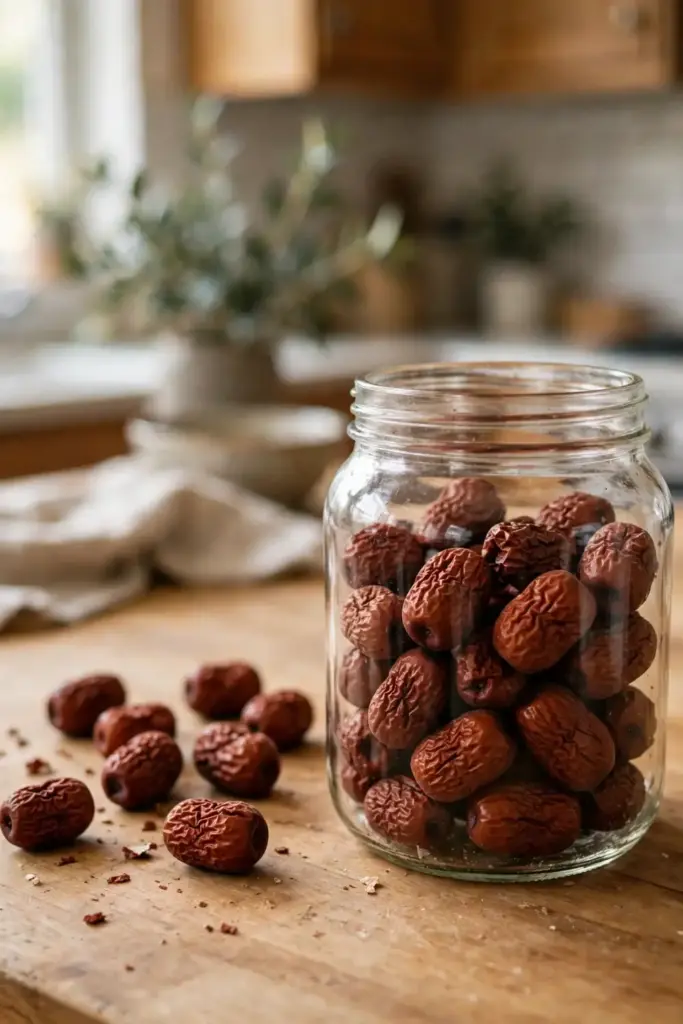
Pick when the fruit turns from green to reddish-brown and the skin just begins to wrinkle; that is peak flavor, crisp like an apple with honeyed sweetness. For fresh eating, pick at the red-brown stage. For drying, leave the fruit on the tree until fully wrinkled, then pick and finish drying in a warm, airy spot. The fruit dries on the tree like a fig if the autumn is dry. Store dried jujubes in a sealed jar; they keep for a year. Taste the first fruit of your seedling tree with an open mind: it may be superb or merely good, and that is the seedling lottery you signed up for.
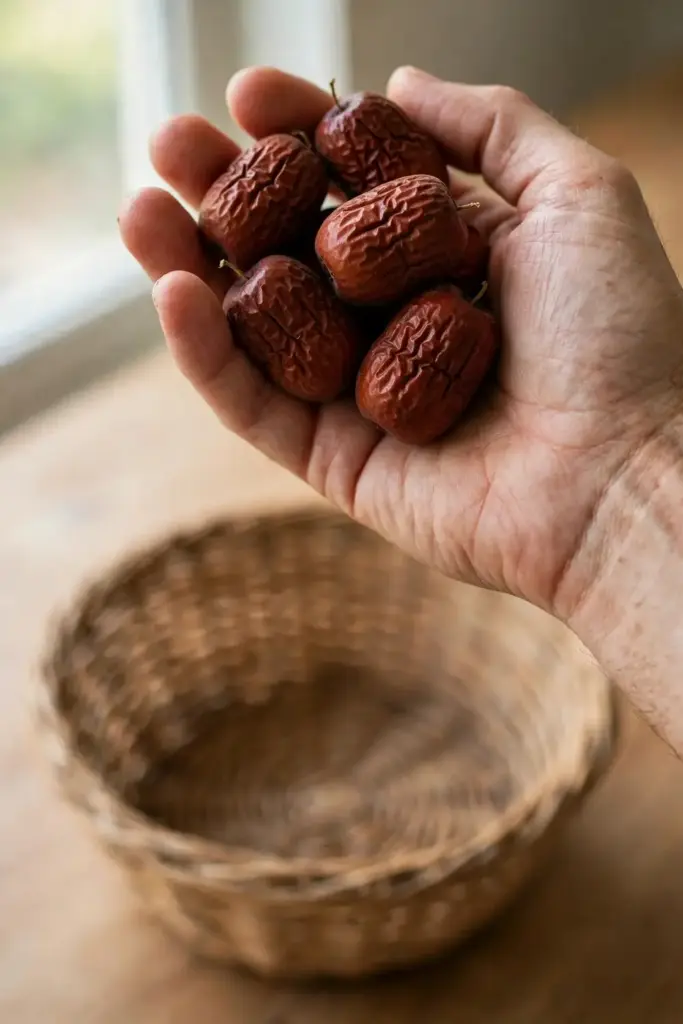
Pick in passes, not all at once. Jujube ripens unevenly, and the sweetest fruit is the one you pick at exactly the right moment. Check the tree every few days through the season and take what is ready. A gentle twist frees ripe fruit; unripe fruit clings. For drying, spread the wrinkled fruit in a single layer on trays in a warm room with good airflow, turning occasionally. Properly dried jujubes are chewy, sweet, and keep for a year in a sealed jar away from light. Label the jar with the cultivar and the year; your future self will want to compare harvests.
Frequently Asked Questions
Four to five years from sowing, compared with two to three years for a grafted tree. The seedling spends its first years building roots and structure; fruiting follows once the tree matures. Grafted trees skip the wait because the scion wood is already mature. If you want fruit fast, buy grafted. If you want ten trees for the price of one, sow seed and wait. Both roads end at the same sweet fruit.
No. The Chinese date is Ziziphus jujuba: deciduous, smooth-leaved, frost-hardy, grown across temperate China. The Indian jujube is Ziziphus mauritiana: evergreen, hairy-leaved, tropical, called ber in India. Writers often confuse the names, but the trees suit opposite climates. Temperate gardeners want jujuba. Frost-free gardeners can grow either, though mauritiana fruits better in true tropical heat.
Yes, in a big one. Compact cultivars like Chico fruit well in containers of 50 liters or more, kept in full sun and watered deeply but infrequently. Expect a smaller tree and a lighter crop than in the ground. In zones colder than 6, move the pot into an unheated garage for winter. Repot every three years with fresh mix. A potted jujube is a compromise, but it produces genuine fruit.
Young trees often drop their first flowers; this is normal while the tree establishes. After that, the usual causes are insufficient heat during bloom (fruit set needs warm weather), deep shade, and drought stress at flowering time. Jujube is self-fertile, so a missing pollinator is rarely the problem. Give the tree its hottest sunny spot, water through bloom, and be patient with trees under three years old.
Where to Go From Here
Fifteen moves, one tough tree, and fruit that tastes like dates from a tree that laughs at drought. Crack the pits this spring and you taste the first fruit in year four or five; plant a grafted tree and you taste it next year. Give it sun, drainage, and room. The jujube handles everything else, including the decades after you stop paying attention. Plant one for your grandchildren, and one for yourself right now.