Sow salvia seed indoors 6 to 8 weeks before your last spring frost, and green shoots break the surface in 14 days. That is how to grow salvia from a packet to a bed of spikes by midsummer. The rest of this page is 11 moves, from the seed tray to the last deadhead before frost.
Sow indoors before the last frost. Plant out after it. Deadhead through summer. Cut back in spring.
I have learned that salvia seed pressed onto damp mix sprouts, and seed buried under soil never does.
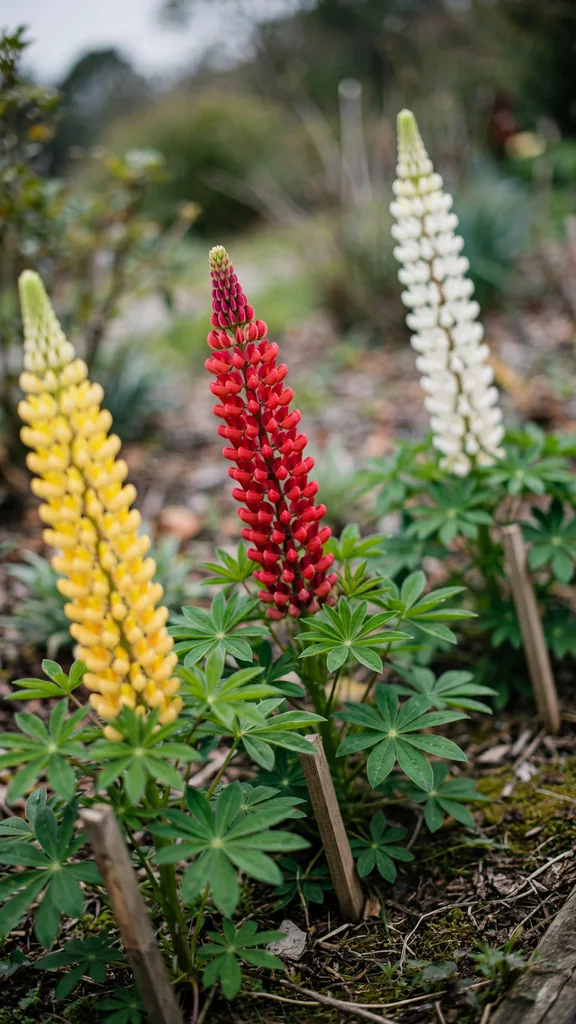
Salvia is a mint-family genus with square stems, opposite leaves, and two-lipped tubular flowers stacked on upright spikes. Scarlet sage carries the showiest spikes in red, pink, purple, lavender, and white. Woodland sage carries blue and purple spikes on plants that return each spring. Pick the type first. The rest of the care follows that one choice.
Read the Salvia Spec Table Before You Buy
Scarlet sage grows 30.5 to 91.4 cm tall and 20.3 to 25.4 cm wide, blooms from summer to frost, and wants full sun to part shade in well-drained soil, according to the North Carolina Extension notes on scarlet sage. That one paragraph holds the whole decision. Height decides the row. Bloom decides the payoff. Soil decides whether the plant lives at all.
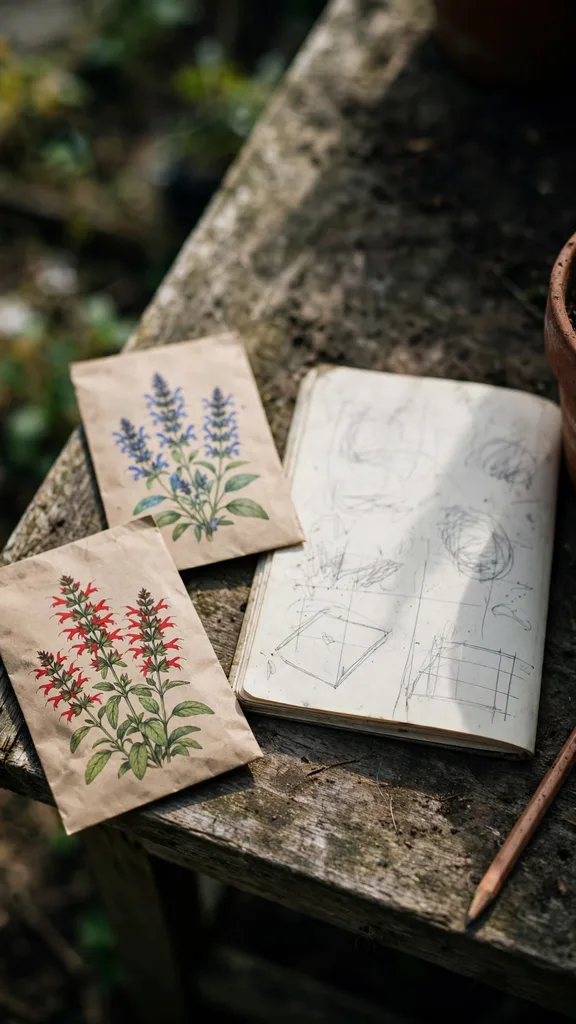
| Item | Scarlet Sage in Your Garden |
|---|---|
| Plant type | Tender perennial, grown as an annual where frost bites |
| Height | 30.5 to 91.4 cm |
| Spread | 20.3 to 25.4 cm |
| Sun | Full sun to part shade |
| Soil | Well-drained, moist soil |
| Water | Steady moisture, never soggy |
| Bloom | Summer to frost |
| Start | Seed indoors 6 to 8 weeks before last frost |
| Germination | 18.3 to 21.1°C, shoots in 14 days |
Measure the bed before you buy the seed. A scarlet sage at 91.4 cm belongs in the middle row, not the front edge. A compact type at 30.5 cm belongs at the front, where its spikes frame the path. The table gives you both numbers. Use them.
Read the plant label before the seed packet. The label names the species and the habit in plain words, and that habit decides the care. A label that says annual means one season of flowers and a fresh sowing next spring. A label that says perennial means a crown that returns, a spring cut, and a longer life in the same spot. A label with no habit line still gives the height, and height alone tells you the row. Buy the plant that fits the row you have empty, not the color you liked in the shop.
Sow Salvia Seeds Indoors 6 to 8 Weeks Before Last Frost
Sow seeds indoors 6 to 8 weeks before the last spring frost, hold the tray at 18.3 to 21.1°C, and watch shoots break the surface in 14 days, according to the Cornell flower growing guide for salvia. One warm tray on a bright windowsill does the job. A heat mat under the tray holds the temperature steady on cold nights.
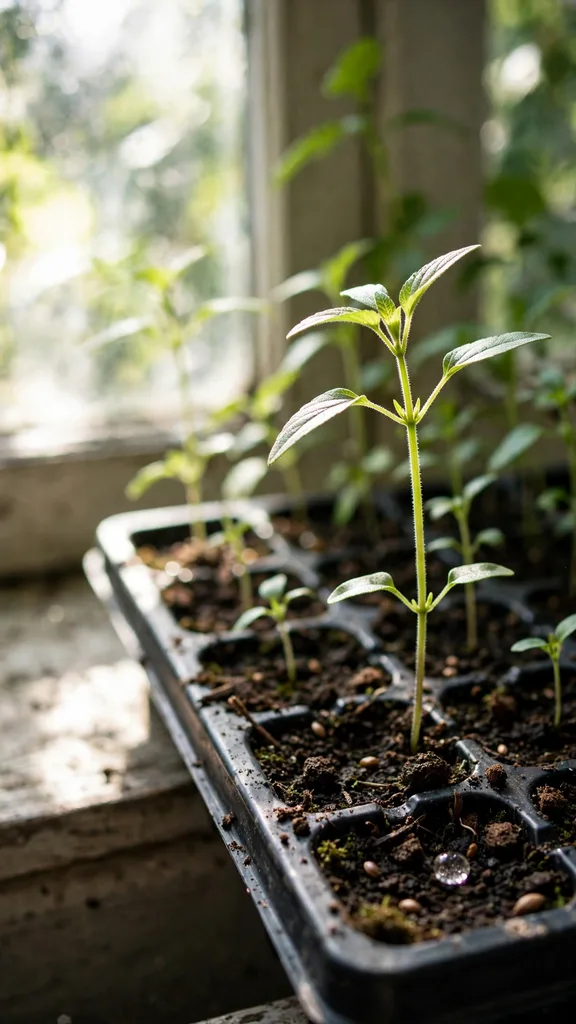
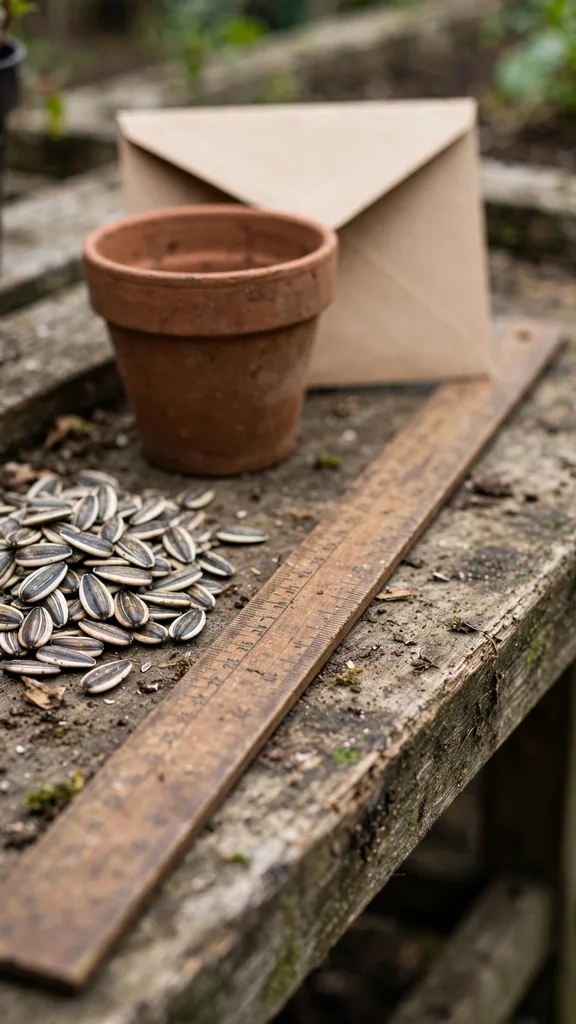
Press each seed onto damp mix and leave it uncovered. Salvia seed needs light to germinate, and the same notes warn against covering it. Light reaches the seed only on the surface. A pinch of mix over the top is enough to stop it.
Fill the tray with fresh seed mix, not garden soil. Garden soil packs tight and holds water against the seed. Seed mix stays open and drains. Water the mix before you sow, then mist the surface after. Wet mix rots seed before it sprouts. Water from below once the shoots show, and give the tray air every day. Still, damp air breeds damping-off, and seedlings that collapse at the soil line are gone. Thin air and a dry surface keep them standing.
Pot seedlings on when two sets of true leaves show. Pinch the tip once, at 10.2 cm tall, and the plant branches into a bushy shape instead of one thin stem. A bushy plant carries more spikes. A thin stem carries one.
Give the tray the brightest spot you have. A south-facing windowsill suits salvia seed, and a grow light hung close above the tray suits it better. Seedlings in dim light stretch toward the window, grow pale, and flop at the first watering. Turn the tray a quarter turn every day so each side faces the light in turn. A seedling that leans is a seedling asking for more light, and the fix is a brighter spot, not a taller stake.
Pick a Salvia Variety for Your Bed
Start with the annuals if you want color this summer. Scarlet sage leads the group. The Salsa series holds a compact 45.7 cm shape all summer in red, purple, pink, and white, and the Bonfire series pushes past 61 cm with bright red flowers late into the season, according to the same guide. Red Arrow blooms early on plants 30.5 cm tall with large red spikes. Firecracker stays dwarf and compact and blooms without a pause. Sizzler covers pink, red, maroon, purple, and white, with a salmon and white bicolor in the mix.
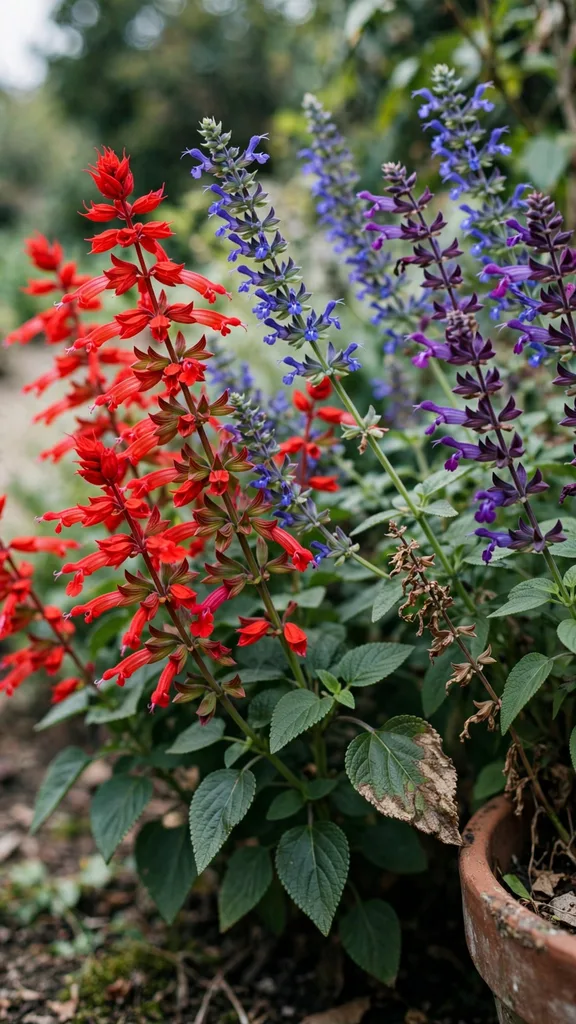
Black and Blue Salvia earns the back of the bed. Its deep blue flowers open from near-black calyces on tall stems, and the dark calyx holds its color after the flower drops. Blue Salvia Victoria suits the front edge. Its blue spikes stay neat on compact plants, and it pairs with silver foliage without a fight. Dark Purple Salvia gives the same shape in a deeper shade for beds that run hot pink elsewhere. Compact Salvia covers the short types sold for edging and pots, where a tall plant would flop over the path.
Perennial types change the plan. Woodland sage returns each spring with blue and purple spikes and asks for little beyond sun and drainage. Autumn sage takes heat and dry soil in stride and blooms red and pink when other plants stall. Common sage sits in the same genus and grows for the kitchen, not the flower bed. Gray-green leaves, a woody base, and a short life mark it out from the flower types.
Pair scarlet sage with growing petunias for a bed that fills fast. Petunias spread low and cover bare soil while salvia spikes rise above them. The two flower together from summer to frost, and the petunias hide the bare lower stems of taller salvia types.
Plan the color before you plant the bed. One color in a drift reads stronger than five colors scattered singly, and salvia rewards the drift. A block of red scarlet sage against a fence stops the eye. A block of blue Victoria in front of it cools the red down. White spikes between the two break the line and keep the bed from looking heavy. Plant in groups of three or five, never in singles. A single spike is a dot. A drift is a bed.
Plant Salvia Out After Frost in Full Sun
Wait for the last frost to pass, then plant out on a cloudy morning. Scarlet sage needs warmth and sulks in a cold spring. A plant set out too early sits still for weeks. A plant set out after the soil warms grows at once.
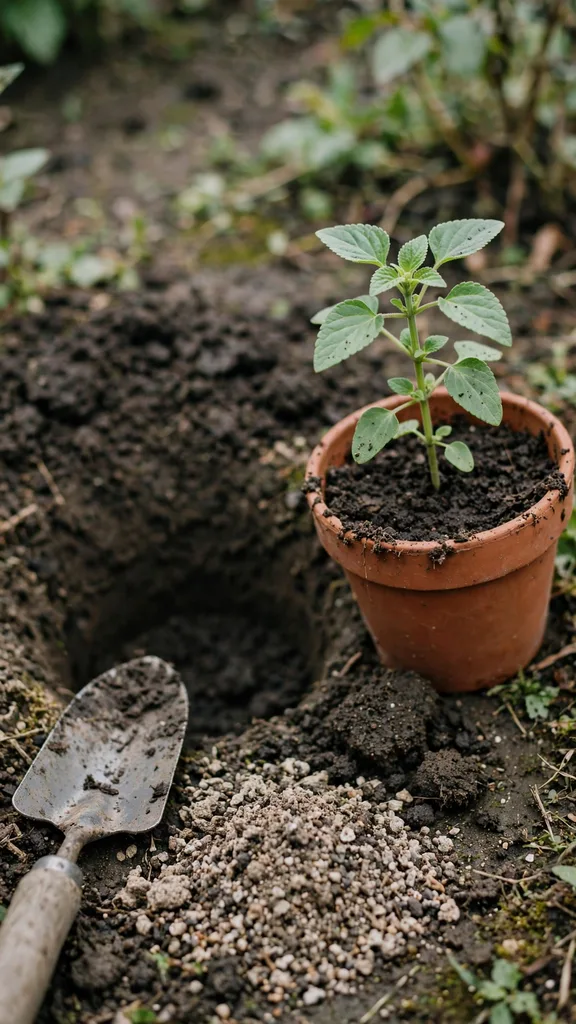
Set compact types 30.5 cm apart. Give tall types 45.7 cm. Crowded plants trap damp air between their leaves, and damp air invites mildew. Space is the cheapest disease control in the garden.
Dig the hole twice as wide as the pot and no deeper. Set the crown level with the soil surface. A buried crown rots. A high crown dries out. Water the hole before the plant goes in, then settle the soil with your fingers and water again. Mulch holds moisture through the first dry weeks. Keep the mulch off the stems. Wet stems rot where mulch touches them.
Compact selections suit edging and pots as well as beds. A pot needs drainage holes and a gritty mix that sheds water fast, because ordinary potting mix holds too much water for a plant that hates wet feet. Add perlite or coarse grit until the mix falls apart in your hand.
Clay soil needs work before salvia goes in. Dig the bed over and fold in coarse grit and compost until the soil crumbles instead of smearing. A spadeful that holds its shape like wet clay will drown salvia roots in the first wet week. A spadeful that falls apart in your fingers drains. Raised beds solve the same problem faster. Build a low raised bed, fill it with gritty mix, and plant into that. Salvia in a raised bed outlives salvia in flat clay by years.
Time Salvia by Your Last Frost Date
Count back 6 to 8 weeks from your last frost date and mark the sowing day. That date is the only one that matters for seed. Everything else follows it. Seed sown too early grows leggy on the windowsill before the bed is ready. Seed sown too late blooms after the best of summer has passed.
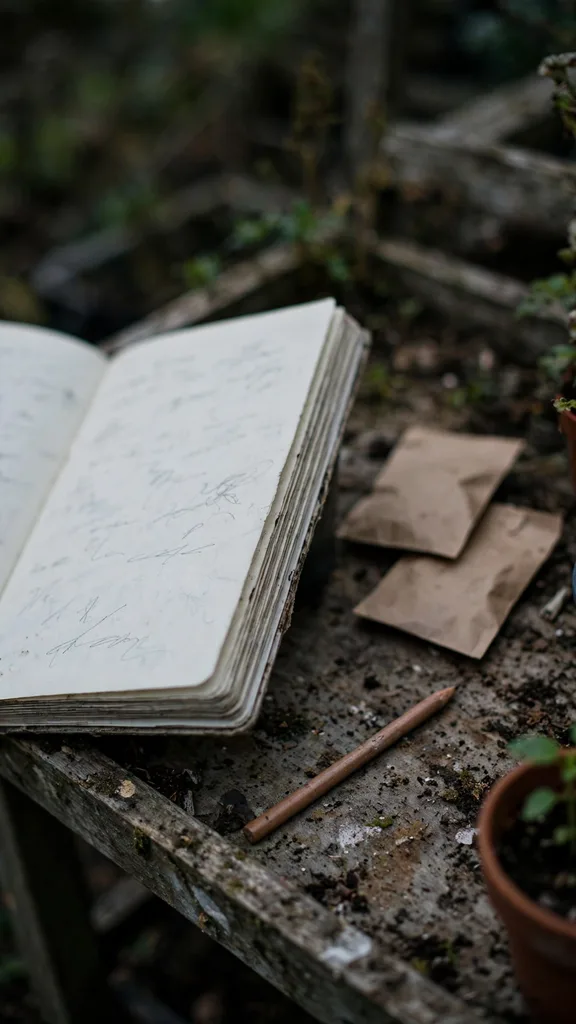
Plant out after the last frost, when nights stay warm and the soil has lost its winter cold. Bloom runs from mid-summer to mid-fall on the same guide, and deadheading stretches it to the first hard frost. The plant does not need a calendar. It needs warm soil, long days, and a pair of shears every few weeks.
Cut woody perennial types back in spring, before new growth starts. That cut is the one pruning date on the page. Everything else is deadheading. A spring cut on a plant still frozen at the roots wastes the plant’s stored energy. Wait for green tips to show, then cut.
Sow a second tray three weeks after the first if you want a longer season. The second batch flowers later and carries the bed when the first batch tires. Stagger the sowing, not the planting. Plants set out on the same day bloom on the same day, and the bed peaks once. Plants sown three weeks apart bloom in turn, and the bed holds color through the whole summer.
Water Salvia Deep and Let the Soil Dry
Scarlet sage is not drought-tolerant. The same notes say so plainly. It wants steady moisture in well-drained soil, and it wilts fast in a dry week. Water deep, then let the top 2.5 cm of soil dry before you water again. Shallow daily sprinkles keep the surface wet and the roots shallow. A deep soak pulls roots down where the soil stays cool.
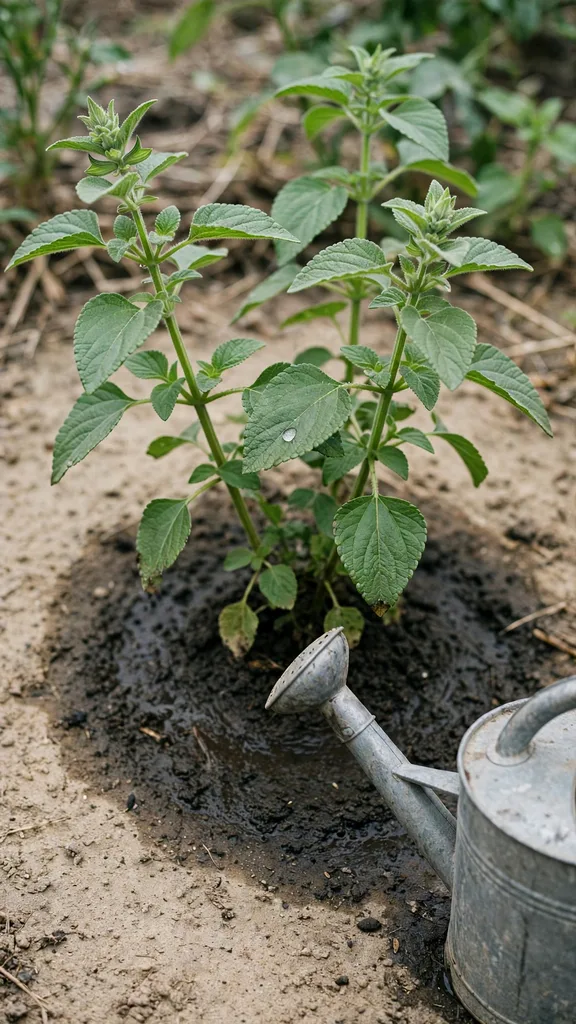
Water at soil level. Wet leaves invite mildew, and mildew starts on leaves that stay damp overnight. A watering can at the base does the job. An overhead sprinkler at dusk does the opposite.
Mulch holds moisture through the first dry weeks of summer. A layer of coarse mulch around the plant cuts evaporation and keeps the soil temperature steady. Keep it off the stems. Stems under mulch stay wet and rot at the base.
Established perennial salvias drink less than young annuals. Their roots run deeper and find moisture on their own. Water them in long dry spells only. An annual scarlet sage in a pot drinks daily in a heat wave. Check the pot every morning. A dry pot weighs nothing in your hand.
A wet summer needs the opposite care. Rain does the watering, and your job turns to drainage. Lift pots off the ground on bricks so water runs out the holes instead of pooling under them. Fork the soil surface around bed plants to break the crust that seals water in. Leaves that stay wet for days invite mildew, so thin the worst growth and let air through. A plant that dries between rains stays clean.
Deadhead Salvia Spikes to Stretch Bloom to Frost
Cut each spent spike back to the next set of leaves, and the plant answers with fresh side shoots and new spikes within weeks. A spike left to set seed tells the plant the season is done. Cut it clean and it blooms again.
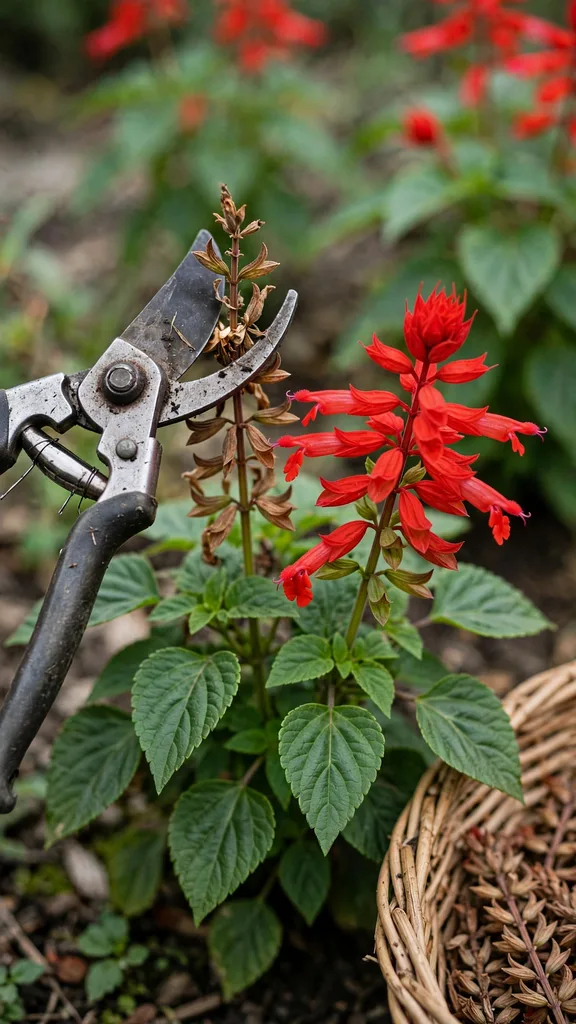
Remove dead flowers through the whole season. The same guide says removing dead flowers stops self-sowing, and it also keeps the plant tidy. Spent spikes turn brown and hang on the stem. Cut them off and the bed looks cared for.
Cut spikes for the vase while you deadhead. The same cut-and-condition routine in our fall cut flowers guide keeps stems fresh for days. A jar of salvia on the table costs nothing and lasts a week. Change the water every two days. Cloudy water kills stems faster than age does.
Stop deadheading at the first hard frost. The plant is done for the year, and the dead stems protect the crown through winter on perennial types. Cut the blackened annuals down and compost them. Leave perennial crowns alone until spring.
Leave a few spikes to set seed if you want volunteers next year. Scarlet sage self-seeds where seed falls on bare soil, and a patch of seedlings in spring costs nothing. Mark the spot with a short stake so you do not weed the seedlings out by mistake. Pull the extras and keep the strongest. A bed that seeds itself still needs your eye in spring.
Prune Woody Salvia in Spring, Never Into Old Wood
Cut woody salvia back in spring before new growth starts. Woody salvias carry their age in their stems, and common sage, autumn sage, and woodland sage all turn woody at the base after a few seasons. Take the dead wood and the leggy tips. Leave green growth with leaves on every stem.
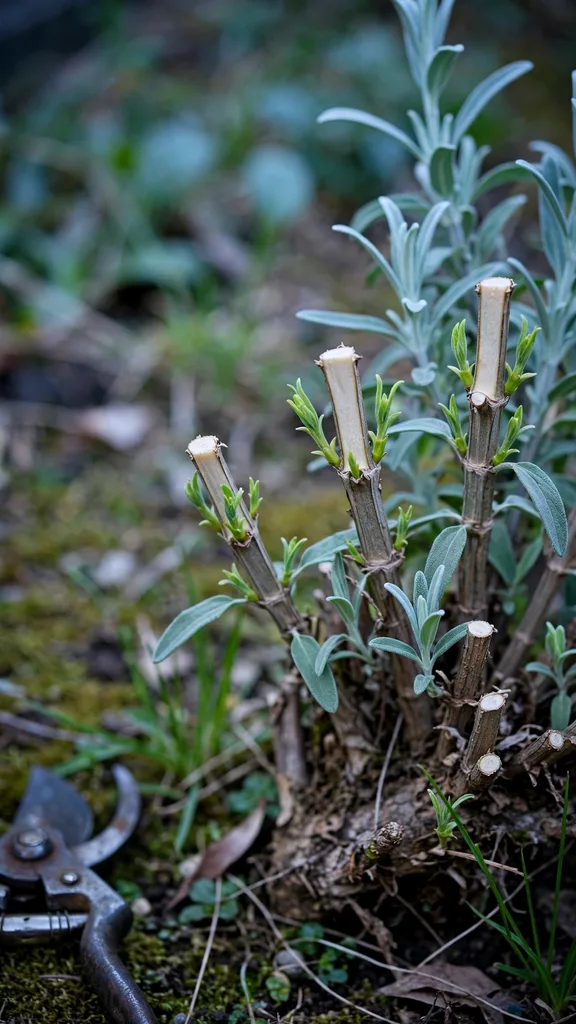
Never cut into bare wood below the lowest leaves. Bare wood seldom resprouts, and a stem cut to a stub stays a stub. The plant loses that stem for good. Cut just above a pair of green leaves and the buds below it wake up.
Shear the plant lightly after the first flush of flowers if it looks tired. A light shear pushes a second flush of leaves and sometimes a second round of spikes. A hard cut in midsummer strips the plant bare in the hottest weeks. Light cuts heal fast. Hard cuts do not.
Woody herbs share the rule. Our growing lavender guide cuts the same way in spring, above green leaves and never into bare wood. Learn the cut once and it serves both plants.
Grow Salvia Through Hot, Humid, and Cold Gardens
Heat suits salvia. Scarlet sage needs warmth and sulks in a cold spring, but it thrives once summer arrives. Autumn sage takes heat and dry soil in stride and keeps blooming when other plants stall. Give both full sun and they pay for it with spikes.
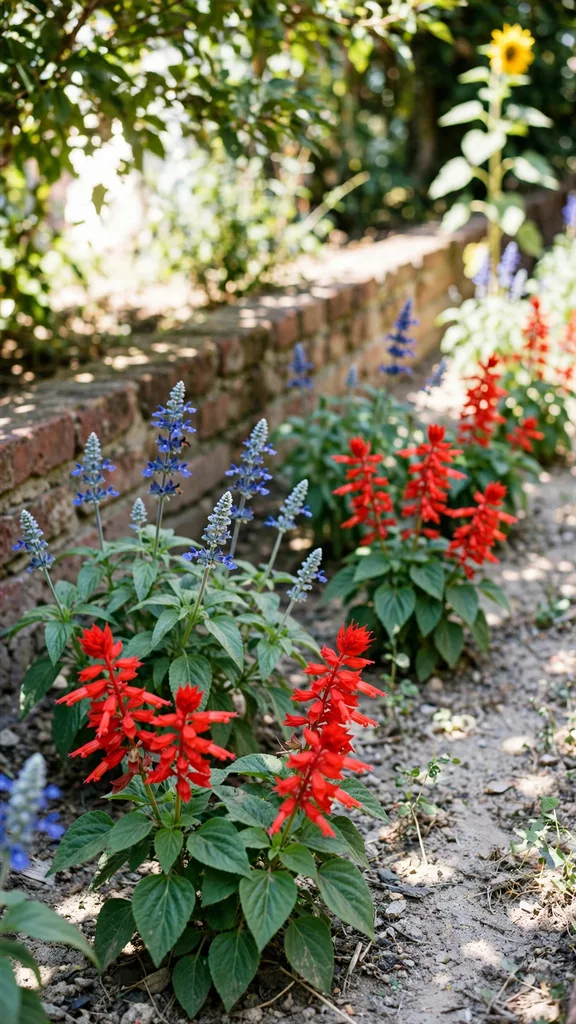
Humidity is the harder problem. Damp air brings mildew, and mildew loves crowded plants. Space plants for airflow and water at soil level. A bed with air moving through it stays clean. A bed packed tight goes white with mildew by August.
Cold decides which salvia returns. Scarlet sage is a tender perennial grown as an annual where frost bites, and it dies at the first hard frost. Woodland sage returns each spring in cold-winter gardens. Autumn sage sits between the two, returning where winters stay mild and dying where they turn hard.
Tall annuals take the same hot, sunny bed. Growing sunflowers beside salvia puts a tall screen behind the spikes, and the two share the same sun, soil, and watering. Plant the sunflowers at the back. Salvia in front of them reads taller than it is.
Wind tests salvia harder than heat does. A tall spike in an open site snaps at the base in the first storm, and the plant never recovers its shape. Plant tall types against a fence or a wall, or stake them with a short cane tied loosely at two points. A loose tie lets the stem sway. A tight tie cuts into it. Coastal gardens suit salvia well once the wind is broken, because the sun is strong and the soil drains fast.
Avoid the 5 Mistakes That Kill Salvia
Burying the seed is the first mistake. Salvia seed needs light to germinate, and seed under soil never sprouts. Press it onto damp mix and leave it bare. A seed you can still see is a seed that can grow.
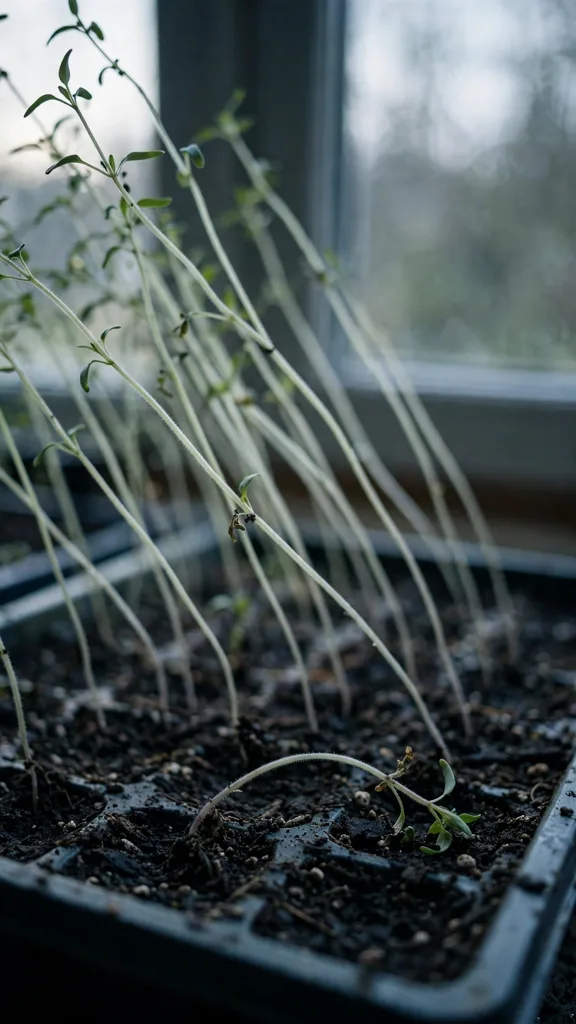
Planting in soggy soil is the second. Salvia hates wet feet, and roots in standing water rot within weeks. Dig in grit or raise the bed if your soil holds water. A plant in drained soil outlives a plant in a puddle every time.
Planting in shade is the third. Salvia in shade stretches toward the light, grows leggy, and flowers thinly. Full sun keeps the plant compact and the spikes dense. A plant that leans is a plant asking for sun. Move it.
Feeding heavily is the fourth. Rich fertilizer pushes soft leafy growth and few flowers. Salvia flowers best in lean soil. Feed lightly in spring, if at all, and stop feeding by midsummer. A hungry salvia blooms. A fat one does not.
Cutting into bare wood is the fifth. Woody stems cut below the lowest leaves seldom resprout, and the plant loses that stem for good. Cut above green leaves every time. A careful cut keeps the plant. A careless one costs a stem.
Spot Powdery Mildew and Aphids Before They Spread
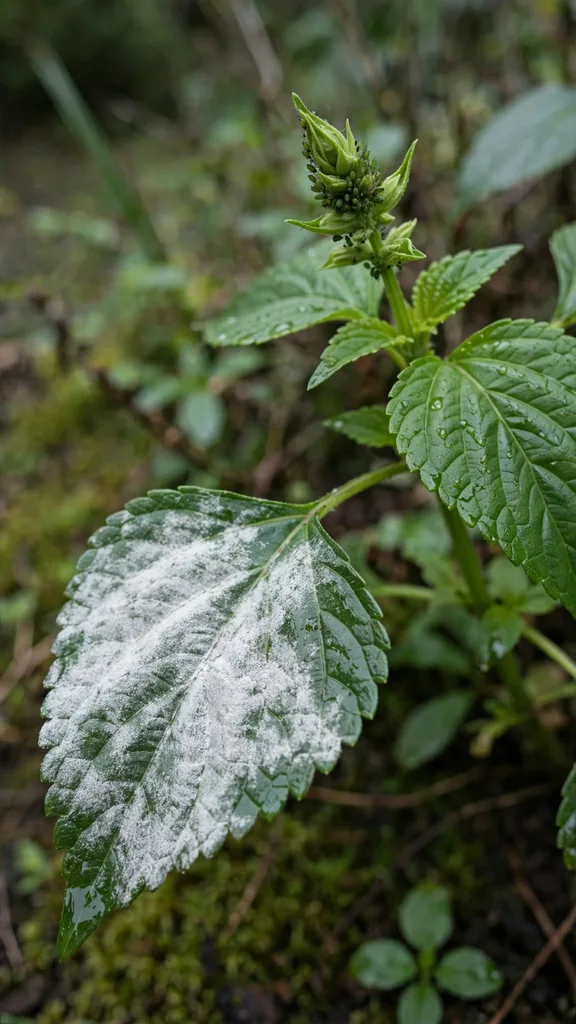
Powdery mildew shows as a white coating on the leaves, starting on the lower ones where air moves least. The same notes list it among the usual problems for scarlet sage, along with damping-off of seedlings, botrytis, aphids, spider mites, and whiteflies. Mildew spreads in damp, still air. Space plants for airflow and water at soil level. Strip the worst leaves and bin them. Do not compost diseased leaves.
Botrytis shows as gray mold on spent flowers and soft stems. Deadhead often and the mold loses its foothold. A bed with no spent flowers gives botrytis nothing to eat.
Damping-off kills seedlings at the soil line. The stem pinches thin, the seedling falls over, and it never stands again. Start seed in fresh mix, water from below, and give the tray air every day. A dry surface and moving air keep seedlings standing.
Aphids cluster on soft tips and flower buds. Spider mites leave fine webbing and pale speckled leaves. Whiteflies rise in a cloud when you brush the plant. Check the leaf undersides every week. A strong spray of water knocks aphids off. Mites and whiteflies need the plant dried out between waterings and the worst leaves removed. Catch them early and the plant recovers. Catch them late and the season is lost.
Walk the bed once a week with shears in your pocket. Cut a spent spike. Strip a mildewed leaf. Look under three leaves for aphids. The whole round takes five minutes on a small bed, and it catches every problem in this section while it is still small. A weekly walk beats a rescue mission every time. Gardens fail slowly and then all at once, and the walk is what keeps the slow part visible.
Frequently Asked Questions About Growing Salvia
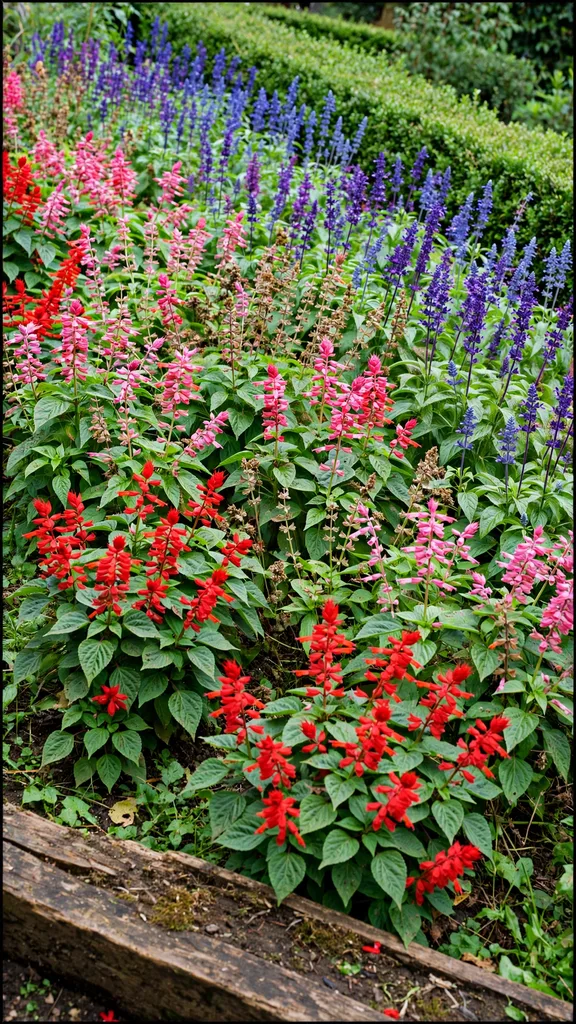
Scarlet sage is a tender perennial that most gardeners grow as an annual, because frost kills it. Woodland sage and autumn sage are true perennials in mild-winter gardens and return each spring from the same crown. Common sage is a short-lived perennial shrub. The answer depends on the species, so check the label before you plant.
Scarlet sage blooms from summer to frost when you deadhead it, and the same guide puts its bloom from mid-summer to mid-fall without deadheading. Cut each spent spike back to the next leaves and the plant answers with fresh spikes within weeks. A plant left to set seed stops blooming early. Shears are the difference between one flush and a season of flowers.
Perennial types such as woodland sage and autumn sage return each spring where winters stay mild. Scarlet sage does not survive frost and must be sown fresh each year in cold climates. Some types self-seed where the seed falls on bare soil, so seedlings may appear without planting. Treat volunteers as a bonus, not a plan.
Shade is the usual cause. Salvia in shade stretches toward the light and flowers thinly, so move it to full sun. Rich fertilizer pushes soft leafy growth with few spikes, so feed lightly or not at all. Skipped deadheading also stalls bloom, because spikes left to set seed tell the plant the season is done. Cut the spent spikes and the plant answers.
Yes. Compact types suit pots, and the same notes list containers as a good home for scarlet sage. Choose a pot with drainage holes and a gritty mix that sheds water fast, then set it in full sun. Water daily in a heat wave, because pots dry out faster than beds. Deadhead as usual, and the pot blooms from summer to frost.