
Phosphorus burn kills more garden hakeas in Australia than every pest and disease combined, and a single feed with standard fertilizer can start the damage within 3 weeks. Hakeas belong to the Proteaceae family, and Proteaceae roots are built to scavenge phosphorus from some of the poorest soils on earth. Feed them like a rose and the leaves yellow, brown at the tips, and drop. That is a hakea with the wrong fertilizer, not a hakea with a disease. The rest of this page walks through 10 problems in the order Australian gardeners actually meet them, from phosphorus burn to Phytophthora to the humidity that kills Western Australian species in eastern states.
Hakea is a genus of well over 100 species, all endemic to Australia. The name covers everything from the pincushion hakea (Hakea laurina) in Perth gardens to silky hakea (Hakea sericea) in Sydney. “Wrong” here means the visible problems: yellow leaves, brown tips, wilting, dieback, no flowers, and chewed or bored stems. I check the fertilizer bag before I blame the weather, because phosphorus burn mimics half the diseases on this list.
Work through the problems in order. The first three sections cover the causes behind most failures, so start there before chasing rarer diagnoses. Each section ends with the fix, and the symptom table near the end lets you match what you see to the likely cause in one glance.
1. Phosphorus Burn: The Number 1 Hakea Killer in Australia
Phosphorus burn is the most common reason a hakea fails in an Australian garden. Proteaceae grow proteoid roots, dense mats of fine rootlets that strip phosphorus from soils where almost nothing else can survive. Give those roots a standard garden fertilizer and they absorb far more phosphorus than the plant can handle. The Australian Plants Society notes that Proteaceae, including grevilleas, banksias, and hakeas, are among the groups most sensitive to phosphorus, and recommends nitrogen-only or nitrogen-plus-potassium fertilizer at planting for plants whose sensitivity is unknown, according to their native plant fertilizer guide.
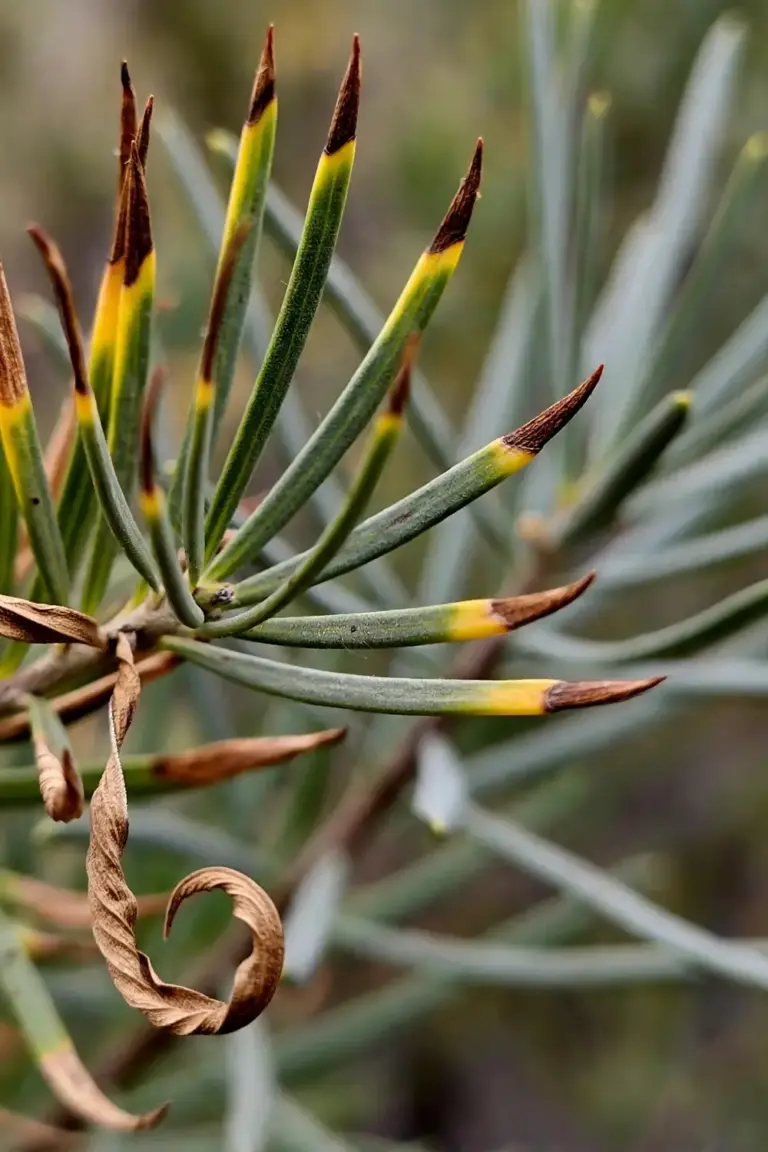
The symptoms arrive in a sequence. Leaf tips and margins brown first, then older leaves yellow and drop from the base upward, and in severe cases the whole plant defoliates. New growth comes through pale and stunted. Gardeners often read this as drought stress and water harder, which changes nothing because the roots are poisoned, not dry.
Fix it by stopping all fertilizer immediately. Flush the soil deeply with plain water to leach excess phosphorus from the root zone. Do not feed the plant again for at least a full growing season. When you resume, use only a fertilizer formulated for Australian natives, which keeps phosphorus low enough for Proteaceae roots. Never use chicken manure or rich compost around a hakea. Both carry phosphorus loads that Proteaceae cannot tolerate.
Read the label before you buy. The three numbers on a fertilizer bag are nitrogen, phosphorus, and potassium in that order. A bag reading 12-2-8 carries far less phosphorus than a 10-10-10, and for a hakea the middle number is the one that matters. If the label does not list phosphorus separately, do not guess. Put the bag back and buy one formulated for natives.
2. Phytophthora Root Rot: The Silent Killer That Leaves Stay On
Phytophthora root rot kills the roots while the leaves stay attached, which is why gardeners water a dying plant and watch it die faster. Phytophthora cinnamomi is a soil-borne water mold, not a true fungus, and it rots the fine feeder roots first. The plant cannot take up water. Leaves dry out and turn yellow even though the soil is moist. Pull up a feeder root and it is brown and rotted instead of white and firm, as described by Outside Landscape Consultants in their Australian Phytophthora guide.
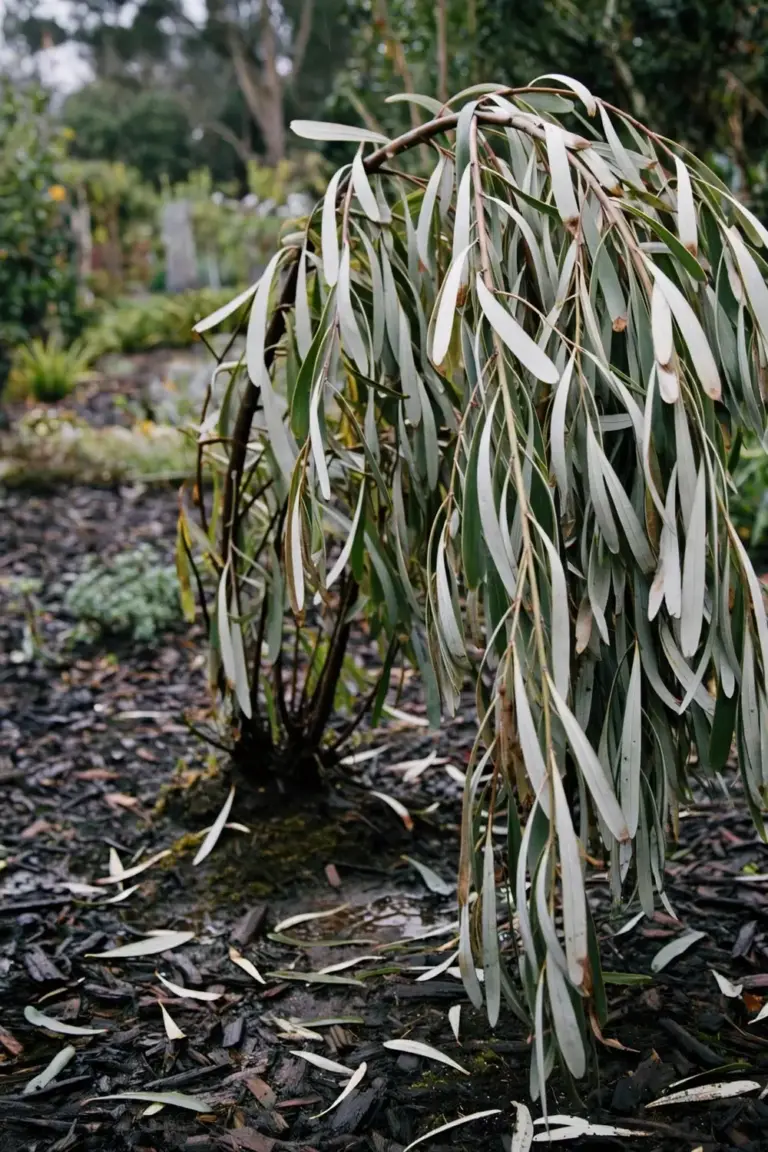
There is no cure once Phytophthora cinnamomi is established in the soil. No treatment eradicates it, though phosphonate fungistats can improve a plant’s ability to tolerate or recover from infection, according to the Wikipedia overview of the pathogen. That sentence matters. Anyone selling you a cure is selling you hope.
Prevention is the only real strategy. Plant hakeas on a raised mound in fast-draining soil so water never sits around the roots. Never move soil or water from a known dieback area into a clean garden bed. Clean tools and boots after working in suspect soil. Phosphite treatments, applied as a foliar spray or stem injection, can protect healthy plants nearby, and stem injection generally protects for up to 10 years while foliar spray lasts 1 to 2 years, according to Tasmanian arboriculture guidance on dieback management. Treat phosphite as a shield for the healthy, not a rescue for the dying.
Hygiene sounds fussy until dieback takes a garden bed. Wash soil off boots and tools before moving between garden areas, and never share potting mix between a sick plant and a healthy one. Buy nursery stock from growers who follow dieback hygiene. Ask them directly. A reputable nursery answers without hesitation.
3. Yellow Leaves: Iron Chlorosis or Phosphorus Damage
Yellow leaves on a hakea mean two different things, and the pattern tells you which. Phosphorus damage yellows the older leaves first, starting at the tips and margins, and the plant drops them from the base up. Iron chlorosis yellows the newest leaves first while the veins stay green, and it points to alkaline soil locking iron away from the roots rather than to fertilizer damage.
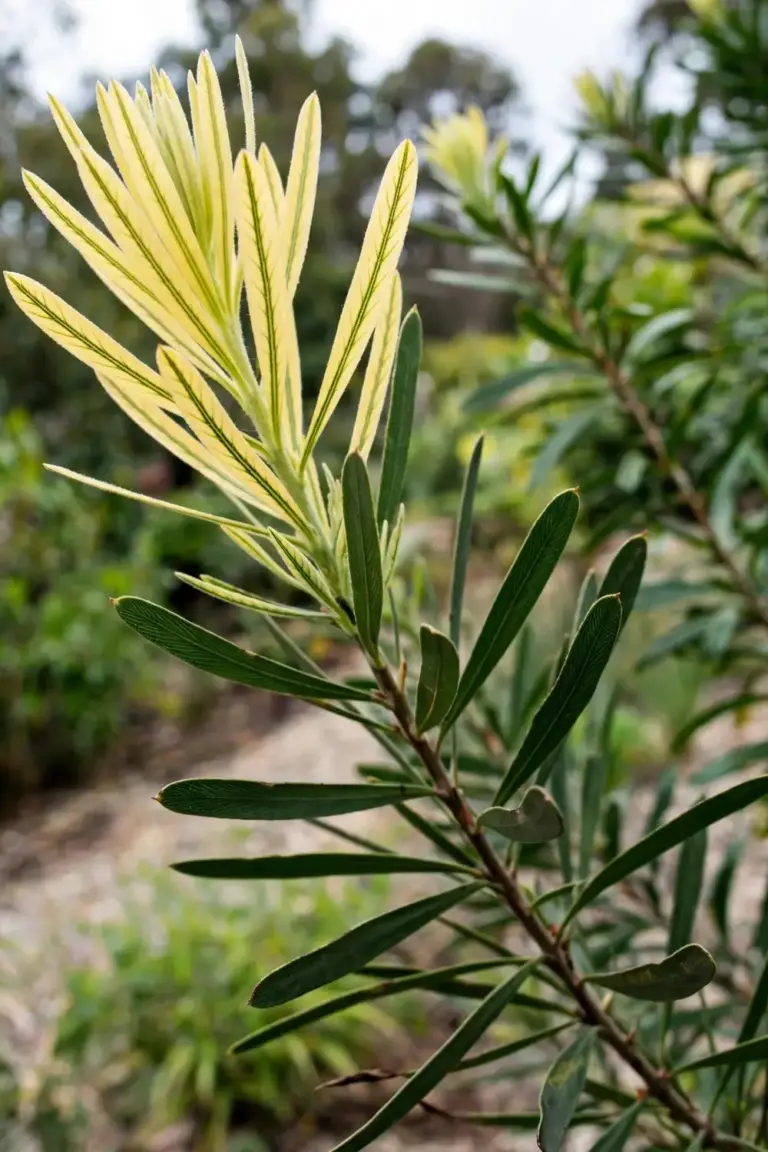
Check the soil pH before you act. Hakeas prefer slightly acidic to neutral soil. If the pH tests above 7, iron becomes unavailable even when it is present in the soil. Lower the pH with elemental sulfur worked into the top few centimeters of soil, and mulch with pine bark or leaf litter rather than alkaline mushroom compost.
Do not reach for iron chelates as a first move. Iron sprays green up the leaves for a few weeks and change nothing about the soil.
A ten-dollar pH test kit from the hardware shop settles the question in minutes. Scoop soil from 10 cm down near the drip line, not from the surface where mulch skews the reading. Test in two or three spots around the plant. One alkaline pocket near a concrete path can explain yellowing on one side of a shrub while the other side stays green. Fix the pH and the drainage, and the new growth comes through green on its own. If the yellowing started within weeks of fertilizing, reread the phosphorus section above. That is your answer.
4. Tip Blight and Dieback: Browning From the Tips Down
Tip blight browns the foliage from the tips downward, and it moves fast in warm humid weather. The fungi behind it, usually Pestalotiopsis or Glomerella species, attack stressed or damaged growth first. Pruning wounds, wind-torn foliage, and soft new growth after heavy nitrogen feeding are the entry points. You will see brown dead sections with a sharp line between dead and living tissue, sometimes with tiny black fruiting bodies on the dead bark.
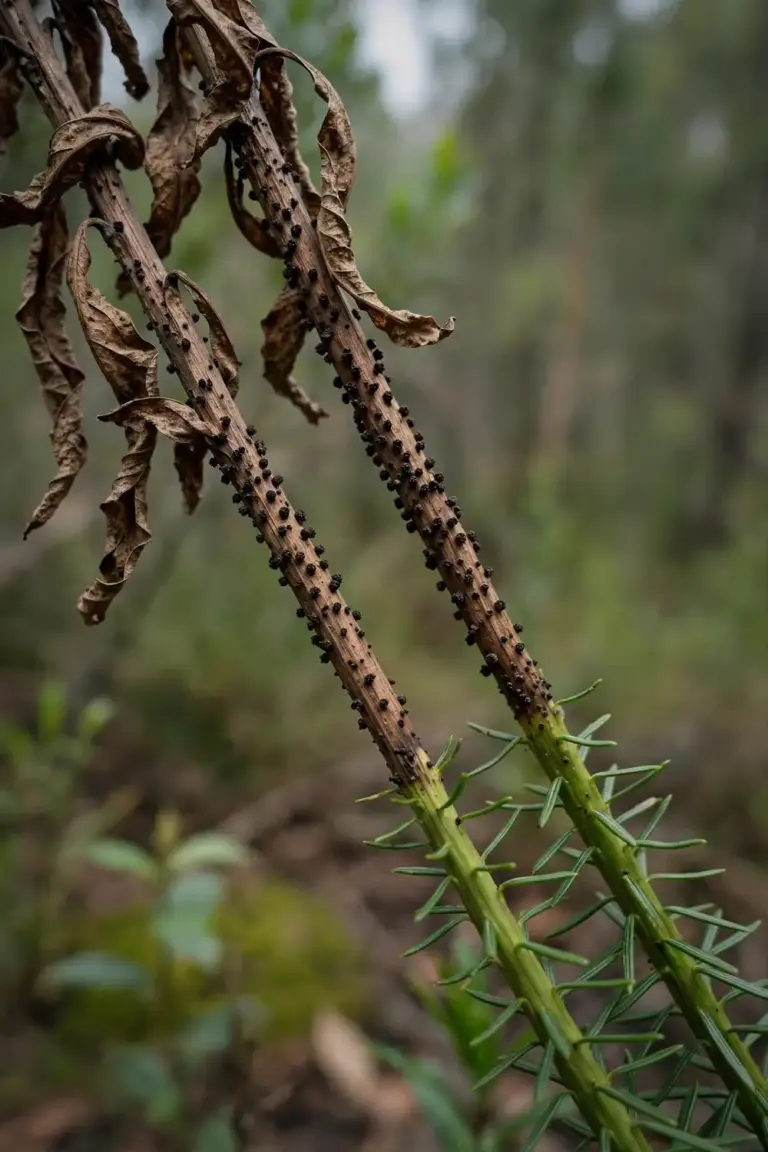
Cut it out. Prune every affected stem back to clean healthy wood, cutting at least 10 cm below the last visible browning. Disinfect secateurs between cuts with methylated spirits so you do not carry the fungus from stem to stem. For the full method on clean cutting technique, the site’s spring pruning guide walks through tool hygiene and cut placement.
Prevention beats surgery. Space plants for airflow, water at the base rather than overhead, and avoid wounding the bark with whipper snippers.
Time your pruning for dry weather. A cut made on a dry morning seals faster than one made before rain, and fungal spores need moisture to germinate on a fresh wound. Prune in the morning so the cut faces a full day of drying air. Never prune when the foliage is already wet from rain or irrigation. A hakea that dries quickly after rain rarely gets tip blight. A hakea sitting in still humid air with wet foliage gets it every season.
5. Not Flowering: Age, Light, or the Wrong Pruning
A hakea that grows well but never flowers is usually too young, too shaded, or pruned at the wrong time. Most hakeas need 3 to 5 years from planting before they flower reliably. A two-year-old plant with no buds is not broken. It is a juvenile.
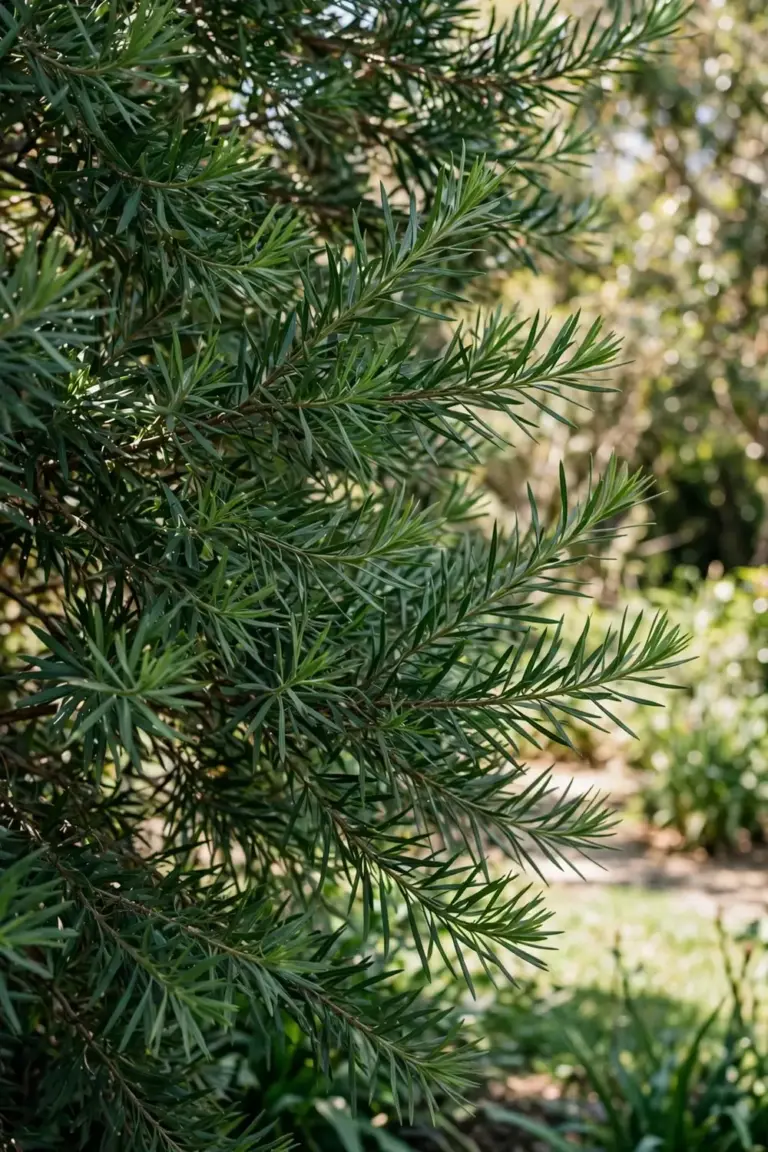
Light decides the rest. Hakeas flower heaviest in full sun. A plant in half shade grows leggy and puts its energy into reaching for light instead of setting buds. If a previously flowering hakea stops, check whether a neighboring tree has grown over it. The shade crept up over several seasons and the flowering faded with it.
Pruning timing matters because hakeas carry next season’s flower buds on the current season’s wood. Prune immediately after flowering finishes, never in late autumn or winter when you would be cutting off the buds. A hard prune at the wrong time removes a full year of flowers in one afternoon. Tip-prune lightly after the bloom fades and leave the plant alone for the rest of the year.
Young plants test every gardener’s patience. A hakea putting on strong vegetative growth in its first three years is building the framework that will carry flowers for decades. Feeding it heavily to force early blooms backfires. The extra nitrogen pushes soft growth that flowers poorly and invites tip blight. Let the plant set its own pace.
6. Hakea Moth and Stem Borers: The Tunnellers
The hakea moth (Comocrus behri) is a day-flying moth whose caterpillars bore into hakea stems. You will not see the grub. You will see the damage: a stem that wilts suddenly while the rest of the plant looks fine, a swollen section of bark, or fine sawdust-like frass pushed out of a small entry hole. Split the stem open and the tunnel runs through the center.
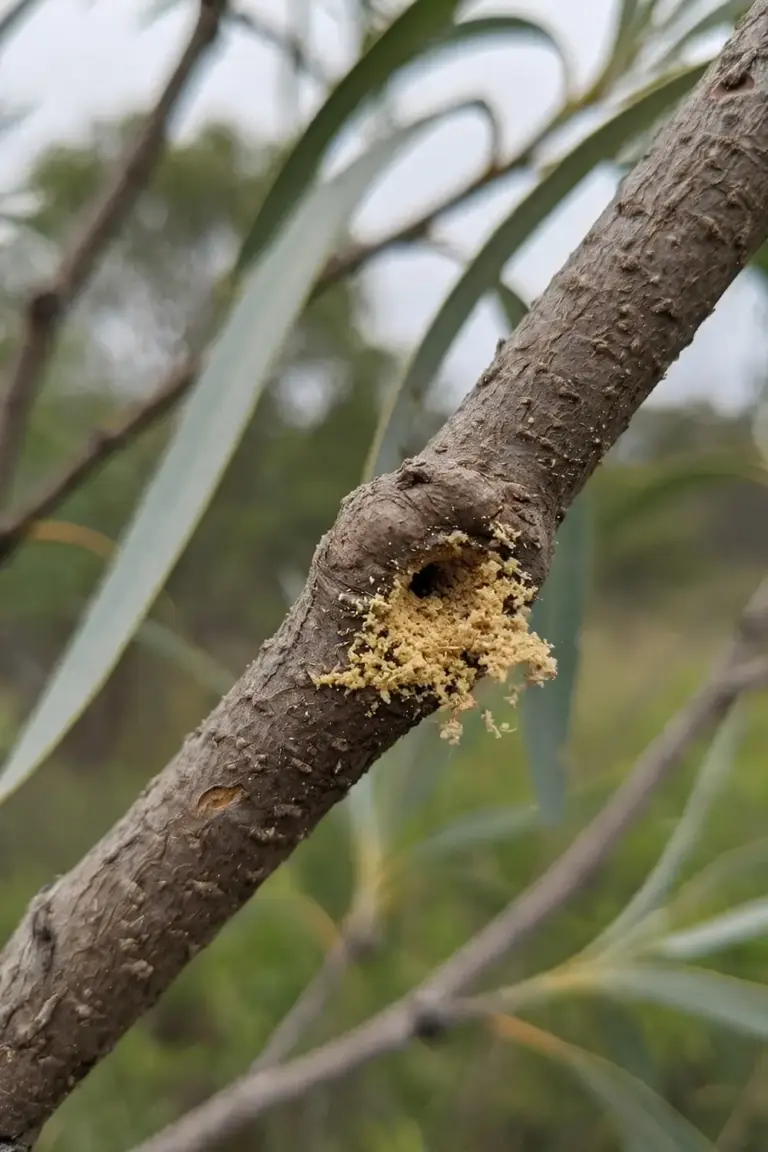
Cut out every bored stem well below the tunnel and destroy the material. Do not compost it. The larvae pupate inside the stem, and composting spreads them back into the garden. Burn the cuttings or bag them for green waste collection.
Prevention is mostly vigilance. Walk the plant monthly in the growing season and look for entry holes and frass.
Learn what frass looks like before you need to find it. The hakea moth pushes out fine granular droppings the color of sawdust, packed around a hole barely wider than a match head. Check the undersides of branches where the moth prefers to lay. Early detection means removing one stem. Late detection means removing a scaffold branch. Healthy vigorous plants tolerate light borer damage, so keep the plant unstressed with correct water and no phosphorus fertilizer. There is no registered home-garden insecticide specifically for hakea moth, and spraying the canopy does nothing because the grub is sealed inside the wood. For the broader approach to garden pests without harsh chemicals, the site’s organic pest control guide covers monitoring and cultural controls.
7. Sooty Mold and Scale: The Black Film
Sooty mold is a black fungal film that grows on honeydew, the sugary waste excreted by sap-sucking insects like scale. The mold itself does not infect the plant. It blocks light from the leaves and looks terrible. If your hakea wears a black coating, the real problem is the scale colony underneath it.
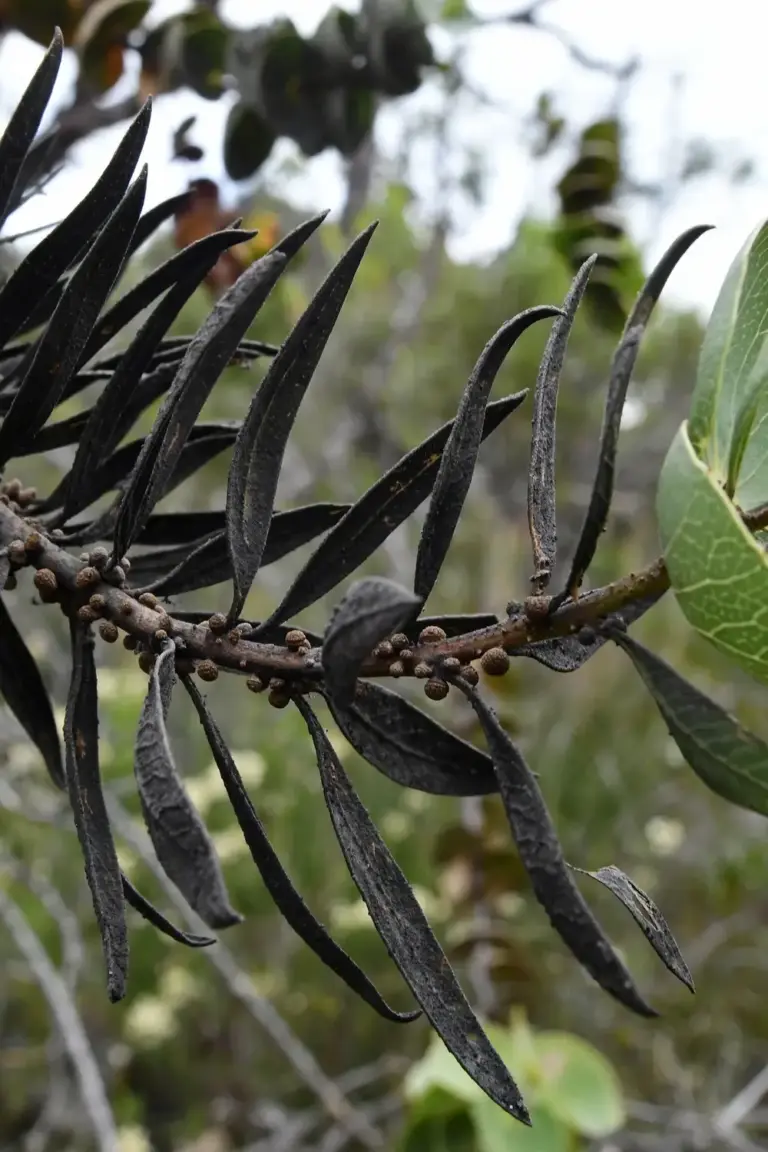
Find the scale. Look on the undersides of leaves and along young stems for small brown or gray bumps that do not move when touched. Treat the scale with horticultural oil, coating every surface thoroughly. The oil smothers the insects. Once the scale is dead and the honeydew stops, the sooty mold weathers off on its own over several weeks. Do not scrub the leaves. Scrubbing damages the foliage worse than the mold does.
Ants farming the scale make the problem permanent. If ants run up and down the stems, they are protecting the scale from predators in exchange for honeydew. Break the ant highway with a sticky barrier band around the trunk and the scale predators will do the rest.
Apply the sticky band to a wrap of fabric or tape, never directly to the bark. Sticky compounds can damage thin bark, and a fabric collar lets you remove the band cleanly when the ants are gone. Check the band monthly. Dust and dead insects pave over the sticky surface within weeks, and ants walk straight across the bridge.
8. Wind Damage: The Top-Heavy Collapse
Hakeas grow fast and carry dense canopies on relatively shallow root systems. A strong wind event can rock the whole plant, tear roots, or snap the trunk at the base. After a storm, a leaning hakea with cracked soil around the base has root damage, not a disease. The foliage may wilt over the following days as the torn roots fail to supply water.
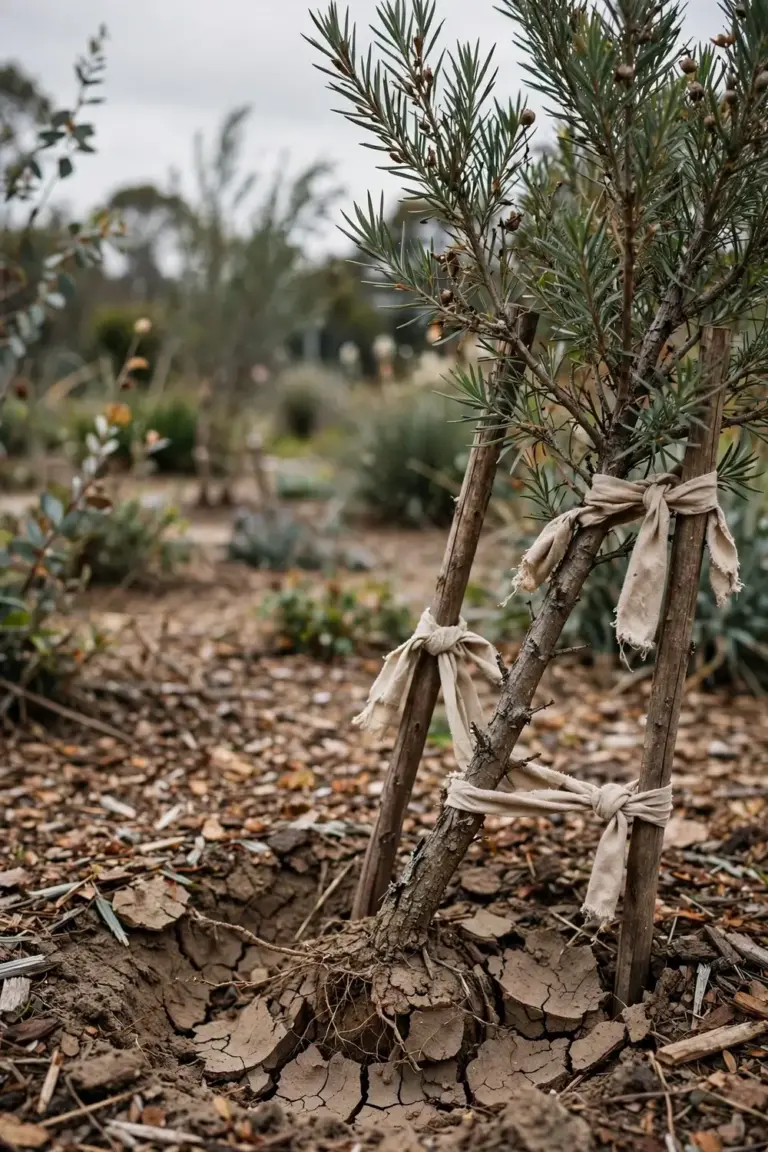
Stake it immediately. Drive two sturdy stakes on opposite sides of the trunk, outside the root ball, and tie with flexible tree ties that allow slight movement. Rigid strapping creates a weak point where the trunk meets the tie. Leave the stakes for one full growing season, then remove them so the trunk builds its own strength.
Check the ties every month while the stakes are in. A tie that was snug in spring girdles the trunk by summer as the wood thickens. Loosen and reposition rather than removing the support early. A trunk scarred by its own tie heals slowly and invites borers to the wound.
Prune back up to one fifth of the canopy to reduce the sail area while the roots re-establish. Water deeply but infrequently to encourage roots to chase moisture downward. A hakea staked and reduced after wind damage usually recovers. A hakea left leaning usually keeps leaning until the next storm finishes the job.
9. Humidity Kills Western Australian Species in Eastern States
This is the problem nobody warns eastern-state gardeners about. Many of the showiest hakeas come from the dry summers of Western Australia, and they collapse in the humid summers of Sydney, Brisbane, and the east coast. The plant grows well for two or three years, then dies almost overnight in a humid February. The roots rot in warm wet soil that never dries between storms.
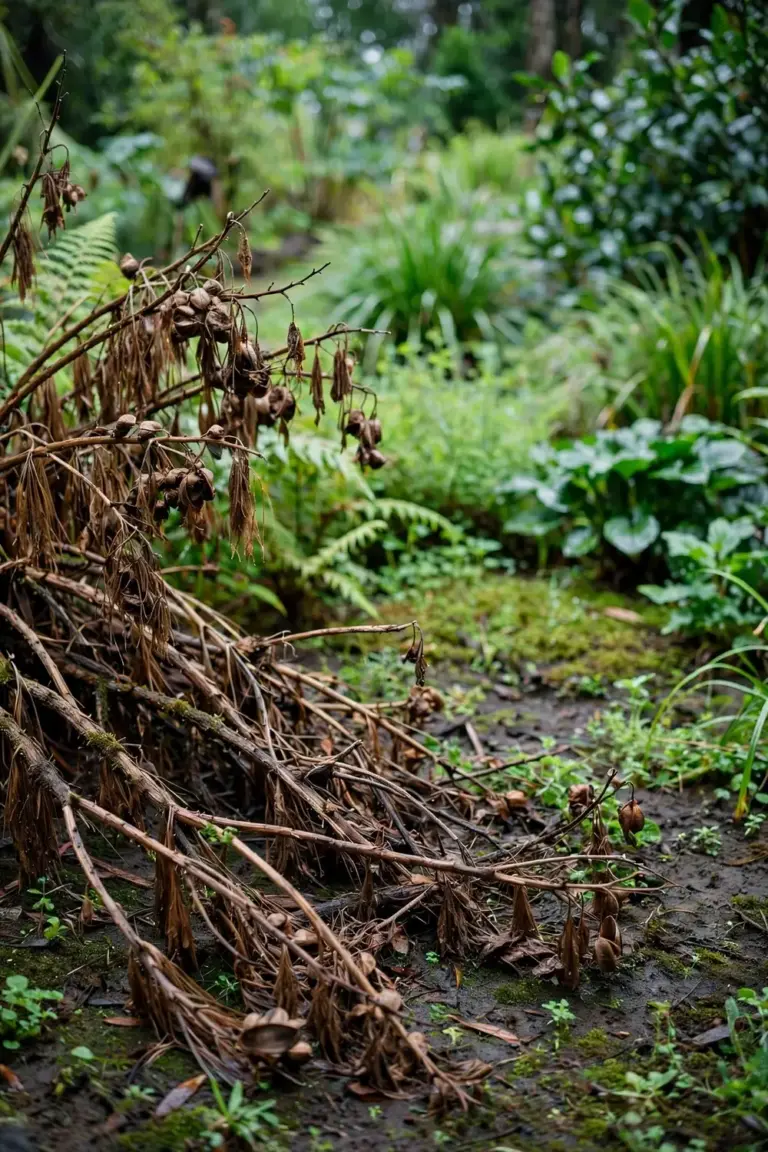
Choose eastern-state-tolerant species if you garden on the east coast. Hakea sericea, Hakea salicifolia, and Hakea dactyloides handle humidity far better than the Western Australian showpieces. Or graft: difficult Western Australian species are routinely grafted onto hardy eastern rootstocks to survive east coast conditions.
Site for drainage above all else. A raised bed, a slope, or a mound lifts the roots out of the wettest soil.
Ask the nursery where the species comes from, not just what it looks like in flower. A plant bred or collected from the east coast has already survived several humid summers, while one fresh from a Western Australian wholesaler has never been tested. When humidity is the killer, provenance matters as much as species. Water in the morning so foliage dries by evening. Mulch with coarse bark that lets air through, never with fine compost that holds moisture against the stem. In a humid climate, drainage is not a preference. It is the difference between a hakea and a hole in the garden.
10. Waterlogging: Drowned Roots in Heavy Soil
Waterlogging kills hakeas the same way in every state. Roots need oxygen, and soil that stays saturated suffocates them. Clay soil, a low spot in the garden, or a downpipe discharging next to the plant all create the same outcome: yellow wilting foliage on wet soil, then branch dieback, then death. Dig down 15 cm after rain. If the soil is gray, smells sour, and water pools in the hole, the roots are drowning.
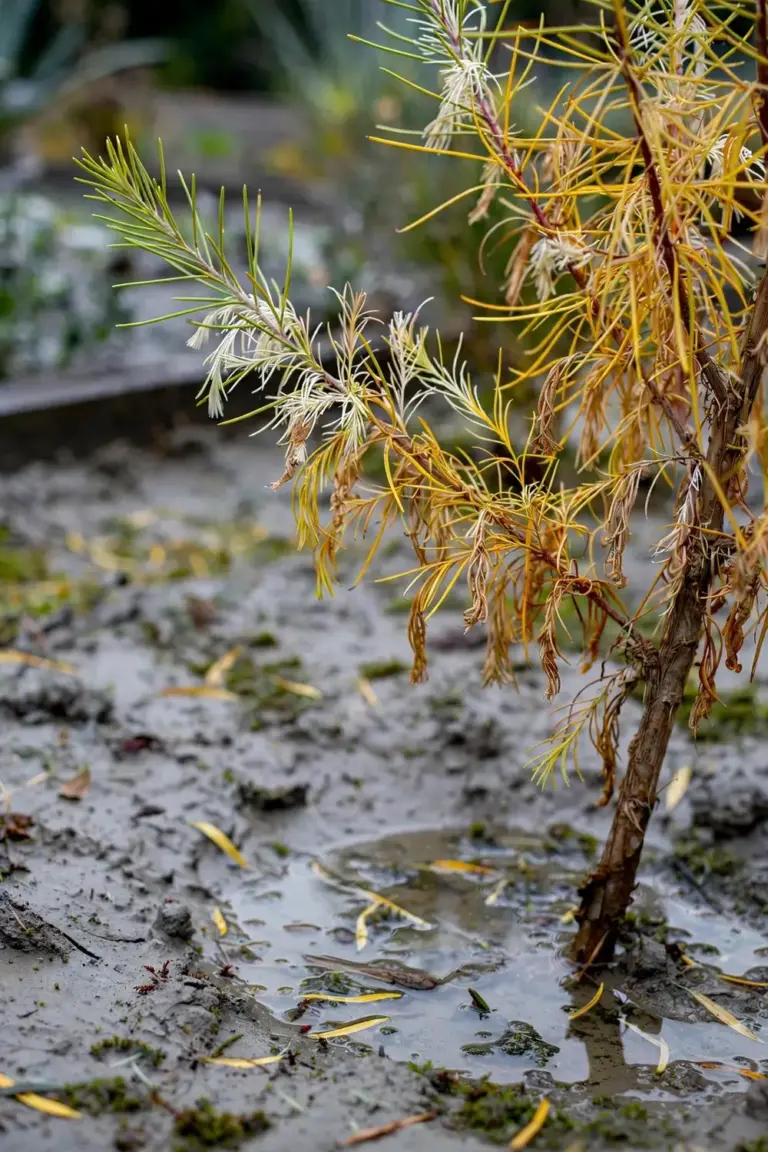
The fix is structural, not chemical. No fertilizer or tonic revives drowned roots. Lift the plant onto a mound at least 20 cm above the surrounding soil level, or move it to higher ground. Break up compacted clay with gypsum and coarse organic matter before replanting. Redirect downpipes away from garden beds.
Gypsum works slowly, so apply it a season before you need the drainage. Spread it over the bed in autumn and let winter rain carry it down. Coarse composted bark opens the structure faster but breaks down within a year. Use both. The gypsum handles the clay chemistry and the bark handles the immediate air gaps.
Test before you plant. Dig a hole 30 cm deep, fill it with water, and time how long it drains. If water still sits after 4 hours, the spot needs a mound or a different plant. An hour of testing beats a year of nursing a drowning hakea.
Container growing sidesteps the whole problem. A large pot with premium native potting mix gives you total control over drainage, and you can move the plant if the spot turns out wetter than expected. Choose a pot at least 40 cm wide so the roots have room, and never let the pot sit in a saucer of water.
11. The Hakea Symptom Table: Match What You See
Use this table to narrow the cause before you act. Find your symptom in the left column, then read across for the likely cause and the first action.
| Symptom | Likely Cause | First Action |
|---|---|---|
| Brown leaf tips and margins, older leaves dropping | Phosphorus burn | Stop all fertilizer, flush soil deeply |
| Sudden wilting, leaves stay attached, soil moist | Phytophthora root rot | Check feeder roots, improve drainage, do not replant in same spot |
| Newest leaves yellow, veins stay green | Iron chlorosis, alkaline soil | Test pH, lower with sulfur, avoid mushroom compost |
| Browning from stem tips downward | Tip blight (Pestalotiopsis) | Prune 10 cm below damage, disinfect tools |
| No flowers on a healthy plant | Too young, too shady, wrong pruning time | Wait for maturity, increase sun, prune only after flowering |
| Single wilting stem, frass at entry hole | Hakea moth or borer | Cut out bored stem, destroy material |
| Black film on leaves | Sooty mold over scale | Treat scale with horticultural oil |
| Leaning after wind, cracked soil at base | Root tearing from wind | Stake with two flexible ties, reduce canopy by one fifth |
| Overnight collapse in humid summer | WA species in eastern humidity | Choose tolerant species or grafted plants, mound planting |
| Yellow wilt on gray sour-smelling soil | Waterlogging | Mound 20 cm, redirect water, test drainage before planting |
12. Frequently Asked Questions
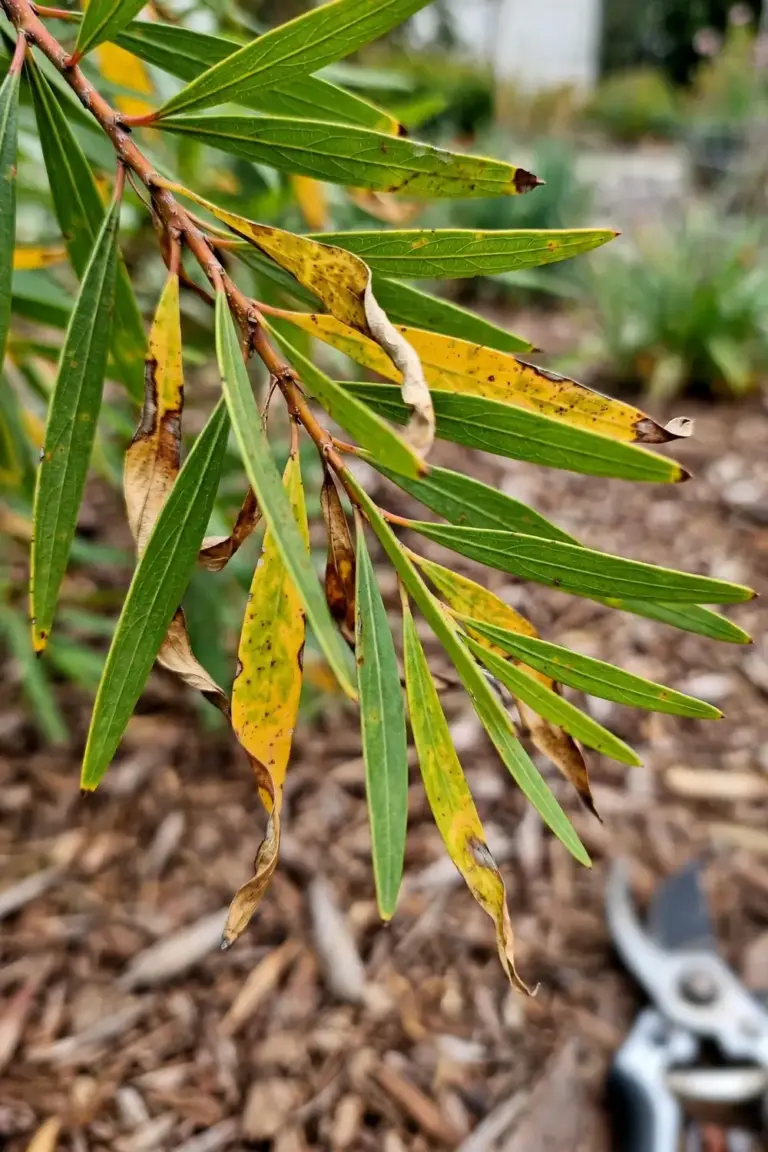
Yellow leaves point to phosphorus burn or iron chlorosis, and the pattern separates them. Phosphorus damage yellows older leaves first from the tips inward after fertilizing. Iron chlorosis yellows the newest leaves while veins stay green and signals alkaline soil. Test your soil pH and review what fertilizer you used. Most cases trace to a general garden fertilizer applied to a phosphorus-sensitive Proteaceae.
A mildly burned hakea can recover if you act quickly. Stop all fertilizer, flush the root zone deeply with plain water several times over a fortnight, and wait a full season before feeding again. Severely defoliated plants may not recover because the root damage is extensive. When you resume feeding, use only native-plant fertilizer formulated for phosphorus-sensitive Proteaceae and never use chicken manure near them.
Phytophthora shows as sudden wilting where the leaves stay attached and the soil is moist, which separates it from drought stress where leaves drop. Dig gently at the root zone and inspect the fine feeder roots. Brown rotted feeder roots instead of white firm ones confirm root rot. There is no cure, so focus on drainage, hygiene, and phosphite protection for nearby healthy plants rather than rescue treatments.
The three usual reasons are age, shade, and pruning timing. Most hakeas need 3 to 5 years before flowering reliably, so a young plant is not ready yet. A plant in increasing shade puts energy into stem growth instead of buds. Pruning in late autumn or winter removes the wood carrying next season’s flower buds. Prune lightly right after flowering finishes and give the plant full sun.
Hakea moth caterpillars tunnel inside hakea stems and can kill individual branches, but they rarely kill an established plant outright. The greater risk is structural: tunneled stems snap in wind. Cut out every bored stem well below the tunnel and destroy the cuttings rather than composting them. No home-garden spray reaches grubs sealed inside wood, so physical removal is the effective control.
13. Walk Your Hakea Monthly and Catch Trouble Early
Most hakea problems announce themselves weeks before they become fatal. Walk the plant once a month and look at the leaf tips, the newest growth, and the base of the stems. Brown tips mean fertilizer trouble, pale new leaves mean pH trouble, and frass on a stem means borers have moved in. Catch each sign early and the fix is small. Miss them all and you are buying a replacement plant.
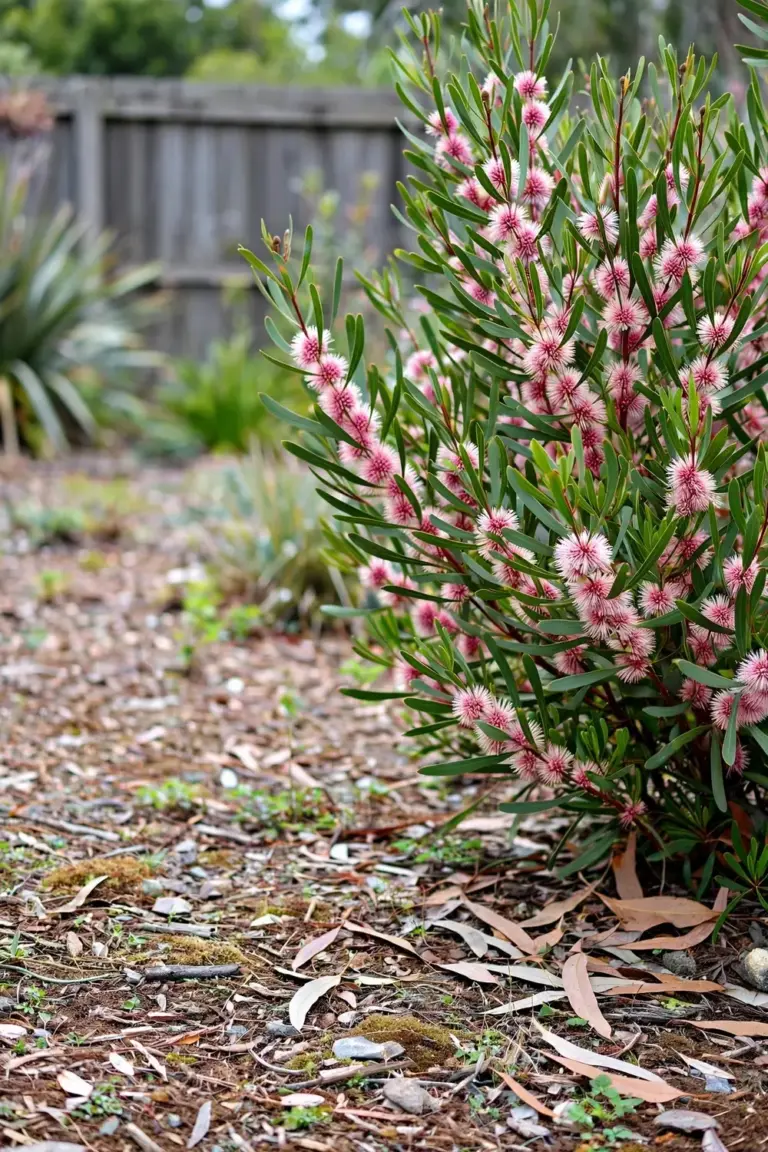
Keep the big rules in mind and hakeas largely look after themselves. Feed nothing but low-phosphorus native fertilizer. Plant on a mound in soil that drains. Give them sun and airflow. Resist the urge to fuss. Hakeas evolved for lean soils and harsh sun, and most interventions beyond the basics do more harm than good. A hakea left alone in the right spot outlives a hakea fussed over in the wrong one. For gardeners wanting more Australian natives that share the hakea’s low-maintenance temperament, the site’s native plants for containers guide collects species that thrive on the same lean treatment.