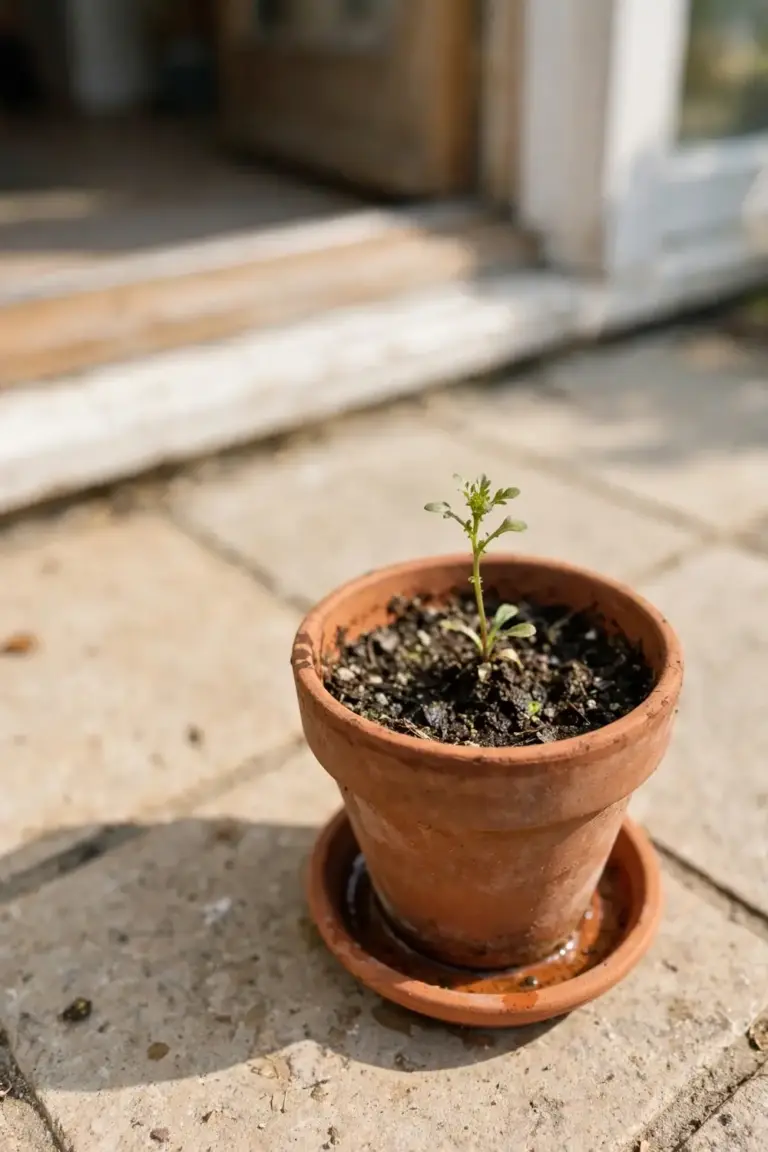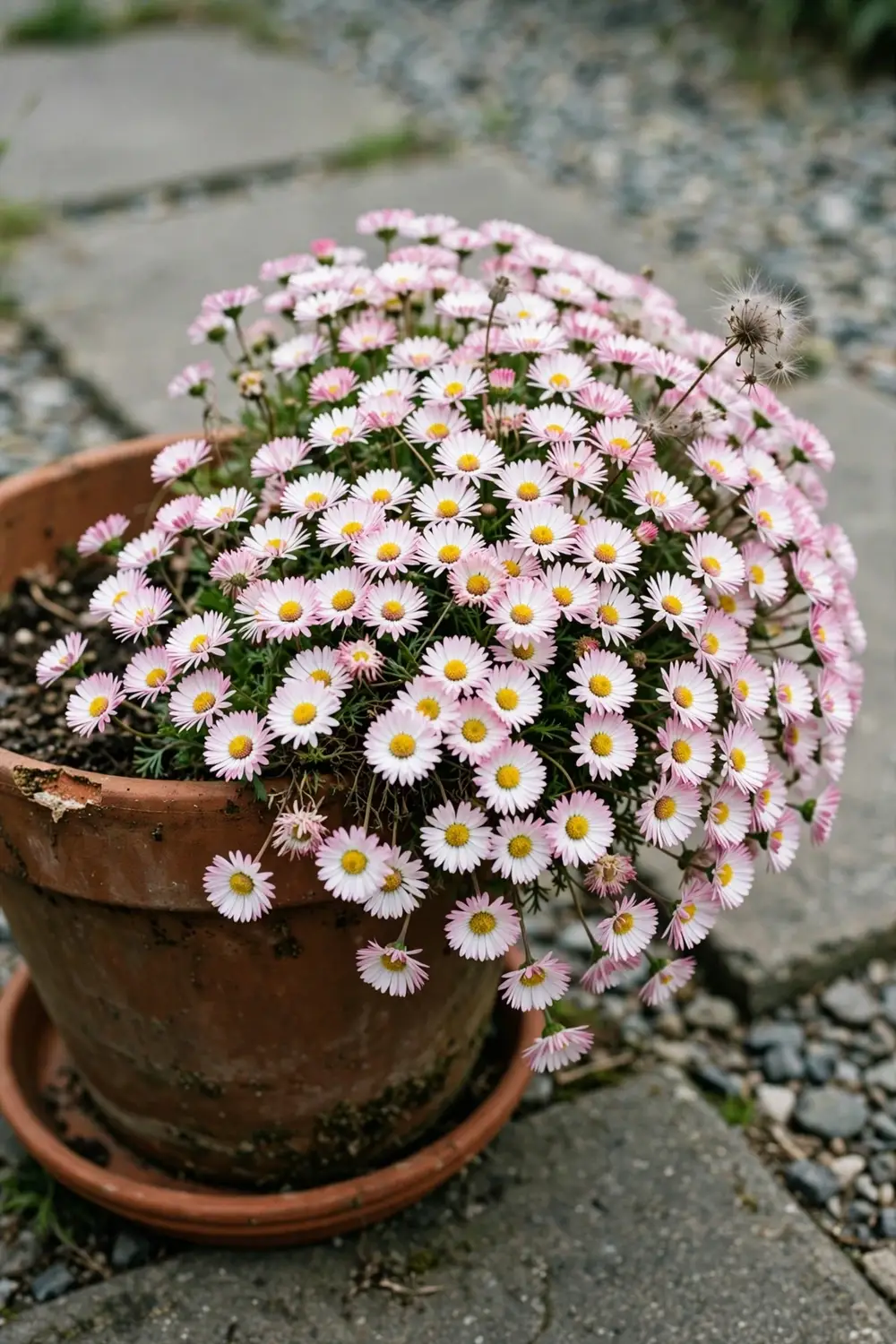

Snip 5.1 to 7.6 cm basal cuttings from a potted seaside daisy, root them in a pot, and keep every pot off open soil. That is seaside daisy propagation with containment. The rest of this page is 7 moves, from the first cut to the monthly escape check.
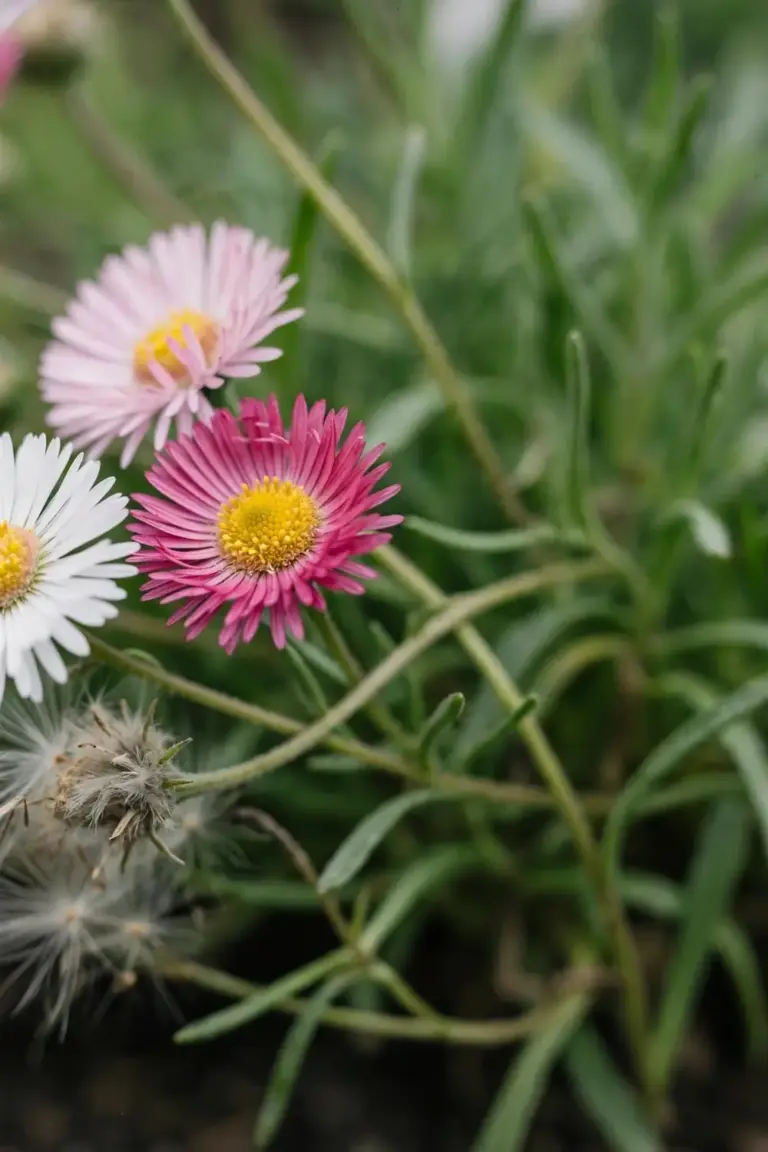
Seaside daisy is Erigeron karvinskianus, a sprawling perennial that spreads by seed and by rhizomes. Learning how to propagate seaside daisy from cuttings starts with containment, not with the shears. Sellers also list it as Santa Barbara daisy, Mexican daisy, and Mexican fleabane. All four names point at Erigeron karvinskianus. A second plant carries the same common name. Erigeron glaucus is a United States coastal species with spoon-shaped leaves. Check the botanical name on the label before you buy. A label that reads Erigeron glaucus is a different plant with different habits, even though the common name matches. I have learned that the cutting I snip from the base roots faster than the cutting I snip from a flowering tip.
Work in spring. Take cuttings in the morning. Check pots monthly. Bag trimmings and bin them. The general propagation method covers the same cutting steps for other plants, and this page applies them to one escape-prone species under containment.
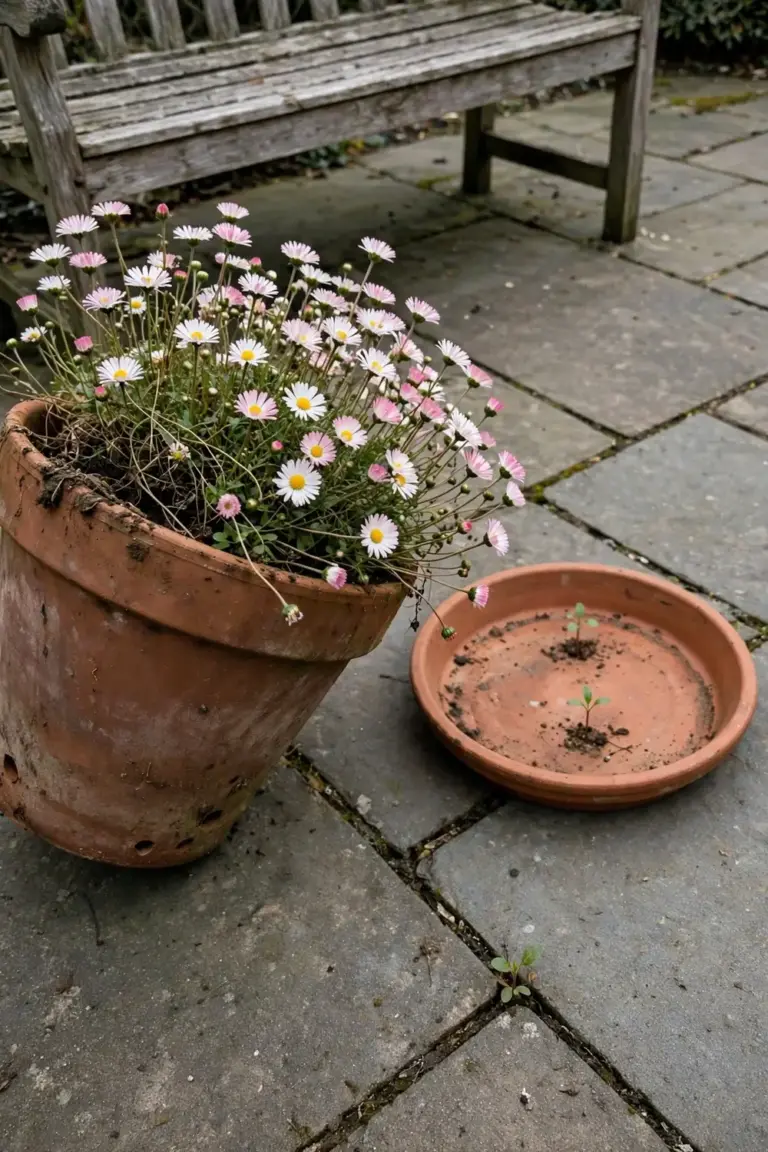
Containment means four barriers working together. The pot holds the roots. The saucer catches the mix. The bench or paving breaks contact with soil. The monthly check catches the seed that gets past the first three. Skip one barrier and the plant finds the gap. Keep all four and the plant stays where you put it.
1. Grow Seaside Daisy in Pots Only, Never in Open Beds
Grow seaside daisy in a pot, a paving crevice, or a hanging basket. Keep it out of open beds beside bushland. The plant escapes from gardens. A Plants of South Eastern New South Wales fact sheet calls it an introduced sprawling perennial herb to 0.4 m tall, rhizomatous, and a garden escape from gardens and rockeries that now grows on moist disturbed sites and along streams, according to the Plants of South Eastern New South Wales fact sheet. Rhizomes creep outward under the soil surface. Seeds ride the wind. One plant in an open bed can seed a wall, a path, and a creek bank in a single season.
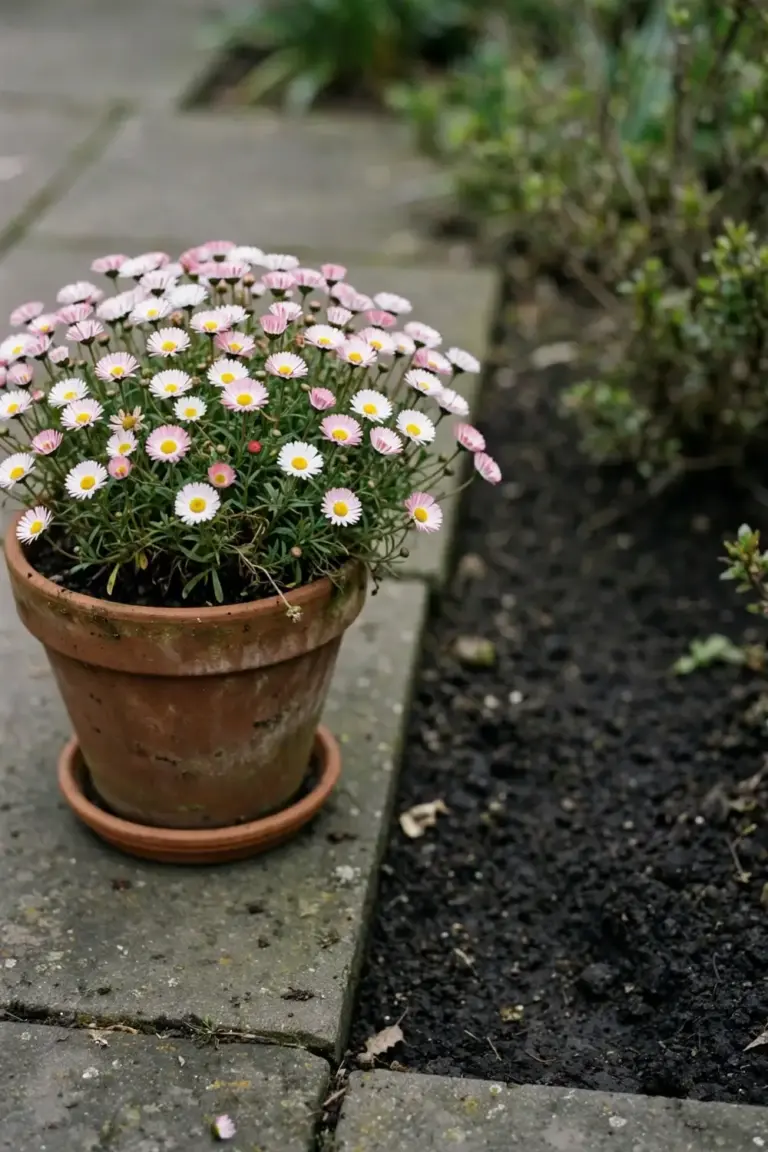
Sydney Weeds Network describes it as an aggressive spreading perennial that smothers low native groundcovers. That description drives the whole method on this page. A pot is a fence. A bed beside bushland is an open gate. The plant flowers from October to February in New South Wales, per the same fact sheet, so a neglected pot can shed seed for months, and a single flowering season can seed every crack within wind reach. A hanging basket still needs the same discipline. Seed falls from a basket as freely as seed falls from a bed, and a basket hung over soil is a bed with a longer drop.
Paving crevices count as contained when the crevice sits inside paving with no soil path to a bed. A crevice between two pavers on a patio holds the plant. A crevice at the edge of a path, where the paving meets soil, does not. Check the edge crevice the same way you check a pot. A plant that seeds a path edge has escaped, even if the parent still sits in the crack.
Buy from a nursery that labels the botanical name. A label that reads only “seaside daisy” tells you nothing about which species sits in the pot. A label that reads Erigeron karvinskianus tells you the plant and its habits. A label that reads Erigeron ‘Spindrift’ tells you the compact cultivar. Read the label before you pay. A plant bought on a common name alone can surprise you, and this species surprises gardeners by escaping. A pot of it on a sunny step gives months of white-to-pink flowers with no spray program. Pollinators work the flowers through the season. A contained pot gives you the flowers without the escape, which is the deal this page offers.
Western Australia carries the sharpest warning. An Australian nursery listing calls seaside daisy an environmental weed in WA, warns against planting it beside bushland, and does not recommend it for WA gardens. Treat that warning as a stop sign. Gardeners in WA should skip the species and grow a native groundcover instead, because a plant that escapes in WA joins a weed list that local bushcare groups already fight. Gardeners elsewhere should still grow it in pots only. The containment habit costs nothing. The escape costs a bushland edge, and bushland edges recover slowly once a mat-forming weed takes hold.
2. Set Up a Pot That Keeps Runners In
Pick a pot with drainage holes and a saucer. The saucer catches the mix that washes out when you water. Drainage holes keep the roots from sitting in water, which matters because a cutting with no roots rots fast in a waterlogged pot. A pot without drainage holes drowns a cutting within a week. A pot without a saucer leaks mix onto paving, and mix on paving carries seed into cracks where it germinates out of sight.
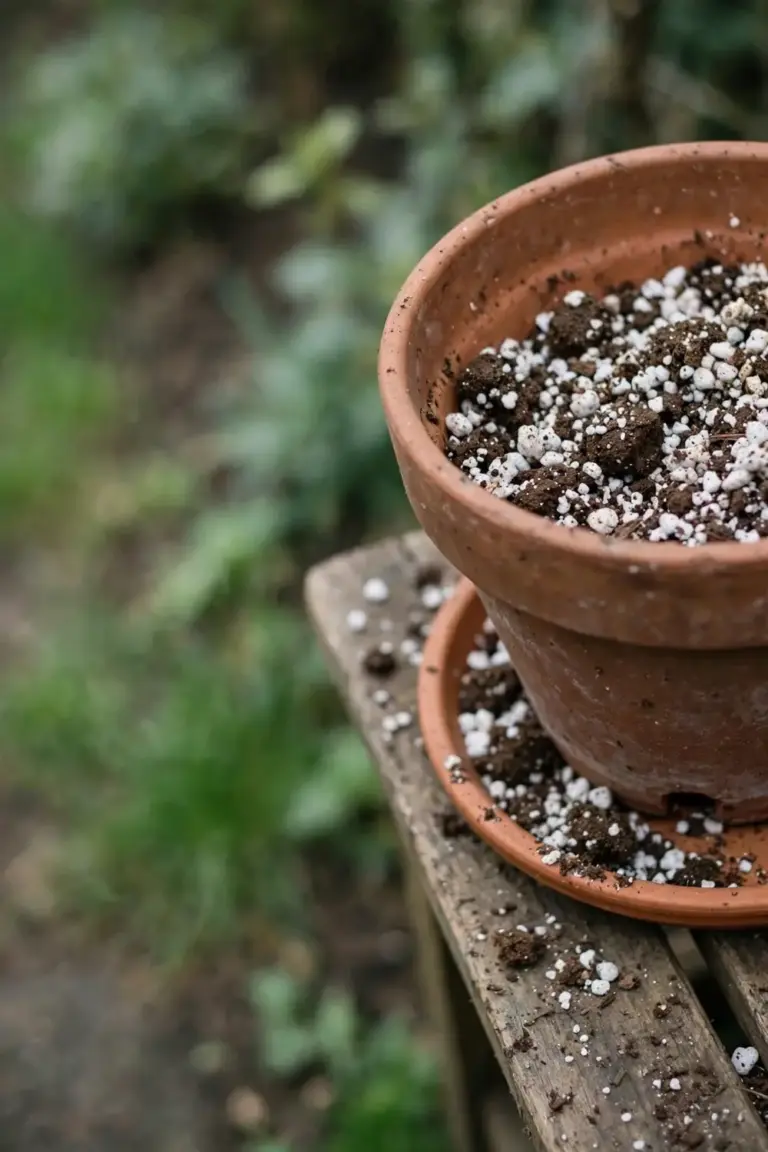
Fill the pot with a free-draining mix. A perlite or peat moss mix suits cuttings, and the same loose structure suits the grown plant. Heavy garden soil compacts in a pot, and compacted mix holds water against the stem base until the stem rots. The potting mix guide covers the components in full, and the rule here stays simple: loose, free-draining, no garden soil. A mix that drains freely also dries faster on the surface, which keeps the stem base dry between waterings.
Stand the pot on paving, gravel, or a bench. Keep the pot base off bare soil. A pot sitting on soil lets roots escape through the drainage holes and anchor the plant to the bed below. Lift the pot once a month and check the holes for escaping roots. A saucer under the pot breaks that contact, and a bench breaks it further still, so two barriers stand between the roots and the soil. Containers suit this plant well when the container itself becomes the containment, as the container gardens guide shows for plants that need firm boundaries.
Set the pot as far from bushland as the garden allows. A pot beside a bushland fence drops seed straight into the bush. A pot on a patio drops seed onto paving, where you can sweep it. Distance is a barrier too. The further the pot sits from open soil, the fewer seeds reach it, and the monthly check gets easier with every meter. A patio pot beside the back door is the easiest pot to watch, and the easiest pot to watch is the safest pot to keep.
Give the pot full sun. Seaside daisy thrives in full sun and tolerates some shade, and flowers thin out in shade. A sunny pot flowers hard. A shaded pot grows leggy stems that flop over the rim and drop seed outside the pot. Sun keeps the mound tight and the seed inside the rim, which is the whole point of growing this plant in a container.
Wipe shears clean between plants. Dirty shears carry disease from one plant to the next, and a cutting with an infected wound never roots. A quick wipe with a clean cloth between cuts costs seconds. Rinse the saucer each time you water. A saucer that sits dirty grows algae and mosquito larvae, and a scrubbed saucer shows seedlings the moment they appear. Clean tools and clean saucers make the monthly check fast.
3. Take 5.1 to 7.6 cm Basal Cuttings in Spring
Take cuttings in spring, from the base of the plant. Cuttings taken from the base grow most quickly, because basal stems carry more stored energy and sit closer to the root zone. A propagation guide puts the cutting length at 5.1 to 7.6 cm, taken from spring to autumn, with base cuttings rooting fastest, according to the PlantCareToday propagation guide. Spring gives the cutting a full warm season to root and fill the pot. Autumn cuttings root too, and they face a cold winter before they establish, so spring cuttings finish stronger.
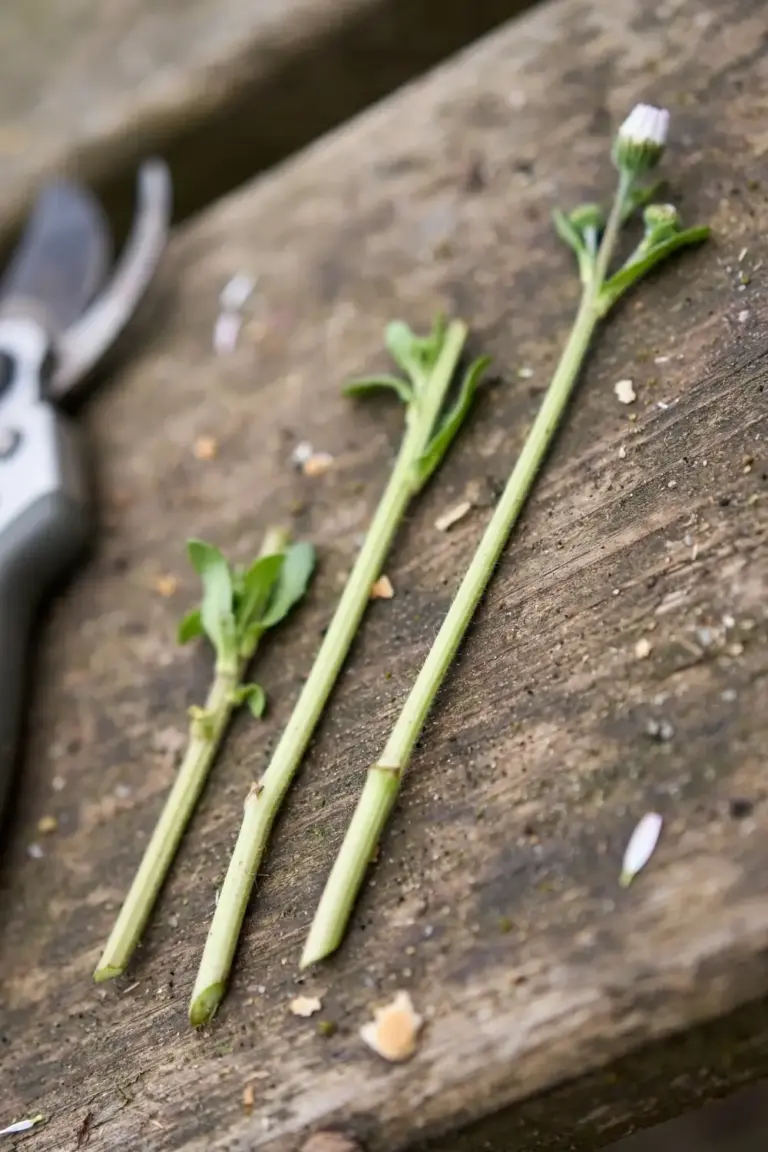
Choose a healthy stem with no flowers. A flowering stem spends energy on blooms, while a non-flowering stem spends energy on roots. Cut just below a leaf node with clean shears. A clean cut heals fast and gives roots a tidy starting point. A crushed cut rots from the wound inward. Strip the foliage from the bottom half of the cutting. Bare stem goes into the mix. Leaves left under the mix rot and feed mold, and mold spreads to neighboring cuttings fast.
Take three cuttings for every pot you want to fill. One cutting can fail, and a single failure should not cost you the season. Three cuttings give you a spare and a backup for the spare. Pot each cutting in its own small pot. A shared tray lets one rotting cutting infect its neighbors through the shared mix. Individual pots keep failures isolated. Label each pot with the date. The date tells you when the 6 to 8 week rooting window ends, so you check roots on schedule instead of guessing.
Use sharp, clean shears for every cut. Blunt shears crush the stem instead of cutting it, and a crushed stem rots from the wound. Wipe the blades with a clean cloth between plants. A blade that cut a sick plant carries the sickness to the next cut. Sharp blades and clean blades cost nothing, and they decide whether a cutting roots or rots. Dull blades waste good cuttings. Take cuttings from a plant that looks vigorous, with firm stems and fresh leaves. Skip stems with spots, soft patches, or curling leaves. A healthy cutting roots. A sick cutting spreads the sickness to the pot.
Keep a simple record. Write the cutting date on the label. Write the source plant on the label too. A record tells you which pot roots first and which mother plant gives the strongest cuttings. A record also tells you when to stop taking cuttings. Three rounds of cuttings from one mother plant in a season is plenty, and a mother plant cut too often weakens.
4. Root the Cuttings in 6 to 8 Weeks
Push the bare stem into a perlite or peat moss mix. The mix should feel damp, never wet. Set the pot where it gets adequate but indirect light. Direct sun cooks a cutting with no roots, because the stem loses water faster than it can replace it. Indirect light lets the cutting photosynthesize without drying out. Water lightly and regularly. Light watering keeps the mix damp around the stem without waterlogging it. Heavy watering waterlogs the mix and rots the base from below.
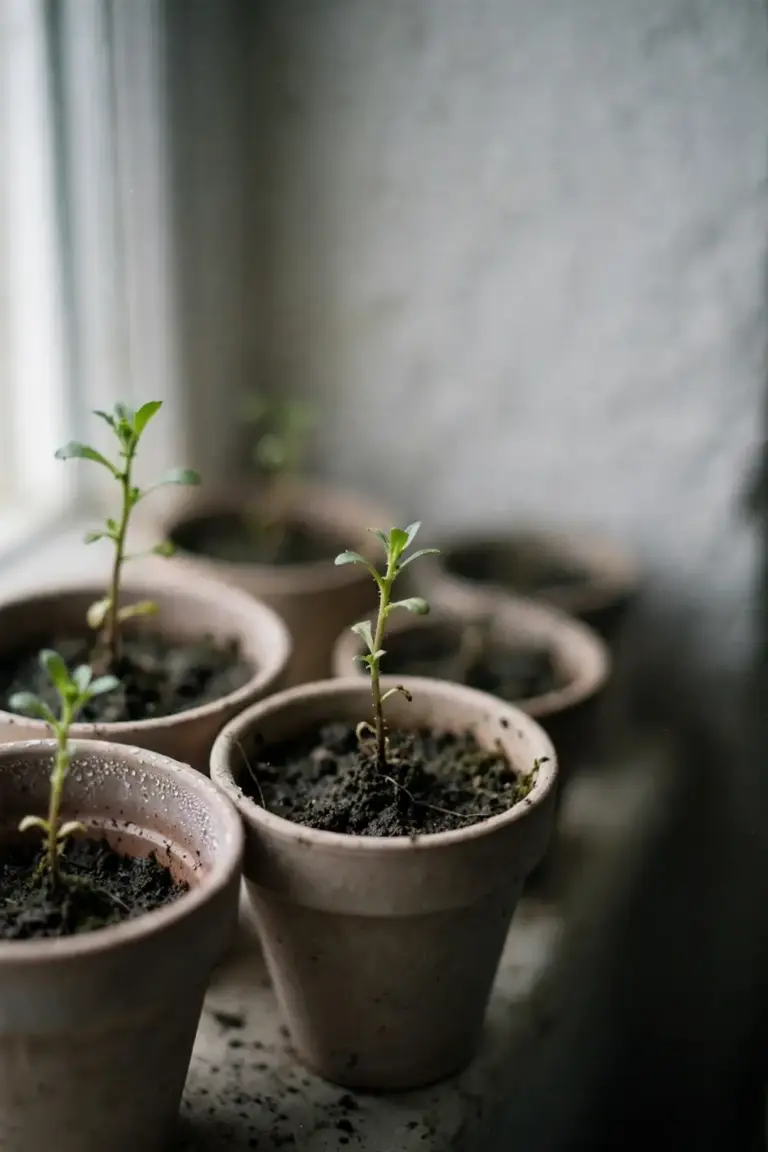
The same propagation notes put rooting at 6 to 8 weeks. Check for roots at week 6. Tug the cutting gently. Resistance means roots have formed and gripped the mix. No resistance means the cutting needs more time. A cutting that slides out with a black base has rotted, so bin it and start fresh. A cutting that slides out with a clean pale base can go back in for two more weeks, and it often roots on the second attempt.
Hold the mix damp through the whole window. A cutting with no roots cannot drink, so dry mix kills it in days. Wet mix kills it in a week by rotting the base. Damp mix keeps the stem alive until roots arrive, and damp is the only state that works. Mist the leaves on hot mornings. Mist raises humidity around the cutting without soaking the mix. Skip misting on cool overcast days. Wet leaves in cool air invite mold, and mold on a rootless cutting ends the attempt.
Watch for new leaf growth at the tip. New leaves mean the cutting has rooted and started growing, even before you tug-test it. A cutting that holds its leaves and pushes a fresh pair has taken. A cutting that drops its leaves and goes limp has likely failed, so check the base. A firm stem with no new growth may still root, so give it the full window before you judge it.
Leave a rooted cutting that stays small alone. A cutting that roots but grows slowly is still alive, and small cuttings often catch up in the second month. Do not feed it to force growth. Do not repot it early. A small rooted cutting needs steady damp mix and indirect light, not intervention. Patience grows more cuttings than fertilizer does.
5. Harden Off and Pot On Rooted Cuttings
Move a rooted cutting into bright light over several days. A cutting that rooted in indirect light burns in full sun, because its leaves grew thin in shade. Give it one hour of morning sun on day one, then add an hour each day until it takes full sun by the end of the week. Morning sun is gentle and builds tolerance. Midday sun is harsh on a fresh cutting. A cutting that wilts in midday sun needs another day in indirect light before it tries again.
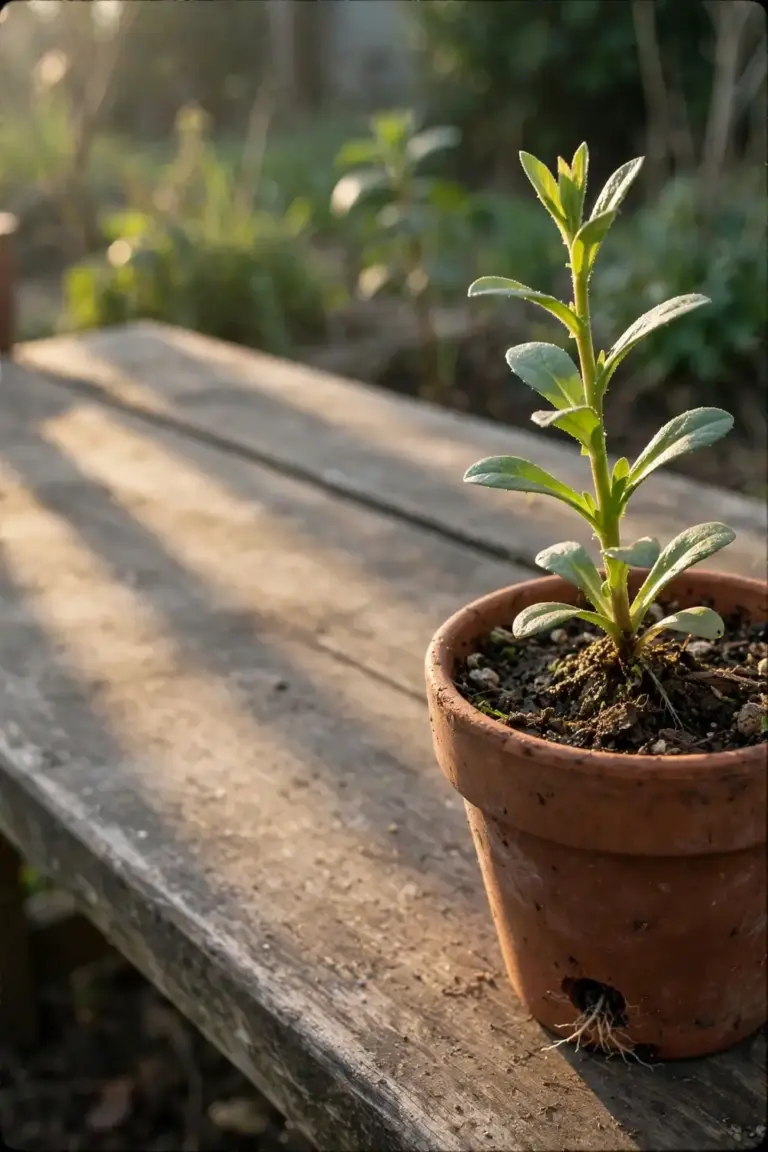
Pot the cutting on into its final pot once roots fill the small pot. Roots circling the small pot tell you the cutting is ready. Tease the root ball loose without tearing the fine roots, then set it at the same depth it grew at before, because a deeper planting buries the stem and a buried stem rots from the soil line upward. Water the new pot well once. Return to light watering until new growth shows.
Cut the plant back to new shoots close to ground level in early spring, per the Royal Horticultural Society cultivation notes. The same notes put the ultimate height at 0.1 to 0.5 m, reached in 2 to 5 years, and describe the plant as drought tolerant in well-drained soil. A hard spring cut keeps the mound dense. A dense mound flowers harder than a leggy one. Deadhead spent flowers through the season. Each spent flower left on the plant can set seed, and each seed is a future escape. One Australian grower gives an occasional liquid feed at the start of spring, and no published source gives a feeding rate for this species, so one light feed a year is the most the evidence supports.
Expect the first flowers in the first warm season after rooting. A spring cutting roots by early summer and can flower the same season. An autumn cutting waits for spring. Flowering in the first year is normal for this plant, and a pot that flowers in its first year still needs the same deadheading. Pick off the first spent heads early. Early deadheading sets the habit for the season.
Ease off water in winter. Growth slows in the cold months, and a plant that barely grows drinks little. A pot that stays wet through winter rots at the crown. Let the mix dry further between waterings in winter, then return to the normal rhythm when spring growth starts. A plant that rests dry in winter wakes stronger in spring.
6. Run a Monthly Escape Check on Every Pot
Walk every pot once a month, and look in four places: runners over the rim, seedlings in the saucer, seedlings in the paving joints below the pot, and roots out of the drainage holes. Wind drops seed further than you expect. A pot that looks clean still needs the check. Seed hides in mix cracks. Seedlings start small, and a monthly check catches escapes while they pull out with two fingers. A check skipped for a season turns into a weeding job.
| Escape Check | Sign of Escape | Fix |
|---|---|---|
| Rim | Stems flopping over the rim and touching soil | Trim stems back inside the rim and bin the trimmings |
| Saucer | Seedlings sprouting in the saucer | Empty the saucer, bin seedlings, scrub the saucer |
| Drainage holes | Roots growing out of the holes into soil below | Lift the pot, trim roots, move the pot onto paving |
| Paving joints | Seedlings in cracks below a hanging basket | Pull seedlings, sweep joints, move the basket |
| Spent flowers | Flower heads going to seed on the plant | Deadhead weekly through flowering |
Bin every trimming. Never dump trimmings on a compost heap near a bed. Never toss spent flowers into green waste that goes to bushland. Bagged bin waste leaves the garden for good. Dumped waste plants the next escape, because stem fragments and seed heads survive a casual pile. The organic weed control guide covers removal methods for plants that already escaped, and prevention stays cheaper than removal.
Check pots after storms. Wind shakes seed loose from drying heads. Rain splashes mix over the rim and carries seed onto the path. A storm can scatter seed across a path in one afternoon, and a check the next morning catches the scatter before it germinates. Check again after you prune. Pruning shakes seed heads, and a pruned plant drops seed onto the bench. Sweep the bench after every prune, and bin the sweepings with the trimmings.
Act the same day when you find an escape. Pull the seedling, bag it, and bin it. Check the soil around it for siblings. A seedling rarely travels alone, and a second seedling beside the first is the rule, not the exception. Move the parent pot further from the bed. A pot that seeded a bed once will seed it again unless the position changes.
7. Choose Spindrift for the Lowest Escape Risk
Buy Erigeron ‘Spindrift’ when you want the lowest escape risk. Spindrift is a compact cultivar that grows 20 cm tall and spreads to 50 cm wide, and its grower describes it as not being an invasive cultivar that is easily contained, according to The Gourmantic Garden dwarf sea daisy guide. A compact dome drops less seed than a sprawling mat, and a smaller plant is easier to inspect each month. A contained cultivar still needs a pot. Contained means easier to manage, not free to plant in a bed.
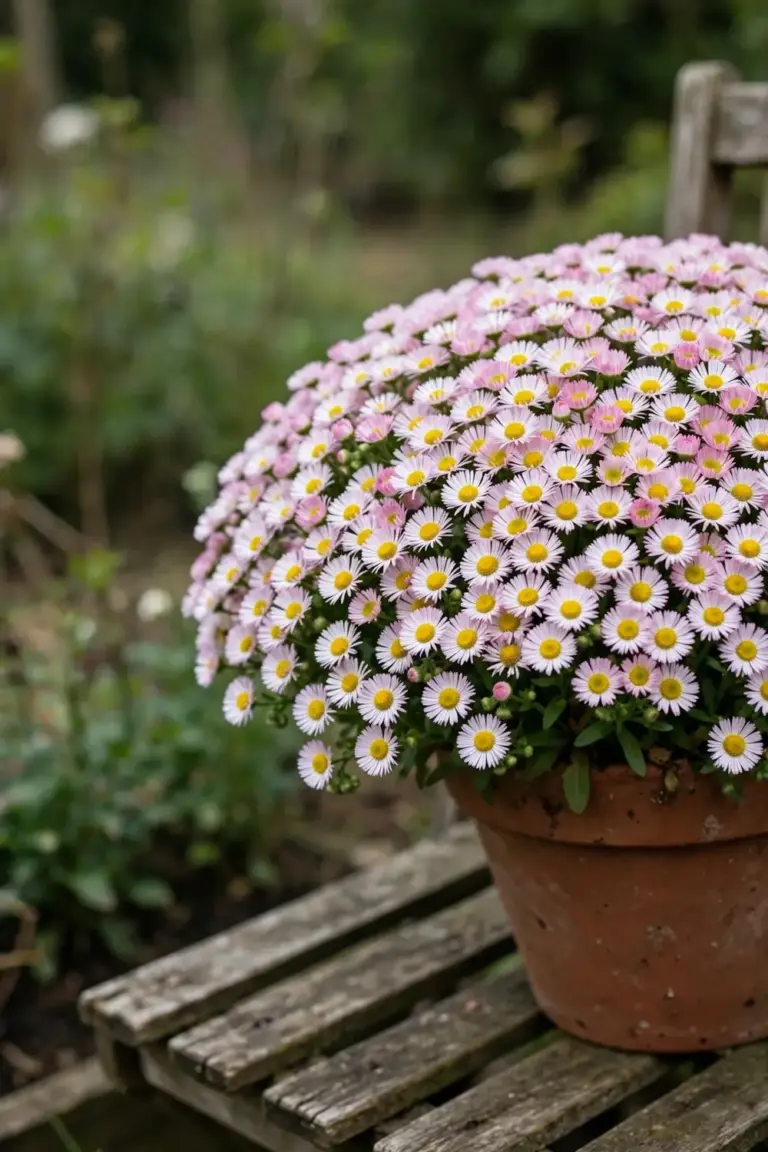
Spindrift suits the same pot method as the species. Full sun suits it. Part shade suits it too. Containers, hanging baskets, and window boxes all suit it, because the compact dome spills over an edge without trailing stems to the ground. The same monthly escape check applies. A cultivar with a lower escape risk still sheds seed, so the pot still does the containing.
Propagate Spindrift by the same cutting method. Take basal cuttings in spring. Root them in a perlite or peat moss mix. Check them at week 6. Cuttings keep the cultivar true, which matters because seedlings from a cultivar can revert to species habits. A cutting of Spindrift grows into Spindrift. A seedling of Spindrift may grow into something leggier.
Ask for the cultivar by name at the nursery. A pot labeled only “seaside daisy” may hold the species. The species spreads harder than Spindrift. A label that reads Erigeron ‘Spindrift’ tells you what you bought. A label that reads only Erigeron karvinskianus tells you the species. Buy the named cultivar when containment matters most. Containment matters most beside bushland, where one escape can seed a whole edge.
Frequently Asked Questions
No. Grow seaside daisy in a pot, a paving crevice, or a hanging basket. Open beds let rhizomes creep and seed ride the wind into bushland. Sydney Weeds Network describes the plant as an aggressive spreading perennial that smothers low native groundcovers. A pot keeps the plant where you can watch it.
Cuttings take 6 to 8 weeks to root in a perlite or peat moss mix under indirect light. Take 5.1 to 7.6 cm basal cuttings in spring for the fastest result. Tug gently at week 6. Resistance means roots have formed. A black base means the cutting rotted, so bin it and start fresh.
An Australian nursery listing calls it an environmental weed in WA, warns against planting it beside bushland, and does not recommend it for WA gardens. Gardeners in WA should skip the species and grow a native groundcover instead. Gardeners elsewhere should still grow it in pots only, never in open beds.
Spindrift spreads less. The compact cultivar grows 20 cm tall and 50 cm wide, and its grower describes it as not being an invasive cultivar that is easily contained. It still sheds seed, so it still needs a pot and the same monthly escape check. Contained means easier to manage, not free to plant in a bed.
Bag them and bin them. Never dump trimmings on a compost heap near a bed. Never toss spent flowers into green waste that goes to bushland. Bagged bin waste leaves the garden. Dumped waste plants the next escape. Deadhead weekly through flowering so fewer flower heads reach seed.
Start With One Pot This Weekend
Snip three basal cuttings this weekend. Pot each one alone. Set the pots on paving in indirect light. Check them at week 6. You now know how to propagate seaside daisy from cuttings without letting it escape. One pot of contained seaside daisy beats a bed of escapees every time, and one monthly check keeps it that way. Start with one pot. Add a second pot only when the first one proves you can hold the line. The plant rewards patience, and containment rewards routine.