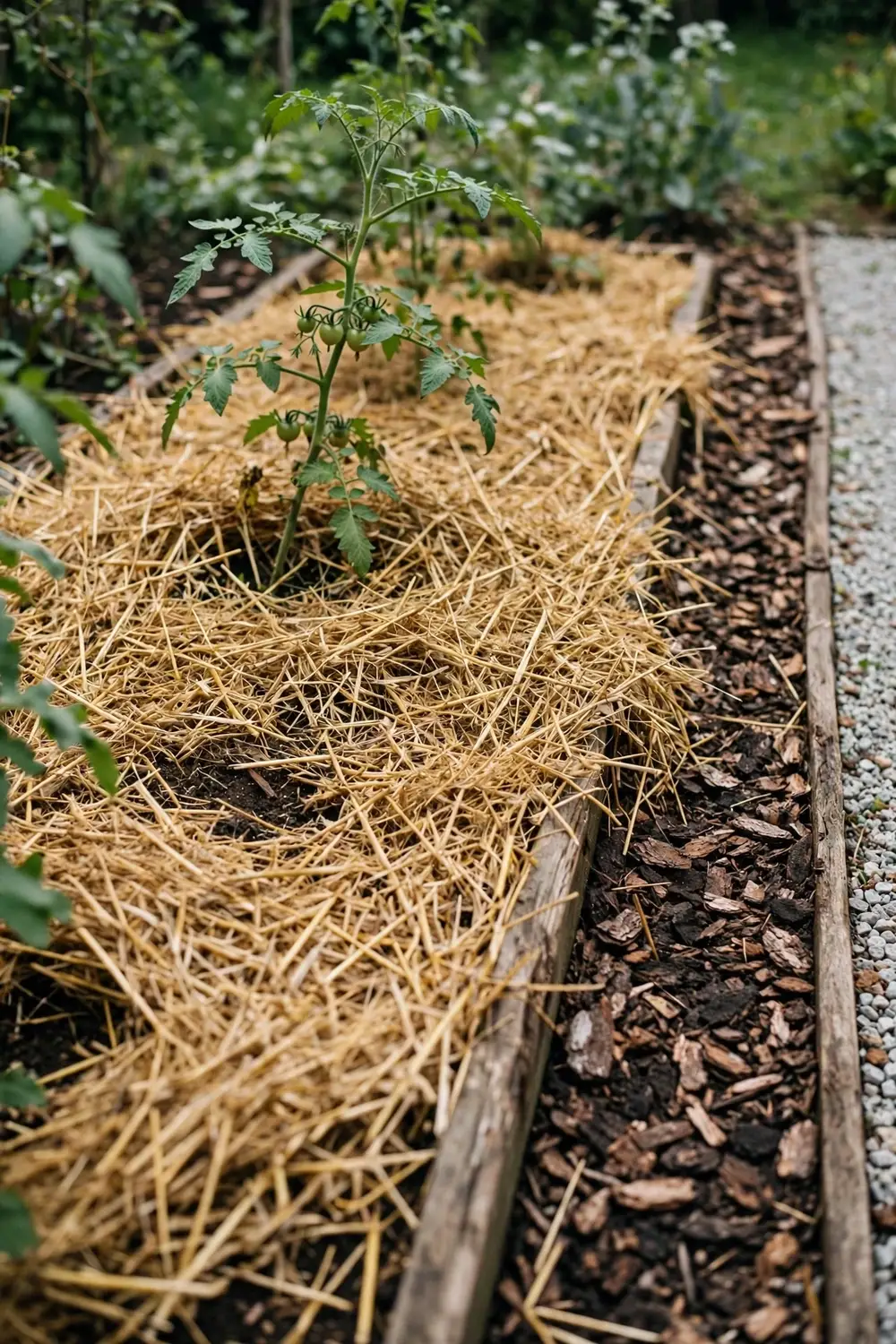

When you stand in front of bare soil and wonder what to cover bare soil with, the answer starts with the job, not the bag. 7 mulch options cover every bed in an Australian garden, from straw for veggie beds to gravel near the house. Cover it with the mulch that fits the job, and the soil stays damp, cool, and weed-free.
Bare soil means soil with no plant cover and no mulch. Cover means anything that shields soil from sun, wind, and rain. I have learned that the coarse mulch I lay thin lets the rain through, while the fine mulch I lay thick turns the bed into a sponge.
1. Cover Bare Soil by Job, Not by Habit
Match the cover to the job. A veggie bed needs a cover that breaks down fast and feeds the soil, because a slow cover starves hungry crops of the nitrogen they need to grow. A native bed needs a cover that stays lean and lets water through. A path needs a cover that stays put under feet and mowers without migrating into the beds. One bag of mulch cannot do all three jobs, and the bag nearest the door is rarely the right one. The wrong cover in the wrong bed costs more work than bare soil, because a mulch that starves a veggie bed or floods a native bed must come off again before the right one goes on, and the bed loses a season.
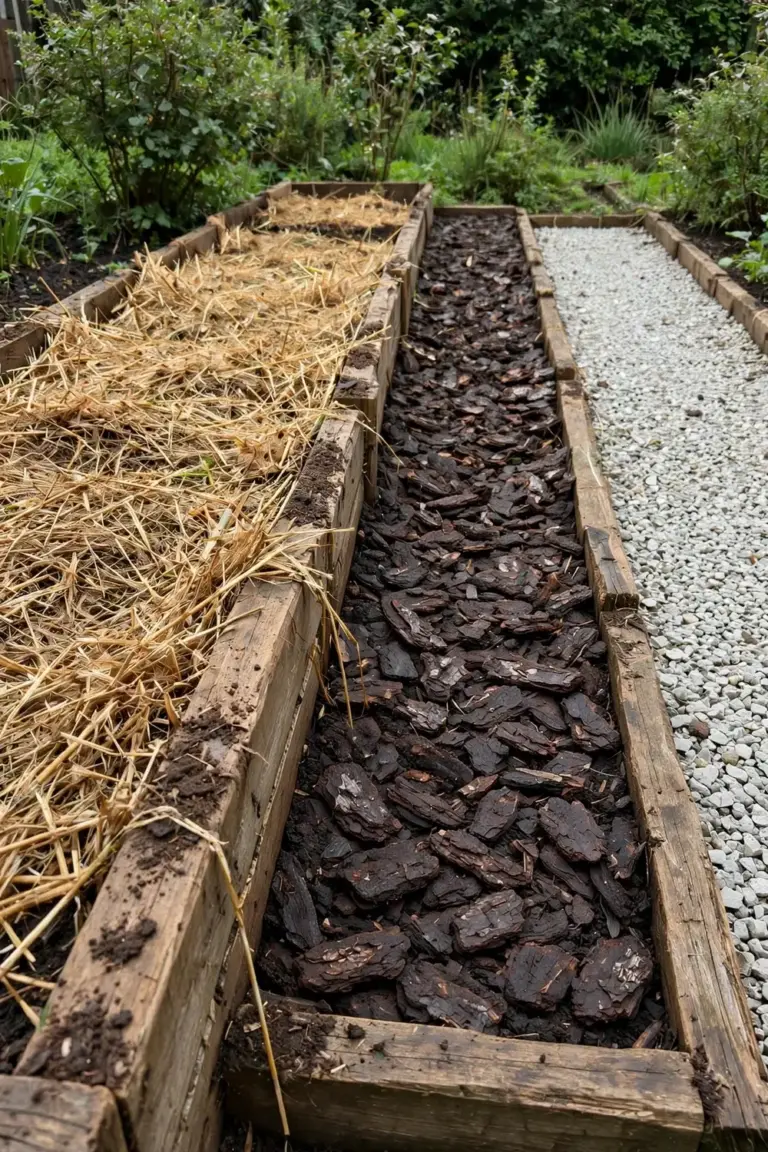
Start with the job, then pick the material. Ask three questions: what grows here, how much water must reach the soil, and how long the cover must last before you top it up again. The answers point to one row of the table in the next section, and that row settles the choice without a second trip to the shop.
Soil under a cover keeps its structure. Rain hits mulch instead of bare soil, so crumbs stay whole and worms keep working. Weed seeds under a cover sit in the dark and stay asleep. That is the whole mechanism: cover blocks light and softens rain, and everything else is detail.
Bare soil changes with the season. Summer sun bakes it hard and cracks the surface, winter rain pounds it flat and washes the top layer off the bed and into the path, and wind lifts dry soil off the bed and drops it on the lawn. A cover stops all three. The same cover works in every season, which is why the decision is worth ten minutes of thought.
2. Compare the 7 Mulch Options by Bed Type
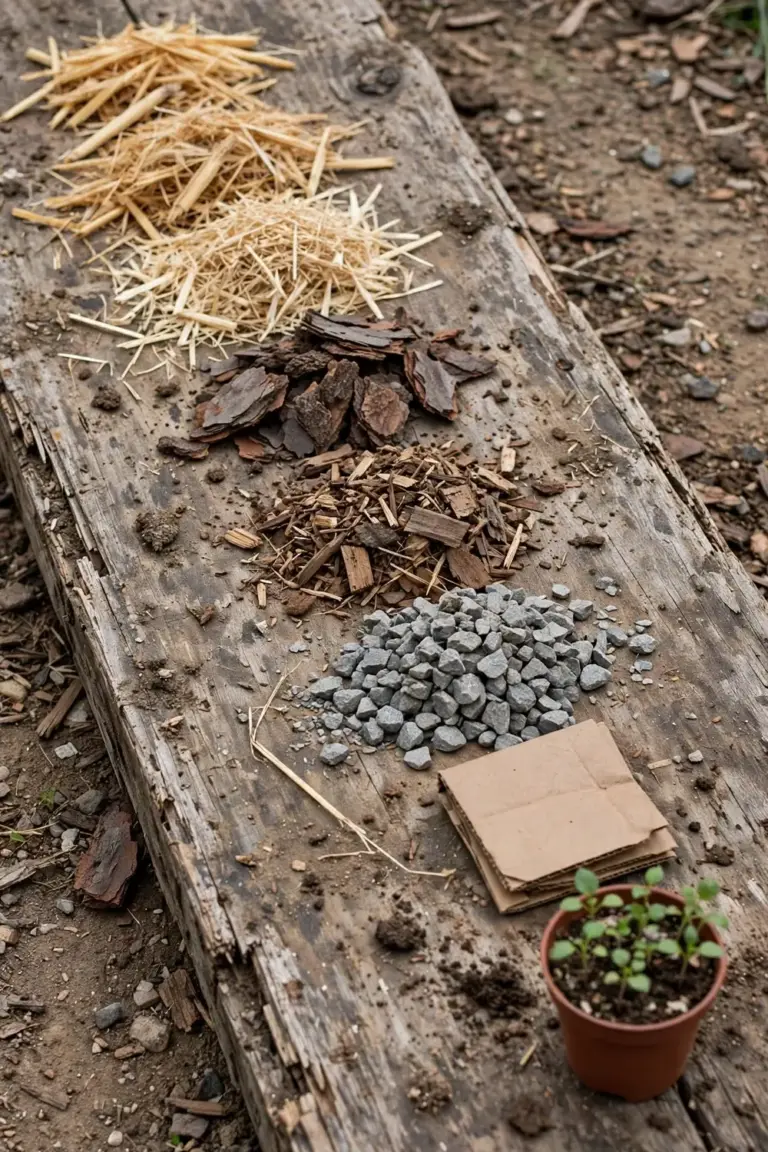
Compare all 7 options before buying. The table sorts them by job. Read the Watch Out column first when two options look equal, because the wrong cover in the wrong bed causes more work than bare soil left alone for another week.
| Option | Best For | Depth | Lasts | Watch Out |
|---|---|---|---|---|
| Sugar cane mulch | Veggie beds | 5 to 6 cm | About one season | Breaks down fast, top it up |
| Lucerne and pea straw | Veggie beds, hungry crops | 5 to 6 cm | About one season | May carry weed seeds, check the bale |
| Eucalyptus and pine bark | Native beds, shrubs | 50 to 100 mm | One to two seasons | Keep it off stems, keep it lean |
| Arborist chips | Trees, large beds, paths | 5 to 6 cm | One to two seasons | Fresh chips pull nitrogen at the surface |
| Gravel and stone | Paths, fire-prone edges, dry beds | One even layer | Years | Heats up in sun, never feeds soil |
| Cardboard sheet mulch | Smothering weeds, new beds | One layer, overlapped | One season, then breaks down | Overlap edges, or weeds push through the joins |
| Living cover and cover crops | Resting beds, slopes | Sow to packet rate | One season, then dig in or mow | Needs water to establish, then it covers itself |
Sugar cane mulch suits veggie beds because it breaks down in one season and feeds the soil as it goes. Lucerne and pea straw suit hungry crops because they carry more nitrogen than cane. Bark suits native beds because it breaks down slowly and stays lean. Arborist chips suit trees and large beds because one load covers a wide area for little money. Gravel suits paths and fire-prone edges because stone never burns and never rots. Cardboard suits smothering because one overlapped layer starves weeds of light. Living cover suits resting beds because roots hold the soil while the bed waits.
Cost follows the same split. Bagged cane and straw cost money per bag and suit small beds. Arborist chips often arrive free from a local tree crew, and one load covers a large bed. Gravel costs the most per square metre up front and then costs nothing for years. Cardboard costs nothing when it comes from moving boxes. Living cover costs a packet of seed and a few weeks of watering.
Covers also combine. Cardboard under straw smothers weeds and then feeds the bed as both layers break down. Gravel edging beside a bark bed keeps the bark in place and breaks up a fuel run near the house. Straw over cardboard in a veggie bed kills the weeds underneath while feeding the crop on top. Mixing covers is normal. The job still decides the mix.
A living cover works through a different mechanism from dead mulch. Roots hold the soil. Leaves shade it. The plants pull carbon from the air and drop it into the soil when they die. The site’s cover crops for fall planting guide carries the full method for sowing a resting bed. This page stays on the cover decision. Pick the option that fits the bed in front of you.
3. Choose Chunky Mulch When Water Must Reach the Soil
Choose chunky mulch when water must reach the soil. Chunky pieces leave gaps. Rain falls through the gaps and reaches the roots. Fine mulch packs tight. Rain sits on top, soaks into the mulch, and evaporates back into the air. The soil below stays dry while the mulch above stays wet.
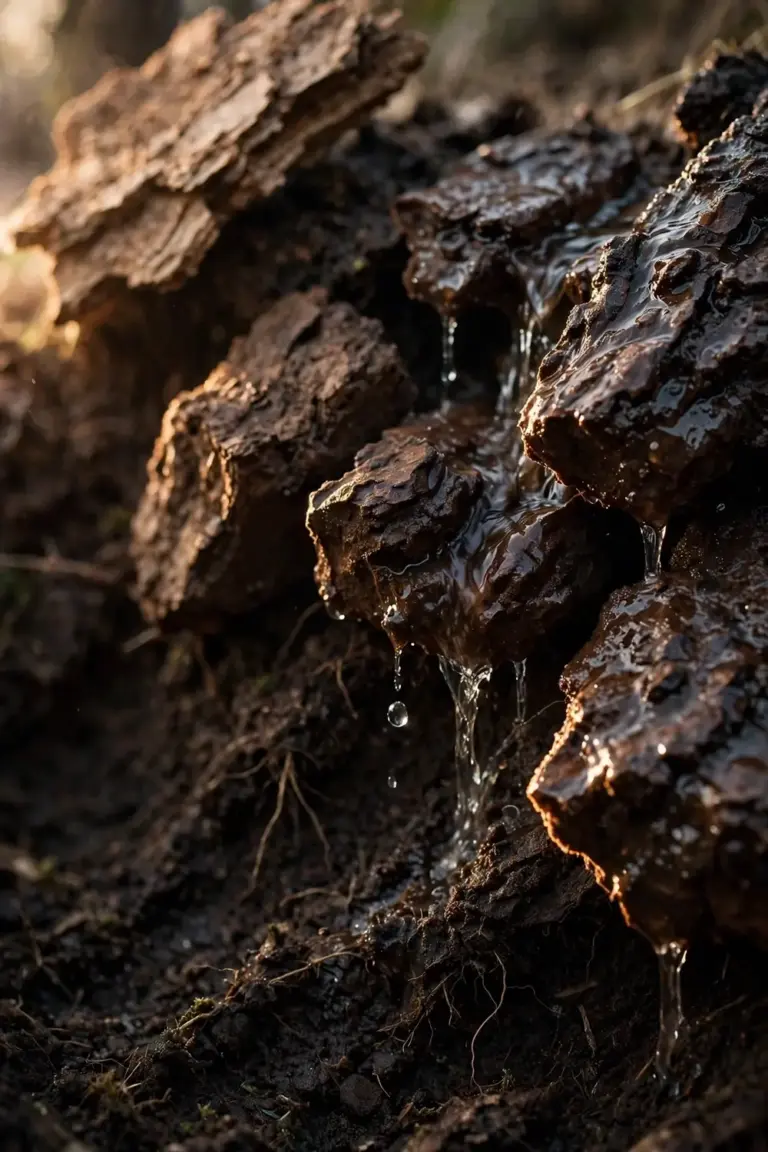
Unscreened mulch mixes fine and coarse particles in one bag. The mix behaves like fine mulch. It soaks up rain like a sponge, then compacts as the small particles fill the gaps between the large ones. The compacted layer turns water repellent. Water runs off instead of soaking in. ANPSA describes this sponge effect in unscreened mulches and the hydrophobic layer that follows when they compact.
Coarse mulch avoids the trap. Coarse pieces let water infiltrate more easily, keep soil cool, and suppress weeds. Fine mulch made of small particles breaks down faster and improves soil texture, but it compacts and needs loosening so water keeps penetrating. Queensland Government states both sides plainly: coarse mulch favors infiltration, fine mulch favors texture but needs regular loosening.
A thick layer of fine mulch can absorb 20 mm of rainfall before any water reaches the soil, according to AustPlants. Light showers vanish into the mulch layer. The bed looks watered. The roots stay dry. Chunky mulch absorbs far less, so light rain still counts.
Test your mulch with a watering can. Pour one can over a patch. Watch where the water goes. Water that vanishes into the mulch and never reaches the soil means the layer is too fine or too thick. Water that runs through to the soil in seconds means the cover works. Fluff a compacted layer with a fork when water starts beading on top. The fork restores the gaps. The gaps carry the water.
Judge particle size before buying. Grab a handful. Pieces the size of a thumbnail or larger read as chunky. Dust and shreds that pack into a mat read as fine. A bag that looks uniform and fluffy in the shop compacts within weeks on the bed. A bag with mixed chunky pieces holds its gaps for a season. The handful test takes ten seconds and beats any label claim.
Put drip lines under the mulch, not over it. Water from a drip line under the mulch goes straight to the soil. Water from a sprinkler over the mulch wets the mulch first and loses part of every watering to evaporation. The under-mulch position also keeps emitters out of the sun, so they last longer and clog less.
Mulch also steadies soil temperature. Soil under mulch stays cooler on a hot afternoon and warmer on a cold night than bare soil beside it. Roots in steady soil grow without the stop-start stress of daily temperature swings. The effect is strongest in the top 10 cm, exactly where feeder roots live.
4. Set the Depth by Job: 50 to 100 mm for Native Beds
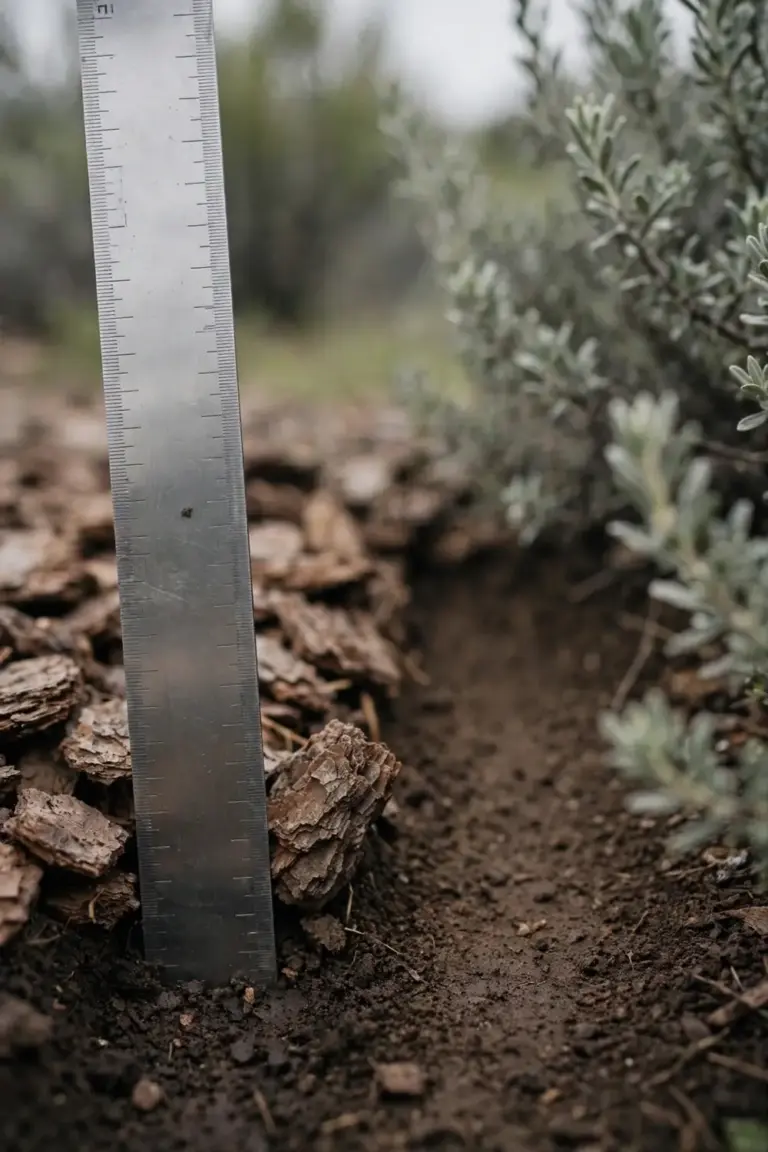
Set the depth by job. Native beds take 50 to 100 mm. Thinner than 50 mm, and the layer holds too little moisture and stops too few weeds. Thicker than 100 mm, and the layer blocks water and starves the soil of air. Daisy’s Garden gives this band for native plants and adds the stem rule: always keep mulch away from plant stems.
Veggie beds take a thinner layer. A 5 to 6 cm layer of straw or cane feeds the bed as it breaks down and still lets water through. Seedlings take thinner still. A thin layer around seedlings keeps stems clear and lets water reach shallow roots. Thick mulch around seedlings buries stems and invites rot.
For water saving alone, a 2 to 6 cm layer of coarse mulch does the job, according to AustPlants. The coarse pieces absorb little water, so rain passes through. Deeper layers absorb more water before it reaches the soil. Depth is a trade. Weed suppression wants depth. Water penetration wants a thinner layer. The job decides which side wins.
Measure depth with a ruler, not by eye: push the ruler through the mulch to the soil, read the depth, and top up thin spots before they grow weeds. A bed mulched to an even depth holds water evenly and weeds evenly, which means almost none.
Re-measure after the first heavy rain. Fresh mulch settles. A layer laid at 8 cm can settle to 5 cm in one storm as pieces nest together. The settle is normal. Top up the difference. A bed checked once after rain holds its depth all season, while a bed never checked thins out by midsummer and nobody notices until the weeds arrive.
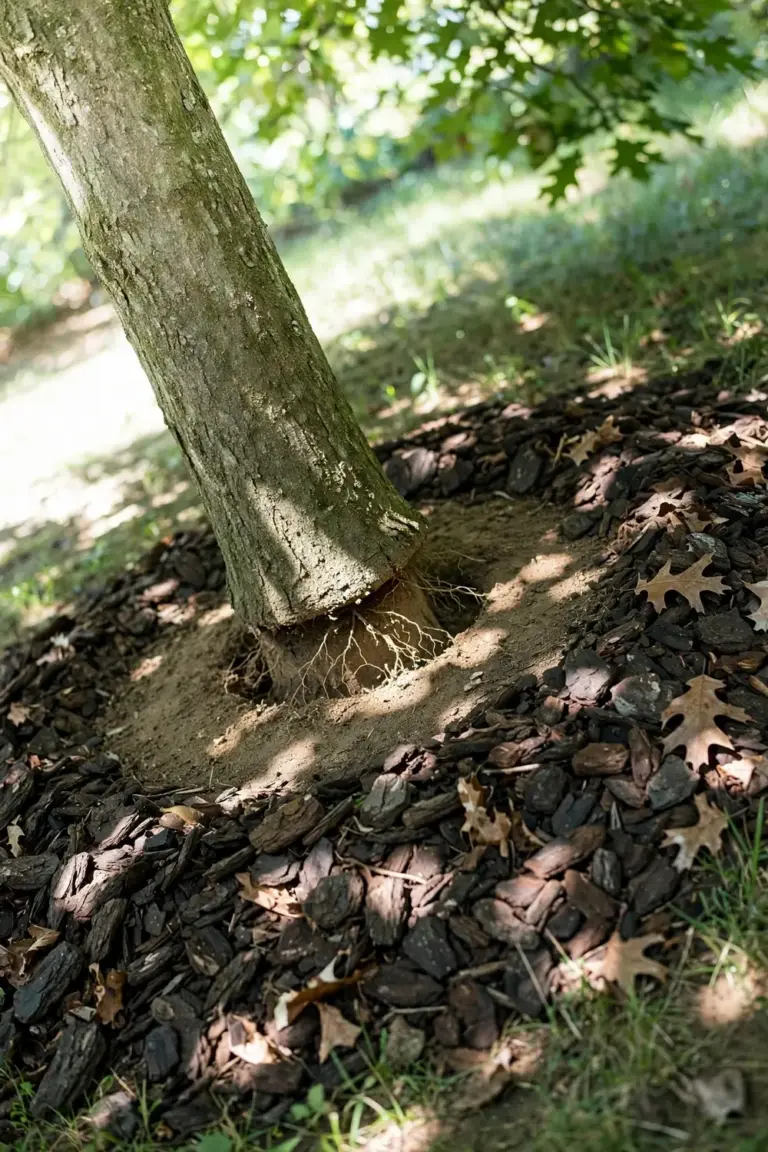
Never pile mulch into a volcano around a trunk. A cone of mulch against bark holds moisture, invites fungi, and hides collar rot until the tree fails. The volcano shape is the single most common mulching mistake in Australian gardens. Spread the mulch flat. Keep the hand-width gap. The tree does not need a collar of mulch. It needs air at the base.
Keep mulch off stems and trunks. Mulch piled against a stem holds moisture against bark. Bark rots. Fungi move in. The plant dies from the collar up. Leave a hand-width gap around every stem and trunk. The gap costs nothing. The rot costs the plant.
5. Cover Bare Soil Around Vegetables With Straw
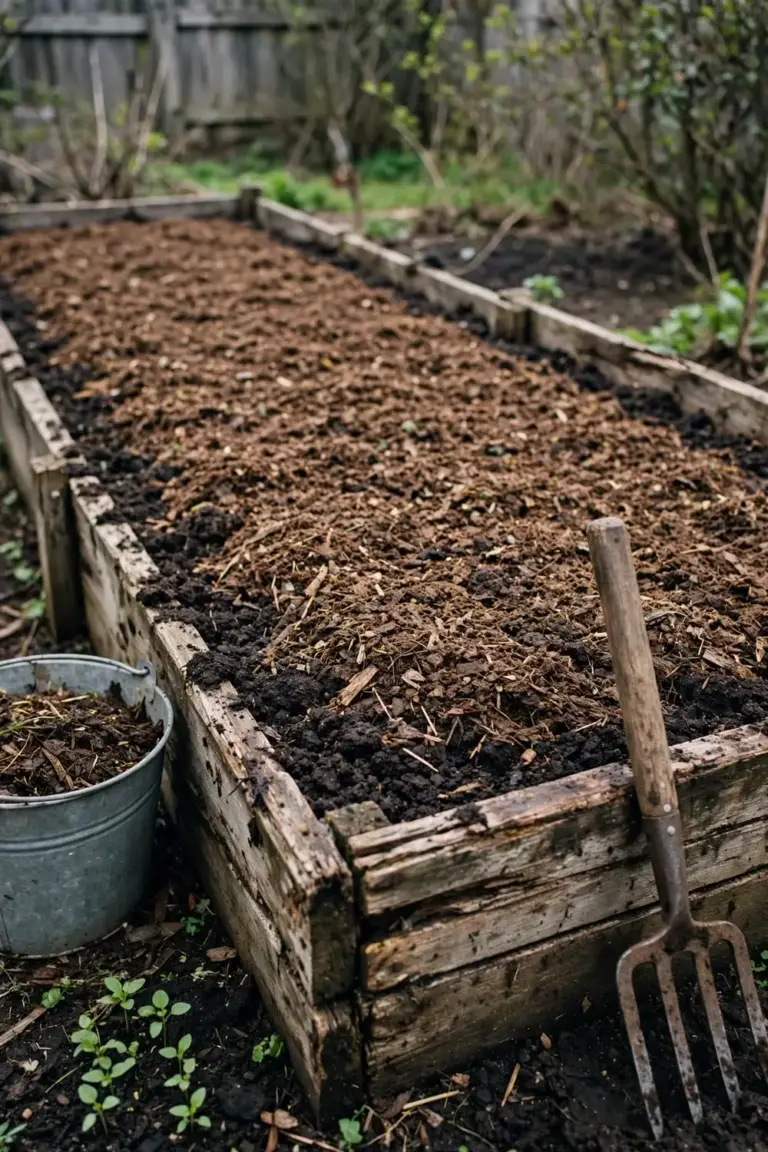
Cover bare soil around vegetables with straw. Sugar cane mulch, lucerne hay, and pea straw all suit veggie beds. They break down in one season. They feed the soil as they break down. They keep fruit off bare soil. Strawberries, pumpkins, and zucchini sit on straw instead of mud, so fruit stays clean and rots less.
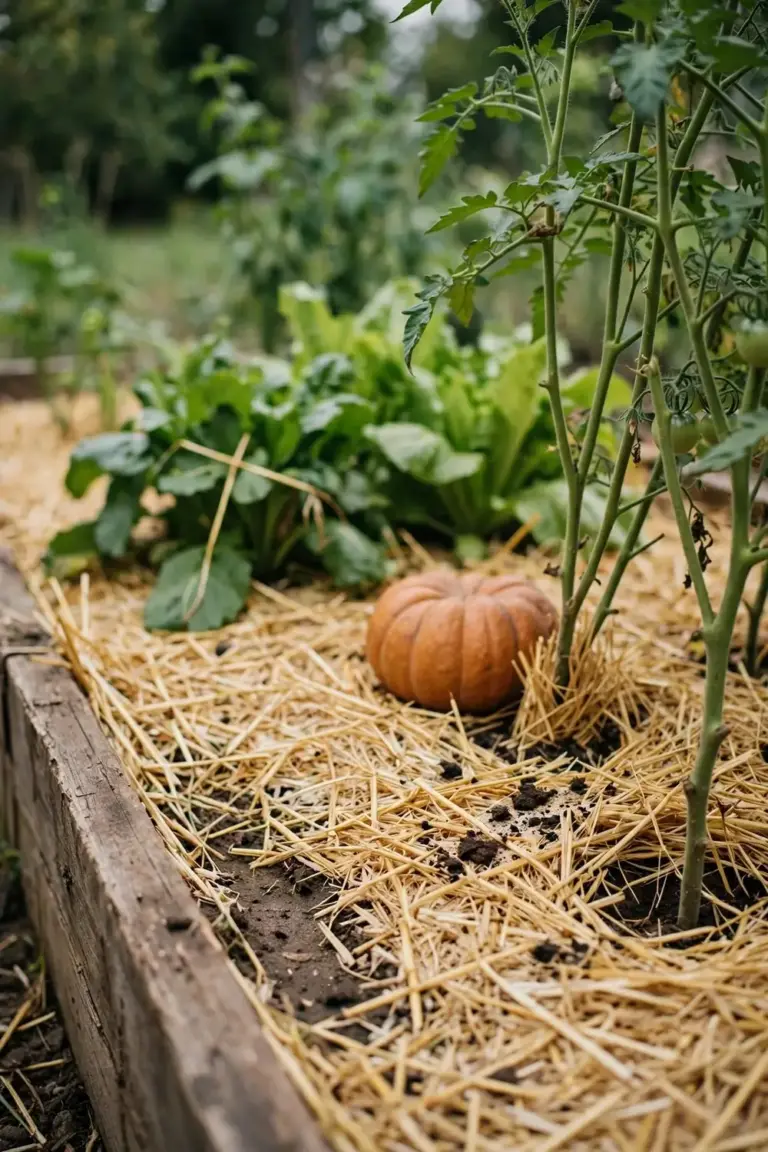
Lay straw 5 to 6 cm deep around established plants. Water the soil first. Dry soil under fresh mulch stays dry, because the mulch slows the next watering. Wet soil under fresh mulch stays wet, because the mulch slows evaporation. The order matters. Water first, then cover.
Keep straw a hand-width clear of stems. Straw holds moisture. Stems in constant moisture rot. The gap lets air reach the stem base. Seedlings get a thinner layer than established plants. A thin layer around a seedling warms the soil and still lets water through.
Lucerne and pea straw carry more nitrogen than sugar cane mulch. Hungry crops like tomatoes, corn, and leafy greens use the extra nitrogen. Check the bale before buying. Some bales carry weed seeds. A bale that sprouts weeds trades one problem for another. Ask the supplier about weed seed. A clean bale stays clean.
Buy straw, not hay, for mulch: straw is stems, while hay is stems plus seed heads, and hay carries far more weed seed than straw. A hay bale mulched onto a veggie bed sprouts grass within weeks. A straw bale stays clean. The price gap is small. The weed gap is large.
Top up straw through the season, because straw breaks down fast in warm, wet weather and a bed that starts at 5 to 6 cm drops to half that in weeks. Thin straw grows weeds. Top up when the layer thins below 3 cm. The top-up takes minutes. The weeds it prevents take hours.
At season end, dig spent straw into the bed or leave it to finish breaking down on the surface. Dug-in straw feeds the soil faster. Surface straw keeps covering while it finishes. Either path works. Do not strip the bed bare at season end and leave the soil exposed. Bare soil between seasons loses the structure the straw spent months building.
The site’s fall garden bed prep guide carries the full bed-preparation sequence, including compost and amendments. This page stays on the cover decision. Straw covers the bed. The prep guide builds it.
6. Cover Bare Soil Around Trees and Shrubs With Bark
Cover bare soil around trees and shrubs with bark. Eucalyptus mulch and pine bark suit native beds because both break down slowly and stay lean. Native plants evolved in low-nutrient soils. A mulch that dumps nutrients fast harms phosphorus-sensitive species like banksia, grevillea, hakea, and waratah. Bark releases nutrients slowly. Slow release suits natives.
Skip three materials under natives. Mushroom compost runs too alkaline. Manure-rich composts run too high in phosphorus for plants that evolved in some of the leanest soils on earth. Thick layers of fresh grass clippings break down too fast and cause nitrogen problems. Daisy’s Garden names all three as materials to avoid around Australian natives. The warning is specific. Natives do best with mulches that release nutrients slowly.
Pine bark carries a caution. It holds a natural growth inhibitor released during decomposition. Apply pine bark once to establish coverage. Do not layer fresh pine bark over old pine bark every year. Eucalyptus mulch and tree mulch avoid this problem and suit native beds for the long term. Tree mulch mimics the natural forest floor. The forest floor is the model. Copy it.
Lay bark 50 to 100 mm deep around trees and shrubs. Keep a hand-width gap around every trunk. Bark against bark rots. The gap lets air reach the collar. Spread bark to the drip line of the tree where the feeder roots live. Mulch beyond the drip line wastes material. Mulch short of the drip line leaves feeder roots bare.
Arborist chips suit trees and large beds. One load from a tree crew covers a wide area for little money. Fresh chips pull nitrogen from the soil surface as they break down. The pull stays at the surface. Roots deeper down feel little of it. Keep fresh chips on the surface, never dug in. Dug-in chips pull nitrogen through the root zone. Surface chips pull it only at the surface, where feeder roots rarely feed.
Bark suits roses, camellias, and other shrubs as well as natives. The same rules hold. Lay it at the native band. Keep the stem gap. Top up once a year. Shrubs under bark hold moisture through summer and need less watering than shrubs on bare soil.
Bark suits fruit trees too. Citrus, stone fruit, and pome fruit all grow well under a bark layer at the native band. Keep the gap around the trunk. Keep grass away from the trunk zone, because grass steals water from feeder roots. A bark ring to the drip line does both jobs at once: it holds moisture and it keeps grass out.
Top up bark once a year. Bark breaks down slowly, so one top-up holds the depth. Check the depth each autumn with a ruler. Top up thin spots to the full band. A native bed at full depth holds water, stops weeds, and feeds the soil slowly. A native bed at half depth does none of the three well.
7. Cover Paths and Edges With Gravel or Cardboard
Cover paths and edges with gravel or cardboard. Paths take feet. Edges take mowers. Soft mulch migrates under feet and mowers. Gravel stays put. Cardboard smothers weeds under a path and then breaks down.
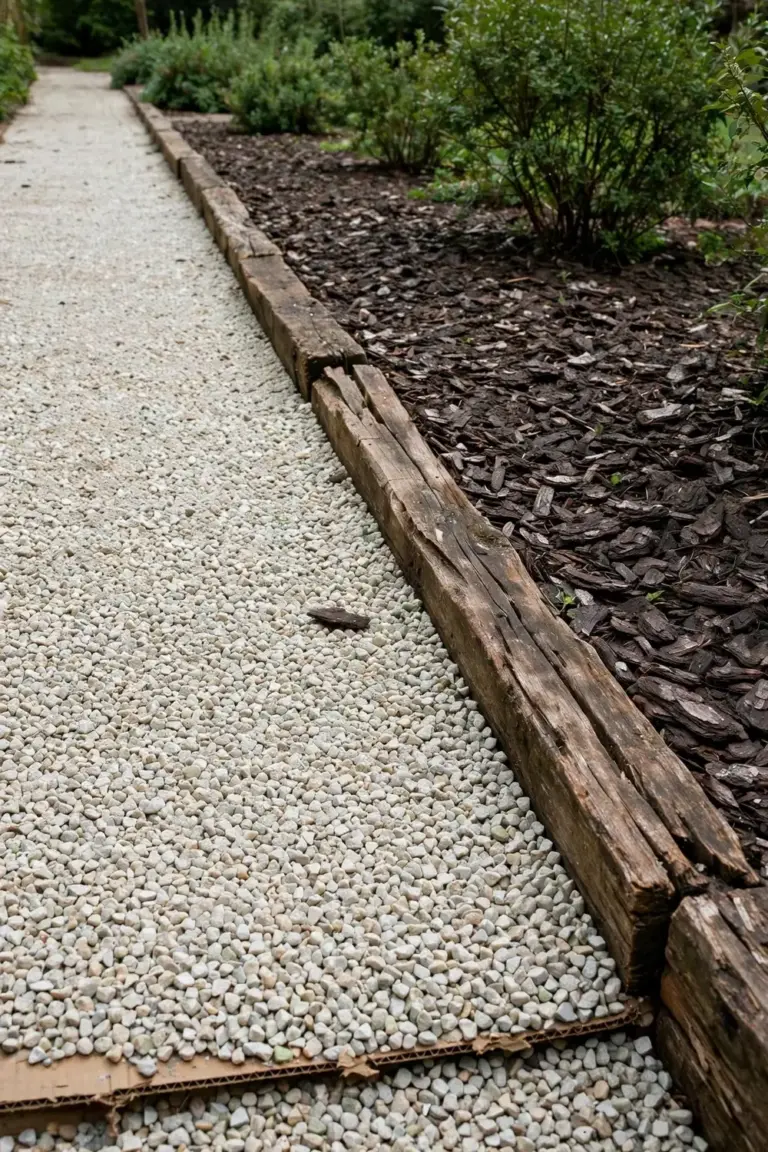
Gravel suits paths because stone never rots, never feeds weeds, and never needs topping up, which makes it the lowest-maintenance cover of the seven. Lay one even layer over firm ground, because a thin layer over soft ground sinks and vanishes. Firm the ground first. Edge the path with timber, stone, or steel so gravel stays where it belongs. Gravel without an edge spreads into the beds.
Gravel suits fire-prone edges because stone never burns. Yarra Ranges Council advises stone and gravel mulch close to the house in bushfire-prone areas. Organic mulch near the house catches embers. Gravel does not. Keep the first stretch of ground beside the house in stone or pavers when the property sits in a bushfire zone.
Gravel carries two costs. Stone heats up in full sun and dries the soil beneath it. Stone never feeds the soil. Beds under gravel stay lean and dry. Gravel suits paths, edges, and dry beds. Gravel does not suit veggie beds or thirsty plants, because stone holds heat and never feeds the soil beneath it. Match the cover to the job.
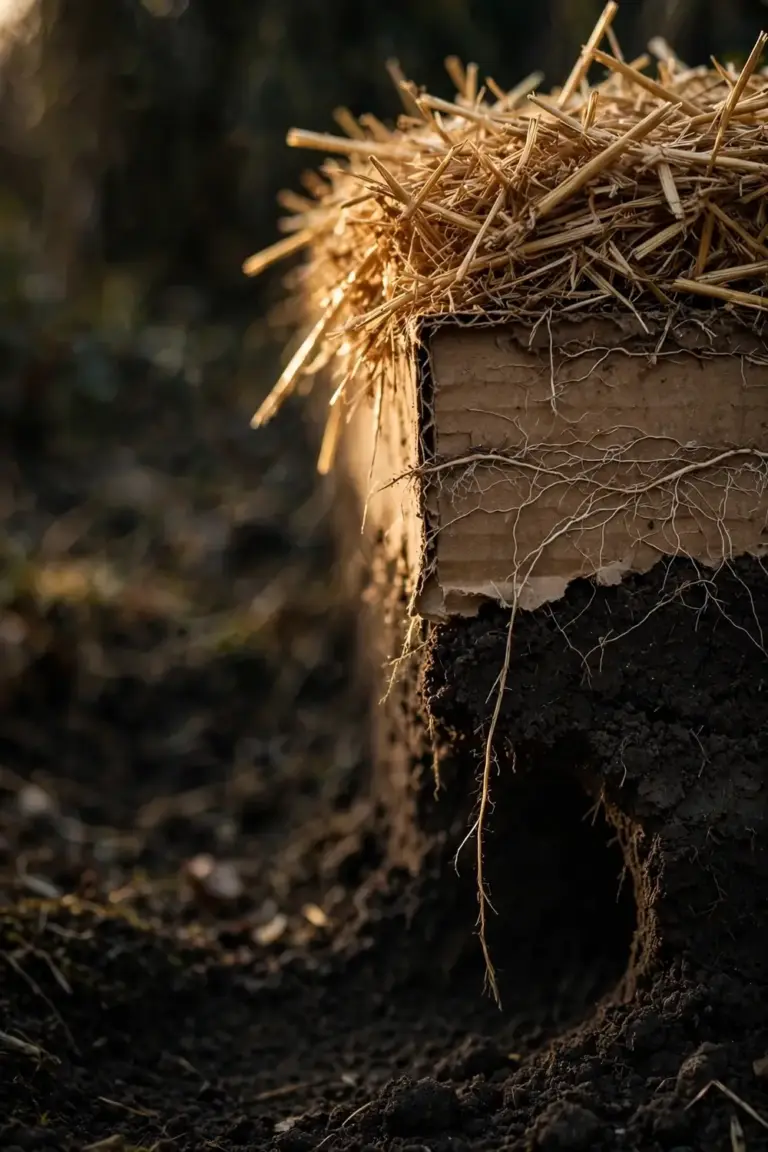
Cardboard suits smothering. Lay one layer of plain cardboard over weeds. Overlap every edge by 15 cm or more. Weeds push through gaps, and the overlap closes them. Wet the cardboard down. Weigh it with mulch, stones, or soil. The wet cardboard starves weeds of light. The weeds die. The cardboard breaks down in one season and worms pull it into the soil.
Strip tape and staples before laying cardboard. Tape never breaks down. Staples rust into the soil. Plain brown cardboard breaks down clean. Glossy printed cardboard carries coatings that slow breakdown and may leave residues. Skip glossy boxes. Use plain ones. The plain box from the hardware store beats the glossy box from the appliance shop.
Cardboard suits new beds and path bases. Lay cardboard, cover it with mulch, and plant through it after a few weeks. The cardboard kills the weeds underneath while the mulch holds moisture on top. The site’s soil health guide carries the longer story of what lives under a covered bed. This page stays on the cover decision. Cardboard smothers. Mulch covers. Together they clear a bed without digging.
Edge every path. Timber sleepers, stone, and steel edging all hold gravel in place. A path without edging spreads gravel into the beds within a season, and the beds return the favor by dropping soil onto the path. Edging costs an afternoon. It saves a season of sweeping gravel back where it belongs.
Frequently Asked Questions About What to Cover Bare Soil With
No single mulch wins every bed. Straw suits veggie beds because it breaks down fast and feeds the soil. Bark suits native beds because it breaks down slowly and stays lean. Gravel suits paths and fire-prone edges because stone never burns. Pick by job. The table above sorts all 7 options by bed type, depth, and watch-out.
Native beds take 50 to 100 mm. Veggie beds take 5 to 6 cm of straw or cane. Seedlings take a thinner layer so stems stay clear and water reaches shallow roots. For water saving alone, a 2 to 6 cm layer of coarse mulch does the job. Measure with a ruler. Top up thin spots. Thin spots grow weeds first.
Yes. Lay one layer of plain cardboard over weeds. Overlap every edge by 15 cm or more. Wet it down. Weigh it with mulch, stones, or soil. Strip tape and staples first. Skip glossy boxes. The cardboard starves weeds of light, then breaks down in one season. Cover it with mulch and plant through it after a few weeks.
Mulch stops most weeds by blocking light. Weed seeds under a cover sit in the dark and stay asleep. A layer at full depth stops nearly all of them. Thin spots let weeds through. Persistent weeds with deep roots push through any mulch. Pull those by hand. Top up thin spots. A cover at full depth plus one hand-pull pass beats any single method alone.
Use gravel or stone near the house. Organic mulch near the house catches embers. Stone never burns. Keep the first stretch of ground beside the house in stone or pavers when the property sits in a bushfire zone. Move bark and straw beds further out. Break up organic mulch areas with paths and stone edges so fire has no continuous fuel run.
Start With One Bed This Weekend
Start with one bed this weekend. Walk the garden. Find the barest patch. Name the job. Pick one row from the table and lay that cover at the right depth, with the stem gap left clear. Water first when the soil is dry. The question of what to cover bare soil with has one answer per bed, and the table gives it.
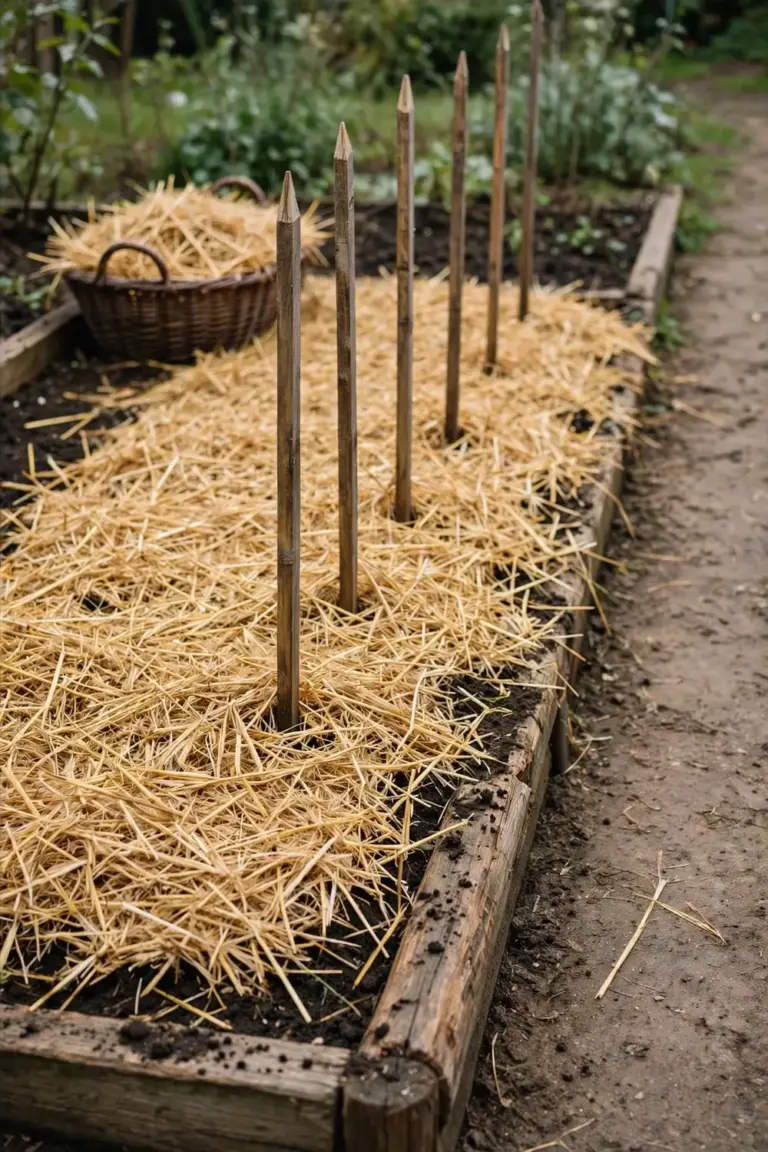
Check the cover after the next rain. Water should reach the soil. Weeds should stay down. Thin spots should show where to top up. A bed covered this weekend holds water all season. A bed left bare loses it in a week.
Then cover the next bed. One bed per weekend clears the whole garden in a month. The soil improves with every bed covered. The weeds shrink with every bed covered. The watering can stays in the shed longer with every bed covered.