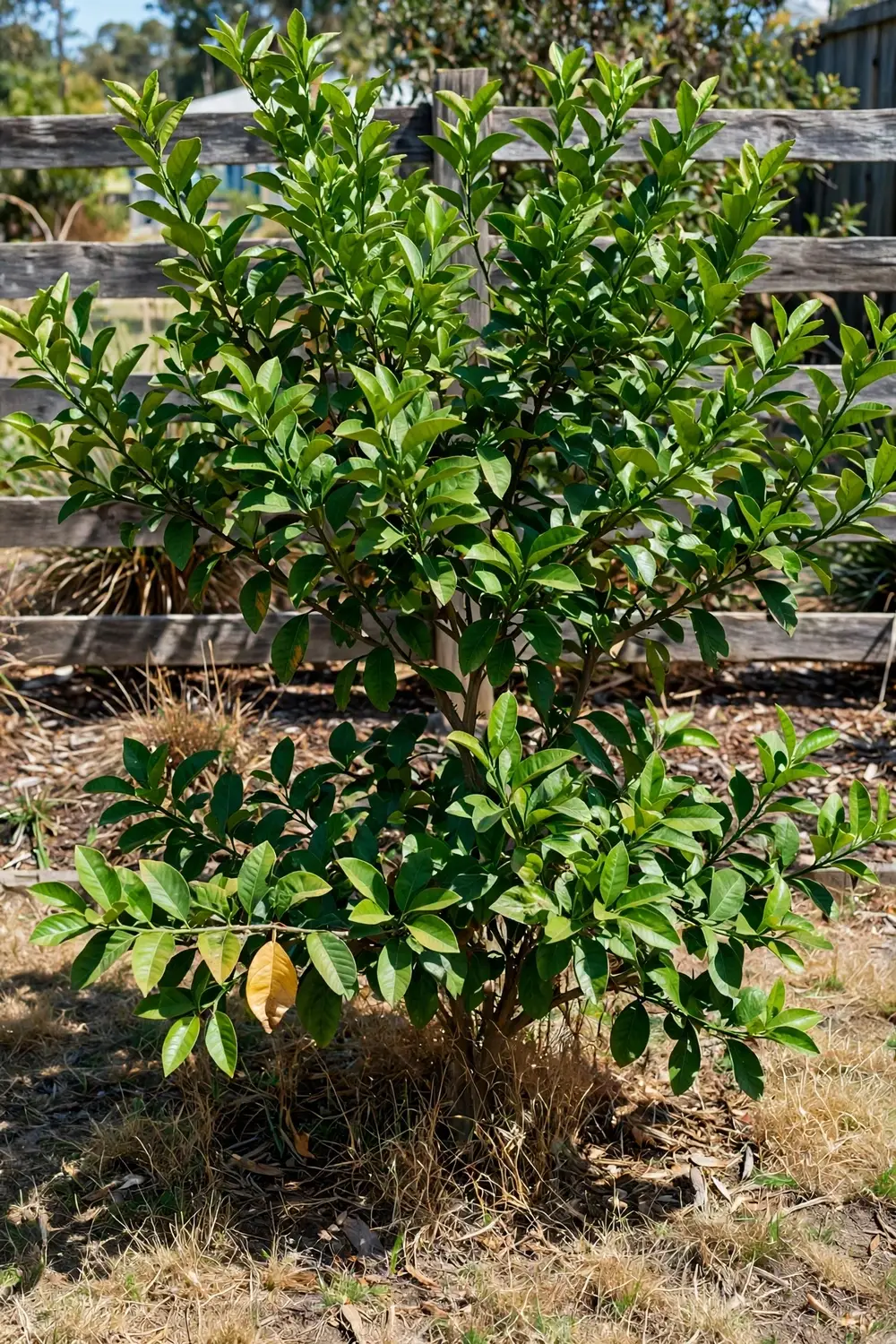

Why is my lemon tree not fruiting? Count 3 things before you touch the tree: flowers, set fruit, and fallen fruit. A lemon tree with no flowers has a different problem from a tree covered in flowers that never set fruit, and both differ from a tree that sets fruit and then drops it. That is a lemon tree that is not fruiting, and the stage tells you where to look. The rest of this page walks 9 causes in stage order, from age to pruning, and ends with the fix order that rules out the cheapest causes first.
Lemon means Citrus × limon here. A Meyer lemon is a lemon-orange cross, Citrus × meyeri, not a separate species. I have learned that the lemon tree I check by its stage answers faster than the one I feed on a guess.
1. Name the Stage First: No Flowers, No Fruit Set, or Fruit Drops
Your tree sits in one of 3 stages, and each stage points at a different set of causes. Stage 1 means the tree grows leaves and no flowers at all. Stage 2 means flowers open, then fall without forming fruit. Stage 3 means small fruit forms, then drops before it ripens. Name the stage before you change anything, because feeding a Stage 1 tree does nothing for a Stage 3 problem.
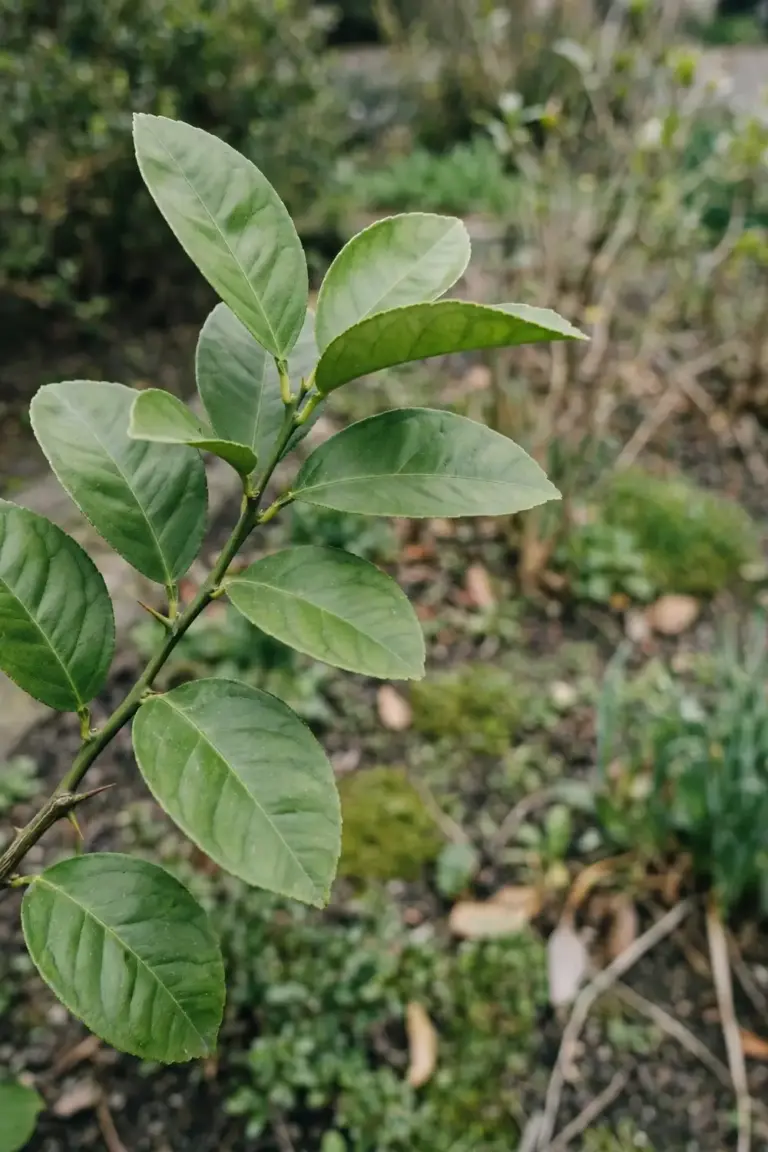
A tree can sit in more than one stage across a season. A late frost can push a Stage 2 tree back to Stage 1 by killing buds before they open. A dry spring can push a Stage 3 tree into heavy drop. Check the stage again after each fix, and work the stage you see now, not the stage you saw last month.
2. Read the Stage Table: Where Your Tree Stalls
The table below maps each stage to its most likely causes and the first check for each one. Find your stage in the first column, then read across.
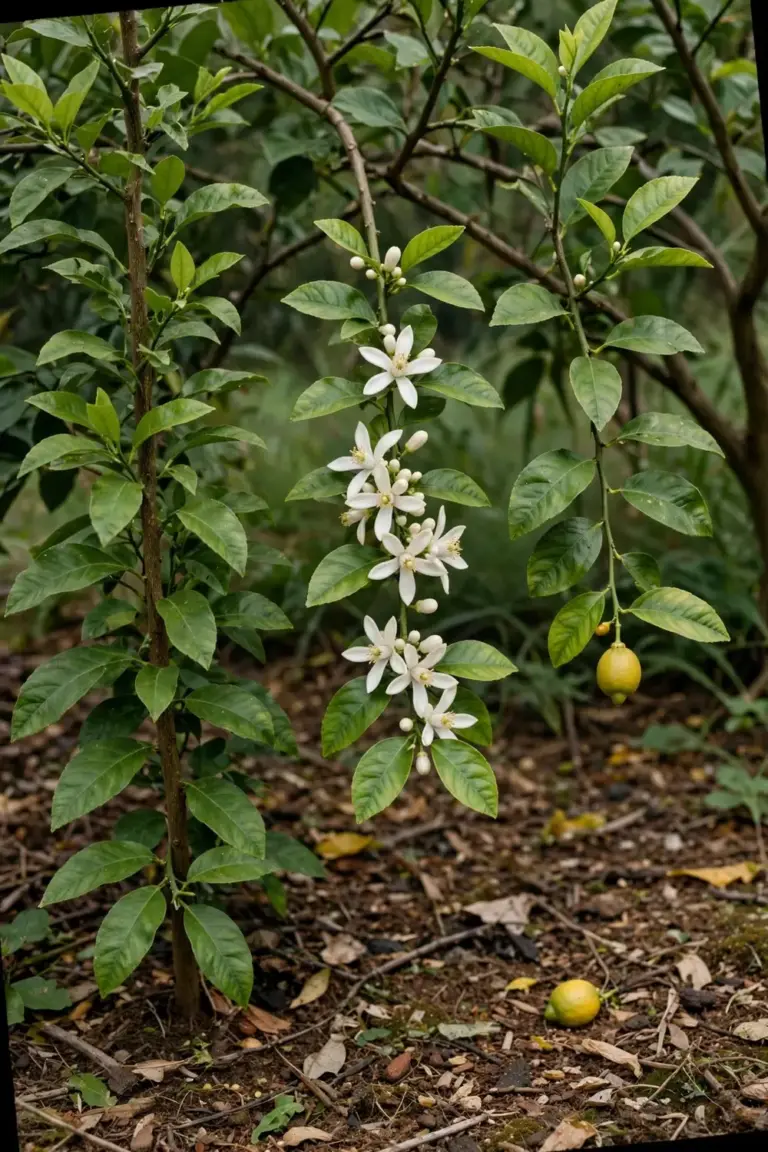
| Stage | What You See | Most Likely Causes | First Check |
|---|---|---|---|
| 1. No flowers | Leaves only, no buds, no flowers | Too young, too little sun, excess nitrogen, wrong pruning time | Count the sun hours and check the tree age |
| 2. Flowers, no fruit set | Flowers open, then fall with no small fruit behind them | Frost damage, poor pollination, pest damage to buds | Cut open a fallen bud and look for brown tissue |
| 3. Fruit drops | Small fruit forms, then yellows and falls | Water stress, natural thinning, waterlogged roots | Push a finger 5 cm into the soil and feel for moisture |
The table narrows the search. It does not diagnose by itself. The 9 cause sections below give each cause its sign, its test, and its fix.
Write down what you see before you act. Note the date, the stage, and one line on the weather that week. A short note beats memory when you compare this season with the next one. A tree that stalls at the same stage two seasons running has a fixed cause, such as shade or age, while a tree that stalls at a different stage each season faces shifting causes, such as frost one year and drought the next.
3. Reason 1: The Tree Is Too Young to Fruit Yet
A young grafted lemon tree needs time before it fruits. A grafted lemon or lime tree reaches first harvest 3 to 4 years after transplant, according to the LSU AgCenter citrus planting guide. A tree in its first 2 years after planting spends its energy on roots and canopy, not fruit. Flowers in year 1 or 2 often fall without setting, and that is normal.
A seedling lemon takes years longer than a grafted tree. A seedling grows from a pip, not from budwood off a fruiting parent, so it must grow through a juvenile phase before it flowers at all. A seedling may also fruit unlike its parent, since it is a genetic mix rather than a clone. If your tree grew from a pip and has never flowered, age is the most likely cause, and no feed or spray shortens the wait.
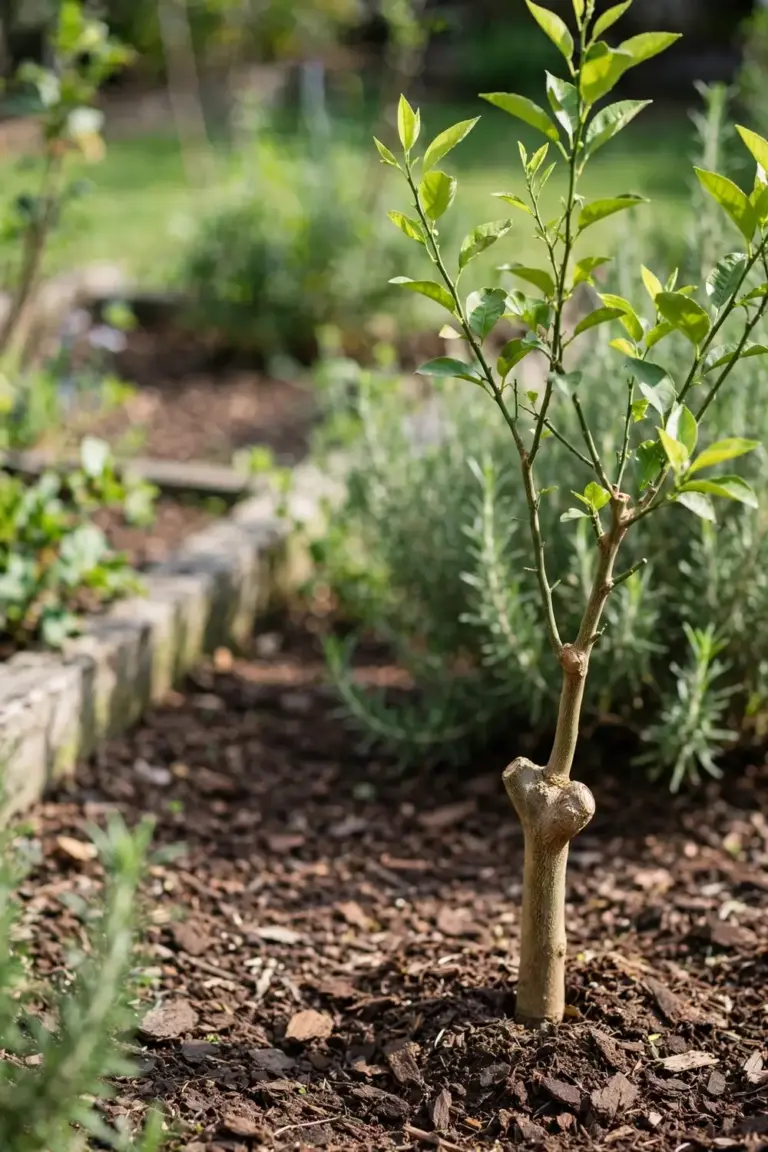
Check the graft union before you blame age. A grafted tree carries a visible knuckle or scar low on the trunk where the fruiting top joins the rootstock. A sucker that grows below that line is rootstock growth, not lemon, and it can outgrow the grafted top and crowd out fruiting wood. Cut suckers off at their base as soon as you see them.
Ask what you bought if you no longer remember. A nursery label that says “grafted” means budwood off a fruiting parent joined to a rootstock, and the 3 to 4 year clock applies. A tree sold as a seedling, or grown from a pip at home, runs the longer seedling clock. A tree bought in a small pot with no label at all is a guess, and the graft scar is the only evidence that settles it. Check the scar before you decide the tree is broken.
4. Reason 2: The Tree Gets Too Little Sun
A lemon tree that grows in shade flowers weakly or not at all. Citrus trees produce best in full sun at six hours per day, according to the same LSU AgCenter citrus guide cited above. A tree under a house eave, behind a fence, or under a larger tree may get bright light without ever getting direct sun on its canopy. Bright shade is not full sun.
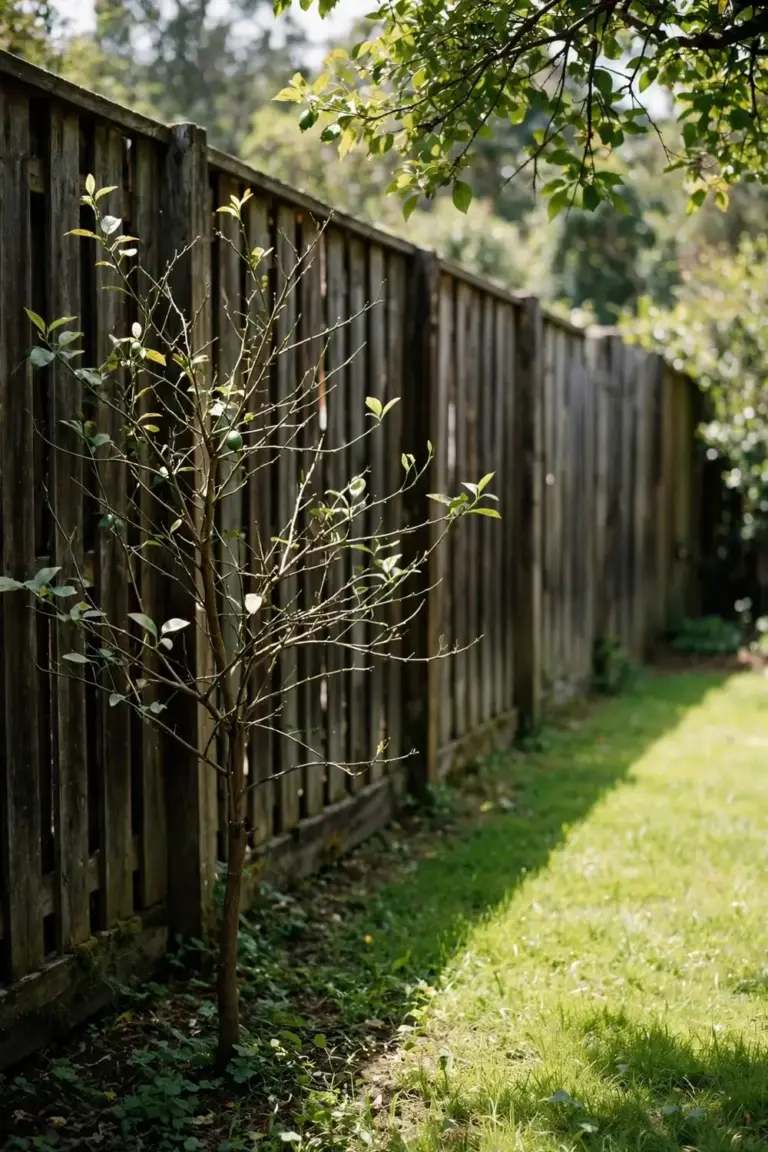
Count the direct sun hours before you change anything else. Stand at the tree at 9 am, noon, and 3 pm on a clear day and note whether direct sun hits the canopy. A tree with fewer than 6 hours of direct sun sits in the shade problem, whatever else is wrong. A tree that flowered well last year and then stopped may have a new shade source, such as a neighbour tree that grew taller or a new fence.
Moving a tree is a last resort. A tree in a pot moves easily to a sunnier spot. A tree in the ground does not move well once established, and transplanting it can cost you another season. Prune back the overhanging branch that shades it, or accept a lighter crop from a shaded tree, before you dig it up.
5. Reason 3: Too Much Nitrogen, Too Many Leaves
A lemon tree fed heavily on nitrogen grows leaves at the expense of flowers. Nitrogen drives leafy growth. A tree that gets repeated high-nitrogen feeds pushes soft green shoots and holds few or no flower buds. The tree looks healthy and vigorous, and it fruits poorly. That combination points at the feed, not at disease.
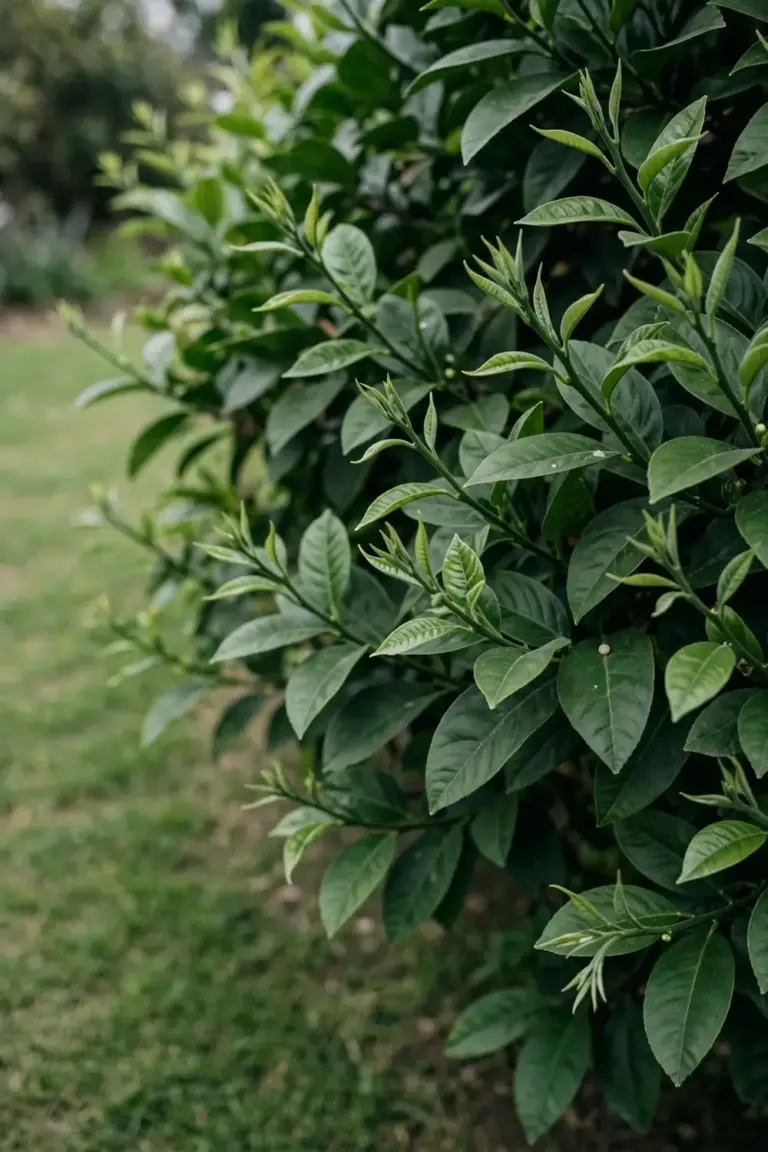
Check what you fed and how often. A citrus feed high in nitrogen, a lawn fertilizer washed into the bed, or fresh manure around the root zone all push the same leafy response. A tree near a lawn that gets regular feeding can absorb lawn fertilizer through its roots without you ever feeding the tree itself. Stop all feeding until the tree flowers, and keep lawn fertilizer off the root zone.
A hungry tree shows a different picture. Pale leaves with green veins, small leaves, and thin shoots point at a shortage, not an excess. Feed a tree that looks starved with a balanced citrus feed at the label rate, once, and watch the next flush. A tree that looks leafy and vigorous needs no feed at all. The fix for excess nitrogen is time and restraint, not a second product.
Read the label before you feed. A fertilizer label carries 3 numbers, N-P-K, for nitrogen, phosphorus, and potassium in that order. A feed with a high first number pushes leaves. A balanced citrus feed carries the 3 nutrients in proportions suited to fruiting trees, and the label rate is the dose the tree can use. Doubling the dose does not double the flowers. It burns roots and pushes more leafy growth, which is the opposite of what a flowerless tree needs.
6. Reason 4: The Tree Is Thirsty at the Wrong Moment
A lemon tree that dries out during flowering drops its flowers before they set. Water stress at bloom is a common cause of flowers falling without fruit. The tree sheds flowers it cannot support. A tree that wilts in the afternoon heat and recovers at night is already short of water, and flowers are the first thing it drops.
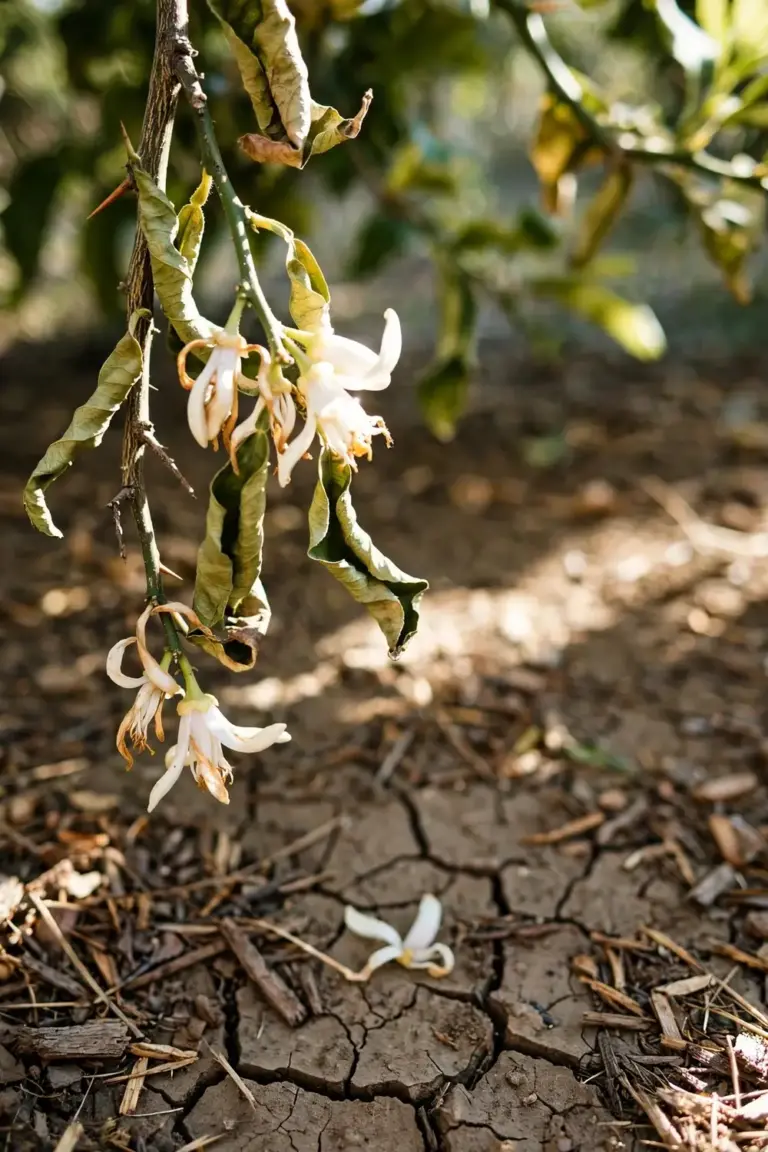
Check the soil before you water. Push a finger 5 cm into the soil under the canopy. Dry soil at that depth means the tree needs water now. Moist soil at that depth means the problem sits elsewhere, and more water will hurt. Water slowly at the root zone until the top 15 cm of soil is moist, then stop. A deep soak once beats a shallow sprinkle every day, since shallow watering keeps roots near the surface where they dry out fast.
Mulch holds moisture between waterings. Spread mulch 10 cm clear of the trunk and out to the drip line, and keep it off the bark. Mulch piled against the trunk traps moisture against bark and invites rot. A tree in a pot dries out faster than a tree in the ground, so check pots twice as often in hot weather.
Water in the morning when the heat builds. Morning watering lets the tree take up water before the hottest part of the day, and wet leaves dry fast in the morning sun. Evening watering also works, but leaves that stay wet overnight invite fungal problems. A tree that wilts every afternoon despite morning water needs a deeper soak, a thicker mulch layer, or a windbreak, since hot wind strips moisture from leaves faster than roots can replace it. Watch the new growth. Soft new shoots that wilt first and recover at night signal short water, while shoots that stay wilted overnight signal a deeper root problem.
7. Reason 5: The Roots Sit in Wet Soil
A lemon tree in waterlogged soil drops fruit it cannot feed. Wet roots cannot take up oxygen, and a tree with suffocated roots sheds fruit to reduce demand. Yellow leaves, wilting in wet soil, and fruit drop together point at the roots, not at the canopy. A tree that wilts while the soil is wet is drowning, not thirsty.
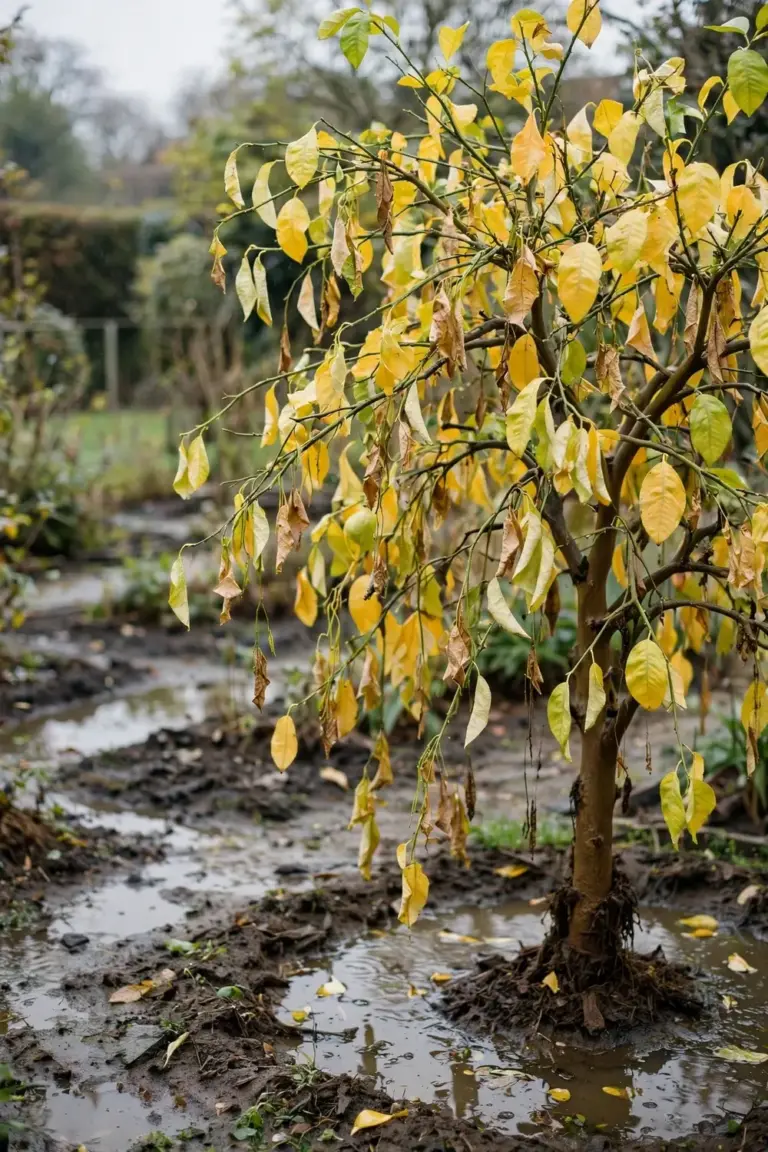
Check the drainage before you water again. Dig a narrow hole 30 cm deep beside the root zone and fill it with water. Water that still stands in the hole an hour later means the soil drains too slowly for citrus. A pot without drainage holes, a saucer that never empties, or a bed in a low spot all hold water against the roots. Lift the pot off its saucer, or move the tree to higher ground.
Healthy roots look pale and firm. Dark, soft, or sour-smelling roots are rotting, and rotting roots cannot feed fruit. A tree with root rot needs drainage fixed first and water withheld until the soil dries. Soil that stays wet for days after rain needs a raised mound or a new site, since no feed fixes roots that cannot breathe. Soil health sets the drainage and structure that citrus roots need.
Pots fail on drainage more often than beds do. A pot with one small hole, a pot sitting flat on paving, or a pot in a saucer that never empties all hold water against the roots. Raise the pot on feet or bricks so water runs free from the base, and empty the saucer after each watering. A pot mix that stays soggy for days has broken down and needs replacing, since old mix holds water in every pore. Repot into fresh citrus mix, trim away dark rotted roots, and hold water until the top 5 cm dries.
8. Reason 6: Flowers Open, but Nothing Sets Fruit
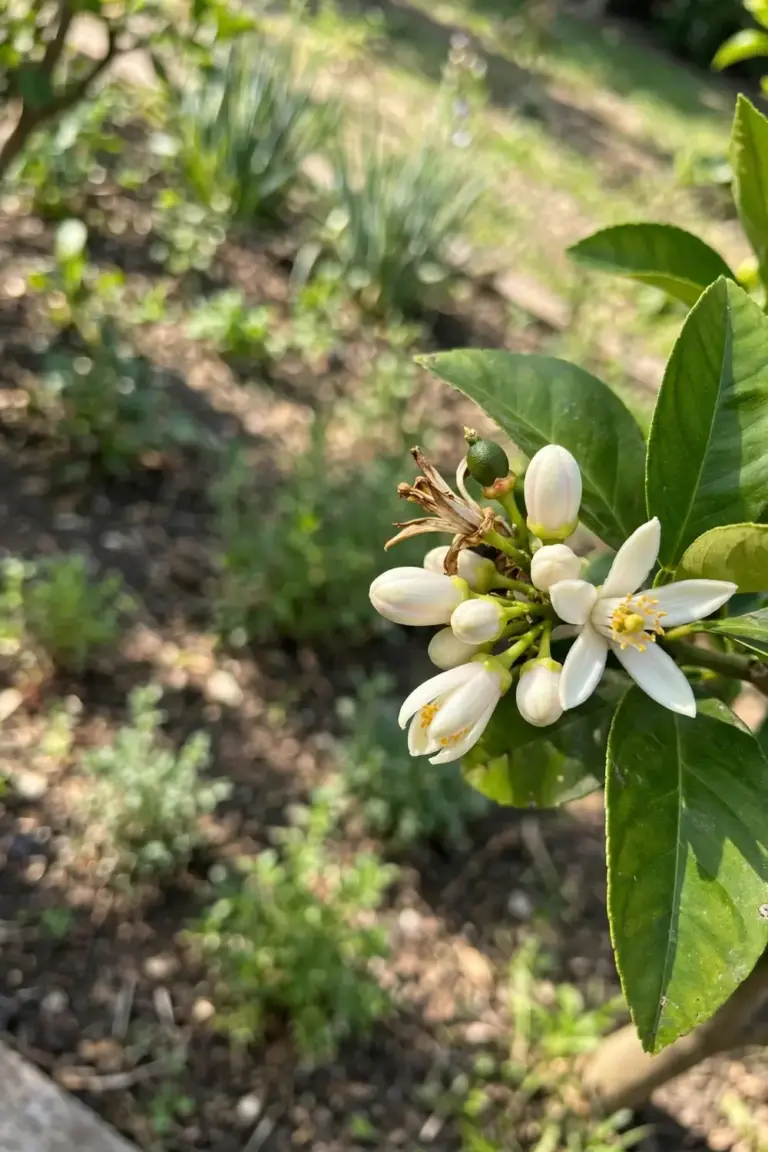
A lemon tree that flowers heavily and sets nothing has a pollination or bud problem. Lemon flowers carry both male and female parts in one flower, so one tree fruits alone without a second tree nearby. A single tree in a courtyard can set fruit. A tree that needs help is usually missing pollinator movement or has damaged buds, not a missing partner.
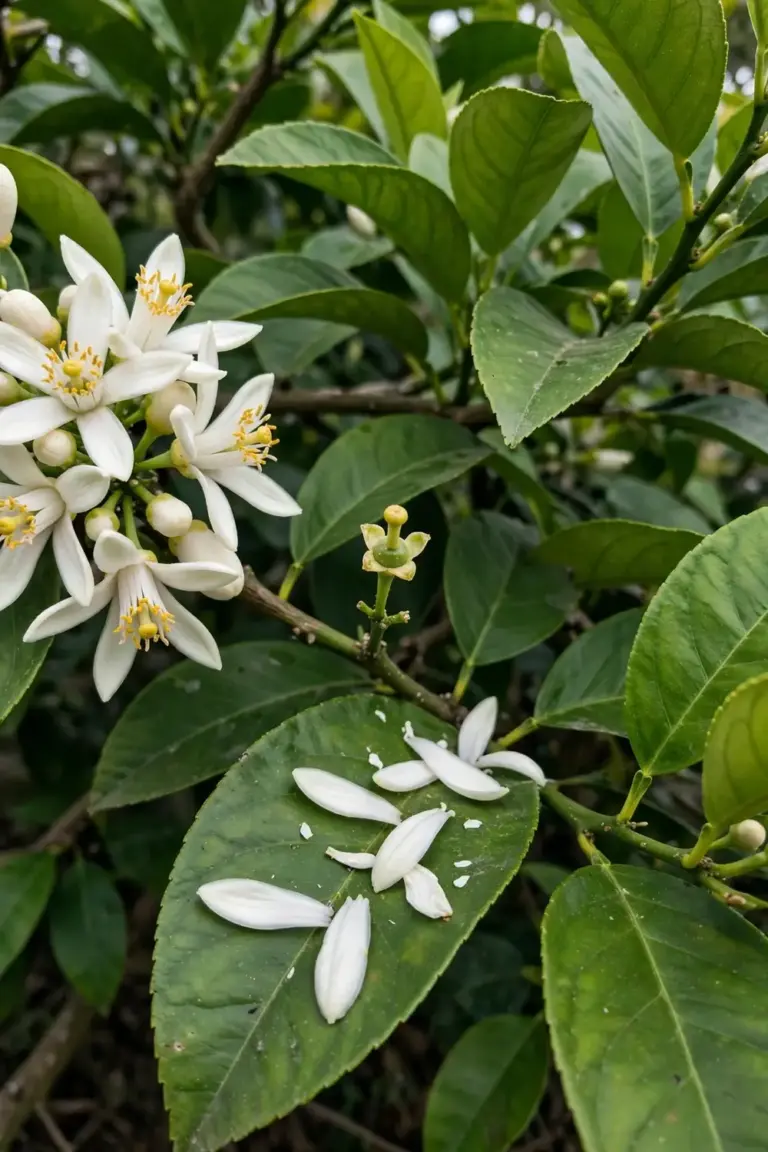
Indoor trees and trees under cover miss the insects that move pollen. Bees, flies, and wind move pollen between flowers outdoors. A tree in a glasshouse, on an enclosed balcony, or behind insect netting may bloom and drop every flower. Brush each open flower gently with a small paintbrush or cotton swab, moving pollen within the flower and between flowers on the same tree. Repeat daily while flowers stay open.
Outdoor trees need pollinators welcome in the garden. A garden sprayed broadly during bloom kills the insects that move pollen, so hold all spraying while flowers stay open. A strip of flowering herbs or a patch of clover near the tree feeds pollinators through the season. Wind alone moves some pollen, and a tree in a sheltered courtyard with still air sets less fruit than the same tree in a breezy spot. If your tree sits behind a solid fence in dead air, open the canopy with light thinning cuts after harvest so air moves through the flowers.
Bud damage looks like a pollination failure. A bud that falls with a chewed base or a hole in it was eaten, not unpollinated. Check fallen buds for chew marks and frass. A tree whose flowers open brown or deformed suffered frost or pest damage before opening, and no amount of hand pollination saves those buds. Cut one fallen bud open. Brown tissue inside means the bud died before pollination could happen.
9. Reason 7: Frost Killed the Buds Before Bloom
A late frost can strip a lemon tree of a whole season. Frost kills buds, flowers, and young fruit, and the tree may leaf out again as if nothing happened. A tree that flowered, then went quiet after a cold night, most likely lost its buds to frost. Fruit on the tree can freeze when temperatures reach 28 degrees Fahrenheit for several hours, according to University of Georgia Extension, which converts to about minus 2 degrees Celsius.
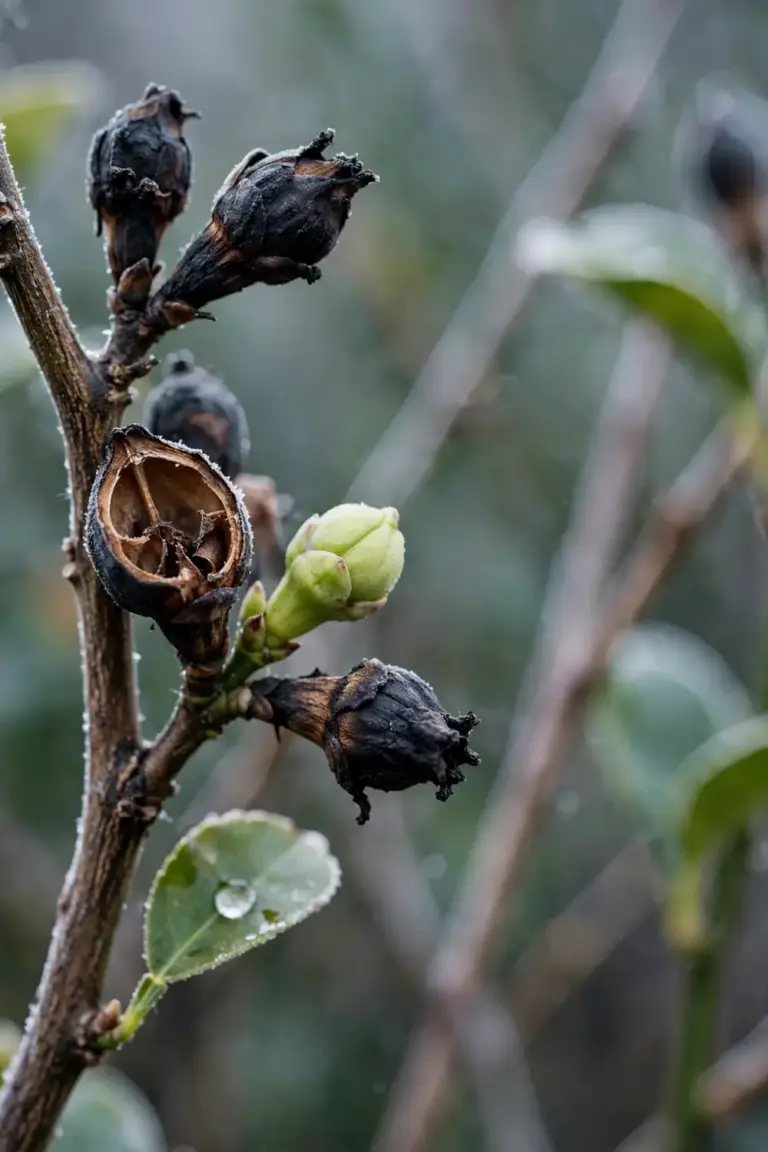
Check the buds after a cold night. Pick a few buds and cut them open from base to tip. Green tissue inside means the bud survived. Brown or black tissue inside means the bud died, and that flower will not open. A tree with dead buds across the canopy lost its crop to that frost, and no feed brings those buds back. The tree itself usually survives and flowers again next season.
Frost risk in Australia runs through winter and into early spring in inland and southern areas. A tree in a low spot, where cold air pools, suffers worse frost than a tree on a slope. A tree against a brick wall gains a little stored heat overnight. Cover a small tree with frost cloth on nights forecast below 2 degrees, and remove the cover in the morning so the tree gets light and air.
Young trees suffer frost worse than established trees. A young tree has thin bark, shallow roots, and little stored energy, so one hard frost can kill its buds and its new growth together. An established tree with thick bark and a full canopy loses buds and keeps its frame. Protect a young tree first. Drape frost cloth over a frame, not straight onto the leaves, since cloth that touches leaves transfers the cold straight through. Weigh the cloth down at the base so cold air cannot pool underneath.
10. Reason 8: Pests Ate the Buds and Young Fruit
Pests that eat buds and young fruit leave a tree flowerless even when everything else is right. Citrus gall wasp is the most common Australian culprit on lemons. The wasp lays eggs in young stems, and the larvae feed inside the stem for 9 to 10 months, according to the Urban Plant Health Network fact sheet. The stem swells into a woody gall, and galled shoots carry few flowers. Galls appear from December through April and grow through autumn and winter.
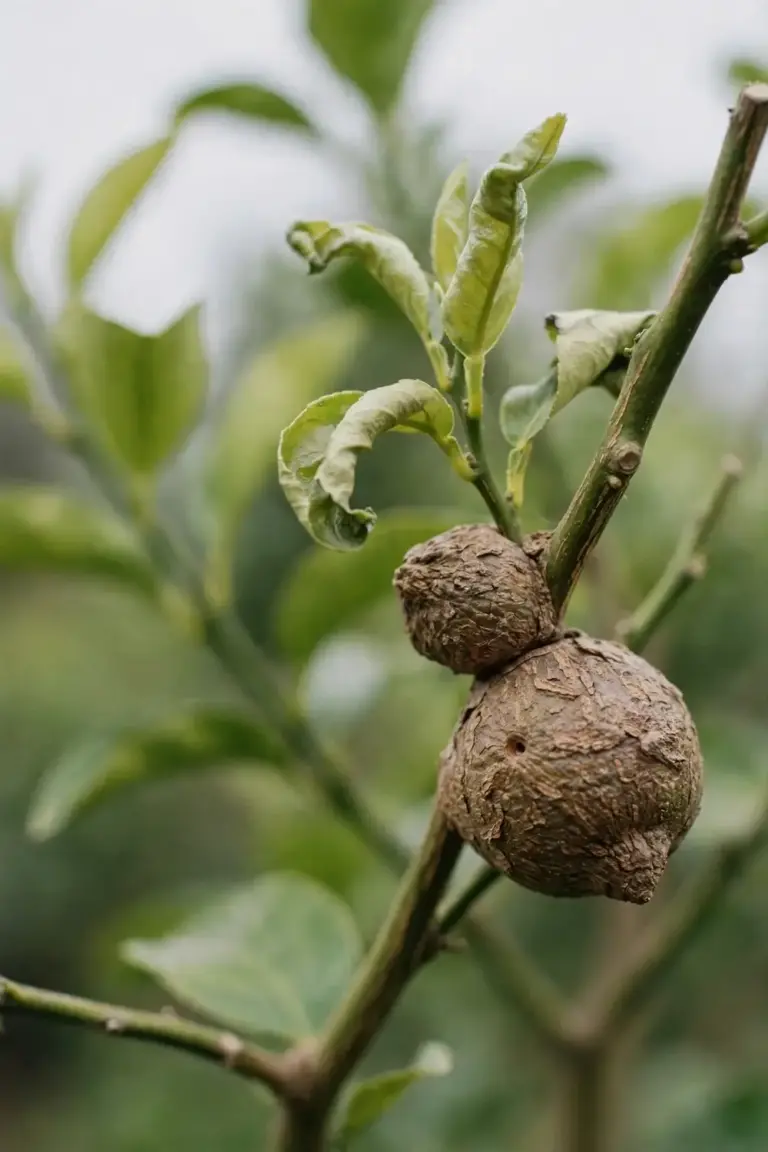
Prune galls out from April to June, before the adult wasps emerge in spring. Pruning later than June pushes a flush of soft new growth that the wasp prefers for egg laying, so timing matters. Bag the pruned galls and bin them, or dry them in the sun until the larvae inside are dead. A gall with tiny emergence holes has already released its wasps, and pruning it helps nothing.
Other bud eaters leave different marks. Lemon bud moth larvae tunnel into buds and young fruit. Citrus bud mite distorts buds so they never open properly. Snails climb at night and chew buds and young fruit. Check the tree after dark with a torch if buds vanish overnight. Organic pest control for beginners covers hand-picking, barriers, and oils for these pests without harsh sprays.
11. Reason 9: Pruning Cut Away the Fruiting Wood
A lemon tree pruned hard at the wrong time loses a season of fruit. Lemons fruit on new growth that follows flowering. A hard prune just before bloom removes the wood that would have carried those flowers, and the tree spends the season regrowing canopy instead of setting fruit. The tree usually recovers. It fruits again the next season.
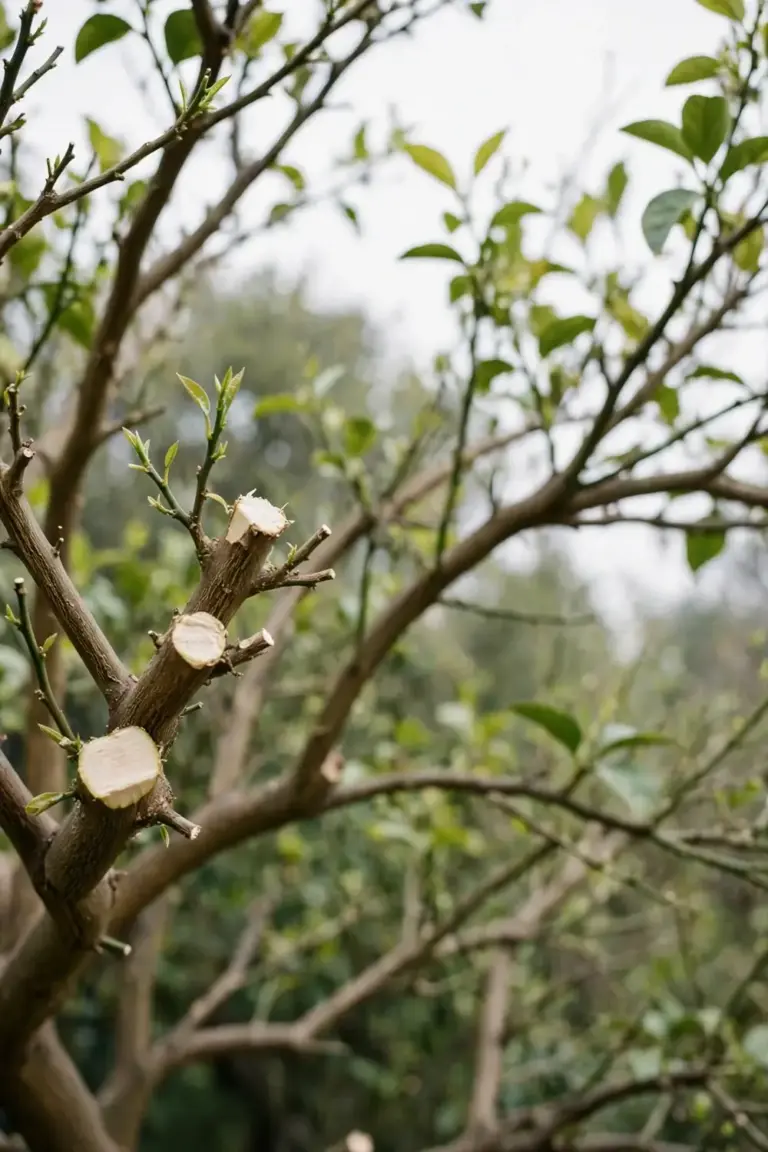
Prune lightly and prune after harvest, not before bloom. Remove dead wood, crossing branches, and rootstock suckers, and leave the fruiting wood alone. A tree that needs shaping can take a light prune each year after the main harvest, year after year, without losing its crop. A tree that needs renovation can take a harder prune. Expect a thin crop the following season as the price.
Gall wasp pruning follows its own calendar. Prune galls out from April to June, before adult wasps emerge in spring, and destroy the pruned material. That window also suits general shaping in most of Australia, since the main harvest has passed. Spring pruning techniques cover the light shaping cuts that keep a lemon tree open without removing fruiting wood.
12. Run the Fix Order: Sun, Water, Feed, Age
Work the causes in the order that rules out the cheapest fixes first. Start with sun, since a shaded tree answers no other fix. Count direct sun hours on a clear day. A tree under 6 hours of direct sun needs more light before anything else matters.
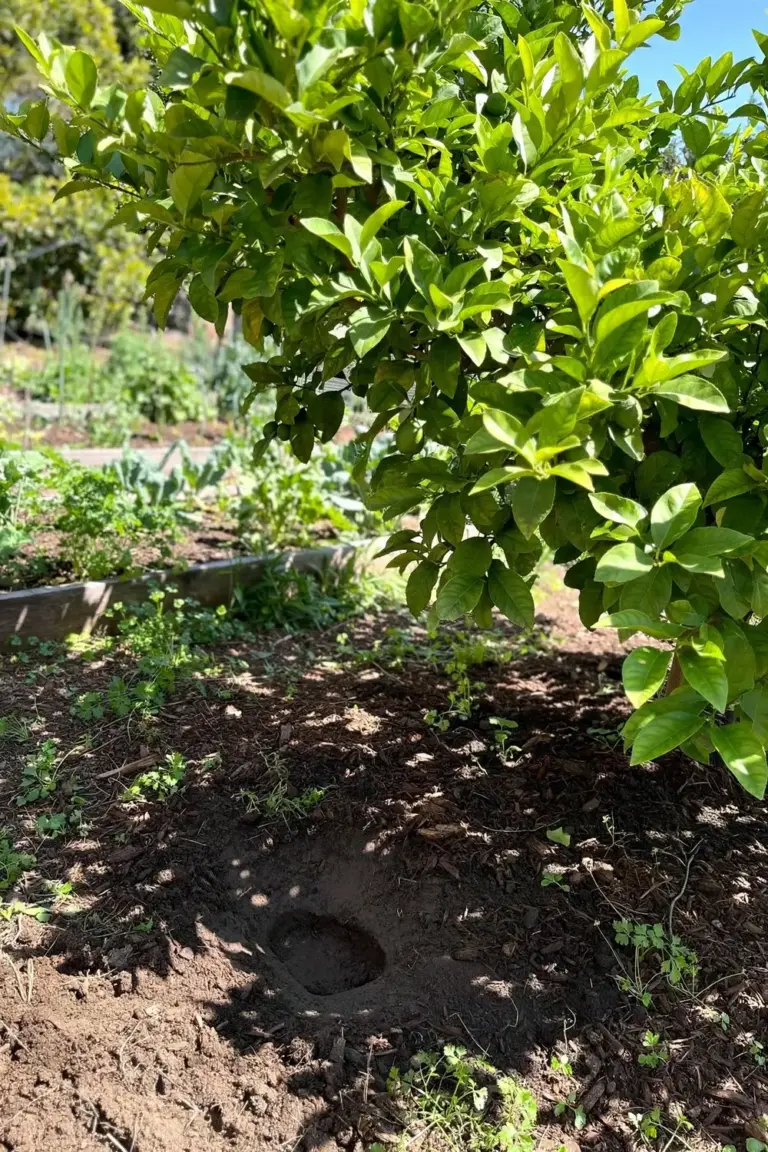
Next, check water. Push a finger 5 cm into the soil. Dry soil means water now. Wet soil that stays wet means drainage, not drought. Fix drainage before you feed, since roots in wet soil cannot use feed anyway.
Next, check feed. A leafy tree with no flowers needs no feed. A pale, thin tree may need one balanced citrus feed at the label rate. Stop all feeding once the tree flowers.
Last, check age and the graft union. A tree under 3 years old from transplant has time yet. A seedling has years yet. A tree with rootstock suckers crowding the graft needs the suckers cut. Work one cause at a time, and give the tree one full flowering season to answer before you change course again.
Watch for the answer after each fix. New flower buds within a season mean the fix landed. A tree that pushes fresh leafy growth but still no buds needs another look at sun and feed. A tree that flowers and then drops everything again needs another look at water and frost. A tree that shows nothing at all after a full season of correct sun, water, and feed may have a root problem that the canopy hides, and that is the point to dig beside the root zone and check the roots directly.
Frequently Asked Questions
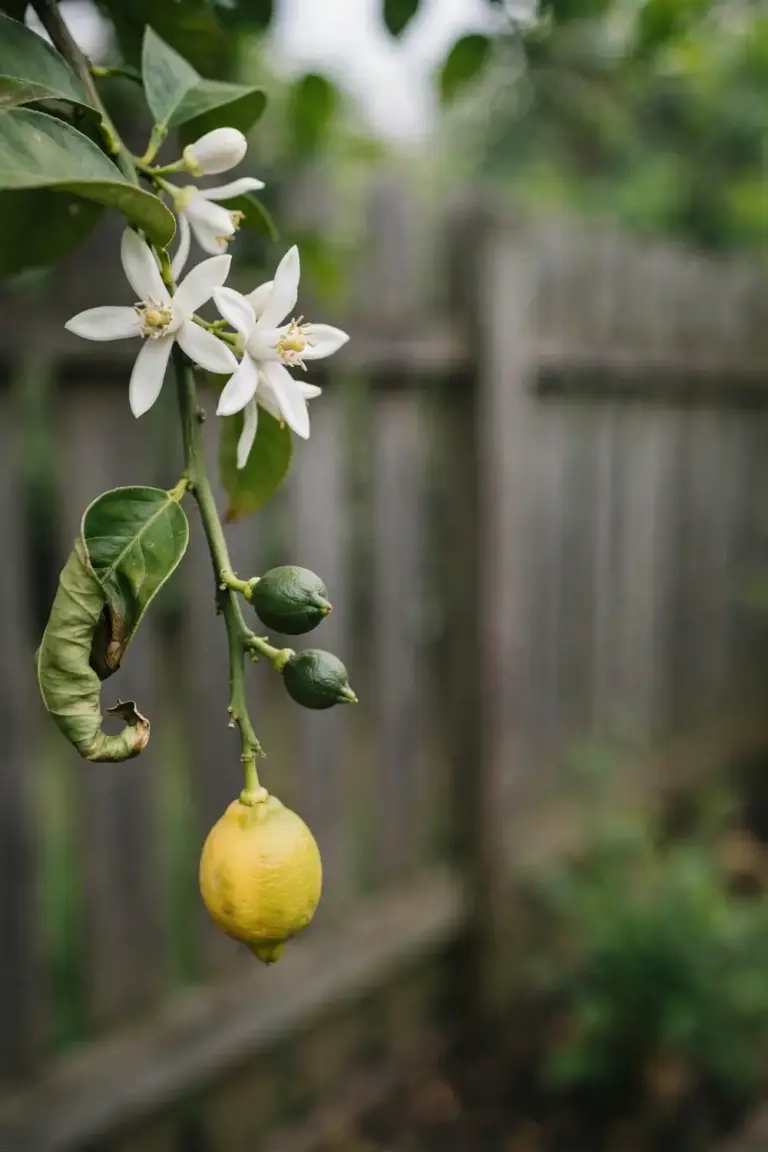
A grafted lemon tree reaches first harvest 3 to 4 years after transplant, according to the LSU AgCenter citrus guide. A tree in its first 2 years spends energy on roots and canopy. A seedling takes years longer and may never match its parent. Count from planting day, not from the day you bought the tree.
Heavy early drop is often the tree thinning itself. Only 0.5 to 3 percent of citrus flowers reach harvest, according to University of Georgia Extension citrus specialists, so most flowers fall by design. Water stress, frost, or bud pests can raise the drop rate. Check water first, then cut open fallen buds for brown tissue.
Yes. Lemon flowers carry both male and female parts in one flower, so a single tree fruits without a second tree nearby. Outdoor trees get pollen moved by bees, flies, and wind. An indoor or netted tree may need hand pollination with a small brush on each open flower.
Prune lightly. Remove dead wood, crossing branches, and rootstock suckers after harvest, then leave the rest of the canopy alone for the season. A hard prune before bloom removes the wood that would have flowered, and that single mistake costs a whole season of fruit on a young lemon tree. Prune galls out from April to June.
A change in one season usually means frost, water, shade, or pruning. A late frost can kill buds without harming a single leaf. A dry spring drops flowers before they set, and the tree looks fine otherwise. A new fence or a neighbour tree can shade the canopy enough to stop flowering across a whole season. A heavy prune before bloom removes fruiting wood. Work the fix order: sun, water, feed, age.
Why Is My Lemon Tree Not Fruiting? Start With the Stage, Then Fix One Cause
A lemon tree that does not fruit is answering a question. The stage tells you which question it asks. Name the stage, run the fix order, and change one thing at a time. Most trees answer within one flowering season once the real cause is fixed.