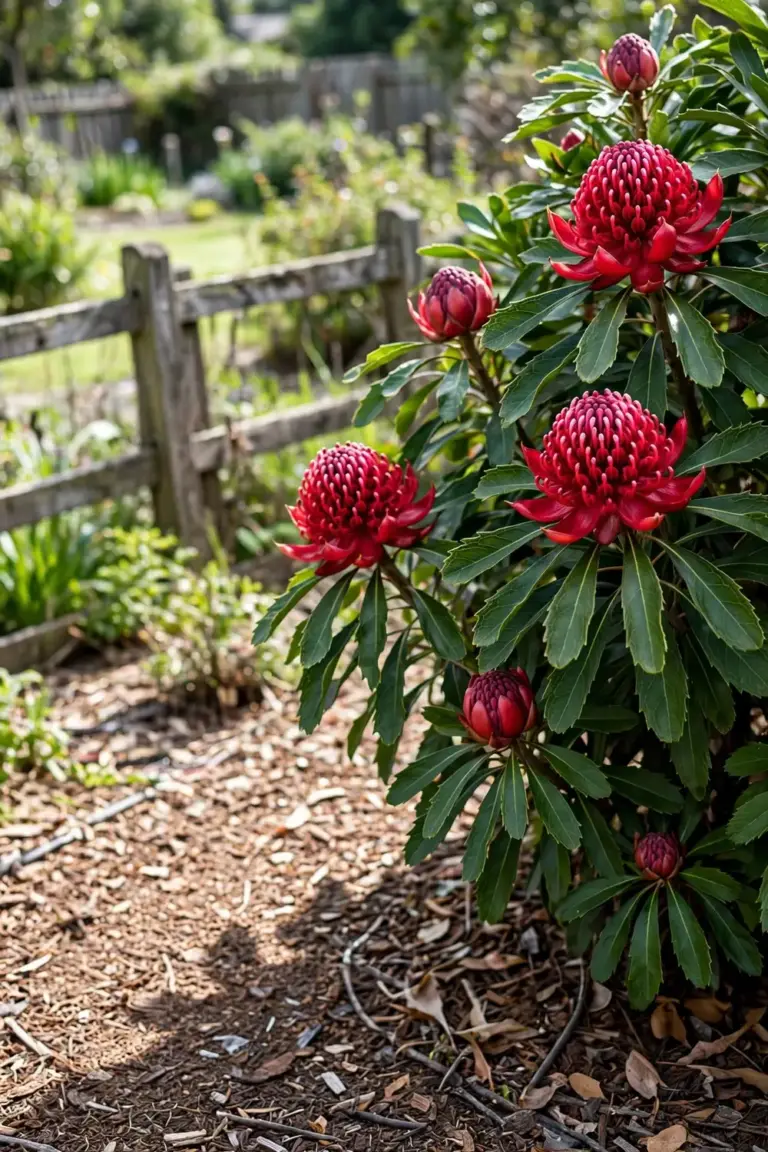

Growing waratah in Australia rewards one decision above all others: drainage. A waratah, one of 5 Telopea species, flowers for decades in free-draining soil with morning sun. A waratah in wet clay dies. Waratah is the common name for the genus Telopea, five species of large shrubs, all Australian, all from the south-east. The best known, Telopea speciosissima, carries the New South Wales floral emblem. I have learned that the waratah I plant for drainage outblooms the waratah I plant for its flowers.
This article covers Telopea only. The Queensland tree waratah, Alloxylon flammeum, is a tree in a different genus. The Tasmanian white waratah, Agastachys odorata, is a different genus again. Neither appears here beyond this fence. What follows runs from naming the five species to site, planting, water, feed, pruning, propagation, pests, and troubleshooting, in that order.
1. Start With Telopea, Not Waratah
Waratah is a genus name. Telopea holds five species, and every one grows wild in south-eastern Australia. The genus name comes from the Greek telopos, seen from afar, a reference to flowers visible across the bush. The five species are Telopea speciosissima, Telopea oreades, Telopea mongaensis, Telopea aspera, and Telopea truncata.
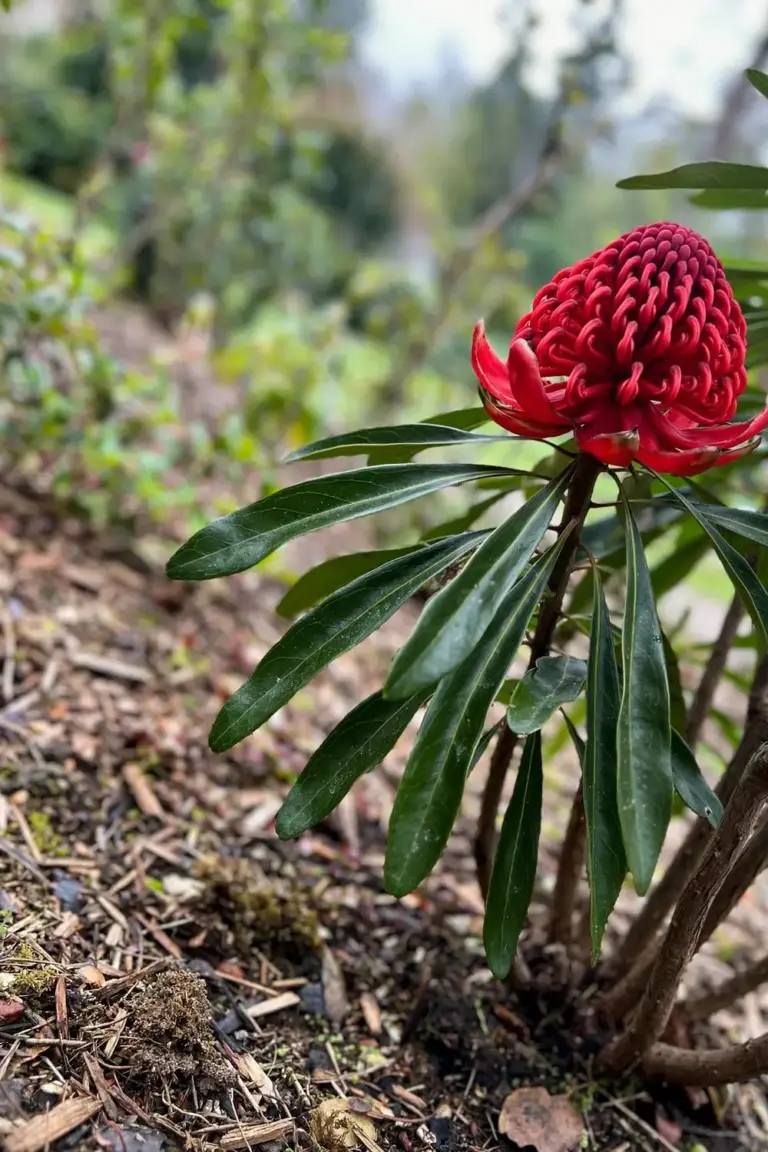
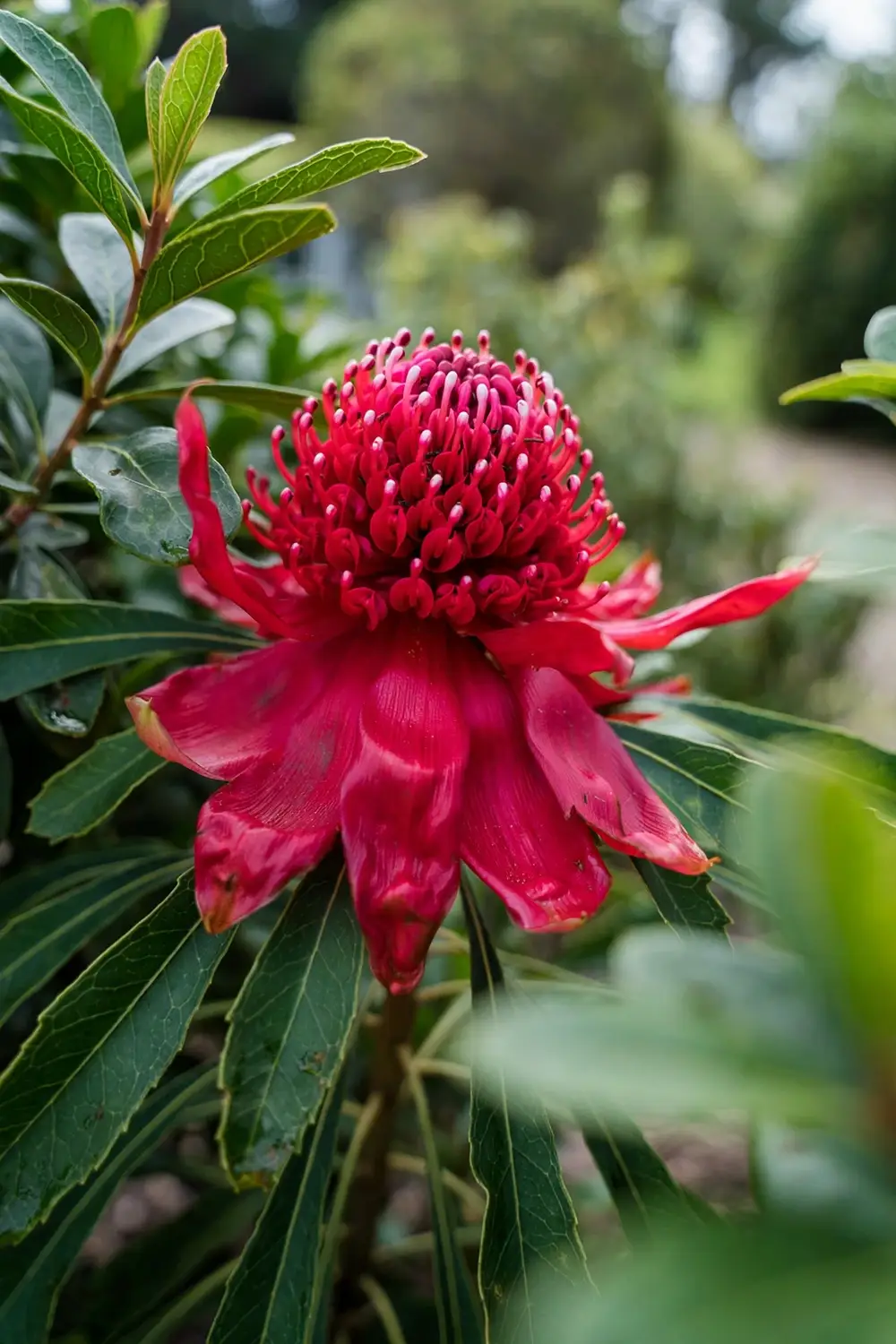
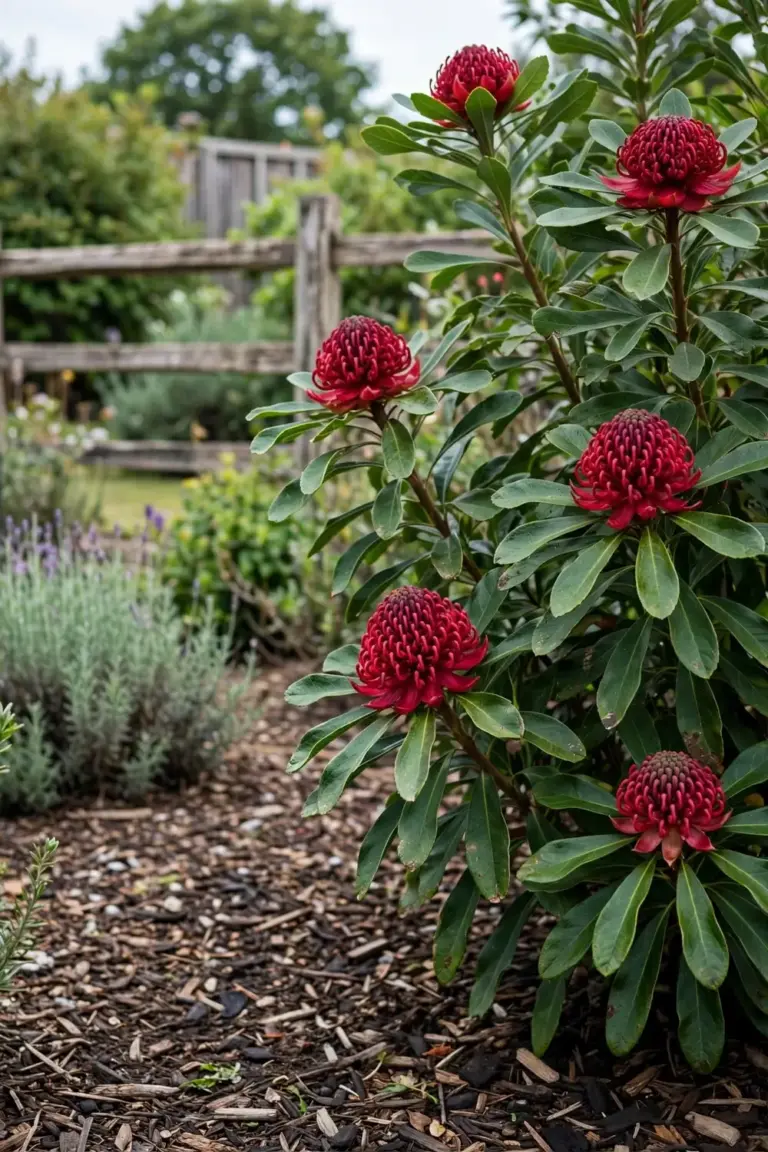
Telopea speciosissima is the New South Wales waratah. PlantNET notes that it is the official floral emblem for the state of New South Wales. The same notes place it within 200 km of Sydney, on sandy soils over sandstone, with stems to 3 m high, flowerheads of 90 to 250 flowers, and bracts 5 to 9 cm long. A flowerhead is one inflorescence, not one flower. The showy red parts are bracts around hundreds of small true flowers.
Two name traps sit beside the genus. New South Wales waratah means Telopea speciosissima. It is not a separate species. The national floral emblem of Australia is the golden wattle, not the waratah. Waratah holds the New South Wales emblem only.
Waratahs grow from a lignotuber. A lignotuber is a woody swelling at the base of the plant, at or just below ground level. The swelling holds dormant buds. Fire, hard pruning, or damage above ground triggers those buds. New shoots rise from the base. The lignotuber explains why a waratah survives a hard prune that would kill a rose.
2. Give Waratah Drainage First, Sun Second
Drainage decides survival. Sun decides flowering. A waratah in free-draining soil with morning sun and afternoon shade grows into a long-lived shrub. A waratah in heavy clay with wet feet rots at the roots. The whole guide reduces to five rules: drainage above everything, morning sun with afternoon shade, low-phosphorus native feed only, a hard prune after flowering, and patience, because young plants take years to bloom.
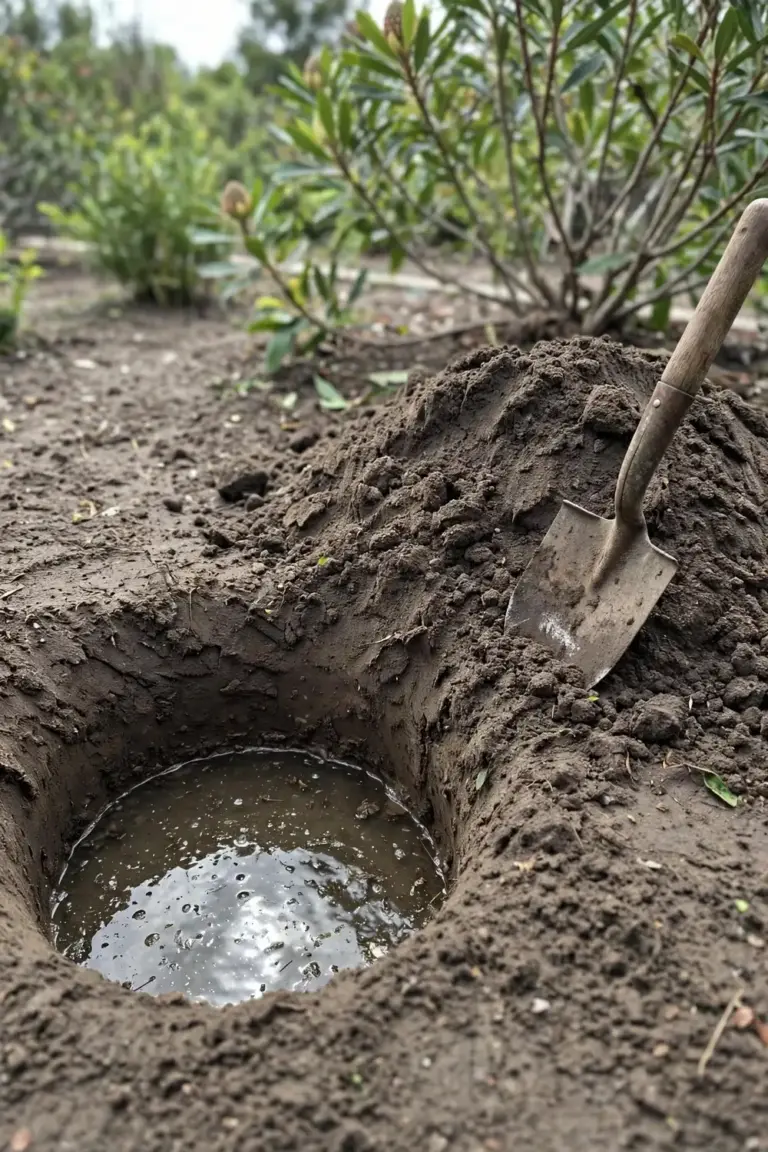
Waratahs punish the wrong site fast. A plant that sits wet through winter can collapse in one season. A plant that sits dry through summer stalls and drops buds. The middle ground is moist soil that drains freely after rain. Dig a hole, fill it with water, and watch. Water that still stands hours later tells you the site needs a raised bed or a pot.
Waratahs also punish the wrong feed. Standard garden fertilizer carries phosphorus at levels that harm Proteaceae roots. Waratahs belong to the Proteaceae family. The family evolved in low-phosphorus soils. Feed low phosphorus or do not feed at all. A hungry waratah in good soil still flowers, while a fed waratah in the wrong fertilizer dies.
Test the drainage before you buy the plant. Dig a hole 30 cm wide and 30 cm deep where the waratah will sit. Fill it with water and let it drain, then fill it again. Water that clears within a few hours means free drainage. Water that still stands the next morning means the site needs a raised bed or a pot. The test costs nothing and saves the plant. A waratah bought before the test often lands in the wrong hole.
3. Pick Your Species From the Five Telopea
Match the species to your state and your cold: New South Wales gardeners start with Telopea speciosissima, while cooler gardens look south to Telopea oreades and Telopea truncata. The table below sets out the five species in one view.
| Species | Home Range | Flowers | Best For |
|---|---|---|---|
| Telopea speciosissima | New South Wales, central coast | Red and pink flowerheads | New South Wales gardens, cut flowers |
| Telopea oreades | Gippsland, Victoria and far south New South Wales | Red flowerheads | Cooler gardens, shade tolerance |
| Telopea mongaensis | Monga and Braidwood, New South Wales | Red flowerheads | Cooler, wetter sites |
| Telopea aspera | Gibraltar Range, northern New South Wales | Red flowerheads | Northern New South Wales, granite soils |
| Telopea truncata | Tasmania | Red flowerheads, yellow forms recorded | Cold climates, Tasmanian gardens |
Nurseries also sell hybrids and named forms. Shady Lady is a widely grown hybrid, and Shady Lady White carries creamy white flowers. Wirrimbirra White is a white form of Telopea speciosissima. Golden Globe is a yellow-flowered form. Hybrids with Telopea oreades and Telopea mongaensis parentage suit colder sites, shadier spots, and heavier soils better than pure Telopea speciosissima, according to scout evidence from nursery guides. A hybrid is often the smarter buy outside New South Wales.
Species choice also sets pot suitability. Smaller hybrid forms suit pots better than the tall species, and a pot is not a compromise. A pot is the clay-soil workaround that keeps a waratah alive where garden soil would kill it.
Buy a named form when you can. A seedling grown from seed varies, and the flowers may differ from the parent. A named cultivar or a cutting-grown plant carries the parent’s flowers. Ask the nursery whether the plant grew from seed or cutting, and whether the label names a cultivar. The answer tells you how much the flowers will match the picture on the tag.
4. Site a Waratah for Morning Sun and Afternoon Shade
Morning sun plus afternoon shade grows the best waratah. GardensOnline puts the preference plainly: morning sun, shade from hot afternoon sun, and dappled light under eucalypts as the ideal. The same guide warns that waratahs are doomed to failure in heavy clay soils, and that lingering water causes root rot or Phytophthora cinnamomi to set in. Raised beds suit sites where water lingers.
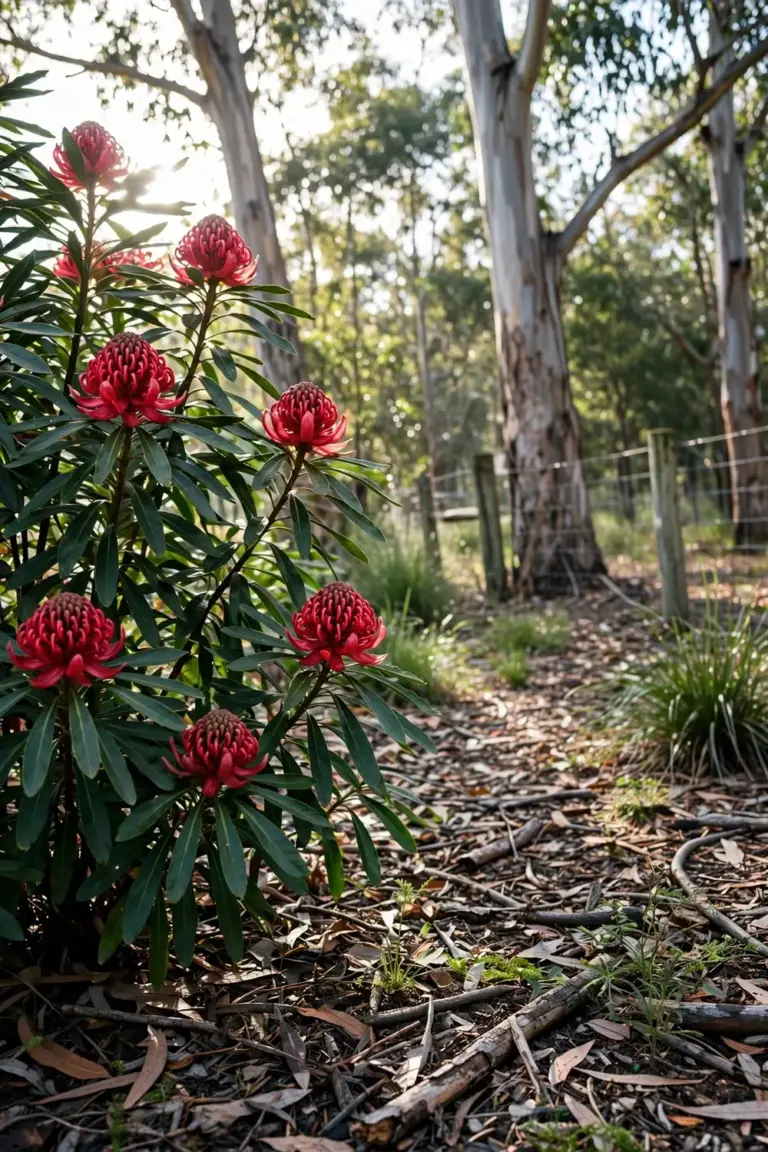
Waratahs grow wild as understory shrubs in dry sclerophyll forest. The wild plant stands under a eucalypt canopy on sandy soil over sandstone. Garden conditions should copy that shape: bright light reaches the plant, the canopy breaks the harsh afternoon sun, the soil drains fast after rain, and the roots stay cool under leaf litter.
Shelter matters as much as sun. Strong wind snaps flower stems and dries leaves. A fence, a hedge, or a building on the windward side helps. A south-facing fence in a small garden gives shade at the base while the top grows into sun. The base stays cool. The flowers still catch light.
A gentle slope drains better than flat ground. Water runs off a slope instead of pooling around the crown, while flat ground in heavy soil holds water after rain. A slope in sandy soil sheds water fast and may need extra mulch to hold moisture. Read the slope before planting. A site that ponds after rain needs a raised bed even when the soil looks sandy.
Soil preparation starts with drainage, not fertility. Waratahs tolerate poor soils but do not tolerate wet ones. Work composted organic matter through the planting area to open the soil structure. Keep the mix low in phosphorus. A soil test settles the guesswork, and the soil health guide explains how to read one. No published garden pH range for waratahs was available at writing, so this guide states data not available rather than a guessed number.
5. Plant It High and Never Bury the Crown
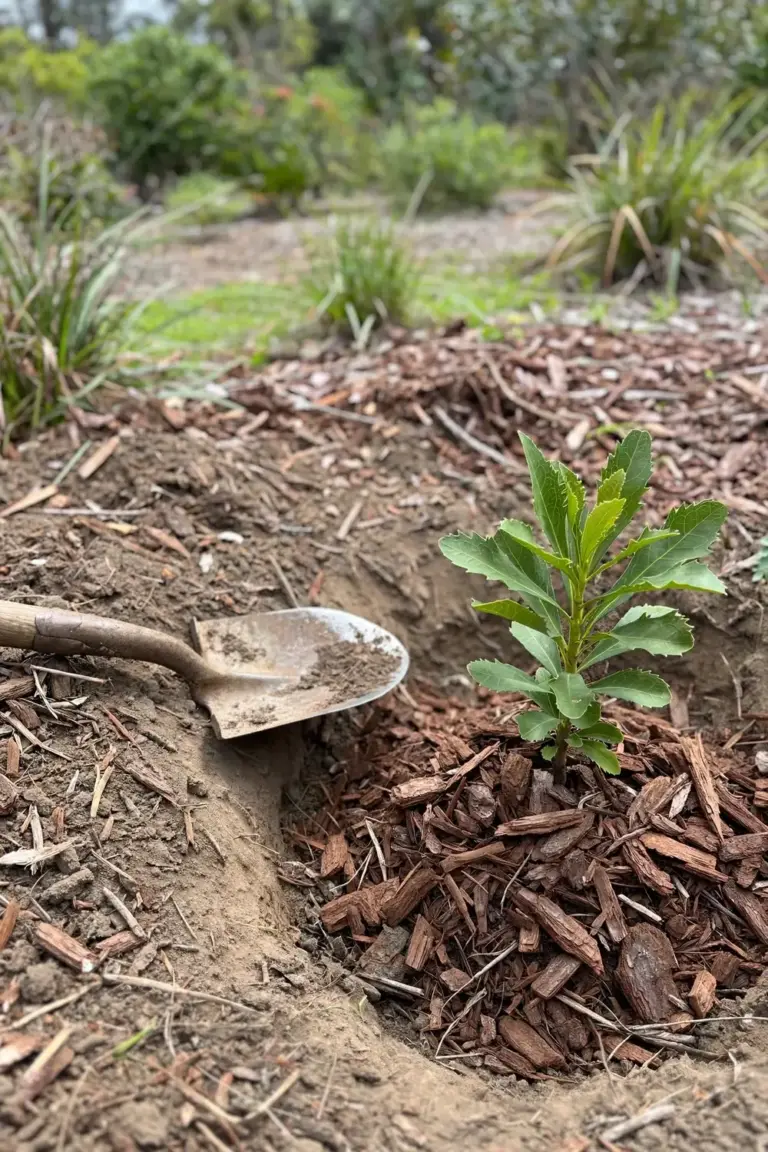
Plant at the same depth it grew in the pot. Planting deep kills waratahs. The crown sits at soil level. Soil piled against the stem holds moisture against bark. Bark rots. Roots follow. A plant set high, with the crown clear, drains and breathes.
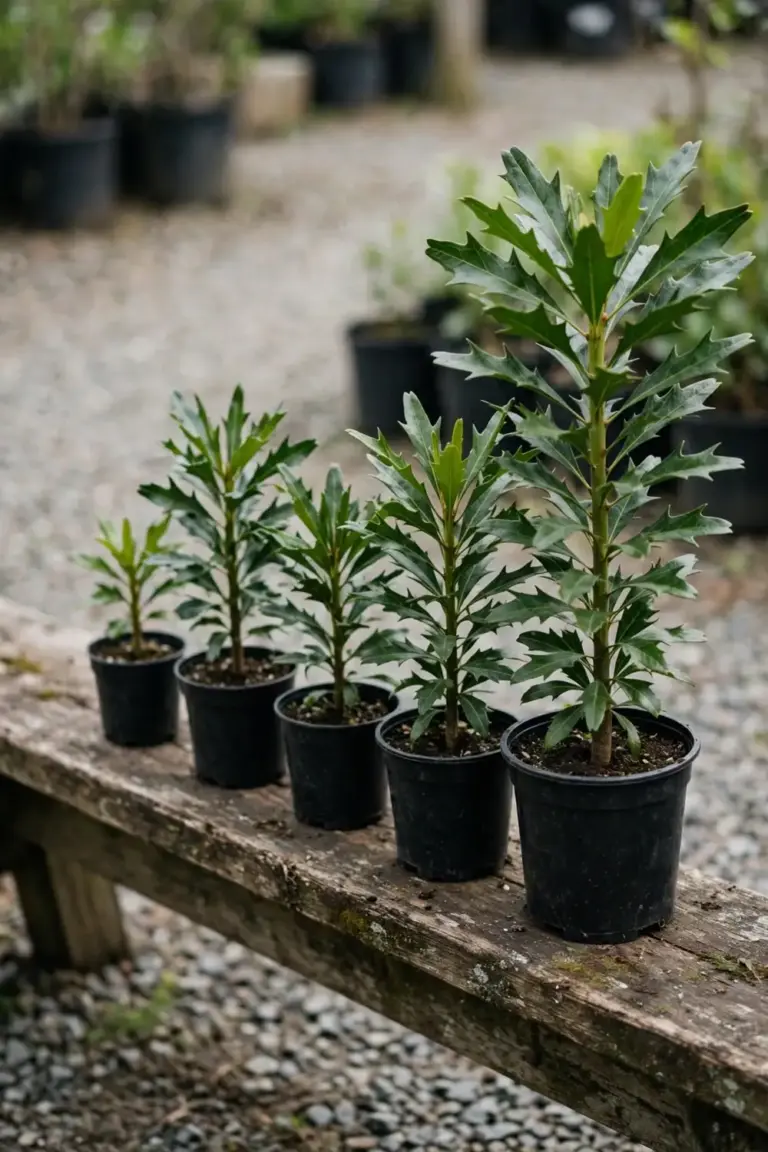
Buy a seedling 20 to 30 cm high, with good roots and a straight main stem, according to the same GardensOnline guide. Reject a pot-bound plant. Reject a plant with a deformed main stem. A cheap plant with girdled roots never recovers into a strong shrub.
Dig the hole much larger than the rootball. Loosen the sides so roots can leave the hole. Add well composted organic matter to the backfill. Set the plant, backfill, and firm gently. Water in well. Cover the root zone with mulch or leaf litter. Mulch holds moisture and keeps roots cool. Keep mulch clear of the stem itself.
Clay soil needs a different answer. Do not dig a hole in clay and fill it with good mix. The hole becomes a sump. Water collects. Roots rot. Plant in a raised bed or a pot instead. A pot needs a larger tub, not a small pot. Terracotta or a wooden tub breathes better than plastic. Crocks in the base keep the potting mix off the drain hole. A free-draining native potting mix suits pots.
Do not move an established waratah. Waratahs respond poorly to transplanting, so choose the site once and plant once. A plant that must move should move young, with a large root ball, in cool weather, and the reader should expect a setback.
6. Water Deep and Let the Soil Breathe
Water regularly and let the top soil dry between waterings. Roots must never sit wet. The same GardensOnline guide advises watering around once a week, more in hotter months, with a thick mulch cover. Drip watering suits waratahs because it keeps supply steady without flooding the root zone.
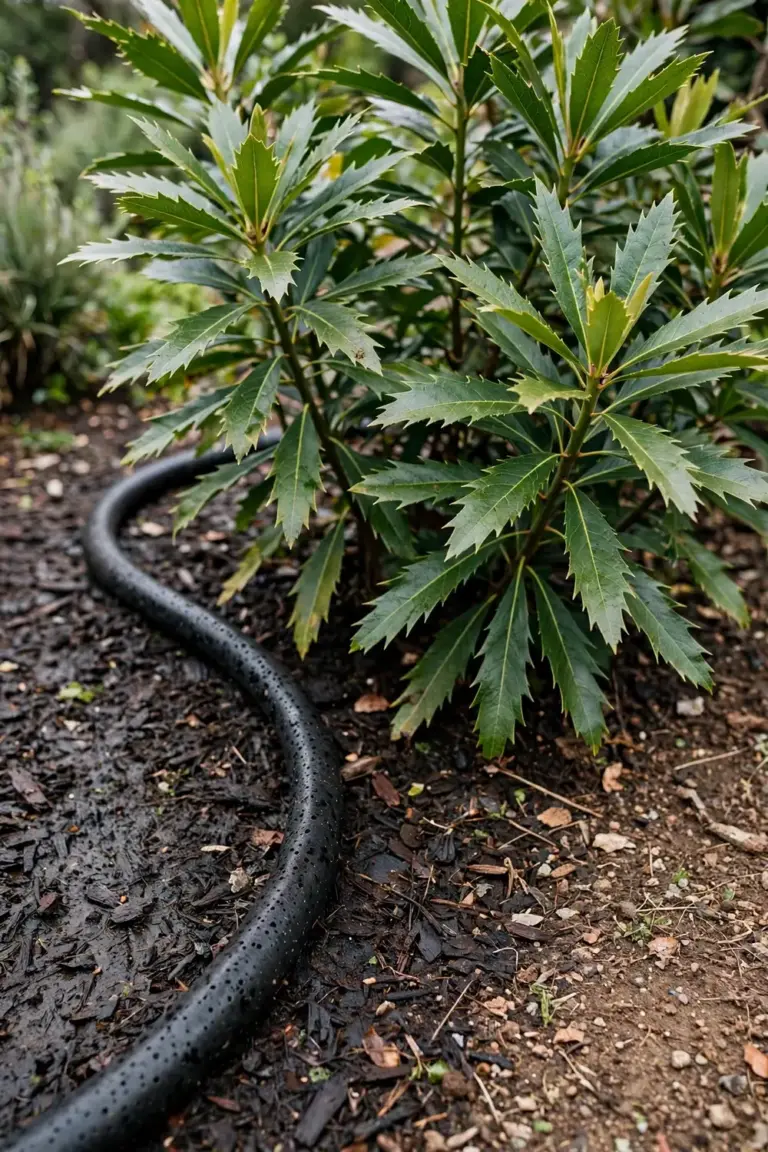
New plants need more water than established plants, and a seedling in its first summer dries fast. Check the soil with a finger before watering, water when the top few centimetres dry, and skip the water when the soil still feels damp. A schedule that waters every day in winter rots roots. A schedule that waters once a week in a heatwave starves them.
Established waratahs tolerate short dry spells. The lignotuber stores reserves. The leaves still tell the truth. Wilting leaves on a hot afternoon can mean heat, not drought. Check the soil first. Water the soil, not the leaves. Wet foliage in humid weather invites leaf problems.
Seasons change the watering pattern. Winter rain in most waratah country does much of the work, and a plant in free-draining soil rarely needs a hose in winter. Summer heat reverses the pattern. A week of hot, dry wind dries the root zone fast, and a deep watering once a week beats a shallow sprinkle every day. Deep water reaches the roots. Shallow water wets the surface and leaves the roots dry below.
The failure to avoid is constant wetness. Roots that never dry out lose oxygen, and oxygen-starved roots rot. Rot opens the door to Phytophthora cinnamomi, the water mold that kills waratahs in wet soil. Drainage is the prevention. No spray rescues a plant whose roots already rotted. Dig the drainage right before planting, not after.
7. Feed Low Phosphorus or Do Not Feed at All
Feed low-phosphorus native food only. Standard fertilizer can kill a waratah. The Proteaceae family evolved in soils low in phosphorus, so Proteaceae roots take up phosphorus fast. A dose that suits a rose burns a waratah. The label to look for reads Safe for Natives or low phosphorus.
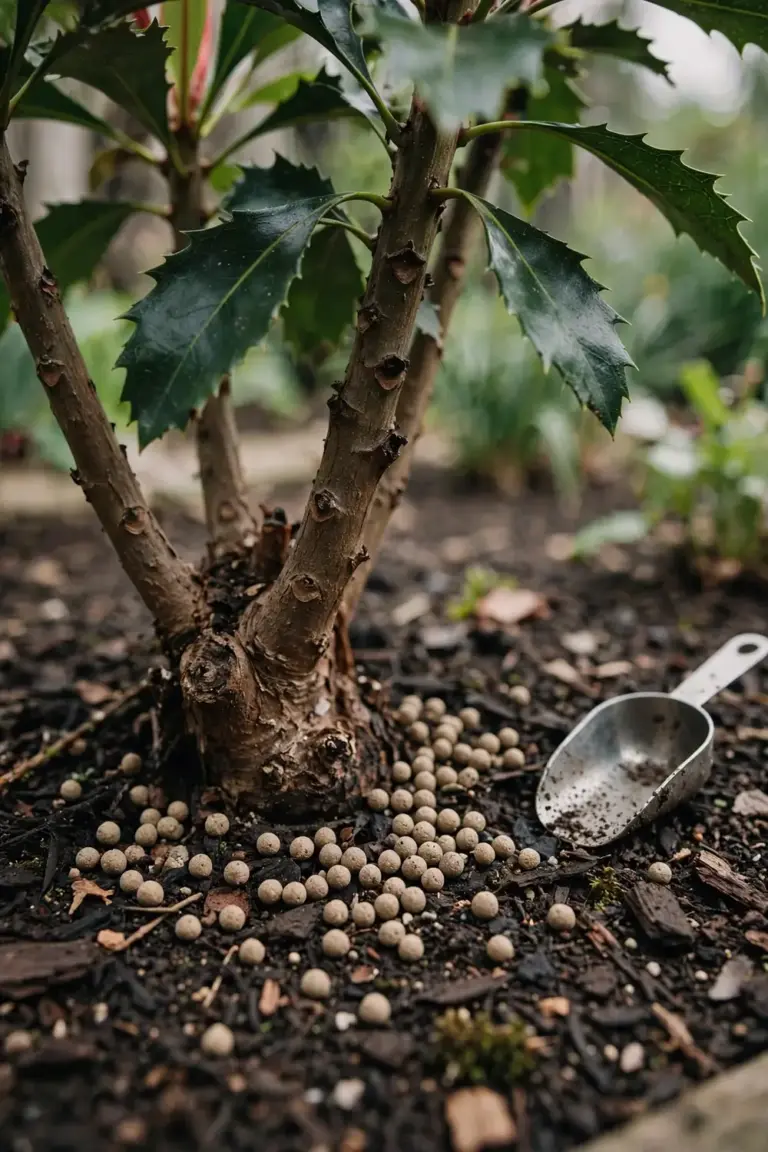
Feed after flowering. The Australian National Botanic Gardens notes that fertilizing with a slow release, low-phosphorus fertilizer after flowering is beneficial. The same GardensOnline guide advises feeding in early spring and again after pruning. A slow-release form feeds gently across months. Rake the feed lightly into the surface around the drip line. Water it in.
Hold feed until the plant is established. A newly planted waratah feeds from its potting mix. Extra fertilizer at planting stresses roots. A stressed plant that also carries fresh fertilizer dies faster than a stressed plant left alone. Wait for new growth before the first feed.
Blood and bone is a simple slow-release alternative, according to the same GardensOnline guide. The guide names Bush Tucker as a slow-release formulation. Either way the rule holds: low phosphorus, slow release, modest dose. More feed does not mean more flowers. More feed means burnt roots and yellow leaves.
Watch for the signs of a wrong feed. Leaf tips brown first. Growth stalls. Leaves yellow from the tips inward. A plant showing those signs after a feed needs clean water, not more feed. Flush the soil with clean water to wash excess salts through. Hold all feed until new green growth appears. The plant recovers slowly, and the next feed stays low phosphorus and slow release.
8. Prune Hard After Flowering, Back to Strong Wood
Prune immediately after flowering. Remove about three quarters of the plant once it is established. The Australian National Botanic Gardens notes that cultivated waratahs require heavy pruning once established, with about three quarters of the plant removed immediately after flowering. The same notes explain that waratahs carry a lignotuber full of dormant buds, and that the lignotuber lets the plant regrow after heavy pruning. Cut flowered canes back to at least half of their length when removing spent heads.
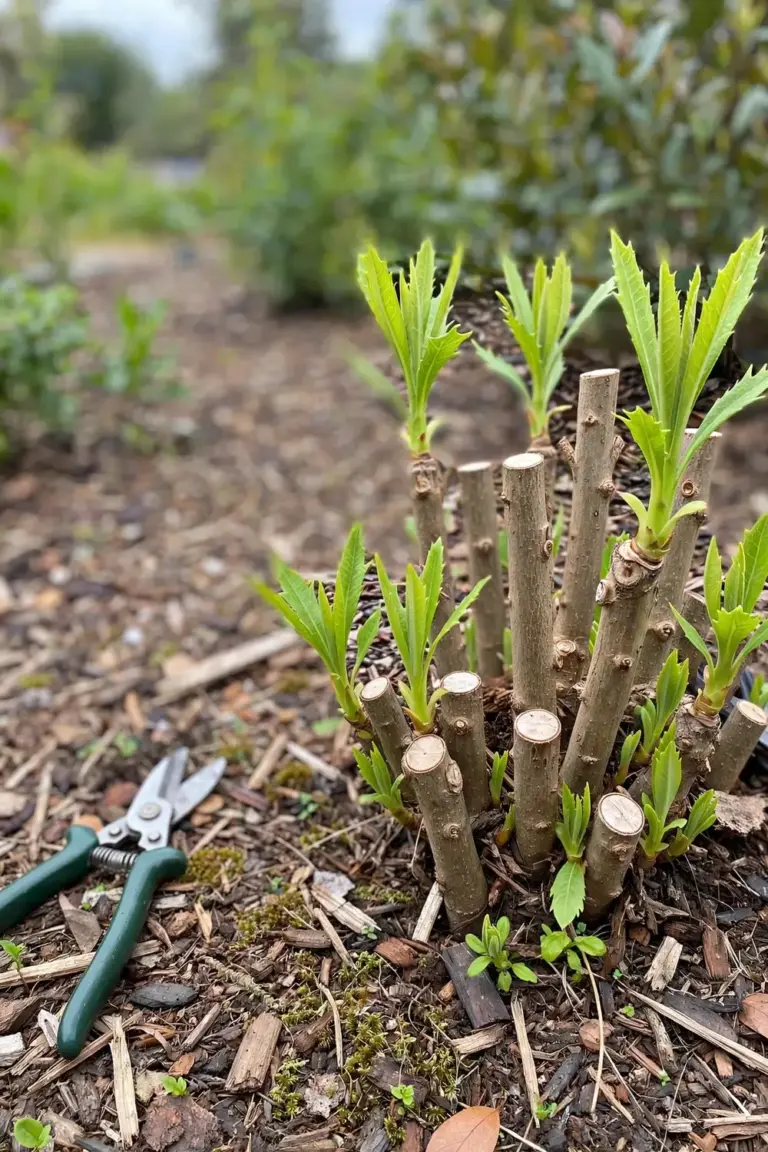
Young plants need a lighter hand. A young plant still builds its frame. Cut spent heads and shape lightly. Leave the heavy cut for established plants with a strong lignotuber. The GardensOnline guide advises taking around one third to one half off, with a full-sized plant cut down to waist height as a guide. The two sources differ because they describe different plants. A young plant gets the lighter cut. An established plant gets the hard cut.
Prune with clean, sharp secateurs or loppers, cutting just above a healthy bud or node. Remove spent flowerheads first, then shape. A leggy plant with bare lower stems tells you it wants more light. Pruning opens the center. Light reaches lower buds. The next season grows denser.
Cut flowers carry the same timing. Waratah stems last up to two weeks in a vase, according to the same GardensOnline guide. Trim a few millimetres off the stem each time you change the water. Picking a flower is pruning. The cut you make for the vase is the cut the plant wanted anyway.
General pruning technique helps with the mechanics of a clean cut. The spring pruning techniques guide covers tool care and cut placement. Waratah timing stays its own rule: after flowering, never in winter dormancy.
9. Propagate From Seed or Cuttings, With Patience
Seed is easiest. Cuttings flower sooner. Fresh seed carries high viability and germinates 2 to 3 weeks after sowing, according to the same ANBG notes. Seedlings take about five years to flower. Cuttings may take only two years. Plant seedlings out once they reach about 15 cm high.

Seed needs a well-drained seedling mix with no added fertilizer. Phosphorus in a standard mix harms Telopea roots. The seed pod takes around six months to mature and break open, revealing winged seeds, according to the same GardensOnline guide. Sow fresh seed. Seedlings from seed vary. One seedling may flower red, another pink, another weakly. Variation is the price of seed.
Cuttings keep the parent’s flowers. Choose a strong plant and a proven bloomer. Take 15 cm cuttings with three healthy nodes after flowering in early summer, from recent green growth, according to the same GardensOnline guide. Dip the base in rooting hormone. Set the cutting in a fertilizer-free potting mix with added perlite. Keep the cutting warm and moist for six months. Test for roots with a gentle upward pull. Resistance means roots. A cutting that slides out goes back in, firmed again.
Seed starting technique transfers directly to waratah seed. The seed starting guide covers mix, moisture, and light. Waratah seed adds one rule: no fertilizer in the mix, and the mix stays lean until the seedling moves to a pot.
10. Watch for Scale, Borers, and Wet Feet
Healthy waratahs carry few pests. Stress invites them. A plant in wet soil, deep shade, or wrong feed attracts borers and scale. Fix the stress first. Spraying a stressed plant without fixing the cause wastes the spray.
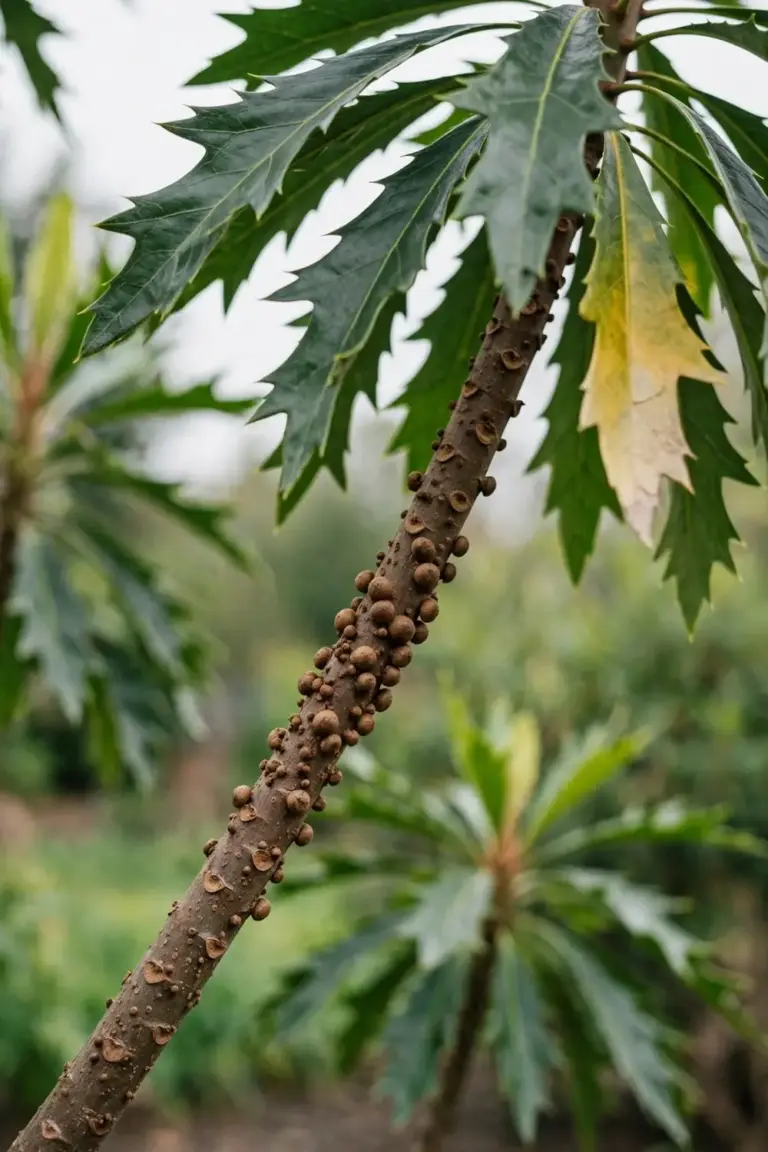
Scale appears as small bumps on stems and leaves. Scale is rarely debilitating, according to the same GardensOnline guide. Pest oil suffocates scale. Apply pest oil in cool weather, never in heat, and follow the label. A heavy scale attack on one branch may justify pruning that branch out.
Borers chew into flowers and stems, particularly on stressed plants, according to the same guide. A bored stem wilts above the entry hole. Prune the damaged stem below the hole and dispose of the pruned stem. A vigorous plant outgrows minor borer damage, while a stressed plant does not.
Root rot is the disease that matters. Lingering water causes root rot or Phytophthora cinnamomi, according to the same guide. Symptoms read like drought: wilting, yellowing, sudden collapse. The roots tell the truth. Black, soft roots mean rot. White, firm roots mean the plant still fights. Prevention is drainage and hygiene: clean tools between plants, and do not move wet soil from a sick plant to a healthy one.
Bract browning is a flower quality problem, not a disease. Sun exposure causes bract browning, and shade cloth at 50 percent reduces light damage and pigment loss, according to the same ANBG notes. A plant that browns every year sits in too much afternoon sun, so move the shade, not the plant.
11. Fix No Flowers, Yellow Leaves, and Sudden Death
No flowers means youth, shade, or a missed prune. A seed-grown waratah under five years old has not matured yet. Wait. A plant in heavy shade sets buds poorly. Lift the shade or move the light. A plant never pruned grows tall and sparse. Prune after flowering. A plant fed with high-nitrogen fertilizer grows leaves instead of flowers. Stop feeding and let the plant settle.
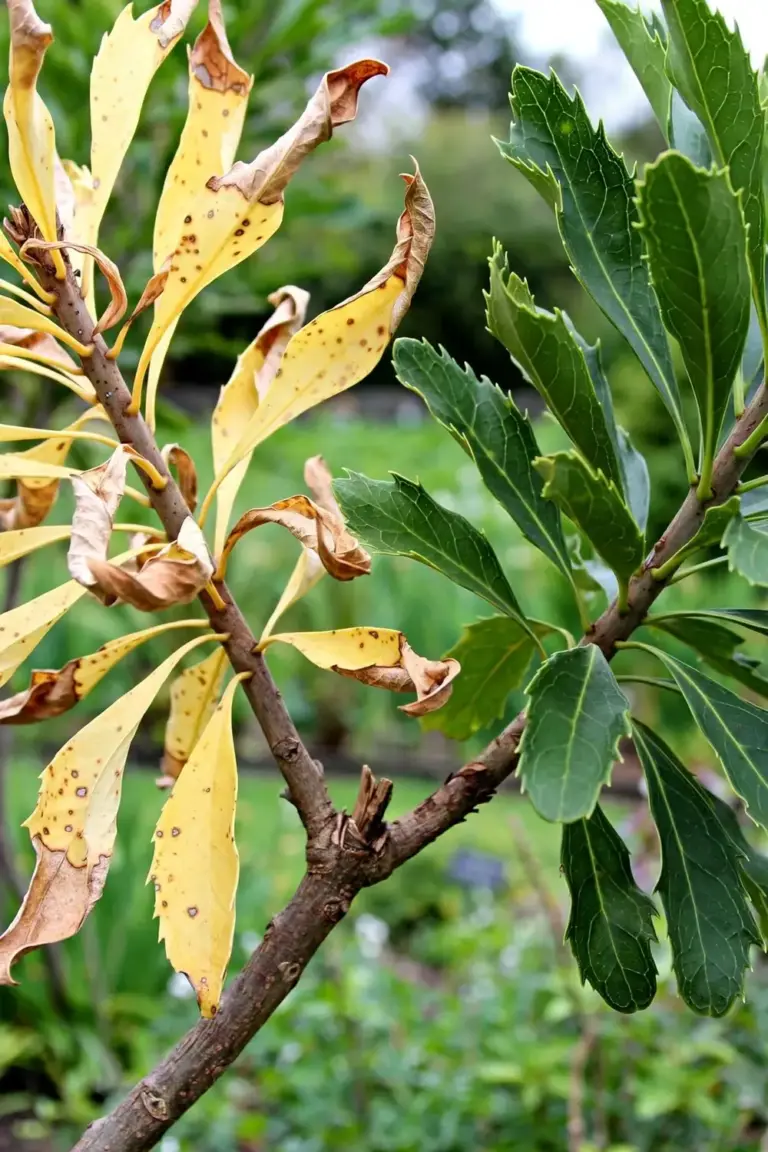
Yellow leaves mean wet feet or feed trouble. Check drainage first. Waterlogged soil yellows the whole plant. Phosphorus fertilizer yellows and burns leaf tips. Flush the soil with clean water if you fed wrongly, and hold all feed until new green growth appears. Yellow leaves on one branch only may mean borer damage below the yellow section. Prune and inspect.
Sudden death usually means root rot. A plant that looked fine in spring and collapses in summer likely rotted in winter wet. Dig carefully and inspect the roots. Black roots confirm rot. Remove the plant. Do not replant a waratah in the same hole. The soil may carry Phytophthora. Plant elsewhere, or plant in a pot with fresh mix.
Leggy growth means lack of light, according to the same GardensOnline guide. Pruning keeps the shape tighter. Light fixes the cause. A plant that leans hard toward the sun wants a sunnier spot. Move a young plant in cool weather. An established plant stays where it stands, and the reader prunes for shape instead.
Buds that drop before opening point to a different stress. A plant that sets buds and then sheds them usually suffered a dry spell, a heatwave, or a cold snap at the wrong week. Check the watering first, then the exposure. A plant that drops buds two years running sits in the wrong site. The fix is shade at the base, wind shelter, or a move while the plant is still young.
12. Waratah Growing FAQ
Yes, in a pot or a raised bed. Do not dig a hole in clay and fill it with good mix. The hole becomes a sump and water collects. A raised bed drains freely. A large pot with native mix drains freely too. Both beat a clay hole. Pick the workaround before planting, not after the plant yellows.
Seed-grown plants take about five years to flower. Cuttings take about two years. A bought seedling flowers sooner than seed because the nursery did the waiting. A plant that skips a year after planting is still settling. Give it a full season of steady water and correct light before judging it.
Yes. Choose a large tub, not a small pot. Terracotta or a wooden tub breathes better than plastic. Use a free-draining native potting mix. Keep crocks over the drain hole. Smaller hybrid forms suit pots best, so water pots more often than garden soil and feed low phosphorus only.
Sudden death usually means root rot from wet soil. Check the roots. Black, soft roots confirm rot. Other causes include phosphorus fertilizer and transplant shock in an established plant. Do not replant a waratah in the same hole if rot is confirmed. Plant elsewhere, or plant in fresh mix in a pot.
No. Waratah is the floral emblem of New South Wales only. The national floral emblem of Australia is the golden wattle. The confusion is common because waratah art appears across Australian design. The botanical fact stays simple. Telopea speciosissima represents New South Wales. Acacia pycnantha represents the nation.
13. Start With Drainage, Then Pick Your Waratah
Drainage first, morning sun second, low-phosphorus feed third, and a hard prune after flowering fourth. That order grows waratahs. Pick Telopea speciosissima for New South Wales gardens. Pick Telopea oreades or Telopea truncata for colder sites. Pick a hybrid like Shady Lady for shade or heavier soil. Plant once, in the right site, and let the lignotuber do its work.