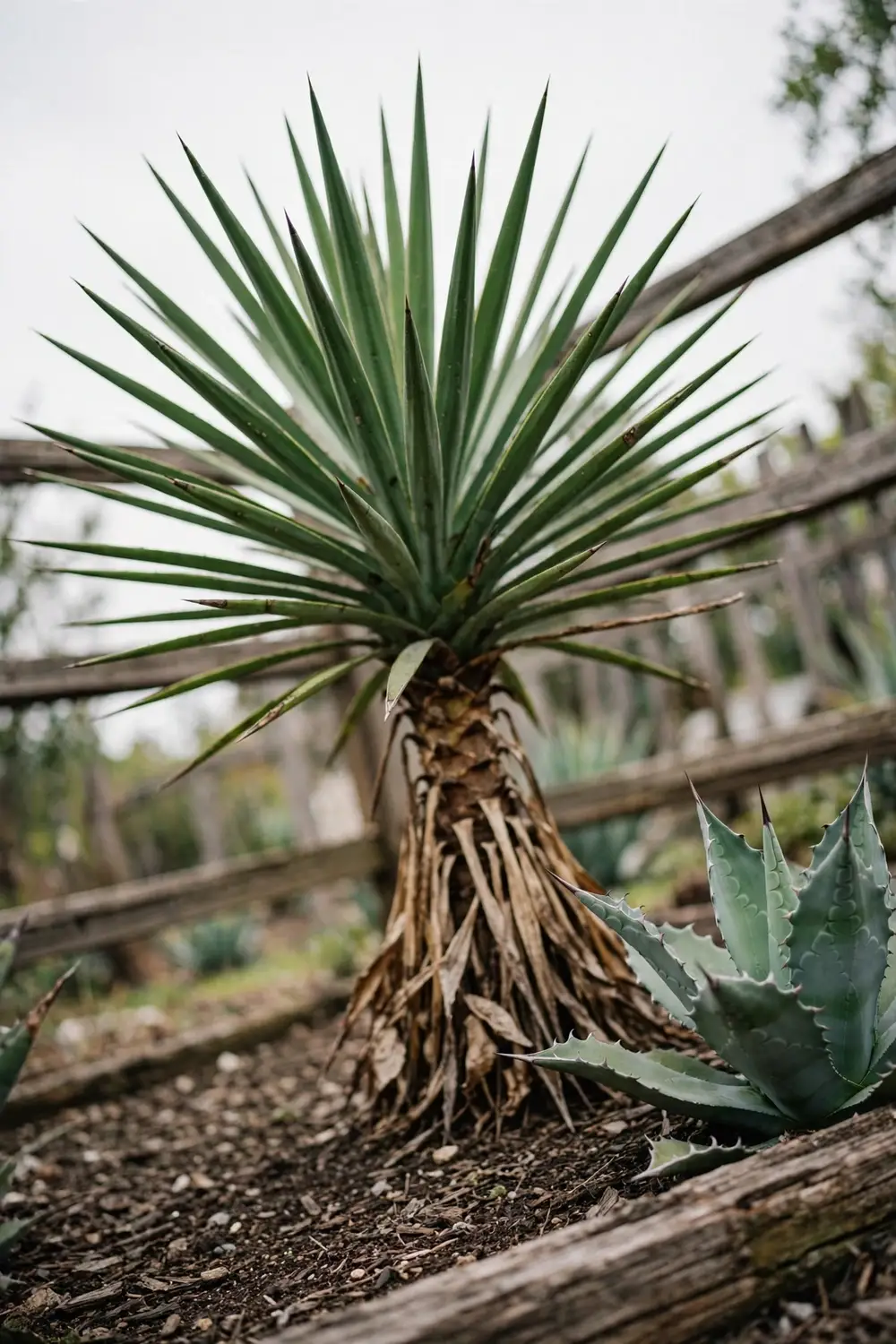

Run 3 tests on the plant in front of you: leaf edge, stem, and flower stalk. Those 3 tests split a yucca from an agave, an aloe, a dracaena, and a cordyline in under 5 minutes. Yucca leaves stay stiff and sword-shaped, carry no teeth along the edge, and drop dead leaves that pile at the base instead of falling clean. I have learned that the yucca I name from its leaf edge beats the yucca I name from its silhouette.
That is yucca plant identification in Australia: a 3-test key across 5 lookalike plants, then 4 true yuccas. Yucca is a genus of some 40 species from the Americas, according to the Flora of the Southeastern United States Yucca key. No yucca is native to Australia. Every yucca in an Australian garden arrived as a cultivated plant. The rest of this page runs the 5-way split first, then the 3 tests, then the 4 true yuccas, then the lookalikes in full, then the name traps.
1. Run the 5-Way Split First: Yucca, Agave, Aloe, Dracaena, or Cordyline
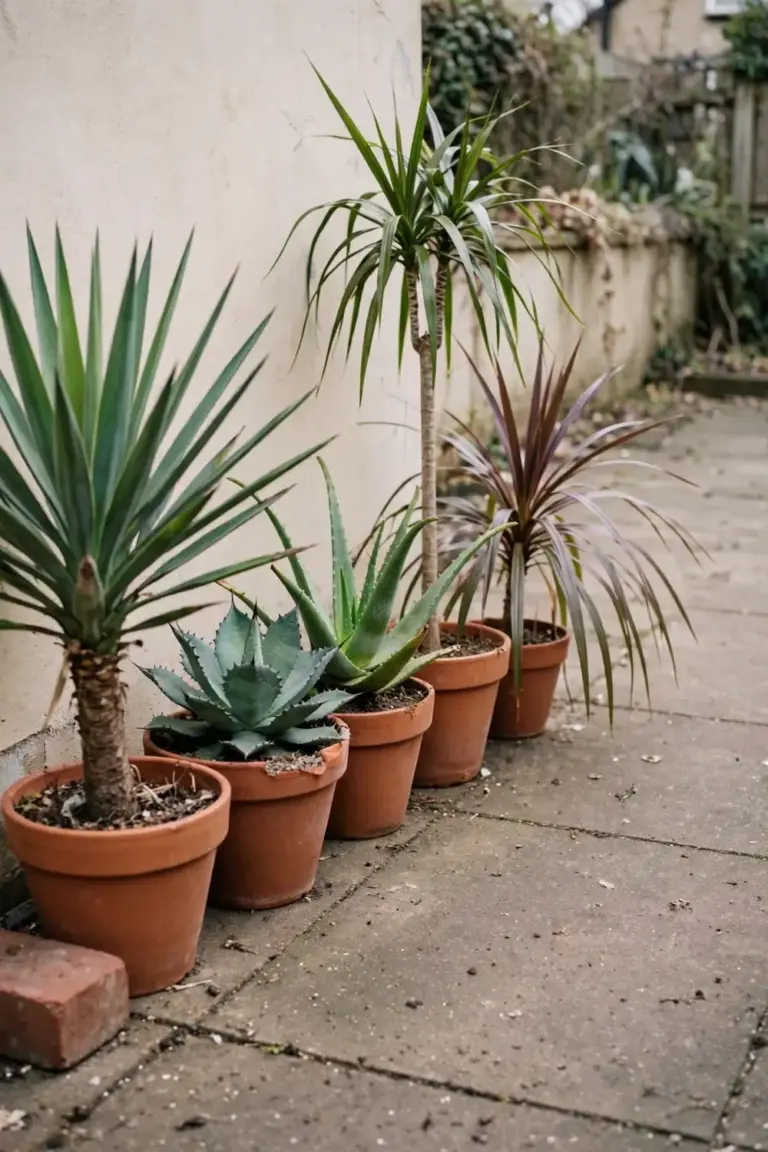
One table settles most identifications before any species name matters. Read the leaf row first. The leaf carries the fastest split.
| Plant | Leaf | Stem | Flower | One Deciding Test |
|---|---|---|---|---|
| Yucca | Stiff sword, no edge teeth, fiber threads on some species | Woody trunk or trunkless rosette; dead leaves pile at the base | Tall panicle of white or cream bells; repeats | Bend the leaf. It stays rigid. |
| Agave | Thick and fleshy, teeth along the edge, hard terminal spine | Rosette on the ground, usually no trunk | One giant spike, then the rosette dies | Feel the edge. Teeth mean agave. |
| Aloe | Soft and fleshy, gel inside, teeth soft or absent | Short stem or none; rosette on the ground | Orange or yellow tubes on a stalk | Press the leaf. Gel means aloe. |
| Dracaena | Strap leaf, softer than a yucca, parallel veins | Bare cane with diamond scars where leaves fell | Small white-yellow flowers in a terminal panicle | Look at the stem. Bare cane means dracaena. |
| Cordyline or New Zealand flax | Strap leaf, arching, no sword rigidity | Cordyline grows a woody trunk; New Zealand flax grows none | Cordyline: white panicles. Flax: red or yellow flowers | Push the leaf sideways. It bends. |
Use the table as a first pass. Confirm with the 3 tests that follow. One feature can mislead. Three features rarely do.
2. Test the Leaf: Fiber Threads, Teeth, and Gel
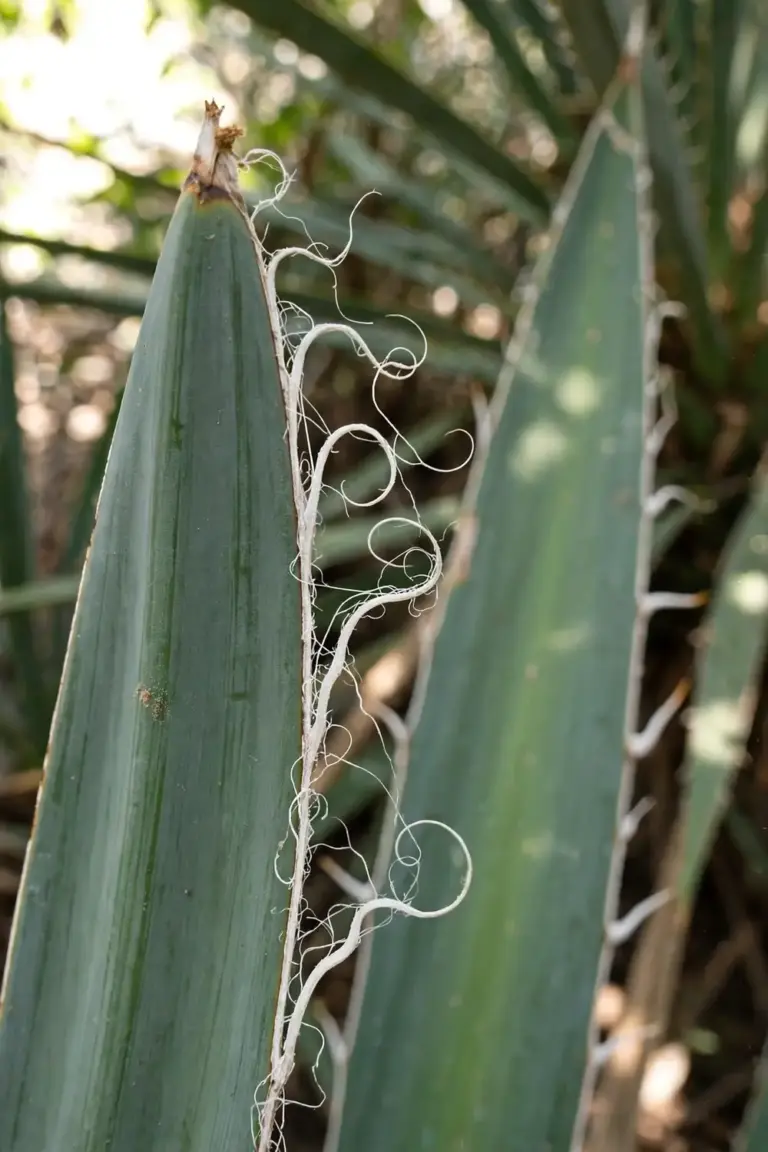
The leaf edge answers the first question, so run a thumb along the margin, gently, from base to tip. A yucca leaf feels smooth along the edge. Adam’s needle breaks this rule in a useful way. Its margins carry curly fiber threads that peel away from the edge, and those threads belong to one species alone. Find them and the identification ends.
Agave leaves carry the opposite signal. Teeth line the margin. A hard spine caps the tip. The University of Florida agave guide states that agave leaves may carry spines along the margins and tip, and that the leaves grow in a tight rosette. That combination never appears on a yucca.
Aloe leaves answer a different question: press one between thumb and finger and the leaf gives under pressure, with a clear gel sitting inside. Yucca leaves never give that way. They stay rigid and dry inside. Aloe teeth feel soft and fleshy when present. Agave teeth feel hard and sharp. Learn those 3 textures once and the leaf test turns fast.
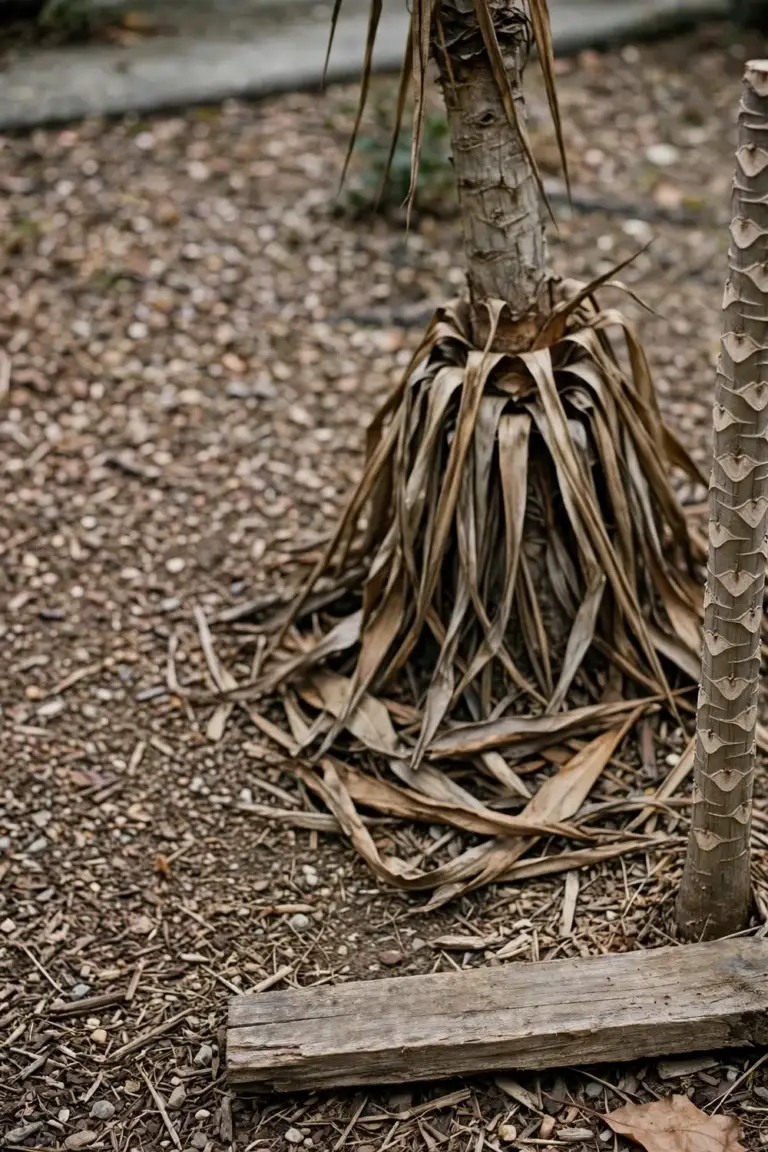
Check the leaf base too. Yucca leaves clasp the stem or trunk in a rosette. Dead yucca leaves stay attached and pile into a skirt at the base. Dracaena leaves drop and leave scars. Agave leaves stay attached until the rosette dies. The dead-leaf habit supports the leaf test. It never replaces it.
3. Test the Stem: Woody Trunk, Bare Cane, or Rosette on the Ground
The stem answers the second question, so stand back and look at the whole plant before touching anything. A spineless yucca grows a woody trunk with rosettes at the ends of its branches. Adam’s needle grows no trunk at all. It stays a rosette on the ground. Both are yuccas. The trunk test splits yuccas from the lookalikes. It never splits yuccas from each other.
Dracaena gives the clearest stem signal in the whole key. Older plants lose their lower leaves and reveal a bare cane. The Missouri Botanical Garden dracaena profile states that plants lose their lower leaves over time, revealing bare stems. Fallen dracaena leaves leave a ring of diamond-shaped scars on that cane. Yucca never shows a bare scarred cane. Yucca dead leaves stay put.
Agave and aloe grow as rosettes on the ground. Neither builds a woody trunk. Cordyline splits down the middle: cabbage tree forms a woody trunk with age, while New Zealand flax never grows one. A trunkless rosette with strap leaves and no sword rigidity points to flax. A trunked plant with strap leaves and a bare cane points to dracaena or cordyline. A trunked plant with stiff swords points to yucca.
Measure the stem with your eyes, not your hands, because sharp leaf tips guard every plant in this key. Gloves and eye protection belong on before any close handling. Keep children and pets away from sharp tips while you inspect.
4. Test the Flower Stalk: White Bells That Repeat
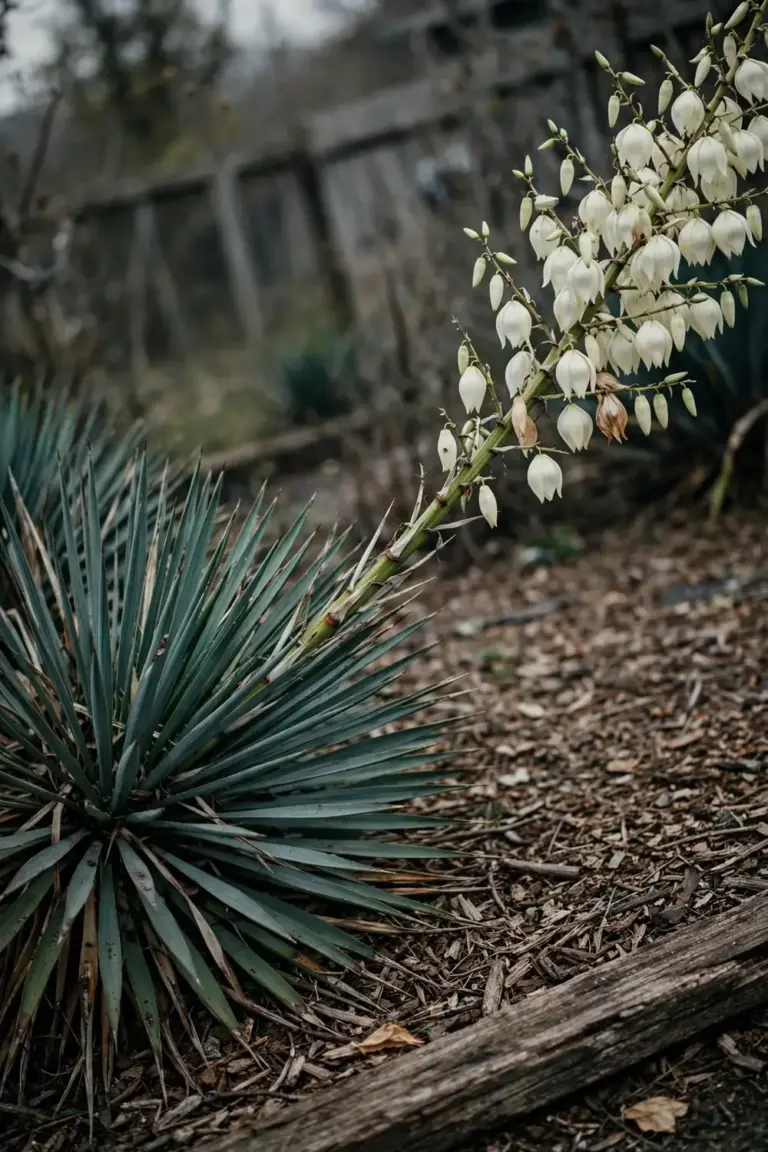
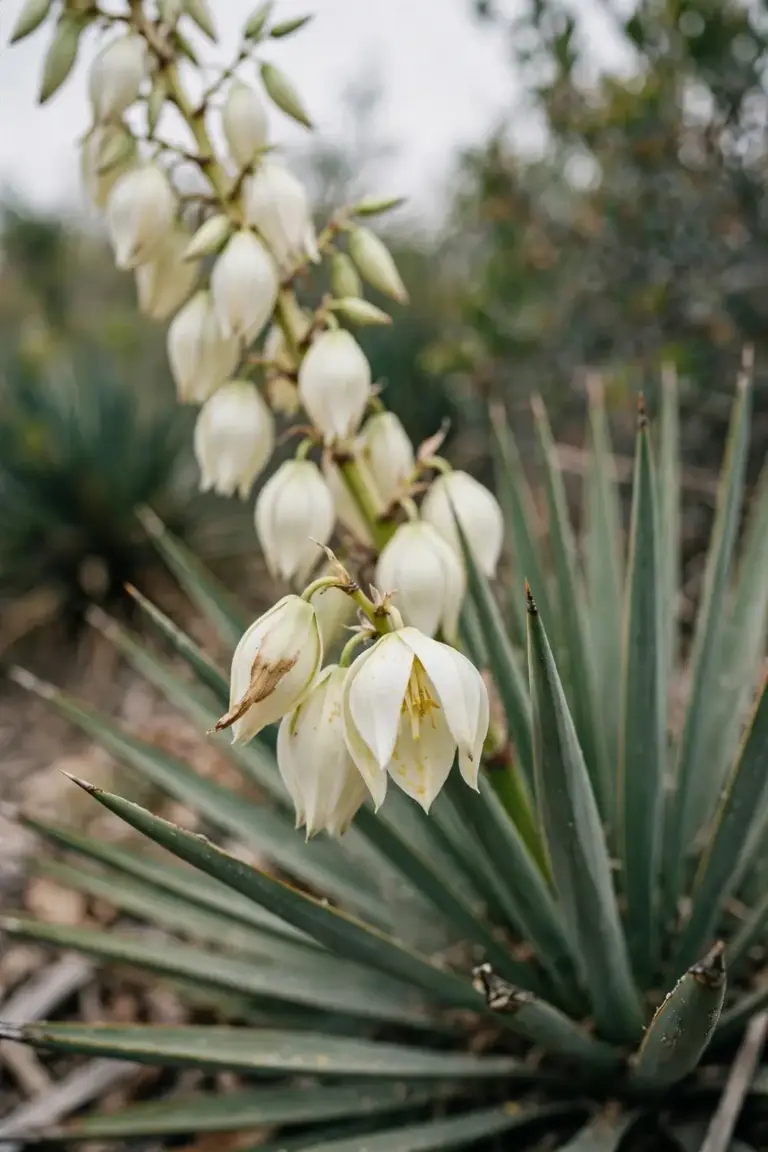
The flower stalk answers the third question. Yucca flowers grow in a large terminal panicle of white, creamy, or pale greenish blooms. The Flora of the Southeastern United States Yucca key describes rosettes of evergreen, tough, sword-shaped leaves with large terminal panicles of white, creamy, or pale greenish flowers. Individual blooms hang as bells. The same plant flowers again in later seasons. That repeat flowering separates yucca from agave at a glance.
Agave flowers once. The University of Florida agave guide states that most agave species are monocarpic, with each rosette producing one flower spike before the plant senesces. The spike can reach 6.1 m tall. Flowering takes 15 to 60 years depending on species. After flowering, the rosette dies. Pups around the base carry on. A giant spike on a dying rosette means agave. A bell panicle on a healthy rosette means yucca.
Aloe flowers look nothing like yucca flowers: aloe blooms grow as orange or yellow tubes on a stalk. Dracaena flowers grow as small white-yellow blooms in a terminal panicle, and indoor plants rarely flower at all. Cordyline flowers grow as white panicles on a trunked plant. New Zealand flax flowers grow red or yellow on tall stalks from a trunkless base. Flower color plus plant form settles the last doubt. A white bell panicle on stiff swords means yucca.
5. Name the Spineless Yucca: Yucca Gigantea
Spineless yucca is the most common yucca in Australian gardens. Its accepted name is Yucca gigantea. The name Yucca elephantipes is a synonym of Yucca gigantea, according to Kew Plants of the World Online. Nurseries still sell it under the old name. Check the botanical name on the tag before following any advice written for a different species.
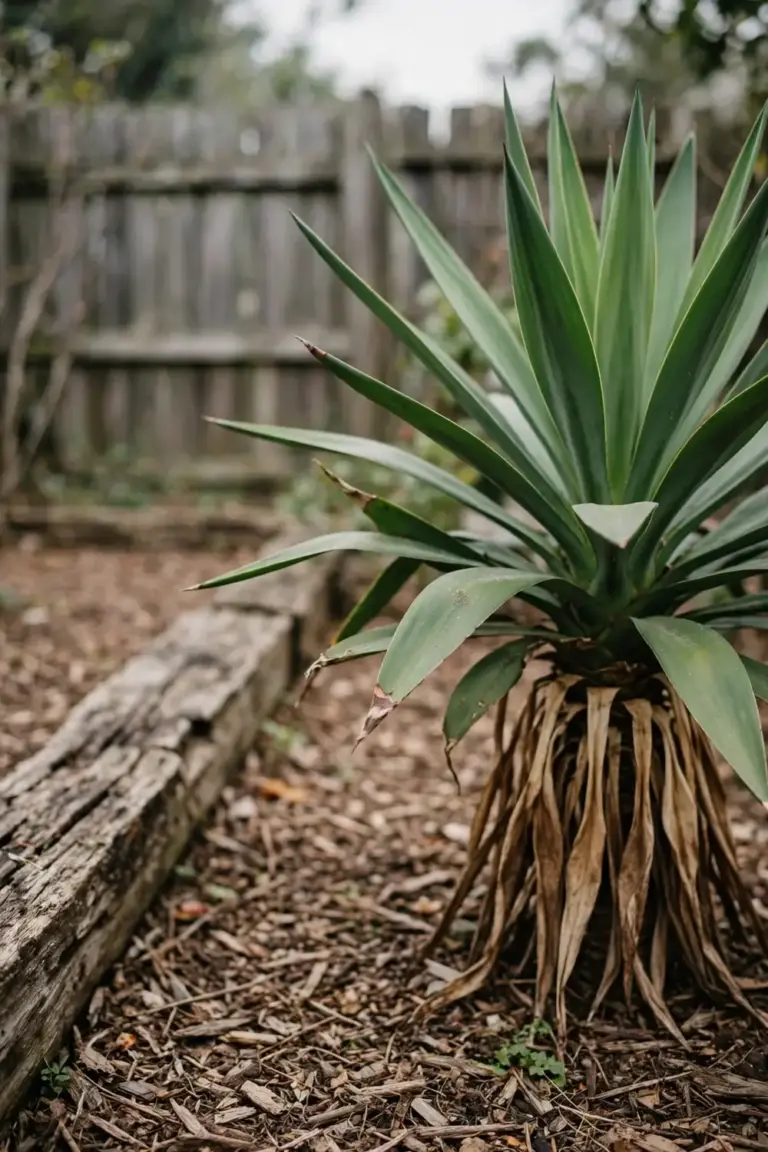
The leaf gives the identification away. Spineless yucca leaves are broad, green, and sword-shaped, with a soft tip that lacks the needle point of its cousins. The leaf feels smooth along the edge. No teeth line the margin. No fiber threads peel from it. The plant grows a woody trunk with age and carries rosettes at the ends of its branches. Dead leaves pile into a skirt under the canopy.
Confused with: dracaena, because both grow a trunk with strap-like leaves. Split them on the stem. Dracaena drops its lower leaves and shows a bare scarred cane. Spineless yucca keeps its dead leaves in a skirt. Dracaena leaves feel softer and bend sideways. Spineless yucca leaves stay rigid.
Read the tag before trusting any advice written for this plant. Nurseries still sell spineless yucca as Yucca elephantipes. Some tags shorten it to “spineless yucca” with no botanical name at all. Ask for the botanical name when the tag stays silent. A tag that reads Yucca gigantea and a tag that reads Yucca elephantipes name the same plant. A tag that reads only “yucca” names nothing precise enough to act on.
6. Name Adam’s Needle: Yucca Filamentosa
Adam’s needle is the fiber-thread yucca, and its margins carry curly fiber threads that peel away from the leaf edge. No other common Australian yucca shows that trait. Find the threads and the identification ends.
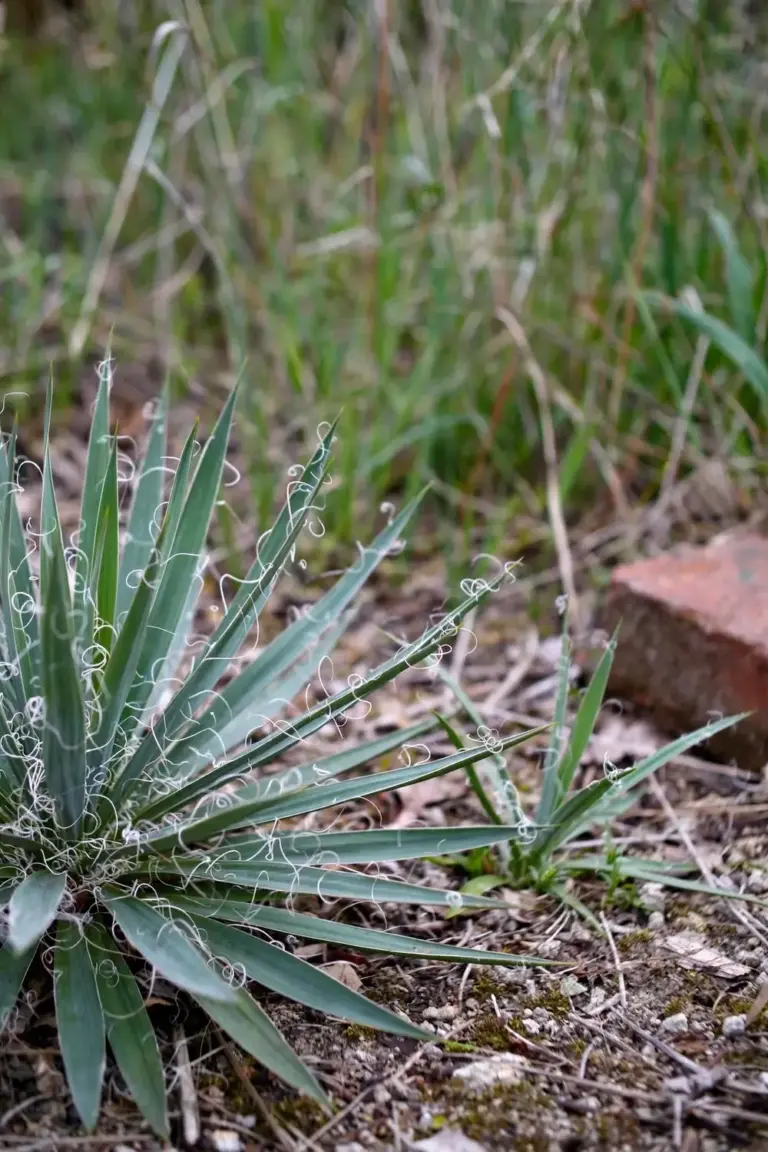
The plant grows as a trunkless rosette on the ground. Basal leaves run 61 to 122 cm long, and flower panicles run 61 to 152 cm tall, according to the Florida wildflower profile of the species. Leaf margins stay entire, with many fibrous filaments. The flowers hang as white bells in a tall panicle. The rosette spreads by offsets over time.
Confused with: agave, because both grow trunkless rosettes with sword leaves. Split them on the edge. Agave leaves carry hard teeth and a terminal spine. Adam’s needle carries fiber threads and a needle tip with no teeth. Agave leaves feel thick and fleshy, while Adam’s needle leaves feel stiff and dry.
7. Name Spanish Dagger: Yucca Gloriosa
Spanish dagger carries the stiffest, sharpest leaves of the common Australian yuccas: the leaf is a rigid sword with a needle point. The margin stays smooth. No fiber threads peel from it. The plant forms a rosette that can grow a short trunk with age. Dead leaves pile at the base.
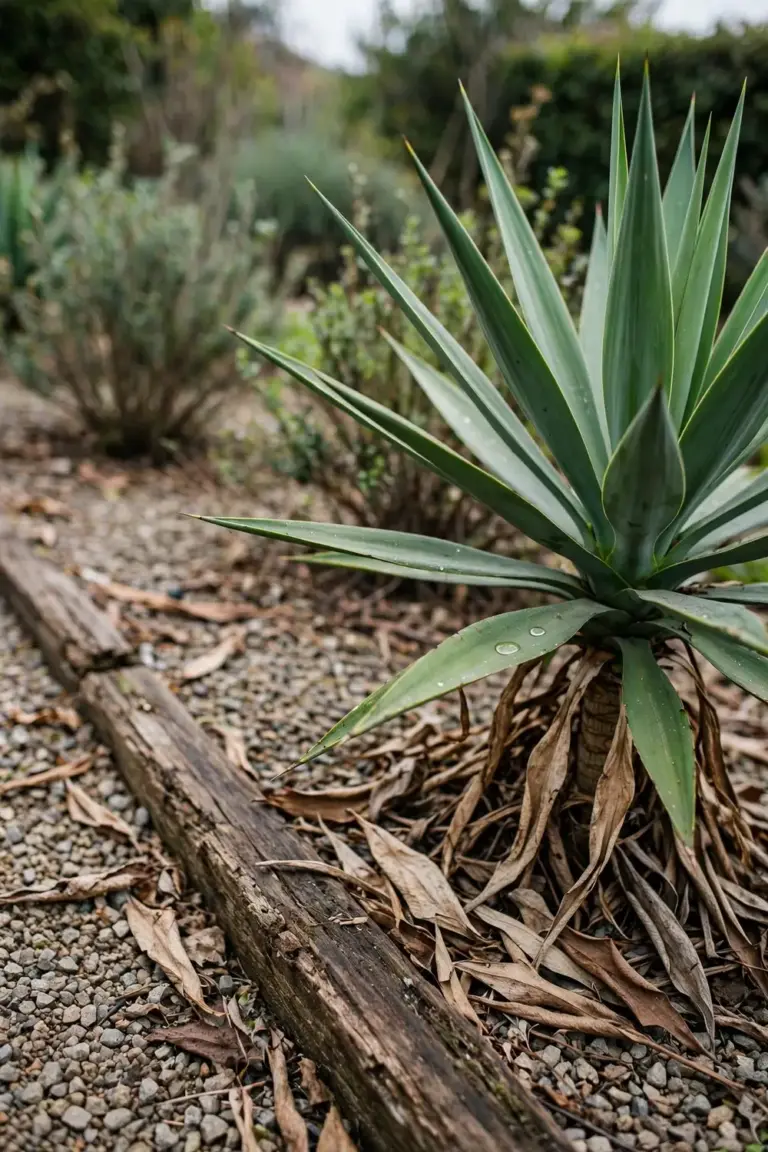
The flower stalk repeats the yucca pattern. A tall panicle of white or cream bells rises above the rosette. The same plant flowers again in later seasons. The leaf tip stays dangerous between flowerings. Gloves and eye protection belong on before any close inspection. Keep children and pets away from the points.
Confused with: Spanish bayonet, its closest cousin, because both carry rigid swords with needle points. Spanish bayonet leaves run narrower and sharper, and the plant naturalises in parts of Australia. Spanish dagger leaves run broader, and the plant stays put where gardeners plant it. When the two look alike, the leaf width and the setting decide. A self-sown plant on a coastal dune points to bayonet, while a planted clump in a garden bed points to dagger.
8. Name Spanish Bayonet: Yucca Aloifolia
Spanish bayonet is the sharpest yucca in Australian gardens. Its leaves are narrow, rigid swords with needle points that punish careless handling. The margin stays smooth. No fiber threads peel from it. The plant grows a trunk with age and carries a rosette at the top. Dead leaves pile into a skirt.
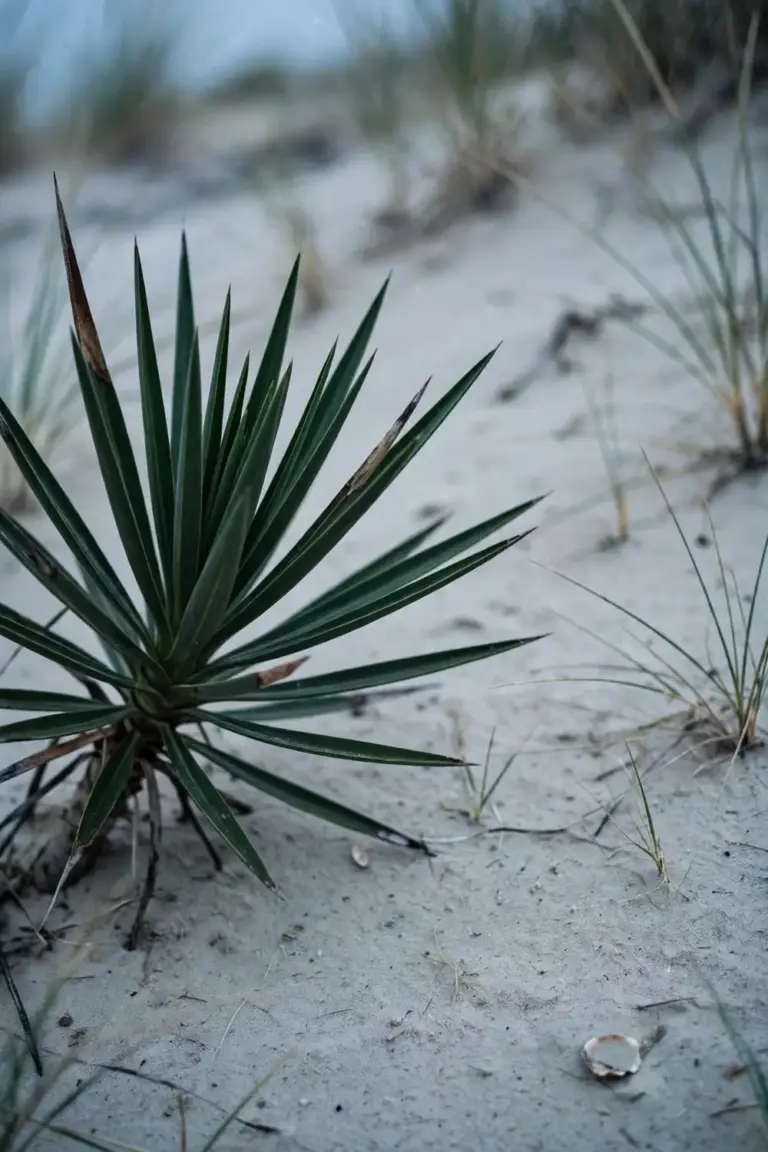
Australian field guides record Yucca aloifolia as naturalised in Western Australia, Queensland, New South Wales, and the Australian Capital Territory. That naturalised range separates it from Spanish dagger in the field. A self-sown yucca on a coastal dune or a roadside in those states leans bayonet. A planted clump in a tended bed leans dagger. The leaf test still rules: narrow rigid swords with needle points mean bayonet.
Confused with: agave, because both carry sharp points. Split them on the margin. Agave leaves carry teeth along the edge. Spanish bayonet leaves carry a smooth margin. Agave leaves feel thick and fleshy, while Spanish bayonet leaves feel stiff and dry. Agave flowers once and dies. Spanish bayonet flowers and repeats.
Naturalised plants deserve a second look at the setting. Garden escapees turn up on coastal dunes, roadsides, and vacant blocks in the states where the species has naturalised. A lone yucca far from any garden bed, with no planting pattern around it, fits that picture. Check the setting, then run the 3 tests. The tests name the plant. The setting tells you whether it arrived on its own.
9. Rule Out Agave: Teeth, Terminal Spine, and One Flowering
Agave is the most common false yucca in Australian gardens. The genus holds more than 200 species, according to the University of Florida agave guide. All of them share the same 3 signals: teeth, terminal spine, and one flowering.
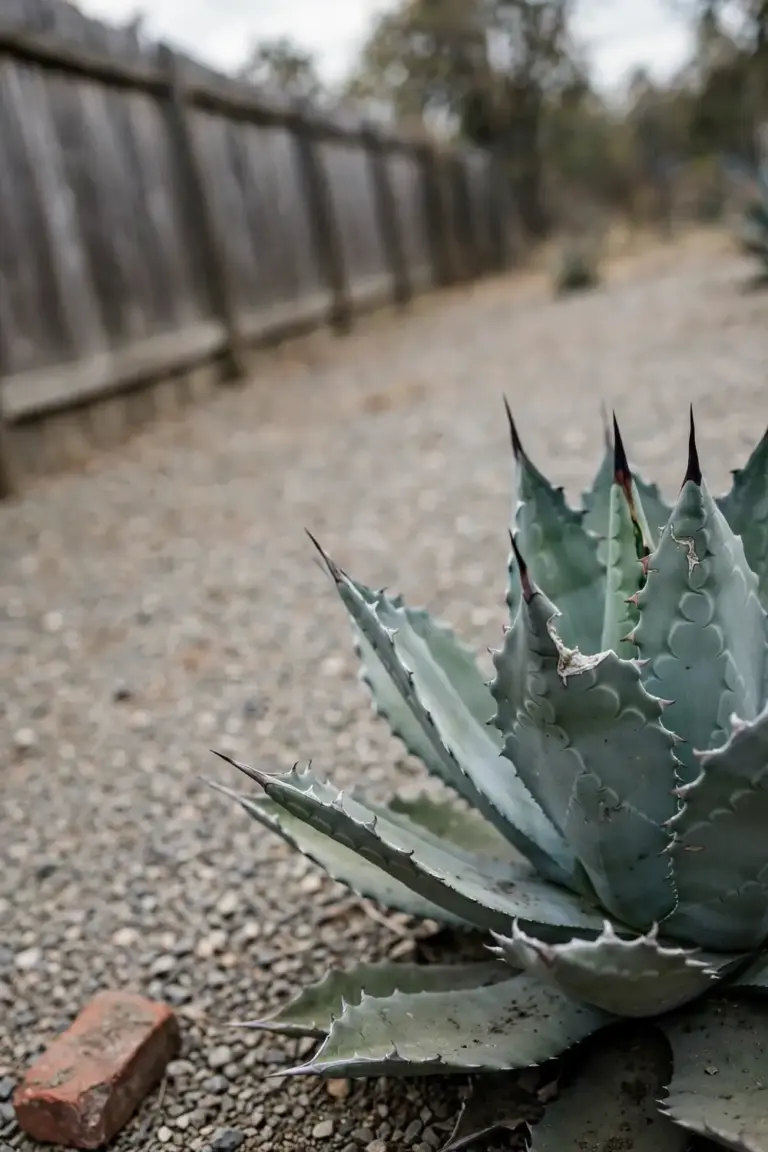
Run the teeth test first. Agave leaves carry spines along the margins and a hard spine at the tip, and the leaf feels thick and fleshy. The rosette sits on the ground with no trunk. The plant can grow large: the same guide records a height up to 3 m and a spread up to 4.6 m.
Run the flowering test second. Most agave species are monocarpic, so each rosette produces one flower spike before the plant senesces. The spike can reach 6.1 m tall. Flowering takes 15 to 60 years depending on species. Pups around the base carry on after the parent dies. A giant spike on a dying rosette means agave. No yucca does this.
Confused with: yucca, because both grow sword rosettes. Split them on the margin and the flowering. Teeth plus one flowering means agave. Smooth margin plus repeat flowering means yucca.
10. Rule Out Aloe: Soft Gel Leaves and Orange Tubes
Aloe is the softest lookalike in the key, growing rosettes of fleshy leaves that store water. Press one and it gives. Cut one and clear gel shows inside. Yucca leaves never give that way. Aloe vera carries the same gel-leaf test as every other aloe in the genus.
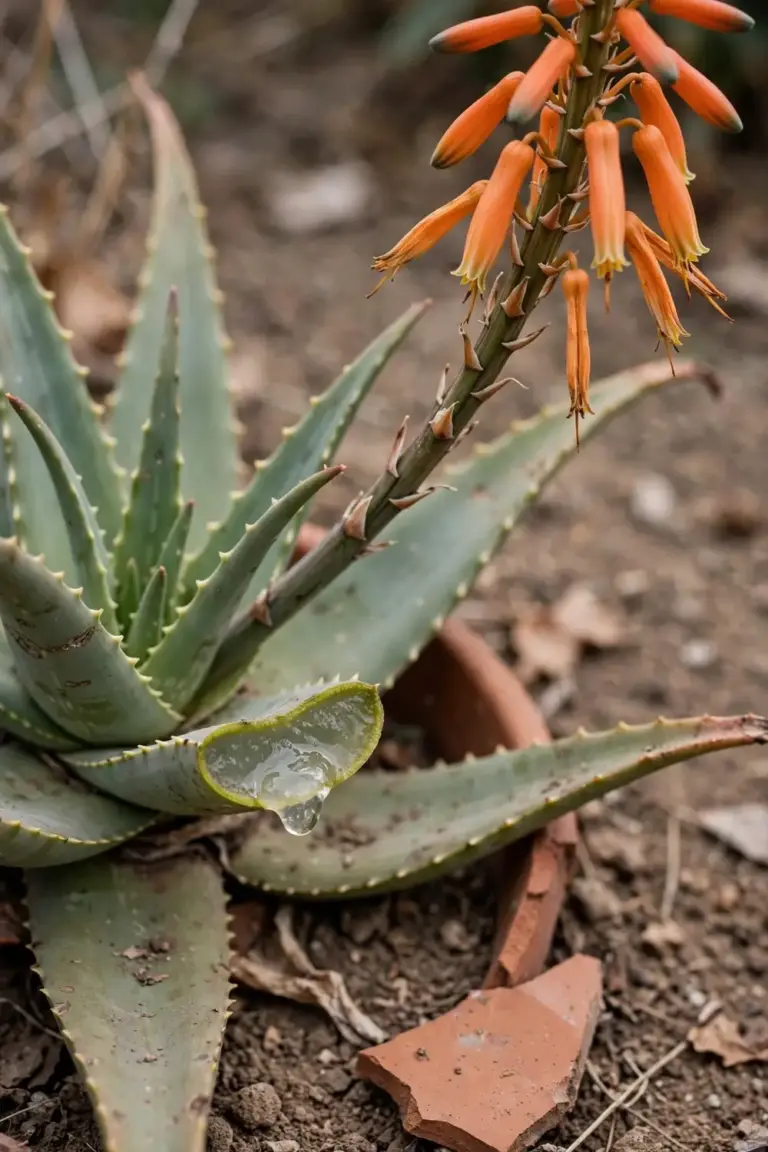
Run the gel test first. Aloe leaves feel soft and fleshy, and teeth, when present, feel soft and fleshy too. Yucca leaves feel stiff and dry. Agave leaves feel thick and hard. Three textures, three answers. Learn them once and the aloe split turns instant.
Run the flower test second. Aloe blooms grow as orange or yellow tubes on a stalk, while yucca blooms grow as white or cream bells in a panicle. The colors never overlap in practice. A tube-shaped orange bloom on a soft rosette means aloe. A bell-shaped white bloom on stiff swords means yucca.
Confused with: agave, because both grow fleshy rosettes. Split them on the teeth and the flowers: agave teeth feel hard and sharp, while aloe teeth feel soft. Agave flowers grow once on a giant spike. Aloe flowers grow as tubes and repeat.
11. Rule Out Dracaena: Bare Cane and Dropping Leaves
Dracaena is the indoor lookalike. Garden centers sell it as a houseplant under names like corn plant and mass cane. Its leaves look like yucca leaves at a glance. Its stem tells the truth.
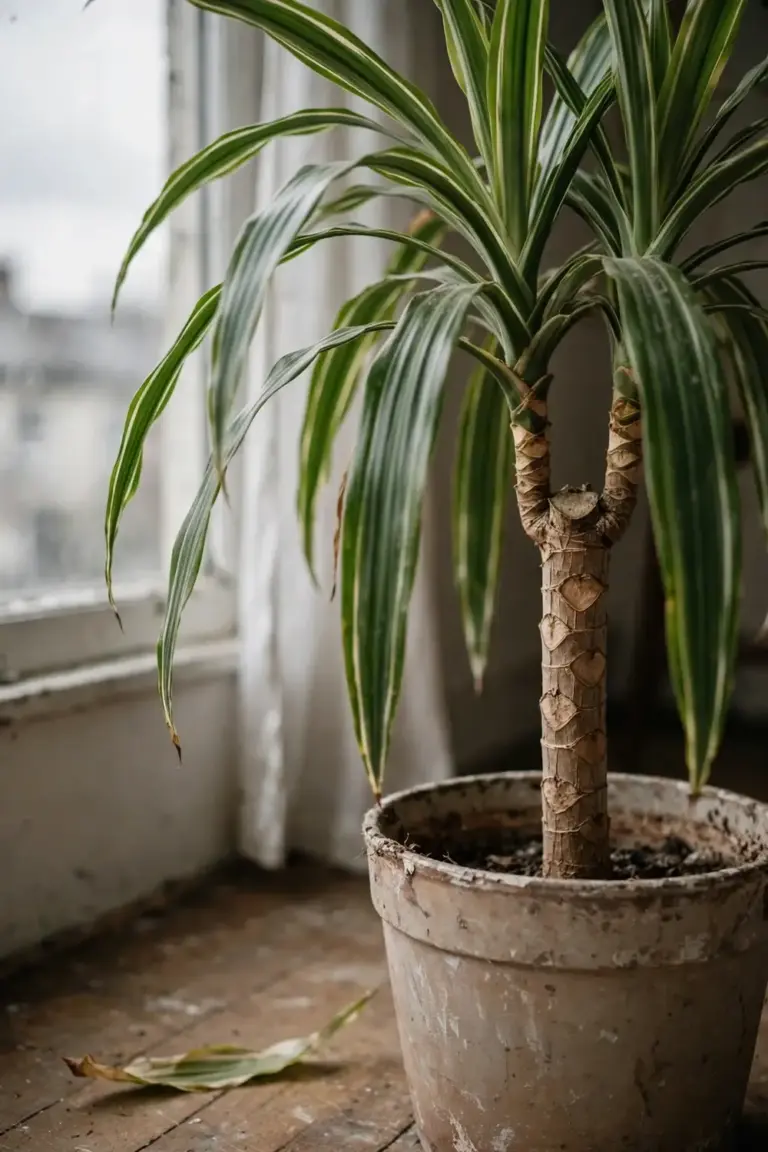
Run the stem test first. Dracaena drops its lower leaves as it grows. The fallen leaves leave a ring of diamond-shaped scars on a bare cane. The Missouri Botanical Garden dracaena profile states that plants lose their lower leaves over time, revealing bare stems. Yucca never shows a bare scarred cane. Yucca dead leaves stay attached and pile into a skirt.
Run the leaf test second. Dracaena ‘Lemon Lime’ shows the genus habit: rosettes of evergreen, parallel-veined, sword-shaped leaves that reach 61 cm long indoors. The same profile records leaves to 91 cm outdoors. Dracaena leaves feel softer than yucca leaves and bend sideways under a gentle push. Yucca leaves stay rigid.
Run the flower test third. Dracaena flowers grow as small white-yellow blooms in a terminal panicle. Indoor plants rarely flower at all. Yucca flowers grow as large white bells in a showy panicle. A bare cane with soft strap leaves means dracaena. A skirt of dead leaves with rigid swords means yucca.
12. Rule Out Cordyline and New Zealand Flax: Straps Without Swords
Cordyline and New Zealand flax share strap leaves with yucca. Neither shares the sword. Cordyline australis, the cabbage tree, grows a woody trunk with age and carries arching strap leaves in a crown. New Zealand flax, Phormium tenax, grows no trunk at all. Its strap leaves rise straight from the base in a fan.
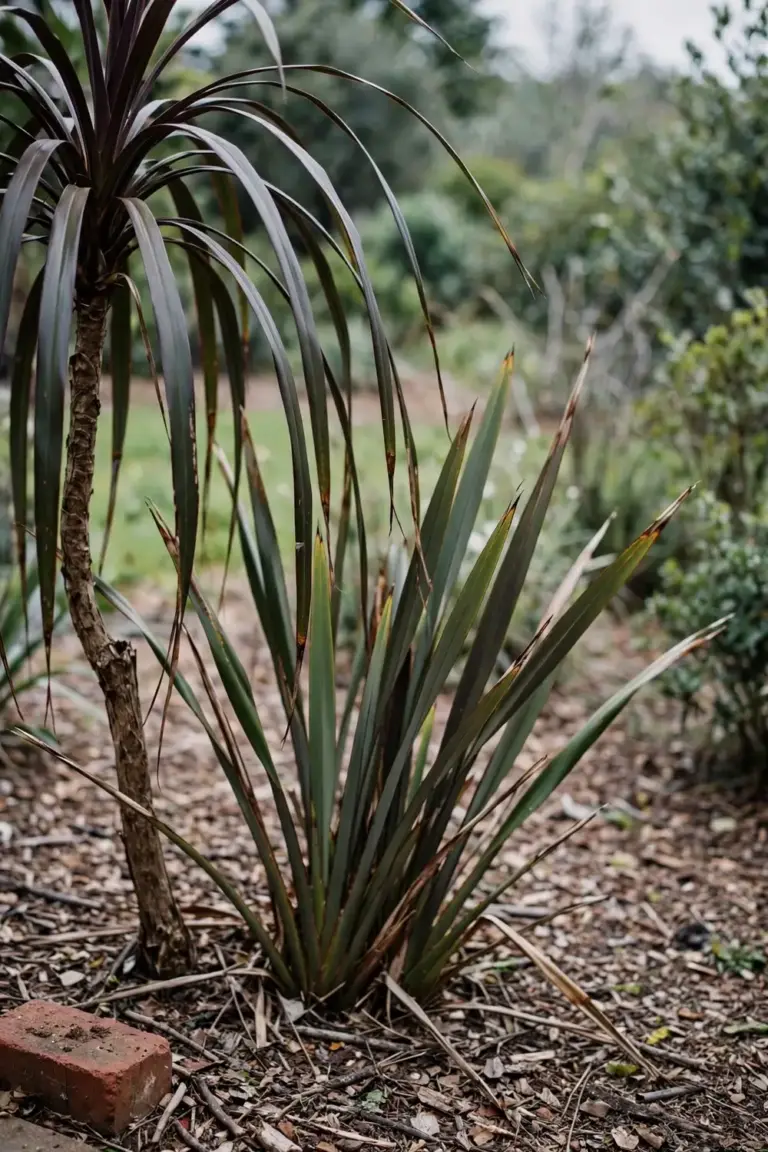
Run the rigidity test first. Push a leaf sideways with a gloved hand. Yucca leaves resist. They stay rigid. Cordyline and flax leaves bend. They arch. The difference is obvious in the hand. No ruler needed.
Run the flower test second. Cordyline flowers grow as white panicles above a trunked crown. Flax flowers grow red or yellow on tall stalks from a trunkless base. Yucca flowers grow as white or cream bells above stiff swords. Flower color plus plant form settles the last doubt.
Cordyline flowers can fool a fast glance because the panicle shape echoes a yucca panicle. The leaf settles it. Cordyline leaves arch and bend. Yucca leaves stand rigid. Flax flowers fool nobody who checks the base: tall red or yellow stalks rise from a fan of straps with no trunk in sight. No yucca in Australian gardens shows that combination.
Confused with: yucca, because all three grow strap-leaf crowns. Split them on rigidity. Stiff swords mean yucca. Bending straps mean cordyline or flax. Then split cordyline from flax on the trunk: a woody trunk means cordyline, and no trunk means flax.
13. Untangle the Name Traps: Red Yucca, Sago Yucca, Yuca, and Palm Lily
Four names mislead Australian gardeners more than any leaf shape. Settle them here.
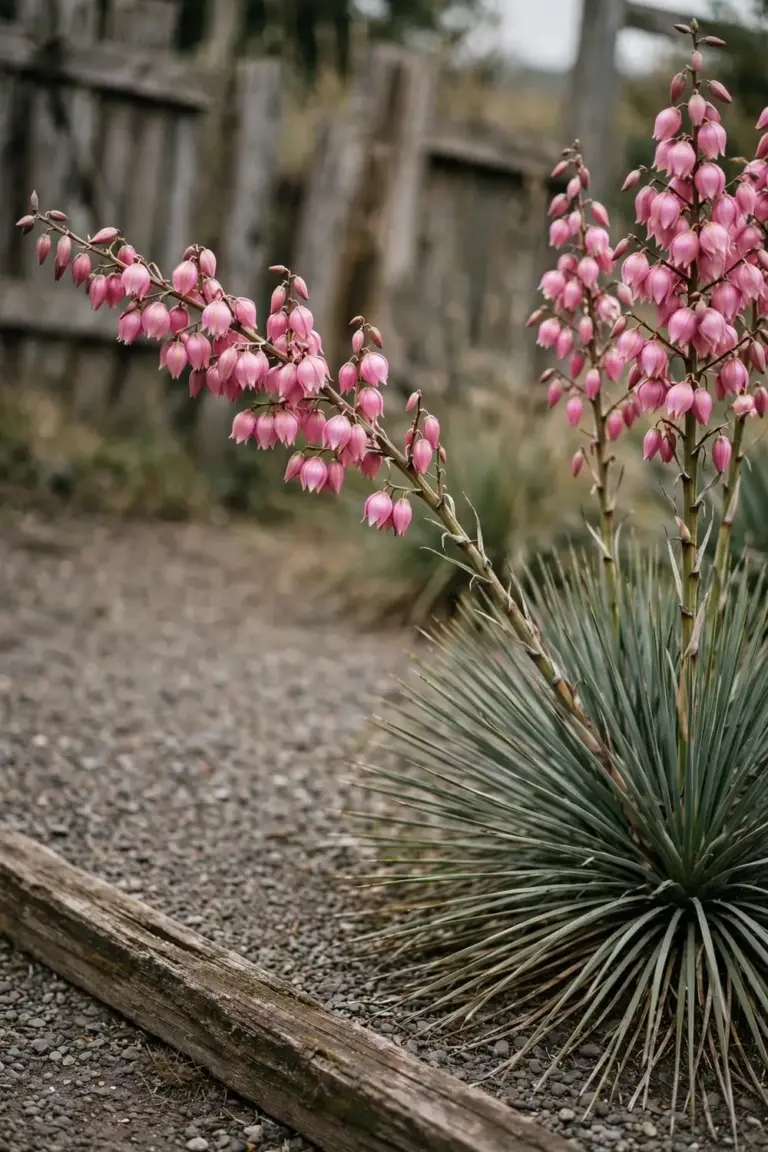
Red yucca is not a yucca. Its botanical name is Hesperaloe parviflora. It belongs to a different genus. Its leaves grow as narrow grass-like straps, and its flowers grow as red or pink bells on tall stalks. The common name borrows the yucca label. The genus does not.
Sago yucca is not a sago and not a palm. True sago palms are cycads, a different group of plants entirely. A plant sold as sago yucca needs the same 3 tests as any other spiky plant: leaf edge, stem, and flower stalk. The name alone proves nothing.
Yuca is not yucca. Yuca, spelled with one c, is cassava, Manihot esculenta. It is a food root. Yucca, spelled with two c’s, is the ornamental genus. The Florida wildflower profile of Yucca filamentosa states the split plainly: the culinary plant yuca is another name for cassava. One letter changes the plant entirely. Check the spelling on any tag or label before trusting it.
Palm lily is not a palm. Palm lily is a trade name for yucca. True palm trees grow fronds, not swords, and belong to a different family. A plant sold as palm lily needs the yucca tests, not the palm tests.
14. Photograph 4 Shots Before You Trust One Feature
One feature can mislead. Four shots rarely do. Photograph the whole plant, a leaf close-up showing the margin, the stem or trunk, and the flower stalk when one exists. The Flora of the Southeastern United States Yucca key advises capturing the whole plant plus closeups of leaves, panicle branches, and floral details for identification from photographs.
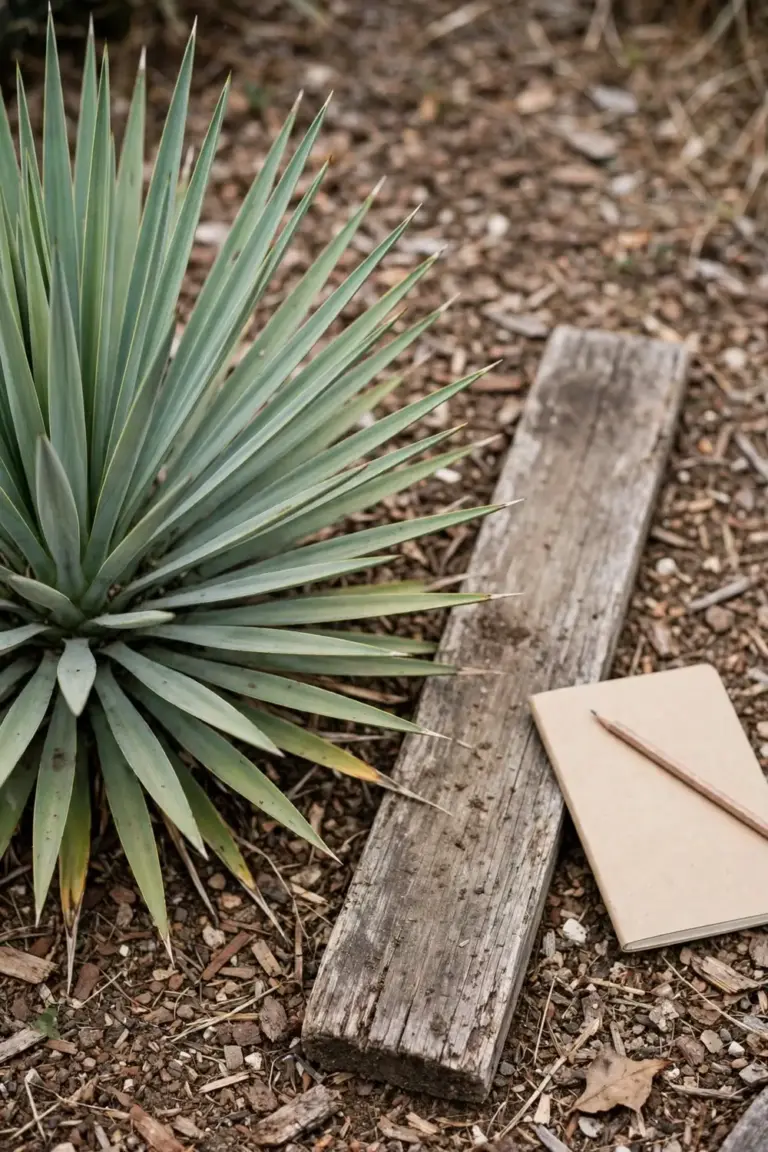
Shoot the whole plant first. Stand back far enough to show the full form: rosette or trunk, skirt or bare cane, neighbors for scale. Shoot the leaf margin second. Get close enough to show teeth, fiber threads, or a smooth edge. Shoot the stem third. Show the skirt of dead leaves or the bare scarred cane. Shoot the flower stalk fourth when one exists. Show the panicle shape and the bell form.
Handle every plant in this key with gloves and eye protection. Yucca leaf tips are sharp. Agave spines are sharper. Keep children and pets away from sharp tips while you inspect. Yucca leaves contain saponins, and pet-poison references list yucca as toxic to cats and dogs. Do not let pets chew the leaves.
Other yucca species exist beyond the 4 named here. Beaked yucca and tree yucca appear in Australian gardens from time to time. The same 3 tests name them: leaf edge, stem, and flower stalk. Run the tests first. Reach for the species name second.
No flower stalk means no third test. That happens often. Indoor plants flower rarely, and young plants flower not at all. Two tests still name most plants in this key. A smooth leaf margin plus a skirt of dead leaves means yucca even without a bloom. Note the date and check again in flowering season. The flower stalk confirms the name when it finally appears.
Frequently Asked Questions About Yucca Identification
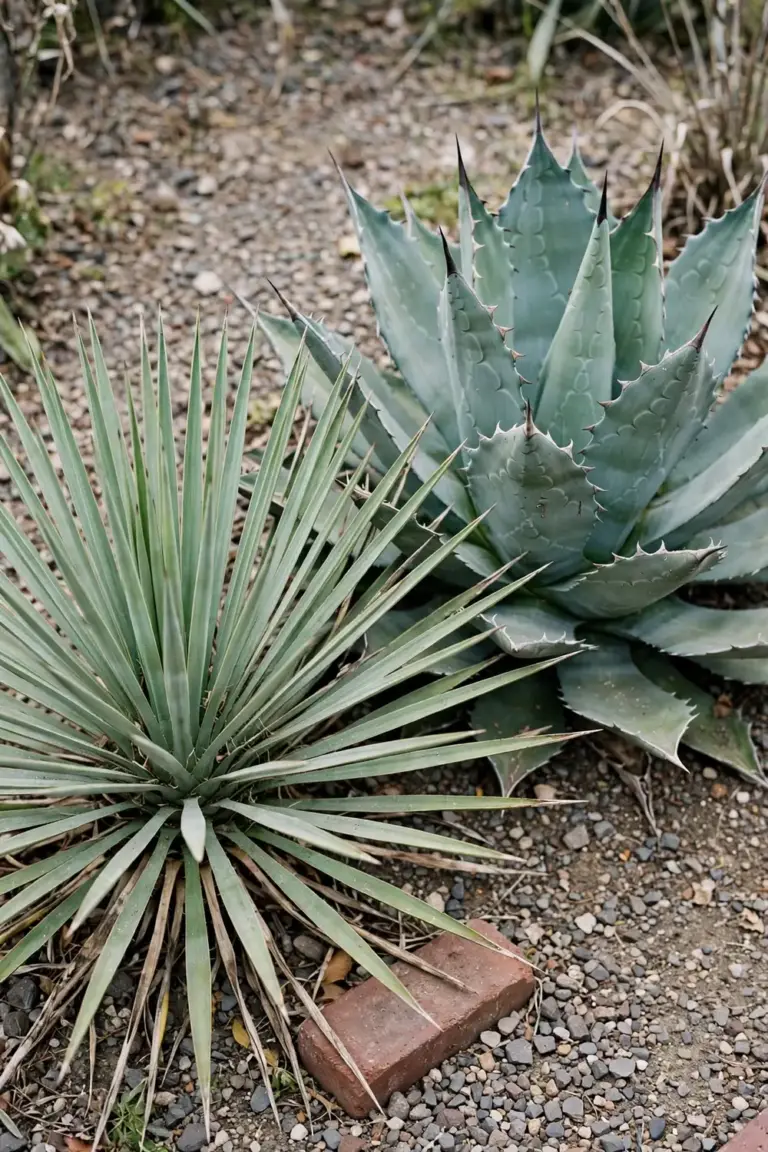
Run the margin test. Agave leaves carry hard teeth along the edge and a hard spine at the tip. Yucca leaves carry a smooth margin with no teeth. Then run the flowering test. Agave flowers once on a giant spike and the rosette dies. Yucca flowers as white bells and repeats. Teeth plus one flowering means agave. Smooth margin plus repeat flowering means yucca.
Yes. Adam’s needle grows as a trunkless rosette on the ground for its whole life. Spineless yucca grows a woody trunk with age. Both are yuccas. The trunk test splits yuccas from the lookalikes. It never splits yuccas from each other. Use the leaf edge and the flower stalk to name a trunkless yucca. Fiber threads mean Adam’s needle.
No. Red yucca is Hesperaloe parviflora, a different genus. Its leaves grow as narrow grass-like straps. Its flowers grow as red or pink bells on tall stalks. The common name borrows the yucca label. The genus does not. Run the 3 tests on any plant sold as red yucca. The tests name the plant. The label does not.
Yes, treat it as toxic. Yucca leaves contain saponins, and pet-poison references list yucca as toxic to cats and dogs. Keep pets from chewing the leaves. Keep the plant where pets cannot reach it. Call a vet at once if a pet eats a large amount. The sharp leaf tips injure pets too, so the plant earns caution on two counts.
It supports the identification. It never proves it alone. Yucca dead leaves stay attached and pile into a skirt at the base. Dracaena dead leaves drop and leave scars. A skirt plus stiff swords means yucca. A skirt alone means little. Confirm with the leaf edge and the flower stalk before settling on a name.
Start With the Leaf Edge, End With the Flower Stalk
Run the 3 tests in order. The leaf edge splits yucca from agave and aloe, and the stem splits yucca from dracaena and cordyline. The flower stalk confirms the name. Three tests beat one glance every time.