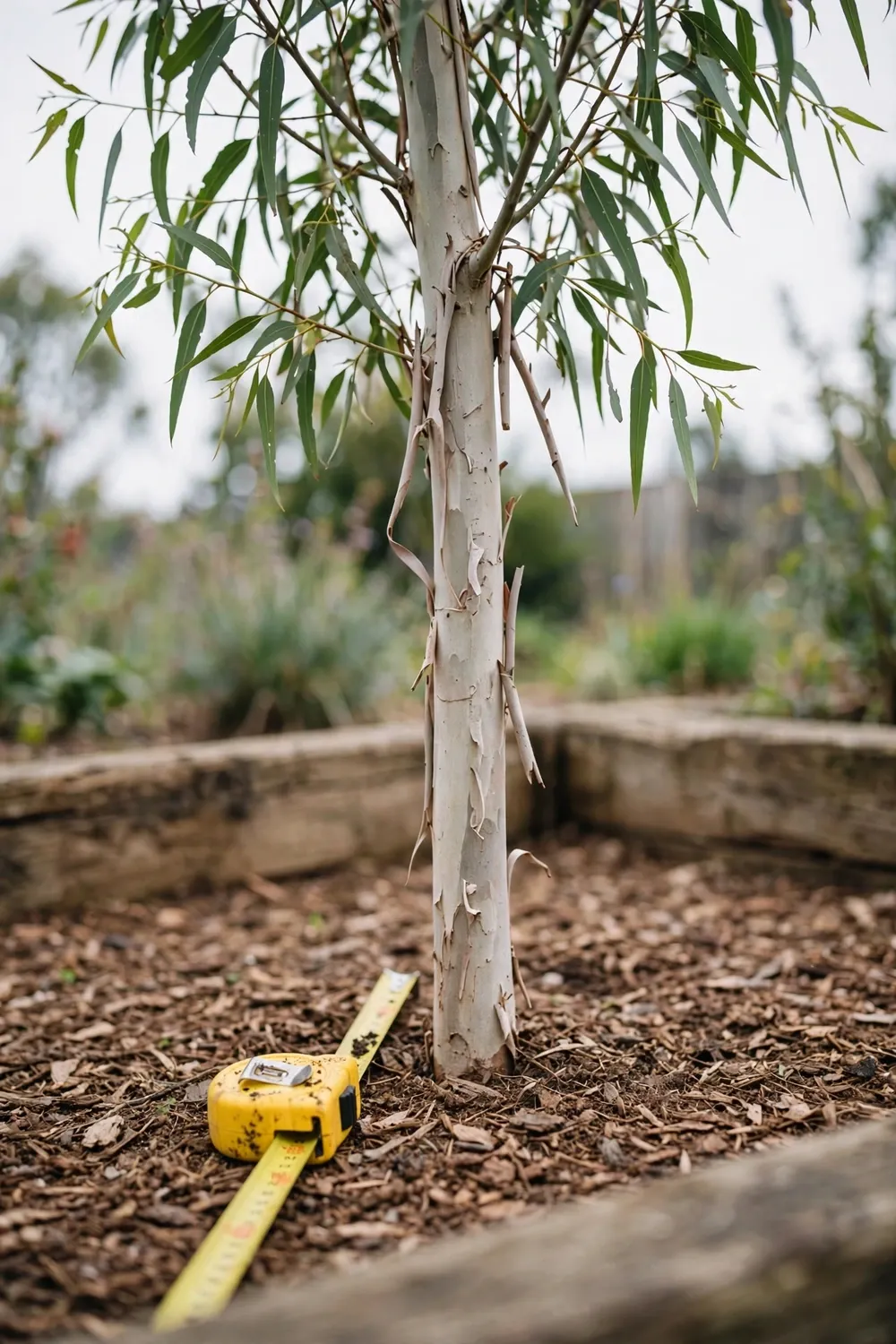

Pick the gum that fits the space, because the lateral roots of a large gum can spread 30.5 m from the trunk. A gum tree in the right spot needs little from you for decades. A gum tree in the wrong spot fights the house, the pipes, and the neighbours for its whole life.
I have learned that a gum tree forgives a missed feed and never forgives a bad spot.
Growing eucalyptus in Australia means choosing by mature size, siting with roots and falling limbs in mind, and managing the tree with light, well-timed work. Eucalyptus is a genus of more than 800 species, from mallees under 7 m to forest giants over 30 m. The rest of this page is 10 decisions, from choosing the size to checking the fire rules.
1. Choose by Mature Size, Not by the Nursery Pot
Mature size decides whether a gum fits your block, because a tree that outgrows its space costs money and goodwill for decades.
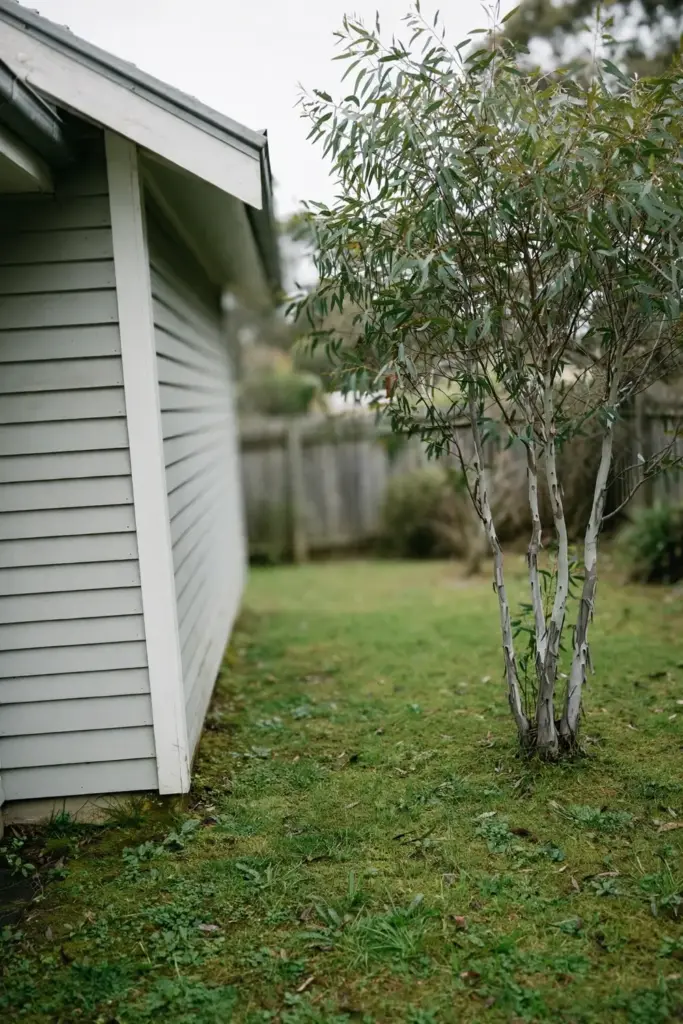
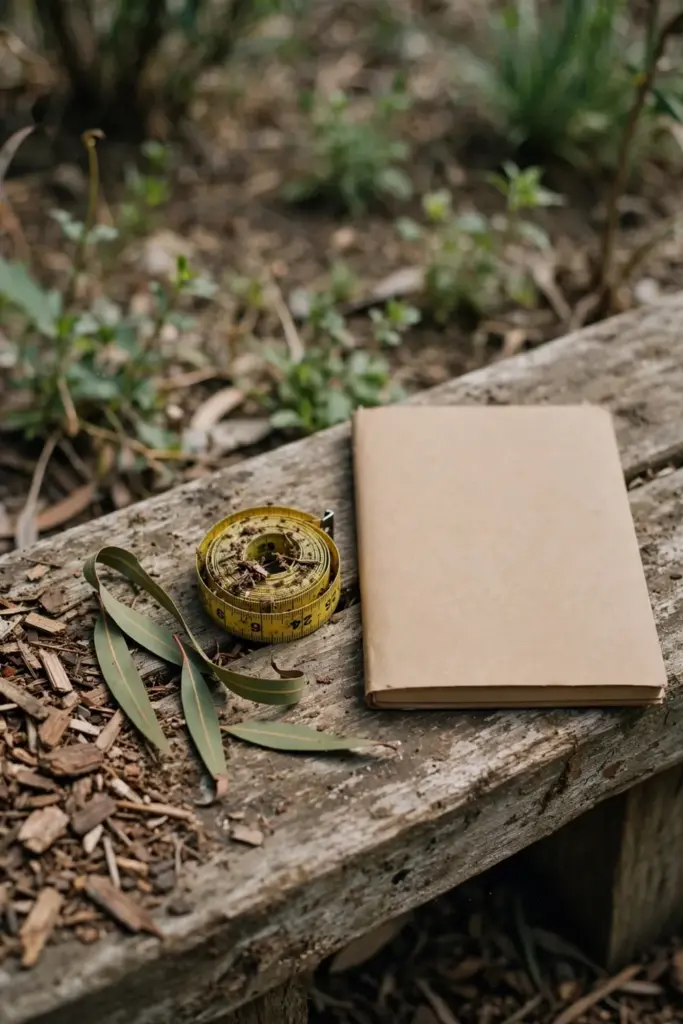
Start with the space, not the species. A courtyard fits a mallee under 7 m. A medium suburban block fits a small to medium tree. A large block fits a tall gum. A street verge or a narrow side passage fits no gum at all. Measure the width of the planting spot and the distance to the house, the fence, and the pipes before you shop. A tape measure beats a wish.
Read the label for mature height and spread. Nursery tags list the size the tree reaches in garden conditions, and that figure runs the whole decision. A tree sold in a 20 cm pot can reach 30 m. The pot size tells you nothing about the adult tree. The label tells you everything.
| Example | Mature Garden Size | Block Fit |
|---|---|---|
| Plunkett mallee (Eucalyptus curtisii) | 2 to 7 m, according to the Australian National Botanic Gardens Plunkett mallee page | Small garden, courtyard, large pot |
| Snow gum (Eucalyptus pauciflora) | About 8 m | Medium garden, cold districts |
| Coral gum (Eucalyptus torquata) | Medium tree | Medium garden, dry districts |
| River red gum (Eucalyptus camaldulensis) | 20 to 30 m | Large block, park, paddock |
Snow gum and river red gum sizes come from the scout research for this article. Sizes vary by soil, water, and climate. Check the label on the plant you buy.
Match the species to the climate next. A snow gum handles frost, and a coral gum handles dry heat, while a river red gum wants room and water nearby. A species from a cold tableland sulks in humid heat. A species from a dry coast sulks in cold wet soil. The label names frost tolerance and humidity tolerance. A label that names no tolerance gives no promise.
2. Check the Label and the Root Ball Before You Buy
A healthy nursery tree establishes fast, and a weak one fights from day one.
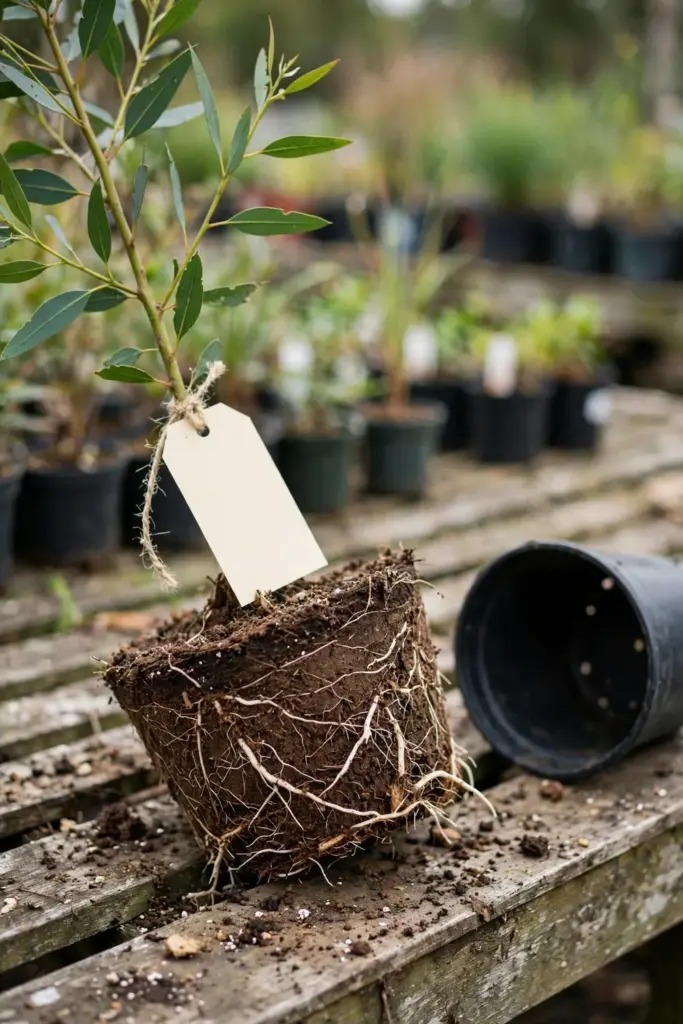
Buy nursery stock. A potted gum from a nursery carries a known species, a known size, and roots ready to grow. Buy in spring or early summer, when warm soil pushes new roots fast. A tree bought in winter sits cold and grows nothing until spring. A tree bought in high summer needs daily attention through its first heatwave.
Check three label facts. First, the full botanical name. Second, the mature height and spread. Third, the frost and humidity tolerance. A label that lists none of these leaves the buyer guessing. A nursery that answers label questions earns the sale.
Check the plant itself. Slip the pot off and look at the roots. Roots should fill the pot without circling in a dense mat. Stems should feel firm. Leaves should look green and full. A plant with yellow leaves, bare lower stems, or a sour smell from the mix goes back on the bench. A plant with roots circling the pot like rope will keep circling in the ground, and a circling root base rocks in wind.
Buy tube stock or a small pot when the choice exists. A young plant settles its roots into the new soil fast. A large plant in a big pot carries more top growth than its roots can feed through the first summer. Small plants catch up. Large plants often stall.
Ask the nursery two questions before you pay. First, ask whether the plant suits your district, not just your state. A species from the cold tablelands can sulk in a humid coastal garden. A species from a dry coast can sulk in cold wet soil. Second, ask how the plant was grown. A plant grown hard in an open nursery yard handles transplant better than a plant grown soft under shade cloth. A nursery that answers both questions earns the sale. A nursery that cannot answer either sells a gamble.
3. Site the Tree Away From House, Pipes, and Paving
Roots decide the planting spot, because gum roots chase water and keep spreading for the life of the tree.
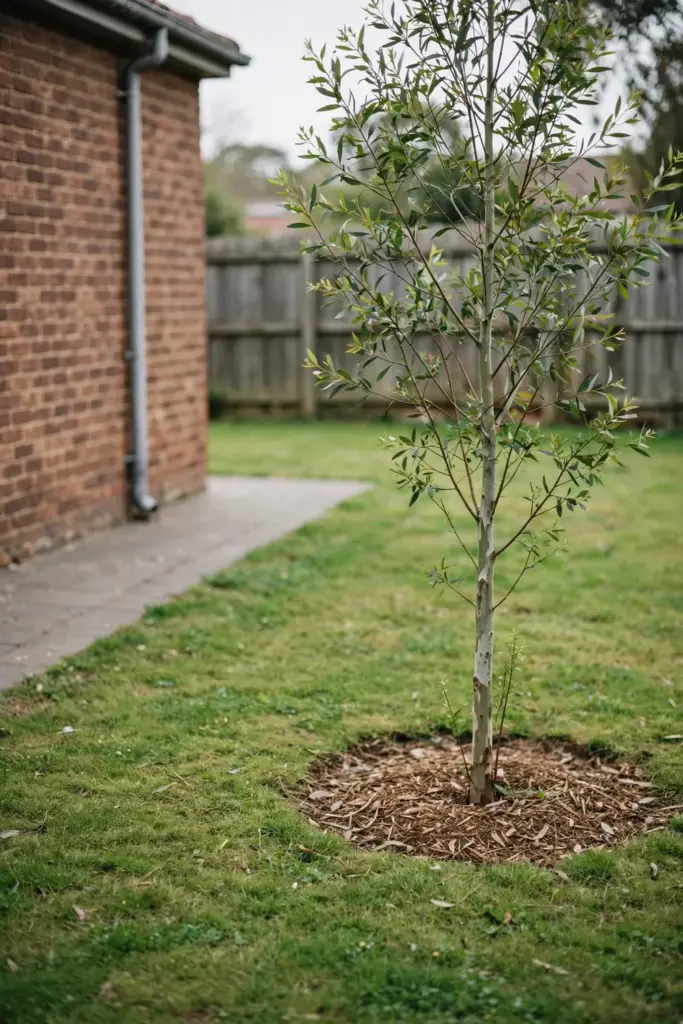
Gum roots spread wide. The lateral roots of a eucalyptus can spread 100 feet (30.5 m) out from the trunk, according to the eucalyptus root damage guide. That figure covers large trees in open ground, and it explains why a gum planted beside a house cracks pipes and lifts paving. A small mallee spreads far less, and a forest gum spreads the full distance. Size sets the setback.
Plant at least one mature canopy width from the house, the driveway, and any paved area. A canopy that spreads 8 m wide needs 8 m of clear ground from the trunk to the wall. Roots reach past the drip line, so the canopy width is the minimum, not the safe maximum. A tree that stands too close drops limbs on the roof and roots under the slab.
Check what runs underground before you dig. Call your water authority or check its pipe map for water and sewer mains on or near your block. Plant no gum over a sewer line or a septic trench. Roots find the moisture in a cracked joint and fill the pipe. A blocked sewer costs far more than a moved planting hole.
Site for wind as well. Gum roots run shallow, and a tall gum in wet soil can topple in a storm. The shallow root depth of eucalyptus makes trees more likely to topple when rain soaks the ground and wind roars, according to the same root damage guide. Plant a tall gum where a fall harms nothing. Plant a small gum where a tall gum would threaten the house. A sheltered corner suits a young gum. An exposed ridge suits a low mallee.
4. Plant Nursery Stock in Spring on Free-Draining Soil
A gum planted well in spring grows roots all summer, and a gum planted badly in winter sits and sulks.
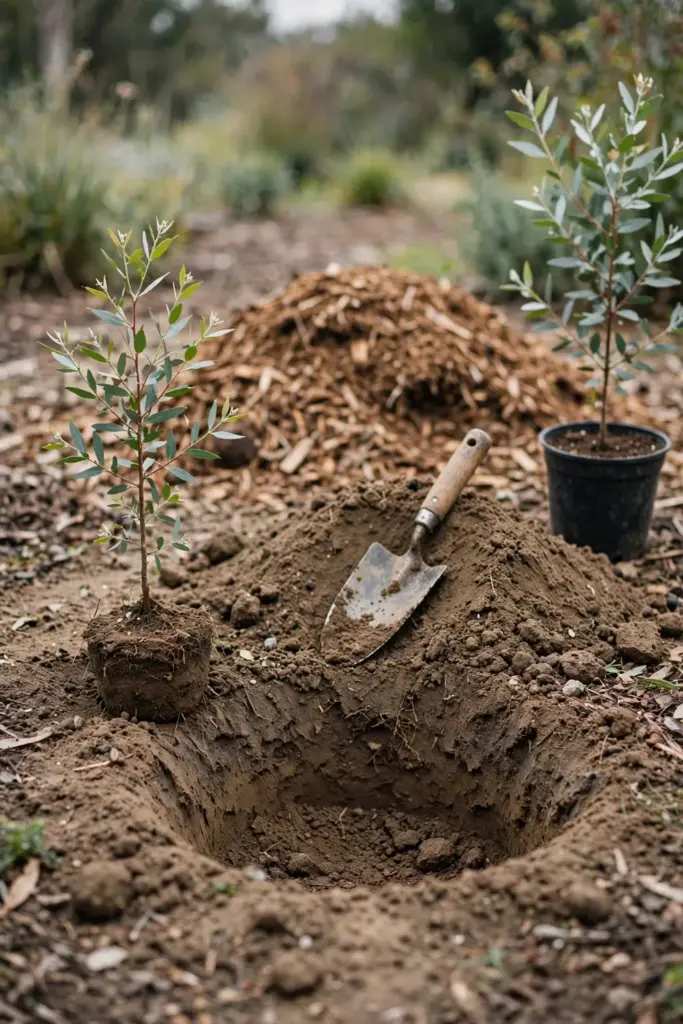
Plant in spring or early summer. Eucalyptus saplings are best planted in spring or early summer, according to the coral gum growing guide. Warm soil triggers root growth the week the tree goes in. Summer heat then pushes the canopy. A spring planting gives the tree a full warm season before its first winter.
Pick full sun and free-draining soil. The best place to plant a eucalyptus tree is in full sun, on well-drained soil, according to the same coral gum guide. Gum roots rot in standing water. A heavy clay bed suits a raised mound or a pot. A sandy bed suits in-ground planting with mulch. A shady bed suits no gum at all, because shade cuts growth and keeps foliage damp.
Dig the hole twice the width of the root ball and no deeper than the root ball. Set the plant so the top of the root ball sits level with the soil surface. Backfill with the soil you dug out. Firm the soil with your hands. Water the plant in slowly. A hole dug deep and backfilled with rich mix sinks after rain and holds water against the crown. A shallow hole on a mound drains.
Mulch after planting. Spread a thin mulch layer around the plant and keep it clear of the stem. Mulch holds soil moisture and keeps weeds down. Mulch piled against the stem holds damp against bark and invites rot. A clear ring around the stem solves that. Soil health shapes establishment, and building soil health covers the soil side of the job in full.
5. Water Weekly Through the First Two Months
A new gum needs steady water until its roots reach past the planting hole, then it lives on rainfall in most gardens.
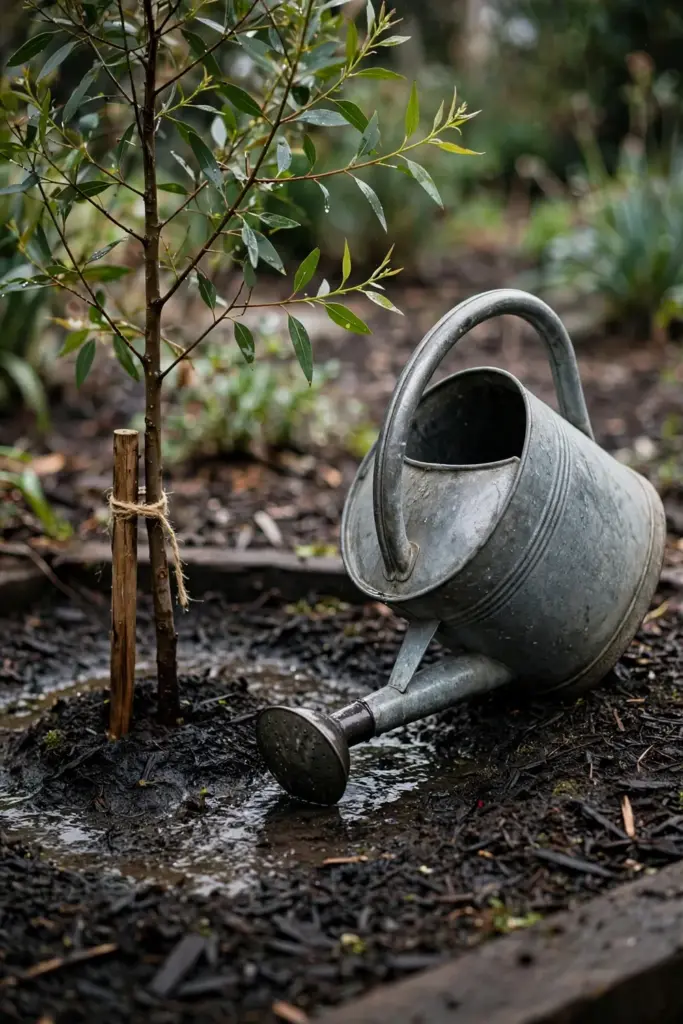
Water a new plant weekly after planting, with extra water in hot spells. Eucalyptus torquata needs regular water for its first two months in the garden, according to the coral gum guide. Deep watering beats light sprinkling, because a deep soak pushes roots down into cool soil while a light sprinkle wets only the surface and leaves roots shallow. Shallow roots dry out fast in a heatwave.
Read the plant to set the schedule. Leaves that wilt in the morning need water that day, while leaves that wilt only in afternoon heat and recover by evening need none. Soil that feels damp two knuckles down needs no water. Soil that feels dry at that depth needs a soak. A finger test beats a fixed calendar.
Taper water after the first two months, and cut the frequency as the plant shows new growth and holds leaves through dry weeks. An established gum tolerates dry spells. A plant watered daily through its second year grows soft roots that fail in the first dry summer, so tough love after establishment builds a tough tree.
Water at the base. Wet leaves in humid weather invite leaf spot, so a drip line or a slow hose at the base keeps foliage dry. Morning watering lets any splashed leaves dry by noon. Evening watering leaves foliage damp overnight.
6. Keep the Size Down With Coppicing or Pollarding
A gum kept small by cutting stays a garden tree, and a gum left alone becomes the tree the block cannot hold.
Trees grown as trees need only dead and damaged wood removed. A healthy gum sheds its own lower branches as it grows, and the canopy finds its own shape. Prune out dead wood, crossing branches, and damaged limbs. Leave the rest alone. A gum pruned for shape grows back fast and loses its natural form.
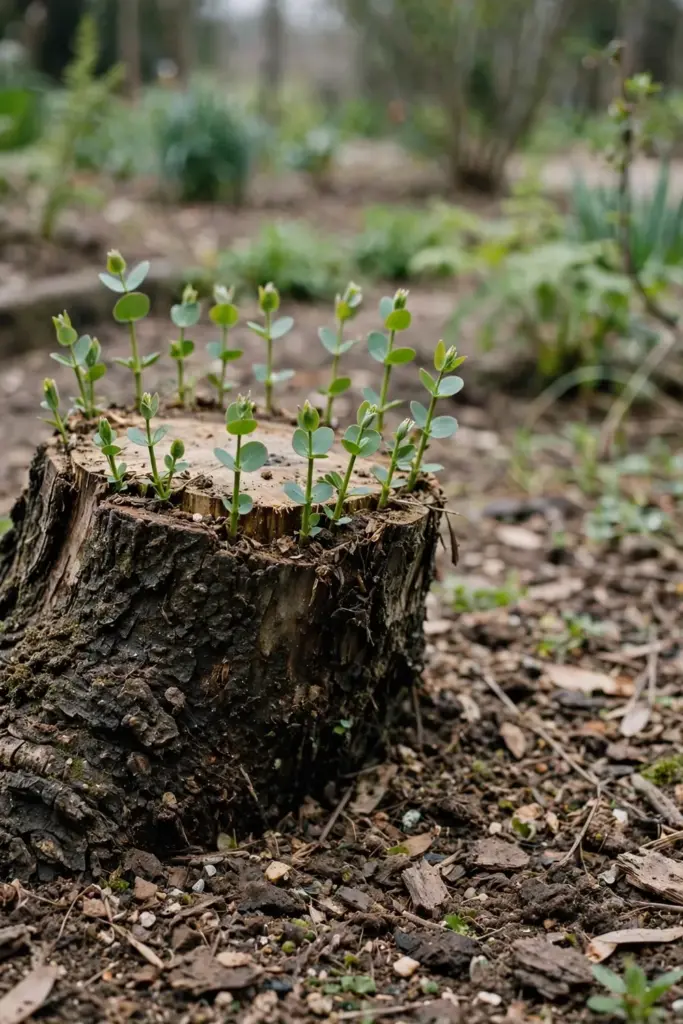
Coppicing keeps a gum small. Coppicing cuts the trunk back to 12 to 18 inches (31 to 46 cm) from the ground and removes all side shoots, according to the eucalyptus pruning guide. The stump reshoots from dormant buds in the bark. Coppicing suits a gum grown for foliage or for a low screen, and it suits species that reshoot freely, such as cider gum. Coppice in early spring, before the main growth flush.
Pollarding holds a gum at a fixed height. Pollarding cuts the trunk about 6 to 10 feet (2 to 3 m) from the ground and leaves the side branches, according to the same pruning guide. The tree branches at the cut heads and stays at that height with a yearly cut. Pollarding suits a gum grown as a feature with a clear trunk. Start pollarding only once the trunk reaches a solid diameter, and keep the yearly cut on schedule. A pollard skipped for three years grows a heavy head on a thin trunk.
Cut clean and cut at the right time. Prune in early spring, before growth starts. Cut just outside the branch collar, where the branch meets the trunk. A flush cut tears the bark and leaves a wound that rots. A long stub dies back and invites borers. Clean cuts heal. Ragged cuts invite trouble. Pruning method matters across the garden, and spring pruning techniques covers the general method in full.
7. Grow a Dwarf Gum in a Pot With Sharp Drainage
A pot suits a gum when the garden soil stays wet or the block runs too small for any in-ground gum.
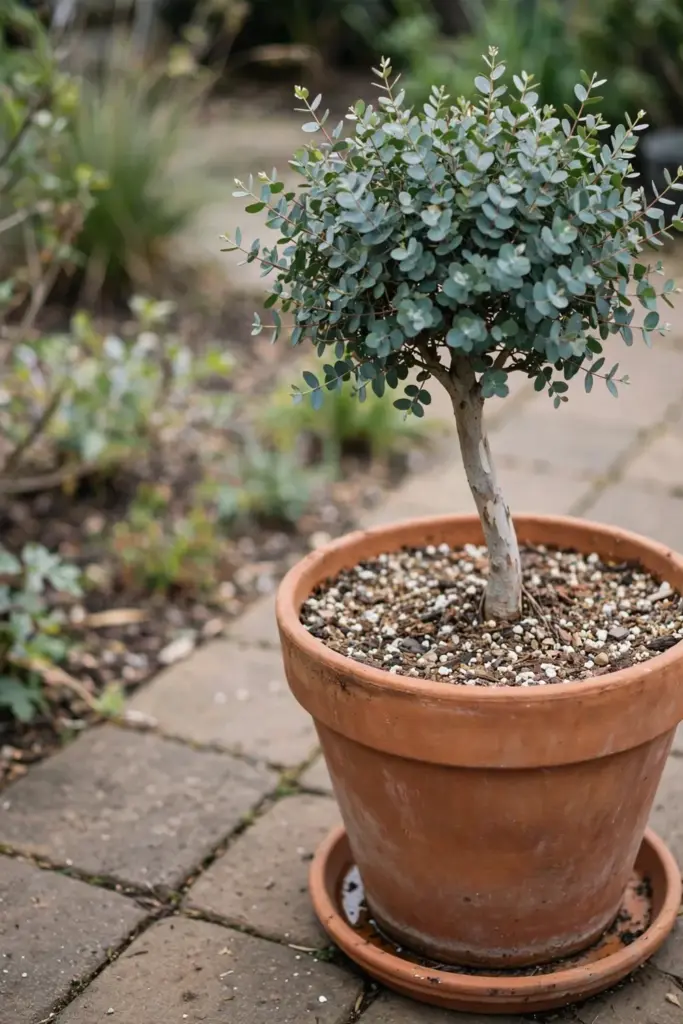
Pick a dwarf species. A pot holds a mallee or a dwarf cultivar, never a forest gum. A forest gum in a pot outgrows the pot in one season and then sulks. A dwarf gum in a pot grows slow and stays neat. Ask the nursery for a dwarf or mallee form by name. A label that names no mature size gives no promise.
Use a native potting mix, not a general mix. A native mix runs lean and drains fast, while a general mix feeds at levels a gum cannot use. A pot of native mix plus a handful of coarse perlite drains fast and holds air. Drainage holes must stay open, because a blocked hole turns the pot into a bucket.
Prune pot-grown trees to hold the size. Pot-grown eucalyptus trees need pruning every other year, according to the coral gum guide. Each time you prune, remove entire branches and leave the youngest branches to keep growing. A pot gum pruned this way keeps a natural shape. A pot gum left alone grows leggy and top-heavy, then tips the pot in wind.
Water pots more often than beds. Pots dry out fast in wind and sun, so check the mix with a finger before watering. Water until water runs from the base, then empty the saucer. A saucer left full keeps roots wet. A pot in a windy spot needs a sheltered corner.
Glacier eucalyptus is one dwarf form with its own guide. The Glacier eucalyptus guide covers that single cultivar in full. This page covers the genus-wide decisions. The cultivar guide covers the one plant.
8. Manage Leaf Drop, Bark, and Falling Limbs
A gum drops something in every season, and the gardener who expects it plans for it.
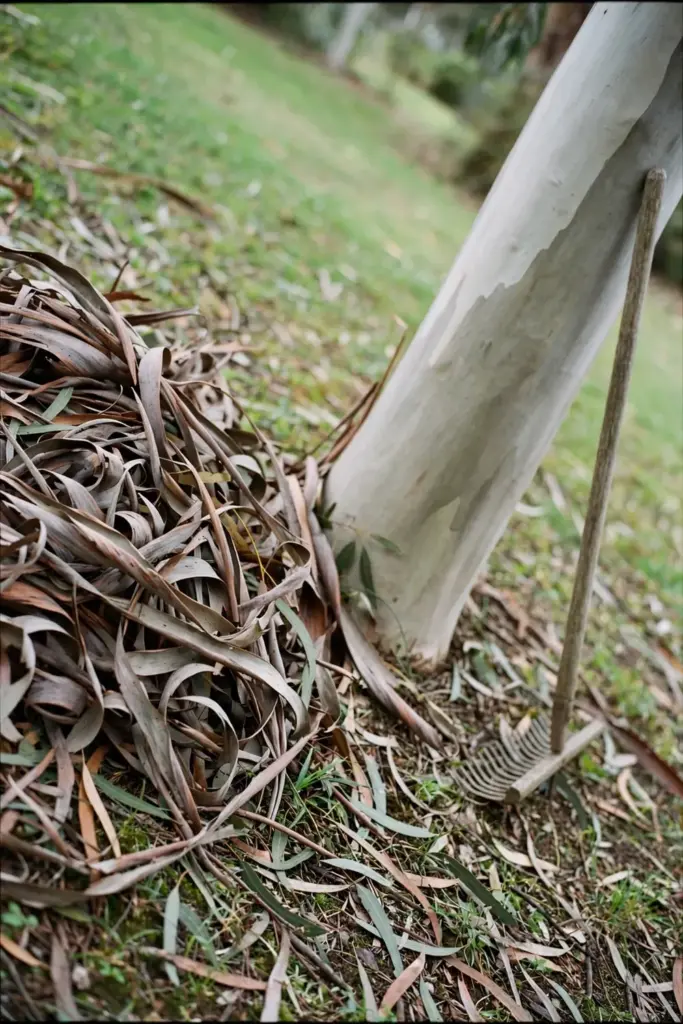
Expect leaf litter. Gum leaves fall through the year, with a heavy drop in summer. Rake the litter off beds, paths, and gutters. Thick gum litter smothers small plants below and clogs gutters before a storm. A gutter guard helps, and a yearly gutter clean matters more under a gum than under any other tree.
Expect bark shed. Smooth-barked gums shed bark in ribbons or patches, and the shed bark piles at the base. The shed is normal. It shows the tree growing. Rake the ribbons into the compost or the green bin. Bark against the trunk holds damp and invites borers, so keep the base clear.
Clean the gutters before storm season. Gum litter fills gutters faster than most trees, and a blocked gutter floods the eaves in the first storm. A leaf guard slows the buildup. A yearly clean clears what the guard misses. A gutter under a gum needs a check twice a year, once before storm season and once after the summer leaf drop.
Expect limb drop: gum trees drop limbs without warning, especially in high heat and after drought, and a limb can fall from a healthy-looking tree on a calm day. Never picnic, park, or play under a large gum. Never hang a swing from a gum limb. Site seats, sandpits, and washing lines away from the canopy. A limb that falls on open lawn harms nothing, while a limb that falls on a seat harms someone.
Call an arborist for big-tree work. A dead limb high in a tall gum is not a ladder job. An arborist with ropes and a saw removes it safely. A homeowner on a ladder with a chainsaw risks the fall and the cut. The arborist fee beats the hospital fee. For a tree that leans, cracks, or drops limbs twice in one season, an arborist inspection comes first and any decision comes second.
9. Spot Psyllids, Borers, and Root Rot Early
Gum pests and diseases stay minor when siting, drainage, and air flow stay right.
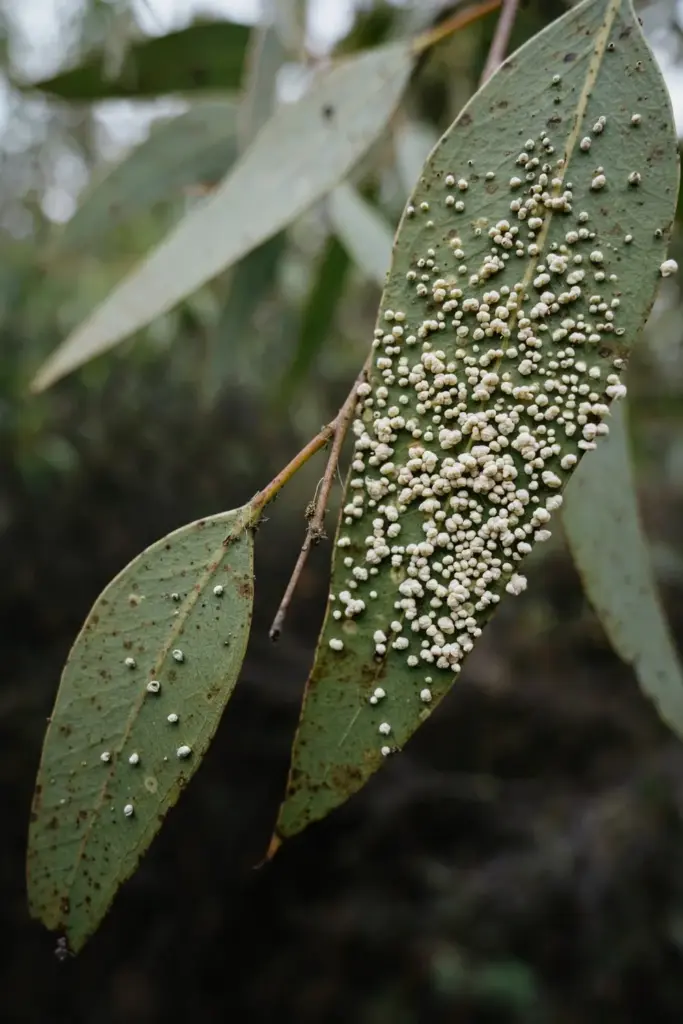
Psyllids and lerp show as small bumps and sugary shells on the leaves. Psyllids suck sap and leave sticky lerps that look like tiny scales. A light case needs no spray. Predators and weather clear it. A heavy case on a young tree calls for horticultural oil on the affected leaves. Hold the broad spray. Predators eat psyllids, and a broad spray kills the predators first.
Borers show as holes in the bark with frass below. Borers tunnel into stressed trees. A healthy gum with water and air resists borers. A stressed gum in wet soil or after a hard prune invites them. Cut out the worst affected branch. Seal no wound with paint. A clean cut heals. A painted wound traps moisture. A tree with borers through the trunk needs an arborist, not a spray.
Root rot shows as wilting leaves on a tree in wet soil. Leaves yellow, branches die back, and the crown feels soft. Root rot follows waterlogging. Lift the mulch and check the soil. Soil that stays wet for days after rain needs drainage work, not a spray. A tree on a mound drains. A tree in a bowl rots.
Phytophthora attacks roots in warm wet soil. Leaves wilt and die back fast. No spray saves a badly infected tree, so prevention through free-draining soil, a raised mound, and no overwatering does the work. A tree that collapses in wet soil goes out with its soil, and the spot rests before replanting. Data not available on a home cure for Phytophthora in a garden gum, so prevention carries the whole job.
Powdery mildew shows as white powder on young leaves. Young trees and soft new growth suffer most, because the fresh tissue gives the fungus an easy hold. Air flow and full sun limit it. Space plants so air moves freely between them, and water at the base so leaves stay dry. A light case on a young tree needs no spray. A heavy case that coats most new leaves calls for a sulfur spray on the affected growth, applied on a cool morning. Check the label for native plants before spraying. A tree that mildews every year sits in the wrong spot, and moving the tree beats spraying it.
10. Check Fire Rules Before You Plant Near the House
Eucalyptus oil burns, and a gum beside a house in a fire-prone area adds fuel where the house needs clear space.
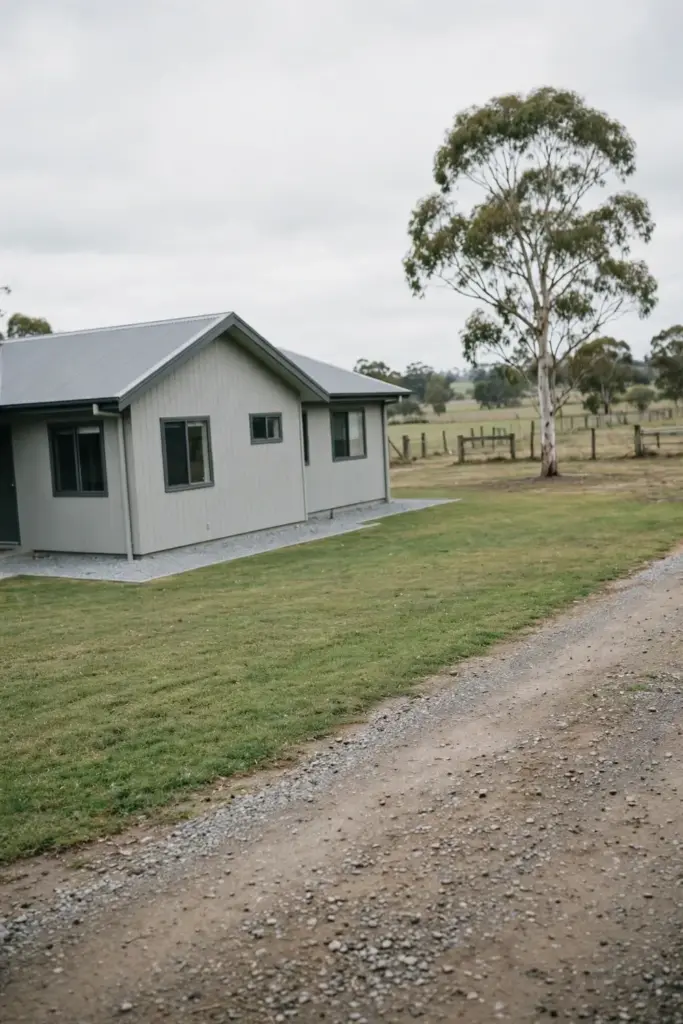
Check your bushfire attack level (BAL) rating and your council rules before planting a large gum near a house in a fire-prone area. The BAL rating sets how much clearance the house needs and which construction rules apply. A block with a high BAL rating needs a wider asset protection zone around the house than a block with a low rating. Plant large gums outside that zone, never against the house wall.
Keep the asset protection zone clear. The zone around the house holds low fuel: lawn, gravel, low shrubs, and widely spaced trees with no canopy touching the roof. A gum inside the zone drops oil-rich litter on the roof and near the walls. A gum outside the zone drops its litter on open ground. The same tree in the two spots carries different risk.
Check with council before planting on a fire-prone block. Council rules vary by state and by zone, and a planting that breaks them can cost the owner at resale or at insurance time. A phone call to council beats a chainsaw after the fact.
Frequently Asked Questions About Growing Eucalyptus in Australia
A small garden suits a mallee or a dwarf gum, never a forest gum. Plunkett mallee reaches 2 to 7 m and fits a courtyard. Snow gum reaches about 8 m and fits a medium garden. A river red gum reaches 20 to 30 m and fits a large block only. Measure the space, read the label, and pick the size that fits the block you have.
Plant at least one mature canopy width from the house, the driveway, and any paved area. Lateral roots can reach 30.5 m from a large tree, so the canopy width is the minimum setback. Check pipe maps with your water authority before you dig. Plant no gum over a sewer line or a septic trench.
Coppicing and pollarding keep a gum small. Coppicing cuts the trunk to 31 to 46 cm from the ground and the stump reshoots. Pollarding cuts the trunk to 2 to 3 m and the tree branches at the cut heads. Both need a yearly cut on schedule. A pollard skipped for years grows a heavy head on a thin trunk.
Eucalyptus oil is toxic to cats and dogs if swallowed, so keep prunings and fallen leaves away from pets. Children should not chew leaves or bark. Site seats and play areas away from the canopy, because gum trees drop limbs without warning. A tree that drops limbs twice in one season needs an arborist inspection before anyone sits under it again.
Growing from seed is covered in the live article on growing a eucalyptus tree from seed. This page covers nursery stock, siting, and managing a garden gum. Buy a potted tree from a nursery when you want a known species at a known size. A seedling from seed can differ from the parent in size and form.
Plant the Right Gum in the Right Spot
A gum garden runs on three decisions: size, spot, and a yearly cut.
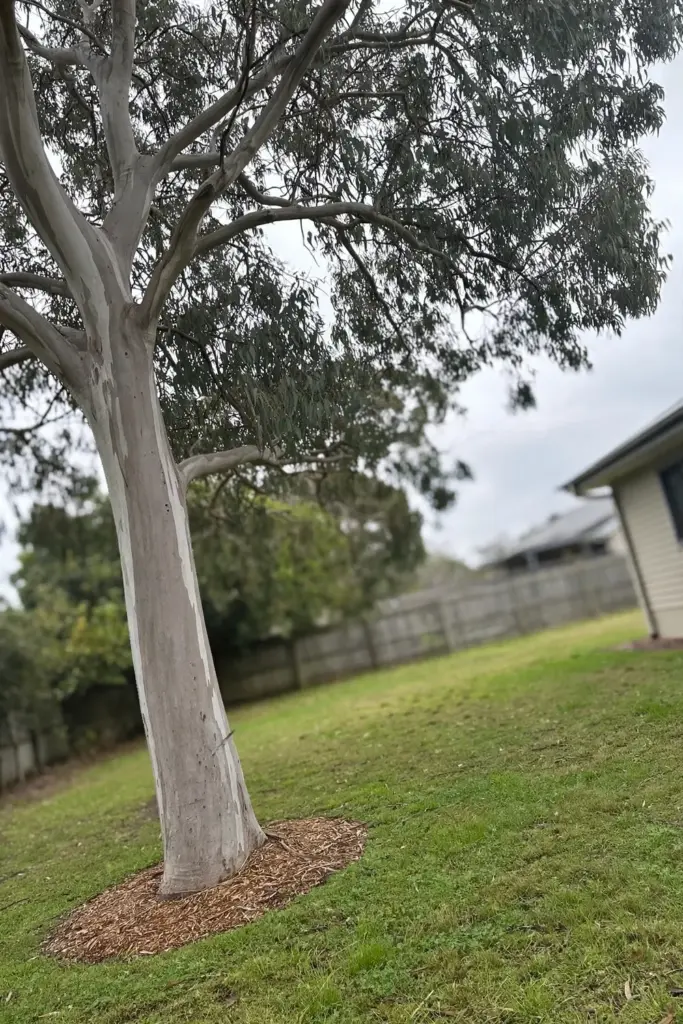
Pick the size that fits the block. Site the tree clear of the house, the pipes, and the paving. Water weekly for the first two months, then step back. Coppice or pollard on schedule when the tree must stay small. Call an arborist for big-tree work. That rhythm holds a gum safe, shapely, and alive with birds for decades.
Walk the block before you buy. Measure the space. Read the label. Plant in spring. A gum in the right spot grows with little help. A gum in the wrong spot fights the house for its whole life.