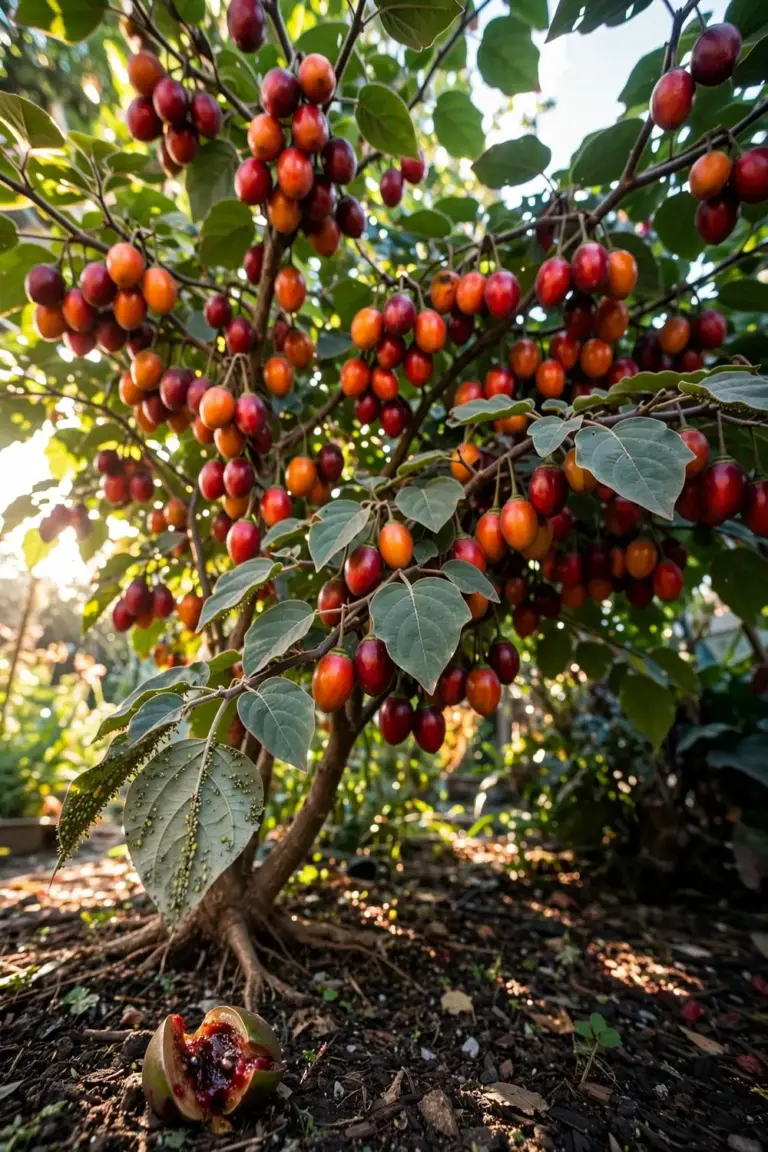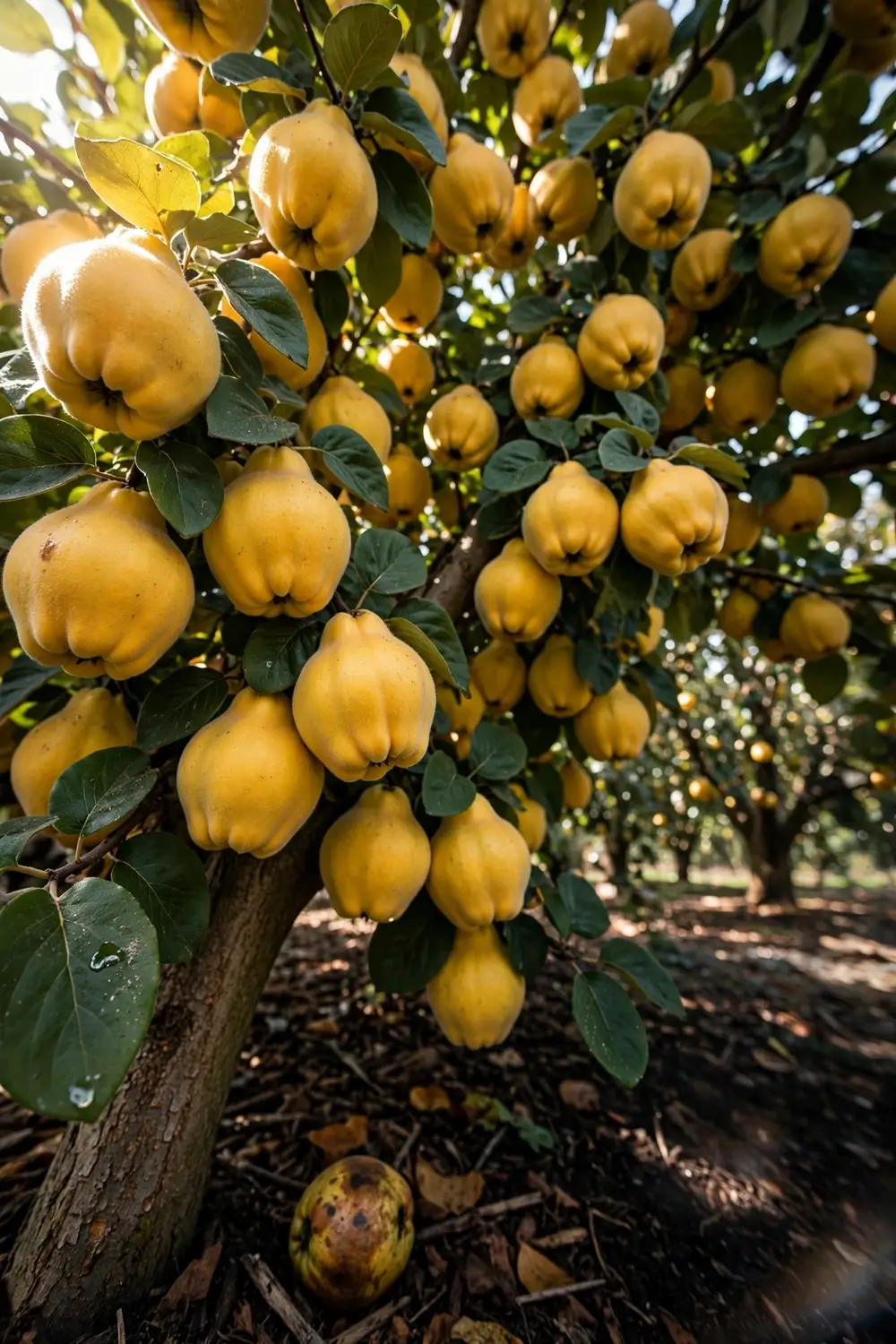

Yes, you can grow a quince from the seeds of a ripe fruit, and a grafted tree gives you fruit in three to five years. The seeds need a full three months of cold stratification before they germinate. Quince, the botanical species Cydonia oblonga, is one of the easiest fruit trees a home gardener can plant. University of California extension notes that quinces stay a manageable size and carry fewer pest problems than pears and apples, which are their close relatives.
Before you buy a tree or sow a seed, make sure you are looking at the right quince. There are two completely different plants called quince, and the confusion follows this fruit across every search result. One gives you fragrant golden fruit for jelly. The other gives you spring flowers and tiny hard fruit you will never cook with.
| Fruit Quince | Flowering Quince | |
|---|---|---|
| Botanical name | Cydonia oblonga | Chaenomeles species |
| Grown for | Large golden edible fruit | Spring flowers |
| Habit | Single-stemmed tree, 10 to 15 ft | Multi-stemmed shrub, suckering |
| Fruit | Pear- or apple-shaped, fragrant, cooked into jelly and membrillo | Small, hard, rarely worth using |
| Spread behavior | Not invasive, non-suckering trunk | Spreads through underground runners |
This guide covers fruit quince only. If your plant is a thicket of thorny stems covered in red or orange flowers every spring, that is flowering quince, a different genus entirely, and this article will not help you grow fruit on it. For a temperate rose-family fruit tree started the same way, the plum-from-seed method is a useful companion read: how to grow your own plum tree from a fresh plum seed.
Quince at a Glance
| Feature | Detail |
|---|---|
| Botanical name | Cydonia oblonga |
| Family | Rosaceae (rose family, with apples and pears) |
| Hardiness | USDA zones 5 to 9, tolerant to minus 10°F |
| Sun | Full sun, 6 to 8 hours daily; tolerates part-day shade |
| Soil | Moist, porous, slightly acidic, pH 6.0 to 7.0 |
| Tree size | 10 to 15 ft tall and wide on standard rootstock |
| Pollination | Self-fertile; a second tree improves set |
| Years to first fruit | 3 to 5 for grafted trees, longer from seed |
| Lifespan | 50 years or more; productive for about 25 |
| Propagation | Seed, hardwood cuttings, tip layering, grafting |
1. Start With the Right Quince, Not the Wrong One
The single most common mistake with quince happens before planting. A gardener buys a “quince” from a clearance rack, plants it, waits three years, and gets a shrub with thorns and flowers instead of fruit. The mix-up is everywhere. Flowering quince pages rank for fruit quince queries, and the two plants look unrelated until you check the botanical name.
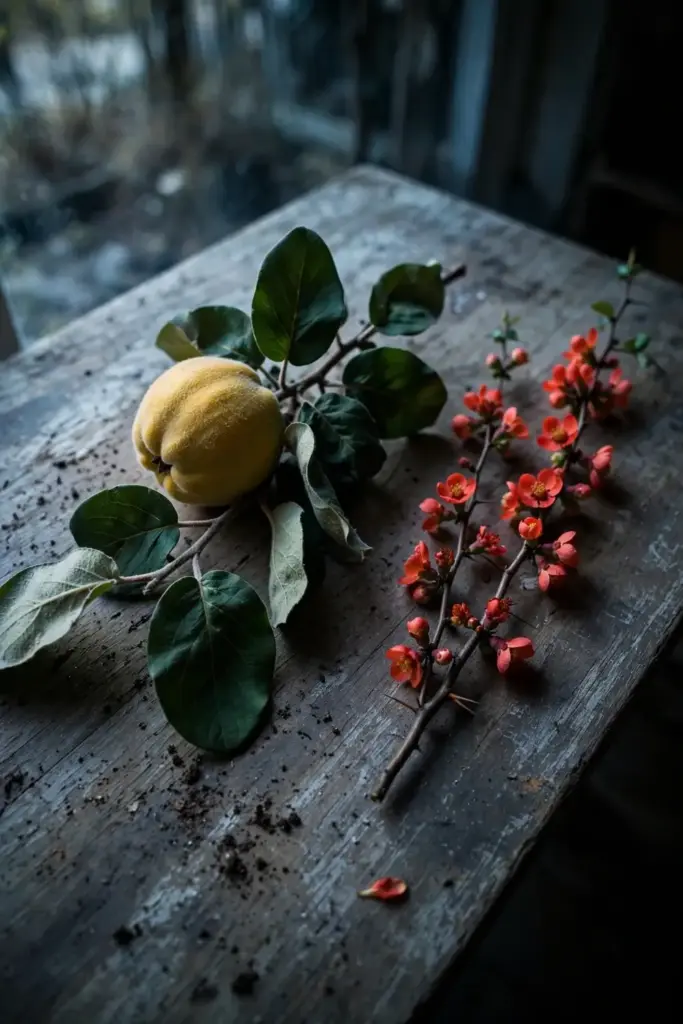
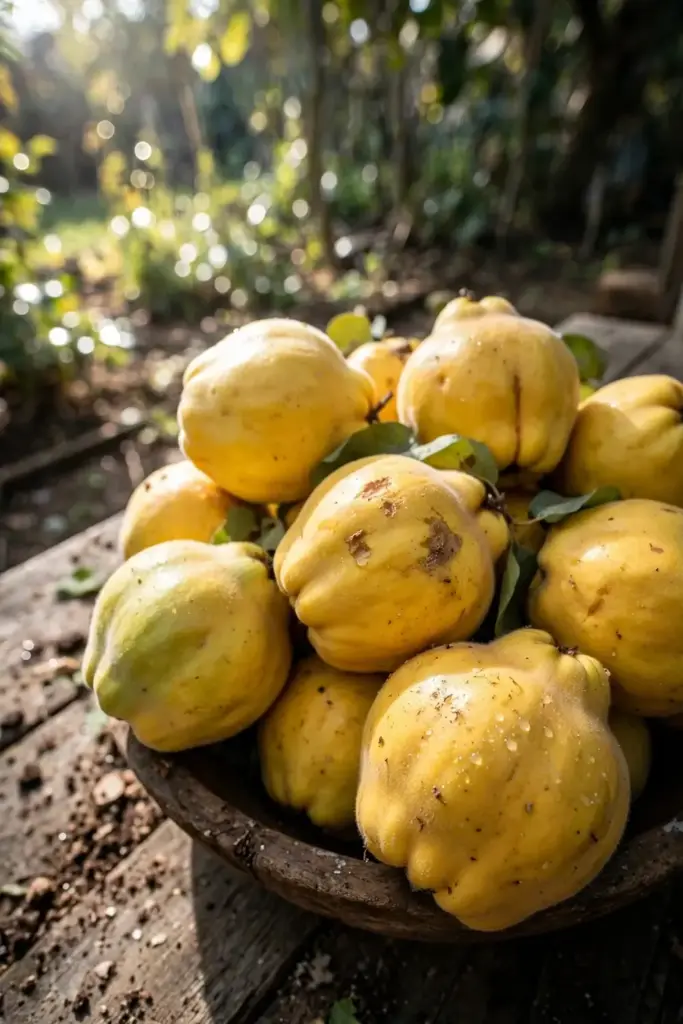
Fruit quince grows as a single-stemmed small tree with twisted branches, large pink-white flowers, and yellow fruit the size of a fist. Flowering quince grows as a multi-stemmed shrub that spreads through underground runners and is much harder to contain. When you buy a tree, read the label for Cydonia oblonga. If the label says only “quince” with a cultivar name like ‘Texas Scarlet’ or ‘Jet Trail’, those are flowering quince cultivars, not fruit producers.
This matters for another reason. Search advice about flowering quince, pruning it hard, cutting it to the ground, forcing branches for arrangements, belongs to the ornamental shrub. Apply it to a fruit quince and you will cut off your harvest. Keep the two plants separate in your mind and your garden.
2. Climate and Location: Zones 5 to 9 With a Chill Requirement
Quince is a temperate fruit tree. It needs a cool winter to set fruit, which puts it in USDA zones 5 to 9, and it tolerates temperatures down to about minus 10°F. University of California extension calls quinces among the easiest fruit trees to grow at home, noting they stay a manageable size with fewer pest problems than their relatives. This is the opposite of the tropical fruits in this category. A quince in Miami will not fruit. A quince in Minnesota, planted against a south-facing wall, can do very well.
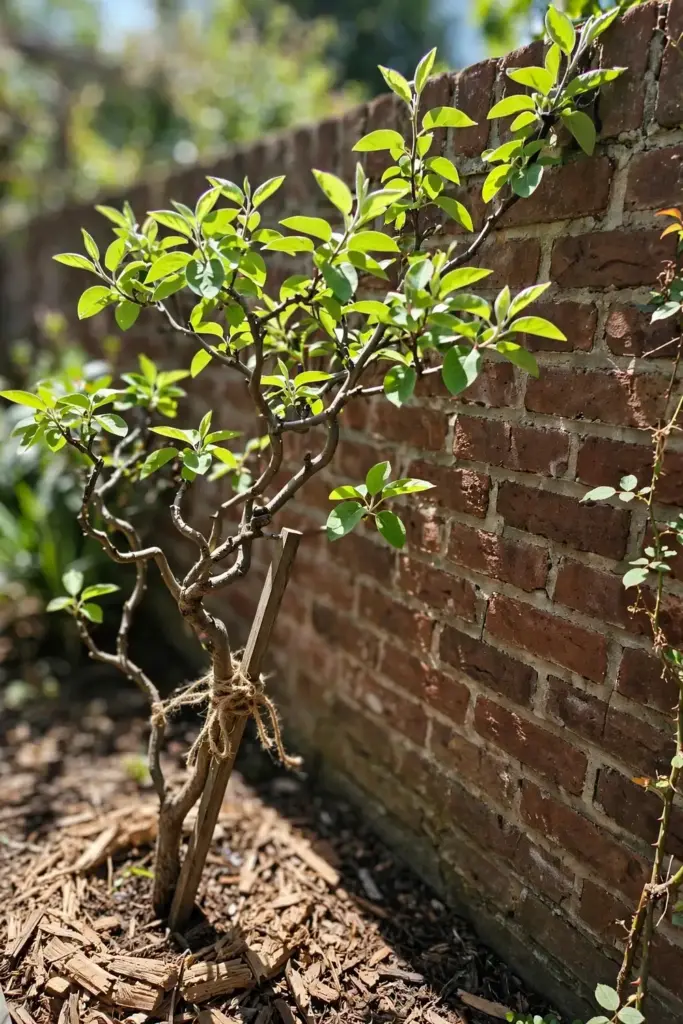
The tree wants full sun, six to eight hours a day, to flower and ripen fruit properly. In very hot climates it tolerates part-day shade. One California grower reports that quince in the Owens Valley seems content with partial shade, which makes it an option for smaller yards where full sun all day is not available. Deep shade ruins fruiting; a small amount of shade is fine.
Site selection matters for two reasons. First, late spring frosts can damage the flowers, so avoid frost pockets and low spots where cold air settles. Second, the tree dislikes sudden temperature swings, so a sheltered spot with a windbreak beats an exposed one. Quince flowers late relative to other fruit trees, which is one reason it escapes late frosts that damage apricots and early cherries.
3. Choose a Variety That Tastes Good Cooked
Not every fruit quince makes good eating. The flavor you are buying is the cooked flavor, because raw quince is hard, astringent, and best left to the animals. The varieties below are grown for their cooked quality.
| Variety | Fruit | Notes |
|---|---|---|
| ‘Aromatnaya’ | Large, apple-shaped, strongly fragrant | 300 chill hours per gardenoracle’s cultivar notes; a good warm-zone pick |
| ‘Champion’ | Large, tender, light yellow | A standard commercial type |
| “Cooke’s Jumbo” | Very large | Good for preserves |
| ‘Smyrna’ | Large, orange-yellow, rich flavor | Aromatic flesh, astringent when ripe |
| ‘Orange’ | Medium, rich flavor | 300 chill hours |
| ‘Pineapple’ | Medium, white flesh | Pineapple notes when cooked |
| ‘Vranja’ | Pear-shaped, aromatic | Early cropper, compact habit for pots |
Availability is the real constraint. Many nurseries carry only one or two quince varieties, and some carry none at all. If you find only one variety, do not worry. One mature quince tree will, in all likelihood, provide a family with more than enough fruit. The tree is self-fertile, so a single tree fruits on its own.
Match the variety to your chill hours if you garden in zone 8 or 9. gardenoracle’s cultivar notes list 300 chill hours for ‘Aromatnaya’, ‘Orange’, and ‘Smyrna’, which makes them safe choices for warm winters.
4. Cold Stratification: The Three-Month Seed Requirement
Quince seeds do not sprout like tomato seeds. They are dormant, and they stay dormant until they have experienced a winter. The standard requirement is about three months of cold stratification: moist, cold, and patient.
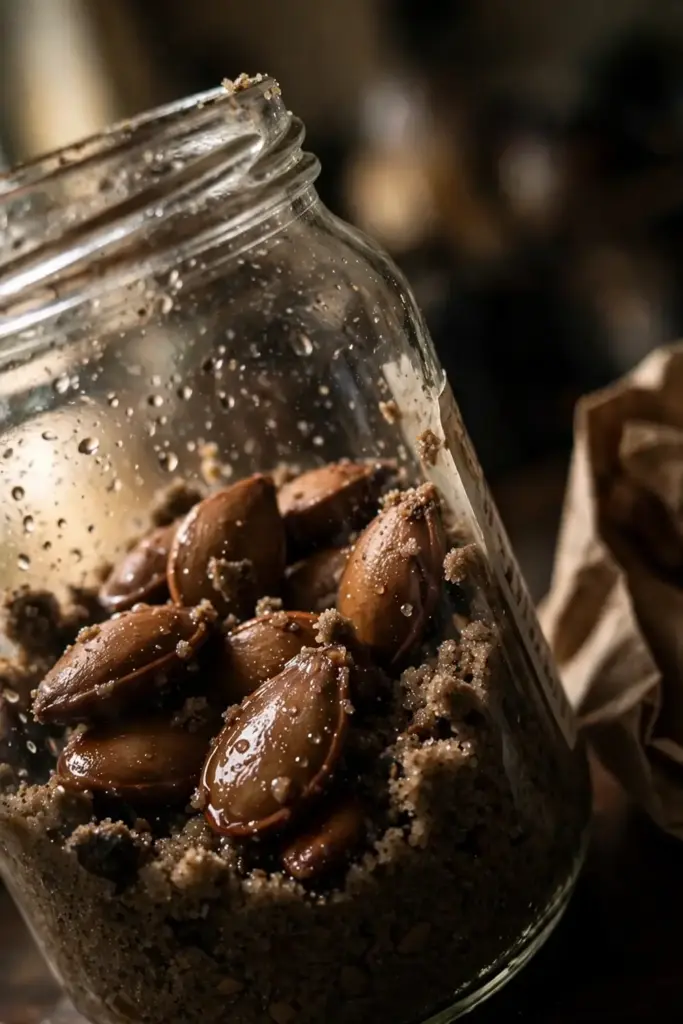
There are two honest routes. The first is to sow the seeds outdoors in autumn, in a cold frame or a sheltered bed, and let winter do the work. Plants For A Future, which has documented this species for decades, recommends sowing as soon as the seed is ripe, because fresh seed stratifies most easily. The second route is to stratify in the refrigerator: mix the seeds with damp sand or vermiculite in a plastic bag, keep it at refrigerator temperature, and wait roughly twelve weeks.
One refinement comes from seed savers who germinate quince regularly. Gentle scarification, nicking or lightly sanding the hard seed coat before stratification, speeds water uptake and more even germination. Use a nail file or fine sandpaper and take off only a small amount of the coat. You want water to reach the embryo, not damage to the embryo itself.
Start stratification in early autumn for spring sowing, or stratify in the fridge and sow when night temperatures stay above freezing. Old seed is harder to wake than fresh seed. Seeds from a fully ripe fruit this season germinate better than seeds saved for years in a drawer.
5. Sow the Stratified Seeds Step by Step
Once stratification is done, the sowing itself is ordinary seed starting with a few quince-specific points.
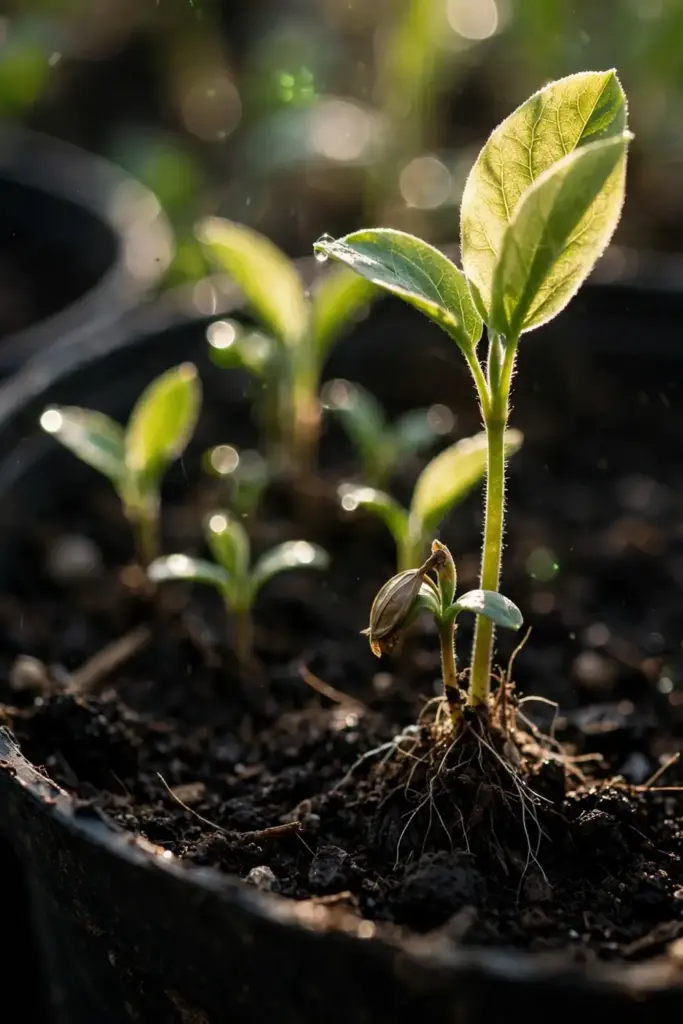
- Fill deep pots with a porous seed-starting mix. Quince forms a long taproot early, so deep pots beat shallow trays.
- Sow each seed about half an inch deep, one seed per pot to avoid root disturbance later.
- Water gently until the mix is evenly moist, not soggy.
- Hold the pots at 60 to 70°F. Germination is uneven; some seeds sprout quickly and some take weeks.
- Give the seedlings bright light as soon as they emerge. A sunny windowsill or a simple grow light works.
- Keep the first winter in a cold frame or unheated shelter. Grow the seedlings on through their first winter before planting out the following spring.
For general technique, the seed-starting steps in the seed starting guide apply here too: consistent moisture, no fertilizer until true leaves appear, and hardening off before the move outdoors.
Expect variation among seedlings. Quince seedlings do not always match the parent tree, and fruit quality from a seedling is a gamble. That is the trade-off for the cheapest propagation method, and the next sections explain how to manage it.
6. Raise the Seedlings Through Year One
First-year quince seedlings are straightforward. They want what most young fruit trees want: steady moisture, bright light, and protection from extremes.
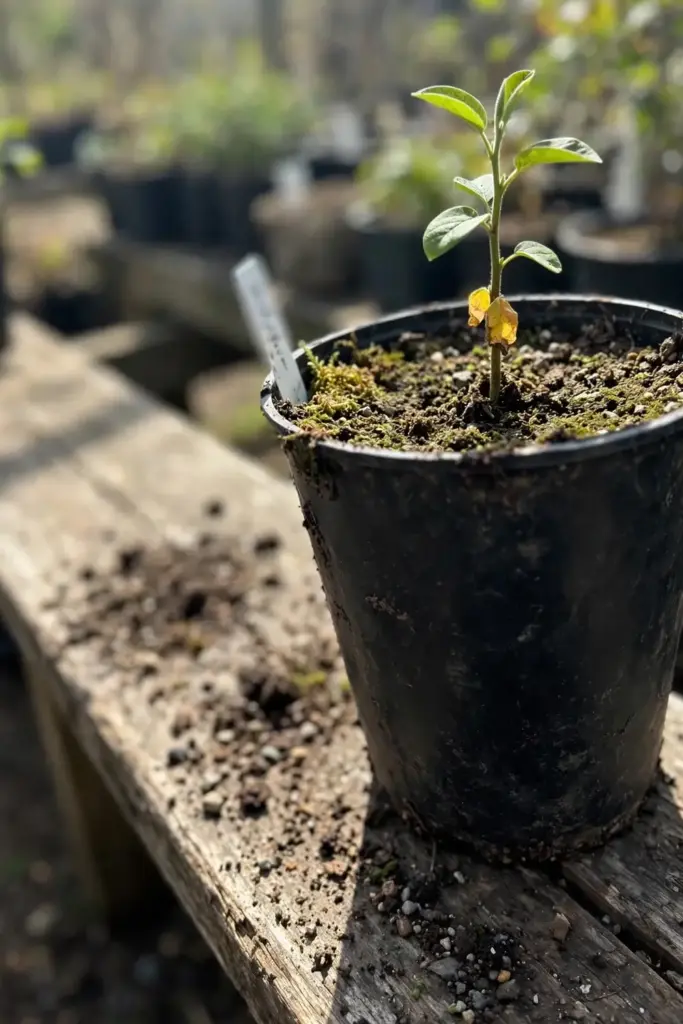
Water consistently. Letting a seedling dry out repeatedly in its first season weakens it permanently. Feed lightly or not at all in the first year; a small pot with good soil mix holds enough nutrition for months. Overfeeding pushes soft growth that is vulnerable to pests and fire blight later.
Watch the spacing in the pot. A quince seedling develops quickly, and a pot that was generous in spring can be cramped by autumn. Pot up when roots circle the bottom of the pot. The goal for year one is a sturdy stem and a healthy root system, not height for its own sake.
Harden the seedlings off before their first real winter outdoors. A cold frame, an unheated garage, or a sheltered spot against the house gives them the transition they need. In zones 5 and 6, leave the seedlings in pots through their first winter and plant out the following spring.
7. Grafted Trees vs Seedlings: Be Honest About the Timeline
Here is the decision every quince grower faces, and it is worth making with open eyes.
| Grafted Tree | Seedling | |
|---|---|---|
| Years to first fruit | 3 to 5 | Longer, often 5 to 10 |
| Fruit quality | Known, matches the cultivar | A gamble, may differ from the parent |
| Cost | Higher, nursery tree | Nearly free |
| Size | Controlled by rootstock | Can grow larger |
| Best for | Reliable harvest | Experiments, rootstock, breeding |
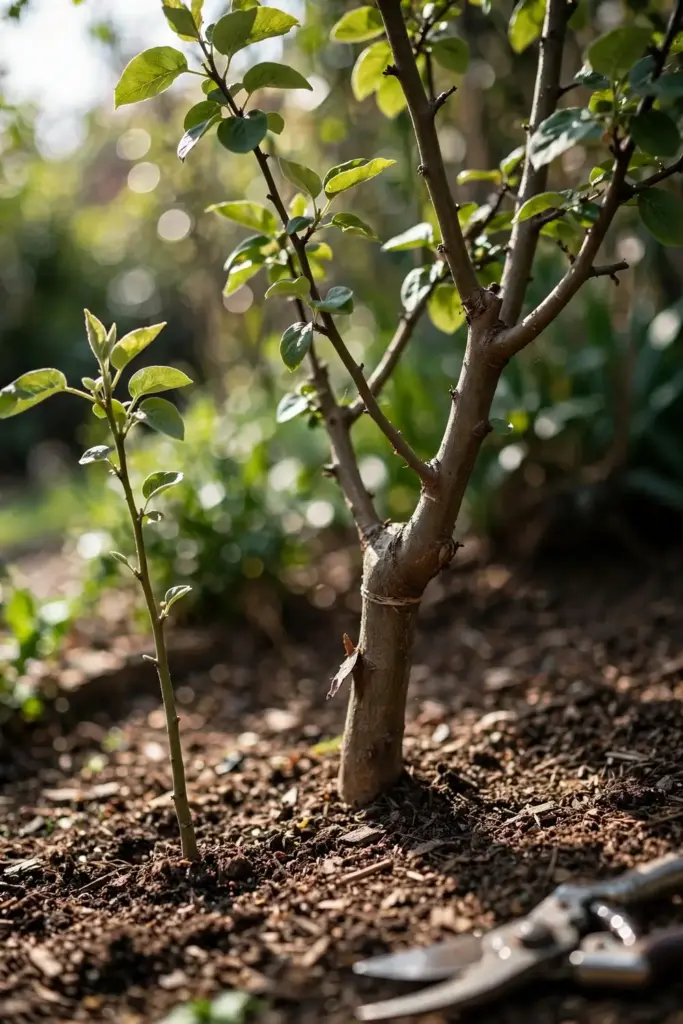
A grafted tree gives you a known cultivar, a known fruit, and fruit in three to five years. A seedling gives you a surprise. Some seedlings produce excellent fruit. Some produce fruit that is only fit for processing, and processing is the main use anyway, so the gamble is less punishing than with an eating apple.
There is a middle path. Grow a seedling, then graft a known cultivar onto it once the trunk is thick enough. Quince grafts readily, and seedling quince even accepts pear scions. The seedling becomes your rootstock, and you get the reliability of a named variety on a tree you grew yourself.
If your goal is fruit as soon as possible with the least uncertainty, buy a grafted tree. If your goal is the experience of growing a tree from seed, sow the seeds and accept the wait. Both paths lead to the same golden fruit eventually.
8. Pollination: One Tree Is Enough
Quince is self-fertile. A single tree sets fruit without a pollination partner. This is one of the reasons extension writers call it among the easiest fruit trees for a home yard: no second tree to buy, no bloom-time matching to calculate, no pollination chart.
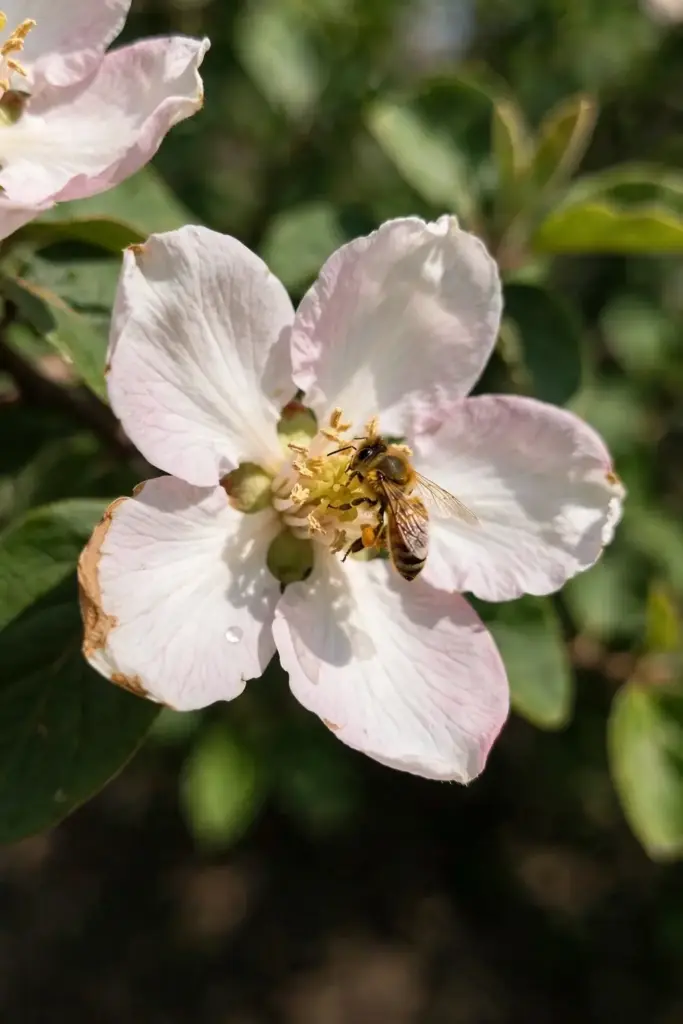
That said, a second quince tree usually sets a heavier crop. The improvement is real but modest, and it is not a requirement. If you have room for two trees, you get more fruit and something to compare against. If you have room for one, that one tree fruits.
Bees do the pollination work. Planting with the rest of the garden in mind, flowers nearby and no spraying during bloom, supports the bees that set your fruit. This is standard orchard sense and it applies to quince exactly as it does to apples and pears.
9. Site Selection and Spacing
Give the tree room. Standard quince trees reach 10 to 15 feet tall and wide, and the standard recommendation is to plant trees 10 to 25 feet apart depending on the variety and rootstock. Crowding slows growth, shades fruit, and invites disease.
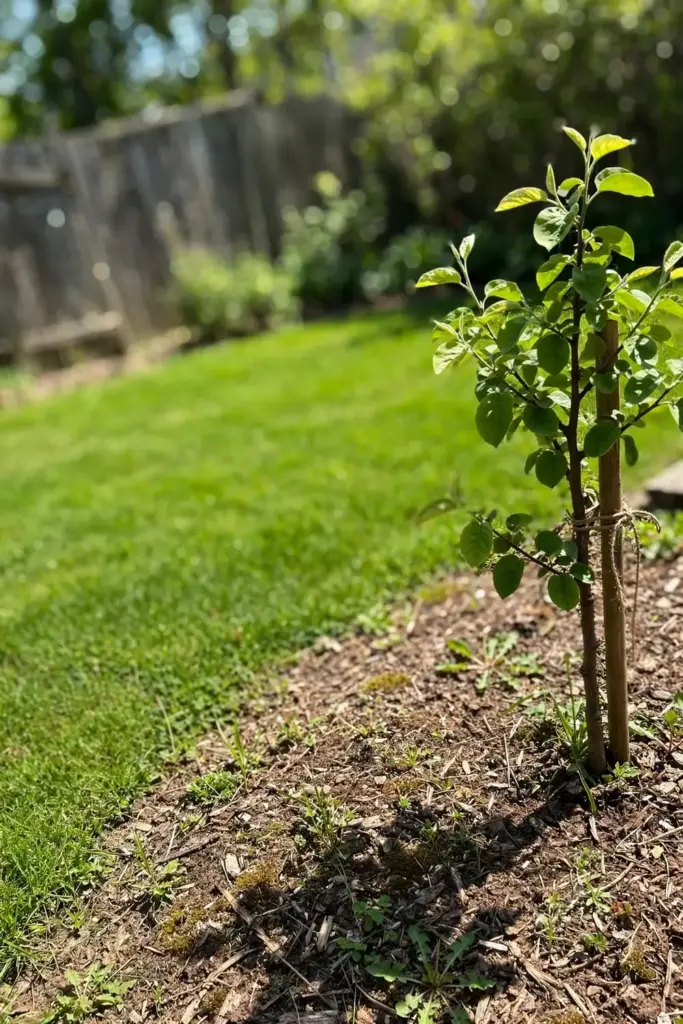
Choose a warm, sunny, sheltered spot. Against a south- or southwest-facing wall is the classic placement in cooler or more exposed sites: the wall radiates warmth, shelters blossoms from frost, and gives the fruit the sun it needs to ripen. In mild urban or coastal locations, open ground in full sun is fine.
The tree tolerates a wide range of soils, including heavier clay, which makes it more forgiving than many fruit trees. It wants moisture-retentive but well-drained soil. Waterlogging is the enemy; deep, fertile, slightly acidic loam is the ideal. If your soil is light or shallow, work a bucketful of compost or well-rotted manure into the backfill when you plant.
One more site consideration: do not plant where pears and apples have struggled with fire blight, or at least go in with your eyes open. Quince shares the disease, though it suffers less.
10. Plant the Tree in the Dormant Season
Buy bare-root trees while dormant, from late autumn to early spring, and plant them in that window. The RHS quince guide recommends planting new trees between November and March in a warm, sunny, sheltered spot, with space for the tree’s eventual 10 to 15 foot spread. Container-grown trees are available year-round, but planting during dormancy is still preferable because the tree establishes roots before it has to support leaves.
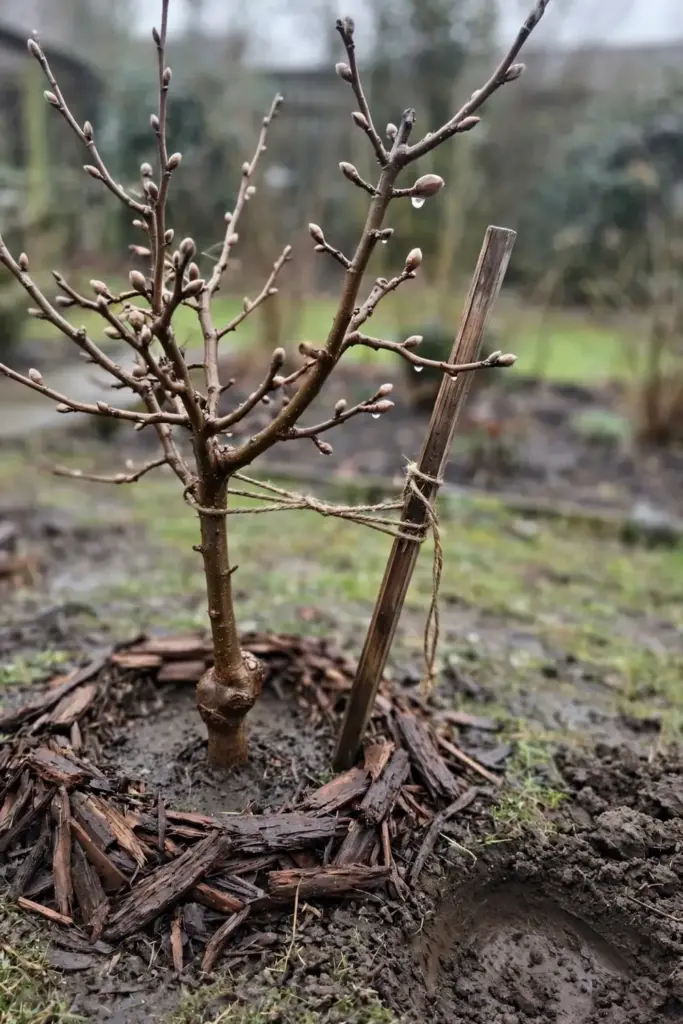
Dig a hole wide enough for the roots to spread naturally. Set the tree at the same depth it was growing in the nursery, with the graft union above the soil line. Backfill with the soil you removed, firming gently to remove air pockets. If you improved the soil, mix the compost or aged manure into the backfill rather than layering it at the bottom.
Stake the tree after planting. A sturdy stake supports the young tree while its roots establish, and you can remove it after the first season or two. Water deeply right after planting, then mulch around the tree with two to four inches of organic mulch, keeping the mulch a few inches away from the trunk.
For the soil foundation that carries every fruit tree, the soil-building principles in the soil health guide apply to quince exactly as they do to the rest of the orchard.
11. Watering: An Inch a Week
Quince trees need regular watering for the first year to establish. After that, they have fairly specific needs, especially if you want fruit: at least an inch of water a week, with deep watering every few weeks during dry periods in spring and summer.
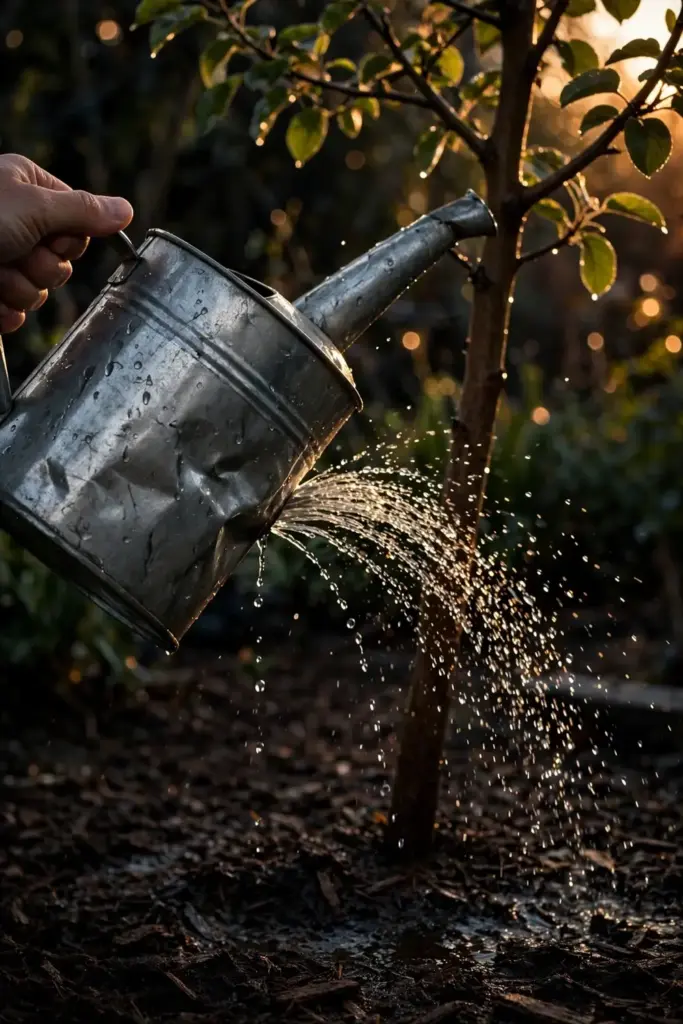
The soil should stay consistently moist. When a quince tree runs short of water, it drops its fruit. That is the signal to take seriously. Mulching around the tree is not optional decoration; it is how you keep moisture in the root zone through summer.
Established trees tolerate short dry spells, and they are more drought-tolerant than many gardeners expect, but the fruit is always better with steady water. Deep, infrequent watering beats daily sprinkles because it drives roots down. In hot, dry regions, check the soil a few inches down before you assume the watering schedule is working.
12. Feeding Without Inviting Fire Blight
Quince wants one feeding a year, early in the growing season. Side-dress with compost in early spring, or use a balanced fertilizer such as 20-20-20 at the package rate. That is enough for most trees in most soils.
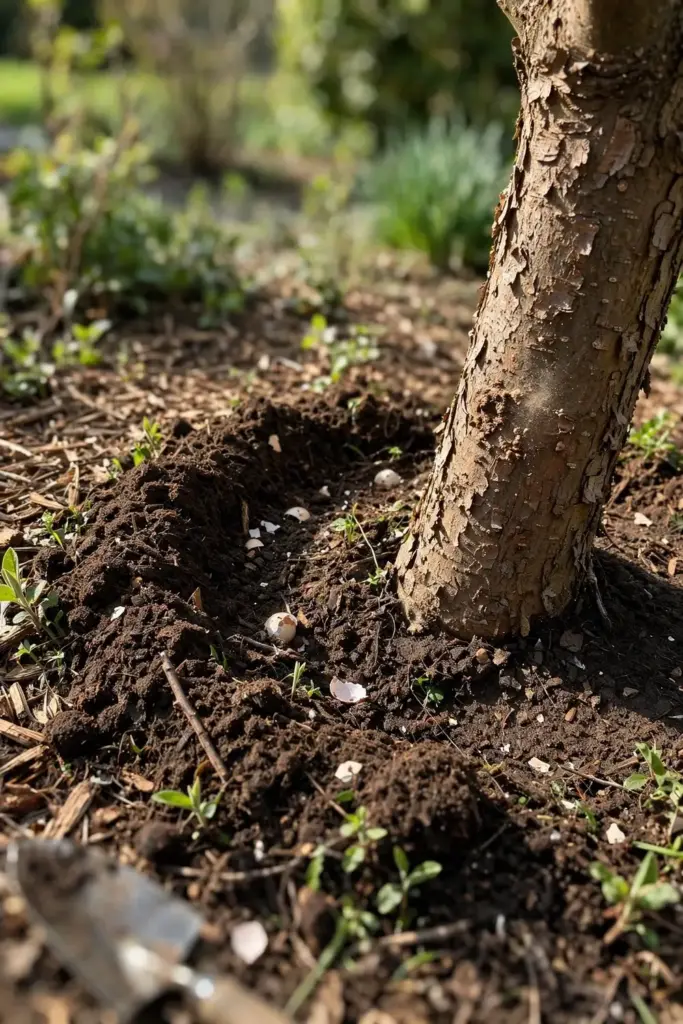
The warning here is specific. Do not use high-nitrogen feeds and do not over-fertilize. Fast, soft, overfed growth is exactly what fire blight loves, and the tree you just pushed into growing hard is the tree most likely to get struck. This is one case where feeding less is the better technique.
A mature tree in good soil may need nothing beyond the annual compost. Watch the tree, not the calendar. Pale leaves and weak growth mean feed more. Rank, dark-green, overly vigorous growth means feed less or nothing.
13. Pruning: A Light Touch Every Few Years
Quince does not need heavy pruning. A light touch every few years keeps it productive and healthy, and that is the whole pruning program for most trees.
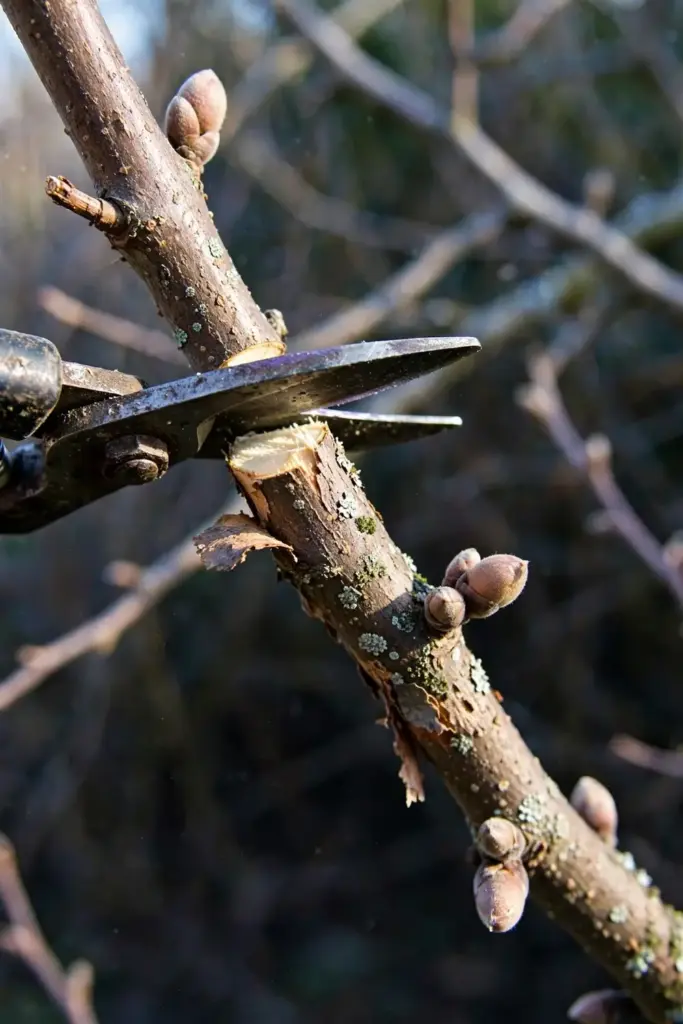
Prune during dormancy, in late winter or early spring. Remove dead, diseased, and damaged wood first. Then remove weak, congested, and crossing branches to open the canopy to air and light. Better airflow and light penetration keep the tree healthy and help the fruit ripen.
One technical point matters. Quince bears fruit on the tips of the current season’s growth, which means aggressive shortening of every branch tip removes your crop. Keep the cuts structural: thin out, shape the framework, and leave the fruiting wood alone. The technique is the same dormant-season approach used on other fruit trees, covered in detail in the spring pruning techniques guide.
14. Pests and Diseases: Fire Blight Leads the List
Quince shares the pest and disease profile of pears and apples. In practice, it suffers less. California extension observes that quince carries the same problems on paper, codling moth and fire blight included, but trees in real orchards show damage at a lesser scale than pears.
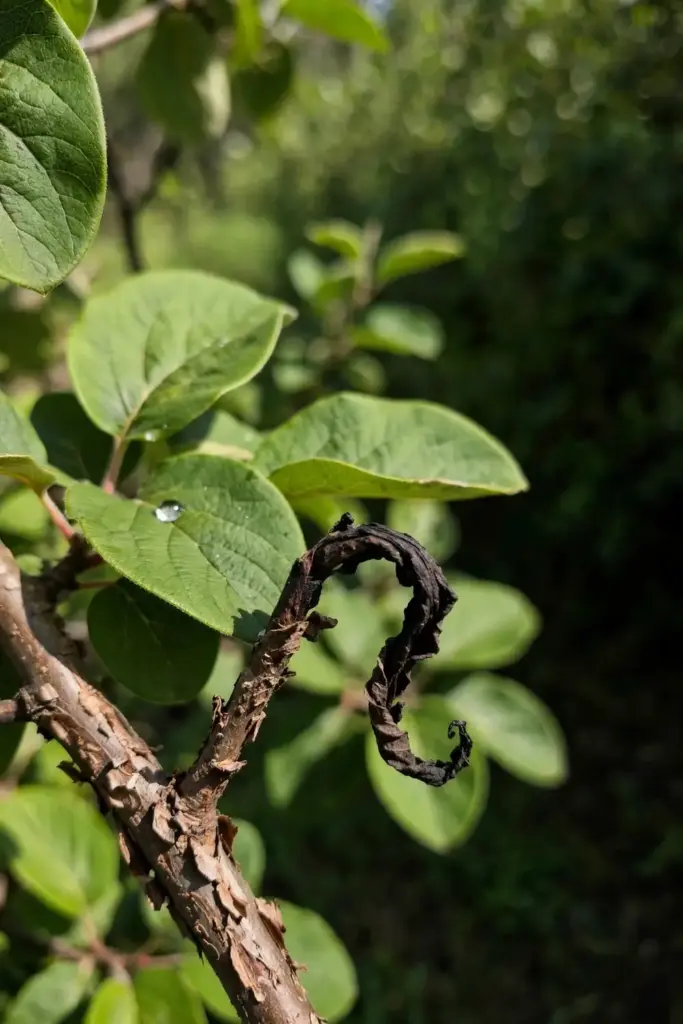
Fire blight is the one to know by name. It strikes in warm, wet spring weather, blackening blossoms and young shoots as if they were burned. The defense is pruning: cut well below the damage into healthy wood, disinfect tools between cuts, and dispose of the prunings rather than composting them. The feeding warning in the previous section exists because of this disease.
Beyond fire blight, expect the ordinary cast. Aphids cluster on new growth. Scale settles on bark. Codling moth can damage fruit. Leaf spot and brown rot appear in wet seasons. None of these is quince-specific, and none requires a spray program for a home tree. Good airflow, prompt removal of damaged wood, and healthy soil handle most of it.
15. Are Quince Trees Invasive? No
Gardeners often ask whether fruit quince spreads, so here is the direct answer. Fruit quince, Cydonia oblonga, is not invasive. It grows as a non-suckering single trunk with a contained root system. It does not colonize neighbors, it does not send up runners through the lawn, and it is not listed as an invasive species.
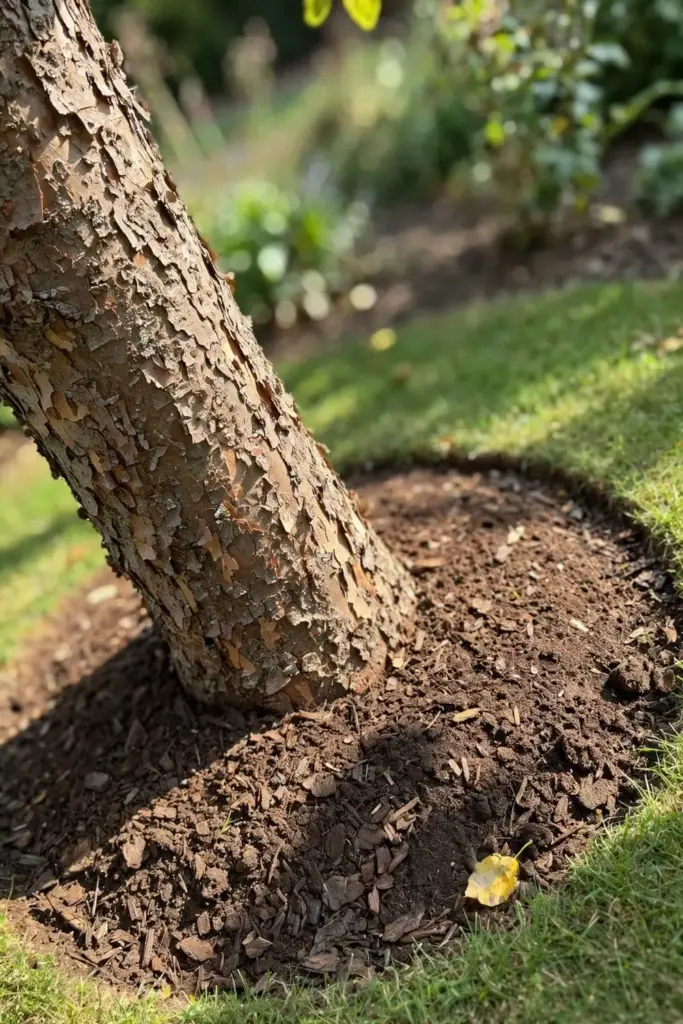
The confusion comes from the other quince. Flowering quince, Chaenomeles, spreads aggressively through underground runners and is genuinely hard to remove once established. Gardeners who have fought a flowering quince thicket attach its behavior to the name “quince”, and the reputation sticks to the fruit tree unfairly.
One real-world note: quince rootstock does sucker when roots are cut or damaged, and gardeners occasionally find quince suckers near grafted pears. That is rootstock behavior after damage, not the tree invading your garden. Plant a fruit quince with confidence on this question.
16. Growing Quince in Containers
Quince in a pot is entirely possible, and it is the answer for small yards, balconies, and climates at the cold edge of the range. The container needs to be at least 18 inches deep and wide, and 24 inches wide is better. A half-barrel planter works well.
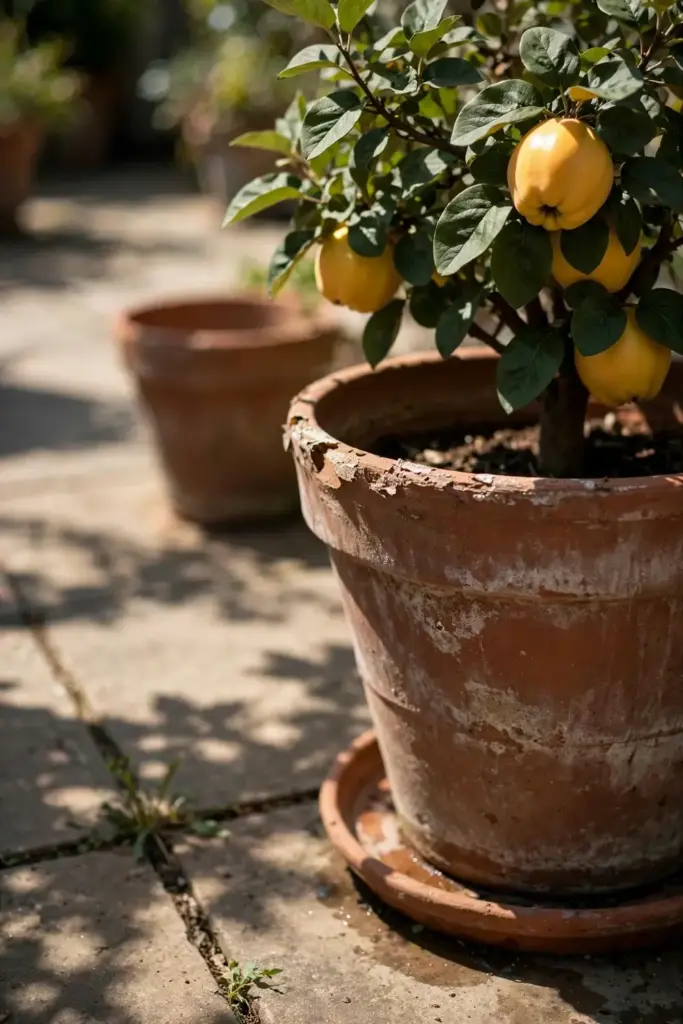
Choose a compact variety. ‘Siberian Gold’, “Meech’s Prolific”, and ‘Vranja’ are the standard recommendations for pots because they stay smaller. Use a loam-based potting compost with good drainage holes. Quince dislikes sitting wet, and a container amplifies every drainage mistake.
Container quince needs more of everything than a tree in the ground: more frequent watering, annual feeding, and repotting with root pruning every few years. Place the pot in a sunny, sheltered spot with at least six hours of sun. In cold zones, the pot is an advantage: you can move the tree to shelter for the worst of winter, though a dormant tree still needs its chill.
Expect a smaller tree and a smaller harvest. That is the trade. You get fresh quince from a patio instead of no quince at all.
17. Harvest: Color, Fragrance, and Patience
Quince fruit ripens in autumn, usually October and November depending on the region. The signs are unmistakable. The fruit loses all its green color and turns a rich golden yellow. It develops a strong, sweet, citrusy fragrance you can smell before you touch it. Mature fruit snaps easily from the branch; if it resists, it is not ripe yet.
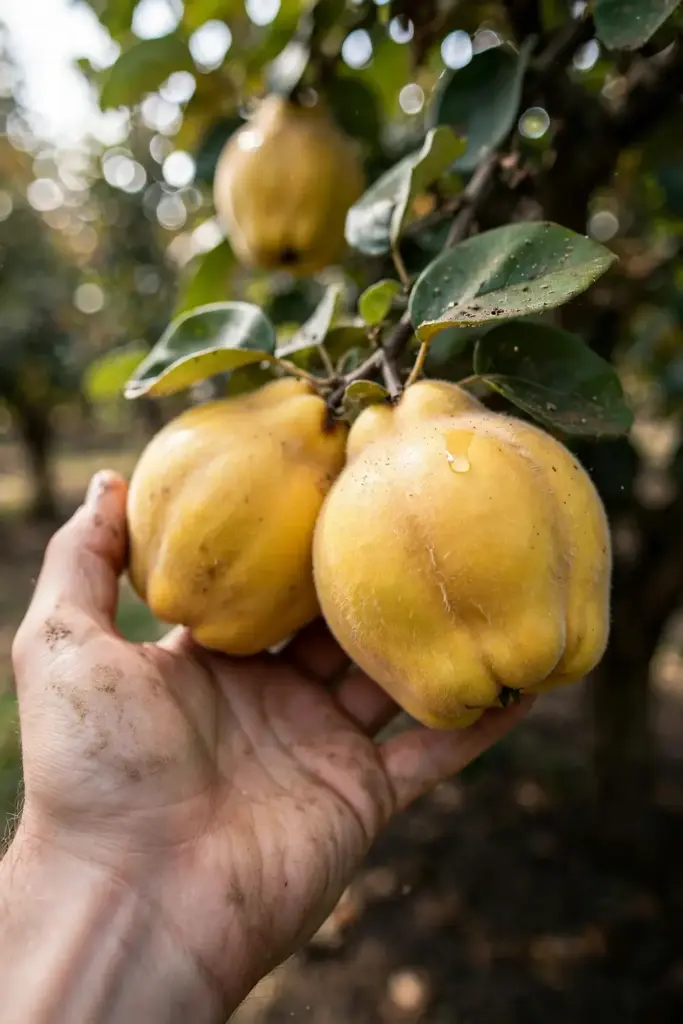
Leave the fruit on the tree as long as possible. Time on the branch develops flavor and fragrance, and the standard advice is to harvest just before the first frost. Handle the fruit carefully and cut the stems with sharp shears rather than yanking, because bruised fruit stores poorly.
The downy fuzz on the fruit rubs off as it ripens. That is normal. Rub it off gently when you bring the fruit in, and do not mistake it for a problem.
18. Storage: Weeks of Fragrance
Fresh quince keeps well, and the fragrance only intensifies in storage. Place the fruit in shallow trays, fruits not touching, in a cool, dark spot, and away from other fruit. Stored this way, quince holds for six to eight weeks, and some growers keep sound fruit for a month or two in an unheated garage.
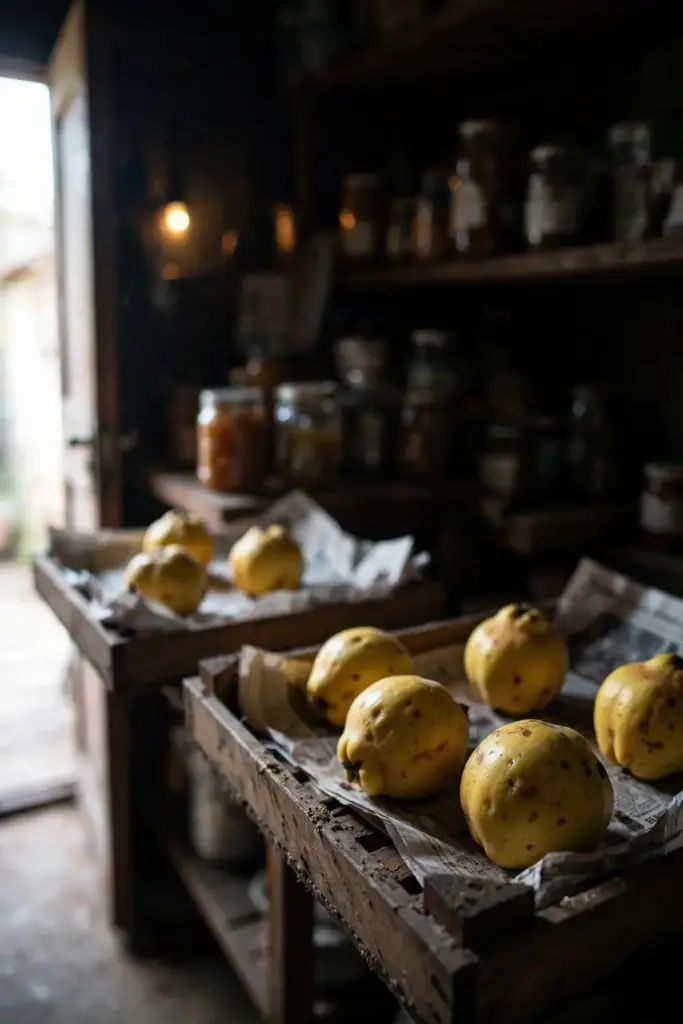
Refrigeration extends storage further. Wrapped and refrigerated, quince can last up to two months. At room temperature, expect about a week before the fruit starts to soften past its best for cooking.
Do not store damaged fruit with sound fruit. Bruised quinces deteriorate quickly and will drag their neighbors down. Check the trays periodically and use any fruit that starts to soften first.
The stored fruit keeps ripening after picking, softening and sweetening slowly. This is the fruit’s version of the bletting that old orchard books describe: time turning an inedible rock into something the kitchen can use.
19. The Cooking Angle: Why You Bother
Nobody grows quince for fresh eating. You grow it for what heat does to it. Raw quince is hard, astringent, and unappealing. Cooked quince turns pink or deep red, develops a perfume that fills the kitchen, and becomes one of the great preserving fruits.
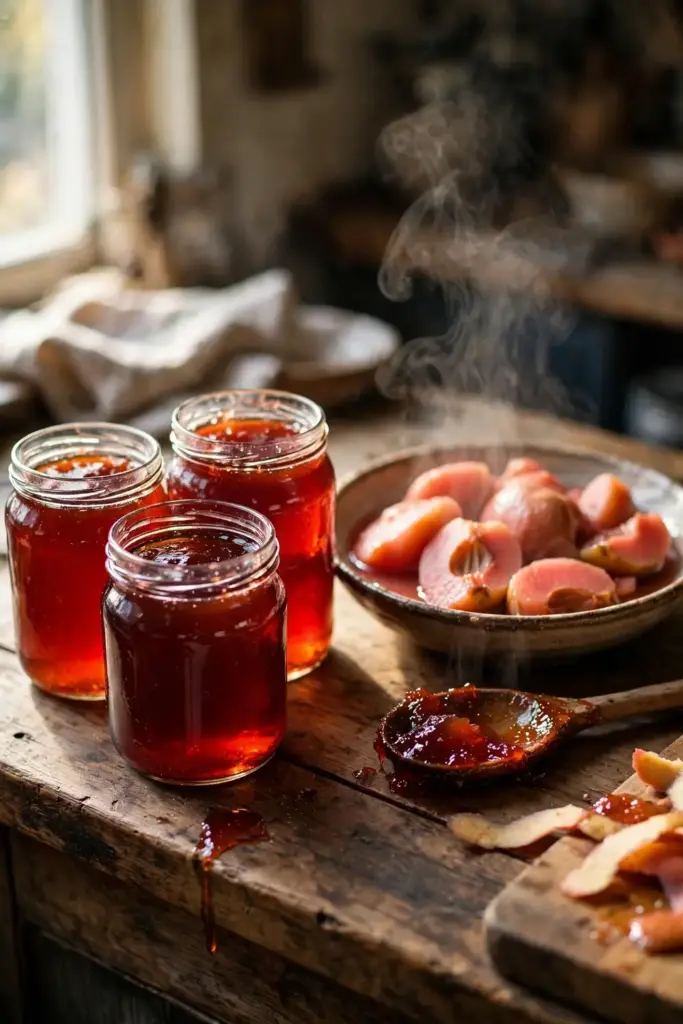
The classic uses: jelly, jam, and membrillo, the Spanish quince paste served with cheese. Quince is naturally rich in pectin, which is why it sets into jelly so readily. It also poaches beautifully in wine or cider, bakes into desserts, and lifts an apple crumble with a few slices added to the filling.
The word marmalade originally meant a quince preserve. When quince cooks down with sugar, pigments form and the pale flesh turns orange and red, which is part of the visual pleasure of the finished jars. If you have never cooked one, start with jelly: it is the simplest way to meet the fruit on its own terms.
Practical tip for the kitchen: quince is famously hard to peel and cut. Simmering the whole fruit in just enough water to cover, until the peel splits and the flesh is tender but holds its shape, makes preparation far easier than wrestling with a raw fruit and a knife.
20. Troubleshooting: The Usual Complaints
No flowers or fruit on a young tree is almost always age. A grafted tree needs three to five years. A seedling needs longer. If the tree is healthy and growing, waiting is the correct action.
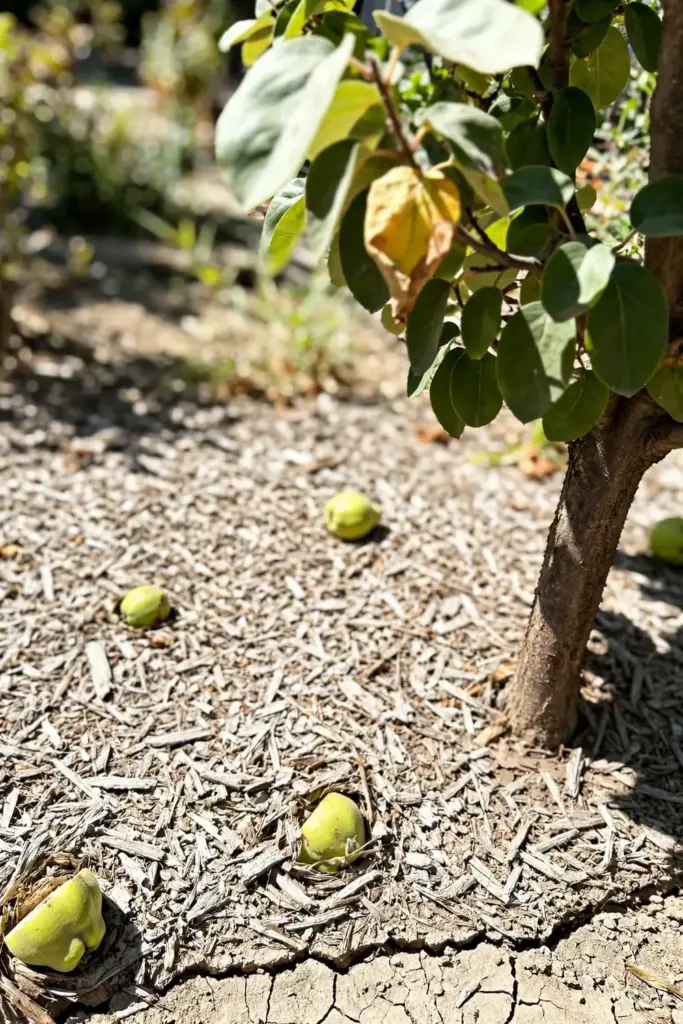
Fruit drop in summer usually means water. Check whether the tree is actually getting its inch a week, and check whether mulch is doing its job. Trees in lawns compete with grass for every drop, and grass usually wins.
Fire blight strikes show as blackened, scorched-looking shoot tips in spring. Prune well below the damage, disinfect between cuts, and hold back on nitrogen feeding. Do not compost the prunings.
Poor fruit set on a single tree can improve with a second tree nearby, though one tree still fruits. If frost is the pattern, blossoms browning after cold nights, the fix is siting: a warmer, more sheltered spot or a wall-trained tree.
Leggy growth with few flowers means shade. The tree may survive in part shade, but fruiting wants full sun. If a building or a larger tree has grown into the light, prune the competitor or move the quince.
21. The Long Game: A Tree for Decades
Plant a quince and you are planting for the long term. These trees live 50 years or more and stay productive for about 25. The slow start is the price of a tree that will outlast most of the gardener’s other projects.
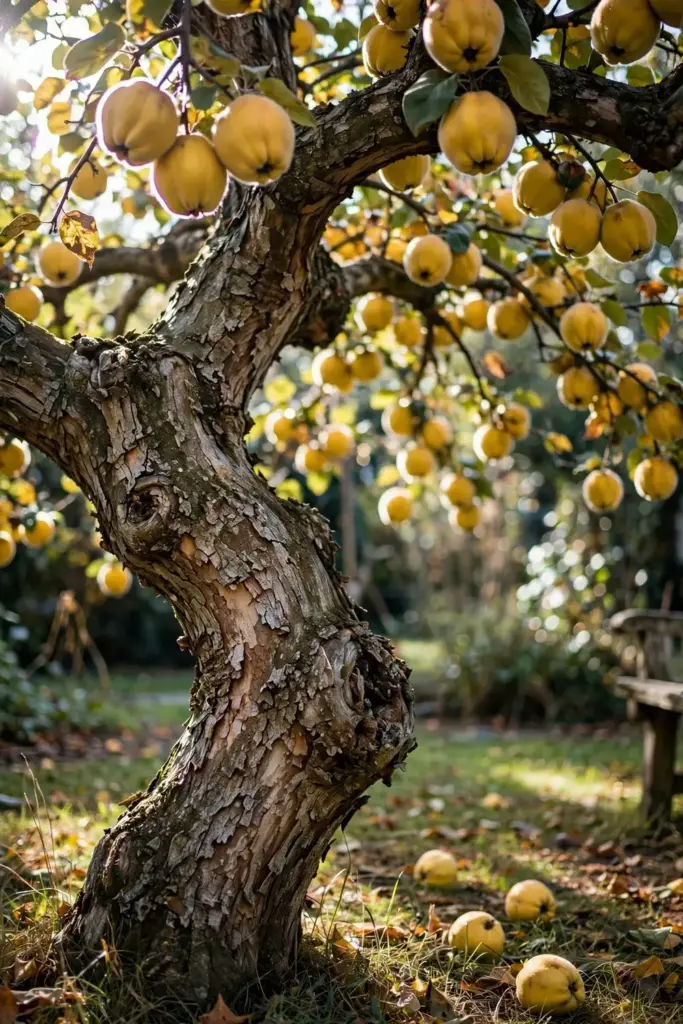
The care routine stays simple for the life of the tree. Annual feeding, an inch of water a week in the growing season, a light prune every few years, and prompt removal of anything diseased. That is the whole program. Quince does not ask for spraying schedules, thinning regimens, or complicated training systems.
There is a reason this fruit fell out of fashion and a reason it deserves to come back. It fell out because the modern grocery trade has no use for a fruit that must be cooked. It deserves to return because the home garden is not a grocery store. In a home garden, a beautiful, fragrant, nearly pest-free tree that feeds a family for decades is exactly the right plant.
Frequently Asked Questions
A grafted quince tree usually bears its first fruit in three to five years after planting, depending on the variety and rootstock. Trees grown from seed take longer, often five to ten years. The tree stays productive for about 25 years and can live for 50 or more, so the wait buys decades of harvests.
No. Quince is self-fertile, so a single tree sets fruit on its own. A second tree nearby usually improves the set and gives you a heavier crop, but it is not a requirement. If you have room for only one tree, plant it with confidence.
No. Fruit quince grows as a single non-suckering trunk and is not considered invasive anywhere it is commonly grown. The aggressive reputation belongs to flowering quince, a different genus that spreads through underground runners and is genuinely hard to remove. True quince stays where you plant it.
In a cool, dark spot, arranged in trays with the fruits not touching, quince keeps for six to eight weeks, sometimes a month or two. Wrapped and refrigerated, it can last up to two months. The fragrance intensifies during storage, and the fruit keeps ripening slowly after harvest.
Yes. Use a container at least 18 inches deep and wide, 24 inches is better, with a loam-based compost and good drainage. Choose a compact variety like ‘Vranja’, ‘Siberian Gold’, or “Meech’s Prolific”. Potted trees need more frequent watering and feeding than trees in the ground, plus repotting and root pruning every few years.
Technically yes, practically no. Raw quince is hard, sour, and astringent enough to numb your teeth. The fruit is meant to be cooked. Heat transforms it: the flesh softens, turns pink or red, and develops the perfume that makes it famous for jelly, jam, and membrillo.
Give the Forgotten Fruit a Second Look
Quince asks for less than almost any other fruit tree and gives back a harvest no store sells. Plant it in full sun in zones 5 to 9, give it an inch of water a week, prune lightly in late winter, and cook what it gives you. Three to five years from now, the golden fruit on your own tree will smell like the reason you planted it.