
A thanksgiving kids table built from the garden solves the two problems every host knows: children finish eating in 10 minutes, and a bare folding table looks forgotten next to the main table. Living centerpieces, real leaf place cards, and trays of garden material give children a table that holds them, and every piece on it comes from a pot, a bed, or a branch cut that morning.
The 45 ideas group into six jobs: living centerpieces at child scale, leaf place cards and seat markers, covers and surfaces from garden material, activities that sit on the table and start without an adult, garden snacks served at the table, and whole outdoor tables under a tree, on a porch, or in a greenhouse. Start with one centerpiece, one place card, and one activity tray, and the table already works.
I set a garden kids table for the first time with three herb pots and a bowl of mini pumpkins, and the children stayed through the whole meal.
At a Glance: Pick the Pieces Your Table Needs
| Table Job | Item Numbers | Best First Pick | Adult Job Before Dinner |
|---|---|---|---|
| Living centerpieces | 1 to 9 | Rosemary pot centerpiece | Water pots that morning |
| Place cards and seat markers | 10 to 18 | Pressed maple leaf place card | Write names the day before |
| Covers and surfaces | 19 to 26 | Leaf print table cover | Cut and stamp the morning of |
| On-table activities | 27 to 36 | Gratitude leaf cards at each seat | Fill trays before guests arrive |
| Garden snacks at the table | 37 to 40 | Roasted pumpkin seeds in paper cups | Roast seeds the day before |
| Whole outdoor tables | 41 to 45 | Kids table under the apple tree | Check the ground is dry and level |
Adult place settings live on a different page: the full set of garden settings for the main table sits with the Thanksgiving table setting ideas and this page stays at child height. Standalone craft tutorials live there too, since the garden crafts children finish on their own are projects with their own steps, and the activities here are table pieces that start the moment a child sits down.
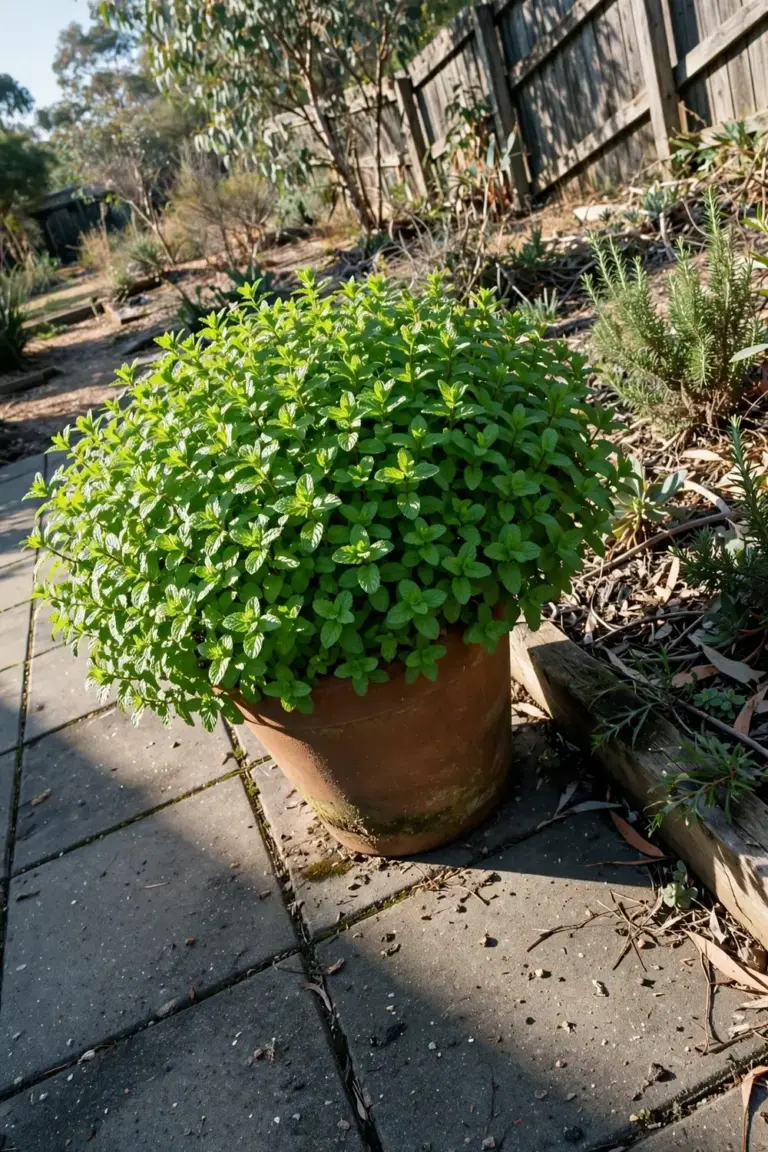
1. Rosemary Pot Centerpiece in a Terracotta Pot
Set one rosemary plant in a terracotta pot 15 centimetres (5.9 inches) wide at the center of the kids table, and push a short wooden label into the soil with the plant name written in thick marker. Water the pot that morning until water runs from the drainage hole, then set the pot on a saucer so the table stays dry.
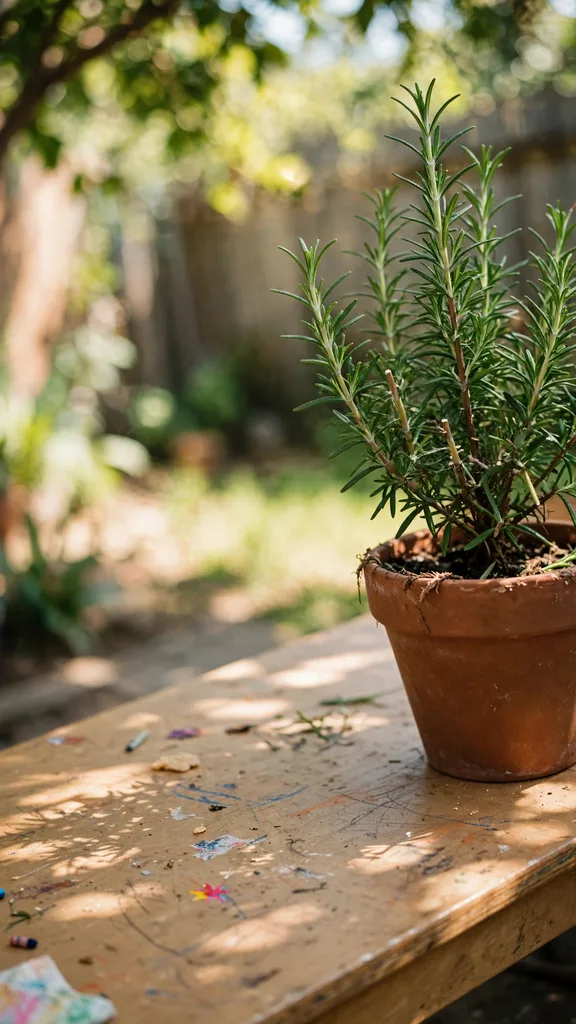
Rosemary holds its shape for the whole meal, scents the table when a child brushes a stem, and goes back to a sunny sill after dinner. A pot that dries out drops needles into the plates, so the morning watering is the whole job. Keep the pot small: a wide pot eats the room children need for plates.
2. Mini Pumpkin Stack Centerpiece in a Basket
Stack five mini pumpkins in a shallow basket, three on the base and two on top, with the stems turned inward so the stack locks. Choose pumpkins with no soft spots and no cuts, and set the basket on a folded cloth so it stays still when the table moves.
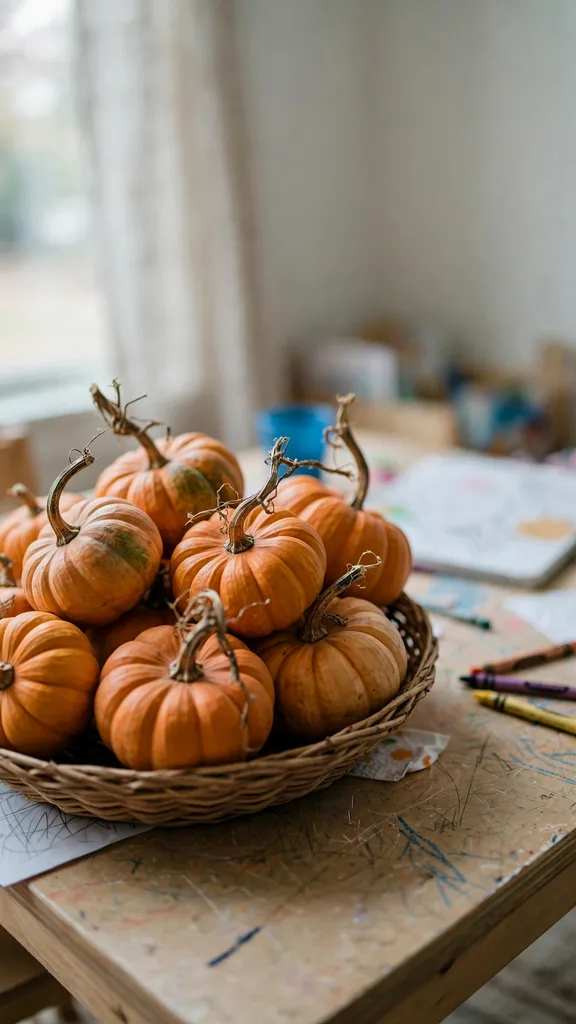
Cured pumpkins keep for 2 to 3 months in storage at 10.0 to 12.8 degrees Celsius (50 to 55 degrees Fahrenheit), following the University of Vermont Extension pumpkin storage guide, so a stack built for Thanksgiving still looks sound at the end of November. A pumpkin with a bruised side rots first and stains the cloth, so bruised fruit goes to the soup pot.
3. Ornamental Kale Rosette Centerpiece
Plant one ornamental kale in a low pot and set it at the center of the table with two small gourds at its base. The rosette sits at child eye height, holds pink and cream color at its center, and needs one watering on the day it goes onto the table.
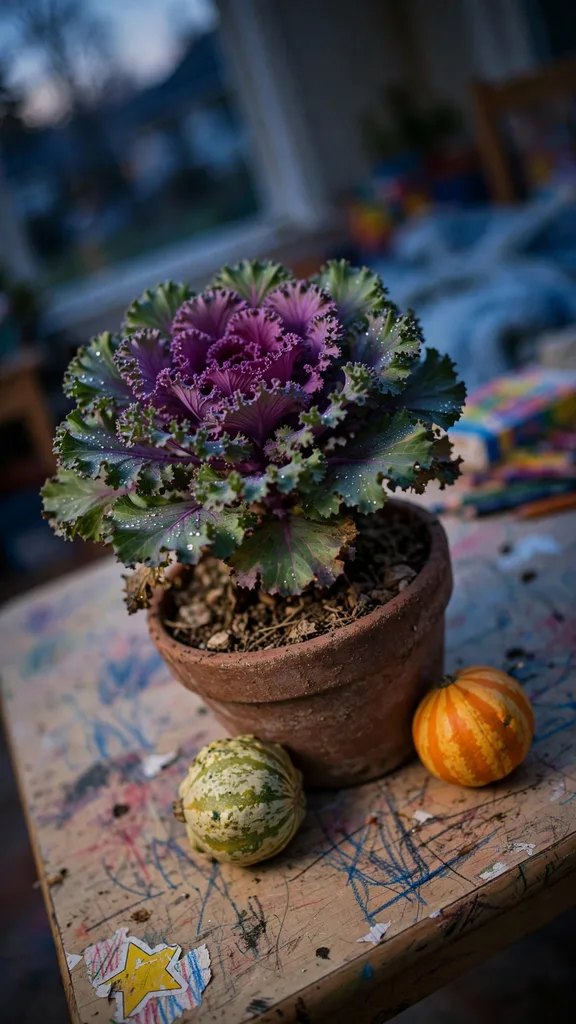
Ornamental kale is cold tolerant to minus 15.0 degrees Celsius (5 degrees Fahrenheit) and its color deepens once temperatures drop below 10.0 degrees Celsius (50 degrees Fahrenheit), following the NC State Extension ornamental cabbage and kale entry. A kale kept in a warm room for a week before the dinner opens loose and pale, so the pot stays outside until the day.
4. Thyme Pot Trio Down the Middle
Line three small thyme pots down the middle of the table, 30 centimetres (11.8 inches) apart, and tuck a dried wheat stem into each pot at an angle. The low line leaves sight lines open, so children still see each other over the pots.
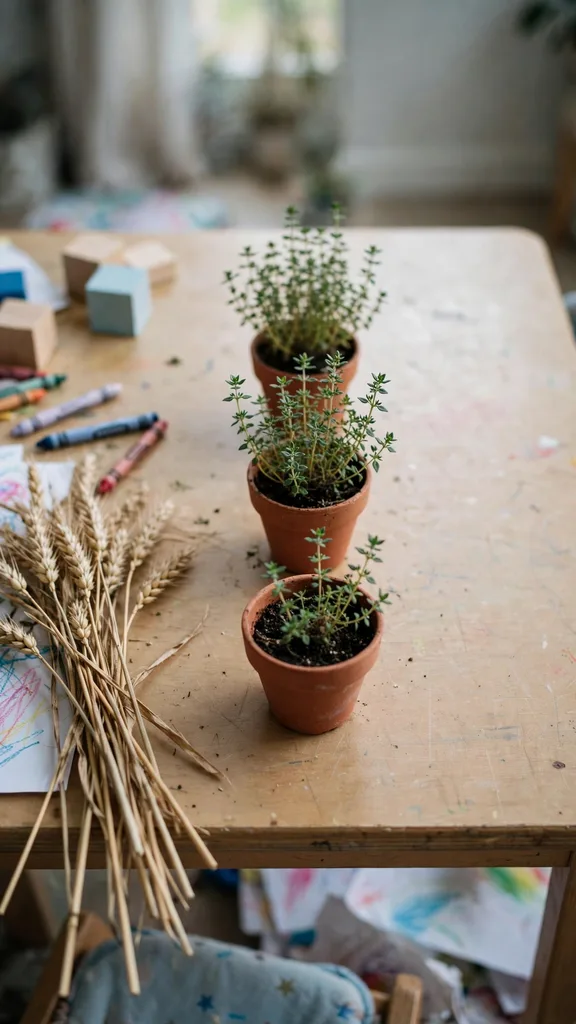
Thyme survives a knocked pot and a spilled cup, and a child can pinch one leaf to smell without harming the plant. Tall centerpieces fail at a kids table because children stand up to see past them and tip their cups, so every plant in this line stays below 20 centimetres (7.9 inches).
5. Painted No-Carve Mini Pumpkin Row
Set six mini pumpkins in a row down the table center and paint one simple shape on each pumpkin with washable paint: a star, a stripe, a spot pattern, a leaf, a heart, and a sun. Dry the paint for 1 hour before the pumpkins go onto the table.
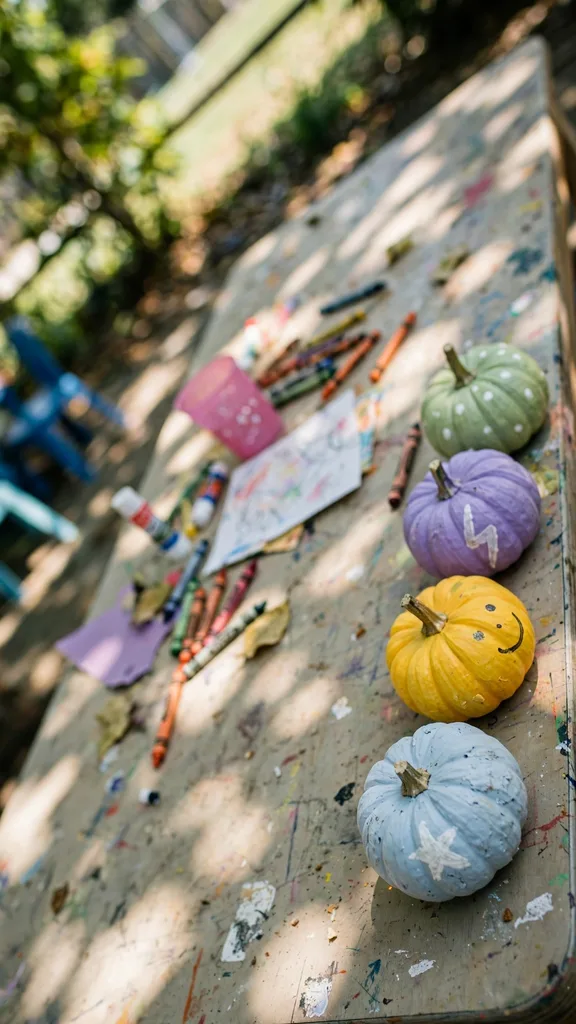
No carving means no cut flesh, and an uncut pumpkin holds for weeks while a cut one softens in days. Paint that goes on wet smears onto sleeves and the table cover, so the row is painted in the morning and carried in dry. A white pumpkin takes dark paint best and shows every smear first.
6. Mum Pot Centerpiece in a Crate
Set one mum in full bud inside a wooden crate at the center of the table, and pack dried leaves around the pot rim so the plastic pot stays hidden. Pick a mum with tight buds at the edges and open flowers at the center, and water it the day before.
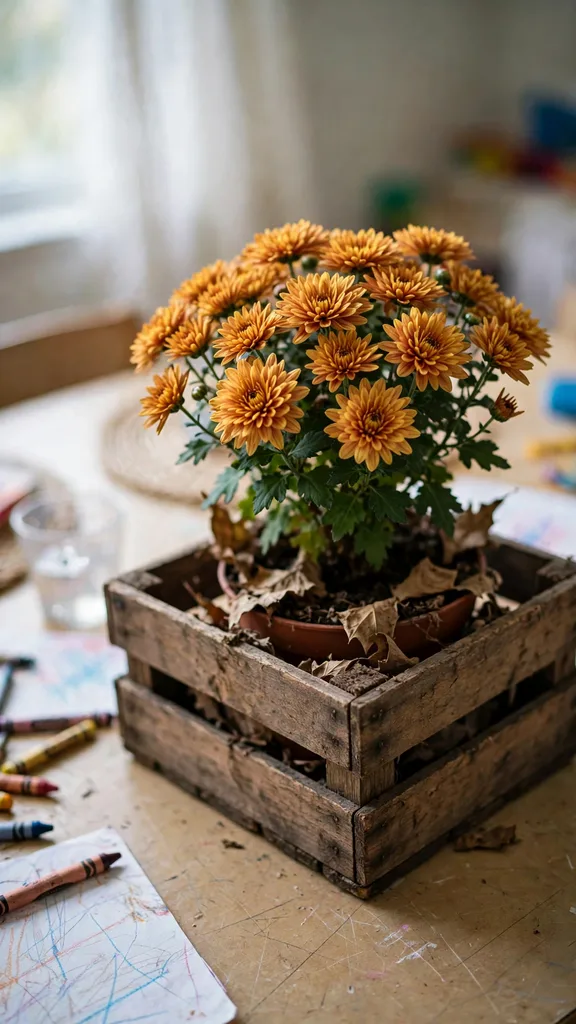
A mum bought in full bloom fades before dessert ends, and a mum in bud opens across the whole weekend. The crate keeps the pot upright when small elbows hit the table, and the whole centerpiece lifts off in one move when plates need the space. Dead flowers pull off with a pinch and go to the compost bin.
7. Gourd and Pinecone Bowl Centerpiece
Fill a wide wooden bowl with dried gourds, pinecones, and three dried orange slices, and set the bowl at the center of the table on a ring of evergreen tips. Sort the pieces by size, large gourds at the base, small pinecones on top, so the bowl reads as one mound.
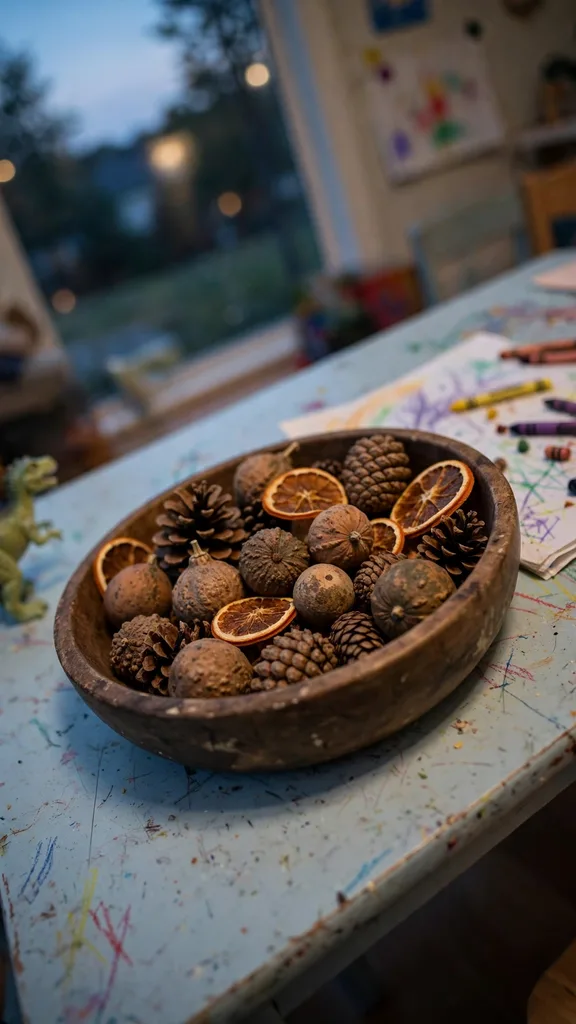
Every piece in the bowl is dry, light, and safe to handle, so children can rearrange the bowl during the meal without breaking the centerpiece. A bowl filled with fresh fruit bruises and leaks juice by the second day, so fresh fruit stays in the snack items and the centerpiece stays dry.
8. Dried Orange and Bay Leaf Runner
Lay a line of bay leaves flat down the center of the table, stem to tip, and set a dried orange slice on every third leaf. The runner takes 10 minutes to lay, scents the table, and lifts off in one sweep after dinner.
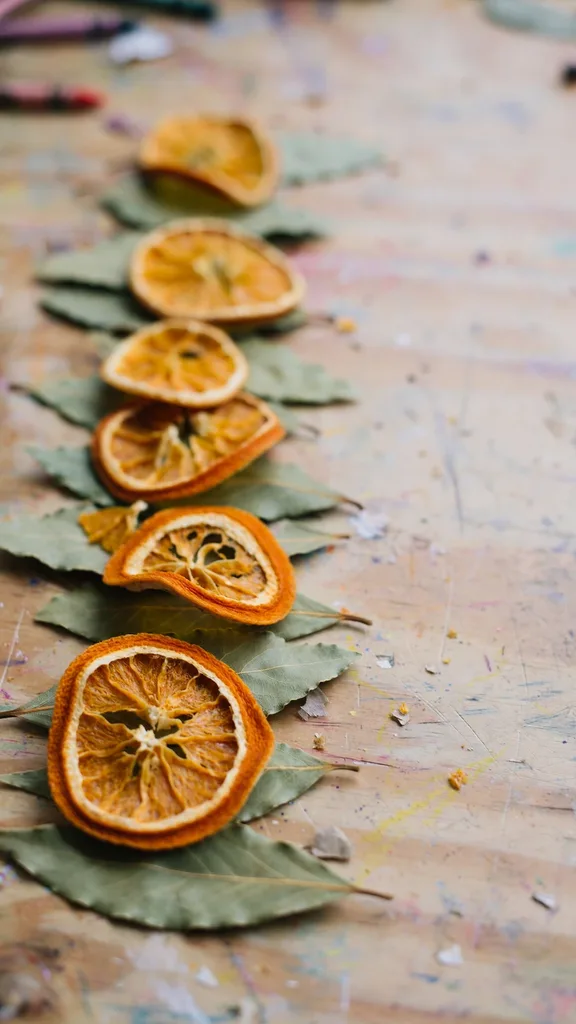
Bay leaves curl as they dry, so leaves picked that week lie flattest and hold the orange slices still. A runner glued to a backing strip tears when a plate drags across it, so loose leaves win at a kids table: a spilled cup soaks two leaves, and those two leaves go straight to the compost.
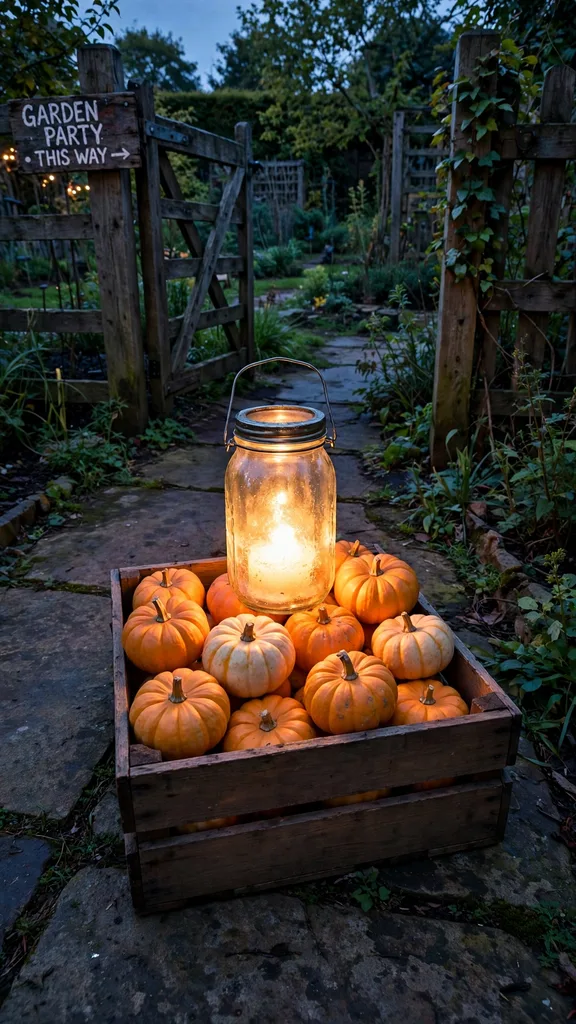
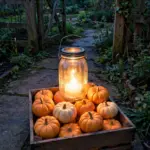
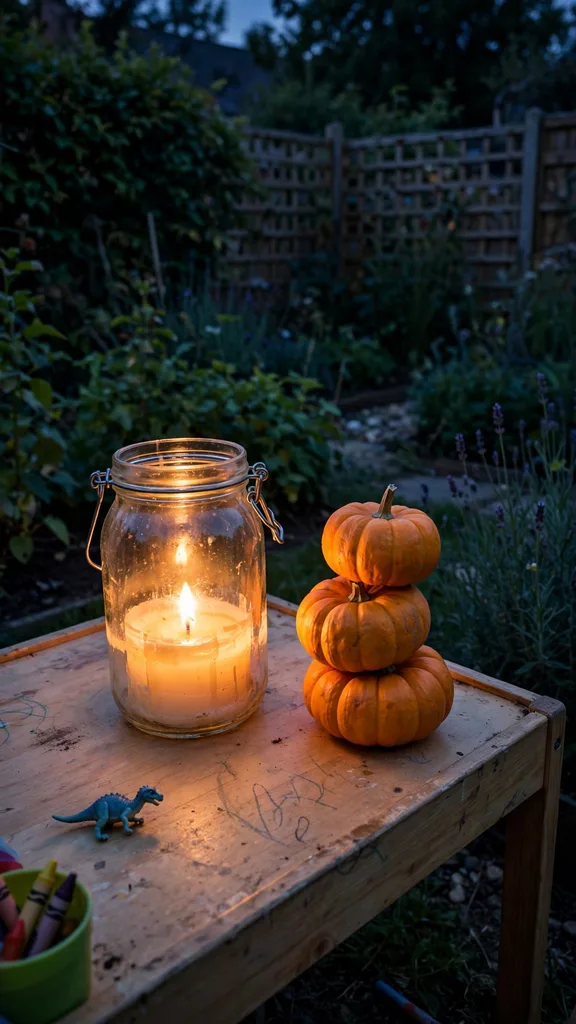
9. Lit Jar Lantern Centerpiece with a Mini Pumpkin
Set a battery tea light inside a glass jar, stand the jar on a ring of small pinecones, and place one mini pumpkin at the jar base. Switch the light on at dusk and the jar glows across the whole table while the flame risk stays zero.
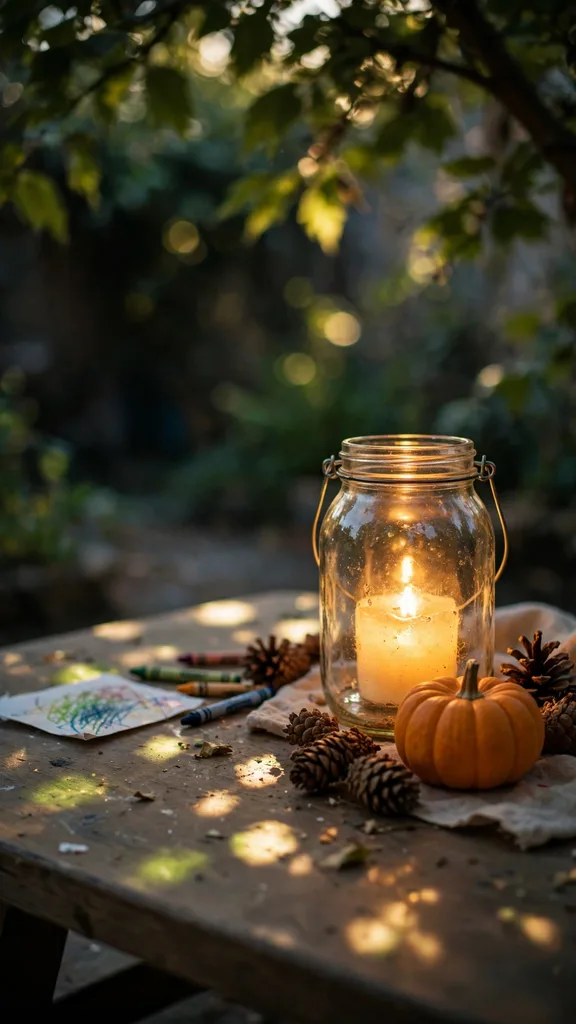
Real candles fail at a kids table: sleeves, paper cards, and dried leaves all sit within reach of the flame. The jar light runs for the full meal on one battery set, and a child can carry the jar to the porch after dinner. A jar with a narrow mouth traps heat from a real candle, so this centerpiece stays battery only.
10. Pressed Maple Leaf Place Card at Each Seat
Press large maple leaves under heavy books for 3 days, write one name per leaf in gold or white paint pen, and lay one leaf card at each seat on top of the napkin. The leaf sits flat, holds the name at reading size, and marks the seat before a child sits down.
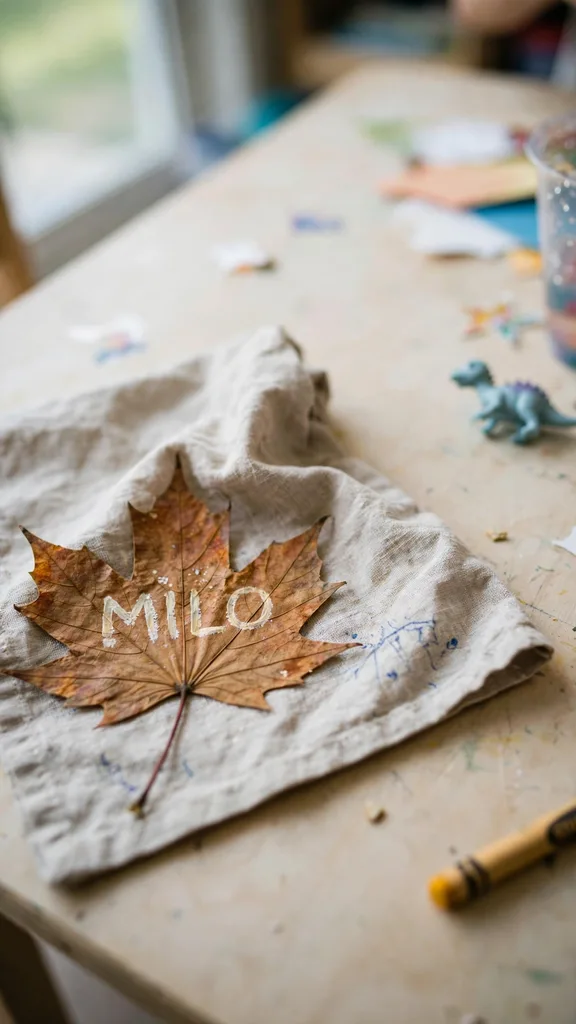
A leaf card written on a fresh leaf curls by dinner and the name cracks, so pressing first is the step that decides the result. Leaves with torn edges tear further under plates, so the card leaf goes on the napkin, never under the plate. Cards compost after dinner with the table scraps.
11. Oak Leaf Name Card Tucked Into a Napkin Fold
Pick stiff oak leaves with long stems, write the name along the leaf blade, and tuck the stem into the fold of each napkin so the leaf stands at a low angle. Set the napkins in a row the morning of the dinner so the leaves stay fresh.
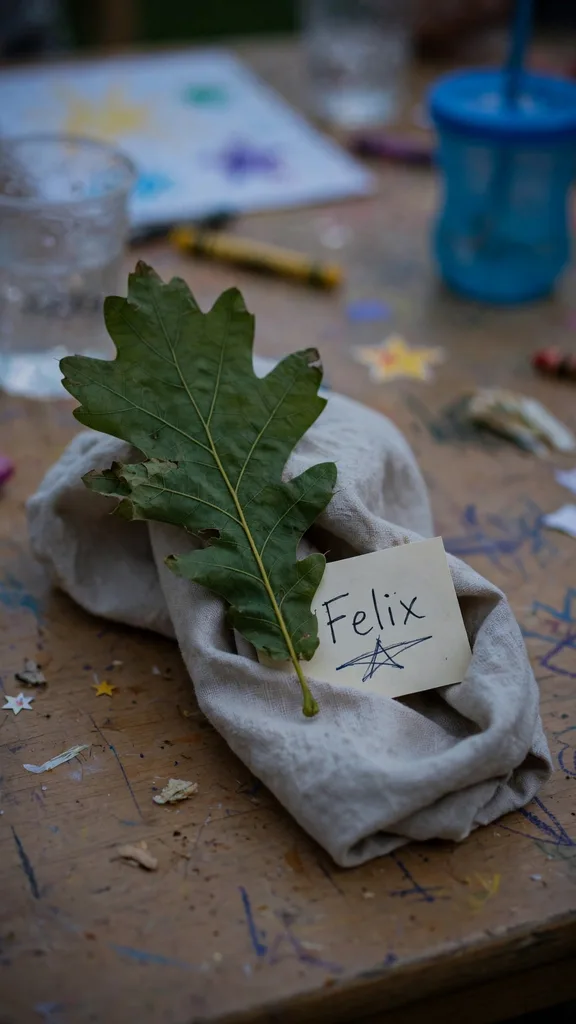
Oak leaves hold their shape for a full day without pressing, which suits a host with no spare days. A leaf picked a week early dries brittle and snaps at the stem, so this card is a same-day job. Names written in thin pen vanish in low light, so the paint pen stays thick.
12. Soft Leaf Place Cards That Stay Flat All Day
Soak autumn leaves in a pan of water mixed with glycerin, weight the leaves down so they stay covered, and dry them flat on a cloth after the soak. The treated leaves stay soft and flat, take paint pen names well, and bend without cracking when a child picks one up.
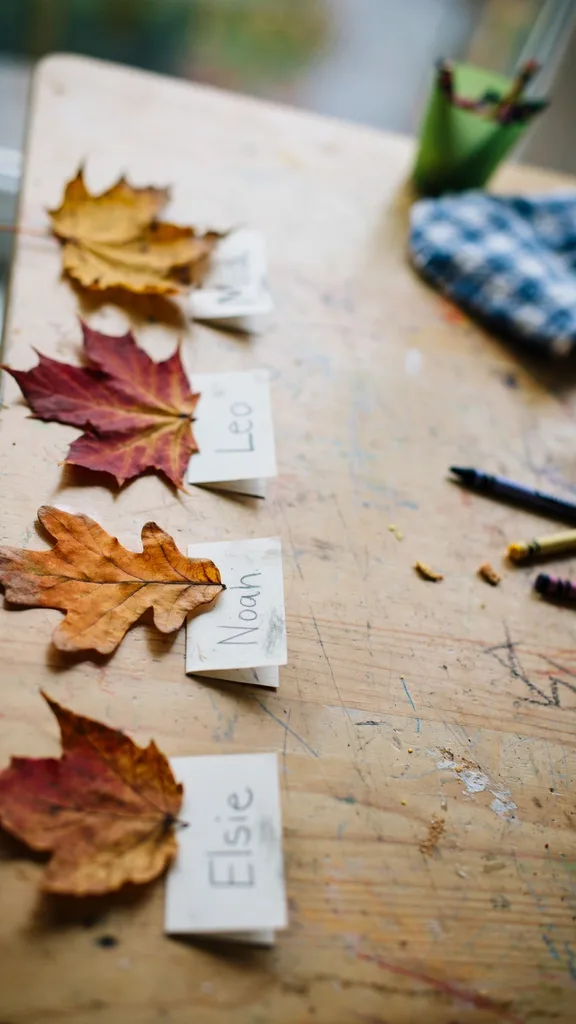
Soft cards suit the youngest children, who fold and carry their cards all evening. A card that dries on a radiator curls at the edges in 1 day, so air drying on a flat cloth is the safe route. Leftover treated leaves store flat in a box and serve the next party without a new soak.
13. Leaf Card Standing in a Pinecone Holder
Push the stem of a dried leaf card into the scales at the top of a large pinecone, and set one pinecone holder at each seat. The cone grips the stem, the card stands upright, and a child finds a name at eye height from across the room.
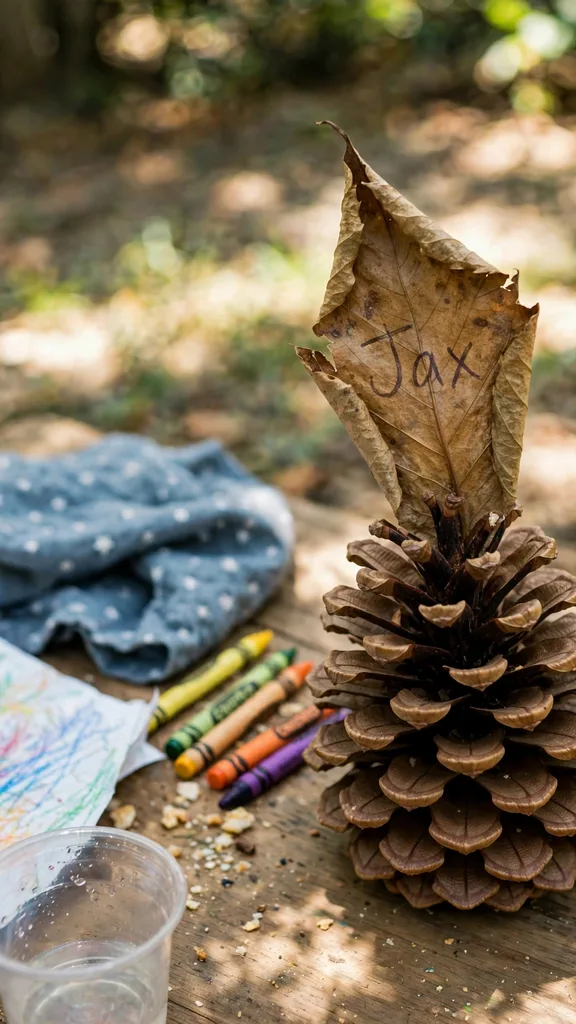
Small pinecones tip over under a card, so the holder cone needs a wide flat base and a card cut small. A cone that rocks gets a flat spot trimmed from its base with an adult knife before the dinner. Fallen holders roll under the table and vanish, so spares sit in a basket at the table end.
14. Herb Sprig Place Marker Tied to a Napkin
Tie a fresh rosemary or sage sprig to each napkin with a short length of twine, and lay a small paper name tag under the sprig. The marker scents each seat, takes 2 minutes per seat, and uses prunings the herb bed already owes the kitchen.
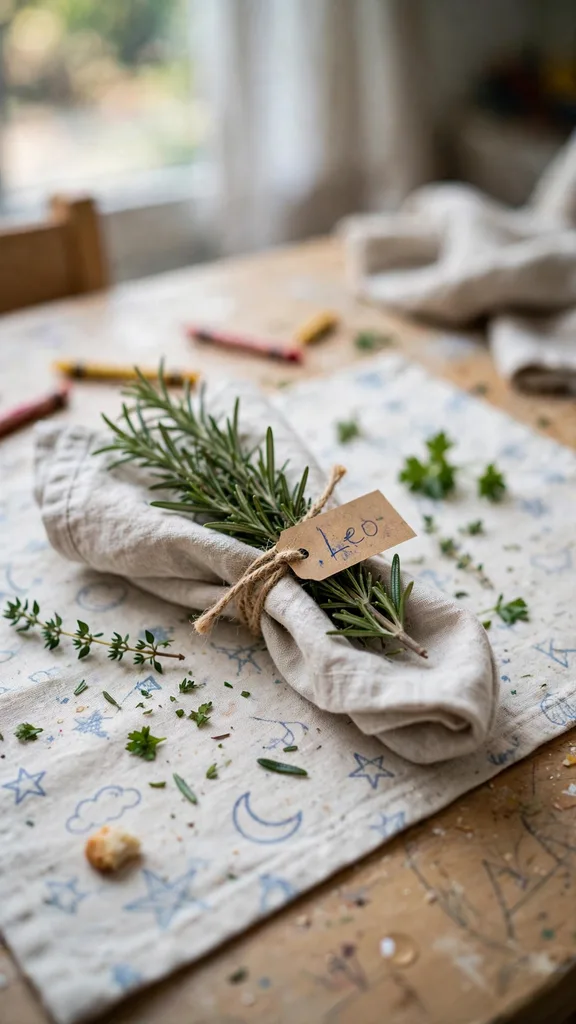
Sage wilts in a warm room within hours, so sage markers are tied in the last hour, while rosemary holds a full day. A sprig longer than the napkin sheds leaves into the plate, so every sprig is cut shorter than the napkin fold. Used sprigs go into the stock pot or the compost, never back onto the plant.
15. Mini Pumpkin Name Marker at Each Plate
Write one name on a small paper tag, pin the tag to the stem of a mini pumpkin with a short pin pushed in at an angle, and set one pumpkin at each plate. The marker doubles as the favour the child carries home, so no separate favour bag is needed.
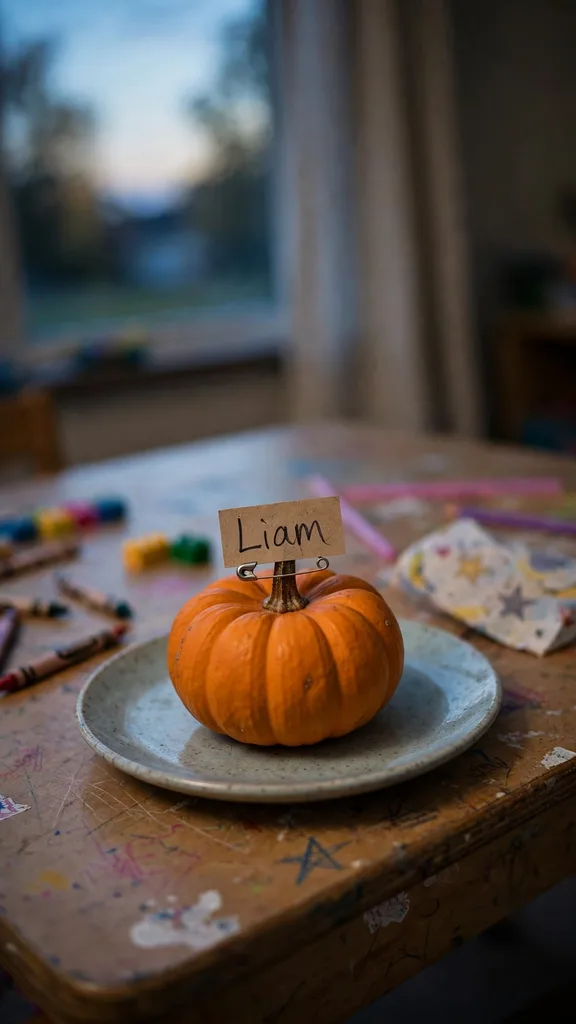
A tag glued flat to the pumpkin skin peels off as the skin cools and warms, so the pin through the stem is the hold that lasts. Pumpkins with broken stems take no pin and go to the centerpiece stack instead. Names in pencil fade under kitchen light, so the tag is written in pen.
16. Acorn Cap Seat Markers in a Wooden Row
Glue one acorn cap to a small wooden disc, paint one initial on each disc, and set the discs in a row at the top of each plate. The markers suit an older kids table where children read initials and enjoy small natural pieces.
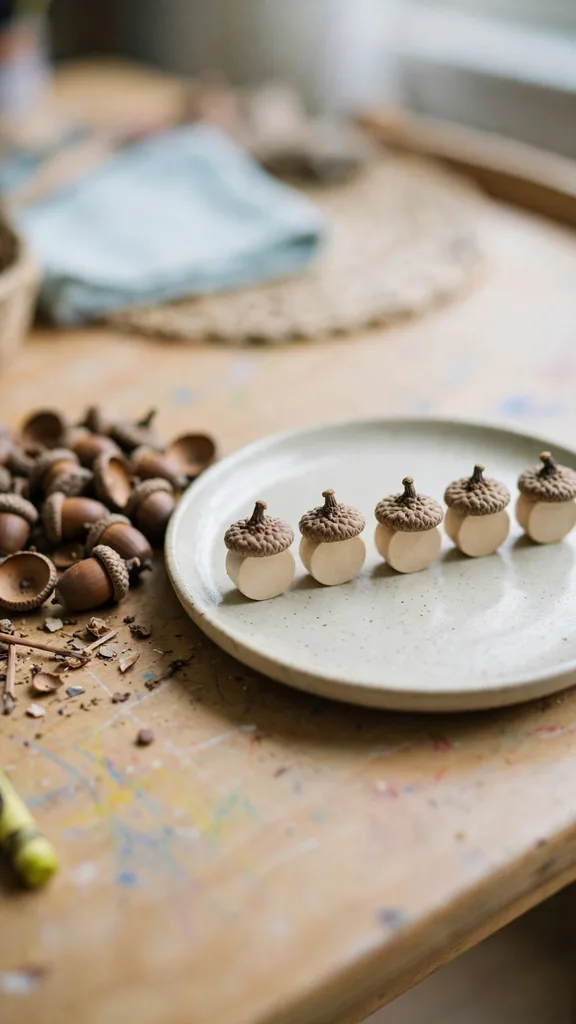
Acorn caps are small parts, so this marker stays off any table with children under 3 years, and the caps sit at the plate top, away from food. A cap glued with a thin glue line pops off in a warm room, so a thick bead of glue and an overnight dry decide whether the marker survives the meal.
17. Dried Leaf Card Stacked on a Flat Stone
Set one flat garden stone at each seat, lay a dried leaf card across the stone, and weight the card with a single acorn. The stone lifts the card off the cloth, keeps it clear of spills, and gives each seat a cool, heavy marker a child can hold.
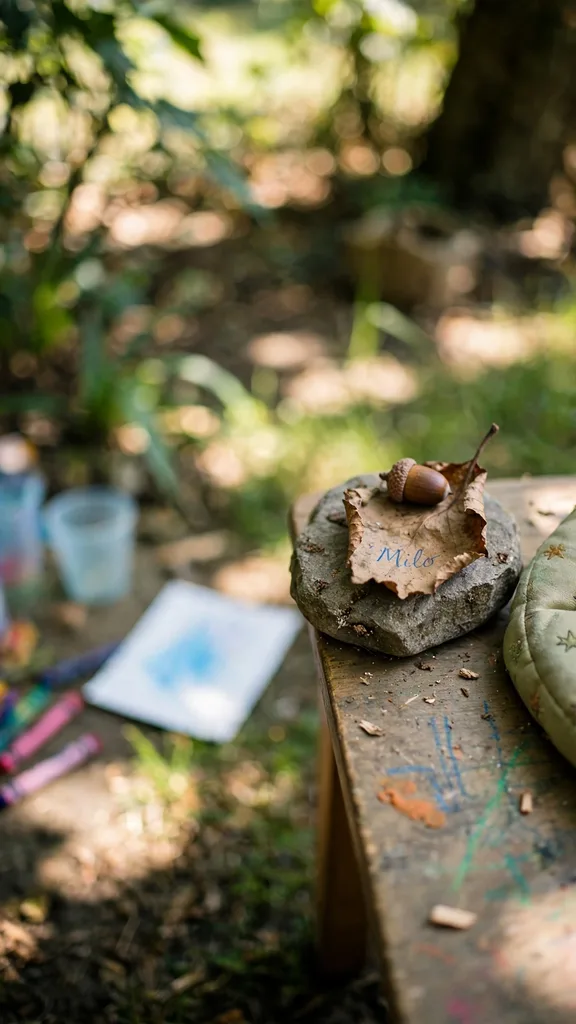
Stones pulled from a wet bed carry soil onto the cloth, so every stone is washed and dried the day before. A round stone rolls when the table is bumped and takes the card with it, so flat stones only. After dinner the stones go back to the bed edge and the cards go to the compost.
18. Evergreen Sprig Card Fresh Cut That Morning
Cut evergreen tips 10 centimetres (3.9 inches) long on the morning of the dinner, lay one tip across each plate, and rest a plain name card on the green. The fresh cut tips stay green and scented for the whole day and cost one walk around the garden.
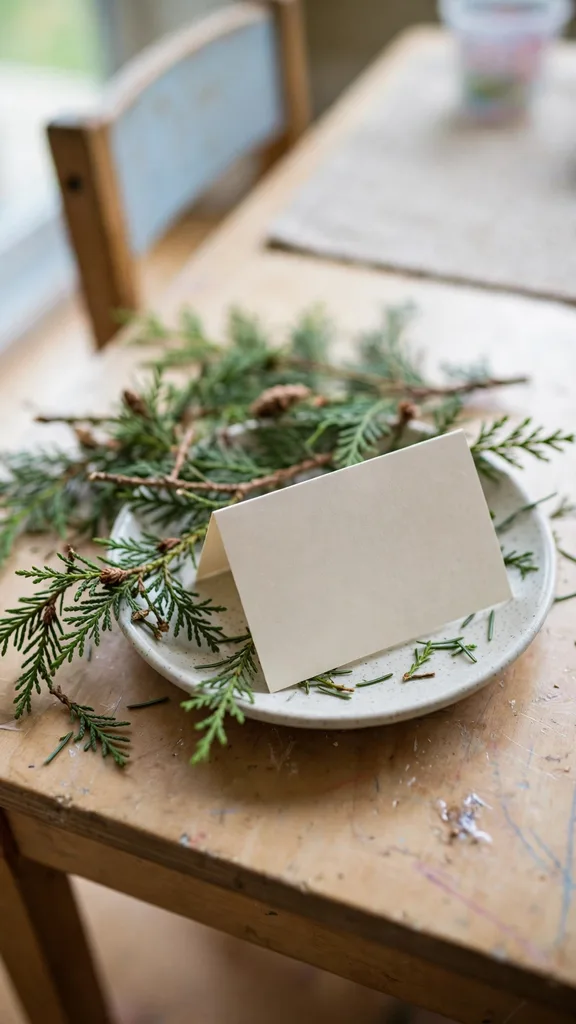
Evergreen cut a week early dries at the needle ends and sheds onto the plate, so the morning cut is the rule for this marker. Cedar and fir tips lie flattest; pine tips spring up and push the card off, so pine stays in the centerpiece bowl. Tips compost after dinner with the leaf cards.
19. Burlap Runner with Fresh Evergreen Edges
Lay a burlap runner down the center of the table and tuck fresh evergreen tips under both edges so the green frames the cloth. The runner protects the table from cups and plates, and the green edge hides the plain cloth line.
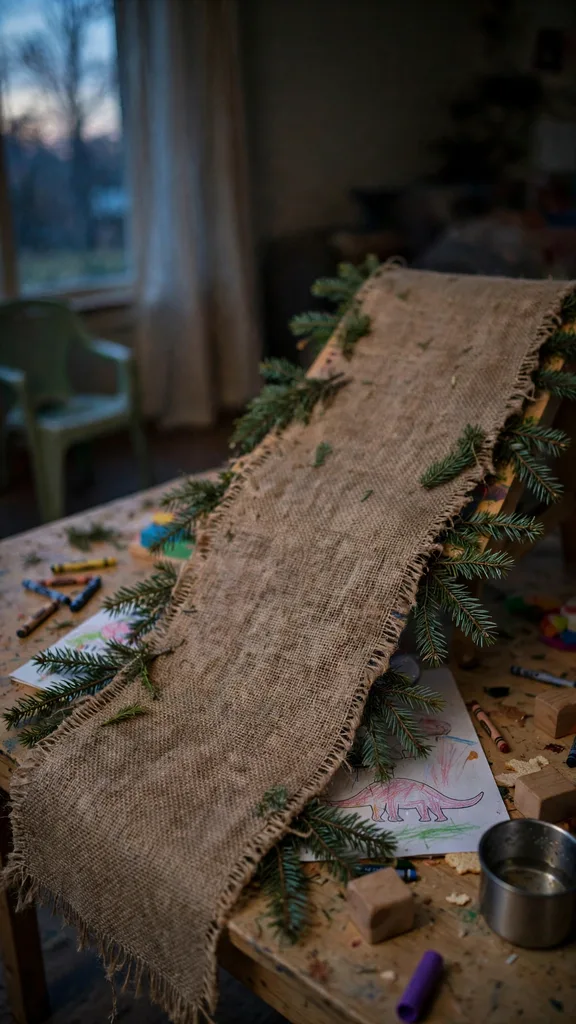
Burlap sheds fibers onto plates if it sits under them, so the runner stays in the center strip and plates stay on the table. Evergreen tucked a day early dries and drops needles into the food zone, so the tips go in on the day. A runner cut too narrow vanishes under the centerpiece and reads as a stain, so width is checked before the first pot goes down.
20. Leaf Print Table Cover Stamped That Morning
Spread a plain cotton cloth on the table, press painted leaves onto the cloth in rows, and let the prints dry for 2 hours before the cloth goes onto the kids table. Maple and oak leaves print the clearest shapes, and two paint colors keep the pattern calm.
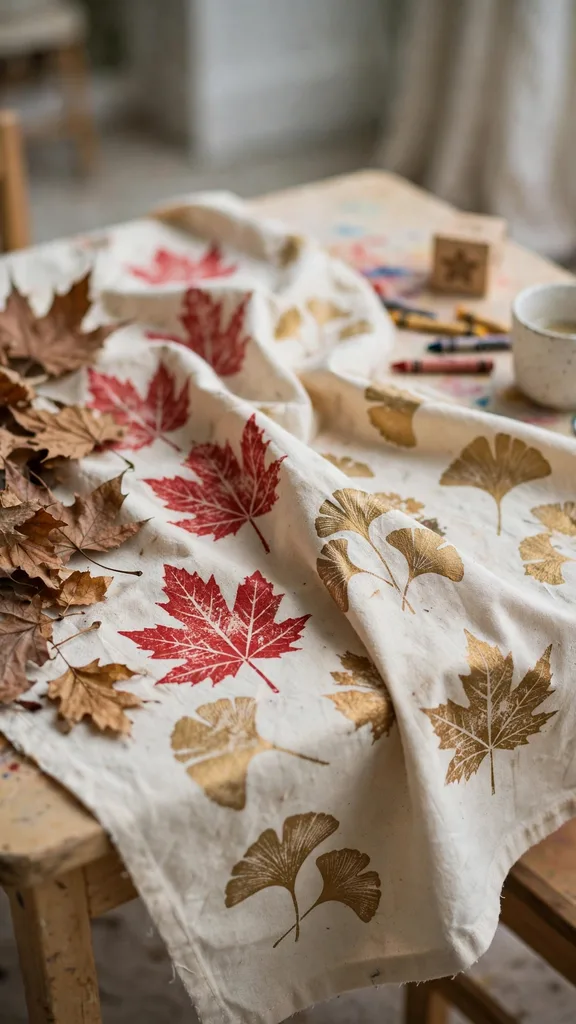
Prints stamped with thick paint bleed into blobs, so the leaf is brushed thin and pressed once, hard. A cloth stamped the night before and folded wet sticks to itself and loses half the prints, so drying flat is the step that saves the cover. The finished cloth washes and serves again at the next party.
21. Wooden Crate Risers for Serving Bowls
Turn two small wooden crates upside down on the table and set serving bowls on top of the crates, so bowls sit above plate height and small arms reach under them less often. Line each crate top with a cloth square so the bowl stays still.
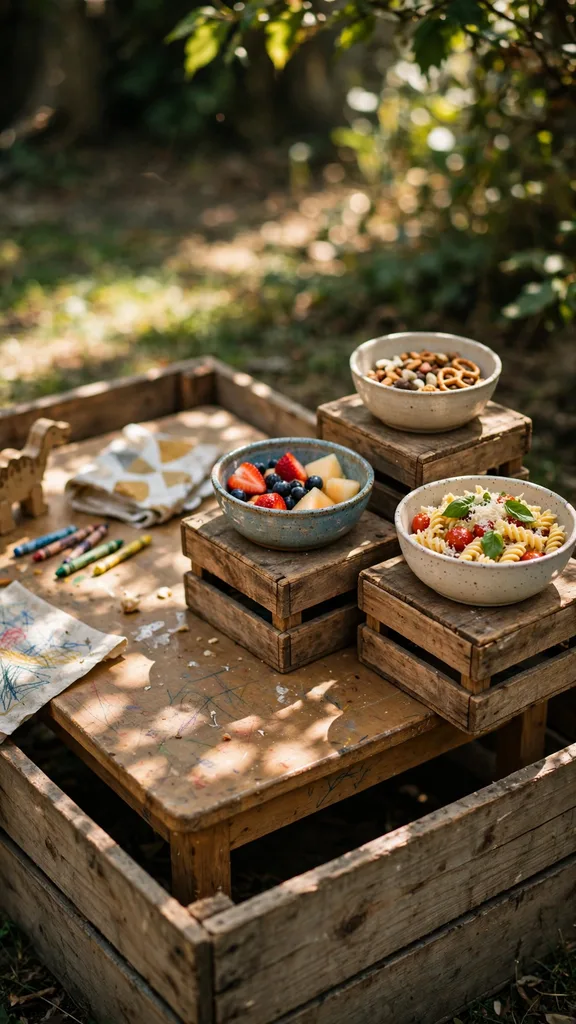
A crate that rocks spills the bowl it carries, so crates are tested with a push before any food goes on. Tall risers at a low table block sight lines and tempt climbing, so one crate height is the limit. After dinner the crates carry the table pieces back to the kitchen in two trips.
22. Basket Tray Settings That Keep Cups Upright
Set each place as a shallow basket tray holding the plate, the cup, and the napkin, so a bumped table moves one tray instead of every cup. The tray suits the youngest children, whose cups fall first at a crowded table.
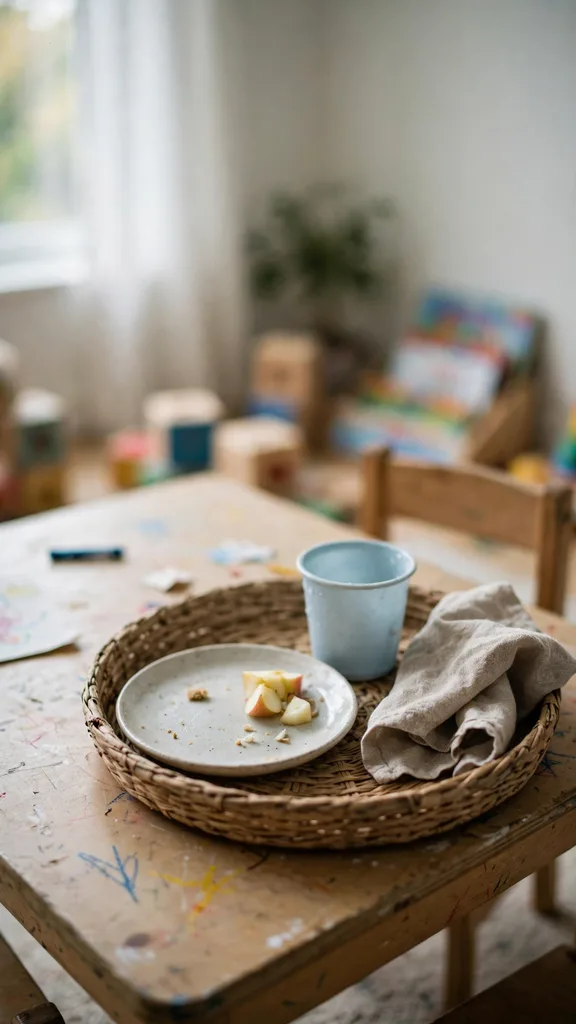
A tray with high sides traps crumbs and spills inside, so trays are shaken out over the compost bin between courses. Woven trays with loose strands shed into food, so each tray is checked and a frayed tray leaves the set. Trays stack after dinner and store the whole setting set in one pile.
23. Hay Bale Bench Seats Beside the Table
Set two hay bales along one side of an outdoor kids table as bench seats, and cover each bale with a folded blanket. The bales seat four children on one side, cost one trip to the feed store or the garden store, and go to the mulch pile after the party.
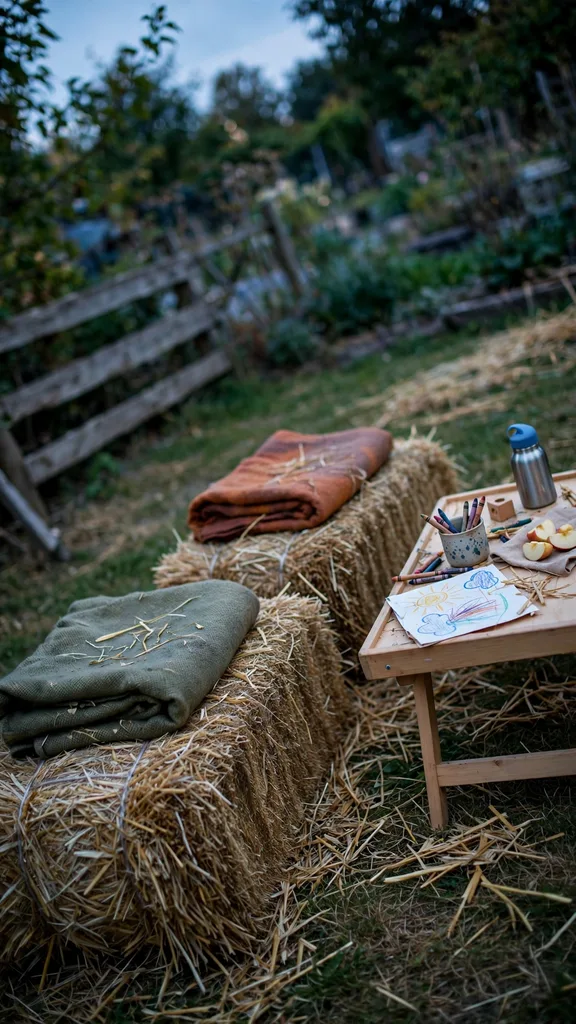
Loose hay sheds into plates on a windy day, so the blanket cover is tucked under the bale, never draped loose. A bale set on wet ground wicks water and sags by dessert, so bales sit on a dry board or a tarp. Children in smooth tights slide on hay, so the blanket weave needs grip.
24. Log Slice Chargers Under Each Plate
Set one log slice 25 centimetres (9.8 inches) wide under each plate as a charger, cut from a fallen branch and sanded flat on both sides. The slice lifts the plate, frames each seat, and holds heat from a warm plate off the cloth.
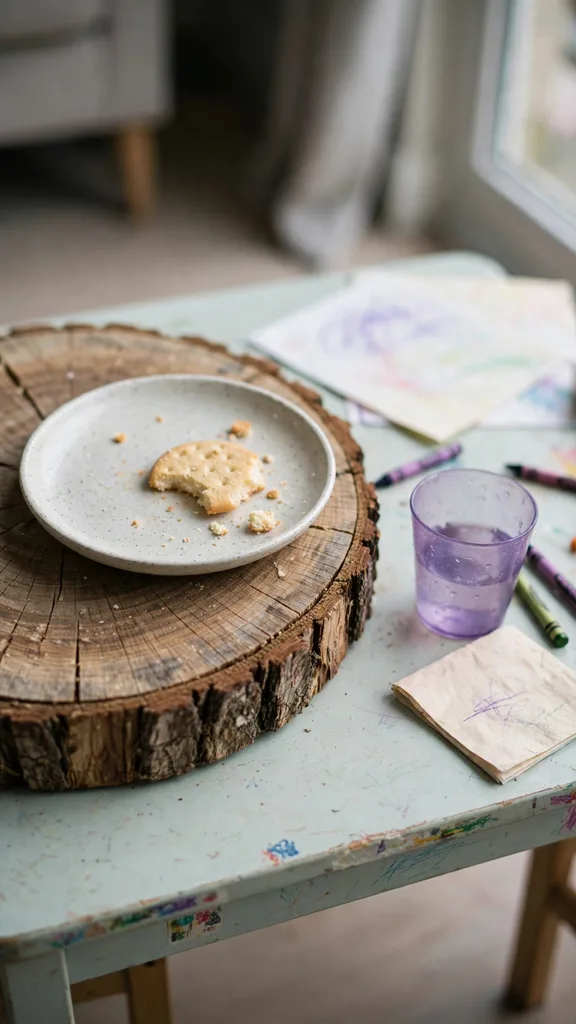
A slice cut from green wood cracks as it dries and rocks under the plate, so slices are cut from seasoned wood and checked flat. Bark that flakes sheds onto the table, so loose bark is brushed off before the dinner. Slices store stacked in a dry shed and serve every autumn party.
25. Corn Husk Placemats Laid Flat
Soak dried corn husks in water for 30 minutes until they bend, lay them flat in overlapping rows as placemats, and weight the mats under a board for 1 hour so they dry flat. Each mat frames one plate and carries the harvest theme to every seat.
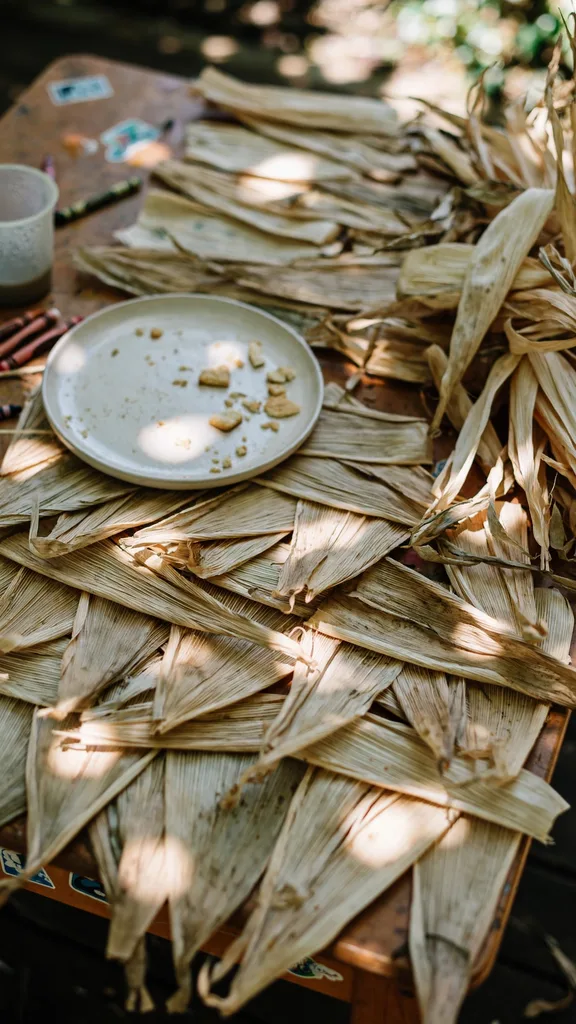
Dry husks laid without soaking curl at the edges and lift the plate rim, so the soak decides the result. A mat that stays damp under a plate smells musty by dessert, so mats dry fully before plates go down. Used mats compost after the dinner, and one corn harvest yields mats for two parties.
26. Stone and Slate Serving Boards from the Garden Path
Lay flat stones and slate pieces down the center of the table as serving boards for bread, cheese, and fruit, washed and dried the day before. The cold stone keeps butter firm and gives the table a garden path down its middle.
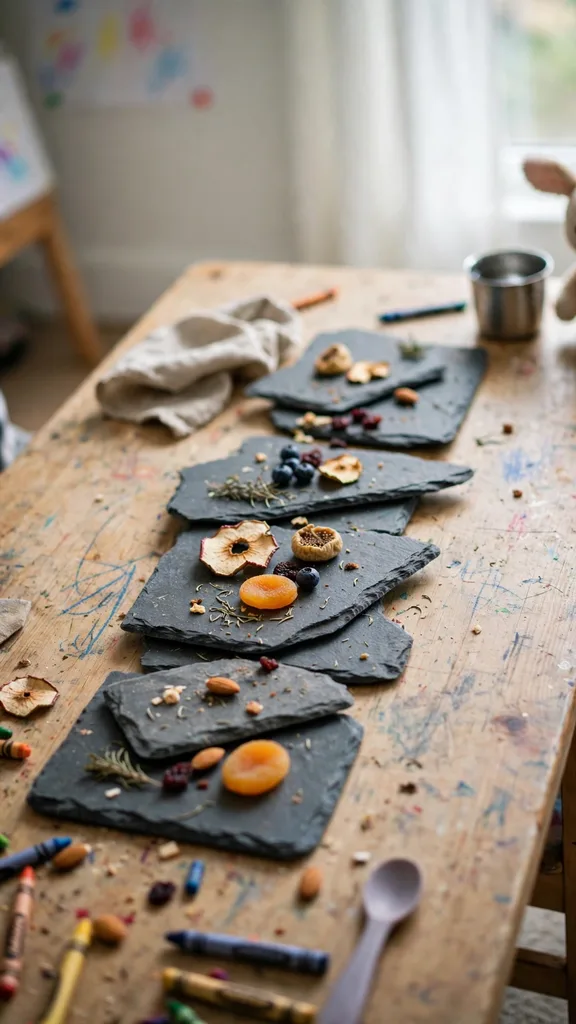
Stones with soil in their pores stain the cloth and the food, so a scrub and a full dry are the price of this surface. A board that rocks under a knife is a spill waiting, so every stone is tested flat before food touches it. Heavy stones stay in the center and never travel to a child seat.
27. Gratitude Leaf Cards Waiting at Each Seat
Set one blank leaf-shaped card and one pencil at each seat, with a small sign-free basket at the table end for finished cards. Children write or draw one thankful line while the food arrives, and the basket collects the cards before plates land.
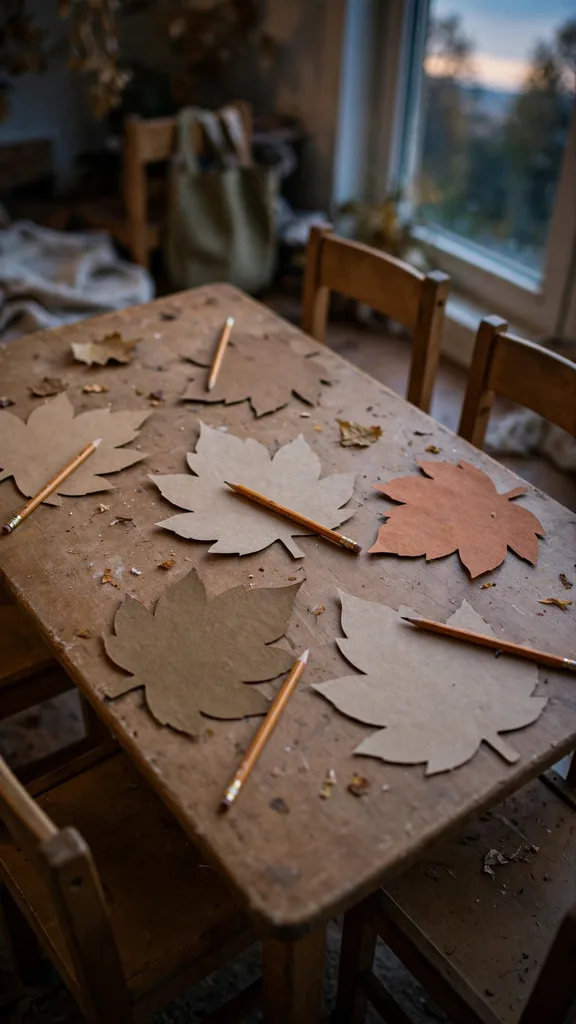
The activity works because it starts with no adult help and ends before the food cools. Cards handed out after the meal compete with dessert and lose, so the seat is the distribution point. A pencil per seat ends the passing and asking that unsettles a full table.
28. Pumpkin Seed Counting Cups on the Table
Fill one small cup per seat with 20 dried pumpkin seeds and set a second empty cup beside it, so children count, move, and pattern the seeds while they wait. The seeds are large, dry, and easy to sweep up when a cup tips.
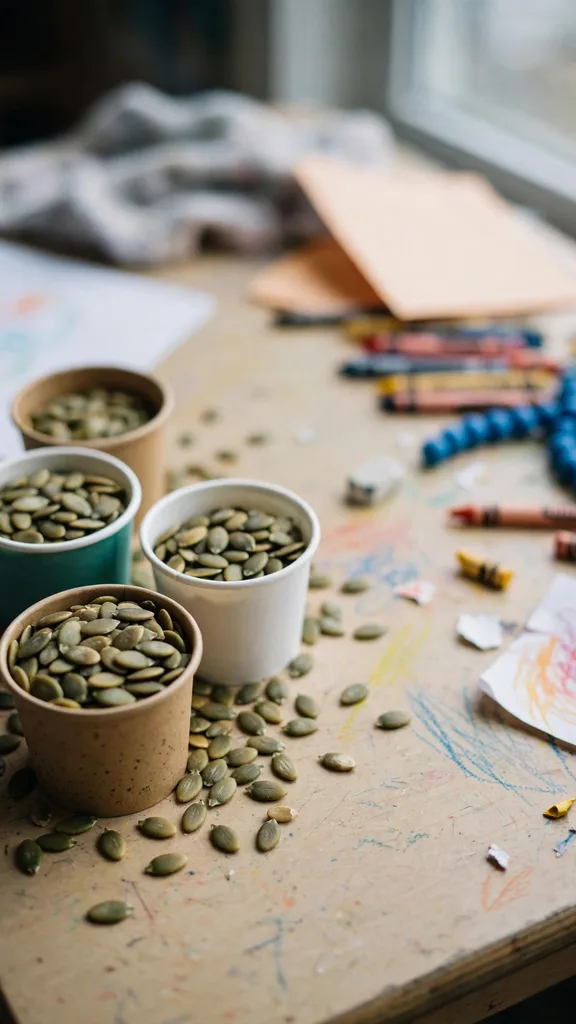
Wet seeds from a fresh pumpkin stick to fingers and the table, so seeds are washed and dried the day before. Counting cups suit children aged 4 years and up; under that age the seeds go to the snack cups and the seat gets a leaf tray instead. Spilled seeds on a hard floor are a slip risk and are swept at once.
29. Leaf Sorting Tray by Shape and Color
Set a shallow tray at each seat of the youngest children with six large leaves of different shapes and colors to sort, stack, and line up. The tray has no small parts, no tools, and no right answer, so a toddler stays busy until food lands.
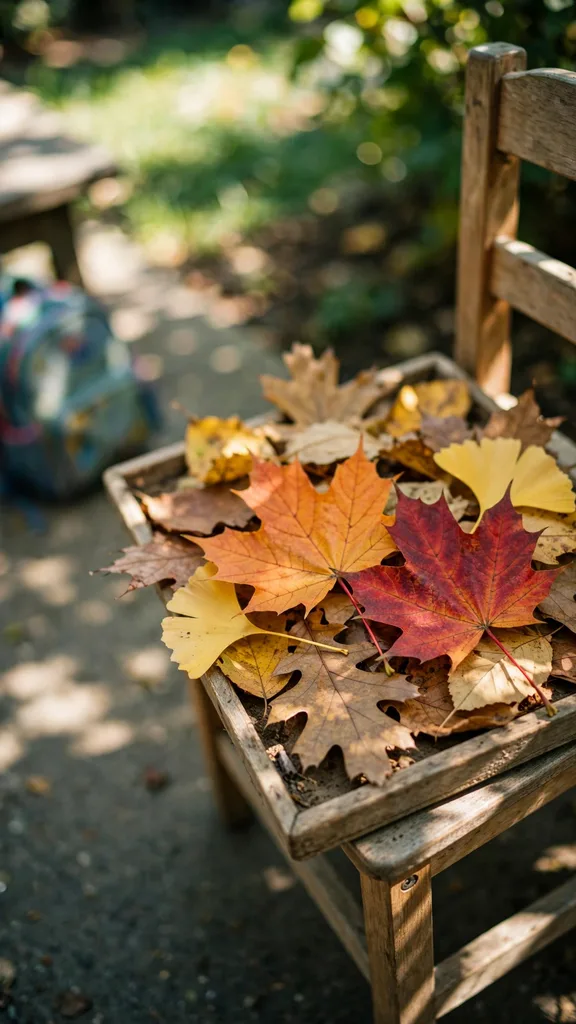
Leaves with insect holes or mould spots stay in the garden, and every tray leaf is checked when it is picked. A tray that slides gets a damp cloth under it, which grips the table and stops the drift. Leaves go to the compost after dinner, and the trays wash for the next party.
30. Acorn Cap Matching Game in a Muffin Tin
Set a muffin tin at the center of the table with acorn caps painted in pairs of colors inside the cups, and let children tip, sort, and match the caps while they wait for food. One tin serves four seats and passes along the table.
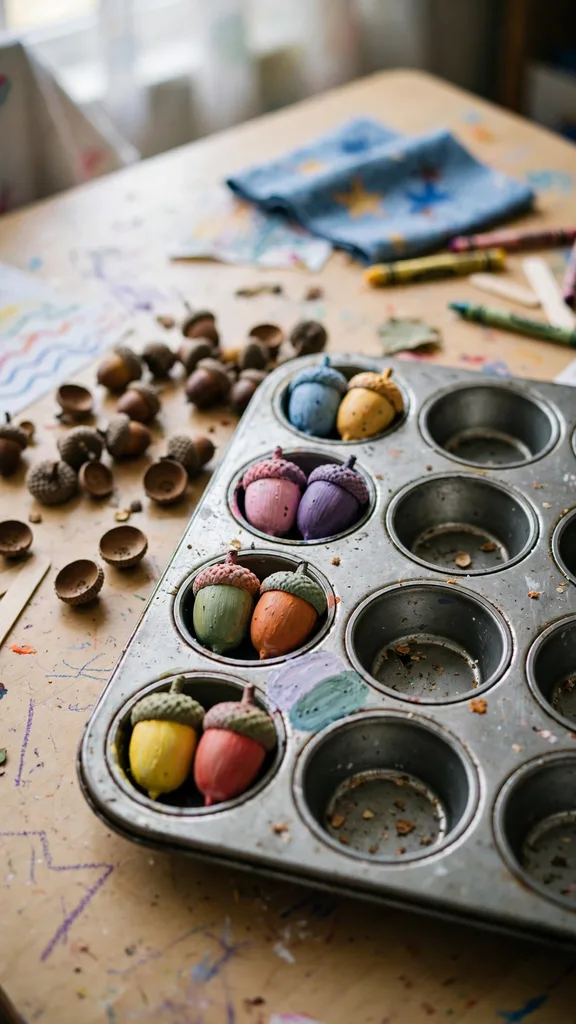
Paint on the caps must be dry and washable paint must be fully cured, or color rubs onto fingers and then onto food, so caps are painted 2 days early. Caps are small parts and stay off the table when a child under 3 years sits down. A tin that rattles too loud for the room moves to the porch table.
31. Herb Smelling Jars Between the Plates
Set three small jars with pierced lids between the plates, one with rosemary needles, one with dried lavender, and one with sage leaves, and let children guess each herb by scent. The jars pass along the table and return to a tray at the end.
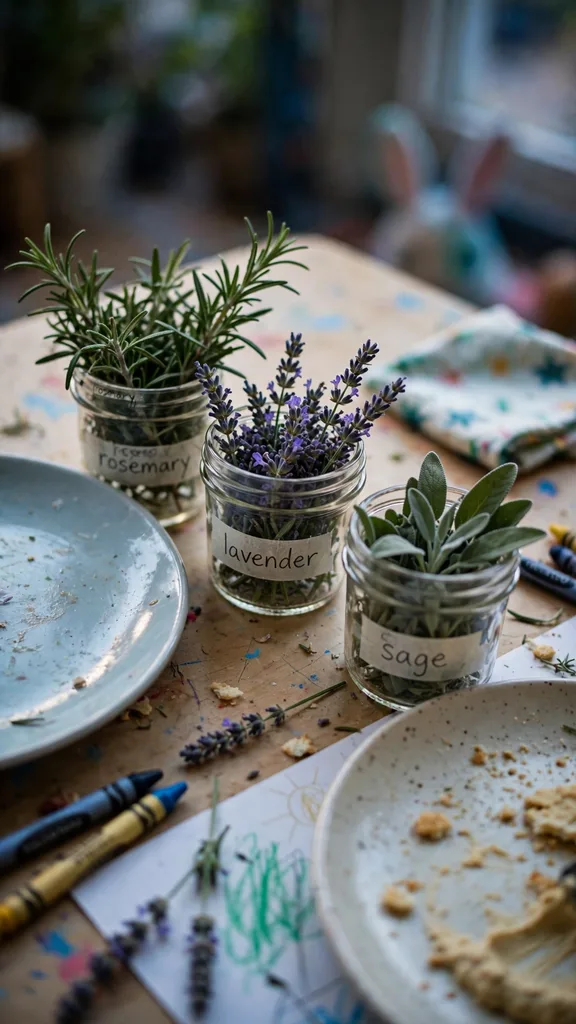
Pierced lids keep herb pieces out of food and off the table, and the guessing game needs no reading, so mixed ages play together. A jar filled with fresh mint wilts and turns in a warm room, so mint stays out and the dry herbs carry the game. Jars wash and refill for every party.
32. Leaf Rubbing Sheets Under Each Plate
Slip one sheet of plain paper and one flat leaf under each plate before the meal, with crayons in a shared cup, so a child who finishes early lifts the plate and rubs the leaf shape while others still eat. The sheet doubles as the placemat for dessert.
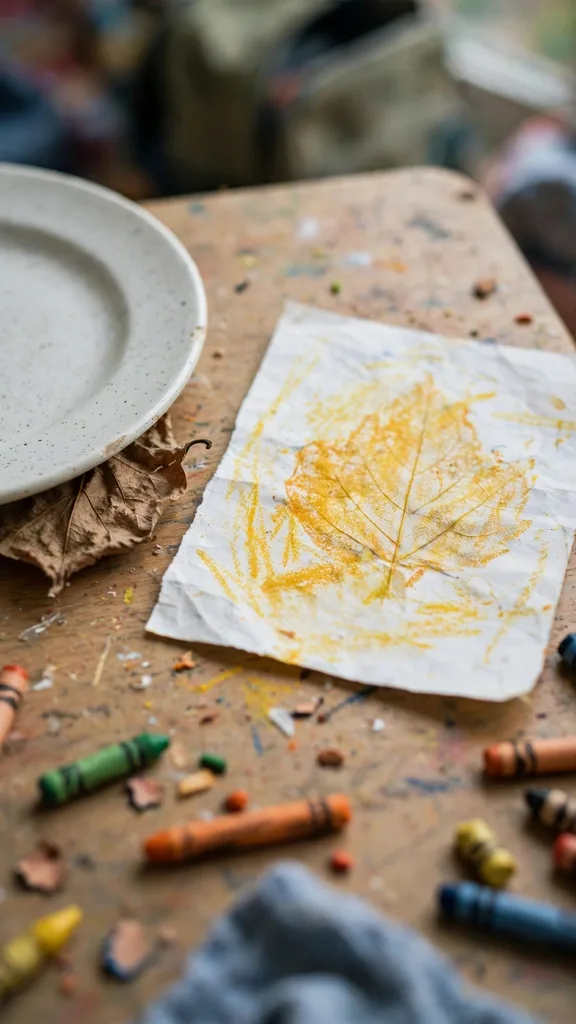
A leaf with a thick stem prints a broken line, so flat leaves with strong veins print best and are picked the day before. Crayons roll off a bare table and under chairs, so the shared cup stays in the center and returns there. Rubbing sheets go home with the child or into the gratitude basket.
33. Gratitude Tree Branch in a Jar at the Table End
Stand a bare branch in a heavy jar of stones at the end of the table, with leaf cards and short twine loops in a basket beside it, so children hang one written leaf on the branch during the meal. The branch fills as dinner goes on and reads as the table record by dessert.
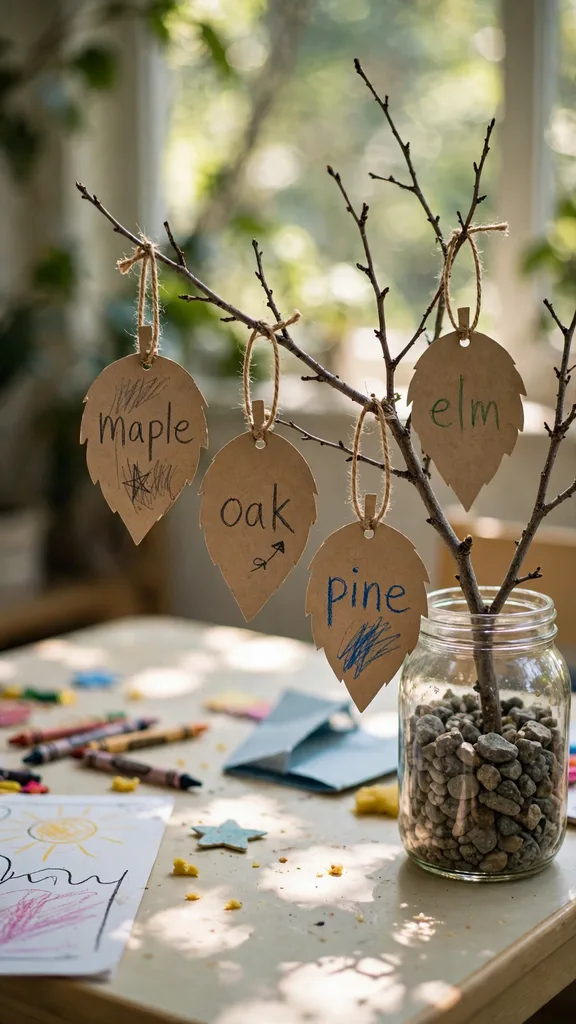
A light jar tips when the branch loads on one side, so stones fill the jar halfway and finished leaves are hung on alternate sides. The branch is a table piece here; the full standalone version with its own steps sits with the garden crafts for kids collection linked from the glance table on this page. Dead branches with brittle tips snap under cards, so a fresh-cut branch with some bend is the pick.
34. Pumpkin Seed Scoop and Sort Bowls
Set two bowls at the table center, one with mixed dried pumpkin and squash seeds and one empty, with a small scoop, so children sort seeds by size and color into the empty bowl. The job has a clear end, which settles children who finish eating first.
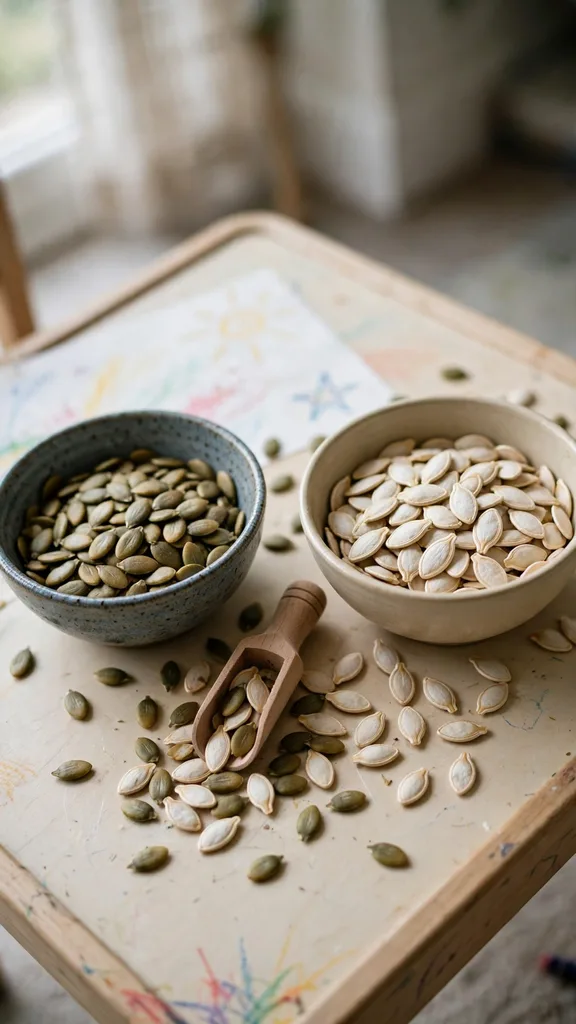
Seeds sorted onto the table instead of into the bowl end up in laps and plates, so the empty bowl sits close and the scoop stays small. The activity suits children aged 5 years and up, who sort with patience; younger children get the counting cups from item 28. Sorted seeds store in a labelled jar for spring sowing or the snack roast.
35. Dried Bean Pattern Cards on a Tray
Lay pattern cards on a tray with a bowl of dried beans in three colors, so children copy a stripe, a spot, or a leaf outline in beans while they wait. Dried beans are large, cheap, and pour back into the jar in one sweep after dinner.
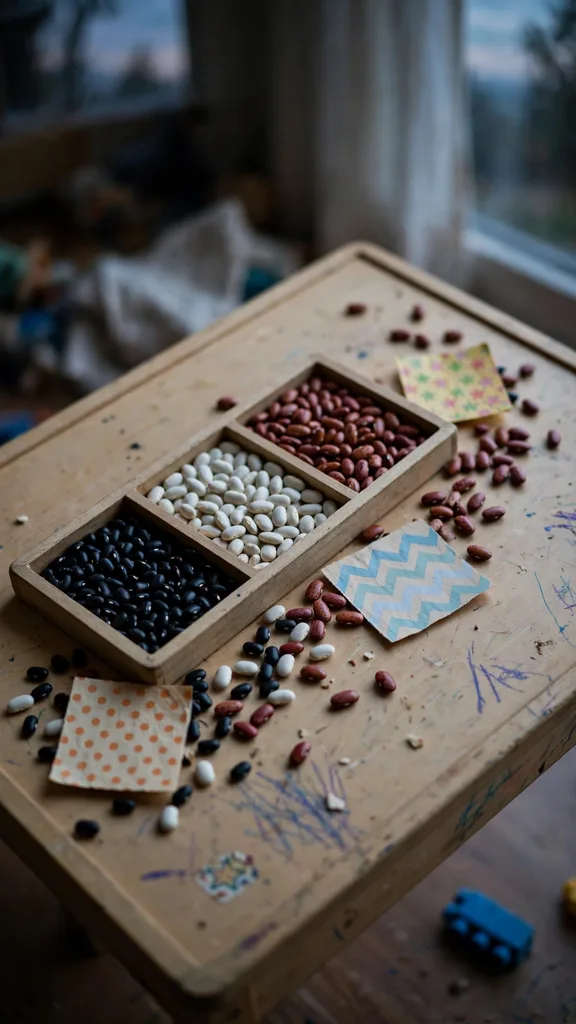
Beans are food, and the rule at the table is plain: pattern beans stay on the tray and snack food stays on plates, with the two never mixed. A card with a fine detailed outline frustrates young children, so the youngest seats get a plain stripe card. Spilled beans on a hard floor are swept at once before shoes find them.
36. Story Stones on a Cloth at the Table Center
Paint simple garden shapes on flat stones: a pumpkin, a leaf, a sun, a bird, a house, and a tree, and set the stones in a cloth bag at the table center. Children draw three stones each and build a short story for the table while dessert is cut.
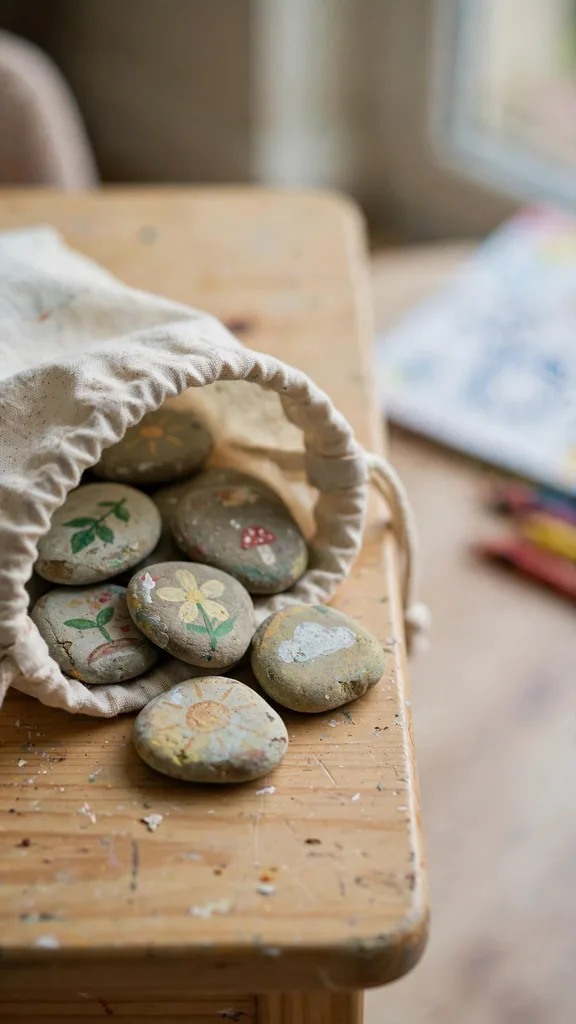
Stones painted with washable paint shed color onto the cloth, so the paint is acrylic craft paint cured for 2 days, or the stones stay plain and the shapes are scratched with a white paint pen. Heavy stones never sit at a seat edge, where a bump sends one to the floor and a foot. The bag stores with the table linens.
37. Apple Slices from the Garden Tree on a Board
Slice garden apples into thin wedges, toss the wedges in lemon water so they stay pale, and set them on a wooden board at the table center with a small bowl of cinnamon for dipping fingers. The board goes down as children sit, which buys the kitchen ten quiet minutes.
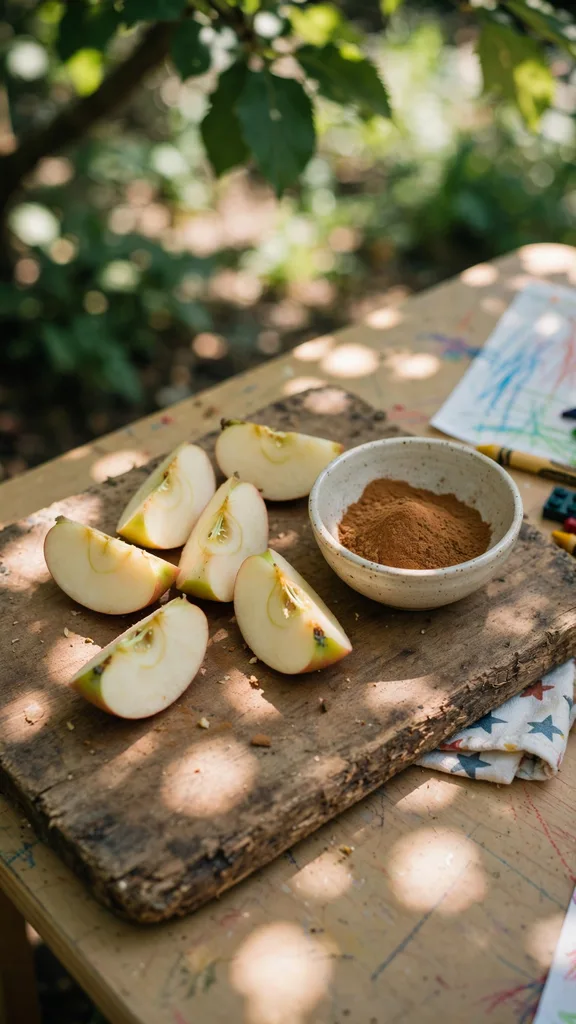
Apple wedges cut hours early brown at the edges even in lemon water, so slicing is a last job before guests sit. Whole apples at a kids table roll and bruise, so wedges on a board are the serving form that survives. Seeds and cores go straight to a side bowl, never onto plates.
38. Roasted Pumpkin Seeds in Paper Cups
Roast cleaned pumpkin seeds with salt at a low oven heat until they turn crisp and pale gold, cool them fully, and fill one small paper cup per seat. The cups sit at each place when children arrive, so the first snack needs no serving and no waiting.
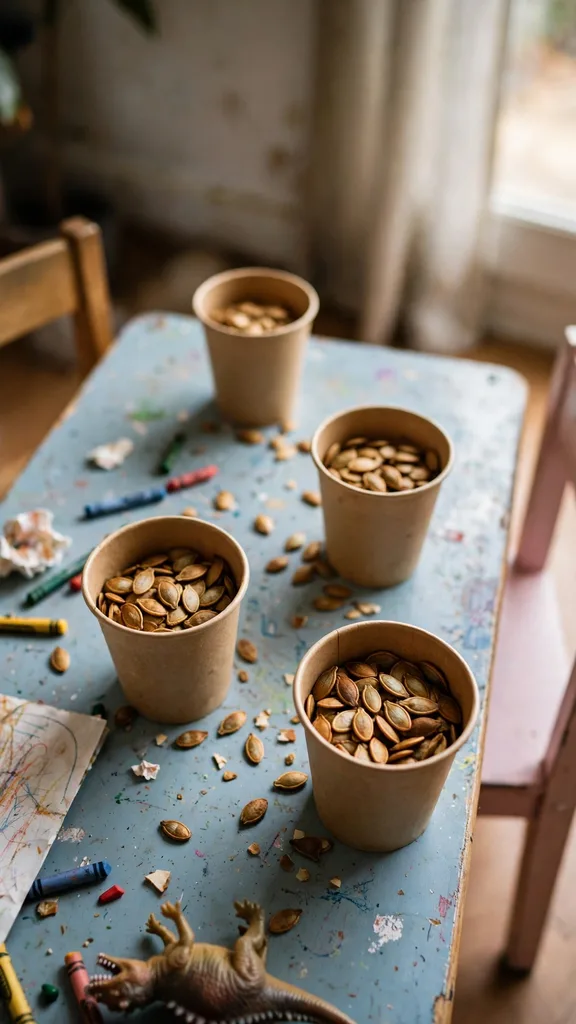
Seeds roasted at high heat scorch at the edges while the centers stay chewy, so low heat and one stir halfway decide the batch. A cup per seat ends the reaching across plates that tips cups over. Leftover seeds keep 1 week in a sealed jar and go soft in a paper bag, so the jar is the store.
39. Cherry Tomato Cups Picked That Morning
Fill small cups with cherry tomatoes picked that morning, washed, and dried on a cloth, and set one cup at each seat. Late garden tomatoes in November are the last of the vines, which makes the cup a true harvest snack.
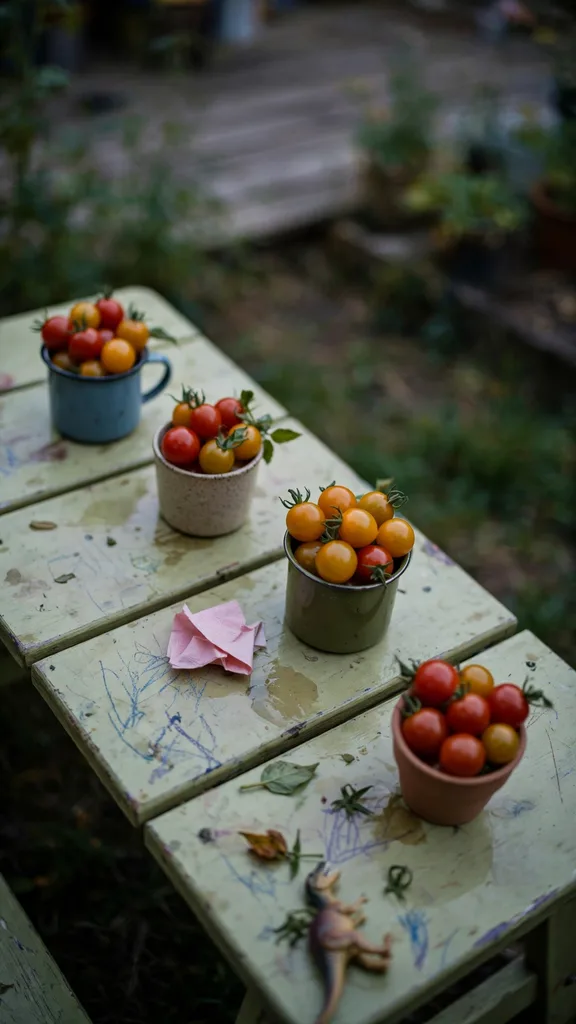
Tomatoes are cut in half for children under 4 years, since a whole cherry tomato is a choking shape, and the cups for the youngest seats are filled by an adult with that rule in mind. Wet tomatoes roll out of cups, so the cloth dry matters. Cups refill from a bowl at the table end, never from the plant during the meal.
40. Herb Lemon Water in a Glass Jug
Fill a glass jug with water, lemon slices, and three mint or lemon balm sprigs, and set the jug on a stone at the table center with small cups stacked beside it. Children pour their own water, which ends the parade of adults carrying cups.
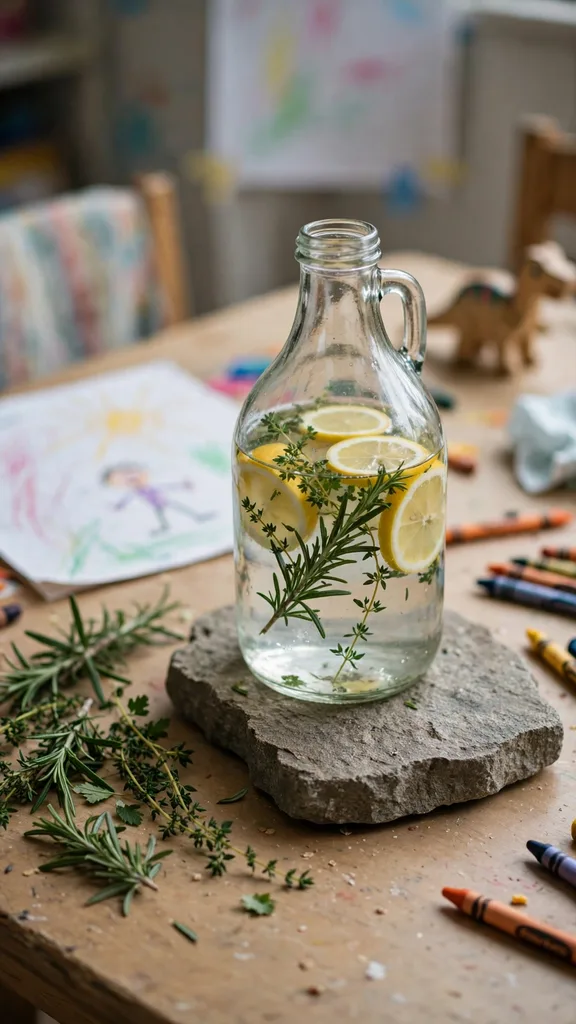
A jug set directly on the cloth soaks a ring into the cover at the first pour, so the stone base is part of the setup. Glass suits older children; the youngest table gets the same water in a lidded jug an adult pours. Herb sprigs left overnight in the jug turn bitter, so the jug is filled on the day.
41. Whole Kids Table Under the Apple Tree
Set a low table under the apple tree where the ground is flat and dry, with the kale centerpiece at its center and hay bale benches on the shaded side. Fallen apples are picked up that morning, so no child sits on a wasp-drilled fruit.
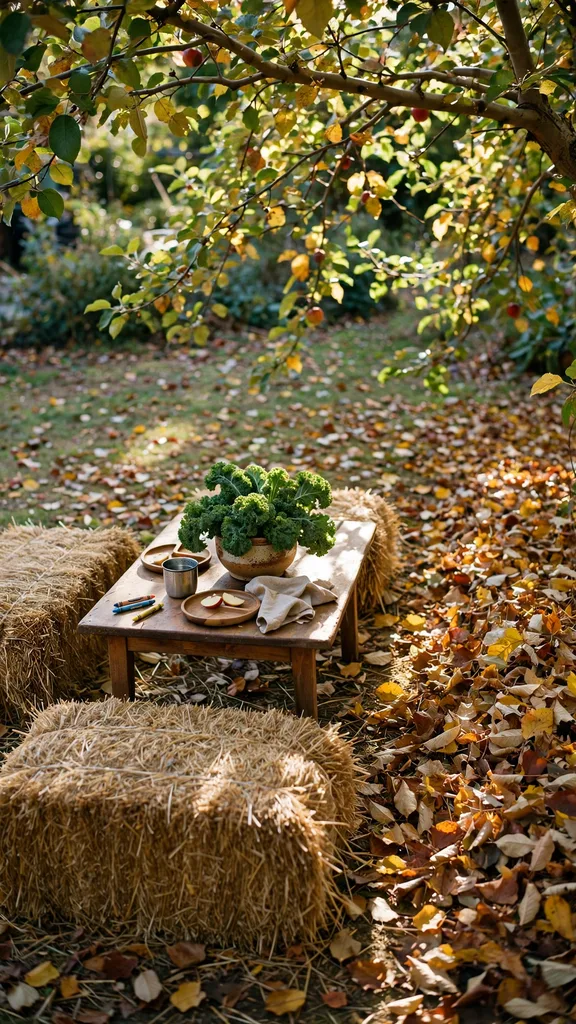
A table under a tree drops leaves into plates all meal long, which children treat as part of the game and adults treat as a reason to set the table at the tree edge, where the canopy ends. Wind moves napkins first, so leaf card stones from item 17 earn their place outdoors. The tree table fails in rain and moves to the porch without a new plan.
42. Picnic Blanket Kids Table on the Lawn
Lay a thick blanket on dry lawn, set a low board table or two crate tables on the blanket, and place basket tray settings from item 22 at each seat. The blanket table suits a warm November noon, when the garden is the room and shoes stay off the blanket.
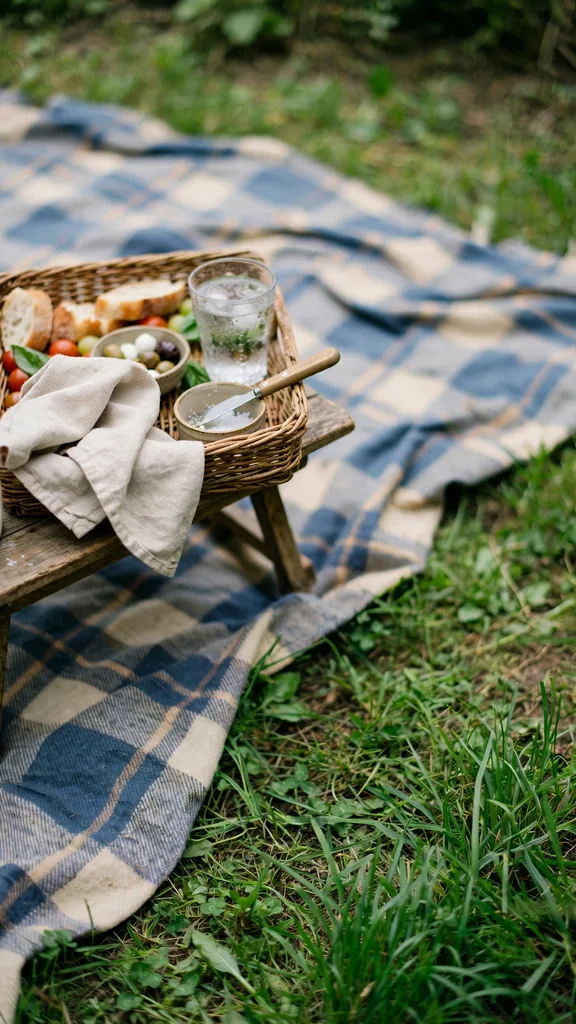
A thin blanket soaks dew through in minutes, so the lawn is checked with a palm press before anything goes down, and a tarp under the blanket is the dry guarantee. Cups tip on soft ground, so trays carry every drink. The blanket table packs away in 10 minutes, which is its whole advantage over furniture.
43. Greenhouse Kids Table Among the Pots
Set the kids table inside the greenhouse or potting shed between the pot benches, with thyme pots down the middle and the seed sorting bowls at the center. The glass keeps wind off the cards and the room smells of soil and herbs.
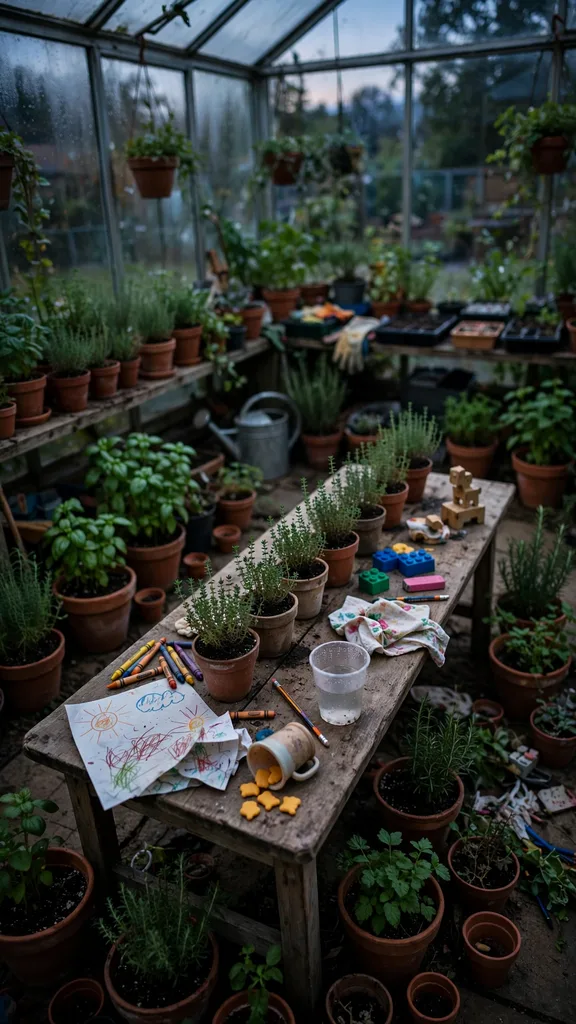
A greenhouse at midday in November sun runs hot, so vents open an hour before the meal and the jug of water from item 40 goes down first. Pots with sharp rims and stored tools move out before children go in, and the floor is swept of dry soil that turns to mud under spilled drinks. The greenhouse table seats six at most, so a bigger group splits between greenhouse and porch.
44. Porch Kids Table with Mum Pots at Each End
Set the kids table on the porch with a mum pot at each end, the dried orange runner down the middle, and the jar lantern ready for dusk. The porch table keeps children in the party sound while the dining room holds the adult conversation.
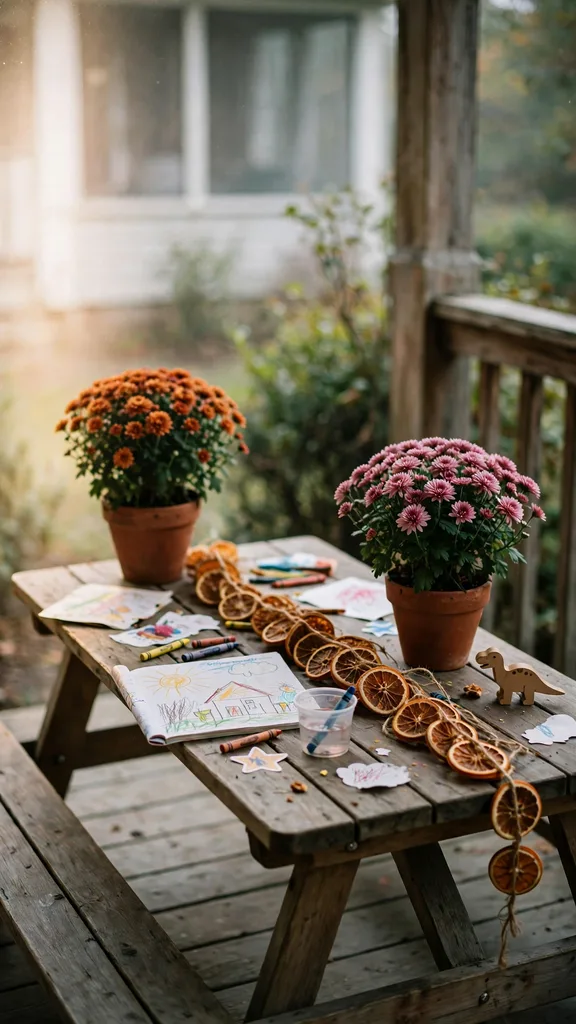
Porch boards slope and shed crumbs to the garden, which is a gift at cleanup and a flaw for cups, so trays or log slice chargers level every seat. A porch table set against a wall traps children on the inside seats, so the table stands clear of the wall on all sides. This table stays a seated meal, course by course, and the games belong to the party page, not to this porch.
45. Finished Garden Kids Table at Dusk with Lanterns Lit
At dusk the whole table reads at once: jar lantern lit at the center, leaf cards at every seat, herb pots down the middle, and the gratitude branch loaded with cards at the end. This finished table is the proof that garden material alone, with no bought decoration, holds a full Thanksgiving kids table. For the standing and moving version of the same garden material, the Thanksgiving garden party ideas for kids turn the harvest into games, stations, and snacks.
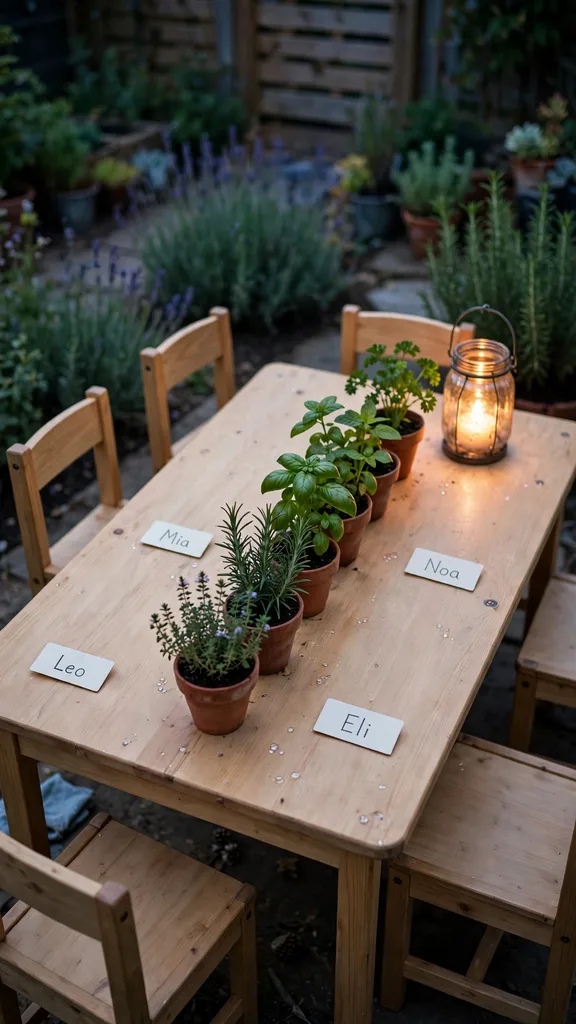
The dusk check is the honest one: names must still read in low light, cups must still stand clear of the centerpiece, and the lantern must light the middle without a flame near the cards. A table that only works at noon was set for the wrong hour, since Thanksgiving dinner lands at dusk. Photograph the finished table before the first child sits down, because this arrangement never survives the meal.
Frequently Asked Questions About Thanksgiving Kids Table
Set the dry pieces 1 day early: stones, log slices, crates, and pressed leaf cards all wait overnight without harm. Cut herbs, evergreen, and fresh leaves on the morning of the dinner, and water every living pot that morning. Snacks go down as children arrive. A table set fully fresh 3 days early wilts at the center and browns at the cards.
Edible herbs, pumpkins, gourds, mums, and ornamental kale belong on the table, since children can touch them freely. Keep unknown berries, seed heads from plants nobody can name, and any plant with thorns or milky sap off the table entirely. The rule for children is plain: nothing from a centerpiece goes into a mouth, and snack food arrives on its own plates and cups.
An uncut mini pumpkin holds for weeks on a table, and cured pumpkins store for 2 to 3 months in a cool dry place, so a Thanksgiving stack is still sound in December. A painted pumpkin lasts as long as an unpainted one, since the paint sits on the skin. A carved pumpkin softens in days, which is why every pumpkin on this table stays whole.
One activity that starts without an adult, one snack that arrives with the seat, and a place card with the child name on it. The gratitude leaf cards, seed counting cups, and herb smelling jars on this page all start the moment a child sits down. A table with food only holds a child for the length of the meal, and the meal is the short part.
Yes, on a dry day with a porch, a tree edge, or a greenhouse as the fallback. Set the table after the dew lifts, weight every card with a stone, and keep the jar lantern battery lit rather than a flame in the wind. A wet lawn kills the blanket table first, so the ground check with a palm press decides the spot before any piece goes down.