
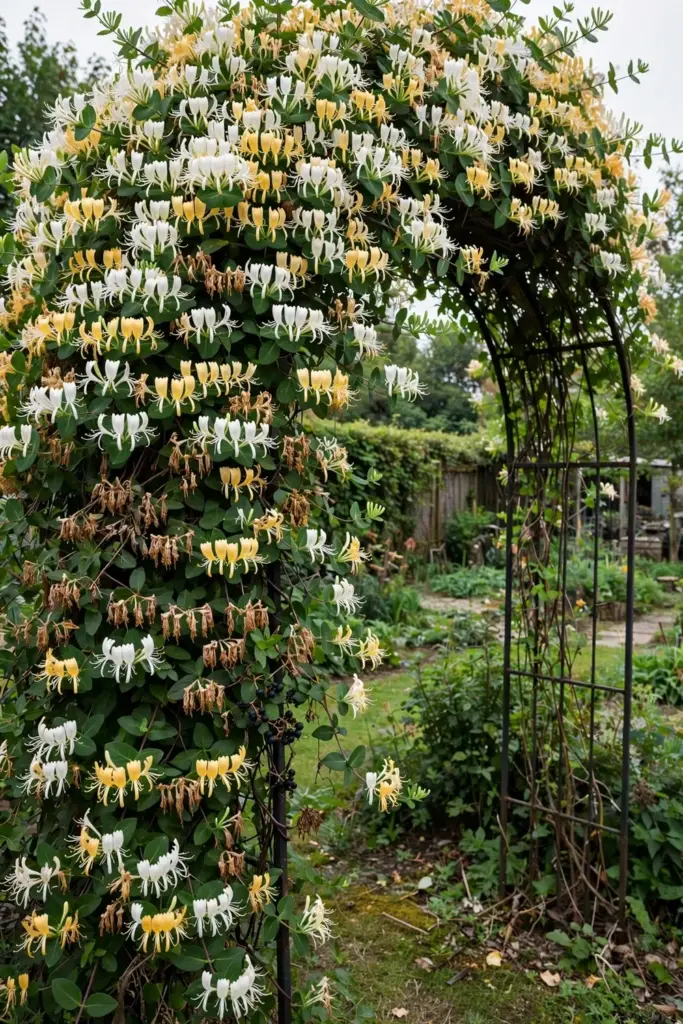
Give one Lonicera japonica vine a 2-meter trellis in full sun and prune it hard twice a year. That is how to grow honeysuckle for tea without the plant eating your fence line. The rest of this page is 12 steps, from the containment decision to a cup of jin yin hua.
Japanese honeysuckle is the fragrant vine behind jin yin hua, and it is also a plant that escapes gardens fast. A stem that touches soil roots where it lies, and birds carry the seed far beyond your fence. I have learned to treat the monthly patrol as non-optional, because a runner left lying on soil roots exactly where it lies.
A mixed tea-herb bed is a different job, and the planting calendar for that lives on the site’s fall herbs to plant page. This page stays on the vine: containment first, then propagation, harvest, and the tea.
1. Decide Up Front: Contain It or Plant the Native Instead
Decide this before you buy anything. Japanese honeysuckle is classified as highly invasive where it has naturalized in the United States, spreading by rhizomes, above-ground runners, and seed that birds and small mammals disperse widely, according to the North Carolina Extension plant profile for Lonicera japonica. A neglected vine smothers neighboring plants by climbing straight over them.
That profile is not a reason to skip the plant. It is the reason to grow it like a plant you respect. Containment means a trellis you can walk around, a monthly runner check, and no berries left for birds. If any of that sounds like too much, plant trumpet honeysuckle instead. Iowa State lists trumpet honeysuckle as the native alternative to Japanese honeysuckle, and it will not eat your yard.
Do not plant Japanese honeysuckle near woods, hedgerows, or a neighbor’s fence you cannot reach. The vine does not know where your property ends.
2. Read the Japonica vs Native Table Before You Buy
Buy the right species on purpose. Nurseries sell several honeysuckles, and only one of them is the traditional tea plant. The other is the responsible garden pick when tea is not the goal.
| Trait | Lonicera japonica (Japanese honeysuckle) | Lonicera sempervirens (trumpet honeysuckle) |
|---|---|---|
| Native range | Japan, Korea, Manchuria, and China | North America; the native alternative on the Iowa State list |
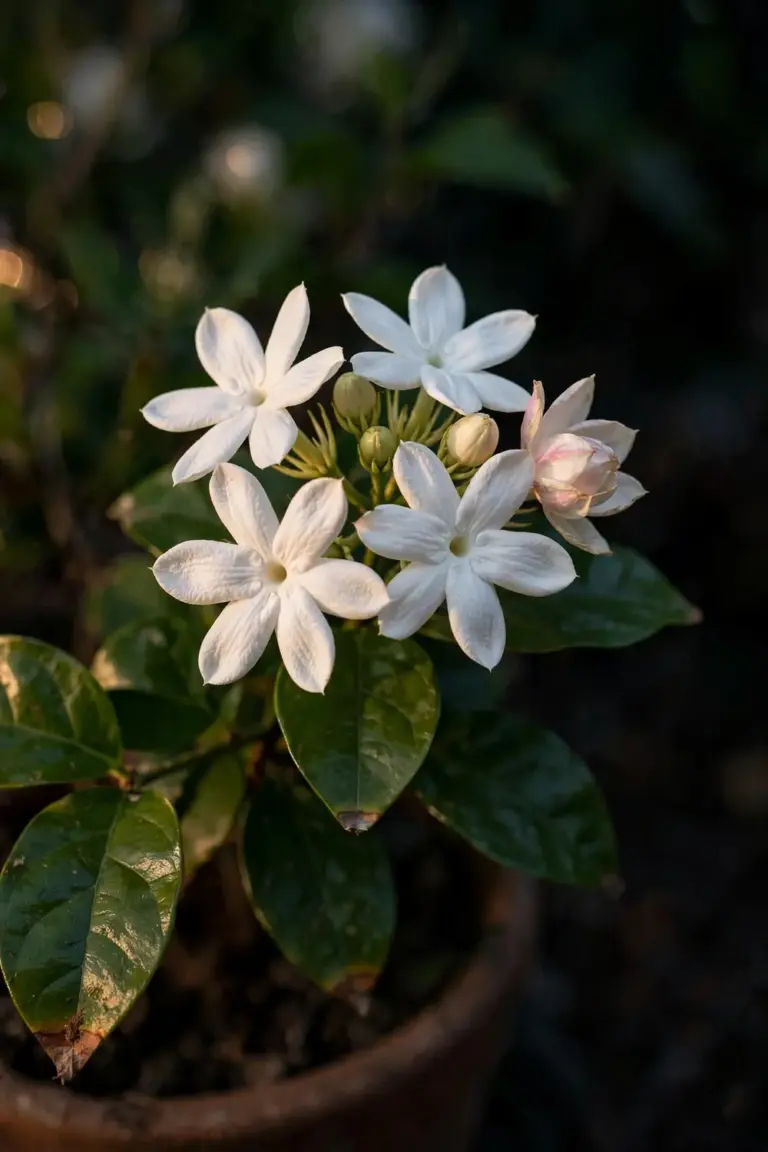
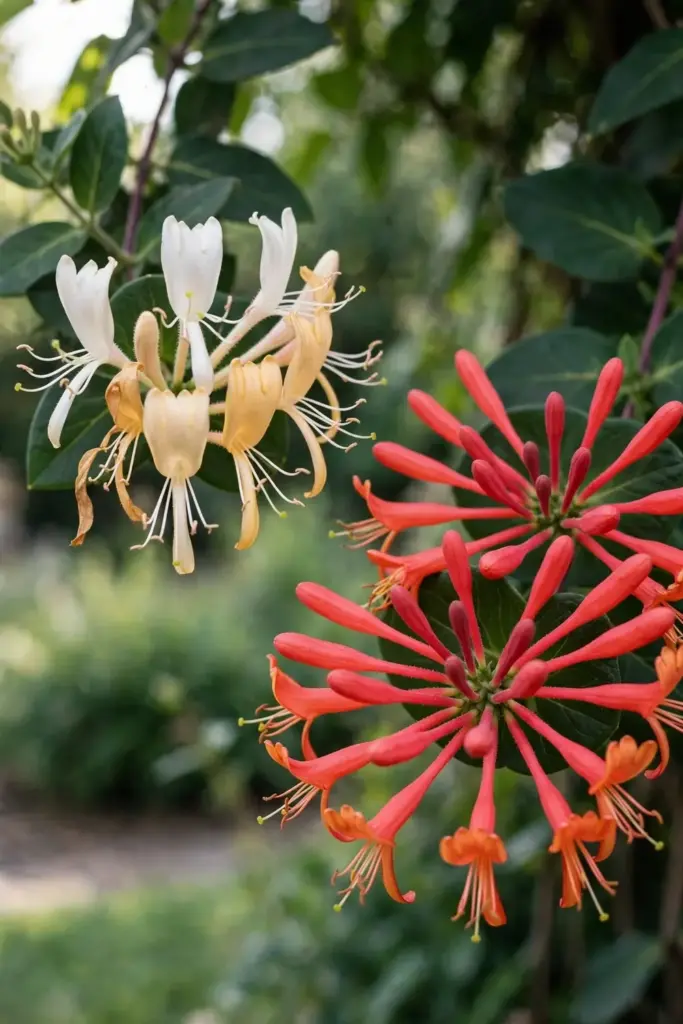
| Flowers | White trumpets that age to buff or yellow, very fragrant, from late spring into fall | Coral-red trumpets with little scent, a hummingbird plant |
| Invasive risk | Highly invasive; classified as such by NC State weed specialists | Not invasive; the safe choice near natural areas |
| Tea tradition | The jin yin hua plant; dried flowers are the traditional tea herb | Not the traditional tea species |
| Berries | Black berries that birds spread; toxic to humans | Not used for tea |
If tea is the reason you are here, you need Lonicera japonica. If you want a honeysuckle on the fence and zero containment chores, you want the native. Both are honest choices. Only one of them makes tea.
3. Pick a Full-Sun Site With a Trellis and a Patrol Path
Flowers need sun. NC State lists full sun, meaning 6 or more hours of direct light a day, down to partial shade for this vine, and hardiness in USDA zones 5a through 8b in its Lonicera japonica profile. In shade the vine still grows, all leaf and no bloom, which is the worst trade for a tea grower.
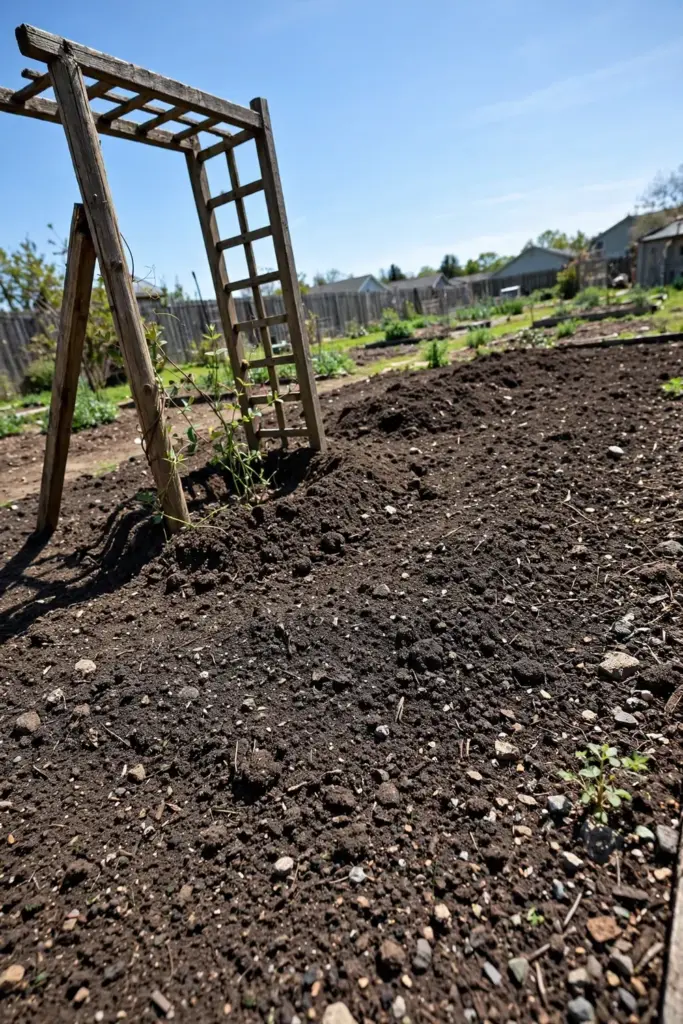
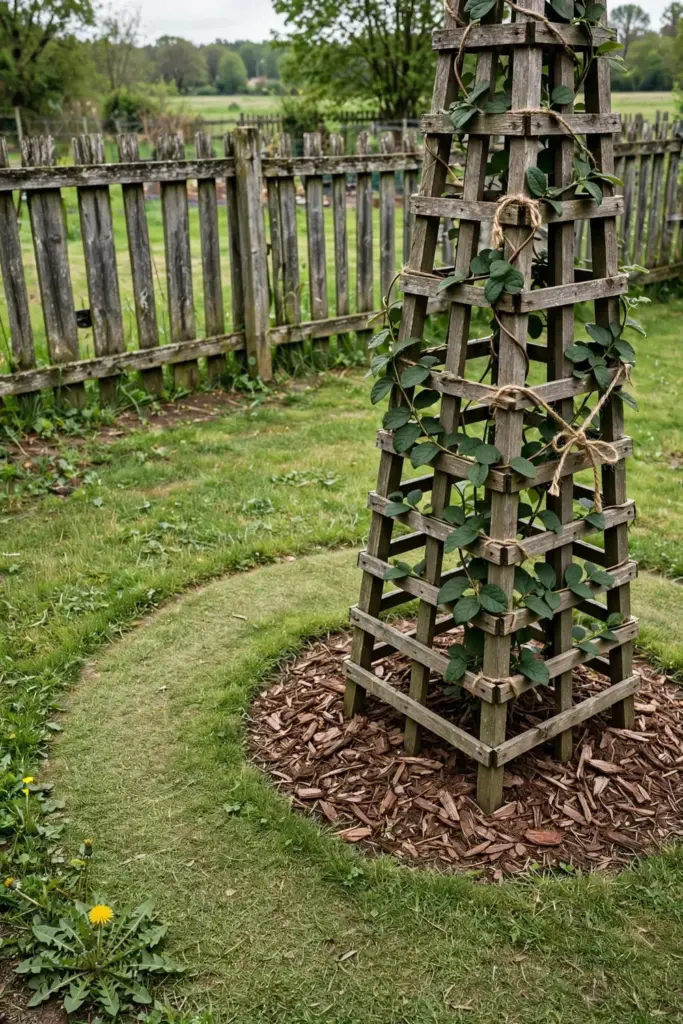
Pick the spot with the patrol in mind. You will walk the base of this plant every month, so give yourself a clear path around the trellis and keep it away from shrubs it could climb. A freestanding obelisk or an arch you can circle beats a flat trellis pinned to a wall.
Shelter from hard wind helps in exposed gardens, because winter wind dries the semi-evergreen foliage faster than the roots can replace the water. A fence or hedge to windward is enough. Do not tuck the vine into a frost pocket at the bottom of a slope; cold air pools there and late frosts nip the first buds.
Soil is the easy part. This vine tolerates average garden soil and a wide pH range, so skip the amendments and spend the effort on drainage instead. Roots sitting in a puddle rot faster than roots in poor soil. If your bed is heavy clay, work in compost until water drains within a few hours of rain, following the same soil health principles you would use for any perennial bed.
4. Gather the 9 Tools You Need Before Step One
Propagation day goes wrong when the cuttings sit on the bench drying out while you hunt for pots. Lay everything out first.
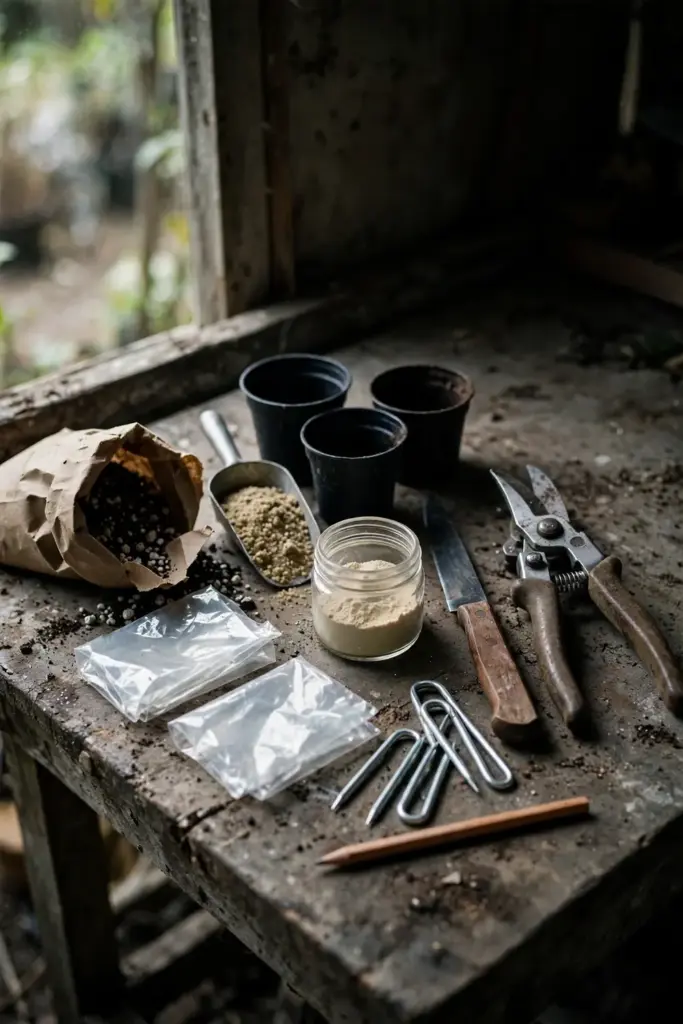
You need nine things: bypass pruners, a sharp knife or scissors, rooting hormone powder, 10 cm pots with drainage holes, free-draining potting mix, coarse sand or perlite, clear plastic bags for humidity domes, U-shaped landscape pins, and the trellis itself. A pencil earns its place too, for poking planting holes so you do not snap the cutting bases.
Keep the pruners sharp and clean. A crushed stem base rots instead of rooting, and honeysuckle cuttings are thin enough to crush with dull blades. Wipe the blades with rubbing alcohol between plants.
5. Root 15 cm Cuttings in a Few Weeks
Cuttings are the fastest honest route to a flowering vine, and anyone learning how to grow honeysuckle for tea should start here. Take them in late spring or early summer, early in the morning when the stems are full of sap. Cut about 15 cm from the end of a two-year-old vine, slicing on an angle just below a leaf node, and strip the lower leaves, following the Gardening Know How propagation method.
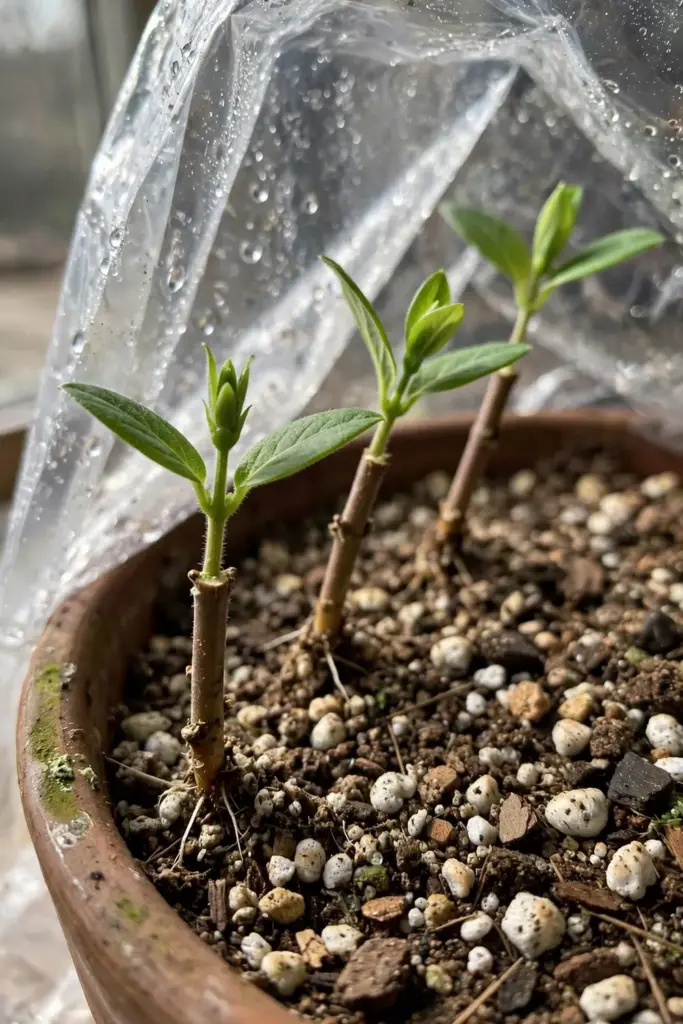
Dip the base in rooting hormone and push each cutting into a pot of moist, free-draining mix. Cover the pot with a clear plastic bag to hold humidity, and set it in bright light out of direct sun. Direct sun cooks cuttings under plastic in under an hour.
Check for roots with a gentle tug after a few weeks. Resistance means roots. New leaf growth at the tip can appear before the root system is ready, so trust the tug, not the leaves. Pot rooted cuttings on individually and grow them until they are sturdy before they meet the trellis.
6. Layer One Stem for a Free Second Plant
Layering is the laziest propagation method that works, and it suits a vine that wants to root everywhere anyway. In spring, choose a flexible one-year-old stem low on the plant. Bend it down to the soil in a U shape, scratch the bark lightly on the underside where it touches, and pin it with a U-shaped landscape pin. Cover the pinned section with soil and leave the tip above ground, as described in the same propagation guide.
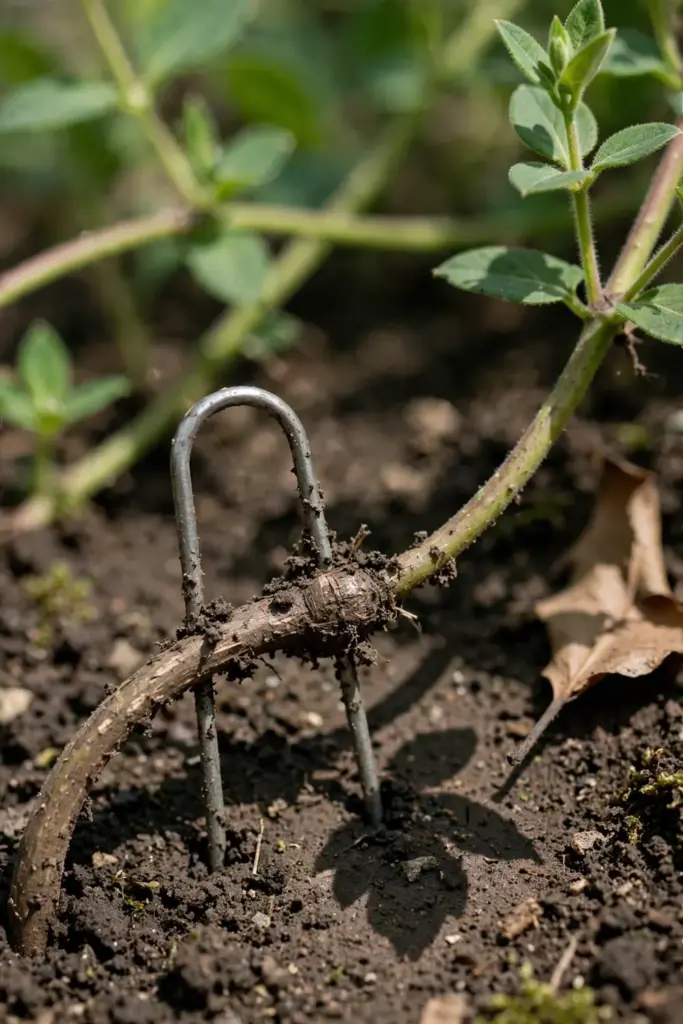
Water the buried section when the soil dries. Roots form at the buried node over the growing season. Do not sever the new plant from the mother vine until it resists a firm tug, usually by the following spring.
This method doubles as a containment drill. You are practicing the exact move, pinning a stem to soil, that the plant performs on its own when you are not watching. The difference is that you choose where the new plant lives.
7. Stratify Seed for 12 Weeks if You Choose the Seed Route
Seed is the slowest route and the least predictable, because birds do it better than gardeners. If you still want to try, the seeds need cold to break dormancy. Mix them with a little moist compost in a sealed bag and refrigerate for about 12 weeks, then sow shallowly in a tray.
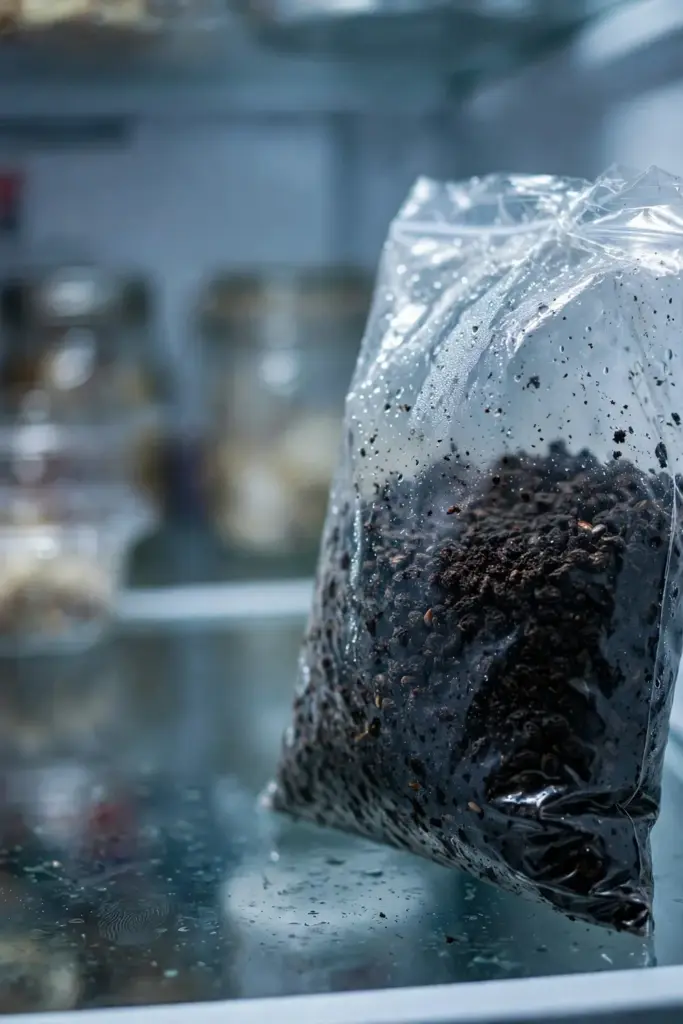
Keep the tray warm and evenly moist after the cold treatment. Germination is uneven, so sow more than you need and thin to the strongest. Expect a year or two before a seedling vine flowers well.
For the actual sowing technique, the site’s seed starting guide covers tray depth, covering, and the first watering in detail. The stratification is the honeysuckle-specific part; everything after that is standard seedling care.
8. Set the Plant in the Ground or a 20-Gallon Pot
Plant in spring after the last hard frost, or in early fall while the soil is still warm. Dig a hole twice as wide as the root ball and no deeper, set the plant at the same depth it grew in the pot, and water it in hard. A buried stem base invites rot.
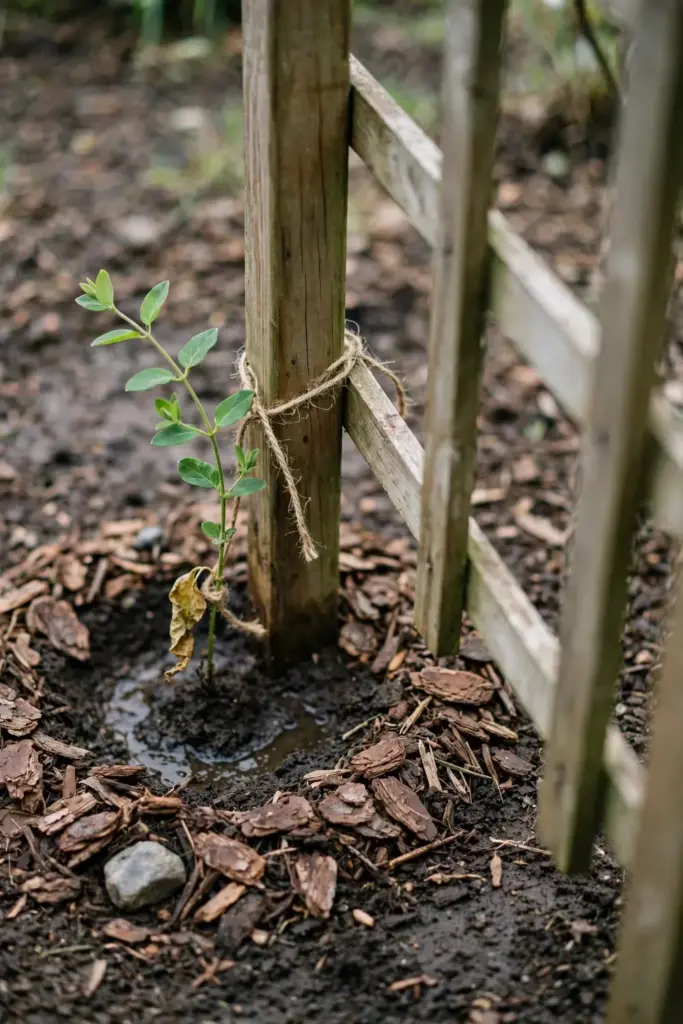
Space multiple plants at least 1.5 meters apart. They will fill the gap faster than you expect. Mulch 5 cm deep around the base, kept a few centimeters clear of the stem, to hold moisture through the first summer.
A 75-liter (20-gallon) pot is the honest container option, and it is also a containment tool: a potted vine cannot send runners into the lawn. Use a heavy pot that will not tip when the vine leafs out, fill it with free-draining potting mix, and plan to water it far more often than a plant in the ground. Container vines still need the monthly runner patrol, because stems cascade over the rim and root in whatever they touch.
In zones at the cold edge of the range, a potted vine faces harsher winters than a planted one, because the roots lose the insulation of the surrounding soil. Move the pot against a sheltered wall for winter and wrap it in burlap, or sink the whole pot into the ground until spring. Do not bring it indoors; the vine needs its winter chill.
9. Put Up the Trellis Before the Vine Wakes
Install the support before the spring growth surge, not after the vine is already flopping. A 2-meter obelisk, arch, or sturdy trellis suits one plant. Anchor it well. A mature vine in full leaf catches wind like a sail.
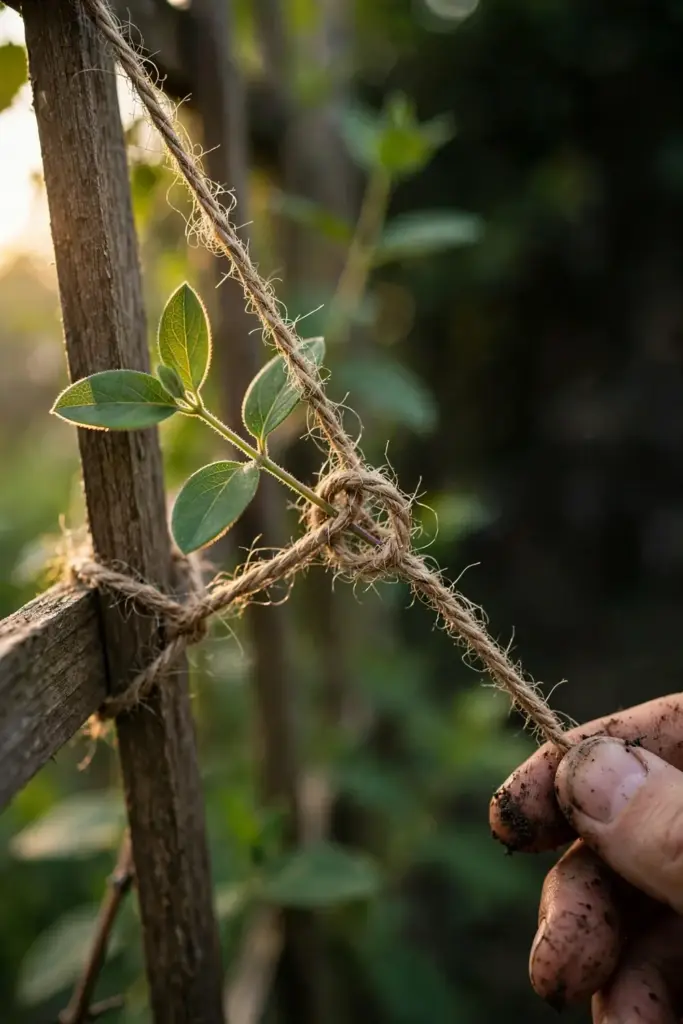
Tie the main stems loosely to the support with soft twine in a figure eight, stem on one loop and support on the other, so nothing strangles as stems thicken. Aim the young growth outward and upward, spreading stems to cover the structure evenly instead of letting them pile in one corner.
Retie monthly through the first season. Fast growth pulls ties tight, and a girdled stem dies back above the tie. This monthly habit pairs naturally with the runner patrol in step 12.
10. Prune Hard Twice a Year to Hold the Line
Pruning is the containment contract made visible. Cut hard in late winter while the vine is still dormant, removing up to one-third of the oldest stems at the base and shortening the rest to a strong framework. Then prune again right after the first big flush of flowers to shape the plant and trigger a second round of bloom.
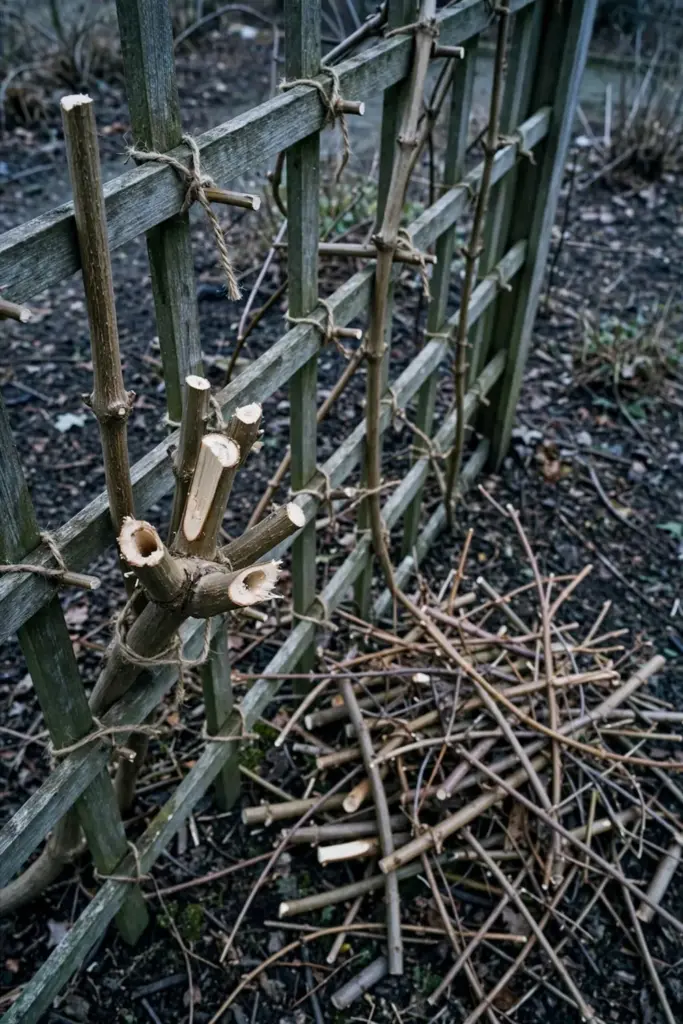
Never let the vine set more berries than you plan to harvest as flowers. Every black berry is a seed packet with wings, since birds do the delivery. Deadheading spent blooms through summer cuts the seed load and keeps flowers coming.
For the actual cutting technique on woody stems, the site’s spring pruning techniques cover the angle, the node, and which tool for which thickness. The timing above is the honeysuckle-specific part; the cuts themselves are standard.
Inherited a neglected vine that is already a thicket? Do the hard prune in late winter, then cut one-third of the oldest stems to the ground each year for three years. Staggering the renovation keeps some flowers coming while you rebuild the framework. A vine cut to the ground in one go usually resprouts, but you lose a full season of bloom.
11. Harvest Flowers at the White-to-Yellow Turn
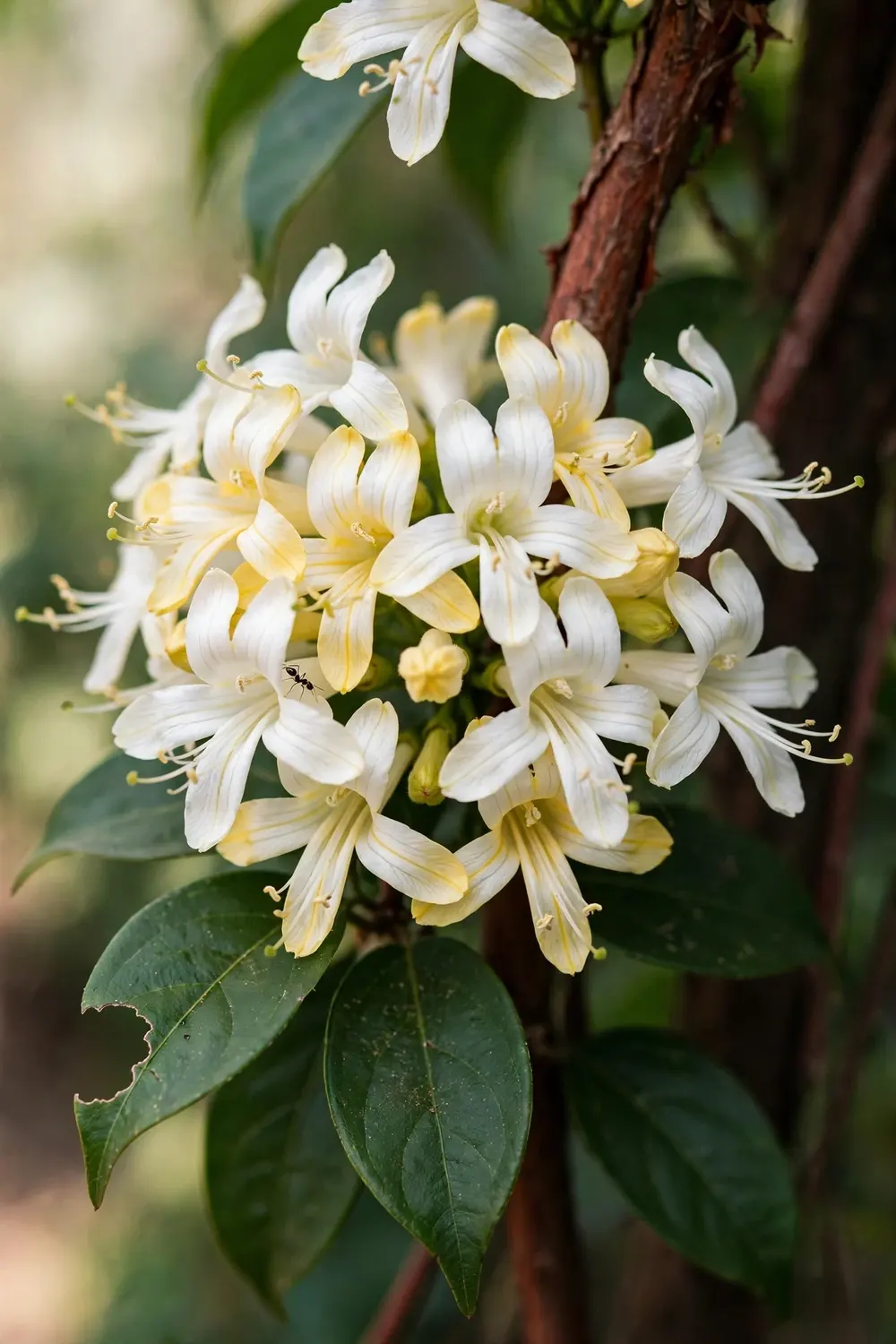
Pick flowers for tea just as they open white and begin to turn yellow. That white-to-yellow turn is the traditional harvest stage for jin yin hua, and it is also when the fragrance peaks. Flowers picked too early have less aroma; flowers picked brown and spent have none worth keeping.
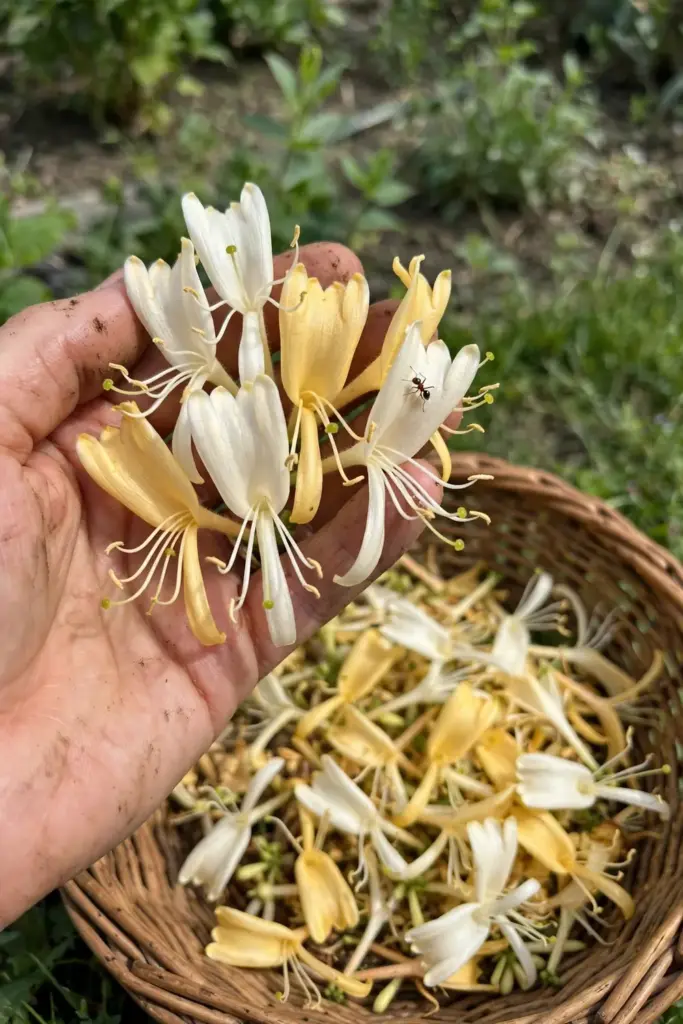
Harvest in the morning after the dew dries. Pinch or snip the whole trumpet, calyx and all, and drop it straight into a shallow basket. Do not wash the harvest. Water bruises the petals and slows drying, and unsprayed flowers need nothing more than a shake.
Take no more than one-third of the open flowers on any picking day. The vine blooms over weeks from late spring into fall, so steady light picking beats one greedy harvest. Leave the rest for pollinators and for the second flush your post-bloom pruning will trigger.
A mature vine in full sun gives a small basket of flowers per picking at the peak of the season, enough for several pots of tea once dried. Flowers shrink dramatically in the dryer, so a generous fresh harvest makes a modest jar. Pick little and often rather than stripping the vine once.
12. Patrol for Runners and Seedlings Every Month
This is the step the title promises. Once a month from spring through fall, walk the full circle around the trellis and pull every runner that has touched soil, every seedling within a meter of the base, and every stem leaning toward a neighbor’s fence. Ten minutes with a pair of pruners.
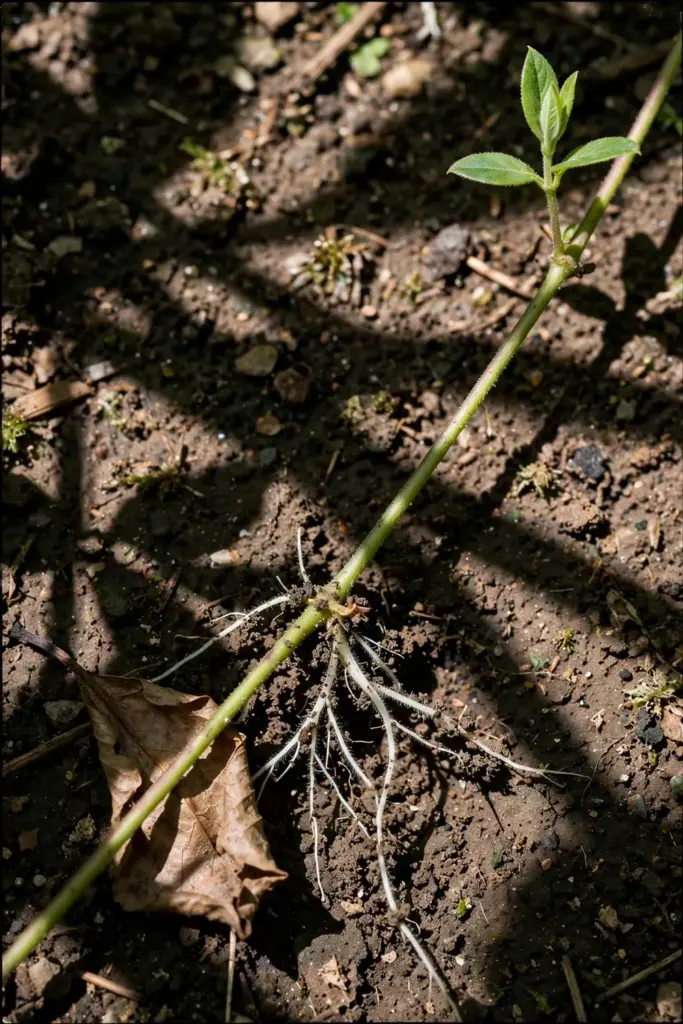
Compost the pulled runners only if your pile runs hot; otherwise bag them for green waste. A runner tossed on the compost heap roots there, and you have moved the problem instead of solving it.
Watch the bird factor too. Where birds perch and drop seed, seedlings appear along fence lines and under trees. The same Iowa State page flags seed spread as the main escape route for this species, which is why the deadheading habit in step 10 matters as much as the patrol.
Water the First Year, Then Leave It Alone
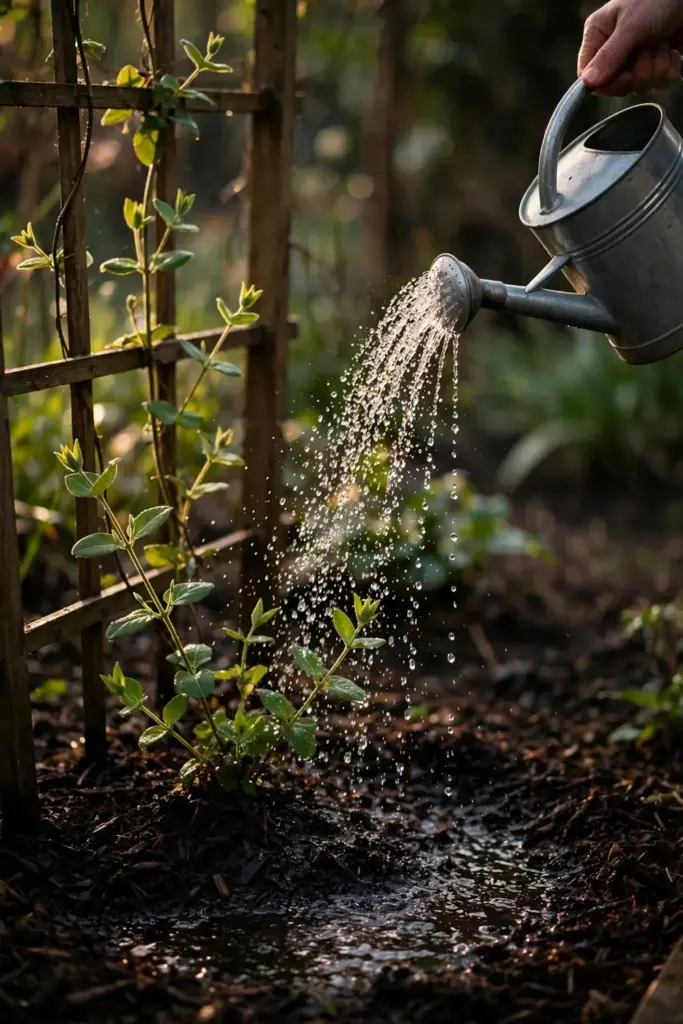
Water deeply once a week through the first growing season, soaking the root zone rather than sprinkling the leaves. A new vine needs steady moisture to build the root system that will later shrug off drought. After year one, established plants handle dry spells on their own.
Feed lightly or not at all. A single spring top-dress of compost is plenty. Heavy fertilizing pushes soft, rampant growth, which is the last thing a plant with containment paperwork needs. More nitrogen grows more vine to prune, not more flowers for tea.
Container plants are the exception to the tough-love rule. A potted vine dries out fast in summer heat, so check the top 5 cm of mix and water when it feels dry. Feed a container vine once in spring with a balanced slow-release fertilizer, because pots leach nutrients every time you water.
Dry the Flowers 3 to 5 Days Into Jin Yin Hua
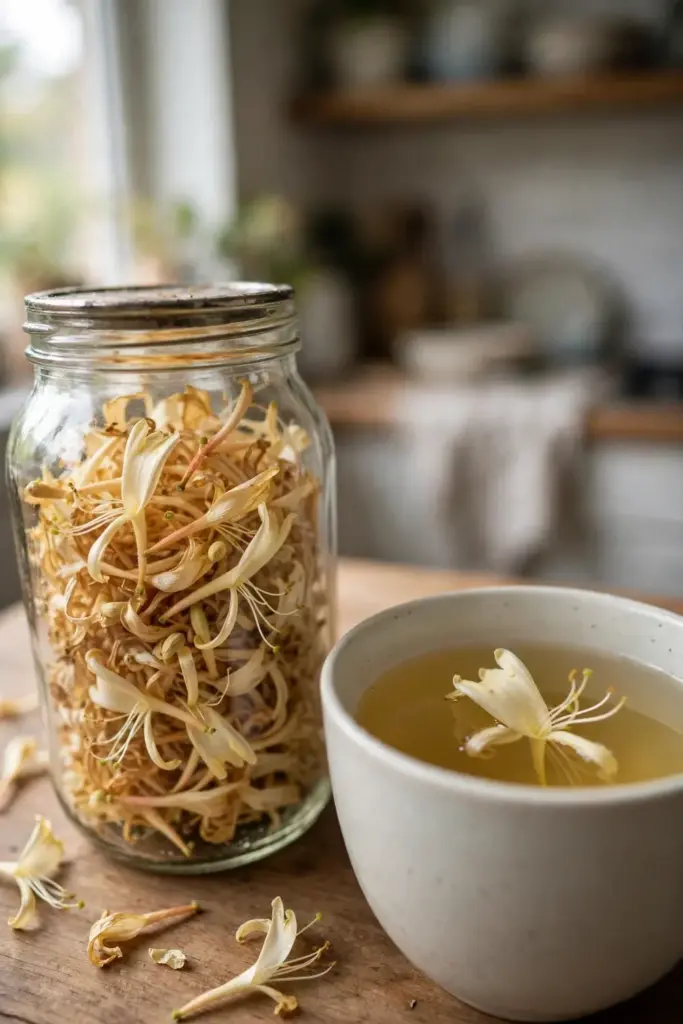
Spread the harvest in a single layer on a mesh screen or a clean cloth in a warm, airy spot out of direct sun. Turn the flowers once a day so they dry evenly. They are done in 3 to 5 days, when the trumpets feel papery and crisp and snap instead of bending.
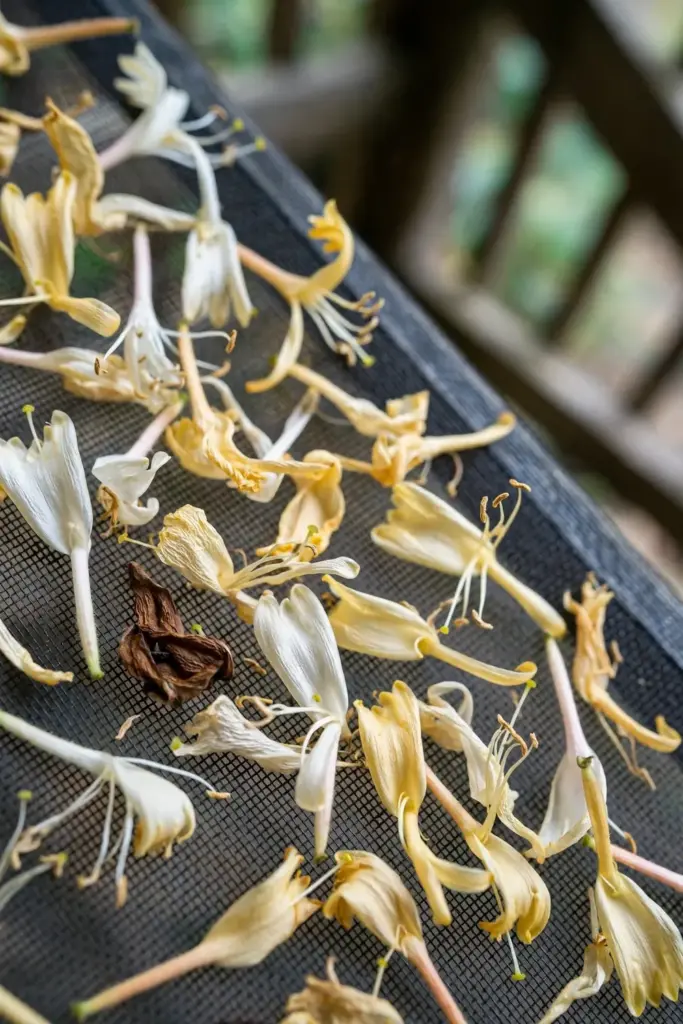
Do not oven-dry on high heat. Anything above a gentle warmth cooks off the volatile compounds that make the tea fragrant, and scorched flowers brew bitter. A dehydrator on its lowest setting works if your climate is humid.
Store the dried flowers in a sealed glass jar away from light. Properly dried jin yin hua keeps its fragrance for about a year. If the jar smells like hay instead of flowers, the batch is past its best and becomes compost, not tea.
Brew at 90 to 95 Degrees for 2 to 4 Minutes
Use about 2 teaspoons of dried flowers for every 500 ml of water. Heat the water to between 90 and 95 degrees Celsius, pour it over the flowers, and steep for 2 to 4 minutes for the first and second brews, following the brewing notes on Steepster. Boiling water scalds the petals and turns the cup harsh.
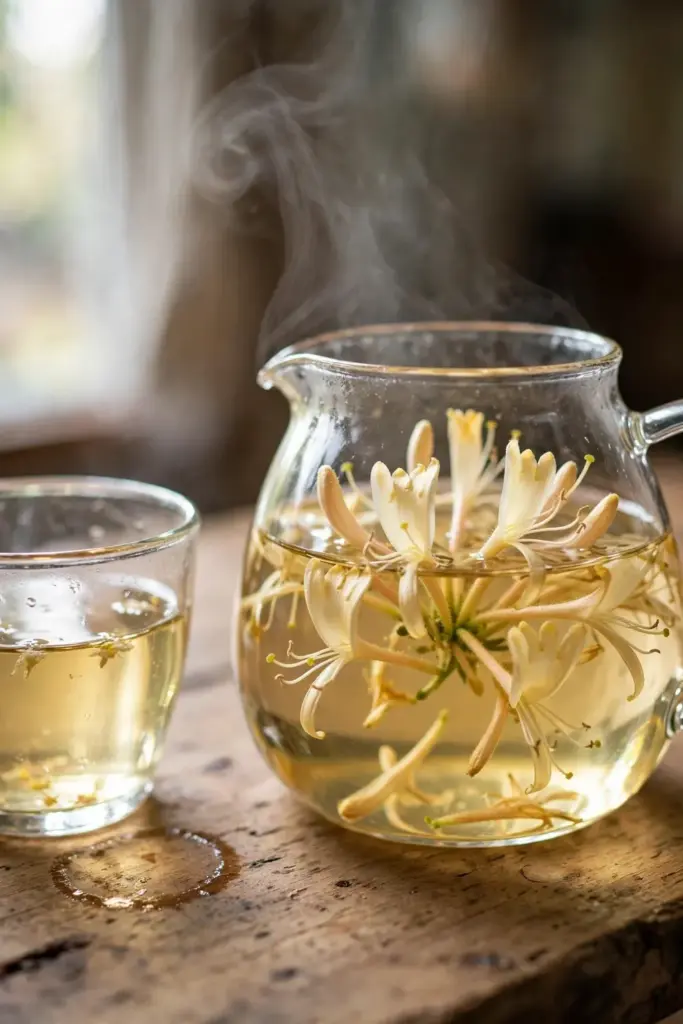
The liquor brews pale gold with a light, slightly sweet fragrance and a faint vanilla hint. Later steeps need a little more time and heat to pull the same flavor, since the first brew takes the best of it. Three steeps from one measure of flowers is a fair expectation.
The last move in how to grow honeysuckle for tea is the simplest one: drink it fresh. Flowers you dried yourself beat any bag on fragrance, because volatile aroma fades in storage and yours skipped the warehouse.
Read the Safety Facts Before You Sip
Only the flowers go in the cup. The black berries are toxic to humans, with medium poison severity, and NC State lists vomiting, diarrhea, pupil dilation, and cold sweat among the symptoms in its Lonicera japonica profile. Never eat the berries, and keep them away from children and pets.
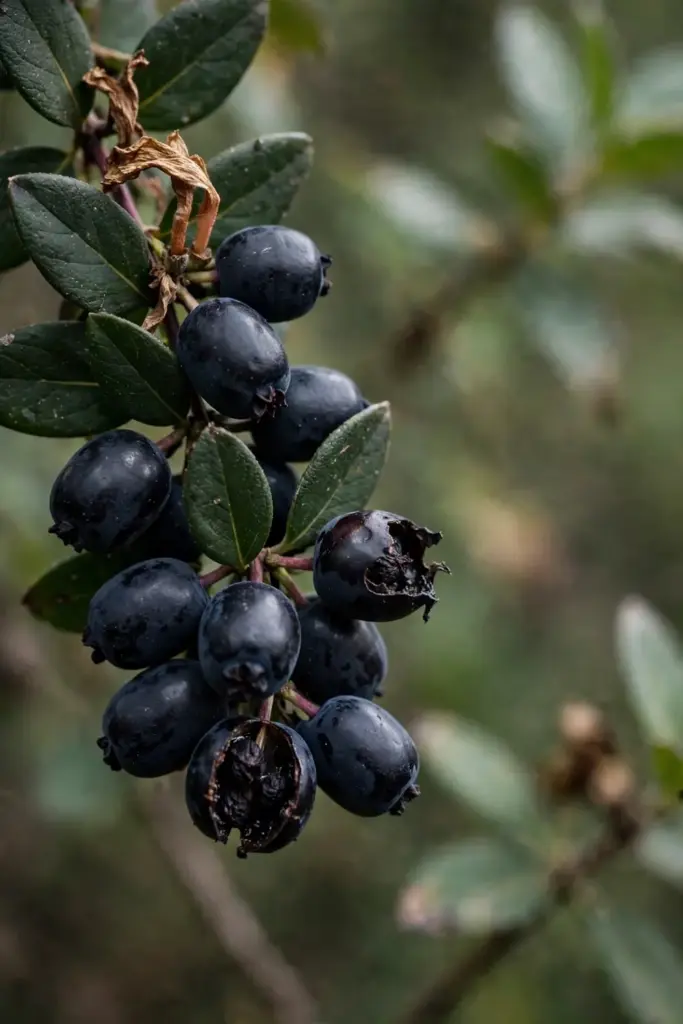
The leaves are not the tea herb either. Traditional jin yin hua is the flower, dried at the white-to-yellow turn. Stems, leaves, and berries stay out of the teapot.
If you are pregnant, nursing, or take prescription medication, talk to a clinician before drinking honeysuckle tea regularly. Blood thinners are the interaction people ask about most with herbal teas, and a quick conversation costs less than a bad guess. This page is a gardening guide, not medical advice.
Dodge These 7 Mistakes
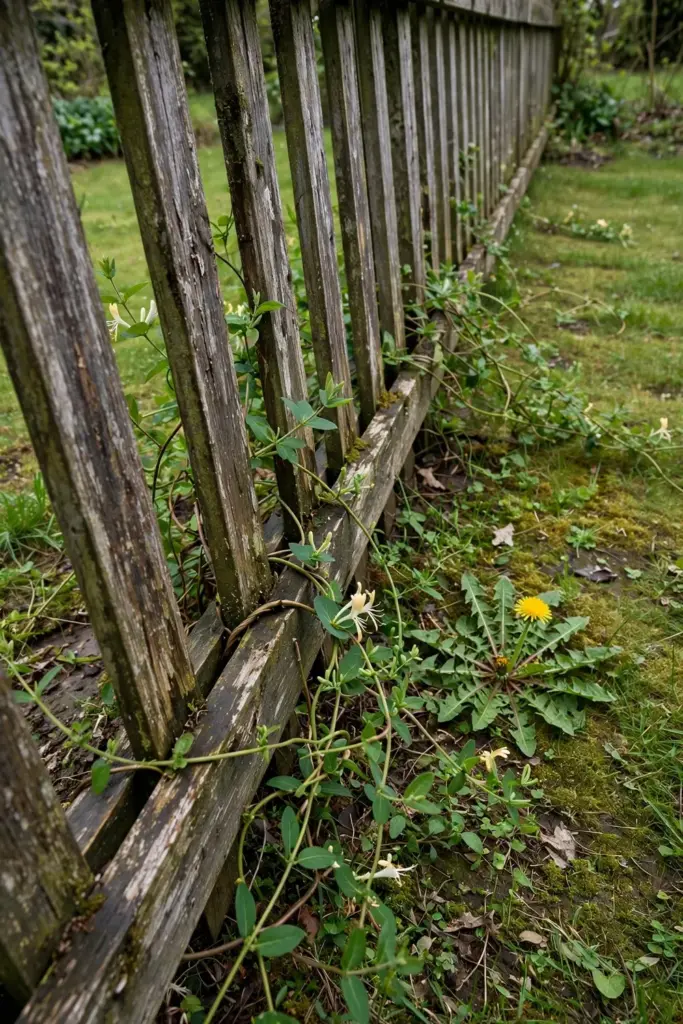
- Planting against a shared fence with no patrol path. You cannot contain what you cannot reach, and the neighbor inherits your runners.
- Letting runners lie on the soil “for now.” They root in weeks. Lift every stem onto the trellis or cut it.
- Skipping the monthly patrol in midsummer. That is exactly when growth peaks and when one missed month becomes ten new plants.
- Leaving the berries for the birds. Pretty black berries are seed packets with wings. Deadhead spent blooms instead.
- Brewing leaves or berries. Flowers only. The rest of the plant is not tea.
- Feeding heavily for “more flowers.” Extra nitrogen grows extra vine, which grows extra pruning work, not extra bloom.
- Planting in shade and expecting a harvest. Shade grows a handsome leafy vine with a handful of flowers. Tea needs the full-sun site from step 3.
Fix the Usual Problems
Japanese honeysuckle has few serious pest or disease problems, so most trouble traces back to site or care. Work through this table before reaching for a spray.
| Problem | Likely cause | Fix |
|---|---|---|
| Leggy stems, almost no flowers | Too much shade | Move the plant or prune overhead branches to let in 6+ hours of sun |
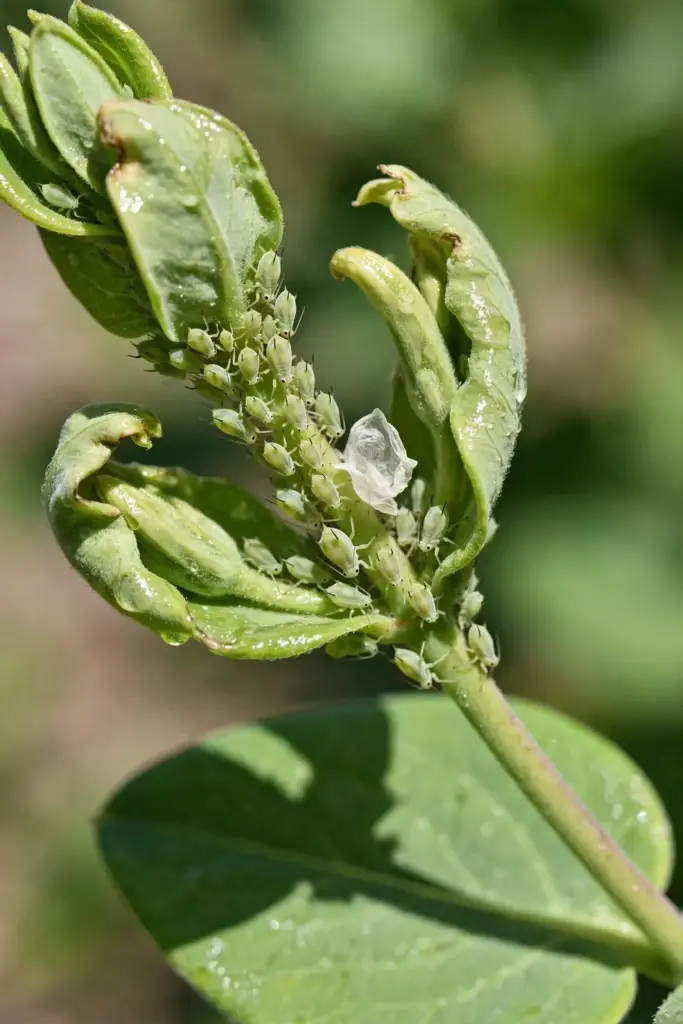
| Aphids clustering on new tips | Soft spring growth | Blast with a hard water spray; repeat for three mornings |
| White powder on leaves | Powdery mildew in still, humid air | Thin the center for airflow; water the soil, not the leaves |
| Cuttings wilt under the bag | Too much sun or a dry mix | Move to bright shade; check the mix stays moist, not soggy |
| Vine escaping over the trellis top | Missed the post-bloom prune | Cut escaped stems back hard; reset the twice-a-year schedule |
| No flowers in year one | Young plant still building roots | Normal. Feed nothing, water steadily, expect bloom in year two |
| Seedlings popping up yards away | Berries left for birds | Deadhead through summer; pull seedlings while small |
Frequently Asked Questions About Honeysuckle Tea
Yes. NC State classifies Lonicera japonica as highly invasive where it has naturalized in the United States. It spreads by rhizomes, above-ground runners that root on contact, and bird-dispersed seed, and it smothers neighboring plants by climbing over them. Grow it only with a trellis you can circle, monthly runner patrols, and regular deadheading.
A 75-liter pot stops the runners from reaching the lawn, which removes one of the three escape routes. It does not stop birds from carrying seed, so you still deadhead spent blooms and patrol for seedlings. Water container vines far more often than in-ground plants, since pots dry out fast in summer heat.
Only the flowers. Harvest the white trumpets as they begin to turn yellow, dry them until papery, and brew. The black berries are toxic to humans, and the leaves and stems are not part of the jin yin hua tradition. If a recipe calls for any other part of the plant, it is not describing this tea.
A cutting-grown vine usually flowers in its second year, once the root system is established. Layered plants follow a similar timeline. Seed-grown vines are the slowest, often needing two full seasons before a real bloom. A vine that stays flowerless past year two is usually sitting in too much shade.
Talk to your clinician first. This guide covers growing and brewing, not medical advice, and pregnancy is exactly the situation where a professional opinion matters. The same applies if you are nursing or take prescription medication such as blood thinners. Bring the plant name, Lonicera japonica, to the conversation.
Jin yin hua is the traditional name for dried Lonicera japonica flowers, harvested at the white-to-yellow turn. Commercial tea bags labeled honeysuckle may contain the same flowers or a blend with other ingredients, and their fragrance fades with warehouse time. Home-dried flowers from your own vine are usually more aromatic because they skip months of storage.
Where to Go From Here
You now have the full chain: one contained vine, flowers picked at the white-to-yellow turn, dried papery, brewed at 90 to 95 degrees. The plant will test your discipline more than your skill. Keep the twice-a-year prune and the monthly patrol, and the vine stays a tea garden instead of a cautionary tale.
Start with step 1 today, even if the plant is already in the ground. The containment decision works retroactively: trellis it, prune it, and begin the patrol this month. A vine under management gives years of fragrant harvests; a vine ignored gives your neighborhood a weed problem. The difference is ten minutes a month.